


Executive Summary
Background. The U.S. Department of Health and Human Services Office of the Assistant Secretary for Planning and Evaluation (ASPE) supports intradepartmental efforts to build data capacity for patient-centered outcomes research and to improve evidence generation for healthcare decision-making. ASPE contracted with NORC at the University of Chicago to conduct an environmental scan to explore the patient-reported outcome measures (PROMs) that could be used in new and emerging human immunodeficiency virus (HIV) therapies. In the context of HIV clinical trials, PROMs may be used as clinical outcome assessments (COAs) to characterize how patients feel and function and to inform regulatory evaluations. The emergence of long-acting antiretroviral therapies (LA-ARTs) introduces modality-specific considerations that may not be fully captured by PROMs used in traditional HIV trials.
Objective. This project identified, reviewed, and synthesized evidence on PROMs that could be used as COAs in clinical trials for new and emerging HIV therapeutics, with a focus on LA-ARTs, to support therapeutic submissions to the U.S. Food and Drug Administration (FDA).
Methods. We conducted an environmental scan to identify PROMs used in traditional antiretroviral therapy (ART) and LA-ART trials. Activities included a peer-reviewed literature search using PubMed and Embase and a targeted scan of grey literature, with emphasis on sources documenting PROM use in trials (e.g., ClinicalTrials.gov) and selected HIV-focused advocacy organizations. Records were screened using a two-stage process: title/abstract screening followed by full-text review. Information from eligible sources was abstracted into a structured inventory. Two subject matter experts (one clinician and one patient advocate) provided input on the scan’s scope and interpretation of preliminary findings, and reviewed project deliverables.
Results. The environmental scan identified extensive use of PROMs in HIV research and traditional ART trials, but a smaller subset of measures has been used in LA-ART trials. In general HIV trials, systematic and scoping reviews reported use of numerous instruments across domains including quality of life, symptoms, psychosocial factors (e.g., stigma and mental health), self-management, and treatment satisfaction. However, psychometric evidence for these measures was frequently limited. In trials of daily oral ART, patient-reported endpoints were heterogeneous and included HIV-specific measures (e.g., functioning, symptoms, health-related quality of life, and treatment experience) as well as non-HIV-specific measures (e.g., depression, sleep, fatigue, and generic health status/quality-of-life instruments). In contrast, LA-ART trials employed a narrower set of PROMs and more frequently used HIV-specific measures. Across LA-ART trials, treatment satisfaction and injection-related experiences were assessed most consistently.
Conclusion. PROMs have been used broadly in HIV studies; however, many measures have limited psychometric evidence, and only a subset has been applied in LA-ART trials. Existing LA-ART trials have emphasized treatment satisfaction and injection-related acceptability outcomes while assessment of implementation-related burdens, treatment transitions, and outcomes relevant to specific subpopulations has been limited. Future research should focus on evaluating the performance of existing PROMs among key subpopulations increasingly represented among people living with HIV (PLWH), including older adults and individuals experiencing polypharmacy, as well as improving measurement of injection-specific burdens, implementation-related factors, and treatment transitions from oral ART to LA-ART.
1. Introduction
Purpose of the Report
The United States (U.S.) Department of Health and Human Services (HHS) Office of the Assistant Secretary for Planning and Evaluation (ASPE) coordinates intradepartmental projects under the Office of the Secretary Patient-Centered Outcomes Research Trust Fund (OS-PCORTF) portfolio that build data capacity for conducting patient-centered outcomes research (PCOR). These efforts support data infrastructure initiatives that improve evidence generation for patient and provider healthcare decision-making. Understanding what is important to patients in clinical trials and assessing safety and efficacy through high-quality measurement is key to regulatory decision-making. 6 However, a persistent challenge in regulatory evaluation is whether existing measurement tools adequately capture patient-relevant concepts of interest and are fit-for-purpose for their intended context of use. As new therapies emerge, the need for tools that can accurately capture the patient experience may arise. ASPE contracted with NORC at the University of Chicago to conduct an environmental scan to explore the patient-reported outcome measures (PROMs) that could be used in new and emerging human immunodeficiency virus (HIV) therapies.
1.1 Background
HIV Background
HIV is a virus that compromises the body's immune system, increasing susceptibility to a range of infections, cancers, and other conditions. 8 , 9 In 2022, an estimated 1.2 million individuals in the U.S. were living with HIV, and 31,800 individuals were newly infected. 10 Antiretroviral therapy (ART) treats HIV by controlling disease progression through suppression of the virus in blood. 11 , 12 , 13 ART is not a cure for HIV; it is a life-long treatment, but has transformed HIV to a chronic, manageable condition for PLWH. 11 , 14 Although advances in treatment have reduced treatment burden, improved tolerability of treatment regimens, and increased life expectancy, adherence to treatment remains critical. 11 , 13 , 15 , 16
Long-Acting ART Overview
Recent innovations in ART have led to the emergence of long-acting ARTs (LA-ART) as a promising new approach for treatment and management of HIV. 17 By replacing daily oral regimens with longer-term injections, LA-ART can substantially reduce the burden of adhering to treatment by improving convenience. Longer dosing intervals can also provide other significant benefits for PLWH, including increased patient privacy and reduced social stigma and decreased medication concerns. 15 Because LA-ART may require more frequent visits with a provider than oral ART, it can also create structured, recurring touchpoints that may improve retention with care, support and ongoing monitoring, and ensure treatment protocols are followed. 15 , 18 These touchpoints may be especially important for individuals taking multiple medications (polypharmacy) where coordinated clinical oversight can support both adherence and continuity of care. 19 , 20 There are currently three LA-ART medications approved by the U.S. Food and Drug Administration (FDA) for use by PLWH, though there is substantial variation in the populations who are eligible to receive them and the dosing schedules (Table 1). 21
Table 1. Long-Acting Antiretroviral Therapies
| Drug Name | Mechanism | Modality and Dosing Schedule | Population | FDA Approval Date |
|---|---|---|---|---|
| Cabotegravir + Rilpivirine (Cabenuva) | Integrase inhibitor and non-nucleoside reverse transcriptase inhibitor (NNRTI) | Injection every 4-8 weeks | Individuals over 12 years old who are virologically suppressed on stable ART dose with no history of treatment failure | January 2021 |
| Lenacapavir (Sunlenca) | Capsid inhibitor | Injection every 6 months (alongside other ART medications) | Adults (18+) with multidrug-resistant HIV infections | December 2022 |
| *Ibalizumab-uiyk (Trogarzo) | Humanized monoclonal antibody | Infusion every 2 weeks | Adults (18+) with multidrug-resistant HIV who have failed their current treatment regimen | March 2018 |
*Trogarzo is an HIV-1 inhibitor that blocks HIV from entering cells, rather than attacking HIV itself.
PROs for HIV and LA-ART Overview
Patient-reported outcomes (PROs) have long been assessed in HIV research to understand aspects of health and treatment that may not be fully reflected by virologic or clinical measures alone. 22 , 23 , 24 Although viral suppression remains a central objective of HIV treatment, patient experiences related to symptoms, quality of life, treatment burden, stigma, adherence, and treatment satisfaction can also influence treatment success and long-term engagement in care. 15 , 22 , 23 PROMs capture PROs and have therefore been incorporated into HIV research and clinical trials to evaluate outcomes that matter directly to people living with HIV. 7 , 22
The emergence of LA-ART raises important questions about whether PROMs commonly used in HIV trials adequately capture the experiences PLWH have with this treatment modality. While LA-ART may reduce some burdens associated with daily medication use, it may also introduce new experiences related to injection administration, access to treatment, healthcare utilization, and treatment preferences. 15 , 18 , 20 , 25 Understanding these patient perspectives is important for evaluating the benefits and challenges associated with LA-ART. 22 , 25 , 26
Clinical Outcome Assessments Overview
To support patient-centered drug development and evaluation, the FDA encourages the use of clinical outcome assessments (COAs) as endpoints in clinical trials. COAs include patient-, observer-, and clinician-reported outcomes, and describe or reflect how a patient feels or functions. 2 , 6 PROMs, which measure patient-reported outcomes (PROs), are one type of COA that can be used to assess outcomes important to patients about benefits and burdens. 6 , 7 In a clinical trial, a COA can be used as primary, secondary, or exploratory endpoint depending on their role supporting regulatory decision-making and the specific objectives of the trial and support evaluation of treatment effectiveness, safety, tolerability, and risk-benefit assessment. 6
COAs used in clinical trials must relate to a meaningful aspect of health (MAH), or what a medical product should affect to provide benefit to patients. 6 , 27 For use in regulatory decision-making, the FDA evaluates whether a COA is fit-for-purpose, including whether it adequately assesses the concept of interest within the intended context of use and whether sufficient evidence supports interpretation of the measure. 6 , 7 , 28 Although numerous PROMs have been used in HIV research, it is unclear if these measures adequately capture unique outcomes associated with LA-ART medications. 22 , 25 , 26 Understanding which PROMs have been used in HIV trials, and whether they adequately assess outcomes relevant to patients receiving LA-ART may help inform future trials and regulatory decision making.
1.2 Objectives and Structure of the Report
The primary goal of this project was to identify, review, and analyze PROMs that could be used as COAs in support of trials for new therapeutics submitted to the FDA for HIV, and to provide a comprehensive inventory of these measures. The research questions for this project were:
- What PROMs exist for use in HIV and what symptom domains do they assess?
- Have these existing measures been established for use in new and emerging LA-ARTs developed for HIV? What additional or adapted PROMs may be needed to align with these evolving therapies and their symptom profiles?
- What evidence exists on the measurement properties of identified PROMs (e.g., reliability, validity) that could inform their potential suitability as COAs?
- What is the available evidence about the use of these measures as COAs in support of clinical drug and biologics trials for new LA-ART therapeutics submitted to the FDA?
This report is intended to support the FDA and other federal partners, academic, and independent researchers, and pharmaceutical sponsors involved in the conduct of clinical trials by providing a comprehensive resource to inform the selection of PROMs for new HIV therapeutics. Specifically, the report inventories PROMs used in HIV research and clinical trials, summarizes available evidence regarding their measurement properties and use, and identifies considerations relevant to emerging LA-ARTs.
The subsequent sections of the report are organized as follows: the Methods section provides an overview of the data collection methods, including conducting an environmental scan and engaging with subject matter experts (SMEs) to identify relevant measures; the Results section describes the findings from the environmental scan and details identified PROMs; the Discussion section describes gaps and opportunities to improve PRO measurement for LA-ART trial; and the Conclusion section summarizes findings and future directions. The report also contains supplementary appendices described in the following sections.
2. Methods
We conducted an environmental scan to identify PROMs, gaps, and opportunities for adapting and developing PROMs, which involved two key activities. First, we conducted a literature scan to identify data sources and extract relevant data. Second, we consulted SMEs to provide feedback on the literature scan approach as well as the findings. Both activities are detailed below.
2.1 Literature Scan
An environmental scan was conducted to a) identify and characterize PROMs that could be used to support trials for LA-ART, and b) identify gaps and opportunities in the PROMs currently available and discuss how PROs could be useful in the evolving HIV prevention and treatment landscape.
To complete the scan, we first conducted a peer-reviewed literature search using PubMed and Embase, supplemented with a web scan of grey literature. We prioritized grey literature sources that focused on PROMs in clinical trials, including Clinicaltrials.gov, and various HIV-focused advocacy organizations’ websites. Exhibit 1 illustrates the article selection process. Articles identified through the environmental scan underwent a two-step screening process: initial title and abstract review, followed by full-text review for eligibility.
Exhibit 1. PRISMA Diagram
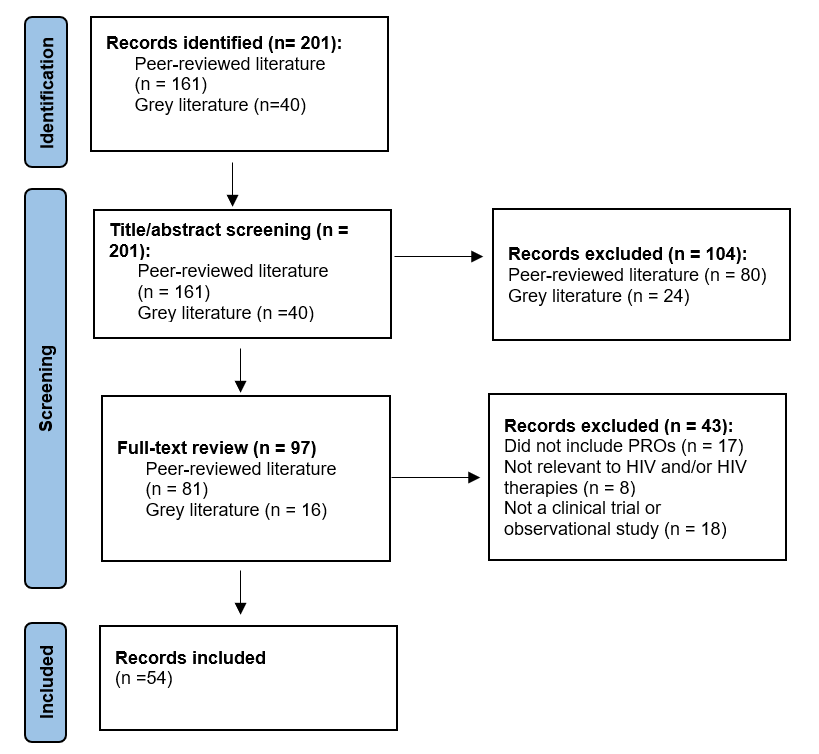
Following full-text review, we abstracted information from included data sources and articles into a spreadsheet inventory. More details on the methods, including the grey literature sources, search terms, inclusion/exclusion criteria, and data abstraction are provided in Appendix A.
2.2 Engagement with SMEs
We engaged two SMEs, one clinician and one patient advocate, to help guide the environmental scan. The SMEs initially provided input on the scan approach and expected outcomes. We further engaged with the SMEs to provide input on initial scan findings and the draft and final report.
3. Results
This section begins with findings related to PROMs used broadly in HIV research and traditional ART clinical trials, followed by PROMs used in trials of LA-ART. The findings focus on the PROs assessed in HIV clinical trials and the PROMs used to measure those outcomes. PROs refer to reports of health status, symptoms, functioning, or treatment experiences provided directly by patients, while PROMs are the instruments used to assess those outcomes. Further details regarding these PROMs are available in the inventory accompanying this report on https://aspe.hhs.gov .
3.1 PROMs Used in HIV Research
A wide range of PROMs have been used in both clinical and real-world settings to assess outcomes reported by PLWH. Across identified reviews, PROMs assessed domains including health-related quality of life, symptoms, treatment experience, psychosocial factors (e.g., stigma, mental health, and social support), self-management, sexual health, spirituality, and substance use. Together, these findings demonstrate the breadth of outcomes that have been evaluated in HIV populations and the diversity of measures used to assess them.
The environmental scan identified substantial variation in PROM selection across studies. A 2022 review of systematic reviews identified 140 PROMs used in HIV research. Of these measures, 52 were HIV-specific and spanned five primary domains: quality of life, self-management, psychosocial factors, satisfaction with care or treatment, and spirituality. 23 Similarly, another review focused on the psychometric properties of HIV-specific PROMs identified 88 PROMs across eight domains, including health-related quality of life, symptoms, stigma, psychological, body and facial appearance, treatment, social support, and self-management. 29 A more recent 2024 rapid scoping review identified 60 PROMs used in HIV care, with mental health, substance use, self-management, symptoms, and sexual health the most frequently assessed domains. While most initiatives included in the review (88%) used a validated PROM, fewer than a third (28%) used an HIV-specific measure. Additionally, the majority of PROMs identified in this review (69%) were only used in one study, highlighting the lack of consensus on which measures to use in HIV care and HIV trials. 24
These reviews demonstrate the breadth of PROMs used in HIV research and care. However, many measures may not assess domains or circumstances relevant to treatment or clinical trials. Additionally, there are important limitations in the psychometric evaluation of these PROMs. For example, Wang et al. highlighted that, of the 88 PROMs they identified, most did not have sufficient evidence of structural validity, and reliability was evaluated in only 30% of measures. Based on their review, only three measures were recommended as having sufficient evidence of psychometric evaluation: the Poz Quality of Life (PozQoL), HIV Symptom Index (HIV-SI), and the People Living with HIV Resilience Scale (PLHIV-RS). 29 However, while the HIV-SI is widely used, these other measures have not been widely adopted. 30 These reviews also highlighted the frequent use of non-HIV-specific measures in studies with PLWH. These generic measures, or measures developed for other populations, may fail to capture nuanced challenges specific to PLWH such as stigma, concerns about disclosure, medication side effects, treatment adherence, symptom burden, and psychosocial impacts. 31 , 32
These reviews also highlighted the frequent use of non-HIV-specific PROMs, or measures developed for other populations, in studies with PLWH. These PROMs may enable comparisons across disease areas, but may fail to capture nuanced challenges specific to PLWH such as stigma, concerns about disclosure, medication side effects, treatment adherence, symptom burden, and psychosocial impacts. 31 , 32
3.2 PROMs Assessed in Traditional ART Clinical Trials
Outcomes measured in recent traditional ART clinical trials identified in this environmental scan varied widely, including both HIV-specific and non-HIV-specific measures. Identified PRO endpoints assessed in ART clinical trials using HIV-specific PROMs spanned several domains, including functioning, symptoms, health-related quality of life, and treatment experience (Table 2). Functioning outcomes broadly encompassed cognitive, emotional, social, physical, and sexual domains and were assessed using instruments such as the Functional Assessment of HIV Infection (FAHI), the HIV Symptom Index (HIV-SI), and the Positive Outcomes HIV Questionnaire. Symptom-related endpoints focused on patients’ experiences with HIV-related symptoms and symptom distress and were primarily evaluated using the HIV-SI. Health-related quality of life was assessed using several HIV-specific instruments, including the HIV/AIDS-Targeted Quality of Life (HAT-QoL), Patient-Reported Outcome Quality of Life-HIV (PROQOL-HIV) measure, Medical Outcomes Study HIV Health Survey (MOS-HIV), and FAHI. There is important variation in these measures depending on when they were developed and the generation of ART at the time. For example, MOS-HIV was developed in 1997 and HAT-QoL in 1998 when multidrug regimens were common. 33 , 34 , 35 The PROQOL-HIV was developed in 2012, post-development of highly active ART, and includes a number of domains not captured by prior measures. 36
The most frequently assessed domain using HIV-specific PROMs was treatment experience, which included medication adherence, treatment satisfaction, and treatment intrusiveness. Medication adherence was assessed using the FAHI, the HIV Medication Questionnaire (HIVMQ), and the Spanish Multifactorial Adherence Questionnaire (SMAQ). Both the status and change versions of the HIV Treatment Satisfaction Questionnaire (HIVTSQc/s) were used to assess treatment satisfaction, alongside the Cuestionario Español de Satisfacción con el Tratamiento Antirretroviral (CESTA), which assesses satisfaction with HIV medication when switching regimens. 37 The Perceived Ease of Regimen for Condition (PERC) survey was developed specifically for an ART trial and assesses how easy an individual perceives it would be to follow their HIV medication treatment regimen. 38 Treatment intrusiveness was assessed through the HAART Intrusiveness Scale (HIS), which examines the degree to which an individual’s ART is perceived to interfere with their daily life.
Table 2. PRO Endpoints Assessed in ART Clinical Trials Using HIV-Specific PROMs
| PRO Endpoints | PROMs |
|---|---|
| Functioning | |
Cognitive, emotional, physical, and sexual domains:
|
|
| Symptoms | |
| Symptoms: Something a person feels or experiences that may indicate they have a disease or condition. 43 |
|
| Health-Related Quality of Life | |
| Quality of Life: A person’s subjective experience of the impact of illness and treatment upon physical, psychological, social, and functional well-being. 44 |
|
| Treatment Experience | |
| Medication Adherence: Degree to which a person’s behavior corresponds with recommendations from their healthcare provider. 45 |
|
| Treatment Satisfaction: Degree of satisfaction with treatment, including side effects, demands, convenience, and how the treatment fits into lifestyle. 46 |
|
| Treatment Intrusiveness: Degree to which a person’s illness or treatment interferes with their life. 47 |
|
Acronyms: FAHI=Functional Assessment of HIV Infection; HIV-SI=HIV Symptom Index; HAT-QoL=HIV/AIDS-Targeted Quality of Life; PROQoL-HIV=Patient-Reported Outcomes Quality of Life-HIV Questionnaire; MOS-HIV=Medical Outcomes Study HIV Health Survey; HIVMQ=HIV Medication Questionnaire; SMAQ=Spanish Multifactorial Adherence questionnaire; HIVTSQc=HIV Treatment Satisfaction Questionnaire (change); HIVTSQs=HIV Treatment Satisfaction Questionnaire (status); CESTA=Cuestionario Español de Satisfacción con el Tratamiento Antirretroviral; PERC=Perceived Ease of Regimen for Condition; HIS= HAART Intrusiveness Scale
A wider variety of PRO endpoints assessing physical, mental, symptom, social, and health-related quality of life domains were assessed in ART trials using non-HIV-specific PROMs (Table 3). Physical functioning was captured through measures of activities of daily living and work or activity impairment. Mental and emotional functioning encompassed overall mental health, depression, anxiety, and stress and was assessed using common instruments including the Patient Health Questionnaire (PHQ9), and generic health surveys (Short Form-36 (SF36), Short Form-12 (SF12), European Quality of Life 5 Dimensions 3 Level Version (EQ5D3L)). Symptom burden was characterized through measures of food cravings, pain, sleep problems, and fatigue, employing both generic measures (e.g., SF36, EQ5D3L) and symptom specific scales such as the Insomnia Severity Index (ISI), Pittsburgh Sleep Quality Index (PSQI), PROMIS sleep measures (sleep disturbance and sleep-related impairment), Fatigue Impact Scale (FIS), and the Fatigue Severity Scale (FSS).
Table 3 highlights additional PRO endpoints assessing social functioning, quality of life, well-being, and treatment experience, which are critical for understanding the broader impact of illness and treatment on daily life. Social domains, including sexual functioning and limitations in social activities, were assessed using instruments such as the Brief Sexual Function Inventory (BSFI), Female Sexual Function Index (FSFI), SF-36, and SF-12. Health-related quality of life and well-being were assessed using generic instruments including the SF-12, SF-36, EQ-5D-3L, and the Well-being Questionnaire (W-BQ16). Treatment experience outcomes captured patient perspectives on medication adherence, medication preference, and treatment intrusiveness through measures such as the Preference of Medication (POM) and the Illness Intrusiveness Rating Scale (IIRS).
Table 3. PRO Endpoints Assessed in ART Clinical Trials Using non-HIV-Specific PROMs
| PRO Endpoints | PROMs |
|---|---|
| Physical Functioning | |
| Activities of Daily Living: Basic skills necessary for individuals to care for themselves independently. 48 |
|
| Physical Functioning: The sum of an individual’s ability to perform tasks requiring physical effort. 41 |
|
| Mental and Emotional Functioning | |
| Anxiety & Depression: Feelings of apprehension or tension (anxiety), or a mood disorder that causes a persistent feeling of sadness and loss of interest (depression). 49 , 50 |
|
| Emotional Well-being: Overall psychological wellness, including positive affect, satisfaction with life, and general mental health functioning. 51 |
|
| Symptoms | |
| Food Cravings: An intense desire or urge to eat a specific food. 52 |
|
| Pain: Localized or generalized unpleasant bodily sensations that cause mild to severe physical discomfort. 53 |
|
| Sleep Problems: Issues with quality, timing, or amount of sleep that results in daytime stress and impairment. 54 |
|
| Fatigue: An extreme sense of tiredness or lack of energy that can interfere with daily activities. 55 |
|
| Social Functioning | |
| Sexual Functioning: The ability to engage in sexual activity or other aspects of sexual response in a satisfying manner, alone or with a partner. 42 |
|
| Social Functioning: How physical or emotional problems interfere with normal social activities. 56 |
|
| Health-Related Quality of Life | |
| Quality of Life: A person’s subjective experience of the impact of illness and treatment upon physical, psychological, social, and functional well-being. 44 |
|
| Well-being: A state of health, happiness, and prosperity. 57 |
|
| Treatment Experience | |
| Medication Adherence: Degree to which a person’s behavior corresponds with recommendations from their healthcare provider. 45 |
|
| Medication Preference: Degree to which a person prefers their current medication compared to the previous medication. 58 |
|
| Treatment Intrusiveness: Degree to which a person’s illness or treatment interferes with their life. 47 |
|
Acronyms: IADL=Lawton Instrumental Activities of Daily Living Scale; WPAI-SHP=Work Productivity and Activity Impairment Specific Health Problem; W-BQ16=Wellbeing Questionnaire; EQ-5D-3L=EuroQol 5-dimension 3-level; DASS21=Depression, Anxiety and Stress Scale-21 items; HADS=Hospital Anxiety and Depression Scale; CES-D=Center for Epidemiologic Studies Depression Scale; BDI=Beck’s Depression Inventory; PHQ-9=Patient Health Questionnaire; SF-36=Short Form Health Survey (36 items); SF-12=Short Form Health Survey (12 items); FCQ-T=Food Cravings Questionnaire Trait; FCQ-S=Food Cravings Questionnaire State; ISI=Insomnia Severity Index; PSQI=Pittsburgh Sleep Quality Index; ESS=Epworth Sleepiness Scale; PROMIS-SD=Patient-Reported Outcomes Measurement Information System Sleep Disturbance; PROMIS-SRI=Patient-Reported Outcomes Measurement Information System Sleep-Related Impairment; FIS=Fatigue Impact Scale; FSS=Fatigue Severity Scale; BSFI=Brief Male Sexual Function Inventory; FSFI=Female Sexual Function Inventory; MASRI=Medication Adherence Self-Reported Inventory; VAS Adherence=Visual analog scale adherence; POM=Preference of Medication; IIRS=Illness Intrusiveness Rating Scale
3.3 PROMs Assessed in LA-ART Clinical Trials
There are currently three LA-ART medications approved by the FDA, and twelve clinical trials have been conducted to evaluate these treatments. Details on these trials are noted in Appendix A (Exhibit A6). Relatively few PROMs were used in the identified LA-ART clinical trials, and in contrast to traditional ART trials, most PROMs used in LA-ART trials were HIV-specific.
In LA-ART clinical trials, the most frequently assessed outcomes using HIV-specific measures were treatment satisfaction and injection-related experiences (Table 4). Treatment satisfaction was consistently evaluated across trials using the HIVTSQ, reflecting the importance of establishing an understanding of patient perceptions about this new regimen’s convenience, tolerability, and acceptability. Injection-specific symptoms were also frequently assessed in LA-ART trials. Pain related to injection was assessed through a numeric pain rating scale, and several trials used the Perception of Injection (PIN) questionnaire, which examines acceptability of injections, injection site experiences, and willingness to continue LA-ART. The PIN was adapted from the Vaccinees' Perception of Injection (VAPI) questionnaire and validated in an LA-ART clinical trial. 59
These measures are detailed further in the accompanying inventory, which details information related to population of use, validity, and use.
Table 4. PRO Endpoints Assessed and HIV-Specific PROMs Used in LA-ART Clinical Trials
| PROs Endpoints | PROM Used | Concepts Measured | Frequency (# of Clinical Trials) |
|---|---|---|---|
| Treatment Satisfaction |
| Satisfaction with HIV treatment, including treatment side effects, treatment demands, treatment expectations, willingness to continue treatment, flexibility of treatment, and understanding of treatment. | 12 |
| Treatment Adherence/Self-Efficacy |
| Social and psychological determinants of adherence to HIV treatment, including convenience of taking medication and self-efficacy to take medication. | 2 |
| Treatment Experience |
| Treatment experience, including pain from taking medication. | 1 |
| Quality of Life/Health-Related Quality of Life |
| Physical functioning, sexual functioning, social functioning, health concerns, financial concerns, HIV beliefs, life satisfaction, medication worries, and medical care. | 4 |
| Symptoms |
| Frequency and bother of the 20 most common symptoms associated with ART. | 1 |
| Injection-Specific Considerations |
| Acceptance of injection site reaction, bother from injection site reaction, sleep, leg movement, willingness to be injected in the future, satisfaction with mode of administration, anxiety (before/after injection), and pain. | 5 |
HIVMQ=HIV Medication Questionnaire; HIVTSQc=HIV Treatment Satisfaction Questionnaire (change); HIVTSQs=HIV Treatment Satisfaction Questionnaire (status); HATQoL=HIV/AIDS-Targeted Quality of Life; PIN=Perception of Injection Questionnaire; NPRS=Numerical Pain Rating Scale; HIVDQoL=HIV Dependent Quality of Life; HIV-ASES=HIV Treatment Adherence Self-Efficacy Scale; HIV-SI=HIV Symptom Index
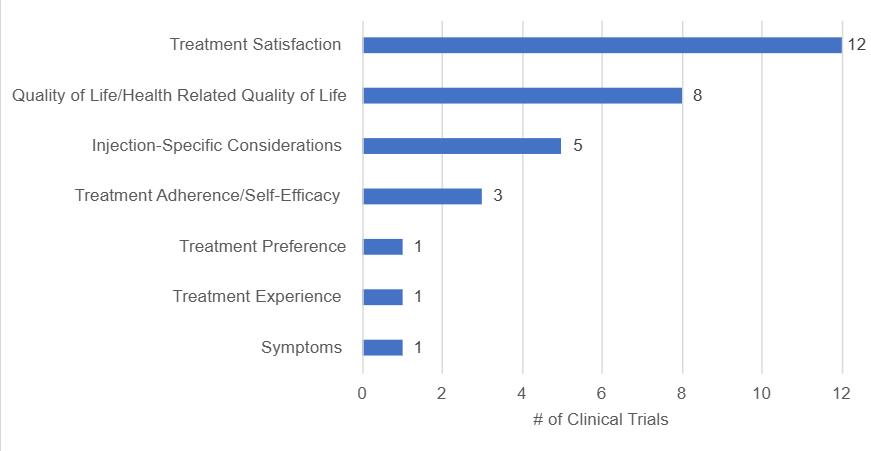
Exhibit 2 summarizes the frequency with which outcomes were assessed in identified LA-ART trials, drawing on HIV-specific and non-HIV-specific measures. Treatment satisfaction was the most commonly assessed outcome, followed by quality of life and injection-specific considerations. Quality of life outcomes were frequently monitored using generic tools, notably the SF-36 and SF-12.
Non-HIV-specific measures, including the EQ-5D and SF-12/SF-36, were used to assess concepts related to overall health status and health-related quality of life across several trials. While these generic measures have been commonly used in HIV studies, they may be less sensitive to HIV- or treatment-specific issues than HIV-specific measures. Additionally, HIV- and treatment-related symptoms were infrequently assessed in LA-ART trials using PROMs. Symptoms were typically assessed by clinicians using Common Terminology Criteria for Adverse Events (CTCAE) reporting.
Exhibit 2. Frequency of PRO Endpoints Assessed in LA-ART Clinical Trials
3.3.1 Emerging Measurement Considerations for LA-ART Clinical Trials
In addition to identifying PROMs currently used in HIV and LA-ART trials, the environmental scan and SME feedback highlighted several emerging measurement considerations that may influence future outcome selection.
First, existing LA-ART trials have primarily enrolled younger populations despite the aging population of PLWH in the US. The median age of patients in three large LA-ART trials was between 34-42 years old, and some did not report the number of patients enrolled over the age of 50. 60 , 61 As a result, there is limited evidence about whether PROMs currently used in LA-ART trials adequately capture treatment experiences relevant to older adults living with HIV, including issues related to multimorbidity, functional status, medication burden, healthcare access, and stigma. 61 , 62 , 63 , 64 , 65
The environmental scan and SMEs also highlighted that treatment burden associated with multimorbidity and polypharmacy is not routinely assessed in LA-ART trials using PROMs. 19 , 66 , 67 , 68 As people living with HIV increasingly experience multiple chronic conditions and use concurrent medications, treatment experiences, symptom burden, and treatment satisfaction may be influenced by factors that are not routinely assessed in current HIV-specific PROMs. Existing HIV-specific PROMs generally focus on symptoms, quality of life, adherence, and treatment satisfaction, with less attention to medication burden, symptom attribution, and management of complex treatment regimens. 23 , 24
There was also limited evidence regarding the performance of existing PROMs in certain subpopulations relevant to emerging LA-ART therapies, including individuals with multidrug-resistant HIV infections and those receiving care in long-term care settings. 29 , 65 , 69 , 70 Although many HIV-specific PROMs have been validated in broader populations of people living with HIV, it is unclear whether they adequately capture outcomes most relevant to these subgroups. 29 , 64
The findings further suggest that some aspects of the patient experience associated with LA-ART may not be routinely captured by the PROMs used in clinical trials. Relatively few trials included PROMs assessing implementation-related aspects of LA-ART use, and SME feedback indicated that travel requirements, transportation access, visit frequency, site of administration, and other logistical considerations associated with receiving injections may influence patient experiences and treatment preferences. 18 , 20 , 25 While treatment satisfaction and injection-related experiences were commonly assessed, HIV- and treatment-related symptoms were less frequently evaluated using PROMs and were often assessed through clinician-reported adverse event reporting.
Finally, most identified LA-ART studies focused on patient experiences after treatment initiation rather than the experience of transitioning from oral ART to LA-ART. Although several measures have been developed to assess treatment changes and adherence-related factors, their use in LA-ART clinical trials has been limited. 26 As long-acting therapies become more widely used, understanding patient experiences associated with treatment transition may become increasingly relevant to outcome assessment.
4. Discussion
A wide range of outcomes have been assessed in the population of PLWH, but a more limited subset of PROMs have been used in trials of LA-ART. In traditional ART trials, the most commonly assessed outcomes were quality of life/health-related quality of life, depression, and sleep. In contrast, LA-ART trials commonly assessed treatment satisfaction and quality of life/health-related quality of life. This divergence likely reflects both advances in ART in recent decades that have substantially reduced symptom burden and differences inherent to different delivery modalities. Traditional ART involves lifelong, daily oral dosing, which places continuous cognitive and behavioral demand on patients. LA-ART trials instead tend to investigate whether the change in delivery mode with reduced dosing frequency improves convenience, acceptability, and perceived treatment burden. 71 , 72 , 73
Along with identifying PROMs used in clinical trials for LA-ART, the environmental scan and SME discussions identified key gaps and challenges in current practices. This section outlines specific challenges and opportunities to strengthen PROM use.
One identified challenge is the limited evidence regarding whether currently used PROMs are fit-for-purpose across evolving HIV populations and treatment contexts. While HIV-specific measures validated in a population of PLWH were commonly used in LA-ART trials, a wider variety of outcomes were assessed in traditional ART trials through non-HIV-specific measures. Many PROMs used across trials, both HIV-specific and non-HIV-specific, have not been formally validated in populations of PLWH, highlighting an important limitation in the current evidence base. 29 , 31 , 64 , 74 Additionally, several PROMs commonly used in HIV were originally developed outside the United States, raising important considerations about cross-cultural adaptation and validation. 32 , 36 While some instruments, such as the EQ-5D, have undergone extensive international and US-specific validation, others may have more limited evidence supporting psychometric performance across diverse cultural, linguistic, and healthcare settings. 32 , 75 , 76 The consideration of cross-cultural validity is therefore important when interpreting outcomes and selecting instruments for use in multinational or US-based LA-ART studies. While some instruments have undergone extensive evaluation, evidence regarding the performance of many PROMs in populations increasingly represented in HIV care remains limited. As HIV treatment continues to evolve, uncertainty remains regarding whether existing measures adequately capture outcomes that are meaningful to patients receiving newer therapies.
One opportunity to address this challenge is further evaluation of the measurement properties of commonly used PROMs in contemporary HIV treatment-settings. Future research could examine whether existing measures demonstrate adequate content validity and responsiveness in LA-ART trials and other studies intended to support regulatory decision-making.
Another challenge is that PROMs used in LA-ART clinical trials may not adequately capture outcomes relevant to older adults living with HIV. 29 Most PLWH in the U.S. are now over the age of 50 (54%), but participants in LA-ART trials were significantly younger. 60 , 61 , 77 Older adults may experience treatment differently than younger populations, and current PROMs may not adequately capture outcomes salient to older adults such as increased injection related pain, reduced muscle mass that could affect gluteal site absorption, and an increased risk of drug interactions. 61 , 62 , 63 Older adults may also have distinct experiences related to HIV stigma and disclosure that influence treatment preferences, including willingness to adopt long-acting therapies that reduce daily reminders of HIV treatment. 78 , 79
Furthermore, an SME noted that some groups that may derive particular benefit from long-acting therapies, such as older PLWH residing in nursing homes, are often excluded from clinical trials. Consistent adherence with ART is paramount, yet transitions of care in nursing homes can create issues with ART continuation and many nursing home residents living with HIV do not receive consistent ART. 61 , 65 , 69 These findings suggest that outcomes related to treatment continuity, care coordination, healthcare access, and regimen management may be particularly relevant in older populations but are not routinely assessed using PROMs currently employed in LA-ART trials. 65 , 69
One potential solution is to assess the performance of existing PROMs among older PLWH and identify if adaptations or supplemental measures are needed. Additional research could help establish the content validity and psychometric performance of existing PROMs in older populations and those in long-term care.
Another challenge is the limited assessment of treatment burden associated with polypharmacy and multimorbidity in existing PROMs used in LA-ART trials. 66 , 67 Existing HIV-specific PROMs identified in this scan primarily assessed functioning, symptoms, quality of life, adherence, and treatment satisfaction, with less attention on medication burden, competing treatment demands, or management of complex treatment regimens. 23 , 24 , 29 PLWH often experience accelerated biological aging and multiple chronic comorbidities, increasing overall symptom burden and affecting how they perceive or tolerate treatments. 61 Polypharmacy and associated drug-drug interactions complicate symptom attribution and measurement of outcomes, as non-ART medications may cause overlapping symptoms with ART. Moreover, the long-acting nature of injectables can prolong interaction related side effects, further obscuring the source of reported symptoms. 19 Patient satisfaction, daily functioning, and perceived value of LA-ART may therefore be shaped by polypharmacy related constraints, these may not be fully captured by commonly used PROMs. 68
One potential solution is to evaluate whether existing measures adequately capture treatment burden associated with polypharmacy-related concerns. Measurement strategies may need to distinguish treatment-related symptoms from those associated with concomitant medications by incorporating items on medication burden, attribution of side effects, and perceived management of complex regimens. Future research should evaluate whether current HIV-specific PROMs adequately reflect these experiences or whether additional measures addressing medication burden and treatment complexity are warranted.
Another identified challenge is limited evidence about the performance of existing PROMs among populations with complex care needs, including those with multi-drug-resistant HIV. Although some LA-ART therapies, such as Cabenuva, are approved for broadly defined populations of virologically suppressed individuals, other FDA-approved LA-ART medications have more restricted indications and are intended for patients with multidrug-resistant HIV. PROMs validated in the general HIV population may not fully reflect the experiences of these subgroups who may experience greater treatment-related anxiety, higher disease burden, increased frailty, and distinct concerns regarding treatment effectiveness and future therapeutic options. 29 , 70
A potential solution is further evaluation of the performance of existing PROMs among populations with complex care needs. Where important concepts relevant to the experience of these populations are not being adequately captured, measures may need to be adapted or supplemented. SMEs also emphasized the importance of engaging community organizations, patient advocates, and other stakeholders in the development and refinement of PROMs to help ensure that measures continue to reflect patient priorities across evolving HIV populations and treatment settings.
Another challenge is that currently used PROMs may not fully capture injection-related experiences relevant to LA-ART. Although the symptom profiles for LA-ART and traditional ART are largely similar, few PROMs have been developed or adapted to assess patient experience with injectable therapies. 16 Most LA-ART trials assessed treatment satisfaction, anxiety before injection, delayed injection-site reactions, duration of discomfort, and effects on daily activities through the PIN Questionnaire and numerical pain rating scales. Other outcomes that may be relevant for characterizing the injection experience include systemic symptoms (e.g., sweating, pain, fever), symptoms assessed a few days after injection (e.g., soreness and fatigue), and the impact of injectable treatment on daily life. Given the importance of mode of administration on treatment experience, failing to fully assess these outcomes may limit understanding of patients’ perceived benefits and burdens from treatment.
A potential solution is adapting PROMs developed for other injectable treatments for the LA-ART context. For example, the Questionnaire to Assess Life Impact of Treatment by Intravitreal Injections (QUALITII) evaluates experiences associated with repeated injections, including duration of discomfort, anxiety, and perceived treatment value. 80 Additionally, the McGill Pain Questionnaire has been used in multiple trials to examine injection-site pain, 81 , 82 while the Satisfaction Questionnaire with Intravenous or Subcutaneous Hemophilia Injection (SQ-ISHI) includes domains assessing the impact of injections on travel, free time, and activities of daily living. 83 , 84 Together, these domains represent potentially important areas for further exploration in LA-ART trials.
Another identified challenge is that LA-ART trials provide limited assessment of implementation-related factors. Identified trials frequently assessed satisfaction with treatment and injection experience, but less frequently explored factors that may influence real-world use of LA-ARTs. For example, SMEs noted that LA-ART administered in clinical settings may require more frequent visits than traditional oral ART, which may be difficult for patients with limited resources or transportation issues. 18 , 20 Other implementation factors that may influence LA-ART use include where the injection or infusion must be given (e.g., at a hospital rather than a clinic or pharmacy) and factors associated with injections such as comfort with a provider giving the shot or type of provider who can give the injection. 18 , 20 , 25 Despite the potential importance of these factors for treatment uptake, adherence, and satisfaction, they were infrequently assessed in identified LA-ART trials.
A potential solution is expanding assessment of implementation-related burdens in future LA-ART research. Future trials could consider incorporating PROMs that capture implementation-related experiences and barriers to treatment. Expanding assessment of experience beyond satisfaction could provide a more comprehensive understanding of how LA-ART affects patients' daily lives and ability to engage in care.
A final identified challenge is limited measurement of the patient experiences associated with transitioning from oral ART to LA-ART. Most individuals initiating LA-ART are not starting ART for the first time; they are switching from a traditional ART therapy. However, identified LA-ART trials primarily focused on treatment satisfaction of the particular LA-ART, and provided less information about the transition experience itself. SMEs highlighted that switching therapies can present unique challenges, particularly for patients who have been virologically suppressed and stable on long-standing treatment regimens. Even when these existing regimens are suboptimal, patients may view them as lifelines and express resistance to switching or concerns about change.
A potential solution is further evaluating measures that have been developed to assess these treatment transitions. Several measures have been developed for individuals switching to LA-ART from traditional ART, including the HIV Patient Perspectives of Regimen Change (HIV-PP-RC), developed to evaluate experiences of switching from daily to weekly oral therapy, and the HIV Drivers of Adherence Questionnaire (HIV-DAQ), developed to identify barriers and facilitators to daily and weekly ART adherence. However, the use of these measures and their applicability to LA-ART remains unclear, underscoring the need for further research exploring the use of these measures in both traditional and LA-ART settings. 26
4.1 Limitations of the Environmental Scan
There are several important limitations to the findings in this report. First, as this environmental scan was not intended to be a full systematic review, it was limited to English-language publications indexed in PubMed and Embase, and a targeted review of selected grey literature sources. As a result, potentially relevant information contained in unpublished industry reports, non-English publications, conference materials not identified through selected sources, or literature indexed in other databases may not have been captured. Additionally, the type and level of documentation related to PROs was inconsistent, and different terminology was often used to discuss specific outcomes. Finally, SMEs provided insightful feedback; however, their perspectives may not be representative of the full set of perspectives, such as those from patients and clinicians.
5. Conclusions
A variety of PROMs have been used in trials with PLWH, including both HIV-specific and non-HIV-specific measures. In contrast, a smaller subset of measures has been assessed in LA-ART trials, where the most commonly assessed outcomes were treatment satisfaction and quality of life/health-related quality of life. The environmental scan identified several opportunities to strengthen patient-centered outcome assessment in future LA-ART clinical trials. These include evaluating the performance of existing PROMs among populations increasingly represented among PLWH, including older adults and individuals experiencing multimorbidity and polypharmacy; adapting measures to better capture injection-specific and implementation-related experiences; and improving assessment of treatment transitions and long-term treatment experiences.
Continued research may help determine which PROMs are most appropriate for use as COAs in emerging HIV therapeutic contexts and identify areas where additional measure development may be warranted. By providing a structured inventory of available PROMs and identifying current measurement considerations, this report is intended to support FDA and other federal partners, researchers, and pharmaceutical sponsors in selecting and evaluating PROMs for future HIV studies, thereby contributing to more consistent and patient-centered evidence generation for emerging HIV therapeutics.
Appendix A. Environmental Scan Methods
Exhibit A1. Prioritized Grey Literature Sources
HHS Agency Websites
- U.S. Food and Drug Administration Clinical Outcomes Assessment (COA) Compendium
- U.S. Food and Drug Administration Clinical Outcome Assessment (COA) Qualification Program
- ClinicalTrials.gov
National Associations/Non-Profit Organizations Focused on HIV
- American Academy of HIV Medicine
- HIV Medicine Association
- National Alliance of State and Territorial AIDS Directors (NASTAD)
- National Minority AIDS Coalition (NMAC)
- HealthHIV
- Ryan White HIV/AIDS Program
PROMs Resources
Exhibit A2. Literature Search Terms
| Search Term Category | Example Terms |
|---|---|
| HIV | HIV, HIV infections, HIV symptom index, HIV management, HIV treatment, HIV outcomes, HIV therapies, people living with HIV |
| PROMs | Patient-Reported Outcome*, pain, health-related quality of life, quality of life, patient satisfaction, patient experience, adherence, mental health, depression |
| PRO Symptom Domains | Loss of appetite, sleep disturbance, diarrhea, dizziness, fever, nausea, skin irritation |
| Measurement | Measure validation, psychometric, reliability, assessment, scale, measurement tool |
| Emerging Treatment | Long-acting injectables (LAIs), long-acting antiretrovirals, antiretroviral therapy, biologics trials |
Exhibit A3. Environmental Scan Inclusion and Exclusion Criteria
| Category | Inclusion Criteria | Exclusion Criteria |
|---|---|---|
| Publication Year | Peer-reviewed journal articles: 2016-present; Grey literature: 2016-present | Peer-reviewed journal articles: Before 2016; Grey literature: Before 2016 |
| Document Type | Peer-reviewed: Clinical trials, observational studies, quality improvement studies, psychometric evaluations, reviews and meta-analyses. Grey literature: Clinical trial registration, reports, working papers, evaluation studies, white papers, conference proceedings, presentations, case studies, fact sheets, issue briefs, and government documents | Grey literature: Opinion pieces |
| Language | English | Non-English |
| Source | Academic, expert, evaluator | News outlet |
| Population | HIV patients | Non-HIV patients |
| Focus | Research with or concerning a study of the specified population that evaluates or describes PROMs or PRO measurement relevant to HIV, including clinical trials of LA-ART and ART, observational studies, quality improvement studies. | Studies or databases that only focus on genetic or biomedical research and do not include a discussion of PRO measurement. Focus primarily on non-HIV chronic conditions without direct relevance to HIV comparisons. |
Exhibit A4. Proposed Fields for Abstraction Spreadsheet
| Field Type/Category | Specific Fields |
|---|---|
| Resource Metadata |
|
| Study Information |
|
| PROMs |
|
| Use |
|
| PRO Evidence |
|
Exhibit A5. Fields for PROM Inventory
Field Names
- PRO measure(s)/instrument name(s)
- PRO measure developer
- Developed specifically for HIV (Yes/No)
- Target condition/population (if not developed for HIV)
- Used in FDA-regulated trial (Yes/No)
- Used in clinical trial(s) (Yes/No)
- Used in quality improvement efforts (Yes/No)
- Accessibility (i.e., publicly available, permission required for use)
- Symptom domains assessed (e.g., fatigue, pain, mental health, social functioning)
- Publications/clinical trials that use PRO
Exhibit A6. LA-ART Clinical Trials
| Trial | Phase | Years | Population | PROMs Assessed |
|---|---|---|---|---|
| Cabotegravir (CAB) + Rilpivirine (RPV) | ||||
| LATTE-2 (NCT02120352) | Phase 2 | 2014-2023 | Individuals with HIV-1 infection, ≥18 years old |
|
| ATLAS (NCT02951052) | Phase 3 | 2016-2029 | Individuals with HIV-1 infection, ≥18 years old |
|
| ATLAS-2M (NCT03299049) | Phase 3 | 2017-2029 | Individuals with HIV-1 infection, ≥18 years old |
|
| FLAIR (NCT02938520) | Phase 3 | 2016-2025 | Individuals with HIV-1 infection, ≥18 years old |
|
| POLAR (NCT03639311) — Rollover from LATTE study | Phase 2b | 2018-2023 | Individuals with HIV-1 infection, ≥18 years old |
|
| MOCHA (NCT03497676) | Phase 1/2 | 2019-2025 | Children aged 12-17 years old with HIV-1 | None stated |
| LATTITUDE (NCT03635788) | Phase 3 | 2019-2026 | Individuals with HIV-1 infection, ≥18 years old |
|
| CROWN (NCT06694805) | Phase 3 | 2024-2028 | Individuals with HIV-1 infection who have not achieved viral suppression, ≥12 years old | None stated |
| Lenacapavir | ||||
| CAPELLA (NCT04150068) | Phase 2/3 | 2019-2027 | Individuals with HIV-1 infection who have multidrug resistance, ≥12 years old |
|
| CALIBRATE (NCT04143594) | Phase 2 | 2019-2023 | ART naïve individuals with HIV-1, ≥18 years old | None stated |
| Ibalizumab | ||||
| TMB301 (NCT02475629) | Phase 3 | 2015-2016 | Treatment experienced individuals with HIV-1, ≥18 years old | None stated |
| NCT03913195 | Phase 3 | 2019-2022 | Individuals currently receiving Ibalizumab, ≥18 years old |
|
HIVMQ=HIV Medication Questionnaire; HIVTSQc=HIV Treatment Satisfaction Questionnaire (change); HIVTSQs=HIV Treatment Satisfaction Questionnaire (status); HATQoL=HIV/AIDS-Targeted Quality of Life; PIN=Perception of Injection Questionnaire; ACCEPT=Chronic Disease Acceptance Questionnaire; NPRS=Numerical Pain Rating Scale; HIVTSQs-12=HIV Treatment Satisfaction Questionnaire (status) 12-item; HIVDQoL=HIV Dependent Quality of Life; HIV-ASES=HIV Treatment Adherence Self-Efficacy Scale; HIV-SI=HIV Symptom Index
Glossary
| Term | Definition |
|---|---|
| Antiretroviral Therapy (ART) | Treatment for HIV that works to reduce HIV replication and keep viral levels low. 1 |
| Clinical Outcome Assessment (COA) | A measure that describes or reflects how a patient feels, functions, or survives. Includes patient-, observer-, clinician-, and performance-based outcomes. 2 |
| Human Immunodeficiency Virus (HIV) | A viral infection that infects and destroys white blood cells, weakening the immune system. 3 |
| Long-Acting ART (LA-ART) | HIV medications that stay in the blood for a long period of time, reducing the frequency with which they must be taken. 4 |
| Endpoint | The targeted outcome of a clinical trial that is analyzed to determine efficacy and safety of the medical product under study. Clinical trials may have primary, secondary, and exploratory endpoints. 5 |
| Meaningful Aspect of Health (MAH) | What a medical product should affect to provide a clinical benefit to patients. COA scores can be interpreted as direct measures of the MAH or specific aspects of the MAH depending on the concept studied. 6 |
| Patient-Reported Outcome (PRO) | A measurement based directly on a patient’s report about their health without interpretation by anyone else including a clinician. 7 |
| PRO Endpoint | The role a PRO is intended to play in a clinical trial (e.g., primary, secondary, or exploratory endpoint). 7 |
| Patient-Reported Outcome Measure (PROM) | An instrument used to capture PRO data (i.e., patient survey). 7 |
References
[1] What Is Antiretroviral Therapy? Cleveland Clinic. Accessed February 25, 2026. https://my.clevelandclinic.org/health/treatments/antiretroviral-therapy
[2] Research C for DE and. Clinical Outcome Assessment (COA): Frequently Asked Questions. FDA . Published online January 22, 2026. Accessed February 25, 2026. https://www.fda.gov/about-fda/clinical-outcome-assessment-coa-frequently-asked-questions
[3] HIV & AIDS: Causes, Symptoms, Treatment & Prevention. Cleveland Clinic. Accessed February 25, 2026. https://my.clevelandclinic.org/health/diseases/4251-hiv-aids
[4] Long-Acting HIV Medicine | NIH. Accessed February 25, 2026. https://hivinfo.nih.gov/understanding-hiv/fact-sheets/long-acting-hiv-medicine
[5] National Center for Advancing Translational Sciences. Toolkit for Patient-Focused Therapy Development: Endpoint. Toolkit. Accessed February 25, 2026. https://toolkit.ncats.nih.gov/glossary/endpoint
[6] Patient-Focused Drug Development: Selecting, Developing, or Modifying Fit-for-Purpose Clinical Outcome Assessments. Published online 2025.
[7] US Department of Health and Human Services, Food and Drug Administration, Center for Drug Evaluation and Research (CDER), Center for Biologics Evaluation and Research (CBER), Center for Biologics Evaluation and Research (CBER). Guidance for Industry- Patient-Reported Outcome Measures: Use in Medical Product Development to Support Labeling Claims . 2009.
[8] CDC. About HIV. HIV. January 31, 2025. Accessed February 12, 2026. https://www.cdc.gov/hiv/about/index.html
[9] HIV and AIDS. Accessed February 12, 2026. https://www.who.int/news-room/fact-sheets/detail/hiv-aids
[10] CDC. Fast Facts: HIV in the United States. HIV. July 1, 2024. Accessed February 12, 2026. https://www.cdc.gov/hiv/data-research/facts-stats/index.html
[11] Trickey A, Sabin CA, Burkholder G, et al. Life expectancy after 2015 of adults with HIV on long-term antiretroviral therapy in Europe and North America: a collaborative analysis of cohort studies. Lancet HIV . 2023;10(5):e295-e307. doi:10.1016/S2352-3018(23)00028-0
[12] U.S. Department of Health and Human Services, Food and Drug Administration, Center for Drug Evaluation and Research (CDER). Human Immunodeficiency Virus-1 Infection: Developing Antiretroviral Drugs for Treatment Guidance for Industry . 2015.
[13] HIV Treatment Overview. HIV.gov. Accessed February 12, 2026. https://www.hiv.gov/hiv-basics/staying-in-hiv-care/hiv-treatment/hiv-treatment-overview
[14] Tseng A, Seet J, Phillips EJ. The evolution of three decades of antiretroviral therapy: challenges, triumphs and the promise of the future. Br J Clin Pharmacol . 2015;79(2):182-194. doi:10.1111/bcp.12403
[15] Thoueille P, Choong E, Cavassini M, Buclin T, Decosterd LA. Long-acting antiretrovirals: a new era for the management and prevention of HIV infection. J Antimicrob Chemother . 2022;77(2):290-302. doi:10.1093/jac/dkab324
[16] Late Versus Early Testing of HIV --- 16 Sites, United States, 2000--2003. Accessed June 8, 2026. https://www.cdc.gov/mmwr/preview/mmwrhtml/mm5225a2.htm
[17] Murdock NA, Alajaji NE, Schaefer R, et al. Long-acting HIV Treatments: Study Design, Logistics, and Access. Open Forum Infect Dis . 2024;11(7):ofae337. doi:10.1093/ofid/ofae337
[18] Mantsios A, Murray M, Karver TS, et al. Multi-level considerations for optimal implementation of long-acting injectable antiretroviral therapy to treat people living with HIV: perspectives of health care providers participating in phase 3 trials. BMC Health Serv Res . 2021;21:255. doi:10.1186/s12913-021-06214-9
[19] Sukumaran L, Winston A, Marzolini C, et al. Polypharmacy in HIV: Rethinking what counts and why it matters. HIV Med . 2026;27(2):186-199. doi:10.1111/hiv.70129
[20] Akinwunmi B, Buchenberger D, Scherzer J, et al. Factors associated with interest in a long-acting HIV regimen: perspectives of people living with HIV and healthcare providers in four European countries. Sex Transm Infect . 2021;97(8):566-573. doi:10.1136/sextrans-2020-054648
[21] Taki E, Soleimani F, Asadi A, Ghahramanpour H, Namvar A, Heidary M. Cabotegravir/Rilpivirine: the last FDA-approved drug to treat HIV. Expert Rev Anti Infect Ther . 2022;20(8):1135-1147. doi:10.1080/14787210.2022.2081153
[22] European AIDS Treatment Group. PROMs in HIV Research and Development: Analysis of Community Needs and Engagement . 2021. https://www.eatg.org/wp-content/uploads/2021/10/eatg-proms-in-hiv-research-reference-report.pdf
[23] Antela A, Bernardino JI, de Quirós JCLB, et al. Patient-Reported Outcomes (PROs) in HIV Infection: Points to Consider and Challenges. Infect Dis Ther . 2022;11(5):2017-2033. doi:10.1007/s40121-022-00678-w
[24] Engler K, Avallone F, Cadri A, Lebouché B. Patient-reported outcome measures in adult HIV care: A rapid scoping review of targeted outcomes and instruments used. HIV Med . 2024;25(6):633-674. doi:10.1111/hiv.13599
[25] Brah AT, Barthold D, Hauber B, et al. The systematic development of attributes and levels for a discrete choice experiment of HIV patient preferences for long-acting antiretroviral therapies in the United States. AIDS Res Ther . 2022;19:13. doi:10.1186/s12981-022-00435-6
[26] Bailey JR, Fonseca E, Borsa A, et al. Three Novel Patient-Reported Outcome Measures to Assess the Patient Experience With Daily and Weekly HIV Oral Antiretroviral Therapy. J Acquir Immune Defic Syndr 1999 . 2024;97(3):286-295. doi:10.1097/QAI.0000000000003482
[27] Multiple Endpoints in Clinical Trials - Guidance for Industry. Clin Trials .
[28] Mercieca-Bebber R, King MT, Calvert MJ, Stockler MR, Friedlander M. The importance of patientreported outcomes in clinical trials and strategies for future optimization. Patient Relat Outcome Meas . 2018;9:353-367. doi:10.2147/PROM.S156279
[29] Wang Z, Zhu Y, Duan X, Kang H, Qu B. HIV-Specific Reported Outcome Measures: Systematic Review of Psychometric Properties. JMIR Public Health Surveill . 2022;8(12):e39015. doi:10.2196/39015
[30] Brown G, Dunn J, Rule J, et al. PozQOL: Valuing Quality of Life Among PLHIV. Presented at: ASHM; 2019. https://viivhealthcare.com/content/dam/cf-viiv/viivhealthcare/en_GB/pdf/pozqol-ashm-2019-presentation-13-aug-2019.pdf
[31] Simpson KN, Hanson KA, Harding G, et al. Patient reported outcome instruments used in clinical trials of HIV-infected adults on NNRTI-based therapy: a 10-year review. Health Qual Life Outcomes . 2013;11(1):164. doi:10.1186/1477-7525-11-164
[32] Cooper V, Clatworthy J, Harding R, Whetham J. Measuring quality of life among people living with HIV: a systematic review of reviews. Health Qual Life Outcomes . 2017;15:220. doi:10.1186/s12955-017-0778-6
[33] Holmes WC, Shea JA. A New HIV/AIDS-Targeted Quality of Life (HAT-QoL) Instrument: Development, Reliability, and Validity. Med Care . 1998;36(2):138.
[34] Wu AW, Revicki DA, Jacobson D, Malitz FE. Evidence for Reliability, Validity and Usefulness of the Medical Outcomes Study HIV Health Survey (MOS-HIV). Qual Life Res . 1997;6(6):481-493.
[35] Antiretroviral Drug Discovery and Development | NIAID: National Institute of Allergy and Infectious Diseases. February 5, 2024. Accessed May 14, 2026. https://www.niaid.nih.gov/diseases-conditions/antiretroviral-drug-development
[36] Duracinsky M, Herrmann S, Berzins B, et al. The development of PROQOL-HIV: an international instrument to assess the health-related quality of life of persons living with HIV/AIDS. J Acquir Immune Defic Syndr . 2012;59(5):498-505. doi:10.1097/QAI.0b013e318245cafe
[37] Condes E, Aguirrebengoa K, Dalmau D, et al. [Validation of a questionnaire to estimate satisfaction with antiretroviral treatment: CESTA questionnaire]. Enferm Infecc Microbiol Clin . 2005;23(10):586-592. doi:10.1157/13081566
[38] DeJesus E, Young B, Morales-Ramirez JO, et al. Simplification of Antiretroviral Therapy to a Single-Tablet Regimen Consisting of Efavirenz, Emtricitabine, and Tenofovir Disoproxil Fumarate Versus Unmodified Antiretroviral Therapy in Virologically Suppressed HIV-1-Infected Patients. JAIDS J Acquir Immune Defic Syndr . 2009;51(2):163-174. doi:10.1097/QAI.0b013e3181a572cf
[39] Cognitive function - Knowledge and References. Taylor & Francis. Accessed April 15, 2026. https://taylorandfrancis.com/knowledge/Medicine_and_healthcare/Psychiatry/Cognitive_function/
[40] Harding R, Jones CI, Bremner S, et al. Positive Outcomes: Validity, reliability and responsiveness of a novel person‐centred outcome measure for people with HIV. HIV Med . 2022;23(6):673-683. doi:10.1111/hiv.13224
[41] Richards JC, Bachman SL, Leonard-Corzo K, et al. A Holistic Approach to the Measurement of Physical Function in Clinical Research. Digit Biomark . 2025;9(1):1-9. doi:10.1159/000542364
[42] Sexual function - Knowledge and References. Taylor & Francis. Accessed April 15, 2026. https://taylorandfrancis.com/knowledge/Medicine_and_healthcare/Sexual_%26_reproductive_health/Sexual_function/
[43] Definition of symptom - NCI Dictionary of Cancer Terms - NCI. February 2, 2011. Accessed April 15, 2026. https://www.cancer.gov/publications/dictionaries/cancer-terms/def/symptom
[44] Cella DF, McCain NL, Peterman AH, Mo F, Wolen D. Development and validation of the Functional Assessment of Human Immunodeficiency Virus Infection (FAHI) quality of life instrument. Qual Life Res Int J Qual Life Asp Treat Care Rehabil . 1996;5(4):450-463. doi:10.1007/BF00449920
[45] Jimmy B, Jose J. Patient Medication Adherence: Measures in Daily Practice. Oman Med J . 2011;26(3):155-159. doi:10.5001/omj.2011.38
[46] Woodcock A, Bradley C. Validation of the Revised 10-Item HIV Treatment Satisfaction Questionnaire Status Version and New Change Version. Value Health . 2006;9(5):320-333. doi:10.1111/j.1524-4733.2006.00121.x
[47] Johnson MO, Neilands TB, Dilworth S, Morin SF, Remien RH, Chesney MA. The Role of Self-Efficacy in HIV Treatment Adherence: Validation of the HIV Treatment Adherence Self-Efficacy Scale (HIV-ASES). J Behav Med . 2007;30(5):359-370. doi:10.1007/s10865-007-9118-3
[48] Edemekong PF, Bomgaars DL, Sukumaran S, Schoo C. Activities of Daily Living. In: StatPearls . StatPearls Publishing; 2026. Accessed April 15, 2026. http://www.ncbi.nlm.nih.gov/books/NBK470404/
[49] Anxiety. https://www.apa.org . Accessed June 12, 2026. https://www.apa.org/topics/anxiety
[50] Depression (major depressive disorder) - Symptoms and causes. Mayo Clinic. Accessed June 12, 2026. https://www.mayoclinic.org/diseases-conditions/depression/symptoms-causes/syc-20356007
[51] Park CL, Kubzansky LD, Chafouleas SM, et al. Emotional Well-Being: What It Is and Why It Matters. Affect Sci . 2022;4(1):10-20. doi:10.1007/s42761-022-00163-0
[52] Meule A, Hermann T, Kübler A. A short version of the Food Cravings Questionnaire—Trait: the FCQ-T-reduced. Front Psychol . 2014;5:190. doi:10.3389/fpsyg.2014.00190
[53] Definition of PAIN. April 15, 2026. Accessed April 15, 2026. https://www.merriam-webster.com/dictionary/pain
[54] What are Sleep Disorders? Accessed April 15, 2026. https://www.psychiatry.org:443/patients-families/sleep-disorders/what-are-sleep-disorders
[55] Definition of fatigue - NCI Dictionary of Cancer Terms - NCI. February 2, 2011. Accessed April 15, 2026. https://www.cancer.gov/publications/dictionaries/cancer-terms/def/fatigue
[56] Madrigal C, Bower E, Simons K, Gillespie SM, Van Orden K, Mills WL. Assessing Social Functioning During COVID-19 and Beyond: Tools and Considerations for Nursing Home Staff. J Am Med Dir Assoc . 2021;22(10):1989-1997. doi:10.1016/j.jamda.2021.07.022
[57] Definition of WELL-BEING. April 9, 2026. Accessed April 15, 2026. https://www.merriam-webster.com/dictionary/well-being
[58] Takahashi K, Yamazawa R, Suzuki T, Mimura M, Uchida H. Gap between patients with schizophrenia and their psychiatrists on the needs to psychopharmacological treatment: A cross‐sectional study. Neuropsychopharmacol Rep . 2020;40(3):232-238. doi:10.1002/npr2.12118
[59] Chounta V, Byrnes HF, Henry-Szatkowski M, Browning D, Donatti C, Lambert J. Psychometric Validation of the Perception of Injection (PIN) Questionnaire Using Data From Two Phase III, Open-Label, Active-Controlled, Non-Inferiority Studies in People Living With HIV. Adv Ther . 2023;40(12):5300-5314. doi:10.1007/s12325-023-02656-1
[60] Rana AI, Zheng L, Castillo-Mancilla J, et al. Cabotegravir plus Rilpivirine for Persons with HIV and Adherence Challenges. N Engl J Med . 0(0). doi:10.1056/NEJMoa2508228
[61] O’Shea JG, Cholli P, Heil EL, Buchacz K. Considerations for long-acting antiretroviral therapy in older persons with HIV. AIDS Lond Engl . 2023;37(15):2271-2286. doi:10.1097/QAD.0000000000003704
[62] Calcagno A, Candela C, Riva A, et al. Bimonthly Administered Long-Acting Cabotegravir and Rilpivirine Are Highly Effective and Well-Tolerated in People With Human Immunodeficiency Virus Above 65 Years. Open Forum Infect Dis . 2026;13(1):ofaf817. doi:10.1093/ofid/ofaf817
[63] Bettonte S, Berton M, Stader F, Battegay M, Marzolini C. Drug Exposure of Long-Acting Cabotegravir and Rilpivirine in Older People With Human Immunodeficiency Virus: A Pharmacokinetic Modeling Study. Open Forum Infect Dis . 2024;11(4):ofae171. doi:10.1093/ofid/ofae171
[64] Wen H, Yang Z, Zhu Z, Han S, Zhang L, Hu Y. Psychometric properties of self-reported measures of health-related quality of life in people living with HIV: a systematic review. Health Qual Life Outcomes . 2022;20:5. doi:10.1186/s12955-021-01910-w
[65] Olivieri-Mui B, Wilson IB, McCarthy EP, et al. Antiretroviral Therapy Changes for Medicare Beneficiaries With HIV Transitioning to Long-Term Care. JAMA Netw Open . 2025;8(12):e2548936. doi:10.1001/jamanetworkopen.2025.48936
[66] Edelman EJ, Gordon KS, Glover J, McNicholl IR, Fiellin DA, Justice AC. The Next Therapeutic Challenge in HIV: Polypharmacy. Drugs Aging . 2013;30(8):613-628. doi:10.1007/s40266-013-0093-9
[67] Okoli C. Relationship Between Polypharmacy and Quality of Life Among People in 24 Countries Living With HIV. Prev Chronic Dis . 2020;17. doi:10.5888/pcd17.190359
[68] Kotronoulas G, Cooper M, Johnston B. Core Patient-Reported Outcomes (PROs) and PRO Measures (PROMs) for Polypharmacy Medicines Reviews: A Sequential Mixed-Methods Study. Patient Prefer Adherence . 2019;13:2071-2087. doi:10.2147/PPA.S236122
[69] Zhang T, Shireman TI, Meyers DJ, Zullo A, Lee Y, Wilson IB. Use of Antiretroviral Therapy in Nursing Home Residents with HIV. J Am Geriatr Soc . 2022;70(6):1800-1806. doi:10.1111/jgs.17763
[70] Christoph MJ, Chen M, Park S, et al. Effects of antiretroviral resistance on outcomes and health care resource utilisation among people with HIV in the United States and Europe: a real-world survey. HIV Res Clin Pract . 2025;26(1):2526910. doi:10.1080/25787489.2025.2526910
[71] Scarsi KK, Swindells S. The Promise of Improved Adherence With Long-Acting Antiretroviral Therapy: What Are the Data? J Int Assoc Provid AIDS Care . 2021;20:23259582211009011. doi:10.1177/23259582211009011
[72] Chayama KL, Ng C, Brohman I, et al. Acceptability of long-acting antiretroviral therapy among people living with HIV who use drugs in Vancouver, Canada: A qualitative study. PLOS ONE . 2025;20(2):e0319010. doi:10.1371/journal.pone.0319010
[73] Edwards GG, Miyashita-Ochoa A, Castillo EG, et al. Long-Acting Injectable Therapy for People with HIV: Looking Ahead with Lessons from Psychiatry and Addiction Medicine. AIDS Behav . 2023;27(1):10-24. doi:10.1007/s10461-022-03817-z
[74] Mazzitelli M, Bargiacchi O, Carleo MA, et al. PROs Assessment in Dual (Either Oral or Injectable) Antiretroviral Regimen in People with HIV: A Narrative Review. Viruses . 2025;18(1):7. doi:10.3390/v18010007
[75] Bristowe K, Murtagh FEM, Clift P, et al. The development and cognitive testing of the positive outcomes HIV PROM: a brief novel patient-reported outcome measure for adults living with HIV. Health Qual Life Outcomes . 2020;18:214. doi:10.1186/s12955-020-01462-5
[76] Jiang R, Janssen MFB, Pickard AS. US population norms for the EQ-5D-5L and comparison of norms from face-to-face and online samples. Qual Life Res . 2021;30(3):803-816. doi:10.1007/s11136-020-02650-y
[77] HIV and Older People | NIH. Accessed February 12, 2026. https://hivinfo.nih.gov/understanding-hiv/fact-sheets/hiv-and-older-people
[78] Christopoulos KA, Colasanti J, Johnson MO, et al. Are Patients and Their Providers Talking About Long-Acting Injectable Antiretroviral Therapy? Penetration into Clinical Encounters at Three U.S. Care Sites. Open Forum Infect Dis . 2022;9(7):ofac293. doi:10.1093/ofid/ofac293
[79] Erguera XA, Koester KA, Diaz Tsuzuki M, et al. Acceptability of Long-Acting Injectable Antiretroviral Therapy Among People with HIV Receiving Care at Three Ryan White Funded Clinics in the United States. AIDS Behav . 2024;28(7):2226-2238. doi:10.1007/s10461-024-04315-0
[80] McClard CK, Wang R, Windham V, et al. Questionnaire to Assess Life Impact of Treatment by Intravitreal Injections (QUALITII): Development of a patient-reported measure to assess treatment burden of repeat intravitreal injections. BMJ Open Ophthalmol . 2021;6(1). doi:10.1136/bmjophth-2020-000669
[81] Su L, Tucker R, Frey SE, et al. Measuring injection-site pain associated with vaccine administration in adults: a randomised, double-blind, placebo-controlled clinical trial. J Epidemiol Biostat . 2000;5(6):359-365.
[82] Smith SA, Norbury R, Hunt AJ, Mauger AR. Intra‐ and interindividual reliability of muscle pain induced by an intramuscular injection of hypertonic saline injection into the quadriceps. doi:10.1002/ejp.2151
[83] Official SQ-ISHI | Satisfaction Questionnaire with Intravenous or Subcutaneous Hemophilia Injection distributed by Mapi Research Trust | ePROVIDE. ePROVIDE - Mapi Research Trust. July 6, 2022. Accessed April 20, 2026. https://eprovide.mapi-trust.org/instruments/satisfaction-questionnaire-with-intravenous-or-subcutaneous-hemophilia-injection
[84] Kempton C, Trask P, Parnes A, et al. Development and testing of the Satisfaction Questionnaire with Intravenous or Subcutaneous Hemophilia Injection and results from the Phase 3 HAVEN 3 study of emicizumab prophylaxis in persons with haemophilia A without FVIII inhibitors. Haemophilia . 2021;27(2):221-228. doi:10.1111/hae.14222
*This content is in the process of Section 508 review. If you need immediate assistance accessing this content, please submit a request to Jennifer Wiltz, Jennifer.Wiltz@hhs.gov. Content will be updated pending the outcome of the Section 508 review.