


KEY POINTS
- The Ryan White HIV/AIDS Program (RWHAP) provides critical services to low-income people living with HIV (PLWH) by providing medical care, medications, and support services.
- The Ending the HIV Epidemic in the United States (EHE) initiative aims to reduce the number of new HIV infections by at least 90% by 2030 by providing prevention and treatment services.
- Synergies between RWHAP and EHE demonstrate both programs help with HIV prevention and treatment services across the United States.
- There are opportunities to further align and refine both the RWHAP and EHE initiative, with each renewing its focus on HIV prevention and treatment in hard-to-reach areas and streamlining funding streams to reflect their focus on treatment and prevention, respectively.
I. INTRODUCTION
The Ryan White Comprehensive AIDS Resources Emergency (CARE) Act created the Ryan White HIV/AIDS Program (RWHAP) in 1990.1 The legislation was divided into different parts, focusing on different funding goals based on location, population, services, and program administration.2 Subsequent legislation has reauthorized and amended the RWHAP (e.g., Ryan White CARE Act Amendments of 1996, Ryan White CARE Act Amendments of 2000, Ryan White HIV/AIDS Treatment Modernization Act of 2006, and Ryan White HIV/AIDS Treatment Extension Act of 2009).3,4,5,6 The program s authorization lapsed on September 30, 2013, but Congress continues to appropriate funds for the program. The RWHAP helps low-income people living with HIV (PLWH) by providing medical care, medications, and support services. More than half of all people diagnosed with HIV receive services through the RWHAP each year. The Health Resources and Services Administration (HRSA) HIV/AIDS Bureau (HAB) administers the RWHAP by providing grants to cities, states, counties, and community-based organizations that fund care, medication, and support services that help PLWH improve HIV-related health outcomes and reduce the spread of HIV.7
HRSA HAB also administers the Ending the HIV Epidemic in the United States (EHE) initiative grants to existing RWHAP Parts A and B jurisdictions.7 The EHE initiative aims to reduce the number of new HIV infections by at least 90% by 2030. This initiative, which was announced by the Trump Administration in 2019, has continued and expanded with bipartisan Congressional support, including dedicated appropriations. The EHE initiative focuses on scaling up four key strategies: diagnose HIV as early as possible, treat PLWH rapidly to reach sustained viral suppression, prevent new HIV transmissions by using proven interventions, and respond quickly to potential HIV outbreaks to get prevention and treatment services to people who need them. This is done by focusing resources in the 57 geographic focus areas in 26 states, Washington, DC, and Puerto Rico where they are most needed.8 Most HIV transmissions are from individuals unaware of their HIV status or not in care, with less than 15% of transmissions predicted to be from PLWH receiving anti-retroviral therapy (ART) but not virally suppressed. PLWH who have reached viral suppression do not transmit HIV.9 Treatment-as-prevention is another strategy for reducing HIV transmission, with pre-exposure prophylaxis (PrEP) reducing the risk of transmission by 99% and at least 74% among people who inject drugs when taken as instructed.10 Since RWHAP is focused on PLWH, RWHAP funds may not be used for PrEP.11 However, RWHAP providers may utilize EHE funds to expand access to HIV testing and prevention, including PrEP, to reduce clients risk.12
Several challenges remain to reaching the EHE initiative s goals. Differences in regional outcomes, workforce shortages in HIV care facilities, and housing instability for PLWH remain potential barriers to achieving these goals.13,14 While RWHAP and EHE funding have steadily increased over time (before leveling off in FY2023), there are differences in how these funds are distributed overall and per-case by state.15 These differences may help explain the observed challenges and offer opportunities to target funding strategies that help providers access patients who are less likely to seek services. This issue brief provides a brief history of the RWHAP and EHE initiative, including their structure, funding history, and opportunities for further improvement and alignment. There are opportunities to focus funding within the RWHAP and EHE initiative to maximize their effectiveness.
II. RWHAP FUNDING BACKGROUND
Historical Federal HIV/AIDS Funding Trends
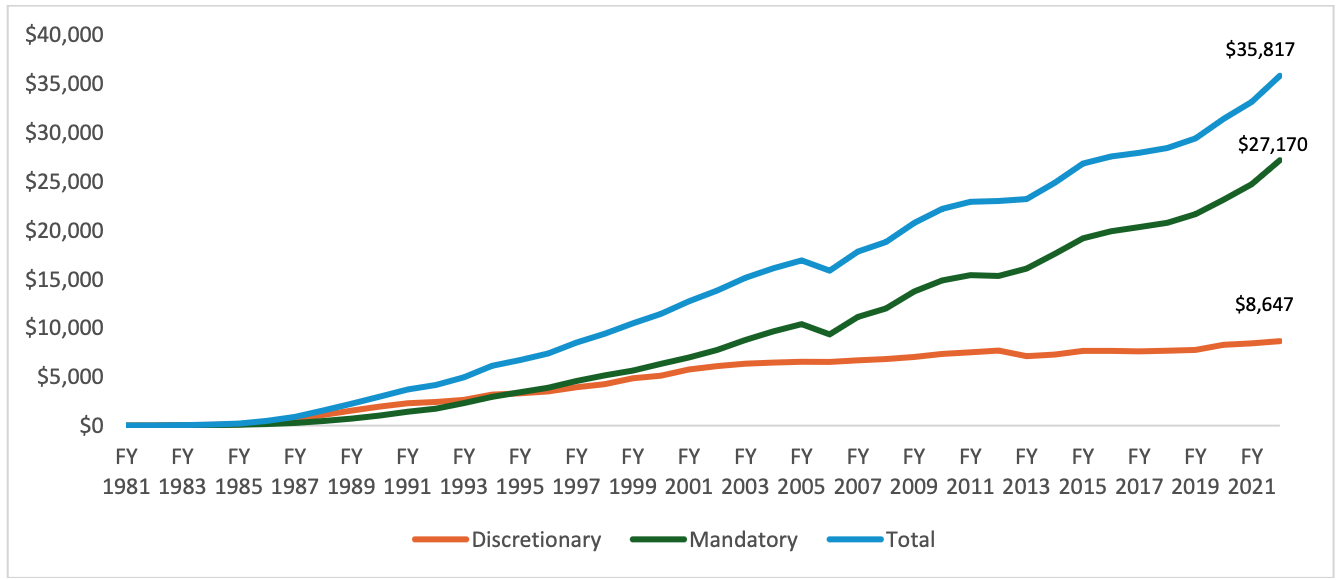
As illustrated in the figure below, federal HIV/AIDS funding has steadily increased since 1981 when the epidemic began. This growth is driven primarily by increases in mandatory spending reflecting more PLWH, advances in treatment, and rising medical costs. Mandatory programs include those that provide health care services and treatment, mainly through Medicaid and Medicare, as well as Social Security Disability Insurance, Supplemental Security Income, and other programs providing health coverage and cash assistance.16 In contrast, discretionary funding from Congress comprises a smaller portion of the federal HIV budget and has seen minor increases, mostly tied to the EHE initiative.
Figure #1. Federal Funding for HIV, FY1981 FY2022 (Millions)
Source: Created by ASPE using domestic data from KFF, Appendix A16
Note: Domestic discretionary funding figures may vary depending on the source. For example, the HIV.gov table reports $7,425.80 million for FY2022 discretionary domestic spending, which differs from the amounts provided by KFF for the same period.
RWHAP Structure
The RWHAP includes five statutorily defined Parts, which are funded through annual Congressional appropriations. Funding is distributed as grants to metropolitan areas (Part A), states and territories (Part B), and health providers and community-based organizations (Parts C and D). By law, recipients of Part A, B, and C grants must use at least 75% of their funding on core medical services, unless waived by the HHS Secretary.17 Part F funding supports training and technical assistance (Part F). Part E previously authorized emergency response grants but was never funded.18
Part A: Grants to Eligible Metropolitan Areas (EMAs) and Transitional Grant Areas (TGAs). Part A provides grants to jurisdictions most affected by HIV. These jurisdictions are funded as either an EMA or TGA, depending on the number of cumulative AIDS cases in the jurisdiction.i Over 70 percent of all people diagnosed with HIV reside within a Part A EMA or TGA.19 Two thirds of the Part A appropriation is distributed through formula grants, based on the relative distribution of living HIV/AIDS cases using Centers for Disease Control and Prevention (CDC)-confirmed data.20,21 The remaining Part A funds are distributed as competitive supplemental grants awarded on the basis of demonstrated need and as Minority AIDS Initiative (AIDS) grants.3,21 The amount of competitive supplemental grants is determined based on a weighting of factors, including demonstrated success in identifying individuals with HIV/AIDS who do not know their HIV status and making them aware of such status. Part A grants support the provision of core medical and support servicesii for PLWH in the 24 EMAs and 28 TGAs.
Part B: Grants to States and Territories. Part B is the largest Part and provides grants to all 50 states, the District of Columbia, Puerto Rico, the U.S. Virgin Islands, and six U.S. territories to improve access to HIV care and support services.22 Part B funds are distributed through statutory formula base and supplemental grants, ADAP base and ADAP supplemental grants, Emerging Communities (EC) grants, and MAI grants. The Part B base grant formula allocates funding based on the relative distribution of living HIV/AIDS cases within each state, using CDC-confirmed data. States that demonstrate need can also receive supplemental grants to be used for core medical services, with priority given to states that experience Part B funding reductions due to formula changes. A central component of Part B is the AIDS Drug Assistance Program (ADAP), which provides HIV medications and related services (e.g., cost sharing assistance) to low-income individuals with limited or no insurance coverage. ADAP funds are distributed by a formula based on the number of people living with HIV/AIDS in the state or territory in the most recent calendar year, and ADAP supplemental funds are a five percent set aside for states with severe need. EC grants provide additional funds to states that have a growing number of people with AIDS, i.e., emerging communities reporting between 500 and 999 cumulative AIDS cases over the most recent five calendar years that do not qualify for EMA or TGA status. The EC grant amount is based on the proportion of the total number of living cases of HIV/AIDS in emerging communities in the state to the total number of living cases of HIV/AIDS in emerging communities nationwide.23
Part C: Early Intervention Services (EIS) and Capacity Development Grants. Part C funds primary health care and support services in outpatient settings for PLWH, primarily through EIS grants, which provide direct funding to local community-based medical care providers, Federally Qualified Health Centers, rural health clinics, and other providers. Part C funds also may be used for capacity development grants, which aim to help organizations strengthen their infrastructure and improve their ability to develop, enhance, or expand access to high-quality HIV primary health care services for PLWH in low-income or rural communities. 24 Part C funding is allocated using a data driven methodology that includes a minimum award per service area, the number of clients served by the grantee, populations disproportionately impacted by the HIV epidemic, and funding for service areas partially or wholly outside of Part A jurisdictions.
Part D: Services for Women, Infants, Children, and Youth. Part D provides grants to outpatient family-centered primary and specialty medical care for women, infants, children, and youth with HIV. Funding also may be used to provide support services to PLWH and their affected family members. Part D grant recipients can use the fundings for medical service costs, clinical quality management (CQM) costs, support service costs, and administrative costs (limited to 10% of Part D budget).25 Unlike the previous Parts, Part D does not have a statutory floor for core medical spending. Part D funding is allocated using a data driven methodology that includes a minimum award per service area, the number of women, infant, children, and youth clients served by the grantee, and funding for service areas partially or wholly outside of Part A jurisdictions.
Part F: Demonstration and Training. Part F supports several research, technical assistance, and access-to-care programs. For example, the Special Projects of National Significance (SPNS) Program supports the development of new models of HIV care and treatment to respond to emerging needs of clients served by RWHAPs. The AIDS Education and Training Center (AETC) Program supports a network of eight regional centers and two national centers that conduct multidisciplinary education and training programs for health care providers treating PLWH. The HIV/AIDS Dental Reimbursement Program (DRP) reimburses dental schools, hospitals with postdoctoral dental education programs, and community colleges with dental hygiene programs for a portion of uncompensated costs incurred by providing oral health treatment to PLWH. The Community-Based Dental Partnership Program (CBDPP) attempts to increase access to oral health care services for PLWH while providing education and clinical training for dental care providers, especially those practicing in community-based settings.
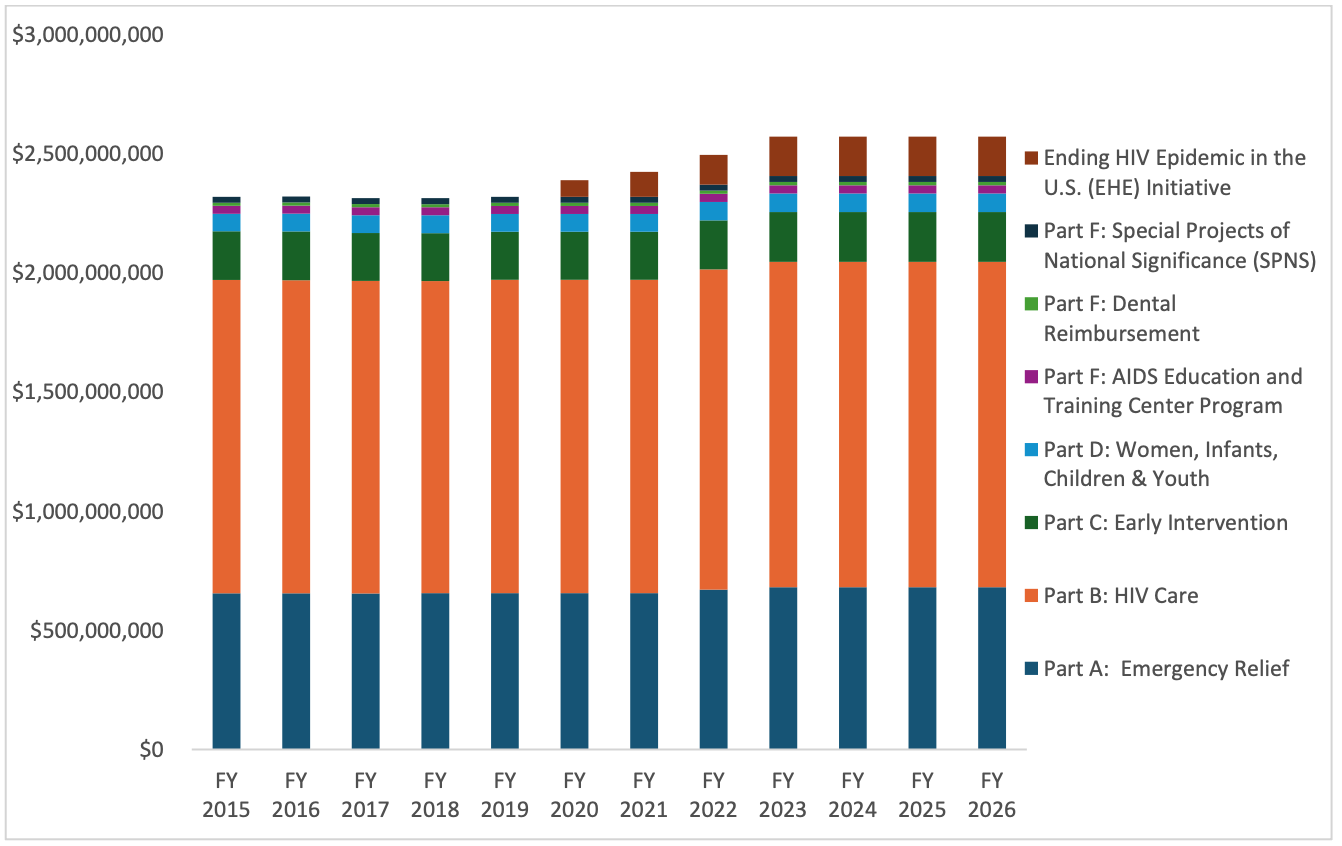
Figure #2. Ryan White HIV/AIDS Program (RWHAP) Funding, FY2015 FY2026
Source: Created by ASPE using HRSA data26
Note: Part B funding levels include $900,313,000 for ADAP.
HIV Burden and RWHAP Funding Distribution Across States
Examining HIV burden and the RWHAP funding at the state and local level provides insight into whether federal resources are aligned with the geographic distribution of PLWH. Comparing HIV burden with funding across states and priority areas helps identify variations in resource allocation and supports efficient distribution of limited federal resources.
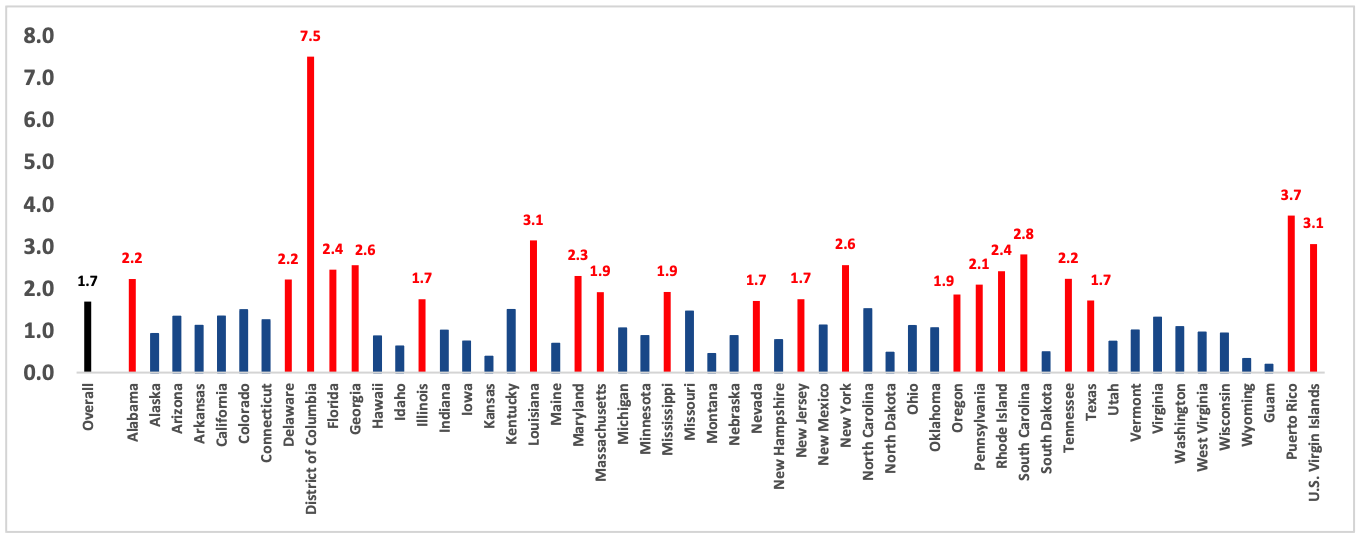
In Calendar Year (CY) 2023, the overall rate of RWHAP (non-ADAP) clients was 1.7 per 1,000 U.S. residents, equivalent to approximately 565,519 clients. Considerable geographic variation was observed across states and territories. The District of Columbia had the highest rate (7.5 per 1,000 residents), followed by Puerto Rico (3.7), Louisiana (3.1), the U.S. Virgin Islands (3.1), South Carolina (2.8), and Georgia and New York (both 2.6). Elevated rates were also observed in Florida (2.4), Rhode Island (2.4), Maryland (2.3), Tennessee (2.2), Alabama (2.2), and Delaware (2.2). In contrast, the lowest rates were reported in Guam (0.19), Wyoming (0.32), Kansas (0.38), Montana (0.44), and North Dakota (0.47). Overall, the findings demonstrate substantial differences in RWHAP utilization across states.
Figure #3. RWHAP (Non-AIDS Drug Assistance Program (ADAP)) Clients Per 1,000 Residents, 2023
Source: Created by ASPE using HRSA data (Table 12A)15 and 2020 US Census data27.
Note: Red bars indicate states with rates at or above the national average.
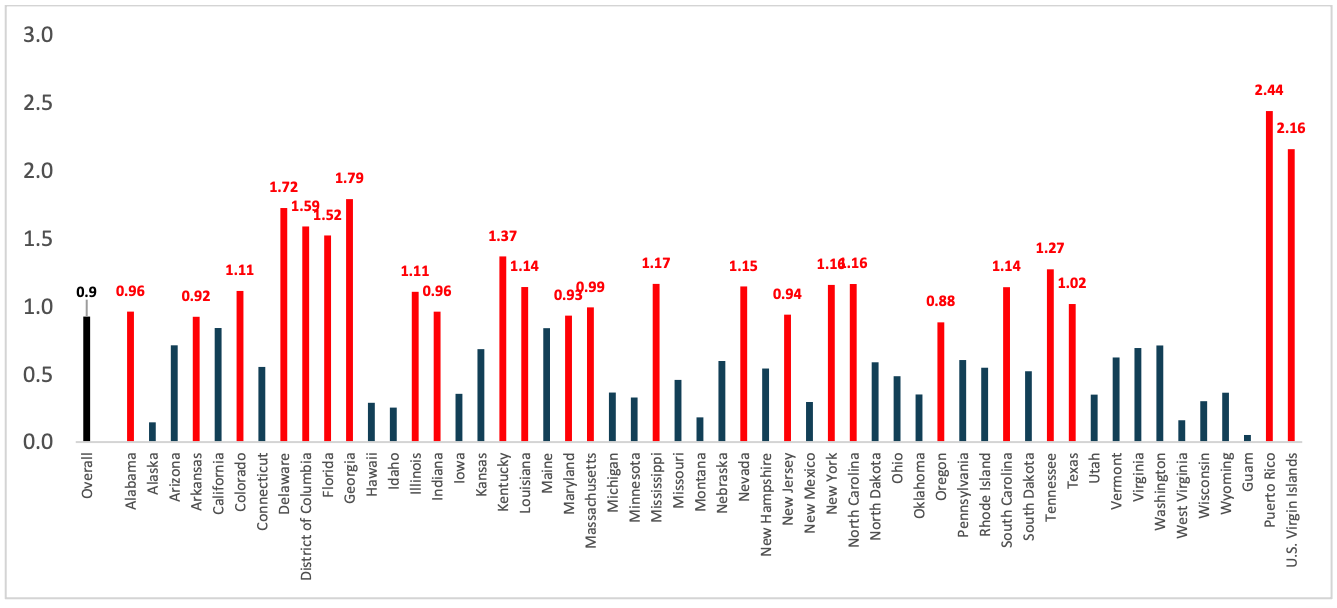
In CY2023, the overall rate of ADAP clients (non-services report reportable (SRR), or clients who fall outside the scope of RWHAP) was 0.92 per 1,000 U.S. residents, corresponding to approximately 309,910 clients. Rates varied substantially across states and territories. Puerto Rico had the highest rate (2.44 per 1,000 residents), followed by the U.S. Virgin Islands (2.20), Georgia (1.79), Delaware (1.72), the District of Columbia (1.59), and Florida (1.52). Other jurisdictions with relatively high rates included Kentucky (1.37), Tennessee (1.27), Mississippi, New York, and North Carolina (each 1.16), Nevada, South Carolina, and Louisiana (each approximately 1.14 1.15). In contrast, the lowest rates were observed in Guam (0.05), Alaska (0.15), West Virginia (0.16), Montana (0.18), Idaho (0.25), and Hawaii and New Mexico (both 0.29). These findings highlight substantial geographic variation in ADAP participation across U.S. states and territories.
Figure #4. AIDS Drug Assistance Program Clients (non-services report reportable (SRR)) per 1,000 Residents, 2023
Source: Created by ASPE using HRSA data (Table 7a)28 and 2020 US Census data.27
Note: Red bars indicate states with rates at or above the national average.
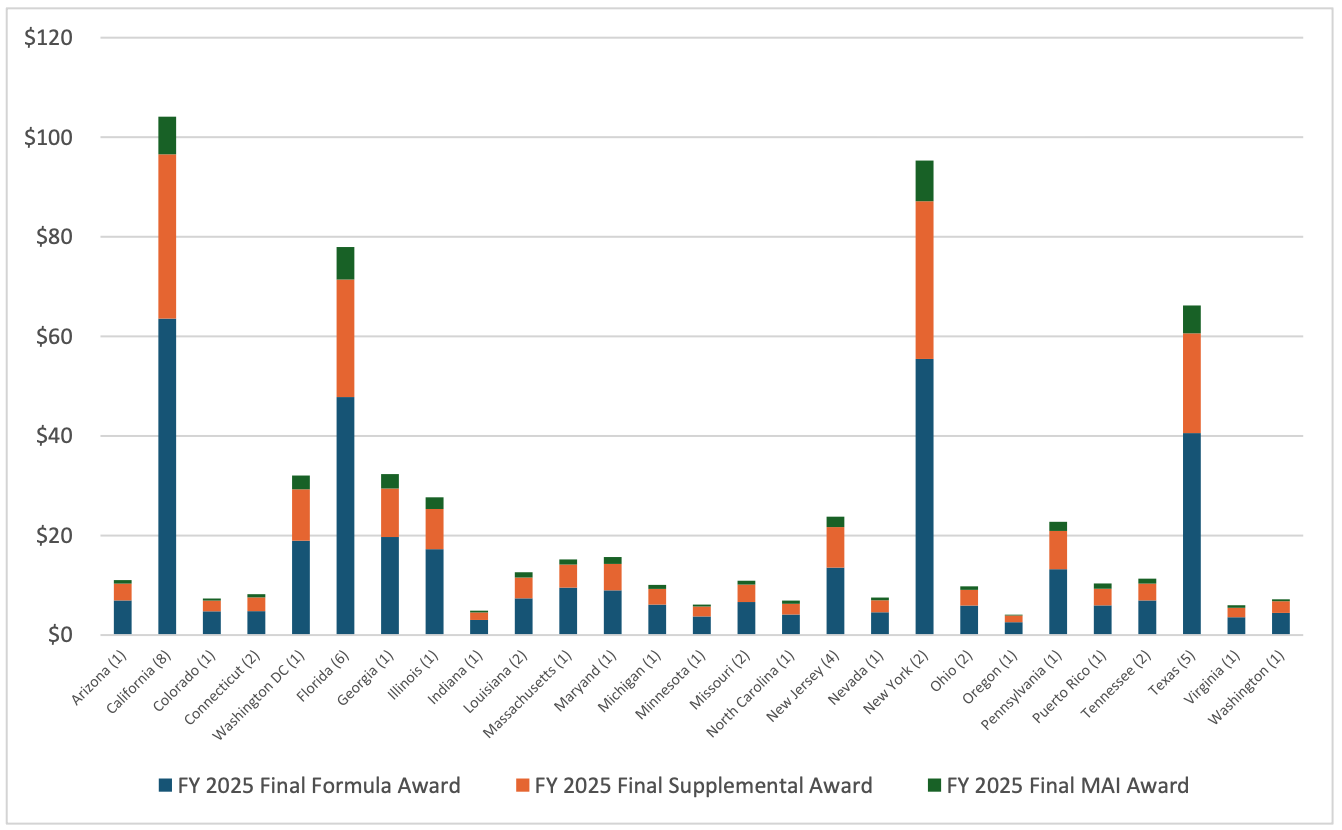
In FY2025, the RWHAP Part A was awarded to 52 EMAs and TGAs across 27 states, the District of Columbia, and Puerto Rico. Funding was concentrated in states with multiple eligible metropolitan areas and larger populations of PLWH. California received the largest total award ($104.1 million) across eight EMAs/TGAs, followed by New York ($95.3 million, two EMAs/TGAs), Florida ($77.9 million, six EMAs/TGAs), and Texas ($66.2 million, five EMAs/TGAs). Others receiving more than $20 million included Georgia ($32.3 million), the District of Columbia ($32.0 million), Illinois ($27.7 million), New Jersey ($23.8 million), and Pennsylvania ($22.8 million). Among jurisdictions with a single EMA or TGA, awards ranged from approximately $4.1 million in Oregon to $32.3 million in Georgia, reflecting differences in the size of the HIV epidemic, the number of people living with HIV, and the funding allocation formula.
Figure #5. Total FY2025 Part A Awards (Millions)
Source: Created by ASPE using HRSA data.29
Note: Numbers in parentheses represent the number of EMAs and TGAs in each state receiving awards.
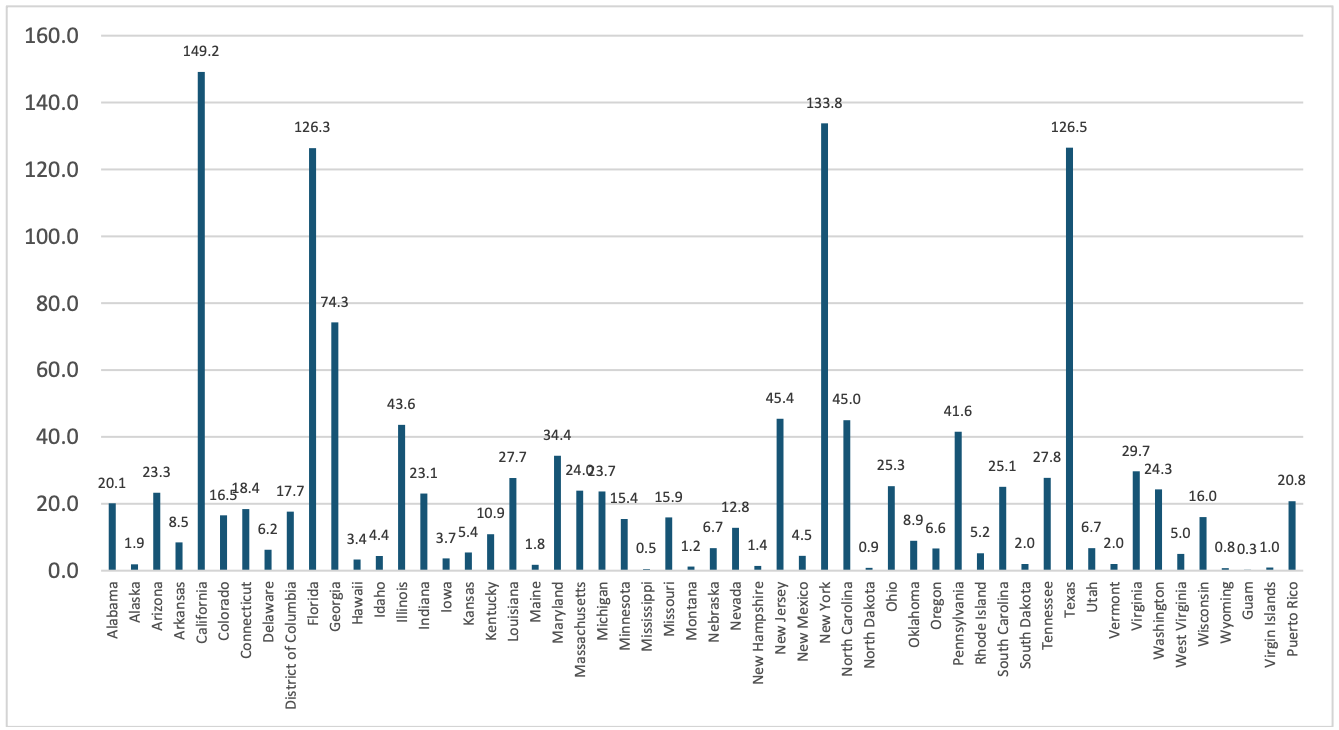
In FY2025, the RWHAP Part B awarded to all 50 states, the District of Columbia, Puerto Rico, Guam, and the U.S. Virgin Islands to support HIV medical care, medications, and related support services, including the AIDS Drug Assistance Program (ADAP). California received the largest allocation ($149.2 million), followed by New York ($133.8 million), Texas ($126.5 million), and Florida ($126.3 million). Other jurisdictions receiving substantial funding included Georgia ($74.3 million), New Jersey ($45.4 million), North Carolina ($45.0 million), Illinois ($43.6 million), Pennsylvania ($41.6 million), and Maryland ($34.4 million). Among the smaller jurisdictions, allocations ranged from $0.3 million for Guam to $2.0 million for South Dakota and Vermont.
Figure #6. FY2025 Part B Funding (Millions)
Source: Created by ASPE using HRSA data.30
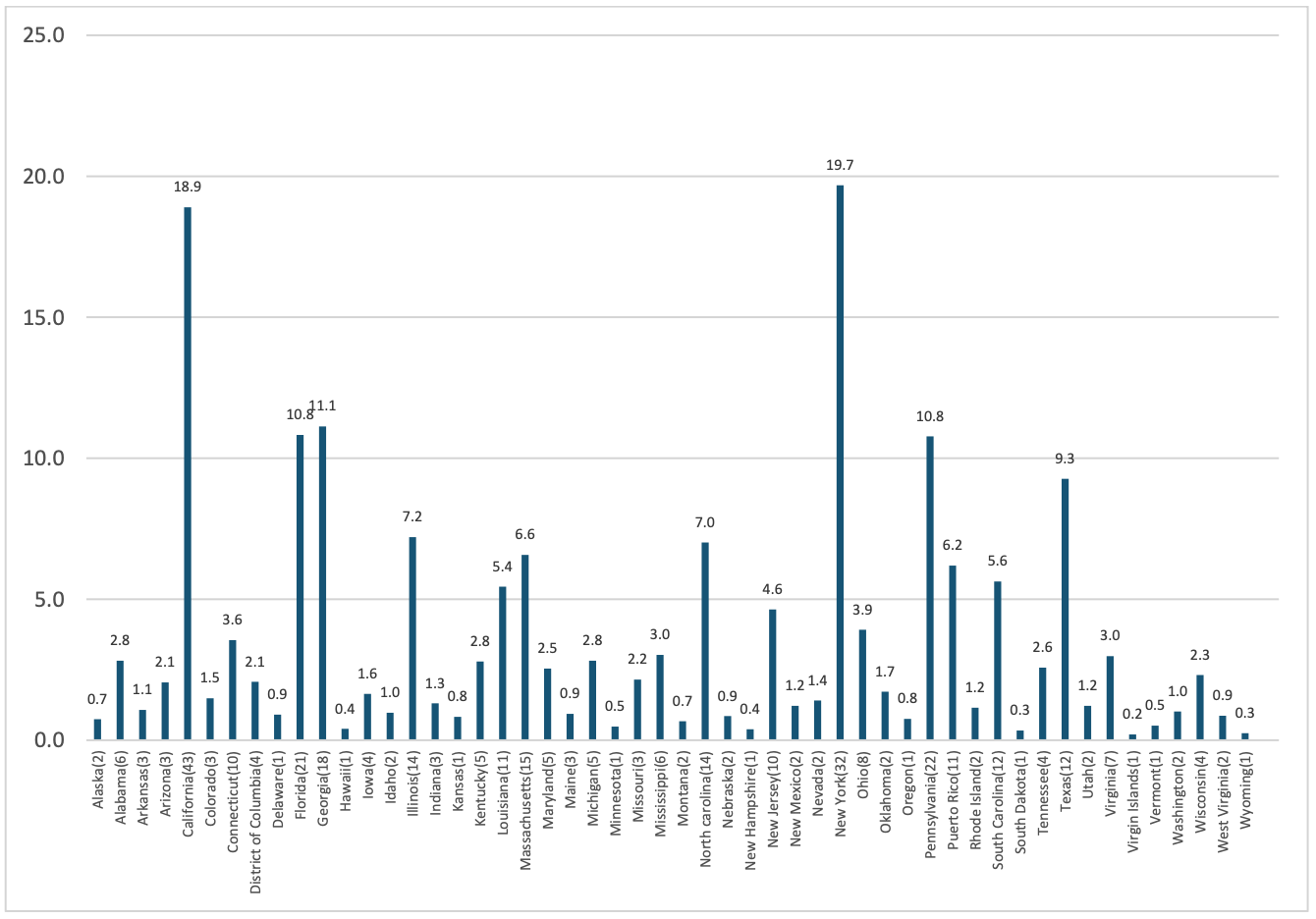
In FY2025, the RWHAP Part C EIS Program awarded approximately $182.3 million to 353 recipients across 49 states, the District of Columbia, Puerto Rico, and the U.S. Virgin Islands to support comprehensive outpatient HIV primary medical care and early intervention services. New York received the largest total award ($19.7 million) across 32 recipients, followed closely by California ($18.9 million, 43 recipients). Other states receiving substantial funding included Georgia ($11.1 million, 18 recipients), Florida ($10.8 million, 21 recipients), Pennsylvania ($10.8 million, 22 recipients), and Texas ($9.3 million, 12 recipients). Illinois ($7.2 million), North Carolina ($7.0 million), Massachusetts ($6.6 million), Puerto Rico ($6.2 million), South Carolina ($5.6 million), and Louisiana ($5.4 million) also received more than $5 million in awards. Recipient organizations ranged from a single awardee in several states to 43 recipients in California, reflecting differences in the number and distribution of organizations providing HIV primary care services. North Dakota did not receive a Part C EIS award in FY2025.
Figure #7. FY2025 RWHAP Part C EIS Awards (Millions)
Source: Created by ASPE using HRSA data.31
Notes: Numbers in parentheses represent the number of recipients in each state.
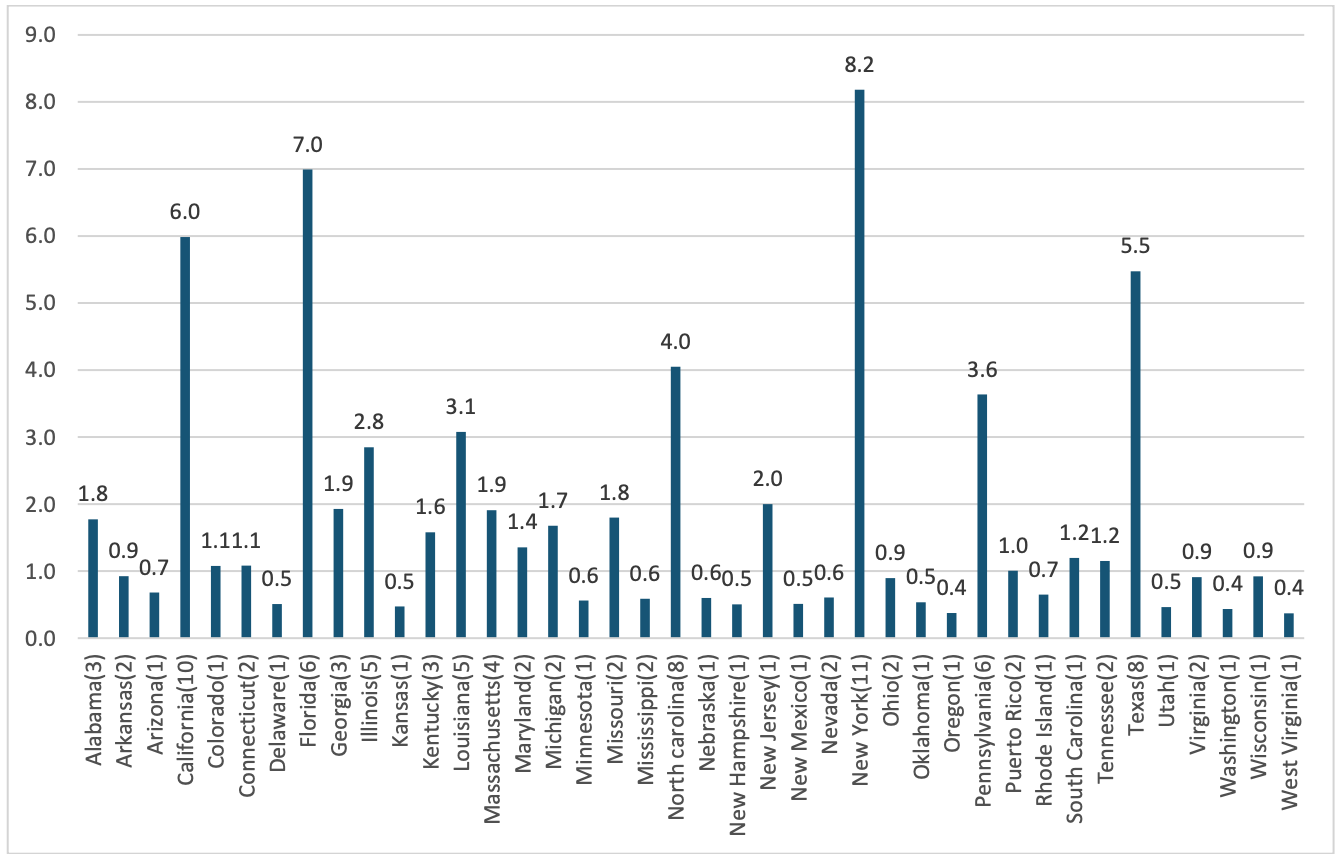
In FY2025, the RWHAP Part D awarded funding to 111 recipients across 39 states and Puerto Rico to provide family-centered HIV primary care and support services for women, infants, children, youth, and their families. New York received the largest total award ($8.2 million) across 11 recipients, followed by Florida ($7.0 million, six recipients), California ($6.0 million, 10 recipients), and Texas ($5.5 million, eight recipients). Other jurisdictions receiving substantial funding included North Carolina ($4.0 million, eight recipients), Pennsylvania ($3.6 million, six recipients), Louisiana ($3.1 million, five recipients), and Illinois ($2.8 million, five recipients). Most states had one to three funded recipients, with awards ranging from approximately $371,000 in West Virginia to more than $8.2 million in New York. Overall, the distribution of Part D funding supports a nationwide network of providers delivering HIV care and support services to women, infants, children, youth, and their families.
Figure #8. Total FY2025 Award Part D (Millions)
Source: Created by ASPE using HRSA data.32
Note: Numbers in parentheses represent the number of recipients in each state.
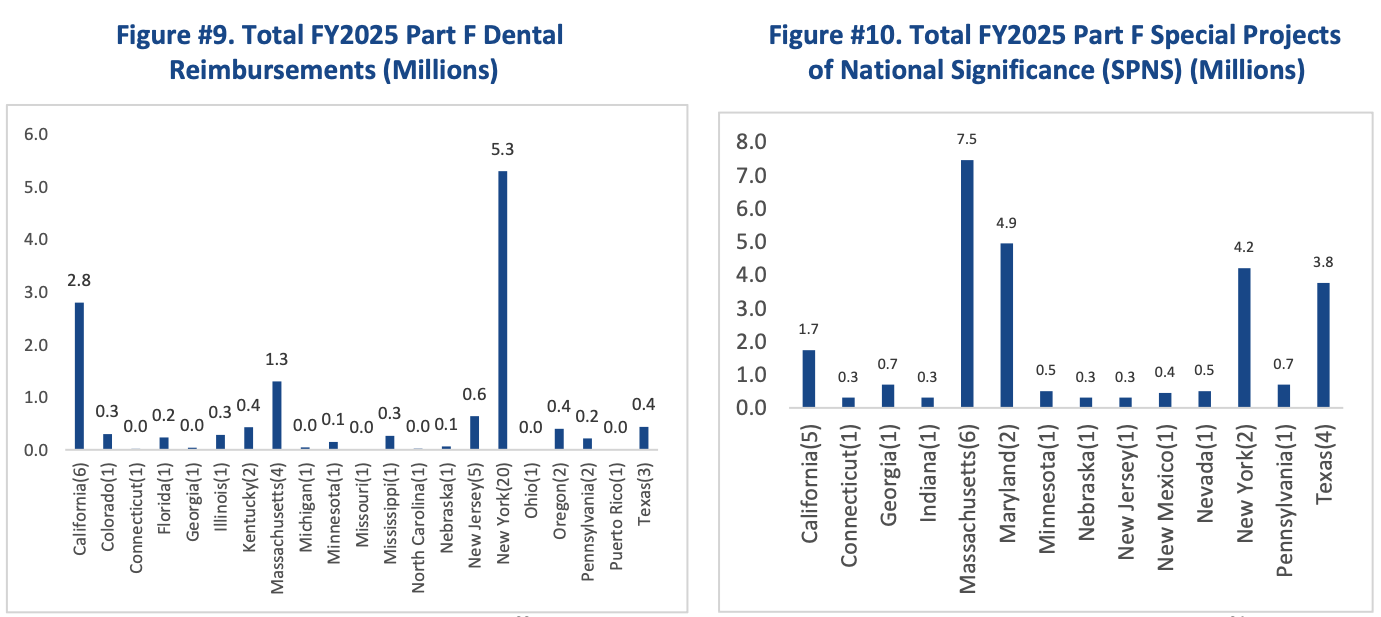
In FY2025, the RWHAP Part F awarded funding for dental reimbursements and special projects of national significance (SPNS) across many states. In FY 2025, Ryan White HIV/AIDS Program Part F Dental Reimbursement Program awards totaled $12.9 million, and Special Projects of National Significance (SPNS) Program grant awards totaled $26.2 million.
Source: Created by ASPE using HRSA data.33 Source: Created by ASPE using HRSA data.34
III. Ending the HIV Epidemic Initiative Funding
The EHE initiative consists of three phases. Phase I (2020 2025) focused on 57 priority jurisdictions, including 48 counties, Washington, D.C., and San Juan, Puerto Rico, where more than 50 percent of new HIV diagnoses occurred in 2016 and 2017 based on CDC data. Phase I also included seven states with a disproportionate occurrence of HIV in rural areas defined as states with at least 10 percent of new diagnoses in 2016-2017 taking place in rural areas (populations under 50,000), a minimum of 75 new diagnoses statewide, and no priority county designated. The methodology for identifying priority jurisdiction was not a broad formula but rather a concentration of burden approach based on local epidemiology according to planning documents. In September 2019, the CDC awarded $12 million from the Minority HIV/AIDS Fund (MAHF) to 32 state and local health departments representing these priority jurisdictions for the development of comprehensive EHE plans tailored to local needs.35
Overall Funding at Federal Level
EHE is a cross-agency collaboration, engaging the CDC, HRSA, Indian Health Service (IHS), and National Institutes of Health (NIH), and coordinated by the Office of the Assistant Secretary for Health. CDC provides grants in an attempt to strengthen local HIV prevention capacity and provides affected communities with the expertise, technology, and resources to address the HIV epidemic locally.36 HRSA provides funds for provision of medical care, with EHE funding allocated to the RWHAP and the Health Center Program.37 IHS has used EHE Initiative funds to address diagnoses, prevention, and treatment activities associated with HIV, Hepatitis C (HCV) and syphilis in American Indian and Alaska Native (AI/AN) communities and to support clinical training and national infrastructure and a national media campaign for HIV, HCV, and sexually transmitted infection (STI) diagnosis, prevention, and treatment.38 The NIH advances implementation of science for the purpose of improving delivery of HIV services.39
In the first year of the program, the EHE initiative was supported by reprogrammed funds, with new appropriations beginning in FY2020. From FY2020 through FY2026, Congress provided dedicated EHE funding to the CDC, HRSA, IHS, and NIH, specifying how the amounts are to be allocated across programs. Specifically, for HRSA, Congress allocates funding to the Health Center Program and the RWHAP. The primary focus of the Health Center Program in the EHE initiative is expanding HIV prevention services, including outreach, care coordination, and access to PrEP-related services to people at high risk for HIV transmission through selected health centers in the identified jurisdictions.40 The RWHAP focuses on linking PLWH who are either newly diagnosed, diagnosed but currently not in care, or are diagnosed and in care but not yet virally suppressed, to the essential HIV care and treatment and support services needed to help them achieve viral suppression. The 2026 HRSA Notices of Funding Opportunity prioritize sending RWHAP funds to EHE jurisdictions with the highest need.41 As detailed in the table below, EHE funding increased between FY2020 and FY2023 and held steady from FY2023 through FY2025.
Table 1. Ending the HIV Epidemic (EHE) Initiative Funding, FY2019 FY2026 (Millions)
Department/ Agency | FY2019 | FY2020 | FY2021 | FY2022 | FY2023 | FY2024 | FY2025 | FY2026 |
HHS (general) | $6 | — | — | — | — | — | — | — |
CDC | $14 | $140.00 | $175.00 | $195.00iii | $220.00iv | $220.00 | $220.00 | $220.00 |
RWHAP | $0.98 | $70.00 | $105.00 | $125.00 | $165.00 | $165.00 | $165.00 | $165.00 |
Health Centers | $50.00 | $102.25 | $122.25 | $157.25 | $157.25 | $157.25 | $157.25 | |
Health Centers (rural health TA) | — | $1.00 | $1.50 | — | — | — | — | — |
IHS | $2.40 | — | $5.00 | $5.00 | $5.00 | $5.00 | $5.00 | $5.00 |
NIH | $11.30 | $6.00 | $16.00 | $26.00 | $26.00 | $26.00 | $26.00 | Not specified |
Total | $34.68 | $267.00 | $404.75 | $473.25 | $573.25 | $573.25 | $573.25 | $547.25 |
Source: Created by ASPE based on KFF, Ending the HIV Epidemic (EHE) Funding Tracker42 and HIV.gov.43
Congress, through appropriations acts and explanatory statement language, and the Administration, in the President s budget have signaled their priorities for EHE. For example, in early EHE implementation, expanding PrEP services among high-risk groups was emphasized in both appropriations acts and presidents budget requests. The Explanatory Statement for the Consolidated Appropriations Act, 2020 (P.L. 116-93) specified that the agreement includes $50 million to be distributed to HRSA Health Centers in high-need jurisdictions to increase the use of PrEP among high-risk groups.44 In some years, Congressional appropriators have requested HHS provide a report on EHE spending, including resource allocation by state and/or county.45
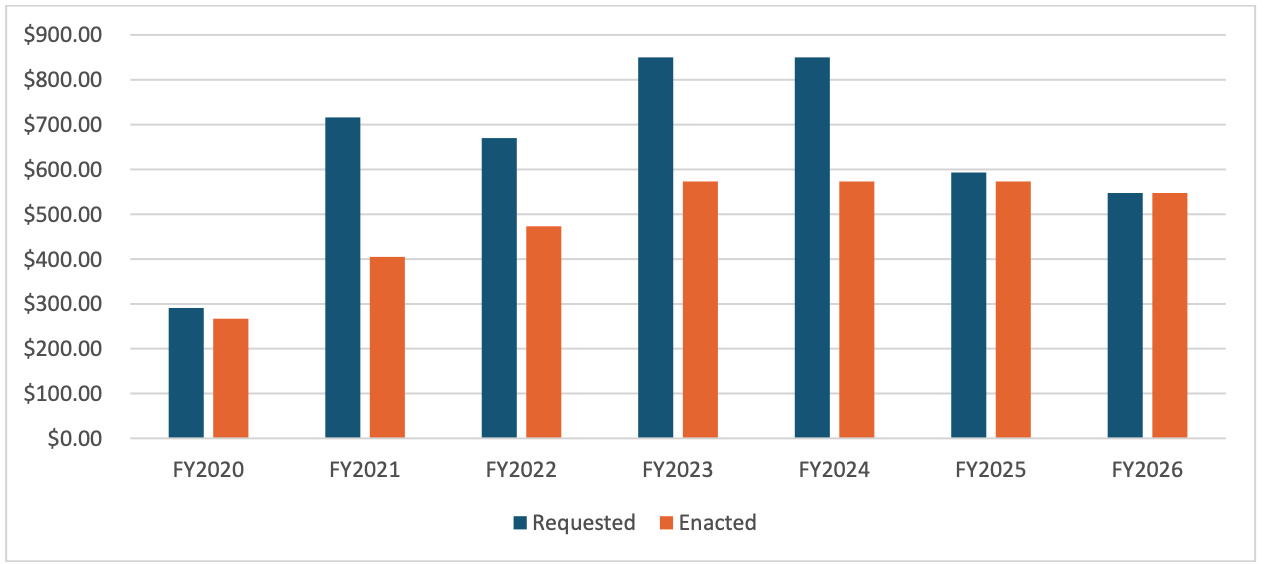
The President's Budget Request specifies the Administration s priorities with respect to domestic HIV spending and related policy issues. As illustrated in the figure below, EHE funding requests increased from FY2020 to FY2023, held steady in FY2024, and decreased in FY2025. The FY2026 President s Budget requested a total of $547 million for EHE activities, excluding EHE funding for domestic HIV research at NIH, which has not been published. Other than NIH s EHE funding, which was $26 million in FY2025, this request is stable from FY2025, and the same has been requested for FY2027. In addition, the FY2026 and FY2027 requests proposed a new agency within HHS, the Administration for a Healthy America (AHA), which would consolidate chronic care and disease prevention programs across HHS, including EHE activities that are currently carried out by CDC as well as HRSA as part of the RWHAP.
Figure #11. EHE Funding: Requested versus Enacted Levels, FY2020 FY2026 (Millions)
Source: Created by ASPE using KFF data.42
RWHAP EHE Awards: FY2020 FY2024
As detailed in the table below, HRSA s HAB awards funds to RWHAP recipients to advance the EHE initiative. This includes funding to metropolitan areas and states (i.e., Part A and Part B jurisdictions) to implement strategies and interventions to provide medical and support services to reduce new HIV infections in the U.S. From FY2020 through FY2024, HRSA directed EHE funding to 39 current RWHAP Part A jurisdictions that include one or more EHE priority counties, as well as seven Part B states plus Ohio for Hamilton County. Most EHE funding is allocated directly to designated jurisdictions to strengthen local response efforts. Typically, county-level funding is distributed to the EMA or TGA where the relevant EHE county is located, based on existing grantee relationships. An exception is Hamilton County, Ohio, where funding was provided to the state due to a preexisting funding arrangement. From FY2020 to FY2024, HAB also awarded funds to nonprofit organizations to provide training and other resources to recipients of EHE funds and to RWHAP AETC Program EHE recipients to provide workforce capacity development and technical assistance to the identified jurisdictions.
Table 2. RWHAP EHE Awards, FY2020 FY2024 (in Millions)
| FY2020 | FY2021 | FY2022 | FY2023 | FY2024 |
|---|---|---|---|---|---|
RWHAP Parts A and B Jurisdictions EHE Awards | $55 | $87.5 | $102 | $139 | $139 |
RWHAP EHE Technical Assistance and Coordination Provider Awards | $5 | $8 | $80 | $8 | $8 |
RWHAP Part F AETC Program EHE Supplemental Awards | $2 | $3 | $4 | $5 | — |
Total | $62 | $98.5 | $114 | $152 | $147 |
Source: Table created by ASPE using HRSA funding announcements.43
HRSA funds are also distributed to health centers through the EHE Primary Care HIV Prevention awards.
IV. RWHAP Outcomes
The RWHAP has served an increasing number of clients, connecting them to HIV medical care and helping them reach viral suppression. In 2024, the RWHAP served 601,853, which is more than half of people diagnosed with HIV in the United States and 40,000 more clients than in 2020.46 Outpatient and ambulatory health services and medical case management were the most utilized services delivered by RWHAP in 2024, with 76% and 58% of clients receiving these services, respectively.
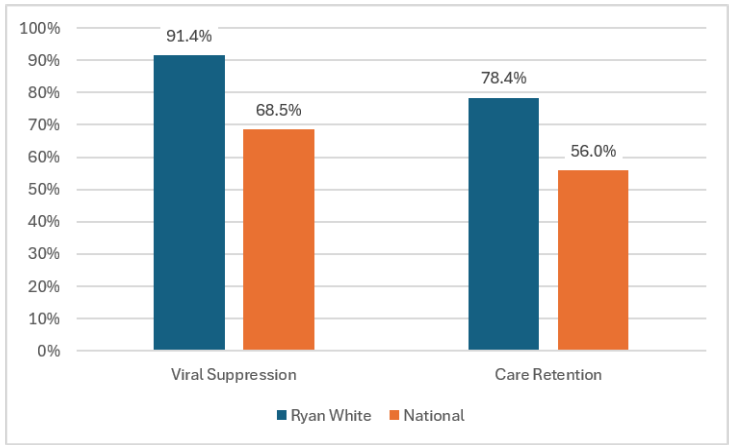
Ensuring individuals diagnosed with HIV are promptly linked to care and continue care is vital for reaching and maintaining viral suppression, and individuals who have reached viral suppression do not transmit HIV. Most HIV transmission is from individuals who are unaware of their HIV status or not in care, estimated to account for 45.8% and 41% of transmissions in 2019, respectively. Comparatively, only 13.2% of transmissions are predicted to be from individuals who are receiving ART but are not virally suppressed. In 2024, 83% of individuals with HIV in the US were linked to care within 1 month of being diagnosed. For RWHAP participants, retention in care has remained relatively stable since 2020, with 78.7% of patients receiving medical care being retained in 2024. Comparatively, 56% of PLWH were retained in care nationally.13,46 Additionally, in 2024, 91.4% of RWHAP clients were virally suppressed, compared to 69.5% in 2010, a 21.9% increase and 22.9% higher than the national viral suppression rate of 68.5% among all people diagnosed with HIV.13,46
Figure #12. Outcomes for RWHAP Clients and Individuals Diagnosed with HIV in the US, 2024
Source: RWHAP Annual Data Report and 2026 update to the CDC National HIV Prevention and Care Objectives.13,46
Treatment-as-prevention is another strategy for reducing HIV transmission. PrEP medication reduces risk of sexual transmission by 99% and at least 74% amongst people who inject drugs when taken as instructed.10 PrEP is recommended for individuals who engage in unprotected anal or vaginal sex and may have a partner with HIV, or people who inject drugs with a partner or share needles or other injection equipment.47 RWHAP funds cannot be used for PrEP medication since individuals taking this medication, by definition, are not diagnosed with HIV, but the program infrastructure is encouraged to be used to support PrEP services as allowed by legislation.11 Those involved with the RWHAP are connected to people at risk for contracting HIV and medical professionals who are knowledgeable about treatment and barriers to care and prevention services.
48Remaining Challenges
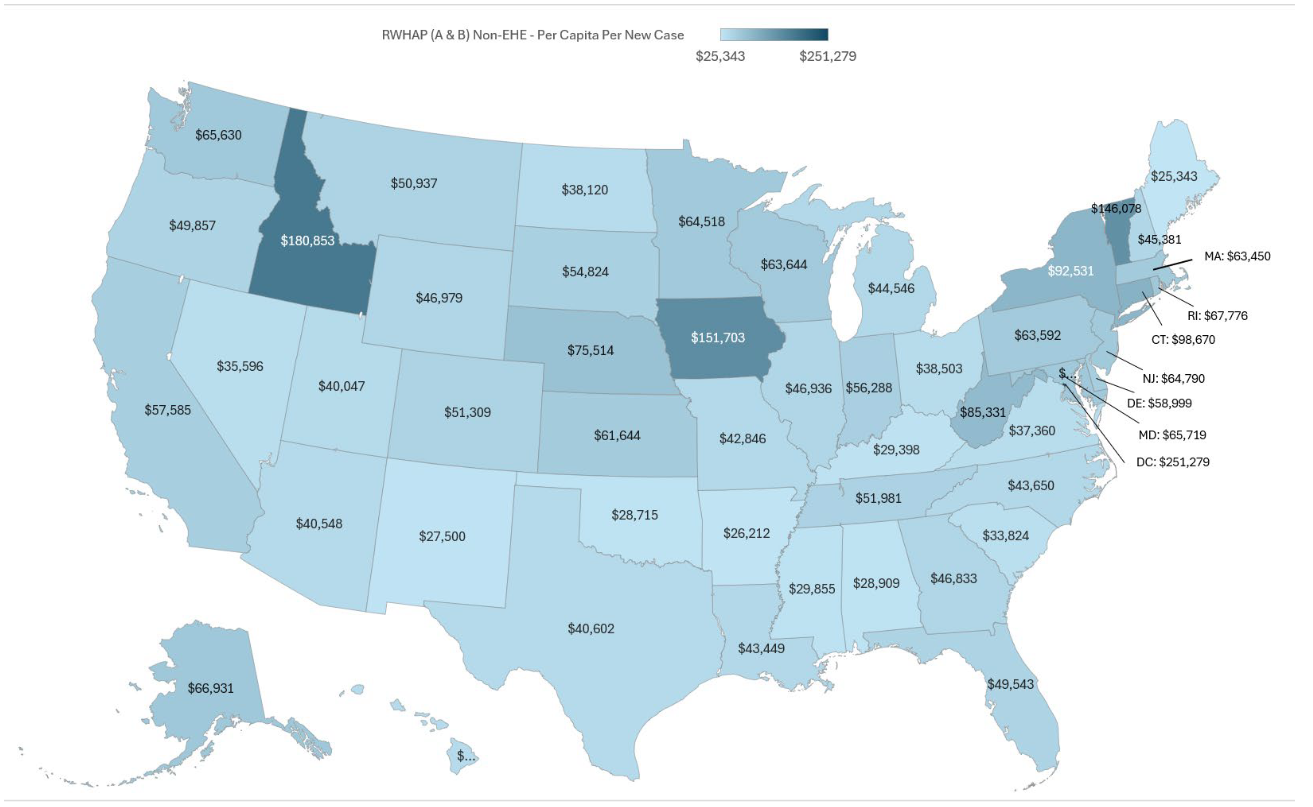
RWHAP has been effective in serving a growing number of clients, linking them to needed HIV medical care, and helping them achieve viral suppression. However, as described above, Part A and Part B formulas are generally based on the number of living HIV/AIDS cases rather than new HIV cases and thus may not sufficiently account for areas with rapidly increasing incidence or emerging outbreaks, or identify prevention opportunities where additional investment could avert future infections and contribute to the national goal of reducing new HIV infections in the US by 90% by 2030. As shown in the map below, RWHAP Part A and Part B funding per new HIV case varies substantially across states, and states with a high rural burden of HIV, as identified by the EHE initiative (i.e., Alabama, Arkansas, Kentucky, Mississippi, Missouri, Oklahoma, and South Carolina), received less RWHAP Part A and Part B funding (and except for Missouri, zero dollars in Part A funding) per capita per new case compared to other states.
Figure #13. FY2024 RWHAP (Part A and Part B) Non-EHE Funding Per New HIV Diagnosis
Source: Created by ASPE based on data from HIV.gov,43 CDC,49 and HRSA.50,51
Note: Part A provides grants to jurisdictions most heavily affected by HIV. Eligible jurisdictions are funded as either Eligible Metropolitan Areas (EMAs) or Transitional Grant Areas (TGAs), based on the severity of the HIV epidemic, as measured by cumulative AIDS case counts in a five-year period. Part A funding has been combined with Part B funding to present a state-level aggregate. The map does not reflect FY2024 RWHAP funding per new HIV diagnosis for Puerto Rico ($117,407), Guam ($35,248), U.S. Virgin Islands ($54,074), and the remaining territories for which CDC case data was not available (e.g., American Samoa, Marshall Islands, Mariana Island, Republic of Palau).
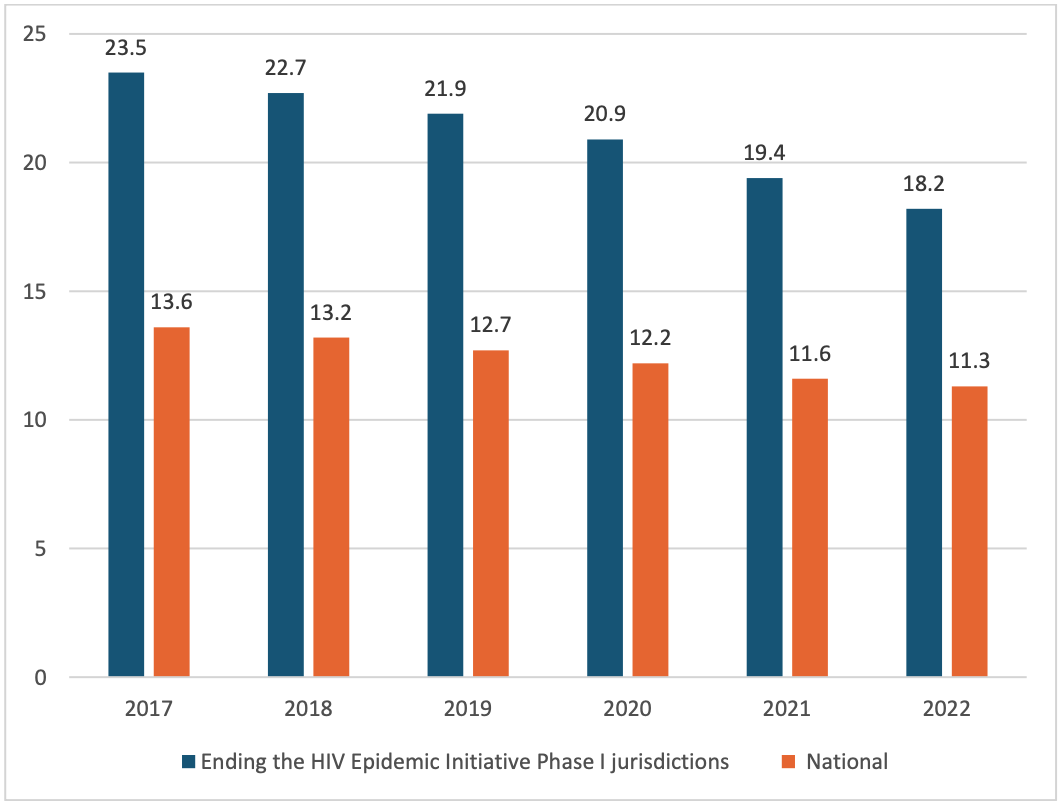
In contrast, the EHE initiative directs resources to jurisdictions with the greatest number of new cases of HIV and the states with the heaviest rural HIV burden. As illustrated in the figure below, from 2017 to 2022, HIV incidence fell by 23% in EHE Phase I jurisdictions compared to 17% nationwide.
Figure #14. Estimated HIV Incidence per 100,000 among persons aged >13
Source: Created by ASPE based on data from the CDC.49
While there have been great gains in preventing and treating HIV, there are a variety of challenges that must be addressed to achieve the goals of the EHE initiative, such as addressing regional outcomes differences, workforce shortages in HIV care facilities, and housing instability for people with HIV. In 2024, the South was reported to have the lowest proportion of people linked to HIV care within one month of receiving an HIV diagnosis as well as viral suppression within 6 months of diagnosis. The Northeast has the lowest proportion of individuals with HIV who received at least one CD4 or viral load test and viral suppression in 2024.49 In 2021, 56% of HIV care facilities cited insufficient healthcare provider capacity as a barrier to rapid enrollment, classified as being able to offer a first appointment in less than one day, and was more common in facilities not funded by RWHAP.7 In 2024, RWHAP also served 59.3% of clients who lived at or below 100% of the federal poverty level (FPL), and 13% of clients were also experiencing temporary or unstable housing. While 80% and 87% of clients with unstable or temporary housing, respectively, reached viral suppression, this is lower than the viral suppression reported by all RWHAP clients.46
V. RWHAP AND EHE: ALIGNMENT, IMPROVEMENT, AND FUTURE DIRECTIONS
The RWHAP and EHE initiative are two main components of the federal response to HIV in the United States. Since 1990, the RWHAP has provided medical care, medications, and support services to EMAs, TGAs, states, territories, and FQHCs that support PLWH. This program provided access to prevention and treatment resources to PLWH and high-risk populations. The RWHAP client rates and funding were concentrated in states and jurisdictions with the highest HIV burden, based on living HIV/AIDS cases, indicating that program resources are generally aligned with areas of greatest need. However, this does not take into account areas where healthcare access and RWHAP providers are limited, resulting in additional Americans that may be unaware of their HIV status. RWHAP has had steady increases in federal funding over time, with slightly greater increases between FY2020 through FY2023, largely due to the EHE initiative. Since FY2023, RWHAP funding has remained steady. The FY 2027 President s budget request for the RWHAP proposes a decrease of $73.5 million compared to the FY2026 enacted level due to the proposed elimination of Part F, which includes AETCS, the Dental Reimbursement Program, and Special Projects of National Significance.19 The request maintains the funding level for other RWHAP Parts.
The RWHAP continues the mission to achieve HIV reduction goals by providing medical care, medication, and support services to PLWH and prevention services to high-risk populations. The prevention services offered by these organizations may help advance the EHE initiative s goal to reduce the number of new HIV infections by at least 90% by 2030. Recipients of RWHAP achieved a viral suppression rate of 91.4% for patients receiving HIV medical care in 2024. The EHE initiative complements RWHAP and aims to bolster the national response to HIV by strengthening local HIV prevention capacity and targeting resources to areas with the highest HIV burden. While RWHAP providers may allocate resources based on their organization or community s demographics, the EHE initiative can provide targeted investments and strategies that focus resources on areas that most need them.52 Targeted funding through the EHE initiative offers opportunities for providers and community organizations to reach populations and groups that are considered difficult to reach, many of whom may be eligible to receive RWHAP services.53 In particular, the EHE targets areas with the highest HIV burdens with evidence-based interventions, such as diagnosing and treating HIV early and preventing new HIV transmissions through PrEP and syringe services programs (SSPs), allowing providers to reach patients who may not otherwise seek preventive care or treatment. In 2023, providers funded by EHE served over 26,800 individuals new to care and re-engaged more than 17,300 PLWH who were out of HIV care. Approximately, 81.4% of patients new to care reached suppression and of the re-engaged PLWH, over 84.6% reached viral suppression.15,52
Although HIV incidence fell by 23% in EHE jurisdictions from 2017 to 2022 compared to 17% nationwide, the EHE has not met its objective to reduce new HIV infections in the United States by 75% by 2025.54 There are opportunities to continue improving and expanding the EHE initiative. There is a renewed focus on reaching those who are undiagnosed or out of care, and outreach to hard-to-reach by local organizations and community groups will remain a critical component to engaging and re-engaging PLWH and high-risk populations. RWHAP recipients, sub-recipients, and their partners could re-evaluate their existing resource allocation to ensure their outreach, engagement, and support efforts can meet the needs of people and communities that are disproportionately impacted by HIV. Recipients should perform this re-evaluation while continuing to address the needs of those already in the RWHAP.43 Finally, the EHE could better integrate prevention and treatment services. In 2021, the CDC estimated more than 153,000 Americans were unaware they are living with HIV. Early detection, along with quick access to care, can help improve individual and community health outcomes. Offering both prevention and treatment services to high-risk populations could help prevent HIV infections from occurring. It could also help treat newly diagnosed individuals more quickly, helping them reach sustained viral suppression sooner.46 Together, these opportunities can help the EHE initiative achieve the goal to reduce new HIV infections by at least 90% by 2030.52
VI. CONCLUSION
Outreach to hard-to-reach by local organizations and community groups will remain a critical component to engaging and re-engaging PLWH and high-risk populations. Therefore, the programs began to engage clients for treatment and prevention in hard-to-reach areas. Future EHE initiative funding requests could focus on this effort. However, gaps remain in these programs. It is vital that scarce federal resources are spent wisely in the RWHAP and EHE initiative, and tangible metrics to ensure program success are necessary to justify continued investment.
REFERENCES
[1] Ryan White Comprehensive AIDS Resources Emergency Act of 1990, (1990).
[2] Ryan White HIV/AIDS Program: Legislation. 2024; https://ryanwhite.hrsa.gov/about/legislation. Accessed July 16, 2026.
[3] Ryan White HIV/AIDS Treatment Modernization Act of 2006, 2603(b) (2006).
[4] Ryan White CARE Act Amendments of 1996, (1996).
[5] Ryan White CARE Act Amendments of 2000, (2000).
[6] Ryan White HIV/AIDS Treatment Extension Act of 2009, (2009).
[7] Ryan White HIV/AIDS Program: Program Parts and Initiatives. 2025; https://ryanwhite.hrsa.gov/about/parts-and-initiatives. Accessed July 16, 2026.
[8] Ending the HIV Epidemic: Overview. 2026; https://www.hiv.gov/federal-response/ending-the-hiv-epidemic/overview. Accessed July 16, 2026.
[9] Baxter A, Gopalappa C, Islam MH, et al. Updates to HIV Transmission Rate Estimates Along the HIV Care Continuum in the United States, 2019. J Acquir Immune Defic Syndr. 2025;99(1):47-54.
[10] Let's Stop HIV Together: PrEP. 2025; https://www.cdc.gov/stophivtogether/hiv-prevention/prep.html. Accessed July 16, 2026.
[11] Cheever LW. Dear Colleague Letter to provide clarification regarding PrEP. In: Health Resources and Services Administration; 2021.
[12] HHS Office of Infectious Disease and HIV/AIDS Policy. Ending the HIV Epidemic Funding. 2026; https://www.hiv.gov/federal-response/ending-the-hiv-epidemic/funding. Accessed July 16, 2026.
[13] National HIV Prevention and Care Objectives: 2026 Update. 2026; https://www.cdc.gov/hiv-data/nhss/national-hiv-prevention-and-care-objectives-2026.html. Accessed July 16, 2026.
[14] O'Shea J, Yuan X, Lu J, et al. Barriers to Rapid Enrollment and ART Initiation Among US HIV Care Facilities. J Acquir Immune Defic Syndr. 2025.
[15] Health Resources and Services Administration. Ryan White HIV/AIDS Program Annual Data Report 2023. Health Resources and Services Administration;2024.
[16] U.S. Federal Funding for HIV/AIDS: Trends Over Time. KFF; March 26, 2024 2024.
[17] HIV/AIDS Bureau; Ryan White HIV/AIDS Program Core Medical Waiver Application Requirements. In: Administration HRaS, ed2008.
[18] The Ryan White HIV/AIDS Program: Overview and Impact of the Affordable Care Act, (2016).
[19] Administration for a Healthy America. Department of Health and Human Services Fiscal Year 2027: Administration for Healthy America Congressional Justification.
[20] Congress US. Title XXVI - HIV Health Care Services Program. 2015; https://ryanwhite.hrsa.gov/sites/default/files/ryanwhite/about-program/legislation-title-xxvi.pdf.
[21] Section 300ff-13. Type and distribution of grants, (2009).
[22] Ryan White HIV/AIDS Program Part B: Grants to States and Territories. 2026; https://ryanwhite.hrsa.gov/about/parts-and-initiatives/part-b-grants-states-territories. Accessed July 16, 2026.
[23] Health Resources and Services Administration. Ryan White HIV/AIDS Program: Part B Manual. 2023.
[24] Ryan White HIV/AIDS Program Part C: Early Intervention Services (EIS) and Capacity Development Grants. https://ryanwhite.hrsa.gov/about/parts-and-initiatives/part-c-early-intervention. Accessed July 16, 2026.
[25] Ryan White HIV/AIDS Program Part D: Services for Women, Infants, Children, and Youth. https://ryanwhite.hrsa.gov/about/parts-and-initiatives/part-d-swic. Accessed July 16, 2026.
[26] Ryan White HIV/AIDS Program Funding. 2026; https://ryanwhite.hrsa.gov/about/budget. Accessed July 16, 2026.
[27] 2020 Census Apportionment Results. 2021; https://www.census.gov/data/tables/2020/dec/2020-apportionment-data.html. Accessed July 16, 2026.
[28] Ryan White HIV/AIDS Program AIDS Drug Assistance Program (ADAP) Annual Data Report 2023. Health Resources and Services Administration;2025.
[29] Health Resources and Services Administration. FY25 Ryan White HIV/AIDS Program Part A Grant Awards. 2026; https://ryanwhite.hrsa.gov/about/parts-and-initiatives/part-a/fy25-grant-awards. Accessed July 17, 2026.
[30] Health Resources and Services Administration. FY25 Ryan White HIV/AIDS Program Part B Grant Awards. 2026; https://ryanwhite.hrsa.gov/about/parts-and-initiatives/part-b-adap/fy-2025-grant-awards. Accessed July 17, 2026.
[31] Health Resources and Services Administration. FY 2025 Ryan White HIV/AIDS Program Part C Early Intervention Services (EIS) Grant Awards. 2026; https://ryanwhite.hrsa.gov/about/parts-and-initiatives/part-c-early-intervention/fy25-eis-awards. Accessed July 16, 2026.
[32] Health Resources and Services Administration. FY 2025 Ryan White HIV/AIDS Program Part D Grant Awards. 2026; https://ryanwhite.hrsa.gov/about/parts-and-initiatives/part-d-swic/fy-2025-grant-awards. Accessed July 17, 2026.
[33] Health Resources and Services Administration. FY 2025 Ryan White HIV/AIDS Program Part F Dental Program Grant Awards. 2026; https://ryanwhite.hrsa.gov/about/parts-and-initiatives/part-d-swic/fy-2025-grant-awards. Accessed July 17, 2026.
[34] Health Resources and Services Administration. FY 2025 Ryan White HIV/AIDS Program Part F Special Projects of National Significance (SPNS) Program Grant Awards. 2026; https://ryanwhite.hrsa.gov/parts-and-initiatives/part-f-spns/fy25-awards. Accessed July 16, 2026.
[35] U.S. Department of Health and Human Services. HHS Awards $13.5 Million to Accelerate State and Local Planning Efforts for Ending the HIV Epidemic: A Plan for America. 2019; https://www.hiv.gov/blog/hhs-awards-135-million-accelerate-state-and-local-planning-efforts-ending-hiv-epidemic-plan.
[36] Centers for Disease Control and Prevention. Department of Health and Human Services Fiscal Year 2023: Centers for Disease Control and Prevention Congressional Justification.
[37] Health Resources and Services Administration. Department of Health and Human Services Fiscal Year 2024: Health Resources and Services Administration Congressional Justification.
[38] Indian Health Service. Department of Health and Human Services Fiscal Year 2027: Indian Health Service Congressional Justification. https://www.ihs.gov/sites/ofa/themes/responsive2017/display_objects/documents/IHS%20Draft%20CJ%20FY%202027.pdf. Accessed July 16, 2026.
[39] National Instiutes of Health Office of AIDS Research. Congressional Justification FY 2027. 2026.
[40] Health Resources and Services Administration. Department of Health and Human Services Fiscal Year 2025: Health Resources and Services Administration Congressional Justification.
[41] Dawson L, Dhondup T, Kates J. Ending the HIV Epidemic (EHE) Funding Tracker. 2025; https://www.kff.org/hiv-aids/ending-the-hiv-epidemic-ehe-funding-tracker/. Accessed July 16, 2026.
[42] Policy HOoIDaHA. Fiscal Year 2023 HHS Budget Resources for the Ending the HIV Epidemic Initiative. 2026; https://www.hiv.gov/federal-response/ending-the-hiv-epidemic/funding/fiscal-year. Accessed July 17, 2026.
[43] Further Consolidated Appropriations Act, 2020, (2019).
[44] Consolidated Appropriations Act, 2021, (2020).
[45] Ryan White HIV/AIDS Program Annual Data Report 2024. Health Resources and Services Administration; December 2025 2025.
[46] Centers for Disease Control and Prevention. Preventing HIV with PrEP. 2026; https://www.cdc.gov/hiv/prevention/prep.html#cdc_prevention_health-prep-effectiveness. Accessed July 17, 2026.
[47] Zalesak A, Schnure M, Forster R, et al. Targeted cuts to Ryan White programs could raise HIV incidence by 8 17% in 30 US states and the District of Columbia. AIDS. 2026;40.
[48] Centers for Disease Control and Prevention. Core Indicators for Monitoring the Ending the HIV Epidemic Initiative: National HIV Surveillance System Data Reported Through December 2023. May 2024 2024.
[49] Health Resources and Services Administration. FY24 Ryan White HIV/AIDS Program Part A Grant Awards. 2024; https://ryanwhite.hrsa.gov/about/parts-and-initiatives/part-a/fy24-grant-awards. Accessed July 27, 2026.
[50] Health Resources and Services Administration. FY24 Ryan White HIV/AIDS Program Part B Grant Awards. 2024; https://ryanwhite.hrsa.gov/about/parts-and-initiatives/part-b-adap/fy-2024-grant-awards. Accessed July 25, 2026.
[51] Ryan White Program Moving Forward: Engaging People with HIV in Care to End the HIV Epidemic. U.S. Department of Health and Human Services;2026.
[52] Hodge SE, Johnson-Turbes A, Flemming SSC, et al. Implementation of Evidence-Informed Behavioral Health Models to Improve HIV Health Outcomes for Black Men Who Have Sex With Men (Black MSM Initiative): Protocol for Program Evaluation. JMIR Res Protoc. 2022;11(7):e36025.
[53] America's HIV Epidemic Analysis Dashboard (AHEAD). In: Ending the HIV Epidemic, ed2026.
[i] To qualify for EMA status, a metropolitan area must have had at least 2,000 cumulative AIDS cases in the most recent five calendar years. To qualify for TGA status, a metropolitan area must have had at least 1,000 but fewer than 2,000 cumulative AIDS cases in the most recent five calendar years.
[ii] Support services include child care services, emergency financial assistance, food bank/home delivered meals, health education/risk reduction, housing, linguistic services, medical transportation, non-medical case management services, other professional services, outreach services, psychosocial support services, referral for health care and support services, rehabilitation services, respite care, substance abuse services (residential).
[iii] As specified in Division H, Title II of the Explanatory Statement accompanying the Consolidated Appropriations Act, 2022, Congress provided a funding increase to CDC for EHE to reduce new infections.
[iv] As specified in Division H, Title II of the Explanatory Statement accompanying the Consolidated Appropriations Act, 2023 (P.L. 117-328), Congress provided a funding increase to CDC to advance the activities of EHE, including increasing equitable access to PrEP, https://www.congress.gov/117/cprt/HPRT50348/CPRT-117HPRT50348.pdf.
*This content is in the process of Section 508 review. If you need immediate assistance accessing this content, please submit a request to Jesse Anderson, jesse.anderson@hhs.gov. Content will be updated pending the outcome of the Section 508 review.