


By:
Demetra Smith Nightingale
Nancy Pindus
John Trutko
(The Urban Institute)
With Contributions by Michael Egner
Submitted to:
U.S. Department of Health and Human Services
Office of the Assistant Secretary for Planning and Evaluation
Project Officer: Alana Landey
Submitted by:
Mathematica Policy Research, Inc.
Urban Institute (subcontractor)
Project Director: Alan Hershey
Co-Principal Investigators:
Thomas Fraker (Mathematica)
Demetra Nightingale (Urban Institute)
August 2002
"I. Introduction
Congress established the Welfare-to-Work (WtW) grants program as part of the Balanced Budget Act (BBA) of 1997. Its purpose was to provide additional resources to supplement the welfare reform funds included in the Temporary Assistance for Needy Families (TANF) block grants to states, which were authorized under the Personal Responsibility and Work Opportunity Reconciliation Act (PRWORA) of 1996. WtW funds were intended to support programs, especially in high-poverty communities, to assist the least employable, most disadvantaged welfare recipients make the transition from welfare to work. These funds were also available to help noncustodial parents with employment difficulties increase their earnings and better support their children. Congress appropriated these funds because of a concern that in high-poverty communities it would be relatively more difficult than in other communities to achieve the employment objectives of welfare reform, and that the same communities might eventually bear additional financial burdens when individuals reach their lifetime limits on welfare. The federal WtW funds were distributed by the U.S. Department of Labor (DOL) to state and local grantees in 1998 and 1999. Initially, grantees were expected to spend the funds within three years of their receipt, but amendments in 1999 extended the period to five years.
Congress mandated that the WtW grants program be evaluated. Under contract from the U.S. Department of Health and Human Services (DHHS), Mathematica Policy Research, Inc., along with its subcontractors the Urban Institute and Support Services International, is conducting the national evaluation to document implementation of WtW programs and employment and welfare outcomes for program participants. This is one of several reports based on the results of the national evaluation , and presents the findings from the process and implementation analysis.
The remainder of this chapter provides an overview of the WtW grants program and the welfare reform context within which it has been implemented, the evaluation study design, and the objectives of this report. Subsequent chapters describe the programs implemented in eleven study sites in terms of institutional arrangements, participant enrollment, WtW services, and program models.
A. WtW Objectives and Funding
The two-fold objective of the WtW grants program was to serve the hardest-to-employ and help them obtain employment that could ultimately result in long-term economic independence. Federal regulations specified that the objectives of the WtW grants program were to:
- "Target hard-to-employ welfare recipients, noncustodial parents, and other low-income parents;" and
- "Facilitate the placement of eligible individuals into employment opportunities that will help them transition into lasting unsubsidized employment."
Congress recognized that certain populations and certain high-poverty areas might require higher investments of resources over a longer period of time than the regular welfare caseload. Long-term services to achieve economic self-sufficiency were encouraged--beginning a job, either subsidized or unsubsidized, was assumed to be just the first step. WtW funds were also to target individuals in need of intensive services: long-term welfare recipients, high school dropouts, substance abusers, and persons approaching their TANF time limits. In addition, WtW programs could serve noncustodial parents with severe employment problems, regardless of their legal child support status.
To address the employment and service needs of such a diverse target population, WtW grants could fund a broad range of employment services. The types of program activities WtW funds were intended to support included: (1) job creation through short-term public or private sector wage subsidies; (2) on-the-job training; (3) job readiness programs; (4) job placement services; (5) pre-employment vocational educational or job training; (6) post-employment education or training; (7) vouchers for job readiness, job placement or post-placement services; (8) community service or work experience; (9) job retention services; and (10) supportive services such as transportation or child care services, substance abuse treatment, and housing assistance (if such services were not otherwise available to the individual participants receiving WtW services). The emphasis of WtW, though, was on employment rather than training or education.
Congress authorized $3 billion for the WtW grants program--$1.5 billion in FY 1998 and $1.5 billion in FY 1999--to help move welfare recipients into jobs, and included specific provisions about how the WtW funds were to be distributed. About 5 percent of the funds were set aside at the national level for Indian and Native American programs, for evaluation activities, and for federal-level program administration. The rest was distributed through competitive and formula-based grants. One-quarter of the grant funds was distributed competitively based on applications submitted to DOL (these are referred to as competitive grants). The other three-quarters of the federal WtW grant funds were allocated to states according to a formula based on each state's share of the poverty population and number of adults on welfare.
A total of $2.5 billion dollars in WtW grant funds was distributed by DOL in fiscal years 1998 and 1999: $2 billion was allocated by formula to states (formula grants), $472 million was allocated competitively to grantees that submitted applications (competitive grants), and $12.8 million was distributed to 93 tribal program grantees. The rest of the funds appropriated by Congress were devoted to national activities including evaluation and reporting. Governors designated which state agency received and administered the formula funds. The state WtW agency (usually the state workforce development or employment/training department) then distributed 85 percent of the grant to local Job Training and Partnership Act (JTPA) service delivery areas (SDAs)/Private Industry Councils (PICs) (or to the newly established Workforce Investment Boards established under the new Workforce Investment Act, which replaced JTPA), according to the same formula used for allocation of funds to the states. Locally, competitive grantees and SDAs (primarily as formula subgrantees) were responsible for program design, administration, and service delivery.
While TANF is administered at the national level by the U.S. Department of Health and Human Services (HHS), the WtW program is administered by the U.S. Department of Labor (DOL)--but still had to be implemented within the broader context of welfare reform. To receive WtW formula funds, a state had to submit an amendment to its TANF plan to HHS and DOL, explaining generally how the new funds would be used. The grant-funded programs were expected to complement TANF services and programs as they existed in their local communities. Achieving the primary objectives of the WtW grants programs--targetting targeting welfare recipients with the most serious difficulties and providing them with services intended to help them succeed in the job market--required that programs understand the welfare policies and programs in effect in their communities and establish reasonable arrangements for interacting with those programs.
B. WtW in the Context of Welfare Reform
The WtW grants and programs were to complement and supplement--but not duplicate--state TANF funds and work programs. The federal TANF legislation enacted in 1996 solidified a trend among states to replace the former welfare system under the Aid to Families with Dependent Children (AFDC) program, which was based primarily on income transfers and benefit entitlements, with a work-based system of temporary public assistance. Welfare reform has in fact changed the nation's social assistance system in terms of the focus on employment and in several other ways, which influenced how WtW grant-funded programs were implemented.
First, states have substantial flexibility in implementing TANF, meaning policies and programs vary considerably across states. States determine how to use their TANF block grant to fund cash assistance, work-related services, and other supports for low-income families with children. States also decide what types of work requirements are imposed on recipients and which individuals are subject to work requirements within federal parameters. In contrast, the WtW legislation includes very specific provisions about who is eligible, and funds are specifically earmarked for employment services and cannot be used for cash assistance payments. TANF recipients are the primary target group for WtW-funded services and they are subject to state-determined policies, which means WtW programs and participants must understand those policies.
Despite the flexibility states have, however, federal law specifies that federally funded welfare payments can only be provided for a temporary period. More specifically, welfare is intended to be a short-term step toward employment. Unlike the former AFDC program, TANF provides short-term assistance only; individuals can receive federally funded cash assistance for just 60 months in their lifetime, and states can apply shorter time limits as well. Nearly all recipients of federally funded TANF cash assistance are, therefore, subject to a time limit. Some states, though, have decided to use state funds, rather than federal funds, to pay for some cash benefits, which in effect extends the five-year time limit. A major intent of time-limited welfare is to make clear to recipients and to welfare agencies that individuals are expected to work and earn an income to support their families--welfare is to be just a temporary source of help. Congress underscored the emphasis on work by requiring states to meet steadily increasing requirements for the percentage of their TANF cases that must be engaged in unsubsidized employment or work-related activities. States were to have 45 percent of their caseload in work activities in fiscal year 2001 and 50 percent in 2002. Most state TANF policies, therefore, stress job search activities and encourage or require recipients to find employment rapidly, rather than provide education or training.
The legislative and program changes in welfare contributed to a dramatic decline in welfare caseloads. The welfare rolls, which began to shrink in the mid-1990s, continued to decline after the passage of PRWORA and the BBA. The number of cases receiving AFDC (and then TANF) cash assistance decreased from 5.05 million in January 1994 to 2.10 million in September 2001.(1) According to much research, the caseload reduction is due to a combination of the continuing strong national economy and the new welfare reform policies that have emphasized employment.(2)
The general characteristics of all persons on welfare have not changed much. However, as large numbers of recipients leave welfare for work, a greater share of those remaining on TANF and subject to work requirements tend to have employment and personal problems than was true before welfare reform, when those with serious problems were exempt from work programs.
To better serve welfare recipients with the most serious barriers to employment, WtW provides additional resources to help the most disadvantaged. Congress enacted the WtW grants program to complement state welfare reform policies by concentrating additional resources on parents who were particularly disadvantaged and likely to have the greatest difficulty finding and holding a job. The BBA gave authority to DOL to administer the WtW grants program, and local Workforce Investment Boards (WIBs) have primary operational responsibility. In effect, at the local level, the job of moving welfare recipients into employment is very much shared by human services agencies responsible for TANF and its work programs, and the workforce development system with its responsibility for WtW grant programs.
Congress established eligibility criteria and spending rules for WtW grants to ensure that the funds were used primarily for individuals who had specific disadvantages in the labor market. As originally enacted, the BBA required that WtW grantees spend at least 70 percent of their grant funds on (1) long-term TANF recipients or recipients within a year of reaching a TANF time limit, who also had two of three specific problems affecting employment prospects; or (2) noncustodial parents of children in a long-term TANF case, who themselves faced two of the three specified problems. The three problems specified in the original language of the BBA were (1) lack of a high school diploma or GED and low reading or math skills, (2) a substance abuse problem, and (3) a poor work history. The remaining funds, no more than 30 percent of the grant, could be spent on people who met less stringent criteria: TANF recipients (or noncustodial parents of TANF children) who had characteristics associated with long-term welfare dependence, such as being a school dropout or a teen parent, or having a poor work history.
As WtW grant programs were being implemented beginning in 1998, it became clear that the combination of the strict eligibility criteria and the "70-30" spending requirement were contributing to slow enrollment. In response, Congress modified the WtW legislation in 1999 as part of the fiscal year 2000 appropriations legislation for the Departments of Labor, Health and Human Services, Education, and related agencies. While the amendments left in place the requirement that 70 percent of WtW funds be spent on a defined category of participants, they broadened the population in two ways to make it easier for TANF recipients and noncustodial parents to qualify for WtW services under the 70 percent category:
- TANF Participants Qualified Simply by Being Long-Term Recipients. The amendments removed the requirement that long-term TANF recipients exhibit additional barriers to self-sufficiency, such as low skills, substance abuse, or a poor work history. TANF recipients were eligible if they had received assistance for at least 30 months, were within 12 months of reaching a time limit, or had exhausted their TANF benefits due to time limits.
- Noncustodial Parents Qualified Under Less Restrictive Rules. Noncustodial parents were eligible if: (1) they were unemployed, underemployed, or were having difficulty making child support payments; (2) their minor children were receiving or eligible for TANF, or received TANF in the past year, or were eligible for or received assistance under the Food Stamp, Supplemental Security Income, Medicaid, or Children's Health Insurance programs; and (3) they made a commitment to establish paternity, pay child support, and participate in services to improve their prospects for employment and paying child support.
The definition of the 30 percent category was also broadened to include youth who have received foster care, custodial parents (regardless of TANF status) with income below the poverty level, and TANF recipients who faced other barriers to self-sufficiency specified by the local WIB.
C. Objectives and Design of the WtW Evaluation
The design of the evaluation includes four main components:(3)
- A Descriptive Assessment of All WtW Grantees, based on two surveys of all WtW grantees nationwide to document the planning phase and early program operations.(4)
- Process and Implementation Analysis, based on exploratory visits to 22 local WtW-grant funded programs, and more detailed analysis of programs in eleven study sites.(5)
- Program Cost Analysis in nine of the eleven study sites, documenting the total program costs and participant costs by service category and grantee site.
- Participant Outcomes Analysis in nine of the eleven study sites, based on analysis of longitudinal data on samples of individuals in programs, integrating information from two follow-up surveys with administrative data on welfare receipt, employment, and earnings.
Focus groups with individual participants were also conducted in all 11 study sites and insights from those sessions contribute to all four components of the core evaluation. Forthcoming reports will present comprehensive findings from the cost analysis and the outcomes analysis, both of which utilize some information from the process and implementation analysis, which is the subject of this report.
In addition to the four-part core evaluation, a special process and implementation study focuses on tribal programs. It documents welfare and employment systems operated by American Indian and Alaska Native WtW grantees, the supportive services they provide, and how these tribal grantees integrate funds from various sources to move members from welfare to work.(6)
D. The Process Analysis and Objectives of this Report
The general purpose of the process and implementation analysis is to describe the components, services, structure, management, and operations of the programs funded with WtW grants in selected study sites. A complementary objective is to identify lessons from these programs about how to implement programs and about strategies targeting hard-to-employ populations. This report is based on (1) information collected through two rounds of site visits and (2) data on participants and services from local programs' administrative management information systems.(7) The first round of site visits occurred in late 1999 and early 2000 and focused on implementation issues, program structure, client flow, and program services. The second round of site visits in 2001 updated the status of the programs and their experiences.
Site visits provided the primary source of information to address the broad range of topics in the process and implementation analysis. Over 900 semi-structured interviews were conducted with administrators and staff of grantee agencies and service providers in the eleven study sites.(8) A general conceptual framework that included four domains was used to collect and analyze information from the sites:
- External Conditions. These are factors mostly outside the control of state and local program administrators and staff, but which affect their programs. They include, for example, federal legislation and regulations, funding levels and mechanisms, labor market conditions, sociodemographic characteristics of the target population, historic experience and tradition with similar programs and policies, and politics and priorities. Such factors influence how a state or locality structures a program and allocates responsibilities among agencies and offices.
- Program Structure and Management. This includes the organizational structure, such as the distribution of authority among state and substate jurisdictions, and interagency or interprogram coordination. It also includes general management policies and systems, such as contracting, performance systems, management information and cost accounting systems, and cost-sharing arrangements. These organizational and management factors in turn influence local operations.
- Local Program Operations and Service Delivery. These include local dimensions of the program, such as operational systems, service delivery mechanisms, and client flow. Also of interest are the types of services offered and how they are delivered and experienced by participants, including approaches to client recruiting, intake, assessment, assignment to activities, and case management. The dynamic interaction between program structure and services and external conditions affects program results.
- Program Results. These include program-level performance and outcomes at an aggregate level as well as individual outcomes at a participant level. Results and performance, in turn, have a feedback effect on the program itself, in some cases influencing management, organizational structure, and service delivery decisions to improve results.
Data on program enrollment levels, characteristics, activities, and job placement were obtained from administrative management information systems (MIS) from study sites. A research file was created that compiled data on all individuals enrolled into programs from the start of each program through April 2001 and documented each individual's employment-related activities and entry into unsubsidized employment. Characteristics of participants in each site were obtained from baseline information forms completed by program staff on samples of enrollees for the evaluation.
The following chapters provide an overview and analysis of the study sites and the programs that were operating in those sites as of mid-2001. Chapters II through IV focus on the key features of these WtW grant-funded programs: institutional structure; participant enrollment; and employment-related services and post-employment support. Chapter V describes the general program models operating in the sites, based on a synthesis of the program services information. Chapter VI presents conclusions and policy implications. Summary information and brief profiles of each of the study sites appear in the Appendix.
Endnotes
1. U.S. Department of Health and Human Services, Change in TANF Caseloads (last update July 27, 2001) and Temporary Assistance for Needy Families, Total Number of Families Fiscal Year 2001 (last update February 27, 2002) Administration on Children and Families Web site, http://www.acf.dhhs.gov/news/stats/familiesL.htm, accessed April 1, 2002.
2. For example, Geoffrey Wallace and Rebecca M. Blank, "What Goes Up Must Come Down? Explaining Recent Changes in Public Assistance Caseloads," in Economic Conditions and Welfare Reform, edited by Sheldon H. Danziger (Kalamazoo, MI: Upjohn Institute), 1999.
3. Originally the evaluation was to analyze individual net impacts and to analyze costs and benefits based on net impacts. As discussed in subsequent chapters, enrollment proceeded more slowly and enrollment levels were lower than expected in the programs. Demand for the program was not adequate to allow random assignment of participants to treatment and control groups. The revised design and data collection instruments for all components of the evaluation were submitted to the Office of Management and Budget and received formal clearance.
4. For results from nationwide surveys of grantees see (1) Irma Perez-Johnson and Alan Hershey, Early Implementation of the Welfare-to-Work Grants Program: Report to Congress. Princeton, N.J.NJ: Mathematica Policy Research, Inc., March 1999; and (2) Irma Perez-Johnson, Alan Hershey, and Jeanne Bellotti, Further Progress, Persistent Constraints: Findings From a Second Survey of the Welfare-to-Work Grants Program. Princeton, N.J.NJ: Mathematica Policy Research Inc., April 2000.
5. For results of the exploratory site visits, see Demetra Smith Nightingale, Terri Thompson, Nancy Pindus, Pamela Holcomb, Edgar Lee, Jesse Valente, and John Trutko, Early Implementation of the Welfare-to-Work Grants Programs: Findings from Exploratory Site Visits and Review of Program Plans. Washington, DC: The Urban Institute, February 2000.
6. Tribal reports released to date are: (1) Walter Hillabrandt and Mack Rhoades, Jr. The Evaluation of the Tribal Welfare-to WorkWelfare-to-Work Program: Initial Lessons from Tribal Experience. Princeton, NJ: Mathematica Policy Research, Inc. 2000; and (2) Walter Hillabrandt, Mack Rhoades, Jr., Nancy Pindus, and John Trutko, The Evaluation of the Tribal Welfare-to WorkWelfare-to-Work Program: Initial Implementation Findings. Princeton, NJ: Mathematica Policy Research, Inc. 2001.
7. For results from the first round of visits, see Demetra Smith Nightingale, Program Structure and Service Delivery in Eleven Welfare-to-Work Grant Programs, Washington, DC: The Urban Institute, January 2001.
8. The study sites are presented in the following chapter.
II. Study Sites and Institutional Arrangements
The U.S. Department of Labor distributed WtW funds to a range of grantees including workforce investment boards, nonprofit organizations, colleges, and consortia of agencies or organizations. In total, between 1998 and 1999, DOL awarded over 700 WtW grants to states, local organizations, and tribal agencies. The formula grantees (i.e., state agencies) distributed most of their grant funds to local workforce investment boards (WIBs) according to a congressionally established formula. Competitive grantees (mostly local agencies and organizations) and WIBs, in turn, typically subcontracted with many service providers. The dual funding streams resulted in a system of diverse institutions and locally determined programs.
Not all programs received funding at the same time, and Congress allowed all grantees five years from the time of their award in which to spend their funds. The earliest programs started operations in late 1998, most began in 1999, and some did not enroll participants until later. At the time of the second site visits for this evaluation (mid-2001), all grantees still had at least one more year within which they could expend funds. Some programs in the study sites were still enrolling individuals, while a few programs had ceased enrolling new participants but continued to provide services to those already engaged.
The funding mechanism also resulted in a highly decentralized system. States were required to pass funds down to local WIBs according to a federal formula. WIBs, like most JTPA administrative entities before WIA, contract with various service providers. And many employment service organizations and institutions received direct WtW grants from DOL under the competitive grants component. Most of the 11 grantees selected for this study used WtW funds to support multiple programs, often operating in multiple locations, with varying arrangements for coordination, especially with TANF agencies.
A. Study Sites
In this report, a "study site" is defined as a WtW competitive grantee or a WIB/PIC, which is a subgrantee of a state's formula grantee, with some variants on this general definition. For simplicity, both grantees and subgrantees are referred to as grantees, recognizing that they have similar administrative responsibility for the grant-funded programs.
Eleven WtW grantees were selected for the in-depth component of the evaluation (Table II.1). While grantees were selected to represent a range of characteristics, circumstances across these 11 programs are not necessarily representative of the universe of WtW grantees, but they were purposively selected to achieve diversity in terms of:
- Geography--urban and rural locations
- Type of WtW grant funding--competitive, formula, discretionary
- Type of grantee host agency--private industry council/WIB, community-based nonprofit organization
- Past experience and success serving welfare recipients
- Local economic conditions
- Target populations served
- Type of program model, including sites with potentially innovative approaches and sites with more typical strategies.
The process analysis focused on one or more programs operating in each study site and funded fully or mainly by one or more WtW grants. In five of the study sites, the grantee agency received both formula and competitive WtW grant funds, two received competitive grants only, and two had formula funds only. The final two study sites had WtW funds plus supplemental funds from other sources--the Wisconsin Department of Corrections contributed funds to the
|
Study Site |
Host/Grantee Agency | Name of the Program | WtW Funding for the Program | |
|---|---|---|---|---|
| Boston, Massachusetts | Office of Jobs and Community Service in the Boston Economic Development and Industrial Corporation | Employer-Sponsored Programs | Formula Grant FY1998, FY1999 | $11.3 million |
| Chicago, Illinois | Mayor's Office of Workforce Development | Welfare-to-Work Program | Formula Grant FY1998, FY1999 | $52 million |
| Competitive Grant Round 1 | $3 million | |||
| Competitive Grant Round 2 | $5 million | |||
| Fort Worth, Texas | Tarrant County Workforce Development Board (a.k.a. Work Advantage) | Welfare-to-Work Program | Formula Grant FY1998, FY1999 | $4 million |
| Competitive Grant Round 2 | $3.2 million | |||
| Southeastern Indiana (19- county area) | River Valley Resources, Inc. | Welfare-to-Work Program | Formula Grant FY1998, FY1999 | $2 million |
| Competitive Grant Round 1 | $5 million | |||
| Milwaukee, Wisconsin | Wisconsin Dept. of Corrections, Division of Community Corrections for Region 3 (Milwaukee County) | Nontraditional Opportunities for Work (NOW) Program | Formula Funds (state's 15%) | $1.1 million |
| DOC Funds | $0.8 million | |||
| Nashville, Tennessee | Nashville Career Advancement Center | Nashville Works/ Pathways Program | Formula Grant FY1998, FY1999 | $2.6 million (withdrawn)(9) |
| Competitive Grant Round 2 | $4.2 million | |||
| Philadelphia, Pennsylvania | Transitional Work Corporation | Phil@Work Program | Formula Grant FY1998, FY1999 | $15.8 million |
| Competitive Grant | $4.3 million | |||
| Formula Funds (state's 15%)
Pew Charitable Trust Grant |
$2.3 million | |||
| Phoenix, Arizona | City of Phoenix Human Services Dept., Employment and Training Division | Employment and Respect Now (EARN) Alliance | Competitive Grant | $5 million |
| State Formula Grant FY1998 | $0.95 million | |||
| West Virginia (29-county area) | Human Resources Development Foundation | Comprehensive Employment Program | Competitive Grant Round 2 | $4.9 million |
| Yakima, Washington | Tri-Valley Private Industry Council (1999)
Tri-County Workforce Development Council (2000) |
Welfare-to-Work Program | Formula Grant FY1998, FY1999 | $5.8 million |
| Formula Funds (state's 15%) | $0.6 million | |||
| Baltimore County, MD; St. Lucie, FL; Long Beach, CA | Johns Hopkins University, Institute for Policy Studies, SCANS2000 | Career Transcript System (CTS) | Multi-site Competitive Grant Round 2 | $5 million for 8 sites (3 are included in the evaluation) |
| Source: Review of grantee applications and information as reported by program administrators during research site visits in 1999, 2000, and 2001. | ||||
Milwaukee NOW program for noncustodial fathers on probation or parole, and the Pew Charitable Trust provided funding to the Philadelphia Transitional Work Corporation's Phil@Work program. Program funding levels for the multi-year WtW grants initiatives in the study sites ranged from $1 million to $2 million (Milwaukee and each of the JHU programs) to over $50 million (Chicago).
Two study sites have arrangements and/or funding structures that make them unique from the others. The Philadelphia-TWC Phil@Work program is unique in several respects. It is funded primarily by a philanthropic foundation. The local WIB contributes some WtW funds to the program, as does the state TANF agency, but TWC is not a direct WtW grantee. TWC's program is also just one of a constellation of work programs for welfare recipients operating in Philadelphia. The process analysis component of the evaluation focuses only on Phil@Work because it represents a large-scale subsidized transitional employment model, and is included as an example of a discrete program with that model.
In contrast, Chicago is the largest site included in this study, with over $50 million in WtW grants, about 9,000 participants, and a large number of contractors operating separate programs. The Mayor's Office of Workforce Development is the WIB for the city and, therefore, administers the WtW formula grant. The WIB also received two WtW competitive grants. These WtW grant funds are used to support many contracts, including 19 program service providers. In this report, the 19 separate WtW-funded service contractors in Chicago are grouped into four categories, which generally describe the type of program operating: Immediate Job Placement Programs, Temporary Employment Programs, Business and Industry Partnerships, and Supportive Work/Paid Work Experience Programs.(10)
B. Institutional Arrangements
A central feature of the WtW grants program is that, while the grants are to target services to welfare recipients, the funds flow primarily through the workforce system, not through the welfare system. This does not mean, however, that WIBs operate the programs nor does it mean that the WtW programs necessarily operate totally separate from TANF work programs. In the study sites, WIBs generally contracted with other entities for service delivery as required by the WIA legislation, particularly nonprofit organizations, and chose also to contract for WtW-grant funded services. In addition, most of the WtW grantee agencies, particularly those that are WIBs, had a pre-existing role in TANF, usually providing work-related services under contract.
Workforce investment boards are the most common administrative entity for WtW grants and they generally subcontract to other agencies. Nationwide, workforce agencies are the most common local administrative entity for WtW grants because, according to the legislation, WIBs receive most of the state's formula grant funding and also because many applied for competitive grants. Therefore, in most (seven) of the study sites, the WtW grant(s) (or formula-funded subgrants from the state) are administered through the same agency that administers WIA (and formerly JTPA) (Table II.2). Since it was very common under JTPA, and generally required under WIA, to contract for service delivery, WIBs generally also chose to subcontract for WtW service delivery.
|
Study Site |
Host/Grantee Agency | Type of Organization | |||
|---|---|---|---|---|---|
| SDA/ PIC/WIB | Nonprofit | Public Agency | Educational Institution | ||
| Boston, Massachusetts | Office of Jobs and Community Service (JCS) in the Boston Economic Development and Industrial Corporation (EDIC) |
X |
X |
||
| Chicago, Illinois | Mayor's Office of Workforce Development |
X |
X |
||
| Indiana (19-county area) | River Valley Resources, Inc. |
X |
X |
||
| Fort Worth, Texas | Tarrant County Workforce Development Board (a.k.a. Work Advantage) |
X |
X |
||
| Milwaukee, Wisconsin | Wisconsin Department of Corrections, Division of Community Corrections for Region 3 (Milwaukee County) |
X |
|||
| Nashville, Tennessee | Nashville Career Advancement Center |
X |
X |
||
| Philadelphia, Pennsylvania | Transitional Work Corporation, Phil@Work |
X |
|||
| Phoenix, Arizona | City of Phoenix Human Services Department, Employment and Training Division |
X |
X |
||
| West Virginia (29- county area) | Human Resources Development Foundation |
X |
|||
| Yakima, Washington | Tri-Valley Private Industry Council |
X |
X |
||
| Baltimore County, Maryland; St. Lucie County, Florida; Long Beach, California | Johns Hopkins University, Institute for Policy Studies, SCANS2000 |
X |
|||
| Source: Process Analysis site visits. | |||||
Even in sites where WtW is administered by non-WIB entities, there are many subcontractors. With the exception of the two rural study sites, WtW grantees rely on subcontracts with outside entities to provide direct services, either through distinct and separate
programs or as part of a grantee-designed program. This includes the JHU-CTS program, which contracts with six community colleges around the nation, three of which are included in the evaluation. In addition, in both Chicago and Fort Worth, the grantee agency funds distinct programs operated by service providers selected through a competitive bidding process. In other study sites, such as Boston, the grantee contracts with various service providers to implement a fairly standardized program model developed by the grantee agency, but with variations reflecting the service provider's expertise, characteristics of the participant groups, and the hiring and business practices of the employer partner.
In addition to contracting to operate entire programs, grantees often also issue contracts for special services or activities that are intended to support multiple WtW programs or offer services available to participants in any program. In Chicago, for example, participants from any WtW-funded program can obtain tax and financial counseling from one contractor--the Center for Law and Human Services--and establish Individual Development Accounts with another contractor--Shorebank, a community development bank.(11) Broader system-wide capacity development contracts operate in Fort Worth, where there are special contracts for developing licensed family day care providers, public marketing campaigns, a client tracking data system, and the Employment Project, which makes telephone voice mail available for WtW participants.
Many WtW grantees fund multiple programs, often operating in multiple locations. Grantees in the study sites rarely used WtW funds to operate one single program. Instead, there is a wide range of programmatic arrangements and usually multiple and independently operating contracted programs (Table II.3). The result is that across the 11 study sites, there are actually over 30 fairly distinct programs operating in over 90 separate locations or offices (Appendix A).
Among the study sites, only Philadelphia-TWC operates one single program in one central office. Many public and nonprofit agencies in Philadelphia are used extensively as work-site sponsors, and participants are referred to various agencies for special services, but the program itself is centrally operated and administered by TWC.
Other study grantees subcontract with other service providers to either deliver some services or specific components or to operate entirely separate programs. Both of the grantee agencies in Milwaukee and Phoenix developed a general program model and early services are provided to participants by in-house staff, with subcontractor organizations providing additional services. A different approach adopted by some grantees was to develop one standard program and implement it through the grantee agency's field office system. The program is overseen by the central agency, but operates in multiple locations, usually with some service delivery variations. In both the Indiana-RVR and West Virginia-HRDF grantee sites, for example, there are multiple local offices of the grantee agency that serve large geographic areas. The RVR WtW program operates through 19 county offices in Indiana, and the HRDF WtW program in West Virginia operates through six district offices that serve 29 counties in all.
Somewhat similarly, the JHU, Boston, and Nashville programs were designed by the grantee agency and then contractors were selected to operate the program. The JHU-CTS program, for example, was designed and centrally developed at JHU's SCANS2000 Center in Baltimore, but operates in eight communities around the country, where the program is administered by local community colleges under subcontract from JHU (three of the community college programs are
| Study Site/Grantee | Standardized Program | Standardized Program/ Multiple Locations | Multiple Separate Programs Operated by Subcontractors | ||
|---|---|---|---|---|---|
| In-house Services, Single Location | In-house Services and Subcontractor Services | Field Offices | Subcontractor Service Operators | ||
| Boston | X | ||||
| Chicago |
X |
||||
| Fort Worth |
X |
||||
| Indiana-RVR |
X |
||||
| Milwaukee DOC |
X |
||||
| Nashville |
X |
||||
| Philadelphia-TWC |
X |
||||
| Phoenix |
X |
||||
| West Virginia-HRDF |
X |
||||
| Yakima |
X |
||||
| JHU-CTS |
X |
||||
| Source: Process Analysis site visits. | |||||
included in the evaluation). There are some operational variations when this subcontractor approach is used, reflecting provider refinements and adaptations. In Boston, for instance, the employer partnership programs "partner" one or more employers with a nonprofit service organization to provide occupation-specific employment services. The 11 contracted programs follow the same general parameters, but each is somewhat unique based on modifications made by the employer and CBO involved.
Finally, some grantees issued subcontracts to fund separate and distinct programs. Both the Chicago and Fort Worth workforce agencies, for example, fund multiple programs with their WtW competitive and formula funds. Each contractor designed their own programs and each program operates independently. There are 19 separate programs in Chicago and five in Fort Worth.
A significant feature of the WtW grant program is the extensive role of nonprofit, community-based organizations (CBOs) (Appendix A). Many of the WtW subcontractors in the study sites are nonprofit organizations. The primary way CBOs are involved is as direct program operators serving particular population groups, especially those often considered hard-to-employ. In Chicago, for example, all but two of the 19 separate and distinct program operators with WtW subcontracts from the Mayor's Office of Workforce Development are nonprofit organizations (the other two are for-profit companies), including some that specialize in services to persons with disabilities, or to the homeless, or to persons with limited English speaking skills. Similarly, the Fort Worth grantee, the Tarrant County Workforce Development Board, also funds five distinct programs with WtW grants, and all five are operated under subcontract by CBOs, including the Night Shelter and the Women's Center. In both of these study sites, the nonprofit organizations target their programs to particular population groups with special needs with which the CBOs have institutional experience.
A second way CBOs are involved is as case management specialists, drawing upon their institutional social services experience. For example, in Boston, the WIA agency uses formula grants to fund the 11 employer partnership programs. The employer partners help develop the employment preparation strategy, lead some instructional workshops and classes, and make a commitment to hire individuals who complete the program. The CBO partner provides case management services and personal counseling, leads workshops on family and personal issues, and provides long-term follow-up and post-employment services.
Nonprofit organizations have also developed consortia or collaboratives to operate WtW-funded programs. In Nashville, for example, three separate nonprofit collaboratives (ranging from two to five CBOs) have contracts to operate the WtW-funded Pathways Program. And in Yakima, a collaborative between the Opportunities Industrialization Corporation (OIC) and Youthbuild operates a special program with resources from WtW and AmeriCorps.
In addition, several of the grantee agencies in the 11 study sites are themselves nonprofit organizations. RVR in Indiana is the administrative entity for two WIBs, meaning it administers the formula grants, and also receives a competitive grant directly. HRDF is a major nonprofit service provider in rural West Virginia that has been operating for many years, and TWC in Philadelphia is a newly established nonprofit service organization.
Employers are key partners in many of the WtW programs in the study sites. Employer partnerships are the centerpiece of some of the programs in the study sites. Employers can play an important role in program design and service delivery as well as eventually hiring WtW participants. In some sites, employers are also directly involved in service delivery. For example, in Boston, over a dozen businesses, including banks, hotels, retail stores, and large health care providers, have partnered with nonprofit organizations to design and staff pre-employment preparation components. In Chicago, Pyramid Partnership specializes in providing employer-driven training, partnering with employers such as Hyatt-HMS-Host, TJX (which includes TJMaxx and Marshalls), Bank of America, TCF Bank, and House of Blues Hotel.
WtW grant programs and agencies often have operational roles in TANF, even though they do not have formal admistrative responsibility for TANF. In the study sites, most of the WtW grant agencies typically had extensive formal interaction with TANF agencies and TANF work programs even prior to WtW. Specifically, the workforce agencies, even before WtW, have been involved in TANF work programs (and formerly the AFDC-JOBS program) (Table II.4). Many TANF agencies, usually at the state level, contract out all or part of their TANF work program. WIBs, like JTPA agencies before WIA, are major contractors in many states. In some of the study sites, such as Nashville, Phoenix, and Fort Worth, the workforce agency has a contract from the TANF agency to operate the TANF work program, meaning that TANF cash assistance recipients, particularly those subject to a work requirement, are enrolled in the TANF work program operated by the WIB. RVR in Indiana, which is the administrative entity for two WIBs, is also the TANF work program in some, but not all, counties in which it has offices. In study sites where the grantee is also the TANF work program operator, there is a close service delivery connection between TANF work and WtW programs because both are operated by the WIB.
Even in the study sites where the grantee agency has no formal pre-existing TANF role, there are interagency arrangements between the two agencies specifically for WtW, and the WtW grantee often has other indirect links to TANF. In Yakima and Chicago, for example, while the
| Study Site | WtW Grantee Agency | WtW Grantee Agency (as WIB) Also Administers the TANF Work Program | WtW Grantee Agency is also a TANF Work Program Service Contractor | WtW Grantee Agency has no Formal TANF Responsibility, but Interagency Agreements for WtW and Indirect Links Exist |
|---|---|---|---|---|
| Boston, Massachusetts | Office of Jobs and Community Service (JCS) in the Boston Economic Development and Industrial Corporation (EDIC) | X | ||
| Chicago, Illinois | Mayor's Office of Workforce Development |
X |
||
| Fort Worth, Texas | Tarrant County Workforce Development Board (a.k.a. Work Advantage) |
X |
||
| Indiana (19-county area) | River Valley Resources, Inc. |
X (8 counties) |
X (11 counties) |
|
| Milwaukee, Wisconsin | Wisconsin Department of Corrections, Division of Community Corrections for Region 3 |
X |
||
| Nashville, Tennessee | Nashville Career Advancement Center |
X |
||
| Philadelphia, Pennsylvania | Philadelphia Workforce Development Corporation and Transitional Work Corp., Phil@Work Program |
X (PWDC) |
X (TWC) |
|
| Phoenix, Arizona | City of Phoenix Human Services Department, Employment and Training Division |
X |
||
| West Virginia (29-county area) | Human Resources Development Foundation |
X |
||
| Yakima, Washington | Tri-Valley Private Industry Council |
X |
||
| Baltimore County MD, St. Lucie County FL, Long Beach, CA | Johns Hopkins University, Institute for Policy Studies, SCANS2000; with Community College of Baltimore County (MD), Indian River Community College (FL); Long Beach Community College (CA) |
X (FL) |
X (MD, CA) |
|
| Source: Process Analysis site visits. | ||||
WIB/WtW grantees have no formal contract from TANF, mainly because they do not provide direct services, many of the service providers in the community have contracts from both the WIB and TANF, meaning that some programs blend funds from TANF, WtW, WIA, and other sources (such as the Wagner-Peyser Act which funds the Employment Service).
Similarly, in Milwaukee DOC and West Virginia-HRDF, while there is no formal role for the WtW grantee agency in TANF, both have interagency arrangements for implementing WtW and interact operationally with TANF. HRDF had previously been a JOBS contractor in large parts of West Virginia, and even though it is not currently a TANF work program contractor, staff from the two agencies maintain close working relationships. In Milwaukee, the DOC grant-funded program contracts with the Wisconsin Works (W-2) agencies, the primary organization in the state's welfare program.
Endnotes
9. Funds were returned to the federal government due to a lack of state matching funds.
10. The service providers in each of these four categories are listed in Appendix A.
11. WtW funds are used to match participants' own deposits to an IDA ($2 for every $1 deposited). IDAs can be used for a down payment for a home, education, or starting a small business.
III. Participant Enrollment
The WtW grants program is intended to help the least employable and most disadvantaged welfare recipients and noncustodial parents (NCPs) make the transition from welfare to work. The legislation placed particular emphasis on serving individuals facing the most difficult barriers to employment, including persons who have dropped out of high school, have low reading or math skills, have limited work experience, have been dependent on welfare for long periods, or have substance abuse and mental health problems. Targeting and enrollment were perhaps the most difficult early issues programs encountered in implementing WtW. The strict eligibility criteria included in the legislation required grantees to devote considerable effort to identify eligible persons and verify eligibility. When enrollment proceeded more slowly than expected in all the study sites, each program adopted strategies to increase their participation levels. Despite the enrollment challenges, however, programs in the study sites eventually approached their planned participation levels(12) and targeted populations generally considered to have serious barriers to employment.
A. Targeting
WtW grantees were instructed by Congress to serve welfare recipients and other low-income parents who are the most disadvantaged. Grantees in the study sites generally met this challenge by targeting the hard-to-employ within the TANF population, although several programs focused on specific WtW-eligible subgroups within TANF. While the 1999 amendments allow WtW programs to also serve non-TANF low-income parents, study grantees rarely did. Although some administrators and staff expressed interest in expanding their population, they generally noted that they had to focus more on improving their enrollment of TANF recipients, especially those who met the 70 percent criteria. If they could obtain a high enough level of "70 percent" participants, then they could focus on other eligible groups. Similarly, the federal law allows programs to enroll noncustodial parents, and most of the grantees indicated they intended to serve this group, but aside from the Milwaukee NOW program very few NCPs were enrolled in the study sites.
In the study sites, there is generally no specific screening or targeting to decide which TANF recipients might enroll in a WtW grant-funded program. Instead, TANF recipients usually enter WtW programs in less formal ways. TANF staff typically have discretion to refer recipients to various programs, one of which might be funded by a WtW grant, and many participants enroll in this way. Many TANF clients also enter WtW programs as a result of direct outreach and recruitment efforts undertaken by the program staff. In both situations, staff at either the TANF office or the WtW program screen potential enrollees to determine if they meet the WtW eligibility criteria and whether they qualify under the 30 percent spending category or the 70 percent spending category, but no other special targeting is done.
Several WtW grantees, nonetheless, used indirect targeting strategies to focus on particular subgroups of WtW-eligible TANF recipients. A common indirect targeting method is the selection of service delivery contractors who have special experience. Even though services are open to all eligible persons, some study grantees (e.g., Chicago, Fort Worth, Nashville) in effect target special groups because they select service providers who specialize in serving certain groups such as homeless families, persons with mental or physical disabilities, individuals with limited education or English-speaking skills, persons who reside in certain neighborhoods, or persons from particular ethnic groups.(13)
A different targeting strategy involves focusing WtW resources on those TANF recipients who do not obtain employment through the regular TANF work program, presumably the harder-to-employ. If only those recipients who have first participated in a TANF work program can get into a WtW program, those in WtW are more likely than not to have barriers to employment. Philadelphia's TWC program, Nashville's Pathways, and the Yakima WtW program, for example, serve individuals after they have already participated in the official TANF work program but were not able to find a job.
B. Outreach and Recruitment
Grantees were to develop employment-related programs for persons with serious barriers and who met the congressionally established eligibility criteria. Especially initially, programs had limited flexibility over deciding who could receive WtW-funded services. Most WtW grantees expected that referral from TANF offices would be the primary way participants entered their programs, and that TANF agencies would help verify eligibility. To meet these needs, grantees or programs funded by grantees established procedural agreements with the TANF agency. In many study sites there were problems with the referral process and WtW program administrators devoted considerable time and effort to developing eligibility determination, verification, and intake procedures to document the eligibility of each participant. Enrollment was slower and enrollment levels were lower than expected in all study sites, motivating grantees to undertake their own outreach and recruitment.
One of the most difficult aspects of WtW implementation related to low enrollment levels. A combination of factors contributed to enrollment problems in addition to the strict eligibility and spending requirements in the legislation.(14) For example, individuals with relatively serious personal and employment problems proved particularly difficult to enroll, given the other challenges in their lives.
In addition, the primary means by which WtW programs initially expected to obtain eligible individuals was through direct referrals from other local agencies, especially the TANF agency. All study programs, with the exception of the Milwaukee-NOW program (which targeted NCPs under probation or parole) intended to rely upon the TANF office to identify and refer WtW-eligible clients. For a variety of reasons, most of the study programs had difficulty getting enough referrals from TANF. In some states and localities, TANF policies and practices affected enrollment into WtW programs, sometimes inadvertently limiting the number of WtW participants. For instance, in some of the study sites, the WtW grantee and TANF agency had agreed that only individuals who had already participated in the TANF work program and had not been able to obtain a job would be eligible for WtW. In other sites, there was a de facto agreement that only those TANF recipients who were subject to work requirements were eligible for WtW. And in some places where TANF workers had discretion to refer clients to any of a number of employment-related programs in the community, workers were more inclined to refer to long-established programs with which they were more familiar rather than to a fairly new WtW program. Finally, in sites where the WtW grantee depended on TANF agencies to verify an individual's eligibility, confirmation sometimes took several weeks during which time some individuals lost interest. One implication of the various enrollment procedures followed is that the characteristics of the WtW-eligible individuals served vary across programs, as discussed below.
Over time, as the number of referrals was slower and lower than expected, WtW-funded programs adopted various methods to increase their participation levels. It quickly became evident that relying on referrals from TANF would not allow programs to reach their planned number of participants. Most of the study grantees, therefore, pursued active outreach and direct recruitment, which generally increased participation levels.
Recruitment approaches used included:
- Distribution of brochures/flyers at welfare and workforce development offices (e.g., one-stop career centers), other local human services agency offices, and community-based organizations;
- Making presentations at job fairs and career centers as well as at welfare offices and other agencies; and
- Public information announcements through local media.
Since most of the study programs do some direct outreach, individuals enter programs in multiple ways. A large proportion are referred by TANF agencies, but according to local staff, perhaps half of WtW participants in many programs are recruited directly by the programs. In Fort Worth, for instance, about half of participants are recruited directly by WtW program contractors, who screen individuals to determine if they are likely to be eligible, and "reverse refer" those people back to the group orientation session for TANF recipients required by the TANF agency.
Program outreach is a common component of many programs operated by CBOs and other employment and training providers, so active outreach by WtW programs, many of which are operated by CBOs, is a logical response. It is, however, a procedural and operational change from what was originally planned, since most programs assumed that their participants would be referred to them by TANF agencies.
C. Planned & Actual Participation Levels
Given the enrollment difficulties, it took some programs considerably more time than expected to enroll the number of participants they had planned to serve. The extension of time given to grantees by Congress in the 1999 amendments provided grantees with an opportunity to increase their enrollments. After two years of operations, some of the study sites were still operating below their planned levels although nearly all expected that they would reach their original enrollment levels within the five-year period. A few programs had made a conscious planning decision to extend the period of their program given the flexibility they obtained with the 1999 amendments. And three of the programs had reached and exceeded their goals after two years.
By design, WtW grant-funded programs are relatively small in scale. The WtW-funded programs tend to serve a few hundred participants a year. However, both the enrollment goals and actual numbers of individuals served vary substantially across the sites. In part, the relatively small scale of the programs reflects the fact that many of the programs are operated by CBOs and other nongovernment providers, rather than by large government agencies.
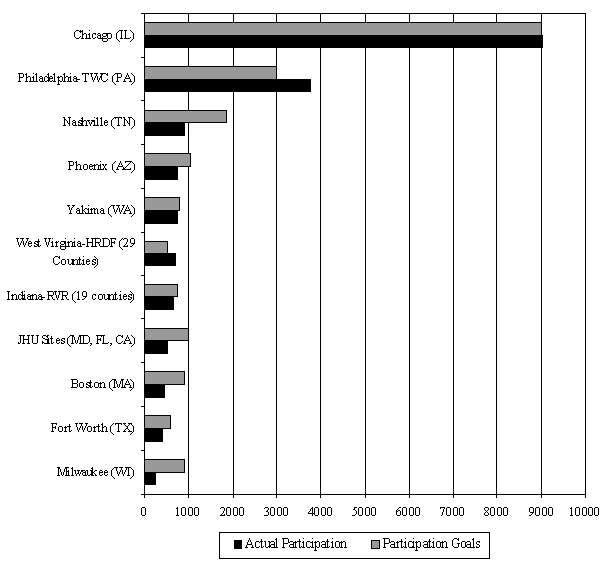
Across the 11 study sites, slightly over 20,000 persons were expected to participate over the three-year period originally allowed. The plans ranged from a low of 510 over three years for the West Virginia-HRDF grantee (serving 29 primarily rural counties) to a high of 9,000 for the Chicago grantee (across the 19 programs) (Chart III.1). The largest single program in the study sites is the one operated in Philadelphia by TWC, which planned to serve 3,000 persons. The average (mean) participation goal across the 11 sites for the original three-year period of WtW was 1,853 individuals.(15) Under the terms of the WtW legislation, grantees are allowed five years in which to spend their grant funds.(16)
As of April 2001, none of the study sites had yet completed the five-year period of their grants. From the start of the programs (generally in late 1998 or early 1999) through April 2001, a total of 18,175 individuals had enrolled in WtW programs across the 11 sites. The numbers served (through April 2001) ranged from over 9,000 in Chicago to a low of 250 in the Milwaukee NOW program. The average number of participants served per site across the 11 sites was 1,652 individuals. With the exception of the two largest sites (Chicago and Philadelphia-TWC), each of the other study sites had served fewer than 1,000 individuals. Chicago and Philadelphia-TWC account for well over half of the enrollees across the 11 sites.
About two years after beginning operations, WtW programs were approaching their planned enrollment levels. By April 2001, three of the 11 study grantees had reached or exceeded their planned goals for participation--West Virginia-HRDF, Philadelphia-TWC, and Chicago. Two other grantees--Yakima and Indiana-RVR--were nearing their overall goal (94 percent and 88 percent of their goals, respectively), and Fort Worth and Phoenix had reached about 70 percent of their goals. Three of the remaining study sites had reached about half of
Chart III.1
Participation Goals Versus Actual Participation, by Study Site
Source: Management Information System data from the local programs.
their overall enrollment goals--Boston, Nashville, and the JHU sites in Baltimore and St. Lucie--all of which had consciously decided to extend their timeframe. The final site, the Milwaukee NOW program, had reached only about one-fourth of the site's original participation goal and was continuing to experience very slow enrollment.(17) The Milwaukee program has had ongoing difficulty enrolling and retaining noncustodial parents (NCPs), a population that has proven to be difficult to recruit in many programs across the country.(18)
D. Participant Characteristics
The WtW grantees in the study sites designed programs intended to serve hard-to-employ welfare recipients and NCPs. Baseline information collected on samples of enrollees in nine of the 11 study sites for the evaluation suggests that the study programs have concentrated on TANF recipients with characteristics often associated with employment problems. High proportions of participants across the sites are African-Americans and Hispanics; and in some of the sites relatively large numbers have less than 12 years of education and self-reported disabilities. A forthcoming report from the evaluation will focus in detail on the characteristics of participants in comparison to all TANF recipients, as well as their employment outcomes.(19)
It is useful here to simply describe the characteristics of participants in the study programs, since they provide additional insight into the types of programs operating in the study sites and the variation across programs--the topic of the following two chapters.
Similar to TANF recipients nationally, most WtW participants are between 18 and 44 years of age, and the vast majority are women. The median age of participants when they enrolled in a program in study sites where baseline information was collected was between 28 and 34. Across the study sites, Phoenix serves a slightly younger group and JHU-Baltimore and West Virginia-HRDF serve a somewhat older group of participants. In terms of gender, although staff in nearly every site indicated they had hoped to serve NCPs, in only three of the study sites do males account for more than 15 percent of participants--Milwaukee-NOW (95 percent male), Yakima (25 percent), and West Virginia-HRDF (15 percent).
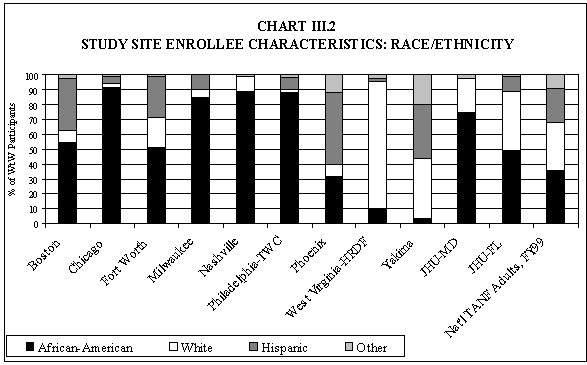
Many WtW participants in the study sites have characteristics often associated with disadvantages in the labor market--minority status, limited education, and mental and physical disabilities. With the exception of West Virginia's HRDF program, most participants in the study sites where baseline information was collected are nonwhite, suggesting they may face special challenges in the job market to the extent that racial discrimination exists. Fairly high proportions of participants are Hispanic in four of the study sites--in Phoenix (49 percent), Yakima (36 percent), Boston (36 percent) and Fort Worth (27 percent). Over 80 percent of the participants in Philadelphia-TWC, Nashville, Chicago, and Milwaukee-NOW are African-American (Chart III.2). Some sites, such as Boston, though, specifically developed programs to target certain groups by, for example, contracting with service providers that specialize in serving Hispanics or have offices or programs in neighborhoods with high minority populations.
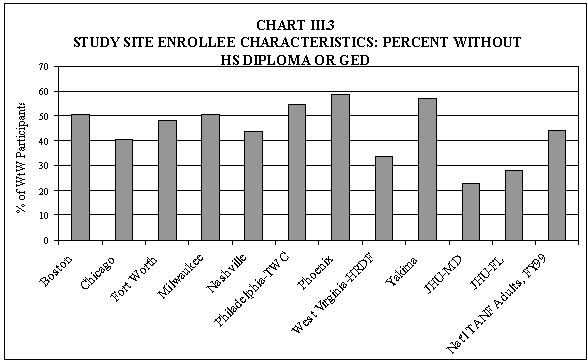
Many WtW participants also have weak educational backgrounds. Across all sites in which baseline information was collected, about 46 percent of all participants have less than 12 years of education, similar to the proportion of TANF adults nationwide according to HHS data. Some WtW programs, however, are serving considerably more persons with less than a high school education (Chart III.3). In Philadelphia-TWC, Phoenix, and Yakima, over 55 percent of participants lack a high school diploma or GED. As discussed in the following chapter, some of the study programs developed strategies to address the low skills of their participants by
Source: Program Baseline Information Forms. Yakima: Program Management Information System data.
National data: "TANF Report To Congress," Department of Health and Human Services, 2000.
Note: Administrative data unavailable for Indiana-RVR and JHU Long Beach sites.
Source: Program Baseline Information Forms. Yakima: Program Management Information System data.
National data: "TANF Report To Congress," Department of Health and Human Services, 2000.
Note: Administrative data unavailable for Indiana-RVR and JHU Long Beach Sites.
implementing pre-employment components that include basic skills remedial instruction, often in conjunction with employment activities.
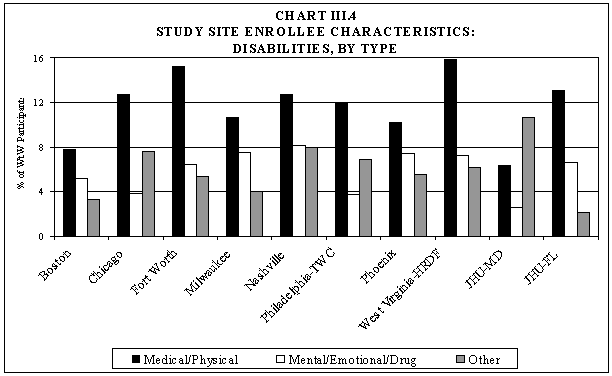
There is also some evidence that many WtW participants have disabilities that might interfere with work. Between 25 and 46 percent of participants across the sites reported at the time of enrollment that they had medical, physical, emotional, substance abuse, and/or other disabilities (Chart III.4). In Fort Worth, Nashville, and West Virginia-HRDF, over 40 percent report having a disability. Some programs specifically target those with disabilities; others incorporate services for those with special diagnostic or treatment needs into their overall program options. Some grantees, for example in Chicago and Fort Worth, contract with service
Source: Program Management Information Systems.
Note: Administrative data unavailable for Yakima, Indiana-RVR, and JHU Long Beach sites.
providers that specialize in serving individuals with particular disabilities or substance abuse problems.
The WtW-funded programs in the study sites thus appear to be targeting individuals with potentially serious employment problems. Future reports from the evaluation will address whether programs are serving individuals similar to the general TANF population or whether they have targeted certain groups. What seems clear from the basic program data presented here is that many participants in the study sites appear to have employment problems and that some of the programs in these sites specifically deal with individuals with certain problems, as discussed in more detail in the following two chapters.
Endnotes
12. Surveys of all grantees nationwide in 1999 also found that in during the first year, enrollment levels were below planned levels and that a year later the pace of enrollment had increased. See Irma Perez-Johnson and Alan Hershey, Early Implementation of the Welfare-to-Work Grants Program: Report to Congress, Princeton, NJ: Mathematica Policy Research, Inc, March 1999; and Irma Perez-Johnson, Alan Hershey, and Jeanne Bellotti, Further Progress, Persistent Constraints: Findings from a Second Survey of the Welfare-to-Work Grants Program, Princeton, NJ: Mathematica Policy Research, Inc., April 2000.
13. One possible implication of such specialization could be that other eligibles might be less likely to be serviced. More detailed analysis of the participants in the eleven evaluation study sites will appear in a separate report from the evaluation by Fraker, et al., forthcoming 2003.
14. A more detailed description of outreach and recruitment efforts is in Lynne Fender, Demetra Nightingale, and Alan Hershey, "Welfare-to-Work Grant Programs Tackle Recruitment Challenges," Program Brief, Princeton, NJ: Mathematica Policy Research, Inc. 2000.
15. Chicago and Philadelphia-TWC account for over half the planned participants across the sites. Excluding them, mean planned participation per site was about 930.
16. The 1999 legislative amendments extended the time from three years to five years.
17. Enrollment continued to be very slow in the JHU-Long Beach site as well, but that site is not included in Chart III.2 because that site was not included in the administrative data collection by the evaluation.
18. As discussed in greater detail in another report prepared by Mathematica and The Urban Institute focusing on WtW programs serving NCPs, there are a number of special challenges to recruitment of NCPs. See Karin Martinson, John Trutko, and Debra Strong, Serving Noncustodial Parents: A Descriptive Study of WtW Programs. A Report from the Evaluation of the Welfare-to-Work Grants Program conducted by Mathematica Policy Research, Inc. Washington DC: The Urban Institute 2000.
19. A summary of selected characteristics of participants by study site appears in Appendix B.
IV. WtW Services
The underlying goal of the WtW grants program is to promote the long-term economic self-sufficiency of individuals who have serious employment difficulties. With this goal in mind, the WtW programs at the 11 study sites offer a range of services to prepare participants for employment and to help participants remain employed.
The basic approach to preparing participants for employment is to provide a range of pre-employment services to participants, including assessment of service needs, job readiness skills instruction, and help in preparing for and finding jobs. In some programs, in-house services are complemented by, or coordinated with, services available through TANF and other agencies; in other sites, all services are provided by program staff. The range of pre-employment services and components available at the study sites fall into four general categories, with variations and adaptations in different sites:
- Participant assessment
- Pre-employment preparation (including job search, job readiness instruction, and job placement)
- Education and training
- Transitional employment (including supported work, transitional work, on-the-job training, work experience, and community service jobs)
A distinguishing feature of the programs studied is that, in addition to assessment and job readiness activities, they all include more intensive components as well. Substantial portions of participants are engaged in other activities which, depending on the program, may be education, training, transitional subsidized employment, or supported work experience. All programs in the study sites conduct some type of assessment and some type of job readiness activity, such as job search clubs, workshops, or life-skills classes, and provide client-specific job placement services. WtW programs also continue to serve participants after they obtain jobs. These post-employment services primarily address job retention, although a few programs incorporate activities to promote job advancement.
A. Participant Assessment
Programs serving welfare recipients routinely include some type of client assessment, but there is great variation in formality and intensity. In some programs assessments are an integral component of case management and service planning; in others, assessment primarily is used to determine whether an individual is employable and subject to mandatory work requirements. The simplest assessments consist of staff completing screening sheets to document a client's employment history or need for child care or other services. More formal tests and assessment instruments are administered to clients to measure basic skills, cognitive development, occupational interests, and other dimensions.
Study programs assess participants for at least three reasons: to establish WtW eligibility, determine an appropriate service strategy (including referrals), and explore employment potential. The primary areas of assessment are basic reading and math skills, personal and career goals, and barriers to employment. WtW providers use a combination of formal testing, structured interviews, and ongoing case management to assess the clients' overall employability and monitor progress in achieving goals. Every study site has some formal assessment activity (Table IV.1).
| Site/Program | Basic Skills Testing | Other Assessment |
|---|---|---|
| Boston |
X |
Career interest inventory Tuberculosis test Substance abuse screening |
| Chicago | ||
| EES |
X |
Substance abuse screening |
| Operation ABLE |
X |
Criminal background check Substance abuse screening |
| MAXIMUS |
X |
|
| Catholic Charities |
X |
Substance abuse screening |
| Easter Seals |
X |
Tests of work motivation, vocational interest, job search and employment knowledge Substance abuse screening |
| SCJ |
X |
|
| Suburban Job Link | Substance abuse screening | |
| Pyramid |
X |
Criminal background check Substance abuse screening |
| Goodwill |
X |
Computerized assessment of educational /vocational needs and interests |
| DESI |
X |
|
| Inner Voice |
X |
|
| Fort Worth | ||
| Women's Center |
X (TANF Agency) |
|
| Arlington Night Shelter |
X (TANF Agency) |
Screen for learning disabilities; career interest inventory Substance abuse screening |
| Goodwill Industries |
X |
Extensive battery of tests for those with severe barriers to employment |
| Indiana-RVR |
X |
|
| Milwaukee |
X (TANF Agency) |
Assessment of barriers to employment and occupational interests Substance abuse screening |
| Nashville |
X (TANF Agency) |
|
| Philadelphia-TWC |
X |
|
| Phoenix |
X |
|
| WestVirginia-HRDF |
X (Usually TANF Agency) |
Work interest, interest aptitude Substance abuse screening |
| Yakima |
X (Employment Services Department) |
|
| Johns Hopkins University |
varies |
ACCUVision- video-based skills assessment Career Transcript competency tests |
| Source: Process Analysis site visits. | ||
Basic Skills Testing. The original WtW eligibility provisions required grantees to serve individuals with specific problems affecting employment, including persons with less than a high school education and low basic skills. It is, therefore, not surprising that all study programs routinely include in their assessments the results of some type of basic skills test to determine reading and mathematics ability level. The most common instrument is the Test of Adult Basic Education (TABE), used in at least eight study sites. Other tests include the Job Corps Math and Reading Test, the Wide Ranging Abilities Test (WRAT), and the Adult Basic Learning Examination (ABLE). In at least five of the study sites, initial testing is conducted by the TANF agency and used for WtW eligibility determination prior to referral.
While testing is primarily conducted to determine eligibility (i.e., to determine whether an individual falls into the 70 percent eligibility category), some WtW programs also use the results to tailor services to the specific needs of individuals (e.g., to help develop individual service plans or employment development plans). In a few sites, testing is done at multiple points, and serves different purposes. Up-front testing is used to determine eligibility for WtW, but then further testing may be done when an individual begins a specific program component or is being considered for a particular job or training course.
Assessment of Personal and Career Goals. Participant assessment extends well beyond testing basic skills, and often also includes assessment of personal and career goals. In the study programs, this type of assessment is aimed at obtaining information that can be used to tailor the wide range of services available under WtW to each individual's employment barriers, career goals, and service needs. Each program in the study developed its own approach, including: adapting assessment forms, determining the sequence of steps involved in assessment, and deciding whether standardized tests or more subjective methods are used to assess capabilities and needs. Generally, participants complete career and interest assessment forms themselves, although program staff typically contribute significantly to the assessment process, helping participants to carefully think through their goals, assess personal strengths and weaknesses, and structure individual service plans.
Programs that offer training or work opportunities in specific industries or firms assess participant aptitude, interest, and other factors required by employers (e.g., behavioral characteristics) in order to determine appropriate placements or referrals. For example, Pyramid Partnership, Inc., a WtW program in Chicago, operates an employer-driven program that refers participants for entry-level training and unsubsidized jobs in retail, hospitality, and banking. Assessment at Pyramid includes a behavioral screen for work readiness which assesses motivation, social skills, and ability to get along with fellow workers. As part of the assessment process, the Pyramid case manager looks for potential barriers to employment and tries to determine if the individual would be a good match with a particular employer. In Boston, the WtW assessment is tailored to the types of requirements, including personal behavior and attitudinal factors, specified by each firm involved with one of the employer partnership programs.
Assessment of Barriers to Employment. An important part of the assessment process centers on the identification of specific barriers to employment. In all study sites, participants are routinely assessed for support service needs, such as child care, housing assistance, and transportation. Information is typically collected through one-on-one interviews designed to identify a wide range of barriers that could make working difficult. The most common barriers considered are lack of a driver's license, lack of an automobile, and other transportation-related problems; inadequate or unavailable child care; substance abuse or mental health problems; and family problems (such as having to care for a sick or disabled family member).
Both WtW and TANF staff in the study sites report that they are increasingly aware of the need to identify some of the more serious of these personal problems, such as substance abuse, mental health issues, and domestic violence. Screening for these problems is also motivated by federal policies, such as those that allow domestic violence victims special exemptions from TANF work requirements, and the original WtW eligibility criteria that specified substance abuse as a barrier to consider in qualifying an individual in the 70 percent eligibility category.
Substance abuse problems and mental health needs are generally identified through informal screening methods, although some programs use formal tests and instruments. In most of the study sites, WtW or TANF staff informally screen for substance abuse and mental health concerns, generally by asking clients whether they have a problem with drugs or alcohol. In five sites (Boston, Chicago, Fort Worth, Milwaukee, and Philadelphia-TWC), at least some of the WtW programs conduct formal screening for substance abuse problems, either using a structured set of questions (such as those on the Substance Abuse Subtle Screening Inventory) or by urinalysis. WtW programs with linkages to substance abuse treatment facilities or that have employer partners that require drug testing are particularly likely to conduct formal drug screening.
Formal assessments are also used in some WtW programs, primarily to help identify appropriate treatment options for individuals who may have mental health, substance abuse, or other disabilities. For example, Goodwill programs funded under WtW grants in Fort Worth and Boston have strong vocational rehabilitation services and offer psychological or behavioral testing on-site. Several of the many programs funded by the WtW grant in Chicago use various behavioral and diagnostic screening tools to help develop individualized plans for clients that include employment preparation as well as treatment and counseling. The Arlington Night Shelter, a WtW provider in Fort Worth, uses the Washington State Screen for Learning Disabilities.
Both WtW and TANF staff report that they are increasingly aware of domestic violence issues. Many of the TANF and WtW programs include discussions of domestic violence and child abuse issues as part of their orientation sessions or job search workshops. In several of the study sites, TANF staff can refer welfare recipients to experts on domestic violence issues who are located in the TANF office. In some states, such as Massachusetts and Illinois, computerized TANF intake systems include special screens with questions for identifying domestic violence service needs as well as other needs such as mental health or substance abuse treatment.
Ongoing Assessment. Although the assessment process is initiated during intake, all the study programs emphasize ongoing assessment and monitoring of participants throughout their involvement in the program. In all of the study programs, the individual one-on-one interaction between the participant and a staff person is the main method for assessing needs and employability. Staff, usually referred to as counselors or case managers, are assigned a certain number of participants for whom they are responsible. Often, an employment development or individual services plan is developed for each participant, much like a contract between the agency and the participant, setting out short- and long-term goals, steps participants are expected to take in realizing these goals, and types of services to be made available to the participant. The case manager provides or adjusts services or makes external referrals as needed.
One variation on this general approach involves intensive monitoring of a participant's progress towards the ultimate goal of economic self-sufficiency. For example, the Nashville WtW program, built upon the Pathways model developed under Project Match in Chicago, encourages participants to take "small steps" towards independence, and holds regular monthly peer support groups and individualized self-assessment as well as ongoing reassessment of progress. The steps can include achieving personal or family goals, community activities, soft skills (attitude, motivation, self-esteem), basic education, and ultimately skills development and employment. Once an individual becomes employed, the counselor prepares an annual status report based on periodic and continuous contact and intervention as needed. In Chicago, the WtW-funded program operated by Catholic Charities also incorporates dimensions of the Pathways model for participants with serious employment barriers and substance abuse problems.
B. Pre-employment Preparation
Beyond assessment, programs offer a range of pre-employment preparation and job search services, some education and training, and a variety of subsidized or transitional employment activities. These services differ across the study sites in terms of how much priority is placed on various activities, specific details about how the services are delivered, and which participants receive different services. The number of participants active in various services and the length of time individuals remain in components also vary.
Federal welfare reform legislation and most state TANF agencies emphasize rapid employment, and the WtW grant-funded programs were expected to complement that focus. Therefore, at the core of WtW programs, like most other employment programs for welfare recipients, are various types of activities intended to prepare individuals to search for and obtain jobs: job search workshops, job readiness classes, work orientation sessions, life-skills classes, job clubs, and job placement services. Such pre-employment preparation components operate in all of the study programs and are, in fact, the most common activities, although by no means the only activities in which individuals participate. Participation in pre-employment activities ranges from about 60 percent of Fort Worth participants to 100 percent of participants in West Virginia's HRDF programs (Chart IV.1).(20)
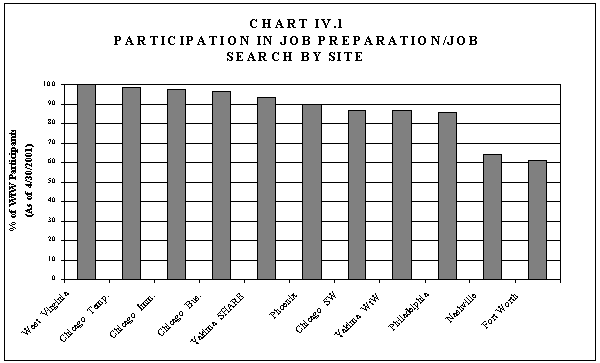
Source: Program Management Information Systems.
Job search is offered in all WtW programs, but its role in the program varies. In some programs, pre-employment activities complement more developmentally focused services such as transitional or subsidized employment. In other programs, such as the temporary employment providers (see Chapter II) in Chicago, developmental services are emphasized less than assistance in immediately finding a job. However, even more developmentally focused programs, such as Philadelphia-TWC and Boston's employer partnership programs, which mainly emphasize work experience or occupational preparation, rather than job search, also sponsor some type of job readiness or job search activity. Some programs encourage individuals to attempt to find employment in the regular job market before considering other more developmental activities. Others incorporate instruction into a more developmental approach to improve participants' understanding of the world of work or work attitudes and behavior--the so-called "soft skills." Participants often undertake other activities at the same time that they are involved in job search and/or job preparation. For example, an individual could participate in an eight-week job search workshop and be simultaneously co-enrolled in an education course or a work internship.
Although the focus on employment and the work readiness topics addressed in pre-employment components are similar across programs, the delivery approaches are quite diverse. For example, in various sites, WtW enrollees may participate in job search and job preparation activities at the TANF agency, at one-stop career centers, or at the offices of a WtW contractor.
Job Search. Consistent with the work orientation of TANF programs, WtW participants are involved in a variety of job search activities. Independent job search may simply require the enrollee to document employer contacts and "check in" with a case manager on a weekly basis. In supervised job search, the case manager works closely with the enrollee to identify and follow up on job leads. In job clubs or groups, individuals meet together to discuss their experiences, learn about successful approaches to finding a job, and then work individually at job search activities. Most study sites structured job search activities in a manner that combined two or more of these job search assistance approaches. WtW enrollees in seven of the study sites participate in job search as a structured activity with formal attendance requirements. For example, participants in the Women's Center program in Fort Worth attend a one-week job readiness workshop followed by individualized job search assistance. In three sites (Indiana-RVR, Nashville, and West Virginia-HRDF) job search assistance and counseling is provided on an individualized basis as part of ongoing case management. One of the WtW programs in Indiana-RVR provides individualized case management that includes employment counseling, but refers participants to a subcontractor for job placement services once an individual is deemed to be "job ready."
Job Readiness Instruction. Programs offer a variety of activities designed to prepare participants, particularly those with little or no work experience, for the world of work by combining job search assistance services with instruction and workshops on a broader range of work-related issues. Job readiness classes and workshops cover a range of topics, including basic work readiness and job seeking skills, such as how to dress, arriving at interviews or work on time, and communicating with your supervisor; "life skills," such as mastering the public transportation system and balancing work and family responsibilities; and motivational workshops designed to build self-esteem.
Some job preparation programs also integrate components of basic reading and math skills or computer instruction, particularly in resume preparation activities. For example, the EARN Alliance in Phoenix incorporates workplace reading and math skills and computer-based occupational learning modules in its three-week job readiness class. These components had been provided under a national competitive WtW grant called High Performance Learning (HPL). Phoenix was one of the participating sites, and when the HPL grant ended, HPL staff continued providing services under contract to EARN. The Urban League, a Boston WtW contractor, includes 30 to 40 hours of computer basic training in its six-week job readiness-training component. Programs in Chicago, Indiana-RVR, and Milwaukee refer clients to other service providers for instruction in basic reading, math, or computer literacy skills on an individual basis depending on needs identified during job search/job readiness activities. For example, the Chicago WtW grantee (the Mayor's Office of Workforce Development) contracts with Sylvan Learning Centers, to which other WtW subcontractor programs can refer participants to receive basic skills instruction. WtW grantees or program contractors in at least three sites (Boston, Chicago, and West Virginia-HRDF) offer workplace-based orientations to work. For example, WtW participants with one Boston contractor attend job readiness classes in the morning and then job shadowing (at a retailer) in the afternoon. WtW participants enrolled with Easter Seals in Chicago work in a sheltered workshop while attending job readiness training.
C. Education and Training
The WtW legislation initially de-emphasized education and training by disallowing the use of grant funds for stand-alone pre-employment education or training. Grantees were, however, allowed, and even encouraged, to provide any necessary education or training in a post-employment situation--either in conjunction with work or mixing part-time work with part-time training or education. The 1999 amendments allowed grant funds to be used for short-term pre-employment training or education. (21)
With few exceptions, the WtW study programs included in this evaluation provide occupational training or education (directly or through referral) to relatively few of their WtW participants, and for those who do participate, the duration of education and training is fairly short. Across the study sites, only about 20 percent of participants at only 6 of the study sites have been involved in pre-employment education or occupational training.(22) In some sites, however, a relatively high proportion of participants has engaged in education or training. Chart IV.2 displays participation rates in education and training for those sites offering such services. In Phoenix, almost 40 percent of participants were involved in education or vocational training, usually complementing other activities. In Nashville, almost 37 percent of participants were in education or training, and in Philadelphia-TWC, about 76 percent of participants received education services as part of the program. Fort Worth, West Virginia-HRDF, and Yakima also reported participation in education or training, although for Yakima the participation rate was less than one percent. The median number of weeks spent in pre-employment education or training ranged from about 6 weeks in Nashville to about 13 weeks in Phoenix (Appendix C).
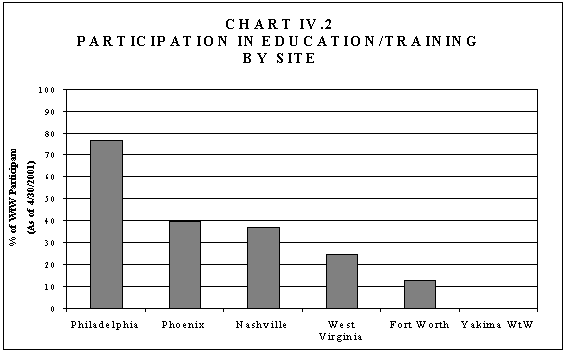
Source: Program Management Information Systems.
There are several reasons for the low levels of education and training participation. First, and probably most important, the WtW program's principal goal is to place welfare recipients into full-time unsubsidized work as rapidly as possible. Under WtW, occupational training and upgrading of basic skills are considered to be activities that should principally occur in conjunction with employment, primarily as a post-employment service. The initial inability to use WtW grant funds for stand-alone pre-employment education and training clearly restricted education and training in WtW programs. The programs did not change much in this regard even after the 1999 changes, in large part because they already had established particular program models and approaches. Second, TANF requirements that states meet performance standards for engaging a specified proportion of TANF recipients in allowable work activities (i.e., work requirements) add pressure from the TANF system on WtW programs to emphasize rapid work attachment models. In addition, the imposition of time limits under welfare also creates pressure on TANF recipients to move as quickly as possible toward employment, and discourages longer-term training that uses up remaining time under lifetime limits. Finally, many TANF recipients enter WtW programs with a preference for working over training or education. While looming time limits under TANF may be one factor in recipients' desire to move into unsubsidized jobs as quickly as possible, there are others. For example, with respect to basic education, caseworkers noted that WtW clients may have performed poorly in school or other classroom settings, and thus, are reluctant to return to a situation in which they have encountered failures in the past.
In the six study sites that have incorporated education or training into their initiatives, services are provided either directly or by establishing referral arrangements with other training providers. Typically, pre-employment education is provided on a referral basis and WtW enrollees attend classes part-time, while also participating in other work-related activities, such as life-skills training or job search. Adult basic education, ESL, and GED programs are often available through public school systems and other community providers at no (or minimal) cost to the participant. In Philadelphia-TWC, Phil@Work clients placed in transitional work assignments also participate in 10 hours of "wraparound training" each week, including such topics as GED preparation, remedial instruction, or basic computer training. Any costs associated with these programs are paid by TANF or WtW funds. Other sources of education and training accessed by study grantees for WtW participants include community colleges and technical schools, contractor-operated short-term training programs, computer-based learning modules, and employer-specific occupational training, which is often based at the work site.
D. Transitional Employment
The principal objective of the WtW program is to move long-term TANF recipients, including individuals facing serious barriers to employment, into full-time, unsubsidized jobs. To accomplish the difficult task of working with and eventually placing individuals with severe problems into employment, all the study sites offer some type of supported work or transitional employment--either directly through the WtW program or through referral to other programs within their communities (e.g., a community jobs program funded by TANF). Participation in this type of activity varies significantly across the WtW sites, from more than 80 percent of all individuals in the Chicago business and industry partnerships, to less than 3 percent in Chicago temporary jobs programs (Chart IV.3).
TANF work requirements in several states also have motivated TANF-funded and WtW-funded programs to create subsidized and transitional jobs to assure that all recipients required to work do so. In general, staff in WtW programs that target individuals with serious problems, such as physical or mental disabilities and low basic education competency, explain that most individuals are able to meet their TANF work requirements for a few weeks by participating in job readiness workshops. However, for those unable to find employment quickly, subsidized components, such as transitional employment or supported work experience, make it possible for participants to continue to meet their TANF work requirements and simultaneously gain potentially marketable
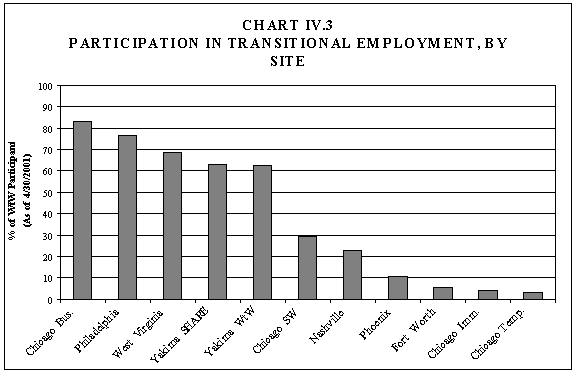
Source: Program Management Information Systems.
skills. In some programs, subsidized work--particularly on-the-job training (OJT) and internships--provides a direct avenue for promoting placement in full-time unsubsidized work (i.e., employers are expected to hire the worker if he/she successfully completes the trial work period). Hence, placement in supported/transitional work positions provides a bridge to unsubsidized employment for WtW participants who may have already tried, but were unsuccessful, in securing unsubsidized jobs (or after assessment are judged by case workers to be unlikely to secure a job).
While participants are generally paid for each hour of involvement in supported/transitional work, this is not always the case. When paid, participants are most likely to receive either the minimum wage (e.g., Philadelphia-TWC, Yakima, and several subcontractors in the Chicago and Fort Worth sites) or the "going" rate for what are usually entry-level jobs. If the position is contracted as an OJT (generally with a commitment to hire and provide job-specific training over a six-month period), the participant is paid at the going hourly rate that other new hires in the same positions would receive from the employer. In some programs, participants receive no payment for work experience hours, though they may receive some type of work-related expense payment.
The role and extent of supported/transitional work are quite different across sites, and even within sites. One approach places individuals into some type of temporary work experience assignment when they emerge from an initial job readiness workshop. Following a four-week job readiness workshop, about two-thirds of participants in West Virginia's HRDF WtW program are placed (for up to six months) in work experience jobs at nonprofit organizations. Typically, participants remain in these slots for two to four months and there is no expectation that the individual will be hired. More capable job ready participants are placed (up to one month) in positions at for-profit organizations or in paid on-the-job training positions (OJT) for up to six months, with the understanding that the employer will likely hire the individual if he/she completes the training period. While involved in unpaid positions, participants continue to receive their TANF cash grant, food stamps, and a work-related expense payment of $1.60 per hour; while involved in OJT, participants receive the entry-level wage for the job (which is typically paid half by the employer and half by HRDF for the contracted training period). In Philadelphia also, where TWC's Phil@Work program is targeted to participants who have little to no work experience, soon after enrollment participants are placed in 25 hour-per-week transitional work positions that pay $5.15 per hour and last up to six months. In addition, as described in the previous section, clients participate in 10 hours of training each week.
A more targeted approach to transitional employment involves collaboration with employers or emphasizes particular occupations or industrial sectors. In Boston, less job-ready participants are offered transitional work through the Enhanced Community Service component. This program component is operated by two community-based organizations that provide 20 hours of community service in specific jobs/occupations (e.g., day care teacher aide, health care, and hospitality assignments), supplemented with 15 hours of "enhanced readiness services " (e.g., ESL or basic education). ABCD places individuals in day care teacher aide assignments; JVS works with a collaborative group of agencies that work mainly with immigrants and places individuals in health and hospitality assignments.
E. Post-employment Services
At the time the WtW legislation was enacted, it was among the first federal welfare initiatives in a nondemonstration setting to specifically emphasize post-employment services, both for job retention and education or skills development. Because the original legislation prohibited expenditure of WtW funds on stand-alone pre-employment education and training, most programs attempted to design post-employment approaches to training and education. Most of the programs in the study sites emphasized ongoing case management to individuals once they started working, all formally provided job retention services, and a few actively incorporated post-employment education and training, either in the workplace or through special instructional programs (Table IV.2). However, despite the availability of these services, very few participants were actually involved in retention and other post-employment activities, aside from having staff contact them regularly. Some staff explained that once employed, most individuals were not interested in participating in further services.
| Typical Length of Active Follow-Up / Active Case Management | Additional Retention Services | Post-Employment Education/Training |
|---|---|---|
| Up to 6 Months | ||
| Fort Worth | Retention/advancement workshops, visits to worksites | Training and skill upgrading available, primarily through referral to WIA |
| Milwaukee NOW | Mentoring, retention goals for providers | Basic education, ESL, and occupational training available |
| Philadelphia-TWC | Workplace mentoring, retention goals for providers | Occupational training available |
|
Up to 12 Months |
||
| Chicago | Retention workshops, retention goals for providers | Advanced skills training (e.g., education, computer skills, occupational training) (some programs), referrals to WIA |
| Nashville | Retention goals for providers | |
| Phoenix | Mentoring, job advancement assistance | Computer-based instruction for career advancement |
| West Virginia-HRDF | Wage supplements, retention goals for providers | Short-term training at HRDF's Stanley Tech, community colleges and vocational schools |
| Yakima-WtW & SHARE | Mentoring, job and wage advancement assistance | Basic and occupational skills training available |
|
More than 12 Months |
||
| Boston | Job advancement assistance | On-site occupational certification classes (some employers) |
| Indiana-RVR | Visits with employers | Educational activities (e.g., GED classes) available |
| JHU-MD, FL, CA | Retention incentive payments to enrollees | Ongoing and comprehensive workplace competency-based program to improve skills |
| Source: Process Analysis site visits. | ||
Retention Services. All the WtW-funded programs in the study sites provide post-employment retention services, including maintaining contact with individuals once they start working, helping them access TANF transitional benefits (child care and Medicaid), and providing transportation assistance. Some programs go further and provide personal support counseling on a more intensive basis, sponsor peer group workshops, and offer job search assistance to obtain a new job.
The WtW legislation specifies that once individuals are determined eligible, programs are not required to redetermine eligibility in order to continue to receive services. Most of the study programs, therefore, serve eligible participants for as long as they need and request employment-related services. While most sites have specific timeframes in which post-employment follow-up and case management are actively administered, staff in many of the programs referred to an "open door policy," which allows individuals, whether employed or not, to come back for further employment assistance at any time until the end of the WtW contract. This open-ended eligibility means that the average duration in some programs tends to be quite long. It also means that there is no specific length of time during which post-employment services are provided.
The most basic retention service involves making telephone or in-person contact with the individual or the employer on a regular basis (e.g., weekly or monthly). All study programs reported doing this. In addition, all of the programs in the study sites expect staff to monitor the progress of the participants and identify the need for services or guidance on particular issues. A few programs have retention specialists, job coaches, or participant representatives who work only (or mainly) with employed individuals, providing case management services and counseling.
Beyond basic case management and follow-up services, most retention services provided at the WtW study sites can be classified under one of three categories: retention goals and incentives, mentors, and job and wage advancement assistance.
Retention Payments to Subcontractors. Some programs include retention goals as one milestone for paying subcontractors. In the Milwaukee, Chicago, Nashville and Indiana-RVR study sites, for example, payments to subcontractors are linked to the achievement of placement and retention goals (typically 180 days). Depending on the site, employment and retention benchmark payments may serve as the primary form of payment to the subcontractor (Milwaukee), represent about half of reimbursement (Chicago), and/or be accompanied by educational benchmark payments (Nashville). Furthermore, the payments might remain relatively constant for each period of retention (Milwaukee), or increase with each successive stage, strengthening incentives for long-term retention (Indiana-RVR).
Monetary Incentives for Enrollees. Other programs focus on incentives for enrollees rather than subcontractors. HRDF in West Virginia provides wage supplements for up to 24 weeks for individuals placed in lower-wage jobs, and provides retention bonuses at 90 and 180 days after job placement. These bonuses are paid in the form of either a gift certificate (e.g., to Wal-Mart) or a payment by HRDF to a utility company of the participant's choice. Enrollee incentive payments in the JHU CTS programs also take the form of gift certificates, but are offered at benchmarks up to 12 months after reaching employment, while follow-up continues even past 12 months. Furthermore, retention benchmarks can be met without staying in the same job, such as by leaving a position for a better job or by working to find a new position after losing a job.
Mentoring. The post-employment mentor programs implemented by WtW grantees demonstrate that mentors can be recruited from a variety of environments. On one end of the spectrum are the "professional mentoring services" provided by Southwest Behavioral Health for Phoenix EARN participants. Southwest mentors visit their assigned EARN participants once per week at their job sites, and can meet with participants outside of the job on a one-on-one basis to discuss work-related issues that participants feel uncomfortable discussing at work. The Southwest mentors attend weekly progress meetings with EARN staff, during which they review each participant's status and discuss any issues that emerge as a team. The Yakima Valley Opportunities Industrialization Center (OIC) exemplifies an intermediate, less strictly "professional" approach. OIC recruits volunteers to serve as mentors, as a supplement to case management services. The volunteers serve as a source of support and encouragement, troubleshoot problems arising in the transition from welfare to work, and are available in the evenings and on weekends. An even less formalized approach is the "workplace mentoring" component offered by the Philadelphia Workforce Development Corporation (the city WIB). Employers choose another employee working with the WtW participant, who is trained by a consultant and serves as the participant's mentor. The goal of such a structure is to get full disclosure of workplace issues and problems facing the participant.
Job and Wage Advancement Assistance. A primary method of providing job advancement and wage progression services is the workshop. In Fort Worth, the Women's Center offers Weekend Advancement Workshops, typically attended by eight to 10 WtW participants, held for four hours every other weekend. The workshops focus on survival skills in the workplace, ways to advance to higher paying jobs, and education and training opportunities available to help individuals advance up the career ladder. Almost all the WtW-funded programs in Chicago sponsor Retention Groups, similar to the Fort Worth workshops in frequency, size, duration, and content. The Retention Groups also discuss special topics (e.g., tax counseling, IDAs, and training opportunities). To encourage attendance, monthly bus passes are distributed at the meetings and special speakers occasionally attend.
Other programs use a less group-oriented approach to job and wage advancement. The Phoenix EARN program provides advancement assistance through its mentoring program. WorkSource Yakima, under a Job Success Coach Initiative funded by the state, uses Job Success coaches to provide job advancement and wage progression assistance, also along with mentoring services. In Boston, the Neighborhood Development Corporation Program combines intensive case management with a focus on career ladder issues, providing services to place clients in new and better jobs.
Post-Employment Education and Training. A few programs have adopted strategies to promote post-employment education and training, but these services are not as common in the study sites as retention services. While administrators in most of the programs stated that post-employment education and training was an important goal, and most programs took preliminary steps to provide basic post-employment training, few programs had implemented post-employment services comprehensively enough to attract a significant portion of employed participants. Several staff noted that their primary focus was helping individuals retain their jobs and that, given their barriers, few participants were at a point where they could start moving up in the job market. The first step was to help individuals enter employment and become stable in their job. Some of the study programs, however, did actively encourage employed participants to attend classes that would improve their work skills or qualify them for a better job, or actually sponsored such classes.
The JHU-CTS programs, with their focus on individuals already employed, were the only programs in the study sites that emphasized post-employment skills development. Johns Hopkins University's Career Transcript System (CTS) is an innovative approach designed to 1) assess and improve worker skills that are directly relevant to a particular job, 2) provide training and support to help supervisors evaluate and improve worker skills, and 3) create an individualized record, or transcript, documenting the worker's acquisition and improvement of skills, in order to support advancement up a career ladder. To implement the system for their WtW participants, program staff found it was also important to help participants address personal and family needs that affected their ability to work and maintain employment.
The basic foundation of the CTS is that employers help identify a core set of skills, such as reading, problem solving, and soft skills (interpersonal communications, teamwork, listening, punctuality, time management, etc.) that are required of the specific individual hired into an entry-level position. Employers (usually the immediate supervisor) review a list of 37 workplace skills and choose 6-7 skills most important to successfully perform the job held by the participant. They rate the participant's current performance on those skills using the AES Skills Assessment. Information from this review is then combined with scores from video-based assessments to create a participant-specific evaluation. Workplace Liaisons and the participant collaborate to produce an Individual Development Plan, identifying short- and longer-term improvement goals and activities to accomplish them. Skills are developed primarily on the job, using work-based learning and experience. Measures of skill progress are entered into an Internet-based transcript, and workers receive certifications of achievement they can use in developing plans for future career paths and as "portable credentials" in searching for a new job.
Operationally, the three JHU-CTS programs implemented some, but not all, of the basic CTS features. For example, the Internet-based transcript system was not operational at the time of the site visits, and the video-based assessment was not used systematically, since it was not always considered directly relevant to a particular individual. Employers were not routinely asked to define the skills they wanted for a particular worker; instead, counselors tended to focus on skills they felt were common to most jobs. The most promising CTS component, according to program staff and employers, is the skills assessment instrument that supervisors use to evaluate worker performance, and which includes interpersonal skills, workplace understanding and other soft skills. The instrument has even been adopted by some employers--particularly smaller establishments without professional or corporate human resources staff--for their other employees. Although they were not fully implementing the CTS model, all three programs implemented what might be described as a participant-centered post-employment retention strategy that includes intensive case management and partnerships with employers.
Other programs in study sites also have incorporated some post-employment education and skills development for at least some participants. This is often collaboratively done with a business or employer-the Benjamin Health Care employer partnership in Boston, for instance, provides workers with paid time-off to attend classroom training. While most study sites provide basic classroom education and occupational training, some also provide post-employment education in close coordination with community colleges and/or vocational schools (Boston, West Virginia-HRDF), and EARN participants in Phoenix can receive post-employment training at their own pace through computer-based instruction for several hours a week.
A future report will determine whether the types of employment services offered through these programs have positive results in terms of outcomes for participants. However, the descriptions in this chapter indicate that for the WtW-funded programs in the study, grantees developed and implemented strategies that went beyond basic self-directed job search and immediate job placement, particularly providing participants with staff support and case management and in several sites operating transitional and supportive work components. While most programs did not include extensive post-employment and education and training activities, all the programs in the study sites provided post-employment contact and case management services to help individuals retain jobs.
Endnotes
20. The Johns Hopkins University (JHU) WtW programs are excluded because, by design, enrollees in the JHU programs are employed.
21. The 1999 changes allow WtW funds to be used for pre-employment education and job training for up to six months.
22. Some sites that referred WtW enrollees to other providers for occupational training may not have recorded such participation in their program data.
V. Service Models and Pathways to Employment
The WtW grants were intended not only to move individuals into jobs, but also to help them obtain the kind of jobs that could potentially lead to sustained employment, career advancement, and self-sufficiency. While all of the study programs have maintained employment as their highest priority, each adopted a range of strategies to help individuals prepare for and move into the labor market, as discussed in the previous chapter. No single approach or model is being used in the WtW programs, and not all participants are receiving the same mix of services, even within the same site. Job placement rates varied across the programs studied, reflecting different program models as well as individual pathways to employment.
A. General Program Models
Examining the service delivery features and how administrators and staff describe their programs reveals that there are three general service delivery models that describe the primary approaches, or philosophies, operating in the WtW-funded programs in the study sites (Table V.1):
- Enhanced Direct Employment Models, where the emphasis is on providing participants with individualized support and counseling pre-employment, and usually providing post-employment services for a year or more.
- Developmental/Transitional Employment Models, where the program design emphasizes skills development, often along with transitional or subsidized employment.
- Intensive Post-Employment Skills Development Models, where the primary objective is to improve both job retention and specific occupational skills through a program design that works primarily with individuals after they start a job.
| Study Site | Enhanced Direct Employment Model | Developmental/ Transitional Employment Model | Post-Employment Skills Development Model |
|---|---|---|---|
| Boston-Employer Sponsored Programs and Enhanced Community Service |
X |
||
| Chicago-Immediate Job Placement Programs |
X |
||
| Chicago-Temporary Employment Programs |
X |
||
| Chicago-Business and Industry Partnerships |
X |
||
| Chicago-Supportive Work/Paid Work Experience Programs |
X |
||
| Fort Worth WtW Program |
X |
||
| Indiana-RVR WtW Program |
X |
||
| Milwaukee-Dept. of Corrections, Nontraditional Opportunities for Work (NOW) Program |
X |
||
| Nashville Works/Pathways Program |
X |
||
| Philadelphia-TWC Phil@Work |
X |
||
| Phoenix EARN Program |
X |
||
| West Virginia-HRDF WtW |
X |
||
| Yakima, WA, WtW Program |
X |
||
| Yakima, WA, SHARE Program |
X |
||
| Yakima OIC/Youthbuild/ Americorps Program |
X |
||
| JHU-SCANS 2000-CTS Program (Baltimore, St. Lucie FL, and Long Beach, CA) |
X |
One of the more striking operational observations in the study sites is that, while all of the WtW-funded study programs developed service delivery strategies that emphasized employment--even rapid employment in some places--none of the study sites provide just job search assistance or job-readiness skills alone. There is, though, substantial variation across programs in the degree to which they place priority on moving individuals quickly into employment versus providing more skills development or subsidized or transitional employment. There is also variation in the extent to which grantees emphasize post-employment services, although only one program included in this study--the JHU-CTS program--focuses primarily on post-employment services. Excluding JHU, about half of the study programs have what are referred to here as Direct Employment Models and half have Developmental or Transitional Employment Models.
Enhanced Direct Employment Models maintain a primary focus on moving individual participants into employment as soon as possible, usually after a short (e.g., one to three weeks) pre-employment job readiness component. Administrators and staff explain that their top priority is to place individuals into either unsubsidized employment as soon as possible, or into transitional or subsidized employment as soon as possible (often as an alternative when work opportunities in a community are limited). This immediate employment goal, though, is accompanied by individualized counseling and support, social services, and extended follow-up services post-employment, including education in some cases. Sites in the evaluation that implemented an enhanced direct employment model are:
- Chicago Immediate Job Placement Programs (operated by Hull House, Spanish Coalition, Asian Human Services, Inner Voice, MAXIMUS, Employment and Employer Services, and Dynamic Educational Services, Inc.) and Temporary Employment Programs (operated by Suburban Job Link)
- Fort Worth WtW
- Indiana-RVR WtW
- Milwaukee-Department of Corrections, Nontraditional Opportunities for Work (NOW) Program
- Phoenix EARN Program
- West Virginia-HRDF
- Yakima-WtW
- Yakima-SHARE
Developmental/Transitional Employment Models provide services designed to gradually and systematically improve individual participants' employability while also addressing their family service and other needs. The objective is to ultimately (not immediately) obtain unsubsidized employment, followed by ongoing post-employment supports and services, including education and skills development in some cases. In these types of programs, however, it is expected that participants will first generally engage in an intermediate activity before entering a regular job. The intermediate activity is intended to improve work or basic skills, or address specific work-related problems. Various intermediate activities are incorporated into the study sites which have developmental or transitional models, including paid work experience and internships, workplace-based employer partnerships, temporary jobs, peer support groups, and sheltered workshops. Study sites that implemented Developmental/Transitional Employment models are:
- Boston Employer Sponsored Programs and Enhanced Community Service Programs
- Chicago Supportive Work/Paid Work Experience Programs (operated by Catholic Charities, Chicago Commons, Greater West Town, Operation ABLE, Bethel, Easter Seals, and Chicago Connections) and Business and Industry Partnerships (operated by Pyramid Partnership, Sinai Community Institute, and First Chicago/Bank One)
- Nashville Works/ Pathways Program
- Philadelphia-TWC Phil@Work Program
Post-Employment Skills Development Models provide services and support primarily only after a participant starts a job. The post-employment model is distinguished from other models in which some post-employment services might be provided (e.g., to improve job retention), but where the primary service approach emphasizes pre-employment activities. Post-employment skills development programs might provide education and skills training, workplace-based services, mentoring/coaching on the job, employer liaisons, and career development services. Only one study site, Johns Hopkins University-SCANS 2000-Career Transcript System (Baltimore MD, St. Lucie FL, Long Beach CA) implemented this model. Each of the three programs is unique, adapting aspects of the JHU-designed CTS model, curriculum, and material. While all three primarily emphasize post-employment services, each also provided some pre-employment services, such as job placement assistance and job counseling to some individuals who were not working. All three, however, maintain as their primary objective a focus on improving skills of individuals once they have started working, with most activities provided at the workplace and involving supervisors as well as the participating worker.
B. Job Placement Rates
The job placement rate--that is, the percentage of program enrollees who enter an unsubsidized job in the regular labor market--is traditionally used to gauge how well welfare-employment programs are doing. However, placement rates reflect other factors besides the effect of the program, including how individuals enroll in the program and how the program relates to TANF policies and programs (e.g., whether TANF participants routinely participate in TANF-sponsored pre-employment workshops or job search prior to referral to WtW).
Across the study programs for which MIS data are available, about half the participants entered an unsubsidized job after enrolling in the program,(23) at a starting hourly wage of about seven dollars. On average, participants who obtained employment did so about 15 weeks after enrolling in the program (Table V.2). This ranges from fairly rapid employment (4 to 12 weeks) in the immediate or temporary job placement programs in Chicago, Phoenix, and Indiana-RVR; to over 50 weeks in West Virginia-HRDF, where most participants engage in six months of occupational exploration (work experience). Job placement rates in the study programs range from 30 percent to 72 percent.
Not surprisingly, job entry rates are relatively higher in those programs that emphasize immediate job placement, and lower in the programs that provide primarily post-employment services. The highest job entry rate (72 percent) in the study sites is reported for the Chicago temporary employment program operated by Suburban Job Link, where the intent is to place individuals in temporary jobs with the expectation that they will transition to permanent positions. All who begin a temporary job are considered to have "entered an unsubsidized job" since their wages are paid by the employer. In addition to the Suburban Job Link program, the
| Site | % of Participants Already Employed Upon Enrollment | % of Participants Placed in Unsubsidized Jobs After Enrollment | Average # of Weeks From Enrollment to Placement | Average Starting Hourly Wage |
|---|---|---|---|---|
|
ENHANCED DIRECT EMPLOYMENT MODELS |
||||
| Chicago - Immediate Job Placement Programs | <1 | 57 | 12 | $6.96 |
|
Chicago - Temporary/ Transitional Employment Programs |
0 | 72 | 5 | $5.44 |
|
Fort Worth |
9 | 45 | 18 | $7.23 |
|
Phoenix |
<1 | 66 | 10 | $7.39 |
|
West Virginia-HRDF |
0 | 61 | 57 | $5.84 |
|
Yakima |
0 | 49 | 27 | $7.00 |
|
Yakima-SHARE |
0 | 67 | 23 | $8.00 |
|
DEVELOPMENTAL/ TRANSITIONAL EMPLOYMENT MODELS |
||||
|
Chicago-Business & Industry Partnerships |
0 | 67 | 14 | $7.96 |
|
Chicago-Supportive Work/ Paid Work Experience Programs |
0 | 48 | 16 | $6.88 |
|
Nashville |
<1 | 58 | 15 | $7.10 |
|
Philadelphia-TWC |
<1 | 38 | 19 | $7.20 |
|
POST-EMPLOYMENT SKILLS DEVELOPMENT MODELS |
||||
|
JHU-Baltimore |
70 | 30 | 11 | $8.00 |
|
JHU-St. Lucie, FL |
41 | 59 | 4 | $6.00 |
| Source: Program Management Information Systems. Note: Administrative data were not collected for the evaluation from Indiana-RVR and JHU-Long Beach; and MIS data were not available for this report for Boston and Milwaukee-NOW. Numbers reflect jobs entered by April 2001 by participants who had enrolled in each program by December 2000. |
||||
highest placement rates (of more than 60 percent) are in the Phoenix EARN program, which emphasizes job search and job placement, the Chicago Business and Industry Partnership programs, where employers make strong commitments to hire participants, and the Yakima SHARE program for noncustodial fathers. These programs have a strong job placement focus, or close linkages to employers, or they serve men. Lower job entry rates are reported by JHU-Baltimore, for example, because most participants are already employed when they enter the program. A job placement would be recorded only for the relatively small number of individuals who were not employed when they entered the program and those individuals who lost jobs while in the program and subsequently obtained another job.
C. Pathways to Employment
While the job entry rates in programs that have the same general service model are somewhat similar, not all participants--even within the same program--receive the same sequence of services or remain in a program the same length of time. Some individuals gain employment quickly, while others participate in several different activities before becoming employed. In other words, the theoretical models do not necessarily correspond to distinct patterns of activity. Regardless of the primary service model operating in a program, and regardless of the ranges of services potentially available through the program, individuals follow different "pathways" to employment.
Administrative MIS data made available by most of the study sites were used to more closely examine the various pathways to employment--that is, the mix of activities in which participants who did obtain jobs were involved. About 80 percent of participants in the study sites received some type of pre-employment preparation services, which includes job search assistance, job readiness instruction workshops, employment counseling, or job placement services. However, over a third of the participants also engaged in one or more activities other than job search or job readiness services, such as paid or unpaid work experience, supported work, classroom education, or occupational training.
While all the study programs operated some type of job readiness workshop or job search session, each of them also had in place a number of other types of work activities and components. The result, operationally, is that WtW participants could engage in a variety of activities and follow different pathways that could result in employment. Four different combinations of activities--or pathways to employment--were identified, referred to here as:
- The Basic Employment Preparation Pathway is perhaps most consistent with what is sometimes referred to as Work First. Individuals enter employment after receiving only general job search assistance or attending job readiness workshops. They usually receive support services such as child care or transportation assistance, but do not actively participate in other employment-related activities.
- The Education or Training Pathway is one in which individuals enter employment after enrolling in an education or occupational training program or course, but not in a formal work experience assignment. Some may have also participated in a job search activity or job readiness workshop.
- The Transitional Employment Pathway is one in which individuals enter employment after having participated in some intermediate type of work activity, for example, paid or unpaid work experience, supported work, an occupational internship or exploration, sheltered workshop, or subsidized employment. Some may have also participated in a job search activity or job readiness workshop.
- The Mixed Activities Pathway is one in which individuals enter employment after having engaged in a mix of subsidized work or work experience as well as education and/or training. Again, some may have also participated in a job search activity or job readiness workshop.
These four prototypes represent general pathways to employment, each of which could involve a number of different combinations and sequences of services. A few of the more common combinations followed in each prototypical pathway are shown in Chart V.1.
The four pathways to employment do not necessarily correspond to the three general program models described earlier because the models represent the overall design of entire programs while the pathways refer to how individuals move through the programs. Certainly, programs that have similar general service delivery models also appear similar in terms of the predominant pathway to employment. However, participants in any program can obtain employment at different points and in different ways--regardless of the total services that could potentially be made available to them. For example, while many participants in an enhanced direct employment program follow the basic pathway to employment, some individuals first participate in work experience or transitional employment if, for example, they have little recent work experience. Conversely, in a program designed to be mainly developmental with transitional employment, some individuals obtain jobs quickly (i.e., follow the basic pathway to employment), even though intensive supportive employment or training activities are encouraged and available to them had they remained in the program. Most participants in post-employment programs already have jobs, so do not fall into any of the above four pathways, although a few have to, or choose to, find a new job.
Regardless of the overall program model adopted, the most common pathway to employment in the study sites consisted of basic pre-employment preparation. Across the programs for which MIS data were available, about 61 percent of individuals who obtained a job had participated only in job search or job readiness activities through the program (Pathway A).
Chart V.1
Prototypes of Pathways to Employment
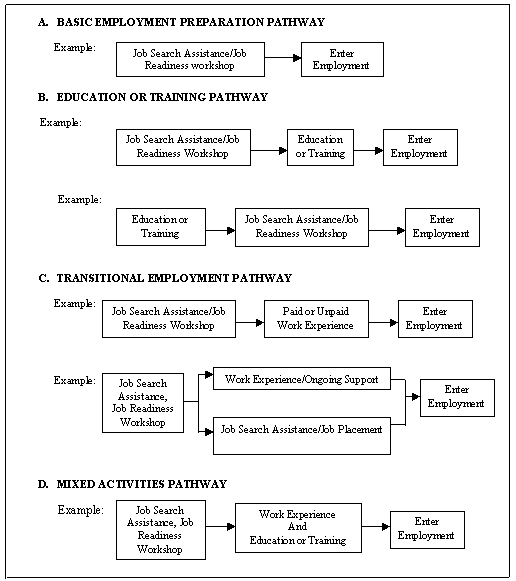
About 20 percent of those who entered employment had been in a work experience, internship, or subsidized job activity, often in addition to job readiness (Pathway C). About five percent of WtW participants in these study sites who found jobs had received some pre-employment education or training (Pathway B), again often in combination with job readiness services or subsidized employment, and about 14 percent participated in both work experience and education/training (Pathway D). There is, though, variation across programs. In no program or study site do all participants follow the same pathway or sequence of activities, although some pathways seem to prevail in certain programs (Chart V.2).
Over 90 percent of the participants in the large Chicago immediate job placement programs and the Chicago temporary employment program who get jobs were active only in job search and job readiness services. Still, about 39 percent of the participants across all the 11 study sites who got jobs received some education or training services or were in a subsidized employment activity. In fact, some programs which are described by administrators and staff as having very strong "work first" approaches nonetheless incorporate education, training, or subsidized employment. The HRDF programs in West Virginia, for example, operate an extensive occupational exploration component, where participants who are not able to secure regular unsubsidized jobs are placed into subsidized work experience. Over 40 percent of HRDF participants were in occupational exploration for an average of six months. And in Phoenix, where the EARN program's approach is also described as "strong work-first," over 40 percent of participants engage in some type of education or skills development, such as computer-based training with occupational modules (e.g., customer service representative, general office work, and security officer) or English classes while looking for work.
Chart V.2
Pathways to Employment in Selected WtW Sites
A. Enhanced Direct Employment Programs
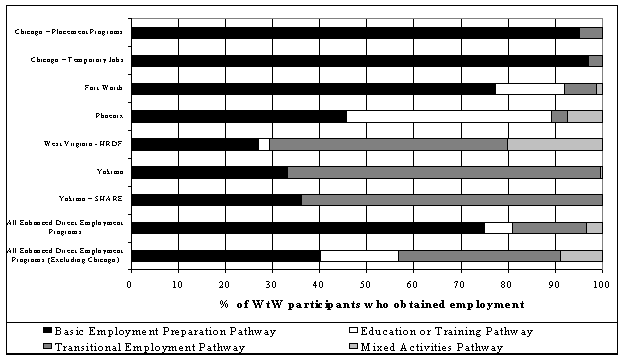
B. Developmental/Transitional Employment Programs
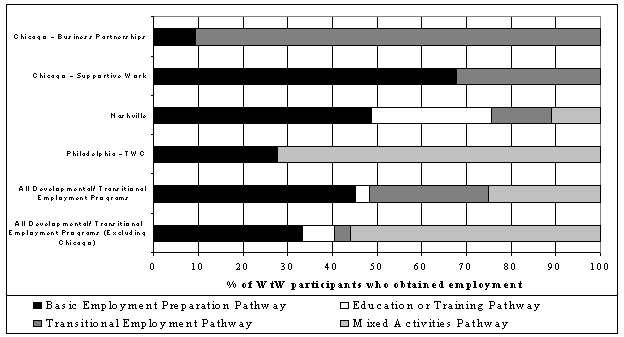
Source: Program Management Information Systems.
Similarly, some programs that adopted service models that are defined by highly individualized and comprehensive developmental strategies have substantial proportions of participants who enter employment after participating only in the up-front basic job readiness activities offered. For example, the Nashville Pathways program consists of very individualized and supportive activities individually planned to eventually result in employment. Even so, over 50 percent of the Pathways participants who obtain employment do so after receiving just job readiness services. In Philadelphia, TWC's program, by design, includes paid supportive work experience with wrap-around education and training, but about 30 percent of participants who enter employment do so after engaging only in Philadelphia-TWC's job readiness component.
Thus, as in many TANF-work programs, many WtW participants who get jobs do so with just pre-employment preparation--more than half of those who got a job in the study programs had engaged only in pre-employment preparation services. However, one defining characteristic of the WtW-funded programs in the study sites is that they each offered a range of work-related activities beyond basic job search and job readiness. A relatively high proportion of participants in these WtW programs who got jobs had also participated in developmental activities, such as formal work experience (mainly with pay), sheltered workshops, occupational internships, education, or skills development activities. (24)
Endnotes
23. It is important to note that the job entry rate is based on program MIS data regarding the number of participants programs report as entering an unsubsidized job after enrolling in the program. It is not based on UI quarterly employment and wage records. A subsequent report on participant employment and welfare outcomes will include employment using the UI quarterly employment and wage records.
24. These figures are derived by combining percentages of participants in study programs who obtained a job through the Work Experience/Internship Pathway with the Mixed Activities Pathway on Chart V.2.
VI. Conclusions and Implications
The WtW grants provide resources that can be used to operate a broad range of employment-related programs targeting TANF recipients and other particularly disadvantaged parents, especially noncustodial fathers. This implementation analysis of WtW-funded programs in eleven study sites suggests a few general conclusions. First, after a slow start-up, most of the programs were fully implemented by the time of the process site visits in 2001. The first twelve to eighteen months were devoted to addressing a range of enrollment problems, mainly related to complicated eligibility criteria included in the legislation and to difficulties in establishing procedures by which individuals were referred from TANF agencies to WtW programs. Second, the grants were used to design and implement various types of programs and provide employment-related services that go beyond basic job search assistance and job readiness preparation. The legislation expected grant-funded programs to complement welfare reform policies, which generally means they should be consistent with TANF policies that encourage or require rapid entry into the labor market. All the study programs have an employment focus with job entry rates roughly comparable to nationally reported rates for TANF-sponsored work programs. All the WtW study programs also offer various types of more intensive developmental components, including subsidized supportive work, paid and unpaid work experience, internships, and sheltered workshops. Finally, the experiences WtW programs had in designing and implementing programs for hard-to-employ welfare recipients and noncustodial parents provide useful program and policy lessons and insights, ranging from the potential role of program grants to the role of community-based organizations and feasible workplace-based employment approaches.
A. Implementation Status
In general, the grantees were eventually able to implement programs as intended. Administrators and staff devoted much attention to understanding the challenges they were facing, developing strategies to overcome those challenges, and making mid-course adjustments to their programs and their goals. By mid-2001, about half of the programs in the study sites had reached or exceeded their planned enrollment levels, and the others that were still enrolling individuals in mid-2001 planned to reach their goals within a year. Two of the programs, though, were still experiencing serious problems two years after beginning operations, with very low enrollment levels and ongoing implementation problems--the program operated by the Milwaukee Department of Corrections serving noncustodial fathers being released from prison, and the Long Beach Career Transcript System program affiliated with Johns Hopkins University. All of the other study programs, however, were fully implemented.
The pace of implementation in all programs, however, was slower than planners had expected, in large part because of difficulties that arose in the first year, many of which resulted from specific provisions in the federal legislation. The most pronounced implementation problems were related to operationalizing the complex eligibility criteria specified in the legislation and assuring compatibility with existing TANF policies and programs. One of the more obvious problems developed because programs had incorrectly presumed that they would be able to receive appropriate referrals of eligible individuals from TANF agencies. All the study grantees realized very early that they needed other strategies, and they incorporated intensive outreach, marketing, and publicity efforts to identify potential participants. Even with those new outreach efforts, however, several of the grantees continued to struggle with low enrollment levels.
B. Program Approaches and Services
The federal grants mechanism resulted in a highly decentralized system of locally developed employment programs for hard-to-serve welfare recipients and other low-income parents with employment difficulties. Many of the programs target specific hard-to-employ populations--including noncustodial parents, substance abusers, and persons with physical and mental disabilities. Targeting these groups is often accomplished by contracting with nonprofit community-based organizations that have special experience. For example, in Chicago, the grantee agency has over 20 service provider contractors, all but two of which are nonprofit organizations. In Nashville and Boston, each grantee agency contracts with about a dozen community-based organizations.
Despite the early implementation problems and the slow pace of enrollment, a number of potentially promising programmatic developments have emerged from the WtW grants program, although this report cannot address how well the programs do in improving individual outcomes. Among the potentially important strategies are the extensive involvement of nonprofit organizations, collaborations with employers, provision of a range of activities that bridge the transition from welfare-to-work, and post-employment retention services. For example, several study programs--notably in Boston and Chicago--feature close collaboration with businesses or industries, providing short-term occupation-specific skills training, accompanying work experience, and an employer commitment to hire participants into full-time unsubsidized jobs when they complete the program. Contractors work closely with hotel, health care, and retail firms to ensure that the curriculum, teaching methods, and special equipment used for training are up-to-date and relevant to what is needed within a particular occupational field.
Nearly all the study programs offer various types of transitional and subsidized work opportunities to help bridge the transition from welfare to unsubsidized, full-time work. These subsidized activities include on-the-job training (e.g., in which the WtW agency pays a portion (usually half) of the individual's wages for up to six months); sheltered workshops (e.g., in which the WtW-funded agency engages participants in part-time work at an hourly wage or "piecemeal" rate); work internships (usually paid and often resulting in a regular permanent job); community work experience (e.g., in which the WtW participant is detailed to work part-time at a public or nonprofit agency to meet TANF work requirements); and paid community service, where individuals receive at least the minimum wage. These programs help TANF recipients to meet work requirements imposed under TANF and provide work experience (including orientation to the world of work) that in many cases helps to build resumes and bridge the gap to employment for welfare recipients with multiple and severe barriers to employment.
A number of the study programs include post-employment job retention services to head off problems before they end in job loss and, where possible, to advance workers to higher skill and higher paying (and more secure) jobs within their companies. Ongoing case management and tracking are intended to help individuals keep jobs. Participant services include ongoing help with support services, such as with bus passes, reimbursement for gas, help with car repairs, resolving child care problems, referral to transitional housing, and help with purchase of work clothes and equipment. Some programs sponsor periodic job retention workshops or job clubs, and refer participants to education and training programs and a range of other local agencies (e.g., substance abuse and mental health providers, transitional/permanent housing providers, etc.). A few programs also intervene with employers to help resolve work-related problems such as absenteeism, conflicts with co-workers, and low productivity.
In general, while all programs in the study sites provide some type of post-employment retention services, few offer skills development or employment advancement services. Staff and administrators explain that their primary challenge is to help people get jobs and retain them. Job advancement is a long-term issue for which many of these participants are not yet ready, given the range of problems they often have.
C. Lessons for Implementing Programs for the Hard-to-employ
The WtW grant program experiences also suggest a number of important lessons that could benefit other programs serving welfare and low-income parents with serious employment problems, and that can provide insight to federal officials developing program policies.
Detailed eligibility and fiscal provisions can delay program implementation. Very specific eligibility criteria were included in the WtW legislation to target those perceived to have the most serious employment barriers--school dropouts, long-term welfare recipients, substance abusers, and the disabled. The intent was to ensure that funds were used for those with the greatest need for services. One effect, though, was that programs had to develop complicated, time-consuming, and often administratively costly procedures to document each of the criteria and verify eligibility. For example, all the study programs formally tested reading and math levels of any individual being considered for WtW--not because knowing the competency levels would help assess the individual's needs or career goals, but because the program had to document reading and math levels to verify eligibility for services.
While funding for the program was aimed at a generally disadvantaged population--welfare recipients that had been receiving public assistance over an extended period--Congress added further stipulations to target funding on those "hardest-to-serve" individuals within the welfare population. This was accomplished by introducing a "70 percent" targeting criterion, wherein at least 70 percent of the funds had to be expended on certain specific population groups, further complicating recruitment efforts and the eligibility determination process. The requirement also left programs uncertain about whether in the end they would be able to balance expenditures on "70 percent" and "30 percent" eligible individuals. In some places, individuals eligible only under the 30 percent criteria were turned away from the program, even though overall enrollment levels were low.
Similarly, the WtW program targets the hardest-to-employ, long-term welfare recipients, especially those perceived to have multiple barriers to employment--not the least of which are often serious education and job-specific skill deficits. Yet, the legislation (at least initially) prohibited programs from providing education and training as a pre-employment service that might prepare these individuals to find and keep jobs. The prohibition probably reflected a desire to avoid simply keeping individuals in long-term education or training programs that rarely result in employment. The effect was that program administrators and planners devoted considerable time and effort to identifying ways to remain in technical compliance with the training restrictions, but still provide individuals with skills training. While administrators and staff expressed frustration at not being able to provide pre-employment education and training, they nonetheless developed a number of strategies to integrate education or training into employment services, such as Philadelphia-TWC's wrap-around education, occupation-based skills training in the pre-employment internships in Boston, and the computer-based instruction programs in Phoenix.
Temporary funding and authority imposes added challenges in implementing a program. Congress enacted the WtW grants as a one-time program to help cushion any added program resource burden of welfare reform related to serving long-term TANF recipients and those with serious barriers to employment. Presumably, over time the entire safety net system would adjust to the new welfare reform law and the added resources would no longer be necessary. The temporary authorization, however, compounded some implementation problems. For example, some programs in the study sites found it difficult to establish ongoing referral arrangements with TANF and other agencies, which often have their own network of permanent programs to which they refer individuals, regardless of how attractive a new program might seem. If WtW had been a permanent new program, both the grantee and the TANF agency might have eventually been able to establish more acceptable referral procedures. As a temporary program, grantee staff in most sites felt an urgency to proceed on their own to recruit participants quickly. On the TANF side, given their workload, it is not surprising that staff often tend to refer clients to permanent programs with which they already have established ongoing contact, rather than the new WtW program. In addition, each WtW program had its own goals for enrollment into work activity and for job placements, and staff felt some degree of urgency to meet those goals within the three-year time frame set by Congress. Meeting the "numbers" sometimes diverted attention from developing and refining program services.
Federal policy changes made to improve implementation of a nonpermanent program may have limited effect. Based in part on feedback from grantees, Congress loosened the WtW eligibility provisions in 1999, but for many programs this change came so late that they were reluctant to change their intake procedures, agreements with TANF agencies, forms, and reporting systems. Instead they operationally remained with the original criteria.
Programs benefit from partnerships and collaborations at the local level that make special services, expertise, and resources available to the target population, but there are some important challenges that must be addressed. Partnerships and collaborations were considered essential in WtW because programs required information about TANF status to verify participants' eligibility for WtW services and because of the range of services the target population might need. All of the grantees studied represent collaborative efforts, in the sense that a number of partners are involved, including workforce development agencies, local TANF agencies, and a wide range of community-based organizations. Some of these collaborations work more efficiently and productively than others. Although it is often time-consuming, complicated, and difficult to bring together a number of partners at the state and local levels, a number of the WtW programs have been able to do so. In Nashville and Boston, WtW grants fund collaboratives or consortia of nonprofit organizations, public agencies, and employer firms to develop programs. In Chicago and Fort Worth, special contractors are funded to provide particular professional services such as child care referral, public relations, psychological and behavioral services, financial services, and IDAs. In Yakima, the workforce board collaborates with Youthbuild and OIC to blend their respective resources to target young parents, including fathers. In each case, the collaborative program has been able to expand services or provide more enriched services than each partner would be able to provide alone.
Carefully designed programs can reach populations with serious employment problems through systematic outreach and recruitment and a comprehensive package of services. Despite the implementation difficulties, one lesson from the WtW grants program experience is that programs can recruit and serve individuals with serious employment problems. While programs struggled to recruit those who met the very strict eligibility criteria, the fact is that nearly everyone eventually served by these programs is what might be called "hard-to-employ." A few characteristics of the programs in the study sites suggest how this population can be served. The programs are fairly small in scale and nonprofit organizations played major roles. None of these WtW-funded programs were designed to serve the entire TANF caseload--on average, study programs served about 1,000 persons over a three- to four-year period. Most programs are operated by nonprofit community organizations, many of which have extensive experience with particular populations or in particular neighborhoods. The program operators include a range of organizations from large well-established agencies such as Goodwill, Catholic Charities, and Jewish Vocational Services to small agencies with experience serving special groups such as Native Americans, women, and persons with mental illness, substance abuse, or housing deficiencies. When it became clear that the number of referrals from TANF agencies would be lower than expected, many of the nonprofit organizations moved quickly to do grass-roots recruiting.
Even in sites that were able to reach their original enrollment goals, staff noted both the difficulties of recruiting WtW participants and the importance of mounting well-organized and sustained recruitment efforts for such projects. Programs providing employment and training services for welfare recipients and NCPs should not underestimate the problems associated with recruiting participants. Programs must work hard to establish and maintain a steady flow of referrals from other programs--and if such referrals do not materialize, have a backup plan, such as conducting outreach directly to the eligible population. The WtW grantees might not have been able to anticipate that enrollment and recruitment would be a problem. However, future community-based efforts targeting subgroups of the TANF caseload or low-income NCPs will do well to systematically consider outreach and recruitment strategies before startup to minimize program disruption or delay later.
Finally, programs aimed at improving the transition to work and self-sufficiency need to have a comprehensive package of services available--either in-house or through a network of professional providers--to address the varied needs of participants. Many welfare recipients face critical barriers to securing and/or maintaining employment (e.g., basic skills deficiencies, lack of job-specific skills, problems with self-esteem and other mental health issues, substance abuse problems, family-related issues, and lack of transportation and child care). These barriers need to be addressed if individuals are to retain long-term employment. There may be no single program model to accomplish this objective, but the experiences in these sites suggest a few possible models to consider. Programs that emphasize moving individuals quickly into employment can be supplemented, or enhanced, with ongoing case management and individualized support. Another approach adopted by several of the WtW-funded programs involves more developmental activities--such as paid work experience, subsidized employment, and workplace-based internships--combined with ongoing personalized support and services. The key may be to incorporate the individualized support both pre- and post-employment.
The reports from the evaluation provide a comprehensive assessment of the types of programs developed with WtW grants funds and the outcomes for individual participants. This report describes WtW-funded programs as they operate in the 11 study sites, assesses program implementation and summarizes program services and models. Future reports from the evaluation will address the outcomes for individual participants and the costs of the approaches implemented in the sites.
Appendices
Appendix A: WtW Grants Program Evaluation Programs and Affiliated Organizations in the WtW Study Sites
| Study Site/ WtW Grantee Agency | Programs and Affiliated Organizations in the Site | Nonprofit Provider? |
|---|---|---|
| Boston, MA: Office of Jobs and Community Service (JCS) in the Boston Economic Development and Industrial Corporation (EDIC) | Employer Partnership Programs | |
| Benjamin Health Care with Jewish Vocational Services |
X |
|
| Boston Neighborhood Employment Collaborative (Beth Israel Deaconess Hospital, Children's Hospital, Colonnade Hotel, Boston Back Bay Hilton, Jamaica Plains Neighborhood Development Corp.) with Fenway CDC |
X |
|
| St. Mary's Women and Infants Center with Caritas Christi |
X |
|
| Filene's Basement with Crittendon-Hastings House |
X |
|
| Kid's Palace Daycare with Life Focus Center |
X |
|
| Marriott with Crittendon-Hastings House |
X |
|
| Mellon Bank with YMCA, Training Inc., and Jobs for Youth |
X |
|
| Partners Health Care with Jewish Vocational Services and Worksource Staffing |
X |
|
| Roche Bros. Grocery, TJX Warehouse, Greater Boston Food Bank with Urban League of Eastern Mass. |
X |
|
| TJX with Morgan Memorial Goodwill Industries |
X |
|
| U.S. Trust with Action for Boston Community Development |
X |
|
| Enhanced Community Service Programs | ||
| Action for Boston Community Development |
X |
|
| Jewish Vocational Services |
X |
|
| Other Affiliated Organizations | ||
| Two of three One Stop Career Centers operated by CBOs (Jewish Vocational Services with JCS, Dimock Community Health Center with Morgan Memorial Goodwill, and the Women's Educational and Industrial Union) |
X |
|
| Chicago, IL: Mayor's Office of Workforce Development | Immediate Job Placement Programs | |
| Hull House, Spanish Coalition, Asian Human Services, Inner Voice, Maximus, Employment and Employer Services, Central State SER, Dynamic Educational Services, Inc. | ||
| Goodwill Industries |
X |
|
| Temporary Employment Programs | ||
| Suburban Job Link | ||
| Business and Industry Partnerships | ||
| Pyramid Partnership, Sinai Community Institute, First Chicago/Bank One | ||
| Supportive Work/Paid Work Experience Programs | ||
| Chicago Commons, Greater West Town, Operation ABLE, Bethel, Chicago Connections | ||
| Catholic Charities, Easter Seals |
X |
|
| Fort Worth, TX: Tarrant County Workforce Development Board (Work Advantage) | Employment Specific Programs | |
| Arlington Night Shelter (Project Link), The Women's Center, Goodwill Fort Worth |
X |
|
| Mental Health/Mental Rehabilitation, Inc., United Community Centers | ||
| Special Projects | ||
| Tarrant Council on Alcohol and Drug Abuse (assessment, referral to treatment and case management), Fort Worth Housing Authority (outreach), Tarrant County ACCESS (client tracking data system-SAFETYNET), MHMR and Fort Worth Housing Authority (social marketing campaign) | ||
| Camp Fire (licensed child care home development) |
X |
|
| Other Affiliated Organizations | ||
| Volunteers of America |
X |
|
| Indiana (19-county area): River Valley Resources, Inc. | RVR WtW Program (slight variation in program in 19 counties) |
X |
| Milwaukee, WI: Wisconsin Dept. of Corrections, Div. Of Community Corrections for Region 3 | Nontraditional Opportunities for Work (NOW) Program | |
| Other Affiliated Organizations | ||
| Goodwill Industries, United Migrant Service Organization, YWWorks, OIC-GM (all W-2 agencies) |
X |
|
| Nashville, TN: Nashville Career Advancement Center | Nashville Works/Pathways Program | |
| Families First Partners, Inc. (consortium of Catholic Charities of Nashville, the Martha O'Bryan Center, the Nashville Urban League, and Nashville READ) |
X |
|
| The PENCIL Foundation (Public Education Nashville Citizens Involved in Leadership) |
X |
|
| YWCA (consortium of Nashville Opportunities Industrialization (OIC) and the Bethlehem Center) |
X |
|
| Philadelphia, PA: Philadelphia Workforce Development Corp. and Transitional Work Corp. | PWDC: WtW Regional Service Centers | |
| TWC: Phil@Work |
X |
|
| Phoenix, AZ: City of Phoenix Human Services Dept., Employment and Training Division | Employment and Respect Now (EARN) Alliance Program |
X |
| West Virginia (29-county area): Human Resources Development Foundation | HRDF Comprehensive Employment Program (slight variation in program in 6 district offices serving 29 counties) |
X |
| Yakima, WA: Tri-Valley Private Industry Council | Yakima WtW Program, Yakima SHARE Program, OIC/Youthbuild/Americorps WtW Program |
X |
| Other Affiliated Organizations | ||
| People-for-People, Northwest Community Action Center, Yakima Valley Farm Workers Clinic |
X |
|
| Baltimore County MD, St. Lucie County FL, Long Beach, CA: Johns Hopkins University, Institute for Policy Studies, SCANS2000; with CC of Baltimore County (MD), Indian River CC (FL); Long Beach CC (CA) | JHU-SCANS2000-Career Transcript System (CTS) (contracts with 8 community colleges, 3 of which are included in this study--each slightly different) |
X |
| Source: Program administrator information. | ||
Appendix B: WtW Grants Program Evaluation Program Enrollee Characteristics in the Study Sites
| Boston | Chicago | Fort Worth | Milwaukee | Nashville | Philadelphia-TWC | Phoenix | West Virginia-HRDF | Yakima | JHU-Baltimore | JHU-St.Lucie, FL | |
|---|---|---|---|---|---|---|---|---|---|---|---|
| Characteristics | (%) | (%) | (%) | (%) | (%) | (%) | (%) | (%) | (%) | (%) | (%) |
|
Race/Ethnicity |
|||||||||||
|
Black/African American |
55 | 91 | 51 | 85 | 89 | 88 | 32 | 10 | 3 | 75 |
49 |
|
Hispanic |
36 | 5 | 27 | 10 | 1 | 8 | 49 | 1 | 36 | 0 | 10 |
|
White |
8 | 3 | 21 | 6 | 10 | 2 | 8 | 86 | 41 | 23 | 40 |
|
Other |
2 | 1 | 1 | 0 | 1 | 2 | 12 | 3 | 20 | 3 | 1 |
|
Education |
|||||||||||
|
Less than 12 Years |
50 | 40 | 48 | 51 | 44 | 55 | 58 | 34 | 57 | 23 | 28 |
|
High School Diploma/GED |
26 | 31 | 27 | 28 | 31 | 19 | 20 | 41 | 39 | 30 | 22 |
|
Above High School |
23 | 29 | 25 | 21 | 25 | 26 | 21 | 25 | 4 | 47 | 50 |
|
Age at Enrollment |
|||||||||||
|
17 and Under |
0 | 0 | 0 | 0 | 0 | 0 | 0 | 0 | 0 | 0 | 1 |
|
18-24 |
22 | 20 | 25 | 22 | 18 | 16 | 34 | 13 | 27 | 11 | 26 |
|
25-34 |
52 | 44 | 46 | 45 | 49 | 45 | 42 | 44 | 45 | 43 | 47 |
|
35-44 |
24 | 28 | 23 | 26 | 27 | 32 | 21 | 33 | 24 | 36 | 19 |
|
45-54 |
2 | 7 | 4 | 7 | 5 | 6 | 4 | 10 | 5 | 11 | 5 |
|
55 and Older |
0 | 1 | 1 | 0 | 1 | 0 | 0 | 0 | 0 | 0 | 2 |
|
Median Age (Years) |
29 | 31 | 29 | 30 | 31 | 32 | 28 | 33 | 29 | 34 | 29 |
|
Gender |
|||||||||||
|
Male |
3 | 2 | 6 | 95 | 1 | 1 | 3 | 15 | 25 | 5 | 8 |
|
Female |
97 | 98 | 94 | 5 | 99 | 99 | 97 | 85 | 75 | 95 | 92 |
|
Parental Status |
|||||||||||
|
Custodial |
85 | 90 | 85 | 17 | 83 | 81 | 82 | 85 | 86 | 94 | 81 |
|
Noncustodial |
1 | 1 | 1 | 60 | 1 | 1 | 1 | 0 | 14 | 1 | 1 |
|
Custodial and Noncustodial |
14 | 9 | 14 | 23 | 16 | 17 | 17 | 14 | 0 | 5 | 19 |
|
Disability |
|||||||||||
|
Medical/Physical |
8 | 13 | 15 | 11 | 13 | 12 | 10 | 16 | NA | 6 | 13 |
|
Emotional/Mental/Drug Use |
5 | 4 | 6 | 8 | 8 | 4 | 7 | 7 | NA | 3 | 7 |
|
Other |
3 | 8 | 5 | 4 | 8 | 7 | 5 | 6 | NA | 11 | 2 |
|
Number of Children |
|||||||||||
|
0-1 |
30 | 26 | 25 | 63 | 25 | 26 | 23 | 35 | 34 | 38 | 34 |
|
2-3 |
53 | 49 | 54 | 32 | 57 | 45 | 48 | 53 | 41 | 45 | 45 |
|
4-5 |
13 | 19 | 19 | 2 | 15 | 23 | 22 | 12 | 14 | 14 | 20 |
|
More than 5 |
4 | 6 | 2 | 2 | 3 | 5 | 7 | 0 | 11 | 3 | 1 |
|
Median (# Children) |
2 | 2 | 2 | 1 | 2 | 2 | 2 | 2 | 2 | 2 | 2 |
|
Age of Youngest Child |
|||||||||||
|
0-4 |
54 | 50 | 58 | 52 | 43 | 45 | 70 | 35 | NA | 28 | 51 |
|
5-9 |
33 | 28 | 24 | 22 | 28 | 32 | 19 | 32 | NA | 42 | 32 |
|
10-14 |
11 | 17 | 15 | 17 | 20 | 16 | 10 | 19 | NA | 24 | 16 |
|
15-18 |
2 | 5 | 3 | 7 | 8 | 6 | 1 | 12 | NA | 4 | 2 |
|
Over 18 |
1 | 0 | 0 | 1 | 2 | 1 | 0 | 2 | NA | 1 | 0 |
|
TANF Status at Enrollment |
|||||||||||
|
On TANF |
55 | 94 | 92 | 0 | 62 | 92 | 56 | 79 | 85 | 27 | 45 |
|
Non-TANF |
45 | 6 | 8 | 100 | 38 | 8 | 44 | 21 | 15 | 73 | 55 |
| Source: Program Baseline Information Forms. Yakima data: Program Management Information Systems. Note: Data was unavailable for Indiana-RVR and JHU Long Beach sites. |
|||||||||||
Appendix C: WtW Grants Program Evaluation Program Service Levels in the Study Site
| Site | Pre-Employment Service | |||||
|---|---|---|---|---|---|---|
| Job Search Assistance/ Job Readiness | Education or Training | Subsidized Employment/ Work Experience | ||||
| % of Enrollees | Median Duration | % of Enrollees | Median Duration | % of Enrollees | Median Duration | |
|
Chicago-Total |
93 | 6-12 Weeks | 0 | 20 | <6 Weeks | |
|
Chicago-Business Partnerships |
97 | <6 Weeks | 0 | 83 | <6 Weeks | |
|
Chicago-Supportive Work |
87 | 6-12 Weeks | 0 | 29 | 6-12 Weeks | |
|
Chicago-Temporary Jobs |
99 | <6 Weeks | 0 | 3 | <6 Weeks | |
|
Chicago-Placement Programs |
98 | 6-12 Weeks | 0 | 4 | <6 Weeks | |
|
Fort Worth |
61 | >12 Weeks | 13 | 6-12 Weeks | 5 | >12 Weeks |
|
Nashville |
64 | 6-12 Weeks | 37 | 6-12 Weeks | 23 | 6-12 Weeks |
|
Philadelphia-TWC |
86 | <6 Weeks | 77 | 6-12 Weeks | 77 | 6-12 Weeks |
|
Phoenix |
90 | 6-12 Weeks | 40 | >12 Weeks | 11 | <6 Weeks |
|
West Virginia |
100 | NA | 25 | NA | 69 | NA |
|
Yakima-WtW |
87 | >12 Weeks | <1 | NA | 62 | >12 Weeks |
|
Yakima-SHARE |
94 | >12 Weeks | 0 | 63 | >12 Weeks | |
|
All Study Sites |
87 | <6 Weeks | 22 | 6-12 Weeks | 35 | 6-12 Weeks |
|
Source: Program Management Information Systems. |
||||||
Appendix D: WtW Grants Program Evaluation Profiles of the Study Sites and Programs
WtW Program Profile
Grantee: Office of Jobs and Community Services (JCS) in the Boston Economic Development and Industrial Corp. (EDIC)
Location: Boston, Massachusetts
Program Name(s): Welfare-to-Work Employer Sponsored Programs and Enhanced Community Service Programs
ORGANIZATIONAL STRUCTURE
Program Structure: The Boston JCS-EDIC, a workforce development agency under the direction of the Mayor, has used WtW Formula Grant funding to establish two major initiatives to serve WtW-eligible individuals in Boston: (1) Employer Sponsored Programs that offer pre-employment preparation and internships linked with specific employers, and (2) Enhanced Community Service Programs that offer occupational-specific work experience. The objective of the Employer Sponsored Program is to prepare welfare recipients for entry-level jobs that are in demand in the community by working directly with employers who design and help implement the pre-employment program and commit to hire those who complete the program. These programs run in fixed cycles with a limited number of individuals per cycle and are intended for individuals who are more job-ready than those entering Enhanced Community Service. Each employer partners with a specific nonprofit organization, which provides personal counseling and case management to participants. The Enhanced Community Service Programs provide a more structured supported work-type assignment (three to six months long), designed as pre-employment preparation for specific occupations. This initiative involves 20 hours per week of community service in a specific occupational slot plus 15 hours of "enhanced" activities (e.g., basic skills) as appropriate.
Key Partners: EDIC/JCS contracts directly with the 11 employers under the Employer Sponsored program component and two community-based organizations (CBOs) under the Enhanced Community Service program component. Together JCS and the Boston Private Industry Council (PIC) developed the model for the work-based training provided under this initiative. The 11 pre-employment preparation Employment Partner Programs are: Marriott Corporation; Benjamin Health Care; Partners Health Care; U.S. Trust Corp./Action for Boston Community Development (ABCD); TJX/Goodwill; Caritas-Christi Health; Filene's Basement; Roche Brothers Grocery, TJX Warehouse and the Greater Boston Food Bank; Kid's Palace Daycare; Mellon Bank; and the Boston Neighborhood Employment Collaborative (a collaborative that includes hotels, hospitals and neighborhood organizations). The two occupation-based Enhanced Community Service Programs are: Action for Boston Community Development Inc. (ABCD), a child care teachers' assistant training project; and Jewish Vocational Service (JVS), a training program for various health and hospitality occupations. The three Boston Career Centers serve as intake points for the project are: (1) The Workplace, operated by JCS and Jewish Vocational Services; (2) Boston Career Link, a collaborative of Dimock Community Health Center, Morgan Memorial Goodwill Industries, Inc., and the Women's Educational and Industrial Union; and (3) JobNet, operated by the Massachusetts Division of Employment and Training (DET).
Program Model(s): The main focus of the initiative is to transition welfare recipients into full-time jobs within the private for-profit and nonprofit sectors through employer-based training. Under the Employer Sponsored Program, there is a strong employer focus--employers help with selection of participants for their training program and then structure training so that when participants complete training they can fill full-time positions. Training is conducted at the employer site, is short-term (usually about six weeks), and involves a combination of employability skills training and job-specific training. Under the Enhanced Community Service Program, participants work at supported work-type assignments for three to six months. Typically, job-specific training in a community service job is supplemented with up to 15 hours of basic skills training or other types of activities to increase employability. There is no formal commitment to hire in the Enhanced Community Service Program, but each program is industry-specific and the organization commits to placing participants into related jobs with benefits (within the host organization or elsewhere).
Number of Program Offices/Locations: Three main intake locations (at the three Boston Career Centers) and separate service sites for each of the thirteen programs (the employer's work-site, the nonprofit agency, or both).
Funding Sources: WtW Formula Grant ($11.3 million)
SERVICES AND PROGRAM FOCUS
Target Population(s): There is no special targeting of subpopulations or neighborhoods--all WtW-eligibles are considered for enrollment. All individuals referred from Career Centers to an employer program or community service program meet the 70 percent eligibility criteria, unless they live in an Enterprise Zone (EZ). Residents of EZs can be made eligible under the 30 percent criteria.
Outreach and Intake: The three Boston Career Centers are the intake points. The outreach includes: passing out flyers in Department of Temporary Assistance (DTA) offices; referrals directly from DTA workers; visiting community centers, churches, housing projects, etc. to pass out flyers and make presentations; and "word-of-mouth" referral. JCS has a full-time "outreach coordinator" to increase the community outreach efforts to explain the range of opportunities available to welfare recipients through the Career Centers. The outreach coordinator works with numerous CBOs, the Boston Housing Authority, and the Boston Medical Center.
Employment-Related Services: The structure of employment services varies across the employers and CBOs involved in this project. The employer-sponsored program model is generally six weeks long, although some last longer. The first segment consists of job readiness workshops and the second segment is on the job (e.g., internships, apprenticeship, job shadowing). For example, Marriott offers a six-week, 180-hour training program, which includes pre-employment and job-specific skills training. The first 60 hours is classroom training dealing with pre-employment skills; life skills; confidence/self esteem building; personal finance; diversity in the workplace; hospitality/customer service skills; and safety, first aid, and sanitation. Regular Marriott personnel teach all of these classes. The remaining 120 hours is hands-on experience through job shadowing. The six-week training is unpaid. Individuals receive weekly performance feedback once they are in the job-shadowing portion of the program. Case managers are around during lunches and breaks to help individuals with any issues that arise during the training. Upon completion of the program, individuals can be placed into a variety of different jobs at any one of four Marriott locations in Boston. Possible job placements at Marriott include: front desk clerk, housekeeper/housekeepers aide, PBX operator, utility worker, dining room attendant, restaurant server/banquet server, and engineering help.
Under the enhanced community services program component, there are two initiatives operated by CBOs (ABCD and JVS). Each provides 20 hours per week of community service in specific jobs/occupations, supplemented with 15 hours of "enhanced readiness services" (e.g., ESL, basic education). ABCD places individuals in day care teacher aide assignments; JVS works with a collaborative group of agencies that work mainly with immigrants and place individuals in health and hospitality assignments.
Innovative Practices and/or Services: The most innovative feature of this program is the very active and direct involvement of businesses in designing the program, selecting the participants, conducting the pre-employment preparation and the on-the-job component, and making an up-front commitment to hire those who complete the program. All program components occur on site at the workplace.
Second, each employer program has either a CBO partner that performs the case management (or in-house case management services) during the program and for up to one year after starting as a regular employee after the program. The case manager is fully integrated into the program model on a day-to-day basis, but has specific responsibilities for brokering services, counseling participants, and intervening/advocating with outside agencies as necessary.
Third, the program is well integrated with Boston's Career Centers and the state's welfare reform initiatives. The Career Centers are the central focal point for referral into all of the programs. The Career Center staff and the employer-sponsored program case managers coordinate routinely with the welfare agency to report attendance, etc. The Career Centers in Boston already have nearly all features required under the new federal Workforce Investment Act. The Career Centers also hold the major contracts for large parts of the state's TANF work program (TAFDC-ESP).
Participation and Activity Levels:(25)
Enrollment: As of January 2000, an estimated 445 individuals had been enrolled and served under the WtW grant program.
Employment Services: NA
Job Placements/Entered Employment: NA
WtW Program Profile
Grantee: Mayor's Office of Workforce Development (MOWD)
Location: City of Chicago
Program Name(s): Welfare-to-Work Program
ORGANIZATIONAL STRUCTURE
Program Structure: Using WtW formula funds, MOWD has funded two rounds of grants to a total of 24 agencies in Chicago to provide a wide range of employment, training, and support services for WtW-eligible TANF recipients living in the City of Chicago. In addition, MOWD has partnered in a significant way on two other WtW competitive grants--(1) a Competitive WtW Round One Grant to provide six months of free public transportation assistance for WtW-eligible individuals and (2) a Competitive WtW Round Two Grant to provide employment, training, and support services for WtW-eligible residents of public housing units in Chicago. MOWD, which does not provide direct client services, selects and oversees WtW grantee organizations.
Key Partners: Under the WtW formula grant, the major partners include the Illinois Department of Human Services (IDHS), which provides most referrals of WtW-eligible TANF recipients through local IDHS offices located in the City of Chicago; and 24 subcontracted human service agencies, which provide case management, employment, training, and other support services for WtW-eligible TANF recipients. Some examples of the subcontracting agencies include: Asian Human Services, Catholic Charities, the Center for Law and Human Services, Easter Seals, Employment and Employer Services, Goodwill Industries, MAXIMUS, Operation ABLE, Pyramid Partnership, Shorebank Neighborhood Institute, Spanish Coalition for Jobs, Suburban Job Link, and Sylvan Learning Systems. Under the Competitive WtW Round One Grant, MOWD is collaborating with PACE (a suburban transportation system) and the Chicago Transit Authority (CTA), which are making monthly transit passes available on buses and subways throughout the Chicago metropolitan area (over a six county area). Under the Competitive WtW Round Two Grant, MOWD is collaborating with the Chicago Housing Authority on administration of the grant and has selected three contractors to provide direct client services: the Abraham Lincoln Center, Pyramid Partnership, and Career Works.
Program Model(s): The focus of the programs funded under WtW grants administered by the MOWD is to serve large numbers of TANF recipients living within the city of Chicago and provide employment, training, and support services needed to rapidly move participants into unsubsidized jobs. Overall, there is a strong work-first emphasis that cuts across all funded agencies. However, there is also a broad range of service delivery approaches and subpopulations served under the program. There are also a number of agencies that provide specialty services, such as help for WtW participants to establish Individual Development Accounts (Shorebank Neighborhood Institute), to receive the Earned Income Tax Credit and other tax credits (the Center for Law and Human Services), to set up voice mail to facilitate job placement efforts (The Employment Project), and to improve reading, math, and computer skills (Sylvan Learning Systems).
Number of Program Offices/Locations: The WtW program provides services through a large number of contracted agencies (including 24 agencies under the WtW formula program). Some contracted agencies serve WtW recipients throughout the city, while others serve a particular area within the city. Some agencies have a single service location; others have several locations.
Funding Sources: Formula WtW Grants (total of $52 million, distributed in two rounds of funding of $26 million each); Competitive WtW Round One Grant ($3 million, in collaboration with PACE and the Chicago Transit Authority); Competitive WtW Round Two Grant ($5 million, in collaboration with Chicago Housing Authority)
SERVICES AND PROGRAM FOCUS
Target Population(s): The WtW program widely targets WtW-eligible TANF participants residing within the city limits. Several contracted agencies have experience in targeting and serving special subpopulations--e.g., Goodwill and Easter Seals (individuals with disabilities); Asian Human Services and Spanish Coalition for Jobs (immigrant populations); and The Inner Voice (homeless individuals).
Outreach and Intake: IDHS local offices refer virtually all WtW-eligible individuals to the subcontracted WtW agencies. Contracted agency staff market their services by maintaining communications with the individual IDHS staff who make referral decisions. Each IDHS local office has a targeted number of slots each month for particular WtW contractors' programs. IDHS local office staff is aware of these assigned slots and are guided by them, but they can also send a client to a particular contractor even if the IDHS office has no more official slots there, if the client has a preference. Some contractors also recruit small numbers of WtW participants through their own efforts and referrals from other agencies. Contractors notify IDHS of individuals who are directly recruited.
Employment-Related Services: There is a strong emphasis among all subcontracted agencies on providing job readiness and placement assistance (including job readiness workshops, help with resume preparation and interview skills, and help with job leads). This focus is in accordance with a strong "work first" orientation of the WtW program. However, each contracted agency has considerable flexibility to develop its service delivery systems, structure client flow and referral systems, and determine specific types of employment-related services to be provided. Hence, there is much variation across sites. For example, some agencies place a strong emphasis on rapid attachment of participants to unsubsidized jobs, generally featuring a work readiness workshop and substantial help with job placement (such as Employment and Employer Services, Operation ABLE, and MAXIMUS). Other subcontracted agencies feature paid work experience or sheltered workshops followed by placement into subsidized or unsubsidized jobs (such as Catholic Charities, Goodwill, and Easter Seals). Other agencies, such as Pyramid Partnership and Sinai Community Institute, feature close ties with a single or several employers--with the contracting agency providing screening and job readiness instruction, which is followed by participant referral to an employer for a short period of on-the-job training and then placement into a full-time, unsubsidized job. Most agencies provide some form of basic skills education and remediation (either directly or through referral to other agencies) and, though not a major focus, referral for short-term training to other training institutions or agencies. Through its performance-based reimbursement system for WtW subcontracted agencies, MOWD has made provision of job retention services a priority for agencies. To date, most job retention provided has centered on frequent employer and client contacts (especially to troubleshooting problems before they lead to job loss), provision of ongoing support services (such as monthly public transit passes), and assistance with upgrading basic skills to enhance employability.
Innovative Practices and/or Services: MOWD has modified contract provisions during its second round of WtW formula funding to get contractors to focus more on job retention and advancement services. Round Two contracts specify that 20 percent of funding be spent on job retention and skill upgrading. In addition, the Round Two contracts set incentives for long retention efforts, with reimbursement each month partially linked to the number of WtW participants reaching 30 days and 150 out of 180 days of employment.
MOWD has funded four "supporting role" contractors to provide specialized services that can be drawn on by participants in any of the other contractors' programs. First, the Center for Law and Human Services provides tax counseling, training on taxes and Earned Income Tax Credit (EITC) for contractor staff and for libraries and community centers that serve the low-income population. Second, Shorebank, a community development bank, is providing Individual Development Accounts (IDAs) for WtW participants. WtW funds are used to provide a match for participants' own deposits to the IDAs ($2 for every $1 deposited by participants). IDA funds can then be used to help with a down payment for home purchase, offset the cost of education or training to upgrade worker skills, or for setting up a small business investment. Third, MOWD has contracted with Sylvan Learning Systems to provide basic skills instruction, GED preparation, and basic computer skills instruction for WtW participants. Fourth, The Employer Project provides a community voice-mail service, which offers 1,000 active lines, allocated to the various contractors, who can assign them to individual WtW participants for periods of up to six months and then reassign them to new participants as the earlier ones succeed in stabilizing their living situations and getting their own telephone service. The service is intended to provide a reliable, dignified way for participants to receive messages from employers. It also allows the contractors to communicate mass messages to all of their participants who are using a voice mail line.
Under one of its WtW Competitive grants, MOWD is partnering with PACE and the Chicago Transit Authority to provide over 1,000 free monthly transit passes for WtW-eligible individuals in Chicago. Participants receive transit passes providing unlimited use of the six-county system, which enables them to broaden their job search to include openings throughout the metropolitan area (e.g., in suburban areas, if they live within the city). This helps to expand the number of job openings considered by individuals and contributes to better prospects for higher wages. Also, once an individual secures a job, it reduces transportation problems and enhances prospects for job retention. WtW contracting agencies benefit because it makes it possible for these agencies to offer participants a valuable support service at no cost to the agency. Agencies also use the passes as a tangible benefit to engage participants in services and to facilitate client contact and long-term tracking (i.e., participants are often required to attend program activities, such as a job retention workshop, to receive passes). The passes also help workers get to work on time and facilitate job retention. Finally, the partnering transportation agencies--CTA and PACE--benefit because of the program promotes long-term ridership.
Participation and Activity Levels:(26)
Enrollment: As of April 30, 2001, an estimated 9,021 individuals had been enrolled and served under the WtW grant program.
Employment Services: As of April 30, 2001, approximately 93 percent of participants had engaged in pre-employment preparation; 20 percent had engaged in transitional employment; and none had engaged in education and training services.
Job Placements/Entered Employment: As of April 30, 2001, approximately 56 percent of participants had been placed in unsubsidized jobs after enrollment.
WtW Program Profile
Grantee: Tarrant County Workforce Development Board
Location: Tarrant County (including the cities of Fort Worth and Arlington), Texas
Program Name(s): Tarrant County WtW (overall initiative)
ORGANIZATIONAL STRUCTURE
Program Structure: The Tarrant County Workforce Development Board, also referred to as Work Advantage, administers employment and training services for residents of Tarrant County, including the cities of Fort Worth and Arlington. Through its four Work Advantage Career Centers (and several satellite centers), the Board administers the formula and competitive Welfare-to-Work (WtW) grant funds, as well as CHOICES (Texas' TANF work program), Workforce Investment Act (WIA) funds, and Food Stamp Employment and Training programs. Structurally, the WtW program is closely integrated with the TANF CHOICES program. WtW provides supplemental funding that enables Work Advantage Career Centers to extend services to TANF recipients beyond the time period during which TANF/CHOICES services are available.
Key Partners: The Workforce Development Board contracts with local government agencies and community-based organizations to provide WtW-sponsored services. Under the WtW competitive grant, the Board has contracted with seven local agencies: The Women's Center of Tarrant County; Tarrant County ACCESS for the Homeless; Tarrant Council on Alcohol and Drug Abuse (TCADA); Texas Council on Camp Fire; Fort Worth Housing Authority; Fort Worth Transit Authority, and Tarrant County Mental Health/Mental Retardation (Research Division). Under the WtW formula grant, the Board has contracted with five local agencies: The Women's Center of Tarrant County, Inc.; Arlington Night Shelter; Goodwill Industries of Fort Worth, Inc.; United Community Centers; and Tarrant County Mental Health/Mental Retardation (Employment Division). The program is closely linked with the TANF system, with the Texas Department of Human Services (DHS) local offices referring WtW-eligible individuals to Work Advantage for orientation sessions covering TANF work requirements and WtW eligibility.
Program Model(s): WtW formula and competitive grant funds are being used to supplement and extend services available through TANF and CHOICES. All direct client services under the competitive and formula grants are provided through contracted local service providers, some of whom also serve as TANF/CHOICES service providers. Provider agencies have considerable flexibility to develop service delivery systems within the basic constraints of a "work first" approach. Using WtW competitive funds, Work Advantage has also funded three innovative capacity building initiatives (described below).
Number of Program Offices/Locations: Each of the seven WtW competitive grant subcontracted agencies and the five WtW formula grant subcontracted agencies has at least one project location; several have multiple site locations.
Funding Sources: WtW competitive ($3.2 million Round Two Grant) and formula ($4.0 million) grants.
SERVICES AND PROGRAM FOCUS
Target Population(s): The WtW program in Tarrant County does not target specific subpopulations. Rather, it serves all individuals who meet the federal WtW eligibility criteria. However, several service providers have expertise with certain subpopulations, and therefore, their WtW initiatives recruit and serve specific populations. Services to individuals with substance abuse problems are provided by Tarrant Council on Alcoholism and Drug Abuse; the Arlington Night Shelter uses its experience serving homeless individuals to provide job readiness and placement services to individuals in transitional housing; Goodwill Industries has extensive experience working with disabled individuals; and Tarrant County MHMR specializes in services for individuals with mental health and substance abuse issues.
Work Advantage has been working with local judges and the child support enforcement officials on development and implementation of an initiative to serve noncustodial parents (NCPs). However, this initiative was not expected to be fully operational by the time WtW funding has been expended. Through March 31, 2001, only a small number of NCPs had been served under the WtW program.
Outreach and Intake: Individuals enter the WtW initiatives in one of two ways--(1) they may be referred by local welfare offices to Work Advantage and screened for WtW eligibility or (2) recruited directly by WtW service contractors and determined eligible through a "reverse referral" process. Program administrators estimated that about half of the participants enroll through each method. TANF clients' first contact with Work Advantage occurs when the Texas Department of Human Services refers the client to one of the daily orientations (held at Work Advantage Careers Center or at a DHS office), which is a mandatory part of the TANF eligibility determination process. Each individual attending the orientation is given an appointment to return to the career center for an employment planning session, which includes assessment, service planning, and screening for WtW eligibility.
WtW service contractors also recruit WtW participants on their own--generally as part of the routine outreach methods used for other programs they offer. Information on these agency-generated (reverse) referrals is sent to a Work Advantage Center WtW Liaison for verification of WtW eligibility.
For example, the Women's Center may enroll clients who come to the center for counseling in its Jobs Now or other programs. They also conduct "family celebrations"--community parties to recruit eligible individuals for all of their services (including WtW). The United Community Centers, TCADA, MHMR, and Goodwill also screen participants in their other programs for possible WtW eligibility. The Arlington Night Shelter initially conducted outreach among individuals living in transitional housing and motels near the shelter. As their WtW programs have evolved, contractors report some new participants learned about availability of program services from former WtW participants and came in on their own to inquire about services.
Employment-Related Services: Services provided through the WtW-funded programs are determined by each WtW service contractor and vary somewhat across contractors. Contracted service providers emphasize rapid transition to employment, primarily through intensive case management, job readiness training, job search/placement assistance, and provision of support services. Pre- or post-employment job training has not been a major focus of subcontracted service agencies, although the agencies have provided post-employment case management, troubleshooting, and support services to enhance job retention.
Innovative Practices and/or Services: Work Advantage, through its WtW competitive grant, has funded several efforts to increase the capacity of systems that serve low-income populations in general, including: (1) Texas Council of Camp Fire, Inc., which was contracted to expand availability of licensed child care homes and evening child care accessible to TANF recipients in need; (2) Tarrant County ACCESS, which was contracted using WtW competitive funds to create a computer network that allows community service providers (specifically small, often faith-based, providers) access to a common set of data about individuals served, services received, and services available; and (3) Fort Worth Housing Authority, which was contracted to conduct social marketing research to help Work Advantage develop a consistent and effective message for marketing WtW services and other services to low-income individuals and families in Tarrant County.
Participation and Activity Levels:(27)
Enrollment: As of April 30, 2001, an estimated 409 individuals had been enrolled and served under the WtW grant program.
Employment Services: As of April 30, 2001, approximately 61 percent of participants had engaged in pre-employment preparation; 5 percent had engaged in transitional employment; and 13 percent had engaged in education and training services.
Job Placements/Entered Employment: As of April 30, 2001, approximately 45 percent of participants had been placed in unsubsidized jobs after enrollment.
WtW Program Profile
Grantee: River Valley Resources (RVR), Inc.
Location: Southeastern Indiana
Program Name: RVR WtW
ORGANIZATIONAL STRUCTURE
Program Structure: RVR is the WIA administrative entity for two workforce development areas in Southeastern Indiana. In several of the counties it serves, the organization is also a contractor under Indiana's TANF work program, IMPACT. RVR's WtW program is designed to supplement the job readiness, placement, and supportive services offered by IMPACT. WtW also represents an important enhancement to IMPACT, which does not offer any paid work experience opportunities to participants. While RVR has used some subcontractors to provide services, in general, RVR delivers most WtW services directly to eligible participants.
Key Partners: The principal partner for RVR's WtW program is the Indiana Department of Family and Children (DFC), the state's TANF agency. While RVR is charged with determining eligibility for WtW and this enables its staff to enroll eligible persons directly, DFC is the principal source of referrals to the WtW program.
Program Model(s): RVR's Welfare-to-Work program is based on intensive case management, direct placement in unsubsidized positions for job-ready clients, and subsidized employment for less job-ready participants. Supportive services beyond what is typically made available through IMPACT are also central to the program. Finally, RVR provides WtW clients with intensive case management, before, during, and after subsidized and unsubsidized employment.
Number of Program Offices/Locations: RVR provides employment and training services through a network of branch offices located in each of the 19 counties the organization serves. WtW services are available at each branch office.
Funding Sources: As a JTPA/WIA administrative entity, RVR has received substate allocations of Indiana's Formula-based WtW Grants (for FY 1998 and FY 1999). The organization was also awarded a Round One WtW Competitive Grant. Programmatically, the services offered under RVR's Formula and Competitive WtW Grants are the same, with one exception. RVR set aside some of its Competitive funds to support the development of special, self-sustaining local initiatives called "community demonstration projects." These projects nevertheless represent a small share of the organization's WtW Competitive resources. RVR also received a state grant from the Governor's Discretionary Fund to operate programs for NCPs in selected counties in its service area.
SERVICES AND PROGRAM FOCUS
Target Population(s): RVR serves all individuals who meet the federal WtW eligibility criteria. While all of the branch offices serve eligible NCPs through their WtW programs, selected counties in the RVR service area have programs that specifically target NCPs. These are funded by a state grant funded through the Governor's 15 Percent Discretionary Fund.
Outreach and Referral: Early on, RVR conducted "community forums" with staff from local DFC offices and other IMPACT providers, as well as important community resources in every county. The objective of these meetings was to familiarize other organizations with the WtW program (including eligibility criteria) and to encourage referrals of potentially eligible participants, emphasizing that WtW was designed as a complementary rather than a competing initiative.
As was noted earlier, RVR staff is responsible for certifying WtW eligibility. Thus, all walk-ins and referrals to the organization's various programs (e.g. WIA/JTPA) are screened for WtW eligibility. To date, DFC has nevertheless been the principal source of direct referrals to the WtW program.
Employment-Related Services: The structure, sequence, and emphasis of the WtW services that RVR staff provides vary slightly across its branch offices. Common principles nevertheless guide local WtW efforts. Intensive case management services are provided to all WtW participants before, during, and after they are placed in subsidized or unsubsidized employment. After determining eligibility for WtW, RVR case managers typically begin an intensive assessment process, covering the participant's personal/family situation, work history, transportation and/or childcare issues, marketable skills, and educational attainment and goals. Assessments can take several in-person meetings to complete. Once completed, RVR staff develop an individualized job readiness activity plan for the client.
After assessment and job readiness activities are completed, WtW participants proceed to job placement. RVR case managers determine whether to place a WtW participant in unsubsidized or subsidized employment taking into consideration (1) the client's overall job readiness, (2) his/her employment preferences, and (3) the overall availability of subsidized and unsubsidized positions in their locality. WtW clients deemed job ready are directed to unsubsidized employment; those determined to be harder-to-place are directed to subsidized employment.
RVR offers two types of subsidized placements: work experience positions and job creation positions. Under work experience, participants become employees of RVR and are paid a wage comparable to what the employer would pay an unsubsidized employee in the position. (The client's TANF grant is adjusted to account for this income, minus applicable income disregards.) Work experience placements are for up to 40 hours per week and can last up to three months, depending on what would be a typical probationary period. Employers are not required to hire WtW participants at the conclusion of the work experience period. However, RVR staff encourage employers to do so and reported that most clients are hired. Job creation positions are also subsidized by RVR. However, the WtW client becomes an employee of the employer, who is also expected to hire the client at the end of the subsidy period. Another difference between job creation and work experience positions is that the former should be newly created for WtW participants. That is, job creation is not viewed as a mechanism to fill existing vacancies.
Once placed in unsubsidized employment, WtW clients work with their case managers for as long and as frequently as their need for case management and supportive services persists. Officially, there is no termination to a client's WtW eligibility. Resources and individual needs therefore guide decisions regarding the ongoing provision of services.
Innovative Practices and/or Services: Given that IMPACT does not offer any paid work experience opportunities, RVR's use of subsidized positions to help WtW-eligible clients gain valuable work experience and overcome barriers to employment seems an innovative practice. Another noteworthy practice is that RVR case managers may conduct home visits to WtW participants. As part of assessment, these visits can help staff develop a better sense of the client's home environment and potential barriers to employment. A missed appointment or an employer's call that the participant did not report to work may also trigger a home visit. Home visits thus represent an important intervention that can help deepen the relationships between RVR staff and WtW clients and preserve the link post-employment to promote retention. Finally, some RVR local offices have developed special WtW components that extend beyond basic services, for example, by linking clients to community mentors and/or offering classes to improve self-esteem and general life skills.
Participation and Activity Levels:(28)
Enrollment: As of June 2001, an estimated 663 individuals had been enrolled and served under the WtW grant program.
Employment Services: NA
Job Placements/Entered Employment: As of June 2001, approximately 70 percent of enrollees had been placed in unsubsidized jobs after enrollment.
WtW Program Profile
Grantee: Wisconsin Department of Corrections (DOC)
Location: Milwaukee, Wisconsin
Program Name(s): Nontraditional Opportunities for Work (NOW) Program
ORGANIZATIONAL STRUCTURE
Program Structure: The Wisconsin Department of Corrections (DOC) received a three-year grant from the Governor's WtW 15 Percent Discretionary funds to design and implement the Non-Traditional Opportunities for Work (NOW) Program in Milwaukee County. The NOW program--which targets noncustodial parents (NCPs) on probation or parole--is closely connected with the Wisconsin Works (W-2) system, with most employment, training, and support services under the program being provided through four W-2 agencies. The services provided by the W-2 agencies under NOW are similar to the services these agencies provide for TANF eligible individuals under W-2. DOC provides front-end services--primarily recruitment and referral of eligible individuals to the appropriate W-2 agency--and shares responsibility with the W-2 agencies for providing ongoing case management.
Key Partners: Two state government agencies--the Department of Corrections (DOC) and the Department of Workforce Development (DWD)--played central roles in the development of the NOW initiative. In September 1998, the Secretaries of these two state agencies negotiated and signed a Memorandum of Understanding (MOU) that established the project goals and the basic design for the program. DWD--which has overall responsibility for administration of employment, training, and welfare programs in the state--determines WtW eligibility for potential NOW participants. DOC, the grant recipient and lead agency in the NOW initiative, contracts with four Wisconsin Works (W-2) agencies and a residential substance abuse facility (Faith Works) to provide NOW participants with case management, employment, training, parenting, and other support services. The four W-2 agencies are: Employment Solutions of Milwaukee (affiliated with Goodwill Industries); United Migrant Opportunity Services (UMOS); Opportunities Industrialization Center of Greater Milwaukee (OIC-GM); and YW Works.
Program Model(s): The NOW program seeks to enhance employability, job retention, and capacity to pay child support among ex-offender NCPs. The program approach has a clear "work-first" focus. Services closely parallel those provided for TANF recipients under other welfare reform programs administered by the four W-2 agencies. Each W-2 agency has flexibility to implement its own program strategies, so there is considerable variation across agencies in the types of services provided for NOW participants.
Number of Program Offices/Locations: NOW program services are provided principally by the four W-2 agencies at their job centers in Milwaukee County. In addition, the W-2 agencies refer NOW participants for training and a range of other support services delivered by other service providers throughout the county.
Funding Sources: Governor's WtW 15 Percent of Discretionary funds (of $1,092,959), matched by an $828,207 from the Department of Corrections
SERVICES AND PROGRAM FOCUS
Target Population(s): NOW targets noncustodial parents on probation or parole or who are inmates in minimum-security facilities and soon to be released. Program participants are overwhelmingly male (though a few women have been served). The NOW program targets only those individuals who will be subject to DOC field supervision long enough to allow them to complete the NOW program while still under supervision. NOW excludes NCPs if participation in the program poses a threat to the custodial parent or other family members (e.g., domestic violence offenders are excluded unless the custodial parent is aware of and agrees to the noncustodial parent's participation in the program).
Outreach and Intake: The NOW program recruits most NCPs through direct referrals by regular DOC probation and parole agents. DOC probation and parole agents refer from their caseloads NCPs who potentially meet the WtW eligibility criteria and would likely benefit from participating in the program. The NOW project coordinator compiles a list of referred NCPs and sends the list to DWD for WtW eligibility determination. WtW-eligible NCPs are enrolled in the program and re-assigned to the caseload of one of 10 probation and parole agents who are specially assigned to serve as NOW probation and parole. NOW participants are referred to one of four W-2 agencies based on a geographic match of the participant with a particular agency. NOW participants with substance abuse problems may also be referred to Faith Works, which provides residential facilities, counseling services, and a range of other assistance to help individuals to overcome substance abuse problems and secure work.
Employment-Related Services: The target population, most of which have recently been released from prison, is primarily interested in services that facilitate job placement. Thus, there is a strong emphasis among all W-2 agencies on providing job readiness and placement assistance (including job readiness workshops, help with resume preparation and interview skills, and help with job leads). Although in less demand by the target population, W-2 agencies also make available (as appropriate) short-term, career-focused job skills training (e.g., through referrals to the Wisconsin Technical College Systems and the University of Wisconsin-Extension Program). W-2 agencies also provide computer skills training and referral to basic education and remediation programs (e.g., area literacy councils, Even Start Family Literacy Programs). W-2 agencies have links with the employer community for subsidized jobs and on-the-job training opportunities. W-2 agencies can also refer participants back to DOC for work experience opportunities under DOC's Community Corrections Employment Program (CCEP) or the Wisconsin Conservation Corps (WCC) program. With job retention and upgrading posing major challenges for many ex-offenders, W-2 agencies provide an array of post-employment services, including frequent employer and client contacts (especially to troubleshooting problems before they lead to job loss), provision of ongoing support services (such as help with car repair and bus tickets), and assistance with upgrading basic and job-specific skills to enhance employability (e.g., basic education, ESL, and occupational skills training).
Innovative Practices and/or Services: Several W-2 agencies (notably Employment Solutions and YW-Works) have implemented parenting/fatherhood program components. For example, Employment Solutions offers a comprehensive, 26-session parenting/fatherhood workshop for NOW participants (using a formal curriculum entitled Fatherhood Development: A Curriculum for Young Fathers). Workshop sessions cover topics such as values, manhood, understanding the child support system, understanding children's needs, coping as a single father, male/female relationships, men's health, and substance abuse issues.
The NOW project places strong emphasis on case management. Each NOW participant has two case managers--a DOC/NOW parole and probation agent and a W-2 agency case manager. The DOC/NOW parole and probation agent retains final decision-making authority on services provided and sanctioning of the participant (i.e., revocation of probation or parole status, as well as other sanctions). W-2 agencies assign each incoming participant to a W-2 case manager or counselor, who is responsible for planning and arranging services and closely tracking participant involvement in the NOW program. The two case managers complement one another: the DOC/NOW agent brings to the project an understanding of the ex-offender population and the corrections system, while the W-2 agency case manager brings strong linkages with employers, trainers, and support service providers, as well as expertise on how to obtain and retain employment.
DOC contracts with Faith Works to provide residential facilities and counseling services for NOW participants with substance abuse problems. Five beds are reserved for NOW participants at Faith Works. Goals for the program are for participants to not relapse and stay in recovery, obtain a job (the goal is $13 per hour), re-connect with children and pay child support, obtain a GED (if the individual does not yet have a high school degree), and upgrade basic skills. All participants (whether coming to Faith Works from the NOW project or other programs) reside at the facility for generally nine months to a year. Faith Works offers a comprehensive counseling program that is closely linked to 12-Step programs offered through Alcoholics Anonymous (AA) programs, as well as a range of assistance to build self-esteem, basic skills, and job-related skills.
Participation and Activity Levels:(29)
Enrollment: As of December 2000, an estimated 225 individuals had been enrolled and served under the WtW grant program.
Employment Services: NA
Job Placements/Entered Employment: NA
WtW Program Profile
Grantee: Nashville Career Advancement Center (NCAC)
Location: Nashville, Tennessee
Program Name: Nashville Works/Pathways
ORGANIZATIONAL STRUCTURE
Program Structure: The Nashville Career Advancement Center, the WIA administrative entity and the operator of the one-stop centers in Nashville and three neighboring counties, is responsible for administering employment and training programs for the Nashville/Davidson County area, including all WtW funds. Initially, WtW funds included a formula grant as well as a Round Two Competitive Grant, but the formula funds had to be returned in Fall 2000 due to the lack of a state match. The NCAC is also the lead agency for one of four consortia of local community-based organizations that contract with the Tennessee Department of Human Services to provide services for its TANF work program, called Families First. NCAC uses its WtW funds to operate the NashvilleWorks/Pathways program, which allows participants to count a variety of "small steps" toward their 40-hour per week work activity requirement while receiving intensive case management services and participating in monthly meetings with peers.
Key Partners: Major partners include the Tennessee Department of Human Services (DHS) and the three contractor consortia that operate Pathways programs (and also contract with DHS to provide Families First employment services). These are: Families First Partners, Inc., (includes Catholic Charities of Nashville, Nashville Urban League, Martha O'Bryan Center, and Nashville READ), PENCIL Foundation (includes the Nashville OIC, the Bethlehem Center, Tennessee Technical Center of Nashville and Career Directions) and the YWCA. Pathways was operated by NCAC itself as a pilot program during its initial year of operation but NCAC turned over responsibility for program enrollment, meetings and case management, as planned, to the three contractor consortia in summer 1999. NCAC continues to provide technical assistance to the contractors, advising on implementation issues and informally supervising their front-line staff.
Program Model(s): The NashvilleWorks/Pathways WtW program is based on the Project Match model and is designed to help eligible WtW participants find and keep employment by emphasizing a supportive, peer-group environment. Participants are required to participate in monthly meetings in which they make a plan for what they will accomplish in the next month and review fulfillment of the previous month's plan. Pathways staff, with caseloads purposely kept small, provide highly individualized, intensive case management and problem-solving support, as well as job coaching and job readiness activities. A key program feature is the waiver that allows Pathways participants to count family-related tasks and volunteer work as work activities toward the 40-hour per week work requirement for Families First. Staff can also offer supportive services that go beyond what is normally available to TANF recipients in both amount and flexibility.
Number of Program Offices/Locations: As of February 2001, Pathways programs were being offered at seven locations throughout Davidson County--four sites operated by the Families First, Inc. consortium, one site by PENCIL and two sites by the YWCA.
Funding Sources: Competitive WtW Round Two Grant ($4.2 million). Formula funds ($2.6 million grant) were returned in Fall 2000 when a state budget deficit resulted in the withdrawal of the state match.
SERVICES AND PROGRAM FOCUS
Target Population(s): The program is not targeting any specific subpopulations within the WtW-eligible population. Rather, it serves all individuals who meet the federal WtW eligibility criteria. Some efforts have been made to recruit noncustodial parents though overtures to other government agencies and private organizations as well as direct recruiting by one of the contractors, but at the time of the last site visit, these efforts had not been successful.
Outreach and Referral : Pathways operates as one option that can be chosen by participants in Tennessee's Families First program to fulfill their work activity obligations. Pathways must attract participants but once they enroll in Pathways, it becomes a mandatory part of their Personal Responsibility Plan. Since December 1999, DHS has been sending to NCAC a weekly list of all TANF recipients who have gone through redetermination interviews, identifying the Pathways/Families First contractor to which the individual has been assigned for Families First services. Once WtW eligibility has been determined, NCAC sends a letter to these potential participants which describes the Pathways program and the services available, and informs them that they will be contacted by the Pathways contractor to which they have been referred (which is also the Families First contractor to which they were assigned). Pathways contractors are also expected to recruit participants from within their own existing Families First caseloads and, in fact, at the time of the last site visit, the contractor's existing Families First caseloads were the primary source of new recruits for the Pathways program. For example, Pathways staff at PENCIL regularly make presentations describing Pathways Services to participants in the Families First ABE and GED classes in an effort to recruit new participants.
Other outreach efforts have included a public relations campaign of radio spots, TV ads and transit posters, as well as presentations by NCAC staff throughout the community.
Employment-Related Services: The focus of the Pathways program is not simply on getting people into employment; rather, it embraces a more holistic, human development approach that seeks to help people make gradual steps toward employment. In general, the more formal employment-related services (e.g., job search classes) are provided though the Families First program, which either precedes or coincides with enrollment in the Pathways program. However, as the Pathways program has evolved over time, the emphasis on employment and job retention has increased overall, with some variation among sites.
An NCAC staff person is assigned to develop paid work experience slots with both public and private nonprofit employers, who are both popular with and frequently utilized by participants and are not available through the Families First program. Job retention services--such as home visits and intensive case management characterized by flexibility and off-hours availability--are an important component of the array of Pathways Services. Pathways staff can also offer participants additional supportive services to "fill the gaps" above and beyond similar services provided through Families First (e.g., car repairs, emergency transportation vouchers).
Innovative Practices and/or Services: The Pathways program is an intensive, highly individualized service delivery model with no one standard sequence of services for all clients. It has been implemented such that it replicates the same model throughout the city of Nashville and thus represents an unusual attempt to bring a very intensive case management model up to a substantial scale by developing an extensive contractor infrastructure.
Additionally, NCAC has chosen to adopt a unique "franchising" approach to implementing the Pathways program on a substantial scale. Rather than simply establishing contractual terms and objectives and monitoring contracts with its contractors, NCAC has taken a more hands-on approach by first piloting the program model using its own staff to work out the initial problems, then contracting with other local organizations while still maintaining an active involvement. NCAC has continued to provide technical assistance to the contractors, advising on implementation issues and informally supervising the front-line staff at the contractor organizations (although they formally report to their own supervisors). NCAC also tracks a variety of performance measures for each of the contractors and shares this information with staff at the three sites. While there is still some variation in the program across sites, the strategy uses an existing network of community-based organizations to implement a consistent program model.
Participation and Activity Levels:(30)
Enrollment: As of April 30, 2001, an estimated 902 individuals had been enrolled and served under the WtW grant program.
Employment Services: As of April 30, 2001, approximately 64 percent of participants had engaged in pre-employment preparation; 23 percent had engaged in transitional employment; and 37 percent had engaged in education and training services.
Job Placements/Entered Employment: As of April 30, 2001, approximately 58 percent of participants had been placed in unsubsidized jobs after enrollment.
WtW Program Profile
Grantee: Transitional Work Corporation (TWC), Philadelphia Workforce Development Corporation (PWDC)
Location: Philadelphia, Pennsylvania
Program Name(s): Phil@Work, Transitional Work Corporation (focal program), Greater Philadelphia Works (overall initiative)
ORGANIZATIONAL STRUCTURE
Program Structure: The Philadelphia Workforce Development Corporation (PWDC), the workforce development agency, manages the Greater Philadelphia Works (GPW) program. GPW encompasses several initiatives aimed at helping the city's welfare recipients and other individuals transition into the labor force and progress toward economic self-sufficiency. With additional support from the Pew Charitable Trusts, one of these is a transitional (i.e., subsidized) employment program for hard-to-serve TANF recipients called Phil@Work, developed and operated by the Transitional Work Corporation (TWC). The other is a short-term work readiness/job search assistance program. Both programs also provide job placement and retention services. Other GPW initiatives include programs for noncustodial parents and teen parents, and career advancement services for employed GPW participants. The focal program for this evaluation is TWC's Phil@Work.
Key Partners: TWC, a new intermediary organization, was created expressly to run the Phil@Work program, coordinated with the GPW. The Philadelphia County Assistance Office (CAO) of Pennsylvania Department of Public Welfare (the TANF agency) is a key partner; staff from the 19 CAO district offices refer welfare recipients to GPW's Regional Service Centers (RSCs) and TWC. In addition, GPW contracts with several private organizations to operate the RSCs--Educational Data Services, Inc. (EDSI), Jewish Employment and Vocational Services (JEVS), IMPACT, and Congreso. Philadelphia's Community Behavioral Health (CBH) System provides participants access to mental health, substance abuse and Medicaid-managed behavioral health providers and WtW funds a full time liaison to handle coordination issues between GPW and CBH.
Program Model(s): GPW encompasses several program models aimed at helping welfare recipients obtain and retain employment. Phil@Work provides up to six months of subsidized, paid work-experience employment--referred to as "transitional employment"--and "wraparound" education and training, followed by assistance securing unsubsidized employment and job retention services. The RSCs offer work readiness, job search assistance, and retention services to individuals determined to be job-ready. The RSCs function as a rapid-attachment program model and have 30 days to place participants in unsubsidized employment. GPW also provides participants a career advancement (i.e., tiered employment) track and post-employment occupational training opportunities. Those not employed after 30 days with the RSCs are referred to TWC's Phil@Work or other GPW programs.
Number of Program Offices/Locations: As of December 2000, eight RSCs were geographically distributed around Philadelphia. TANF recipients choosing to participate in GPW/RSC services are assigned to an RSC based on the welfare district in which they reside. As of January 2001, Impact, Congreso, JEVS, and PWDC each operate an RSC and EDSI operates the remaining four RSCs. The Phil@Work program operates at a single location in downtown Philadelphia.
Funding Sources: The Phil@Work program operates with a combination of federal WtW Formula subgrant funds and state-matching funds (including support through the Governor's 15 percent Discretionary funds) totaling about $7 million. A $3 million grant from the Pew Charitable Trusts covers the program's administrative costs. The larger GPW initiative is supported through Formula WtW subgrants, a Round One Competitive WtW Grant, and a share of the Governor's 15 percent Discretionary funds. TANF funds are used to pay for many key supportive services (for example, child care).
SERVICES AND PROGRAM FOCUS
Target Population(s): The Phil@Work program targets hard-to-serve, WtW-eligible TANF recipients who have participated in a mandatory job search required by the TANF agency but did not find a job and have very limited educational attainment, lack work experience, have a poor work history, or are otherwise considered hard-to-place. Both Phil@Work and the RSCs typically serve long-term welfare clients who are nearing or have reached two years of TANF welfare receipt. GPW's WtW competitive grant programs target teen parents from the Philadelphia School District's Project ELECT and noncustodial parents who have new or existing child support obligations.
Outreach and Intake: TWC and RSC staff conduct outreach for their programs at the TANF offices during a work-requirement orientation all work-mandatory welfare recipients are expected to attend. After these orientations, welfare clients meet with their TANF caseworker to review their program options. Those who choose to attend either TWC/Phil@Work or the GPW/RSC receive an initial assessment of math/reading skills and screening for WtW eligibility at the TANF office by an outstationed GPW worker. Individuals may also be referred to Phil@Work by Regional Service Centers (RSCs). As of February 2001, direct referrals to Phil@Work accounted for about two-thirds of new enrollments each month.
Employment-Related Services: The TWC's Phil@Work program is a supported work model. Individuals in Phil@Work are immediately placed on TWC's payroll, receiving minimum wage ($5.15 per hour) for 25 hours per week for up to six-months. (Participants' TANF grants are adjusted to take into account this income minus their earnings disregard.) Program participation begins with a two-week orientation, which provides an overview of Phil@Work and covers a wide array of job-readiness and behavioral topics. During the second week of orientation, participants interview for and are placed in their "transitional work" assignments. Clients can choose positions from three occupational areas (clerical, custodial, or health) in government agencies or not-for-profits, and are paid for the hours worked. While in "transitional work," Phil@Work participants are also required to attend 10 hours of career development or "wraparound" training each week. Wraparound training activities are intended to enhance participants' employability and job-related skills through (mostly self-paced) modules on literacy, math skills, computer skills, GED preparation, job readiness, and general life skills. Participants receive intensive supervision and support from on-site "work partners" and their TWC career advisors while in transitional work. The work partner is a regular employee, who mentors and supervises the TWC participant on a daily basis and provides biweekly assessments of the participant's job performance to TWC career advisors. TWC pays $50 a month per participant to the work partners or employers of Phil@Work participants. Once Phil@Work participants are judged work-ready (based on their work partners' assessments) or are close to completing their six months of transitional employment, Phil@Work placement staff help participants obtain an unsubsidized job.
In contrast to the Phil@Work subsidized employment model, the RSCs represent a rapid job attachment model. After attending a brief general orientation, clients participate in job readiness workshops and directed job search activities. The program's objective is for clients to find unsubsidized jobs within 30 days. Each RSC has job developers who identify existing work opportunities and generate new ones by working directly with employers. RSC participants who fail to secure employment within 30 days from enrollment must be placed in paid community service positions (while continuing to search for work). Alternatively, they can be referred to the Phil@Work program or referred back to their CAO caseworker for re-evaluation and assignment to another program or exemption from work requirements (as appropriate).
Once placed in unsubsidized employment, GPW participants--both RSC and Phil@Work clients--become eligible for a wide range of supports and incentives aimed at promoting job retention. These include, for example, post-employment case management and re-employment assistance, public transportation passes for up to 16 weeks (if working 20 hours or more), assistance with work clothes, and subsidies for childcare during extended hours. When participants reach 30 days of continuous unsubsidized employment, they become eligible for GPW's career training program, which includes options in customer service, basic office/computer skills, home-based childcare, and others. As they reach various employment retention benchmarks, Phil@Work participants also become eligible for up to $800 in bonuses.
Innovative Practices and/or Services: Several features of PWDC's Greater Philadelphia Works program and TWC's Phil@Work are innovative or noteworthy. First, the Phil@Work program features a six-month paid, highly coached, and closely monitored work experience. Thus, it represents a promising model aimed at helping the hardest-to-employ recipients of public assistance obtain valuable work experience and overcome barriers to self-sufficiency. It also places high priority on working with employers to ensure they are satisfied with participants' performance. To provide additional support and incentives for retention, Phil@Work participants who secure unsubsidized positions become eligible for a maximum of $800 in retention bonuses (after 150 days of continuous employment). To help offset the burden imposed on work partners, TWC also pays $50 per month per participant to the transitional work supervisors or employers of Phil@Work participants.
GPW's tiered employment project provides a structured effort to provide participants opportunities for wage advancement. About 200 employers had formally agreed to be a part of the project--i.e., their employment opportunities had been categorized as Tier I, Tier II, or Tier III opportunities and the employers had signed papers formally agreeing to the "tiered employment arrangement." Once a participant successfully completes six months working at the Tier I level, s/he is guaranteed a job at the next (higher-pay) level. Tier I jobs generally pay minimum wage and offer no benefits. Tier II jobs pay $6.50-$8.50.
Finally, to promote career/wage advancement among WtW participants, GPW's performance-based contracts with RSC operators feature a schedule of bonuses for wage progression among placed participants (in addition to payments for service delivery, job placement, and retention), as well as for enrolling and helping participants complete career training programs.
Participation and Activity Levels:(31)
Enrollment: As of April 30, 2001, an estimated 3,753 individuals had been enrolled and served under the TWC Phil@Work program.
Employment Services: As of April 30, 2001, approximately 86 percent of participants had engaged in pre-employment preparation; 77 percent had engaged in transitional employment; and 77 percent had engaged in education and training services.
Job Placements/Entered Employment: As of April 30, 2001, approximately 38 percent of participants had been placed in unsubsidized jobs after enrollment.
WtW Program Profile
Grantee: City of Phoenix The EARN Alliance
Location: Phoenix, Arizona
Program Name(s): EARN
ORGANIZATIONAL STRUCTURE
Program Structure: The EARN Alliance is a 501(c)(3) organization housed within the City of Phoenix's Human Services Department (HSD), Employment and Training Division. It was created specifically in response to DOL's RFP for WtW competitive grants, to provide services in the heart of Phoenix's Enterprise Community (EC). The city's HSD is the main TANF case management and sanctioning services contractor in the Phoenix Area. HSD is also the administrative entity for the Phoenix Workforce Investment Area (formerly the SDA). As such, HSD received the WtW formula grant. As of March 2001, the competitive and formula WtW grants had completely merged, a process that occurred in stages over the grant period.
Key Partners: The primary partners are the City of Phoenix Human Services Department/Employment and Training Division and the Arizona Department of Economic Security. Over the grant period, EARN has contracted and partnered with various organizations.
Subcontractors: As of the site visit conducted in April 2000, EARN had contracts with three organizations. The Marriott Corporation offered a job readiness course; Interview, Coaching, and Preparation Services, Inc. (ICPS) delivered in-depth interview preparation and other job search/readiness activities; and Chicanos Por La Causa (CPLC) offered services to monolingual Spanish-speaking participants and other participants in need of GED and adult education services.
As of March 2001, Marriott and CPLC are no longer contractors. EARN now refers participants to CPLC on a case-by-case basis. EARN continues to contract with ICPS. Two additional subcontractors are DiverseLinks and Southwest Behavioral Services. DiverseLinks provides a class that combines computer skills and resume preparation and works with clients after the job readiness class individually to edit and update their resumes. Southwest Behavioral Services provides post-employment mentoring services.
Other Partners: Until its grant ended in November 2000, the Phoenix High Performance Learning Project (HPL) was a key partner. This national competitive WtW grant program provided job search and placement services, and a post-employment, computer-based distance-learning course to those participants placed with an HPL employer.
A recently added partner is the City Sheriff's office and the courts, which were to begin referring WtW-eligible noncustodial parents to EARN in April 2001.
Program Model(s): EARN incorporates three strategies into its WtW program: 1) assist WtW clients through barriers that prevent them from working, 2) partner with small employers in the EC and provide them with incentives to hire EARN participants, and 3) provide WtW participants opportunities to engage in distance learning and provide on-going case management to improve job retention and advancement in the workplace.
During the first year of the grant, the program focused on start-up and pre-employment activities. During the second year of the grant, the focus shifted toward post-employment services, including mentoring.
Number of Program Offices/Locations: EARN has one office, located in the heart of the EC. Services are also provided at contractors' offices.
Funding Sources: Competitive WtW Round One Grant ($5 million Round One Grant); WtW Formula Grant ($955,000)
SERVICES AND PROGRAM FOCUS
Target Population(s): Originally, the EARN Alliance specifically targeted TANF and potential TANF recipients who met WtW eligibility requirements and resided within the EC. Under a previous grant modification, EARN expanded its target population to include residents of specified zip codes just outside the borders of the EC. When the competitive and formula WtW grants were combined, EARN expanded to serve WtW-eligible recipients from throughout the city of Phoenix. Because of the location of the program in the 75-percent Hispanic EC, EARN has served large numbers of WtW-eligible Hispanics, many of whom have limited English skills.
A further change in EARN's target population is the program's recent initiative to serve noncustodial parents.
Outreach and Intake : EARN has staff (mainly current or former EARN participants who had been hired by the program) that focus on client outreach and recruitment. Outreach methods include making phone calls, posting flyers, sending brochures, speaking at DES orientations, job fairs, and other community events, and going door-to-door at public housing projects and apartment complexes. Outreach workers ask some basic pre-eligibility questions and make appointments for an intake interview if a person seems eligible. EARN also receives monthly lists of TANF recipients from DES from which clients are recruited, but direct referrals for DES are not a major recruitment source. To support outreach efforts, EARN uses a number of promotional items (e.g., bright colored pens and pads, refrigerator magnets with the EARN logo and address, brochures describing the program, etc.) and a word-of-mouth incentive program (i.e., giving out movie tickets to everyone who successfully refers someone into the program).
At the intake appointment, clients receive a general orientation to EARN and their eligibility paperwork is forwarded to EARN's Data Management Specialist for verification, which takes three days to one week. In order to avoid early dropout, TABE tests are not administered until after a participant actually begins the up-front job readiness course.
Employment-Related Services: EARN provides pre-employment, employment, and post-employment services, with ongoing case management while the participant moves along this continuum. EARN has established four levels, which try to capture the interaction intensity of individual cases, and assigns case managers accordingly.
Most customers participate in EARN's three week up-front job readiness class, known as Career Opportunities Training (COT). During the last week of COT, EARN participants split their time between High Performance Learning (HPL) training in EARN's computer lab and interviews with EARN employers.
Most participants are hired by employers who are partners in the HPL program by the time they complete COT. For those participants who fail to secure a job offer by the end of COT, individualized placement assistance is provided by EARN staff. While searching for employment, they may also continue working on the various HPL modules in EARN's computer lab.
Post-employment services include case management and mentoring. Case managers counsel clients, follow-up with clients and employers, arrange supportive services, and make referrals to other services as needed. After six months on the job, the case manager reviews the participant's folder, and contacts the participant and works with the client to look at opportunities for pay raises, better jobs, etc. After 12 months, participants are referred to the one-stop (WIA) for services.
Upon employment, EARN participants are also referred to Southwest Behavioral Health for six months of mentoring services. Mentors visit their assigned EARN participants once per week at their job sites. They can also meet with participants outside of the job. The Southwest mentors attend weekly progress meetings with EARN staff, during which they review each participant's status and discuss any issues that emerge as a team.
Innovative Practices and/or Services: EARN offers examples of innovations or promising practices with respect to outreach, client participant incentives, relationships with employers, and mentoring. EARN employs former participants, who serve as outreach workers, and uses a variety of approaches to increase community awareness of the program (including door-to-door canvassing of apartment buildings, and television spots during shows that are likely to be popular with potential clients). Clients receive "EARN cash" for attending all classes, doing well in a class, etc. These incentive "coupons" can be used at the "store" operated by EARN which has donated clothing, make-up samples and other items needed to dress for the workplace.
EARN's approach to mentoring is also innovative. During the COT class, participants are introduced to the concept of mentoring and its values for personal and professional development. Those EARN participants who are not yet working are assigned one of the program's VISTA volunteers as a "transitional mentor." Participants who are working receive six months of "professional mentoring" by staff of Southwest Behavioral Health. After six month of employment, EARN transitions clients to a "community mentor," who is expected to work with the client for another three to four months.
EARN has established relationships with a number of large employers in the Phoenix area (several are HPL partners). For these employers, EARN provides a pool of applicants, transportation to/from job interviews, and personal support that helps employers retain workers.
Participation and Activity Levels:(32)
Enrollment: As of April 30, 2001, an estimated 757 individuals had been enrolled and served under the WtW grant program.
Employment Services: As of April 30, 2001, approximately 90 percent of participants had engaged in pre-employment preparation; 11 percent had engaged in transitional employment; and 40 percent had engaged in education and training services.
Job Placements/Entered Employment: As of April 30, 2001, approximately 66 percent of participants had been placed in unsubsidized jobs after enrollment.
WtW Program Profile
Grantee: Human Resource Development Foundation, Inc.
Location: West Virginia (29 County Area)
Program Name(s): Comprehensive Employment Program (CEP)
ORGANIZATIONAL STRUCTURE
Program Structure: The Human Resource Development Foundation, Inc. (HRDF), has used its WtW Round Two Competitive grant (of $4,934,876) to design and implement the Comprehensive Employment Program (CEP) in 29 mostly rural counties of West Virginia. The program provides a 4-week job readiness workshop, work experience, job placement assistance, skills enhancement, case management, and a range of supportive services. In structuring its service delivery system under CEP, HRDF program administrators intended to build a service delivery system that could reach out to TANF clients "trapped" in rural areas, where there are limited opportunities for skills enhancement and job placement, and link them to more urbanized areas (i.e., "hubs") where resources and jobs are more readily available. HRDF has divided the 29 counties it is serving into six districts. Each district has a city that acts as a "hub" for service delivery. The hubs are in cities with well-developed infrastructures, fairly strong labor markets (with low unemployment and job opportunities), and opportunities for skills upgrading.
Key Partners: The structure of CEP is relatively uncomplicated, with HRDF serving as the competitive WtW grant recipient, designing and implementing the service delivery system, and directly providing most services. Its principal partner in the effort is the West Virginia Department of Health and Human Services (DHHR), the state's agency administering TANF. DHHR provides all referrals to the program (through its local DHHR offices). While these two agencies together provide a wide range of employment, education, job training, and support services, when necessary HRDF refers program participants to other local social service agencies--including ABE/GED courses provided by local education authorities, WIA/JTPA-funded training provided through local workforce development agencies, rehabilitation services provided by the West Virginia Department of Vocational Rehabilitation, and a variety of other local human services agencies.
Program Model(s): HRDF's CEP program is designed to provide WtW-eligible TANF recipients with pathways to economic independence and long-term employment by providing opportunities to obtain work experience, job training, counseling, enhanced supportive services, job readiness, job search assistance, job placement assistance, financial assistance, and mentoring. Drawing on its experience from the Supported Work Demonstration, the approach underlying HRDF's CEP program is to gradually increase the level of stress on the participant. A key focus of the initiative is on supportive work prior to individuals securing full-time, unsubsidized employment. Following a four-week job readiness workshop, many participants are placed (up to six months) in unpaid jobs at nonprofit organizations (referred to as "Occupational Exploration"). More capable participants are placed (up to one month) in unpaid positions at for-profit organizations (referred to as "Occupational Exploration Toward Employment") or in on-the-job training (OJT) positions.
Number of Program Offices/Locations: CEP program services are provided principally by six "hub" offices established and operated by HRDF. The local offices, scattered across the 29-county service area, are located in Morgantown, Clarksburg, Beckley, Charleston, Parkersburg, and Princeton.
Funding Sources: WtW Round Two Competitive Grant ($4.9 million)
SERVICES AND PROGRAM FOCUS
Target Population(s): HRDF's WtW program does not target specific subpopulations. Rather, it serves all individuals who meet the federal WtW eligibility criteria. Of the 510 to be served under the program, HRDF originally planned to serve 50 noncustodial parents (as of January 2001, HRDF had only served a small number of NCPs). While the program is not specifically targeted beyond the requirements included in the WtW legislation, because of the counties targeted, many served by the program come from small towns and rural areas.
Outreach and Intake: DHHR local (welfare) offices are the sole source of referrals of WtW-eligible individuals to HRDF hubs. DHHR family support staff refer many of their most difficult to serve participants--those facing multiple and serious barriers to employment--to HRDF. HRDF staff notifies local DHHR offices of when the next WtW workshop session will be held in their county. DHHR family support specialists discuss work requirements and referral options with each TANF recipient before referral occurs. If the family support specialist determines that HRDF's program is best suited to provide the services needed by the WtW-eligible TANF recipient and an HRDF workshop is scheduled in the coming weeks in a nearby county, the family support specialist completes and forwards a referral form to the appropriate HRDF hub office. HRDF accepts virtually every referral from DHHR. Each HRDF hub office holds an orientation session with prospective candidates at the DHHR local office in the weeks leading up to the start of each workshop to explain the WtW program and work out any problems (particularly related to transportation or day care) that may keep the individual from attending the workshop.
Employment-Related Services: All participants are required first to attend and successfully complete a 4-week, 100-hour job readiness workshop. Each individual receives a training-related payment (referred to as a "stipend") of $1.60 for each hour in attendance at the workshop or in transit to and from the workshop. Major topics covered in the 4-week workshop include the following: self-esteem, assertiveness/aggressiveness, motivation, self-management, time management, domestic violence, self-awareness, decision-making, career identification, resumes, goal setting, communication, meaning and value of work, employment skills, interviewing techniques, and interpersonal skills. Immediately following the workshop, while some participants secure or are placed into unsubsidized work, most are placed into a supportive work experience slot--generally, with a public or nonprofit organization (referred to as Occupational Exploration or OE) for a period of up to six months. A small proportion of participants--those who have prior job skills and experience--enter into work experience slots with private sector employers (referred to as Occupational Exploration Toward Employment, or OETE). While involved in an OETE or OE, the participant continues to receive his/her TANF benefits (while no wage is received through the employer), supplemented by a work-related expense payment of $1.60 per hour worked paid by HRDF. In addition to providing work experience and an opportunity to enhance employability, HRDF is hopeful that OE/OETE employers will hire workers once they see the individual perform on the job. Where possible, HRDF involves participants in skills enhancement activities--basic skills and/or vocational training--while they are involved in OETE. CEP participants are expected to conduct their own job search, but are provided with job leads where feasible and ongoing counseling and assistance in finding a job. HRDF also uses OJT slots as one strategy for moving individuals into full-time unsubsidized employment. Finally, job retention and advancement are emphasized in HRDF's program design through provision of wage supplements, employment incentive payments, and job retention assistance provided by peer mentors and HRDF staff.
Innovative Practices and/or Services: Because the service area is large and for the most part rural, a key strategy is to provide the transportation needed to facilitate participation in the job readiness workshop, skills enhancement activities, work experience, and other CEP activities. HRDF has 21 vehicles (including vans, 4-wheel drive jeeps, and passenger cars) purchased through a state government surplus program. HRDF hub offices often use CEP participants to operate the vehicles to transport participants to CEP activities. In addition, where necessary and to supplement assistance available under TANF, HRDF provides bus passes/tickets, subsidies for car insurance (liability), emergency vehicle repair, and reimbursement for mileage.
To encourage participants to stay in the program and retain work, the program offers participants several types of financial incentives: (1) work-related expense payments (stipends) of $1.60 per hour for participants involved in job readiness workshop, job training, and other project activities, (2) wage supplements for up to 24 weeks for individuals placed in lower-wage jobs, and (3) retention bonuses at 90 and 180 days after job placement. HRDF supplements the wages of CEP participants placed in unsubsidized jobs earning less than $7.75 per hour for the first 24 weeks of employment. The payment scale under the supplement is graduated so that individuals earning less receive higher supplements and so those supplements are reduced over time. The 24-week period is broken down into three 8-week periods in which participants receive an hourly wage supplement to bring wages up to the following amounts: first eight weeks, $7.75; second eight weeks, $6.80; and third eight weeks, $5.80. In addition to the wage supplement, all individuals placed in unsubsidized jobs receive an employment (non-cash) incentive payment of $200 after the first 90 days of employment and an additional $300 after the second 90 days of employment (i.e., for a total of $500), if they are employed at least 32 hours a week during the respective periods. These bonuses are paid in the form of either a gift certificate (e.g., to Wal-Mart) or a payment by HRDF to a utility company of the participant's choice.
Participation and Activity Levels:(33)
Enrollment: As of April 30, 2001, an estimated 717 individuals had been enrolled and served under the WtW grant program.
Employment Services: As of April 30, 2001, approximately 100 percent of participants had engaged in pre-employment preparation; 69 percent had engaged in transitional employment; and 25 percent had engaged in education and training services.
Job Placements/Entered Employment: As of April 30, 2001, approximately 61 percent of participants had been placed in unsubsidized jobs after enrollment.
WtW Program Profile
Grantee: Tri-County Workforce Development Council (previously called the Tri-Valley Private Industry Council)
Location: Yakima, Washington
Program Name(s): Tri-County WtW
ORGANIZATIONAL STRUCTURE
Program Structure: The Tri-County Workforce Development Council (WDC) is the WIA administrative entity serving Yakima, Kittitas, and Klickitat counties. Tri-County WDC administers formula WtW funds for the three counties. These funds are used to support work-focused activities for WtW-eligible individuals, including noncustodial parents (NCPs). WorkSource Yakima, a One-Stop Career Center, is fully operational. All of the WIA partners, including WtW and Community Jobs (a statewide program in Washington that provides nine months of paid work experience to TANF recipients), are provided office space at the One-Stop.
The WDC contracts with local community-based organizations to provide WtW services.
Key Partners: Major partners include the Washington Department of Social and Health Services (DSHS, the state TANF and child support enforcement agency) and three contractor service providers. DSHS is the primary source of referrals of WtW-eligible TANF clients to the contractors. WtW services for NCPs are offered through the WtW funded Support Has Rewarding Effects (SHARE) program, a collaborative effort of the Division of Child Support Enforcement, the Prosecuting Attorney's Office and WtW contractors.
The three contractors are People for People (PFP), Yakima Valley OIC, and the Yakima Valley Farm Workers Clinic. The WDC serves as an administrative and organizing entity facilitating meetings, fulfilling reporting requirements, and distributing referrals among the three contractors. Although there are no formal agreements between DSHS, the WDC, or the WtW providers regarding referrals, there has been an ongoing collaborative effort to support WtW and other services to TANF and low-income families in Yakima. In addition, IAM CARES, a recipient of a competitive WtW grant to serve substance abusers, is now operational and has an office at the One-Stop.
Program Model(s): The Tri-County WDC operates its WtW program consistent with the state's WorkFirst TANF work program. According to the state's WorkFirst program, all TANF clients must engage in 12 weeks of job search as their initial activity. The required job search workshop is provided by the Economic Security Department (ESD) under contract to the TANF agency. If unsuccessful in finding a job, clients may be referred WtW. Tri-County's WtW program is based on an individualized, work-focused approach. Each of the three service providers offers case management and services tailored to meet individual needs. Services include job search assistance, direct job placement, placement in subsidized work positions, and supportive services. Since each organization has experience operating other workforce development programs and has longstanding community ties, each has a somewhat different client population and service focus.
Number of Program Offices/Locations: Services are offered through the offices of the three contract service providers. YVFWC is located on the Yakima Nation Reservation, providing services to both tribal members as well as residents of the southern part of the county. In addition to its main office in Yakima, PFP also has three satellite offices throughout the three-county service area..
Funding Sources: Formula WtW Subgrant, State Formula WtW Matching Funds, Governor's 15 Percent Funds.
SERVICES AND PROGRAM FOCUS
Target Population(s): In addition to serving all WtW-eligible TANF recipients, the Tri-Valley PIC program also serves eligible NCPs. There is no additional targeting of eligible subpopulations, although some providers focus more on NCPs and one contractor targets younger participants consistent with its Youthbuild program.
Outreach and Referral: The primary source of clients for the WtW program is referrals from the Department of Social and Health Services. Referrals of noncustodial parents are generated by the Division of Child Support Enforcement within DSHS. To enhance the identification of WtW-eligible clients, for a few months in the spring and summer of 2000, Tri-Valley PIC hired an individual to temporarily focus on screening TANF clients in the mandatory job search workshop for WtW eligibility.
Employment-Related Services: All three WtW contractors offer work-focused services--primarily job search and unsubsidized job placement--and all are Community Jobs contractors as well. All offer assessment, case management, and supportive services. Each provider offers post-employment services, focused on retention. The state Department of Social and Health Services (DSHS) continues to implement new initiatives that support the employment of TANF recipients, including Community Jobs, Job Success Coaches, and pre-employment training. Many WtW participants are co-enrolled in these programs.
Innovative Practices and/or Services: The SHARE program represents an innovative and promising use of WtW funds to serve eligible noncustodial parents. Potentially eligible NCPs are referred by the child support agency to the Prosecuting Attorney's Office where WtW services are presented as an opportunity to assist parents in obtaining a job so that they may fulfill their child support obligations. This process is described as a contempt avoidance strategy. That is, if the noncustodial parent does not find a job on his own, or participate in WtW, in an effort to meet child support obligations, he will face the possibility of being held in contempt of court and jailed. Clients wishing to avoid contempt proceedings are referred to WtW contractors.
The AmeriCorps/OIC/Youthbuild project is another innovative use of WtW funds. By providing minimum wage to supplement the AmeriCorps stipend, NCPs are able to participate and learn a marketable skill (construction/homebuilding) and contribute to supporting their children.
In addition to WtW formula funds, OIC received state WtW match funds to operate a mentoring program. Mentors offer WtW clients support with issues that arise as they transition from welfare to work, and are even available in the evenings and on weekends. Mentors also communicate with OIC case managers to coordinate services to clients.
YVFWC also received state WtW match funds to operate a Family Development program. This program, supported by the state TANF agency, assigns a specialized caseworker, a Family Development Specialist, to cases with special needs such as substance abuse problems, domestic violence situations, or child abuse. The Family Development Specialist, who receives additional training on addressing these barriers, provides intensive case management, including home visits, to help resolve these issues. Once these issues are resolved, the client is referred back to the WtW YVFWC case manager to continue job search services.
Participation and Activity Levels:(34)
Enrollment: As of April 30, 2001, an estimated 749 individuals had been enrolled and served under the WtW grant program.
Employment Services: As of April 30, 2001, approximately 87 percent of participants had engaged in pre-employment preparation; 62 percent had engaged in transitional employment; and none had engaged in education and training services.
Job Placements/Entered Employment: As of April 30, 2001, approximately 49 percent of participants had been placed in unsubsidized jobs after enrollment.
WtW PROGRAM PROFILE
Grantee: Johns Hopkins University (JHU), Institute for Policy Studies SCANS/2000 Center
Location: Catonsville, MD, Long Beach, CA, and Ft. Pierce, FL (and four additional sites not visited for this study)
Program Name: Career Transcript System (CTS)
ORGANIZATIONAL STRUCTURE
Program Structure: The SCANS/2000 Center at JHU received a grant to implement a post-employment skills assessment/improvement and career ladder advancement program called the Career Transcript System at subgrantee community colleges across the country. JHU funds programs over two phases at community colleges that had previous experience in workforce development and/or welfare programs. JHU WtW funds support case managers called Workplace Liaisons at each site, while the community colleges or their partner workforce development agencies provide office space, materials and supplies, and Liaisons' transportation expenses along with supervision of program staff. JHU furnishes their subgrantees with assessment and evaluation tools for use with employers' line supervisors and employees, a database for participant Career Transcripts, and training and ongoing assistance and advice in program design and operations. Finally, JHU funded a cross-site evaluation of the program.
Key Partners: Major partners with the community colleges are Workforce Development Boards. In one of the three sites, the program is housed in the One Stop operated by the WDB at the community college and the co-located TANF office provides referrals. In the other two sites, TANF is a partner that provides selected supportive services for CTS participants. Key partners to JHU for the WtW implementation are the American Association of Community Colleges, National Association of Workforce Boards, National Retail Federation, and selected national employers.
Program Model(s): The Career Transcript System is designed to enroll already employed, current and former TANF recipients and to assess, document, and improve workplace skills. Workplace Liaisons work with employed individuals and their supervisors to help participants retain jobs and ultimately identify and move up a career ladder. Video-based assessments of participants' workplace soft skills were conducted at the outset by Workplace Liaisons.(35) Paper and pencil forms also identify and evaluate these soft skills, which include interpersonal communications, teamwork, listening, punctuality, time management, etc. Employers (usually the immediate supervisors) review a list of 37 workplace skills and choose six or seven skills most important to successfully perform the job held by the participant. They record these on a paper and pencil tool called the AES Skills Coach. They rate participants' current performance on those skills using the AES Skills Assessment. Information from this review is then combined with scores from the video-based assessments (where applicable) to create a participant-specific evaluation. Finally, Workplace Liaisons and the participant collaborate to produce an Individual Development Plan, identifying short- and longer-term improvement goals and activities to accomplish them.
Workplace Liaisons rely primarily on the Skills Coach and Skills Assessments to plan a strategy to strengthen specific skills via counseling, coaching, or referring participants to education and training opportunities. They help mediate interactions between participants and their workplace supervisors when conflicts or difficulties arise and, in two of three sites, provide intensive case management to address participants' personal needs or secure access to supportive services. Participants are re-tested and re-evaluated at regular intervals. Workplace Liaisons occasionally conduct workshops to help supervisors become better coaches.
Number of Program Offices/Locations: As of May 2001, CTS programs were in operation at seven locations. Participating colleges are: Indian River Community College in Fort Pierce, FL; Community Colleges of Baltimore County, Catonsville, MD; Long Beach City College in Long Beach, CA; City Colleges of Chicago, IL; Eastern Iowa Community College in Davenport, IA; Manchester and Capital Community Technical Colleges in Hartford CT; and Mount Hood and Portland Community Colleges in Portland, OR.(36)
Funding Sources: Round Two multi-site Competitive Grant, and in-kind contributions from the community colleges and local partner agencies (some subgrantees have also received small grants from local foundations or other sources to support program operations). JHU received a total of $5.2 million, with $2.7 million of that amount going to the community colleges. The remainder is used for JHU program design or redesign, administration, licensing of proprietary assessment tools, contractors, and evaluation.
SERVICES AND PROGRAM FOCUS
Target Population(s): This program is not targeting any specific sub-populations other than the general WtW-eligible population. However, the program principally targets individuals who are already employed, as it is a post-employment program.
Outreach and Intake: CTS programs identify and enroll participants principally in two ways. By far the most common method is to contact local employers known to hire many low-skilled, entry-level employees and solicit their agreement to let their employees and supervisors participate. Then Workplace Liaisons identify and recruit eligible employees at the worksite. Participation is voluntary and requires agreement by the participant's supervisor or the employer's human resources director. The supervisor or HR director participates in evaluations and usually allows the Liaison access to the participant at the worksite.
The second method is that the program occasionally receives individual referrals from TANF and/or Welfare-to-Work providers or vendors seeking post-employment services for their clients (referral sources and processes differ among subgrantees depending on the structure of local TANF and WtW programs, and on the specific relationships between the community college and provider agencies). Other site-specific recruitment methods, especially in the early months, have included presentations at monthly meetings of welfare advocacy associations and other community groups serving low-income families, presentations at social services district offices, forging collaborations with AmeriCorps, and working with special low-income housing programs. Intake and enrollment are complete when the Workplace Liaison has explained the free job retention and advancement services to the prospective enrollee, obtained permission to speak with her supervisor, elicited approval from the supervisor for the employee to participate, obtained from the supervisor a completed skills assessment form (including identification of the half-dozen most important skills for the extant job position), and counseled with the employee about counseling and coaching services, and supportive services, that will be provided by the Liaisons to help participants stay employed and work towards advancement.
Employment-Related Services: Although Workplace Liaisons often help their clients address a variety of job- and family-related needs, as well as helping them to access services such as transportation, child care, housing or various treatment programs, the focus of the CTS program is on general workplace soft skills. The program offers a systematic way to measure and document both the levels and changes in these skills over time as participants gain workplace experience in entry-level jobs, as well as to help them identify longer-term employment goals and objectives. The key tools for this measurement and documentation have been two proprietary products: The AES Skills Coach, used to identify the half dozen most critical soft skills that an employee needs to succeed in their current position, and the AES Skills Assessment, used every few months to rate the employee's actual performance on the selected skills. In some cases, Liaisons must help their clients find employment in order to retain them in the CTS program when they have left or lost a job, though this was not a part of the original program design.
In addition to providing individualized services to participants, at the worksite or in their homes, Liaisons can conduct workplace seminars or provide employee or supervisor training courses or materials at the request or with the approval of participating employers. These services can be provided by the Liaisons themselves, or through the community college or workforce development partner(s).
Innovative Practices and/or Services: The Career Transcript System provides ongoing (and often intensive and extensive) services to support job retention in cooperation with both WtW-eligible participants and their employers and immediate supervisors. This active participation by the employer is one unique feature of the program, which seeks to address the high cost of turnover as well as the need of some employers for improved employee evaluation and supervision tools and approaches. The AES Skills Coach and Skills Assessment forms are viewed by employers/supervisors, CTS program directors, and Liaisons as the most beneficial tools in the CTS program. They assist employers in working with entry-level employees with little job experience, and provide a structure for working with low-skilled and inexperienced individuals to improve retention.
Participation and Activity Levels:(37)
Enrollment: As of April 30, 2001, an estimated 509 individuals had been enrolled and served under the WtW grant program--208 in MD, 175 in FL, and 126 in CA.
Employment Services: NA
Job Placements/Entered Employment: As of April 30, 2001, approximately 30 percent of participants at JHU-MD and 59 percent of participants at JHU-FL had been placed in unsubsidized jobs after enrollment; 70 percent of participants at JHU-MD and 41 percent of participants at JHU-FL were employed upon enrollment.
Endnotes
25. Based on program administrator information.
26. Source: Program management information system. Note: Services and employment data as of 4/30/2001 for participants enrolling by 12/31/2000. Numbers only reflect those services and outcomes recorded by the site's management information system.
27. Source: Program management information system. Note: Services and employment data as of 4/30/2001 for participants enrolling by 12/31/2000. Numbers only reflect those services and outcomes recorded by the site's management information system.
28. Based on program administrator information.
29. Based on program administrator information.
30. Source: Program management information system. Note: Services and employment data as of 4/30/2001 for participants enrolling by 12/31/2000. Numbers only reflect those services and outcomes recorded by the site's management information system.
31. Source: Program management information system. Note: Services and employment data as of 4/30/2001 for participants enrolling by 12/31/2000. Numbers only reflect those services and outcomes recorded by the site's management information system.
32. Source: Program management information system. Note: Services and employment data as of 4/30/2001 for participants enrolling by 12/31/2000. Numbers only reflect those services and outcomes recorded by the site's management information system.
33. Source: Program management information system. Note: Services and employment data as of 4/30/2001 for participants enrolling by 12/31/2000. Numbers only reflect those services and outcomes recorded by the site's management information system.
34. Source: Program management information system. Note: Services and employment data as of 4/30/2001 for participants enrolling by 12/31/2000. Numbers only reflect those services and outcomes recorded by the site's management information system.
35. These were used during the first year of program operations but not in the second year.
36. Originally, there were three additional sites but they were dropped or dropped out before the end of the first year.
37. JHU-CA data as of May 2001, based on program administrator information. Source for JHU-MD and JHU-FL data: Program management information system.
Note: Employment data as of 4/30/2001 for participants enrolling by 12/31/2000. Numbers only reflect those services and outcomes recorded by the sites' management information system.