


By:
Irma Perez-Johnson
Alan Hershey
Jeanne Bellotti
| Submitted to: U.S. Department of Health and Human Services Office of the Assistant Secretary for Planning and Evaluation Hubert H. Humphrey Building, Room 404E 200 Independence Avenue, SW Washington, DC 20201 | Submitted by: Mathematica Policy Research, Inc. P.O. Box 2393 Princeton, NJ 08543-2393 (609) 799-3535 |
| Project Officer: Alana Landey | Project Director: Alan Hershey |
Introduction
A major federally funded initiative has been unfolding over the past two years to move welfare recipients and other low-income Americans into employment. In 1997, the Balanced Budget Act (BBA) authorized the U.S. Department of Labor (DOL) to award $3 billion in Welfare-to-Work (WtW) grants to states and local organizations. These grants support efforts, over a three-year period, to help the hardest-to-employ recipients of Temporary Assistance for Needy Families (TANF), as well as certain noncustodial parents, to prepare for employment, find jobs, and stay employed. The WtW grants program builds on the earlier enactment, in 1996, of the Personal Responsibility and Work Opportunity Reconciliation Act (PRWORA), which created the work-focused, time-limited TANF program. Whereas PRWORA was designed to increase movement off the welfare rolls into employment, WtW grants provide targeted resources for state and local efforts to help individuals facing the most serious challenges make that transition.
This report documents the continuing progress of the WtW grants program's implementation, as part of a comprehensive congressionally mandated evaluation being conducted by the U.S. Department of Health and Human Services (DHHS).(1) In part, the evaluation focuses on a set of in-depth study sites where detailed analyses of program operations and participant outcomes are being conducted.(2) In addition, the evaluation includes a broad survey of all WtW grantees designed to provide an overall description of program structure, sponsorship, target populations, services provided, scale of operations, outcomes achieved, and challenges encountered.(3) To capture changes that unfold as implementation advances, the survey has been conducted twice. Results of the first survey, conducted in late 1998, have already been presented (Perez-Johnson and Hershey 1999). This report is based on the second survey, conducted in late 1999.
The second grantee survey found signs of implementation progress. It also found, however, that the original WtW eligibility criteria continued to constrain enrollment, since congressional action to expand the eligible population had not, at the time of the survey, taken effect. Other findings suggest some changes in the ways grantees are operating, but confirm many of the findings of the first survey. The main findings from this second survey are as follows:
| Summary Findings from the Second Survey of WtW Grantees |
|---|
|
|
|
|
The remainder of this report presents the survey findings in greater detail. Chapter II updates earlier findings on grantees' organizational and programmatic structure, the implementation status of WtW grantee programs, and the types of services they provide. Chapter III describes the population being served by WtW programs, how they are being recruited, and grantees' success in fulfilling their enrollment goals. Chapter IV focuses on the work activities of participants and the pace at which grantees are progressing toward their placement targets. Chapter V summarizes the views of grantees about the progress they are making and the challenges they are facing, as expressed in their survey responses. As background for presentation of these findings, the remainder of this introduction first summarizes the policy and economic context for the WtW program, changes in the WtW program itself, the overall evaluation design, and the survey that serves as the main data source for this report.
Context of the Welfare-to-Work Grants Program
Welfare is not what it used to be. Three dramatic shifts have occurred:
- In the policy framework of assistance programs and their purpose,
- In the organizational roles of public agencies, and
- In the overall economy and scale of welfare programs.
Welfare Now Defined as Short-Term Step Toward Employment. Unlike the Aid to Families with Dependent Children Program (AFDC) that preceded it, TANF is explicitly defined as short-term assistance with an emphasis on preparation for employment. TANF recipients are required to work as soon as they are job-ready or have received assistance for 24 months, and most can receive federally funded TANF for only 60 months during their lifetime. States can impose even tighter time limits and penalties. Congress underscored its emphasis on work as the goal for TANF recipients by requiring states to meet steadily increasing requirements for the percentage of their TANF caseload that must be engaged in unsubsidized employment or other work activities. In fiscal year 2000, states must have 40 percent of their caseload in work activities; this requirement increases to 45 percent in fiscal year 2001, and to 50 percent in 2002. If states fail to meet there standards, they face financial penalties. Most TANF programs therefore stress job search assistance and encourage or require recipients to find employment rapidly, rather than promote participation in extensive education and training. At the same time, most states have chosen to reinforce work requirements and incentives by disregarding larger fractions of recipients' earnings in benefit calculations as a way of making work pay, and by dedicating increased resources to child care and transportation assistance to help offset the cost of working.
Organizational Roles Have Changed. PRWORA and the BBA have given states, and even localities, increased control over their strategies for moving welfare recipients into employment. PRWORA gives states a total of about $16.5 billion annually in block grants from DHHS through FY 2002, and establishes a broad policy framework for TANF programs, but leaves states great discretion in defining the combination of financial assistance and employment and support services they offer. The BBA gave primary responsibility for WtW programs to states' workforce development agencies; although they must use WtW funds only for allowed uses, they have considerable latitude in defining ways to promote job entry, retention, and advancement. States must pass 85 percent of their WtW funding to local private industry councils (PICs) or the equivalent agencies.(4) They also have great flexibility in program design. In effect, at the local level, the job of moving welfare recipients into employment is now shared between human services agencies, responsible for TANF and its work programs, and the workforce development system with its responsibility for WtW programs.
WtW Emphasizes Employment for the Most Disadvantaged. In concept, WtW programs were intended to complement the "work first" programs that states establish with TANF funds. TANF work programs would encourage entry into the labor market by recipients who were better prepared in their education, work history, and personal skills to find and succeed in employment. WtW grants would help states and localities focus special resources and program strategies on people who were particularly disadvantaged and were likely to have the greatest difficulty finding and holding a job.
Congress sought to concentrate WtW resources on those with the greatest need in two ways. First, WtW funding allocation formulas favor areas with the greatest need by incorporating measures of the concentration of poverty and benefit receipt. Second, Congress established spending rules that required grantees to serve primarily individuals who exhibited several specific indicators of disadvantage in the labor market. As originally enacted, the BBA required that WtW grantees spend 70 percent of their grant funds on (1) long-term TANF recipients or recipients within a year of reaching a TANF time limit, who also have two of three specific problems affecting employment prospects; or (2) noncustodial parents of children in a long-term TANF case, who themselves face two of the three specified problems.(5) The three problems specified in the original language of the BBA were (1) lack of a high school diploma or GED and low reading or math skills; (2) a substance abuse problem requiring treatment; and (3) a poor work history. The remaining 30 percent could be served if they met a set of less stringent criteria.(6)
Welfare Rolls Have Declined Dramatically. The welfare rolls, which began to shrink before passage of PRWORA and the BBA, have continued to decline in the first few years since passage. From January 1994 through June 1999, the total number of AFDC (and then TANF) cases declined by almost 50 percent, from 5.05 million to 2.54 million (U.S. Department of Health and Human Services 2000). This decline, in the view of most researchers, is due in part to the waiver-based experiments of many states in the early 1990s and, subsequently, to the new PRWORA policies, as well as, in large part, to the strength of the U.S. economy. Substantial fractions of those exiting the assistance rolls are going to work.(7)
Declining caseloads are leaving TANF agencies serving individuals with a greater concentration of employment barriers. Most TANF agencies visited in the early stages of this evaluation reported that many of the more educated, skilled, and motivated recipients have left assistance, and that the remaining caseload consists largely of individuals who face the kinds of multiple barriers the WtW program is intended to address, even if they do not always meet the eligibility criteria originally set forth in the BBA. Data from a recent New Jersey survey illustrate the differences between those who have left and those who remain on assistance. Of those in the survey sample who had left assistance for employment, 66 percent had high school diplomas, and 68 percent had worked in the past two years; of those who remained on TANF, the corresponding rates were only 48 and 46 percent, respectively (Rangarajan and Wood 1999).
Changes in the Welfare-to-Work Grants Program
Evidence accumulated quickly, as the WtW grants program was implemented, that congressionally defined eligibility criteria were slowing enrollment and limiting participation. Ninety percent of respondents to the first evaluation grantee survey agreed moderately or strongly that eligibility rules were excluding people from the program who were truly among the hard-to-employ but who did not meet the criteria as specified in the WtW statute. The restrictive eligibility criteria were an important factor in the slow startup of many programs. In this evaluation, exploratory visits were made to 23 grantees as part of the search for in-depth study sites, and most of those grantees had found the eligibility criteria to be a serious constraint on their ability to meet their enrollment targets (Nightingale et al. 2000). Some of the grantees visited had already been compelled to turn away or place on a waiting list individuals who met criteria for the "30 percent category," but not the "70 percent category," rather than risk audit exceptions and financial penalties if they failed to comply with the requirements for serving mostly individuals in the latter category. A similar finding emerged from another study of first-year operations, based on discussions with and visits to the first 11 states that received WtW formula funds (Nightingale, Trutko, and Barnow 1999). The early exploratory visits that were part of the national WtW evaluation also suggested that grantees who intended to serve noncustodial parents were finding it difficult to recruit them, in part, because they failed to meet the stringent criteria pertaining to employment barriers or because the custodial parents of their children were not long-term TANF recipients.
Such concerns have led to amendments in the eligibility criteria for the WtW grants program. In the FY 2000 budget appropriations act for the departments of Labor, Health and Human Services, Education, and related agencies, passed in November 1999, several provisions make it easier for both TANF recipients and noncustodial parents to qualify for WtW services. The amendments left intact the requirement that 70 percent of WtW funds be spent on a defined category of participants, but broadened this category in two ways:
- TANF Participants Qualify Simply by Being Long-Term Recipients. The amendments remove the requirement that long-term TANF recipients exhibit additional barriers to employment. TANF recipients are eligible under the amended criteria if they have received assistance for at least 30 months, are within 12 months of reaching a time limit, or have exhausted their TANF benefits due to time limits.
- Noncustodial Parents Qualify Under Less Restrictive Rules. Under the amended criteria, noncustodial parents are eligible if: (1) they are unemployed, underemployed, or are having difficulty making child support payments; (2) their minor children are receiving or eligible for TANF, or received TANF in the past year, or are receiving or are eligible for assistance under the Food Stamp, Supplemental Security Income, Medicaid, or Children's Health Insurance programs; and (3) they make a commitment to establish paternity, pay child support, and participate in services to improve their prospects for employment and paying child support.(8)
The definition of the 30 percent category was also broadened to include youth who have received foster care in the past, custodial parents with incomes below the poverty level, and TANF recipients who face barriers specified by the local WIB. Other program changes were also made: (1) allowing WtW funds to be used for pre-employment vocational education and job training for up to six months; (2) allowing competitive grantees other than WIBs to provide job readiness, placement, and post-employment services directly rather than only through contracts or vouchers; (3) streamlining reporting requirements; and (4) permitting child support enforcement agencies to share information on noncustodial parents with WIBs, to help carry out WtW programs.
These amendments expand the population that WtW grantees might enroll in their programs, but the effect of the change will occur in stages. Beginning January 1, 2000, competitive grant funds may be expended on participants eligible for WtW services under the new rules. For formula grantees, the new rules are in effect beginning July 1, 2000, and newly eligible participants can be enrolled. However, federal funds cannot be used until October 1; state matching funds can be used for newly eligible participants beginning July 1, 2000.(9) The amendments thus take effect well after the period of operations about which grantees could report in the second evaluation survey in late 1999.
Changes in the Evaluation Design
The overall evaluation of the WtW grants program was designed to address five key questions:
- What types and packages of services do WtW grantees provide? How do they compare to services already available under TANF or Job Training Partnership Act (JTPA) funding?
- What are the net impacts of various WtW program approaches on employment and on families' well-being?
- What challenges do grantees confront as they implement and operate WtW programs?
- Do the benefits of WtW programs outweigh their costs?
- How well do PICs and other non-TANF organizations the primary vehicles for funding and operating WtW programs meet the challenge of implementing WtW programs for those hardest to employ?
The design of the evaluation has evolved since its inception, because of the slow pace of enrollment in WtW programs. This has resulted in a narrowing of the questions the evaluation can address. Under the modified design adopted by DHHS, the evaluation plan now includes two main components:
A Descriptive Assessment of All WtW Grantees. The mail survey of all grantees in 1998 and 1999 is providing an overview of program designs and activities, target populations, characteristics of participants, and, to the extent they are available, placement outcomes. Visits to several dozen grantees before the first survey helped develop a fuller understanding of program variations and provided a basis for selection of in-depth study sites. This report is based on the second survey.
In-Depth Process and Implementation Study. In 1999-2000, site visits are being conducted in 12 to 15 grantee sites, selected because of their innovative approaches, settings, or target groups or because they are typical of the most common WtW interventions. These visits include discussions with staff of WtW programs and related agencies, focus groups with participants, and program observation. The aim is to identify implementation issues and challenges, as well as lessons on program implementation. In most of these sites, follow-up data will be collected through surveys and administrative data and used for analysis of participants' activities in the programs and their employment outcomes. Analysis of program costs will also be conducted. A process and implementation report will be issued in spring 2000.
The original evaluation design called for impact and cost-effectiveness analysis to be conducted in about 10 of the in-depth study sites, based on a random assignment experimental design. This design would have made it possible to determine the difference WtW programs make in employment and family well-being outcomes. It now appears, however, that this component of the evaluation will be feasible in at most a few sites. The main barrier to conducting the impact study is the difficulty finding grantees that are identifying more eligible candidates than they can serve; such "excess demand" is a necessary precondition for the use of random assignment. However, in lieu of impact estimates, the "enhanced process analysis" described above will yield systematic follow-up data on the employment and social outcomes of participants in most of the in-depth study sites. Such findings will be reported in stages in mid-2001, late 2002, and mid-2003.
In addition to the components of the core evaluation, a special process and implementation study focuses on documenting welfare and employment systems operated by American Indian and Alaska Native grantees, the supportive services they provide, and how these tribal grantees integrate funds from various sources to move their members from welfare to work. Results of the tribal program evaluation will be reported in fall 2000.
The Grantee Survey
The second survey of WtW grantees used the same instrument as the first survey, with a few minor exceptions. In the second survey, two separate versions of the questionnaire were used. One version, for grantees previously included in the first survey sample, focused the wording of questions on actual implementation progress, enrollment, and placements, since these grantees could generally be expected to have passed the start-up phase. A second version was used for Round 3 competitive grantees, which had received grants less than a month before the survey was mailed. This version retains, in the wording of many questions, an option allowed in the first survey for grantees to report on their program plans and projections if the program had not yet begun. Other minor refinements were made (in both versions) to clarify question intent and expand the topics on which respondents' views were solicited.
The second grantee survey is, in large part, a repeat survey for early WtW grantees, but it also includes newer grantees for the first time. The second survey began with a sample of 681 formula and competitive grantees, compared to 598 in the first survey. The sample increased because additional competitive grants were awarded in November 1998 and September 1999.(10)
An overall response rate of 71 percent was achieved, from respondents who approximately mirror the composition of the overall sample.(11) Formula grantees, competitive grantees, and organizations with both types of grants accounted for roughly the same proportions of the overall survey sample and the survey respondents (Table I.1). Survey respondents and nonrespondents are also roughly comparable in the size of the grants they received (not shown in table).
Because this survey was the second for some respondents, the survey analysis examined changes in program implementation status for grantees who responded to both surveys. Of the 415 grantees that responded to the first survey, 314 or 76 percent also responded to the second survey. These repeat respondents thus account for 64 percent of the 487 who responded to the second survey. The changes in program implementation reported by these repeat respondents are examined later in this report, as an indicator of progress achieved among early grantees.(12)
| TABLE I.1 GRANTEE CHARACTERISTICS: OVERALL SAMPLE FOR SECOND GRANTEE SURVEY AND SURVEY RESPONDENTS (Percentages) |
||
|---|---|---|
| Overall Survey Samplea (n = 681) |
Survey Respondents (n = 487) |
|
| Organization Type: | ||
| JTPA SDA/PIC | 77.5 | 72.5 |
| Others | 22.5 | 27.5b |
| Grant Type(s) Received | ||
| Formula Grant | 72.5 | 70.6c |
| Competitive Grant | 20.8 | 19.3 |
| Formula and Competitive Grants | 6.8 | 10.1d |
| Source: National Evaluation of the Welfare-to-Work Grants Program, Second Grantee Survey (November 1999 - February 2000).
a This column presents information that was available on all local substate formula grantees and competitive grantees from grantee lists provided by DOL in preparation for the survey. b Other types of grantees include human services agencies, other public agencies, nonprofit community-based organizations, universities and colleges, and organizations serving people with disabilities. c Includes 296 responding grantees that received formula funding only and 48 that received formula funding and a share of their state's discretionary funding. d Includes 41 responding grantees that received formula and competitive grants, an additional seven that also received a share of their state's discretionary funding and one grantee receiving competitive and discretionary funds. |
||
[ Go to Contents ]
1. The evaluation is being conducted by Mathematica Policy Research, Inc. (MPR), the prime contractor, and its subcontractors, The Urban Institute and Support Services International, Inc.
2. Details of the overall evaluation design can be found in Hershey et al. (1999).
3. We use the word "grantees" to refer to local organizations that are receiving competitive grants directly from DOL, or receiving formula funds through their state, or both.
4. Effective July 2000, the Workforce Investment Act of 1998 mandates the replacement of PICs or their equivalents with Workforce Investment Boards (WIBs), entities intended to coordinate workforce investment, adult education and literacy, and vocational rehabilitation services through One-Stop Centers.
5. The 1999 Social Security Act amendments affecting the WtW program, discussed in section B of this chapter, changed these requirements to simplify the eligibility criteria.
6. Under the original BBA specification, 30 percent of WtW funds could be spent on TANF recipients (or noncustodial parents of TANF recipients) who have characteristics associated with long-term welfare dependency, such as being a school dropout or a teen parent, or having a poor work history.
7. In New Jersey, for example, 44 percent of those on TANF in July 1997 were off assistance 12 months later; more than half of those who were off assistance were working (Rangarajan and Wood 1999).
8. Under the previous WtW eligibility criteria, noncustodial parents qualified for WtW services if they themselves satisfied the "70 percent" or "30 percent" eligibility criteria and their children were part of a long-term TANF case.
9. Grantees under the Native American WtW program could begin serving newly eligible individuals and providing job training immediately upon enactment of the amendments on November 29, 1999.
10. Although 75 new grants were awarded in Round 2, and 64 in Round 3, the overall sample did not increase by 139, for several reasons. Some of the grantees receiving new competitive grants had already received earlier formula or competitive grants. A total of 28 such cases were found in which an organization had multiple grants; they were treated as a single grantee organization for the second survey. An additional 28 original sample members on investigation proved to be no longer functioning as WtW program operators, had merged with another grantee organization, or had returned their WtW funding. The net result for the second survey was an increase in the sample of only 83.
11. Appendix Table 1 presents response rates by state. The first grantee survey also achieved a response rate of 71 percent.
12. Since repeat respondents are only part of the overall survey respondents, it is of some interest whether they can serve as a basis for judgments about overall implementation trends. As shown in Appendix Table 2, the repeat respondents are somewhat more likely to be formula grantees than are the overall respondents to the second survey. However, repeat respondents display some important changes that are similar to shifts between the first and second overall survey samples. In both cases, there is a dramatic increase in how many grantees have begun WtW service delivery, from about 50 to about 90 percent. In addition, there is a similar increase in the number of participants enrolled, although repeat respondents have increased their enrollment even more sharply. This difference is natural, since the overall second survey sample includes new grantees.
Update on Program Structure and Implementation
The second survey of WtW grantees confirms some aspects of the overall WtW program noted in the first survey, but it also identifies some signs of implementation progress and shifts in direction. Since the grantee population in late 1999 was largely the same as that a year earlier, many of the basic structural, funding, and program design features noted in the first grantee survey (Perez-Johnson and Hershey 1999) were expected to show little change in the second survey. However, the first survey was conducted early in the life of the grants program, so the second could be expected to show expanded service delivery, and possibly some rethinking of resource use and service emphasis. Section A of this chapter focuses on new results from the second survey. It examines the overall stage of program implementation at the time of the second survey and identifies some minor shifts in grantees' reports of program funding. Section B then summarizes those findings about program structure and services that are generally consistent with results from the first survey.
Implementation Status and Program Services
At the time of the first grantee survey in fall 1998, the rollout of funding and the startup of service delivery in the WtW grants program were still in their early stages. The survey thus captured a very early snapshot of implementation and program emphasis. At that time, half of the 48 formula grants to states had just been awarded within the preceding few months, and the remainder only six to nine months before the survey began. Only half of the local grantees that responded to the first survey had begun service delivery. It is thus fair to expect that, as grantees gained experience with actual operations, some of the plans they described in the first survey might evolve.
Most Grantees, Except Recently Funded Ones, Are Now Delivering WtW Services
With the passage of time, most grantees are now in a better position to have completed their planning phase and begun service delivery (Table II.1). All of the 48 state jurisdictions that received formula funding had received their first grant allocations at least a year before the fall 1999 survey began.(1) Of the 383 substate formula grants reported by local grantees in the second survey, almost all were awarded a year or more before the survey (Table II.2). Among the 190 competitive grants awarded by DOL, all but the last 64 awarded in Round 3 were a year or more old.
| TABLE II.1 TIMING OF WtW GRANTS AWARDED BY THE U.S. DEPARTMENT OF LABOR |
||
|---|---|---|
| Grant Type/Timing of Awarda | Number of Grants | Total Funding to Date (in Millions) |
| State Formula Grants | 94 | $1,979.7 |
| Awarded March - December 1998 | 48b | $1,034.2 |
| Awarded March - December 1999 | 46c | $945.5 |
| Competitive Grants | 190 | $694.0 |
| Awarded May 1998 (Round 1) | 51 | $199.0 |
| Awarded November 1998 (Round 2) | 75 | $273.0 |
| Awarded October 1999 (Round 3) | 64 | $222.0 |
| Total Formula and Competitive Grants as of December 1999 | 284 | $2,673.7 |
| Source: U.S. Department of Labor, Employment and Training Administration.
a Based on date when grant award was announced. b Includes the 44 states that accepted formula funding for FY 1998, the District of Columbia, Puerto Rico, Guam, and the Virgin Islands. c Includes the 42 states that accepted formula funds for FY 1999, the District of Columbia, Puerto Rico, Guam, and the Virgin Islands. |
||
| TABLE II.2 TIMING OF LOCAL WTW GRANTS REPORTED BY SURVEY RESPONDENTS, SECOND WELFARE-TO-WORK GRANTEE SURVEY |
||
|---|---|---|
| Date of Grant Notification | Number of Formula Grantsa | Number of Competitive Grants |
| January-June 1998 | 139 | 25 |
| July-December 1998 | 203 | 36 |
| January-June 1999 | 21 | 39 |
| July-December 1999 | 20 | 44 |
| Total | 383b | 144c |
| Source: National Evaluation of the Welfare-to-Work Grants Program, Second Grantee Survey (November 1999 - February 2000).
a Formula grantees were asked to report the earliest date at which they were awarded a substate formula grant. These organizations could have been subsequently awarded additional substate formula funds. b The total number of formula grants shown here is slightly less than the 393 (formula, formula/competitive, formula/discretionary, formula/competitive/discretionary) grantees in Table I.1 because a few survey respondents did not report the date of their grant notification. c The number of grants reported here is different from the number of grantees that can be calculated from Table I.1, because one organization received two competitive grants. |
||
As could be expected, the overwhelming majority of local WtW grantees have now moved beyond planning and into the service delivery phase (Table II.3). Overall, 89 percent of the respondents to the second grantee survey said that they had begun operating their WtW programs, compared to only 50 percent in the first survey. Moreover, the grantees that had not begun service delivery by the time of the second survey were concentrated among the Round 3 competitive grantees that received their funding the month the survey began. A small number of earlier grantees, however, still had not begun service delivery.
| TABLE II.3 PROGRAM STARTUP |
||
|---|---|---|
| Percentage of Responding Grantees That Had Begun Operating |
||
| First Grantee Survey | Second Grantee Survey | |
| Overall | 50.0 | 88.5 |
| Formula Granteesa | 47.9 | 94.6 |
| Competitive Round 1 Granteesa | 74.0 | 100.0 |
| Competitive Round 2 Granteesa | n.a. | 98.3 |
| Competitive Round 3 Granteesa | n.a. | 22.7 |
| State 15% Discretionary Fund Granteesa | 60.7 | 100.0 |
| Source: National Evaluation of the Welfare-to-Work Grants Program, First Grantee Survey (November 1998 -February 1999) and Second Grantee Survey (November 1999 - February 2000).
Notes: n.a. = not applicable. a Grantee categories are not mutually exclusive. Therefore, some grantees may be included in multiple categories if they received more than one type of grant. |
||
As would be expected, grantees are also at a more advanced stage of implementation than at the time of the first survey. According to the second survey, nearly 89 percent of the grantees had begun enrolling WtW participants, and had enrolled an average of 194 people overall (not shown in table). In the first survey, only 43 percent had begun enrollment, and that had an average of 64 participants.(2) Even with this increase, the pace of enrollment and level of participation remain modest compared to the scale of operations grantees had projected.
Grantees Are Less Likely Now to Be Using Other Funds Along with Their WtW Grants
WtW grantee programs involve a complex network of collaborators, most often with the local PICs or WIBs as the lead organization. Of the 487 respondents to the second survey, 353 were PICs, WIBs, or the equivalent, a pattern that largely reflects the mandate for states to pass 85 percent of their formula funds to PICs or WIBs or approved alternatives. Although PICs or the equivalent constitute 73 percent of all grantee respondents, TANF agencies have, almost as often, been key participants in developing the grant application; also, community-based organizations, one-stop career centers, employment services, and other agencies are heavily involved (Table II.4).
| TABLE II.4 ORGANIZATIONS INVOLVED IN LOCAL WTW PROGRAM EFFORTS |
|||
|---|---|---|---|
| Type of Organization | Percent of grantees reporting that the organization... | ||
| Helped Grantee Develop Formal Application or Plan for Competitive or Substate Formula Granta | Is Represented on a WtW Steering Committee or Board with Grantee Organizationb | Refers to WtW Grantee or Takes Referralsc | |
| PIC, JTPA Administrative Entity, or Successor Entity | 89.9 | 86.2 | 54.3 |
| County or Local TANF Agency | 80.7 | 82.3 | 86.9 |
| Employment Service | 49.2 | 66.8 | 61.4 |
| One-Stop Career Center | 49 | 58.7 | 58.1 |
| Community-Based Organizationsd | 63.6 | 78.8 | 76.8 |
| Vocational Rehabilitation Agency | 34 | 52.7 | 54 |
| Housing Agency | 37.5 | 41 | 54.5 |
| Substance Abuse Agency | 30.1 | 31.1 | 51.3 |
| Source: National Evaluation of the Welfare to Work Grants Program, Second Grantee Survey (November 1999-February 2000)
a Includes only organizations that developed or submitted a plan (n=437). b Includes only those grantees that have a steering committee or board (n=283). c Includes only those organizations that make or take referrals (n=396). d Includes community-based service organizations and community action or development organizations. |
|||
This close collaboration implies that the services constituting a WtW program may draw on other resources in addition to WtW grants. At the time of the first survey, for example, 65 percent of grantees responding to the survey reported that they planned, in their first grant year, to complement WtW dollars with funds from other sources. Most often, it was expected that other funds would come from JTPA (49 percent of grantees) and TANF block grants (41 percent). Most likely, reliance on these other funds to serve WtW participants reflected the fact that many WtW grantees also provide services to TANF recipients using such funding sources, and that WtW participants are drawn largely from the TANF population.
The second survey suggests, however, that grantees may be less inclined or less pressed to exploit other funding sources and integrate them with WtW grant funds than appeared to be true at the time of the first survey. In the second survey, about half of all respondents reported that they were combining WtW funds and other resources to help pay for WtW services or activities — down from 65 percent in the first survey. Fewer grantees say they are using JTPA and TANF funds to complement WtW funds. Only 26 percent now report that they are using JTPA funds compared to 49 percent in the first survey; corresponding figures for TANF are 28 and 41 percent, respectively (Figure II.1).
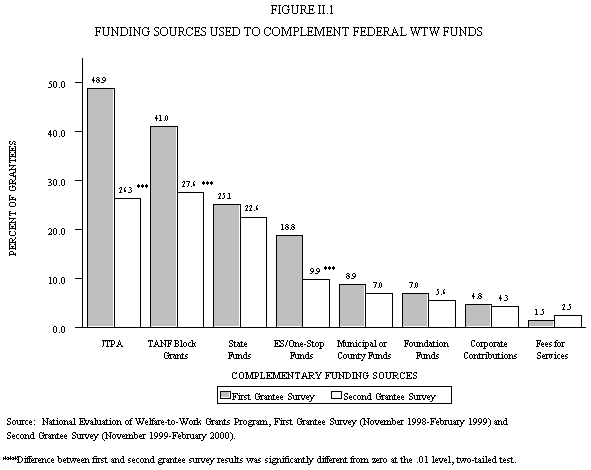
Although the complexity and variety of program funding patterns defy simple explanation, the apparent decline in reliance on other funding sources could be due in part to shortfalls in program enrollment associated with the restrictive eligibility criteria specified in the original BBA. Grantees who at first projected large numbers of participants eligible for WtW services may have negotiated for (or, in some cases, been able themselves to allocate) funds from JTPA and TANF sources to complement WtW funds in a comprehensive program of services. As noted in the earlier report based on the first grantee survey, some grantees used estimates of the overall number of TANF recipients likely to be eligible for WtW services as a projection of their total number of referrals and participants.
Actual experience has shown that the number of referrals to WtW programs is often lower than original projections for three reasons. First, referrals from TANF have been lower than anticipated. TANF recipients who might be eligible for WtW services frequently have multiple programs to select from to fulfill their work activity requirements and may therefore be served by TANF work-first programs instead of WtW. Alternatively, TANF recipients may find employment or otherwise leave the TANF rolls before referral to a WtW program. Second, the eligibility criteria have restricted the percentage of TANF recipients who can be confirmed as eligible for WtW services under the "70 percent" criteria, and WtW program operators have been reluctant to enroll individuals meeting the "30 percent" criteria and risk facing financial penalties. Third, declining TANF caseloads have shrunk the pool of potential eligibles who might be referred, thus increasing competition among all programs aiming to serve this population.
Faced with a smaller participant population, some grantees may be choosing not to press for, or allocate, JTPA and TANF funds to serve WtW participants. A PIC that has formula WtW funding, for example, also may be under contract with the TANF agency to provide work-first services such as job readiness classes, job search assistance, and placement. Similar services could be called for as a part of a comprehensive WtW program. If the WtW program were heavily utilized, the PIC might find it useful to use its TANF funds to pay for those preemployment components. If WtW enrollment is low, however, TANF funds could be reserved for other uses (such as serving individuals who fail to qualify for WtW services), in which case WtW funds might suffice for those people found eligible.(3) A similar change in the funding allocation calculus might be affecting the use of JTPA funds for WtW programs. In the case of both TANF and JTPA, however, dramatic increases in WtW enrollment in the future, if they materialize, could lead to a reversal of this funding allocation trend.
The decline in grantees' reliance on JTPA and TANF funds may also be associated with the general increase in availability of WtW funds in further rounds of formula funding distribution and competitive grant awards. Grantees reported, on average, about 33 percent more available WtW funding in the second survey than in the first (Table II.5). This increase reflects (1) that most formula grantees had received a second allocation of substate funding, (2) that some formula grantees had received competitive grants in the second or third rounds, and (3) that a few competitive grantees had received a second competitive grant.(4) Although grantees have now incorporated their additional funding into their estimates of total program participation, average funding levels have increased considerably more than has expected enrollment. Combined with the slow pace of enrollment, the addition of new WtW resources may help explain why TANF and JTPA funds are viewed as a less central part of the resources to be used for WtW programs.
| TABLE II.5 CHANGES IN SCALE OF WTW PROGRAMS: GRANT SIZE AND PROJECTED PARTICIPATION |
||
|---|---|---|
| First Grantee Survey | Second Grantee Survey | |
| Average Total Funding per Grantee Respondent | $2,235,733 | $2,974,945 |
| Distribution of Respondents by Total Funding (Percentages) | ||
| $0 to $99,999 | 1.7 | 0.6 |
| $100,000 to $249,999 | 4.2 | 5.0 |
| $250,000 to $499,999 | 16.5 | 8.9 |
| $500,000 to $999,999 | 27.8 | 18.8 |
| $1,000,000 to $2,999,999 | 33.2 | 34.9 |
| $3,000,000 or more | 16.6 | 31.8 |
| Average Expected Participation | 537 | 595 |
| Source: National Evaluation of the Welfare-to-Work Grants Program, First Grantee Survey (November 1998 -February 1999) and Second Grantee Survey (November 1999-February 2000). | ||
Program Structure and Service Priorities
Despite advances in program implementation and minor shifts in the use of funding sources, much of the WtW program picture as it emerges from the second survey is consistent with results found in the first survey and with the intent of the BBA. Grantees continue to pursue a variety of program strategies, sometimes as distinct programs, and, to some extent, to target particular groups within the WtW population. The services they are delivering continue to emphasize intensive supportive work environments and job retention.
Grantees Are Focusing on the Hardest to Employ, Sometimes with Specialized Programs
Most grantees have organized their programs to help the WtW-eligible population without segmenting participants into separate program paths, based on their characteristics. With the substantial declines in TANF caseloads even since a few years ago, when the BBA was passed, this general-purpose structure avoids overly specialized programs that might serve few participants. About 60 percent of grantees reported — in the second survey, as in the first — that they simply serve all individuals who meet WtW eligibility criteria. Even within such "untargeted" programs, of course, there are often variations in services delivered and participants' activities, based on individual assessments.
Many grantees, however, operate distinct programs within their overall WtW initiative, and in many instances these distinct programs are a framework in which to focus on particular services, on subgroups of the WtW-eligible population, or both. On average, grantees reported in the second survey that they operate almost three distinct programs (Table II.6).(5) Some of these programs are defined as having a distinct target group.
The pattern of multiple programs and their size suggest that grantees generally devote most of their resources to a core WtW program, although they may also reserve some funds to deal with participants with special needs or in special locations. Although grantees, on average, operate 2.8 distinct programs, they devote an average of about 69 percent of their WtW funds to a single program or to their largest program. A few grantees probably are using an initial screening, or their recruiting methods, to single out individuals with special characteristics who might be better served by a particular program — for example, individuals with demonstrated substance abuse problems, noncustodial parents, residents of particular public housing projects, or people with disabilities. However, site visits and other contacts with WtW grantees suggest that most WtW programs do not use such centralized intake and client referral procedures.
| TABLE II.6 STRUCTURE OF LOCAL WTW PROGRAMS: PROGRAM INITIATIVES FUNDED WITH FEDERAL WTW FUNDS (Averages) |
|||
|---|---|---|---|
| Overall | Formula-Only Grantees | Competitive-Only Grantees | |
| Number of Program Initiatives Supported with Federal WtW Funds | 2.81 | 2.71 | 2.54 |
| Percentage of Applicable WtW Funding Devoted to Single or Largest WtW Program | 68.6 | 67.3 | 76.4 |
| Ratio of Number of WtW-Funded Program Initiatives to Number of Grants Received | 2.44 | 2.48 | 2.53 |
| Source: National Evaluation of the Welfare-to-Work Grants Program, Second Grantee Survey (November 1999 - February 2000). | |||
The programs that WtW grantees describe as distinctly targeted are likely to consist mainly of programs operated by different service providers. The aim of these providers sometimes continues to be serving the general WtW-eligible population. As in the first survey, many "targeted" programs are described as focusing on people with all of the federally prescribed eligibility criteria (Table II.7). However, 13 percent of the 1,335 distinct programs described by the 475 grantees who reported on their WtW program structure appear to be more narrowly targeted. These "narrowly targeted" programs serve people who are described by grantees using four or fewer of 12 possible criteria.(6)
| TABLE II.7 EXTENT OF TARGETING BY WTW GRANTEES |
|
|---|---|
| Second Grantee Survey | |
| Percentage of grantee respondents with at least one program that targets particular subgroups within the larger population of WtW eligibles | 39.7 |
| Average number of targeted WtW program initiatives per responding granteea | 1.8 |
| Percentage of WtW program initiatives that can be considered narrowly targetedb | 13.2 |
| Targeting criteria used in narrowly targeted programs (percent of narrowly targeted programs)c - | |
| - No high school diploma or GED and low math/reading skills - | 18.2 |
| - Poor work history - | 16.7 |
| - Substance abuse problems - | 17.1 |
| - Nearing or past TANF time limit - | 3.8 |
| - Long-term recipient of public assistance - | 17.7 |
| - Teenage parent - | 1.3 |
| - Noncustodial parents - | 38.5 |
| - Public housing resident - | 5.2 |
| - People with disabilities - | 14.1 |
| - School dropouts - | 3.2 |
| - Limited English proficiency - | 11.2 |
| - Victims of domestic violence | 3.4 |
| Source: National Evaluation of the Welfare to Work Grants Program, Second Grantee Survey (November 1999 - February 2000).
a Data include grantees’ five largest programs. In the case of 13 grantees that indicate they operate more than five WtW programs, the smaller ones beyond the first five are excluded. b Percent is of all distinct programs reported by grantee respondents to the second survey (n=1,335). c Percents are for the subset of programs that will rely on four or fewer of the WtW eligibility criteria to target participants (n=176). |
|
Among programs identified from the second grantee survey as narrowly targeted, the target groups most commonly cited resemble those identified in the first survey. Long-term TANF recipients who lack a high school diploma or GED and who have low math or reading skills, and noncustodial parents were most often reported as the intended clients of narrowly targeted programs. Thus, even these targeting strategies reflect a focus on the major groups of eligible individuals as defined under the BBA.
Grantees Continue to Emphasize Services That Go Beyond the Work-first Model
In keeping with the goals of the WtW program, grantees have maintained a strong emphasis on preparing participants for work and helping them find employment (Table II.8). Job readiness and job placement, along with assessment and case management, are among the most commonly offered components of WtW grantees' programs, at the time of both the second survey and the first.
However, grantees clearly are dealing with participants whose needs go beyond simply finding a regular job in the open market. Although almost two-thirds of grantees continue to support placement in unsubsidized employment, greater funding emphasis continues to be placed on the various supported work activities most participants are viewed as needing for some time before they would have a good chance of succeeding in a regular unsubsidized job. Some form of supported work activity — on-the-job training, work experience, subsidized employment, or community service — is a feature of almost 85 percent of the grantees' programs. Job retention and other post-employment services are given as much or more emphasis as regular job placement, both in terms of the number of grantees offering such services and the portion of grant funds devoted to them.
| TABLE II.8 | ||||
|---|---|---|---|---|
| PROJECTED USES OF FEDERAL WTW GRANT FUNDS (Percentages) |
||||
| Grantees Providing Services with Federal WtW Fundsa | Projected Share of Overall Federal WtW Fundsb | |||
| Use of Funds | First Grantee Survey | Second Grantee Survey | First Grantee Survey | Second Grantee Survey |
| Basic Employment Services | ||||
| Assessment and/or Case Management | 92.9 | 92.0 | 11.2 | 15.0** |
| Job Readiness | 83.5 | 84.5 | 6.6 | 8.1 |
| Job Placementc | 82.8 | 82.6 | 7.5 | 7.8 |
| Participant Work Activities | ||||
| Unsubsidized Employment | 65.6 | 63.7 | 3.1 | 5.2 |
| Supported Work Activitiesd | 91.1 | 84.4 | 21.7 | 17.2 |
| On-the-job training | 75.7 | 70.4 | ||
| Work experience program | 75.4 | 59.8 | ||
| Subsidized employment | 60.8 | 47.7 | ||
| - in the private sector | 55.9 | 39.8 | ||
| - in the public sector | 52.2 | 43.2 | ||
| Community service | 48.6 | 27.2 | ||
| Postemployment Services | ||||
| Postemployment Trainingd | 87.1 | 79.2 | 8.9 | 10.0 |
| Occupational skills | 84.3 | 70.2 | ||
| Basic skills or ESL education | 74.9 | 70.5 | ||
| Job Retention Servicesd | 86.1 | 90.3 | 8.8 | 10.8 |
| Counseling | 73.2 | 83.3 | ||
| Workshops/support groups | 61.3 | 61.9 | ||
| On-site coaching | 59.5 | 68.9 | ||
| Mediation with employers to resolve workplace problems | 59.2 | 60.9 | ||
| Workplace mentors | 51.1 | 41.3 | ||
| Other Supportive Services | ||||
| Transportation Assistanced | 81.5 | 83.7 | 7.0 | 5.5 |
| Direct transportation assistance to individuals | 69.4 | 75.2 | ||
| Transportation contracts or subsidies to transportation providers | 48.2 | 45.7 | ||
| Child Care Assistanced | 62.8 | 67.7 | 9.2 | 3.2*** |
| Direct assistance to individuals | 43.5 | 48.1 | ||
| Contracts or subsidies to providers | 41.9 | 39.9 | ||
| Substance Abuse Treatment | 50.4 | 46.1 | 1.8 | 1.7 |
| Mental Health Services | 39.2 | 36.1 | 1.0 | 0.8 |
| Assistance with Other Employment-Related Expenses | 71.9 | 61.3 | 2.0 | 2.0 |
| Othere | 15.2 | 32.9 | 1.6 | 1.2 |
| Program Administrationf | 86.1 | 77.5 | 9.6 | 9.7 |
| Source: National Evaluation of the Welfare-to-Work Grants Program, First Grantee Survey (November 1998 -February 1999) and Second Grantee Survey (November 1999 - February 2000).
Note: ESL = English as a Second Language. a Percentages are of grantee organizations who reported on the services they would provide with federal WtW funds; they represent 95.2 percent of survey respondents in the first grantee survey and 98.8 percent among respondents in the second grantee survey. b Estimated share is based on grantees’ reported percentages, weighted by each grantee’s total federal WtW funding received. Breakouts for service subcategories were not requested in the second grantee survey and therefore cannot be reported. c Respondents were asked to distinguish between funds budgeted for job placement services that staff provide and the work activities themselves in which participants are placed. Some grantees, however, may not have been able to make this distinction, and may have reported the placement function as part of what they had budgeted for work activities. d The overall percentages shown for supported work, post-employment training, job retention, transportation and child care exceed the percentages shown for each of their component activity or service types because some grantees offer more than one type. e Other service or activity categories reported included participant or employer recruitment costs, housing or relocation assistance, individual development accounts, supportive payments to participants, and equipment. f Although grantees are allowed to devote up to 15 percent of funds to administration, some grantees may have found other resources to cover administrative costs, and be devoting all of their WtW grant to services. |
||||
| * Difference between first and second survey results was significantly different from zero at the .10 level, two-tailed test.
** Difference between first and second survey results was significantly different from zero at the .05 level, two-tailed test. *** Difference between first and second survey results was significantly different from zero at the .01 level, two-tailed test. |
||||
1. The 48 state-level grantees at the time of the first survey included 44 states, the District of Columbia, Puerto Rico, Guam, and the Virgin Islands. Six states declined FY 1998 funding: Idaho, Mississippi, Ohio, South Dakota, Utah, and Wyoming. Three additional states — Arizona, Delaware, and North Dakota — declined or returned FY 1999 formula funding.
2. Of the 415 grantees responding to the first grantee survey, 207 (or 50 percent) indicated that they had begun delivering WtW services. The number of grantees who had begun enrolling WtW participants was lower, however; these 179 organizations were 43.4 percent of respondents to the first grantee survey. In our first report, we explained this discrepancy by the lag that sometimes occurs while programs arrange for referrals, obtain referral lists, conduct outreach, hold orientation sessions, or embark on other activities before beginning formal enrollment of participants.
3. Evaluation process visits and other contacts with WtW grantees suggest that the complexity of WtW financial reporting requirements may be working against the pooling of WtW funds and funds from other sources to develop comprehensive programs. Some administrators reported that it is more burdensome to try to serve this population under a single program and then, behind the scenes, figure out which funding source to bill for their services, than to administer or subcontract for different programs targeting individuals meeting specific eligibility requirements.
4. In the second grantee survey, one organization reported that it had received two WtW competitive awards. This information was consistent with DOL records.
5. Grantees that have received multiple grants (for example, formula and competitive) are in some cases using them to run multiple programs, but the pattern of multiple programs is clearly widespread even among grantees that have received only a single WtW grant. On average, grantees reported 2.4 times as many distinct programs as they had distinct grants (Table II.6).
6. The grantee survey listed the criteria that make up the 70 percent federal eligibility category as well as several that could be used to qualify individuals in the 30 percent category: no high school diploma or GED and low skills; poor work history; substance abuse problems; nearing or past TANF time limit; long-term recipient; teenage parent; noncustodial parent; public housing resident; people with disabilities; school dropouts; limited English proficiency; and victims of domestic violence.
The People Served and How They Are Recruited
The WtW initiative was created so that states and localities could focus special resources on helping the most disadvantaged low-income Americans achieve some success in the labor market. The BBA set requirements to ensure that most of the WtW funds were spent on services to individuals with a specified combination of employment barriers. The criteria proved too restrictive, however; over the first year of program operations, they impeded grantees' efforts to recruit and serve people with serious employment barriers who nevertheless failed to qualify for the program. This problem led Congress to amend the WtW eligibility criteria, in an effort to expand the eligible population and increase participation.
The second survey provides a basis for observing whether WtW grantees have begun to overcome the concerns created by the original eligibility criteria, but not whether the congressional amendments are having the intended effect. The second survey was mailed to grantees shortly before Congress acted to amend the eligibility rules (fall 1999), and was completed in early 2000, when the changes were just beginning to go into effect for some grantees. In fact, about a third of the organizations that responded to the survey did so before Congress had even acted. The second WtW grantee survey, therefore, does not capture how the recent eligibility changes will influence grantee expectations for or actual participation in WtW programs. The second survey nevertheless makes it possible to describe how early implementation experiences--especially the recruitment difficulties grantees encountered--affected overall expectations for participation in WtW and who is expected to participate, the progress that grantees have made toward their WtW enrollment targets, and their strategies for outreach and recruitment into WtW
Expected Participation in WtW Programs
Expectations for overall participation in the WtW grants program are affected by several factors related to program funding and early implementation experience. Additional grantees have received funding since the first survey; the plans of the new competitive grantees are likely to affect overall enrollment projections. In addition, formula grantees and a few competitive grantees have received additional funding since the first survey. Since they are asked in the survey to project the number of people they will serve with the WtW funds they have received, funding increments could in some cases be accompanied by revised enrollment projections. Finally, actual experience in the first year of program operations may have affected grantees' predictions of how many people they would be able to recruit and serve.
Enrollment Projections Have Increased Marginally as Additional Funds Are Distributed
As additional funds have been distributed to WtW grantees, projections of overall enrollment have increased (Table III.1). On average, respondents to the second survey reported having nearly $3.0 million, compared to $2.2 million reported by respondents to the first survey. This increase is due mostly to the increased funding allocated in formula grants.
Overall expected enrollment also increased, but not in proportion to increases in available funding. Second survey respondents expect, on average, to serve 595 participants, compared to 537 anticipated by respondents to the first survey. While the average funding levels reported in the second survey were 33 percent higher than those reported in the first survey, mean expected total enrollment in WtW programs was only 10 percent higher (Table III.1). In fact, projections of the number of people to be served by formula, competitive, and formula/competitive grantees are actually lower than the projections made by respondents to the first survey. Total expected enrollment by formula grantees, for example, averages 457, down one percent from projections by respondents to the first survey. Similarly, competitive grantees now expect to serve an average of 640 participants, a 29 percent reduction from projections reported in the first survey.
| TABLE III.1 CHANGES IN SCALE OF WTW PROGRAMS: GRANTEES' TOTAL FUNDING AND PROJECTED PARTICIPATION |
|||
|---|---|---|---|
| First Grantee Survey |
Second Grantee Survey |
Percent Change |
|
| Average Total Fundinga | $2,235,733 | $2,974,945 | 33.1 |
| Average Total Funding by Subgroup | |||
| Formula-only granteesb | $1,774,133 | $1,953,270 | 10.1 |
| Competitive-only granteesc | $3,592,818 | $3,678,973 | 2.4 |
| Formula and Competitive granteesd | $10,497,277 | $8,734,384 | -1.7 |
| Average Expected Participationa | 537 | 595 | 10.3e |
| Average Expected Participation by Subgroup | |||
| Formula-only granteesb | 461 | 457 | -0.9 |
| Competitive-only granteesc | 899 | 640 | -28.8 |
| Formula and Competitive granteesd | 1,788 | 1,452 | -18.8 |
| Source: National Evaluation of the Welfare-to-Work Grants Program, First Grantee Survey (November 1998 - February 1999) and Second Grantee Survey (November 1999 - February 2000).
a Our estimates of average WtW funding and projected participation may be slightly overstated due to double-counting. About 0.2 percent of respondents to the first survey and 5.1 percent of respondents to the second survey appeared to be acting as subcontractors to other WtW grantees. A portion of the WtW funding and participation that these organizations reported also may be included in the reports of their funders — if these grantees also responded to the WtW surveys. b Estimates based on responses from grantees that received formula funds only or formula and discretionary funds. c Estimates based on responses from grantees that received competitive funds only. d Estimate based on responses from grantees that received formula and competitive funds, competitive and discretionary funds, or all three types of funds. e The average participation has increased overall despite the decline among each subgroup of grantees because the respondent sample to the second grantee survey contained a larger proportion of competitive grantees. Organizations that responded to questions on enrollment projection in the second grantee survey included 335 formula-only grantees, 94 competitive-only grantees, and 49 formula and competitive grantees; corresponding figures for the first grantee survey are 371, 24, and 16 respectively. |
|||
This apparent anomaly reflects a change in the composition of the grantee sample. The modest increase in overall WtW enrollment expectations results from a higher proportion of competitive grantees, operating at a larger scale on average than formula grantees. Although competitive grantees on average report lower projected enrollment than in the first survey, they also now constitute a large enough portion of the sample to make overall average projected enrollment higher than in the first survey.
The discrepancy between a modest increase in projected enrollment and the larger reported increase in funding is probably explained by two factors. First, some grantees may have already reported in the first survey on their expected enrollment over the full term of their grant; in the second survey, they could not report any increase in projected enrollment, but might still have reported on receipt of a second installment of grant funds, and thus an increase in their total funding.(1) Second, field visits suggest that some grantees have become a bit more conservative in their projections of enrollment, based on the recruitment difficulties they encountered in the early stages of their program implementation.
WtW Programs Still Strive to Serve a Diverse Population
Grantees' more modest expectations for participation in WtW have nevertheless left the projected makeup of WtW's clientele essentially unchanged. Overall, second grantee survey responses suggested few changes in the projected characteristics of the individuals who WtW grantees plan to enroll (Table III.2).
Young women are still expected to comprise the majority of WtW participants. Consistent with WtW's focus on TANF recipients, respondents to the second grantee survey expect the majority of their clients to be women between the ages of 20 and 40. No major differences were found in the demographic characteristics of the overall population of participants that formula and competitive grantees expect to serve, nor in the populations projected by those grantees that responded to both surveys.
| TABLE III.2 CHARACTERISTICS OF WTW PARTICIPANTS ACROSS ALL RESPONDING GRANTEES (Percentages) |
|||
|---|---|---|---|
| Projected Participantsa | Participants Enrolled to Date |
||
| Characteristic | First Grantee Survey |
Second Grantee Survey |
|
| Gender | |||
| Male | 18.8 | 16.7 | 11.3 |
| Female | 81.2 | 83.3 | 88.7 |
| Race | |||
| American Indian/Alaska Nativeb | 3.7 | 2.4 | 2.8 |
| Asian | 3.3 | 3.4 | 2.8 |
| Black/African American | 40.5 | 48.1 | 43.0 |
| Native Hawaiian/Other Pacific Islander | 0.8 | 0.7 | 0.5 |
| White | 51.7 | 45.4 | 50.9 |
| Ethnicity | |||
| Hispanic or Latino | 27.4 | 21.0 | 19.2 |
| Not Hispanic or Latino | 72.6 | 79.0 | 80.8 |
| Age | |||
| Under 20 | 11.2 | 5.6 | 5.6 |
| 20 to 24 | 22.7 | 22.7 | 22.4 |
| 25 to 40 | 51.3 | 58.2 | 59.3 |
| Over 40 | 14.7 | 13.6 | 12.7 |
| Source: National Evaluation of the Welfare-to-Work Grants Program, First Grantee Survey (November 1998 -February 1999) and Second Grantee Survey (November 1999 - February 2000).
a Estimates based on projected percentages reported by responding grantees, weighted by their projected total enrollment. Categories may not sum to 100 percent, due to data rounding. b The grantee survey sample does not include tribal WtW programs. Thus, projected enrollment of American Indians and Alaska Natives in the WtW initiative overall is underestimated. |
|||
Noncustodial parents, typically fathers, remain an important target group.(2) Consistent with the emphasis on noncustodial parents in WtW's eligibility rules and with many grantees' explicit targeting of this eligible group, men are still expected to account for about 20 percent of WtW participants. About 13 percent of all WtW grantees place special emphasis on serving noncustodial parents. In the second survey, 62 organizations reported that they expect males to account for 30 to 100 percent of their WtW participants; their actual enrollment projections range from 10 to 1,820 male WtW participants, and average about 279.
Grantees' Progress Toward WtW Participation Goals
Most grantee organizations have begun enrolling participants, but the pace of enrollment continues to be slow. Of the 487 organizations responding to the second grantee survey, 431 indicated that they had begun enrolling WtW participants. At the time of the second survey, these 431 respondents reported having enrolled a total of 83,689 individuals. Considering the period over which programs have been operating, this overall enrollment continues to lag behind grantees' plans.
Overall Enrollment to Date Lags Behind Expectations
On average, respondents to the second grantee survey who had begun enrolling reported that they had about 194 participants enrolled (Table III.3). This figure more than triples the average enrollment levels reported in the first grantee survey (64 participants). The second grantee survey thus shows that programs have made important progress in extending their services to the eligible population.
| TABLE III.3 WTW PROGRAM ENROLLMENT TO DATE |
|||||
|---|---|---|---|---|---|
| Respondents Reporting WtW Enrollment | Percentage of Respondents Reporting Enrollment | Average Total Enrollment | Average Monthly Enrollment | Enrollment To Date as Percent of Total Projected Enrollment | |
| Overall | 431a | 100 | 194 | 19.2 | 31.9 |
| Distribution by Period of Operation: | |||||
| 3 months or less | 32 | 7.4 | 83 | 23.7 | 15.4 |
| 4 to 6 months | 49 | 11.4 | 94 | 23.1 | 18.0 |
| 7 to 12 months | 149 | 35.6 | 189 | 21.4 | 27.6 |
| More than 12 months | 201 | 50.7 | 242 | 15.9 | 41.1 |
| Source: National Evaluation of the Welfare-to-Work Grants Program, Second Grantee Survey (November 1999 - February 2000).
a Organizations reporting on WtW enrollment to date represent 88.5 percent of respondents to the survey. |
|||||
The survey responses also reflect, however, the continuing difficulties that grantees have encountered enrolling WtW participants. Grantees have enrolled considerably fewer participants than could be expected given the original plans for a three-year WtW program. Data from the second grantee survey show that, on average, grantees have enrolled 32 percent of the participants they expect to participate in their programs. Grantees were originally given three years from the date they receive their awards (both formula and competitive) to spend their grants, but most grantees planned to enroll participants over a shorter period, to ensure that all can receive a full range of services and postemployment followup. On average, grantees in December 1999 had consumed 39 percent of the 30-month period that might be considered the maximum period over which enrollment would occur in an overall three-year grant period.
Moreover, the average pace of enrollment has not increased; it has remained at about the same level found in the first grantee survey: 19 new participants per month (Table III.4). At this pace, we estimate that grantees would need a total of about 41 months, on average, to meet their participation targets.(3) In sum, grantees are operating substantially behind the pace of enrollment implied in their plans, and participation so far must be viewed as below expectations.
| TABLE III.4 | |
|---|---|
| ENROLLMENT PACE OF WTW PROGRAMS | |
| Second Grantee Survey (n = 431)a |
|
| Average Number of Participants Enrolled Each Month | 19.2 |
| Distribution of Survey Respondents by the Average Number of Participants Enrolled Each Month (Percentages) | |
| 5 or less | 29.1 |
| 6 to 10 | 20.9 |
| 11 to 25 | 30.0 |
| 26 to 50 | 11.6 |
| 51 to 100 | 6.4 |
| More than 100 | 2.5 |
| Average Number of Months it Would Take Grantees to Meet Their Stated Participation Targets, Given Enrollment Pace at Time of Survey Response | 40.9 |
| Distribution of Survey Respondents by Number of Months it Would Take to Meet Stated Participation Target, Given Enrollment Pace at Time of Survey Response (Percentages) | |
| 24 months or less | 31.9 |
| 25 to 36 months | 25.5 |
| 37 to 48 months | 16.3 |
| 49 to 60 months | 9.2 |
| More than 60 months | 17.1 |
| Source: National Evaluation of the Welfare to Work Grants Program, Second Grantee Survey (November 1999 -February 2000).
Notes: |
|
Although grantees responding to the second survey project somewhat lower overall enrollment than was projected by respondents to the first survey, it appears unlikely that they will achieve their targets within the enrollment periods originally defined. On average, respondents to the second grantee survey had been enrolling participants for 12 months, and plan to continue enrollment for another 18 months. The resulting average enrollment period of 30 months falls far short of the 41 months we estimate grantees would need to enroll their target numbers of WtW participants, given their current pace of enrollment.
Grantees who responded to both surveys showed some improvement in their enrollment pace, but they are still falling behind the pace they would need to maintain to meet their participation goals. These repeat responders have served far more people than they reported in the first survey; they quadrupled their average number of enrollees from 58 to 278 (Table III.5). Moreover, their average monthly pace of enrollment increased from 18.9 to 19.9. At the same time, in keeping with the additional rounds of funding they have received, these repeat respondents have also increased their enrollment targets. The net result is that, even at their improved enrollment pace, they would require more than 37 months in total to reach their updated service goals, about seven months longer than they currently project enrolling new participants.
| TABLE III.5 WTW PROGRAM CHANGES AMONG REPEAT SURVEY RESPONDENTS (Averages) |
|||
|---|---|---|---|
| Grantee Characteristic | First Grantee Survey |
Second Grantee Survey |
Percent Change |
| Total WtW Funding | $2,184,418 | $2,992,100 | 37.0 |
| Expected Total Participation in WtW | 524 | 652 | 24.4 |
| WtW Enrollment to Date | 58 | 278 | 379.3 |
| Estimated Number of Participants Enrolled Each Month | 18.9 | 19.9 | 5.3 |
| Estimated Number of Months it Would Take Grantees to Meet Their Stated Participation Targets, Given Enrollment Pace at Time of Survey Response | 48.8 | 36.6 | -25.0 |
| Source: National Evaluation of the Welfare to Work Grants Program, First Grantee Survey (November 1998 - February 1999) and Second Grantee Survey (November 1999 - February 2000).
Note: Based on the responses of 125 grantee organizations that responded to both grantee surveys, had begun enrolling participants, and had been operating for more than one month at the time of their response to the first WtW grantee survey. |
|||
Two factors may make it possible for the WtW grants program to deliver services as broadly as grantees have planned. First, recent legislative changes expanding WtW eligibility should ease grantees' recruitment difficulties, thus improving the pace of enrollment into their programs and ultimately bringing about increased overall levels of participation in WtW. The Administration has also submitted a proposal to extend the period over which grantee organizations may use their WtW funds by two years. Such a change, if approved by Congress, would enable all grantee organizations to extend the period over which they recruit for their programs and, thus, further improve their chances of meeting WtW participation targets.
Recruitment of Noncustodial Parents Has Been Especially Challenging
Consistent with the expected demographic profile of WtW participants, most individuals enrolled in WtW programs to date are females between the ages of 20 and 40 (see Table III.2). About half of the enrolled individuals are white, with an almost equal proportion of African Americans. American Indians, Alaska Natives, persons of Asian descent, Native Hawaiians, and other Pacific Islanders comprise a much smaller portion of WtW participants. The representation of these groups among WtW participants enrolled to date is nevertheless consistent with grantee expectations for their participation overall.
However, male participation in WtW to date lags notably behind expectations. On average, grantees have enrolled about 20 male WtW participants. This figure translates into about 11 percent of participants enrolled to date, or about half of the expected 20 percent share of total participation in WtW. This finding reflects the special challenges faced by WtW programs in identifying and recruiting noncustodial parents.
This recruitment difficulty is particularly clear in the experiences of grantees that are placing special emphasis on serving males.(4) There were 62 such grantees, 13 of which were recent Round 3 competitive grantees and had not begun operations. Of the remaining 49 grantees, 42 had begun enrolling WtW participants and reported having enrolled an average of 44 males, over periods ranging from 3 to 18 months, at an average rate of just five participants per month. This pace falls far short of the 12 new participants these grantees would have to recruit each month, on average, to meet their male participation targets within stated enrollment periods. Data from the second WtW grantee survey thus confirm that organizations placing special emphasis on serving noncustodial parents are finding it especially difficult to reach male customers.
Based on information obtained in the evaluation exploratory site visits, these grantees probably are encountering several kinds of difficulty. First, many of the programs aiming to serve noncustodial parents are relatively new and, therefore, may be facing a steeper "learning curve" as they begin operations and develop all aspects of their interventions. In addition, making initial contact with male customers and getting referrals have proven difficult for some, particularly if they have been attempting to rely on child support enforcement offices for referrals. Establishing eligibility has also been described as a problem by some grantees; TANF agencies are sometimes unwilling to disclose information about the TANF case in which the children of noncustodial parents are members, which has been an essential factor in establishing the noncustodial parents' WtW eligibility. Finally, efforts to get men to enroll in the programs, even once they were deemed eligible, often meet with low success rates.
Adjustments in WtW Recruitment Strategies
WtW programs will make full use of their resources only if they succeed, in collaboration with local partners, in generating a substantial flow of entrants to their programs. To some extent, WtW participants may be referred by TANF and other agencies. Evaluation site visits strongly suggest, however, that WtW programs also need to reach out energetically to those agencies, to encourage referrals, and to conduct their own outreach and recruitment.
The second grantee survey generally confirms the findings of the first survey on how grantees are going about recruiting participants (Table III.6). Overall, grantees are still most likely by far to name the TANF agency as their principal source of WtW referrals or recruits. Other means of recruiting, however, are also common. Importantly, two shifts in grantees' reported recruitment sources provide evidence to support observations from the exploratory site visits.
| TABLE III.6 CHANGES IN WTW RECRUITMENT STRATEGIES: FIRST AND SECOND GRANTEE SURVEYS |
||||
|---|---|---|---|---|
| Grantees Planning to Recruit or Recruiting from These Sources (Percentage of Grantees)a |
Estimated Share of WtW Participants to Be Recruited from Each Source (Percentages) b |
|||
| First Survey | Second Survey | First Survey | Second Survey | |
| TANF Agency | 98.0 | 96.3 | 65.9 | 58.2 |
| JTPA | 58.5 | 49.8** | 5.0 | 4.5 |
| Courts/Corrections | 37.8 | 35.9 | 2.1 | 2.1 |
| Child Support Enforcement | 54.5 | 41.9*** | 4.5 | 3.3 |
| Grantee's Community Outreach | 48.6 | 53.5 | 6.5 | 11.9** |
| Other Organizations' Community Outreach | 34.4 | 33.8 | 6.1 | 6.3 |
| Self-Referral | 45.7 | 50.8 | 2.7 | 4.5* |
| Grantee's Existing Caseload | 37.2 | 27.8*** | 6.3 | 4.9 |
| Source: National Evaluation of the Welfare-to-Work Grants Program, First Grantee Survey (November 1998 - February 1999) and Second Grantee Survey (November 1999 - February 2000).
a Based on responses of grantees that identified their recruiting sources. They represent 85 percent of all responding grantees in the first survey and 99 percent of respondents to the second survey. b Estimates based on the projected share of total participants grantees expect to recruit using each method weighted by total expected participation. Percentages may not sum to 100 due to data rounding. * Differences between first and second grantee survey results are significantly different from zero at the .10 level, two-tailed test. ** Differences between first and second grantee survey results are significantly different from zero at the .05 level, two-tailed test. *** Differences between first and second grantee survey results are significantly different from zero at the .01 level, two-tailed test. |
||||
More Emphasis Is Now Placed on WtW Publicity and Direct Outreach
Grantees appear to be relying somewhat more heavily on their own outreach and customers' self-referrals as a recruitment strategy. These efforts are expected to account for a larger share of WtW participants--about 16 percent in the second survey, compared to about 9 percent in the first survey. This shift toward WtW publicity and direct outreach by grantees is explained partly by a change in the composition of the survey respondent sample. Competitive grantee respondents are now a larger share of the respondent sample than in the first survey. In many cases, competitive grantees are community-based organizations (CBOs), which are more likely than other types of grantee organizations to use direct outreach and self-referral approaches to WtW recruitment. However, the increase in the number of CBO grantees in the sample appears to account for only about one-third of the increased reliance on community outreach and self-referral.
Grantees' publicity efforts are potentially important, not only to attract enrollment from the community, but also when grantees (and other organizations serving welfare recipients) find themselves competing for referrals from TANF or WIA/JTPA agencies. Many grantees have found themselves operating as one of numerous work-related programs from which TANF recipients can choose to fulfill their work activity requirements. In that context, such publicity efforts as media campaigns or mass mailings may be intended to capture a grantee's share of agency referrals, not simply to attract direct interest from the community. Regardless of the local circumstances, the second survey suggests that WtW grantees have assumed a more active role in publicizing their programs, identifying eligible customers, and guiding them through the enrollment process.
Strategy for Recruiting Noncustodial Parents Has Shifted
Noncustodial male parents are expected to comprise about 20 percent of all WtW participants, but enrollment of male participants has been well below that relative rate. This pattern appears to have led to two adjustments in how grantees expect to recruit noncustodial parents.
First, it appears that grantees have, to some extent, lost confidence in child support enforcement agencies as a source of WtW referrals. Coordination with child support enforcement (CSE) agencies was initially seen as an important recruitment strategy for WtW programs striving to serve noncustodial parents. Many grantees continue to target this population, but the grantee survey shows a decline in the number of grantees that expect to get referrals from CSE agencies, from 55 percent in the first survey to 42 percent in the second.(5)
Difficulties getting referrals from CSE agencies may be partly addressed by the recently enacted changes in law affecting the WtW program. Confidentiality issues sometimes prevented CSE agencies from sharing information on noncustodial parents potentially eligible for WtW with grantees, from confirming through the appropriate TANF agency that their children were members of a "long-term TANF case," or both. Such concerns were therefore addressed directly in the WtW amendments, which now permit CSE and TANF agencies to share information on noncustodial parents with WIBs to help them identify and contact noncustodial parents with regard to participation in WtW programs.
Second, it appears that grantees that focus on noncustodial parents may be placing greater emphasis than before on getting recruits from the courts and corrections agencies. "Male-emphasis" grantees are equally likely to coordinate with these entities as they are to work with CSE agencies for WtW referrals. However, they expect the courts and corrections departments to account for a larger share of their recruits (eight percent, compared to six percent from CSE agencies).(6) Given low overall enrollment rates, of course, it remains to be seen whether grantees' hopes for success with these recruiting sources will be borne out.
Finally, it is clear that direct outreach and publicity are an important male recruitment strategy. The reductions in the shares of WtW participants expected to be referred from TANF, CSE, and other sources are mirrored by increases in the share of participants expected to be recruited through direct outreach and self-referral. Grantees emphasizing services to males are more likely to use these strategies than other WtW grantees; they expect these recruitment methods, in combination, to yield about 16 percent of all their WtW participants.
1. Grantees were asked in both surveys to report the total number of participants they expected to enroll and serve using federal WtW funds. Some grantees might have reported in the first survey only on the enrollment they expected to achieve with the funds already received. Such grantees might have reported in the second survey both an increase in projected enrollment and WtW grant funding.
2. Women are, in some instances, noncustodial parents. This occurs in cases when children have been placed in the father's custody or under protective custody with a grandparent, other relative, or foster family.
3. In the first survey, it was estimated that grantees would need more than five years to meet their enrollment targets at their then current pace. The reduction in the estimated "full enrollment period" is due entirely to decreases in grantees' estimates of their total projected enrollment under formula and competitive grants.
4. These grantees are identified by the fact that they project that 30 to 100 percent of their participants will be male.
5. The same pattern was found among grantees that responded to both surveys.
6. Among the 47 repeat survey respondents that emphasize serving males, the share of referrals expected from courts and corrections departments was 7.1 percent in the first survey and 7.6 percent in the second survey. This difference was not statistically significant.
Work Activities of Welfare-to-Work Participants
The ultimate aim of WtW grantees is to place participants in unsubsidized jobs that have the potential to make them economically self-sufficient. The BBA directed grantees to use their WtW funds "to move individuals into and keep individuals in lasting unsubsidized employment" (Section 403(a)(5)(C)(i)). However, Congress and the DOL recognized the challenges grantees would face in helping the hard-to-employ target population of WtW programs toward this objective. Grantees are thus authorized to use a variety of strategies for placing participants in work activities that could lead to sustained unsubsidized jobs. These strategies include:
- Conducting or administering community service or work experience programs;
- Creating public or private sector jobs through the use of subsidies;
- Offering on-the-job training opportunities; and
- Developing contracts or other service relationships for job readiness, placement, and post-employment support services from public or private providers.
Aside from these defined services, grantees are given considerable flexibility in shaping employment activities that could help participants move into jobs that provide a decent living and help them advance to higher wages.
The second grantee survey provides a basis for judging how well WtW grantees are doing in moving participants into various work activities. In many cases, of course, WtW participants may still be in interim activities designed to prepare them for unsubsidized employment. It is, therefore, still too early to judge overall success in placing WtW participants in unsubsidized, private sector jobs and other types of employment, the duration of such placements, or the increases in wages that WtW participants realize — all program outcomes in which Congress has expressed an interest. However, enough time has passed to allow for some preliminary description of grantees' goals for work activity and employment placements, their progress toward fulfilling those goals, and the types of jobs in which participants are being placed.(1)
Expectations for Placement in Work Activities
Given their ultimate goals and the challenges they face, grantees must plan for a mix of work activities for their participants. The second grantee survey confirms earlier findings on the relative emphasis grantees place on various types of employment activities.
1. Grantees Emphasize Unsubsidized Employment But Set Realistic Expectations
Grantees' placement plans clearly reflect the BBA's goal that WtW participants ultimately be employed in unsubsidized, private sector jobs. Virtually all WtW grantees aim to place participants in unsubsidized employment, although they may use other non-grant funds for that purpose and WtW grant funds for interim employment activities and other preparatory steps (Table IV.1).(2) Ninety-six percent of grantees responding to the second survey indicated that they will place WtW participants in unsubsidized jobs.(3)
| TABLE IV.1 PLACEMENT OF WTW PARTICIPANTS IN WORK ACTIVITIES |
|||||||
|---|---|---|---|---|---|---|---|
| Percent of WtW Grantees Making This Type of Placement | Percent of Total WtW Placements in This Type of Activity | Percent of WtW Participants Placed in This Type of Activity | Placements to Date as a Percent of Total Projected Placements | ||||
| Types of Placements | Projected | To Date | Projected | To Date | Projected | To Date | |
| Unsubsidized Employment | 95.6 | 77.7 | 62.3 | 59.7 | 44.2 | 35.8 | 23.8 |
| Supported Work Activities | 83.2 | 79.8 | 37.7 | 40.3 | n.a.a | n.a.a | 26.5 |
| Work experience | 76.1 | 49.9 | 17.5 | 22.8 | 12.4 | 13.7 | 32.3 |
| On-the-job training | 65.4 | 35.6 | 7.1 | 3.8 | 5.0 | 2.3 | 13.3 |
| Subsidized private sector employment | 50.8 | 20.8 | 6.5 | 5.7 | 4.6 | 3.4 | 21.8 |
| Subsidized public sector employment | 46.1 | 16.3 | 3.4 | 4.7 | 2.4 | 2.8 | 34.0 |
| Community service | 35.3 | 14.2 | 3.2 | 3.2 | 2.3 | 1.9 | 25.1 |
| Source: National Evaluation of the Welfare-to-Work Grants Program, Second Grantee Survey (November 1999 - February 2000).
Notes: The information presented in this table is based on the responses of 480 grantees who provided information on WtW placements to date and expectations for placement expectations for their overall grant periods. These organizations represent 98.6 percent of the overall respondent sample for the second grantee survey. Numbers of placements and participants placed differ because individual participants can have multiple placements a The number in this cell is not simply the sum of the percentages of participants placed in the various types of supported work activities listed, since some participants are placed in a sequence of such activities. The second grantee survey did not include information that would allow us to estimate this number without double counting. n.a. = not available |
|||||||
At the same time, grantees have set realistic targets for placement of WtW participants into unsubsidized employment. The total number of unsubsidized job placements grantees expect to make during the period of their WtW grant is under half (44 percent) of all the people they expect to enroll as program participants (Table IV.1). Grantee targets for unsubsidized placements thus seem to recognize the challenges inherent in placing relatively inexperienced and low-skilled individuals who sometimes have additional employability barriers to overcome (such as disability, substance abuse, or mental health issues).
The realistic level of these targets for placement in unsubsidized jobs also reflects grantees' reasonable expectations of some attrition from their programs before the point of placement in an unsubsidized job. Field visits suggest that some attrition may occur as WtW participants who were required under TANF rules to participate instead find jobs and leave the rolls, or leave the rolls and the WtW program for other reasons, never reaching the point at which the WtW program would place them in a regular job. Moreover, those individuals who are enrolled late in the grant period, even if they remain engaged, simply may not progress to an unsubsidized job before the end of grant funding for the WtW program.(4)
2. Supported Work Activities Are Important Interim Steps For Most Participants
Supported work activities are another important component of grantees' efforts to help WtW participants move toward unsubsidized employment. Included are work experience, on-the-job training (OJT), subsidized positions in the public or private sectors, and community service. Of the 480 grantees that reported on placement in work activities, only 80 organizations (17 percent) indicated that they plan to place participants only in unsubsidized jobs (not shown in table) and not to place any in supported work activities. Almost 80 percent of grantee respondents indicated they are using both unsubsidized employment and supported work strategies (not shown in table). It is clear from evaluation site visits that the vast majority of grantees are using supported work activities as ways to prepare enrollees prior to linking them to unsubsidized employment. For many participants, a sequence of work activity placements may be required.
Clearly, involvement in supported work activities is viewed as a routine part of the WtW program experience for many participants. Supported work placements are expected to account for 38 percent of all placements, while placements in unsubsidized positions are expected to account for 62 percent (Table IV.1). These figures provide only a rough measure of the relative use of these types of placements in combination, but they suggest that as many as 61 percent of those WtW participants ultimately placed in unsubsidized employment may also participate in a supported work activity.(5) A variety of circumstances could exclude supported work activities from the experiences of some WtW participants, such as their own preferences to move directly into a regular job, program staff's assessment that participants are ready for employment, or the difficulties grantees might encounter developing enough supported work slots.
Grantees are, to varying degrees, relying on different forms of supported work (Table IV.1). More than three-quarters of grantees plan to use work experience placements; 12 percent of WtW participants is expected to be placed in such activities. A majority of grantees (65 percent) are using OJT slots. However, only about 5 percent of WtW participants are expected to be placed in such positions, perhaps reflecting the more stringent demands OJT places on participants, in the form of performance expectations, and on employers, in the form of close supervision and customized training. More than half the responding grantees indicated they are linking participants to subsidized positions in either the private and public sectors (not shown in table); based on their responses, we estimate that, if grantees' plans are realized, seven percent of WtW enrollees will be placed in subsidized employment at some point during their participation in the program.(6)
Fewer grantees reported using community service placements. Evaluation site visits suggest that community service is sometimes used as a placement strategy where sanctions are strictly enforced if TANF recipients are not engaged in a work activity after a specified number of months of assistance. In that context, WtW programs are sometimes closely coordinated with TANF work-participation programs and feature community service placements in which TANF recipients can be quickly placed to help them satisfy their work requirement and avoid being sanctioned.(7) Field visits also suggest that short-term, nonwage community service positions are sometimes used with participants who need to get accustomed gradually to attending a worksite and working with other people.(8) In most instances, however, it is likely that participants prefer paid work experience positions.
Actual Work Activity Placement s to Date
WtW grantees are indeed moving large numbers of participants into both unsubsidized employment and supported work activities that can provide an interim step towards such employment. Of the 480 grantees providing employment placement information, 350 (73 percent) indicated that they had already placed WtW participants in work activities. By the time they responded to the survey, in late 1999 or early 2000, these grantees had made 50,106 placements of all types. Survey responses on placements made to date suggest that movement into employment activities is slower than grantees had projected, and has a long way to go before goals are reached. The survey also suggests that grantees that have been operating since the first survey have increased their emphasis on placement in unsubsidized employment relative to the use of supported work activities.
Progress in Work Activity Placements Reflects Delays in Enrollment
Both field visits and the grantee survey suggest that grantees are moving expeditiously to place participants in work activities once they are enrolled in the WtW program. Most grantees provide for relatively short workplace readiness classes lasting a few weeks, after which participants are expected to move into a work activity of some kind.
The overall number of actual placements in work activities gives some indication that participants, once enrolled, are moving into work activities with reasonable promptness. Grantees responding to the survey had enrolled more than 80,000 people in their programs (see Chapter III), and about 50,000 placements in work activities had been made. Some participants undoubtedly have been placed in more than one activity, but these figures suggest that the majority of enrolled participants had at the time of the survey entered an employment activity. Since a lag between enrollment and placement is to be expected, and because some grantees had begun operations recently, it seems that grantees are being reasonably diligent and successful in moving people into workplace activities of some kind.
Nevertheless, grantees have a long way to go to meet placement goals, largely because of the slow pace of enrollment in their programs. Placements in unsubsidized employment at the time of the survey had reached about 24 percent of grantees' goals, while placements in various types of supported work activities ranged from about 13 percent to 34 percent of placement goals. It can be expected, of course, that placements will be higher in later phases of the grant period, as more participants make it past the preliminary job readiness activities. As with enrollment, however, the pace of employment placements will have to quicken if the goals are to be met within the originally defined three-year grant period. On average, grantees have made 40 placements per month since they started enrolling participants. To meet the overall goal across all programs, even allowing for placements up to the end of their grant period, grantees will have to increase this pace to 60 per month.
This challenge is evident in the fact that grantees generally fell short of meeting their first-year targets for placement in employment activities (Table IV.2). Grantees that responded to both surveys reported in the first survey on the number of placements they projected for the first year, and in the second survey on actual placements for that year. These repeat survey respondents reported placing an average of 95 participants in unsubsidized jobs, about 78 percent of their average target of 122. Other types of placement fell further short of goals; placements in work experience and subsidized jobs were about half or less of targets, and in OJT and community service about a quarter or less. To place as many participants as were originally planned, grantees' placement rates will have to accelerate, or grantees will need more time to reach their goals — or both. The two-year extension on the use of WtW grants sought by the Administration might make it possible for WtW funds to yield placements at the levels originally planned.
| TABLE IV.2 PLACEMENT OF WTW PARTICIPANTS IN WORK ACTIVITIES AMONG REPEAT RESPONDENTS |
||||
|---|---|---|---|---|
| Percentage of WtW Grantees Planning to Use or Using Each Type of Placement | ||||
| Types of Employment Placements | First Grantee Survey | Second Grantee Survey | Projected Number of Placements to Be Made in First WtW Year (Average)a | Actual Number of WtW Participants Placements Made as of Second Survey Response (Average)a |
| Unsubsidized Employment | 88.4 | 92.6* | 121.5 | 94.5 |
| Supported Work Activities | ||||
| Work experience | 70.3 | 68.5 | 73.6 | 41.5** |
| On-the-job training | 72.0 | 55.0*** | 43.1 | 6.8*** |
| Subsidized private sector employment | 46.1 | 36.3** | 31.3 | 14.3* |
| Subsidized public sector employment | 41.4 | 31.0** | 39.9 | 11.5* |
| Community service | 38.8 | 26.1*** | 42.4 | 11.1*** |
| Source: National Evaluation of the Welfare-to-Work Grants Program, First Grantee Survey (November 1998-February 1999) and Second Grantee Survey (November 1999-February 2000).
a Averages are for those grantees who reported in the first grantee survey that they would use, or in the second survey that they are using, a given type of placement. For grantees reporting in the second grantee survey that they were now making a type of placement they did not anticipate using as of their first survey response, we assumed that the projected number of placements in the first year of WtW operations was zero. * Differences between first and second grantee survey results are significantly different from zero at the .10 level, two-tailed test. ** Differences between first and second grantee survey results are significantly different from zero at the .05 level, two-tailed test. *** Differences between first and second grantee survey results are significantly different from zero at the .01 level, two-tailed test. |
||||
Actual Placements Emphasize Regular Jobs and Paid Work Experience
Although placements in employment activities overall have fallen behind grantees' planned pace, the types of placements being made are, for the most part, consistent with grantees' plans. In responses to the second survey, grantees as a whole indicated that on average they will make 62 percent of their placements in unsubsidized jobs; so far, such jobs account for about 60 percent of actual placements (Table IV.1). Paid work experience was expected to account for about 18 percent of all placements and thus far accounts for about 23 percent of actual placements.
Grantees appear, however, to be emphasizing or succeeding with other types of supported work activities somewhat less than they anticipated. OJT accounts for a smaller fraction of total placements to date than was projected (Table IV.1). Among grantees responding to both surveys, substantially fewer expected at the time of the second survey to use OJT, subsidized jobs, and community service than they did in the first survey (Table IV.2). Although these repeat responders had fallen short of their expected first-year placements of all types, the shortfall was particularly striking for OJT and community service. Grantees had originally projected less use of these kinds of placements, perhaps because they often have to be tailored to each individual participant, and the second survey suggests that this challenge may be even greater than grantees had expected.
Placement Jobs: Modest Wages in Service Occupations
Given the low skills and poor work history that define the population eligible for WtW services, it can be expected that the jobs in which WtW programs place participants will be relatively low-wage, low-skill occupations. The challenge facing grantees is to prepare participants for these positions so they can hold onto them, because in many instances even these low-wage jobs, if combined with food stamps and child care assistance, can improve participants' overall income. A secondary challenge is to help them move up in these occupations, to higher wages and perhaps more responsibility.
As could be expected, WtW placements are concentrated in service and administrative support occupations (Table IV.3).(9) Almost 90 percent of WtW grantees listed one or more jobs classified as service occupations among the top 10 occupations in which they had placed participants. The specific service occupations listed (Table IV.4) most often included janitorial or maid service, home health, nursing, and other personal care aides, child care, and kitchen workers and other food facility staff (including cashiers and waitresses or waiters). About 76 percent of grantees reported administrative support occupations among their 10 most common placements. These are most often receptionists, teacher's aides, and stock clerks. With lower but still considerable frequency, grantees listed among their common placements positions in sales, as cashiers and retail clerks, and production occupations such as machine operators and assembly line workers.
| TABLE IV.3 PLACEMENT OF WTW PARTICIPANTS ACROSS MAJOR OCCUPATIONAL CATEGORIES |
||
|---|---|---|
| Occupational Category | Percent of Grantees Having Placed WtW Participants in This Category | Percent of Reported WtW Placements in This Categorya |
| Executive, Administrative, and Managerial Occupations | 0.5 | 0.0 |
| Natural Scientists and Mathematicians | 0.5 | 0.0 |
| Social Scientists, Social Workers, Religious Workers, and Lawyers | 4.0 | 0.1 |
| Teachers, Librarians, and Counselors | 2.3 | 0.1 |
| Registered Nurses, Pharmacists, Dietitians, Therapists, and Physician Assistants | 2.5 | 0.0 |
| Writers, Artists, Entertainers, and Athletes | 0.5 | 0.0 |
| Health Technologists and Technicians | 3.3 | 0.2 |
| Technologists and Technicians, Except Health | 0.5 | 0.0 |
| Marketing and Sales | 66.4 | 13.9 |
| Administrative Support Occupations, Including Clerical | 76.3 | 24.7 |
| Service Occupations | 89.6 | 40.5 |
| Agricultural, Forestry, and Fishing Occupations | 8.6 | 0.7 |
| Mechanics and Repairers | 5.6 | 0.4 |
| Construction and Extractive Occupations | 11.1 | 1.3 |
| Precision Production | 6.8 | 0.6 |
| Production Occupations | 49.0 | 10.4 |
| Transportation and Material Moving Occupations | 12.1 | 0.7 |
| Handlers, Equipment Cleaners, Helpers, and Laborers | 30.6 | 4.7 |
| Military Occupations | 0.5 | 0.0 |
| Miscellaneous Occupations | 14.4 | 1.4 |
| Source: National Evaluation of the Welfare-to-Work Grants Program, Second Grantee Survey (November 1999- February 2000) and Standard Occupational Classification Manual (1980).
Note: Percentages are based on the responses of 335 grantees who provided information on the top 10 occupations in which they had placed WtW participants. These grantees represent 80.0 percent of the respondent sample for the second grantee survey. The occupations listed were coded using SOC codes at the four-digit level and then aggregated at the two-digit level to arrive at the information presented in this table. a Figures less than .05 percent are rounded to zero. |
||
| TABLE IV.4 WAGES AND EMPLOYMENT OUTLOOK FOR THE TOP 10 OCCUPATIONS IN WHICH WTW GRANTEES HAVE PLACED PARTICIPANTS |
||
|---|---|---|
| Occupationa | 1996 Weekly Median Earningsb | 1998-2006 Projected U.S. Job Growthc |
| 1. Janitors and Maids | $270 - 300 | 0-9% |
| 2. Health Aides, Psychiatric Aides, and Other Nursing Aides | $292 | 21-35% |
| 3. Cashiers | $247 | 10-20% |
| 4. Child Care Workers | $250 | 21-35% |
| 5. Cooks and Other Kitchen Workers | $250 | 10-20% |
| 6. Retail Sales Persons | $396 | 10-20% |
| 7. Receptionists | $333 | 21-35% |
| 8. Teacher Aides | $315 | 21-35% |
| 9. Food Service Workers, Including Waiters and Waitresses | $270 | 10-20% |
| 10. Stock Clerks | $429 | 0-9% |
| Sources: National Evaluation of the Welfare-to-Work Grants Program, Second Grantee Survey (November 1999- February 2000), Standard Occupational Classification Handbook (1980), and Bureau of Labor Statistics, "Occupational Outlook Handbook, 1998-99" (http://stats.bls.gov, 03/08/2000).
a Occupational definitions are based on Standard Occupational Classification (SOC) codes, 1980 version. Although the SOC underwent a major revision in 1998, most government agencies did not begin using the revised classifications until January 1, 2000, so occupational information is not yet available based on the new codes. b Figures are based on the typical earnings of full-time, salaried workers. c Occupational job growth is coded based on expectations for overall employment growth through the year 2006. Overall average job growth is expected to be in the range of 10-20 percent. |
||
The wages participants earn when they enter these jobs are certainly modest. Grantees reported that participants entering unsubsidized jobs earned an average of $6.81 per hour. In paid work experience and subsidized public sector jobs, participants were reported to be receiving $5.50 to $5.60 per hour. OJT placements have been running at an average of $6.47, probably reflecting the higher skill levels of the positions for which employers are willing to provide the level of training required for such arrangements.
The entry-level jobs that WtW participants enter require little education or training, and advancement is difficult. Typically, no more than a high school diploma is required and, even with little or no work experience, participants can be placed in jobs. Some occupations, like janitorial or food service jobs, have no specific education requirements. Opportunities for advancement tend to be limited, particularly in small firms; the Bureau of Labor Statistics (2000), for example, noted the barriers to advancement for janitorial workers in organizations where there is only a single maintenance worker. Some such jobs, of course, can lead to better pay for those who persist and for those who manage to gain more training or education.
1. The grantee survey provides aggregate measures of employment placements, but it does not provide a basis for judging whether participants are actually doing better or worse than they would have in the absence of the WtW programs.
2. Table IV.1 reports on grantees' responses to questions on overall program placement goals and progress, regardless of the funding sources used to support placement efforts and work activities. The pattern here is different from that shown earlier in Table II.7, which reported on the allocation of WtW grant funds to different program activities. Some employment activities are less prominent in Table II.7 than here, because some grantee organizations were already involved in providing those activities and did not have to devote WtW funds to them.
3. The remaining grantees — about 4 percent of all respondents — are using supported work placements but do not expect to make placements in unsubsidized jobs. Such a response could occur, for example, if a WtW grantee is working in collaboration with another organization that handles placement in unsubsidized jobs.
4. The estimate that 44 percent of WtW participants will be placed in unsubsidized employment may actually overstate the extent of projected progress of participants, since grantees are most likely reporting the number of placements they expect to make in each activity. Some grantees may incorporate into their projections the expectation that some people will be placed multiple times if the initial one proves unsuccessful. However, some individuals whom grantees will be unable to report as entering unsubsidized employment under the WtW grant program by the time it ends could be served further with other funds, and eventually be placed in a job.
5. We note that this is a rough and maximum measure since not all individuals who participate in WtW supported work activities will reach the point of placement in unsubsidized employment. However, if all participants in supported work activities were among those who enter unsubsidized employment, the rate of involvement in supported work activities as an interim step would be 37.7 divided by 62.3, or 61 percent.
6. Grantee responses suggest that two out of every three subsidized positions will be in the private sector, which is consistent with our field observations. Subsidies are not often needed to encourage government agencies and other public sector organizations to hire WtW participants; thus, these worksites are often used for work-experience placements. WtW wage subsidies are often offered and publicized, however, to encourage private employers to consider hiring WtW participants.
7. The WtW regulations themselves do not make participation mandatory, so the use of community service as a "sanction protection" is likely to be observed only where TANF work requirements are vigorously enforced.
8. The WtW regulations require that all participant work activities be paid. We describe community service positions as "nonwage" because WtW participants placed in such activities typically work in exchange for their cash benefits and do not receive additional compensation.
9. The survey asked grantees to list the 10 occupations in which they placed the most WtW participants. It also asked the average wage at which WtW participants had been placed in various types of employment activities.
Grantee Views on WtW Implementation
The ultimate success of WtW programs remains to be determined. A few grantees received their awards only recently, and the majority of grantees have yet to reach the levels of enrollment they projected. Legislative changes to broaden the original eligibility criteria and expand the target population may increase the scale of program operations, but most grantees have not yet been allowed to implement these changes, under the congressionally defined phase-in of the new rules. How more liberal eligibility criteria and other changes aimed at strengthening interagency information-sharing and coordination will influence participation and outcomes in WtW programs is therefore still uncertain.(1)
The second grantee survey nevertheless provides a stronger foundation than the first survey for describing grantees' perceptions of their progress and of the WtW program overall. The survey questions included queries about respondents' views on how their program implementation is progressing and how the initiative as a whole responds to the challenge of helping the hardest to employ move into jobs, keep jobs, and move toward economic self-sufficiency. This report concludes with a summary of those views, followed by an overview of future evaluation activities and the additional evidence they should provide.
Grantee Views on WtW Implementation
The grantee survey posed a short list of questions on grantees' views of implementation progress, in keeping with the inevitable limitations of this form of information-gathering. The overall questionnaire had to avoid creating an unreasonable burden, and focused most heavily on actual program operations. Nevertheless, it was possible to include questions in both surveys that probe grantees' perceptions of the progress they are making and the problems they face.
Questions on grantees' views evolved slightly from the first survey to the second, as issues of concern became clearer. In the first grantee survey, we focused on four issues identified from in-depth discussions with some grantees as the survey instrument was being developed:
- How adequate are WtW funds to the task of helping the target population move toward sustained employment? How critical are they?
- To what extent are employers open to hiring the WtW target population?
- How well do the legislative provisions specifying WtW eligibility criteria correspond to the characteristics of the hard-to-employ population that is the intended target for WtW services?
- To what extent are WtW programs already having some effect?
At the time of the first survey, most grantees had been operating their programs for just a brief period. To a large extent, their responses reflected expectations rather than actual experience. Therefore, it became important to revisit these same issues in the second survey — to gauge shifts in grantee perceptions, expectations, or both now that their programs are further along. In addition, interactions with grantees over the first year of program operations identified other issues that are included in the second survey:
- To what extent have matching requirements affected the scale or scope of local WtW program efforts?
- Has demand for WtW services expanded or declined over the program's first year?
- What role are WtW programs playing in promoting job advancement?
The second grantee survey explored grantees' views on these issues by posing 10 statements and asking respondents to indicate whether their agreement with the statements was high, medium, or low (Table V.1). Four salient findings can be gleaned from their responses.
Restrictive eligibility rules are the main impediment to WtW program implementation. A clear theme from the survey data and from more in-depth contact with WtW grantees over the past year is that the BBA eligibility criteria defining the population on which WtW funds must be spent was too restrictive. In the second survey, as in the first, virtually all respondents (98 percent) agreed strongly or moderately that these criteria excluded people from their programs who truly fall within a group of individuals with serious barriers to employment. In both surveys, this issue elicited the most consistent views from respondents. Furthermore, grantees were almost evenly split in their opinions about whether the pace of enrollment into their programs had been improving. This finding suggests that, as the second survey was conducted, recruitment into WtW programs remained an important challenge for many grantees.(2)
Requirements for matching of federal formula funds by grantees could also potentially affect the scale of WtW programs, but survey responses suggest that such an effect is not widespread. In field visits and other interactions, some local grantees reported that their states had passed through the federal matching requirement to their substate formula grantees. In a few cases, local grantees reported that this delayed their WtW program implementation, because local funding commitments had to be obtained, or prevented them from accessing their full allocation of formula funds. The second grantee survey, therefore, included a statement on matching requirements to gauge the prevalence of this practice and the extent to which it might have constrained local WtW program efforts. Almost half of all respondents indicated low agreement with the survey's statement, while almost a quarter agreed strongly that matching requirements were limiting their program scale or scope. Thus, matching requirements have clearly been a factor in program implementation, though not nearly as widely as eligibility rules.
WtW funding is adequate to serve those who meet eligibility criteria. Respondents to the second grantee survey believe that WtW funds fill an important gap in the local service structure. Very few grantees (7.6 percent) agreed strongly that there were adequate resources in their area to help the target WtW population before the program was initiated. About 47 percent agreed strongly that the level of WtW funding they are receiving is adequate to provide needed WtW services to the participants they plan to recruit. This view, it must be assumed, reflects grantees' comparison of their WtW funding to the numbers they have stated they will serve, rather than a statement about the general population of hard-to-employ individuals in their communities.
Grantee views on how overall need for WtW services relates to the capacity of their programs are harder to establish, principally because of the timing of the second survey. The instrument queried grantees on whether they agreed that the numbers of people in their defined target groups exceeded those who could be served with federal WtW funding. Since most grantees had not begun implementing the recently approved WtW eligibility changes when they completed the survey, they could have interpreted the statement as referring to individuals meeting the BBA's eligibility criteria. Given the recruitment difficulties that most programs have encountered to date, it seems reasonable that 47 percent of grantees expressed low agreement; these grantees probably are noting in their responses that there is no indication to date that individuals who meet the original BBA criteria will overwhelm program capacity.
At the same time, some respondents perceive needs that exceed the capacity of their WtW programs. About 22 percent of the respondents agreed strongly that there are more people in their defined target population than they can serve. Beyond those they will serve in their grant-funded programs, these grantees see a larger population that needs help to improve their employment outcomes and overcome severe disadvantages. Some of these grantees, of course, may be thinking of needs among a population beyond those who technically qualify under the original eligibility rules.
Regardless of how grantees view the overall need for WtW services, more than two-thirds expressed low agreement with the statement that need for WtW services has declined. Thus, grantees appear not to have concluded from the drop in TANF caseloads or the slow enrollment in WtW programs that the number of people in their area who could benefit from their programs has fallen.
Many grantees are uncertain about the effect of WtW services to date. At the time of the second grantee survey, respondents had been operating their programs an average of about 11 months, and could therefore begin to form their own views on their success in moving participants into employment. A few grantees believe they are having such success; 18 percent of respondents to the second survey agreed strongly that WtW funding had already helped move the hard to employ into employment. More grantees appeared confident that their services are helping participants advance in their jobs; 26 percent of respondents indicated strong agreement that their programs are helping participants advance to higher wages and better jobs. To a large extent, these views could, of course, be regarded simply as an indication that the programs have reached a substantial level of operation and, as could be expected, at least some of the participants are being placed in employment. Grantees' belief in their success should not necessarily be interpreted as evidence that the programs are helping people achieve greater employment success than they would have without the program or with other kinds of help.
At the same time, a substantial number of grantees are not so convinced that their programs have actually begun to help the hard-to-employ move into employment. Almost 40 percent of respondents (188 grantees) expressed low agreement with that statement. Compared to other grantees that are moderately or strongly convinced of their success, these grantees (1) have been operating for less time (9.3, compared to 12.6 months); (2) have enrolled a lower proportion of their total projected WtW participants (16, compared to 35 percent); and (3) have made fewer placements in any type of work activity (39 placements, compared to 148). Moreover, 79 of these 188 grantees also expressed low agreement with the statement that the pace of enrollment has been improving, suggesting that many are organizations having severe and persistent recruitment difficulties.
Grantees are only moderately optimistic about employer demand for WtW participants. Obviously, grantees' success in moving WtW participants into jobs depends on the readiness of employers in their local areas to hire the relatively low-skilled and inexperienced individuals who participate in WtW programs. Some grantees see strong employer demand for WtW programs; about 17 percent agreed strongly that there is strong employer demand for the people whom they will attempt to place. However, a majority of grantees (52 percent) expressed some reservations by agreeing only moderately with that statement; their reservations about employer demand for WtW participants may offer further explanation for the programs' modest targets for WtW placements in unsubsidized employment. The remaining 30 percent of respondents that expressed low agreement with this statement tend to be in more rural and less densely populated areas. They serve areas where population density on average is less than half the density found in areas served by grantees that perceive strong employer demand.(3)
| TABLE V.1 GRANTEE VIEWS ON WTW IMPLEMENTATION ISSUES (Percentage of Responding Grantees) |
|||
|---|---|---|---|
| Statementa | Level of Agreement | ||
| High | Medium | Low | |
| WtW eligibility criteria are too restrictive. "The WtW eligibility rules sometimes exclude people who are truly among the hard-to-employ but who cannot meet all the required criteria specified in the WtW statute." | 90.5 | 7.2 | 2.3 |
| WtW enrollment pace has been improving. "The number of people being enrolled each month in our WtW program has been increasing since the program began." | 33.8 | 31.7 | 34.5 |
| WtW match requirements are hampering program efforts. "Requirements for state or local funds to match federal formula funds are limiting the local scale or scope of the WtW program, or the number of participants who can be served." | 23.8 | 27.1 | 49.1 |
| Resources were adequate without WtW funds. "Resources for services to groups identified as eligible in the federal WtW statute were adequate in our area even without WtW funds." | 7.6 | 19.6 | 72.7 |
| WtW funding is adequate. "It appears there will be adequate funding available to provide needed WtW services in our local service area." | 47.3 | 37.5 | 15.2 |
| Need exceeds WtW funds. "There are many more people in our defined target groups than we will be able to serve even with federal WtW funds." | 22.4 | 30.9 | 46.7 |
| Need for WtW services has declined. "The need for services provided under federal WtW funding in our local area has declined since we got our grant." | 8.8 | 22.7 | 68.5 |
| WtW funding is already having an effect. "Federal WtW funding is already having a substantial effect moving the hard-to-employ into employment." | 17.5 | 43.7 | 38.8 |
| WtW services support career advancement. "Services we provide using federal WtW funding are helping participants not only to enter employment, but also to advance to higher wages and better jobs." | 26.0 | 49.9 | 24.1 |
| Employer demand is strong. "There is strong demand among local employers for the people our WtW program will be placing in employment." | 17.4 | 51.9 | 30.7 |
| Source: National Evaluation of the Welfare-to-Work Grants Program, Second Grantee Survey (November 1999 - February 2000).
a The text of the statement as it appeared in the survey questionnaire is enclosed in quotation marks. The bold-font statement is added here to highlight in simple language the point that respondents confirmed or rejected. |
|||
Future Evaluation Issues and Products
Although the second grantee survey concludes the broad national data collection for the WtW evaluation, some of the issues raised in the two surveys will be pursued further in the evaluation in-depth study sites. Ultimately, a total of 12 to 15 sites will be selected; at the time of this report, 8 have been chosen.(4) With a combination of site visits and followup of participant samples using surveys and administrative data, the evaluation will explore such issues as:
- To what extent do program enrollment levels change over time?
- How do the changes in WtW eligibility rules affect recruiting practices and success? How important are these changes in recruiting particular subgroups of the eligible population, such as noncustodial parents?
- What innovative practices are developed to address labor market conditions and particular target populations?
- What outcomes do participants achieve? How many are placed in jobs? How many achieve sustained employment, and how many advance to higher wages or better jobs?(5)
- To what extent do participants succeed in combining employment activity and pursuit of education or training to improve their skills, as envisioned in the WtW legislation?
- How well do the families of WtW participants fare? Are there changes in family well-being over time?
Evaluation findings on these issues will be issued over the next several years. An interim report on program implementation issues will be issued in winter 2000, with a full report on program implementation in the in-depth study sites to be ready in summer 2001. Early results on outcomes for participants, from follow-up surveys and administrative data, will be issued in mid-2001. Later reports on more extensive followup and the complete evaluation sample will be available in 2002 and 2003.(6)
1. Further information on participation levels and participant outcomes will be obtained later in the evaluation for in-depth study sites. For grantees as a whole across the nation, however, no further comprehensive surveys are planned.
2. With the new eligibility rules taking effect primarily in the middle of 2000, it is to be expected that enrollment difficulties related to the eligibility rules will continue to be reported.
3. The average population density for areas served by grantees that expressed low agreement with the statement on strong employer demand was 422 per square mile, compared to 806 in areas served by grantees expressing moderate agreement, and 942 in areas served by grantees expressing strong agreement.
4. The eight sites selected so far are in Boston, Fort Worth, Milwaukee, Nashville, Philadelphia, Phoenix, a large rural area in West Virginia, and Yakima. In all these sites, samples of participants are being enrolled in an evaluation sample and will be followed for two years.
5. In a few in-depth study sites, it may be possible to implement random assignment and estimate program impacts — the difference programs make in these employment outcomes.
6. The report on the evaluation component focusing on implementation of WtW programs by American Indian and Alaska Native grantees will be issued in fall 2000.
References
Hershey, Alan M., Thomas M. Fraker, Demetra Nightingale, Stephen H. Bell, and Rita Stapulonis. "The National Evaluation of the Welfare-to-Work Grants Program: Design Report." Princeton, NJ: Mathematica Policy Research, Inc., October 1999.
Nightingale, Demetra Smith, Terri Thompson, Nancy Pindus, Pamela Holcomb, Edgar Lee, Jesse Valence, and John Trutko. "Early Implementation of the Welfare-to-Work Grants Program: Findings from Exploratory Site Visits and Review of Program Plans." Washington, DC: The Urban Institute, February 2000.
Nightingale, Demetra Smith, John Trutko, and Burt. S. Barnow. "The Status of the Welfare-to-Work Grants Program After One Year." Washington, DC: The Urban Institute, September 1999.
Perez-Johnson, Irma and Alan Hershey. "Early Implementation of the Welfare-to-Work Grants Program: Report to Congress." Princeton, NJ: Mathematica Policy Research, Inc., March 1999.
Rangarajan, Anu and Robert G. Wood. "How WFNJ Clients are Faring Under Welfare Reform: An Early Look." Princeton, NJ: Mathematica Policy Research, Inc., October 1999.
U.S. Department of Health and Human Services Home Page. "Change in TANF Caseloads" (http://www.acf.dhhs.gov/news/stats/case-fam.htm). February 1, 2000.
U.S. Department of Labor, Bureau of Labor Statistics. "Occupational Outlook Handbook, 2000-01 Edition." (http://stats.bls.gov/ocohome.htm). April 19, 2000.
Appendix 1: Second Welfare-to-Work Grantee Survey: Response Rates by State and Types of Grant Received
TABLE A.1
Second Welfare-to-Work Grantee Survey:
Response Rates by State and Types of Grant Received
| State or Territory | Formula | Competitive | Formula and Competitive | Total | ||||||||
|---|---|---|---|---|---|---|---|---|---|---|---|---|
| Sample | Respon- dents |
% | Sample | Respon- dents |
% | Sample | Respon- dents |
% | Sample | Respon- dents |
% | |
| Alaska | 1 | 1 | 100.0 | 2 | 2 | 100.0 | 0 | 0 | 0.0 | 3 | 3 | 100.0 |
| Arizona | 9 | 8 | 88.9 | 2 | 2 | 100.0 | 2 | 2 | 100.0 | 13 | 12 | 92.3 |
| Arkansas | 9 | 8 | 88.9 | 1 | 1 | 100.0 | 1 | 0 | 0.0 | 11 | 9 | 81.8 |
| California | 43 | 30 | 69.8 | 17 | 7 | 41.2 | 9 | 6 | 66.7 | 69 | 43 | 62.3 |
| Colorado | 8 | 8 | 100.0 | 3 | 2 | 66.7 | 1 | 1 | 100.0 | 12 | 11 | 91.7 |
| Connecticut | 6 | 4 | 66.7 | 2 | 2 | 100.0 | 2 | 2 | 100.0 | 10 | 8 | 80.0 |
| Delaware | 1 | 1 | 100.0 | 0 | 0 | 0.0 | 0 | 0 | 0.0 | 1 | 1 | 100.0 |
| DC | 1 | 1 | 100.0 | 9 | 6 | 66.7 | 0 | 0 | 0.0 | 10 | 7 | 70.0 |
| Florida | 24 | 16 | 66.7 | 5 | 4 | 80.0 | 1 | 1 | 100.0 | 30 | 21 | 70.0 |
| Georgia | 14 | 10 | 71.4 | 3 | 3 | 100.0 | 2 | 1 | 50.0 | 19 | 14 | 73.7 |
| Hawaii | 3 | 0 | 0.0 | 2 | 2 | 100.0 | 0 | 0 | 0.0 | 5 | 2 | 40.0 |
| Illinois | 25 | 18 | 72.0 | 6 | 5 | 83.3 | 1 | 1 | 100.0 | 32 | 24 | 75.0 |
| Indiana | 14 | 10 | 71.4 | 2 | 0 | 0.0 | 2 | 2 | 100.0 | 18 | 12 | 66.7 |
| Iowa | 15 | 13 | 86.7 | 1 | 1 | 100.0 | 0 | 0 | 0.0 | 16 | 14 | 87.5 |
| Kansas | 5 | 3 | 60.0 | 2 | 2 | 100.0 | 0 | 0 | 0.0 | 7 | 5 | 71.4 |
| Kentucky | 10 | 9 | 90.0 | 1 | 1 | 100.0 | 1 | 1 | 100.0 | 12 | 11 | 91.7 |
| Louisiana | 17 | 14 | 82.4 | 3 | 2 | 66.7 | 1 | 0 | 0.0 | 21 | 16 | 76.2 |
| Maine | 2 | 2 | 100.0 | 2 | 1 | 50.0 | 1 | 1 | 100.0 | 5 | 4 | 80.0 |
| Marshall Islands | 1 | 0 | 0.0 | 0 | 0 | 0.0 | 0 | 0 | 0.0 | 1 | 0 | 0.0 |
| Maryland | 10 | 6 | 60.0 | 5 | 4 | 80.0 | 2 | 2 | 100.0 | 17 | 12 | 70.6 |
| Minnesota | 14 | 10 | 71.4 | 2 | 2 | 100.0 | 2 | 2 | 100.0 | 18 | 14 | 77.8 |
| Mississippi | 0 | 0 | 0.0 | 2 | 2 | 100.0 | 0 | 0 | 0.0 | 2 | 2 | 100.0 |
| Missouri | 14 | 10 | 71.4 | 3 | 2 | 66.7 | 0 | 0 | 0.0 | 17 | 12 | 70.6 |
| Montana | 1 | 1 | 100.0 | 1 | 1 | 100.0 | 0 | 0 | 0.0 | 2 | 2 | 100.0 |
| Nebraska | 3 | 1 | 33.3 | 1 | 1 | 100.0 | 0 | 0 | 0.0 | 4 | 2 | 50.0 |
| Nevada | 2 | 2 | 100.0 | 0 | 0 | 0.0 | 0 | 0 | 0.0 | 2 | 2 | 100.0 |
| New Jersey | 11 | 9 | 81.8 | 1 | 0 | 0.0 | 4 | 3 | 75.0 | 16 | 12 | 75.0 |
| New Mexico | 2 | 1 | 50.0 | 3 | 2 | 66.7 | 0 | 0 | 0.0 | 5 | 3 | 60.0 |
| New York | 32 | 21 | 65.6 | 10 | 9 | 90.0 | 2 | 1 | 50.0 | 44 | 31 | 70.5 |
| North Carolina | 25 | 17 | 68.0 | 4 | 3 | 75.0 | 0 | 0 | 0.0 | 29 | 20 | 69.0 |
| North Dakota | 1 | 1 | 100.0 | 0 | 0 | 0.0 | 0 | 0 | 0.0 | 1 | 1 | 100.0 |
| Ohio | 0 | 0 | 0.0 | 5 | 3 | 60.0 | 0 | 0 | 0.0 | 5 | 3 | 60.0 |
| Oklahoma | 11 | 8 | 72.7 | 1 | 1 | 100.0 | 2 | 1 | 50.0 | 14 | 10 | 71.4 |
| Oregon | 6 | 3 | 50.0 | 0 | 0 | 0.0 | 0 | 0 | 0.0 | 6 | 3 | 50.0 |
| Pennsylvania | 27 | 17 | 63.0 | 5 | 4 | 80.0 | 1 | 0 | 0.0 | 33 | 21 | 63.6 |
| Puerto Rico | 6 | 1 | 16.7 | 1 | 1 | 100.0 | 0 | 0 | 0.0 | 7 | 2 | 28.6 |
| Rhode Island | 1 | 1 | 100.0 | 0 | 0 | 0.0 | 1 | 1 | 100.0 | 2 | 2 | 100.0 |
| South Carolina | 12 | 10 | 83.3 | 2 | 1 | 50.0 | 0 | 0 | 0.0 | 14 | 11 | 78.6 |
| South Dakota | 0 | 0 | 0.0 | 1 | 1 | 100.0 | 0 | 0 | 0.0 | 1 | 1 | 100.0 |
| Tennessee | 12 | 11 | 91.7 | 2 | 2 | 100.0 | 2 | 2 | 100.0 | 16 | 15 | 93.8 |
| Texas | 24 | 16 | 66.7 | 7 | 6 | 85.7 | 2 | 1 | 50.0 | 33 | 23 | 69.7 |
| Utah | 0 | 0 | 0.0 | 2 | 2 | 100.0 | 0 | 0 | 0.0 | 2 | 2 | 100.0 |
| Vermont | 1 | 0 | 0.0 | 2 | 1 | 50.0 | 0 | 0 | 0.0 | 3 | 1 | 33.3 |
| Washington | 11 | 8 | 72.7 | 2 | 2 | 100.0 | 1 | 1 | 100.0 | 14 | 11 | 78.6 |
| West Virginia | 3 | 1 | 33.3 | 1 | 1 | 100.0 | 0 | 0 | 0.0 | 4 | 2 | 50.0 |
| Wisconsin | 10 | 8 | 80.0 | 1 | 1 | 100.0 | 1 | 1 | 100.0 | 12 | 10 | 83.3 |
| Totals | 494 | 347 | 70.2 | 141 | 105 | 74.5 | 46 | 35 | 76.1 | 681 | 487 | 71.5 |
| Source: National Evaluation of the Welfare-to-Work Grants Program, Second Grantee Survey (November 1999 - February 2000).
Note: n.a. = not applicable a The difference between the total number of WtW grants shown by state and the sum of the numbers of competitive and formula WtW grants by state represents the number of organizations receiving both formula and competitive WtW funds in each state. b The competitive grant numbers for these states include multi-site WtW programs: 1 based in California, 2 in the District of Columbia, 2 in Maryland, and 1 in Massachusetts. |
||||||||||||
Appendix 2: Selected Characteristics of WtW Grantee Survey Respondents
TABLE A.2
Selected Characteristics of WtW Grantee Survey Respondents
| Characteristic | First Grantee Survey | Second Grantee Survey | Repeat Respondents (n = 314) |
|
|---|---|---|---|---|
| Overall Respondent Sample (n = 415) |
Overall Respondent Sample (n = 487) |
First Grantee Survey |
Second Grantee Survey |
|
| Total Welfare-to-Work Funding (Average) (in Millions) | $2.236 | $2.975 | $2.022 | $2.859 |
| Distribution of Respondents by Sources of WtW Funding (Percentages): | ||||
| Formula grant(s) only | 88.2 | 69.0 | 88.4 | 83.5 |
| Competitive grant(s) only | 6.5 | 19.5 | 6.8 | 5.8a |
| Formula and competitive grants | 5.3 | 11.5 | 4.9 | 10.7 |
| Total Expected Enrollment in Welfare-to-Work (Average) | 537 | 595 | 496 | 586 |
| Respondents Having Begun WtW Services at the Time of Their Grantee Survey Response (Percentage) | 49.9 | 88.5 | 50.3 | 95.2 |
| Number of WtW Participants Enrolled at the Time of Grantee Survey Response (Average) | 64 | 172 | 27 | 197 |
| Source: National Evaluation of the Welfare-to-Work Grants Program, First Grantee Survey (November 1998-February 1999) and Second Grantee Survey (November 1999-February 2000).
a The proportion of repeat respondents classified as "competitive only" declined between the first and second surveys because of organizations that indicated in the first survey that they anticipated formula funds but had not been officially notified of their awards. These organizations had received their substate formula allocations as of the second grantee survey, and were thus reclassified as having received formula and competitive grants. |
||||