


State Experience and Perspectives on Reducing Out-of-Wedlock Births
Final Report
Prepared for: Assistant Secretary for Planning and Evaluation Department of Health and Human Services
Prepared by: The Lewin Group, Inc.
Mark W. Nowak Michael E. Fishman Mary E. Farrell
February 2003
This report is available on the Internet at:http://aspe.hhs.gov/hsp/nonmarital-births03
Contents
Chapters
- Introduction
- Overview of Efforts to Reduce Nonmarital Births
- Experiences of Study States Since the Passage of PRWORA
- Characteristics of Study States
- Trends in Nonmarital Childbearing in Study States
- Summary of Efforts Among the Study States
- Key Findings
- Funding for Nonmarital Birth Prevention Activities Has Increased
- Prevention Policies Focus Primarily on Teens
- States Emphasize Community Involvement
- Inter-Agency Collaboration has Increased
- States Face Difficulties Serving Some Populations
- States Concerned about Future of Nonmarital Pregnancy Prevention Funding
- Role of the Illegitimacy Bonus in Shaping Policy
- Conclusions
Acknowledgments
Work on this project was conducted by The Lewin Group with funding from the U.S. Department of Health and Human Services, Office of the Assistant Secretary for Planning and Evaluation (ASPE).
We wish to thank Kelleen Kaye, the ASPE project officer, for refining the scope and providing ongoing direction for the project. For providing assistance in profiling state policy environments, we thank Susan Golanka from the National Governors' Association (NGA), Kathryn Dyjak and Elaine Ryan from the American Public Human Services Association (APHSA), and Jennifer Henry and Andrea Kane from the National Campaign to Prevent Teen Pregnancy. We thank APHSA, as well, for providing contact information for state officials.
For providing access to published and unpublished survey data and results, we thank Justin Jager and Dick Wertheimer of Child Trends, Wendy Chavkin and Diana Romero of the Center for Population and Family Health of Columbia University, and APHSA.
We wish to thank Michele Ozumba, of the Georgia Campaign for Adolescent Pregnancy Prevention (G-CAPP) for her input regarding nonmarital birth activities and policies in Georgia.
Finally, we wish to thank the officials from each of the nine study states for participating in the panel discussions and follow-up calls, for providing written detail regarding state programs, and for reviewing the discussion summaries.
The opinions, conclusions, and any errors remaining in this report are the sole responsibility of the authors, and do not represent the official views of the U.S. Department of Health and Human Services, state officials, or The Lewin Group.
Executive Summary
A. Background and Purpose of Study
The Personal Responsibility and Work Opportunity Reconciliation Act (PRWORA) of 1996 replaced the Aid to Families with Dependent Children (AFDC) entitlement program with the Temporary Assistance for Needy Families (TANF) block grant program. In addition to moving people to self-sufficiency by promoting job preparation, work, and marriage, a major goal of TANF is reducing out-of-wedlock pregnancies. As TANF reauthorization is discussed in 2002, an important topic of ongoing discussions is whether TANF is meeting the goals set out in PRWORA, particularly the goals related to family formation.
To help provide information on states' experiences related to the goal of reducing nonmarital births, and the factors that helped shape state policies, this study examines, in two parts, state perspectives and experiences regarding nonmarital birth policy since the passage of PRWORA. This includes the role, if any, of the availability of the "illegitimacy bonus" on shaping state policy.
The first part of this report provides a general overview of what we currently know regarding state efforts to reduce nonmarital births. We collected this information from relevant literature, surveys, media reports, and other sources. While these sources provide a reasonably thorough description of state activities, we emphasize that they do not constitute a comprehensive or authoritative inventory of states' activities. Rather, they provide a sense of how states have sought to reduce nonmarital childbearing.
The second part provides detailed information about the experiences of a diverse sample of nine states (study states), gathered through a series of phone interviews and follow-up calls with representatives from TANF, health and other relevant agencies in the states (study states). The selected states--Alabama, Arizona, Georgia, Maryland, Massachusetts, Minnesota, New York, Pennsylvania, and Wyoming--included three bonus recipient states ("bonus" states) and six non-recipient states ("non-bonus" states).
This effort is intended to answer to two primary research questions:
- What experiences have states had in their efforts to reduce out-of-wedlock childbearing since the passage of the Personal Responsibility and Work Opportunity Reconciliation Act (PRWORA), which authorized the TANF program?
- What challenges and factors helped shape state efforts to reduce nonmarital births? What role, if any, did the illegitimacy bonus play?
B. Trends in Nonmarital Childbearing
Nationally, the percent of births that are nonmarital has increased substantially over the last 30 years, from about 11% in 1970 to about 33% in 1994, where it has remained relatively unchanged since that time (Ventura and Bachrach, 2000; Martin et al., 2002). Underlying this trend are sizeable shifts in the birth rates and the population sizes of both married and unmarried women.
Since 1970, birth rates for unmarried women have nearly doubled, while birth rates for married women have declined by one-third (Ventura and Bachrach, 2000; Martin et al., 2002). At the same time, Even if no other changes had taken place during this period, t ONE FACTOR CONTRIBUTING TO CHANGE.the number of unmarried women ages 20-29 (the age group that accounts for the majority of childbearing) nearly tripled while the number of married women of the same age shrunk by one-third (Ventura and Bachrach, 2000; U.S. Census Bureau 1999 and 2000). These shifts produced a growing population of unmarried women having children at an increasing rate and a shrinking group of married women having children at a slowing rate, resulting in the substantial increase in the percent of nonmarital births.
Nonmarital childbearing is primarily a phenomenon of youth. In 2000, nearly 80% of all teen births were nonmarital, a proportion that has nearly tripled since 1970, when the figure was 30%. Nonmarital childbearing is also prevalent among women in their early 20s (i.e., ages 20-24) for whom, in 2000, 50% of births occurred outside marriage. The percentages of births that are nonmarital are substantially lower among women in their late 20's and older. In 2000, only one-quarter of births to women ages 20-25 were nonmarital, and for women in their early 30s, the percentage was just under 15%.
C. Key Findings
This section summarizes key findings from both the overview of state activities and from the discussions with study states.
1. Overview of State Activities
- A majority of states have taken advantage of most welfare provisions intended to reduce nonmarital births.
Nearly all eligible states and territories (53) have applied for, and received, Title V Section 510 abstinence education funds. The large majority of states (39) have eliminated all three of the two-parent rules (i.e., the 100-hour rule, the 30-day waiting period, and the work history rule), which some critics have said discourage marriage among couples for whom the application of such rules would hurt eligibility for benefits. About half of states (23) have implemented family caps, and about half (24) have linked TANF and pregnancy prevention programs.
- State TANF expenditures for pregnancy prevention and two-parent family formation activities have been modest.
Just more than half of states (28) spent some portion of federal TANF and state MOE funds for pregnancy prevention activities, and about one-quarter of states (13) spent some portion of these same funds for two-parent family formation activities. State expenditures for pregnancy prevention and two-parent family formation activities averaged 0.4 % and 0.5%, respectively, of federal TANF and state MOE spending. The proportions in individual states ranged considerably, from 0% to 21%.
- State generally emphasize programs for teens (rather than adults).
All but one state have applied for, and received, Title V Section 510 abstinence education funds. Just more than half of all states (29) reported policies requiring or encouraging school-based pregnancy prevention programs, and 26 states offer youth development initiatives. Among services offered to adults, the most prevalent include improving access to contraceptive services (33 states) and efforts to encourage abstinence before marriage (14 states).
2. Experiences of Study States
- Funding for nonmarital birth prevention activities has increased.
In addition to efforts authorized under PRWORA, all nine states report that increases in other efforts have been linked to the availability of TANF and Title V Section 510 (abstinence education) funding. As caseloads have declined while grant amounts have remained unchanged, states have used some portion of their available TANF funding to increase efforts aimed at reducing nonmarital and teen pregnancies.
- States have access to and prioritize program models that focus on teens and males.
Officials in a number of states say they emphasize teen births more than adults births because the very large majority of teen births occur out-of-wedlock, the teen population is relatively easy to reach through existing links to program providers, and because states have generally had success in building consensus around the goal of teen pregnancy prevention. All but one state (Arizona) engage in one or more efforts to develop and deliver programs to males designed to decrease the likelihood of fathering a child out of wedlock. Some states are interested in providing additional pregnancy prevention services to adults, but lack access to effective and acceptable models.
- All nine states report operating CBO grant programs or otherwise working with CBOs in the delivery of nonmarital and teen pregnancy prevention policy.
Six states administer the Title V Section 510 abstinence education program in full or in part through grants to CBOs, and six states administer CBO grants for other pregnancy prevention programs; nearly all states report increased collaboration with local communities and CBOs to develop and deliver nonmarital and teen pregnancy prevention policies. Among states that have developed new partnerships with communities and community-based organizations (primarily through request-for-proposal and bid processes to design and implement abstinence education programs), state agencies have expanded their roles as providers of technical assistance and shrunk their roles as providers of direct services. A number of states remarked that this shift has posed a challenge in some instances.
- Most states report increased levels of inter-agency collaboration in both policy and implementation activities.
Officials in six states reported such collaborations, with some TANF agency and health departments engaging in early collaboration to identify and/or develop policies administered through the health department (and other agencies) to reduce nonmarital childbearing. In a number of states, TANF agency staff receive training regarding availability and eligibility rules for support services provided through other agencies.
- States face difficulties serving some populations.
In two states with large rural populations (New York and Pennsylvania), officials report that serving the entire non-urban population can be expensive. Pennsylvania also reported that providing services to state residents with disabilities is a challenge because of the broad diversity of underlying impairments, requiring the development of unique outreach and service programs for each type of impairment.
Officials in Alabama and Minnesota said that linking first-generation immigrant families with needed serviced can be a challenge because parents in such families typically are not citizens and are therefore not covered by Medicaid. Language barriers within this population also inhibit program delivery.
- Some states suggest that their level of effort will likely decline in the near future because of shrinking budget revenues.
Officials in three states (Georgia, Massachusetts, and New York) said budget shortfalls threaten expenditures for pregnancy prevention programs. Maryland officials said program costs have risen over the past few years, but agency budgets have not increased proportionately. Declining teen pregnancy rates also threaten funding, as the perceived need for pregnancy prevention programs declines.
- It is unclear to what extent states might have increased pregnancy prevention efforts (excluding those efforts explicitly linked to PRWORA or TANF, such as Title V Section 510 abstinence education, family cap policies, and statutory rape education) regardless of the passage of PRWORA.
Three states (Maryland, Massachusetts and New York) convened pregnancy prevention task forces and/or implemented teen pregnancy prevention initiatives following the passage of PRWORA. Officials in these states, however, indicated that much of the work leading up to these efforts was initiated prior to the passage of the law, and reflects their respective states' long-standing efforts to reduce teen pregnancy rates.
Substantial efforts to reduce teen and unintended pregnancy were underway in many of the states prior to welfare reform. For example, competitive grant programs to support community-based teen pregnancy prevention programs were underway in Massachusetts and New York prior to welfare reform, and reductions in rates of teen and unintended pregnancy have been ongoing priorities for many state health departments.
While all study states provide access to family planning services for both teens and adults, most states did not identify a link between the existence of these programs, or increases in efforts to deliver program services, and passage of PRWORA.
- Officials in nearly all study states said that potential availability of the bonus had little, if any, impact on state efforts to reduce nonmarital childbearing, and among study states receiving the bonus, only one of three directed bonus funds toward nonmarital pregnancy prevention activities.
Many state officials perceive the bonus outcome measure as either inappropriate or relatively difficult to influence, or both, discouraging attempts to do so. Because the bonus is non-recurring, states that win cannot, with confidence, plan to include future bonuses in the state budget. This limits the ability of states to develop long-term programmatic or staffing plans linked to bonus receipt.
Officials in two states said that the impact of bonus receipt was diminished because the respective state legislatures did not dedicate bonus funds toward nonmarital pregnancy prevention activities, thus reducing the motivation of state agencies to expand programs and pursue further bonus receipt.
I. Introduction
A. Background and Purpose of Study
The Personal Responsibility and Work Opportunity Reconciliation Act (PRWORA), passed in 1996, reformed welfare and replaced the Aid to Families with Dependent Children (AFDC) entitlement program with the Temporary Assistance for Needy Families (TANF) block grant program. Among its purposes, which include providing cash and other assistance to ensure that children receive proper care, and helping move people to self-sufficiency by promoting job preparation, work, and marriage, a major goal of TANF is reducing out-of-wedlock pregnancies.(1) PRWORA emphasizes serving teens, directing the Secretary of the Department of Health and Human Services (HHS) to implement a national strategy for reducing nonmarital births to teens.
PRWORA requires that each state include in its state plan a strategy for reducing out-of-wedlock pregnancies, including numerical goals. In addition to requiring states to develop policies aimed at reducing out-of-wedlock births, PRWORA authorized the Bonus to Reward Decrease in Illegitimacy Ratio ("illegitimacy bonus"), a provision intended to motivate states to pursue nonmarital birth prevention programs. This provision awarded up to $25 million in each of fiscal years 1999 to 2002 to as many as five states showing the largest reduction in nonmarital births.(2)
As TANF reauthorization is discussed in 2002, an important topic of ongoing discussions is whether TANF is meeting the goals set out in PRWORA, particularly the goals related to family formation. To help provide information on states' experiences related to the goal of reducing nonmarital births, and the factors that helped shape state policies, the Office of the Assistant Secretary for Planning and Evaluation (ASPE) within HHS contracted with The Lewin Group (Lewin) to examine state perspectives and experiences regarding nonmarital birth policy since the passage of PRWORA.
Specifically, we were asked:
- to provide a general overview of what we currently know regarding state efforts to reduce nonmarital births; and
- to convene a series of panel discussions with a diverse sample of nine states to gain more detailed information about activities within those states.
Information gathered during the research and discussions is intended to answer the project's two primary research questions:
- What experiences have states had in their efforts to reduce out-of-wedlock childbearing since the passage of the Personal Responsibility and Work Opportunity Reconciliation Act (PRWORA), which authorized the TANF program?
- What challenges and factors helped shape state efforts to reduce nonmarital births? What role, if any, did the illegitimacy bonus play?
B. Approach to Collecting Information
In developing the overview of state efforts to reduce nonmarital births, we relied on information from a variety of sources, including Health Resources and Services Administration (HRSA) and other HHS reports, state TANF plans, the literature on PRWORA and its implications for state and federal nonmarital birth policy, media reports describing efforts of states to reduce nonmarital births, and state TANF program expenditure data. We also reviewed information from three surveys of state health and welfare program administrators, conducted by Child Trends, the American Public Human Services Association (APHSA), and the Center for Law and Social Policy (CLASP), respectively.(3) While these sources provide a reasonably thorough description of state activities, we emphasize that they do not constitute a comprehensive or authoritative inventory of states' activities. Rather, they provide a sense of how states have sought to reduce nonmarital childbearing.(4)
To gather more detailed information regarding state activities and experiences, we conducted a series of phone interviews and follow-up calls with representatives from TANF, health and other relevant agencies in nine states (study states). In selecting the states, we sought diversity across a number of characteristics, including nonmarital birth ratio, geographic location, population characteristics (i.e., size, age, race, and ethnicity), whether the state was a recipient of the illegitimacy bonus, and policy environment.(5) The selected states--Alabama, Arizona, Georgia, Maryland, Massachusetts, Minnesota, New York, Pennsylvania, and Wyoming--included three bonus recipient states ("bonus" states) and six non-recipient states ("non-bonus" states). (Study states, and their characteristics, are discussed in more detail in Chapter III and are summarized in Exhibit 3.1.) We emphasize that activities within the study states are not necessarily representative of efforts in other states.
A copy of the Discussion Guide used during the phone interviews, and summaries of the discussions held with each state, are included in the Appendix.
C. Structure of the Report
This report comprises five chapters. In Chapter I, we introduce the study, and provide background information. In Chapter II, we lead with a discussion of nonmarital childbearing trends, and we review efforts in the 50 states (and the District of Columbia) to reduce nonmarital childbearing. In Chapter III, we provide detailed information about the characteristics, environment and experiences of the nine study states, including nonmarital childbearing trends, state activities, challenges to program design and implementation, and changes in agency roles and collaboration. In Chapter IV, we discuss the role of the illegitimacy bonus in shaping policy. In Chapter V, we offer a few conclusions about the role of PRWORA in influencing nonmarital birth prevention activities in the states.
II. Overview of Efforts to Reduce Nonmarital Births
A. Trends in Nonmarital Childbearing
Nationally, the percent of births that are nonmarital has increased substantially over the past 30 years, from about 11% in 1970 to about 33% in 1994, changing little since then (dotted line in Exhibit 2.1) (Ventura and Bachrach, 2000; Martin et al., 2002). Underlying this trend are shifts in the birth rates and population sizes of married and unmarried women.
1. Changes in Birth Rates and Number of Married Women
Birth rates (births per 1,000 women) measure the likelihood that a woman will give birth in any year. (Higher birth rates signal higher likelihood.) Since 1970, birth rates for unmarried women have nearly doubled from 26 to 45, while birth rates for married women have declined by one-third from 121 to 87 (Exhibit 2.1) (Ventura and Bachrach, 2000; Martin et al., 2002). Important shifts in the population sizes of unmarried and married women have also occurred. Between 1970 and 2000, the number of unmarried women ages 20-29 (the age group that accounts for the majority of childbearing)(6) nearly tripled, while the number of married women of the same age shrunk by one-third (Ventura and Bachrach, 2000; Census Bureau 1999 and 2000).(7) Together, these shifts produced a growing population of unmarried women having children at an increasing rate, and a shrinking group of married women having children at a slowing rate.
Exhibit 2.1. Nonmarital Childbearing and Birth Rates by Marital Status, 1970 - 2001(8)
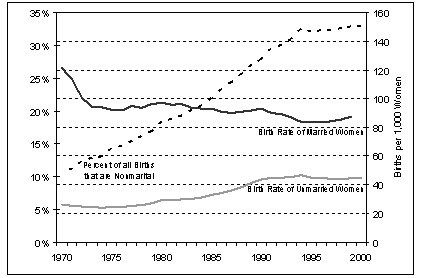
In the exhibit above, the percent of all births that are nonmarital (dotted line) is plotted using the left axis, and the birth rates of married (black line) and unmarried women (grey line) are plotted using the right axis.
2. Nonmarital Childbearing and Age
Nonmarital childbearing is primarily a phenomenon of youth. The percent of births that are nonmarital, plotted by year as a single (dotted) line in Exhibit 2.1, is plotted by year and age in Exhibit 2.2. The percents for younger women are much higher than the percents among older age groups. In 2000, nearly 80% of all teen births were nonmarital, a proportion that has nearly tripled since 1970, when the figure was 30%. Nonmarital childbearing is also prevalent among teens and women in their early 20s (i.e., ages 20-24) for whom, in 2000, 50% of births occurred outside marriage. This percentage has grown twice as fast for this age group than for teens, increasing by nearly six times since 1970 when only about 9% of births to women in their early 20s were nonmarital. The percentages of births that are nonmarital are substantially lower among women in their late 20's and older. In 2000, only one-quarter of births to women ages 20-25 were nonmarital, and for women in their early 30s, the percentage was just under 15%.
Exhibit 2.2. Percent of Births to Unmarried Women by Age of Mother, 1970 - 2000
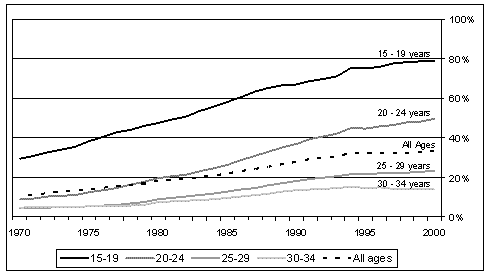
In the exhibit above, the percent of all births that are nonmarital for women of all ages (dotted line) is identical to the percent of all births that are nonmarital (dotted line) in Exhibit 2.1 .
Finally, in 2000, nearly two-thirds of nonmarital births were to women younger than 24, with about 27% of such births to teens and 37% of such births to women in their early 20s (National Center for Health Statistics, 2002). Increases in birth rates among unmarried women are also linked to youth. Over the past 30 years, the birth rates of unmarried women in their teens and early 20's have risen 13% and 28% faster than birth rates among unmarried women in older age groups.(9)
B. Overview of State Efforts
In this section, we summarize information from several sources regarding state efforts to reduce nonmarital childbearing. We review activities for teens first followed by activities focusing primarily on adults. We conclude with a discussion of TANF provisions related to reducing nonmarital childbearing.
Section 510 of Title V of the Social Security Act, created under Section 912 of PRWORA, established a new categorical program of grants to states for abstinence education. Its purpose is to enable states to support abstinence education and, at the option of states, where appropriate, mentoring, counseling, and adult supervision to promote abstinence from sexual activity with a focus on those groups most likely to bear children out-of-wedlock. Programs funded under Title V Section 510 must meet eight specific criteria.(11) The law provides for a mandatory annual appropriation of $50 million for each of the fiscal years 1998 through 2002. Grants are awarded to the states based on a statutory formula determined by the proportion that the number of low-income children in the states bears to the total number of low-income children for all states. Grant applications are accepted only from the state health agency responsible for the administration (or supervision of the administration) of the Maternal and Child Health Services Block Grant (Title V Section 510), with funds dispersed at the discretion of the governor unless otherwise established under state law or judicial precedent. There is a required match of three non-federal dollars for every four federal dollars awarded. If a state chooses not to apply for a grant, the state's allocation is returned to the treasury and is not available for redistribution among the remaining states (42 USC 710). Title V Section 510 is administered by the Maternal and Child Health Bureau (MCHB), a component of the Health Resources Services Administration within the Department of Health and Human Services. State maternal and child health agencies have local responsibility for Title V Section 510 administration.(12)
In addition to the Title V Section 510 program, the federal government recently created a Community-Based Abstinence Education Grant Program that provides grants to communities for implementing and planning abstinence education programs. This program, which does not require a state match, was not authorized under PRWORA but was created through the Special Programs of Regional and National Significance (SPRANS) and administered by the Maternal and Child Health Bureau of the Health Resources and Services Administration (HRSA). To date, communities in 35 states have received these grants, and grants totaled about $19.9 million in 2002. Grant recipients have included health departments, schools, hospitals, community-based abstinence education contractors, CBOs, and faith-based organizations (HHS News, 2002; HRSA News, 2001).
In 2000, 53 states and territories received Title V Section 510 abstinence education funds, including Guam, Puerto Rico, the Virgin Islands, the District of Columbia and all states except California. Among the programs enacted, 45 states and territories reported operating community-based projects; 43 reported technical assistance and training efforts, 42 engaged in program monitoring efforts; 41 engaged in program evaluations; 39 operated state media campaigns; and 26 formed advisory councils and/or steering committees (HRSA, 2002b).
States and territories provided grants to a range of institutions, including community-based organizations, schools and education boards, youth service organizations, local health departments, faith-based organizations, universities, local coalitions, and nonprofit organizations, among others. The most common local efforts engaged in by these institutions include social skills instruction, character-based education, and assets-building programs (43 states and territories); public-awareness campaigns (39); curriculum development and implementation (39); school-based programs (38); peer mentoring and education efforts (37); and parent education groups (35). Other programs include local media events (34); before- and after-school programs (33); community partnership development, coalition building, and the development of advisory boards (33); adult supervision, mentoring, and counseling efforts (33); and recreational activities (23). The age groups most frequently served are 13-14 year olds (50 states and territories) and 9-12 year olds (49) (HRSA, 2002b).
We summarize by state allocations and grant amounts for the Title V Section 510 Abstinence Education program and the Community-Based Abstinence Education Grant program, respectively, in Exhibit 2.3.
| State | Title V Section 510 Allocation ($) | Community-Based Grant | State | Title V Section 510 Allocation ($) | Community-Based Grant | ||
|---|---|---|---|---|---|---|---|
| Implementation | Planning | Implementation | Planning | ||||
| Alabama | 1,081,058 | 955,531 | 100,000 | New Jersey | 843,071 | 1,251,231 | 100,000 |
| Alaska | 78,526 | 281,149 | New Mexico | 518,368 | 207,984 | ||
| Arizona | 894,137 | 513,953 | New York | 3,377,584 | 582,554 | ||
| Arkansas | 660,004 | 767,579 | North Carolina | 1,151,876 | |||
| California | 5,764,199 | 255,555 | 100,000 | North Dakota | 126,220 | ||
| Colorado | 544,383 | 950,010 | Ohio | 2,091,299 | 2,138,346 | 50,000 | |
| Connecticut | 330,484 | Oklahoma | 756,837 | 98,960 | |||
| Delaware | 80,935 | Oregon | 460,076 | ||||
| District of Columbia | 120,439 | 763,583 | Pennsylvania | 1,820,070 | 255,725 | 58,671 | |
| Florida | 2,207,883 | 2,573,945 | 99,963 | Rhode Island | 129,692 | ||
| Georgia | 1,450,083 | 1,663,102 | 130,228 | South Carolina | 811,757 | ||
| Hawaii | 131,519 | South Dakota | 169,578 | ||||
| Idaho | 205,228 | Tennessee | 1,067,569 | 1,192,897 | 178,927 | ||
| Illinois | 2,095,116 | 800,000 | Texas | 4,922,091 | 752,224 | 97,550 | |
| Indiana | 857,042 | Utah | 325,666 | ||||
| Iowa | 424,908 | 739,012 | Vermont | 69,855 | |||
| Kansas | 391,185 | 100,000 | Virginia | 828,619 | 71,104 | ||
| Kentucky | 990,488 | 363,497 | Washington | 739,012 | 391,000 | ||
| Louisiana | 1,627,850 | 73,244 | West Virginia | 487,536 | |||
| Maine | 172,468 | Wisconsin | 795,859 | ||||
| Maryland | 535,712 | Wyoming | 80,935 | ||||
| Massachusetts | 739,012 | 100,000 | American Samoa | 44,992 | |||
| Michigan | 1,899,560 | 503,615 | 99,277 | Guam | 69,495 | ||
| Minnesota | 613,756 | Northern Marianas | 42,493 | ||||
| Mississippi | 1,062,752 | 100,000 | Puerto Rico | 1,449,018 | |||
| Missouri | 969,291 | 133,992 | Trust Territories: | ||||
| Montana | 186,439 | Palau | 13,501 | ||||
| Nebraska | 246,177 | 298,620 | Micronesia | 47,492 | |||
| Nevada | 157,534 | Marshalls | 21,000 | ||||
| New Hampshire | 82,862 | Virgin Islands | 136,509 | ||||
| Total | 49,999,100 | 18,335,104 | 1,557,924 | ||||
| Note: Title V Section 510 abstinence education program allocation figures are amounts available annually to states between 1998 - 2001. Community-based grant figures are amounts awarded in 2002. Sources: HRSA (2002a); HHS News (2001); HHS News (2002); HRSA News (2001) | |||||||
b. Other Pregnancy Prevention Efforts(13)
Just more than half (56%) of all states in 1999 reported having an official policy requiring or encouraging school-based pregnancy prevention programs (29 states). Note, however, that some states participated in school-based activities even in the absence of such a policy, and pregnancy prevention efforts extended beyond school-based activities in many states, as well. All states engaged in some activities related to teen pregnancy prevention.
- Youth development initiatives typically provide a variety of targeted services for teens at a single location or through coordinated efforts at a number of participating locations. These services are designed to improve outcomes for youth, including increasing matriculation, improving job readiness, and discouraging high-risk behaviors, including sexual behavior. Twenty-six states reported providing youth development or young adult education and employment programs.(14) Services provided vary by state, and include tutoring and mentoring programs; access to primary, mental, and reproductive health services; recreational activities; career counseling and preparation; life skills; community service activities; job search assistance; and parenting classes.
- Most states (37) engaged in media campaigns designed to discourage teen pregnancy.
- Just under half of states (22) developed multi-agency plans to reduce teen pregnancy (22 states), and just more than half of states (27) operated state coalitions or multi-agency task forces on pregnancy prevention.
- Many states report providing both information about contraception and access to contraceptive services. The large majority of states (45) operated programs that provided access to contraceptive services, while just fewer than half of all states (24) engaged in school-based programs that provide information about contraception.
c. State Spending for Teen Pregnancy Prevention
States use federal, state, local and private funds for teen pregnancy prevention activities. Data on expenditures from state funds only appear in Exhibit 2.4. Teen pregnancy prevention budget data for 1997 and 1999 from 29 states show that state spending per teen female in 1999 ranged from a low of one dollar or less in nine states (Colorado, Florida, Kansas, Missouri, North Dakota, Nebraska, Nevada, South Dakota, and Vermont) to a high of $179 (California). Between 1997 and 1999, 13 states reported declines in spending, 12 states reported increases in spending, and spending in four states remained unchanged..
| Teen Pregnancy Prevention Budget Total (State Funds- Excludes Federal Dollars) ($) | Teen Pregnancy Prevention Budget Per Teen Female ($) | Change Per Teen Female ($) | Change Per Teen Female (%) | |||
|---|---|---|---|---|---|---|
| State | 97 | 99 | 97 | 99 | 97-99 | 97-99 |
| California | 78,700,000 | 200,000,000 | 78 | 179 | 101 | 129.5 |
| Massachusetts | 4,320,000 | 13,650,000 | 24 | 71 | 47 | 195.8 |
| Louisiana | 2,276,678 | 10,860,000 | 13 | 59 | 46 | 353.8 |
| Delaware | 2,030,957 | 1,223,000 | 43 | 48 | 5 | 11.6 |
| Maryland | 3,364,288 | 4,900,000 | 22 | 29 | 7 | 31.8 |
| Ohio | 13,000,000 | 12,000,000 | 33 | 29 | -4 | -12.1 |
| Washington | 1,200,000 | 5,358,989 | 6 | 25 | 19 | 316.7 |
| Idaho | 254,587 | 803,000 | 5 | 15 | 10 | 200.0 |
| Minnesota | 1,150,000 | 2,610,000 | 7 | 14 | 7 | 100.0 |
| Texas | 4,777,107 | 10,600,000 | 7 | 14 | 7 | 100.0 |
| Kentucky | 1,003,000 | 1,500,000 | 7 | 11 | 4 | 57.1 |
| Wisconsin | 2,094,424 | 2,200,000 | 11 | 11 | 0 | 0.0 |
| Georgia | 3,500,000 | 2,906,900 | 14 | 10 | -4 | -28.6 |
| Connecticut | 1,941,250 | 1,052,000 | 20 | 10 | -10 | -50.0 |
| Utah | 793,413 | 834,539 | 8 | 8 | 0 | 0.0 |
| Indiana | 1,600,000 | 1,600,000 | 8 | 7 | -1 | -12.5 |
| Iowa | 1,060,000 | 508,000 | 10 | 5 | -5 | -50.0 |
| Arizona | 3,270,000 | 850,000 | 22 | 5 | -17 | -77.3 |
| Mississippi | 0 | 400,000 | 0 | 4 | 4 | * |
| Hawaii | 100,000 | 154,866 | 3 | 4 | 1 | 33.3 |
| New Jersey | 1,100,000 | 1,100,000 | 5 | 4 | -1 | -20.0 |
| Virginia | 5,692,011 | 850,000 | 26 | 4 | -22 | -84.6 |
| Florida | 11,481,494 | 507,671 | 13 | 1 | -12 | -92.3 |
| Nebraska | 0 | 30,000 | 0 | 0 | 0 | 0.0 |
| Nevada | 0 | 0 | 0 | 0 | 0 | 0.0 |
| Colorado | 1,109,784 | 0 | 8 | 0 | -8 | -100.0 |
| Kansas | 522,000 | 0 | 5 | 0 | -5 | -100.0 |
| Missouri | 300,000 | 0 | 2 | 0 | -2 | -100.0 |
| Vermont | 249,000 | 0 | 12 | 0 | -12 | -100.0 |
| Totals | 146,889,993 | 276,498,965 | 8.03 | 8.09 | -- | -- |
| Median Increase/(Decrease) | 7.00/(5.00) | |||||
| Source: Wertheimer at al. (2000). | ||||||
As of 1999, states generally had implemented fewer programs to reduce nonmarital childbearing targeting adults rather than teens.
Among those programs that have been implemented, the most prevalent in 1999 were:
- Efforts to improve access to contraceptive services (33 states);
- Media campaigns discouraging adults from having children out-of-wedlock (18 states).
Just under one-third of states (14) reported providing programs that encourage adults to remain abstinent before marriage. Among states promoting abstinence before marriage, the majority also reported engaging in activities to increase access to contraceptive services. Three states (Georgia, North Dakota and Tennessee) reported operating programs encouraging couples experiencing a pregnancy to marry (Wertheimer, 2000).
3. PRWORA/TANF Policies Aimed at Reducing Nonmarital Childbearing
PRWORA influences nonmarital childbearing policies in at least two ways. First, TANF's flexible block grant structure, authorized under PRWORA, permits states to use federal and state maintenance of effort (MOE) TANF funds for a range of activities, including pregnancy prevention and two-parent family formation activities (Exhibit 2.5).(15) According to expenditure data reported by states to HHS, spending by states to support such activities have been modest, with states spending an average of approximately 0.4% of total federal and state funds on pregnancy prevention activities, and 0.5% of such funds on two-parent family formation activities.(16) The range of spending, however, varies considerably. Just more than half (28) of states spent some portion of federal and state MOE funds for pregnancy prevention activities. Of these, 17 spent less than 1%, eight spent between 1% and 3%, and three spent approximately 5% or more. About one quarter (13) of states spent some portion of federal and state MOE funds for two-parent family formation activities. Of these, four spent less than 1%, five spent between 1% and 3%, and four spent 5% or more (Administration for Children and Families, 2000).
Second, specific provisions within PRWORA aimed at influencing nonmarital childbearing. Included in these are provisions within the law that require that states implement tougher paternity establishment and child support enforcement activities. Also included are a variety of provisions established within TANF. Among these, the law requires that states implement education and training programs for members of law enforcement, school staff, and counseling professionals to identify and prevent statutory rape. The law also gives states latitude to modify or maintain certain existing welfare policies and to develop others, some of which are likely to have a direct or indirect affect on nonmarital birth rates among welfare recipients. These include implementing or continuing family cap policies, eliminating or maintaining benefit eligibility differences for single- and two-parent families, and linking TANF with pregnancy prevention services. Finally, PRWORA authorized the illegitimacy bonus, which provided rewards to up to five states for reductions in nonmarital childbearing.
With the exception of the abstinence education program funded under Section 510 of Title V and the illegitimacy bonus, which we discussed earlier in this chapter under Efforts to Serve Teens, and the illegitimacy bonus, which we discuss in Chapter 4, we describe each of these provisions below.
a. Child Support and Paternity Establishment Enforcement
Strict child support and paternity establishment enforcement raises the costs of fathering children outside marriage, and can discourage nonmarital pregnancies and births. To help achieve this objective, and to protect the health and welfare of children born out-of-wedlock, PRWORA continues the requirement under AFDC that states must sanction recipients who do not cooperate with the child support agency to establish paternity. The sanction can range from 25% to 100% of the grant (42 USC 608). PRWORA also requires states, within their respective paternity establishment programs, to require employers to report new hires to locate employees with unpaid child support orders, and establish computerized state-wide collection efforts. States that do not comply substantially with the child support enforcement provisions contained within PRWORA may be sanctioned. State quarterly grants may be reduced by no more than 1% for the first quarter of non-compliance, and by no more than 5% for states that accumulate three or more quarters of non-compliance (42 USC 609). Each of the states has implemented child support and paternity establishment enforcement policies as required under PRWORA (OCSE, 1998).
b. Education and Training on Statutory Rape Prevention
The law requires that states implement education and training programs for members of law enforcement, school staff and administrators, and counseling professionals to identify and prevent statutory rape so that teenage pregnancy prevention programs may be expanded in scope to include men (42 USC 602). Each of the states has implemented such efforts.
Family cap policies vary by state, but they generally do not allow for increases in the amount of the benefit provided to a family for additional children born while on welfare. Typically, the goals of family cap policies are to reduce births to families on welfare (which are overwhelmingly nonmarital), and to lower costs of assistance (by deferring or preventing increases in the size of the assistance unit.) PRWORA includes no explicit provision regarding family caps. However, states are not prohibited from adopting family caps and, in fact, 23 states have implemented some type of family cap policy (Stolzfus et al., 2000) (Exhibit 2.5).
Most states with family cap policies provide no increase in welfare benefits for additional children conceived after the mother has begun receiving welfare. A handful of states provide an increase in benefits for increases in family size, although the increase is smaller than families would have received had the children been conceived before the family began receiving welfare. For example, two states--Connecticut and Florida--provide a reduced benefit for additional children. Four states--Arizona, Delaware, New Jersey, and Massachusetts--disregard more earned income, calculate benefits using a higher standard of assistance, or maintain eligibility at higher income for families subject to the cap. Two states--Idaho and Wisconsin--offer a flat grant that is not based on family size (Stolzfus et al., 2000).
Under AFDC, two-parent families who received AFDC benefits for unemployed parents (AFDC-UP) were subject to three requirements:
- the 100-hour rule, which restricted eligibility for AFDC-UP to those families in which the principal earner worked fewer than 100 hours per month;
- the 30-day waiting period, which restricted eligibility to families in which the principal earner had been unemployed for at least 30 days; and
- the work history rule, in which AFDC-UP applicants had to have worked in six or more quarters.
Some critics of these rules believed they discouraged marriage among couples for whom the application of the rules would hurt eligibility for benefits. PRWORA provides states with the flexibility to abolish the AFDC-UP requirements (45 CFR 233), thus eliminating a potential disincentive to marriage. As of 2000, 39 states had eliminated all three rules. Of the 12 states that kept at least one rule, all but South Dakota kept the work history rule. Five states--the District of Columbia, Maine, Mississippi, New Hampshire, and Tennessee--have retained all three rules (Urban Institute, 2000) (Exhibit 2.5).
e. Linking TANF and Pregnancy Prevention Services
There are a number of collaborative efforts between state welfare offices and state family planning agencies. In 1999, 24 states had developed systems to refer welfare recipients for family planning services, and 14 states had established delivery of both family planning and welfare services in one office. In 20 states, family planning agency staff have trained welfare staff to perform a range of services, including collecting information to identify family planning needs, providing referrals for family planning services, and providing information and answering questions about contraceptive methods and availability (Exhibit 2.5). Among the states that link services, seven (Arkansas, Delaware, Georgia, Kentucky, Montana, North Dakota, and Washington) have co-located services, established referral systems, and provided training for welfare staff by staff from state family planning offices (Hutson and Levin-Epstein, 2000).
Some states have linked family planning services to TANF receipt through the development of individual responsibility agreements (IRAs).(17) While these agreements typically identify specific obligations for meeting work participation requirements, the agreements can also include other commitments to make decisions that are in the best interest of the family, such as ensuring that children attend school and receive immunizations, or that parents seek out family planning information or services.
IRAs in five states include family planning provisions. In Georgia, recipients are required to receive family planning counseling, and in West Virginia, recipients must agree to attend family planning classes if requested to do so. Delaware requires recipients to obtain family planning information from any provider they choose. In two states, recipients are invited to request family planning information (Oklahoma) or family planning services (Iowa). In four states (Indiana, Mississippi, Nebraska, and Wisconsin), recipients are required to acknowledge that the state imposes a family cap on benefits (Levin-Epstein, 1998) (Exhibit 2.5).
| State | Impose Family Capsa/ | Two-Parent Family Policies | Linkages Between Welfare and Pregnancy Prevention Services(e) | Spending as Share of Total Federal and State MOE (FY 2000)(f) | |||||
|---|---|---|---|---|---|---|---|---|---|
| Treat Eligibility for Two-parent and Single-parent Families Similarly(b) | Provide Marriage Incentives(c) | Permit/Require Family Planning in Individual Pland/ | Co-locate Services | Maintain Referral Systems | Train Welfare Staff | Pregnancy Prevention (%) | Two-Parent Formation (%) | ||
| Alabama | x | x | x | x | 0.9 | 0.0 | |||
| Alaska | x | x | x | 1.0 | 0.0 | ||||
| Arizona | x | 0.6 | 0.0 | ||||||
| Arkansas | x | x | x | x | x | 1.9 | 1.4 | ||
| California | x | x | x | 0.0 | 0.0 | ||||
| Colorado | x | x | x | 0.0 | 0.0 | ||||
| Connecticut | x | x | x | 0.3 | 0.0 | ||||
| Delaware | x | x | x | x | x | x | 0.0 | 0.2 | |
| District of Columbia | 0.5 | 0.0 | |||||||
| Florida | x | x | x | 2.5 | 2.4 | ||||
| Georgia | x | x | x | x | x | 6.1 | 5.8 | ||
| Hawaii | x | x | 0.0 | 0.0 | |||||
| Idaho | x | x | x | x | 2.0 | 10.7 | |||
| Illinois | x | x | x | x | 0.1 | 0.0 | |||
| Indiana | x | x | x | x | 0.0 | 0.0 | |||
| Iowa | x | x | 0.0 | 0.0 | |||||
| Kansas | x | x | 0.3 | 0.0 | |||||
| Kentucky | x | x | x | 0.1 | 1.3 | ||||
| Louisiana | x | x | 0.3 | 0.0 | |||||
| Maine | x | x | 0.0 | 0.0 | |||||
| Maryland | x | x | x | 0.2 | 5.7 | ||||
| Massachusetts | x | x | x | 0.0 | 0.0 | ||||
| Michigan | x | 0.5 | 1.0 | ||||||
| Minnesota | x | x | 0.0 | 0.0 | |||||
| Mississippi | x | x | x | 1.6 | 0.8 | ||||
| Missouri | x | 1.2 | 0.2 | ||||||
| Montana | x | x | x | x | 0.0 | 0.0 | |||
| Nebraska | x | x | x | x | 0.0 | 0.0 | |||
| Nevada | x | 0.0 | 0.0 | ||||||
| New Hampshire | x | x | 0.1 | 0.0 | |||||
| New Jersey | x | x | x | 0.0 | 0.1 | ||||
| New Mexico | x | x | 0.0 | 0.0 | |||||
| New York | x | x | 0.0 | 0.0 | |||||
| North Carolina | x | x | x | 0.1 | 0.0 | ||||
| North Dakota | x | x | x | x | x | x | 0.0 | 0.0 | |
| Ohio | x | 0.1 | 0.0 | ||||||
| Oklahoma | x | x | x | x | x | 0.0 | 0.0 | ||
| Oregon | x | 0.0 | 0.0 | ||||||
| Pennsylvania | 0.4 | 0.0 | |||||||
| Rhode Island | x | 0.0 | 0.0 | ||||||
| South Carolina | x | x | x | x | 6.5 | 0.0 | |||
| South Dakota | 1.0 | 0.0 | |||||||
| Tennessee | x | x | x | 0.0 | 0.0 | ||||
| Texas | x | 1.8 | 0.0 | ||||||
| Utah | x | x | 0.4 | 0.0 | |||||
| Vermont | x | 0.0 | 0.0 | ||||||
| Virginia | x | x | x | 0.8 | 0.0 | ||||
| Washington | x | x | x | x | 0.0 | 0.0 | |||
| West Virginia | x | x | x | x | x | 4.7 | 20.8 | ||
| Wisconsin | x | x | x | x | 0.3 | 1.2 | |||
| Wyoming | x | x | 0.0 | 0.0 | |||||
| Totals | 23 | 39 | 9 | 9 | 14 | 24 | 20 | 0.4 | 0.5 |
| Notes for Exhibit 2.5: a/ Stoltzfus et al. (2000). States provide total reduction with following exceptions: Connecticut and Florida provide partial benefit increases to families subject to the family cap; Arizona, Delaware, New Jersey, and Massachusetts disregard more earned income, calculate benefits using a higher standard of assistance, or maintain eligibility at higher income for families subject to the cap; Virginia and California allow full pass through of any child support collected for the newborn; Idaho and Wisconsin have a flat grant for families of all sizes. b/ The Welfare Rules Database, The Urban Institute (2000). These states eliminated the 100-day rule, 30-day waiting period, and work history rule that previously applied to AFDC-UP families. c/ Gardiner et al. (2002). Alabama, Mississippi, North Dakota, and Oklahoma disregard all income of the new spouse for 3 to 6 months. Tennessee and New Jersey disregard income of stepparents (subject to restriction depending upon household need or income). Maine and Minnesota include stepparents in the assistance unit (Maine does so optionally). Oklahoma combines the income of cohabitating couples. West Virginia adds a $100 marriage incentive payment to the monthly cash benefit of any family that includes a legally married man and woman who live together. d/ Levin-Epstein (1998). e/ Hutson and Levin-Epstein (2000). f/ DHHS/ACF. Represents share of federal TANF grants and State MOE funds expended on pregnancy prevention and two-parent formation activities in fiscal year 2000. | |||||||||
III. Experiences of Study States Since the Passage of PRWORA
A. Characteristics of Study States
As we described earlier, in selecting the study states we reviewed key characteristics of all 50 states (and the District of Columbia), including bonus receipt (i.e., yes or no), incidence and prevalence of nonmarital childbearing, geography (i.e., region), population (i.e., size, age, and ethnicity), and policy environment (i.e., type and number of policies and activities, population served by policies and programs, and funding levels), and we identified nine states exhibiting diversity across these characteristics. We describe the characteristics of the nine states (Alabama, Arizona, Georgia, Maryland, Massachusetts, Minnesota, New York, Pennsylvania, and Wyoming) below. Characteristics of the states are summarized in Exhibit 3.1.
- Geography. The sample is geographically diverse, and includes states from six of the nine U.S. geographic divisions, as defined by the Census Bureau.(1) The sample includes one New England state (Massachusetts), two Middle Atlantic states (New York and Pennsylvania), two South Atlantic states (Georgia and Maryland), one East South Central state (Alabama), one West North Central state (Minnesota), and two Mountain states (Arizona and Wyoming).
- Population. The populations of the states are very diverse, especially regarding size, race and ethnicity. States range in population size from a low of 494,000 (Wyoming), to a high of nearly 19 million (New York). The African American population as a proportion of total population ranges from less than 1% in Wyoming to about 39% in Georgia compared to about 12% nationally. The percentage of the population that is Hispanic or Latino is below the national average (about 13%) in seven states, while New York (15%) and Arizona (25%) are above.(2) The age structures of the nine states are roughly identical, with approximately 75% of each state's population under the age of 18. Nationally, the figure is 74%. These figures are from the 2000 Census (U.S. Census Bureau).
- Nonmarital Childbearing. Four of the states' two-year (1998-1999) nonmarital birth ratios (the measure used, in part, to determine bonus eligibility) are at or below the national average of 32.9% (Massachusetts, Minnesota, Pennsylvania and Wyoming), ranging from 25.8% to 32.9%. Five states (Alabama, Arizona, Georgia, Maryland and New York) have nonmarital birth ratios higher than the national average, ranging from 33.7% to 38.6% (National Center for Health Statistics). Of births to teen mothers, the percent that are out-of-wedlock is below the national average (79%) in three states (Alabama, Georgia, and Wyoming) and above in five (Arizona, Maryland, Massachusetts, Minnesota, New York, and Pennsylvania) (Child Trends, 2000). The majority of states' teen birthrates are below the national average of 50 per 1,000 (Maryland, Massachusetts, Minnesota, New York, and Pennsylvania), with rates in three states (Alabama, Arizona, and Georgia) above (Child Trends, 2000).
- Spending. State spending on teen pregnancy prevention exhibits a wide range. Five states spent $10 or less per teen female in 1999 (Alabama, Arizona, Georgia, Pennsylvania, and Wyoming). Spending in the remaining states ranged from $14 (Minnesota) to $71 (Maryland) (Child Trends, 2000). Spending as a share of total federal and state TANF maintenance-of-effort (MOE) expenditures was higher than the national average for three states (Alabama, Arizona and Georgia) for pregnancy prevention activities, and higher than the national average for two states (Georgia and Maryland) for two-parent family formation activities (Administration for Children and Families, 2000).
- Bonus Receipt. Three states have received the bonus. Alabama has received the bonus three times (1999, 2000, and 2001), and Massachusetts and Arizona have each received the bonus once (1999 and 2000, respectively) (National Center for Health Statistics).
| Population (2000)(b) | Percent of Births to Unmarried Women(c) | Of Births to Teen Mothers, Percent Nonmarital(d) | Teen Birthratee(per 1,000) | Teen Pregnancy Prevention Budget per Teen Female(f) | Spending as Share of Total Federal and State MOE Expenditures (FY 2000)(g) | Bonus Receipt(h) | |||||||||
|---|---|---|---|---|---|---|---|---|---|---|---|---|---|---|---|
| State | Census Region(a) | All Ages | 18 and Over | Under 18 | Black or African American (All Ages) (i) | Hispanic (All Ages) | 1998-1999 | 1999 | 1999 | 1999 | Pregnancy Prevention | Two-Parent Formation | 1999 | 2000 | 2001 |
| Alabama | South Central | 4,447,100 | 3,323,678 | 74.7% | 26.0% | 1.7% | 33.69% | 71.0% | 63 | $7 | 0.9% | 0.0% | x | x | x |
| Arizona | Mountain | 5,130,632 | 3,763,685 | 73.4% | 3.1% | 25.3% | 38.57% | 81.0% | 70 | $5 | 0.6% | 0.0% | x | ||
| Georgia | South Atlantic | 8,186,453 | 6,017,219 | 73.5% | 28.7% | 5.3% | 36.37% | 78.0% | 65 | $10 | 6.1% | 5.8% | |||
| Maryland | South Atlantic | 5,296,486 | 3,940,314 | 74.4% | 27.9% | 4.3% | 34.62% | 90.0% | 43 | $71 | 0.2% | 5.7% | |||
| Massachusetts | NewEngland | 6,349,097 | 4,849,033 | 76.4% | 5.4% | 6.8% | 26.92% | 91.0% | 29 | $29 | 0.0% | 0.0% | x | ||
| Minnesota | North Central | 4,919,479 | 3,632,585 | 73.8% | 3.5% | 2.9% | 25.76% | 86.0% | 30 | $14 | 0.0% | 0.0% | |||
| New York | Middle Atlantic | 18,976,457 | 14,286,350 | 75.3% | 15.9% | 1.51% | 35.75% | 88.0% | 37 | $27 | 0.0% | 0.0% | |||
| Pennsylvania | Middle Atlantic | 12,281,054 | 9,358,833 | 76.2% | 10.0% | 3.2.% | 32.89% | 90.0% | 36 | $8 | 0.4% | 0.0% | |||
| Wyoming | Mountain | 493,782 | 364,909 | 73.9% | 0.8% | 6.4% | 29.30% | 71.0% | 40 | $4 | 0.0% | 0.0% | |||
| United States | n/a | 281,421,906 | 209,128,094 | 74.3% | 12.3% | 12.5% | 32.93% | 79.0% | 50 | n/a | 0.4% | 0.5% | n/a | n/a | n/a |
B. Trends in Nonmarital Childbearing in Study States
Trends in nonmarital childbearing between 1985 and 2000 in the nine study states roughly track national trends. The average of the percent of births to unmarried women across the nine states is essentially identical to the figures for the United States as a whole, increasing from about 22% in 1985 to about 33% in 2000 (roughly a 50% increase). Trends within individual states, however, are more varied (Exhibit 3.2). Six states experienced increases in nonmarital childbearing below the national average, while three states experienced increases above the national average.
Exhibit 3.2. Increase in Percent of Births to Unmarried Women, Study States and U.S., 1985-2000
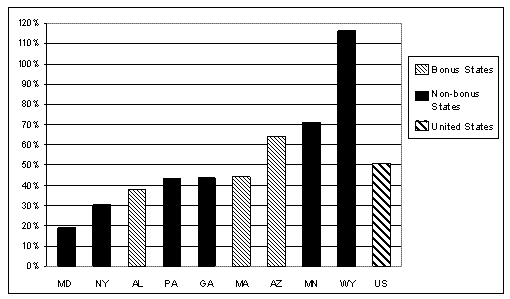
The current proportions of nonmarital births also vary considerably from state to state. In 2000, the percent of births to unmarried women ranged from a low of 25.9 in Minnesota to a high of 38.8 in Arizona.(3)
C. Summary of Efforts Among the Study States
While the nature of state activities to reduce nonmarital births, intensity of effort, and funding levels have differed considerably among the study states since the passage of PRWORA, some common themes are apparent. We found that state efforts to reduce nonmarital childbearing have increased since the passage of PRWORA, and that such efforts are more likely to focus on teens than on adults. We also found that all study states engage in efforts to encourage or even require community involvement, and that most states have made some special efforts to provide services for males.
In this section, we summarize the efforts of the study states. We begin with efforts serving teens, followed by efforts serving primarily adults. We conclude with an overview of the roles of PRWORA and TANF in reducing nonmarital childbearing.
In this section, we summarize and briefly describe activities serving teens only. In Exhibit 3.3, the upper portion of the table includes major efforts described in this section, and the lower portion of the table provides detail on the activities that typically are provided as components of those efforts. For example, parenting skills, life skills, and mentoring activities are common components of youth development and other initiatives. We provide more detailed descriptions of each state's programs in the Appendix.
| State | |||||||||
|---|---|---|---|---|---|---|---|---|---|
| Bonus States | Non-Bonus States | ||||||||
| Initiatives | AL | AZ | MA | GA | MD | MN | NY | PA | WY |
| Abstinence education | |||||||||
| Abstinence education (Title V, Sec. 510) | x | x | x | x | x | x | x | x | x |
| Other abstinence education activities | x | x | x | x | x | x | x | x | x |
| Youth development initiatives | x | x | x | x | x | ||||
| Teen pregnancy prevention initiative(s) | x | x | x | x | x | ||||
| Second Chance Homes | x | x | |||||||
| Efforts to reduce risk-taking behaviors | x | x | x | ||||||
| Component Activities | |||||||||
| Parenting skills program(s) | x | x | x | x | x | ||||
| Life skills/high-risk behavior avoidance program(s) | x | x | x | x | x | x | |||
| Mentoring program(s) | x | x | x | ||||||
| Tutoring/educational assistance program(s) | x | x | x | x | x | x | x | ||
| Career/vocational training/job readiness program(s) | x | x | x | x | x | x | |||
| Case management program(s) | x | x | x | ||||||
| Recreational activities | x | x | |||||||
| a/ Application submitted | |||||||||
Each of the states has taken advantage of Title V Section 510 funding to establish abstinence education programs, with the programs in eight of the states providing services exclusively to teens while one state, Wyoming, provides abstinence education to both teens and adults.(4) Six of the states operate the programs through grants to CBOs.
Administration and content vary by state, and include components such as statewide media campaigns, abstinence curricula posted to web sites, and education programs for youth. These programs are delivered in a variety of settings through various providers, such as schools, after-school program sites, hospitals, local health departments, private mental health providers and faith-based organizations. Program components also vary, and include leadership training, character education, tutoring, peer education, career exploration, life skills development, community outreach, mentoring programs, and information regarding the educational and economic consequences of early parenthood as well as coping with the social, physical and psychological factors associated with premarital sexual behavior.
b. Youth Development Initiatives
Five states, including one bonus state (Alabama) and four non-bonus states (Georgia, Maryland, New York, and Pennsylvania) operate youth development initiatives designed to improve outcomes for high-risk youth by providing a range of comprehensive health, career and social supports. The supports vary by state and include components such as after-school recreational activities, job readiness training, adult and peer mentoring and tutoring programs, life skills education, high-risk behavior avoidance programs, parenting skills education, career counseling, and primary and reproductive health care delivery.(5)
c. Teen Pregnancy Prevention Initiatives
Five states, including two bonus states (Alabama and Massachusetts) and three non-bonus states (Georgia, New York, and Wyoming) operate teen pregnancy prevention initiatives, which typically combine one or more youth development components (e.g., life skills training, recreational activities, tutoring and educational assistance and career counseling/job readiness programs) with health services (including access to family planning and pregnancy counseling). For example, Massachusetts's Teen Pregnancy Prevention Challenge Fund provides grants to 17 CBOs to operate programs that target youth ages 10-19 and provide a variety of services including peer leadership programs, mentoring and tutoring models, job and life skills training, reproductive health services and HIV/AIDS(6) and STD(7) education. The programs are designed to increase abstinence, delay sexual onset among adolescents, and reduce teen pregnancy rates. Programs administered in other states feature similar approaches and goals.
Two states, including one bonus state (Massachusetts) and one non-bonus state (Georgia) operate Second Chance Homes, which provide alternative living arrangements for minor parents and their children.(8) Massachusetts's Teen Living Program and Georgia's Second Chance Homes programs provide pregnant and parenting teens who receive TANF assistance but are unable to live with a parent or guardian the opportunity to live in a structured, supportive residential environment. Services include 24-hour adult supervision, pregnancy prevention counseling, family planning services, case management services, child care, job training, and counseling.
e. Efforts to Reduce Risk-Taking Behaviors
Three non-bonus states (Georgia, Maryland, and Minnesota) engage in efforts to discourage risk-taking behavior among youth. These programs feature a range of services and activities, including abstinence education, drug and alcohol prevention education, violence prevention education, suicide prevention education, male involvement education, health and nutrition education and counseling, after school programs, life skills training, and adolescent health and reproductive health services.
In Exhibit 3.4, we summarize activities serving teens only. The upper portion of the table includes efforts described in this section, and the lower portion of the table provides detail on the activities that typically are provided as components of those efforts. For example, parenting skills, life skills, and mentoring activities are common components of youth development and other initiatives.
2. Efforts Serving Primarily Adults
In this section, we summarize and briefly describe activities that serve primarily adults. (None of the programs identified by the states serves adults exclusively.) In Exhibit 3.4, the upper portion of the table includes efforts described in this section, and the lower portion of the table provides detail on the activities that typically are provided as components of those efforts. For example, parenting skills, life skills, and mentoring activities are common home visiting and other initiatives. We provide more detailed descriptions of each state's programs in the Appendix..
| State | |||||||||
|---|---|---|---|---|---|---|---|---|---|
| Bonus States | Non-Bonus States | ||||||||
| Initiatives | AL | AZ | MA | GA | MD | MN | NY | PA | WY |
| Family planning and reproductive health services | X | x | x | x | x | x | x | x | x |
| Family planning Medicaid waivers | x | x | x | x(a) | x | ||||
| Home visiting program(s) | x | x | x | x | x | x | x | x | |
| Male responsibility program(s) | x | x | x | x | x | ||||
| Component Activities | |||||||||
| Media/public awareness campaigns (except abstinence education) | x | x | x | ||||||
| Parenting skills program(s) | x | x | |||||||
| Life skills/high-risk behavior avoidance program(s) | x | ||||||||
| Mentoring program(s) | |||||||||
| Tutoring/educational assistance program(s) | x | x | x | ||||||
| Career/vocational training/job readiness program(s) | x | x | x | x | |||||
| Case management program(s) | x | x | x | ||||||
| a/ Application submitted | |||||||||
a. Family Planning Services and Medicaid Waivers
All states provide family planning and reproductive health services to help ensure access to these services for all residents. A number of states operate special programs or engage in targeted outreach to reach the hard to serve. For example, Arizona provides family planning services with the goal of reducing rates of second-order pregnancies and births. Georgia provides counseling and family planning services in non-traditional sites, such as shopping malls, housing developments and a mobile van. Four states, including one bonus state (Alabama) and three non-bonus states (Maryland, Minnesota, and New York), have applied for and/or received Medicaid waivers to expand access to family planning services, with eligibility ranging from 133%-275% of the federal poverty level.(9) In at least one state (New York), waiver services are available to men as well as women.
Seven study states, including all those receiving the bonus, operate home visiting programs. These programs typically provide a variety of health and other services to pregnant or parenting individuals who are at risk of becoming dependent on cash assistance. The range of services include child care, perinatal services, primary and reproductive health services, comprehensive case management services, responsible parenting education, counseling regarding childbearing and other decisions, and work preparation. Program goals include protecting child and maternal health, reducing or delaying subsequent pregnancies (especially to teens), and promoting educational attainment and economic self-sufficiency.(10)
c. Male Responsibility Programs
Efforts to promote male involvement and responsibility are particularly common. All but one state (Arizona) engage in one or more efforts to develop and deliver programs to males (and females) designed to decrease the likelihood of fathering a child out of wedlock, and to increase the likelihood of paternal involvement when nonmarital births do occur. Programs vary by state, and include services such as (primarily for teens): parenting training, abstinence education, anger management, self-discipline instruction (including sexual responsibility) STD and HIV/AIDS(11) prevention, substance abuse education, peer leadership programs, and teaching that young men and young women are equally responsible for preventing pregnancy. Services primarily for adults include programs designed to increase paternity establishment, strengthen relationships between fathers and children, and increase child support payments by providing work and training opportunities. Some operate the programs directly, while others, such as Alabama, Georgia, and Massachusetts, provide grants to CBOs.
While the activities described above had parallels across several study states, there were additional activities that appeared unique to particular study states. These include:
- Alabama's Care Coordination program that provides risk assessment and case management services to women who are enrolled in family planning.
- Georgia Department of Public Health staff advise parents to wait two years between births, emphasizing the health benefits for both the mother and child. In addition to the health benefits gained, this effort helps delay or prevent subsequent out-of-wedlock births. Georgia also offers an Early Intervention Services program for low-income residents that funds pregnancy tests and intensive in-home case management services.
- Minnesota operates a program designed to identify and provide services to teens at risk for prostitution.
- Pennsylvania's physician training program teaches doctors how better to discuss sexuality, pregnancy, and sexual development with their young patients and their families, and Pennsylvania Family Life Community Initiative teaches parents to distinguish normal adolescent behavior from abnormal, or risky, adolescent behavior. Alabama also sponsors a series of conferences designed to improve pediatricians' skills in identifying and serving adolescents at risk for pregnancy.
In Exhibit 3.5, we summarize activities serving teens and adults. The upper portion of the table includes efforts described in this section, and the lower portion of the table provides detail on the activities that typically are provided as components of those efforts. For example, parenting skills, life skills, and mentoring activities are common home visiting and other initiatives.
3. PRWORA/TANF Policies Aimed at Reducing Nonmarital Childbearing
In this section, we identify those states implementing provisions in welfare reform (with the exception of abstinence education, which we discussed earlier in this chapter) aimed at reducing nonmarital births (Exhibit 3.5). We do not describe the provisions in much detail here, as each of the provisions are discussed more fully in Section B.3. of Chapter II.
| State | |||||||||
|---|---|---|---|---|---|---|---|---|---|
| Bonus States | Non-Bonus States | ||||||||
| AL | AZ | MA | GA | MD | MN | NY | PA | WY | |
| Family cap policies | x | x | x | x | x | ||||
| Similar eligibility for two-parent and single-parent families | x | x | x | x | x | ||||
| Includes family planning in IRAs | x | ||||||||
| Child support enforcement and paternity establishment | x | x | x | x | x | x | x | x | x |
| Education and training on statutory rape prevention | x | x | x | x | x | x | x | x | x |
| Service linkages, referral, and other collaborative efforts | x | x | x | x | x | x | |||
Arizona and Massachusetts (bonus states) and Georgia, Maryland, and Wyoming (non-bonus states) have implemented family caps. (See this heading in Chapter 2 for more detail regarding family cap policies).
Alabama (bonus state) and Maryland, Minnesota, New York, and Wyoming (non-bonus states) have modified their two-parent policies to reduce or eliminate disincentives to marriage. (See this heading in Chapter 2 for more detail regarding two-parent family policies).
c. Individual Responsibility Agreements
Among the nine study states, only Georgia includes a family planning provision within its individual responsibility agreements. Welfare recipients in Georgia are required to receive family planning counseling.
d. Child Support and Paternity Establishment Enforcement
Each of the states has implemented tougher child support enforcement policies and has developed or expanded paternity establishment efforts, with the type and nature of activities varying across states. For example, in New York, the Governor's Task Force on Out-of-Wedlock Pregnancies and Poverty placed a high priority on improving the state's child support enforcement and paternity acknowledgment activities, and Minnesota's Male Responsibility & Fathering program, which targets males ages 10 to 21, includes efforts to establish paternity.(12) In Maryland, each Healthy Families pilot site features a male involvement coordinator who works to avoid non-payment of support and enforcement activities by serving as a mediator between father and mother, when appropriate.
e. Education and Training on Statutory Rape Prevention
All states have implemented efforts to provide education and training about statutory rape prevention. Some programs serve teens, usually females, and provide information on the risks involved with dating older men as well as information on incidence and prevention of statutory rape. Other programs provide information to educators, counselors, health care workers, and law enforcement officials on the provisions of state statutory rape laws and responsibilities of officials to report incidences of statutory rape.
f. Linkages between TANF and Family Planning Agencies
Six of the study states, including two bonus states (Arizona and Massachusetts) and four non-bonus states (Georgia, Minnesota, Pennsylvania, and Wyoming) have linked services or otherwise implemented collaborative efforts between the state TANF and the state family planning agencies. Such linkages include programs to train both public health and welfare workers regarding services provided by the other agency and to perform basic screening and referrals between agencies, co-locating services to ensure simultaneous access to welfare services and family planning assistance, and providing inter-agency technical assistance. This is discussed in more detail in the next section.
D. Key Findings
In this section, we summarize key findings from our discussions with the nine study states regarding nonmarital birth activities within those states.
1. Funding for Nonmarital Birth Prevention Activities Has Increased
In addition to efforts authorized under PRWORA, all nine states report that increases in other efforts have been linked to the availability of TANF and Title V Section 510 (abstinence education) funding. As caseloads have declined while grant amounts have remained unchanged, states have used some portion of their available TANF funding to increase efforts aimed at reducing nonmarital and teen pregnancies, with increases in such funding ranging from just more than $1 million in Maryland to about $76 million in New York. Funding increased by up to $5 million annually in four states, and by $10 million or more in three states.
2. Prevention Policies Focus Primarily on Teens
Mirroring activities at the national level, prevention policies in the nine study states focus primarily on teens. While the primary reasons for doing so varied by state, four reasons were most often cited:
- The very large majority of teen births are nonmarital.
More than 70% of the births to teen mothers in each of the study states are out-of-wedlock (Child Trends, 2001). While Tthe proportion of all births that are to teen mothers in any of the states ranges from a low of 7% in Massachusetts to a high of 16% in Alabama (Curtin and Martin, 2000)., Lowering lowering teen childbearing can produce relatively large decreases in the total out-of-wedlock childbearing rate because of the high percentage of teen births that are overwhelmingly nonmarital. More than 70% of the births to teen mothers in each of the study states are out-of-wedlock (Child Trends, 2001).(13) Nationally, teen births comprise 12% of all births (Curtin and Martin, 2000) but account for 29% of nonmarital births (Ventura and Bachrach, 2000). States also note that reductions in teen births can produce disproportionate program savings because outcomes for families starting with a teen birth are generally poor (e.g., families beginning with a teen birth exhibit high rates of poverty, low educational attainment and high likelihood to require public assistance).
- Compared to adults, teens are an easier population to reach through existing links to providers.
Because the very large majority of the states' teen populations attend school, structuring and implementing programs for delivery within schools is more straightforward than designing efforts to reach adults. After-school programs, such as recreational, mentoring and tutoring activities provide another avenue for intervention. While can be reached through schools, delivering services to adults effectively requires larger and more expensive approaches, which makes adults less attractive as a target population than teens.
- States generally have had success identifying available intervention models for teens but have had less success identifying such models for adults.
The states were generally satisfied with the availability of program models and policy knowledge for implementing effective interventions among teens. For example, the majority of states have implemented life skills, parenting skills, job readiness, tutoring, home visiting and male responsibility programs. States reported substantially less success in identifying and implementing effective and appropriate models for discouraging nonmarital childbearing among adults. Among models in use, those focused on reducing unintended childbearing were the most commonly cited. Such models include family planning, and home visiting programs with a health-focused message of the benefits of delaying subsequent pregnancies.(14)
- Building community consensus around the goal of teen pregnancy prevention is easier than building similar consensus regarding the behavior of adults.
States report that a consensus exists within state legislatures and across local communities and state and local agencies around the importance of implementing teen pregnancy prevention programs, even if the consensus is less clear regarding the content of particular interventions (e.g., extent to which teens should receive abstinence education and have access to contraceptive information and services). However, during our discussions with the study states, many participants said they believed that activities, policies, or programs designed to influence the childbearing decisions of adults would likely be poorly received both by local communities and by the adults the policies were intended to serve.(15)
3. States Emphasize Community Involvement
All nine states report operating CBO grant programs or otherwise working with CBOs in the delivery of nonmarital and teen pregnancy prevention policy. Six states administer the Title V Section 510 abstinence education program in full or in part through grants to CBOs, and six states administer CBO grants for other pregnancy prevention programs.
- Nearly all states report increased collaboration with local communities and CBOs to develop and deliver nonmarital and teen pregnancy prevention policies.
Officials in a number of states remarked that CBO programs can be advantageous over direct provision because sensitive messages are sometimes better received when originating within the local community. In some cases faith-based community organizations are particularly well-positioned to deliver these messages. Administering pregnancy prevention programs through CBOs can also be particularly effective for conducting outreach and tailoring content because the organizations are able to tap into resources and expertise of developed networks, and work to reach consensus over the various approaches to teen pregnancy prevention. Pennsylvania officials said that while engaging in such collaborative efforts is not new to the state, access to additional funding through TANF has allowed the state to expand partnering efforts with CBOs, especially in delivering abstinence education and in developing two new programs that work with physicians and parents to improve communication regarding adolescent sexual development and behavior.
New York reports that in addition to having access to additional funds, the state has independently increased its grant making activities to CBOs to operate interventions through the Adolescent Pregnancy Prevention Services (APPS) program, and that many counties now use CBOs and faith-based organizations to provide services at the county level.
Maryland reports that collaboration among state agencies and CBOs has increased, in part, to help facilitate the implementation of the Responsible Choices pilot program. The state is testing the pilot programs in local communities before adopting it statewide to ease implementation and to ensure that the programs and services meet the needs of local areas. The state is also launching community partnerships with local management boards to give local communities more money and flexibility in designing programs. While the state has not increased levels of funding to CBO programs since the passage of PRWORA, officials say they frequently extend funding for longer periods of time than was typical prior to passage of PRWORA.
Wyoming officials also report that CBOs play a larger role in service delivery since the passage of welfare reform. Because much of Wyoming's population is thinly distributed in the state's rural areas, CBOs have traditionally offered programs in areas state agencies do not easily reach. Since the passage of PRWORA, CBOs have, in many cases, taken on additional service provision.
Seven states (Alabama, Arizona, Georgia, Maryland, Minnesota, New York, and Pennsylvania) award competitive grants to CBOs to develop and operate abstinence education programs, which has allowed local communities to have substantial input into the development of those programs. In five of those states (Alabama, Maryland, Minnesota, New York and Pennsylvania), CBOs operate both abstinence and "abstinence-plus" programs. Those programs receiving Title V Section 510 funds teach abstinence education, and programs funded through other sources provide both abstinence and contraception education. In Georgia and Arizona, CBOs operate abstinence programs exclusively. In Massachusetts and Wyoming, which do not award competitive grants to CBOs, Title V Section 510 funds have been used to develop statewide abstinence education media campaigns.
- Some states experience difficulty transitioning from the role as direct service provider to the role as grant administrator and technical assistance provider.
Among states that have developed new partnerships with communities and community-based organizations (primarily through request-for-proposal and bid processes to design and implement abstinence education programs), state agencies have expanded their roles as providers of technical assistance and shrunk their roles as providers of direct services. A number of states remarked that this shift has posed a challenge in some instances.
For example, APPS programs in New York include a broad range of efforts, which sometimes require the state to provide substantial technical assistance to ensure delivery of appropriate and effective programs within each community. Officials in Pennsylvania report receiving as many as 800 unique proposals for interventions from CBOs. Officials say they do not have the capacity to evaluate all the proposals in a proper and timely fashion, nor do they have the expertise to provide technical assistance regarding all of the interventions proposed.
4. Inter-Agency Collaboration has Increased
Most states report that efforts to reduce nonmarital childbearing since the passage of PRWORA have resulted in increased inter-agency collaboration over previous levels in both policy and implementation activities. The states agree that this outcome is primarily a function of the block grant structure that enables state TANF agencies to direct TANF funds to administering agencies.
- Some states have increased collaboration at the policy level.
In some states, TANF agency and health departments engaged in early collaboration to identify and/or develop programs administered through the health department (and other agencies) to reduce nonmarital childbearing. For example, Massachusetts's Governor's Commission on Responsible Fatherhood and Family Support consulted with state agency secretariats and department heads for guidance in developing a set of policy recommendations to reduce the rate of teenage pregnancy and nonmarital birth rates among both teens and adults. In Pennsylvania, the Governor established a policy office in every department to help coordinate activities and programs among departments. Designated staff serve as liaisons between and among departments, and help ensure that activities and efforts remain consistent with over-arching policy intent.
- Some states have increased collaboration at the implementation level.
In a number of states, TANF agency staff receive training regarding availability and eligibility rules for support services provided through other agencies. For example, In Alabama, TANF staff refer clients with family planning needs to the Department of Public Health and vice versa, and in Massachusetts, TANF staff explain family cap provisions to clients, provide brochures detailing the policy, and refer all clients for family planning services.
5. States Face Difficulties Serving Some Populations
A Pennsylvania official reported that some residents, particularly those in rural areas, are reluctant to seek out services because of the stigma of accepting government support. About 31% of the state is rural,(16) with some portion of each of the state's 66 counties (except Philadelphia County) designated as rural, making it expensive to target and serve the entire non-urban population.
Pennsylvania also reported that providing services to state residents with disabilities is a challenge because of the population's relatively large size and broad diversity of underlying impairments. This diversity requires that the state develop unique outreach and service programs for each type of impairment (e.g., providing materials in Braille to individuals with sight impairments while providing cognitively-appropriate materials for people with mental retardation), if these populations are to be served effectively. Doing so, however, would require access to funding and knowledge of program models that the state currently does not sufficiently possess.
New York officials said it is difficult to replicate models across age groups and between urban and rural populations, and that state agencies would benefit from access to customized models designed to serve each of the respective groups.
Alabama and Minnesota officials said that among the state's growing number of immigrant families, first-generation immigrant parents are typically not citizens and are therefore not covered by Medicaid; as a result, linking the families to needed services is more difficult than among the Medicaid-eligible population. Language barriers within this population also inhibit progam delivery.
6. States Concerned about Future of Nonmarital Pregnancy Prevention Funding
Four states, including Massachusetts (bonus state), and Georgia, Maryland, and New York (non-bonus states) suggest that their level of effort will likely decline in the near future because of shrinking budget revenues.
In Georgia, the state's TANF rolls have begun growing, leaving less money available for ancillary programs, such as pregnancy prevention. The state cut spending on nonmarital birth programs by 2.5% in FY 2002, and officials project a 5% cut next year due to reduced state revenues from the economic slowdown. Massachusetts encountered a $1.2 billion shortfall in its $22 billion budget in FY 2002, and the state is disproportionately cutting prevention program spending to retain funding for direct service programs. In New York, a number of officials said that the state's current budget shortfall will likely result in budget cuts to a number of the state's pregnancy prevention programs. Maryland officials said program costs have risen over the past few years, but agency budgets have not increased proportionately. Declining teen pregnancy rates might also threaten funding, as the perceived need for pregnancy prevention programs declines.
IV. Role of the Illegitimacy Bonus in Shaping Policy
A. Introduction
The Bonus to Reward Decrease in Illegitimacy Ratio awards up to $100 million for fiscal years 1999 to 2002 (i.e., $25 million per year) divided among as many as five states each year that show the largest reduction in nonmarital births (provided the state's abortion rates remains below its 1995 rate). Eligibility is based on the ratio of nonmarital to total births for the most recent two-year period compared to the prior two years. The intent of the illegitimacy bonus was to motivate states to develop and implement effective policies and programs to reduce out-of-wedlock childbearing, and to reward particularly well-performing states.
We present the winning states, and the rank order of the nine study states for 1999, 2000, and 2001 in Exhibit 4.1.
| Rank Order of States by Largest Decline in Percent of Births to Unmarried Women Bonus winners appear in bold for each year | ||||||||
|---|---|---|---|---|---|---|---|---|
| 1999 | 2000 | 2001 | ||||||
| Rank | State | Change in % Unmarried | Rank | State | Change in % Unmarried | Rank | State | Change in Unmarried |
| United States | 0.003 | - | United States | 1.054 | -- | United States | 1.669 | |
| 1 | California | -5.665 | 1 | District of Columbia | -4.13 | 1 | District of Columbia | -3.976 |
| 2 | District of Columbia | -3.708 | 2 | Arizona | -1.38 | 2 | Alabama | -0.249 |
| 3 | Michigan | -3.361 | 3 | Michigan | -1.336 | 3 | Michigan | -0.009 |
| 4 | Alabama | -2.022 | 4 | Alabama | -0.29 | 4 | New York | 0.725 |
| 5 | Massachusetts | -1.493 | 5 | Illinois | -0.022 | 5 | Arizona | 0.881 |
| 9 | Georgia | -0.324 | 7 | New York | 0.061 | 7 | Pennsylvania | 1.064 |
| 10 | Pennsylvania | -0.211 | 11 | Pennsylvania | 1.292 | 15 | Massachusetts | 2.282 |
| 11 | Arizona | -0.148 | 14 | Maryland | 1.49 | 31 | Georgia | 3.267 |
| 12 | Maryland | -0.102 | 16 | Massachusetts | 1.806 | 33 | Maryland | 3.347 |
| 16 | Wyoming | 0.888 | 18 | Georgia | 2.065 | 34 | Minnesota | 3.391 |
| 32 | Minnesota | 4.104 | 38 | Minnesota | 4.121 | 50 | Wyoming | 7.827 |
| 35 | New York | 4.384 | 46 | Wyoming | 6.592 | |||
| Rankings reflect change in percent of births to unmarried women, with larger decreases receiving higher rankings. Rankings are based on data from the following periods: 1999 rankings (1994-1995 and 1996-1997); 2000 rankings (1995-1996 and 1997-1998); 2001 rankings (1996-1997 and 1998-1999). Source: Division of Vital Statistics, NCHS, from published birth data and special tabulations provided by California, Nevada, and New York City. Separate tables are available from NCHS for the adjusted birth data for California, Nevada, and New York City. | ||||||||
The answers to two questions are important for understanding whether and to what extent the illegitimacy bonus influenced state nonmarital birth policy relative to bonus receipt. First, how many states were intending to develop new programs or to expand existing ones designed to improve the likelihood of winning the bonus, and how many were simply intending to maintain existing programs they believed would make them relatively competitive? This distinction is important because the bonus was created to serve as an incentive for states to invigorate or expand pregnancy prevention activities. Second, it is important to know to what extent states that received the bonus pursued it, and how the bonus funds were spent. If winners did not develop new programs or invigorate existing efforts, the bonus served as a reward to states for behavior the states would have engaged in anyway. If the bonus funds were not directed toward the departments and agencies administering and funding nonmarital birth activities, the bonus will not serve as an effective incentive to increase efforts in these areas.
In this chapter, we describe the extent to which competition for the bonus played a role in influencing the development, implementation or efficacy of nonmarital birth policy within study states.
B. Experiences of Study States
Based on our discussions with officials within the nine study states, we found that the potential availability of the bonus had little influence on nonmarital birth prevention policies within the states, even among bonus winners. We also found no clear relationship between bonus receipt and amount of effort expended by states, and we found that among the three states receiving the bonus (i.e., Alabama, Arizona and Massachusetts), only Alabama has directed bonus funds toward additional nonmarital birth prevention activities. Finally, we found that most states were critical of the outcome measure used to award the bonus. We discuss each of these findings in more detail below.
- Potential availability of the bonus had little influence on nonmarital birth prevention policies.
Among the three bonus states, two (Alabama and Arizona) reported making no special effort to win the bonus ( prior to first receipt).(1)
- Alabama officials report that prior to winning the bonus, the state did not expend much effort evaluating bonus provisions or developing programs designed to influence outcomes relevant to bonus receipt. However, after winning the bonus the first time, state officials were motivated to continue to win the bonus and studied the bonus regulations to ensure the state remained eligible to compete in subsequent years. Officials said the state suddenly had the resources to fund community-based programs, an activity they had been discussing for years prior to receiving the bonus money. One official thinks the reason that Alabama has won the bonus three times is due, in part, to the state's willingness to dedicate a substantial portion of the bonus money to expansion and improvement of existing and effective nonmarital birth programs.(2)
- Arizona officials said that state agencies did not focus on winning the bonus, nor did they implement or modify policies with an eye toward competing for the bonus money. Some officials said they were surprised when Arizona won the bonus, and only after being awarded the bonus did the officials examine the bonus's provisions.
Each of the six non-bonus states reported that they made no sustained efforts to win the bonus, and the potential receipt of bonus money had little effect on program design, intensity, or implementation of efforts to reduce out-of-wedlock childbearing.
- Georgia officials said that interest in pursuing the bonus was high during the first year of eligibility, and the state engaged in efforts to monitor performance to determine whether Georgia could compete successfully for the bonus. However, officials soon concluded that development of interventions capable of successfully serving all women at risk for a nonmarital birth, which would be required in order to have a large impact on the bonus's outcome measure, was not practical. Officials also said that interest in the bonus declined because some officials thought that awarding performance-based bonuses was inappropriate given the widespread need for program funding among states. They said that awarding large sums of money to a few states was likely less effective than funding identified needs. Finally, officials said that winning the bonus would likely require that states find effective ways to reach the adult population and convince them to abstain or marry, which is much more difficult than influencing teen behavior.
- Maryland officials said that while development of a plan to pursue the illegitimacy bonus was initially a primary purpose of a gathering convened by the Governor, interest in bonus pursuit dissipated relatively soon. Discussants concluded that while state programs might have an impact on the nonmarital birth ratios of the teen or welfare populations, such programs did not have sufficient range or size to have a substantial impact on the state's overall nonmarital birth ratio.
- Minnesota officials said they did not focus on the bonus for two primary reasons. First, the state's overall nonmarital birth ratio is very low, which officials said put the state at a substantial disadvantage to states with relatively high ratios.(3) Also, officials were concerned about long-term resource availability for pregnancy prevention programs. Because bonus receipt was not guaranteed, state officials chose instead to make program decisions based upon expected block grant amounts. Several officials also reported that some agency staff anticipated that changes in behaviors important for reducing the rate of nonmarital childbearing (e.g., rate of marriage), would be very difficult to influence through public policy.
- New York officials said that soon after the passage of PRWORA, discussions among state agencies regarding the illegitimacy bonus concluded that bonus pursuit would probably yield little benefit. Officials believed the outcome of interest for bonus receipt (i.e., change in the ratio of nonmarital births to all births in the state) put New York at a substantial disadvantage to smaller states, which participants believed would be more likely to influence the behavior of their relatively small populations. Also, the state's interest in reducing long-term dependency on welfare had motivated the state to focus its efforts on teen pregnancy and childbearing rather than nonmarital childbearing among adults. Even if the state were to have a substantial impact on the state's teen birth rate, participants said state officials had concluded that the impact on the state's overall nonmarital birth ratio would likely be small. Finally, officials noted that the value of the bonus ($25 million maximum) was relatively small compared to the state's annual TANF expenditures ($2 billion in 2000), so it served as a relatively small incentive.
- Officials in Pennsylvania said that while they considered bonus pursuit, the state decided to focus its early efforts under welfare reform on providing short-term assistance and moving families from welfare to work, as stipulated by the first two purposes of TANF. More recently, the state has expanded its efforts to reduce nonmarital births and promote two-parent families, consistent with the third and fourth purposes of TANF.
- Wyoming officials said the availability of the bonus had no effect on state decisions regarding design or implementation of nonmarital birth programs. Rather than reviewing existing programs to determine probable impact on populations specified by the bonus criteria, the state has pursued programs consistent with its own priorities regarding nonmarital childbearing and unintended pregnancy. One official said that relevant agencies did not think they could implement broad enough efforts to be competitive with other states. Other officials said that the bonus was politically controversial. These officials believed the state could more effectively make policy around reducing nonmarital births by avoiding any pursuit of the bonus.
- Bonus states did not necessarily spend bonus funds on maintenance or expansion of nonmarital birth prevention activities.
Two of the three bonus states (Arizona and Massachusetts) did not direct bonus funds to performing agencies to maintain, or increase, nonmarital birth prevention activities.
Arizona officials said that, upon bonus receipt, several state agencies lobbied the legislature to spend the funds on expanding nonmarital birth prevention activities, but the Governor, who has line item veto authority, chose to assign most of the money to a "rainy day" fund instead. Some funds were assigned to increase support for Title V Section 510 abstinence education, which serves teens almost exclusively. No additional funds to serve adults have been assigned from the bonus funds. One official noted that substantial support exists within several agencies to expand nonmarital birth prevention activities, but they lack funding to do so.
In Massachusetts, bonus money was added to the general TANF fund and was not dedicated to nonmarital birth prevention programs. A number of officials expressed frustration over this decision by the legislature, saying the distribution of the bonus to the general fund discouraged agencies from continued bonus pursuit, they said.
Alabama officials say that approximately 50% of the $65 million the state has received in bonus funds to date have been spent on nonmarital birth programs. For example, $8 million was directed to the health department and $1.2 million per year was spent on fatherhood programs. Funding was also provided to expand to teens "care coordination" programs that deliver risk assessment and case management services to women receiving family planning services. The Department of Human Resources is currently working on developing several new initiatives in partnership with the Governor's Office. Some portion of the bonus money has been set aside as a "cushion" in the event that the economy sours, which should help ensure that the programs will be able to continue. Even so, officials expressed concern about the fate of those programs if the economic downturn continues and the budget surplus is depleted.
- Some states expressed concern regarding the fairness and/or validity of the outcome measure employed to determine bonus eligibility.
Concerns vary by state, and the most common include:
States with lower nonmarital birth ratios are at a disadvantage to states with higher ratios because of the relative difficulty in further reducing an already low ratio.
Officials expressing this concern noted that states with relatively low nonmarital birth ratios might have already engaged in substantial efforts to lower incidence of nonmarital childbearing. Achieving additional reductions for such a state might be relatively expensive because the state would presumably have already implemented programs to reach its easiest-to-serve populations, and could expect further improvement only by implementing more expensive programs for its relatively harder-to-serve populations. States with relatively high nonmarital birth ratios, however, might be able to achieve reductions relatively inexpensively (if the state had historically engaged in relatively little effort to reduce nonmarital births) by implementing programs to reach its easiest-to-serve populations. Consequently, say these officials, the measure used to award the bonus essentially neglects the states that engaged in substantial efforts toward nonmarital birth prevention prior to PRWORA, but rewards the states engaging in identical efforts after the passage of welfare reform.(4)
The nonmarital birth ratio calculation, which uses all women in the denominator, includes low-risk groups whose behavior is not a primary concern.
Officials from several states noted that the nonmarital birth ratio calculation includes both low-risk (e.g., women age 30 and older) and high-risk groups (e.g., teens, and economically-disadvantaged women) in the denominator. However, states have limited funds and typically must focus efforts primarily on high-risk groups, leaving little opportunity to serve the lower-risk populations included in the bonus eligibility measure.
Demographic characteristics of a state's population (e.g., age structure, income, race, ethnicity) can exert substantial influence over the incidence of nonmarital childbearing, providing relative "advantages" to some states and relative "disadvantages" to others in competing for the bonus.
As one official noted, the relative advantage or disadvantage to the state of these circumstances depends upon the state's ability to influence the childbearing behavior of these groups.
The duration between implementation of PRWORA and first bonus receipt might have been too short to observe fully the impact of state efforts.
The full impact of teen pregnancy prevention efforts on childbearing decisions might not be observed until the teens have passed through their unmarried adult years. If so, declines in nonmarital birth ratios within several years of implementation of PRWORA might not be related to interventions designed to lower such rates.
We provide state rankings for the illegitimacy bonus (1999, 2000, and 2001) for each of the 50 states (and the District of Columbia) in Exhibit 4.2.
In Exhibit 4.3, we provide nonmarital birth ratios, and changes in those ratios, for each two-year period between 1994 and 1999, which were used to determine eligibility for the 1999, 2000, and 2001 illegitimacy bonuses. States are listed in alphabetic (rather than rank) order in the exhibit.
| Rank Order of States by Largest Decline in Percent of Births to Unmarried Women(a)States in bold type are bonus recipients. | ||||||||
|---|---|---|---|---|---|---|---|---|
| 1999 | 2000 | 2001 | ||||||
| Rank | State | Change in Percent Unmarried | Rank | State | Change in Percent Unmarried | Rank | State | Change in Percent Unmarried |
| -- | United States | 0.003 | -- | United States | 1.054 | -- | United States | 1.669 |
| 1 | California | -5.665 | 1 | District of Columbia | -4.13 | 1 | District of Columbia | -3.976 |
| 2 | District of Columbia | -3.708 | 2 | Arizona | -1.38 | 2 | Alabama | -0.249 |
| 3 | Michigan | -3.361 | 3 | Michigan | -1.336 | 3 | Michigan | -0.009 |
| 4 | Alabama | -2.022 | 4 | Alabama | -0.29 | 4 | New York | 0.725 |
| 5 | Massachusetts | -1.493 | 5 | Illinois | -0.022 | 5 | Arizona | 0.881 |
| 6 | Illinois | -1.452 | 6 | Oregon | -0.001 | 6 | Mississippi | 0.988 |
| 7 | Virginia | -0.583 | 7 | New York | 0.061 | 7 | Pennsylvania | 1.064 |
| 8 | Mississippi | -0.371 | 8 | Mississippi | 0.48 | 8 | New Jersey | 1.451 |
| 9 | Georgia | -0.324 | 9 | Nevada | 0.56 | 9 | Texas | 1.476 |
| 10 | Pennsylvania | -0.211 | 10 | New Jersey | 1.263 | 10 | Illinois | 1.542 |
| 11 | Arizona | -0.148 | 11 | Pennsylvania | 1.292 | 11 | Ohio | 1.578 |
| 12 | Maryland | -0.102 | 12 | Florida | 1.301 | 12 | Nevada | 1.746 |
| 13 | New Jersey | 0.418 | 13 | Alaska | 1.474 | 13 | Colorado | 1.816 |
| 14 | Colorado | 0.511 | 14 | Maryland | 1.49 | 14 | Kentucky | 2.078 |
| 15 | Florida | 0.662 | 15 | Virginia | 1.73 | 15 | Massachusetts | 2.282 |
| 16 | Wyoming | 0.888 | 16 | Massachusetts | 1.806 | 16 | California | 2.29 |
| 17 | North Carolina | 1.437 | 17 | Washington | 1.836 | 17 | West Virginia | 2.297 |
| 18 | South Carolina | 1.445 | 18 | Georgia | 2.065 | 18 | Virginia | 2.333 |
| 19 | Tennessee | 1.505 | 19 | Kentucky | 2.087 | 19 | New Hampshire | 2.421 |
| 20 | Oregon | 1.593 | 20 | Colorado | 2.258 | 20 | Rhode Island | 2.68 |
| 21 | Ohio | 1.663 | 21 | North Carolina | 2.497 | 21 | Louisiana | 2.729 |
| 22 | Wisconsin | 1.838 | 22 | Ohio | 2.653 | 22 | Washington | 2.752 |
| 23 | New Mexico | 2.270 | 23 | South Carolina | 2.786 | 23 | Oregon | 2.786 |
| 24 | Indiana | 2.272 | 24 | Texas | 2.872 | 24 | North Carolina | 2.829 |
| 25 | Missouri | 2.609 | 25 | Indiana | 2.896 | 25 | Missouri | 2.878 |
| 26 | Delaware | 2.669 | 26 | West Virginia | 2.942 | 26 | Nebraska | 2.93 |
| 27 | Louisiana | 2.684 | 27 | Missouri | 2.982 | 27 | Florida | 2.953 |
| 28 | Nebraska | 3.028 | 28 | California | 3.226 | 28 | Tennessee | 3.056 |
| 29 | West Virginia | 3.199 | 29 | Wisconsin | 3.286 | 29 | Arkansas | 3.097 |
| 30 | Washington | 3.335 | 30 | Hawaii | 3.361 | 30 | Utah | 3.163 |
| 31 | Arkansas | 3.962 | 31 | New Mexico | 3.411 | 31 | Georgia | 3.267 |
| 32 | Minnesota | 4.104 | 32 | Louisiana | 3.471 | 32 | South Carolina | 3.283 |
| 33 | Alaska | 4.220 | 33 | Arkansas | 3.523 | 33 | Maryland | 3.347 |
| 34 | Utah | 4.336 | 34 | Idaho | 3.618 | 34 | Minnesota | 3.391 |
| 35 | New York | 4.384 | 35 | Tennessee | 3.78 | 35 | New Mexico | 3.535 |
| 36 | Maine | 4.469 | 36 | Iowa | 3.843 | 36 | Kansas | 3.578 |
| 37 | Hawaii | 4.630 | 37 | Delaware | 3.868 | 37 | Wisconsin | 3.83 |
| 38 | Vermont | 4.655 | 38 | Minnesota | 4.121 | 38 | Idaho | 3.856 |
| 39 | Connecticut | 4.872 | 39 | Rhode Island | 4.147 | 39 | Alaska | 4.315 |
| 40 | Iowa | 4.908 | 40 | Connecticut | 4.753 | 40 | Iowa | 4.332 |
| 41 | Rhode Island | 4.949 | 41 | Kansas | 4.916 | 41 | Connecticut | 4.453 |
| 42 | Kansas | 5.004 | 42 | New Hampshire | 5.003 | 42 | Indiana | 4.757 |
| 43 | Texas | 5.042 | 43 | Vermont | 5.457 | 43 | Oklahoma | 4.769 |
| 44 | Oklahoma | 5.105 | 44 | Utah | 5.718 | 44 | South Dakota | 5.338 |
| 45 | Kentucky | 5.471 | 45 | Nebraska | 6.042 | 45 | Montana | 5.768 |
| 46 | New Hampshire | 6.493 | 46 | Wyoming | 6.592 | 46 | Maine | 5.825 |
| 47 | Nevada | 7.686 | 47 | Maine | 6.648 | 47 | Delaware | 6.219 |
| 48 | South Dakota | 8.772 | 48 | Oklahoma | 6.998 | 48 | North Dakota | 6.473 |
| 49 | Idaho | 8.862 | 49 | Montana | 7.979 | 50 | Hawaii | 6.901 |
| 49 | Montana | 8.934 | 50 | North Dakota | 8.904 | 50 | Wyoming | 7.827 |
| 51 | North Dakota | 10.036 | 51 | South Dakota | 9.842 | 51 | Vermont | 8.372 |
| a Rankings reflect change in percent of births to unmarried women, with larger decreases receiving higher rankings. Rankings are based on data from the following periods: 1999 rankings (1994-1995 and 1996-1997); 2000 rankings (1994-1995 and 1996-1997); 2001 rankings (1996-1997- and 1997-1998).Source: Division of Vital Statistics, NCHS, from published birth data and special tabulations provided by California, Nevada, and New York City. Separate tables are available from NCHS for the adjusted birth data for California, Nevada, and New York City. | ||||||||
| Ratio of Nonmarital Births to Total Births by Two-Year Period, 1994-1995 to 1998-1999 | ||||||||||
|---|---|---|---|---|---|---|---|---|---|---|
| Bonus to Reward Decrease in Illegitimacy Eligibility Periods | ||||||||||
| States | 1999 Bonus Eligibility Period (1994-1995 to 1996-1997) | 2000 Bonus Eligibility Period (1995-1996 to 1997-1998) | 2001 Bonus Eligibility Period (1996-1997 to 1998-1999) | All Periods (1994-1995 to 1998-1999) | ||||||
| Percent Unmarried | Change in Percent Unmarried (%) | Percent Unmarried | Change in Percent Unmarried (%) | Percent Unmarried | Change in Percent Unmarried (%) | Change in Percent Unmarried (%)(b) | ||||
| 1994-1995 | 1996-1997 | 1995-1996 | 1997-1998 | 1996-1997 | 1998-1999 | |||||
| United States | 32.39 | 32.39 | 0.003 | 32.27 | 32.61 | 1.054 | 32.39 | 32.93 | 1.669 | 1.673 |
| Alabama | 34.47 | 33.77 | -2.022 | 34.07 | 33.97 | -0.29 | 33.77 | 33.69 | -0.249 | -2.266 |
| Alaska | 29.57 | 30.82 | 4.22 | 30.43 | 30.88 | 1.474 | 30.82 | 32.14 | 4.315 | 8.716 |
| Arizona | 38.29 | 38.23 | -0.148 | 38.54 | 38.01 | -1.38 | 38.23 | 38.57 | 0.881 | 0.731 |
| Arkansas | 32.76 | 34.06 | 3.962 | 33.44 | 34.62 | 3.523 | 34.06 | 35.12 | 3.097 | 7.182 |
| California(a) | 32.25 | 30.42 | -5.665 | 31.74 | 32.77 | 3.226 | 32.07 | 32.81 | 2.29 | 1.73 |
| Colorado | 24.92 | 25.05 | 0.511 | 24.85 | 25.41 | 2.258 | 25.05 | 25.5 | 1.816 | 2.336 |
| Connecticut(a) | 30.55 | 32.04 | 4.872 | 27.32 | 28.62 | 4.753 | 27.7 | 28.93 | 4.453 | -5.28 |
| Delaware | 34.82 | 35.75 | 2.669 | 35.2 | 36.57 | 3.868 | 35.75 | 37.97 | 6.219 | 9.055 |
| District of Columbia | 67.39 | 64.89 | -3.708 | 65.97 | 63.25 | -4.13 | 64.89 | 62.31 | -3.976 | -7.537 |
| Florida | 35.74 | 35.98 | 0.662 | 35.85 | 36.32 | 1.301 | 35.98 | 37.04 | 2.953 | 3.634 |
| Georgia | 35.34 | 35.22 | -0.324 | 35.08 | 35.81 | 2.065 | 35.22 | 36.37 | 3.267 | 2.932 |
| Hawaii | 28.76 | 30.09 | 4.63 | 29.73 | 30.72 | 3.361 | 30.09 | 32.17 | 6.901 | 11.85 |
| Idaho | 19.3 | 21.01 | 8.862 | 20.62 | 21.37 | 3.618 | 21.01 | 21.82 | 3.856 | 13.063 |
| Illinois | 34.06 | 33.57 | -1.452 | 33.76 | 33.75 | -0.022 | 33.57 | 34.09 | 1.542 | 0.068 |
| Indiana | 31.74 | 32.46 | 2.272 | 32.14 | 33.07 | 2.896 | 32.46 | 34 | 4.757 | 7.14 |
| Iowa | 25.01 | 26.24 | 4.908 | 25.73 | 26.72 | 3.843 | 26.24 | 27.37 | 4.332 | 9.453 |
| Kansas | 25.92 | 27.21 | 5.004 | 26.36 | 27.65 | 4.916 | 27.21 | 28.19 | 3.578 | 8.759 |
| Kentucky | 28.08 | 29.61 | 5.471 | 29.15 | 29.76 | 2.087 | 29.61 | 30.23 | 2.078 | 7.665 |
| Louisiana | 42.55 | 43.69 | 2.684 | 42.94 | 44.43 | 3.471 | 43.69 | 44.88 | 2.729 | 5.486 |
| Maine | 27.97 | 29.22 | 4.469 | 28.25 | 30.13 | 6.648 | 29.22 | 30.92 | 5.825 | 10.558 |
| Maryland | 33.52 | 33.49 | -0.102 | 33.42 | 33.92 | 1.49 | 33.49 | 34.61 | 3.347 | 3.243 |
| Massachusetts | 26.1 | 25.71 | -1.493 | 25.53 | 25.99 | 1.806 | 25.71 | 26.92 | 2.282 | 3.173 |
| Michigan | 34.68 | 33.51 | -3.361 | 34.05 | 33.6 | -1.336 | 33.51 | 33.51 | -0.009 | -3.371 |
| Minnesota | 23.93 | 24.91 | 4.104 | 24.34 | 25.34 | 4.121 | 24.91 | 25.76 | 3.391 | 7.634 |
| Mississippi | 45.4 | 45.23 | -0.371 | 45.2 | 45.41 | 0.48 | 45.23 | 45.68 | 0.988 | 0.615 |
| Missouri | 32.29 | 33.14 | 2.60E | 32.62 | 33.59 | 2.982 | 33.14 | 34.09 | 2.878 | 5.561 |
| Montana | 25.99 | 28.31 | 8.934 | 27.17 | 29.33 | 7.979 | 28.31 | 29.94 | 5.768 | 15.218 |
| Nebraska | 24.55 | 25.29 | 3.028 | 24.53 | 26.02 | 6.042 | 25.29 | 26.03 | 2.93 | 6.046 |
| Nevada(a) | 36.73 | 39.55 | 7.686 | 34.84 | 35.04 | 0.56 | 34.89 | 35.5 | 1.746 | -3.33 |
| New Hampshire | 22.16 | 23.6 | 6.493 | 22.82 | 23.96 | 5.003 | 23.6 | 24.17 | 2.421 | 9.071 |
| New Jersey | 27.87 | 27.99 | 0.418 | 27.79 | 28.14 | 1.263 | 27.99 | 28.39 | 1.451 | 1.873 |
| New Mexico | 42.11 | 42.82 | 2.27C | 42.35 | 43.79 | 3.411 | 42.82 | 44.59 | 3.535 | 5.884 |
| New York(a) | 37.75 | 39.4 | 4.384 | 35.05 | 35.07 | 0.061 | 35.5 | 35.75 | 0.725 | -5.288 |
| North Carolina | 31.65 | 32.1 | 1.437 | 31.71 | 32.5 | 2.497 | 32.1 | 33.01 | 2.829 | 4.307 |
| North Dakota | 23.25 | 25.59 | 10.036 | 24.34 | 26.51 | 8.904 | 25.59 | 27.24 | 6.473 | 17.159 |
| Ohio | 32.97 | 33.52 | 1.663 | 33.07 | 33.95 | 2.653 | 33.52 | 34.05 | 1.578 | 3.266 |
| Oklahoma | 30.14 | 31.68 | 5.105 | 30.69 | 32.84 | 6.998 | 31.68 | 33.19 | 4.769 | 10.118 |
| Oregon | 28.8 | 29.26 | 1.593 | 29.29 | 29.29 | -0.001 | 29.26 | 30.07 | 2.786 | 4.424 |
| Pennsylvania | 32.61 | 32.54 | -0.211 | 32.38 | 32.8 | 1.292 | 32.54 | 32.89 | 1.064 | 0.852 |
| Rhode Island | 31.64 | 33.2 | 4.949 | 32.18 | 33.52 | 4.147 | 33.2 | 34.09 | 2.68 | 7.763 |
| South Carolina | 37.14 | 37.68 | 1.441 | 37.38 | 38.42 | 2.786 | 37.68 | 38.91 | 3.283 | 4.777 |
| South Dakota | 27.86 | 30.31 | 8.772 | 28.75 | 31.58 | 9.842 | 30.31 | 31.92 | 5.338 | 14.579 |
| Tennessee | 33.25 | 33.75 | 1.505 | 33.23 | 34.49 | 3.78 | 33.75 | 34.78 | 3.056 | 4.608 |
| Texas | 29.44 | 30.57 | 5.042 | 30.22 | 31.09 | 2.872 | 30.57 | 31.38 | 1.476 | 6.594 |
| Utah | 15.71 | 16.39 | 4.336 | 15.96 | 16.87 | 5.718 | 16.39 | 16.91 | 3.163 | 7.64 |
| Vermont | 25.09 | 26.26 | 4.655 | 25.65 | 27.05 | 5.457 | 26.26 | 28.46 | 8.372 | 13.415 |
| Virginia | 29.24 | 29.07 | -0.583 | 29.05 | 29.55 | 1.73 | 29.07 | 29.74 | 2.333 | 1.738 |
| Washington | 26.35 | 27.22 | 3.335 | 27.02 | 27.51 | 1.836 | 27.22 | 27.97 | 2.752 | 6.18 |
| West Virginia | 30.37 | 31.34 | 3.199 | 30.94 | 31.85 | 2.942 | 31.34 | 32.06 | 2.297 | 5.569 |
| Wisconsin | 27.27 | 27.77 | 1.838 | 27.4 | 28.3 | 3.286 | 27.77 | 28.84 | 3.83 | 5.739 |
| Wyoming | 26.94 | 27.18 | 0.888 | 26.7 | 28.46 | 6.592 | 27.18 | 29.3 | 7.827 | 8.783 |
| a Adjusted birth data for certain periods were provided because the State changed its methodology or procedures for reporting the mothers marital status. Adjusted data were provided for the following States and periods: California (1994-1997); Connecticut (1995-1999); Nevada (1994-1998), and New York (1994-1998). Calculations for all other States were done on the basis of data files provided by each State to the National Center for Health Statistics (NCHS), which has tabulated the entire national birth file by mother's place of residence. b The change in percent unmarried (%) between the 1999 and 2001 eligibility periods for California, Connecticut, Nevada, and New York do not reconcile with figures from previous periods because of the use of adjusted birth data for these states for certain years (i.e., estimates of the percent unmarried for 1996-1997 differ between the 1999 and the 2001 bonus eligibility periods). Source: Division of Vital Statistics, NCHS, from published birth data and special tabulations provided by California, Nevada, and New York City. Separate tables are available from NCHS for the adjusted birth data for California, Nevada, and New York City. | ||||||||||
V. Conclusions
In this section, we summarize key findings and conclusions from our review of activities in the 50 states, as well as our discussions with the nine study states. We consider key findings from the overview of state activities first.
A. Overview of State Activities
- A majority of states have taken advantage of most welfare provisions intended to reduce nonmarital births.
Nearly all eligible states and territories (53) have applied for, and received, Title V Section 510 abstinence education funds.(5) The large majority of states (39) have eliminated all three of the two-parent rules (i.e., the 100-hour rule, the 30-day waiting period, and the work history rule), which some critics have said discourage marriage among couples for whom the application of such rules would hurt eligibility for benefits. About half of states (23) have implemented family caps, and about half (24) have linked TANF and pregnancy prevention programs.
- State TANF expenditures for pregnancy prevention and two-parent family formation activities have been modest.
Just more than half of states (28) spent some portion of federal TANF and state MOE funds for pregnancy prevention activities, and about one-quarter of states (13) spent some portion of these same funds for two-parent family formation activities. State expenditures for pregnancy prevention and two-parent family formation activities averaged 0.4 % and 0.5%, respectively, of federal TANF and state MOE spending. The proportions in individual states ranged considerably, from 0% to 21%.
- States generally emphasize programs for teens (rather than adults).
Just more than half of all states (29) reported policies requiring or encouraging school-based pregnancy prevention programs, and 26 states offer youth development initiatives.Among services offered to adults, the most prevalent include improving access to contraceptive services (33 states) and efforts to encourage abstinence before marriage (14 states).
B. Experiences of Study States
- Both the level of activity and the level of funding directed toward efforts to reduce nonmarital childbearing have increased among study states since the passage of PRWORA.
Welfare reform can be linked to expansions in nonmarital birth prevention activities in every state due to the flexibility of TANF's grant provisions and the availability of TANF funds due to declining welfare rolls. However, officials in a number of states warned of potential program contraction as a result of shrinking budgets due to the recent recession.
Officials in a number of states report increased efforts at inter-agency collaboration at the policy level, resulting in cooperative efforts to identify and develop programs to reduce nonmarital childbearing. In addition, states report that the shift from AFDC to TANF has led to increased collaboration among a variety of offices (e.g., TANF, education, labor) as states have worked to improve programs and link TANF recipients with services to help move them from welfare to work.
Nearly all states report having increased efforts in collaborating with local communities and CBOs in the development of delivery of nonmarital and teen pregnancy prevention policies since passage of PRWORA, especially to deliver abstinence education services.
- It is unclear to what extent states might have increased pregnancy prevention efforts (excluding those efforts explicitly linked to PRWORA or TANF, such as Title V Section 510 abstinence education, family cap policies, and statutory rape education) regardless of the passage of PRWORA.
Three states (Maryland, Massachusetts and New York) convened pregnancy prevention task forces and/or implemented teen pregnancy prevention initiatives following the passage of PRWORA. Officials in these states, however, indicated that much of the work leading up to these efforts was initiated prior to the passage of the law, and reflects their respective states' long-standing efforts to reduce teen pregnancy rates.
Substantial efforts to reduce teen and unintended pregnancy were underway in many of the states prior to welfare reform. For example, competitive grant programs to support community-based teen pregnancy prevention programs were underway in Massachusetts and New York prior to welfare reform, and reductions in rates of teen and unintended pregnancy have been ongoing priorities for many state health departments.
While all study states provide access to family planning services for both teens and adults, most states did not identify a link between the existence of these programs, or increases in efforts to deliver program services, and passage of PRWORA. Rather, most states identified family planning services as within the set of basic health care services. States that refer welfare clients for family planning services, however, think of the referral process as linked to PRWORA.
- States have access to and prioritize program models that focus on teens and males.
Officials in a number of states say they emphasize teen births because the very large majority of such births occur out-of-wedlock, the teen population is relatively easy to reach through existing links to program providers, and because states have generally had success in building consensus around the importance of preventing teen pregnancy.
All but one state (Arizona) engage in one or more efforts to develop and deliver programs to males designed to decrease the likelihood of fathering a child out of wedlock, consistent with PRWORA's emphasis on male responsibility.
Some states are interested in providing additional pregnancy prevention services to adults, but lack access to effective and acceptable models. A number of states indicated that they also lack good models for delivering assistance to hard-to-serve populations, such as people with disabilities, immigrants and others who do not read or speak English. With access to such models, states would likely increase efforts to serve these populations.
- Officials in nearly all study states said that potential availability of the bonus had little, if any, impact on state efforts to reduce nonmarital childbearing, and among study states receiving the bonus, only one of three directed bonus funds toward nonmarital pregnancy prevention activities.
Many state officials perceive the bonus outcome measure as either inappropriate or relatively difficult to influence, or both, discouraging attempts to do so.
The impact of bonus receipt is blunted when a state legislature does not direct bonus funds toward nonmarital pregnancy prevention activities, thus reducing the motivation of state agencies to expand programs and pursue further bonus receipt.
The bonus is non-recurring, so states that win cannot, with confidence, plan to include future bonuses in the state budget. This limits the ability of states to develop long-term programmatic or staffing plans linked to bonus receipt.
Among repeat winners, declines in nonmarital birth ratios are flattening, despite steady (or increasing) activity over the years. In addition, changes in ratios from one year to the next are large in some states. Together, these circumstances suggest that changes in the nonmarital birth ratio might be associated with changes in one or more unobserved state characteristics in addition to any impact of any particular set of interventions.
References
Administration for Children and Families (2000). TANF Program Expenditures in FY 2000. Washington, DC: Department of Health and Human Services. Available online at: http://www.acf.dhhs.gov/programs/ofs/data/q400/index.htm
American Public Human Services Association (1999). State Teen Pregnancy Prevention and Abstinence Efforts: Survey Results on the Use of TANF and Title V Funds. Washington, DC.
Arizona Department of Health Services (undated). Abstinence Only Education Program: Program Summary (Phoenix, AZ).
Bureau of Family and Community Health (2000). The Challenge Fund Teen Pregnancy Prevention Statewide Annual Report (July 1996 - June 1997) (Boston, MA: Department of Health). March.
Center for Maternal and Child Health (undated). Maryland Teen Pregnancy Prevention (Annapolis, MD: Department of Health and Mental Hygiene).
Chavkin, Wendy, Tammy A. Draut, Diana Romero, and Paul H. Wise (2000). "Sex, Reproduction and Welfare Reform," Georgetown Journal on Poverty Law & Policy, Volume VII, No. 2.
Child Trends (1999). Facts at a Glance. Washington, DC.
Child Trends (2001). Facts at a Glance. Washington, DC.
Committee on Ways and Means, and House of Representatives, U.S. (2000). 2000 Green Book. Washington, DC: U.S. Government Printing Office.
Curtin, Sally C. and Joyce A. Martin (2000). "Births: Preliminary Data for 1999." National Vital Statistics Reports Volume 48, Number 14. August 8.
Department of Economic Security (2001). State of Arizona State Plan for Temporary Assistance for Needy Families (Phoenix, AZ).
Department of Human Resources (1999). Temporary Assistance for Needy Families TANF State Plan. (Annapolis, MD). Available on line at: http://www.dhr.state.md.us/fia/plan.pdf
Department of Public Welfare and Department of Education (2001). ELECT (Education Leading to Employment and Career Training) Operational Guidelines (Harrisburg, PA). November.
Department of Public Welfare and Department of Education (2001). ELECT Student Works (ESW): Afterschool Prevention Program (Harrisburg, PA). October.
Department of Transitional Assistance (2002). Welfare Reform: Chapter 5 - Where We've Been and Where We're Headed. (Boston, MA). Available on line at: http://www.state.ma.us/dta/dtatoday/reform/WelfareReform-Chapter5.htm.
Division of Family and Children Services (2001). Georgia's Temporary Assistance for Needy Families State Plan (Atlanta, GA: Department of Human Resources). December.
Donovan, Patricia (1999). "The 'Illegitimacy Bonus' and State Efforts to Reduce Out-of-Wedlock Childbearing," Family Planning Perspectives, Volume 31, No. 2.
Dye, Jane Lawler and Harriet B. Presser (1999). "The State Bonus to Reward a Decrease in 'Illegitimacy': Flawed Methods and Questionable Effects," Family Planning Perspectives, Volume 31, No. 3.
Executive Office of Health and Human Services (2000). State Plan for Assistance for Needy Families (TANF) Amendment. (Boston, MA: Department of Transitional Assistance). April.
Family Health Branch (1999). Improving the Health of Georgia Women: Assuring Early Access to Women's Health Services (Atlanta, GA: Department of Human Resources). December.
Family Health Branch (2001). Adolescent Health and Youth Development (Atlanta, GA: Department of Human Resources). July.
Family Health Branch (2001). Adolescent Health and Youth Development: Nurturing Assets, Producing Achievements, and Building Accomplishments (Atlanta, GA: Department of Human Resources). October.
Family Health Branch (undated). One page summaries of services provided under the Youth Development Initiatives. (Atlanta, GA: Department of Human Resources).
Gardiner, Karen N., Michael E. Fishman, Plamen Nikolov, and Stephanie Laud (2002). State Policies to Promote Marriage: Preliminary Report. Report prepared by The Lewin Group for the U.S. Department of Health and Human Services (Washington, DC).
Garfinkel, Irwin; Sara McLanahan; Daniel Meyer; and Judith Seltzer (1998). Fathers Under Fire: The Revolution in Child Support Enforcement (Working Paper #98-28). Princeton, NJ: Center for Research on Child Wellbeing.
General Accounting Office (1998). Teen Pregnancy: State and Federal Efforts to Implement Prevention Programs and Measure Their Effectiveness (GAO/HEHS-99-4). Washington, DC.
Georgia Department of Human Resources (undated). Fact Sheet: Births to Teenagers in Georgia (Atlanta, GA).
Georgia Department of Human Resources (undated). Fact Sheet: Right from the Start Medicaid (Atlanta, GA).
Georgia Department of Human Resources (undated). Fact Sheet: The Georgia Family Planning Health Program (Atlanta, GA).
Georgia Department of Human Resources (1996). Women's Health Survey: Georgia 1995. (Atlanta, GA: Division of Public Health).
Haskins, Ron, and Carol Statuto Bevah (1997). "Abstinence Education under Welfare Reform," Children and Youth Services Review 19, no. 5/6 (1997): 465-84. Washington, DC.
HHS News (2001). "HHS Awards $17.1 Million in Abstinence-Only Education Grants." Washington, DC: U.S. Department of Health and Human Services, July 6.
HHS News (2002). "HHS Awards Grants Nationwide to Support Abstinence Education, Services to Teens." Washington, DC: U.S. Department of Health and Human Services, July 2.
HRSA News (2001). "HHS Awards Four New Abstinence-Only Education Grants." Washington, DC: Health Resources and Services Administration, October 21.
Health Resources and Service Administration (2002a). Application Guidance for Section 510 of Title V of the Social Security Act: Fiscal Year 2003. Rockville, MD: Division of State and community Health, Maternal and Child Health Bureau, U.S. Department of Health and Human Services, June.
Health Resources and Service Administration (2002b). 2000 Annual Summary for the Abstinence Education Provision of the 1996 Welfare Law P.L. 104-193: Section 510 of Title V of the Social Security Act. Rockville, MD: Division of State and community Health, Maternal and Child Health Bureau, U.S. Department of Health and Human Services, July.
Hutson, Rutledge Q., Jodie Levin-Epstein (2000). Linking Family Planning With Other Social Services: The Perspectives of State Family Planning Administrators. Washington, DC: Center for Law and Social Policy.
Levin-Epstein, Jodie (1998). Individual Responsibility Agreements and TANF Family Life Obligations. Washington, DC: Center for Law and Social Policy.
Martin, Joyce A.; Brady E. Hamilton, Stephanie J. Ventura (2001). "Births: Preliminary Data for 2000," National Vital Statistics Reports, Vol. 49., No. 5, July 24.
Martin, Joyce A; Brady E. Hamilton; Stephanie J. Ventura; Fay Menacker; and Melissa M. Park (2002). "Births: Final Data for 2000," National Vital Statistics Reports, Vol. 50, No. 5, February.
Martin, Joyce A; Melissa M. Park; and Paul D. Sutton (2002). "Births: Preliminary Data for 2001," National Vital Statistics Report, Vol. 50, No. 10, June 6.
Maryland Office of Maternal Health and Family Planning (1999). Healthy Teens and Young Adults (Annapolis, MD: Department of Health and Mental Hygiene).
Maryland Office of Maternal Health and Family Planning (2000). Fact Sheet: Teen Pregnancy Prevention (Annapolis, MD: Department of Health and Mental Hygiene).
Maryland Office of Maternal Health and Family Planning (2000). Three-For-Three Condom Distribution Program (Annapolis, MD: Department of Health and Mental Hygiene).
Maryland Office of Maternal Health and Family Planning (undated). Fact Sheet: Maryland State Family Planning Program (Annapolis, MD: Department of Health and Mental Hygiene).
Maternal and Child Health Needs Assessment: Issue Paper
(undated). Document provided by the Department of Family Services (Cheyenne, WY).
National Center for Health Statistics (2002). Health, United States, 2002. Hyattsville, MD.
Office of Child Support Enforcement (1998). Child Support Enforcement: Twenty-third Annual Report to Congress. Washington, DC: Administration for Children and Families.
Office of Temporary and Disability Assistance (1999). State Plan: Outline of the General Provisions of its Temporary Assistance for Needy Families (TANF) Program. (Albany, NY).
Office of Youth and Adolescent Development (undated). Abstinence Education Media Campaign. (Boston, MA: Department of Public Health). Available on line at: http://www.state.ma.us/dph/bfch/oyad/abstin.htm.
Office of Youth and Adolescent Development (undated). Teen Challenge Fund. (Boston, MA: Department of Public Health). Available on line at: http://www.state.ma.us/dph/bfch/oyad/tcf.htm.
Office of Youth and Adolescent Development (undated). Young Men's Initiative. (Boston, MA: Department of Public Health). Available on line at: http://www.state.ma.us/dph/bfch/oyad/ymi.htm.
Purpose of the Abstinence Education Project (undated). One-page summary provided by the Department of Family Services (Cheyenne, WY).
State Policy Documentation Project (1999). Washington, DC: Center for Law and Social Policy and the Center on Budget and Policy Priorities. Available on line at: http://www.spdp.org/
Stolzfus, Emilie, Vee Burke, and Gene Falk (2000). "Welfare Reform: State Programs of Temporary Assistance for Needy Families (TANF)," CRS Report for Congress (RL30695). Washington, DC: Library of Congress, Congressional Research Service.
Task Force on Out-of-Wedlock Pregnancies and Poverty (2001). Renewing Parterships in the 21st Century: Final Report to Governor George F. Pataki from the Task Force on Out of Wedlock Pregnancies and Poverty. (Albany, NY).
Unintended Pregnancy Prevention Task Force (2001). Abstinence-Only Education Resources Available (News Release) (Laramie, WY).
Unintended Pregnancy Prevention Task Force (undated), Intendedness Matters. Document provided by the Department of Family Services (Cheyenne, WY).
United States Census Bureau (1999). America's Families and Living Arrangements: March 1999 (Detailed Tables from the Current Population Survey). (Washington, DC.)
United States Census Bureau (2000). America's Families and Living Arrangements: March 2000 (Detailed Tables from the Current Population Survey). (Washington, DC.)
Urban Institute, The (2000). Welfare Rules Database. Washington, DC. Access date: July 2002. Available: http://www.urban.org/content/Research/Databases/Databases.htm.
Ventura, SJ (1995). "Births to Unmarried Mothers: Unites States, 1980-92," Vital and Health Statistics Series 21, No. 53. National Center for Health Statistics
Ventura, Stephanie J. and Christine A. Bachrach (2000). "Nonmarital Childbearing in the United States, 1940-99," National Vital Statistics Reports, Vol. 48, No. 16 (Revised), October 18.
Ventura, Stephanie J.; Joyce A. Martin, Sally C. Curtin; and T.J. Mathews (1999). "Births: Final Data for 1997," National Vital Statistics Reports, Vol. 47, No. 18, April 29.
Ventura, Stephanie J.; Joyce A. Martin, Sally C. Curtin; T.J. Mathews; and Melissa M. Park (2000). "Births: Final Data for 1998" National Vital Statistics Reports, Vol. 48, No. 3, March 28.
Ventura, Stephanie, J.; Joyce A. Martin; Sally C. Curtin, and T.J. Mathews (1997). "Report of Final Natality Statistics, 1995," Monthly Vital Statistics Report, Vol. 45, No. 11, Supplement, June 10.
Ventura, Stephanie, J.; Joyce A. Martin; Sally C. Curtin, and T.J. Mathews (1998). "Report of Final Natality Statistics, 1996," Monthly Vital Statistics Report, Vol. 46, No. 11, Supplement, June 30.
Ventura, Stephanie, J.; Joyce A. Martin; Selma M. Taffel; T.J. Mathews; and Sally C. Clarke (1995). "Advance Report of Final Natality Statistics, 1993," Monthly Vital Statistics Report, Vol. 44, No. 3, Supplement, September 21.
Ventura, Stephanie, J.; Joyce A. Martin; T.J. Mathews; and Sally C. Clarke (1996). "Advance Report of Final Natality Statistics, 1994," Monthly Vital Statistics Report, Vol. 44, No. 11, Supplement, June 24.
Welfare Oversight Committee (2000). Recommendations for 2001: Report to the Colorado General Assembly (Research Publication No. 478). Denver, CO.
Wertheimer, Richard, Justin Jager, and Kristin Anderson Moore (2000). "State Policy Initiatives for Reducing Teen and Adult Nonmarital Childbearing: Family Planning to Family Caps," New Federalism: Issues and Options for States (Series A, No. A-43). Washington, DC: Child Trends and the Urban Institute.
White House (2002). Working Toward Independence: The President's Plan to Strengthen Welfare Reform. Washington, DC. Available on line at: http://www.whitehouse.gov/news/releases/2002/02/welfare-reform-announcement-book.html
Appendix:
Study State Discussion Summaries
[ Main Page of Report | Contents of Report ]
Contents
- Background and Introduction
- Discussion Topis
- Background and Introduction
- Discussion Topics
- Background and Introduction
- General Discussion
- Background and Introduction
- Discussion Topics
- Background and Introduction
- Discussion Topics
- Background and Introduction
- General Discussion
- Background and Introduction
- Discussion Topics
- Background and Introduction
- Discussion Topics
- Background and Introduction
- Discussion Topics
Introduction
Information Collection and Contents of the Appendix
This appendix contains summaries of our discussions with representatives from TANF, health and other relevant agencies in the bonus States. During the call, Lewin staff asked call participants to describe State efforts to reduce non-marital childbearing since the passage of the Personal Responsibility and Work Opportunity Reconciliation Act (PRWORA) in 1996. Participants were also asked to describe any challenges to implementation of those efforts, any changes in the roles of State agencies and community-based organizations in implementing the efforts, and any changes in the circumstances of program funding since passage of PRWORA. Finally, participants were asked about the extent to which the bonus might have influenced State efforts to reduce non-marital childbearing.
Call participants received a discussion guide prior to the call, and the headings in each summary reflect the major discussion points included in that guide. Following the initial call, we engaged in follow-up discussions with various representatives to clarify or collect additional information. In many cases, States provided written materials describing State activities. Prior to publication, we distributed the discussion summaries to respective call participants for comment.
Summaries of our discussions with bonus recipient States (Alabama, Arizona, and Massachusetts) appear first followed by summaries of our discussions with non-bonus States (Georgia, Maryland, Minnesota, New York, Pennsylvania, and Wyoming).
Program Compliance
As described more fully in the body of this report, the purpose of our discussions with officials in the nine study States was to collect general information about State efforts and experiences related to nonmarital childbearing. Our discussions were not systematic (i.e., collecting from each State structured information about a limited set of elements), nor were they intended to be. Rather, our goal was to generate rich discussions with participants that necessarily would vary by State, reflecting the range of States' approaches, experiences, and views.
This goal is important to keep in mind when reviewing the discussion summaries contained in this appendix, and in particular, when reading the discussions surrounding abstinence education activities. When asking States about their efforts related to abstinence education, we did not always specify or necessarily inquire about the funding sources associated with specific activities. For this reason, the source of funding for a particular abstinence education activity is not always clear (i.e., Section 510 of Title V, Community-Based Abstinence-Only Education planning or implementation grants, or State -only funds). The lack of specificity in this report regarding funding sources should not suggest, however, that there exists a lack of understanding or compliance within any State regarding specific program requirements. It is our assumption that each of the States is conducting all activities in accordance with all relevant federal, State, and other requirements, and nothing contained in this report should be interpreted otherwise.
Bonus Recipient States
Alabama
I. Background and Introduction
This document summarizes the major comments made by participants during a call with representatives from relevant agencies in Alabama. The call took place on November 20, 2001.
Call participants included representatives from:
- The Family Assistance Division within the Department of Human Resources (DHR), which administers the State TANF program.
- The Bureau of Family Health Services (BFHS) within the Department of Public Health (DPH).
1. Changes in State Efforts Since the Passage of PRWORA
Participants reported that during the last two and a half years the State has expanded both its abstinence education and family planning:
- The State has directed the federal abstinence education funds to support the State's Abstinence-Only Education Program. This program uses the federal funds to underwrite the costs associated with three abstinence initiatives: (1) community-based grants that implement abstinence-only education projects; (2) a media campaign and web site; and 3) a comprehensive, five-year longitudinal evaluation in two counties to assess what citizens want in an abstinence program, and to better understand why some individuals, especially adults, do not choose to marry before having children.
- Family planning Medicaid waivers were implemented as part of a five-year demonstration project. The program expands Medicaid eligibility for family planning to people who are living at 133% of the poverty level. This waiver program is designed to cover women age 19-34, and complements coverage available under the Children's Health Insurance Program (CHIP).
- In 1999, the State launched the Alabama Unwed Pregnancy Prevention Program (AUPPP), a partnership between DPH and DHR, to reduce non-marital births among all women of childbearing age in the State. This program was started as a complement to the waiver program to target teens not covered by the waiver. Administered by the Division of Women's and Children's Health, Bureau of Family Health Services within DPH, AUPPP funds three media campaigns and 28 community-based projects that work to reduce nonmarital births through a variety of mechanisms. Funding for AUPPP programs is provided through TANF.
- AUPPP media campaigns are modeled after the National Campaign to Prevent Teen Pregnancy, and include:
- The Alabama Campaign to Prevent Teen Pregnancy, a statewide media campaign that provides information about available medical and social service support programs. The campaign includes the AUPPP web site, pregnancy prevention brochures, and television public service announcements, including four announcements that run during prime time hours.
- The Montgomery Campaign to Prevent Teen Pregnancy, a countywide media campaign.
- The Tuscaloosa Campaign to Prevent Teen Pregnancy, a countywide media campaign.
AUPPP grants provide funding through a competitive application process to local communities to develop multi-component strategies that will assist women of childbearing ages not engage in unprotected sexual activity. The grant budget for fiscal year 2002 is $1.6 million. Grants to date have included:
- Funding to 10 health departments to provide home visitation, (1) comprehensive health care, and parenting services to adolescents and other at-risk women.
- Funding for three family resource centers that provide youth leadership opportunities, parenting and life skills programs, male responsibility programs, and job skills education.
- Funding to 15 community-based organizations and schools to provide a variety of comprehensive interventions, including abstinence awareness and abstinence-only education programs, case management services, job skills education, self-esteem workshops, mentoring and counseling programs, supportive services for non-custodial adolescent fathers, and school-based pregnancy prevention programs.
AUPPP is also providing funding to the Alabama Chapter of the American Academy of Pediatricians to conduct a survey of State pediatricians and to provide a series of conferences designed to improve pediatricians' skills in delivering health care to adolescents.
The Alabama State University is conducting an evaluation of AUPPP programs.
- The State implemented a Care Coordination program that provides risk assessment and case management services to women who are enrolled in family planning. The State expanded this program in June 2001 to include teens age 18 and under, realizing that risk assessment services are particularly apt for teenage clients, who are at particular risk for non-marital childbearing.
- The Alabama Fatherhood Initiative provides grants to community-based organizations to prevent early and unplanned fatherhood, strengthen relationships between fathers and children, and to increase child support payments by providing work and training opportunities. Programs were originally funded through TANF and funding is now provided through the Children's Trust Fund. The initiative has provided 35 grants to date. Funding for FY 2002 is $1.2 million.
2. Extent to Which Efforts Focus on Teens and/or Adults
- Participants noted that State efforts target both groups, with abstinence education serving primarily teens and family planning services serving primarily adults. Public service campaigns to reduce unintended pregnancy are targeted to both groups.
3. Barriers or Challenges to Program Development and Implementation
Participants said that Alabama has faced a number of challenges reaching the State's growing Hispanic population. For many Hispanic families, the first-generation immigrant parents are not citizens and are therefore not covered by Medicaid; as a result, linking the families to needed services is more difficult than among the Medicaid-eligible population. Language barriers within this population also inhibit service delivery.
Identifying appropriate and effective service delivery models that target adults remains a challenge. Participants said they believe that activities, policies, or programs that attempt to influence the childbearing decisions of adults are likely to be poorly received. Concern about this obstacle served as one of the motives for funding the university survey effort.
Abstinence-only education had very strong support within the State. When Alabama received its abstinence grant, the State decided to create separate funding streams for abstinence and contraception education. The abstinence education programs were developed outside the Division of Women's Health, which operates the Title X program, and grants were awarded to CBOs. This split has enabled local communities to have substantial influence over the content of local abstinence education programs.
An obstacle that they often faced was that it is challenging to get contracts through State system. Some of the contracts that are sent to the governor's office for approval get rejected or slowed down. There is no determined date for when the contracts will be approved. This presents a challenge, especially for smaller CBOs that often have other deadlines or are uncertain about when they should begin the hiring process. Contracts that have higher priorities, such as major health service contracts, are pushed through faster. Smaller contracts such as the ones that are with CBOs are less likely to be on the fast track.
4. Changes in Traditional Roles of State Agencies and Community-Based Organizations
Although TANF has increased the amount of money that is available for State programs, agency roles have not changed substantially since the adoption of PRWORA, participants said. CBO grants remain centrally controlled and originate from the same agencies as under the previous welfare system, but the State is endeavoring to give the CBOs more freedom in program design and implementation. (2) Participants believe that the availability of funding under this system has helped to encourage development of local clinic services, as well as family planning and child heath services. Of the 31 pregnancy prevention grants awarded by AUPPP in fiscal year 2002, three were awarded to develop public awareness campaigns, 10 were awarded to community health departments, three funded family resource centers, eight were awarded to CBOs, three were awarded to school systems, one was awarded to a cooperative extension, and three were awarded to boys and girls clubs.
Since the passage of PRWORA indicated participants, DHR and DPH have enjoyed increased collaboration. The TANF and Public Health agencies have good working relationships. Furthermore, the State legislature does not get involved with TANF money, and the agencies have more latitude in the way that they can spend their money.
Both agencies have engaged in a joint leadership effort to win the bonus in which the Department of Public Health delivers services, and the TANF office ensures the DPH has sufficient funding.
Because DHR is more familiar with the requirements of TANF than the Department of Health, DHR has provided technical assistance to DPH in program design. Primarily, DHR provided contractual and legal assistance, since the money was funded with federal dollars and there were guidelines on how the TANF dollars could be spent.
Collaboration efforts have been successful to some degree because the departments have complementary goals and client bases. Access to family planning can have an impact on self sufficiency by preventing unintended pregnancies. To ensure access to such services, DHR staff refer TANF clients with family planning needs to DPH. DPH staff also refer family planning clients that are in need of TANF services. The State has also co-located some services, establishing outpatient clinics in the Women, Infants and Children (WIC) program offices to provide the family planning services.
One participant State d that the infusion of TANF funding helped to integrate various units of social services. Since PRWORA, DHR and DPH have had more contact with each other at the county level. DHR is more aware of the community programs offered and will generated lists of programs to which they can refer TANF clients.
5. Changes in the Sources of Funding
Approximately $8 million dollars is being spent from the TANF funds on all the programs designed to reduce the number of non-marital births in the State. The amount of TANF funding directed toward efforts to reduce non-marital childbearing has increased since the passage of PRWORA.
B. Role of the Illegitimacy Bonus on Efforts to Reduce Non-marital Births
Alabama, which has experienced declines of 2.0%, 0.3%, and 0.3% during the respective eligible periods, has received the Illegitimacy Bonus in each of the award years (i.e., 1999, 2000 and 2001).
Participants noted that prior to winning the bonus, the State did not expend much effort evaluating bonus provisions or in designing programs with an eye toward influencing outcomes relevant to the bonus. However, after winning the bonus the first time, State officials were motivated to continue to win the bonus and studied the bonus regulations to ensure the State remained eligible to compete in subsequent years. They suddenly had the resources to fund programs community programs, something they had been discussing for years prior to receiving the bonus money. One participant thought that the reason that the Alabama keeps winning the bonus is, in part, because the State has been dedicating the bonus money to expansion and improvement of existing non-marital birth programs, which are working.
The State received $65 million from winning the bonuses. Of that, approximately 50% was spent on non-marital birth programs. Eight million dollars was given to the health department and $1.2 million per year was spent on fatherhood programs. Care coordination programs are used to broaden family planning programs and combine them with a youth development program that will focus on a range of issues including encouraging teens to stay in school.
DHR is currently working on developing several new initiatives in partnership with the Governor's Office, but participants expressed concern about the fate of those programs if the economic downturn continues and the budget surplus is depleted. Participants said that some budget analysts expect that availability of State funding is going to be a problem in three years. Some of the bonus money has been set aside as a "cushion" in the event that the economy sours, which should help ensure that the programs will be able to continue.
One participant said that some agency staff are concerned about the outcome measure being employed for bonus eligibility and competition, noting that States that begin the competition with relatively low non-marital birth rates have a bigger challenge than do other States.
Another participant noted that attributing declines to the non-marital birth ratio to any particular intervention or set of interventions might be problematic, because of the difficulty isolating those interventions from other factors influencing the ratio. The University of Alabama is helping conduct an economic impact study on the State's non-marital birth programs, determine the costs and benefits of the programs and their relative success in reducing teen pregnancies and births. They hope the study will reveal that the programs produce long-term cost savings, and that they will be able to present these findings to the State legislature.
Arizona
I. Background and Introduction
This document summarizes the major comments made by participants during a call with representatives from relevant agencies in Arizona. The call took place on November 20, 2001.
Call participants included representatives from:
- The Teenage Pregnancy Prevention Program within the Department of Health Services (DHS), and
- The Department of Health Services.
1. Changes in State Efforts Since the Passage of PRWORA
- Participants noted that in 1997 the State developed a Teen Pregnancy Prevention program, administered by the Department of Health Services (DHS) and funded by the Department of Economic Security through the State's TANF block grant, among other sources.
- Through the program, DHS has awarded contracts to 17 local abstinence-only education programs that serve school-age children (ages 10 - 19) in 12 counties. The programs are delivered in a variety of settings, including schools, after-school programs, detention centers, group homes, and residential treatment centers. Service providers include community-based agencies, schools, hospitals, local health departments, private mental health providers, and faith-based organizations, with the majority of programs delivered in schools as part of the health curriculum or as an elective.
- The State has also awarded a contract to a public relations firm to conduct a statewide media campaign promoting abstinence through television, radio, print and an interactive web site. The State sponsored conferences in 1999 and 2001 on abstinence-only education curricula.
- A contractor is conducting a formal evaluation of the short-term and long-term outcomes of both components of the program (i.e., direct service delivery and the media campaign). The evaluator has completed a third-year report, and the State has renewed the evaluation contract for an additional term.
- Through the Nurse Home Visitation Program, child care, work preparation and other health services are provided to pregnant or parenting individuals who are at risk of becoming dependent on cash assistance. Clients also receive counseling regarding childbearing and other decisions about their future. One participant noted that this program is intended, in part, to prevent second pregnancies. (3) This program received $250,000 in TANF funding during 2001, but funding for the program has been eliminated for 2002 due to budget cuts forced by declining State revenue.
- According to participants, the State intends to launch a Statutory Rape Initiative, which will provide educational materials to school and law enforcement officials and local counseling and education associations outlining the provisions of the State's statutory rape law and the responsibilities of school officials (and others) to report incidences of statutory rape.
- The State ensures access to family planning services, which are intended to reduce rates of second-order pregnancies and births. The State's family planning programs receiving funding through the Medicaid program and are administered through the Arizona Family Planning Council.
2. Extent to Which Efforts Focus on Teens and/or Adults
Participated reported that while State programs serve both teens and adults, a greater share of the State's efforts focus on teens:
- The abstinence education program serves 22,000 teens annually, up from about 11,000 at implementation.
- In addition to providing family planning services for adults, the State operates a small abstinence program for adults in substance abuse rehabilitation clinics, and has served approximately 350 adults through this program.
3. Barriers or Challenges to Program Development and Implementation
Participants reported that substantial debate over appropriate content for proposed "abstinence-based" education programs motivated the State legislature to fund exclusively abstinence-only programs.(4)
The State's abstinence-only programs serve primarily teens, and efforts to serve adults have been contentious, said some participants, because of the concern that residents would perceive State promotion of abstinence for adults as a personal intrusion. In any case, participants said that they have had little success in identifying effective curricula to provide non-marital birth prevention services to adults.
One participant said that the family planning program faces challenges in reaching out to some of the State's hard-to-serve populations; another participant disagreed, saying that all target populations receive adequate service.
4. Changes in Traditional Roles of State Agencies or Community-Based Organizations
According to participants, since the passage of PRWORA, the relationships between and among the State and local agencies have changed little. Prior to welfare reform, State agencies provided funding and technical assistance to the CBOs, and the CBOs engaged in service delivery. These traditional roles have remained intact.
The State did not engage in much interagency collaboration regarding the design or implementation of non-marital birth prevention activities. A few State -level offices sought assistance with program development from DHS; such assistance was limited in scope, however.
5. Changes in Sources of Funding
Participants said the passage of PRWORA provided additional funds for abstinence-only education through both the block grant and through Title V Section 510. In FY 2001, $2 million in TANF block grant funds were budgeted for abstinence-only education programs. However, the State's recent economic downturn, which has led to a shrinking State budget, has led to shifts in the sources, and possibly, amounts of funding. In FY 2002, $2 million in funds from the State tobacco settlement replaced TANF block grant funding, and participants expressed concern that this funding level might be reduced in the future. Whether, and to what extent, TANF funds will be available to support the program in 2003 is uncertain.
Arizona is one of the few States that does not contribute State funding toward family planning programs. The Governor vetoed a bill that would have directed State funds to family planning initiatives, citing revenue shortfalls.
Through a Medicaid waiver, Arizona provides family planning services for two years after pregnancy occurs to families eligible for Medicaid under the Sixth Omnibus Budget Reconciliation Act of 1986 (SOBRA). Currently, the Arizona Public Health Association is working to increase access to family planning to individuals who have not yet experienced a pregnancy.
B. Role of the Illegitimacy Bonus on Efforts to Reduce Nonmarital Births
Arizona, which experienced a 1.4% decline in its illegitimacy ratio during the eligible period, was one of five States receiving the Illegitimacy Bonus in 2000.
Participants said that State agencies did not focus on winning the bonus, nor did they implement or modify policies with an eye toward competing for the bonus money. Participants from DHS said they had been surprised when Arizona received the bonus, and only after receiving the bonus did the some State officials examine the bonus's eligibility provisions.
Upon bonus receipt, several State agencies lobbied the legislature to spend the funds on increasing nonmarital birth prevention activities, but the Governor, who has line item veto authroity, chose to assign the money to a "rainy day" fund within DES instead. One participant noted that substantial support exists within several agencies to expand the nonmarital birth prevention activities, but funding is lacking. Some funds were assigned to increase support for abstinence-only education, which one participant noted serves teens almost exclusively. No additional funds to serve adults have been assigned from the bonus funds.
Massachusetts
I. Background and Introduction
This document summarizes the major comments made by participants during calls with representatives from relevant agencies in Massachusetts. The calls took place November 26, 2001 and January 18, 2002.
Call participants included representatives from:
- Division of Family and Community Health, Department of Public Health (DPH); and
- Policy and program management, employment services, and program assessment within the Department of Transitional Assistance (DTA).
1. Changes in State Efforts Since the Passage of PWRORA
In 1995, Massachusetts created the Transitional Aid to Families with Dependent Children (TAFDC) program, the main cash assistance program operating under TANF. It is administered through the Department of Transitional Assistance. The TAFDC program is a component of the Massachusetts' welfare reform effort (i.e., Legislative Act Chapter 5) that began in 1995, one year prior to the passage of PRWORA.
According to participants, numerous State agencies have assisted in the development, funding, and implementation of programs and policies within the Commonwealth of Massachusetts designed to influence childbearing behavior. The Department of Public Health (DPH) works with the Department of Transitional Assistance (DTA) and the State Medicaid agency in administering the State's pregnancy prevention programs and pregnancy prevention program components. The primary purpose of the State's pregnancy prevention and other efforts differ in an important way from the parallel purpose within PRWORA. While PRWORA focuses on reducing nonmarital childbearing, Massachusetts focuses on reducing the incidence of unintended childbearing. In doing so, the State hopes to improve the health and well-being of children and families by ensuring that every child born is a wanted child.
Since the passage of PRWORA, the State has expanded existing efforts to reduce unintended pregnancies and childbearing, as well as implementing a number of new efforts. We summarize below major efforts identified by participants.
Existing and/or expanded efforts include:
- Securing additional funding from Medicaid and the Department of Public Health (DPH) to expand outreach, access to contraception education, and access to family planning services. Through this program, DPH staff provide contraception education training to health care providers to ensure that low-income individuals have access to family planning information and services when receiving primary care.
- Initiating in 1996 a re-bid process for the Young Parents Program, a component of the Employment Services Program (administered through DTA), which comprises the State's employment training programs for welfare recipients. The Young Parents Program provides education, counseling and training to young parents (age 14 - 22) on welfare who have not yet graduated high school. The objective of the program is to assist young parents in earning a diploma (or its equivalent), and in gaining marketable skills through education and training. Currently, there are 36 programs statewide serving 1,000 clients a year (up from the original 16-20 programs serving approximately 500-600 clients annually). As part of the program expansion, program providers who deliver parenting and life skills training are now required to include family planning education.
- The Bureau of Family and Community Health (within DPH) works with local schools to develop sex and health education curricula that incorporate pregnancy prevention efforts.
- The Teen Pregnancy Prevention Challenge Fund supports community-based, primary prevention efforts that target youth age 10 - 19 and are designed to increase abstinence, delay sexual onset among adolescents, and reduce teen pregnancy rates. The Challenge Fund currently supports 17 coalitions that provide a variety of services including peer leadership programs, mentoring and tutoring models, job and life skills training, reproductive health services and HIV/AIDS and STD education.
New efforts include:
- The implementation of an Abstinence Education Media Campaign that focuses on youth and families in Hispanic and black communities, which account for a disproportionate share of the Commonwealth's teen births. This campaign, developed by DPH using Title V Section 510 funding, delivers abstinence-only messages to pre-teens (age 9 - 12) and teens (age 15 - 17) through radio and television messages, brochures and a peer educational film. All materials were developed with the input of local community members.
- The creation of the Young Men's Initiative, which provides grants to schools or community organizations not receiving Teen Challenge Fund money to develop programs designed to engage young men in pregnancy prevention efforts, and to promote the perception that young men and young women are equally responsible for preventing pregnancy. One participant noted that while the Teen Challenge Fund has historically targeted both young men and young women, the State has long recognized that the two populations are not served equally. The availability of additional funds through the TANF block grant enabled the State to increase its outreach to young men through this initiative. In fiscal year 2000, the initiative supported programs in nine communities.
- The imposition of a Family Cap. Under the family cap provision, no additional cash benefits are provided for children born to families receiving welfare. Children born under the Family Cap remain eligible for MassHealth (i.e., Massachusetts's combined Medicaid and Children's Health Insurance Plan [CHIP] program) and food stamp benefits.
- The State has increased its efforts to prevent and prosecute statutory rape. In 1996, the Department of State Police (DSP) dedicated additional resources to investigating and prosecuting individuals charged under the State's statutory rape law, and currently the DSP Domestic Violence Unit conducts classes targeting youth, teachers, counselors, health-care workers, State employees and police officers to recognize and help prevent statutory rape.
- The creation in 1996 of the Governor's Commission on Responsible Fatherhood and Family Support, in part to recommend policy initiatives to reduce the rate of teenage pregnancy and nonmarital birth rates among both teens and adults. The Commission consulted with State agency secretariats and department heads for guidance. Commission recommendations include: defer fatherhood by unmarried young men through expansion of mentoring programs; expand teen primary and secondary pregnancy prevention and abstinence programs to include a special focus on males (who are typically underserved) and teen parents (a large proportion of whom have additional children out of wedlock)
- The Dads Make a Difference program, a peer-to-peer education initiative of the Department of Revenue with support from the Departments of Health and Education, in which older teens teach middle-school adolescents about the financial and emotional responsibilities of parenthood. The program began as a pilot in 1994.
- The Healthy Families Newborn Home Visiting program, administered by the Department of Public Health, which provides home visiting services to any first-time teen parents, regardless of income. The program works to prevent subsequent births (many of which are nonmarital (5)), to protect the health of the child and the mother, and to promote educational attainment and economic self-sufficiency.
- The Teen Living Program, a Second Chance Home, provides pregnant and parenting teens who receive TANF assistance but are unable to live with a parent or guardian, the opportunity to live in a structured, supportive residential environment. Developed in 1996, the program includes 21 group home and shared apartment networks serving 120 teen families that provide 24-hour adult supervision, pregnancy prevention counseling, family planning services, case management services, child care, job training, and counseling. The program is administered for the Department of Social Services for the Department of Transitional Assistance.(6)
2. Extent to Which Efforts Focus on Teens and/or Adults
Participants noted that the majority of the State's efforts focus on the teen population, in part because the very large majority (91%) of births to teen mothers are nonmarital. However, the State's family planning programs mainly serve adults, who comprise 70% of all users of State family planning services. In addition, Title X providers engage in outreach and education efforts at State and community colleges within the Commonwealth.
3. Barriers or Challenges to Program Development and Implementation
- One participant said that competing with the implied messages regarding sexual behavior that are present in much commercial media (such as television and film) is extraordinarily difficult. The State's Abstinence Advisory Committee believes that its efforts to promote abstinence through the Abstinence Education Media Campaign are overwhelmed by opposing messages implicit in the sexual content delivered by television and movies. Although a program evaluation demonstrates that the Media Campaign has been effective in delivering its message to its intended audience, Committee members believe that the behavioral impact of that message will likely be very limited.
- DPH provides guidelines and criteria to local school districts regarding the content of sexual education curricula, but because the local districts control the specific content of the curricula, DPH has occasionally encountered some difficulty in persuading the districts to develop content that is consistent with a public health model.
- Participants indicated that to some extent, the State has struggled with developing adolescent health and health education programs that satisfy both contraception education advocates and abstinence-only advocates within State agencies and within local communities. In part, this conflict was resolved by using Title V Section 510 abstinence-only funding to develop the statewide abstinence education media campaign. No funds were provided to the State's Teen Pregnancy Prevention Challenge Fund programs, because such programs offer abstinence education, contraception education, and family planning services, and Title V Section 510 funds may not be used for purposes other than abstinence-only education.
- Participants agreed that the biggest challenge currently facing the State in its efforts to reduce nonmarital childbearing are declining State revenues. The State is reducing staffing by 15% overall, including reductions within DPH. The budget for the Teen Challenge Fund Pregnancy Prevention programs has been reduced by about 40% for fiscal year 2002, and the Young Men's Initiative has been discontinued.
4. Changes in Traditional Roles of State Agencies or Community-Based Organizations
Participants reported that collaboration regarding both policy and implementation between DPH and DTA has increased since the passage of welfare reform.
- At the local level, the two departments work together in tracking families who lose eligibility due to time limits.
- DTA staff explain Family Cap provisions to clients and provide brochures detailing the policy. Staff also refer all clients for family planning services.
- In the Teen Living Program, welfare specialists visit the pregnant and parenting teens and work with the public health providers to ensure adequate service delivery. The State has required that the program show collaboration at the local level.
- Staff who provide services through the Young Parent Program refer clients to DPH for family planning and childcare services. In addition, family planning issues are covered within the parenting skills and life skills classes clients are required to attend.
- DTA also works with other agencies to ensure that clients in need of services receive them. DTA refers clients to appropriate agencies to receive food stamps, protection from domestic violence, treatment for substance abuse, and access to family shelters.
The availability of TANF funds, participants said, increased the funding levels of several programs, including child care, child welfare, and prevention programs such as healthy choices, healthy families, and the outreach program.
B. Role of Illegitimacy Bonus on Efforts to Reduce Nonmarital Births
Massachusetts's two-year average nonmarital birth ratio declined from 26.1% (1994-1995) to 25.7% (1996-1997), a decline of approximately 1.5%. Massachusetts received the bonus in 1999.
Participants agreed that shortly after the passage of PRWORA, the potential for receiving bonus money inspired efforts to identify strategies for winning the bonus. An inter-agency task force on welfare reform held several meetings in which options for reducing nonmarital childbearing, and their possible impact on the State's bonus eligibility, were discussed. Although decisions regarding changes to the State's pregnancy prevention policies were not motivated entirely by the potential availability of the bonus, it did provide framework for discussions.
Among its policy recommendations, the Governor's Commission on Responsible Fatherhood and Family Support advocated that "public and private agencies and communities that are already involved in pregnancy prevention step up their efforts and coordinate their resources to win [the illegitimacy] bonus award." The Commission also recommended "that the Commonwealth consider an incentive structure to reward State and local agencies that successfully integrate pregnancy prevention into their strategies."
Participants said that while the State initially considered plans for tracking progress toward the bonus, over time interest in explicit pursuit of the bonus declined. According to the agency representatives we interviewed, bonus competition is no longer mentioned in discussions regarding State pregnancy prevention programs.
Participants said that staff in a number of agencies expressed early concerns about the outcome measure employed in the calculation to determine bonus eligibility (i.e., the percent decline in the nonmarital birth ratio). Because of the State's relatively low incidence of nonmarital births, participants said that many agency staff expected that the State could not expect to experience large percentage declines in the nonmarital birth ratio, making bonus eligibility very difficult.
Finally, a number of participants said that some agency staff anticipated that changes in behaviors important for reducing the rate of nonmarital childbearing (e.g., getting married), would be very difficult to influence through public policy.
Participants said that the State legislature was pleased with winning the bonus, and that bonus money was added to the general fund and was not dedicated to nonmarital programs.
In Massachusetts, the legislature funds TANF programs prior to receiving federal grant money; federal block grant funds are allocated to the general fund to offset amounts already contributed by the State on the block grant's behalf. As a result, State agencies must persuade the legislature to provide up-front funding. While the legislature has reduced funding in other programs, one participant suggested that bonus receipt might have influenced the legislature to not reduce pregnancy prevention program benefits earlier.
A number of participants expressed frustration that the bonus money was not dedicated by the legislature to pregnancy prevention programs. This decision discouraged agencies from continued bonus pursuit, they said.
[Go To Contents]
Bonus Non- Recipient States
Georgia
I. Background and Introduction
This document summarizes the major comments made by participants during a call with representatives from relevant agencies in Georgia. The initial and subsequent calls took place between October 2001 and January 2002.
Call participants included representatives from:
- The Division of Family and Children Services (DFCS), within the Department of Human Resources, which administers the State TANF plan;
- The Division of Public Health (DPH), within the Department of Human Resources, which administers or co-administers a number of State programs designed to reduce nonmarital childbearing; and
- The Georgia Campaign for Adolescent Pregnancy Prevention (G-CAPP), a nonprofit campaign that works to reduce the rate of teen pregnancy in Georgia.
1. Changes in State Efforts Since the Passage of PRWORA
At least one participant said that a relatively high rate of turnover in the Commissioner's office within DFCS has delayed State progress in fashioning and expanding efforts to reduce the incidence of out-of-wedlock births. Since the passage of PRWORA, existing programs have received funding boosts and have been able to expand service delivery to a larger percentage of the target populations, in part by expanding statewide pilot programs targeting teens. However, most of the resources went to expanding existing programs, rather then creating new ones.
Participants identified existing programs that have increased coverage or service delivery since welfare reform:
The Adolescent Health and Youth Development initiative, which is a collaboration among the divisions of Public Health, Family and Children Services, and other State, county and community agencies, with the goal of reducing the birth rate to young women age 15-19 by 5% per year between 1999 and 2002. The initiative has three broad objectives:
- To reduce the rate of sexual activity among teens through abstinence education;
- To improve matriculation rates, reduce the rate of repeat teen pregnancies, and improve opportunities for employment;
- To increase effective use of contraceptives among sexually active teens.
The Adolescent Health and Youth Development initiative includes four components:
- The Abstinence Education Campaign, which, through Title V Section 510, funds 42 abstinence-only programs that include material on the educational, economic, social, physical and psychological consequences of early parenthood. The program also provides activities such as leadership training, character education, tutoring, and promotion of increased parental involvement to encourage youth to develop meaningful relationships with adults. The State also funds an abstinence media campaign that emphasizes the negative consequences of teen pregnancy.
- Community Involvement programs, which promote collaboration among businesses, community-based organizations, faith-based organizations, civic associations, schools and volunteers to participate in activities designed to improve outcomes for youth. Activities include after school programs, mentoring, summer camps, tutoring, and youth development skills. The State currently supports 17 such programs.
- Male Involvement programs, which serve young adult males at risk of becoming teen fathers. Community-based organizations design and implement programs intended to reduce risk-taking behavior and delinquent behavior. Activities among the State's 13 programs include teen parenting training, abstinence education, anger management, STD/AIDS (7) prevention, substance abuse education, and peer leadership programs.
- Comprehensive Adolescent Health Centers, which are located in all 19 of the State's health districts. The Centers provide health, pregnancy prevention, and youth development programs to teens that are at high risk of pregnancy. Center services include abstinence education, drug and alcohol prevention education, violence prevention, male involvement education, health education and counseling, after school programs, life skills training, and adolescent health and reproductive health services. Thirty-four counties receive funding to provide services under the program, and priority for funding is given to those counties with the highest number of teen pregnancies.
- DPH has increased access to family planning services by providing services (including counseling and family planning) in non-traditional sites, such as shopping malls, housing developments and a mobile van. DFCS encourages the use of family planning among families on welfare, and DPH advises parents to engage in two-year interconceptional periods, emphasizing the health benefits for both the mother and child.
- Agencies have increased efforts at collaboration. For example, family planning clinics provide a range of counseling services, as well as providing traditional family planning services. The ability to provide a range of services, and to refer clients to other agencies, increases the probability that clients receive needed services.
- The State offers an Early Intervention Services program for low-income residents that funds pregnancy tests and intensive in-home case management services.
A new program implemented since welfare reform is Second Chance Homes, which provides alternative living arrangements for minor parents and their children. The program is available to TANF recipients and provides 24-hour supervision and a structured environment with the goal of reducing repeat pregnancies. As of July 2002, six Second Chance Homes operate within the State.
2. Extent to Which Efforts Focus on Teens and/or Adults
Participants noted that the majority of Georgia's programs focus on the teenage population primarily for three reasons:
- Georgia experiences 17,000 teen births annually, and although that birth rate is going down, this is still a relatively large population that is generally poor, that exhibits a high need for services, and that is at-risk for additional nonmarital births.
- Because the very large majority of the State's teen population attends school, structuring and implementing programs for delivery within schools is relatively straightforward. Identifying similar institutions for service delivery for adults is more difficult.
- Teens are more likely than adults to be receptive to messages about the negative consequences of early and unintended pregnancy. One participant remarked that serving teens might eventually reduce nonmarital birth rates of adults if teens, who otherwise might give birth as unmarried adults, delay childbearing until marriage.
Efforts to serve the adult population center on influencing behavior of the welfare population through the State's family cap. (8) The TANF caseworker explains the family cap provision to each client, and each client is given a referral to a family planning clinic. TANF funding is used to provide family planning services to referred clients.
3. Barriers or Challenges to Program Development and Implementation
Participants noted the following challenges in developing programs designed to address nonmarital childbearing among adults:
- Service providers can effectively deliver messages about the risks of sexual activity and the benefits of abstinence and contraceptive use to teens through schools and youth development programs. Because adults do not participate in these activities, finding forums for communicating similar messages to adults is a bigger challenge.
- Crafting messages to adults designed to discourage nonmarital childbearing or to encourage abstinence is a challenge because adults are less likely to be receptive to such messages. In addition, one participant noted a relatively widespread perception within State agencies that attempting to influence the child-bearing decisions of adults, particularly those adults who are not dependent upon public assistance, is problematic. Because about 50% of the State's pregnancies are unplanned, public health providers typically speak to women about the benefits of planning pregnancies and do not focus on marital status per se.
- G-CAPP sponsors a parenting class and has even found that encouraging single mothers to talk with their children about sexual responsibility and abstinence is difficult because many of the mothers face daily challenges that receive much higher priority.
- One participant reported that some family planning services staff express opposition to abstinence programs because they perceive such programs as relatively ineffective.
- Participants said the shift toward reducing nonmarital births among teens through youth development programs rather than through sexual education has increased public and provider support by avoiding the divisive debates that normally surround implementation of sexual and contraception education programs. One participant said that there is a growing understanding within the State of the effectiveness of youth development programs in motivating teens to avoid risk-taking behavior.
- Participants were not unanimous regarding their perception of the relative strengths and weaknesses of the youth development approach, particularly with respect to how it might affect provision of health services. One participant felt that the more traditional health care delivery approach, such as that associated with family planning services, might provide better access to health services. However, another participant commented that the youth development efforts maintain a strong focus on adolescent health, and that each of the 39 Centers has a medical consultant in the office to ensure that the programs meet appropriate medical standards. A strong benefit of such Centers is that they provide a broad array of services, so youth can access them without fear of stigma.
- Georgia's diverse population poses a substantial challenge in overcoming both cultural and language barriers. DPH now funds pilot programs to work with the Latino and Asian communities in an attempt to develop effective programs that can be implemented on a larger scale.
- One participant remarked that better collaboration between the Department of Education and the Department of Human Resources at high levels is necessary. While collaboration occurs on the local level, it is lacking on the policy level, which makes program development very difficult.
- Participants were generally pleased with the availability of program models and policy knowledge for implementing effective interventions among teens, although State agencies and local communities have reached no firm consensus regarding a single approach to discouraging nonmarital childbearing. Participants also generally agreed that the State had been successful in identifying and implementing best practices; however at least one participant said that the qualifications and skills of the people delivering the service is more important than the model that is being used.
- Participants reported little success in identifying effective and appropriate models for influencing the childbearing decisions of adults.
4. Changes in Traditional Roles of State Agencies or Community-Based Organizations
Participants said that the level of collaboration across agencies in the State has increased since the passage of PRWORA.
- The growing role of youth development has contributed to several changes among service agencies in the State:
- There is more collaboration among public health staff and social services staff regarding service delivery. Through the collaboration, agencies have coordinated the development of programs to train both youth and public health workers in identifying needs of teens and linking them to available services. This increased collaboration has increased awareness of the services offered by other agencies, which has the potential for improving service delivery.
- DPH hired youth development coordinators in each of 19 districts to serve as liaisons with community groups, and to engage public health staff regarding the benefits, challenges, and opportunities associated with youth development programs.
- Welfare reform has also spurred increased coordination between social service agencies and public health agencies in the delivery of family planning services. For example, the State has increased the number of co-located offices throughout the State (i.e., offices that provide both welfare and family planning services). The Department of Family and Child Services (DFACS) also provides a referral service to family planning offices. Under the arrangement, caseworkers are encouraged to refer TANF clients to the family planning clinics for services. DFCS has also provided some TANF funding to the Department of Public Health to ensure access to dedicated family planning service resources for TANF recipients.
- At the State level, DFCS and the Health Department are sister agencies under the same umbrella organization. The main challenge centers on the local level activities. Because Georgia is a county administered State d, it is often difficult to gain a consensus among the different agencies in the different counties.
- DFCS works closely with the Georgia Campaign for Adolescent Pregnancy Prevention (G-CAPP), which was established in the mid-1990s to promote local efforts to reduce the rate of teen pregnancy.
5. Changes in Sources of Funding
Participants noted that prior to the implementation of welfare reform, most pregnancy prevention efforts in the State were funded through Title X. Since the passage of PRWORA, however, TANF dollars now account for substantial portions of most of the budgets of pregnancy prevention programs and components. For example, TANF funds are the only source of funding for the Second Chance Homes program, and TANF funds constitute substantial portions of the budgets of the Adolescent Health and Youth Development program, and the Early Intervention Services program. TANF funds contribute modestly to the State's family planning programs budget. In 1998, the State began using its Indigent Care Trust Fund (Medicaid funds used to compensate hospitals that disproportionately provide indigent care and to support expanding primary care programs) to help establish family planning clinics in non-traditional locations.
In short, the influx of TANF dollars coincided with a period when Georgia had the highest teen pregnancy rate in the nation. This circumstance helped produce community consensus around the goal of lowering the rate, and spurred program creation and expansion.
Participants expressed concerns about future levels of funding. Any increase in TANF rolls would likely leave less money available for ancillary programs, such as pregnancy prevention. The State cut spending on nonmarital birth programs by 2.5% for the current year, and officials project a 5% cut next year due to reduced State revenues from the economic slowdown. G-CAPP expressed concern that private funding might decline, as well, due to the recession.
B. Role of the Illegitimacy Bonus on Efforts to Reduce Nonmarital Births
Participants agreed that in the first year of potential eligibility, the State engaged in efforts to monitor performance to determine whether Georgia could compete successfully for the bonus. However, agencies have generally concluded that they cannot develop interventions capable of successfully serving all women at risk for a nonmarital birth, which would be required in order to have a large impact on the bonus's outcome measure (i.e., the proportion of births that are nonmarital). As a result, while excitement about the bonus was high initially, it soon became less of a rallying point for program development.
Reasons for the decline in interest, according to participants, included:
- Awarding performance-based bonuses was viewed as inappropriate because there seemed to be a need for this money and these programs everywhere in the country, and awarding large sums of money to a few States was likely less effective than funding identified needs.
- The goal to reduce all nonmarital births (including adults) was problematic because "it was an attempt to legislate morality," said one official, "and such policies are typically not terribly effective." Rather, abstinence-focused programs serving teens were easier to plan and implement, and did not suffer from the same political difficulties as targeting adults.
- Winning the bonus required finding effective ways to reach the adult population and convincing them to abstain or marry, which is much more difficult than influencing teen behavior.
- The existence of the bonus did not influence DFCS policy, which is to focus the majority of their efforts on reducing teen births rather than attempting to influence the private behavior of adults.
- The duration between implementation of PRWORA and first bonus receipt might have been too short to observe fully the impact of State efforts. For example, the full impact of teen abstinence education on childbearing decisions might not be observed until the teens have passed through their unmarried adult years. If so, declines in nonmarital birth ratios within several years of implementation of PRWORA might not be related to some of the major interventions designed to lower such rates.
One participant noted that occasionally DFCS staff are asked about the bonus by State legislators, but there is no general or sustained interest in it.
Maryland
I. Background and Introduction
This document summarizes the major comments made by participants during a call with representatives from relevant agencies in Maryland. Initial and follow-up calls took place between November 19, 2001 and January 31, 2002.
Call participants included representatives from:
- The Department of Human Resources (DHR), which administers the State's TANF program;
- The Governor's Office for Children, Youth & Families (OCYF);
- The Community Services Administration within DHR;
- The Office of Community Initiatives within DHR; and
- The Center for Maternal and Child Health (CMCH) within the Department of Health and Mental Hygiene (DHMH).
1. Changes in State Efforts Since the Passage of PRWORA
According to participants, when PRWORA was passed, the Secretary of the Department of Human Resources (DHR) approached the Governor to discuss developing a statewide plan for reducing nonmarital births. As a first step in developing a coordinated State policy, the Governor convened a group of more than 80 participants from all State agencies presumed to have a role in implementing the coordinated policy. By including all potential stakeholders from the start, the effort secured the buy-in of implementing agencies, and reduced duplication of effort among agencies, which helped ensure efficient use of TANF and other funds. The group identified the landscape of potential issues, obstacles, and challenges revolving around nonmarital birth policy, and established a long-term strategy for policy development and execution.
In addition to endorsing continued support for existing programs, the group recommended the State develop and implement two additional programs: Healthy Families, a home-visitation pilot program serving men and women at risk for nonmarital childbearing; and Best Friends, a youth development program serving girls and young women enrolled in school between the fourth grade and high school senior level.
- The Healthy Families home-visitation case-management pilot program serves three populations: mothers who have already had one child out of wedlock, women over the age of twenty-one at risk for nonmarital childbearing, and the male partners of such women. The major goal of the program is to teach clients to see themselves as able to make explicit decisions regarding childbearing.
The primary mechanism for serving the intended populations is comprehensive home visits in which service needs are identified. Clients are eligible to receive family planning and services offered through the State's family planning clinics.
The program has also been designed to work with males, and includes programs designed to encourage males to engage in responsible behavior related to sex, parenting and child support. Each pilot site has a male involvement coordinator, who is trained regarding the availability and eligibility provisions for services targeted at males. The coordinator assists the males in finding jobs, and emphasizes the advantages of providing financial support for their children. Coordinators work to avoid jailing fathers for nonpayment of support, in part by serving as a mediator between father and mother.
The State identifies individuals in need through a combination of family planning clinic referrals and active recruiting on the part of the program social workers.
In order to qualify for the program, mothers must be unmarried, already pregnant (or recently given birth to first child), and meet zip code requirements. Nonmarital births occurring in Baltimore City and in Prince George's County comprise 53% of all nonmarital births in the State of Maryland. The pilot includes three caseworkers that serve the two localities.
The pilot program has served eighty families since October 1998. The pilot intentionally has kept the caseloads of each worker relatively low, so that the caseworkers can deliver intensive services. Each home visitor visits each client at least weekly. The State plans on expanding the program in the coming years. The participants said that the strength of the program lies in the intense level of contact that the caseworkers have with the clients, which enables caseworkers to identify, and secure, assistance for the families across a broad range of needs, such as housing and food purchases. By providing services across a broad range of needs, the caseworkers hope to build trust that will increase clients' receptivity toward messages discouraging nonmarital childbearing. The establishment of trust is especially relevant when trying to build bridges to male partners regarding their parenting behavior responsibilities.
The University of Maryland School of Nursing is conducting a formal evaluation of the Healthy Families pilot.
- The Best Friends youth development program serves girls enrolled in the fourth grade through graduating seniors in high school. The program features abstinence education and activities designed to build self-esteem. This program has been implemented in Prince George's County, Baltimore County, and Baltimore City, as well, due to the demonstrated high need in those areas. The program also encourages the girls and young women to avoid high-risk behaviors, such as violence and drug and alcohol consumption. A second and similar pilot called Best Men, targets boys in the same age group and in the same geographic area.
Other initiatives identified by participants include:
- CMCH administers the Abstinence Education and Coordination Program through OCYF. In the program's first year, the State provided 16 grants to 14 contractors operating abstinence education programs in 11 different jurisdictions across the State. The State provided training and technical assistance with grant requests and program design. The Department of Health and Mental Hygiene also provided one-year seed money grants to an additional five abstinence education programs in the State. Participants noted that funding local providers to deliver abstinence education at the community level has promoted the delivery of abstinence education to a broad range of communities, including communities of faith who receive the message from faith-based organizations. The abstinence education programs are primarily directed at youth aged 9-15.
- Every year, the State also conducts an abstinence conference for approximately 500 teens and parents every year. The State also holds an annual teen pregnancy and parenting conference that provides information about abstinence, family planning and parenting skills to approximately 500 professionals.
- The Governor's Office for Children, Youth and Families/Governor's Council on Adolescent Pregnancy also conducts a statewide abstinence-based education media campaign to promote sexual responsibility. The State contracts with Campaign for Our Children to administer this social marketing campaign.
- In 2000, Allegheny County received a SPRANS (9) Community-Based Abstinence Education Program grant to create an abstinence education program in the county. DPH provided technical assistance in developing the grant request.
- Through a partnership with Anne Arundel Community College, CMCH is also developing online training to assist teachers in providing AIDS education for students in elementary school, as well as providing life skills, such as establishing boundaries, saying "No," and making good decisions.
- The Governor's Council on Adolescent Pregnancy helped develop inter-agency statutory rape reduction strategies. Through the Rape and Sexual Assault Prevention Program, Maryland elementary, middle, and high schools receive materials and funding to provide teacher and staff training on sexual assault prevention.
- The Maryland Fatherhood Initiative, administered by DHR, comprises various programs designed to promote strong and healthy fathers. Programs with components designed to reduce nonmarital childbearing include:
- The Dad's Make a Difference youth education project, which teaches the importance of father involvement and parental responsibility, and encourages deferring parenthood to adulthood.
- The Responsible Choices Demonstration Project provides home visitation services to young first-time unmarried parents and two-parent families, and includes access to parenting courses, family planning counseling and services, and job training.
The State continues to support the following programs, identified by participants, which have been in existence since prior to passage of PRWORA:
- The State's Family Planning Program provides contraceptive education and services through more than 90 clinics across the State. The program is administered by CMCH, which receives its funding through Title X. The family planning program serves both adults and teens.
- The Three For Free program, administered by CMCH, makes available condoms for individuals who are at high risk for unintended pregnancy, sexually transmitted diseases and HIV.
- The Healthy Teens and Young Adults (HTYA) program provides pregnancy prevention and other reproductive health services to at-risk young adults age 10 - 24 in areas of greatest need (i.e., Baltimore City and Prince George's County). HTYA services are provided in model clinics and include information and counseling about abstinence and delaying sexual activity as well as access to contraceptive education and services. HTYA clinics also provide special services and programs for young men emphasizing male responsibility and participation in reproductive health decisions. In addition to the clinical staff, HTYA clinics feature teen volunteers who offer general support and provide information to teens about clinic services.
- Through the State's Medicaid waiver, a woman who becomes pregnant while receiving Medicaid is eligible to receive five more years of family planning services, even if during that period of time she stops being eligible for Medicaid. The waiver has been renewed for an additional three years.
2. Extent to Which Efforts Focus on Teens and/or Adults
In reviewing existing policies and programs, noted participants, the coordinating group determined that the State already offered many programs serving teens designed to prevent pregnancy. However, the group found that the State offered relatively few programs to serve either pre-teens or individuals over the age of 21. For example, the State's community-based programs target teens who are pregnant and in high school, but relatively few such programs targeted adults age twenty and older. For this reason, the group decided to focus available TANF funding on programs serving these two populations.
3. Barriers or Challenges to Program Development and Implementation
A number of Maryland's initiatives are based on nationally-recognized models, and participants noted that complying with the requirements to receive certification by the sponsoring organizations has been a challenge. The requirements range from meeting eligibility issues to generating proper documentation from caseworkers and community-based organizations (CBOs).
- In order for schools to be certified as "Best Friends" sites, DHR established and maintains a set of relationships with the Department of Education to ensure appropriate adoption of the program by State schools, as well as the timely and accurate filing of reports and other documentation with the national office. Further, adoption of the program requires buy in among each school's administrators, and gaining that buy in can require substantial work. One participant expressed a great deal of satisfaction with the content of the program, but said there is a great deal of effort required to establish and maintain the program.
- The Healthy Families program required similar effort. First, the State had to invest resources in deciding which of two programs they wanted to adopt, as one was more health oriented than the other. Because the sponsoring organization requires monthly reporting that duplicates State requirements, some staff complain that the reporting requirements take time away from staff who could be visiting clients.
- The Best Friends program was relatively easy to implement because the curriculum had already been developed, making it straightforward for schools to adopt. By contrast, the Responsible Choices program had less structure in how the program was implemented, requiring the State to be more involved in the development of the model. One advantage of this characteristic, however, was that the State had some flexibility in program design that allowed emphasis on State priorities.
Participants cited as a challenge to State agencies the need to train CBOs to submit grant proposals for State funding of programs.
Developing consensus within local communities about the appropriate mix of services has been difficult. In order to help inform the discussion, the State is funding research and formal impact evaluations of several programs with the goal of identifying and promoting those efforts that are most effective in reducing the incidence of teen and nonmarital pregnancies.
Some participants said that delivering abstinence education to Hispanic communities has posed a challenge, and one participant said that the State has not made a concerted effort to overcome this barrier. Another disagreed, noting that a Maryland family planning brochure, "The Choice Is Yours," which includes abstinence as a family planning method, is distributed through the community in both English and Spanish versions. Maryland Law requires that this brochure be printed by DHMH and distributed by the Clerks of the Courts along with marriage licenses. For many years, this brochure was also distributed annually to recipients of AFDC in an effort to meet the requirement to provide family planning information.
Participants also identified rising costs of service delivery as an ongoing challenge. Nursing costs, for example, have increased substantially over the past few years as have costs to provide methods of contraception such as DepoProvera, Norplant, and the contraceptive patch, but agency budgets have not increased proportionately. Declining teen pregnancy rates also threaten funding, as the perceived need for pregnancy prevention programs declines. One participant said even though the rates seem to be declining, the need for services among underserved and uninsured populations remains high.
4. Changes in Traditional Roles of State Agencies or Community-Based Organizations
Participants reported that collaboration among State agencies and CBOs, and between State agencies, has increased since the passage of PRWORA for a number reasons:
- The Responsible Choices program is administered through contracts with the local CBOs. The Baltimore program, for example, has one parent organization, which uses a network of local family support centers for staff and support. Additionally, the program is starting community partnerships with local management boards to give local communities more money and flexibility in designing programs.
- Pilot programs are tested in the local community before being widely adopted to smooth implementation, and to give local governments time to learn about, and support the efforts, of local CBOs. The pilot programs also verify that the programs and services are designed for each local area, and meet the needs of that area. As a result, DHR has provided technical assistance to CBOs, including training in grant request development and submission.
- State agencies serving overlapping clients have increased collaboration, including engaging in cross-staff training, to ensure quality service delivery. There were times that these transitions did not proceed smoothly, primarily due to the large size of the State's administrative system.
5. Changes in the Sources of Funding
Before the establishment of the TANF block grant, Maryland had little funding to develop these types of community-based, collaborative programs. TANF provides flexibility to fund such efforts, and is more involved in community services and although funding levels have stayed relatively constant since implementation, program funding has been extended for longer periods than was typical prior to the passage of PRWORA.
- The fatherhood programs receive primarily separate State funds with supplemental federal and MOE funds.
- The Responsible Choice pilot received $1.9 million in TANF funds.
- The Governor's office has increased the funding for the Best Friends programs through fiscal year 2002.
B. Role of the Illegitimacy Bonus on Efforts to Reduce Nonmarital Births
Participants said that while development of a plan to pursue the illegitimacy bonus was initially a primary purpose of a gathering convened by the Governor, interest in bonus pursuit dissipated relatively soon. Discussants concluded that while State programs might have an impact on the non-marital birth ratios of the teen or welfare populations, such programs did not have sufficient range or size to have a substantial impact on the State's overall non-marital birth ratio. Discussants were also skeptical about the reliability of the State's data on abortion, and in being able to demonstrate that abortion rates did not increase in the State. Maryland does not require providers to report abortions, and anecdotal evidence indicates that large numbers of women cross jurisdictions to receive abortions. (10) As a result, members re-framed their efforts and focused primarily on developing policies that would improve the health and welfare of State residents.
Another participant noted that the Governor had assigned a high priority to efforts within the State designed to reduce nonmarital births prior to passage of PRWORA because he believed it was an appropriate policy to pursue. According to this participant, the potential availability of the bonus had no impact on policy design or implementation.
One participant believed that were Maryland to win the bonus, DHR would likely not direct the funds to DHMH programs, but would instead use the funds to support its core temporary assistance and work preparation programs. This belief, held by some portion of DHMH officials, further decreased the importance of the bonus within DHMH. Another participant, however, concluded that were Maryland to win the bonus, DHR would use the funds to expand coverage of the statutory rape and the teen pregnancy prevention programs.
Minnesota
I. Background and Introduction
This document summarizes the major comments made by participants during a call with representatives from relevant agencies in Minnesota. The call took place on November 26, 2001.
Call participants included representatives from:
- The Department of Human Services (DHS), which administers the State's TANF plan;
- The Department of Health (MDH), which administers programs targeted at reducing unintended pregnancies.
1. Changes in State Efforts Since the Passage of PWRORA
Participants noted that both the passage of PRWORA, which created the TANF block grant, as well as declining State welfare rolls, have enabled the State to enhance its efforts to reduce unintended or out-of-wedlock pregnancies. While the State funds activities serving both teens and adults, programs for teens predominate.
The 2000 and 2001 Legislature authorized the transfer of TANF funds from the Department of Human Services to the Department of Health. In addition to the $7 million in TANF funds appropriated in FY 2000, an additional $9 million was appropriated in FY 2001 to supplement a variety of existing State -funded programs directed at improving the health and well being of Minnesota children, youth and families.
A primary focus of the 2002 appropriations is on the third federal purpose: the prevention and reduction in the incidence of out-of-wedlock pregnancies.
Programs identified by participants as receiving TANF Funding include:
- The MN Education Now and Babies Later (MN ENABL) program. (11) This teen pregnancy prevention program targets youth ages 12-14 with the goal of reducing adolescent pregnancies and promoting abstinence until marriage. The program includes a media campaign, and competitive grants to community-based organizations in support of efforts that emphasize postponing sexual involvement. Programs receiving grants must incorporate community organization strategies to collaborate with other CBOs and individuals, and must include services delivered to youth, their parents, and community organizations, including schools. The State provided $1 million of TANF funding to expand the program.
- The Family Home Visiting Program, which varies by county and provides a variety of services to at-risk and first-time mothers to protect child health and to reduce or delay subsequent pregnancies to unwed teens. Through this program, funds are distributed on a formula basis to Community Health Boards and Tribal Governments to expand and enhance public health nurse home visiting programs to families at or below 200% of the poverty and to support public health efforts to reduce or delay subsequent pregnancies to unwed teens. The 2000 Legislature provided $7 million in TANF funding and increased available TANF funding to $11 million in 2001.
- The Youth Risk Behavior Program funds are distributed on a formula basis to Community Health Boards for public health promotion and protection activities aimed at reducing high-risk health behaviors in the following areas: alcohol use and other drug use, violence, suicide, physical inactivity, unhealthy dietary behaviors and sexual behaviors that result in pregnancy, HIV and STDs. The target population is youth age 12 to 18 years old. The program has its origins in the State's $6.1 billion settlement with the tobacco initiative. A portion of thee funds ($590 million) was set aside by the legislature as an endowment to create the statewide and local tobacco prevention endowment and also a local public health/youth risk endowment. Only the interest generated from the endowment can be used. Approximately $4 million is available in 2002. This was augmented with $2 million in TANF dollars which are used to support activities that specifically address sexual behaviors that result in pregnancy.
- The Eliminating Health Disparities Initiative has two main goals, 1) by 2010 to decrease by 50% the disparities in infant mortality rates and adult and child immunization rates for American Indians and populations of color, as compared with the rates for whites; and 2) to close the gap in health disparities of American Indians and populations of color as compared with whites in the following priority health areas: breast and cervical cancer, cardiovascular disease, diabetes, HIV/AIDS and sexually transmitted infections, and violence and unintentional injuries. An additional $2 million in TANF funds was made available for competitive grants to community organizations to reduce infant mortality through implementation of strategies to reduce the high rates of teen pregnancy in ethnic and minority communities.
Related programs identified by participants as not receiving any TANF funds include:
- Abstinence Education Community Grant Program is a teen pregnancy prevention program to reduce adolescent pregnancies and promote the message of abstinence until marriage. Involves teens, their parents and community organizations, including schools, in activities that support and reinforce the message of postponing sexual involvement. Competitive grant program with funding available through Title V Section 510.
- The Family Planning Special Projects supports voluntary planning and action by individuals to prevent pregnancy. This competitive grant program is funded by $4.9 million in State funds. Serves high risk individuals whose age (under 18 or over 35), health, prior pregnancy outcome, or socioeconomic status (at or below 200% of the federal poverty level) increases changes of experiencing an unplanned pregnancy or problems during pregnancy.
- The Title X Family Planning program provides family planning services to adults and teens throughout the State. (12) The Department of Health receives a small amount of Title X money directly, which is used to provide pre-pregnancy family planning services to sexually active and high-risk adolescents who reside in South and Near North neighborhoods of Minneapolis.
- The State Department of Children, Families and Learning administers an Adolescent Parenting program, which offers needed support and services for parenting teens in completing their education, acquiring school-to-career skills, developing parenting and communication skills and preventing subsequent pregnancies. Approximately $400,000 is available for the competitive grants that support these programs.
- Also available through the State Department of Children, Families and Learning is the Male Responsibility and Fathering competitive grant program. This program, targeting males ages 10 to 21, helps reduce teen pregnancy, increases the establishment of paternity and teaches the responsibilities of parenthood to youth. The program awards $250,000 annually to support a variety of activities.
- The State is also submitting an application for a Medicaid Waiver that would provide pre-pregnancy family planning services to individuals under 275% of the federal poverty level.
2. Extent to Which Efforts Focus on Teens and/or Adults
Participants noted that while the State engages in efforts to reduce non-marital childbearing among both adults and teens, State efforts using TANF funds emphasize activities targeting unwed teens.
3. Barriers or Challenges to Program Development and Implementation
Barriers and challenges to program development and implementation cited by participants included:
- Inadequate funding of subsidized family planning services. One official reported that the State is only able to reach approximately 40% of individuals in need of such services.
- Finding the delicate balance between providing abstinence and postponing sexual involvement programs, especially for younger teens, with providing comprehensive sexuality programs for sexually active or older teens.
Officials reported that public health staff in the State initially expressed concern that delivery of abstinence-only education could not be reconciled with a public health model's traditional focus on ensuring access to contraceptive information and services. The State sought input from local communities, and based on this input, implemented a range of abstinence education programs. Programs receiving federal money teach abstinence only, and programs receiving State funds provide both abstinence and contraception education. Recently, the State legislature has exhibited an increasing interest in directing the types of curricula that can be offered to youth (i.e., abstinence until marriage).
- A growing immigrant population, with challenges related to language and cultural barriers.
- A change in the source of funding for the Family Home Visiting Program posed a substantial challenge. This program received an additional $7 million from TANF (later reduced to $4 million), which must be spent each year to qualify for any additional funding in the subsequent year. Consequently, the State engaged in additional outreach activities to target program recipients and to recruit sufficient staff to engage in the visits. Especially challenging for the State was the task of hiring and retaining public health nurses in rural areas of the State to assist in service delivery.
- Service delivery to rural populations because of limited availability of transportation for rural residents.
- Increased legislative concern about State family planning funds subsidizing abortion providers even though the funds are for purposes preventing the need for abortion.
4. Changes in Traditional Roles of State Agencies or Community-Based Organizations
Participants noted that since the passage of PRWORA, State agencies have engaged in increased coordination and collaboration. This has been a critical element to the success of the Family Home Visiting program.
- Increased agency collaboration at both the local and State level between DHS and DPH has been an important ingredient of the home visiting program. Part of this collaboration stems from the multi-disciplinary approach to providing technical assistance, site visits, and training for local-level public health and human services staff. For the first year of Family Home Visiting each County was required to submit a program plan. In addition, Counties were asked to review the plan with elected County Board officials. At the policy level, the home-visiting program has been able to benefit from the increased coordination occurring between DHS and MDH. To assist in this collaboration, each department hired a coordinator to serve as liaisons. These coordinators engaged in activities at the local level, allowing them both to gain insight into the operation of various State programs, as well as to assist staff in each department to understand staff roles in the other department.
- An impact evaluation of the home-visiting program is being conducted, with the outcomes identified through a collaborative partnership of department staff and local public health staff. The evaluation will examine the outcomes of the program including delaying of repeat pregnancies among teens served by home visiting.
- The development of a teen pregnancy prevention plan has also been shaped in a collaborative environment. Staff involved in developing the plan include: Department of Human Services, the Department of Children, Families and Learning, the Department of Health, the Department of Economic Security, MOAPPP (Minnesota Organization on Adolescent Pregnancy, Prevention, and Parenting), local public health and social services staff and various community organizations serving teens.
Minnesota has traditionally looked to the community to help plan and provide services, and have worked with a number of Community-Based Organizations (CBOs) that have been strong and active partners in teen pregnancy prevention efforts.
Funding levels for these initiatives have generally increased since the passage of TANF, but lack of availability of funds remains a substantial problem in the State, said participants.
B. Role of Illegitimacy Bonus on Efforts to Reduce Nonmarital Births
The participants said that the potential availability of the bonus had not influenced policy design or implementation decisions.
Because bonus receipt is conditional, participants said the State made program decisions based upon estimates of non-bonus revenue only.
Participants noted that while Minnesota has a high nonmarital birth rate among minorities, the State's overall rate is very low. Officials believed further reductions in the rate, given the relatively low starting point, would be difficult.
Several participants said they would like to see the bonus discontinued; they would rather receive funds on a formula basis. They said that designing programs to affect the nonmarital birth ratio could be particularly difficult (depending on the State ). For example, States with large or particularly diverse populations are likely to pose greater challenges to efforts intended to influence childbearing behavior than would be posed by States with smaller or more homogenous populations.
New York
I. Background and Introduction
This document summarizes the major comments made by participants during a call with representatives from relevant agencies in New York. The initial call took place on January 11, 2002 with representatives from relevant agencies in New York. Subsequent follow-up calls occurred between the initial call date and mid-February.
Call participants included representatives from:
- Office of Children and Family Services (OCFS), in the Department of Family Assistance;
- New York State Council on Children and Families;
- Child Support Services, in the Office of Temporary and Disability Assistance (OTDA);
- Division of Transitional Supports and Policy (TSP), in the Office of Temporary and Disability Assistance (OTDA);
- Community-Based Adolescent Pregnancy Prevention program (C-BAPP), in the Department of Health (DOH);
- Women's Health Bureau, in the Department of Health (DOH); and
- Adolescent Pregnancy Prevention Services (APPS), in the Office of Children and Family Services (OCFS).
1. Changes in State Efforts Since the Passage of PRWORA
Since the passage of PRWORA, New York has intensified its efforts to reduce nonmarital childbearing through the creation of a number of new initiatives, and through increased funding and intensity in existing programs, reported participants:
- In 1997, the Governor created a Task Force on Out-of-Wedlock Pregnancies and Poverty to study the problem of out-of-wedlock pregnancies in the State (with special emphasis on teenage pregnancies), and to develop a 10-year plan to reduce such pregnancies. The Executive Director of the New York Council on Children and Families chaired the task force. Task force members included the Commissioner of the Department of Health, the Deputy Commissioner for Temporary Assistance of the Office of Temporary and Disability Assistance (OTDA), and the Commissioner of the Office of Children and Family Services (OCFS). The report, completed in May 2001, includes recommendations across 15 policy areas intended to have both short-term and long-term impacts on the State's out-of-wedlock pregnancy rate.
The task force recommended the State launch a statewide initiative, NY21: A New York State Partnership to Reduce Out-of-Wedlock Pregnancies in the 21st Century, to target services and preventative measures to communities exhibiting the highest rates of out-of-wedlock pregnancy. Included in the initiative is the creation of the NY21 Youth and Family Trust, a public-private partnership to provide funds for media campaigns and the identification and replication of best practices across the State. In selected communities, local planning committees would be formed to partner with the Trust in promoting and funding such practices.
Other task force recommendations included:
- Intensify efforts to teach and promote abstinence;
- Strengthen youth development activities;
- Educate youth about the responsibilities of parenthood;
- Ensure access to health services and vocational and traditional education for at-risk students and young parents;
- Strengthen marriage and families;
- Promote male parental involvement;
- Raise awareness about the role of statutory rape in worsening adolescent pregnancy rates;
- Provide home visiting services to improve return to work rates among single parents;
- Strengthen activities to secure child support for non-custodial parents;
- Fund child care services and encourage businesses to provide such services;
- The task force split regarding its recommendation on family planning. Some task force members endorsed a recommendation to increase access to contraceptive information and services to adolescents and others at risk for out-of-wedlock pregnancy. However, other members endorsed abstinence-only education, citing the availability of contraceptive services and other policies as contributing to out-of-wedlock pregnancy by promoting permissive notions of divorce, family instability, and sexual practice.
The State legislature has not yet reviewed or debated the report's findings and recommendations, said participants, and there is no indication yet regarding how many of the recommendations might be accepted, and if so, how much money would be devoted to those efforts.
- The Department of Health (DOH) provides grants to 34 local contractors, such as CBOs, schools, and faith-based organizations, to design and implement community-based abstinence education programs. Local contractors develop their own curricula, within guidelines set by DOH. While no two programs are identical, common program components include mentoring programs, peer education, career exploration, life skills development, and community outreach, including production of plays.
- New York has two statewide media campaigns. The first, DOH's Not Me, Not Now abstinence education media campaign features teens talking to teens in radio and TV ads, billboards, and movie theater advertising. The second, OTDA's Be a Father Be a Giant fatherhood media campaign delivers messages promoting responsible fatherhood through TV and radio ads. Both media campaigns are funded by OTDA.
- After the passage of PRWORA, the State assisted counties in the development of TANF service plans, about 25% of which included the creation of pregnancy prevention programs targeted at adolescents. These programs serve children as young as those in fifth and sixth grade, and provide a broad range of services, including: after-school activities, youth development programs, sexually-transmitted disease (STD) education, and other activities intended to provide structured time for youth. As these programs are relatively new, the State has little information about the success rates of these programs in preventing pregnancy.
- While there has been no increase in funding or activities since the passage of PRWORA, the State has also continued the Adolescent Pregnancy Prevention Services (APPS) program, which was launched in the mid-1980s and currently serves about 10,000 youths annually. APPS program members include 30 community-based organizations (CBOs) that provide services intended to discourage adolescent pregnancy. These CBOs conduct local needs assessments, and have access to TANF funding to provide programming in identified areas of need. APPS also contracts with over 120 CBOs in 30 communities to provide community services, including educational, counseling, housing, and recreational services.
Last year, APPS implemented a Geographic Information System (GIS) to target services to those communities (identified by zip code) with the highest levels of teen pregnancy. As a result, APPS has increased its activities in select areas of Brooklyn and the South Bronx. Currently, fewer than two percent of program participants experience a pregnancy while enrolled in the program. (13) Funding for APPS totals approximately $8 million annually, down from $11 million in 1985. Funding has remained steady at the current level for a number of years. Funding is provided primarily by OTDA.
- The State also funds a Healthy Start program that provides an array of services for women up to 21 years of age, including home visiting services. The program includes responsible parenting education, and might help to reduce the birth rates among young families.
- The Comprehensive Family Planning and Reproductive Health Services Program provides comprehensive reproductive health care to uninsured and under-insured women and adolescents as part of an effort to reduce unintended pregnancies. Services include contraceptive education, counseling, and health education in community settings to prevent adolescent and adult unintended pregnancies.
- The Family Planning Extension Program serves women who become pregnant while on Medicaid and who subsequently lose benefits with up to 26 months of additional access to family planning services.
- One participant noted that the Child Support Services within OTDA substantially stepped up its efforts to publicize and pursue Child Support Enforcement procedures following participation in the Governor's task force. The State anticipates that by both publicizing and increasing the potential costs of childbearing for non-custodial parents, rates of nonmarital childbearing will decline. (14) According to one participant, raising awareness and promoting the State's child support enforcement policies were among the Governor's highest priorities among welfare-related issues.
- In addition to efforts to publicize to adults the State's child support enforcement policies, the Just the Facts program, which is implemented in schools, publicizes to young males and females the costs of parenthood and emphasizes that the State will enforce child support orders for teens as well as adults. In addition to the video, OTDA has also produced a series of brochures concerning child-rearing costs. Agency representatives also make presentations at schools around the State educating students about the costs of becoming a parent. (15)
- Reflecting the Governor's strong emphasis on improving the child support collections process, the State expanded its paternity acknowledgment program, which requires that hospitals solicit unmarried fathers to complete a paternity acknowledgement form. (16) To encourage hospitals to administer the form, the State established an incentive payment system to offset hospital costs associated with administering the form. The State reports that the percentage of unmarried fathers who complete paternity acknowledgement forms has increased substantially since the program was reviewed, which will make child support enforcement efforts easier to pursue later, if necessary. One participant noted they ask fathers to sign the paternity acknowledgement forms at the time of the child's birth because research indicates that it is at that time that unmarried fathers are most likely to anticipate being highly involved in the care and support of their children.
- The Department of Health (DOH) provides grants to 34 local contractors, such as CBOs, schools, and faith-based organizations, to design and implement community-based abstinence education programs. Local contractors develop their own curricula, within guidelines set by DOH. While no two programs are identical, common program components include mentoring programs, peer education, career exploration, life skills development, and community outreach including production of plays.
- New York has two statewide media campaigns. The first, DOH's Not Me, Not Now abstinence education media campaign features teens talking to teens in radio and TV ads, billboards, and movie theater advertising. The second, OTDA's Be a Father Be a Giant fatherhood media campaign delivers messages promoting responsible fatherhood through TV and radio ads. Both media campaigns are funded by OTDA. (17)
- The State Medicaid waiver to provide family planning services for any State resident at 200% of poverty, regardless of pregnancy status. The State has developed a statewide media campaign to increase awareness about the waiver. The waiver is available for men as well as women.
- The Community-Based Adolescent Pregnancy Prevention (C-BAPP) program promotes abstinence and the delay of sexual activity among teens, provides recreational opportunities and vocational training, and provides access to family planning comprehensive reproductive health services with the goal of reducing teen pregnancies in the State's highest-risk zip codes.
The State also funds several programs that, while not designed explicitly to prevent pregnancies, might have an indirect impact. These programs, identified by participants, include:
- The home visiting program that focuses on the at-risk population, and includes responsible parenting education.
- After school programs that target high-risk teens and provide activities for them to ensure that they are not home alone.
2. Extent to Which Efforts Focus on Teens and/or Adults
While the State administers programs that serve both adults and teens, the State's primary focus is on service delivery to the teen population. State efforts to serve adults include family planning, child support enforcement, and the paternity acknowledgment program. In addition:
- The APPS program was initially designed to serve youths under the age of 18, but has been recently modified to serve people through 21 years of age.
- The majority of county-level pregnancy prevention programs serve the teen population because that population exhibits the greatest need. However, some of programs that include responsible parenting initiatives often serve the adult population through these initiatives.
- While the Governor's Task Force report recommends that special emphasis be placed on serving teens, the report includes recommendations to serve the adult population, including intensifying abstinence education, strengthening marriage and families, and funding child care and home visitation services to promote return to work.
- State correctional facilities have trained workers to offer responsible parenting classes for both male and female inmates. The programs at correctional facilities for women are more intensive than those provided to men.
3. Barriers or Challenges to Program Development and Implementation
Barriers and challenges to program development and implementation cited by participants included:
- The Governor's Task Force, created by executive order in 1997, did not meet until 1999 because of challenges in identifying and appointing Task Force members representing a diversity of perspectives. The Task Force's final report was delayed, as well, as the Task Force worked to craft recommendations supported by as many members as possible. Ultimately, recommendations in 14 of 15 policy areas received unanimous recommendation. Task Force members were split, however, on recommendations regarding contraception and health services.
- Participants cited local consensus building as a common challenge facing State agencies during design and implementation of programs intended to reduce nonmarital childbearing: (18)
- Participants said that a number of the 34 local contractors administering community-based abstinence education programs (excluding the "Not Me, Not Now" statewide media campaign) reported resistance within some communities to implementation of the programs because of disparate views on the relative effectiveness of abstinence education versus sexual education programs.
- One participant noted that gaining buy-in from local schools regarding the value of the "Just the Facts" program has been difficult, and has required OTDA to engage local schools individually to address doubts about program efficacy and to provide technical assistance during implementation.
Another participant said that building consensus within communities served by the APPS programs is an ongoing challenge. Each community operates independently, and programs vary by community and by school depending upon community standards and perceived need. For example, rural schools are less likely to allow the APPS programs to operate on school grounds, but might permit their operation at a nearby location while urban schools are more likely to support in-school service delivery. Community members are generally pleased with the flexibility within the program that enables contractors to customize interventions for a particular community and avoids the delivery of one-size-fits-all programs. However, the range of efforts proposed through APPS challenges the State in providing appropriate technical assistance to ensure delivery of appropriate and effective programs within each community.
- A number of participants said they have encountered difficulties in identifying effective and appropriate models designed to reduce nonmarital childbearing. In addition, participants said it is difficult to replicate models across age groups and between urban and rural populations, and that State agencies would benefit from access to customized models designed to serve each of the respective groups.
- One participant reported that the primary challenge of the APPS program is generating consensus among members of the community council, and keeping members active and appropriately engaged. The community council is responsible for awarding grants to member CBOs to develop APPS programs, while the CBOs are responsible for actual program administration. Ensuring that proper boundaries are maintained between the community council and the CBOs is an ongoing challenge.
4. Changes in Traditional Roles of State Agencies or Community-Based Organizations
- The State's Welfare Reform Act of 1997 reorganized the existing State Department of Social Services as the Department of Family Assistance, and created two offices within the Department serving separate populations. The Office of Temporary and Disability Assistance administers the State's TANF program (Family Assistance Program), the Safety Net Program, and the Food Stamps, HEAP, and transitional supports programs. It also provides disability benefits and collects child support. The Office of Children and Family Services (OCFS) administers programs to protect the well-being of children and families. This reorganization, in combination with PRWORA's emphasis on moving TANF recipients from welfare to work, has increased collaboration among State agencies in linking welfare recipients with needed services, said participants.
- OTDA, OCFS and DOH work closely together to provide services intended to reduce nonmarital childbearing. Through this partnership, the DOH and OCFS administer programs designed to reduce nonmarital childbearing, with OTDA utilizing TANF funds to support such efforts.
- Since the passage of PRWORA, more schools have become more receptive to the APPS program, allowing more programs to operate within schools and to more effectively serve the target population.
- Many counties now use contractors for service provision that are CBOs or faith-based organizations (FBOs), which has required CBOs and FBOs to learn the RFP process, and which has required State agencies to engage in substantial technical assistance.
- OCFS collaborates extensively with OTDA, as OCFS has had to become educated regarding TANF appropriation and spending rules and restrictions. OCFS has also increased community outreach to help identify target populations.
- The Division of Transitional Supports and Policy (TSP) within OTDA has also engaged in additional interaction and collaboration with county agencies, which have sought technical assistance from TSP as they struggle in their program development roles.
- DOH typically collaborates with OTDA to assist CBOs to better understand the rules of TANF. For example, rules governing funding for independent living and transportation services tend to be very complex. When an RFP is issued, CBOs frequently seek assistance from OTDA to ascertain whether their proposals can be implemented through the use of TANF funds.
- Some CBOs are not adapting to the changes in agency roles and in funding source as well as others. In some cases, these organizations are trying to develop programs without fully understanding TANF funding rules.
5. Changes in the Sources of Funding
- Much more funding received by CBOs comes from TANF funds, while overall funding levels have remained relatively unchanged, reported participants. For example, TANF funding through the OCFS has increased for programs that incorporate an out-of-wedlock child bearing component, such as employment training or parenting programs. However, State appropriation levels have stayed the same.
- Prior to the passage of PROWRA, the APPS program received 100% of its funding from State money. Now the program is funded primarily though TANF.
- The APPS program provides a coordinator for each of the thirty sites, which cannot be funded through TANF due to grant restrictions. Funding these positions has been a challenge, and where CBOs have been unable to identify a funding stream for the position, service delivery has been complicated or compromised.
- The State's welfare caseload has declined 60% since 1996, which has enabled the State to use a greater amount of TANF funds for prevention programs, such as APPS and C-BAPP.
- A number of participants said that the State's current budget shortfall will likely result in budget cuts to a number of the State's pregnancy prevention programs.
B. Role of the Illegitimacy Bonus on Efforts to Reduce Nonmarital Births
Participants said that soon after the passage of PRWORA discussions among State agencies regarding the illegitimacy bonus concluded that bonus pursuit would probably yield little benefit for the following reasons:
Participants believed that the outcome of interest for bonus receipt (i.e., change in the ratio of nonmarital births to all births in the State ) put New York at a substantial disadvantage to smaller States, which participants believed would be more likely to influence the behavior of their relatively small populations.
The value of the bonus ($25 million maximum) was relatively small compared to the State's annual TANF expenditures ($2 billion in 2000).
The State's interest in reducing long-term dependency on welfare had motivated the State to focus its efforts on teen pregnancy and childbearing rather than nonmarital childbearing among adults. Even if the State were to have a substantial impact on the State's teen birth rate, participants said State officials had concluded that the impact on the State's overall nonmarital birth ratio would likely be small.
State law prohibits the State from recording the marital status of the mother on birth certificates, and the State relies primarily on paternity acknowledgment records to categorize births as marital or nonmarital. One participant reported concerns about whether and to what extent this issue would have an impact on observed changes in New York nonmarital birth ratio.
Pennsylvania
I. Background and Introduction
This document summarizes the major comments made by participants during a number of calls with representatives from relevant agencies in Pennsylvania. The calls took place between November 28, 2001 and January 8, 2002.
Call participants included representatives from:
- The Bureau of Policy, within the Deputate of Public Welfare, which administers the TANF plan;
- The Division of Employment and Training within the Department of Social Services; and
- The Bureau of Family Health within the Department of Health.
1. Changes in State Efforts Since the Passage of PRWORA
Pennsylvania does not have any specific nonmarital birth programs, said participants; however, participants noted the State administers a number of programs that target both school age and adult males and school-age and adult females that likely affect the State's nonmarital birth ratio.
- The Education Leading to Employment & Career Training (ELECT) program, developed with the Department of Education, is designed to assist pregnant and parenting mothers and custodial and non-custodial fathers, who are still enrolled in high school, to obtain a high school diploma. In addition to helping clients become self sufficient, the programs provide pregnancy-prevention information and services to reduce the incidence of second (or higher order) pregnancies among youth. This program is funded, in part, from TANF non-assistance dollars. Local education agencies (LEAs), school districts, and vocational-technical schools serving 20 or more pregnant and parenting youth (eligible or receiving TANF and/or food stamps) compete for ELECT funding. Entities serving fewer youth per month may join other entities and form a consortium to meet the minimum service requirements and qualify for funds. ELECT initiatives include:
- The ELECT Fatherhood Initiative (EFI), which works to strengthen families and encourage parental responsibility through intensive child development instruction, fathering support groups, self-discipline instruction (including sexual responsibility), instruction in anger and conflict management, and appropriate parenting modeling.
- The ELECT Student Works (ESW) initiative, which provides after-school activities for youth to help them identify and avoid high-risk behaviors that can lead to teen pregnancy and other outcomes that can limit future economic and other opportunities. Services are provided to at-risk youth in grades 4 through 12. Activities include tutoring, computer instruction and access, recreational activities (including trips to museums), life skills development, career exploration, and pregnancy prevention. LEAs have substantial freedom in designing and administering the programs. All programs must maintain a 70% or greater pregnancy prevention rate for participants who have attended ESW for six months or more. Maximum expenditures for any program is $80,000 per year (including local matching funds).
- The Single Point of Contact (SPOC) program is designed for people who are out of school. This program is administered under the Workforce Investment Act (WIA) and includes a pregnant and parenting program that is designed to provide job training, as well as discourage subsequent pregnancies. Most of the sexual education component of this program focuses on teaching clients to make good decisions, rather than providing them with family planning services. This program is also administered with TANF non-assistance funding, as well as other funding from a variety of sources.
- The TANF office also works with the Pennsylvania Department of Health to support some initiatives within the State's abstinence education programs funded through the Title V Section 510 grant. These programs are administered through 28 community-based organizations (CBOs) that serve 35 counties, and have the goal of encouraging positive behavior among youth aged 9-14. The content of the programs varies substantially across the 28 sites, which include local schools, community centers, and faith-based organizations. Program services include health education, health care, adult supervision, counseling, mentoring, and life skills education. The State has also developed a statewide media campaign that promotes abstinence. These programs are part of the statewide Governor's Project for Community Building.
- The Department of Health provides access to reproductive health care, including contraceptives, to both teens and adults through 192 family planning clinics.
- The Bureau of Family Health within the Department of Health, using its abstinence contractor, has developed a physician training program, designed to teach doctors how better to discuss sexuality, pregnancy, and sexual development with their young patients and their families. The goal of the program is to help patients and families better understand adolescent sexual development, and to identify risky behaviors associated with pregnancy and sexually transmitted diseases (STDs). The Bureau has partnered with the American Medical Association (AMA), the Pennsylvania Medical Society, and the Pennsylvania Academy of Pediatrics in developing the program.
- The Bureau of Family Health, through it abstinence contractor, has also developed the Pennsylvania Family Life Community Initiative, which teaches parents to distinguish normal adolescent behavior from abnormal, or risky, adolescent behavior. The initiative provides education within the community to help parents identify, prevent and intervene against high-risk behaviors.
- The State also maintains a statewide task force on statutory rape. The task force administers an educational program for schools that includes discussions regarding teen pregnancy, abstinence, and basic information on the risks involved with dating adults, including information on incidence and prevention of statutory rape. The program has focused on females in the southeastern part of the State, but plans to expand services into the rest of the State. The program also includes an advertising campaign, posters, articles and advertisements in teen magazines, and distribution of a music CD recorded last year. This program is supported with TANF funding.
- Additionally, $15 million from TANF funding is directed to youth development through the State's Workforce Investment program. This program includes providing summer jobs and enrollment in after-school programs. Some of these programs include specific nonmarital birth prevention curricula.
2. Extent to Which Efforts Focus on Teens and/or Adults
Participants noted that Pennsylvania's programs focus on both populations, with efforts serving adults delivered mainly through components of employment preparation programs. Some teen programs, such as the abstinence education program, are intended to reach the entire teen population.
The State has identified minority teens as a special needs population because of their disproportionately high birth rates. While the State's 1999 teen birth rate (36 births per 1,000 females age 15 - 19), is well below the 1999 national average (50 births per 1,000 females age 15 - 19), the birthrates of black and Hispanic teens exceed the national average (i.e., 103 for African American teens and 83 for Hispanic teens). The State is currently developing and refining culturally-appropriate initiatives, delivered in both English and Spanish, that target these populations. For example, the State has developed a Hispanic abstinence curriculum targets the State's resident Latino population. The State is currently developing outreach efforts for the large migrant population that requires services on a seasonal basis.
3. Barriers or Challenges to Program Development and Implementation
As noted above, there are ideological tensions underlying the selection of approach(es) to achieve a shared goal of reducing nonmarital births. In addressing the tension concerning the implementation of family planning and education in schools, said participants, the Departments of Public Welfare and the Department of Health have:
- Reported research to schools on the extent to which access to sexual and family planning education and services does or does not increase the incidence of teen sexual activity or teen pregnancy.
- Provided State funds for such activities, which increases the probability that schools will adopt the activities.
- Local programs, except Title V Section 510 programs, must include a family planning component, although the criteria for meeting this requirement are very broad (e.g., providing culturally-appropriate information regarding reproductive health).
Service integration has also posed challenges for many agencies, said participants. For example:
- Linking clients to appropriate agencies, as well as transporting clients from agency to agency, has posed a challenge.
- Identifying the least-cost avenue (for both State and client) to link clients with needed services has been difficult. Doing so successfully requires agency staff to develop reasonably detailed knowledge regarding eligibility, restrictions, and availability of programs administered by other agencies.
- As agencies become more efficient in sharing data, the number of applications that a client has to submit has declined and the likelihood that the clients will be directed to the correct agencies has increased.
One participant said that lack of funding is the biggest barrier the State faces in implementing new programs to provide health care services to all members of targeted populations.
One participant reported that some residents are reluctant to seek out services because of the stigma of accepting government support. Residents in the State's rural areas disproportionately hold this perception. About 31% of the State is rural, (19) and some portion of each of the State's 66 counties (except Philadelphia County) is designated rural, making it expensive to target and serve effectively the entire rural population.
One participant said that providing services to State residents with disabilities is a particular challenge because of the population's relatively large size and broad diversity of underlying impairments. This diversity requires that the State develop unique outreach and service programs for each type of impairment (e.g., providing materials in Braille to individuals with hearing impairments while providing cognitively-appropriate materials for people with mental retardation). Doing so would require access to funding and knowledge of program models that the State currently does not possess.
A number of participants said that developing a consensus regarding content and means of service delivery of abstinence education programs continues to challenge the State. The Department of Health has received funding requests for 800 abstinence education programs across the State, each proposing unique content. While most communities are supportive of abstinence education, many are reluctant to implement programs without learning more about program effectiveness. The Department of Health has substantially increased its efforts in providing technical assistance to such communities as they identify, select, and implement local abstinence education programs.
4. Changes in Traditional Roles of State Agencies or Community-Based Organizations
Pennsylvania has a bifurcated approach in funding community-based organizations (CBOs), said one participant. One policy approach is to identify local programs that work well and fund them. A second approach is to convince communities to adopt existing and proven programs that have been developed at the State level. A number of participants believe that this second policy produces better outcomes, and results in increased client access to programs. However, the first approach enables State agencies to support smaller, more individualized programs that are in better touch with the needs of specific communities. The pursuit of both approaches is not new under TANF, but has been expanded through access to increased funding
.Participants also note that the level of collaboration between the Departments of Public Welfare and Health has increased since the passage of PRWORA because of the substantial increase in TANF funds that flow from DPW to DPH.
The roles of Department of Public Welfare (DPW) staff have changed substantially since AFDC, when caseworkers primarily determined eligibility. Under TANF, the caseworkers not only determine eligibility, but they now engage in numerous work support activities, such as emphasizing work requirements to clients, linking clients to needed services, and taking more active roles in removing obstacles to work. Some local offices provide information to clients about pregnancy prevention as a part of "life skills" training, but such efforts vary considerably in content and degree of effort across localities. To support changes in DPW staff roles, State agencies have increased collaboration.
For example, the Departments of Labor, Health and Education actively engage each other much more frequently than before, especially regarding information sharing and identifying service delivery options. The Governor has established a policy office in every department to help coordinate activities and programs among departments. Office staff are able to serve as knowledgeable liaisons between staff, and they help ensure that activities and efforts remain consistent with over-arching policy intent.
5. Changes in Sources of Funding
Under TANF, the level of funding available for nonmarital birth prevention activities has increased relative to funding available under the previous welfare program. Participants said that in addition to the increase in funding available through TANF, other sources have also contributed to the increase in funding, including funding from the Department of Health, The Department of Education, and the federal-State Vocation Rehabilitation program.
B. Role of the Illegitimacy Bonus on Efforts to Reduce Nonmarital Births
The participants said that the availability of the bonus had not affected program design or implementation choices.
While the State was aware of the availability of the bonus, the State decided to focus its early efforts under welfare reform on providing short-term assistance and moving families from welfare to work, as stipulated by the first two purposes of the TANF block grant program identified within PRWORA. (20)
Pennsylvania's Act 35, the State's welfare-to-work law passed in 1996, emphasizes work preparation consistent with these goals. More recently, the State has expanded its efforts to reduce nonmarital births and promote two-parent families, consistent with the third and fourth purposes of TANF.
Several participants said they think the bonus eligibility criteria were problematic because they required the State to compete against all other States, some of which might begin with comparative advantages. This made the bonus a "moving target," as other States implemented additional programs. Participants suggested that having States compete only against their own historic rates, and not against the performance of other States, would have been more appropriate.
Wyoming
I. Background and Introduction
This document summarizes the major comments made by participants during a call with representatives from relevant agencies in Wyoming. The call took place on November 19, 2001.
Call participants included representatives from:
- The Department of Family Services (DFS), which administers the State TANF plan, and
- The Department of Education, which assists schools in implementing comprehensive health education curricula.
1. Changes in State Efforts Since the Passage of PRWORA
Following the passage of PRWORA, State agencies used the existing Unintended Pregnancy Prevention Task Force as a mechanism for increasing relevant prevention efforts, said participants. Following deliberation, said the participants, the task force, which included representatives from both State agencies and community-based organizations (CBOs), determined that the State would engage in the following new efforts: (21)
- Develop an Abstinence Education project, using general and Title V Section 510 funds, which is overseen by the Wyoming Department of Health (DH), Maternal and Child Health (MCH). Through the State's abstinence media campaign (Sex Can Wait -- Wyoming), abstinence messages are delivered through radio and television ads, and a toll-free "resource line." (22)
- Hold several statewide conferences on unintended pregnancy prevention and make community grants from TANF funds to finance pregnancy prevention initiatives. (23)
- The State is planning the launch of a fatherhood initiative to promote responsible fatherhood.
The task force also recommended the continuation of the State's home visiting program:
- The Home Visiting for Pregnant & Parenting Families program (formally the Nurse-Family Partnership) provides home visits from community nurses. The program uses a broad-based approach that combines psychological, family planning, and health care service delivery into a single program. During the visits, the nurses identify any special needs, and provide to the family referrals to appropriate agencies or programs.(24)
The Best Beginnings for Wyoming Babies effort, a component of the Home Visiting program, provides perinatal carethat extends over the first two years of a child's life, with the goal of protecting or improving both maternal and infant health.
2. Extent to Which Efforts Focus on Teens and/or Adults
Wyoming's efforts to decrease unintended pregnancy include programs focused both on adults and teens, reported participants:
- The abstinence education program focuses on youths, including pre-teens and teens (i.e., ages 9 to 18) with some components of service delivered through the schools. MCH and DFS have developed a media campaign that focuses on very young teens with the goal of having an impact prior to first sexual activity. Abstinence education initiatives are not limited to youths. The Wyoming State Legislature passed legislation setting a goal to reach 95% of first-time and high-risk parents through home visitation programs.
- The home visitation program focuses primarily on first time mothers, which includes teens and adults. An extensive hospital-based referral system allows hospital workers to refer first-time mothers to the home visitation programs provided by public health agencies.
- Wyoming has made special efforts to reach both teen and adult males through the statewide conferences and community initiative grant program. Since the conference, DFS has contracted with the Wyoming Health Council to create brochures and other materials targeting pregnancy prevention and non-custodial fatherhood programs.
- A participant pointed out that they used several different models in designing their pregnancy prevention programs, including the National Campaign to Prevent Teen Pregnancy (NCTPTP). They note that virtually all pregnancy prevention models available target teens, making it difficult to identify and fund programs that serve adults.
3. Barriers or Challenges to Program Development and Implementation
One participant noted that a key challenge in designing and implementing programs was keeping a diverse group of interested people focused on the common goal--reducing the nonmarital birth rate.
For example, family planning advocates and social conservatives have different agendas, which can distract from focusing on outcomes. In order to keep both groups focused on the goal of reducing births, DFS recognized the task force facilitator would need to be skilled and unbiased. The selected task force chair is an executive director from a CBO with a public health background. This has worked well, because the chair is not perceived as politically biased.
Participants also said that a critical factor in building consensus was preventing highly polarized positions from dominating the agenda, which has encouraged willingness among participants to put aside ideological differences to reach the common goal.
A participant noted that Wyoming has one of the highest low-birth-weight rates in the country, partially attributable to unintended pregnancy. While health care staff wants to deliver this message, they point out that this message is very difficult to deliver because many adults believe the State should not interfere in their personal lives.
Another participant said that identifying effective yet acceptable program models has been a challenge, in part because providing sexual education in schools can be problematic in a conservative State.
One participant cited inadequate funding as a challenge, noting that the State legislature funded other TANF programs more generously than nonmarital birth projects. Participants are interested in securing more community-based financial support, in order to decrease reliance on TANF funds. The State currently operates one program solely with community money, but typically it is difficult to achieve funding levels high enough to significantly reduce reliance on TANF funding. Although the State launched eight projects that were to be transitioned from TANF money to community funding, only Gillette, Wyoming has been able to continue their unintended pregnancy program without the assistance of federal money.
Through the Unintended Pregnancy Prevention Task Force, the State provided grants to support local pregnancy prevention efforts. However, participants said the efforts weren't particularly effective because of lack of interest and participation at the local level.
Finally, lack of across-agency communication among staff in separate agencies providing services to common clients has hampered local efforts. The statewide meetings were well-received by agency staff because it enabled them to meet and interact with staff that normally would have little contact with each other. Staff are interested in continuing to participate in these large meetings, which they believe contributes to better State -level planning, and increased quality in service delivery.
4. Changes in Traditional Roles of State Agencies or Community-Based Organizations
CBOs are playing a larger role in service delivery since the passage of welfare reform, reported participants. Because much of Wyoming's population is thinly distributed in the State's large rural areas, CBOs have typically played a role in service delivery, providing services in areas State agencies do not easily reach. Since the passage of PRWORA, CBOs have, in many cases, taken on additional service provision. DFS believes CBO service delivery is advantageous for two reasons:
- First, DFS believes that CBOs are sometimes better able to deliver services because certain messages, such as messages about childbearing, are better received when originating within the local community. Although the State has traditionally been involved in providing services in family planning clinics, the community helps in the broader efforts of reducing nonmarital births.
- Second, community religious organizations are well positioned geographically and politically to provide abstinence education.
Some of the disadvantages to partnerships with CBOs include:
- Many CBOs place higher priority on other prevention efforts or health issues, such as substance abuse prevention, than on nonmarital birth prevention.
- Other difficulties in working with CBOs include the long distances that must be traveled for CBO representatives to attend State meetings. Because communities in Wyoming are disperse, it often takes two to three hours for community groups to travel to State meetings.
- CBO workers typically do not have training or experience equivalent to that of service delivery staff within State agencies, and thus have less technical knowledge. To help address this issue, agency staffs provide training to CBO staff, which includes ongoing communication with CBO workers about the importance of the interventions, as well as the importance of observing outcomes to measure effectiveness. One of the struggles has been convincing community-level workers to embrace outcome-based models.
- Agencies have relied on increased collaboration since the passage of welfare reform, particularly among agencies that have not traditionally collaborated with DFS. (25) The task force has played a key role in initiating these collaborations. The transition in agency roles has been smooth, primarily due to the small size of the involved agencies. One participant said that collaborating agencies share equal footing in planning and implementing programs.
5. Changes in Sources of Funding
Welfare reform has not resulted in a significant change in the level of TANF funding for projects related to preventing nonmarital births, said participants.
B. Role of the Illegitimacy Bonus on Efforts to Reduce Nonmarital Births
One participant said the availability of the bonus had had no effect on State decisions regarding design or implementation of nonmarital births programs. Rather than reviewing existing programs to determine probable impact on populations specified by the bonus criteria, the State has pursued programs consistent with its own priorities regarding non-marital childbearing and unintended pregnancy.
- Another participant noted that many agencies did not think they could implement broad enough efforts to be competitive with other States.
- Participants also expressed concern that, because the bonus was politically controversial, engaging in a highly-publicized pursuit of the bonus might have set off some controversy they would prefer to avoid.
- Finally, one participant expressed some concern that the State was not collecting adequate data that would have been necessary for bonus eligibility. Necessary revisions to the data collection system would have been prohibitively expensive, which the State chose not to make.
[Go To Contents]
References
References Child Trends (2001). Facts at a Glance. Washington, DC: Child Trends.
Division of Family and Children Services (2001). Georgia's Temporary Assistance for Needy Families State Plan (Atlanta, GA: Department of Human Resources). December.
Garfinkel, Irwin; Sara McLanahan; Daniel Meyer; and Judith Seltzer (1998). Fathers Under Fire: The Revolution in Child Support Enforcement (Working Paper #98-28). Princeton, NJ: Center for Research on Child Wellbeing.
Maternal and Child Health Needs Assessment: Issue Paper (undated). Document provided by the Department of Family Services (Cheyenne, WY)
Purpose of the Abstinence Education Project (undated). One-page summary provided by the Department of Family Services (Cheyenne, WY).
Task Force on Out of Wedlock Pregnancies and Poverty (2001). Renewing Parterships in the 21st Century: Final Report to Governor George F. Pataki from the Task Force on Out of Wedlock Pregnancies and Poverty. Albany, NY: Task Force on Out of Wedlock Pregnancies and Poverty (2001).
Unintended Pregnancy Prevention Task Force (2001). Abstinence-Only Education Resources Available (News Release) (Laramie, WY).
Unintended Pregnancy Prevention Task Force (undated), Intendedness Matters. Document provided by the Department of Family Services (Cheyenne, WY).
Division of Family and Local Health (2000). Maternal and Child Health Services Title V Block Grant Program New York State 2001 Needs Assessment and Application and 1999 Annual Report. Department of Health: Albany, New York. July 19.
Endnotes
I-II:
1. PRWORA specifies four purposes of the TANF program: "1) provide assistance to needy families so that children may be cared for in their own homes or in the homes of relatives; 2) end the dependence of needy parents on government benefits by promoting job preparation, work, and marriage; 3) prevent and reduce the incidence of out-of-wedlock pregnancies and establish annual numerical goals for preventing and reducing the incidence of these pregnancies; and 4) encourage the formation and maintenance of two-parent families" (42 USC 601).
2. Awards were also contingent on each state's abortion rate remaining below its 1995 rate. Eligibility was based on the ratio of nonmarital to total births for the most recent two-year period compared to the prior two years. Births were measured among the entire population and states were ranked by the proportional decrease in this measure. For additional details on the methodology used for calculating the illegitimacy ratio, refer to the regulations governing the award of the illegitimacy bonus (45 CFR 283).
3. The Child Trends survey of officials in state health and welfare agencies gathered information regarding local and state efforts to discourage nonmarital childbearing (Wertheimer et al., 2000). Published results from the survey are for the 50 states. For this review, Child Trends provided unpublished data for the District of Columbia. The APHSA survey of human service administrators gathered information on efforts to design TANF policy or use TANF funds to reduce nonmarital births or incidence of teen pregnancy, and examples of how abstinence education funds have been used to reduce nonmarital births (APHSA, 1999). The CLASP survey of state family planning administrators inquired about links and interactions between family planning programs and welfare agencies, such as providing welfare staff basic reproductive health training and encouraging staff to refer clients for family planning services (Hutson and Levin-Epstein, 2000).
4. Because our effort is not intended as a comprehensive review of activities, we did not contact states directly to verify, update, or learn more about state activities. We do not know the extent to which the activities described in the overview have been suspended, terminated, expanded, or otherwise modified.
5. Policy environment characteristics include type and number of nonmarital birth prevention policies and activities, population served by policies and programs, and funding levels.
6. In 2000, women ages 20-29 accounted for 52% of all childbearing (Ventura and Bachrach, 2000).
7. The substantial increase in the number of unmarried women ages 20-29 is attributed substantially to marriage postponement among the baby boom generation (Ventura and Bachrach, 2000).
8. Incomplete reporting of nonmarital births in Michigan and Texas between 1988-89 and 1993 resulted in under-reporting of these births during those years and an artificial increase after 1993. Absent these issues, nonmarital childbearing would probably have peaked more gradually and earlier than 1994 (Ventura and Bachrach, 2000).
9. Notably, however, in recent years nonmarital birth rates for teens have changed direction, declining nearly 15% since their peak in 1994. Teens are the only age group for which this is true. (In addition to the decline in the birth rate for unmarried teens, birth rates for all teens (married and unmarried) have declined during this period, as well, dropping by17% between 1994 and 2000 (Martin et al., 2001)). Nonmarital birth rates for all other age groups have increased since 1994 (when rates for teens began their current decline), but only slightly, with increases ranging from about 1% to 6% (Ventura and Bachrach, 2000; Martin et al., 2002).
10. We include abstinence education programs in this section because such programs typically serve teens. The programs include service to adults in some states.
11. Abstinence education is defined in the law as an educational or motivational program that: "(a) has as its exclusive purpose, teaching the social, psychological, and health gains to be realized by abstaining from sexual activity; (b) teaches abstinence from sexual activity outside marriage as the expected standard for all school-age children; (c) teaches that abstinence from sexual activity is the only certain way to avoid out-of-wedlock pregnancy, sexually transmitted diseases, and other associated health problems; (d) teaches that a mutually faithful monogamous relationship in the context of marriage is the expected standard of human sexual activity; (e) teaches that sexual activity outside of the context of marriage is likely to have harmful psychological and physical effects; (f) teaches that bearing children out-of-wedlock is likely to have harmful consequences for the child, the child's parents, and society; (g) teaches young people how to reject sexual advances and how alcohol and drug use increases vulnerability to sexual advances; and (h) teaches the importance of attaining self-sufficiency before engaging in sexual activity" (42 USC 710).
12. This description of the Title V Section 510 program appears in HRSA (2002b).
13. Unless otherwise indicated, this section draws from findings in Wertheimer et al., 2000.
14. Information for seven states (i.e., Arizona, California, Idaho, Kentucky, Nebraska, New Hampshire, and Utah) was not available.
15. The MOE provision within TANF is a cost-sharing requirement to ensure that states contribute a minimum amount of their own money toward activities consistent with the objectives of TANF. The required MOE amount varies by state, and is a percentage of the states' expenditures on AFDC and AFDC-related programs in 1994. The MOE amount differs between those states meeting and those states not meeting the minimum work participation requirements for that fiscal year (Administration for Children and Families).
16. Total federal TANF and state MOE expenditures (for 2000) were $22.6 billion. Expenditures for pregnancy prevention activities totaled $102 million ($2,260 million $102 million 0.4%), and expenditures for two-parent family formation totaled $113 million ($2,260 million $113 million 0.5%).
17. PRWORA requires states to conduct assessments of welfare recipients and, at the state's option, to develop individual responsibility agreements (IRAs) that set forth the recipients' responsibilities while receiving benefits.
III.
1. The nine Census Bureau divisions are: (1) New England, (2) Middle Atlantic, (3) East North Central, (4) West North Central, (5) South Atlantic, (6) East South Central, (7) West South Central, (8) Mountain, and (9) Pacific.
2. Individuals of Hispanic or Latino origin can be of any race.
3. For comparison, Utah experienced the lowest proportion of births to unmarried women in the United States at 16.7%, with the District of Columbia experiencing a high of 61.7%.
4. Because abstinence education programs typically serve teens, we have included such programs in this section.
5. All states provide at least some of these services through a variety of other programs, including male responsibility, abstinence education and pregnancy prevention programs; youth development initiatives provide a comprehensive set of supports through a single program, or through a set of coordinated programs.
6. Human immunodeficiency virus/Acquired immunodeficiency syndrome.
7. Sexually transmitted diseases.
8. The Teen Living program and similar programs in other states fall under the definition of "second chance home" in the TANF legislation (42 USC 608).
9. Medicaid extends coverage for family planning services to pregnant women with incomes below 133% of the federal poverty level, and, at their option, states can extend this coverage to pregnant women with incomes up to 185% of the federal poverty level. Coverage ends 60 days after a woman gives birth. States can expand coverage for family planning services through the use of waivers authorized under Section 1115 of the Social Security Act.
10. The home visitation programs in three states (Alabama, Arizona, and Wyoming) are based on a model developed by David Olds.
11. Sexually transmitted disease and human immunodeficiency virus/acquired immunodeficiency syndrome.
12. According to one participant, promoting the state's child support enforcement policies was one of the most important welfare-related issues for the Governor.
13. Nationally, teen births comprise 12% of all births (Curtin and Martin, 2000) but account for 29% of nonmarital births (Ventura and Bachrach, 2000).
14. Because about 50% of the state's pregnancies [ALL? WELFARE PREGNANCIES?] to all women in the state are unplanned, public health providers in Georgia typically speak to women about the benefits of planning pregnancies and do not focus on marital status per se. Officials in two other states (Massachusetts and Wyoming) said their states' pregnancy prevention efforts were also intended to prevent and reduce the incidence of unintended, rather than nonmarital, births. As one state official noted, because the majority of nonmarital births are unintended, reductions in the incidence of unintended childbearing will also produce reductions in the incidence of nonmarital childbearing.
15. Alabama, in part to learn more about this issue, has funded an evaluation of the Alabama Unwed Pregnancy Prevention Program.
16. Based on data from the 1990 Census. Comparable data from the 2000 Census have not been published.
IV-V.
1. Massachusetts officials agreed that shortly after the passage of PRWORA, the potential for receiving bonus money inspired efforts within the state to identify strategies for winning. An inter-agency task force on welfare reform held several meetings in which options for reducing nonmarital childbearing, and their possible impact on the state's bonus eligibility, were discussed. Although decisions regarding changes to the state's pregnancy prevention policies were not motivated entirely by the potential availability of the bonus, it did provide a framework for discussions.
2. While Alabama's nonmarital birth ratio has declined each year since 1999, the decline has slowed from about 2% in 1999 to about one-quarter of one percent in 2001.
3. See the final bullet in this section for a discussion of this issue.
4. These state perceptions are not necessarily supported by the data. Among bonus winners in 1999, two states started with birth ratios below the national average (California and Massachusetts) and two started with ratios slightly higher than the national average (Alabama and Michigan). Only the District of Columbia started with a ratio substantially above the national average. Among bonus winners in 1999, 2000, and 2001, only two states (Arizona and the District of Columbia) began with ratios more than three percentage points above the national average.
5. Includes the District of Columbia, and the territories of Guam and the Virgin Islands; excludes California.
Appendix
1. The home visitation programs are based on models designed by David Olds.
2. The Aid to Families with Dependent Children (AFDC) program, which was replaced with the TANF program in 1996.
3. The home visitation program is based on models developed by David Olds.
4. One official conveyed that communities, residents, agency staff, and elected officials engaged in lengthy debates regarding program design, which hinged on how "abstinence-based " and "abstinence-only " programs were defined. For example, some argued that abstinence-based education should teach abstinence as well as proper and effective use of birth control, while abstinence-only education should teach abstinence as well as the risks associated with birth control use. Others disagreed, offering alternative definitions. The State did not develop a consensus.
5. Approximately 90% of all births to Massachusetts teens are nonmarital (Child Trends, 2001).
6. The Teen Living program and similar programs in other States are identified in PRWORA as "Second Chance Homes."
7. Sexually Transmitted Diseases/Acquired Immunodeficiency Syndrome.
8. Under Georgia's family cap, the amount of a family's cash assistance grant does not increase for the addition to the family of a child conceived while the parent was receiving TANF. This provision applies only to families receiving cash assistance for ten or more months, and the provision does not apply to a child born as a result of a verifiable rape or incest (Division of Family Services, 2001).
9. Special Projects of Regional and National Significance
10. Maryland borders both the District of Columbia and the Commonwealth of Virginia.
11. This program is modeled after the California ENABL program.
12. The primary Title X grantee is Planned Parenthood of Minnesota/South Dakota.
13. This outcome should not be interpreted as a measure of program impact because the program has not been formally evaluated.
14. Participants noted that the State's efforts to increase child support enforcement have a basis in research finding that increased child support enforcement efforts are associated with declines in nonmarital childbearing. (See Garfinkel et al., 1998 for a brief review of the literature.)
15. This program was recognized with an award from the John F. Kennedy School of Government at Harvard University.
16. According to one New York official, the Governor spent more time raising awareness and promoting the State's child support enforcement policies than he spent on any other welfare-related issue.
17. Information on the source(s) of funding for the State's abstinence education and media campaigns was not available.
18. While the participants interviewed noted various challenges to program implementation, this does not imply that the State or any of its agencies failed to meet applicable program requirements.
19. Based on data from the 1990 Census.
20. The four purposes of the TANF block grant, as identified within PRWORA are: (1) to "provide assistance to needy families so that children may be cared for in their own homes or in the homes of relatives;" (2) to "end the dependence of needy parents on government benefits by promoting job preparation, work, and marriage;" (3) to "prevent and reduce the incidence of out-of-wedlock pregnancies and establish annual numerical goals for preventing and reducing the incidence of these pregnancies;" and (4) to "encourage the formation and maintenance of two-parent families."
21. Task Force membership includes representatives from the Department of Health, the Department of Education, the Department of Family Services, the Wyoming Health Council, the Wyoming Community Coalition for Health Education, the State Legislature, the Life Choice Pregnancy Center, the Wyoming Parent Teacher Association, the Casper Caring Center, and the Wyoming Public Health Association. The task force meets quarterly.
22. This program is modeled after the "Sex Can Wait" program developed in Michigan.
23. The initiatives were sponsored for a year, and during that time the teen birth rate declined 25%. However, participants believe the initiatives were too limited to be the key cause of the decline.
24. This program is based on the model developed by David Olds.
25. The Department of Health previously enjoyed a collaborative relationship with DFS, which continues.