


U.S. Department of Health and Human Services
Office of the Assistant Secretary for Planning and Evaluation
and
Administration for Children and Families
Administration on Children, Youth and Families
Children's Bureau
Executive Summary
Purpose and Background
The overall goal of the National Study of Child Protective Services Systems and Reform Efforts (National Study) is to describe the current landscape of child protective services (CPS) across the United States and the future directions or systems improvement efforts underway within this landscape.1 To accomplish this objective, the National Study collected data related to policy and practice from several sources--including a summary of the extant literature on changes being undertaken by CPS agencies; a review of written State policy manuals followed by confirmation interviews with State CPS administrators; a survey of local practices in a random sample of 300 counties; and site visits to a number of local CPS agencies self-identified as implementing new approaches to providing child protective services.
This Review of State CPS Policy report presents the findings from the analysis of State policies. Chapters on administration, screening and intake, investigation, and alternative response are included. Policy manuals covering these functions were reviewed for all States and the District of Columbia.2 Forty-eight States participated in confirmation interviews designed to clarify policies identified in written materials.3 Both traditional investigatory practices and the alternatives being explored in several States were included in the policy review. This review determined that although there is considerable variation in policy, there are common functions and features of CPS policy that seem to reflect the requirements of the Federal Child Abuse Prevention and Treatment Act (CAPTA) and practice principles recommended by professional organizations such as the Council on Accreditation and the Child Welfare League of America.
Summary of Findings
Although the level of detail varied, all of the State CPS policy manuals addressed the critical, key functions of maintaining a hotline, receiving reports alleging child abuse or neglect, screening these reports, conducting an investigation of the allegations, and conducting safety or risk assessments as part of the investigation or other responses to the allegations.
Locus of Responsibility
The American Public Human Services Association (APHSA) characterizes the administrative structures of human services agencies as either "State-administered" (38 States) or "State-supervised, county-administered" (13 States). However, State responses to policy review questions on administration of CPS services often indicated that the system was "State-supervised, county-administered" even though the classification by APHSA was that the child welfare system was "State-administered." These States were classified as "State-administered with strong county structure and discretion."
Regardless of the administrative structure, much of the responsibility for implementing CPS policy rests at the county or local level. In some States this responsibility was delegated, with the ultimate authority resting with the State; in other States the responsibility resided with the county agencies directly. Less than one-third of the States had policy that addressed sharing core functions with other agencies.
Screening and Intake Procedures
All States addressed the process of screening and intake in their CPS policies. While similar in many respects, there was considerable variation on some elements of policy.
- Mandated reporters. Nearly all States required professionals who work with children--such as social workers, medical personnel, educators, and child daycare providers--to report suspected child maltreatment. In approximately one-third of States, such nonprofessional sources as family and community members were considered mandated reporters as well. Several States required a variety of other categories of persons, ranging from clergy to veterinarians, to report maltreatment. Thirty-two States accepted child maltreatment reports from anonymous sources.
- Criteria for accepting referrals. The vast majority of States required that reports meet the State's statutory criteria for child abuse or neglect. Most also included such criteria as that the report concerns a child younger than 18 years or that the perpetrator is a parent, guardian, or caretaker. Beyond this, however, States' acceptance criteria varied considerably.
- Receiving referrals 24-hours a day. Forty-four States specified in their policy manuals procedures that ensure referrals could be accepted at all times. Nearly all States specified timeframes for responding to referrals. Eighteen States specified one timeframe for forwarding all accepted referrals. Thirty States specified different response timeframes based upon the severity of the allegations.
- Criteria for referring a case to another agency. Forty-five States indicated in their policies that reports could be referred to outside agencies for reasons including that the alleged perpetrator is not in a caretaking role, the case involves criminal investigation, the agency receiving the report does not have jurisdiction, or that the call represents a request for services or information rather than a maltreatment allegation.
- Notifications of screening decisions. Forty-two States had written policy for whom or what entities should be notified of screening decisions. Of the States with such policy, law enforcement was most commonly included (26 States). Fourteen States had requirements that reporters be notified when cases are screened in, seven States required that parents be notified, and six States required that alleged perpetrators be notified.
Investigation
Several core components of policy regarding investigatory processes were identified.
- Maltreatment definitions. Almost all States included definitions of the four major types of maltreatment that are specifically discussed in CAPTA--neglect, physical abuse, sexual abuse, and emotional abuse. Forty-one States also included definitions of one or more additional forms of maltreatment, such as abandonment, lack of supervision, medical neglect, or risk of harm.
- Investigation disposition options. Forty-eight States had definitions of substantiated and unsubstantiated investigation dispositions. Fourteen States included a definition of "unable to determine or complete" as a possible investigation outcome, and eight States included an "indicated" category in which there was reason to believe, but not proof, that maltreatment occurred.
- The role of law enforcement. Virtually all the States specified in law or policy specific types of cases in which law enforcement should be involved in investigations. In most States, law enforcement had authority for the emergency removal of children from the home in cases of severe maltreatment.
- Level of evidence. In 23 States, policy specified that relatively high evidentiary standards (preponderance, material, or clear and convincing) must be met before an allegation may be substantiated. In 19 States, lower standards were specified (credible, reasonable, or probable cause).
- Use of safety and risk assessments. Most States specified the use of safety and risk assessments as tools to guide decisionmaking regarding intervention. Forty-two States specified the use of a risk assessment, 42 States specified use of a safety assessment, and 35 States specified both a safety and a risk assessment in policy.
- Timeframes for completing an investigation. Four States required investigations to be completed within 2 weeks; 20 States within 2-4 weeks; and 23 States allowed some or all investigations to be completed within more than 4 weeks.
- Use of the Central Registry. All States had policy regarding a Central Registry or other record keeping system to track reports of abuse and neglect. However, there was less uniformity regarding what is included in the registry. In 23 States, the Central Registry was restricted to substantiated reports. Fifteen States had State-specific restrictions, and 10 States had policies that enabled them to maintain all reports on the Central Registry. State policies also varied regarding the use of Central Registry information.
- Provision of short-term services and service planning. Just over three-quarters of States (39) had policy that specified that workers were required to provide short-term services during the investigation, if needed. Thirty-eight States had policies regarding workers to plan for ongoing services.
Alternative Response
For the purposes of the study, alternative response was defined as "a formal response of the agency that assesses the needs of the child or family without requiring a determination that maltreatment has occurred or that the child is at risk of maltreatment." By this definition, 20 States identified themselves as offering one or more alternatives to the traditional CPS investigation response; just over half of these States had implemented an alternative response statewide.
In general, alternative response options are intended to serve families with allegations of less severe maltreatment or lower risk of harm. States' policies often specifically disqualified certain types of cases from alternative response, including instances of significant physical injury, endangerment, or sexual abuse and cases that were criminal offenses.
Compared to the investigation function, the States' policies regarding alternative response tracks were quite diverse. State policies emphasized different (but not mutually exclusive) purposes including increased child safety, increased ability of CPS to respond, strengthening the family, and preventing child abuse and neglect. States also varied in their definitions of service options, decisionmaking roles, and the involvement of other agencies. The formalization of these approaches was relatively new.
Reflections
This review of CPS policies in the States inventoried the major components governing front-end service provision by CPS agencies. These procedures and practices were described in great detail in the policy manuals of most States. Responsibility for decisionmaking was delegated to the local level regardless of whether a State's administrative structure was generally designated as a "State-administered" or a "State-supervised, county-administered" system.
While there are certain core policies that are common to almost all jurisdictions, there is also extensive variation in some aspects of policy. Such variation may be indicative of local standards or may imply that a systematic review of policy has not been undertaken recently by some of the States. However, variations in policy may contribute to significant differences in responses to children and families. For example, earlier research has shown that States with more disposition categories have higher rates of substantiation. This review may be helpful to States that choose to revise their CPS policies by informing them about the range of policies in place in other jurisdictions.
Endnotes
1 Walter R. McDonald & Associates, Inc., and its partners Westat, Inc., the American Humane Association, and KRA conducted the National Study on behalf of the Children's Bureau, Administration on Children, Youth and Families, Administration for Children and Families, and the Office of the Assistant Secretary for Planning and Evaluation, U.S. Department of Health and Human Services.
2 The District of Columbia is counted as a State throughout this report.
3 The States that participated in the interview component of the National Study included Alabama, Alaska, Arizona, Arkansas, Colorado, Connecticut, Delaware, District of Columbia, Florida, Georgia, Hawaii, Idaho, Illinois, Indiana, Iowa, Kansas, Kentucky, Louisiana, Maine, Maryland, Massachusetts, Michigan, Minnesota, Mississippi, Missouri, Montana, Nebraska, New Hampshire, New Mexico, New York, North Carolina, North Dakota, Ohio, Oklahoma, Oregon, Pennsylvania, Rhode Island, South Carolina, South Dakota, Tennessee, Texas, Vermont, Virginia, Washington, West Virginia, Wisconsin, and Wyoming.
Chapter 1. Introduction
Background
The overall goal of the National Study of Child Protective Services Systems and Reform Efforts (National Study) was to describe the current landscape of the child protective services (CPS) across the United States and the future directions or systems improvement efforts underway within this landscape.1 The study focused on such front-end functions as screening, intake, and investigation with particular attention given to the identification and description of emerging alternatives to what is considered the traditional CPS investigation function.
The National Study was designed to present a general representation of the similarities and differences in the ways that CPS functions, as delineated in policy and carried out in practice. To accomplish this objective, the National Study collected data from several sources. These sources included a literature review, written policy materials from each State, interviews with State CPS administrators to confirm and expand upon the information obtained from the policy materials, a mail survey to a random sample of local CPS agencies, and site visits to local CPS agencies identified as implementing new and innovative approaches.
This report presents the findings from the State policy review component of the National Study. Information was gleaned from written policies and interviews with State administrators. In addition, the organizational and administrative structure for CPS policy implementation was examined and is discussed in detail.
Policy Data Sources
This report is based upon policy summaries that were derived from both written materials and interviews. (See Appendix A, Methodology.) A topical outline was developed that focused on administrative structure, screening and intake, investigation, and alternative response. Items of interest were identified for each broad category. The most recent State policy manuals as of 2001 were examined for all 50 States and the District of Columbia, and data were extracted for each item of interest.2 (See Appendix B, List of State Policy Manuals.)
Some topics were supplemented by additional data sources. For example, information concerning the role of law enforcement in front-end functions of CPS was abstracted from a project conducted by the American Humane Association.3 Data concerning Central Registries and due process requirements were abstracted from State statutes from the National Clearinghouse on Child Abuse and Neglect Information. These data were also added to the topical outline, and then policy summaries were developed for each State. (See Appendix C, Blank State CPS Policy Review Form.)
During spring 2002, State-level administrators were asked to review their policy summary and were interviewed in order to confirm its accuracy and provide updates and corrections as needed. Revised manuals were collected if the original manuals had been updated. Forty-eight States took part in these interviews.4 The confirmation interviews with the State administrators served to update information that had been gathered, clarify definitions of terms, and in some instances to discuss the intent of State statutes that were the foundation of departmental policy. During March 2003, State administrators were invited to review a draft copy of this report—11 States submitted corrections, which were subsequently incorporated into the final document.
Overview of Functional Areas
This report focuses on specific CPS functions and crosscutting themes. These functions are those that comprise the child protection response to allegations of abuse and neglect. Because the responsibilities for these functions may reside within one or more of several agencies—the State CPS agency, the local CPS agency, State or local law enforcement, and various other governmental or nongovernmental agencies—the locus of authority also was examined from the perspective of the State CPS agency’s policy manual.
Operational definitions described in this report include:
- Administrative Structure—the organization of authority that has the responsibility to respond to allegations of child abuse and neglect within a State. These agencies are described in Chapter 2.
- Screening and Intake—the process by which a State receives a referral and report concerning allegations of child abuse or neglect, and decides whether or not to respond to the referral and report. This process is described in Chapter 3.
- Investigation—the process by which a State determines whether child maltreatment has occurred or the child is at risk of maltreatment, and the decisions and actions that are needed to ensure the child’s safety. These processes are described in Chapter 4.
- Other CPS Response and Alternative Response Track—a response to an allegation of abuse or neglect that assesses the needs of the child or family with or without requiring a determination that maltreatment has occurred or that the child is at risk of maltreatment for the purpose of providing the family with services (sometimes referred to as diversified or differential response). Such responses are described in Chapter 5.
For each function, several different features are discussed in depth. Commonalities and differences among States are discussed, with an overall objective of ascertaining the core policy similarities among State CPS systems.
Supplementary tables, which are located at the end of each chapter, provide supporting data. The appendices include a more detailed discussion of methodology, a list of State policy manuals, a blank State CPS Policy Profile form, and a list of references.
Endnotes
1 Walter R. McDonald & Associates, Inc., and its partners Westat, Inc., the American Humane Association, and KRA Corporation conducted the National Study on behalf of the Children’s Bureau, Administration on Children, Youth and Families, Administration for Children and Families, and the Office of the Assistant Secretary for Planning and Evaluation, U.S. Department of Health and Human Services.
2 The District of Columbia will be referred to as a State throughout this report.
3 This study Law Enforcement, Child Protection Agencies and Hybrids: A Guide to the Field was funded by the Edna McConnell Clark Foundation and had the goal of differentiating child protection systems by the level of use of law enforcement in addressing child abuse and neglect.
4 The States that participated in the interview component of the National Study included Alabama, Alaska, Arizona, Arkansas, Colorado, Connecticut, Delaware, District of Columbia, Florida, Georgia, Hawaii, Idaho, Illinois, Indiana, Iowa, Kansas, Kentucky, Louisiana, Maine, Maryland, Massachusetts, Michigan, Minnesota, Mississippi, Missouri, Montana, Nebraska, New Hampshire, New Mexico, New York, North Carolina, North Dakota, Ohio, Oklahoma, Oregon, Pennsylvania, Rhode Island, South Carolina, South Dakota, Tennessee, Texas, Utah, Vermont, Virginia, Washington, West Virginia, Wisconsin, and Wyoming.
Chapter 2. Administrative Structures and Responsibilities
Introduction
In this section, policy is examined in relation to CPS administrative structure and assignment of responsibilities. In addition, the delegation of responsibility and authority for specific CPS functions is discussed.
Administrative Structure
Data from the American Public Human Services Association (APHSA) were used to characterize the administrative structure of each State. Thirty-eight States (74.5%) were categorized as State-administered. Thirteen States (25.5%) were categorized as State-supervised, county-administered.
Of the 38 State-administered systems, eight States indicated in the interviews that the local counties were largely responsible for CPS. These States were re-categorized as "State-administered systems with strong county structure and discretion." Figure 2-1 shows the States by these three categories.
Figure 2-1:
Administrative Structure of Child Protective Services
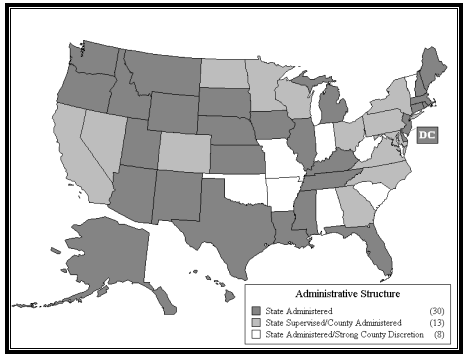
State-Administered = Alaska, Arizona, Connecticut, Delaware, District of Columbia, Florida, Hawaii, Idaho, Illinois, Iowa, Kansas, Kentucky, Louisiana, Maine, Massachusetts, Michigan, Mississippi, Montana, Nebraska, New Hampshire, New Jersey, New Mexico, Oregon, Rhode Island, South Dakota, Tennessee, Texas, Utah, Washington, and Wyoming.
State-Supervised, County- Administered = California, Colorado, Georgia, Maryland, Minnesota, Nevada, New York, North Carolina, North Dakota, Ohio, Pennsylvania,Virginia, and Wisconsin.
State-Administered with Strong County Structure and Discretion = Alabama, Arkansas, Indiana, Missouri, Oklahoma, South Carolina, Vermont, and West Virginia.
Functional Responsibilities in Policy
Although the National Study indicated that written policies varied as to what was explicitly discussed, the locus of responsibility for the functions of screening, investigation, and assessment was generally addressed. (See table 2-A.)
- Fifty-one States (100%) specified the locus of responsibility for screening referrals;
- Fifty States (98.0%) specified the locus of responsibility for conducting investigations;
- Forty-nine States (96.1%) specified the locus of responsibility for receiving referrals;
- Forty-nine States (96.1%) specified the locus of responsibility for conducting safety and risk assessments;
- Forty-four States (86.3%) delineated the responsibility for maintaining the hotline; and
- Thirty-eight States (74.5%) specified a responsibility for conducting additional family functioning assessments.
| State | Maintain Hotline | Receive Referrals & Reports | Screen & Determine Need for Response | Conduct Investigation | Conduct Safety and Risk Assessment | Conduct Additional Family Functioning Assessment | Conduct Other CPS Response (Alternative Track) | Assign Cases to Response Track | Other | |||||||||
|---|---|---|---|---|---|---|---|---|---|---|---|---|---|---|---|---|---|---|
| Resp | P | S | P | S | P | S | P | S | P | S | P | S | P | S | P | S | P | S |
| AK | C | C | C | C | C | O | C | |||||||||||
| AL | C | ST, | C | C | C | |||||||||||||
| AR | Oa | Oa | C | Oa | C | Oa | C | C | Oa | C | Cb | |||||||
| AZ | ST | ST | ST | C | C | C | O | C | Cc | |||||||||
| CA | C | C | C | C | ||||||||||||||
| CO | C | C | C | C | C | C | ||||||||||||
| CT | ST | ST | R | ST | R | R | ST, Od | R | Od | R | Od | |||||||
| DC | ST | ST | ST | ST | ST | ST | ||||||||||||
| DE | ST, C | ST, C | ST, C | ST, C | ST, C | ST, C | C | |||||||||||
| FL | ST | ST | ST | C | C | STe | ||||||||||||
| GA | C | C | C | C | C | C | C | C | ||||||||||
| HI | Of | C | C | C | C | C | C | |||||||||||
| IA | ST | ST, C | C | C | C | C | C | C | ||||||||||
| ID | R | R | R | C, Og | C, Oh | C, O | C | |||||||||||
| IL | ST | ST | ST | C,O | C,O | |||||||||||||
| IN | STi, Ci | C | C | C | C | C | ||||||||||||
| KS | ST | ST, C | ST | C | C | C | C | C | ||||||||||
| KY | O | C | C | ST, C | C | C | C | C | C | C | ||||||||
| LA | C | C | C | C | C | Cj | ||||||||||||
| MA | ST | STl, C | ST, C | ST, C | ST, C | C | m | |||||||||||
| MD | C | C | C | C | C | C | ||||||||||||
| ME | ST | ST | R | ST, R | R | R | R | O | R | k | ||||||||
| MI | C | C | C | C | C | C | ||||||||||||
| MN | C | C | C | C | C | C | C | |||||||||||
| MO | ST | ST, C | ST, C | C | C | C | C | C | ||||||||||
| MS | ST | ST, C | ST, C | C | C | C | ||||||||||||
| MT | ST | ST | ST | C | C | C | C | |||||||||||
| NC | C | C | C | C | q | C | ||||||||||||
| ND | C | ST, C | Cr | C | C | C | ||||||||||||
| NE | On | C | C | C | C | C | C | |||||||||||
| NH | ST | ST | ST | R | R | STo | ||||||||||||
| NJ | ST, C | C | ST | C | ST | C | C | C | ||||||||||
| NM | Op | Op | Op | C | C | C | Op | |||||||||||
| NV | C | C | C | C | C | C | C | C | ||||||||||
| NY | ST | C | C | C | C | C | ||||||||||||
| OH | C | Os | C | ST,Ot | C | C | u | C | C | |||||||||
| OK | C | ST, C | C | C | C | C | C | C | ||||||||||
| OR | C | C | Ov | C | Ow | C | ||||||||||||
| PA | ST | ST, C | C | C | Rx | C | C | C | ST, C | |||||||||
| RI | ST | ST | ST | ST | ST | |||||||||||||
| SC | ST | C | C | C | C | C | C | C | ||||||||||
| SD | C | C | C | C | C | C | C | |||||||||||
| TN | R, C | R,C | R, C | C | C | C | ||||||||||||
| TX | ST | ST | C | ST, C | C | C | C | |||||||||||
| UT | ||||||||||||||||||
| VA | ST, C | ST, C | C | C | C | C | C | C | ||||||||||
| VT | R | R | R | Oy | R | R | R | |||||||||||
| WA | C | C | C | C | C | C | C | C | ||||||||||
| WI | C | C | C | C | C | C | C, Oaa | |||||||||||
| WV | STz | ST, C | C | C | C | C | C | C | ||||||||||
| WY | C, Obb | C | Obb | C, Obb | C | |||||||||||||
| P = Primary Responsibility; S = Shared Responsibility; ST = State Central Office; R = Regional District Office; C = County or Local Office; O = Other | ||||||||||||||||||
|
a Arkansas' "other" = contracted out to State police |
||||||||||||||||||
Primary Responsibility
For each of several functions, State policies were reviewed in terms of delineations of primary and shared responsibility. Responsibility usually was interpreted to mean to have the mandate to actually carry out the task or function. Therefore, regardless of official administrative structure, the locus of responsibility was most often described as being at the county level. In some cases, sharing of responsibility was clearly enunciated by either indicating that the task was shared by the State and the counties, or by giving primary responsibility to one entity and shared responsibility to another.
- Twenty-six States (51.0%) assigned primary responsibility for all functions to the counties;
- Another 10 States (19.6%) assigned primary responsibility for all functions to the counties with the exception of the hotline, which was assigned to a State-level agency;
- Seven States (13.7%) assigned primary responsibility for all functions to the State or to regional offices in the State; and
- Six States (11.8%) specified mixed patterns of primary responsibility by type of function.
These patterns were not systematically related to administrative structure. The clearest relationship between administrative structure and responsibilities was applicable for those States classified as State-supervised, county-administered. Of the 13 State-supervised, county-administered systems, 8 described the county as having primary responsibility for all functions, and 5 described the county as sharing responsibility with the State for maintaining the hotline, receiving referrals and reports, and screening.
Shared Responsibility
Although the primary responsibility for CPS functions generally rested with one agency--either the State or the county--State policy indicated a shared responsibility between the State and the counties for specific functions.
- Twenty-one States (41.2%) discussed sharing responsibility for receiving referrals;
- Fifteen States (29.4%) discussed joint responsibility for screening referrals;
- Ten States (19.6%) discussed sharing investigation responsibilities;
- Seven States (13.7%) discussed sharing the responsibility for maintaining the hotline--often with one or two large counties; and
- Five States (9.8%) shared conducting safety and risk assessments, and two States (3.9%) had policy on shared conducting of family functioning assessments.
In all cases, the responsibility for conducting an alternative response was with the county or local level agencies. (Responsibility for assigning cases to the alternative response option was shared between the State and county or local agency in one State.)
The policies of a few States discussed sharing the responsibility for conducting CPS functions with non-child welfare public agencies or with private or community agency partners. The function that was shared most frequently was conducting investigations. This function was shared with law enforcement in four States, and with a multidisciplinary team in two States.
One State indicated that law enforcement had primary responsibility for conducting investigations. In that State, the State police were assigned primary responsibility for the hotline, receiving reports and referrals, and screening. Although there has been much attention paid to the idea of law enforcement taking on the role of investigative authority in order to allow CPS staff to carry out their family support and helping roles more effectively, this type of structure was found infrequently in the State policy manuals and in subsequent interviews with State administrators.
Summary
The policy review showed that CPS functions are implemented in general at the local or county level. Many States that are traditionally considered to be State-administered systems delegate responsibility for abuse and neglect to the local counties. Regardless of administrative structure, most State manuals explicitly discussed responsibility for certain functions such as maintaining the hotline, receiving referrals, screening referrals, conducting an investigation, and conducting safety and risk assessments. (See table 2-1.)
| Policy in Less Than 33% of States Addressed: | Policy in 33-66% of States addressed: | Policy in More Than 66% of States Addressed: |
|---|---|---|
|
|
|
The CPS agency-- whether State or local--is portrayed in policy as the primary agency responsible for abused and neglected children. Fewer than one-third of the State policy manuals discussed sharing the responsibility for screening, investigation, or conducting assessments with other public or private agencies.
Chapter 3. Screening and Intake
Introduction
Receiving community referrals, which includes those from State-mandated professional reporters and the population at large, is the gateway to CPS. In this chapter, the function of accepting referrals (also termed "reports") is described in terms of specific features. The chapter examines who is considered a mandated reporter, the criteria for accepting or screening out a referral, the key decisions discussed in policy and who is assigned the responsibility for making these decisions, and what notifications to other agencies are required by policy.
Mandated Reporting
The policy materials for almost all States addressed the function of reporting and who is mandated or required to report alleged maltreatment.1 In several cases, State statutes specified the classes of mandated reporters. (See table 3-A.)
The review of policy indicated a range of configurations from widely mandated and accepted reporting (any person with reason to suspect child abuse or neglect, including anonymous sources) to more narrowly mandated reporting (specified categories limited to certain professional reporters).
- Thirty States (58.8%) included a blanket statement regarding mandated reporters. Fourteen States (27.5%) had a statement that everyone is a mandated reporter; 14 States (27.5%) had a statement that anyone who suspects child abuse or neglect may report; and 2 States (3.9%) had a statement that anyone with a responsibility for the care of a child is mandated to report.
- Thirty-two States (62.7%) accepted reports from anonymous reporters.
| Category Mandated | Number and Percentage of States |
|---|---|
| Social Services personnel | 49 (96.1%) |
| Medical personnel | 49 (96.1%) |
| Mental Health personnel | 47 (92.2%) |
| Education personnel | 47 (92.2%) |
| Child daycare providers | 47 (92.2%) |
| Legal, law enforcement or criminal justice personnel | 46 (91.2%) |
| Substitute care providers including foster parents | 42 (82.4%) |
Professionals were mandated to report by almost all the States. In approximately one-quarter of the States, non-professional sources, including victims, parents, relatives, and community members were required to report.
Several States had specific language that designated "other" mandated reporters. These included Christian Science practitioners, funeral directors, commercial film and photographic print professionals, substance abuse treatment agencies, legislators, clergy members, guardians ad litem, other health professionals (e.g., dentists, chiropractors), child visitation monitors, domestic violence shelter employees, mediators, veterinarians, firefighters, employers of contracted entities providing direct services, spiritual practitioners, clergy serving in nonpastoral capacities, alcohol and other drug counselors, physical therapists, dieticians, and speech language therapists.
Intake Criteria [2]
The policy materials for almost all States included specific criteria for accepting or excluding referrals alleging child abuse and neglect. Policy documentation of screening criteria varied from State-to-State in terms of level of detail and scope. (See tables 3-B and 3-C.)
Forty-three States (84.3%) required referrals to meet the statutory criteria for abuse and neglect in that State. The policy materials of 10 of these States included only mention of the statute. The remaining 33 State policies included a blanket statement regarding what is considered abuse and neglect and other specific criteria such as "child under 18" or that the alleged perpetrator must be a "parent, guardian, or caretaker."
Other miscellaneous criteria for screening included maltreatment of married children under the age of 18, dependent children, children under the age of 13 with diagnosed sexually transmitted diseases, children with inadequate clothing or hygiene, multiple reports on the same family, instances where a family with a child that has been removed from the home has a new baby, mental illness that prevents parents from providing adequate care for their children, sexually aggressive youth, juvenile sex offenders returning to a home with other children, instances of child death due to child abuse or neglect where other children are in the home, high reporter validity by a mandated reporter, domestic violence in the home, women using drugs during pregnancy, instances where the parent or guardian has reason to know that the child would be maltreated, maltreatment occurring as a result of parent or guardian negligence, and reports regarding all children from birth through age 4 years.
Forty-one States (80.4%) additionally specified specific exclusionary criteria. Some exclusions mirrored inclusion criteria. For example 23 States (45.1%) included blanket exclusions based on the definition of child abuse and neglect; 14 States (27.5%) specified that children over 18 years of age would be excluded. However, the addition of some exclusionary criteria further refined and narrowed the definition of what could be screened-in for an investigation or assessment.
- Seventeen States (33.3%) excluded third party perpetrators who were not responsible for the care of the child;
- Sixteen States (31.4%) excluded referrals that lacked sufficient information for locating the child;
- Twelve States (23.5%) excluded educational neglect;
- Eleven States (21.6%) excluded referrals related to reasonable discipline; and
- Ten States (19.6%) excluded referrals related to custody issues.
Although differences in the size of the net cast by States in defining criteria for inclusivity or exclusivity were identified, they did not relate to State administrative structures or to the presence or absence of an alternative response track.
Intake Procedures
Features of the intake procedures included the availability to receive reports, methods for documenting reports, and timeframes for accepting and forwarding a report. These features were examined in relation to published recommendations from the Council on Accreditation (COA) in order to compare findings to one set of standards in the field.
The COA recommends that intake be available 24-hours a day. The majority of States addressed this recommendation in policy and met this guideline. (See table 3-D.) In 44 States (86.3%), policy specified procedures to ensure that referrals could be accepted 24-hours a day.
Forty-seven States (92.2%) indicated that specific forms were required for documenting referrals. Many policy manuals simply listed the name of the required form. The following information was most commonly collected:
- Identifying information on the alleged victim, including name, age, address, present whereabouts;
- Identifying information on the alleged victim's caretakers;
- Identifying information on the alleged perpetrator;
- Nature of harm to the child; and
- Identifying information on the reporter or other collateral contacts.
The COA standards further recommend that action be taken within 24 hours of the initial report for every report of neglect, abuse, or exploitation in order to determine if the child is in danger and should be removed; how the child is being affected by the situation and if the care and protection of the child meets accepted standards.
Forty-eight States (94.1%) provided information regarding timeframes in written policy. (See table 3-E.) States varied in their explanation of timeframes for forwarding a report for investigation. Timeframes were defined in some cases as "time to forward the report to an investigation unit" or as "time from receipt of the report to the beginning of the investigation." A number of States did not define timeframes specifically within hours or days, but used terms that were more open to interpretation, such as "immediate." It appeared that, at least for high-priority or severe cases, most State policies stipulated a 24-hour standard.
- Eighteen States (35.3%) specified one timeframe for forwarding all accepted referrals. These varied from within 1 hour to 14 days with most falling within 24 to 72 hours. Five States specified that a response must be immediate.
- Twelve States (23.5%) described two levels of response--high and low priority. Timeframes for emergency or high-priority referrals varied from immediate to 1 hour to within 24 hours. Timeframes for low-priority responses varied from 3 hours to within 1 week.
- Eleven States (21.6%) specified three levels of priority response. These States specified response times for the most serious and high-priority referrals from 10 minutes to within 24 hours. Several others in this category also used the term "immediate" to describe their response time requirement. Timeframes for second-level priorities ranged from "within a worker's shift" to 72 hours. Timeframes for the least serious levels ranged from within 24 hours to within 14 days.
- Seven States (13.7%) specified four levels of response from immediate to 72 hours or a general system of graduated response depending upon severity.
Accepting the Referral or Enlisting Another Agency
When a referral is received, a number of options may be defined in policy for appropriate action based on screening criteria. The three most common pathways specified as outcomes of the screening decision were for the case to be accepted for investigation, referred to another agency, or screened out. (See table 3-F.)
Forty-five States (88.2%) indicated that reports could be referred to other agencies. Examples of cases to be referred cases to outside agencies included:
- Requests for information;
- Report of maltreatment where the alleged perpetrator is not in a caretaking role;
- Other service needs;
- Case involves a criminal investigation;
- Case does not pertain to child abuse or neglect; and
- Agency receiving report does not have jurisdiction.
Thirty-two States (62.7%) indicated that a possible outcome of screening was to refer the case to another part of the child welfare agency. Criteria for referring cases to other child welfare units included:
- Requests for information;
- Service needs, but no safety issues; and
- Reports that do not pertain to child abuse or neglect.
Twenty-two States (43.1%) had provisions for sharing case information with other agencies (most commonly law enforcement). Thirteen States (25.5%) identified the assignment of a case to an alternative response as an option at the point of screening. Nine States (17.6%) identified screening outcomes that fell into the "other" category, such as, insufficient information to identify the child or family, maltreatment types that do not fall within the child protection mandate, and identification of an Indian child.
Decisionmaking
State policies indicated that a decision protocol for forwarding cases for investigation was applied to the majority of cases. In 29 States (56.9%) there was one approach to decision making across cases. Of these States, 13 primarily relied upon the worker's decision with supervisor approval; 2 relied on the worker alone making the decision; 7 relied upon the supervisor making the decision; 5 relied upon a joint worker and supervisor decision; and 2 had other protocols.
In the majority of the remaining States, there were different protocols related to different case circumstances. For example most investigations might be decided by only the worker, unless the case was considered to be marginal, or the supervisor might review specific types of cases. Examples included screened-out cases, referrals for special service needs, immediate response referrals, cases where eligibility is in question, or cases where a mandated reporter makes reports.
In some cases, State policies described a procedure that fell into the "other" category. These "other" cases generally involved joint decisionmaking processes by two different child protection entities. Examples of different configurations of decisionmaking processes included:
- A hotline operator makes the decision and a supervisor assigns a priority;
- Quality assurance (QA) reviews are done for two samples of cases--one by a supervisor and one by a QA unit; workers' decisions may be overridden;
- Supervisors review cases involving very young children or screened-out reports;
- Joint decisionmaking between the State and the county, with the State having the final responsibility;
- Decision to forward a case is made by a multidisciplinary team;
- Cases in which a response priority is downgraded requires administrator approval;
- Decision to forward is made by a child protective services counselor with supervisor approval; and
- When a worker and supervisor disagree on whether or not to substantiate, a final decision is made by the district director or assistant district director.
Notifications
Forty-two States (82.4%) had a written policy on whom or what entities should be notified of screening decisions. (See table 3-H.) The most frequently notified group was law enforcement.
- Twenty-six States (51.0%) indicated that law enforcement or relevant court personnel be notified. Of those, seven States (13.7%) restricted notification to serious cases of physical or sexual abuse or when removal might be necessary, and one (2%) State defined cases reported by local protocols;
- Twenty States (37.2%) had notification requirements that fell into the "other" category. These were highly varied and specific to certain circumstances related to type of abuse and perpetrator;
- Fourteen States (27.5%) indicated that reporters be notified, when cases are screened in;
- Seven States (13.7%) required parents to be notified; and
- Six States (11.8%) required alleged perpetrators to be notified.
The above categories were not mutually exclusive.
Summary
The review of current policies on screening revealed that more than two-thirds of the States addressed many of the key elements that support the screening and intake procedures in a comprehensive and systematic manner including the following:
- Mandating persons to report allegations of maltreatment;
- Criteria for accepting referrals;
- Required documentation of key information that must be collected;
- Provisions for receiving calls 24-hours a day;
- Specification of criteria for referring a case to another agency; and
- Cross agency notifications of referrals.
States varied, however, in the specific policy related to many of these features, and even more strikingly in many features of the screening and intake function. For example, there was less agreement on the following:
- Limited types of allegations;
- Decisionmaking jointly by worker and supervisor;
- Decisionmaking by worker with supervisor approval; and
- Who should be notified that a referral has been screened in.
| Policy in Less Than 33% of States Addressed: | Policy in 33-66% of States Addressed: | Policy in More Than 66% of States Addressed: |
|---|---|---|
|
|
|
Regardless of the structure of the administration of CPS, there was wide variety in the features of policy related to screening and intake. (See table 3-2 for a summary of screening and intake policies.)
| State | SSP | MED | MHP | EDU | LEG | CCP | SUB | VIC | PAR | REL | FRI | PER | ANO | OTH |
|---|---|---|---|---|---|---|---|---|---|---|---|---|---|---|
| AK | M | M | M | M | M | M | M | A | A | A | A | A | A | |
| AL | M | M | M | M | M | M | M | A | A | A | A | A | A | A |
| AR | M | M | M | M | M | M | M | A | ||||||
| AZc | M | M | M | M | M | M | M | M | M | M | A | A | ||
| CA | M | M | M | M | M | |||||||||
| CO | M | M | M | M | M | M | M | A | A | A | A | A | A | M |
| CTb | M | M | M | M | M | M | M | A | A | A | A | A | A | A |
| DCb | M | M | M | M | M | M | A | A | A | A | A | A | A | |
| DEa | M | M | M | M | A | M | ||||||||
| FL | M | M | M | M | M | M | M | M | ||||||
| GA | M | M | M | M | M | M | A | A | ||||||
| HIb | M | M | M | M | M | M | M | A | A | A | A | A | A | |
| IAb | M | M | M | M | M | M | M | A | A | A | A | A | A | |
| IDa | M | M | M | M | M | M | M | M | M | M | M | A | M | |
| ILb | M | M | M | M | M | M | M | A | A | A | A | A | A | M |
| INa | M | M | M | M | M | M | M | M | M | M | A | M | ||
| KSb | M | M | M | M | M | M | M | A | A | A | A | A | A | A |
| KY | M | M | M | M | M | M | M | M | M | M | M | M | M | |
| LAb | M | M | M | M | M | M | M | A | A | A | A | A | A | M |
| MA | M | M | M | M | M | M | M | A | ||||||
| MD | M | M | M | M | M | A | A | A | A | A | A | A | M | |
| ME | M | M | M | M | M | M | M | A | M | |||||
| MI | M | M | M | M | M | M | M | A | A | A | A | A | A | A |
| MN | M | M | M | M | M | M | M | A | A | A | A | A | A | M |
| MO | ||||||||||||||
| MS | M | M | M | M | M | M | A | M | ||||||
| MT | M | M | M | M | M | M | M | A | A | A | A | A | A | M |
| NCa | M | M | M | M | M | M | M | M | M | M | M | M | M | M |
| ND | M | M | M | M | M | M | A | A | A | A | A | A | A | M |
| NEa | M | M | M | M | M | M | M | M | M | M | M | M | M | M |
| NHa | M | M | M | M | M | M | M | M | M | M | M | M | M | |
| NJa | M | M | M | M | M | M | M | M | M | M | M | M | M | M |
| NMa | M | M | M | M | M | M | M | M | M | M | M | A | M | |
| NV | M | M | M | M | M | M | M | A | A | A | A | A | M | |
| NYb | M | M | M | M | M | M | M | A | A | A | A | A | A | |
| OHb | M | M | M | M | M | M | M | A | A | A | A | A | M | |
| OKa | M | M | M | M | M | M | M | M | M | M | M | M | A | M |
| OR | M | M | M | M | M | M | M | M | A | A | A | A | A | A |
| PAb | M | M | M | M | M | M | M | A | A | A | M | A | A | A |
| RIa | M | M | M | M | M | M | M | M | M | M | M | M | M | |
| SCb | M | M | M | M | M | M | M | A | A | A | A | A | M | |
| SD | M | M | M | M | M | M | M | A | A | A | A | A | A | M |
| TNa | M | M | M | M | M | M | M | M | M | M | M | M | M | M |
| TXa | M | M | M | M | M | M | M | M | M | M | M | M | A | M |
| UTa | M | M | M | M | M | M | M | M | M | M | M | M | M | |
| VAb | M | M | M | M | M | M | M | A | A | A | A | A | A | M |
| VT | ||||||||||||||
| WAbc | M | M | M | M | M | M | M | A | M | A | A | A | M | |
| WIb | M | M | M | M | M | M | M | A | A | A | A | A | A | M |
| WVb | M | M | M | M | M | M | M | A | ||||||
| WYa | M | M | M | M | M | M | M | M | ||||||
| Key: SSP = social service personnel; MED = medical personnel; MHP = mental health personnel; EDU = education personnel; LEG = legal, law enforcement, or criminal justice personnel; CCP = child daycare providers; SUB = substitute care providers; VIC = victim; PAR = parent; REL = other relative; FRI = friend or neighbor; PER = alleged perpetrator; ANO = anonymous; OTH = other; M = mandated; A = accepted. a Everyone is a mandated reporter. b Anyone who suspects CAN may report. c Anyone with responsibility for the care of a child is mandated. |
||||||||||||||
| State | Meets Statutory Definition of CAN | Specifies Physical Abuse | Specifies Sexual Abuse | Specifies Emotional Abuse | Specifies Neglect | Medical Neglect | Child Under 18 | Ability to Locate Child | Perpetrated by Parent , Guardian, Family | Perpetrated by Caregiver, Institution | CAN by Third Party with Relationship with Family | Other |
|---|---|---|---|---|---|---|---|---|---|---|---|---|
| AK | X | X | X | X | ||||||||
| AL | X | X | X | X | X | Xa | X | |||||
| AR | X | X | X | X | X | X | X | |||||
| AZ | X | X | X | Xb | X | X | X | |||||
| CA | X | X | X | X | X | X | X | X | ||||
| CO | X | X | X | X | X | |||||||
| CT | X | X | X | X | ||||||||
| DC | X | |||||||||||
| DE | X | X | X | X | ||||||||
| FL | X | X | X | X | X | |||||||
| GA | X | X | X | X | X | |||||||
| HI | X | X | X | X | ||||||||
| IA | X | X | X | |||||||||
| ID | X | |||||||||||
| IL | X | X | X | X | X | X | X | X | X | X | ||
| IN | X | X | X | X | ||||||||
| KS | X | |||||||||||
| KY | X | X | X | X | X | X | ||||||
| LA | X | X | X | X | X | X | X | |||||
| MA | X | X | ||||||||||
| MD | X | |||||||||||
| ME | Xc | X | X | X | X | X | ||||||
| MI | X | X | X | |||||||||
| MN | X | Xd | X | |||||||||
| MO | X | X | X | |||||||||
| MS | X | X | ||||||||||
| MT | Xe | |||||||||||
| NC | X | X | X | X | ||||||||
| ND | X | X | ||||||||||
| NE | X | |||||||||||
| NH | X | X | X | X | X | |||||||
| NJ | X | X | ||||||||||
| NM | X | X | X | X | X | X | X | X | ||||
| NV | X | X | X | X | ||||||||
| NY | X | X | X | |||||||||
| OH | X | X | ||||||||||
| OK | X | X | X | X | X | X | ||||||
| OR | X | X | X | X | X | X | X | |||||
| PA | X | X | X | X | X | X | X | |||||
| RI | X | Xf | X | X | X | |||||||
| SC | X | X | X | |||||||||
| SD | X | |||||||||||
| TN | X | |||||||||||
| TX | X | |||||||||||
| UT | X | |||||||||||
| VA | X | X | X | X | ||||||||
| VT | X | |||||||||||
| WA | X | X | ||||||||||
| WI | X | X | ||||||||||
| WV | X | X | ||||||||||
| WY | X | X | X | X | X | |||||||
| Notes: a Alabama: Also, married child under 18 b Arizona: Definition of neglect includes medical neglect. c Maine: Referrals containing allegations of CAN of infants and pre-kindergarten children may not be screened out due to insufficient staff. d Minnesota: There must be sufficient information to identify the child or at least one member of the family. e Montana: All reports of suspected child abuse and neglect. f Rhode Island: Child must be under 18 and living at home, or under 21 and living in DCF placement or DCF custody. |
||||||||||||
| State | Reporter Reliability | Does Not Meet Definition for CAN | Child Over 18 | Cultural and Religious Differences, Spiritual Healing | Medical Neglect | Educational Neglect | Poverty, Dirty House, Hygiene | Reasonable Discipline | Harm to Unborn Child | CAN in Other State or County | Third Party Perpetrator | Duplicate Report | Lack of Info, Cannot Locate Child | Substance Abuse | Custody Issues | Other |
|---|---|---|---|---|---|---|---|---|---|---|---|---|---|---|---|---|
| AK | X | X | X | X | ||||||||||||
| AL | X | X | X | X | X | |||||||||||
| AZ | X | X | X | X | X | X | ||||||||||
| CO | X | X | X | X | X | |||||||||||
| CT | X | X | X | |||||||||||||
| DC | X | X | X | X | X | |||||||||||
| DE | X | X | X | X | ||||||||||||
| FL | X | X | X | Xa | X | X | X | |||||||||
| GA | X | X | X | X | X | X | X | Xb | ||||||||
| HI | X | X | X | |||||||||||||
| IA | X | X | X | |||||||||||||
| ID | X | |||||||||||||||
| IL | X | X | X | X | X | |||||||||||
| KS | X | X | X | |||||||||||||
| KY | X | X | ||||||||||||||
| LA | X | Xc | X | X | X | |||||||||||
| MA | X | X | X | X | X | X | ||||||||||
| MD | X | X | X | X | X | X | X | X | X | X | ||||||
| ME | Xd | |||||||||||||||
| MI | X | X | X | X | X | X | ||||||||||
| MN | Xe | |||||||||||||||
| MO | Xf | X | X | |||||||||||||
| MS | X | Xg | X | X | X | X | X | |||||||||
| MT | X | |||||||||||||||
| NC | X | X | X | X | ||||||||||||
| ND | X | X | X | X | ||||||||||||
| NE | X | |||||||||||||||
| NM | X | X | X | X | ||||||||||||
| OK | X | X | Xh | X | X | X | X | X | ||||||||
| OR | Xi | X | X | X | X | X | X | |||||||||
| PA | X | X | ||||||||||||||
| SC | X | |||||||||||||||
| SD | X | X | X | X | ||||||||||||
| TN | X | X | ||||||||||||||
| TX | X | X | X | |||||||||||||
| UT | X | X | X | |||||||||||||
| VA | X | |||||||||||||||
| VT | X | X | ||||||||||||||
| WA | X | X | X | X | X | |||||||||||
| WV | X | X | X | X | X | X | ||||||||||
| WY | X | X | Xj | X | ||||||||||||
| a Florida: Excludes reports alleging CAN on Military bases and Indian reservations. b Georgia: Excludes juvenile delinquency unless also separate allegation of maltreatment, and incidents 6 months old or older unless otherwise directed by policy (i.e. severe maltreatment or ongoing risk). c Louisiana: Exclusions include parent failure to provide glasses, braces, immunizations, and corrective shoes. d Maine: No specific allegation of abuse and neglect. e Minnesota: Law enforcement is notified whenever reports of maltreatment do not involve an alleged offender within the family. f Missouri : Reports for “Newborn Crisis Assessment” for a drug involved infant are excluded. g Mississippi: Reports which suggest a need to be addressed by another agency and pose no immediate danger are excluded. h Oklahoma: Exclusions for commencing investigation include inattention to minor health issues such as insect bites and minor colds. i Oregon: Exclusions include lack of immunizations. j Wyoming: Reports accepted if there is evidence that caretakers’ behavior is preventing school attendance. |
||||||||||||||||
| State | 24-Hour Availability | Required Form | Description of Required Form |
|---|---|---|---|
| AK | Yes | Yes | CPS Intake Data and Report of Harm – pertinent information regarding a referral |
| AL | Yes | ||
| AR | Yes | Yes | Referral and narrative screens in “CHRIS” system |
| AZ | Yes | Yes | Information entered into CHILD Case Management System |
| CA | Yes | Identifying information on child and reporter, information on all adults, alleged perpetrator, and all children in home, allegations, child characteristics, family factors, information regarding collateral contacts | |
| CO | Yes | Yes | Intake and Assessment Form |
| CT | Yes | Yes | Department LINK system and CPS Reports Protocol DCF-2073a and DCF-2073b |
| DC | Yes | Yes | FACES case management system |
| DE | Yes | Yes | FACTS Family Abuse Report |
| FL | Yes | Not specified | |
| GA | Yes | Yes | Child Abuse and Neglect Intake Worksheet |
| HI | Yes | Yes | Standard statewide computer system |
| IA | Yes | Yes | Child Protective Services Intake Form |
| ID | Yes | Yes | Information and Referral Screen of FOCUS |
| IL | Yes | Yes | All identifying information. Narrative description of Abuse/Neglect |
| IN | Yes | Yes | 48-hour written report (Preliminary report of investigation) |
| KS | Yes | Yes | CFS 1000 Face Sheet, CFS 1001 Report and Request for Services |
| KY | Yes | Yes | DSS-115 |
| LA | Yes | Yes | Extent and cause of injuries, how child came to attention of reporter, name of possible perpetrator, contact information for reporter |
| MA | Yes | Yes | Abuse and neglect narrative |
| MD | Yes | Yes | Risk Assessment DHR/SSA 396 Intake Worksheet |
| ME | Yes | Yes | Automated in SACWIS system |
| MI | Yes | Yes | CPS Intake Record or corresponding computer screen |
| MN | Yes | SSIS documentation | |
| MO | Yes | Yes | Not specified |
| MS | Yes | Yes | Fill-in-the-blank, small narrative section; information on victim, perpetrator, type of maltreatment, caretakers, witnesses, other household members |
| MT | Yes | Yes | CAPs report and request screen |
| NC | Yes | Yes | Name, address, age of child, name and address of parents and alleged perpetrator, names and ages of other children in home, nature and extent of injury to child |
| ND | Yes | SFN960 | |
| NE | Yes | Yes | Standard screen which is part of SACWIS, called INFOCUS |
| NH | Yes | Intake and referral log | |
| NJ | Yes | Yes | Referral Response Form 9-7 |
| NM | Yes | Yes | Not specified |
| NV | Yes | Yes | Child Abuse and Neglect Reporting Form |
| NY | Yes | Yes | SCR system, or if local Form DSS-2221 |
| OH | Yes | ||
| OK | Yes | Yes | Referral Information Report |
| OR | Yes | FACIS 307 | |
| PA | Yes | Yes | Not specified |
| RI | Yes | Yes | CPS Report which is a computerized report. All calls to the hotline are recorded. |
| SC | Yes | Yes | Child Welfare Services and Intake and Central Registry Form |
| SD | Yes | Yes | Information on family demographics, nature of referral, details of the allegations |
| TN | Yes | Purpose of intake, contact information for family, child and family information, family environment, maltreatment | |
| TX | Yes | Yes | CAPS includes allegations, background, and demographic information |
| UT | Yes | Referral Form and Intake Checklist | |
| VA | Yes | Yes | Automated in Online Automated Services Information System OASIS, which is the State SACWIS System. |
| VT | Yes | Yes | Intake Form SRS-241 |
| WA | Yes | Yes | CAMIS person search intake screen – for all persons, victims, perpetrators, parents, and family members listed in referral |
| WI | Yes | ||
| WV | Yes | Yes | SACWIS system – CPS-1 |
| WY | Yes | Yes | WYCAPS (SS-1) |
| State | Required Timeframes |
|---|---|
| AK | Priority 1 = 24 hours; Priority 2 = 72 hours; Priority 3 = 7 calendar days |
| AL | High risk = immediate response; reports of serious physical abuse or sexual abuse = within 3 working days; all other reports = within 5 working days |
| AR | Priority 1 = within 2 working hours; Priority 2 = within 3 working hours |
| AZ | Immediate = all reportsa |
| CO | High risk = immediate to 24 hours; Moderate to low risk: as soon as possible to 72 hours; Low risk: as soon as possible to 4 working days |
| CT | Failure to respond immediately could result in death or serious injury = 2 hours; report of abuse from a school = same day; nonlife threatening situation, severe enough to warrant same or next day action = 24 hours; nonlife threatening situation, indicates need for timely response = 72 hours |
| DC | Emergency situations are immediate. Nonemergency within 24 hours |
| DE | Urgent call = 1 hour; routine call = 3 hours |
| FL | All reports requiring an immediate on-site assessment are forwarded immediately; other reports within 24 hours |
| GA | Broad guidelines given in policy. Most serious within 24 hours of report. Five days specified for less serious. Each county makes own specific policies. |
| HI | Immediate response = within 24 hours if meets criteria; all others = within 1 week |
| IA | 1 to 12 hours, depending on risk level |
| ID | Child in immediate danger = immediately; child not in immediate danger = 48 hours; child without parental care, not in immediate danger = 5 days |
| IL | Within 1 hour |
| IN | Risk of life = within 1 hour; all other abuse = within 24 hours; no abuse allegations = within 5 days |
| KS | No later than 72 hours |
| KY | Immediate to 48 hours, depending on severity |
| LA | Immediate |
| MA | No later than 24 hours in a nonemergency situation |
| MD | When sufficient information is obtained, investigation should occur. |
| ME | All appropriate reports are forwarded immediately. |
| MI | Within 24 hours; emergency or high-risk referrals = immediate response |
| MN | Imminent danger = immediate; infant medical neglect = immediate; no imminent danger = within 72 hours |
| MO | Immediate |
| MS | Reports of intentional burning, intentional torture, serious injury, sexual abuse, or abuse that would be a felony crime under State or federal law = immediate; physical injury that is not serious or specified = within 24 hours |
| MT | Immediate response if report indicates child is in immediate danger; timely response to those of less urgent nature |
| NC | Reports of abuse = within 24 hours; reports of neglect or dependency = within 72 hours. Certain high-risk situations require immediate response. |
| ND | 24 to 72 hours |
| NH | Within 24 hours |
| NJ | One hour is immediate response is required; end of work day if response is required within 72 hours; 3 work days if a 10 day response is required |
| NM | Emergency referrals = 1 to 3 hours; Priority 1 = within 24 hours; Priority 2 = within 5 calendar days |
| NV | Investigation must begin no later than 3 days after receipt of referral. |
| NY | Immediate |
| OH | For emergency reports = immediate; all others = within 24 hours |
| OK | Immediate |
| OR | 1 day |
| PA | Immediate = if emergency protective custody might be necessary, or within 24 hours |
| RI | Emergency = within 10 minutes of report; immediate = within worker’s shift; routine = within 24 hours |
| SC | 24 hours |
| SD | 14 days |
| TN | Priority 1 = midnight the same day; Priority 2 = midnight the next day; Priority 3 = within 5 working days |
| UT | 1 working day |
| VA | Child fatality, injury or threatened injury in which a felony or Class 1 misdemeanor is also suspected, sexual abuse, abduction of child, felony or Class 1 drug offense involving a child, and contributing to the delinquency of a minor = immediate |
| VT | 72 hours |
| WA | “Emergent response begins no later than 24 hours after referral is received”; nonemergent response begins within 10 days from referral. Referrals forwarded within 3 working days |
| WI | Within 24 hours |
| WV | Depending on severity, 0 to 2 hours, within 72 hours, or within 14 days |
| WY | Within 24 hours |
| a Arizona: Entry before end of shift, once entered report automatically sent to local supervisor. | |
| State | Screen Out | Refer to Other CW Agency | Refer to Other Agency | Accept for Investigation | Accept for Other CPS Response | Share Information | Other |
|---|---|---|---|---|---|---|---|
| AK | Yes | Yes | Yes | Yes | |||
| AL | Yes | Yes | Yes | Yes | Yes | ||
| AR | Yes | Yes | Yes | Yes | Yes | ||
| AZ | Yes | Yes | Yes | Yes | Yes | Yes | Yes |
| CA | Yes | Yes | Yes | ||||
| CO | Yes | Yes | Yes | ||||
| CT | Yes | Yes | Yes | Yes | |||
| DC | Yes | Yes | Yes | Yes | |||
| DE | Yes | Yes | Yes | Yes | |||
| FL | Yes | Yes | Yes | Yes | Yes | ||
| GA | Yes | Yes | Yes | Yes | |||
| HI | Yes | Yes | Yes | Yes | Yes | ||
| IA | Yes | Yes | Yes | Yes | Yes | ||
| ID | Yes | Yes | Yes | Yes | Yes | ||
| IL | Yes | Yes | Yes | Yes | |||
| IN | Yes | Yes | Yes | Yes | |||
| KS | Yes | Yes | Yes | Yes | |||
| KY | Yes | Yes | Yes | Yes | Yes | ||
| LA | Yes | Yes | Yes | Yes | Yes | ||
| MA | Yes | Yes | Yes | Yes | Yes | ||
| MD | Yes | Yes | Yes | ||||
| ME | Yes | Yes | Yes | ||||
| MI | Yes | Yes | Yes | ||||
| MN | Yes | Yes | Yes | Yes | Yes | Yes | |
| MO | Yes | Yes | Yes | Yes | Yes | ||
| MS | Yes | Yes | Yes | Yes | Yes | ||
| MT | Yes | Yes | Yes | Yes | |||
| NC | Yes | Yes | Yes | Yes | Yes | ||
| ND | Yes | Yes | Yes | ||||
| NE | Yes | Yes | Yes | Yes | |||
| NH | Yes | Yes | Yes | Yes | |||
| NJ | Yes | Yes | Yes | Yes | |||
| NM | Yes | Yes | Yes | Yes | |||
| NV | Yes | Yes | Yes | Yes | |||
| NY | Yes | Yes | Yes | ||||
| OH | Yes | Yes | |||||
| OK | Yes | Yes | Yes | Yes | |||
| OR | Yes | Yes | Yes | Yes | |||
| PA | Yes | Yes | Yes | Yes | Yes | Yes | |
| RI | Yes | Yes | Yes | Yes | Yes | ||
| SC | Yes | Yes | Yes | Yes | Yes | Yes | |
| SD | Yes | Yes | Yes | Yes | Yes | ||
| TN | Yes | Yes | Yes | Yes | Yes | ||
| TX | Yes | Yes | Yes | Yes | |||
| UT | Yes | Yes | Yes | ||||
| VA | Yes | Yes | Yes | Yes | |||
| VT | Yes | Yes | Yes | ||||
| WA | Yes | Yes | Yes | Yes | |||
| WI | Yes | Yes | Yes | Yes | |||
| WV | Yes | Yes | Yes | ||||
| WY | Yes | Yes | Yes | Yes | Yes | Yes |
| State | Worker Decides and Supervisor Approves | Worker Only | Supervisor Only | Joint Worker and Supervisor | Other | Not Specified |
|---|---|---|---|---|---|---|
| AK | X | |||||
| AL | X | |||||
| AR | Xb | X | Xc | |||
| AZ | X | |||||
| CA | X | Xd | ||||
| COa | X | X | ||||
| CT | X | |||||
| DC | Xe | |||||
| DE | X | |||||
| FL | X | X | Xf | |||
| GA | X | |||||
| HI | Xg | Xh | ||||
| IA | X | |||||
| ID | Xi | Xj | Xk | Xi,k | Xl | |
| IL | X | |||||
| IN | X | |||||
| KS | X | |||||
| KY | X | |||||
| LA | X | |||||
| MA | X | |||||
| MD | X | X | X | |||
| ME | X | |||||
| MI | X | X | ||||
| MN | X | |||||
| MO | X | |||||
| MS | X | Xm | ||||
| MT | X | |||||
| NC | X | |||||
| ND | Xn | |||||
| NE | X | |||||
| NH | X | |||||
| NJ | X | |||||
| NM | X | |||||
| NV | X | |||||
| NY | X | |||||
| OH | X | |||||
| OK | X | |||||
| OR | Xo | X | Xp | |||
| PAr | X | X | ||||
| RI | X | Xq | ||||
| SC | X | |||||
| SD | X | |||||
| TN | Xr | |||||
| TX | X | |||||
| UT | X | Xs | ||||
| VA | Xt | |||||
| VT | X | Xu | ||||
| WA | X | |||||
| WI | X | |||||
| WV | X | |||||
| WY | X | |||||
| a Varies by county b When a report is considered marginal c Supervisor conducts daily reviews; can override worker's decision. d Evaluated out e Hotline operator makes decision and supervisor assigns priority. f QA reviews are done for two samples by QA unit and supervisor-worker's decision may be overridden. g Accepted cases for investigation h Screen out cases-supervisor reviews and agrees case is not accepted, agrees case is not accepted and may be sent for diversion, case is unapproved and assigns it for our service. i Service needs j Supervisor may override k Safety issues l For children 6 years of age or younger, supervisor reviews case. m Any report that is screened out for CPS investigation must be reviewed by a supervisor within the same working day. n Joint decision between State and County with the State having final responsibility. o Immediate response, questions on eligibility. p Team-worker, supervisor, caseworker, multidisciplinary team members. Depends on county size and when the team meets. Teams in larger counties meet more frequently than do those in smaller counties. q Downgrading a response priority must be approved by an administrator. r All s Staff decision with a licensed intake worker, a licensed caseworker, or a treatment supervisor. t Worker and/or supervisor u When a worker and supervisor disagree on whether or not to substantiate, the final decision is made by the district director or assistant distract director. |
||||||
| State | Law Enforcement or Court Personnel | Reporter | Parents | Alleged Perpetrator | Other |
|---|---|---|---|---|---|
| AL | Xa | ||||
| AR | X | ||||
| AZ | X | Xb | |||
| CO | Xc | ||||
| CT | X | X | Xd | ||
| DC | Xe | ||||
| DE | X | X | |||
| FL | X | X | Xf | ||
| GA | X | Xg | |||
| HI | X | X | |||
| IA | X | X | |||
| ID | X | ||||
| IL | X | X | |||
| KS | X | X | Xh | ||
| KY | X | Xi | |||
| LA | Xj | Xk | |||
| MA | X | Xm | |||
| ME | Xl | ||||
| MI | X | ||||
| MN | X | ||||
| MS | X | Xn | |||
| MT | X | ||||
| NC | X | X | |||
| NH | Xo | ||||
| NJ | X | ||||
| NM | X | X | X | ||
| NY | X | ||||
| OH | X | ||||
| OK | X | ||||
| OR | Xp | Xq | |||
| PA | X | ||||
| RI | X | ||||
| SC | Xr | X | X | ||
| SD | X | ||||
| TN | Xs | Xt | |||
| TX | X | ||||
| UT | X | ||||
| VA | Xu | X | Xv | ||
| VT | Xw | ||||
| WA | Xx | X | X | ||
| WI | Xy | Xz | |||
| WY | X | X | X | Xaa | |
| a When CAN is of a “serious” nature, such as defined on page 67–68 of Chapter 7 and in AL policy review form. b Local office c County director in suspicious death cases d Noncustodial if there is an investigation e Youth Prevention and Service Division for sexual abuse, Priority 1 reports, and immediate danger f Florida Local Advocacy Council and Institutional Licensing authority for institutional reports g Mandated reporter receives letter but it does not specify the decision made about the report h Victim and other relevant individuals who are interviewed i Regional office of the Office of the Inspector General, Division of Licensed Child Care – reports alleging CAN, dependency of child in licensed childcare facility; Cabinet Division of Child Care – reports involving a licensed child daycare facility; Office of the Inspector General, Division of Licensed Child Care and Department for Community Based Services’ Division of Child Care – reports of CAN, dependency alleged in a daycare center licensed through the Office of the Inspector General j Law enforcement is informed based on each local office written agreement k Reporter is informed at the completion of investigation l Most professional referents m Director of area office if a foster home or employee n Mandated professional reporters may be notified if requested and if they have an ongoing relationship with alleged victim o Assessment supervisor in the regional office p In accordance with local multidisciplinary team protocol and if crime is suspected, worker danger, trouble gaining entry, and possible child removal. q Child Care Division must be notified when allegation is made of abuse in child daycare program r For sexual abuse cases s Juvenile court judge, and for severe cases, law enforcement t Child Advocacy Center and district attorney’s office u For all felony physical or sexual abuse report v Commonwealth’s attorney for all felony physical or sexual abuse reports. w District director for allegations of CAN by department employee. x Physical and sexual abuse may be referred within 48 hours; generally neglect cases are not referred to law enforcement y All sexual abuse reports z Tribes aa Alleged victim |
|||||
Endnotes
1 Policy materials of two States did not discuss mandated reporting.
2 Intake refers to the decision to accept a referral for further examination by the CPS agency.
Chapter 4. Investigation
Introduction
The investigation function addresses the process of determining whether a child has been maltreated or is likely to be maltreated, and if services are needed to ensure that the child will not be harmed in the future. The following features of the investigation function are described in this chapter:
- Abuse and neglect definitions;
- Disposition categories and required levels of evidence;
- Purpose for conducting investigations;
- Joint responsibility for conducting investigations;
- Priority standards for beginning an investigation;
- Requirements for inclusion of other children in the family in the investigation;
- Risk, safety, and other assessment requirements;
- Contact and timeframe requirements;
- Results of an investigation including decisionmaking and notifications;
- Central Registry and due process requirements; and
- Service provision during an investigation.
Abuse and Neglect Definitions
There was great consistency in the core typology of abuse and neglect. However, additional classes of behavior or the results of such behaviors contributed to the uniqueness of each State's definitions.
Fifty States (98.0%) included definitions of the four major categories of maltreatment--neglect, physical abuse, sexual abuse, and emotional abuse. (See table 4-A.)1 These basic categories of child maltreatment are specifically discussed in the Child Abuse Prevention and Treatment Act (CAPTA).2 Forty-one States (80.4%) included definitions of additional forms of maltreatment such as abandonment, medical neglect, lack of supervision, and risk of harm.
- Twenty-seven States (52.9%) specifically mentioned medical neglect;
- Twenty-five States (49.0%) specified abandonment; and
- Eight States (15.7%) included educational neglect.
Disposition Categories and Definitions
All States included definitions of dispositions. These definitions were grouped into three broad categories--substantiated, unsubstantiated, and indicated--for analysis. Substantiated included such terms as "founded" and "valid" that are used by States to define a group of cases where maltreatment has occurred or where significant risk exists for the child. The term "indicated" is used by the National Child Abuse and Neglect Data System (NCANDS) to define cases in which there is some reason to believe maltreatment occurred or risk exists, but which do not meet the evidentiary requirements for substantiated. (See table 4-B.) Additional categories included "unable to determine or complete" or "other."
- Forty-eight States (94.1%) had definitions for substantiated and unsubstantiated. The remainder had alternate structures of classification, which included terms equivalent to substantiated;
- Fourteen States (27.5%) included a definition of "unable to determine or complete;" and
- Eight States (15.7%) included a definition of "indicated."
Definitions for substantiated and unsubstantiated were varied in the breadth or narrowness of focus implied in their wording. Such definitional differences may reflect underlying differences in how States balance concern for child safety with concern for the effects of intervention on the family. Definitional differences also appear to have implications for the proportions of cases that are unsubstantiated.3
Two themes concerning the definition of "substantiated" were also identified. Forty-one States (80.4%) mentioned only collecting information regarding the truth of the allegations or whether an incident of maltreatment had occurred. Seven States (13.7%) specified that substantiated could be based either on evidence of maltreatment or the risk of maltreatment occurring in the future.
Two themes concerning the definition of "unsubstantiated" were identified. Twenty-three States (45.1%) defined "unsubstantiated" broadly in terms of "insufficient evidence." These States defined unsubstantiated cases as failing to meet the standard of evidence for substantiated--"when credible evidence of abuse or neglect has not been obtained" or "fails evidence standard." Twenty-six States (51.0%) considered unsubstantiated more narrowly as cases where there is no evidence that maltreatment occurred--"clearly unfounded, erroneous, or incorrect," "worker is reasonably sure that child abuse or neglect did not occur," or "whenever facts obtained during the investigation provide credible evidence that child abuse or neglect has not occurred." (Some States had provisions for both types of definition.)
States had different typologies for classifying the results of investigations, although some of these also used terminology close to substantiated and unsubstantiated. While these can, at State discretion, be mapped to the more common typology, they are noteworthy because of the underlying philosophical differences. Some examples are:
- Four categories of disposition--court petition is required, CPS required, community services are needed, community services are recommended;
- Four categories of disposition--services required, no services required, services recommended, no services recommended; and
- Eight categories of disposition--no assessment needed, assessment completed, family declined assessment, refer for investigation, assessment will proceed, substantiated, indicated, and unsubstantiated.
Levels of Evidence
The level of evidence needed for disposition decisionmaking was also reviewed.
- Twenty-three States (45.1%) had relatively high standards (preponderance, material evidence, or clear and convincing) for substantiation;
- Nineteen States (37.3%) had lower standards (credible, reasonable, or probable cause); and
- Nine States (17.6%) did not specify a standard.
Purpose of Investigation
While the disposition categories supported determining whether abuse or neglect had occurred or the child was at risk, there were additional purposes for an investigation. (See table 4-C.)
- Thirty-one States (60.8%) specified determining a disposition as a purpose;
- Thirty-one States (60.8%) specified assessing or remediating safety as a purpose;
- Thirty States (58.8%) specified assessing or remediating risk as a purpose;
- Twenty-seven States (52.9%) specified determining need for services as a purpose;
- Nineteen States (37.3%) explicitly specified protecting the child as a purpose; and
- Five States (9.8%) specified maintaining the family as a purpose.
Joint Investigations
The responsibility of the CPS agency may be shared with other agencies. The circumstances under which agencies are involved in joint investigations included emergency removals; joint investigations on sexual abuse reports; and joint investigations on sexual and severe physical abuse reports.4
Fifty States (98.0%) specified in policy that law enforcement could be involved in investigations related to specific types of cases. (See table 4-D.) Although the language varied, many States specified that law enforcement had the capacity for emergency removals of children from the home in cases of severe abuse, neglect, sexual abuse, and child death. One State described the policy as triaging all high-priority cases to the State police. Another State required a violation of criminal law or sexual abuse for law enforcement to be involved in a case. Another State included the police in cases with a criminal-level offense.
Responsibilities for investigations of maltreatment in childcare institutions were also frequently mentioned as either being shared or assigned to another agency. Seven States (13.7%) specified that another agency had the responsibility for abuse or neglect occurring in daycare centers or substitute care facilities.
Priority Standards for Beginning an Investigation
Most States outlined a prioritization process. Forty-four States (86.3%) specified priority standards for beginning investigations. (See table 4-E.) The Council on Accreditation (COA) and the Child Welfare League of America (CWLA) suggest prioritizing responses based on urgency; those with higher safety and risk issues should be responded to first. Priority standards reported in State policy were based most often on the seriousness of the allegation and the situation, and the age of the alleged victim.
Not all States specified timeframes, although priorities were discussed. Generally, the policy on response time for more serious situations was either "immediate" or within 24 hours, while the response time for lower risk situations ranged from 72 hours to 15 days (with several between 3 and 5 days).
Requirements Regarding Who Is Investigated
State policy specified the subject of the investigation. (See table 4-F.) Forty-seven States (92.2%) specified that all children in the family or home would be the subjects of the investigation. Ten States (19.6%) had additional policy considerations. Some examples included "all children present at the time of the initial investigation;" "all adults in the home who have responsibility for the care, custody, and control of the child;" "parents not residing in the home, but who may have routine contact with the child;" and "only other siblings who may be at risk."
Assessments
The majority of States specified the use of risk and safety assessments as tools to guide decisionmaking on when and how to intervene to both keep children safe in the immediate future and to reduce long-term risk. Risk assessments have been used for a number of years to identify potential risks to a child that could result in harm at some point in the future. More recently, safety assessments have been developed to assess imminent risk of serious harm. State policies typically described using risk and safety assessments at more than one point during an investigation. (See tables 4-G and 4-H.)
- Forty-two States (82.4%) specified the use of a risk assessment during an investigation;
- Forty-two States (82.4%) specified the use of a safety assessment during an investigation; and
- Thirty-five States (68.6%) specified both a risk and a safety assessment in policy.
Typically, risk and safety assessments were discussed in policy as being conducted as a part of the investigation. Some examples of other situations in which risk and safety assessments were specified included at case closure, during case planning, at any major decision point, or whenever circumstances suggest a child's safety is at risk. One difference between the use of an assessment for risk and safety was that the safety instrument seemed more likely to be used prior to reunification than the risk instrument. Some States had policies within the "other" category that defined timeframe requirements, such as safety must be assessed "within 7 days of a report," "within 24 hours after face-to-face contact," or "continuously through investigation."
In addition to the use of risk and safety assessments, 24 States (47.1%) identified the use of other standardized assessment requirements. (See table 4-I.) Most commonly used were family assessments focusing on family strengths and needs. Substance abuse evaluations were specifically mandated in three States.
Contacts and Timeframe Requirements
Policy also specified who must be contacted during an investigation. (See table 4-J.) Six main categories of contact requirements were identified. (Responses were not mutually exclusive.)
- Forty-four States (86.3%) explicitly required contact with the family, including parents, siblings, and other persons living in the home;
- Forty-two (82.4%) specifically required contact with the child;
- Twenty-seven States (52.9%) specifically required contact with collaterals; and
- Twenty-seven States (52.9%) expressly required contact with the perpetrator.
The COA and the CWLA suggest that investigations should be completed within 30 days. (See table 4-K.)5
- Four States (7.8%) required the investigation to be completed within 2 weeks;
- Twenty States (39.2%) specified within a 2-4 week timeframe;
- Twenty-three States (45.1%) allowed some or all investigations to be completed within more than 4 weeks; and
- Five States (9.8%) did not specify timeframes for completion.
Results of the Investigation
Investigations can have different outcomes. (See table 4-L.) (Responses were not mutually exclusive.)
- Forty States (78.4%) specified that services could be provided on a voluntary basis;
- Thirty-seven States (72.5%) specified referring substantiated or unsubstantiated cases for services; and
- Eleven States (21.6%) referred only substantiated cases to a services unit.
Decisionmaking
Decisionmaking related to the investigation disposition was highly consistent among the States. (See table 4-M). Only four States (7.8%) indicated different decisionmakers depending upon the case. Thirty-two States (62.7%) stipulated that "the worker decides, supervisor approves" the results of an investigation. The majority of the remaining States indicated that the worker and supervisor make decisions together.
An examination of the relationship between decisionmaking responsibility and purpose of investigation found that the more expansive the scope, the more likely the worker would make the decision with supervisory approval. However, an examination of the relationship between decisionmaking responsibility and disposition scope did not reveal a similar pattern.
Notification Requirements
The majority of States had requirements for notifying specific persons about the results of the investigation. (See table 4-N.) (Responses were not mutually exclusive.)
- Forty-one States (80.4%) specified that the perpetrator must be notified;
- Thirty-eight States (74.5%) specified that the family must be notified;
- Thirty-one States (60.8%) specified that the Central Registry must be informed;
- Seventeen States (33.3%) specified that law enforcement must be informed, as appropriate; and
- Sixteen States (31.4%) specified notifying mandated reporters of the outcome.
Central Registry and Due Process
States have chosen to balance the competing needs of their mission to protect children with the rights of individuals in a variety of ways. One way in which States balanced their responsibilities to children and the individuals alleged to be perpetrators of abuse or neglect was to place restrictions on which reports were included on their Central Registries, when perpetrator information was included. In addition, States also differed in the purposes for which records may be used and the procedures for access to information, when records are sealed or expunged from the registry, and due process procedures for individuals whose names are placed on the registries. (See table 4-O.)6
All States had policies regarding the maintenance of a Central Registry or some type of record keeping system to track reports of abuse and neglect. Some of the States did not have policy regarding a traditional Central Registry, but rather discussed the use of an automated client database. In the latter cases, the expungement policy was related to the administrative client database rather than the Central Registry.
There were variations in the types of reports being maintained:
- Twenty-three States (45.1%) had policies restricting the Central Registry to substantiated, founded, or indicated reports;
- Fifteen States (29.4%) had policies that included State-specific restrictions;
- Ten States (19.6%) had policies that enabled them to maintain all reports on the Central Registry; and
- Three States (5.9%) did not have policy discussing this issue.
Uses and Access to Reports
State policies also varied in terms of the "uses" permitted for Central Registry data. (Responses were not mutually exclusive.) Forty-three States (84.3%) specified in policy that the Central Registry could be used for internal administrative purposes, such as use of prior reports in risk assessment, use by multidisciplinary or fatality review teams in the course of their duties, production of statistical or audit reports, and program planning. Forty-four States (86.3%) specified the Central Registry was used for background employment and licensing checks.
In 37 States (72.5%), the Central Registry could be used for information sharing, including provision of information to other Federal, State, or local governmental or private entities, (e.g. tribes, law enforcement, schools, health care practitioners or facilities, and legislators) when their child protection responsibilities necessitated such information. Information also could be shared with researchers with appropriate safeguards to confidentiality. Fourteen States (27.5%) specified other uses including research on trends, identifying prior victims, and background checks on volunteers.
Expungement
Forty-five States (88.2%) had explicit expungement policies. Expungement policy regarding reports included considerations of the disposition of the report, whether services were provided, whether additional reports were made and substantiated, and the age of the child.
Forty-five States (88.2%) had explicit expungement policies. The time of expungement of unsubstantiated reports from a Central Registry ranged from "promptly" or "forthwith" to 5 years. Some States specified longer timeframes and maintained records with no perpetrator information attached or in a separate data system. In others cases, these States appeared to make a distinction between unsubstantiated reports and reports where clearly no child abuse or neglect occurred, such as those defined as frivolous or bad faith reports. Policy on founded or substantiated reports often included a timeframe for restricting access, sealing, and expunging the report. In many States, expungement of founded reports was stipulated to take place after the child's 18th birthday.
Due Process
Forty-five States (88.2%) included information on due process for persons identified as perpetrators. Most of the appeal processes were stipulated to occur within the CPS agency, either through a review by a high-level administrator or a fair hearing conducted by a hearing officer appointed by CPS.
Twenty-one States (41.2%) stipulated that the alleged perpetrator must be notified either before or after his or her name is placed on the registry. Examples of notification timeframes include:
- Requirement that the alleged perpetrator be notified one day after a report is filed;
- Notification within 10 days of whether or not an investigation has been conducted;
- Notification within 30 days of finding;
- Notification 30 days before the alleged perpetrator's name is placed on Central Registry; and
- Notification of the alleged perpetrator within 90 days.
Policy also covered sending the perpetrator information on the appeal process and the timeline for appeal.
Service Provision During Investigation
Thirty-nine States (76.5%) had policy that specified that workers were required to provide short-term services during the investigation, if needed. (See figure 4-1.)
Figure 4-1:
Required to Provide Short-Term Services During Investigation if Needed
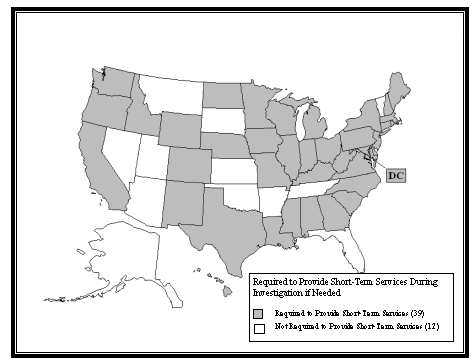
Required = Alabama, California, Colorado, Connecticut, Delaware, District of Columbia, Georgia, Hawaii, Indiana, Iowa, Idaho, Illinois, Kentucky, Louisiana, Maine, Maryland, Massachusetts, Michigan, Minnesota, Mississippi, Missouri, New York, Nebraska, New Hampshire, New Jersey, New Mexico, North Carolina, North Dakota, Ohio, Oregon, Pennsylvania, Rhode Island, South Carolina, Texas, Virginia, Washington, Wisconsin, West Virginia, and Wyoming.
Not Required = Alaska, Arizona, Arkansas, Florida, Kansas, Montana, Nevada, Oklahoma, South Dakota, Tennessee, Utah, and Vermont.
Thirty-eight States (74.5%) had policy requiring investigation workers to plan or assist in planning for ongoing services. These States are shown on the map in the figure 4-2 below.
Figure 4-2:
Investigation Worker Required to Plan for Ongoing Services
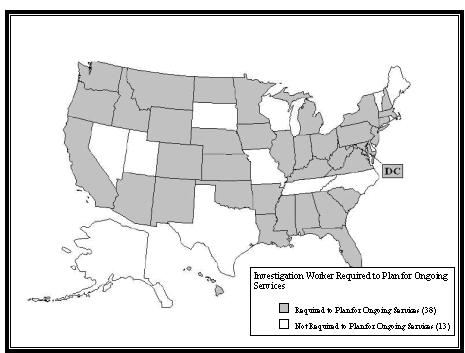
Required = Alabama, Arizona, Arkansas, California, Colorado, Connecticut, District of Columbia, Florida, Georgia, Hawaii, Illinois, Iowa, Idaho, Indiana, Kansas, Kentucky, Louisiana, Maryland, Massachusetts, Michigan, Minnesota, Mississippi, Montana, Nebraska, New Hampshire, New Jersey, New Mexico, New York, North Dakota, Oklahoma, Ohio, Oregon, Pennsylvania, South Carolina, Virginia, Washington, West Virginia, and Wyoming.
Not Required = Alaska, Delaware, Maine, Missouri, North Carolina, Nevada, Rhode Island, South Dakota, Tennessee, Texas, Utah, Vermont, and Wisconsin.
States varied in the description of the purpose of the services. (See table 4-P.)
- Thirty-four States (66.7%) specified that the purpose for providing services was the safety of the child;
- Twenty States (39.2%) specified that the purpose was to preserve or strengthen the family; and
- Seven States (13.7%) specified services were to prevent child abuse or neglect.
Summary
The investigation policies of State-administered systems were not found to differ from the policies of State-supervised, county-administered systems. This is partially due to consistency in policy for many features of the investigation function. More than two-thirds of the States had policy regarding:
- Definitions of additional forms of maltreatment beyond the four major types;
- Definitions of substantiated and unsubstantiated;
- Role of law enforcement in conducting an investigation (removing children if necessary);
- Priority standards for beginning investigations;
- Including all children in the household in an investigation;
- Use of safety assessment;
- Use of risk assessment;
- Contact with family during an investigation;
- Contact with the child during an investigation;
- Provision of voluntary services;
- Notification of perpetrator of results of an investigation;
- Notification of the family of the results of an investigation;
- Central Registry can be used for internal administrative purposes, information sharing, and background checks;
- Expungement policies;
- Due process notifications;
- Provision of short-term services during the investigation, as needed; and
- Participation in planning for ongoing services.
The above can be considered core areas of policy in CPS.
Within each core area, there may exist considerable variation in the specific policy requirements. These have been discussed in this chapter. In addition, there were policy areas for which there was less consistent coverage by State policies. Fewer than one-third of the States included specific policy on the following areas:
- Definitions of "unable to determine or complete;"
- Definition of "indicated;"
- Limits abuse and neglect typologies to the four major categories;
- Maintaining the family as a purpose of the investigation;
- Timeframe for completing an investigation is less than 2 weeks;
- Referring only substantiated cases for services;
- Worker and supervisor making joint decisions;
- Notifying mandated reporters of the results of an investigation;
- Maintaining all reports on the Central Registry; and
- Preventing child abuse and neglect as the purpose of services.
| Policy in Less Than 33% of States Addressed: | Policy in 33-66% of States Addressed: | Policy in More Than 66% of States Addressed: |
|---|---|---|
|
|
|
| State | Neglect | Physical Abuse | Sexual Abuse | Emotional Abuse | Other |
|---|---|---|---|---|---|
| AK | Failure to provide necessary care. | Physical abuse or physical injury. | Sexual abuse or exploitation. | Mental Injury. Injury to emotional well-being, intellectual, psychological capacity of a child, evidenced by an observable and substantial impairment in the ability to function. |
Medical neglect of handicapped infants in a medical care facility. |
| AL | Negligent treatment such as failure to provide; distinction between poverty and neglect. | Harm or threatened, nonaccidental injury | Harm or threatened; attempted; or exploitation or attempted. Explicit conduct for pornography, molestation, or prostitution. | Mental injury. Substantial impairment with due regard to culture. | |
| AR | Failure or refusal to provide. | Acts or omissions. Engaging in conduct creating a substantial possibility of death, permanent or temporary disfigurement, illness or impairment of bodily organ. | Solicitation or participation in sexual activity. Includes exploitation. | Acts or omissions. Observable and substantial impairment in the intellectual or psychological capacity to function within the normal range with due regard to culture. | Failure to support or maintain reasonable contact, abandonment, intentional. |
| AZ | Unable or unwilling to provide that results in substantial risk of harm. | Impairment of bodily function or disfigurement or the infliction of or allowing physical injury. | Engaging in sexual contact with anyone age 15+ without consent or under age 15 if contact involves only female breast. Lists examples of abuse. Sexual contact with a minor, sexual assault, and sexual exploitation. | Diagnosis by a qualified person of mental condition that was probable result of acts or omissions of the parent. | Abandonment |
| CA | Failure to provide. Physical or psychological endangerment. | Nonaccidental bodily injury including corporal punishment. | Victimization by sexual activities. | Nonphysical mistreatment that results in disturbed behavior of the child. | |
| CO | Failure to take actions to provide, Including educational and medical neglect. | Evidence of physical harm or injury or subjected to reasonable threat of. | Sexual abuse including molestation, prostitution, exploitation, touching genitals, buttocks or breasts, or pornography. | Identifiable and substantial impairment of functioning or substantial risk. | Abandonment |
| CT | Physical neglect whether or not intentional. Unable to provide minimum. Medical, educational, emotional, or moral neglect. | Injury inflicted, nonaccidental; injuries at variance with the history; or malnutrition or cruelty. | Inflicted or allowed to be inflicted. | Cruel or unconscionable acts or statements or threats or allowance of such which have direct affect on the child. | In danger of abuse, high-risk newborns |
| DC | Physical, medical, and material neglect. | Indicators given such as unexplained bruises, welts or marks, burns, water immersion, fractures. | Involvement of a child in sexual activity to provide sexual gratification or financial benefit to perpetrator. Lists signs of sexual abuse. | Emotional neglect. Significant impairment of child's emotional stability or mental health so that ability to function is reduced. | |
| DE | Failure to provide. | Unjustified force that results in injury, torture. | Exploitative misuse. | Injury resulting in mental or emotional condition due to abuse or neglect. | Exploitation, abandonment, dependency |
| FL | Omission that is serious disregard. Includes failure to stop other person from neglect. | Willful action that results in specific listed injuries. | Sexual battery, incest, molestation, and exploitation | Mental injury. Inappropriate or excessive use of restraints, bizarre punishment, isolation in a childcare facility, or confinement. | Threatened harm, substance abuse, lack of supervision, environmental neglect (i.e. drug house) |
| GA | Physical, emotional, educational, cognitive, exploitation, medical | Physical abuse that results in specific listed injuries, Battered Child Syndrome, Factitious Disorder by Proxy. | Allows, permits, or requires child under 18 to engage in sexual acts for the gratification of adults. | Verbal threats or humiliation or bizarre treatment. Results in impaired psychological growth or development. | Abandonment, family violence, failure to thrive |
| HI | Psychological neglect, failure to provide, or failure to protect. | Physical injuries, nonaccidental trauma | Any interfamilial sexual exploitation of a child under 18. | Psychological abuse resulting in disturbed child and substantial impairment of functioning. | Nutritional deprivation, medical care neglect, intentional drugging and poisoning, abandonment, lack of supervision |
| IA | Denial of critical care. Failure to provide. Religious exemption. |
Nonaccidental physical injury or at variance with history. | Commission of sex offense or omission. Child prostitution. Presence of illegal drugs. Commission of bestiality in the presence of a minor. |
Mental injury to intellectual or psychological capacity evidenced by observable and substantial impairment. | Manufacturing or possession of dangerous substance. |
| ID | Includes physical neglect, medical neglect, and environmental neglect. | Observable injuries or symptoms. | Sexual conduct or sexual exploitation harming/threatening the health, welfare, or mental injury of the child. | ||
| IL | Includes physical neglect, lack of supervision, environmental neglect, malnutrition, and medical neglect. Religious exemption. | Act or omission inflicted or creates a real and significant danger of physical injury. Includes acts of violence or intimidation directed toward the child that threaten injury or impairment. | Sexual contact or any intentional or knowing touching either directly or through clothing for the purpose of gratification. Includes molestation and exploitation. | Mental injury to intellectual, emotional, or psychological development. Observed and substantial impairment of child functioning in normal range. Regard to culture. Requires professional verification. | Abandonment, substance misuse |
| IN | Physical or mental condition with impairment or serious endangerment. Intentional and nonintentional. | Physical health seriously endangered due to injury by act or omission. Child is not receiving care or treatment. | Rape, criminal deviant conduct, molestation, exploitation, pornography, seduction, misconduct, indecent exposure, prostitution or incest and the child is not receiving or is unlikely to receive care. Allowing child to participate in obscene performances. | Mental health is seriously endangered due to injury by act or omission; and child is not or unlikely to receive care. | Use of alcohol, controlled substance, or legend drug by mother during pregnancy and child is not receiving or is unlikely to receive care. |
| KS | Acts or omissions resulting in harm or likelihood. Medical neglect. Physical neglect. | Act or failure to act that results in death, physical harm, or likelihood. | Any contact or interaction used for gratification, permitting pornography, or prostitution. | Acts or omissions that impair social, emotional, or intellectual functioning or likelihood. | Abandonment, lack of supervision, child in need of care (nonabuse and neglect). |
| KY | Inadequate supervision if caller thinks child may be harmed; child locked up; injury or high risk of injury. Abandonment, lack of supervision; child forced to take drugs or alcohol. | Health or welfare is harmed or threatened with harm. Inflicts or allows nonaccidental injury. | Rape, sodomy, incest, sexual penetration with a foreign object, exposing oneself, exposing a child, kissing, touching, fondling in a sexual manner, sexual harassment, and promoting sexual contact with animals. | Creates risk of injury to mental or emotional capacity. Action or inaction. Detailed listing of examples. | Abandonment, dependency, risk of physical abuse and risk of sexual abuse. |
| LA | Refusal or failure to provide which results in substantial threat or impairment. Financial exemption. | Intentional or not, infliction of physical injury, which seriously endangers health. Exploitative overwork of child. | Any sexual act or pornography or any other sex involvement constituting a crime. | Verbal threats or behavior that results in observable and substantial impairment of well-being and functioning. | Withholding medical treatment or nourishment. No religious exemption. |
| MA | Failure to take actions to provide. Financial exemption. May get court order for failure to provide medical treatment. | Nonaccidental commission causes or substantial risk of serious injury. | Emotional maltreatment: causing or creating substantial risk of serious emotional injury which is impairment of disorder of intellectual or psychological capacity evidenced by observable and substantial reduction in functioning within normal range. | ||
| MD | Failure to provide. Unattended child. | Injury under circumstances that indicate harm or substantial risk. | Molestation or exploitation, incest, rape, or sexual offense. | Mental injury; harm or risk; observable, identifiable, and substantial impairment of mental or psychological functioning. | |
| ME | Deprivation of essential needs or lack of protection. | Serious injury means serious physical injury or impairment. | Sexual abuse or exploitation | Serious mental or emotional injury likely to be evidenced by serious mental behavior or personality disorder. | Abandonment |
| MI | Harm or threat by negligent treatment, failure to provide, failure to protect, unreasonable risk, and medical neglect. Poverty exemption. | Nonaccidental injury | Sexual exploitation, pornography, engaging in sexual contact | Physical or verbal acts, omissions or environment which render child anxious, agitated, depressed, withdrawn and interferes with age-appropriate milestones. | Failure to protect, improper supervision, abandonment, exploitation |
| MN | Failure to provide. Failure to protect. Educational neglect. Prenatal exposure to controlled substance. |
Nonaccidental injury (There is a list examples.) | Subjection of a child to any act that constitutes a violation of criminal sexual conduct. | Mental injury; injury to psychological capacity or emotional stability as evidenced by observable or substantial impairment in the ability to function. | Infant medical neglect |
| MO | Failure to provide, by those responsible for the care, custody and control of the child, the proper or necessary support, education as required by law, nutrition or medical, surgical, or any other care necessary for the child's well- | Any physical injury, sexual abuse, or emotional abuse inflicted on a child other than by accidental means by those responsible for the child's care, custody, and control. Reasonable discipline, including | Use, persuasion, coercion, inducement, or enticement of child under 18 to engage in or assist in any sexually explicit conduct; exploitation. | Passive or active patterned, nonnurturing behavior by a parent or caretaker that negatively affects or handicaps a child emotionally, psychologically, physically, intellectually, socially, or developmentally. | Medical neglect, educational neglect |
| MS | Refuses to provide when able or unable to provide. | Physical abuse or nonaccidental injury or allowing such an injury or abuse. | Allowed or caused rape, molestation, incest, prostitution, exploitation, pornography that indicates that the child's health or welfare is harmed or threatened. | Mental injury | Exploitation |
| MT | Physical or failure to thrive. Also, failure to respond to infant's life-threatening illness or to provide adequate health care although able. | Intentional act or intentional omission or gross negligence resulting in substantial impairment of bodily function, injury, pain, disfigurement, or death. | Sexual assault, intercourse without consent, indecent exposure, deviant sexual conduct, ritual abuse, incest in home or institutional. | Acts or omissions; severe injury to emotional, intellectual or psychological functioning. Includes exposure to violence against another person in the home. | Exposure to unreasonable risk, abandonment, fatality |
| NC | Does not receive proper care, supervision, or discipline from parent, guardian, custodian, or caretaker; or is abandoned or not provided necessary remedial care; or lives in an environment injurious to welfare; or is placed for care in violation of law. | Allows or inflicts serious injury by nonaccidental means. | First- or second-degree rape, sexual act or offense; preparing pornography. | Creates serious emotional damage to juvenile evidenced by severe anxiety, depression, withdrawal, or aggressive behavior. | Dependent juvenile |
| ND | Physical including unattended child, nutrition, clothing, hygiene, educational, medical. | Physical force resulting in injury or the child is placed at significant risk. Or, physical punishment of an infant. | Intercourse, exhibitionism, exploitation, or any sexual contact. Includes failure to protect or prevent. | Parental behavioral patterns with psychological consequences; act or omission. | Abandonment, environmental conditions, failure to protect |
| NE | Physical neglect, medical neglect of handicapped infant. | Unexplainable or nonaccidental injury or inconsistent with explanation. Or substantial risk of bodily injury. | Sexually oriented act, practice, contact, or interaction used for gratification. | Emotional abuse: psychopathological or disturbed behavior in child which is documented by a psychiatrist, psychologist, or MH practitioner to be the result of continual scapegoating, rejection, or exposure to violence by child's parent, caretaker. | Failure to protect, abandonment, environmental conditions |
| NH | Alcohol and drug abuse; educational neglect; emotional and mental maltreatment; failure to protect; failure to thrive; inadequate needing of basic needs, lack of supervision and caregiver, medical and dental neglect. Mental health issues; Munchausen's syndrome by proxy; poisoning and noxious substances; threatening and menacing behavior. | Lists specific injuries. | Employment, use, persuasion, inducement, enticement, or coercion of any child to engage in, or having a child assist any other person to engage in, any sexually explicit conduct or any simulation of this conduct for the purpose of producing any visual depiction; the rapes, molestation, prostitution, or any other form of sexual exploitation of children, or incest with children. | Emotional abuse or neglect. Injury to intellectual or psychological capacity; observable impairment. | Abandonment |
| NJ | Failure to provide when able. | Physical injury or at risk due to action or inaction that was neither necessary, nor justified, not reasonable, nor appropriate. | Contacts or interactions for gratification. | Conduct causes, allows, or permits significant or persistent emotional pain, harm or impairment. | Lack of adequate supervision |
| NM | Failure to provide whether intended or not. | Nonaccidental injury inflicted or allowed, regardless of motive. | Any incident of sexual contact inflicted or caretaker should have known. | Acts which cause substantial impairment of child's mental or psychological ability to function. | |
| NV | Failure to provide | Physical injury nonaccidental, meaning permanent or temporary disfigurement or impairment of any bodily function or organ of the body. | Acts upon a child including incest, lewdness, molestation, sado-masochism or seduction. | Injury to intellectual or psychological capacity or emotional condition as evidenced by observable and substantial impairment of functioning in normal range. | Excessive corporal punishment |
| NY | Physical, mental or emotional. Impaired or imminent danger. | Inflicts or allows physical injury; nonaccidental, likely to cause death or serious or protracted disfigurement or impairment to health. | Commits or allows sex offense. | Diminished psychological or intellectual functioning attributable to unwillingness or inability to exercise minimum care. | Abandonment, institutional abuse |
| OH | Abandoned; lacks care; neglects or refuses to provide including medical, educational, and moral. | Evidence of injury or death; nonaccidental or an injury at variance with the history. Acts that cause harm or threaten harm. | Activity that would constitute an offense under law, but a conviction not required. | Mental injury; any behavioral, cognitive, or mental disorder in a child caused by act or omission described in code. | |
| OK | Deliberate or exceptional lack of attention; physical or emotional. Long standing and impacts several aspects of child's life or life threatening. Poor parenting and poverty excepted. | Injury or otherwise harming a child. Severe punishment even if no injury. Minor injuries of child over ten excepted unless child placed in grave physical danger. | Rape, sodomy, incest, lewd or indecent acts or proposals; exploitation for the purpose of sexually stimulating the child or others. | Injury to intellectual or psychological capacity as evidenced by observable and substantial impairment of function in normal range. Mental injury is pattern of cruelty or unconscionable acts. | Abandonment |
| OR | Failure to provide whether intent or not. | Acts or omissions. Injury regardless of motive, including discipline. | Any incident of sexual contact and exposure or pornography. | Mental injury whether or not intentional. | Abandonment, child selling |
| PA | Serious physical neglect, prolonged or repeated and endangers child's life or development or impairs child's functioning. | Any recent act or failure to act which causes nonaccidental serious physical injury to a child: causes some pain or significantly impairs physical functioning either temporarily or permanently. | A recent act, failure to act, or series that creates an imminent risk of sexual abuse or exploitation. Employment, use, persuasion, inducement, enticement, or coercion to engage or assist in any explicit conduct, pornography, prostitution. | Act or failure to act which causes nonaccidental serious mental injury rendering child anxious, depressed, socially withdrawn, psychotic, or reasonable fear that life or safety is threatened, or interferes with development. | Imminent risk |
| RI | Failure to provide when financially able or failure to provide a minimum degree of care. Includes emotional neglect, medical neglect, or failure to provide psychological treatment. | Inflicts or allows physical injury. | Allow to commit or commit against the child. | Impairment to intellectual or psychological capacity. | Abandonment, dependency, exploitation |
| SC | Harm, medical neglect, criminal neglect placing the child at unreasonable risk of harm affecting life, health, or safety. Cruelty to children; deprivation. | Death or permanent or temporary disfigurement or impairment. | Sexual battery. Intercourse, cunnilingus, fellatio, and anal intercourse or any intrusion of any part of a person's body or any object into the genital or anal opening except when such intrusion is accomplished for medically recognized treatment or diagnostic purposes. | Injury to the intellectual or psychological capacity of a child evidenced by discernable and substantial impairment. Supported by professional opinion. | Abandonment, cruelty to children. Distinguishes criminal abuse and criminal neglect. Death by child abuse. |
| SD | Failure to provide, including medical neglect. | Evidence of injury. Consideration for corporal punishment; reasonable force in a moderate degree. | Sexual abuse or exploitation | Emotional maltreatment | |
| TN | Failure to care or leaving under 8 unattended. Includes environmental, nutritional, educational neglect, and neglect or death. | Abuse resulting in death; acts resulting in injury that requires medical attention; use of life threatening weapons and leading to death or severe physical damage. | Sexual touch or penetration | Behavior related to observable impairment of physical, sexual, cognitive. | Severe drug or alcohol problems that result in harmful conditions or risk of maltreatment. Substantial risk of physical injury. Substantial risk of sexual abuse. Abandonment. Medical maltreatment. Drug exposed child. Drug exposed infant. |
| TX | Substantial risk of immediate harm; failure to provide medical care that results in substantial harm; failure to provide. Poverty excepted. Failure to protect child from sexual abuse. | Physical injury that results in substantial harm to the child or genuine threat of substantial harm from injury. An injury at variance with history. Reasonable discipline excepted. | Sexual conduct harmful to mental, emotional or physical welfare. Compelling or encouraging sexual conduct. Pornography. Failure to make reasonable effort to prevent sexual conduct harmful to child. | Injury resulting in observable and material impairment of growth, development, or psychological functioning. Causing or permitting child to be in situation to sustain such injury. | Abandonment, causing or permitting use of controlled substance. Substance abuse that results in injury to child. |
| UT | Physical neglect including failure to provide. Medical neglect. | Nonaccidental injury that seriously impairs health or involves torture and causes serious emotional harm or involves substantial risk of death. | Sex abuse, exploitation, or forcing or coercing observation of sexual activities. | Pattern of verbal remarks or parental alienation causing emotional distress; perception or actual threatened harm; teaching illegal behavior; custody disputes leading to multiple CPS referrals, domestic violence related to child abuse and giving child harmful material. | Ritual abuse, dependency |
| VA | Medical or physical neglect, failure to provide. If poverty, provide services, but no neglect disposition. | Lists specific types of injuries. Includes bizarre discipline. | Sexual abuse, exploitation, molestation, intercourse, and sodomy. | Mental abuse or neglect. | Abandonment |
| VT | Actions or inactions resulting in injury or illness. Educational neglect. | Physical health, psychological growth and development or welfare is harmed or substantial risk by acts or omissions. Nonaccidental injury resulting in death, permanent, or temporary disfigurement, or impairment of any bodily organ or function. | Sexual molestation or exploitation. | Emotional maltreatment resulting in impaired psychological growth and development. | Child in need of care or supervision. Abandonment. Risk of harm. Risk of sexual abuse. |
| WA | Fails to meet needs or places child at risk of harm. | Nonaccidental injury, dangerous acts, cruel or inhumane acts, physical discipline. | Contact, exposure, inappropriate touching, promoting sexual activity or conduct, pornography, prostitution. | Acts or omissions that injure or risk injury to psychological and emotional health or development. | |
| WIT | Failure, refusal, or inability for reasons other than poverty, to provide necessary care, food, clothing, medical or dental care, or shelter so as to seriously endanger the physical health. Threat of neglect. | Physical abuse or threat | Sexual abuse, exploitation of prostitution. Any contact with a sexual part of the body of a child 15 and under. | Emotional damage | Withholding medically indicated treatment. |
| WV | Failure to provide, medical neglect, educational neglect, lack of supervision. Physical or mental condition harmed or threatened. | "Abused child" means a child whose health or welfare is harmed or threatened by a parent, guardian, or custodian who knowingly or intentionally inflicts, attempts to inflict, or knowingly allows another person to inflict, physical injury or substantial mental or emotional injury, upon the child or another child in the home; sexual abuse or sexual exploitation. Physical injury may include excessive corporal punishment. | Sexual abuse or exploitation is noted under the definition of abuse. | Emotional injury is noted under the definition of abuse. | Abandonment |
| WY | Failure to provide. Religious exemption. Educational neglect. Lack of supervision. |
Death or harm to child including disfigurement, impairment of any bodily organ, skin bruising, bleeding, burns, bone fractures, subdural hematoma, or substantial malnutrition. | The commission or allowance of a sexual offense against a child as defined by law, which includes any sexual contact or exploitation. | Mental Injury. Injury to the psychological capacity or emotional stability of a child as evidenced by observable or substantial impairment in ability to function. | Nutritional deprivation. Abandonment. Withholding medical treatment from handicapped infants. Medical neglect. Lack of supervision. Educational neglect. |
| T Wisconsin data compiled from statutes | |||||
| State | Substantiated | Unsubstantiated | Indicated | Unable to Determine or Complete | Other | Alternative Structure | |||||
|---|---|---|---|---|---|---|---|---|---|---|---|
| Allegation Only | Risk Included | No Definition | Level of Evidence | Insufficient Evidence | No Evidence | No Definition | |||||
| AK | X | Preponderance | X | X | |||||||
| AL | X | Preponderance | X | X | Categories based on perpetrator | ||||||
| AR | X | Preponderance | Xa | X | Religious exemption | ||||||
| AZ | X | Probable cause, reasonable | X | ||||||||
| CA | X | Credible | X | X | False report or accident | ||||||
| CO | X | Preponderance | X | ||||||||
| CT | X | Reasonable cause | X | ||||||||
| DC | Xb | Credible | Xb | ||||||||
| DE | X | Preponderance | X | X | |||||||
| FL | X | Preponderance | X | X | |||||||
| GA | X | Preponderance | X | ||||||||
| HI | X | X | X | ||||||||
| IA | Xc | Preponderance | X | ||||||||
| ID | X | Preponderance | X | ||||||||
| IL | X | Credible | X | Temporary undetermined | |||||||
| IN | X | Credible | X | ||||||||
| KS | X | Reasonable | X | Validated perpetrator | |||||||
| KY | Xd | Preponderance | X | Failure to locate, families in need of services | |||||||
| LA | Xe | Reasonable | Xf | X | X | ||||||
| MA | X | Reasonable | X | ||||||||
| MD | X | Preponderance | X | ||||||||
| ME | X | Preponderance | X | ||||||||
| MI | X | ||||||||||
| MN | X | X | X | ||||||||
| MO | X | Probable cause | X | X | X | X | |||||
| MS | X | Credible | X | ||||||||
| MT | X | Preponderance | X | X | Insufficient information to investigate, perpetrator not responsible for child and child death | ||||||
| NC | X | Preponderance | X | ||||||||
| ND | X | ||||||||||
| NE | Xg | Preponderance | X | X | |||||||
| NH | X | Preponderance | X | X | X | ||||||
| NJ | X | Xh | X | ||||||||
| NM | X | Credible | X | At risk | |||||||
| NV | Reasonable | X | X | X | |||||||
| NY | X | Credible | X | ||||||||
| OH | X | X | X | Failure to locate | |||||||
| OK | X | Credible | Reasonable parental discipline | X | |||||||
| OR | X | Reasonable | X | X | |||||||
| PA | X | Clear and convincing and beyond reasonable doubti | X | X | |||||||
| RI | X | Preponderance | |||||||||
| SC | X | Preponderance | X | X | X | ||||||
| SD | X | X | X | ||||||||
| TN | X | Material evidence | X | ||||||||
| TX | X | Preponderance | X | X | |||||||
| UT | X | Reasonable | X | X | |||||||
| VA | Xj | Preponderance | X | ||||||||
| VT | X | Reasonable | X | ||||||||
| WA | X | X | X | ||||||||
| WI | Xk | X | Preponderance | X | X | ||||||
| WV | X | X | |||||||||
| WY | X | Credible | X | X | |||||||
| a Language allows for “reasonable injuries from moderate physical discipline.” b Two categories, Substantiated & Supported: Defined in statute as a report made by a mandated reporter. c Two substantiated categories based on whether or not placed in Central Registry. d Two substantiated categories based on when CAN not originally reported is founded substantiated. e Four categories based on validation: Valid, Valid and No substance abuse, Valid and Services completed, Valid with substance abuse. f Language allows for cases with minor injury as a result of corporal punishment. g Two categories based on court involvement. h Language allows for accident or action of parent being “necessary and reasonable.” i Legal standard distinguishes juile court and criminal covenurt. j Three categories based on severity of harm. k Two categories: Substantiated and Substantiated, Mutual Sexual Activity. |
|||||||||||
| State | Protect Child | Assess or Remediate Risk | Assess or Remediate Safety | Determine Disposition | Determine Services | Maintain Family | Other |
|---|---|---|---|---|---|---|---|
| AK | Yes | ||||||
| AL | Yes | Yes | Yes | Yes | |||
| AR | Yes | Yes | Yes | Yes | Yes | ||
| AZ | Yes | Yes | Yes | Yes | Strengths | ||
| CA | Yes | ||||||
| CO | Yes | Yes | Yes | ||||
| CT | Yes | Yes | |||||
| DC | Yes | Yes | |||||
| DE | Yes | Yes | Yes | ||||
| FL | Yes | Yes | Yes | Determine responsibility, determine court action | |||
| GA | Yes | Yes | Yes | Yes | |||
| HI | Yes | ||||||
| IA | Yes | ||||||
| ID | Yes | Yes | Yes | ||||
| IL | Yes | Yes | Yes | Yes | Yes | ||
| IN | Yes | ||||||
| KS | Yes | Yes | |||||
| KY | Yes | Yes | Yes | Yes | |||
| LA | Yes | Yes | Yes | Yes | Yes | ||
| MA | Yes | Yes | Yes | ||||
| MD | Yes | Yes | Yes | Yes | |||
| ME | Yes | Yes | Yes | ||||
| MI | Yes | Yes | Yes | ||||
| MN | Yes | ||||||
| MO | Yes | ||||||
| MS | Yes | Yes | Yes | ||||
| MT | Yes | ||||||
| NC | Yes | Yes | Yes | ||||
| ND | Yes | Yes | |||||
| NE | Yes | Yes | |||||
| NH | Yes | Yes | |||||
| NJ | Yes | Yes | Yes | Yes | |||
| NM | Yes | Yes | Yes | Yes | Yes | ||
| NV | Yes | Yes | Yes | ||||
| NY | Yes | Yes | |||||
| OH | Yes | ||||||
| OK | Yes | Yes | Yes | Yes | |||
| OR | Yes | ||||||
| PA | Yes | Yes | Yes | Yes | Yes | ||
| RI | Yes | ||||||
| SC | Yes | Yes | Yes | Yes | |||
| SD | Yes | Yes | Yes | ||||
| TN | Yes | Yes | Yes | Yes | |||
| TX | Yes | Yes | Yes | ||||
| UT | Yes | ||||||
| VA | Yes | Yes | Yes | Yes | |||
| VT | Yes | Yes | Yes | Yes | |||
| WA | Yes | Yes | Yes | ||||
| WI | Yes | Yes | Yes | Yes | Yes | Introduce agency as provider of help | |
| WV | Yes | Yes | Yes | Explain community concern and agency’s purpose | |||
| WY | Yes | Intervention to stop abuse |
| State | Agency 1 |
Circumstances 1 |
Contract, Policy or Protocol | Circumstances 2 |
Contract, Policy or Protocol | Agency 2 |
Circumstances 1 |
Contract, Policy or Protocol | Circumstances 2 |
Contract, Policy or Protocol |
|---|---|---|---|---|---|---|---|---|---|---|
| AK | Law enforcement | Sexual or severe Abuse | Protocol, policy, cooperative agreement | Emergency removals | Policy | |||||
| AL | Law enforcement | Varies | Policy, cooperative agreement, statute | Emergency removals | Policy | |||||
| AR | State Police | Solely conducts all priority 1 investigations. | Contract policy, statute | Emergency removals | Policy | |||||
| AZ | Law enforcement | Criminal investigations of child abuse. Sexual or severe abuse. | Protocol policy, statute | Emergency removals | Policy | Tribal government | When tribe has no social service program or at request of tribal social services. | Policy, cooperative agreement, statute | Emergency removals | Policy, statute, cooperative agreement |
| CA | Law enforcement | Emergency removals | Protocol, policy | |||||||
| CO | Law enforcement | All reports of abuse or neglect | Protocol, cooperative agreement, statute | Policy | Delegated agencies | All reports of abuse or neglect | Statute | |||
| CT | Law enforcement | Severe neglect and death of a child. Sexual or severe abuse. | Policy, statute | Emergency situations | Policy | Department of Public Health | Abuse or neglect in licensed daycare settings | Cooperative agreement | ||
| DC | Law enforcement | Joint on sexual or severe abuse cases. | Policy, cooperative agreement | |||||||
| DE | Law enforcement & Department of Justice | Sexual or severe abuse or neglect, or when severe domestic violence | Policy, cooperative agreement, statute | Emergency removals | Policy, cooperative agreement, statute | Department of Education, Division of Public Health, Department of Corrections, public school districts, child advocacy centers | Does not conduct joint investigations by has an agreement on how to cooperate with department. | Cooperative agreement. | ||
| FL | Law enforcement | Only in counties where investigation has been delegated to local law enforcement | Policy. | |||||||
| GA | Law enforcement | Emergency removals | Policy | All reports are referred but law enforcement does not choose to go out on most. | Policy | Team including medical personnel | Medical concerns (e.g., Factitious Disorder (FDP), Munchausen Syndrome (MBP) investigations) | Statute | ||
| HI | Law enforcement | Emergency removals | Policy, cooperative agreement, statute | |||||||
| IA | Law enforcement | Sexual or severe abuse | Protocol, policy | Emergency removals | Protocol, policy | |||||
| ID | Law enforcement | Sexual or severe Abuse | Protocol, policy | Emergency removals | Policy | Prosecuting attorney | Sexual or severe abuse | Protocol | ||
| IL | Law enforcement | Serious physical or sexual abuse or other action | Statute, Protocol, Policy | |||||||
| IN | Law enforcement | Sexual and child fatalities, severe abuse | Protocol, policy, cooperative agreement, statute | Emergency removals | Policy | |||||
| KS | Law enforcement | Sexual or severe abuse | Policy, statute | Emergency removals | Policy | KS Dept. of Health and Environment licensed childcare facilities | When there is a concern for health or safety in a regulated facility | Protocol, policy, statute | ||
| KY | Law enforcement | Sexual or severe abuse | Policy, statute | Office of Inspector General, Division of Licensed Child Care | When a licensed childcare facility is involved | Standards of Practice | ||||
| LA | Law enforcementa | Sexual or severe abuse | Policy, cooperative agreement | Emergency removals | Policy | |||||
| MA | Law enforcement | Sexual or severe abuse | Policy, cooperative agreement, statue | Emergency removals | Policy | Office of Child Care Services, Dept. of Mental Health, District Attorney | No mandates; depends on case | Policy, cooperative agreement, statute | ||
| MD | Law enforcement | Sexual or severe abuse | Policy, cooperative agreement | Emergency removals | Policy | Childcare administration | Report concerning a childcare facility | Policy, cooperative agreement | ||
| ME | Law enforcement | Sexual or severe abuse. Any time a crime may have been committed. | Policy, cooperative agreement | Emergency removals | Policy | |||||
| MI | Law enforcement | Sexual or severe Abuse | Protocol, policy, statute | |||||||
| MN | Law enforcement | Sexual, severe, or malicious punishment or imminent danger | Policy, protocol, statute | Emergency removals | Policy | |||||
| MO | Law enforcement | Sexual or severe abuse, severe neglect | Policy, protocol, statute | Emergency removals | Policy | |||||
| MS | Required to notify law enforcement, but joint investigation not required. | Statute | Emergency removals. | Policy | ||||||
| MT | Law enforcement | Emergency removals | Policy | |||||||
| NC | Law enforcement | If a juvenile has been abused. | Protocolb , policy, statute | Emergency removals | Policy | NC Division of Child Development | CAN in childcare facilities, including residential facilities operated by DHHS | Policy, statute | ||
| ND | Law enforcement | Sexual or severe abuse | Policy, statute | Emergency removals | Policy | |||||
| NE | Law enforcement | Sexual or severe abuse or foster care. | Policy, statute | Emergency removals | Policy | Licensing authority | Child abuse or neglect in out-of-home care | Protocol, policy | ||
| NH | Law enforcement | Sexual or severe abuse, abandonment. | Policy, statute, protocol | Emergency removals | Policy | |||||
| NJ | Law enforcement | Worker safety, child death, violence occurring or threatened. | Policy, statute | Emergency removals | Policy | |||||
| NMc | Law enforcement | Emergency removals | Policy | |||||||
| NV | Law enforcement | Abandonment or if parents refuse medical care for child, torture or risk of parent fleeing with child. | Policy | Emergency removals | Policy | |||||
| NY | Law enforcement | Emergency removals | Policy | Sexual or severe abuse | Policy | Society for the Prevention of Cruelty to Children | When referred by local agency | Policy | ||
| OH | Law enforcement | Emergency removals | Policy | |||||||
| OKd | Law enforcement | Sexual or severe Abuse | Protocol, policy, statute, local agreement | Emergency removals | Policy | |||||
| OR | Law enforcement | Emergency removal | Policy, statute | |||||||
| PA | Law enforcement | Emergency removals | Policy | |||||||
| RI | Law enforcement | Emergency removals | Policy | |||||||
| SC | Law enforcement | Violation of criminal law or sexual abuse, severe abuse | Protocol, policy, cooperative agreement, statute | Emergency removals | Policy | |||||
| SD | Law enforcement | Sexual or severe abuse | Policy | |||||||
| TN | Child Protection Investigation Team | Sexual or severe abuse | Policy, protocol, statute | Emergency removals | Policy | Licensing agency | Any referral involving a licensed childcare facility | Protocol, policy, cooperative agreement | ||
| TX | Law enforcement | Sexual or severe abuse | Policy, statute | Emergency removals | Policy | |||||
| UT | Law enforcement | Safety concerns, serious abuse, and criminal activity | Policy, statute | Emergency removals | Policy, statute | Contract agency for conflict of interest | For conflicts of interest (e.g., staff, foster parent) | Policy, statute | ||
| VA | Law enforcement | Sexual or severe abuse, injury as a result of felony or Class 1 misdemeanor | Policy, statute | Emergency removals | Policy | Local attorney for the Common-wealth | Sexual or severe abuse | Statute | ||
| VT | Law enforcement | Sexual, severe abuse, criminal neglect, dangerous situations | Policy, protocol | Emergency removals | Policy | |||||
| WA | Law enforcement | Sexual abuse or any case at the discretion of law enforcement. | Protocole , statute | Emergency removals | Policy | |||||
| WI | Law enforcement | Sexual abuse | Protocol, policy, statute, cooperative agreement | Emergency removals | Policy | Tribal societies | Not specified | Protocol, policy, cooperative agreement, statute | ||
| WV | Law enforcement | Sexual or severe abuse | Policy, statute | Emergency removals; all investigations of CAN | Policy | Prosecuting attorney | All investigations of CAN | Statute | ||
| WY | Law enforcement | Sexual or severe abuse | Protocol, policy | Emergency removals | Policy | |||||
| 1 Portions of these data have been supplemented with preliminary data from an ongoing American Humane Association project, “Law Enforcement, Child Protection Agencies and Hybrids,” funded by the Edna McConnell Clark Foundation. The final report for this project is anticipated October 2002. a Each parish has its own agreement on the protocol with law enforcement. b For CAN in daycare centers. c Coordination is required for investigations on military bases and on reservations. d Oklahoma has a third circumstance: "when there is an allegation of methamphetamine lab or other substance abuse." e Washington statute mandates that local prosecutors must develop a protocol with CPS and local law enforcement on how they will handle sexual abuse cases. |
||||||||||
| State | Are priority Standards for Starting an Investigation Described in Policy? | Priority Standards |
|---|---|---|
| AK | Yes | Priority 1 -24 hours; Priority 2 -72 hours; Priority 3-7 days |
| AL | Yes | High risk protocol used |
| AR | Yes | Priority 1 - 24 hours; Priority 2 - 72 hours |
| AZ | Yes | High, moderate, low, and potential risk |
| CA | No | |
| CO | Yes | High, medium, or low risk |
| CT | Yes | Failure to respond immediately could result in death or serious injury - 2 hours; School report - same day; Nonlife threatening situation, serious enough to warrant same day response - 24 hours; Nonlife threatening situation, indicates need for timely response - 72 hours |
| DC | Yes | Based on immediate protection needs, current risk, physical evidence, and intake information-- Priority 1, Priority 2, or Priority 3 category is assigned |
| DE | Yes | Children at high risk - 24 hours; children at risk - 10 days |
| FL | Yes | Immediate on site or within 24 hours |
| GA | Yes | Serious or high-risk reports must be responded to within 24 hours (specific types listed in policy). All others must be responded to within 5 working days. |
| HI | Yes | Immediate response for children in police protective custody or in hospital; all other responses - within 1 week, but preferably within 72 hours. |
| IA | No | |
| ID | Yes | Priority 1 - immediate danger; Priority 2 - not immediate danger but allegations of CAN are clearly defined in referral; Priority 3 - without parental care but not in immediate danger |
| IL | No | |
| IN | Yes | Immediate to 5 days, depending on seriousness of allegation |
| KS | Yes | Same day - when there is reason to believe a child has been seriously injured or is in immediate serious danger; 72 hours - all other allegations |
| KY | Yes | 1) Imminent danger; (2) sexual abuse; (3) nonimminent danger - physical; (4) nonimminent danger - physical; (5) neglect; (6) risk of physical or sexual abuse. |
| LA | Yes | Emergency - first face-to-face contact within 24 hours; High priority - face-to-face contact within 3 days; nonemergency - first face-to-face contact within 5 days |
| MA | Yes | Emergency; nonemergency |
| MD | Yes | Children in imminent danger - investigation must begin within 30 minutes. |
| ME | Yes | Same day - emergency reports; "must assign" cases - within 3 days; all reports - within 7 days |
| MI | Yes | Immediate response - physical injuries requiring medical care, chronic severe mental injury, caretaker demonstrates instability; 24-hr. response - child under 6 and is at risk of harm; 72 hrs. - no observable conditions |
| MN | Yes | Immediate - imminent danger, infant medical neglect; 1 working day to 72 hours - nonimminent danger |
| MO | Yes | Immediate - emergency situations; 24 hours - nonemergency situations; 72 hours - only allegation is educational neglect |
| MS | Yes | Felony under State or federal law - immediately; all others - within 24 hours |
| MT | Yes | 1st priority - immediate danger to child; 2nd - all others |
| NC | Yes | High risk - immediate response - physical abuse of child under 3, child under 6 left alone, sexual abuse, tormenting or torture, life-threatening situation, child under 12 is self-referred or refuses to go home |
| ND | Yes | Level A - sexual abuse, severe physical punishment; Level B - physical abuse, severe neglect; Level C - neglect, psychological maltreatment |
| NE | Yes | Families with children identified as harmed by maltreatment or who are at serious risk; families with children who are dependent. |
| NH | Yes | High risk - within 24 hours; moderate risk - 48 hours; low risk - 72 hours |
| NJ | ||
| NM | Yes | Emergency, Priority 1, Priority 2 |
| NV | Yes | High priority - emergency response; intermediate priority - same day; low priority - within 3 days |
| NY | No | |
| OH | Yes | Emergency - within 1 hour; all others - within 24 hours |
| OK | Yes | Priority 1 - no later than 24 hours; Priority 2 - within 48 hours to 15 days; Priority 3 - within 15 days to 30 days |
| OR | Yes | Cases of younger and vulnerable (i.e. disabled) children or children with serious injuries including sexual maltreatment are priority response, as well as neglect cases that result in serious injury. |
| PA | Yes | Within 24 hours unless immediate response is required for safety reasons. |
| RI | Yes | Emergency response - imminent danger; immediate response - risk factors present, not in imminent danger; routine response - minimal risk of harm |
| SC | Yes | Emergency or high risk - within 2 hours; nonemergency or medium risk - within 24 hours |
| SD | Yes | Describes situations requiring immediate response. |
| TN | Yes | Priority 1 - same day; Priority 2 - next day; Priority 3 - 5 working days |
| TX | Yes | Priority 1 - within 24 hours; Priority 2 - within 10 days |
| UT | Yes | Priority 1 - 1 hour; Priority 2 - within 24 hours; Priority 3 - 3 working days |
| VA | No | Regulation requires immediate response. |
| VT | No | |
| WA | Yes | Six risk levels (0 = no risk, 5 = high risk). Risk based on severity of allegations, risk factor information. |
| WI | Yes | Priority given to children who are not or might not be safe or at high risk. |
| WV | Yes | Depending on severity, 0 to 2 hours; within 72 hours; or within 14 days |
| WY | Yes | Immediate response depending on severity of allegation and age of child; all responses must begin within 24 hours. |
| State | Is There a Requirement to Investigate? | ||
|---|---|---|---|
| All Children in Family, Home | Only Subject of Allegation | Other | |
| AK | Yes | ||
| AL | Yes | ||
| AR | Yes | ||
| AZ | Yes | ||
| CA | Yes | ||
| CO | Yes | ||
| CT | Yes | ||
| DC | Yes | ||
| DE | Yes | Yes | |
| FL | Yes | ||
| GA | Yes | ||
| HI | Yes | ||
| IA | Yes | ||
| ID | Yes | ||
| IL | Yes | Yes | |
| IN | Yes | ||
| KS | Yes | ||
| KY | Yes | Yes | |
| LA | Yes | Yes | |
| MA | Yes | ||
| MD | Yes | Yes | |
| ME | Yes | ||
| MI | Yes | ||
| MN | Yes | ||
| MO | Yes | ||
| MS | Yes | ||
| MT | Yes | ||
| NC | Yes | ||
| ND | Yes | ||
| NE | Yes | ||
| NH | Yes | Yes | |
| NJ | Yes | ||
| NM | Yes | ||
| NV | Yes | ||
| NY | Yes | ||
| OH | Yes | ||
| OK | Yes | ||
| OR | Yes | ||
| PA | Yes | ||
| RI | Yes | ||
| SC | Yes | ||
| SD | Yes | ||
| TN | Yes | Yes | |
| TX | Yes | ||
| UT | Yes | ||
| VA | Yes | ||
| VT | Yes | ||
| WA | Yes | ||
| WI | Yes | ||
| WV | Yes | ||
| WY | Yes | ||
| State | Is Risk Assessment Required During Investigation? | At What Other Points is Risk Assessment Required? | ||||
|---|---|---|---|---|---|---|
| Before Investigation (all reports) | Before Investigation (screened in) | After Disposition (substantiated) | After Disposition (all reports) | Other | ||
| AK | No | |||||
| AL | Yes | X | X | X | ||
| AR | Yes | X | X | X | ||
| AZ | Yes | X | X | |||
| CA | ||||||
| CO | Yes | X | X | |||
| CT | Yes | X | X | |||
| DC | Yes | X | ||||
| DE | Yes | |||||
| FL | Yes | X | ||||
| GA | No | X | X | |||
| HI | Yes | X | X | X | ||
| IA | Yes | X | ||||
| ID | Yes | X | X | |||
| IL | Yes | X | ||||
| IN | Yes | X | X | |||
| KS | Yes | X | ||||
| KY | Yes | X | ||||
| LA | Yes | X | ||||
| MA | Yes | X | ||||
| MD | Yes | X | ||||
| ME | No | |||||
| MI | No | X | X | |||
| MN | Yes | X | ||||
| MO | Yes | X | ||||
| MS | Yes | X | ||||
| MT | No | |||||
| NC | Yes | X | X | |||
| ND | Yes | |||||
| NE | No | |||||
| NH | Yes | X | X | |||
| NJ | Yes | X | ||||
| NM | Yes | X | ||||
| NV | Yes | X | X | |||
| NY | Yes | X | X | |||
| OH | Yes | X | ||||
| OK | Yes | |||||
| OR | Yes | |||||
| PA | Yes | X | X | X | ||
| RI | Yes | Xa | ||||
| SC | Yes | X | X | X | ||
| SD | Yes | X | ||||
| TN | Yes | X | ||||
| TX | Yes | |||||
| UT | Yes | X | ||||
| VA | Yes | X | ||||
| VT | Yes | X | ||||
| WA | No | X | ||||
| WI | Yes | X | ||||
| WV | No | X | X | X | X | |
| WY | Yes | X | X | X | ||
| a Including unfounded reports | ||||||
| State | Is Safety Assessment Required During Investigation? | At What Other Points is Safety Assessment Required? | ||||
|---|---|---|---|---|---|---|
| Before Investigation (all reports) | Before Investigation (screened in) | After Disposition (substantiated) | After Disposition (all reports) | Other | ||
| AK | Yes | |||||
| AL | Yes | X | X | |||
| AR | Yes | X | ||||
| AZ | Yes | X | ||||
| CA | ||||||
| CO | Yes | X | X | |||
| CT | No | |||||
| DC | Yes | X | ||||
| DE | Yes | X | ||||
| FL | Yes | |||||
| GA | Yes | X | ||||
| HI | Yes | X | Xa | |||
| IA | Yes | X | X | |||
| ID | Yes | X | ||||
| IL | Yes | X | X | |||
| IN | Yes | X | ||||
| KS | Yes | X | ||||
| KY | Yes | X | X | |||
| LA | Yes | X | ||||
| MA | No | |||||
| MD | Yes | X | X | |||
| ME | Yes | X | X | |||
| MI | Yes | X | ||||
| MN | No | |||||
| MO | Yes | |||||
| MS | Yes | X | X | |||
| MT | No | |||||
| NC | Yes | X | X | |||
| ND | Yes | |||||
| NE | Yes | |||||
| NH | Yes | X | X | |||
| NJ | ||||||
| NM | Yes | X | ||||
| NV | Yes | |||||
| NY | Yes | X | ||||
| OH | No | X | ||||
| OK | Yes | |||||
| OR | Yes | X | ||||
| PA | Yes | X | X | X | ||
| RI | Yes | X | ||||
| SC | Yes | X | X | X | X | X |
| SD | ||||||
| TN | No | |||||
| TX | Yes | |||||
| UT | Yes | X | ||||
| VA | Yes | X | ||||
| VT | Yes | |||||
| WA | Yes | |||||
| WI | Yes | X | X | |||
| WV | Yes | X | X | X | X | |
| WY | Yes | X | X | |||
| a Confirmed and unconfirmed reports. | ||||||
| State | Assessment Requirements |
|---|---|
| AK | Assessment of protective capacities, needs, and future risk of abuse and neglect at close of investigation for all substantiated cases. |
| AL | Checklist for setting priorities at intake and investigative standards |
| AR | Health and Safety Checklist |
| AZ | Family assessment to identify family strengths, risk factors, acceptable outcomes or objectives related to each risk factor and additional considerations or concerns. |
| CO | Needs assessment (North Carolina Family Assessment Scale-NCFAS) |
| CT | Domestic violence assessment, substance abuse screening |
| DE | Substance Abuse Evaluation |
| GA | Multidisciplinary team assessments required when: death of child with current or prior CPS or placement history, serious injury to child in a family with current or prior CPS or placement services history, and CPS investigations in home approved for placement of children in legal custody of DCFS. |
| HI | Comprehensive family assessment-case management used to assess problem behavior, social functioning, emotional patterns, education, cognition, life situations, history, family relationships, and interaction. |
| IA | Family assessment, needs and strengths |
| ID | Family assessment |
| IL | Family Assessment Factor worksheet |
| KY | Continuous Quality Assessment |
| MI | Family assessment, needs and strengths |
| MS | Safety checklist for children ages 0 to 5 |
| NC | Family assessment, needs and strengths |
| NJ | Medical evaluations for serious physical harm and sexual abuse |
| NM | Family assessment, needs and strengths |
| OK | Strengths and needs assessment on voluntary services cases |
| RI | Needs assessment-case planning, evaluation of what services are needed by the children and their families within a specific geographical area or within a given population. |
| SC | Family assessment |
| SD | Intake form, risk assessment material, determination of need for protection, investigative narrative, referral process, case plan in process |
| UT | Medical examination |
| WA | Drug and alcohol assessment, limited English proficiency assessment, child's ethnicity-for tribal affiliation. Staffing by a multidisciplinary team when a child under 6 is removed, or if there is serious disagreement between CPS and medical professionals. |
| State | Child | Family | Collateral | Alleged | Witnesses | Other |
|---|---|---|---|---|---|---|
| AK | Yes | Yes | Yes | |||
| AL | Yes | Yes | Yes | Yes | Yes | At least one professional source |
| AR | Yes | Yes | Yes | Yes | Teachers and neighbors | |
| AZ | Yes | Yes | Any other person with knowledge | |||
| CA | Yes | Yes | Yes | At least one adult, persons with knowledge of child and caretaker. | ||
| CO | Yes | Yes | ||||
| CT | Any other person with knowledge | |||||
| DC | Yes | |||||
| DE | Yes | Yes | Yes | |||
| FL | Yes | Yes | Yes | |||
| GA | Yes | Yes | ||||
| HI | Yes | |||||
| IA | Yes | Yes | Yes | Yes | ||
| ID | Yes | Yes | Yes | |||
| IL | Yes | Yes | Yes | Yes | Yes | Reporter, relevant professionals, extended family. |
| IN | Yes | Yes | Yes | Yes | Professionals | |
| KS | Yes | Yes | Yes | |||
| KY | Yes | Yes | Yes | Yes | ||
| LA | Yes | Yes | Yes | Yes | Yes | Reporter |
| MA | Yes | Yes | Yes | Yes | Mandated reporter | |
| MD | Yes | Yes | Yes | Obtain records from appropriate department staff, closed records, schools, health facility, other public or private agencies, medical examiner. | ||
| ME | Yes | Yes | Yes | Yes | Case members | |
| MI | Yes | Yes | Yes | Child's physician | ||
| MN | Yes | Yes | Yes | Any other person with knowledge | ||
| MO | Yes | Yes | Yes | Yes | ||
| MS | Yes | Yes | Yes | |||
| MT | Yes | Yes | ||||
| NC | Yes | Yes | Yes | Yes | ||
| ND | Yes | Yes | Yes | Yes | ||
| NE | Yes | Yes | Yes | |||
| NH | Yes | Reporter | ||||
| NJ | Yes | |||||
| NM | Yes | Yes | Yes | Exams and evaluations where appropriate | ||
| NV | Yes | Yes | Yes | Reporter if appropriate | ||
| OH | Yes | Yes | Yes | |||
| OK | Yes | Yes | Yes | Yes | Professional consultants if appropriate | |
| OR | Yes | Yes | ||||
| PA | Yes | Yes | Yes | Yes | Yes | Any other person with knowledge |
| RI | Yes | Yes | ||||
| SC | Yes | Yes | Yes | Yes | ||
| SD | Yes | |||||
| TX | Yes | Yes | Yes | Yes | ||
| UT | Yes | Yes | ||||
| VA | Yes | Yes | Yes | Yes | ||
| VT | Yes | Yes | Yes | Reporter | ||
| WA | Yes | |||||
| WI | Yes | Yes | Yes | |||
| WV | Yes | Yes | Yes | Yes | Any other person with knowledge | |
| WY | Yes | Yes | Yes | *Subjects of the referral.* |
| State | 0-2 Weeks | 2-4 Weeks | More Than 4 Weeks |
|---|---|---|---|
| AL | Yes | ||
| AR | Yes | ||
| AZ | Yes | ||
| CO | Yes | ||
| CT | Yes | ||
| DC | Yes | ||
| DE | Yesa | Yesa | |
| FL | Yes | ||
| GA | Yes | ||
| HI | Yes | ||
| IA | Yes | ||
| ID | Yes | ||
| IL | Yes | ||
| IN | Yes | ||
| KS | Yesb | Yesb | |
| KY | Yes | ||
| LA | Yesd | Yesc | Yesd |
| MA | Yes | ||
| MD | Yesd | ||
| ME | Yes | ||
| MI | Yes | ||
| MN | Yes | ||
| MO | Yese | Yesf | |
| MS | Yes | ||
| MT | Yes | ||
| NC | Yes | ||
| ND | Yes | ||
| NH | Yes | ||
| NJ | Yes | ||
| NM | Yes | ||
| NY | Yes | ||
| OH | Yes | ||
| OK | Yes | ||
| OR | Yes | ||
| PA | Yes | ||
| RI | Yes | ||
| SC | Yes | ||
| SD | Yesg | Yesh | |
| TN | Yes | ||
| TX | Yes | ||
| UT | Yes | ||
| VA |
Yes |
||
| VT | Yes | ||
| WA | Yes | ||
| WI | Yes | ||
| WV | Yes | ||
| WY | Yes | ||
| a Urgent cases must be completed within 20 days; routine cases within 45 days. b A Family Based Assessment must be completed within 30 days of child entering custody, or within 45 working days of date case was accepted, whichever is first. c Policy requires that Foster Home investigations be completed within 30 days. All other investigations must be completed within 60 days. A determination of disposition must be completed within 30 days. d 10 days for preliminary report and 60 days for completion of report. e For completing investigation f For reaching disposition g For investigation h For assessment |
|||
| State | Referral to Services (substantiated cases only) | Referral to Services (any case) | Case Closure | Services Provided As Voluntary Case | Referral to Other CPS Response Track | Other |
|---|---|---|---|---|---|---|
| AK | Yes | |||||
| AL | Yes | Yes | Community services, multidisciplinary teams provide services | |||
| AR | Yes | Yes | Yes | |||
| AZ | Yes | Yes | Yes | |||
| CA | Yes | |||||
| CO | Yes | Yes | Yes | Referral to services if court involvement | ||
| CT | Yes | Yes | Yesa | |||
| DC | Yes | Yes | Case closure with referrals to community resources including collaboratives | |||
| DE | Yes | Yes | Yes | Contracted services | ||
| FL | Yes | Yes | Yes | |||
| GA | Yes | Yes | Yes | Yes | ||
| HI | Yes | Yes | Yes | Yes | Other agency | |
| IA | Yes | Yes | Yes | Recommendation for criminal prosecution; recommended for juvenile court action | ||
| ID | Yes | Yes | Yes | |||
| IL | Yes | Yes | Yes | Referral to community services | ||
| IN | Yes | Yes | Yes | |||
| KS | Yes | Yes | Yes | |||
| KY | Yes | Yes | Yes | Yes | Aftercare plan | |
| LA | Yes | Yes | Yes | Direct referral to services if worker observes or suspects CAN. Invalid cases may be referred to Family Services. | ||
| MA | Yes | Yes | Yes | Other agency, State or community | ||
| MD | Yes | Yes | Yes | |||
| ME | Yes | Yes | Yesb | |||
| MI | Yes | Yes | Yes | Community-based services | ||
| MN | Yes | Yes | Yes | |||
| MO | Yes | Yes | Yesc | Yes | ||
| MS | Yes | Yes | ||||
| MT | Yes | Yes | If court-ordered | |||
| NC | Yes | Yes | Yes | |||
| ND | Yes | Yes | Yes | |||
| NE | Yes | Yes | Yes | |||
| NH | Yes | Yes | Yes | |||
| NJ | Yes | Yes | Yes | |||
| NM | Yes | Yes | Yes | Family preservation services | ||
| NV | Yes | Yes | Yes | Yes | ||
| NY | Yes | Yes | Yes | |||
| OH | Yes | Yes | Yes | Other agency | ||
| OK | Yes | Yes | Yes | |||
| OR | Yes | Yes | Preventive services available if resources permit | |||
| PA | Yes | Yes | Yes | Yes | Close case with referral to community care | |
| RI | Yesd | Yese | Yes | Outside agency and DCYF services for indicated cases | ||
| SC | Yes | Yes | ||||
| SD | Yes | Yes | Yes | |||
| TN | Yes | Yes | ||||
| TX | Yesf | Yes | ||||
| UT | Yes | Yes | Yes | Yes | Outside agency | |
| VA | Yes | Yes | Yes | Outside agency | ||
| VT | Yes | Yes | Other agency | |||
| WA | Yes | Yes | Yes | |||
| WI | Yes | Yes | Yes | Yes | ||
| WV | Yes | Yes | Yes | Yes | ||
| WY | Yes | Yes | Yes | Yes | Other community resources for unsubstantiated | |
| a Behavioral health services if there is a child behavioral health issue b Community intervention contract agencies c Preventive services indicated d Indicated cases only e Indicated or unfounded cases f Must be a "risk indicated" finding |
||||||
| State | Worker Decides | Supervisor Only | Worker Decides and Supervisor Approves | Worker and Supervisor Decide Together | Other | Which Cases? |
|---|---|---|---|---|---|---|
| AK | Yes | All | ||||
| AL | Yes | All | ||||
| AR | Yes | Yes | ||||
| AZ | Yes | All | ||||
| CA | Yes | |||||
| CO | ||||||
| CT | Yes | All | ||||
| DC | Yes | All | ||||
| DE | Yes | All | ||||
| FL | Yes | All | ||||
| GA | Yes | All | ||||
| HI | Yes | All | ||||
| IA | Yes | All | ||||
| ID | Yes | All | ||||
| IL | Yes | Field Manager (some) | All | |||
| IN | Yes | All | ||||
| KS | Yes | All | ||||
| KY | Yesa | Yesb | Worker and supervisor decide together on majority of cases | |||
| LA | Yes | All | ||||
| MA | Yes | All | ||||
| MD | Yes | All | ||||
| ME | Yes | All | ||||
| MI | Yes | All | ||||
| MN | ||||||
| MO | Yes | All | ||||
| MS | Yes | All | ||||
| MT | Yes | All | ||||
| NC | Yes | |||||
| ND | State, Countyc | |||||
| NE | Yes | All | ||||
| NH | Yes | All | ||||
| NJ | Yes | |||||
| NM | Yes | All | ||||
| NV | Yes | All | ||||
| NY | Yes | All | ||||
| OH | Yesd | |||||
| OK | Yes | All | ||||
| OR | Yes | Law enforcement where appropriate; supervisor where cases of danger to worker, removals, return to home, unclear disposition, court action, case closure. | All | |||
| PA | Yese | Yes | Depends on obviousness of case | |||
| RI | Yes | All | ||||
| SC | Yes | All | ||||
| SD | Yes | All completed investigations | ||||
| TN | Yes | |||||
| TX | Yes | All | ||||
| UT | Yes | |||||
| VA | Yes | All | ||||
| VT | Yes | All | ||||
| WA | Yes | All | ||||
| WI | Yes | |||||
| WV | Yes | All | ||||
| WY | Yes | All | ||||
| a Rare b Majority c State has final responsibility d Ohio Administrative Code rules do not specify the individuals responsible for making the disposition decision. Case practice is for the supervisor to review and approve the disposition made by the worker. |
||||||
| State | Law Enforcement | Family | Perpetrator | Reporter | Mandated Reporter | Central Registry | Other |
|---|---|---|---|---|---|---|---|
| AK | Yes | Yes | Tribal worker; if abused alleged in a licensed facility, facility must be notified. | ||||
| AL | Yes | Yes | Yes | Legal parent if they reported. | |||
| AR | Yes | Yes | Yes | Yes | Yes | Yes | |
| AZ | Yes | Yes | Yesa | ||||
| CO | Yes | Division of Child Care | |||||
| CT | Yesb | Yes | Yes | Yes | Yes | State attorney, bureau chief of Child Welfare Services, childcare facilities or school superintendents as appropriate | |
| DC | Yes | ||||||
| DE | Yesc | Yes | Yesd | ||||
| FL | Yes | Yes | Yes | ||||
| GA | Yes | Protective Services Data System | |||||
| HI | Yes | Yes | Yes | Yes | |||
| IA | Yes | Yes | Yes | Yes | Juvenile court (founded names), county attorney | ||
| ID | Yes | Yes | Yes | Yes | Yes | ||
| IL | Yes | Yes | Yes | Yes | Department of Professional Regulation and school superintendents if applicable; department licensing staff; a DCFS caseworker if involves foster parent or relative home placement; employers, if child-related field; GAL; school, if child is school age. | ||
| IN | Yes | Yes | Yese | Yes | |||
| KS | Yes | Yes | Yesf | ||||
| KY | Yes | Yes | Office of Inspector General, depending on type of investigation | ||||
| LA | Yes | Yes | Yes | Protective services alerts for fleeing perpetrator. District Attorney on all valid findings. | |||
| MA | Yes | Yes | Yes | Yes | |||
| MD | Yes | Yes | Yes | ||||
| ME | Yes | Yes | Yes | ||||
| MI | Yes | Yes | Yes | Yes | Prosecuting attorney in serious cases | ||
| MN | Yes | Yes | Yes | Yes | Upon request voluntary reporters and mandated reporters, but the agency can refuse to provide if determines detrimental to best interest of child. In facility investigations, facility is notified. | ||
| MO | Yes | Yes | Yes | Yes | School liaison | ||
| MS | Yes | Yesg | Yes | District attorney, youth court judge, mandated reporters if requested | |||
| MT | Yes | ||||||
| NC | Yes | Yes | Yes | Yes | Yes | ||
| ND | Yes | Yes | |||||
| NE | Yes | Yes | Yes | ||||
| NH | Yesh | Yes | Yes | Involved professionals | |||
| NJ | Yes | Yes | Yes | Yes | State Central Registry must be notified. | ||
| NM | Yes | Yes | Yes | Regulatory agencies and others who have a right to know the results | |||
| NY | Yes | Yes | Yes | Yes | |||
| OH | Yes | Yes | Yes | Yes | Yes | Yes | |
| OK | Yesi | Yes | Yes | District attorney | |||
| OR | Yes | Yes | Yes | ||||
| PA | Yes | Yes | Yes | Yes | Yesj | Notice given subjects of report | |
| RI | Yes | Yes | Yes | Yes | Yes | ||
| SC | Yes | Yes | Yes | FF, FS Staff | |||
| SD | Yesk | Yes | Yes | Yesl | FBI for cases involving Indian child on reservation only for cases where there is criminal action. | ||
| TN | Juvenile court for all cases; district attorney for indicated severe abuse cases. | ||||||
| TX | Yes | Yes | Yes | Yes | |||
| UT | Yes | ||||||
| VA | Yes | Yes | Yes | Yes | |||
| VT | Yes | Yes | Yes | Yes | State Attorney (in cases of sexual abuse and severe physical abuse), parents of young perpetrators, residential and childcare licensing unit (if the perpetrator resides or receives services in a facility servicing children) . | ||
| WA | Yes | ||||||
| WI | Yes | Yes | Yes | Yes | Tribal child welfare staff | ||
| WV | Yes | ||||||
| WY | Yes | Yes | Yes | Yes | |||
| a After appeal process for substantiated cases b Those meeting criteria for joint investigation only c Those meeting criteria for joint investigation only d Perpetrator's named can only be placed on Central Registry after appeal process completed. If a criminal charge results, perpetrator's name will appear on Delaware Criminal Justice Information System. e When associated with medical or educational personnel. f If they have been validated and gone through due process g When evidence is found h Those meeting criteria for joint investigation only i If jointly investigated j Only if it is a CPS case, not if GPS. k Only cases where there is criminal action l Only for substantiated cases |
|||||||
| State | Central Registry Required | Reports Included | Uses for Information | Expungement Rules | Due Process and Notificationa |
|---|---|---|---|---|---|
| AK | No-only the client database which includes information | All investigation reports but not reports of harm. | Internal administrative, information sharing | ||
| AL | Yes | All reports -excluding cases with no CAN, but case is opened. | Internal administrative, information sharing, employment and licensure | In cases "not indicated," after 5 years if no subsequent reports. Alleged perpetrator must request. | Appeal made to Attorney General's office. Alleged perpetrators working with children are entitled to court hearing, those not working with children entitled to administrative review (through the department). County department and perpetrator notified of expungement. Confidentiality provisions for unsubstantiated cases. State notifies alleged perpetrator. |
| AR | Yes | All investigated reports and any record of screened out reports. | Internal administrative, information sharing, employment and licensure | Unsubstantiated shall be expunged "promptly." Department may keep information on unsubstantiated reports for risk assessment but may not disclose except as specified by law. "True"reports shall be maintained. | Appeal is available, source not specified. Department must notify reporter of whether or not an investigation has been conducted and services offered within 10 days. |
| AZ | Yes | Substantiated reports after the appeal process. | Internal administrative, information sharing, adoption certificate and licensure, report CAN trends, assure compliance with statutory requirements. | Substantiated reports are maintained in registry for 25 years from date of report. | Appeal made to Office of Administrative Hearings. Other provisions: internal review by Protective Services Review Team. |
| CA | Yes | All reports except unfounded | Internal administrative, information sharing, employment and licensure | For inconclusive or unsubstantiated reports after 10 years with no subsequent report or victim over age 18 may request name be removed. | Notify reporter of disposition. Upon request will notify an individual of their registry status. |
| CO | Yes | Confirmed reports | Background checks for school and childcare employees; criminal background checks by law enforcement. | Sealed 10 years after child's 18th birthday. Director of registry may seal or expunge for good cause and with written notification to subject of report. Minor reports must be expunged after 6 months unless there is a Dependency and Neglect or criminal filing. | Subject notified of placement on registry, right to appeal, and expungement. If the subject is acquitted but not expunged, the Central Registry must notify the subject and also of right to appeal. Policy states that appeals are made to the Central Registry Director. Per statute, subject has right to a fair hearing before an administrative law judge. County may object to acquittals. Department has burden of proof. |
| CT | Yes | Confirmed reports | Internal administrative; background checks for school and childcare employees, foster and adoptive parents and residential childcare facility staff; criminal background checks by law enforcement; inquiries from professionals, i.e. judges, physicians, under specific circumstances. | After child's 18th birthday records are sealed, then expunged after 7 years. | Reporter notified of status of investigation. Appeals are made to Regional Administrator or the Director of the hotline. If subject desires, he or she may appeal to administrative hearing process of the State and then to courts. |
| DC | Yes | Substantiated, unsubstantiated maintained separately without perpetrator identification. All reports are entered; only "supported" reports will remain in registry. | Internal administrative, information sharing, background checks | 18th birthday of child if no suspicion or evidence that younger sibling being abused, or 5 years after end of services whichever is first. | Appeal made to Child and Family Service Agency Office of Fair Hearings. |
| DE | Yes | Substantiated reports; does not include dependency cases. | Internal administrative, health care and childcare, employment and licensure | Unsubstantiated reports may be kept by Division at its discretion by statute. No indication in policy. | Appeal made to Division Director. Subject notified of finding, right to a fair hearing prior to placing name on registry. |
| FL | No-refers to hotline which keeps reports for 7 years or youngest child is age 18. | All reports | Internal administrative, employment and licensure | Until 7 years after last entry to record or child turns 18. Unfounded and No Findings cases may be expunged if requested but must consider child's safety and likelihood of returning to system By request of subject of report or child's parent. No open cases can be expunged. | Appeal not available for alleged perpetrator-a child's due process. |
| GA | No - Ruled unconstitutional and replaced by Protective Services Data System (PSDT). | Internal administrative | PSDT recording cancelled if review determines allegation should be unsubstantiated. | May request either panel review or administrative review but not both. Neither will be scheduled if decision on allegations made or pending in juvenile or superior court -court is recourse. | |
| HI | Yes | All reports | Internal and administrative, employment and licensure, background checks for volunteers. Statute directs Department to establish rules for disclosure of information. None found in policy. | If petition dismissed by court or unsubstantiated shall be expunged within in 3 years. Ruled out, frivolous or bad faith allegations must be expunged within 60 days. | Appeal made to Department of Human Services. Appeal must be made within 90 days from which client is notified. |
| IA | Yes | Founded on registry. Assessment data shall not be placed on registry. Department may develop rules for maintenance of data not placed on registry. | Internal administrative, information sharing, Employment and licensure, information provision for subject |
For founded cases data is sealed 10 years after last reported incident unless good cause is shown. Sealed data is expunged after 8 years unless case involves abuse, then kept for 30 years. Lack of preponderance that abuse has occurred. | Appeal made to DHS Appeals Section. Other provisions: record check, evaluation and court review, and registry review (informal process). Subject may file written Statement within 6 months of notification to request correction of data or findings. Department provides evidentiary hearing. Subject may appeal finding of hearing in district court. |
| ID | Yes | Substantiated reports | Employment and licensure | Report is expunged no less than 5 years after Department has closed the case. As of 3/02, when a person has successfully appealed. | Appeal made to Division administrator of Family and Community Services and regional program manager review appeals. Other provisions: Division Administrator works with Regional Program Manager for review. |
| IL | Yes | Indicated and unfounded under certain conditions (if requested to track false reporting, serious physical abuse, sexual abuse or child death). | Background checks for people who work with children as professionals or volunteers. | Unfounded expunged "forthwith" but information may be made available to CPS units when investigating a subsequent report or to subject of report if requested within 60 days. | If subject requests removal within 60 days and department refuses or does not act within 30 days, subject has right to hearing. Hearing conducted by Director or his designee. Department has burden of proof. Appeals are made to an appeals unit. |
| IN | Yes | Substantiated; "informal adjustment" made after 180 days if family fails to comply with services. | Internal administrative, information sharing, Employment and licensure |
Expunged within 10 days if hearing officer finds it to be unsubstantiated, if court determines no CAN, criminal charges dismissed or result in not guilty verdict, No later than 6 months after name entered for failure to participate in a services agreement, not later than 20 years after court determines child in need of services or when victim reaches age 24. Expunged immediately for administrative or clerical error; 20 years or until victim reaches 24 years of age (if court adjudicated), or 180 days for unsubstantiated cases. | Administrative hearing may be requested within 30 days after notified of substantiated. Conducted by Administrative hearing officer. Department has burden of proof. Appeal made to Judicial Court. |
| KS | Yes | Validated reports | Internal administrative, information sharing, employment and licensure | After 3 years from most recent incident or if new information found or circumstances change. | Appeals made to Secretary. |
| KY | Yes | Not specified- in process of changing criteria. | Internal administrative, information sharing, employment and licensure | Appeals made to Office of Performance Enhancement, Quality Initiatives Branch. Other provisions: CAPTA, local resolution hearings, service complaints. | |
| LA | Yes | Valid Reports | Internal administrative, Information sharing, employment and licensure,b report CAN trends | If unable to locate client or client is uncooperative, report is expunged after 3 years. Justified maintained until child is 18 or 5 years have passed since findings, whichever is longer. Fatality investigations with a valid finding maintained for 20 years. | Appeals made to court. If report is recorded as justified and no petition is subsequently filed alleging the child is in need of care, subject may file a written motion for correction in parish court where finding was made. |
| MA | Yes | Supported cases. All reports unless determined "allegation invalid" (frivolous or absolute determination that no CA/N). | Internal administrative | If unsubstantiated expunged after 1 year. If substantiated when child reaches age 18 or 1 year after termination of services, whichever is last. | Appeals may be made and fair hearing conducted by hearing officer. Other provisions: Superior Court, grievance procedure (e.g., against social worker, decision). |
| MD | Yes | Indicated reports | Internal administrative, information sharing, employment and licensure | Unsubstantiated within 5 years if no further reports, if "ruled out" within 120 days if no further reports, after 7 years for substantiated if no further entries for individual. | Appeal to office of Administrative Hearings, or to circuit court. Alleged perpetrator notified within 30 days of finding of substantiated or unsubstantiated of finding and opportunity to appeal. |
| ME | Yes | Substantiated reports | Internal administrative, information sharing, employment and licensure (excludes school employees) | Unsubstantiated expunged after 18 months with no additional report, may be retained for 5 years for Medicaid audits but stored separately. If a finding is overturned on appeal, report is expunged immediately. | Appeals go to Director, QA staff reviews, overturns are reviewed by Director or QA Supervisor. May appeal to superior court. |
| MI | Yes | Substantiated before July 1, 1999. Afterward Category I or II (child not safe and in need of services) or perpetrators who cause serious harm. | Internal administrative, information sharing, employment and licensure | If unsubstantiated (no timeframe given). If substantiated remains until subject is dead. Records can be expunged if child is safe and services don't need to be monitored, or if a case is downgraded to a less serious level. | Perpetrator must be notified within 30 days of right to request expungement or an administrative hearing if refused. Hearing is before hearing officer appointed by the department and requires preponderance of evidence. May hold a re-hearing upon new evidence or misapplication of the law. Appeal to local office, administrative hearing by local FIA office that conducted investigation. Other provision: only alleged perpetrator or alleged perpetrator's attorney can request can request expungement. |
| MN | No | Internal administrative, information sharing, employment checks are forbidden by statute. | No determination of maltreatment or need for CPS services records must be maintained for 4 years. If determination of maltreatment or need for CPS services must be maintained for 10 years after final entry. | ||
| MO | Yes | Cases that are court adjudicated, show probable cause for CAN. | Internal administrative, information sharing, employment and licensure | Records are retained indefinitely. After 5 years if insufficient evidence of abuse and neglect is found, after 10 years if "unable to locate" subject may petition for removal after 1 year. Substantiated cases may be retained indefinitely. | Perpetrator and parents notified of findings within 90 days. Have 60 days to request reversal. May seek administrative review by child abuse and neglect review board. Standard is probable cause. If unsatisfied may request judicial review in county of residence within 60 days. Appeals made to county office. |
| MS | Yes | All credible evidence reports | Internal administrative, employment and licensure | If subsequent information indicates credible evidence did not exist or decided as result of fair hearing process. | Subject may request a fair hearing within 10 days. Hearing conducted by department. Subject may be represented by an attorney. Appeal to MS Division of Family and Children's Services Protection Unit. Other provisions: Fair hearing, attorney representation, due process provided by CAPTA. |
| MT | Yes | All reports | Internal administrative; background checks for childcare workers and volunteers in service-providing agencies. | Within 30 days of finding that report is unfounded. | Subject may appeal to the division administrator, then may request Fair Hearing conducted by the department's hearing officer. |
| NC | Yes | All reports | Internal administrative, study of CAN trends, detection of repeat abuses of juveniles or siblings. | ||
| ND | Yes | "Services required" reports | Internal administrative, information sharing, employment and licensure, background checks with written permission. | 10 years from date of decision | Statute directs department to hold appeal hearings and adopt rules for doing so. Policy states that appeals made to Office of Administrative Hearings. Appeal made to DHS. Office of Administrative Hearings - conducts hearings. |
| NE | Yes | Substantiated, petition to be filed. Inconclusive or unfounded. | Information sharing, employment and licensure | Unfounded expunged "forthwith." Any record at any time if "good cause" and upon notice to subjects. Individuals may request expungement. | Subject may request expungement at any time subsequent to finding. Appeal made to department's legal division and local court. Subject has right to fair hearing within department conducted by department head or designee. Department has burden of proof. These decisions may be appealed under the Administrative Procedure Act. |
| NH | Yes | Founded reports | Internal administrative, information sharing, employment and licensure | Founded retained for 7 years. Unfounded at-risk reported maintained for 3 years. There is a proposal to expunge after 7 years- this would become statute and policy. | Fair hearing officer through Administrative Appeals Unit within DHHS. Other provisions: Administrative fair hearing. Perpetrators are notified and given opportunity to appeal. |
| NJ | Yes | Founded reports | Internal administrative, information sharing, employment and licensure | Unfounded must be expunged (no timeframe given). Name may be removed on successful appeal through Division's internal dispute procedures or court hearing. | Initial appeal made to local division office. Internal administrative and court hearings. Subject has right to representation, to bring witnesses, review records, ask questions and submit written statements. |
| NM | Yes | Substantiated reports | Information sharing, employment and licensure, background check for previous department involvement | An individual can request a review, the results of a review are noted in the record, but person's name will not be removed. | The results of any substantiated investigation which is not the subject of a court action may be reviewed through the Department's administrative review process. |
| NV | Yes | Substantiated | Internal administrative, information sharing, employment and licensurec | Unless credible evidence of CA/N must be expunged at conclusion of investigation or no later than 60 days after report filed, whichever comes first. Substantiated reports sealed no later than 10 years after child turns 18. | |
| NY | Yes | All indicated reports | Internal administrative, background checks for school or childcare employees, screening foster and adoptive parents | Unfounded or successfully appealed reports are sealed except for department, court or law enforcement use in subsequent investigations. All expunged 10 years after 18th birthday of youngest child named in report. Record may be expunged at any time by the Office of Children and Family Services if subject presents clear and convincing evidence that affirmatively refutes the allegation. | Subject may request amendment of record up to 90 days after notified of completion of investigation. If commissioner does not amend report within 90 days subject may request fair hearing held by department or designated agency. If denied may then request a court hearing. |
| OH | Yes | All reports | Internal administrative, study of CAN trends, detection of prior reports, information provision for subject | Expungement time frames are based on disposition or case resolution. "No risk" resolution is expunged after 3 months, "low risk" = 6 months, "low, moderate risk" = 1 year, "moderate risk" = 5 years, "moderate, high risk" = 10 years. Substantiated reports are expunged 10 years from date of disposition, indicated reports are expunged 5 years from date of disposition and unsubstantiated reports are expunged 3 months from the date of disposition unless subsequent reports are received. In the event that subsequent reports are received, reports are linked and maintained in accordance with longest retention timeframe. | Within 3 days of completion of the assessment/investigation, the Public Children Services Agency (PCSA) shall notify the alleged perpetrator in writing of the case disposition. Administrative appeal made to, and grievance review by, the PCSA. No appeal at State level. Written copies of grievance process must be given within 3 working days of request. |
| OK | No, but information system handles some functions. | All reports except finding of "reasonable parental discipline." | Information sharing with law enforcement, limited background checks on foster parents (for agency use only) and adoption applicants. | Expunged only by order of the court unless other State or federal law specifies otherwise. Finding of "reasonable parental discipline" also expunged. | Alleged perpetrator may appeal finding and placement of name on the information system. Administrative Review conducted at State office level. |
| OR | None for perpetrators, but registry for victims. | Founded reports | Internal administrative, information sharing, employment and licensure, tracking of child victims | ||
| PA | Yes | Determined, founded, or indicated reports | Internal administrative, information sharing, employment and licensure, studies on CAN trends | Unfounded are expunged 120 days after year of the report (except for cases accepted for services = 1 year plus 120 days after closure). Founded and Indicated cases are expunged when subject child reaches the age of 23. Perpetrators with date of birth or social security number information are kept indefinitely. Secretary may expunge at any time for good cause. If report is unfounded but subjects found to need services arranged by the county, the county may retain the record but identify it as unfounded. | Person named as perpetrator may request amendment or expungement within 45 days of notification. Appeals made to Secretary of the department. If refused or not acted upon in 30 days, subject has right to hearing before the department's Bureau of Hearing and Appeals. Burden of proof is on the agency. Other provisions: Three levels-1: administrative review and OCYF, 2: hearing with bureau of hearings and appeals, 3: court system. |
| RI | Yes | All reports | Internal administrative, information sharing, employment and licensure, study of CAN trends | Unfounded destroyed 3 years. Indicated cases never expunged, except if appeal is in favor of alleged perpetrator. | Appeal decided by administrative hearing officer. Can appeal to family court and as high as supreme court. |
| SC | Yes | Only court ordered perpetrators. | Internal administrative, information sharing, employment and licensure, study of CAN trends | Information identifying alleged perpetrator must be removed immediately upon determination of unfounded. Category II and III unfounded record may be retained for 1 year. Other information must be destroyed 7 years from date services are terminated. Department may maintain "indicated report" without information identifying a perpetrator. | Appeal to family court. Other provision: CPS Appeals Committee or family court. |
| SD | Yes | Substantiated reports | Internal administrative, information sharing, employment and licensure(except schools) | Unsubstantiated must be expunged after 3 years if no subsequent reports. Substantiated may be removed after 7 years if individual requests a hearing and can prove by preponderance of the evidence that information should be removed. (Court adjudicated perpetrator may not request information removal.) Individual may request that inaccurate information be removed. | Appeal to department through informal review process. Appeal process occurs before name placed on Central Registry. Perpetrator is notified 30 days before name goes into registry, during which time they can begin appeal process. Subject may request amendment or expungement in writing within 30 days of notice of substantiated. If denied or department does not act within 30 days may request an administrative hearing. Decision made by department but is subject to judicial review. |
| TN | Yes | All reports | Internal administrative, information sharing, employment and licensured | When a "defendant is found not guilty of severe child abuse or sexual abuse." | Appeal made to Commissioner's office. Other provisions: when a person's employment or volunteer status is affected. |
| TX | Yes | Disposition of "reason to believe" or person designated as the perpetrator. | Internal administrative, information sharing, and other background checks, employment and licensure (except schools) | Retained until 18th birthday of youngest child in the investigation or 5 years after case is closed whichever is first. If case involves removal, case is not expunged. | Alleged perpetrator may request administrative review during investigation and a hearing regarding the department's decision to release information. Appeals made to TDPRS administrator not involved in the case. Other provision: Other appeals go to PRS Ombudsman and administrative law judge. |
| UT | Yes | Confirmed reports | Internal administrative, information sharing, employment and licensured | Subject may challenge finding within 30 days of notification. Division may approve or deny. If Division requests it or fails to act within 30 days Office of Administrative Hearings and to district court holds adjudicative proceedings. | |
| VA | Yes | Central Registry for founded. Unfounded are kept in separate data system accessible only to department and local departments. | Internal administrative, employment and licensure, information provision for subject. Statute doesn't specify except for background checks for volunteers with specified community agencies. |
Unfounded are maintained for 1 year in SACWIS; not kept in registry. Date of report if no subsequent reports. Department may keep them for up to 2 more years if requested by subject. Records may be purged immediately if court orders that civil action has determined bad faith. Founded level 1 expunged 18 years past date of complaint, level 2 expunged 7 years after date of complaint and level 3, 3 years after complaint. | Appeal goes to local department; can be filed with State if appeal is upheld at local level. Other provisions: hearing with State hearing officer or circuit court. |
| VT | Yes | Substantiated | Internal administrative, employment and licensure Information sharing with law enforcement, and employment checks are forbidden by statute. | Information entered on individuals under age 10 will be expunged upon 18th birthday. Name of alleged perpetrator for unsubstantiated cases destroyed if no court proceeding brought within 1 year, kept indefinitely for substantiated cases of notification. All records destroyed when child reaches the age of 18. If family, when youngest child reaches age of 18. | Person may apply at any time for review. Three levels: review by district director, review by commissioner and review by Human Services Board that holds a fair hearing. |
| WA | No -perpetrator's name recorded on CAMIS information system. | All investigations, log of screened out cases | At the end of 6 years from receipt, an unfounded report shall be purged unless there has been a subsequent report. | Person identified as the perpetrator shall be notified by certified mail with return receipt. Person named as perpetrator in founded report has the right to request review and amendment of finding within 20 days of receipt of written notification. The appeal is initially filed with the area administrator, then they can appeal to administrative law judge and then to superior court. | |
| WI | No | All reports | Internal administrative, information sharing, licensuree | ||
| WV | Yes | Only cases with criminal convictions | Information sharing, employment and licensure | All shall be destroyed six years following their preparation unless there are pending proceedings. N/A (since all are criminal convictions). | No appeal process because part of criminal process. |
| WY | Yes | Founded, under investigation, except when alleged perpetrator is a minor. | Internal administrative, information sharing, employment and licensure | Data error, new evidence, change of findings due to administrative review, fair hearing, or district court appeal, rehabilitation is demonstrated as determined by panel, death of alleged perpetrator. Within 6 months, reports classified as under investigation must be classified as founded or unfounded. Unfounded must be expunged. Founded may be expunged if error shown, new evidence, successful appeal, rehabilitation is shown as determined by a panel appointed by Director, allegations substantiated at "low risk" or death of perpetrator. | Appeal may be made initially to District Manager who attempts to resolve dispute. From there they go to an administrative hearing. Hearing Officer is provided by the department. Perpetrators may also provide a written statement for the file during investigation and up to 20 days after disposition. |
| a Notifications listed only if mentioned specifically as required in statute or policy. Most States allow access to Central Registry information to perpetrators, parents or guardians, or reporters. These are not listed specifically unless they mention required notification. b Limited to courts for CASA volunteers and caregivers for anyone that will be caring for their children. c Limited to potential adoptive parents. d Limited to screening childcare providers e Facilities only |
|||||
| State | Best Interest of Child | Family Preservation | Child Safety | Strengthen Families | Prevention of Abuse or Neglect |
|---|---|---|---|---|---|
| AKa | Yes | Yes | |||
| AL | Yes | ||||
| ARa | Yes | Yes | Yes | ||
| AZa | Yes | ||||
| CO | Yes | Yes | |||
| CT | Yes | Yes | |||
| DC | Yes | ||||
| DE | Yes | ||||
| GA | Yes | Yes | |||
| HI | Yes | Yes | |||
| IA | Yes | ||||
| ID | Yes | ||||
| IL | Yes | Yes | Yes | Yes | Yes |
| IN | |||||
| KS | Yes | ||||
| KY | Yes | ||||
| LA | Yes | ||||
| MD | Yes | Yes | |||
| ME | Yes | ||||
| MI | Yes | ||||
| MS | Yes | Yes | |||
| MT | Yes | Yes | |||
| NC | Yes | ||||
| ND | Yes | ||||
| NE | Yes | Yes | |||
| NH | Yes | Yes | |||
| NJ | Yes | ||||
| NM | Yes | Yes | Yes | Yes | Yes |
| NY | Yes | ||||
| OH | Yes | ||||
| OK | Yes | ||||
| OR | Yes | ||||
| PA | Yes | Yes | Yes | ||
| RI | Yes | ||||
| SC | Yes | ||||
| TX | Yes | ||||
| UT | Yes | Yes | |||
| VA | Yes | Yes | Yes | Yes | |
| WA | Yes | ||||
| WI | Yes | Yes | Yes | ||
| WV | Yes | ||||
| WY | Yes | ||||
| a Not required to provide services. | |||||
Endnotes
1 Definitions discussed in this chapter are not exact quotes of the full, written, policy statements. In many instances, reviewers paraphrased especially long and detailed definitions. These definitions were reviewed and accepted by State administrators.
2 Most State policy manuals contained detailed definitions of the full range of abuse types. In a few States, the general category of "abuse" included physical, neglect, sexual, or emotional abuse. For these States, the language dealing with these forms of maltreatment is presented under the category headings in table 4-A.
3 Fluke, J., Parry, C., Shapiro, P., Hollinshead, D., Bollenbacher, V., Baumann, D., Davis-Brown, K. (2001). The Dynamics of unsubstantiated reports: A multi-state study. Englewood, CO: American Humane Association.
4 Data were supplemented with findings from "Law Enforcement, Child Protection and Hybrids," American Humane Association, funded by the Edna McConnell Clark Foundation.
5 If the policy manual stated a range of time for completion, the later date was used to calculate the categories used in this analysis. If the policy manual specified the timeframe by "working days," estimates were made to convert that timeframe to real calendar days. A 30-day timeframe is considered to fall in the 2-4 week category.
6 Because much of the relevant information appeared only in statute, the information from the policy reviews for each State in table 4-O was supplemented with information from the 2000 Child Abuse and Neglect Statute Series from the National Clearinghouse on Child Abuse and Neglect. However, information contained in the table was reviewed and updated by participating State administrators.
Chapter 5. Alternative Response
Introduction
Defining new approaches to the traditional investigatory function of child protective services is a complex issue. Although new or alternative responses may be conceptualized more broadly, most States appeared to define an alternative response in terms of a track that would not include all the legal requirements of an investigation. For example, workers might not make a determination of maltreatment or they might not designate a perpetrator. Generally, the approach differed from trying to find evidence against the parents to working with the family. For purposes of the National Study, alternative response was defined as “a formal response of your agency that assesses the needs of the child or family without requiring a determination that maltreatment has occurred or that the child is at risk of maltreatment.” By this definition, the study of CPS policy identified 20 States as offering one or more alternatives to the traditional CPS investigatory response.1 This chapter presents an overview of policy on alternative approaches to investigation and assessment and examines differences and similarities among the 20 States.
Key areas that are examined include:
- Scope of implementation;
- Goals and purposes;
- Types of cases served;
- Role of other agencies;
- Types of contacts;
- Results of the assessment; and
- Decisionmaking responsibility.
Scope of Implementation
Although alternative response approaches were identified in 20 States, implementation was statewide in only 11 States (55.0%). Percentages are based upon 20 States in this chapter. (See tables 5–A and 5–B.)
Goals
In policy, the overall goals of alternative response were to provide a response option to those families whose situations did not meet the mandate or criteria for CPS involvement, to serve low-risk or low-severity situations, or to ameliorate family situations. State policies also disqualified certain types of cases from receiving an alternative response, including those that involved criminal offenses, sexual abuse, or instances of significant physical injury or endangerment. (See table 5–C.)
The majority of these programs stipulated that family assessments should be conducted and services should be provided. (Responses were not mutually exclusive.)
- Fourteen States (70.0%) stipulated in policy that family assessments were a part of the alternative response;
- Thirteen States (65.0%) stipulated in policy that services were part of the response; and
- Eight States (40.0%) mentioned that alternative response served also as early intervention with families.
Policy in some States gave direct guidance on the relation of the alternative response to the investigation response. Some examples are below.2
- Four tracks (statewide):
- Resource Linkage Track: Referrals do not meet screening criteria; worker links caller to a community resource, which may assist the caller in meeting the needs of the family;
- Law Enforcement Track: For noncaretaker cases, worker can provide assistance, such as interviews of children and referrals to community resources;
- FINSA Track (Family In Need of Services Assessment): Supervisor or designee uses the Level of Risk Matrix; cases must be low risk. Emphasis is on partnering with the family and community to establish a community network, family support system to meet the needs of the family and prevent future incidents; and
- Investigation Track: For all moderate- or high-risk referrals. Emphasis is on obtaining evidentiary information to support disposition. In some cases, the finding may be “unable to locate.”
- Three tracks (five counties):
- Track A: Full service (assessment and evaluation by CPS worker for most severe indicators);
- Track B: Safety check by CPS worker; and
- Track C: Diversionary track—referral to community agency for response (low-risk cases). This track also includes family assessment and treatment.
- Three tracks (statewide):
- Investigation Track: Determines if abuse or neglect took place and provides interventions designed to stop abuse;
- Prevention Track: For cases with no allegations of abuse or neglect, but with identified risk factors that indicate the need for services to prevent abuse or neglect; and
- Assessment Track: Evaluates family strengths and needs. Assessment services determine whether there are safety issues, and provide services to increase their ability to resolve foreseeable risks to the child.
Purpose
State policies emphasized different purposes of alternative response options. (See table 5–D.) (Responses were not mutually exclusive.)
- Eleven States (55.0%) identified child safety as a purpose of the alternative response;
- Nine States (45.0%) identified family preservation or strengthening as a purpose of the response; and
- Four States (20.0%)identified preventing child abuse and neglect as a purpose.
These broad categories included such descriptions as follows:
- Support the ability of CPS to respond to all reports;
- Provide a response to physical abuse that does not require criminal investigation and allows for necessary services;
- Provide a modified approach for those families with low risk. Provide less threatening community-based assessment, thus hopefully leading to more receptiveness of services;
- Determine and facilitate appropriate service responses for families not within the required mandate but who would benefit from services;
- Assess the situation and create a safety plan for lower-risk cases, thus leaving the more serious allegations to the investigative track;
- Provide services without assigning blame for nonabuse and neglect reports;
- Emphasize partnering the families with the community and creating a network for the family;
- Protect children and assist parents to recognize and remedy conditions harmful to their children;
- Provide preventive services before the need of CPS involvement is required; and
- Prevent the family from potentially being re-referred.
Roles of Other Agencies and Contacts
For States with alternative responses, the primary role of other agencies is to provide services. Nine States (45.0%) specifically mentioned service provision in their policy documents. Fourteen States (70.0%) specifically mentioned that the community agencies would conduct assessments.
Contact requirements for States with alternative responses were most frequently contacts with the family or parents. (Responses were not mutually exclusive.)
- Fourteen States (70.0%) specified contact with the family;
- Five States (25.0%) specified the alleged child victim would be contacted;
- Four States (20.0%) required contacting collaterals; and
- Two States (10.0%) specified the perpetrator must be contacted.
Results
The alternative response option does not necessarily result in a finding of maltreatment. Instead, the results are specified in terms of distinct types of actions. (See table 5–F.) (Responses were not mutually exclusive.)
- Thirteen States (65.0%) included in policy the option of no further action;
- Twelve States (60.0%) included the option of referral for voluntary services;
- Eleven States (55.0%) allow for cases to be returned to an investigation unit;
- Eight States (40.0%) included the option of petitioning the court for mandatory services; and
- Eight States (40.0%) included the option of closing the response without completing all activities.
Decisionmaking
For States with alternative response tracks, the decision to forward a case was most often stated as made by the worker with approval from the supervisor. A joint decision between the worker and the supervisor was stipulated in fewer States. No State’s policy enabled a worker to decide to forward a case on an alternative track without supervisor involvement. (See table 5–G.)
- Ten States (50.0%) stipulated that decisions were made by the worker with supervisor approval; and
- Seven States (35.0%) stipulated that decisions were made jointly by the worker and the supervisor in the majority of cases.
Summary
Compared to the investigation function, the approaches that States have taken to implement alternative response tracks appear more diverse. Between one- and two-thirds of States showed some commonality in breadth of implementation, emphasized broad family support, and addressed decisionmaking and options for movement between tracks. (See table 5–1.) Contact with the family was addressed by more than 66 percent of States. The formalization of these approaches is still relatively new and may either converge or diverge as more States develop and adapt their policies. The existing variation may reflect that systems are adapting to meet local needs and resources.
| Policy in Less Than 33% of States Addressed: | Policy in 33–66% of States Addressed: | Policy in More Than 66% of States Addressed: |
|---|---|---|
|
|
|
| State | Policy | Implementation | Track Definition | Purpose | Type of Cases |
|---|---|---|---|---|---|
| AK | Alaska has one site that does provide an alternative response. | Local (one pilot site) | Dual Track is the investigation of reports of harm by an independent nonprofit agency that were originally received by DFYS. These reports of harm were not investigated by DFYS due to high number of reports received in certain geographic locations (Mat-Su Valley) and limited staff and resources. | The Children’s Place is working with the DFYS to provide a modified approach for those families where a report of harm is initially determined to be a “Priority 3” or “low-risk.” The major goal is the safety and welfare of the child. Hopefully families will feel less threatened by a community-based agency offering assessment, thus more receptive to intervention. | “Priority 3” or “low-risk” (primarily reports of neglect): low-risk reports, includes inadequate food, shelter, and clothes, educational neglect, emotional amuse, mental injury, and drug and alcohol abuse by the parents. |
| AZ | Arizona reported that their Family Builders Program is not listed in CPS policy but has its own policy and procedures which are utilized by CPS and private providers to service families. | 3 counties | Low- or potential-risk child abuse and neglect reports are received by the statewide child abuse hotline. The Family Builders program process begins when selected reports are referred to a Family Builders program district coordinator. Coordinators conducts interview to determine if report should be investigated by CPS or referred to the family builders program for assessment and services. | Program was initiated because CPS was unable to respond to all of the child abuse reports. This response has a positive impact on the ability of the agency to respond to reports of maltreatment with 100% response to hotline calls during fiscal years 1999, 2000, and 2001. | Physical abuse, low risk: Parent, guardian, or custodian fears, or threatens to harm a child if no intervention is received. Physical abuse, potential risk: Home environment stressors place child at risk of physical abuse, which may include domestic violence, mental illness, substance abuse, history of physical abuse with no current injury, etc. Neglect, low risk or potential of neglect: Delay in medical treatment, child under 9 left alone, potentially hazardous home environment, chronic lack of food, etc. Emotional abuse or risk: Caregiver behavior that is likely to have debasement effect. |
| GA | §2107.1-7 defines policy regarding the Early Intervention and Preventive Services. | Statewide | Early Intervention and Preventive Services, which are a voluntary family support and prevention program available to screened out CPS referrals, unsubstantiated closed CPS cases, and substantiated closed CPS cases. | Early Intervention and Preventive services is to provide voluntary help to families in need of brief intervention before they are in need of CPS. These services are provided to support families who have some indications of problematic family functioning that are not of a CPS nature, or where the risk of future maltreatment is assessed as “low.” The intent is for the family to participate voluntarily in community resources that can meet their needs, with the hope of preventing child maltreatment and the need for CPS intervention. | Cases that are screened-out for CPS investigation, unsubstantiated and closed, substantiated and closed or reassessed as low-risk and closed, are eligible to receive Early Intervention and Preventive Services for up to 10 visits per family, not to exceed $350 per case. §2105.21 states: Discuss with the family why a case closure decision is made and how family members contributed toward reaching this closure decision. Prior to case closure, determine whether there are available early intervention or other preventive services to help the family with the transition from active CPS involvement to self-reliance. Make referrals as needed, and document these actions. The case may be held open, if necessary, for an additional 30 days to confirm that the family has followed through with referrals. |
| ID | Other (more of a dispersed implementation, but is allowed by policy) | Service needs include request for information or request for services, which are not of an emergent nature. There are no safety issues present; safety issues indicate a risk of harm or a life-threatening situation. Indicates immediate needs, which left unmet, may result in physical harm or loss of life. Cases not within FACS mandates are referred to other agencies or screened out. If the case is within FACS mandates, services are provided. | Determine and facilitate appropriate service response and respond to referent’s concerns. All residents shall be entitled to receive, upon request or referral, accurate and current inform about services for children and families provided by the department. They may be referred to other appropriate public or private services that are available in the community and a screening will be conducted to determine services needed and safety issues that can be addressed through Family and Children’s Services. | Services needed that are not within FACS mandates are referred to appropriate community service providers. Safety issues that are not within FACS mandates are immediately referred to appropriate agency or community resource. | |
| KS | Statewide | Family-based assessments nonabuse and neglect reports | Service oriented response with out assigning blame. To provide services to at risk children and families to help prevent an out-of-home placement or abuse and neglect. | Nonabuse and neglect cases | |
| KY | Statewide | Resource Linkage Track: Referrals which do not meet criteria as defined in KAR 1:330: worker links caller to a community resource which may assist the caller in meeting the needs of the family. Law Enforcement Track: For noncaretaker cases referred; worker can provide assistance, such as interviews of children and referrals to community resources. FINSA Track: Supervisor, designee uses the Level of Risk Matrix; cases must be low risk. Emphasis is on partnering with the family and community to establish a community network, family support system to meet the needs of the family and prevent future incidents. Investigation Track: For all moderate and high-risk referrals as determined by FSOS or designee and use of the Level of a Risk Matrix. All sexual abuse and nonfamilial referrals meet the criteria for the investigation track. Emphasis is on obtaining evidentiary information to supports disposition. In some cases the finding may be unable to locate. |
The emphasis is on partnering with the family and community in order to establish a community network, family support system to meet the assessed needs of the family in a comprehensive manner and prevent future abuse or neglect incidents. | The referrals determined to be low risk included in this track by supervisor or designee, by use of the Level of Risk Matrix. This track is to be utilized for cases that include: dependency and low risk of physical abuse or neglect referrals. | |
| LA | The State is running a pilot assessment program in two parishes. The program has written procedures. | The pilot effort in one parish is being conducted by departmental staff, and the work in the second parish is being conducted by a contractor. | In two parishes, low-risk cases that do not involve domestic violence are referred to pilot programs for assessment rather than investigation. Staff engage families in assessment of strengths/needs and provide or refer them to early intervention services to prevent future maltreatment. | ||
| ME | Statewide | Community Intervention Program (contract agencies) | To ensure that all appropriate reports to the department are seen. | Low- to moderate- severity cases. | |
| MN | Local | A strength-based, community-oriented approach to address child maltreatment reports that do not meet the requirements for an investigative response. | Strength-based family assessment that focuses on parent engagement, child safety, and the provision of supportive services. | Cases that do not involve substantial child endangerment. These exclude harm, sexual abuse, abandonment, substantial neglect, murder, manslaughter; assault; solicitation, inducement or promotion of prostitution; malicious punishment or endangerment of a child. | |
| MO | Statewide | Assessments are carefully screened reports of suspected maltreatment. They are reports of mild, moderate, or first time, noncriminal allegations. | Families coming to the attention of the DFS have different intervention needs and require flexible responses from the Division and the community in order to protect children and meet the needs of the family. | Mild, moderate, or first-time noncriminal reports of physical abuse or neglect. Mild or moderate reports of emotional maltreatment. Educational neglect reports. |
|
| NV | Local | It includes the provision of: psychological services, economic assistance, employment preparation, housing and transportation services, daycare, and substance abuse rehabilitation services (Bureau of Alcohol and Drug Abuse). | The agency shall make available, either through its own resources, by purchase, or by referral to another agency, a full range of services designed to prevent placement. | NRS 432B.320 allows the Division to waive a full investigation of a report of child abuse or neglect made by another agency or person if that person or other agency who made the report can provide services to meet the needs of the child and the family, and they agree to do so, and the person or agency agrees in writing to report periodically on the child and to report immediately any threat or harm to the child's welfare. Under the following circumstances a full investigation may not be required: the district office manager approves the waiving of a full investigation, a counseling agency or a counselor makes the child abuse or neglect report, a Central Registry check does not find any prior substantiated incidents, the allegations do not indicate the child has been sexually abused or severely physically abused or neglected, the counselor or agency can provided needed services to prevent further abuse and is willing to do so, the counselor is willing to provide the Division written reports on family functioning, the counselor or agency agrees to immediately report to the Division any threat of harm to the child, and the Division's social worker will supervise the services provided by the counselor or agency for at least 3 months. | |
| OK | Statewide | Assessment | Intended to encourage families to participate in addressing safety concerns. Mainly to determine level of service for family, also to provide more family input rather than establishing a fact finding process. | Reports of abuse or neglect that do not constitute a serious or immediate threat to the child’s health or safety. | |
| PA | Statewide | Services to prevent the potential for harm to a child that meets one of the following conditions: improper parental care or control, subsistence, education, or other care or control necessary for his physical, mental, or emotional health, or morals; placed for care or adoption (e.g., abandoned by his parents); habitually and without justification truant from school; has committed an act of habitual disobedience or ungovernable and found to be in need of care, treatment, and supervision; under 10 years of age and has committed a delinquent act; formerly adjudicated dependent under section 5341 of the Juvenile Act and is under the jurisdiction of the court. | Protect children and assist parents to recognize and remedy conditions harmful to their children. Each county agency is responsible for administering protective services for children consistent with these objectives: keep children safely in their own homes, when possible; prevent abuse, neglect and exploitation of children; overcome problems that could result in dependency; provide temporary, substitute placement; safely reunite children with families, if possible, provide permanency for children who cannot be returned home; provide services and care ordered by the court for adjudicated children. | See track definition. | |
| SD | Investigation or assessment. Use investigation for referrals involving a criminal nature and where there is risk to the child. | Statewide | Families are best assisted by an approach that voluntarily engages families to accept offers of help. Purpose is to identify the strengths and needs of whole family. | Noncriminal and cases with less risk. | |
| UT | Other (pilot in county) | Family assessment | Assess the needs and strengths of families, particularly for neglect cases. | Not defined – might be physical or neglect cases, and some custody cases. | |
| VA | 2000 General Assembly enacted legislation requiring a statewide implementation of a differential response system by July 2003. Two major thrusts: “add an additional, more flexible, response to families,” and “enhance collaboration with formal and informal resources for the most effective services provision.” | Other (pilot) (Statewide, May 2002) | The Family Assessment track is designed to provide a basis for a child safety plan and a family service plan to remedy or prevent child abuse or neglect. It is predicated on the ability of the agency to work with the family and community resources to develop strategies to ameliorate factors associated with abuse or neglect, if these factors are found to be present in the family. It is also based on the premise that the most serious or injurious allegations will be handled in the investigative track. | Same as track definition | Cases not considered: sexual abuse, child fatality, abuse or neglect resulting in serious injury, child taken into custody by the local DSS, cases involving a caretaker at daycare centers, family day homes, private or public schools, hospitals or any institutions, and medical neglect or disabled infant with life threatening condition. |
| VT | Policy 60 allows assessment for these types of cases. State does not regard this as a dual track but more like additional response. Used infrequently. | Statewide | Division is authorized to intervene in families when child abuse or neglect is not alleged, but a child may still be at risk. | Provide assessment services | Parental behavior poses serious threat to health and safety of child; parents fail to enroll child in school; child is habitually truant; parents’ lack of control over child under the age of 16. |
| WA | Other – select counties | Public health nurses in several counties and contractors in other. | To prevent family from potentially being re-referred. | Low risk - no physical or sexual abuse cases. | |
| WV | Other – 5 counties | Three investigation tracks: Track A: Full service (assessment & evaluation by CPS worker for most severe indicators) Track B: Safety check by CPS worker Track C: Diversionary track –referral to community agency for response (low-risk cases). Also has family assessment and treatment. |
To better identify family’s needs and more appropriate response and to maximize staff resources for more severe cases. | No safety concern identified at intake, low risk, and child is over the age of 4. | |
| WY | Statewide | Investigation Track: Determines if abuse or neglect took place and provides interventions designed to stop abuse. Prevention Track: For case with no allegations of abuse or neglect, but identified risk factors that indicate the need for services to prevent abuse or neglect. Assessment Track: Evaluates family strengths and needs. Assessment services determine whether there are safety issues, and provides services to increase their ability to resolve foreseeable risks to the child. |
To provide flexible response to reports, to focus on family strengths and community resources, to be less punitive, to be more helpful, and maximize staff resources for more severe cases. | Prevention cases, and reports alleging a CPS concern that does not involve a major injury, child fatality, sexual abuse, criminal charges, and cases in which children are in imminent danger and need to be removed from the home. |
| State | Role of Other Agencies | Standardized Assessment | Specialize Assessment | Contact Requirement |
|---|---|---|---|---|
| AK | One agency providing Dual Track services. The DFYS supervisor screens reports received by the Mat-Su office. Priority 3 or “workload adjusted” (not investigated) are assigned to the Dual Track program. The Children’s Place Family Assessment Workers (FAWs). | Assessment tool used was developed in conjunction with Children’s Place and DFYS staff. | Initial contact with the family is made by the FAW within 48 hours of receiving. Contact is made by phone or letter to request face-to-face meeting to begin an assessment process. When a family refuses services, cannot be located, or elects at any time during the service period not to participate, the case summary form is sent back to DFYS within 48 hours. Contact should occur within 7 days. | |
| AZ | Report is triaged by CPS and determined appropriate for the Family Builders Program. Community-based providers are required to form a continuum of services for families through written agreements with community agencies, organizations and faith-based agencies. | Family Builders providers must complete a 14-point family centered assessment with the family during intake. They also complete a family risk scale at intake and closure. | Providers must respond to the family within 48 hours, excluding weekends and holidays, after receipt of the report from CPS. Family Builders program services are voluntary. | |
| GA | To provide service. | They are used individually at the county level, and are specified in the Memorandum of Understanding (MOU) between the county and community provider(s). No statewide assessment tool is used. | See standardized assessment. | They vary from county to county and are spelled out in the MOU. Up to 12 months of service can be provided, sometimes less frequent. Contacts are individually determined by the county and based on case needs. |
| ID | Casey Family Program, Boise Division, is utilized in cases where reunification is not anticipated or possible. Casey provides direct case management and the department has final responsibility for decisionmaking. Booth Memorial Home for unwed mothers under the age of 21 provided outpatient and residential services. | The department’s risk and statewide risk assessment and multidisciplinary team protocols | Multidisciplinary team | Mandatory interviews of immediate family in every case may require law enforcement participation. Contact with at least one collateral familiar with the circumstance of the children. |
| KS | None unless referred to community agency. | Family-based assessment | Family-based assessment | Family only |
| KY | The worker shall complete the Continuous Quality Assessment (CQA) on all referrals accepted for investigation or Family In Need of Services Assessment. Each TWIST screen shall be completed. | Family, perpetrator, and collaterals, as appropriate. | ||
| LA | ||||
| ME | To assess, provide case management and direct services, to advocate for services and make referrals. All services are voluntary. | Family assessment that covers specified core areas such as abuse and neglect, the conditions in the home, medical records, social history, parental functioning. Other assessments may be added. | Must make in-person contact with the family within 7 days. | |
| MN | Intake screening tool to determine whether case should be referred to alternative response or traditional investigation. Alternative response requires a safety assessment, risk assessment, and identification of the family’s strengths and needs. | Initiate person to person contact within 72 hours to begin the assessment; have a face to face meeting with all family members in the early stages of the assessment; and assessment completed within 30 days. | ||
| MO | Workers may request law enforcement to accompany them when making an initial visit for a family assessment without switching the report to the investigation track. | Family assessment packet | Family, child, collateral (minimum of one), and school district liaison for all reports received when the alleged victim is enrolled in the school district. | |
| NV | In all cases of sexual abuse or serious physical abuse, a medical exam must be completed within 72 hours of the report. | Collateral: The Division shall obtain consultation from experts to verify the nature, extent, and cause of injury or other damage to the child. This shall also be done to determine whether an injury or damage has resulted or could result from the actions or failure to act on the part of the person responsible for the child. Parent: Frequently initial contacts are unannounced visit, but workers review risk factors prior to contact. When the report does not indicate the child is at high risk, the worker may leave a business card if parent is not home. If after two attempts and the worker is still unsuccessful, a letter is sent requesting contact. If there is still no response, worker re-contacts the reporter to determine if the situation remains the same. If there is continued risk of harm to the child, the worker increases the level of effort to contact parent. | ||
| OK | Alternate service providers at end of assessment process. | Child abuse and neglect family strengths and needs assessment | Professional consultation, if appropriate. | Interviews are required with alleged victims, sibling, person responsible for child, and alleged perpetrator. |
| PA | Same as CPS | Same as CPS | Same as CPS | Contacts with the parent and the child shall occur by a county agency worker or purchase of service agent at least once a week until the case is no longer designated as high risk, and the child remains in or returns home; once a month for 6 months or case closure when the child is either: placed out of the home of setting or longer at a high risk. |
| SD | Assessment tool CP598 | |||
| UT | Police for investigation and Health Department for support and collaborative information. | CPS risk assessment | ||
| VA | Local hospital and community based multi-disciplinary teams | Initial safety assessment checklist | Not specified | Must conduct a family assessment and contact subject of the report and the family of the child. Complete in 45 days. |
| VT | ||||
| WA | Public health nurses, Lutheran social services, neighborhood centers, hospital social workers | |||
| WV | Provide service needs assessment and short-term services. | Track A: Risk assessment and safety evaluation Track B: Safety evaluation only Track C: Service needs assessment |
Multidisciplinary teams, investigation, and treatment. Meets monthly and each case has own protocol. | All family members (children and maltreating parents), witnesses, anyone with information relevant to case |
| WY | Investigations are teamed with law enforcement. Other community agencies are important in the family assessment process. | Safety and Family Strengths Assessment | Child(ren) and family within 7 calendar days |
| State-Administered | State-Supervised, County-Administered | State-Administered, Strong County Discretion |
|---|---|---|
| Alaska=one location | Georgia=statewide | Missouri=statewide |
| Arizona=3 counties | Minnesota=local | Oklahoma=statewide |
| Idaho=other (dispersed implementation) | Nevada=local | Vermont=statewide |
| Kansas=statewide | Pennsylvania=statewide | West Virginia=other (five counties) |
| Kentucky=statewide | Virginia=other (pilot) (statewide: May 2002) | |
| Louisiana=pilot in two parishes | ||
| Maine=statewide | ||
| South Dakota=statewide | ||
| Utah=other (pilot in one county) | ||
| Washington=other (select counties) | ||
| Wyoming=statewide |
| State | Conduct initial investigation | Provide Family Assessment | Service Provision | Early Intervention and Preventive Services | Types of Families |
|---|---|---|---|---|---|
| AK | X | X | Low risk | ||
| AZ | X | X | X | Low or potential risk | |
| GA | X | Voluntary family support | |||
| ID | X | X | X | No safety issues, cases not within mandate | |
| KS | X | Nonabuse and neglect families | |||
| KY | X | X | X | Families not meeting criteria and low risk | |
| LA | X | X | X | Low risk without domestic violence issues | |
| ME | X | X | Low to moderate severity | ||
| MN | X | X | Families in which neglect and abuse reports do not allege substantial child endangerment | ||
| MO | X | Middle, moderate, or first-time noncriminal abuse, neglect, emotional, educational neglect reports | |||
| NV | X | Waiver of full investigation for reports made by agencies and persons, if they provide report and services; no prior substantiated sexual or severe abuse findings | |||
| OK | X | X | Families with no serious or immediate health or safety threats | ||
| PA | X | ||||
| SD | X | X | Noncriminal and cases with less risk; voluntarily engage families | ||
| UT | X | X | Not defined-might be physical or neglect, some custody cases | ||
| VA | X | X | X | Low risk and no serious injury cases | |
| VT | X | Nonchild abuse or neglect cases, parent lacks control, truant cases | |||
| WA | X | Low risk and no physical or sexual abuse cases | |||
| WV | X | X | No safety concerns, low risk, child over the age of 4 years | ||
| WY | X | X | X | Prevention case and reports alleging CPS not involving major injury, criminal charges, imminent danger, or sexual abuse |
| State | Family Preservation | Child Safety | Strengthen Families | Prevent Abuse and Neglect | Other |
|---|---|---|---|---|---|
| AK | X | X | |||
| AZ | X | ||||
| GA | X | X | |||
| ID | X | ||||
| KS | X | ||||
| KY | X | ||||
| LA | X | ||||
| ME | X | ||||
| MN | X | X | X | Referrals to service | |
| MO | Ensure services get to families | ||||
| NV | Not specified | ||||
| OK | X | ||||
| PA | X | X | X | ||
| SD | Not specified | ||||
| UT | X | X | |||
| VA | X | X | X | X | |
| VT | Not specified | ||||
| WA | X | ||||
| WV | X | ||||
| WY | X |
| State | Role of Other Agencies | Assessment | Special Assessment | Contacts |
|---|---|---|---|---|
| AK | Receive reports, provide services | Yes | Family | |
| AZ | Provide services | Yes – family assessment, family risk scale | Family | |
| GA | Provide services | Yes – used at county level (no statewide assessment) | Yes – used at county level (no statewide assessment) | Individually determined by county |
| ID | Case management, provide services | Yes – Department’s and statewide risk assessment, multidisciplinary team protocol | Yes - Multidisciplinary team | Family, collateral |
| KS | None unless referred | Yes – family assessment | Yes – family based assessment | Family |
| KY | Yes – continuous quality assessment | Family, perpetrator, collateral | ||
| LA | Contact families, do assessments, provide agency-based services and referrals to community-based services. | Yes | ||
| ME | Assess, case management, provide services, advocate, refer | Yes – family assessment | Family | |
| MN | Yes – safety, risk, family assessments | Family | ||
| MO | Law enforcement accompaniment | Yes – family assessment | Family, child, collateral, school district liaison (if victim enrolled) | |
| NV | Yes – medical assessment (serious physical abuse, sexual abuse) | Collateral, parent | ||
| OK | Provide service | Yes – family assessment | Yes – professional consultation | Alleged victim, siblings, parent, guardian, alleged perpetrator |
| PA | Same as CPS | Same as CPS | Same as CPS | Parent, child |
| SD | Yes – “CP598” | |||
| UT | Investigation, support, and information | Yes – risk assessment | ||
| VA | Hospital, multidisciplinary team | Yes – safety assessment | Subject of report, family | |
| VT | ||||
| WA | Nurses, community centers, hospital social worker | |||
| WV | Service needs assessment, provide services | Yes – risk, safety, service needs assessments | Yes – multidisciplinary team, investigation, treatment | Family, witnesses, anyone with information |
| WY | Investigation, assessment | Yes – safety and family assessments | Children, family |
| State | Completed Response, Referred For Voluntary Services | Completed Response, Petitioned the Court to Order Mandatory Services | Completed With no Further Action | Did Not Complete Other CPS Response, Returned to Investigation Unit | Closed Without Being Completed | Other |
|---|---|---|---|---|---|---|
| AK | X | X | X | X | ||
| AZ | X | |||||
| GAa | ||||||
| ID | X | X | X | X | X | X |
| KS | X | X | X | X | ||
| KY | X | X | X | X | ||
| LA | ||||||
| ME | X | X | X | X | ||
| MN | X | X | X | X | ||
| MO | X | |||||
| NV | ||||||
| OK | X | X | X | |||
| PA | X | X | X | X | X | X |
| SD | X | X | X | X | ||
| UT | X | |||||
| VA | X | X | X | X | ||
| VT | X | X | X | |||
| WA | X | X | X | X | ||
| WV | X | X | X | X | X | |
| WY | ||||||
| a GA: Early intervention is 100% voluntary. If the services are offered and the family refuses there is no further action. The family does not become a CPS case and there is no record in the PSDS. | ||||||
| State | Worker Only | Supervisor Only | Worker Decides and Supervisor Approves | Joint Worker and Supervisor | Not Specified | Other |
|---|---|---|---|---|---|---|
| AK | X-all | |||||
| AZ | X-CPS first decision then FB coordinator | |||||
| GA | X-all | |||||
| ID | X-all | |||||
| KS | X-all | |||||
| KY | X-rare | X-majority | ||||
| LA | ||||||
| ME | X-all | |||||
| MN | X | X | ||||
| MO | X | |||||
| NV | X | |||||
| OK | X-all | |||||
| PA | X | X-most joint | ||||
| SD | X-all assessment | |||||
| UT | X | X | ||||
| VA | X | |||||
| VT | X-all | |||||
| WA | X | |||||
| WV | X-all | |||||
| WY |
Endnotes
1 Alaska, Arizona, Georgia, Idaho, Kansas, Kentucky, Louisiana, Maine, Minnesota, Missouri, Nevada, Oklahoma, Pennsylvania, South Dakota, Utah, Virginia, Vermont, Washington, West Virginia, and Wyoming.
2 Labels are State terms.
Chapter 6. Reflections
Introduction
This review of CPS policies in the States has inventoried the major components governing front-end service provision by CPS agencies. These components cover the core functions of screening and intake, investigation, and in many States, alternative response options. The review established the following overall observations.
- CPS policy covered each step of the referral process--from receiving referrals to making conclusions about the referrals;
- The procedures and practices were described in great detail in most manuals;
- Responsibility for decisionmaking was primarily conducted at the local agency level, regardless of administrative structure;
- There was a great deal of commonality among State policies; and
- There was also a great deal of variation in certain areas, which may indicate tensions in the field.
This chapter will focus on the implications of selected areas of variation in State CPS policy. There are two perspectives from which such variation is of interest. One perspective is in terms of best practice. Are some approaches or requirements better than others? Should these be encouraged and more widely adopted? A second perspective relates to community values. Does variation reflect differences in community standards? Underlying both perspectives are questions of accountability and equity. Would increased commonality among State policies help further greater accountability of the CPS system? Would citizens receive more equitable treatment, if policies were more common?
This chapter does not seek to answer such questions, but rather to identify the areas of variation that need further attention in terms of actual practice. The overarching goal of all CPS agencies is to ensure that children are safe from abuse and neglect. Policy variations may have meaningful impacts on achieving this goal.
The areas of variation that are identified and briefly discussed are as follows:
- Mandated reporters,
- Investigation objectives,
- Standards of evidence,
- Types of maltreatment,
- Required timelines, and
- Due process requirements.
In addition, the use of alternative response options is also briefly discussed.
Mandated Reporters
TheCPS system is a response system. It does not seek out and identify children who are maltreated. Nor does it encourage parents to seek help with their children. Instead, it is a system that responds to reports or referrals by professionals and other community members. The proportions of reports by professionals and nonprofessionals have not varied over the last several years.(1) There was, however, variation among States in defining the categories of mandated reporters.Almost all States required professionals to report suspected child abuse or neglect. In approximately one-quarter of the States, nonprofessional sources, including parents, relatives, and community members, as well as professionals, were required to report. Two-thirds of States accepted reports from anonymous reporters; one-third did not.(2)
There would be tensions in deciding whether to increase who would be required to report or to decrease or eliminate the requirements for reporting. The wider the requirement that persons report suspected maltreatment, the more referrals a department could expect to receive. (This phenomenon was noted in Idaho, a number of years ago, when the department undertook special efforts to encourage all citizens to report what they thought might be maltreatment.) The workload for screeners or for investigation staff would also increase, as would the number of children who were found to need services. This would result in an increase in the need for training and outreach to the population of professionals and nonprofessionals. If the requirement were narrowed, the CPS agency might improve its ratio of substantiated reports to all investigated reports, resulting in some increases in efficiency. For example, a higher proportion of reports by professionals have been found to be substantiated compared to reports by nonprofessionals.3 However, the agency could also risk missing some children who were in need. Extensive public information and training of mandated reporters would be critical. Coordination with other agencies would also be necessary to meet the service needs of families who would not be part of the CPS system.
The dilemmas posed by such tensions might inhibit State agencies from changing their policies except when required to do so under legislation. Nevertheless, if there were more uniformity among States and local communities, the public might respond more consistently to instances of abuse and neglect, thus helping to protect children.
Investigation Purposes and Standards of Evidence
Statesvaried in their definitions of the purpose of the investigation.In 31 States, the purpose was to determine if child abuse had occurred; 18 of these States also included the purpose of determining risk or safety of the child. In the remaining 20 States, policy stated the purpose of investigations was to protect the child or to establish the risk or safety of the child, but did not specifically mention making a determination.
The issue is further complicated by variation in standards of evidence and in the dispositions available to workers. There was considerable variation among States in both areas. Twenty-three States had relatively high standards for substantiation--most requiring preponderance of evidence. Nineteen States had lower standards, including credible or reasonable evidence, or probably cause. Nine States did not specify a standard.The majority of States used two levels of decisions (founded or unfounded; substantiated or unsubstantiated), while eight States had three levels of decisions, and some States had more than three.
These three dimensions of investigation--purpose, standards of evidence, and disposition options--may contribute to variations in the impact of CPS upon the community. For example, earlier research has shown that States with more disposition categories had higher rates of substantiation.4 In 2001, State victimization rates varied from 1.6 per 1,000 children in the general population to 82.6 per 1,000 children in the general population, with a national rate of 12.4 per 1,000 children.5 Thus, it appears that differences in policy, as well as other factors, may contribute to significant differences in responses to children and their families.
Types of Maltreatment
Thereare established domains of child maltreatment commonly accepted in the literature and in the policies of State agencies. Four types--neglect, physical abuse, sexual abuse, and emotional maltreatment--are considered the core focus of CPS. States varied, however, in terms of additional conditions or behaviors that they considered and addressed in policy.For example, 8 States included educational neglect, 25 States specifically mentioned abandonment, and 27 States specifically mentioned medical neglect. Some States included exposure to substance abuse in the household as a type of neglect, while other States focused on harm to the child as a result of drug misuse.
This review did not examine the evolution of policy in the States and so could not determine if there was a trend toward identifying additional forms of maltreatment. However, an increase in the types of conditions considered to be maltreatment may result in higher rates of victimization of children. If determination of victimization is linked to service provision, this could be helpful to families. If such determinations do not result in services, then the investigation by CPS on a wide range of conditions might be questioned.
As society changes, the types of child maltreatment to be addressed by public agencies may need to be revisited. This review of policy indicated that maltreatment definitions ranged from conditions that resulted in harm to conditions that put a child at risk of harm. Harm was a broad concept not restricted to physical harm. Maltreatment was also defined in terms of conditions considered not to be conducive to the well-being or healthy development of a child. The considerable range of specificity and types of maltreatment among State policies indicated a need for greater debate as to what society considers child maltreatment.
Required Timelines
CPSagency policies included guidelines for responding to allegations of child abuse or neglect. There was significant variation among States in how quickly workers were required to respond to referrals and complete investigations. Most States established that the most serious types of allegations must be responded to "immediately," usually specifying within 24 hours or less. Many States indicated that the lowest priority of response should take place within a week. For example, one State's policies specified that high-priority referrals should be responded to within 1-24 hours, intermediate referrals within 2-72 hours, and low-priority referrals within 3-7 calendar days.
States also varied in the time allowed for completing an investigation. Four States required the investigation to be completed within 2 weeks; 20 States within 2-4 weeks; 23 States allowed some or all investigations to be completed within more than 4 weeks.
These variations may reflect local conditions, including dispersed rural populations or dense urban communities, and transportation issues. They may also acknowledge the workloads of investigation workers. Without skilled screeners or the ability to make a rapid response to all referrals, such variation may put children at further risk of maltreatment. States that undertake to revise their CPS process may wish to review the timeframes allowed for initiating and completing investigations.
Due Process
While the public generally is aware that children may be removed from their homes if their safety cannot be assured by their parents, there are additional consequences to being subject to a CPS investigation. Services may be offered on a voluntary basis or court ordered. Another consequence is that a perpetrator's name may be filed on a Central Registry. States differed in the purposes of such registries, procedures for accessing information, expungement protocols, and due process requirements.
Almost all State policies specified that the Central Registry would be used for background employment and licensing checks. Many States also specified that they would share information from the Central Registry with other agencies upon request. Twenty-three States had policies restricting the Central Registry to substantiated or indicated reports; 10 States' policies also allowed unsubstantiated reports to be included on the registry. Twenty-one States stipulated that the alleged perpetrator should be notified if his or her name was placed on the registry, but timeframes for notifying the perpetrator varied from within one day to within 90 days of placing the name on the registry. Expungement rules varied considerably.
In addressing the overarching goal of protecting children, CPS agencies seek to ensure that information on perpetrators is maintained. Policies clearly addressed this need, but the variation in policies raised issues of whether the rights of persons found to be perpetrators are being addressed equitably. Because there are different maltreatment conditions and different situations under which children may be found to be victims, the field should consider whether listing persons on the Central Registry should vary according to different types of maltreatment.
Alternative Response
Just over half of the States had policies for an "alternative response" that did not involve conducting an investigation. These responses were typically applied to only a subset of referrals, and the options were not available statewide for many States. Most policies indicated that families served under alternative response would not be included in Central Registries. Indeed in some, a finding of maltreatment would not be made.
There was even greater variation in alternative response policies among States than in investigation policies, reflecting more discretion given to the worker. Eleven States specified that child safety was a purpose of the alternative response; nine States identified family preservation or strengthening as a purpose of the response. Only three States discussed the role of law enforcement in conducting an alternative response compared to almost all States including policy on involving law enforcement in investigations.
Current literature reveals that alternative response is by far the most visible domain of reform in CPS.6 From a policy perspective, the relative lack of specificity and the high degree of variation among States in the components of alternative response policy raise the issue of whether there should be a goal of reaching more consistent and explicit policy for this type of CPS response.
Conclusion
This chapter discusses only a few selected areas of variation in CPS policy. The review of State policies has clearly demonstrated that there are certain core policies that are common to almost all jurisdictions. If policy is the guidance for service delivery, the extensive variation from State-to-State in policies addressing some aspects of the CPS response is, potentially, of great concern. Such variations may be indicative of local standards or may imply that a systematic review of policy has not been undertaken recently by some of the States. If States decide to review and revise their CPS policies in order to better meet the needs of abused and neglected children, input from local communities and the agencies that serve them should be included. This report provides them with information on the policies of other States in the Nation.
Endnotes
1 During the years of 1997-2001, the national average proportion of reports ranged from 53.4 to 56.6 percent for professionals and from 43.5 to 46.6 percent for nonprofessionals. (U.S. Department of Health and Human Services, Administration on Children and Families. Child Maltreatment 2001 (Washington, D.C.: U.S. Government Printing Office, 2003).
2 While in general States agreed that social services personnel, medical personnel, mental health personnel, educators, law enforcement and legal professionals, child daycare providers, and substitute care providers should be mandated reporters, many States specified other professions. For example, commercial film and photographic print professionals, domestic violence shelter employees, clergy serving in nonpastoral capacities, dieticians, and other professionals were specifically named in some policy manuals.
3 U.S. Department of Health and Human Services, Children's Bureau. Child Maltreatment 1996: Reports From the States to the National Child Abuse and Neglect Data System. (Washington, D.C.: U.S. Government Printing Office, 1998.)
4 Ibid.
5 U. S. Department of Health and Human Services, Administration on Children and Youth. Child Maltreatment 2001. (Washington, D.C.: U.S. Government Printing Office, 2003.)
6 U. S. Department of Health and Human Services, Administration for Children and Families, Children's Bureau, and Office of the Assistant Secretary for Planning and Evaluation. National Study of Child Protective Services Systems and Reform Efforts: Literature Review. (Washington, D. C.: Author, 2001.)
Appendices
Appendix A. Methodology
Data Sources
Two main sources were used for the analysis of policy--the collection of current State policy manuals maintained by the American Humane Association (AHA) Children's Services research library and interviews with State administrators conducted to confirm, update, and expand on information contained in the initial reviews. The review began during April 2001 and used the most recent manuals and updated sections that were available at the time. Information from updates or new manuals that were identified during the State administrator interviews was incorporated into the final profiles on which this analysis is based. Thus, the information contained in this report is current through March 2002 when the administrator interviews were completed. Administrator interviews were conducted for all States that agreed to participate in the study. Three States--California, Nevada, and New Jersey--declined to participate in the interviews, and therefore information included for these States may not be up-to-date.1 All States were invited to review the report during Spring 2003; 11 States provided corrections.
Several policy manuals contained statutory references or, in some cases, actual statutory language. When information relevant to a policy feature was contained only in statute and referenced in the policy manual or by the administrator during the interview, the statutory information was reviewed and included in the State profile. Central Registry and due process elements of the National Clearinghouse for Child Abuse and Neglect database of State laws, policies, and statutes were used when little information existed in policy manuals. (See appendix B, List of State Policy Manuals.) The overall reviews were based primarily on policy manuals, which reflect State policy and regulation interpreting statutory requirements. Unless it is based on one of the exceptions identified above, most information from the reviews is consistent with, although not identical to, statutory language.
One additional source of data was an existing database of law and policy data collected for a recently completed study at AHA of unsubstantiated cases. These data were incorporated into the reviews where the policy element of interest overlapped and the information in the unsubstantiated study database was the most current available.
Template
A formal template was developed to guide the policy review of each source document. (See appendix C, Blank CPS Policy Review Form.) The same form also was used to capture the updates and corrections resulting from the State administrator interviews. The instrument focused on four functional areas--administrative structure, intake, investigation, and alternative response. Administrative structure included items on State versus county administrative structure and locus of responsibility for such key functions as maintaining a hotline, receiving reports, screening reports, conducting investigations, conducting alternative response activities, and conducting safety, risk, and other assessments. Screening included items on reporters, criteria for acceptance or exclusion of a case at screening, procedures and timeframes for accepting referrals, results of screening, and notification requirements. Investigation included definitions of maltreatment, disposition definitions and evidentiary requirements, purpose of the investigation, joint responsibility with other agencies, timeframes, results of investigations, priority standards for investigation, assessments conducted and contact requirements, Central Registry and due process provisions, and requirements for short-term services. The alternative response section first asked if the State explicitly defined an alternative track in policy. The additional items were completed only if "yes." Additional items included purpose of the alternative response, extent of implementation (e.g. limited pilot or statewide), descriptions of the response options and which cases may be assigned to them, role of other agencies, assessment and contact requirements, results of inclusion in the response, and decisionmaking.
Three reviewers analyzed three State manuals to identify problems with item clarity and establish inter-rater reliability. Based on the pilot reviews, the instrument was revised to better reflect the types of information available in the State policy manuals while addressing the research hypotheses. All six reviewers piloted the revised instrument with several more States. After the second pilot review, all reviewers met to discuss their findings, with particular emphasis on areas of disagreement, to finalize the instrument, and refine a common framework for interpretation of the items.
Procedure
A team of six reviewers with child welfare and policy expertise was assembled to conduct the State policy reviews during April and May of 2001. The reviewers used a structured review guide, described above, to ensure that the reviews were as thorough, complete, and uniform as possible. As initial reviews were completed, information was entered into two databases.
Interviews with State administrators were conducted during February and March of 2002. A team of 12 interviewers from all project partner agencies conducted 48 interviews with participating States to update, correct, and expand on the original policy reviews. This information was used to update summary tables from the initial draft of this report. These changes were entered directly into the tables rather than into the databases for efficiency.
Endnote
1 New Jersey issued a new manual during August 2002.
Appendix B. List of State Policy Manuals [1]
Alabama
Alabama Department of Human Resources. (2001). Policy manual, chapter 7.
Alaska
State of Alaska Department of Health and Social Services, Division of Family and Youth Services. (2001; revisions in 2002). Child protective services manual [Online]. Retrieved May 16, 2001, from http://www.hss.state.ak.us/ocs/Publications/CPSManual/CPS.htm.
Arizona
Arizona Department of Economic Security. (2001). Child protective services policies and procedures.
Child abuse hotline procedure manual. (1998).
Family Builders policy and procedures. (2002).
Hopi Tribe, Arizona Department of Economic Security. (2001, June 1). Intergovernmental Agreement between the Arizona Department of Economic Security and the Hopi Tribe.
Navajo Nation, State of Arizona, Division of Social Services, & Arizona Department of Economic Security. (1997, October 17). Indian Child Welfare Services Agreement between the State of Arizona and the Navajo Nation.
Protective Services Review Team policy. (n.d.).
Arkansas
Arkansas Department of Human Services, Division of Children and Family Services. (1999; revisions in 2001, 2002). Family services policy and procedures manual.
Arkansas Department of Human Services, Division of Children and Family Services. (2002). Family services policy and procedures manual.
Arkansas Department of Human Services, Division of Children and Family Services. (2002). Child maltreatment assessment protocol (Pub 357).
California
California Department of Social Services (1999). Manual of policies and procedures [Online]. Retrieved June 12, 2002, from http://www.dss.cahwnet.gov.
Colorado
Colorado Department of Human Services. (n.d.). Overview of child welfare system. [Online]. Retrieved May 1, 2001, from http://www.cdhs.state.co.us.
Colorado Department of Human Services. (2001). State social services manual, CWS, vol. 7. [Online]. Retrieved May 1, 2001, from http://www.cdhs.state.co.us.
Colorado Department of Human Services (n.d.). Code of Colorado regulations. [Online]. Retrieved May 1, 2001, from http://www.cdhs.state.co.us.
Colorado Children's Code. (1998). Denver: L.G. Printing Co.
Connecticut
Connecticut Department of Children and Family. (1996). Policy manual, volume II.
Delaware
Delaware Department of Services for Children, Youth, and their Families. (2001). Division of family services policy manual and user manual.
Delaware Department of Services for Children, Youth, and their Families, Department of Justice, Delaware Police Department. (1998). State of Delaware Memorandum of Understanding.
Description, Philosophy, and Rationale for Safety Assessment for Every Child/ren (SAFE Child/ren) (n.d.).
House Bill No. 120: An act to amend Titles 11, 13, and 16 of the Delaware Code relating to Safe Arms for Babies. (n.d.)
Michie Editorial Staff. (2000). Delaware code annotated. Charlottesville, VA: Author.
Shannon, L.M., (2001, April 1). Policy memorandum. [Unpublished Correspondence].
State of Delaware Department of Services for Children, Youth, and their Families. (2001). Regulations for the central child abuse registry.
District of Columbia
Child and Family Services Agency Office of Planning, Policy & Program Support. (n.d.) Residential Placement Services Flow Chart.
Government of the District of Columbia, Department of Human Services, Family Services Administration. (1995; revisions in 2001, 2002). Child and family services policy handbook.
Williams, A., Office of the Corporation Counsel, United States Attorney's Office for the District of Columbia, District of Columbia Police Department, Child and Family Services Agency, Department of Health, Children's National Medical Center, District of Columbia Public Schools, & District of Columbia Children's Advocacy Center. (2001). District of Columbia memorandum of understanding and interagency agreement on child sexual abuse investigation, prosecution, and prevention.
Florida
State of Florida Department of Health and Rehabilitative Services, Children and Family Services, Child Welfare Legal Services. (1996). Operating manual.
Georgia
Georgia Department of Human Resources, Division of Family and Children Services. (1999; revisions in 2001). Child protective services manual.
Hawaii
State of Hawaii Department of Human Services. (1992). Child protective services handbook.
Idaho
State of Idaho Department of Health and Welfare, Family and Children's Services. (2000). Family and children's services practice manual.
Illinois
Illinois Department of Children and Family Services, Office of Child and Family Policy. (1999). Child protective services policies and procedures.
Indiana
Indiana Family and Social Services Administration, Division of Family and Children. (2000). Child welfare manual.
Iowa
Child Protective Services - Appendix (n.d.) [Online]. Retrieved from http://dhs.state.is.us/policyanalysis/policymanualpages/manual_document…Iowa Administrative Code. (n.d.) [Online]. Retrieved from http://www.legis.state.ia.us/cgi-bin/IACODE/code2001SUPPLEMENT.pl
Iowa Department of Human Services. (2001). Child protection assessments. [Online]. Retrieved May 15, 2001, from www.dhs.state.ia.us/policyanalysis/PolicyManualPages/PolManual.htm.
Kansas
Kansas administrative regulation no. 30-46-10. (1996) Kansas Administrative Regulations: Kansas Legislative Services. [Online]. Information Network of Kansas. Retrieved March 20, 2002, from http://www.ink.org/ink/legislative.ink_display_bill.cg
Kansas administrative regulation no. 30-46-15. (1997). Kansas Administrative Regulations: Kansas Legislative Services. [Online]. Information Network of Kansas. Retrieved October 5, 2000, from http://www.ink.org/ink/legislative/ink_display_bill.cg
Kansas administrative regulation no. 30-46-16. (1997) Kansas Administrative Regulations: Kansas Legislative Services. [Online]. Information Network of Kansas. Retrieved October 5, 2000, from http://www.ink.org/ink/legislative.ink_display_bill.cg
Kansas administrative regulation no. 30-46-17. (1997) Kansas Administrative Regulations: Kansas Legislative Services. [Online]. Information Network of Kansas. Retrieved October 5, 2000, from http://www.ink.org/ink/legislative.ink_display_bill.cg
Kansas Department of Social and Rehabilitation Services, Children and Family Services. (1999; revisions in 2000). Policy and procedures manual.
Kentucky
Commonwealth of Kentucky, Cabinet for Children and Families. Division of protection and permanency: Practices, procedures, and the process flow. (n.d.) [Online]. Retrieved from http://cfc.state.ky.us/pandp_process/
Kentucky Department for Social Services. (1993). Program manual.
Commonwealth of Kentucky, Cabinet for Children and Families. Multiple response system: Child protective services, standards and practice. Division of Protection and Permanency: Practices, procedures, and the process flow. (2001). [Online]. Retrieved February 12, 2002, from http://cfc.state.ky.us/pandp_process/newMRS/toc_mrs.htm
Commonwealth of Kentucky, Cabinet for Children and Families. Multiple response system (MRS): Frequently asked questions. Division of Protection and Permanency: Practices, Procedures, and the Process Flow. (n.d.). [Online]. Retrieved February 12, 2002, from http://cfc.state.ky.us/pandp_process/mrs_faq.htm
Commonwealth of Kentucky, Cabinet for Children and Families. Multiple response system tip sheet. Division of Protection and Permanency: Practices, procedures, and the process flow. (n.d.). [Online]. Retrieved February 12, 2002, from http://cfc.state.ky.us/pandp_process/multiple_response_tip_sheet.htm
Louisiana
State of Louisiana Department of Social Services, Office of Community Services. (1999; revisions in 2001). Program policy manual.
Maine
Child and Family Services and Child Protection Act. Title 22, M.R.S.A., Chapter 1071, (Subchapter 1): General Provisions. (n.d.).
State of Maine Department of Human Services, Bureau of Social Services. (1998; revisions in 2000). Child and family services policy.
Maryland
Maryland Department of Human Resources, Social Services Administration, Child Protective Services. (1998). Policy manual.
Mouzon, L.E., (December 6, 2001). Circular letter: SSA# 02-6. [Unpublished Correspondence]. Baltimore, MD: Department of Human Resources, Social Services Administration.
Massachusetts
Commonwealth of Massachusetts, Executive Office of Human Services, Department of Social Services. (1996). Case practice policy and procedures manual.
Michigan
Hunsberger, L., Vita, D., & the CPS Advisory Committee. (October 2001). Child and family services bulletin 2001-007. State of Michigan, Family Independence Agency.
Michigan Family Independence Agency. (2001). Children's protective services manual. [Online]. Retrieved May 16, 2001, from http://www.mfia.state.mi.us/olmweb/ex/html.
Minnesota
Minnesota Department of Human Services, Family and Children's Services Division. (2000). Social services manual.
Minnesota Department of Human Services, Family and Children's Services Division. (2000). Bulletin #00-68-4: Guidelines for alternative response to reports of child maltreatment.
Minnesota Department of Human Services, Family and Children's Services Division. (2001). Minnesota rules, chapter 9560. [Online]. St. Paul, MN: State of Minnesota, Office of the Revisor of Statutes. Retrieved May 14, 2001, from http://www.revisor.leg.state.mn.us/arule/9560/
Minnesota Statutes 2001, 260C.001. Child protection. (2001). [Online]. St. Paul, MN: State of Minnesota, Office of the Revisor of Statutes. Retrieved March 5, 2002, from http://www.revisor.leg.state.mn.us/stats/260C/
Minnesota Statutes 2001, 626.5551. Alternative response programs for child protection assessments or investigations. (2001). [Online]. St. Paul, MN: State of Minnesota, Office of the Revisor of Statutes. Retrieved March 5, 2002, from http://www.revisor.leg.state.mn.us/stats/626/5551.html
Minnesota Statutes 2001, 626.556. Reporting of maltreatment of minors. (2001). [Online]. St. Paul, MN: State of Minnesota, Office of the Revisor of Statutes. Retrieved March 5, 2002, from http://www.revisor.leg.state.mn.us/stats/626/556.html
Mississippi
Mississippi Department of Human Services, Division of Family and Children's Services. (1999) Policy manual.
Missouri
Investigation/family assessment and services protocol. (January 1998). State of Missouri, Department of Social Services, Division of Family Services.
Missouri Department of Social Services, Division of Family Services. (1997). Investigation handbook.
Montana
Montana Department of Public Health and Human Services, Division of Child and Family Services (1998). Children's services policy and procedures manual.
Nebraska
Harvey, M.D. (September 1994). Program policy memorandum -CPS #3-94, Re: LB 1035. Nebraska Department of Social Services, Human Services Division.
Initial assessment guidebook. (n.d.) Lincoln, NE: Nebraska Health and Human Services System.
Intake guidebook. (n.d.) Lincoln, NE: Nebraska Health and Human Services System.
Nebraska Department of Health and Human Services. (1998; revisions in 2001). Title 390 child welfare services.
University of Nebraska, Lincoln's Center of Children, Families, & the Law. (2001). Nebraska revised statutes: Selected provisions pertaining to child welfare and juvenile justice. [Edition is current through the 2001 Legislative Session]. Lincoln, NE: Author & Nebraska Department of Health and Human Services System.
New Hampshire
Policy and procedures manual for structured decision making. (n.d.). Concord, NH: New Hampshire Division for Children, Youth, and Families.
Rollins, N.L., & Shumway, D.L. (June 15, 2001). Requested action: Authorize the DHHS and DCYF to enter into an agreement with Lakes Region Community Services Council to provide a Comprehensive Family Support Program. [Letter & attachments to the Governor of New Hampshire, Jeanne Shaheen]. Concord, NH: State of New Hampshire; Department of Health and Human Services; Office of Family Services; Children, Youth, & Families.
State of New Hampshire Department of Health and Human Services, Office of Family Services. (1998; revisions in 2002). Children, youth, and families manual.
New Jersey
State of New Jersey Department of Human Services, Division of Youth and Family Services. (2000). Field operations manual, CD Rom.
New Mexico
New Mexico Children, Youth, and Families Department, Protective Services Division. (1997). General policies.
Nevada
Nevada Department of Human Services, Division of Child and Family Services. (1996). Child protective services manual.
New York
CPS safety assessment. (2002).
Family Law Handbook. (2000).
Initial risk assessment profile. (n.d.)
New York State Department of Social Services, Child Protective Services. (1996). Program manual.
North Carolina
North Carolina Division of Social Services. (1997). Family services manual.
North Dakota
North Dakota Department of Human Services. (2000). Department of human services manual.
Ohio
Ohio Administrative code 5101:2-3304. (n.d.)
Ohio Department of Job and Family Services. (2001). Family, children, and adult services manual.
Ohio revised code 2151.421 & 2151.03. (n.d.)
Oklahoma
Oklahoma Department of Human Services, Division of Children and Family Services. (2000). Department of human services policy ch. 75.
Oregon
Oregon State Office for Services to Children and Families. (2000). SOSCF policy. [Online]. Retrieved May 2, 2001, from http://www.scf.hr.state.or.us
Pennsylvania
Pennsylvania Department of Public Welfare. (1999). The child protective services law.
Pennsylvania Department of Public Welfare. (1999). Pennsylvania code, chapter 3490: Child protective services - child abuse
Pennsylvania Department of Public Welfare. (2000). Children, youth and families bulletin: Safety assessment and safety planning protocol and format.
Pennsylvania Department of Public Welfare. (2001). Pennsylvania public welfare code.
Pennsylvania Department of Public Welfare, Office of Children, Youth and Families. Pennsylvania standards for child welfare practice. (2000).
Rhode Island
Rhode Island Department for Children and Their Families. (1990). Policy and procedure manual.
South Carolina
South Carolina Department of Social Services, Family Preservation and Child Welfare Services. (1997; revisions in 2001). Policy and procedure manual.
South Dakota
Family and children information system user manual. (1998).
Initial family assessment and safety evaluation: Worksheet and conclusion. (2001).
State of South Dakota Child Protective Services. (1999). Protective services procedures manual.
Tennessee
Tennessee Department of Human Services, Adult and Family Services. (2001; revisions in 2002). Child protective services policies and procedures.
Texas
Texas Department of Protective and Regulatory Services. (1999). Child protective services handbook.
Utah
Utah Division of Child and Family Services. (2000). Child welfare manual. [Online]. Available: www.dhs.state.ut.us. (Retrieved: 2001, May 11)
Vermont
Vermont Department of Social and Rehabilitation Services. (1999, updates 2000-2001). Social services policy manual. [Online]. Retrieved May 29, 2001, from www.state.vt.us/srs/manual.htm.
Virginia
Commonwealth of Virginia Department of Social Services, Child Protective Services. (1998; revisions in 2002). Programs manual.
Washington
State of Washington Department of Social and Health Services, Division of Child and Family Services. (1998). Children's administration operations manual.
West Virginia
West Virginia Department of Human Services, Division of Social Services, Child Protective Services. (1989). Social services manual.
Wisconsin
Anderson, E. (January 26, 1998). Memo series DCS-88-10: Child abuse and neglect screening at intake. [Unpublished Correspondence].
State of Wisconsin Department of Health and Family Services, Division of Children and Family Services. (2002). Introduction to the ongoing child protective services standards and practice guidelines.
State of Wisconsin Department of Health and Family Services, Division of Children and Family Services. (2000). Child protective services investigation standards.
Wyoming
Wyoming Department of Family Services. (2001). Family services manual.
Wyoming Department of Family Services, Protective Services Division. (2001). Rules and Regulations governing child protective services.
1 Many State policy manuals are continuously updated; the dates for the manuals for the purposes of this reference list include the most recent date of the manual when originally reviewed for this project. Any subsequent dates reflect recent policy updates that were referred to in this report.
Appendix C. Blank State CPS Policy Review Form (in PDF format only, 12 pages)
https://aspe.hhs.gov/sites/default/files/private/pdf/177071/apc.pdf
Appendix D. References
The Child Abuse Prevention and Treatment Act, 42U.S.C. 5101 et seq, (Public Law 93-247).
Child Welfare League of America Standards of Excellence for Abused or Neglected Children and Their Families, Sections 1.7-1.12.
Council on Accreditation 1997 Standards for Behavioral Health Care Services and Community Support and Education Services, Section S10 Child Protection: S10.2-S.10.2.09.
Fluke, J., Parry, C., Shapiro, P., Hollinshead, D., Bollenbacher, V., Baumann, D., Davis-Brown, K. (2001). The Dynamics of unsubstantiated reports: A multi-state study. Englewood, CO: American Humane Association.
U.S. Department of Health and Human Services; Administration for Children and Families; Administration on Children, Youth, and Families; Children's Bureau. (1999). Child abuse and neglect state statute series: Current trends in child maltreatment reporting laws. Washington, D.C.: National Clearinghouse on Child Abuse and Neglect Information.
U.S. Department of Health and Human Services; Administration for Children and Families; Administration on Children, Youth, and Families; Children's Bureau. (1999). Child abuse and neglect state statutes series: Due process and central registries: An overview of issues and perspectives. Washington, D.C.: National Clearinghouse on Child Abuse and Neglect Information.
U.S. Department of Health and Human Services; Administration for Children and Families; Administration on Children, Youth, and Families; Children's Bureau. (1999). Child abuse and neglect state statutes elements: Central registries/reporting records, volumes 9-12. Washington, D.C.: National Clearinghouse on Child Abuse and Neglect Information.
U.S. Department of Health and Human Services, Children's Bureau. (1998). Child Maltreatment 1996:Reports From the States to the National Child Abuse and Neglect Data System. Washington, D.C.: U.S. Government Printing Office.
U. S. Department of Health and Human Services, Administration for Children and Families, Children's Bureau, and Office of the Assistant Secretary for Planning and Evaluation. (2001). National Study of Child Protective Services Systems and Reform Efforts: Literature Review. Washington, D. C.: Author.
U.S. Department of Health and Human Services; Administration for Children and Families; Administration on Children, Youth, and Families; Children's Bureau. (2001). Child abuse and neglect state statute series: Reporting laws: Cross-reporting among systems. Washington, D.C.: National Clearinghouse on Child Abuse and Neglect Information.
Bollenbacher, V. and Sakagawa, T. (2002). Comparative analysis of law & policy regarding law enforcement involvement in child abuse and neglect investigations. Englewood, CO: American Humane Association.
U.S. Department of Health and Human Services, Administration on Children, Youth and Families. (2003). Child Maltreatment 2001.Washington, D.C.: U.S. Government Printing Office.
Winterfeld, A. and Sakagawa, T. (2003). Investigation models for child abuse and neglect: Collaboration with law enforcement. Englewood, CO: American Humane Association.
Background and Acknowledgements
This report is a component of the National Study of Child Protective Services Systems and Reform Efforts, which was conducted by Walter R. McDonald & Associates, Inc. (WRMA), in collaboration with the American Humane Association, KRA Corporation, and Westat, Inc., under contract number HHS-100-00-0017.
The authors of the report were John Fluke of WRMA, Carol Harper of the American Humane Association, Cynthia Parry of Cynthia Parry Associates, and Ying-Ying T. Yuan of WRMA. Additional team members who contributed to this report were Madonna Aveni, Patrick Boxall, Carol Bruce, Patrick Curtis, George Gabel, Frances Gragg, Laurie Maguire, Jesse Rainey, Nita Lescher, Taina Sakagawa, Dana Schultz, Robyn West, Charles Wheeler, and Larry Woods.
The authors are deeply grateful to the State CPS agency directors and their staffs who so willingly gave their time and expertise to this compilation of CPS policy.
For further information, contact the National Study of Child Protective Services Systems and Reform Efforts Federal Project Officers at the following addresses:
| Laura Radel, M.P.P. Senior Social Science Analyst Office of the Assistant Secretary for Planning and Evaluation U.S. Department of Health and Human Services 200 Independence Avenue, SW, Room 450-G Washington, DC 20201 202-690-5938 laura.radel@hhs.gov |
Catherine Nolan, M.S.W. Director, Office on Child Abuse and Neglect Children's Bureau Administration on Children, Youth and Families Administration for Children and Families U.S. Department of Health and Human Services 330 C Street, SW, Room 2419 Washington, DC 20447 202-560-5140 cnolan@acf.hhs.gov |
This publication also is available on the Internet at http://aspe.hhs.gov/cps-status03/state-policy03/
Material contained in this publication is in the public domain and may be reproduced, fully or partially, without permission of the Federal Government. The courtesy of attribution is requested. The recommended citation follows:
U.S. Department of Health and Human Services. Administration for Children and Families/Children's Bureau and Office of the Assistant Secretary for Planning and Evaluation. [HHS/ACF and OASPE] National Study of Child Protective Services Systems and Reform Efforts: Review of State CPS Policy. (Washington, DC: U.S. Government Printing Office, 2003).