


September 2004
Anu Rangarajan
Carol Razafindrakoto
Submitted to:
U.S. Department of Health and Human Services
Office of the Assistant Secretary for Planning and Evaluation
Project Officer: Alana Landey
Submitted by:
Mathematica Policy Research, Inc.
Project Director: Alan Hershey
Contract No.: 100-98-0009
MPR Reference No.: 8550-144
Acknowledgements
We would like to thank those whose efforts have made this report possible. Alana Landey, project officer for the study, and Kelleen Kaye, both at the office of the Assistant Secretary for Planning and Evaluation (ASPE) at the U.S. Department of Health and Human Services (DHHS), provided valuable guidance and comments on both the substance and presentation of material in this report. At Mathematica Policy Research, Alan Hershey, the project director for the National Welfare-to-Work Grants Program Evaluation, provided helpful comments on an earlier draft of the report. Jennifer Chiaramonti expertly produced the report, with assistance from Bryan Gustus, and Laura Berenson provided valuable editorial assistance. We gratefully acknowledge these contributions.
Anu Rangarajan
Carol Razafindrakoto
I: Introduction
To a large extent, one of the primary goals of welfare reform has been accomplished—many individuals have been moved from dependency to employment and self-reliance. Since mid-1996, welfare caseloads have declined by more than half, from 4.4 million families in August 1996 to slightly more than 2 million in July 2003, and the vast majority of those who exited the welfare caseloads have obtained jobs. Even though researchers and policymakers may disagree about the relative contribution of welfare reform versus that of the economy in facilitating this shift from welfare to work, they generally agree that the dramatic effects of welfare reform could not have been accomplished in the absence of the strong economic conditions prevailing during much of the early years of welfare reform.
Evidence that job retention is a challenge for many welfare recipients has increased concern about how welfare recipients will cope with job loss, especially in light of the recent weaker economic conditions and subsequent “jobless recovery.” Time limits on welfare receipt have reduced the attractiveness of a return to welfare as an option. Furthermore, as former welfare recipients become increasingly “mainstreamed” into the labor force, albeit into the low-wage labor market, they must rely on the support available to all workers who lose jobs—the Unemployment Insurance (UI) system. However, there is some concern that the UI system may not adequately address the needs of former recipients who have left welfare for work. Because of their low earnings and intermittent employment histories, many welfare recipients may not have sufficient employment or earnings to qualify for UI.
This study uses data on welfare recipients who have exited welfare for work in five sites (Phoenix County, Arizona; Cook County, Illinois; Baltimore County, Maryland; Philadelphia County, Pennsylvania; and Tarrant County, Texas) to examine the extent to which these individuals have monetary eligibility for UI.(1) Specifically, we examine the extent to which welfare recipients who exited welfare and held jobs potentially would have monetary eligibility for UI at subsequent points in time, as well as the amount of benefits for which they would have been eligible. We also examine the sensitivity of monetary eligibility to changes in UI program parameters. Before describing the study questions in detail, we provide background on the UI program and discuss the reasons why there is concern that former welfare recipients may be less likely than other workers to be eligible for the program. Specifically, we examine the extent to which welfare recipients who exited welfare and held jobs potentially would have monetary eligibility for UI at subsequent points in time, as well as the amount of benefits for which they would have been eligible. We also examine the sensitivity of monetary eligibility to changes in UI program parameters. Before describing the study questions in detail, we provide background on the UI program and discuss the reasons why there is concern that former welfare recipients may be less likely than other workers to be eligible for the program.
A. The UI Program: Complex and Varying by State
The UI program, the largest worker protection or insurance program for job loss, was designed to help cushion the impact of an economic downturn, and to provide temporary wage replacement for people who have been laid off from their jobs. It is not means-tested, and it is available to all workers who qualify. In most states, benefits are financed by employer taxes, and firms are required to contribute to an unemployment fund, based on some percentage of each employee’s wage. To encourage greater stability in employment and to create a financial disincentive to employers to lay off workers, firms whose workers frequently draw from the fund are charged a higher rate.
UI program eligibility rules and payment rates are complex and vary by state (Table I.1). The federal government sets broad guidelines, but states may define their eligibility requirements and establish benefit levels. Three factors determine a person’s UI eligibility: (1) the individual’s earnings and length of employment, (2) the reason for job separation, and (3) the individual’s availability to work. In general, people can have their wages partially replaced with UI benefits if they have worked for a certain period of time and have had a minimum level of earnings; have lost their jobs through no fault of their own; and are able to, and available for, work.
| Qualifying Wages | Most states require claimants to have earned a minimum amount during the year before the claim (the “base period”), and to have earnings during at least two calendar quarters. Most states have a high-quarter earnings requirement. A few states also require claimants to have worked a minimum number of weeks or hours. The minimum base-period earnings required to qualify for UI ranged from $130 to $3,400 in 2001. |
| Reason for Job Separation | Workers who are laid off or who otherwise leave their jobs involuntarily generally are eligible. Those fired for misconduct may not be eligible; those who voluntarily leave jobs without good cause are not eligible. Definitions of misconduct and good cause vary among states. In most states, good cause includes only employment-related reasons; personal reasons generally are not acceptable. |
| Benefit Levels | |
Weekly benefit amount |
The weekly benefit amount ranges from 40 to 60 percent of average weekly wages. It typically is set equal to 50 percent of the average weekly wage in the high quarter, up to a maximum. Twelve states have dependent allowances. Maximum weekly benefits ranged from $190 to $477 (excluding dependent allowances) in 2001. |
Potential duration (weeks) |
Weeks of potential duration, typically based on base-period earnings or weeks worked, range from 4 to 30 weeks. Most states have a 26-week maximum. |
| Continued Eligibility | Most states require claimants to be able and available to work, and to seek full-time work during each week that a benefit is claimed. About 20 states allow part-time workers to receive benefits. |
| Recipiency Rate | Recipiency rates (the percentage of the unemployed claiming UI) vary from less than 20 percent to more than 50 percent. The average recipiency rate in 2000 was 38 percent. |
| Source: Comparison of State Unemployment Insurance Law (U.S. Department of Labor 2001) and chartbook of UI data, available on line at [http://ows.doleta.gov/unemploy/content/chartbook/home.asp]. | |
- Earnings and Employment Requirements. In most states, to be eligible for UI, claimants must have the required base-year earnings. That is, they must have earned at least a specified amount during a one-year “base” period, frequently defined as the first four of the past five completed calendar quarters. Most states also require individuals to have worked in at least two of the base period’s quarters. In addition, several states have a “high-quarter earning requirement,” which requires that a worker have earned a certain amount during at least one of the base period’s quarters. Some states also may require a certain amount of earnings outside of the high quarter in the base period.
- Separation Reasons. Workers who leave their jobs voluntarily without good cause typically are not eligible for UI. In most states, workers who are fired for a reason other than gross misconduct are likely to be eligible, while those who quit are likely to be ineligible.(2) In a few states, however, workers who quit for personal reasons, such as having child care problems, or employment-related reasons, such as changes in work schedule or shift, are eligible.
- Availability for Work. Most states require that claimants actively look for full-time work. Workers who are available only for part-time work generally do not qualify, with some exceptions. In some states, those looking for part-time work can qualify if the typical hours of their occupation require them to work part time.
Benefit levels vary widely by state and generally are 40 to 60 percent of average weekly wages, up to a maximum. In 2001, maximum payments ranged from a low of around $200 per week in Alabama, Arizona, and Mississippi to a high of around $500 per week in Massachusetts and Washington.
The states included in this study cover a relatively wide range of program rules (Table I.2). For instance, Maryland’s minimum qualifying earnings of $900 during the base period is at the bottom decile across all states in the country, while those of Arizona, Illinois, and Texas are fairly close to the median of $1,600. Pennsylvania’s minimum qualifying requirement of $1,320 during the base period places that state somewhat below the median state. In addition to the rule on qualifying earnings, all five study states require workers to have employment in two quarters of the base period. With respect to benefits, in 2001 the maximum weekly benefit amount of $205 that Arizona offered was the lowest; by contrast, Pennsylvania offered $430 in that year. Potential duration also varied across the states, with some states having a uniform duration of 26 weeks, and others setting their durations between 40 to 60 percent of weeks worked in the base period, up to a maximum of 26 weeks.
| Minimum- Qualifying Wages | High-Quarter Earnings Reported | Minimum Wages Outside High Quarter | Required Number of Quarters with Earnings in BP | WBA Replacement Rate of Weekly Wages | Maximum WBA | Potential Duration | |
|---|---|---|---|---|---|---|---|
| Arizona | $1,500 | $1,000 | — | 2 | .56 | $205 | .63 x wks in BP |
| Illinois | 1,600 | — | 440 | 2 | .49(a) | 296 | Uniform (26 weeks) |
| Maryland | 900 | 600 | — | 2 | .55 | 280 | Uniform (26 weeks) |
| Pennsylvania | 1,320 | 800 | One-fifth of base-period wages | 2 | .52-.59 | 430 | Uniform (16 weeks or 26 weeks)(b) |
| Texas | 1,776 | — | — | 2 | .52 | 294 | .52 x weeks in BP |
| Source: Comparison of State Unemployment Insurance Law (U.S. Department of Labor 2001) and chartbook of UI data on USDOL website http://ows.doleta.gov/unemploy/content/chartbook/home.asp. Note: Rates pertain to 2001. WBA = weekly benefit amount. BP = base period. (a): Based on two highest-quarter wages. (b): Pennsylvania has two flat durations (a 16-week duration and a 26-week duration) based on whether a claimant worked for less than or more than 18 weeks during the base period, counting weeks with earnings of at least $50 per week. |
|||||||
B. UI and Low-Wage Workers
Some policymakers and researchers have concerns that the UI program’s eligibility rules make the program less accessible to low-wage, entry-level workers, especially to former welfare recipients who may move in and out of the labor force. The UI system was created in 1935 in response to the Great Depression, when millions of workers had lost their jobs. At that time, most of the labor force consisted of males who were employed full-time in the manufacturing or trade sectors, and who had stable labor force attachment.
The labor force has changed substantially since then. During the past several decades, many women have joined the labor force. Women are more likely than men to work part time and to move in and out of the labor force, as they try to balance work and family life. Nontraditional work arrangements, such as work through temporary agencies and part-time work, also have increased. The proportion of jobs in the service sector has grown. These jobs usually have lower wages and higher turnover than do jobs in the manufacturing and trade sectors.
The UI program has the potential to place low-wage workers, and particularly recipients of Temporary Assistance for Needy Families (TANF), at a disadvantage in three ways. First, earnings requirements mean that, to qualify, low-wage workers must work more than higher-wage workers. For example, if a state requires a person to have earned $3,000 over the base year, someone earning $6 per hour and working 40 hours per week would have to work 12.5 weeks (a total of 500 hours) to qualify. In contrast, someone earning $10 per hour working the same 40 hours per week may be able to qualify over 7.5 weeks by working 300 hours. As a result, a higher fraction of low-wage workers than higher-wage workers who have worked in the base period are unlikely to qualify because they fail to meet the earnings requirements. Second, former welfare recipients may be more inclined to leave jobs in a way that make them ineligible for UI. They tend to be single parents who take care of young children, often with no other supportive adult in the household. These women may have child care or other family needs that lead them to quit their jobs, making them ineligible for UI in many states. Finally, for the same reasons, these individuals may be more likely to want to work part-time, which also would make them ineligible for UI in many states.
Because many former welfare recipients typically find low-paying, entry-level jobs and move in and out of the labor force, many may not be eligible for UI. Research conducted with pre-TANF data has shown that UI eligibility restrictions are more likely to disqualify former welfare recipients, as these individuals tend to work in low-wage jobs. For example, Vroman (1998) suggests that only about 20 percent of former welfare recipients are likely to be eligible for UI; Kaye (1997) estimates an upper bound of one-third who are likely to have monetary eligibility, and only 13 percent who are likely to receive UI.
These studies are based on data applying to the period preceding passage of the Personal Responsibility and Work Opportunity Reconciliation Act of 1996 (PRWORA), rather than on an examination of the employment experiences of more-recent recipients. Recent studies indicate that welfare recipients who have worked during the last several years under the new welfare rules and in a period of strong economic conditions may be more likely than those working during the pre-PRWORA period to be eligible for UI (Rangarajan et al. 2002; and Kaye 2002). However, the study by Rangarajan et al. focused only on one state and covered a period of relatively strong economic conditions, and the study by Kaye was based on data from the Survey of Income and Program Participation, rather than on administrative data used by state UI programs to calculate eligibility; the Kaye study also focused on a low-income population defined more broadly than the TANF population. By contrast, this study uses very recent data from a number of states with different TANF programs and UI rules to examine potential UI eligibility among former TANF recipients, and to inform the debate about the role of the UI program as a safety net for former welfare recipients.
C. Study Questions and Key Findings
In this study, we examine the following key questions:
- To what extent can former recipients who leave welfare for work rely on UI as a temporary safety net in case of job loss? How do their potential monetary eligibility rates change over time? What is the overall eligibility rate among all those who exited TANF—including those who exited for work and those who exited without work but may have obtained work in future quarters?
- What are the UI benefit amounts for former welfare recipients who are potentially eligible for UI? How many former recipients would be eligible to receive benefits that exceed the maximum weekly benefit amount according to the benefit calculation formula? In other words, how many are “capped” at the maximum weekly benefit levels set by the state? What is the potential duration of benefits?
- How might changes in UI program rules affect eligibility? How sensitive are UI eligibility rules and benefit levels to alternative definitions of key program parameters currently used in various states, such as qualifying earnings requirements, the weekly benefit amount formula, the maximum weekly benefit amount, and the definition of the base period?
To study these issues, we examine a sample of recipients living in urban counties in five states who left TANF for work; the data are from the Welfare-to-Work (WtW) evaluation. In addition, where appropriate, we compare these findings with findings obtained from the analysis using data from New Jersey collected as part of the Work First New Jersey Evaluation.(3) To summarize our main findings:
- TANF recipients who find jobs are more likely than welfare recipients from earlier periods to potentially have monetary UI eligibility. Eligibility rates varied considerably across states, but between 50 percent and 80 percent of those who had exited TANF for work potentially would have monetary eligibility for UI during any given quarter over the two-year period after TANF exit. These numbers are higher than the estimates of 30 to 40 percent based on data from the mid- and late-1980s on clients of the Aid to Families with Dependent Children program. However, between 20 and 50 percent still would not attain monetary eligibility. Furthermore, people who lost their jobs and people who left TANF for reasons other than work were less likely to potentially have monetary eligibility for UI.
- Although most former TANF recipients who find jobs are likely to potentially ever attain UI monetary eligibility, many also are likely to move in and out of having UI monetary eligibility in any given period. Across the sites, among TANF recipients who exited for work and who would have potentially become eligible for UI during the first year after TANF exit, between 30 and 50 percent would have lost their eligibility sometime between the time they became eligible and the end of the eight-quarter period. Across the sites, only half of the sample members who would obtain monetary eligibility within the first year after TANF exit would have retained it throughout the eight-quarter period.
- Potential UI benefit amounts for former TANF recipients are higher than what these individuals would receive as TANF payments. In general, UI benefit amounts were typically more than twice the amount of the TANF benefits. Former recipients are most likely to reach the weekly benefit amount’s cap in states that set maximum weekly benefit amounts at low levels. For instance, in Arizona, the state with the lowest maximum benefit amount level, roughly one-third of all former TANF recipients would potentially be capped at the maximum level of the weekly benefit amounts.
- UI monetary eligibility is not strongly sensitive to changes in UI program rules using parameters currently being used in states across the nation; other changes, such as eliminating the two quarters of work requirement rule will likely have a larger effect in increasing potential UI monetary eligibility rates for this population. UI monetary eligibility is only somewhat sensitive to changes in the minimum qualifying earnings and alternate base period rules. If a state at the top decile of minimum qualifying earnings changes its rule to that of a state at the lowest decile, the new rule would increase monetary eligibility by only about four or five percentage points. This result is driven partly by the fact that, even in the high-requirement states, the minimum qualifying earnings are relatively low; consequently, an individual working at minimum wages for a third of the year would likely qualify for UI benefits. Similarly, alternate base period rules that include more-recent periods would enable people to attain monetary eligibility more quickly, but they do not much affect the fraction likely to be eligible in any given quarter. In comparison, a programmatic change, such as eliminating the requirement of two quarters of work in the base period would likely lead to a 9 to 14 percentage point increase in UI potential monetary eligibility across the sites.
In the next chapter, we discuss in greater detail the sample, data, and analysis methods used in this study. We follow with examinations of the patterns of monetary UI eligibility, patterns of UI benefit amounts, and sensitivity of key outcomes to changes in UI program parameters.
Endnotes
(1) Baltimore County largely surrounds but does not include the city of Baltimore. Cook County includes Chicago, and Tarrant County includes the city of Fort Worth. Furthermore, where appropriate, we compare these findings with the findings from a recent study that uses 1997 data from the state of New Jersey to study similar issues (Rangarajan et al. 2002).
(2) Gross misconduct refers to a particularly severe offense, such as stealing or other criminal act in connection with work.
(3) Brief descriptions of the Welfare-to-Work evaluation and the Work First New Jersey evaluation are provided in Chapter II.
II: Study Background and Analysis Approach
This study uses data from the National Evaluation of the Welfare-to-Work (WtW) Grants Program Evaluation, which Mathematica Policy Research (MPR) is conducting under contract with the Office of the Assistant Secretary for Planning and Evaluation (ASPE), at DHHS, to examine the extent of potential monetary UI eligibility among people who leave welfare for work. Congress established the WtW grants program in 1997 to support TANF programs in high-poverty communities in their efforts to assist the most disadvantaged welfare recipients make the transition from welfare to work. Congress also mandated that the WtW grant programs be evaluated. As part of that evaluation, MPR collected data on welfare recipients in 11 WtW grant sites, chosen to achieve diversity in terms of grantee type, urban versus rural location, and local economic conditions.
A. Sample and Data
MPR received data from the 11 WtW study sites on their caseloads of welfare recipients in selected counties for a reference month.(1) We obtained quarterly administrative earnings data and monthly welfare benefits data for all these individuals for the year preceding the reference month, as well as for a period of more than two years after the reference month. For this UI study, we included 5 of the 11 WtW sites for which we had large enough samples to conduct the study—Phoenix, Arizona; Chicago, Illinois; Baltimore, Maryland; Philadelphia, Pennsylvania; and Fort Worth, Texas (Table II.1). These sites provide some variation in terms of geographic location and TANF program parameters. Texas has very low benefits and a comparatively restrictive TANF program, while Illinois and Pennsylvania have more-generous benefits and less restrictive TANF programs (Table II.2). For instance, a family of three in Texas with no other counted income is eligible to receive $201 per month, compared with $377 in Illinois, and $421 in Pennsylvania. Similarly, the break-even level of income above which a person no longer has TANF eligibility is $407 per month in Texas but more than $1,100 in Illinois.
| Site | Reference Month | Reference Sample | Exited Welfare for Work Within One Year of Reference Month |
|
|---|---|---|---|---|
| Number | Percent | |||
| Phoenix, AZ | March 2000 | 6,758 | 3,208 | 48 |
| Cook Co., IL | August 2000 | 39,513 | 14,482 | 37 |
| Baltimore Co.,MD | July 2000 | 2,669 | 967 | 36 |
| Philadelphia, PA | September 1999 | 34,813 | 10,833 | 31 |
| Tarrant Co., TX | May 2000 | 2,273 | 1,512 | 67 |
| Source: Administrative records data from selected Welfare-to-Work Evaluation study sites, assembled by Mathematica Policy Research, Inc. | ||||
This study focuses on welfare recipients who exited the welfare rolls within one year of the reference month and who were employed at the time of the exit. We focus on recipients who left the rolls and who held jobs around the time of exit because the primary intent of the UI program is to provide support for workers in case of job loss. Consistent with the definition used in most state TANF leaver studies, we considered a person to have exited the TANF rolls if he or she left TANF and remained off the rolls for two consecutive months. Again, consistent with the definitions used in previous studies, a person is counted as having left welfare “for work” if he or she held a job at the time of TANF exit or approximately within three months of TANF exit.(2)
| State | TANF Break-Even Income at Month 4 of Employment | Maximum Monthly TANF Benefits for Families of Three |
|---|---|---|
| Arizona | $572 | $347 |
| Illinois | 1,131 | 377 |
| Maryland | 627 | 417 |
| Pennsylvania | 823 | 421 |
| Texas | 407 | 201 |
| Source: Committee on Ways and Means (2001). Note: Figures pertain to 2000. |
||
There was considerable variation across the states in the fraction of reference group members who left welfare and found employment. For instance, 67 percent of the reference group in Tarrant County, Texas had exited the welfare rolls for employment within the year after the reference month, compared with only 31 percent in Philadelphia, Pennsylvania (Figure II.1).(3) Across the sites, another 16 to 34 percent had exited welfare but had not found jobs within three months of exit. Although most of our analysis focuses on individuals who left welfare for work, we also examine potential UI monetary eligibility among people who left TANF but not for work, as some of those individuals may eventually have found jobs. Finally, a considerable number of people who had not exited TANF also were employed—just under 30 percent in Phoenix, Philadelphia, and Tarrant County, and around 40 percent in Baltimore County and Cook County, Illinois (not shown). We also briefly examined the extent to which this group would have monetary eligibility for UI.
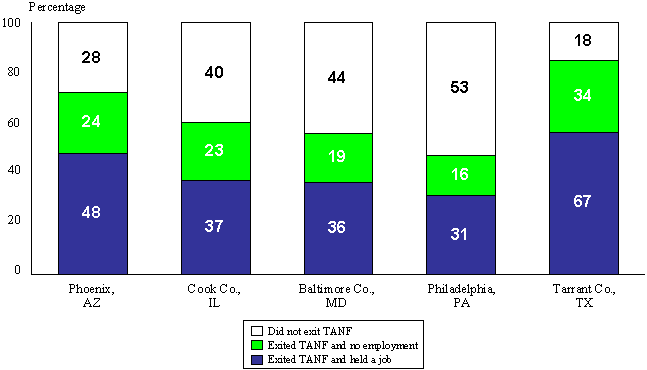 |
| Source: Administrative records data from selected Welfare-to-Work Evaluation study sites, assembled by Mathematica Policy Research, Inc. Note: Figures pertain to TANF exit and employment status within one year of the reference period among the full reference samples. The reference period is September 1999 for Philadelphia and between March and August 2000 for the other sites. Baltimore County largely surrounds but does not include the city of Baltimore. Tarrant County includes the city of Fort Worth. |
B. Analysis Methods
We conducted two types of analyses: (1) an examination of former TANF recipients’ potential UI eligibility, and (2) the sensitivity of UI monetary eligibility to changes in UI program parameters.
Analysis of Potential Eligibility. Much of the analysis in this study focuses on determining potential monetary eligibility for UI. In other words, we examined the extent to which former welfare recipients would have monetary eligibility for UI if they were to experience a qualifying job separation (that is, a job separation occurring through no fault of their own), and if they were available for full-time work. We focused on potential eligibility among all those who exited TANF for work in order to better understand what safety nets are available to these low-wage workers in case of job loss. Our examination of potential UI eligibility covers each of the eight quarters after the sample members’ exit from TANF. To estimate potential monetary UI eligibility during any given quarter after TANF exit, we used both data on the former TANF recipients’ earnings during the UI base period for that quarter and the eligibility rule for the appropriate year for the relevant state. Earnings used are based on those reported in the wage records data.
Based on each state’s rule, for each quarter after TANF exit, former TANF clients who had worked for at least two quarters in the relevant base period for that quarter and who met the minimum qualifying earnings and the high-quarter earning in that base period were treated as potentially having monetary eligibility for UI for that quarter. As mentioned in Section A of Chapter I, , “base period” typically refers to the first four of the last five completed quarters. The minimum qualifying earnings and the high-quarter earnings for each state are shown in Table I.2. It is important to recognize that our estimates of monetary UI eligibility are based on clients’ earnings during the relevant base period for each quarter if they were to experience a job loss during the particular quarter; our basic analysis is not restricted to those who actually experienced a job loss.
Sensitivity of Potential Eligibility to Alternative UI Program Parameters. Concerns about the decrease in UI participation rates over time and the desire that UI eligibility rules keep pace with the changing characteristics of the workforce have led some advocates to suggest reforms to the UI system. These reforms have focused on redefining labor force attachment, redefining the base period, better redefining separation through no fault, redefining ability and availability for work, and increasing the currently low benefit levels in many states. In our analysis, we examined the sensitivity of potential UI monetary eligibility to three types of changes in UI program parameters: (1) alternative definitions of the base period, (2) alternative definitions of earnings requirements, and (3) alternative definitions of weekly benefit calculations. For example, most of the analysis of potential UI eligibility is based on the standard definition of the base period used in most states—earnings during the first four of the last five completed quarters. However, we also used two alternative definitions of the base period in our examination of UI eligibility: (1) earnings during the last four completed quarters, and (2) earnings during the current quarter and the last three completed quarters. We conducted simulations to estimate the effects of each of these definitions of the base period, as well as to determine monetary eligibility if a state sequentially used all three rules to determine eligibility. We also examined the sensitivity of monetary UI eligibility to the alternative definitions of minimum qualifying earnings and high-quarter earnings currently in use across various states in the nation.
C. TANF Program and Employment Experiences of Sample Members
Before examining monetary eligibility among the sample members, it is useful to briefly describe the sample members’ TANF and employment experiences during the year preceding the reference month, as well as their earnings and employment patterns after welfare exit.(4) We observed considerable variation in TANF receipt across the study sites during the year preceding the reference month. For instance, clients in Philadelphia spent on average just more than 80 percent of the time during the year prior to the reference month on welfare; by contrast, clients in Tarrant County and Phoenix spent just over 50 percent of that time on welfare (Table II.3). The average amount of TANF benefits received also varied considerably, with clients receiving less than $200 per month, on average, at the time of the reference month in Tarrant County, compared with more than twice that amount in Philadelphia.
| Characteristics | Phoenix, AZ |
Cook Co., IL |
Baltimore Co., MD |
Philadelphia, PA |
Tarrant Co., TX |
|---|---|---|---|---|---|
| Age at Reference Month (Years) | |||||
Less than 20 |
7 | 6 | 5 | 8 | 7 |
21 to 30 |
48 | 47 | 31 | 42 | 50 |
31 to 40 |
32 | 33 | 28 | 33 | 29 |
More than 40 |
12 | 15 | 36 | 17 | 14 |
(Average age, in years) |
(30) | (31) | (37) | (31) | (30) |
| Percentage of Time on TANF in Year Preceding Reference Month | |||||
0 |
5 | 2 | 7 | 2 | 6 |
1 to 25 |
23 | 7 | 14 | 8 | 24 |
26 to 50 |
21 | 9 | 12 | 7 | 20 |
51 to 75 |
17 | 15 | 13 | 9 | 19 |
76 to 99 |
14 | 28 | 10 | 13 | 14 |
100 |
21 | 39 | 45 | 61 | 17 |
(Average) |
(56) | (79) | (69) | (83) | (54) |
| Average Monthly TANF Benefit Amount in Year Preceding Reference Month | |||||
Less than $200 |
15 | 32 | 35 | 10 | 56 |
$200 to $300 |
39 | 37 | 11 | 11 | 41 |
$300 to $400 |
31 | 18 | 32 | 30 | 2 |
More than $400 |
13 | 13 | 22 | 49 | 0 |
(Average) |
($297) | ($258) | ($296) | ($398) | ($187) |
| Percentage of Time Employed in Year Preceding Reference Month | |||||
0 |
36 | 38 | 42 | 49 | 35 |
1 to 25 |
15 | 15 | 13 | 16 | 17 |
26 to 50 |
16 | 13 | 12 | 14 | 17 |
51 to 75 |
15 | 13 | 12 | 11 | 16 |
76 to 100 |
18 | 22 | 22 | 10 | 16 |
(Average) |
(41) | (42) | (40) | (30) | (40) |
| Sample Size | 6,758 | 39,513 | 2,669 | 34,813 | 2,273 |
| Source: Administrative records data from selected Welfare-to-Work Evaluation study sites, assembled by Mathematica Policy Research, Inc. | |||||
There was less variation across the sites in terms of clients’ reported employment—clients in most of the sites were employed for around 40 percent of the time during the year preceding the reference month. The exception was Philadelphia; in that site, on average, clients were employed about 30 percent of the time during the year preceding the reference month, and nearly half the clients had no employment during that year.
As we saw in Figure II.1, between 30 and 50 percent of clients left welfare within one year of the reference month and found employment within 3 months of welfare exit, except for Tarrant County where the rate was of almost 70 percent of clients. Average quarterly earnings at the time of TANF exit ranged between $2,100 and $2,500 for most sites (Table II.4). Baltimore County, where clients had average quarterly earnings of more than $2,800, was the exception. That finding is consistent with Baltimore County having somewhat older sample members on average. We observed the lowest level of earnings in Tarrant County; around 35 percent of former TANF recipients there earned less than $1,000 during the quarter of their TANF exit.
| Phoenix, AZ |
Cook Co., IL |
Baltimore Co., MD |
Philadelphia, PA |
Tarrant Co., TX |
|
|---|---|---|---|---|---|
| Quarterly Earnings at Time of Exit | |||||
Less than $1,000 |
29 | 31 | 26 | 24 | 35 |
$1,000 to $2,000 |
21 | 19 | 20 | 21 | 21 |
$2,000 to $3,000 |
18 | 18 | 17 | 20 | 15 |
$3,000 to $4,000 |
15 | 15 | 12 | 16 | 13 |
$4,000 to $5,000 |
9 | 9 | 9 | 10 | 7 |
More than $5,000 |
7 | 8 | 15 | 8 | 8 |
| (Average) | ($2,240) | ($2,324) | ($2,846) | ($2,460) | ($2,106) |
| Sample Size | 3,208 | 14,482 | 967 | 10,833 | 1,512 |
| Sources: Administrative records data from selected Welfare-to-Work Evaluation study sites, assembled by Mathematica Policy Research, Inc. Note: Sample includes those who exited TANF and held a job within three months of TANF exit. |
|||||
Even though many welfare recipients are able to find jobs, they often have greater difficulty than do other workers in keeping them. Former welfare recipients typically lack experience with the world of work, and they usually obtain entry-level jobs associated with high turnover. When the economy is weak, employers who wish to reduce their workforce may lay these workers off before they do so to more experienced workers. Indeed, we found that the average levels of reported employment among those who left TANF for work declined considerably over time. During the quarter after TANF exit, nearly 90 percent of welfare recipients who left for work had UI-reported employment (Figure II.2). This fraction dropped steadily over time, and at two years after TANF exit, employment rates among the five sites ranged from roughly 50 percent to roughly 70 percent.
Some individuals who are not employed at the time of their TANF exit may eventually enter the labor market. We see from the bottom of Figure II.2 that a small fraction of these individuals indeed find employment. However, employment levels for these individuals remain very low (and constant), at around 20 percent. On average, their quarterly earnings were about half the earnings of those who left TANF for work (between $1,150 to $1,350; not shown).
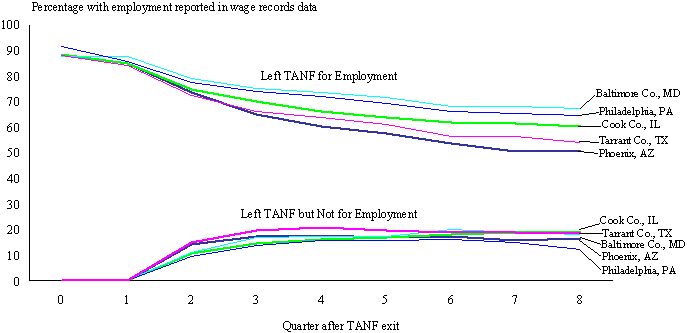 |
| Source: Administrative records data from selected Welfare-to-Work Evaluation study sites, assembled by Mathematica Policy Research, Inc. Note: Figures pertain to those who exited TANF within one year of the reference period. The reference period is September 1999 for Philadelphia and between March and August 2000 for the other sites. Baltimore County largely surrounds but does not include the city of Baltimore. Tarrant County includes the city of Fort Worth. |
Endnotes
(1) These data were obtained to provide contextual background for the main analysis of WtW participants in these sites. The “reference month” drawn was the month in which WtW programs began enrolling WtW participants in the main evaluation sample.
(2) We include people who had reported earnings during either the quarter of TANF exit or the quarter after TANF exit.
(3) It is possible that differences in state TANF benefit generosity may have led more people in Philadelphia than in Texas to combine work and welfare, thus explaining some of these differences. For instance, individuals who had income of just over $400 per month are not eligible for TANF benefits in Texas, while individuals could have an income of around $800 per month in Pennsylvania and still be eligible. Interestingly, the proportion of those remaining on TANF who also worked was fairly similar in Tarrant County and in Philadelphia. Twelve months after the reference months, just under 30 percent of individuals in both sites who were still on welfare also held employment at some point during that quarter (not shown).
(4) Unfortunately, because we have only administrative data, we are able to examine only a very limited set of characteristics.
III: Monetary UI Eligibility
Are TANF leavers likely to have a sufficient history of employment and earnings to be monetarily eligible for UI if they lose their jobs? How long does it take them to establish monetary eligibility? Why are some leavers less likely to be eligible? In this chapter, we discuss basic patterns of potential UI monetary eligibility among former TANF recipients in the five WtW sites who left welfare and worked; our focus is on the monetary eligibility of these individuals during the two-year period after they exited TANF for jobs. We also consider how eligibility rates vary by employment status and TANF receipt during the year preceding the reference month. Because patterns of UI eligibility may vary among the group of former TANF recipients who lose their jobs, we also examine potential monetary UI eligibility among those who actually experienced a job loss during the two-year period since TANF exit. Finally, we conclude this chapter with a discussion of UI monetary eligibility rates for the full set of leavers, including those who left TANF for work.
Around 90 percent of TANF recipients who exited welfare and worked would have attained monetary eligibility at some point during the two-year period after TANF exit.(1) Considerably fewer (between 50 and 80 percent) would potentially have monetary eligibility in any given quarter after TANF exit. These numbers are high relative to the estimated monetary eligibility rates of around 33 percent in studies that used data from the pre-PRWORA period. Additionally, the majority of former TANF recipients who exited for work and did not have monetary eligibility had some earnings during the base period, but their earnings were too low or of insufficient duration to enable them to qualify.
A. Patterns of Basic UI Monetary Eligibility Over Time
- Some 90 percent of former recipients who exited welfare for work would have attained potential monetary eligibility for UI during the two-year period after their TANF exit.
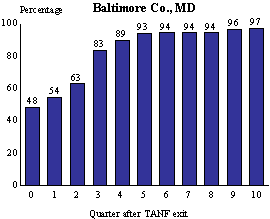
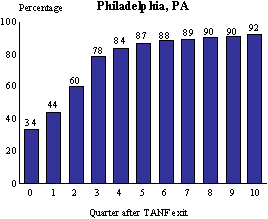
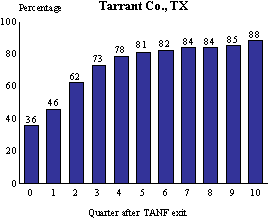
Across all sites, close to 90 percent of those who left TANF for work were likely to have attained monetary eligibility for UI at some point during the two-year period after TANF exit (Figure III.1). As the figure shows, most of those who are estimated to attain monetary eligibility do so during the first year after TANF exit. First-time monetary eligibility increases rapidly during the first three quarters after TANF exit, subsequently growing at a much more modest pace between quarters 4 and 8 after exit. The number estimated as likely to attain monetary eligibility is higher than the numbers found in previous studies of welfare recipients’ monetary eligibility (Vroman 1998; and Kaye 1997). The higher estimate is likely a function of the patterns of higher earnings and of more-stable employment among welfare recipients in recent times, which have been driven by both welfare reform’s strong emphasis on work and the strong economic conditions that prevailed during the study period.(2)
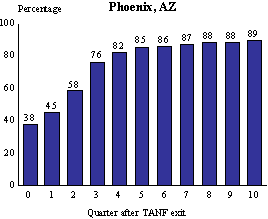 |
|
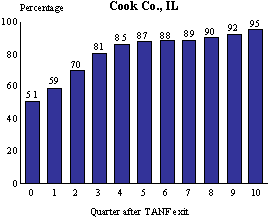 |
 |
 |
 |
| Sources: Administrative records data from selected Welfare-to-Work Evaluation study sites, assembled by Mathematica Policy Research, Inc. Note: Sample includes those who had left TANF within one year of the reference period and held a job around the time of TANF exit. The reference period varied between September 1999 through August 2000 across the states. |
|
- Many TANF leavers who exit for employment and potentially ever attain UI monetary eligibility would subsequently move in and out of UI monetary eligibility status.
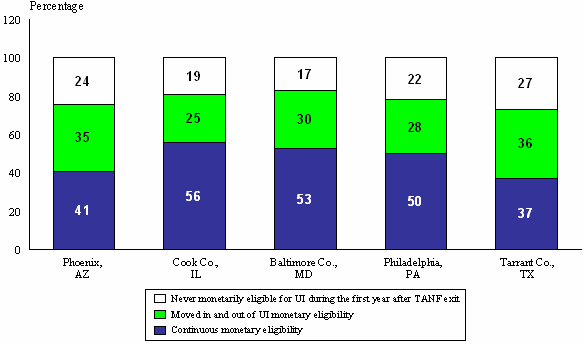
A significant fraction of those who would have attained monetary eligibility for UI also would have lost their eligibility at some point during the two-year period. We examined the extent to which those who would have been monetarily eligible for UI during the first year were likely to remain eligible during the remaining quarters of the two-year period. Across the sites, between 30 and 49 percent of TANF recipients who exited for work and who would have become eligible during the first year after exit would have lost their potential eligibility between the time they became eligible and the end of the eight-quarter period (Figure III.2). This finding suggests that, although many former TANF recipients may “ever” potentially attain monetary eligibility, there is considerable movement in and out of eligibility. Across the sites, only about half the sample members who would have attained eligibility within the first year after TANF exit would have retained it throughout the eight-quarter period. Finally, on average, those who exited TANF for work would have UI monetary eligibility for five to six quarters over the eight-quarter period after TANF exit; the exception was Tarrant County, Texas, where individuals potentially had UI monetary eligibility for just under four quarters (not shown).
 |
| Sources: Administrative records data from selected Welfare-to-Work Evaluation study sites, assembled by Mathematica Policy Research, Inc. Note: Sample includes those who had left TANF within one year of the reference period and held a job around the time of TANF exit. The reference period varied between September 1999 through August 2000 across the states. |
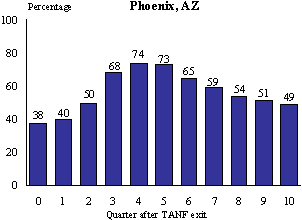
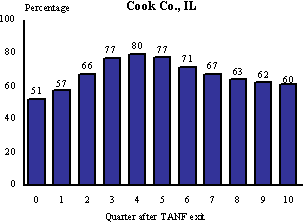
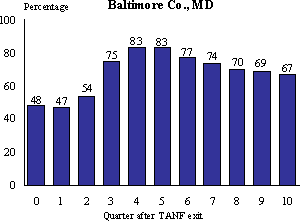
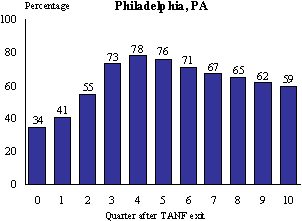
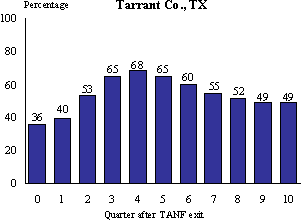
- UI monetary eligibility levels increased steadily over the first four quarters after TANF exit as individuals built up the earnings required to qualify for UI but then slowly fell as many clients experienced job loss.
The fraction who would potentially have monetary eligibility in any given quarter after TANF exit increased steadily during the first four quarters after exit; across sites, 70 to 80 percent had monetary eligibility at the fourth quarter after exit (Figure III.3). Thereafter, potential monetary eligibility rates first slowly fell and then remained at around 50 to 70 percent during each quarter of the second year after exit. Although this pattern is similar across the five sites, potential monetary eligibility in any given quarter was relatively high in Cook County, Baltimore County, and Philadelphia, and somewhat lower in Phoenix and Tarrant counties. The patterns of potential monetary eligibility reflect the effects of the observed employment patterns in the sites in conjunction with the state UI rules in these sites.
 |
|
 |
 |
 |
 |
| Source: Administrative records data from selected Welfare-to-Work Evaluation study sites, assembled by Mathematica Policy Research, Inc. Note: Sample includes those who exited TANF and held a job within three months of TANF exit. |
|
B. Patterns of UI Monetary Eligibility Among Key Subgroups
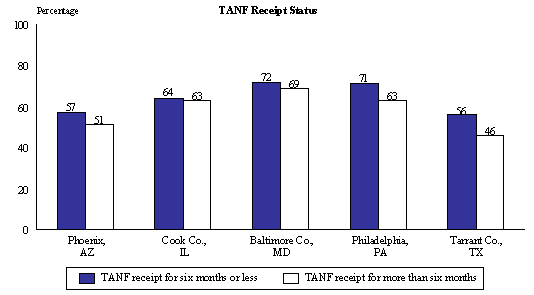
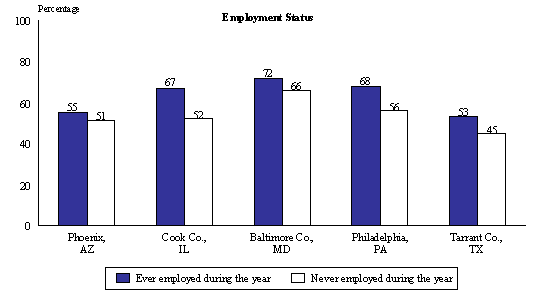
To study UI monetary eligibility in greater depth, we examined potential monetary eligibility rates according to employment and TANF receipt in the year preceding the reference month. We also examined potential UI eligibility rates among TANF leavers who experienced a job loss, and among all TANF leavers, including those who left for reasons other than work.
- People who had more work experience during the year preceding the reference month were more likely to have UI monetary eligibility.
Human capital characteristics usually are important predictors of who is likely to attain UI monetary eligibility. We found that those who had any labor market experience during the year preceding the reference month were more likely to potentially have UI monetary eligibility than were those with no work experience during that year (Figure III.4). We also observed a relationship between TANF receipt and potential monetary UI eligibility, although the differences here are smaller. Overall, people who were on TANF for less than six months during the year preceding the reference month were somewhat more likely to potentially have monetary eligibility for UI in later periods than were those who received TANF more intensively during that year.
 |
 |
| Source: Administrative records data from selected Welfare-to-Work Evaluation study sites, assembled by Mathematica Policy Research, Inc. Note: Sample includes those who exited TANF and held a job within three months of TANF exit. |
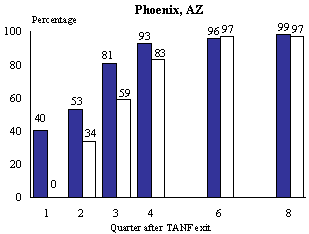
- Former TANF recipients who had exited TANF for work and subsequently experienced a job loss had considerably lower rates of potential UI monetary eligibility than did those who never lost their jobs. These differences were larger among those who lost their jobs during the early quarters after TANF exit.
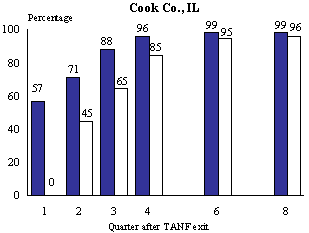
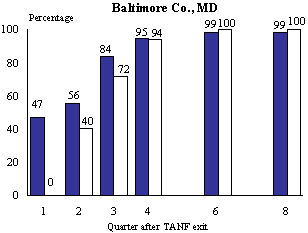
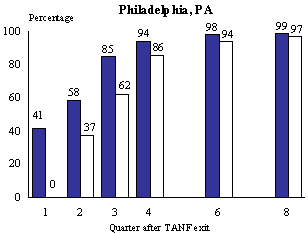
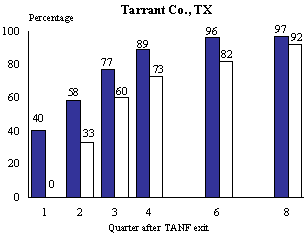
Between 12 and 20 percent of those who left TANF for work lost their jobs during each quarter of the first year after TANF exit for a job (not shown). Workers who lost their jobs tended to have considerably lower potential UI monetary eligibility rates than those who did not lose their jobs. These differences were the largest among workers who lost their jobs during the early period after TANF exit. For instance, workers who had lost their jobs for the first time during the second quarter after TANF exit had potential monetary UI eligibility rates of 33 to 45 percent across the sites as compared with 53 to 71 percent for those who had not lost their jobs until that time (Figure III.5). TANF leavers who lost their jobs for the first time during the fourth quarter or later were considerably more likely to potentially attain monetary eligibility (73 to 94 percent) largely because they had built up a history of employment by that time. Thus, although the overall rate of potential UI monetary eligibility for the group as a whole could become relatively high in later quarters, TANF leavers who lose their jobs during the first year of TANF exit—the group most likely to need UI assistance—are considerably less likely to qualify.
 |
|
 |
 |
 |
 |
 |
|
| Source: Administrative records data from selected Welfare-to-Work Evaluation study sites, assembled by Mathematica Policy Research, Inc. | |
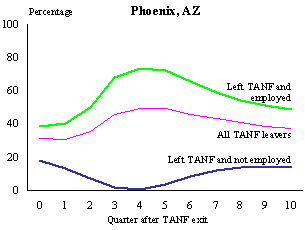
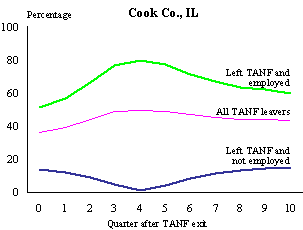
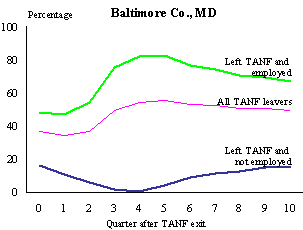
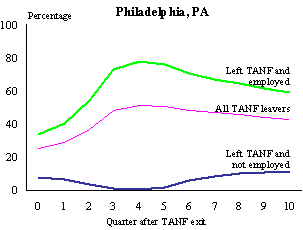
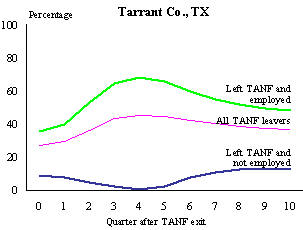
- Former recipients who left TANF for reasons other than work generally had much lower rates of potential UI eligibility than did those who left TANF for work.
Between 10 and 20 percent of people who left TANF within the year following the reference month for reasons other than work potentially had monetary eligibility for UI during the two-year period after TANF exit (Figure III.6). These low rates are not surprising, as many people who leave TANF for non-work reasons never enter the labor market. Interestingly, among this group of TANF leavers, eligibility rates actually fell slightly during the early months after exit. Some members of the group had eligibility at the time of exit because they had some earnings during their reference year before they exited welfare. However, because they did not exit TANF for work, they did not have the employment history around the time of exit to qualify for UI. Eventually, as some of these people entered or reentered the labor market, potential monetary eligibility increased slightly for the group that exited TANF for reasons other than for work.(3) As we saw in Figure II.2 in the preceding chapter, those who exited TANF for reasons other than for work had very low employment rates, with only 20 to 25 percent having any earnings between quarters 4 and 8 after TANF exit.
 |
|
 |
 |
 |
 |
| Source: Administrative records data from selected Welfare-to-Work Evaluation study sites, assembled by Mathematica Policy Research, Inc. Note: Sample includes those who exited TANF and held a job within three months of TANF exit. |
|
C. Why Are Some People Monetarily Ineligible for UI?
As we have seen earlier, a significant number of those who left TANF for work were monetarily ineligible for UI in any given quarter during the second year after exit. Why are some individuals unlikely to attain monetary eligibility for UI? Are they working, but in low-wage jobs and with irregular employment, so that their earnings are insufficient to qualify? Or did they have no employment during the relevant base period for that quarter? If the former reason explains the lack of eligibility, job retention and advancement may have to become an important part of TANF and UI program services. If the latter explanation applies, then it may be necessary to increase the TANF program’s emphasis on job search and basic skills training.
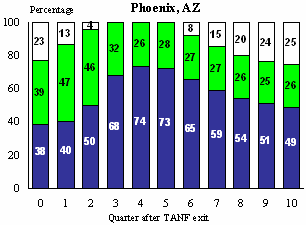
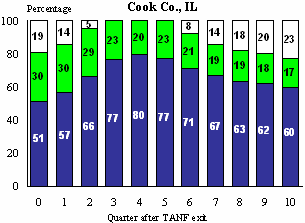
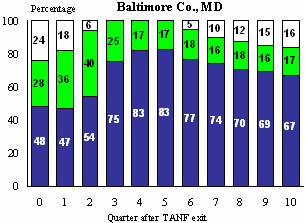
- The majority of former TANF recipients who would not have had monetary eligibility had some earnings during the base period, but their earnings were too low or of insufficient duration to enable them to qualify.
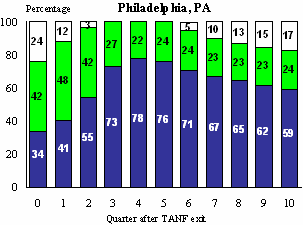
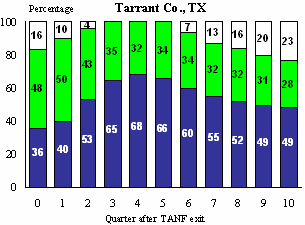
In Figure III.7, the portions of the graphs shaded gray show the fraction of individuals who had earnings during the base period for that quarter but who would not have had monetary eligibility for UI. For example, if we examine quarter 8, we see that around 18 to 28 percent of former TANF recipients were monetarily ineligible but had some base-period earnings for that quarter. (This group represents about two-thirds of those who did not attain potential monetary eligibility.) Most of these individuals (between half to over 90 percent across the sites) had earnings below the maximum qualifying levels, which would make them monetarily ineligible. In addition, most of them had worked only one quarter, and thus had no stable employment. The remaining individuals had enough earnings to meet the minimum earnings requirements but failed the earnings distribution requirements such as the proportion of high quarter earnings or the proportion of the earnings outside the high quarter to the whole base period earnings. The high fraction with low earnings and sparse employment histories reinforces the importance of providing job retention services to former TANF recipients to help them build stable employment histories.
 |
|
 |
 |
 |
 |
 |
|
| Source: Administrative records data from selected Welfare-to-Work Evaluation study sites, assembled by Mathematica Policy Research, Inc. (a): Base period refers to base period for the relevat quarter after TANF exit. |
|
D. The Role of Nonmonetary Factors
In addition to monetary eligibility, nonmonetary factors can also make workers ineligible. People can become disqualified for nonmonetary reasons in one of two main ways. In most states, claimants who quit jobs voluntarily usually are ineligible for benefits. In some states, people who quit for a good cause (usually a work-related reason, such as a sudden change in the hours of work or schedule) may be eligible. The second reason for disqualification of workers with monetary eligibility is the workers’ availability to accept suitable employment. In many states, people who are available to work part time only are ineligible for benefits.
Although we do not have data from the five WtW sites on the fraction of clients who may have nonmonetary eligibility, data from the New Jersey study indicate that a considerable fraction of those with monetary eligibility may at some point be disqualified for nonmonetary reasons.(4) The findings from the New Jersey study indicate that nearly half of employed former TANF recipients quit their jobs; this rate is twice that of national quit rates.(5) About half of those in the New Jersey study who quit their jobs did so for personal reasons, such as a health problem, having to care for a child at home, inconvenient job location, or a transportation issue. Advocates of broadening the UI rules to enable low-wage workers to access benefits more easily have recommended wider use of good cause related to personal reasons, including child care and transportation problems.
The New Jersey study also found that about one in four TANF recipients had had part-time jobs as their current or most recent jobs. If we assume that these individuals would be available to work for only the same number of hours in case of job loss, then they could be disqualified for nonmonetary reasons. Of course, these numbers should be viewed only as a very rough proxy for the fraction who might become disqualified due to part-time employment. For instance, claimants may be available to work full time, or they may not always inform UI workers about the hours that they would like to work. Nonetheless, data on the high rates of quits among former TANF recipients and the relatively high number of part-time workers suggest that a considerably large fraction of those who have potential monetary eligibility might be disqualified for nonmonetary reasons.
Endnotes
(1) Although all TANF recipients exited for employment, some had low enough earnings or did not work for long enough to ever attain potential monetary UI eligibility.
(2) It is also higher than the estimate of 75 percent for New Jersey (Rangarajan et al. 2002). The difference could be explained by the inclusion in the New Jersey study sample of individuals who reported in the survey that they had found jobs, but who did not have any UI reported employment data. The analysis shows that, with the exclusion of these individuals from the New Jersey analysis, nearly 90 percent of the New Jersey sample of TANF recipients who exited for work would have attained monetary eligibility for UI at some point during the two-year period since TANF exit.
(3) Studies that have examined these individuals show that some of them receive Supplemental Security Income, some live with an employed spouse or partner, and some may receive other sources of income. Still others do not have any of these forms of support and have been variously called disconnected workers, or least-stable leavers (Loprest 2002; Wood and Rangarajan 2003; and Zedlewski et al. 2003).
(4) The New Jersey study had survey data on all sample members, which included information on reasons for job separation, as well as information on hours worked.
(5) The New Jersey data on reasons for job separation are based on a period of relatively strong economic conditions; fewer people might voluntarily quit their jobs when economic conditions are weaker.
IV: Potential UI Benefit Amounts and Durations Among Former TANF Recipients
In addition to knowing about the extent of potential UI eligibility, it is also useful to know the amount of benefits that eligible claimants can receive, as well as for how long they can receive benefits. Weekly benefit levels are determined individually by each state and typically are set at 40 to 60 percent of the individual’s average weekly wages, up to a maximum. Individuals who attain eligibility for UI can receive benefits once per week for a certain duration based on weeks worked in the base period, usually for a maximum of 26 weeks. In this chapter, we briefly describe the amounts of UI benefits that former TANF recipients who leave welfare for work potentially can receive, the potential duration of the benefits, and the maximum benefit levels.
We found that, across all the sites, potential average UI weekly benefit amounts for former TANF recipients eligible for these benefits were higher than TANF payments. Potential average UI weekly benefit amounts were about $155 to $200 per week. These figures are considerably higher than the TANF benefit amounts in each state, although how much higher depends on the state’s TANF benefit generosity. In addition, because many former TANF recipients have low earnings, only a small number of individuals in the sites would be likely to reach the maximum weekly benefit levels set by their states. Former TANF recipients in Phoenix were the exception, where nearly one in three of those potentially eligible would have their benefits capped below what they would otherwise qualify for.
A. Weekly Benefit Amounts
- Former TANF recipients in all five sites would be eligible for weekly benefits that were higher than the TANF benefits they would receive in that state.
Former TANF recipients who had exited welfare for work and who potentially had monetary eligibility for UI would likely be able to receive an average UI weekly benefit amount of between $155 and $200 per week (Table IV.1), which would translate to around $675 and $850 per month. The amount of benefits that an individual can potentially receive is a function of his or her earnings in the base period, as well as of the wage replacement rate and maximum weekly benefits set by the state.(1) The average weekly benefit amounts were the highest in Baltimore County, where former recipients had the highest level of earnings, and the state had relatively high wage replacement rates. In contrast, they were the lowest in Cook County; in that site, even though earnings were comparable to those in the other sites, the lower wage replacement rate led to relatively low potential benefit levels. Thus, it appears that state UI program parameters may drive more of the variation in potential benefits across the sites than do the earnings of clients. .(2)
| Phoenix, AZ |
Cook Co., IL |
Baltimore Co., MD |
Philadelphia, PA |
Tarrant Co., TX |
|
|---|---|---|---|---|---|
| Percentage with WBA of: | |||||
Less than $100 |
13 | 26 | 16 | 15 | 18 |
$100 to $150 |
22 | 27 | 13 | 22 | 25 |
$151 to $200 |
25 | 23 | 19 | 23 | 24 |
$201 to $250 |
40 | 13 | 16 | 19 | 18 |
$251 to $300 |
— | 6 | 28 | 11 | 8 |
More than $300 |
— | 6 | 8 | 10 | 9 |
(Average amount) |
($165) | ($155) | ($199) | ($187) | ($175) |
| WBA Replacement Rate of Weekly Wages(a) | .56 | .49 | .55 | .52-.59 | .52 |
| Maximum WBA in 2001 | $205 | $296 | $280 | $430 | $294 |
| Sample Size | 1,740 | 8,472 | 681 | 6,989 | 784 |
| Source: Calculations from administrative records from selected Welfare-to-Work evaluation states, and state UI program rules, assembled by Mathematica Policy Research, Inc. Note: Sample includes those who exited TANF for work within 12 months of reference date and were ever monetarily eligible for UI within the 8 quarters following TANF exit. WBA = weekly benefit amount. (a): Refers to high-quarter wages, except for Illinois, which is based on the two highest-quarter wages. |
|||||
Potential average weekly benefits increase somewhat over time across all the sites, reflecting an increase in people’s earnings over time (Table IV.2). These UI benefit levels are relatively generous when compared with the maximum TANF grant of $187 to $430 per month for a family of three with no other income (shown in Table IV.2). The average monthly amount of TANF benefits these TANF recipients would actually receive is likely to be somewhat lower, because their other income will count toward the calculation of their TANF benefits.
| Phoenix, AZ |
Cook Co., IL |
Baltimore Co., MD |
Philadelphia, PA |
Tarrant Co., TX |
|
|---|---|---|---|---|---|
| Quarter After TANF Exit | |||||
0 |
$135 | $111 | $169 | $121 | $132 |
1 |
130 | 115 | 172 | 124 | 132 |
2 |
139 | 123 | 170 | 143 | 144 |
3 |
145 | 130 | 169 | 157 | 152 |
4 |
151 | 136 | 170 | 164 | 160 |
5 |
156 | 142 | 177 | 172 | 167 |
6 |
161 | 148 | 187 | 179 | 173 |
7 |
162 | 152 | 195 | 183 | 175 |
8 |
165 | 155 | 199 | 187 | 175 |
| WBA Replacement Rate of Weekly Wages(a) | .56 | .49 | .55 | .52-.59 | .52 |
| Maximum WBA in 2001 | $205 | $296 | $280 | $430 | $294 |
| Sample Size(b) | 1,229-2,365 | 6,549-11,543 | 454-801 | 3,694-8,403 | 545-1,029 |
| Source: Calculations from administrative records from selected Welfare-to-Work evaluation study sites, and state UI program rules, assembled by Mathematica Policy Research, Inc. Note: Sample includes those who exited TANF for work within 12 months of reference date and were ever monetarily eligible for UI within the 8 quarters following TANF exit. WBA = weekly benefit amount. (a): Refers to high-quarter wages, except for Illinois, which is based on the two highest-quarter wages. (b): Sample size ranges represent the minimum and the maximum sample sizes for which the averages of WBA were computed across the quarters. |
|||||
- Individuals are more likely to potentially reach their maximum weekly benefit amounts in states with low maximum weekly benefit amounts, or in states whose former TANF recipients have relatively high earnings, than they would in other states.
As discussed, UI weekly benefit amounts are calculated as some fraction of an individual’s average base-period weekly earnings. However, each state also sets a limit at which a claimant’s weekly benefits are capped. If very few former recipients who are claimants have benefits that exceed their cap, then in essence, an increase in the maximum benefit levels would not affect the benefits these individuals would receive. In contrast, if many claimants “top out” at the maximum benefit levels, then any increase in the maximum benefit level would likely affect more individuals. Welfare recipients usually are low-wage workers, and it is possible that many do not earn enough to reach the maximum and, hence, may be capped at that level. If this is the case, an increase in the maximum weekly benefit levels may not benefit these individuals much.(3) The extent to which this is likely to be the case depends on the level at which a state sets its maximum weekly benefit amount, the wage replacement rate, and the earnings levels of individuals.
We found some variation in the rate at which individuals reach the maximum weekly benefit amount cap. In Philadelphia, where the maximum weekly benefits are set at fairly high levels, very few former TANF recipients would have reached the maximum benefit levels (Table IV.3). Similarly, in Cook County and Tarrant County, relatively modest maximum weekly benefit amounts combined with modest earnings levels and low wage replacement rates also would have led very few former TANF recipients in those sites to hit the maximum. In contrast, low maximum weekly benefit amounts would have led close to one-third of workers to reach the maximum benefit level in Phoenix, and the high earnings combined with the modest replacement rate of 55 percent would have led one in four former TANF recipients in Baltimore County to reach that level.(4)
| Phoenix, AZ |
Cook Co., IL |
Baltimore Co., MD |
Philadelphia, PA |
Tarrant Co., TX |
|
|---|---|---|---|---|---|
| Quarter After TANF Exit | |||||
0 |
18 | 2 | 26 | 0 | 3 |
1 |
16 | 2 | 24 | 0 | 2 |
2 |
17 | 2 | 20 | 1 | 2 |
3 |
19 | 2 | 16 | 1 | 3 |
4 |
23 | 2 | 16 | 1 | 4 |
5 |
26 | 3 | 18 | 1 | 6 |
6 |
31 | 3 | 21 | 1 | 6 |
7 |
34 | 4 | 23 | 2 | 6 |
8 |
36 | 4 | 24 | 2 | 6 |
| Excess Amount in Quarter 8, Over the Maximum for Those Who Reach the Maximum | $71 | $106 | $141 | $20 | $88 |
| Maximum WBA in 2001 | $205 | $296 | $280 | $430 | $294 |
| Sample Size(a) | 1,229-2,365 | 6,549-11,543 | 454-801 | 3,694-8,403 | 545-1,029 |
| Source: Calculations from administrative records from selected Welfare-to-Work evaluation study sites, and state UI program rules, assembled by Mathematica Policy Research, Inc. Note: Sample includes those who exited TANF for work and were monetarily eligible for UI during the quarter. WBA = weekly benefit amount. (a): Sample size ranges represent the minimum and the maximum sample sizes for which the percentages were computed across the quarters. |
|||||
B. Potential Duration and Potential Maximum Benefits
In addition to computing the amount of benefits that claimants can receive, states must also determine the duration of benefits. Because the UI program provides partial and temporary wage replacement for people who have lost jobs, the potential duration of benefits generally is limited, usually to no more than 26 weeks. A few states follow a uniform-duration rule for all workers; all eligible claimants receive benefits for a uniform amount of time, most typically 26 weeks. Most states have a variable-duration rule, where duration is determined in one of two ways. Some states first establish a maximum benefit level as a fraction of the base-period earnings, which, in conjunction with weekly benefits, can be used to compute duration. Other states use an average weekly wage method and set potential benefits as a fraction of the weeks worked during the base period. Three of the five study states (Illinois, Maryland, and Pennsylvania) essentially have a uniform-duration rule.(5)
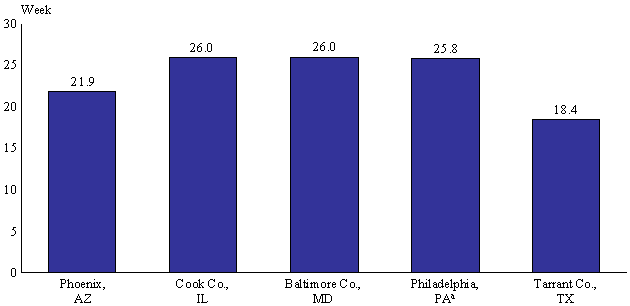
- The average potential duration of UI benefits ranged from 18 to 26 weeks.
The average potential duration of benefits for former TANF recipients in the three of the five study sites with a uniform-duration rule was essentially 26 weeks (Figure IV.1). Average duration was somewhat lower in the remaining two sites (Phoenix and Tarrant County). Potential duration in those two sites remained basically unchanged during the first few quarters after TANF exit and then, as former recipients gained work experience and increased their earnings during the base period, increased somewhat to about 22 weeks in Phoenix and to 18 weeks in Tarrant County. Tarrant County’s former TANF recipients had particularly low durations, as the formula used to calculate the proportion of base-period weeks is set at 27 percent in Texas, compared with 33 percent in most other states in this study.
 |
| Source: Calculations from administrative records from selected Welfare-to-Work evaluation study sites, and state UI program rules, assembled by Mathematica Policy Research, Inc. (a): Philadelphia has two uniform Potential durations(15 weeks or 26 weeks). A small fraction in our sample had 10 weeks of Potential duration. |
| Phoenix, AZ |
Cook Co., IL |
Baltimore Co., MD |
Philadelphia, PA |
Tarrant Co., TX |
|
|---|---|---|---|---|---|
| Percentage with MBA of: | |||||
Less than $2,000 |
17 | 14 | 9 | 9 | 31 |
$2,001 to $3,000 |
19 | 20 | 11 | 13 | 19 |
$3,001 to $4,000 |
17 | 21 | 10 | 18 | 17 |
$4,001 to $5,000 |
15 | 18 | 15 | 19 | 13 |
$5,001 to $6,000 |
32 | 12 | 12 | 15 | 9 |
$6,001 to $7,000 |
— | 7 | 12 | 12 | 4 |
More than $7,000 |
— | 9 | 31 | 16 | 7 |
(Average amount) |
($3,710) | ($4,018) | ($5,176) | ($4,856) | ($3,133) |
| Sample Size | 1,740 | 8,472 | 681 | 6,989 | 784 |
| Source: Calculations from administrative records from selected Welfare-to-Work evaluation states, and state UI program rules, assembled by Mathematica Policy Research, Inc. MBA = maximum benefit amount |
|||||
- The increases in the weekly benefit amounts over time (combined with the increases in potential duration in certain sites) led to fairly large increases in the potential maximum cumulative benefits over time.
There was considerable variation across the study sites with respect to the potential maximum cumulative amount of benefits for which claimants would be eligible. For instance, on average, at the eighth quarter after TANF exit, potential maximum cumulative benefit amounts ranged from slightly more than $3,000 in Tarrant County to more than $5,000 in Baltimore County (Table IV.4). Additionally, the potential maximum cumulative benefits amounts for which claimants would be eligible increased over time, as former TANF recipients gained work experience and accumulated higher earnings (Table IV.5).
| Phoenix, AZ |
Cook Co., IL |
Baltimore Co., MD |
Philadelphia, PA |
Tarrant Co., TX |
|
|---|---|---|---|---|---|
| Quarter After TANF Exit | |||||
0 |
$2,781 | $2,885 | $4,384 | $3,113 | $2,064 |
1 |
2,538 | 3,003 | 4,464 | 3,217 | 1,983 |
2 |
2,609 | 3,195 | 4,424 | 3,705 | 2,156 |
3 |
2,775 | 3,389 | 4,387 | 4,075 | 2,468 |
4 |
3,176 | 3,544 | 4,421 | 4,265 | 2,831 |
5 |
3,475 | 3,690 | 4,606 | 4,460 | 3,091 |
6 |
3,614 | 3,841 | 4,852 | 4,641 | 3,232 |
7 |
3,671 | 3,948 | 5,062 | 4,752 | 3,303 |
8 |
3,710 | 4,018 | 5,176 | 4,856 | 3,374 |
| Sample Size(a) | 1,229-2,365 | 6,549-11,543 | 454-801 | 3,694-8,403 | 545-1,029 |
| Source: Calculations from administrative records from selected Welfare-to-Work evaluation states, and state UI program rules, assembled by Mathematica Policy Research, Inc. Note: Sample includes those who left TANF for work and were monetarily eligible for UI during the quarter. (a): Sample size ranges represent the minimum and the maximum sample sizes for which the averages of MBA were computed during the period. |
|||||
Endnotes
(1) As described in Chapter I, the wage replacement rate refers to the percentage of the claimant's weekly wages earned during the base period that would be replaced by UI benefits.
(2) While total base-year earnings seem to vary moderately across sites, as shown in Table IV.4, the variations become less significant when examined as weekly earnings, the unit in which UI benefit payments are determined.
(3) In the next chapter, we examine the sensitivity of average weekly benefit amounts that claimants can potentially receive to increase in the maximum weekly benefit amounts.
(4) While we do not have comparable data for the WtW evaluation states, we know that roughly one-quarter of New Jersey's entire UI caseload had weekly benefits at the maximum during the late 1990s and early 2000s. In that state, very few former welfare recipients had reached the maximum benefit levels. The difference between the two groups is driven by the generally low wages earned by the population of former TANF recipients. Based on these data, we suspect that the fraction of state UI caseloads obtaining weekly benefits at the maximum level is considerably larger in Arizona and Maryland than in the other WtW study states, as a relatively large fraction of the TANF recipients in our sample were at the maximum weekly benefit levels in those two study sites, compared with the other study sites.
(5) Pennsylvania has two flat durations (a 16-week duration and a 26-week duration) based on whether a claimant worked for less than or more than 18 weeks during the base period, counting weeks with earnings of at least $50 per week.
V: Sensitivity of Key Outcomes to Alternative Definitions of UI Program Rules
Concerns about the declines in UI participation rates over time and the desire that UI eligibility rules keep pace with the changing characteristics of the workforce have led many to suggest reforms to the UI system.(1) Many of these proposed reforms have focused on redefining labor force attachment, better identifying what can be included as separation through no fault, redefining ability and availability for work, and increasing maximum weekly benefit amounts.
An important question with respect to former TANF recipients, who typically are low-wage workers, is: To what extent do the actual levels of UI program parameters set by the states really matter? If eligibility or benefit levels are fairly sensitive to the program parameters, then changes to program rules will likely help more low-wage workers attain eligibility. However, if they are not very sensitive, then such changes are unlikely to have much impact. To study this issue, we conducted simulations to examine the sensitivity of the various key outcomes to alternative definitions of minimum qualifying earnings, alternative calculations of the weekly benefit amounts, and alternative definitions of the base period.
Our primary approach in conducting these simulations was to use the range of program parameter values currently being used across various states. Specifically, we rank each of the program's eligibility rules currently used in states across the country in order of generosity, and simulated program changes using the parameters from states in the bottom, medium, and top decile in this range. We used this strategy as we wanted to perform simulations on a somewhat realistic range of parameter values. We also describe the extent to which monetary UI eligibility would change with other types of program parameter changes.
We found that UI monetary eligibility among former TANF recipients is only slightly sensitive to some key UI program parameters related to monetary eligibility--the minimum qualifying earnings requirement, and the alternative base period. UI eligibility rates increase by around five to seven percentage points if states with more restrictive rules were to adopt more generous states' rules. These modest changes reflect the fact that the minimum qualifying earnings are generally set at fairly low levels, even in states with the more restrictive rules. Alternative base periods that include more-recent periods to calculate eligibility enable former recipients to obtain monetary eligibility sooner after TANF exit than they otherwise would, but they do not substantially affect the fraction who would ever become eligible. We also find that eliminating the two-quarter work requirement rule would have a relatively large impact on potential UI monetary eligibility, and could potentially increase monetary UI eligibility by between 9 to 14 percentage points across the sites for this population.
A. Alternative Definitions of Minimum Qualifying Earnings
States vary substantially with respect to the minimum earnings that individuals must have in order to qualify for UI. We calculated potential UI eligibility rates for the five study sites, using a range of minimum qualifying earnings that corresponded roughly to the bottom decile ($900), the median ($1,600), and the top decile ($2,800) among all 50 states. During these simulations, we used the two-quarter work requirement, which is the employment requirement rule used in all five study states, as well as in a majority of states across the country.
- UI monetary eligibility rates for this population are only somewhat sensitive to the specification of the minimum qualifying earnings based on rules currently used in states across the country.
Figure V.1 contains information for each study site about potential monetary eligibility for the eighth quarter after TANF exit, including information on the percentage of former TANF recipients in each site who would be eligible under the current state rule, and the percentage who would be eligible under different minimum qualifying earnings rules (equivalent to the bottom, median, and top decile of minimum qualifying earnings from all states). The bottom panel presents information on the relative change in UI monetary eligibility rate that results from each of these simulations.
Potential monetary eligibility rates do not vary much under alternative definitions of minimum qualifying earnings currently being used by states. Even when we consider the largest changes in the rules (for example, a change from Texas’s minimum qualifying earnings of $1,776 to that for the lowest-decile state [$900]), we observe only a four percentage point increase (a 9 percent increase over the base) in potential UI monetary eligibility for the study sample members (Figure V.1).(2) Similarly, if Maryland, which has a minimum qualifying earnings of $900, made its rule as restrictive as that of the top-decile state ($2,800), we would observe only a six percentage point reduction in the fraction with potential monetary eligibility (or a 10 percent decrease). Of course, these findings may be driven by the fact that the overall minimum qualifying requirements for most states are relatively low compared with typical earnings (even among the group of workers in the study); in this case, changes in the earnings requirements would be unlikely to make a large difference.
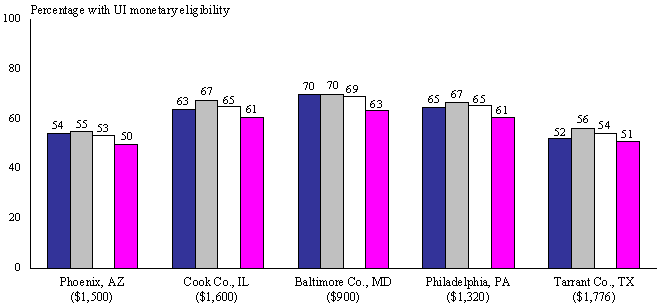 |
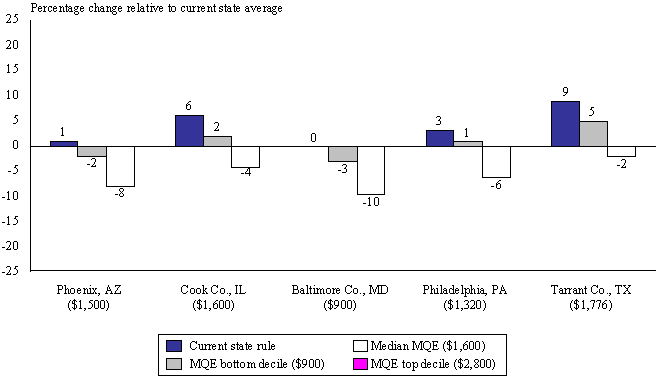 |
| Source: Calculations from administrative records from selected Welfare-to-Work evaluation study sites, and state UI program rules, assembled by Mathematica Policy Research, Inc. Note: Dollar values in parentheses refer to the minimum qualifying earnings (MQE) for each state. The percentage change (in the lower panel) was calculated as the difference between eligibility calculated under the current state MQE rule compared with the alternative definitions of the MQE, divided by the eligibility under current state rules. Sample includes those who exited TANF and held a job within three months of TANF exit. MQE = Minimum qualifying earnings. |
- Significant increases in UI monetary eligibility can be achieved if the two-quarters of work rule were to be eliminated.
To obtain a better understanding of factors that monetary UI eligibility might be more sensitive to, we examined the reasons for ineligibility among sample members who had exited TANF for work and would potentially be ineligible for UI during the 8th quarter after TANF exit. As seen in Figure V.2, across the sites, between 30 to 48 percent did not have monetary UI eligibility during this quarter. Among those ineligible, about one in three (and close to half in two states) would have been ineligible because they had no earnings in the base period. Another one-quarter to one-third of these workers would have been ineligible because they did not have employment for more than one quarter in the base period. For instance, removing the two-quarter work requirement rule could increase monetary UI eligibility in quarter 8 by between 9 and 14 percentage points across the sites. Similarly, another 2 to 10 percentage points more of sample members had the required base period earnings and had worked at least two quarters but did not meet the high-quarter earnings requirement.(3)
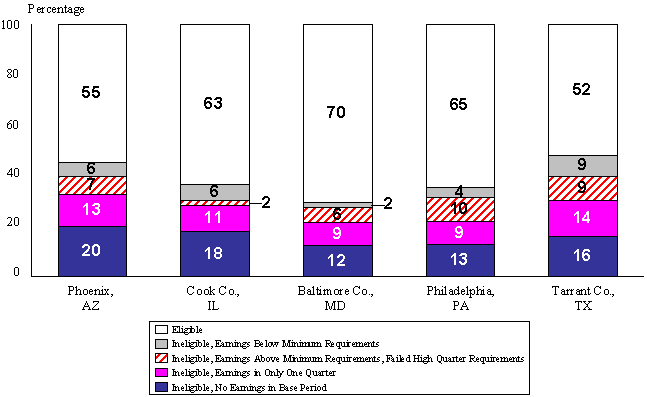 |
| Source: Administrative records from selected Welfare-to-Work evaluation study sites, and state UI program rules, assembled by Mathematica Policy Research, Inc. Note: Earnings and quarters worked pertains to earnings and employment in the base period. |
B. Alternative Definitions of Weekly Benefit Calculation
States also vary in how they calculate weekly benefits. In most of the study states, weekly benefits are calculated as between 50 and 60 percent of the claimants’ average weekly wages based on the high-quarter earnings, assuming that an individual worked the entire quarter (13 weeks), up to a maximum. States also set a maximum benefit amount, which ranges from a low of around $200 per week in Alabama, Arizona, and Mississippi to a high of around $500 per week in Massachusetts and Washington. In the following discussion, we examine how weekly benefits would vary according to different assumptions about the maximum benefit amount, assuming that each state had a wage replacement rate of 50 percent of the average weekly wages based on the high-quarter wages.
- Changes in maximum weekly benefit levels would affect most former TANF recipients’ weekly benefit amounts only a little.
Setting the maximum weekly benefit amounts at the level of the state with the lowest-decile amount ($234) results in weekly benefit amounts that are only about $10 lower on average than when maximum weekly benefit amounts are set at the levels of the state with the highest ($447; Table V.1). This small difference is due primarily to the fact that former TANF recipients in most of the sites generally had fairly low wages, with only a small fraction of these individuals reaching maximum weekly benefit levels set by the state. The exception was Baltimore County, where former recipients had higher earnings relative to the other sites.(4) In this site, the weekly benefit level was approximately $30 lower on average when the maximum benefit level was set at the value of the lowest decile state, compared with what it would be when set at the state with the highest maximum benefit level.
| Average Weekly Benefit Amounts | |||||
|---|---|---|---|---|---|
| Phoenix,AZ | Cook Co.,IL | BaltimoreCo., MD | Philadelphia,PA | Tarrant Co.,TX | |
| Maximum Benefit Amounts | |||||
Bottom decile ($234) |
171 | 162 | 178 | 165 | 161 |
Median ($300) |
178 | 169 | 192 | 172 | 167 |
Top decile ($430) |
181 | 173 | 202 | 176 | 170 |
Maximum of all states ($447) |
182 | 174 | 207 | 177 | 171 |
| Sample Size | 3,208 | 14,482 | 967 | 10,833 | 1,512 |
| Source: Calculations from administrative records from selected Welfare-to-Work evaluation study sites, and state UI program rules, assembled by Mathematica Policy Research, Inc. Note: Weekly benefit amounts were computed as 50 percent of the average weekly wages based on the high quarter wages. HQE = high-quarter earnings. |
|||||
C. Alternative Definitions of the Base Period
Most states define their standard base period as the first four of the last five completed quarters. However, some states instead use an alternative definition that includes more recently completed quarters. Including more-recent quarters of employment produces a base period that may benefit those with shorter spells or more gaps in employment. Thus, we examined the sensitivity of UI monetary eligibility to alternative definitions of the base period. The first alternative includes earnings from the four most recently completed quarters rather than earnings for the first four of the last five completed quarters. The second one includes earnings from the current quarter and the last three completed quarters. Finally, we examined what would happen to monetary eligibility if a state were to combine these definitions, and to treat someone as eligible if he or she qualified under any one of these definitions.(5)
- Using alternative definitions of the base period affects eligibility considerably during the early quarters after TANF exit, but less so during later ones.
Following the approach of combining all definitions, including the standard definition, raises the monetary eligibility rates by up to 9 percentage points in Phoenix, Baltimore County, and Tarrant County, during the first quarter and around 6 percentage points thereafter over the two-year period after TANF exit. At 4 and 6 percentage points respectively, the UI eligibility gains are somewhat lower in Cook County and in Philadelphia, but they remained uniform throughout the two-year period after TANF exit (Figure V.3). Overall, the approach of using alternative definitions of the base period does not seem to affect the fraction of former TANF recipients who would ever attain monetary eligibility over the two-year period after TANF exit (Figure V.4).
If we were to use one of the alternative base periods alone, instead of combining it with the other definitions, again, a larger number of those who leave TANF for work would become eligible for UI more quickly, as seen in Figure V.3. However, this change also would have little effect on the fraction ever eligible for UI (Figure V.4).
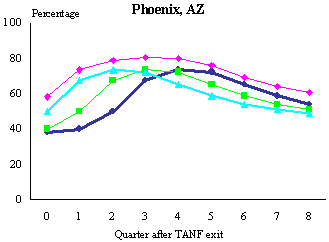 |
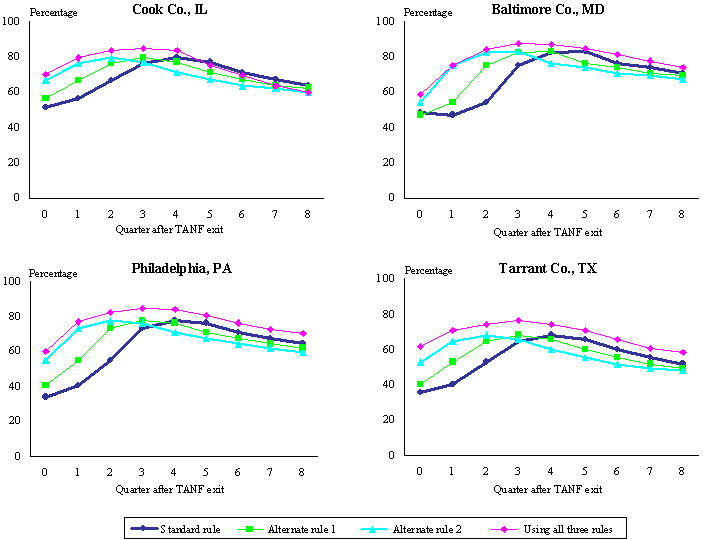 |
| Source: Calculations from administrative records from selected Welfare-to-Work evaluation study sites, and state UI program rules, assembled by Mathematica Policy Research, Inc. Note: The standard definition of base period pertains to counting earnings from the first four of the past five completed quarter, alternative rule 1 pertains to earnings from the last 4 completed quarters, and alternative rule 2 pertains to earnings from the current and past 3 completed quarters. |
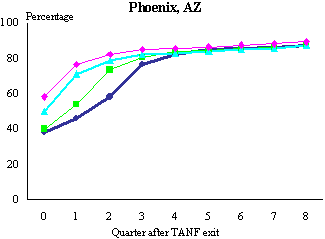 |
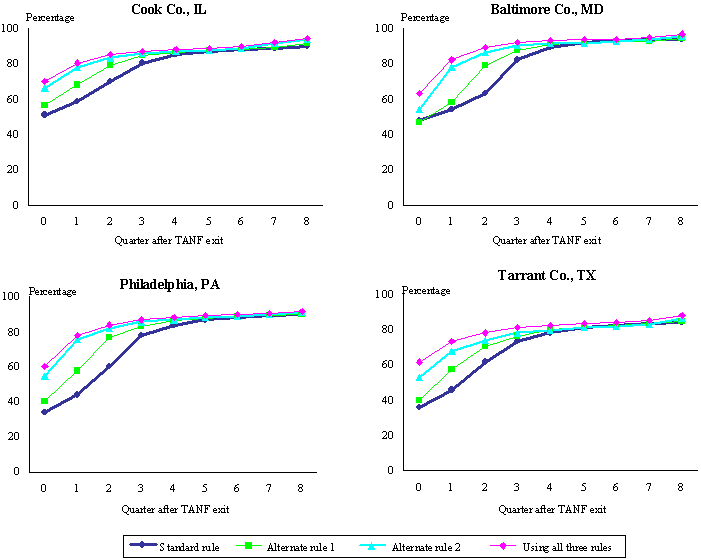 |
| Source: Calculations from administrative records from selected Welfare-to-Work evaluation study sites, and state UI program rules, assembled by Mathematica Policy Research, Inc. Note: The standard definition of base period pertains to counting earnings from the first four of the past five completed quarter, alternative rule 1 pertains to earnings from the last 4 completed quarters, and alternative rule 2 pertains to earnings from the current and past 3 completed quarters. |
Endnotes
(1) See, for example, the Advisory Council on Unemployment Compensation (1996); and the National Economic Law Project (2000).
(2) Among our study states, Texas has the highest minimum qualifying earnings requirement ($1,776), which places it a little above the median state level of $1,600. Illinois lies at the median level, and Arizona and Pennsylvania are somewhat below the median. Maryland has a very low minimum qualifying earnings requirement ($900 in 2001), which places it in the bottom decile of requirements among all states.
(3) The high quarter wages criteria specify that workers must earn a certain dollar amount in the quarter with the highest earnings of their base period. Workers must also earn total base-period wages that are a multiple--typically 1.5 of the high quarter wages. For example, if a worker earns $5,000 in the high quarter, the worker must earn another $2,500 in the rest of the base period. States require earnings in more than one quarter to minimize the likelihood that workers with high earnings in only one quarter receive benefits. Although monetarily eligible, those workers wouldn't be substantially attached to the labor market.
(4) The very low maximum weekly benefit amounts in Phoenix ($205) caused many in this site to be capped at the maximum weekly benefit amounts set by the state; however, because of the low earnings levels of the sample members, we observe only small changes in the potential average weekly benefit amounts.
(5) In fact, some states use alternate base-period rules in this way. In New Jersey, for example, monetary eligibility is first calculated using the standard base period; if an individual does not achieve eligibility, two alternative definitions (the last four completed quarters and the last three completed quarters plus the quarter of filing) are then used to determine whether that individual would qualify under any of these rules. The claimant would be monetarily eligible to receive if they qualify under any definition.
VI: Conclusions
In this study, we examined the extent to which former welfare recipients who leave welfare for employment are likely to be eligible for UI in case of a job loss, using data from the National Evaluation of the Welfare-to-Work Grants Program. In particular, we used data on welfare recipients who exited welfare for work in five sites to examine the extent to which these individuals potentially have monetary eligibility for UI at subsequent points in time. To calculate potential monetary UI eligibility, we use administrative UI wage records data for these welfare recipients who exited for work. Our data cover the period from 1999 to 2002 across the study sites.
We find that the vast majority of TANF recipients who exited welfare for work would potentially attain UI monetary eligibility at some point during the two-year period after TANF exit. However, we also find that there is considerable movement in and out of potential UI eligibility, so that many (between a third to a half) of those who would ever attain monetary eligibility also are likely to subsequently lose it over the following quarters. We also found that, as a group, those who actually experienced a job loss during the first year after TANF exit for work have considerably lower rates of potential UI monetary eligibility.
Thus our findings show that, compared with previous periods, a higher fraction of former TANF recipients who leave welfare and find employment potentially would attain monetary eligibility for UI. A large part of this observed increase may be attributable to the new welfare reforms and their increased emphasis on work, as the study period includes the years 2001 and 2002, years in which economic conditions were not particularly strong. However, despite these increases in potential UI monetary eligibility rates, a considerable minority of those who exit TANF for work are unlikely to attain UI monetary eligibility, and this is especially true for those who actually experience a job loss.
Concerns about declines in UI participation rates and need for UI program rules to keep pace with the changing characteristics and needs of the UI workforce have led some to reexamine the UI system. Many of these proposed reforms have focused on redefining labor force attachment, better identifying what constitutes separation through no fault, redefining ability and availability for work, and increasing the currently low levels of benefits in many states.
Our study shows that rates of potential monetary eligibility for this population are only slightly sensitive to the key UI program parameters when we consider the parameters used in various states across the country. In particular, potential monetary eligibility is only somewhat sensitive to levels at which states set their minimum qualifying earnings. This result is driven partly by the fact that, even in the high-requirement states, the minimum qualifying earnings are relatively low; consequently, an individual working at minimum wage for a third of the year would likely qualify for UI benefits. We find that alternative definitions of the base period that allow more-recent quarters of work to count toward eligibility will enable more former TANF recipients who leave welfare for work to potentially become eligible for UI more quickly, but that they do not affect those individuals’ eligibility over the long run. The extent to which these rules might affect this population depends on the extent to which individuals experience periods of joblessness, especially soon after entering the labor force for the first time. Finally, when we examine the reasons for ineligibility among those ineligible, we find that the elimination of the two quarters of work requirements in the base period and the high-quarter requirements both would likely make between half to two-thirds of those who have no eligibility potentially attain monetary eligibility for UI. The remaining had no earnings in the relevant base period.
In this study, we have not been able to examine the extent to which individuals who have potential monetary eligibility would fail to qualify due to nonmonetary reasons. Other studies suggest that nonmonetary disqualifications are likely to be fairly important for this population; the population’s high rate of quits and the lack of availability to work full-time may cause many who have monetary eligibility to not qualify for nonmonetary reasons. Further research could focus on exploring these factors more carefully, as well as on assessing the implications of changes in nonmonetary factors on both UI eligibility rates and UI program costs.
References
Advisory Council on Unemployment Compensation. “Collected Findings and Recommendations: 1994-1996.” 1996.
Committee on Ways and Means. 2001 Green Book. Washington, DC: U.S. Government Printing Office, 2001.
Kaye, Kelleen. “Unemployment Insurance as a Potential Safety Net for Former Welfare Recipients.” Washington, DC: U.S. Department of Health and Human Services, 1997.
Kaye, Kelleen. “Re-Examining the Potential Role of Unemployment Insurance as a Safety Net for Workers at Risk of Public Assistance Receipt.” Paper prepared for the DOL/ETA National Research Conference on Workforce Security Issues, Washington, DC, June 26-27, 2001.
Loprest, Pamela J. “Disconnected Welfare Leavers Face Serious Risks.” Washington, DC: Urban Institute, August 21, 2002.
Rangarajan, Anu, Carol Razafindrakoto, and Walter Corson. “Study to Examine UI Eligibility Among Former TANF Recipients: Evidence from New Jersey.” Princeton, NJ: Mathematica Policy Research, Inc., November 2002.
Vroman, Wayne. "Effects of Welfare Reform on Unemployment Insurance." Washington, DC: The Urban Institute, 1998.
Wood, Robert G., Anu Rangarajan, and John Deke. “WFNJ Clients Under Welfare Reform: How Is an Early Group Faring Over Time?” Princeton, NJ: Mathematica Policy Research, Inc., September 2003.
Zedlewski, Sheila R., Sandi Nelson, Kathryn Edin, Heather L. Koball, and Tracy Roberts. “Families Coping without Earnings or Government Cash Assistance.” Washington, DC: Urban Institute, February 1, 2003.