


Submitted to:
Office of the Assistant Secretary for Planning and Evaluation (ASPE)
U.S. Department of Health and Human Services
Submitted by:
Mathematica Policy Research, Inc.
Authors:
Ann E. Person, Debra A. Strong, Joshua Furgeson, and Jillian A. Berk
| Contract Number: 233020086/HHSP233200700005T MPR Reference Number: 6391-906 | |
| Submitted to: U.S. Department of Health and Human Services Assistant Secretary for Planning and Evaluation 200 Independence Avenue., SW, Room 404-E Washington, DC 20201 Project Officer: Alana Landey | Submitted by: Mathematica Policy Research, Inc. P.O. Box 2393 Princeton, NJ 08543-2393 Telephone: (609) 799-3535 Facsimile: (609) 799-0005 Project Director: Debra A. Strong |
| The opinions expressed in this paper are those of the authors and do not necessarily represent positions of the U.S. Department of Health and Human Services, Office of the Assistant Secretary for Planning and Evaluation. Material contained in this publication is in the public domain and may be reproduced, fully or partially, without permission of the Federal Government. The courtesy of attribution is requested. The recommended citation follows:
| |
Introduction
Americans, through private donations and public resources, lend their support to the promotion of human and social welfare on a large scale. Giving USA (2007) estimates that private charitable giving in the U.S. totaled nearly $300 billion in 2006roughly $1,000 for every American.
In the international sphere, priorities for foundation and USG spending appear to be similar. In 2006, the largest proportion of international spending from both sectors went toward health and development. Geographically, nearly half of international foundation spending was directed to sub-Saharan Africa, while two-thirds of USG spending supported projects in Africa and the Middle East.Endnotes
Key Findings from This Chapter
Five types of USG-foundation interactions occur, characterized by different degrees of alignment between donors in targets, goals, strategies, resources, and implementation. Three typescommunication, coordination, and collaborationconstitute partnerships.
Incidental Overlap. General targets for philanthropy are aligned, but the overlap is not intentional or planned.
Supplementary Action. Goals are aligned and strategies may or may not be similar.
Communication. Goals and strategies are aligned. Foundation and USG actors take account of one anothers activities in a shared arena and communicate with one another about goals, strategies, and progress. This form of partnership appears to be most appropriate when problems are not well defined or are very broad in scope.
Coordination. Goals and strategies are aligned; implementation is aligned but carried out separately; resources are aligned but typically not pooled. Participating entities are able to plan around and respond to each others activities, but retain their autonomy. Coordination appears fruitful where problems are defined clearly and donors already implement interventions on their own.
Collaboration. Full, formal partnership; goals, strategies, resources, and implementation are aligned, and participants from both sectors participate in joint decision making. May be preferred when a problem is well defined and interventions are fairly well-understood, stakeholders view each other as equals in addressing the problem or program area, and resources are adequate for supporting the partnership.
In evaluating opportunities for partnerships, policymakers and practitioners should consider whether overlap or interactions already exist, whether more formal partnerships could better advance philanthropic goals, what type of partnership might be most productive and achievable, and its costs and benefits. No one model of partnership is best.
The federal and foundation-sponsored health and development initiatives reviewed for this study reveal a broad range of interactions, with opportunities and constraints associated with each. At one end of the spectrum, government and foundations work together in formalized partnershipscharacterized to varying extent by similar goals, joint decision-making, coordination or pooling of funding or other resources, and/or sharing of responsibility for implementation. At the other end of the spectrum are less formalized or purposeful interactions, sometimes even characterized by diametrically opposed strategies, that may nonetheless provide opportunities for improving philanthropic effectiveness outside of full, formal partnerships.
Our analyses suggest that the federal government could benefit from considering a variety of contextual factors in deciding whether and how to partner if it hopes to make the most of working with foundations. These factors are discussed at length in Chapters III and IV, but first we describe the five types of USG-foundation interaction that occur and provide an example of each to illustrate the interplay of factors that can shape interactions.
The Interaction Framework
Our review of the literature, scan of foundation and USG philanthropic initiatives, and case studies suggest that five types of USG-foundation interactions occur:
- Incidental Overlap. Only general targets for philanthropy, such as needs, populations, or geographic regions, are aligned. Foundations and USG happen to be working on similar needs, targeting similar groups or geographic regions, or using similar approaches, but the overlap is not intentional or planned.
- Supplementary Action. Goals are aligned. Strategies may be similar, but they are not developed together. One sector fills a perceived gap in the others activities or approaches. Because they have fewer legal and institutional constraints, foundations typically supplement USG activities, although the reverse may also happen. Supplementary activity by foundations sometimes includes advocacy for changes in public policy.
- Communication. Goals and strategies are aligned. Foundation and USG actors take account of one anothers activities in a shared arena and communicate with one another about goals, strategies, and progressthrough, for example, conferences, publications, affinity or interest groups, or sometimes more formal communication structures. Resources are devoted to communication but are not otherwise aligned.
- Coordination. Goals and strategies are aligned; implementation is aligned but carried out separately; resources are aligned but typically not pooled. Foundations and USG deliberately align resources but maintain distinct decision-making structures. These structures allow the participating entities to plan around and respond to each others activities, while strategies are developed and pursued independently. Thus, each sector retains autonomy.
- Collaboration. Full, formal partnership; goals, strategies, resources, and implementation are aligned. Foundations and USG share decision making, often pool contributions of funding and/or other resources, and share responsibility for implementing specific initiatives within a broad area of need, or through specific components of individual initiatives or projects. Joint decision making occurs.
- These five types of interaction are characterized by different degrees of alignment between donors in targets, goals, strategies, resources, and implementation (Table II.1). However, these interaction types are dynamic, and they are not mutually exclusive. Over time, one type of interaction can evolve into or engender another. Moreover, since targets, goals, strategies, resources, and implementation are conceptually distinct and the degree of alignment may vary among them, not every interaction fits neatly into a single category.
Overall, these five types suggest two broad levels of interaction. The first two categoriesincidental overlap and supplementary actionreflect relatively low engagement. They are not partnerships, although they sometimesbut not alwayspresent potential opportunities for partnerships to be developed. The last three categoriescommunication, coordination, and collaborationare true partnerships, in that they include different degrees of alignment and formalization. Examples from the case studies help to illustrate each category of interaction. More important, examples help stakeholders interested in maximizing their philanthropic efforts better recognize the opportunities and constraints that come with different types of interaction.
- These five types of interaction are characterized by different degrees of alignment between donors in targets, goals, strategies, resources, and implementation (Table II.1). However, these interaction types are dynamic, and they are not mutually exclusive. Over time, one type of interaction can evolve into or engender another. Moreover, since targets, goals, strategies, resources, and implementation are conceptually distinct and the degree of alignment may vary among them, not every interaction fits neatly into a single category.
| Interactions | Alignment of: | ||||
|---|---|---|---|---|---|
| Targets | Goals | Strategies | Resources | Implementation | |
| Incidental Overlap | X | ||||
| Supplementary Action | X | X | |||
| Communication | X | X | X | ||
| Coordination | X | X | X | X | |
| Collaboration | X | X | X | X | X |
Examples of USG-FOUNDATION Interactions
Incidental Overlap
Incidental overlap occurs when USG and foundations (or other philanthropic entities) have common interests and target similar problems, populations, or geographic areas. Donors do not take particular account of each others actions and strategies to shape their own agendas, nor do they work together to align goals or strategies. Recognizing when such overlaps occur, however, can be useful, because these provide potential opportunities to explore common goals, build relationships, and, if appropriate, communicate in order to divide tasks and advance shared goals.
An example of incidental overlap that led to communication can be found in the infrastructure development work of the Millennium Challenge Account (MCA) in Armenia. MCA-Armeniathe in-country implementing entity for the Millennium Challenge Corporation (MCC)and various existing donors operated independently of each other as they sought to achieve similar development goals in the country. The Lincy Foundation, for example, had already undertaken road-building projects in Armenia when MCA selected road reconstruction as one of its top development priorities. MCA-Armenia persuaded the Lincy Foundation to cover areas beyond the MCC-funded projects so that the amount of reconstruction was expanded. The ability of MCA-Armenia to augment its resources in this way certainly made road reconstruction a more attractive investment for MCC, but the two donor organizations did not share decision making about strategies, resources, or implementation.
Supplementary Action
Supplementary models of interaction occur when some goals are shared but strategies differ, so neither resources nor implementation are aligned. They occur when donors or sectors are unable or unwilling to address a particular need using similar strategiesor when they simply choose to take different approaches. This may happen because of some constraint under which a philanthropic organization or sector operates, such as national security responsibilities, differences in core values, aversion to risk, or a lack of technical expertise.
Because of these potential differences, partnerships are not always necessary or practicable even when goals are similar or shared. The use of varied strategies and multiple players may in fact be the best way to address some problems, especially if this allows donors to take advantage of their different strengths or address different aspects of a problem. Target populations may be more fully served when one sector provides a good or service that the other cannot or does not.
An example comes from the Ashoka Fellows program, which provides grants to social entrepreneurs with innovative ideas that have the potential to bring about systemic change at the country, regional, or global levels. Ashoka takes its program approach from the world of business, where one entrepreneur can create value from an idea and encourage others to embrace it. By funding individuals, Ashoka seeks to activate and enhance human resources that more traditional public aid or private philanthropy might overlook. Ashoka has been able to partner with various foundations to strengthen its network of Fellows but has thus far sidestepped collaboration with government agencies because they see reforming government as one important goal for many of the Fellows. Although the program avoids direct collaboration with governments, the Ashoka Fellows have many interactions with government programs and agencies, both domestically and internationally.
In such instances of supplementary action, however, USG may be able to learn from, and possibly emulate, some foundation approaches (and vice versa). In this example, if the federal government believes the Ashoka model to be effective, USG may consider providing support for social entrepreneurs in some situations or as one element of an overall initiative or grant program.
In addition, where supplementary efforts occur, there may be opportunities for communicating and sharing information. Even if the federal government could not adapt Ashokas approach of funding individuals, shared communications between individual Ashoka Fellows and USG might be productive in some situations. For example, between 1990 and 2006, Ashoka supported 18 Fellows in combating the spread of HIV/AIDS in Africaalso a goal of the Presidents Emergency Plan for AIDS Relief (PEPFAR; Office of the United States Global AIDS Coordinator 2004). Opportunities to piggyback on each others efforts may be worth exploring.
Communication
Foundations and USG sometimes communicate explicitly and take account of each others strategies in their decisions, while still making their decisions independently. This is a form of partnership that appears to be most appropriate when problems are not well defined or are very broad in scope. Though both partners may devote resources to communication, program activities do not involve joint funding or shared implementation, which, in some sectors and situations, could overburden philanthropic efforts or be unachievable due to disparities in the underlying values and/or specific goals of philanthropic actors.
This level of partnership can help to identify and fill gaps, such as in funding or territory, which might otherwise persist in the overall activity of the philanthropic entities. Exchanges of information can enhance relationships between stakeholders, and stimulate new ideas to solve problems, while keeping partnership costs, such as the need for contractual agreements or on-going strategic planning, low. This type of partnership does not require formal agreements. Structures such as task forces or affinity groups may be established, but participants are typically able to engage only to the extent that they perceive participation benefits them.
The value of communication as a form of interaction is illustrated by the Nurse Funders Collaborative, convened in 2003 by the Robert Wood Johnson Foundation (RWJF) to bring together public and private funders interested in addressing the U.S. domestic nursing shortage. The Collaborative consists of more than 100 organizational members, including foundations, corporations, and 10 agencies within DHHS, including the Administration for Children and Families and the National Institutes of Health. The Collaboratives quarterly meetings facilitate information-sharing about members nursing initiatives. Although members do not pool resources, information gathered by the Collaborative helps members to identify areas of overlapping funding, as well as areas that receive little attention where more action may be needed.
Such broad membership arrangements are commonly made by foundations but less commonly by the federal government. Foundation-led collaboratives of this sort sometimes include researchers or other experts, advocates, service providers, and others who work in a common problem area. While USG operates similar internal groups, such as federal interagency work groups, these less often extend to private philanthropies or other stakeholders.
Coordination
Stronger partnerships include shared goals and coordinated decision making and, hence, some level of alignment in strategies and resources. Coordination appears fruitful where problems are defined clearly and donors have already developed interventions that they implement on their own. This type of partnership can help to avoid redundancies and enable donors to build consciously on the efforts of others. Strategies can be revised or funds reallocated by partners in response to one anothers efforts, yet decisions are still autonomous.
The Presidents Malaria Initiative (PMI; Loewenburg 2007), led by USAID and implemented with the U.S. Centers for Disease Control and Prevention, illustrates coordination in philanthropic efforts. PMI includes partnerships both within and external to USG. Partners not only communicate with each other but also adjust their strategies, use of resources, and implementation efforts based on what other partners are doing. The importance of coordination within PMI is indicated by the title given to the Initiatives head: U.S. Malaria Coordinator. This position oversees both PMI and USAIDs non-PMI malaria programs.
PMI coordinates the anti-malaria efforts of various federal agencies and its own anti-malaria program. Within USG, the U.S. Malaria Coordinator has decision-making authority over all federal anti-malaria efforts and resources. Outside of PMI, the Coordinator provides USGs lead representation at all international malaria prevention and treatment meetings, including those sponsored by non- and quasi-governmental groups, such as Roll Back Malaria, the World Bank, the World Health Organization, and UNICEF. PMI leadership thus participates in shared decision making with these and other entities, such as the Global Fund to fight AIDS, Tuberculosis, and Malaria, and the Bill & Melinda Gates Foundation. Through these efforts, partners design and adjust their strategies and interventions to maximize the effectiveness of their efforts. For example, the Global Fund procured more than 8.7 million anti-malaria treatments in Uganda, while PMI resources were used to support the distribution of these treatments to local health facilities and community drug distributors. In Zambia, PMI partnered with PEPFAR and the Global Business Coalition to distribute more than 500,000 nets to persons living with HIV. PMI focuses on four well-developed interventions, centering on malaria prevention and treatment via insecticides or netting and existing medicines, respectively. These efforts are coordinated but have minimal overlap, with the Gates Foundation, the major foundation stakeholder working on malaria, focusing heavily on vaccine development and distribution.
Collaboration
The fullest and most formal approach to partnership is illustrated by the Global Alliance for Vaccines and Immunization (GAVI), a public-private partnership created in 2000 and currently being restructured as a foundation based in Switzerland. GAVI brings together stakeholders committed to improving access to immunization in poor countries, and centralizes the processes of setting goals, developing strategies, guiding implementation, and allocating partners donated resources in its independent administrative structure. The founding members of the Alliance include the World Health Organization, UNICEF, the Gates Foundation, and the World Bank Group. The partnership includes many other players: developed and developing country governments, research and technical institutes, the vaccine industry in both the developed and developing world, and civil society organizations. GAVI follows a full partnership model. Donors pool resources, and the Alliance itself governs the project and allocates funds. The U.S. is one of the original six donor countries and currently is represented by the Assistant Administrator for the Bureau of Global Health at USAID, who presently holds a seat on the GAVI board.
Such full and formal partnerships appear to be an option when a problem is well defined and interventions are fairly well-understood, stakeholders view each other as equals in addressing the problem or program area, and resources are adequate for supporting the partnership function. Collaboration can create an effort that is greater than the sum of its parts. However, it requires a high level of commitment from participants and that participants cede a substantial degree of control over the resources they commit. While such partnerships can be very effective in leveraging resources, they require large up-front investments to function properly. In some cases, the potential benefits may be outweighed by the substantial transaction costs incurred in the process of identifying partners, seeking common ground, establishing formalized structures and agreements, and maintaining governance. It appears to be difficult to quantify such costs, but their significance was emphasized in both the literature (Sandfort 2008; U.N. Foundation n.d.) and interviews conducted as part of the case studies.
No Best Partnership Model
The level and type of existing or possible interactions between foundations and the federal government reflect a complex web of factors. The nature of the specific problems they address may affect interactions between the two sectors. In some cases, the factors involve the availability and willingness of key actors to engage with each other and bring resources to the table. The culture and constraints within which each sector operatesincluding governance and organizational structures, rules, regulations, reporting requirements, time horizons, and stance toward riskcan constrain or facilitate different levels of interaction. Substantial transaction costs may limit the viability of formal collaborations; larger gains may be available through seeking opportunities for complementary action or coordination.
This suggests that there is no one best model of interaction or partnership to be sought or fostered in every situation. Instead, policymakers, federal planners, and administrators should first make themselves aware of any USG-foundation interactions that exist, for example, around shared targets or similar goals. They can then consider whether more formal partnerships could better advance philanthropic goals, and what type of partnership might be most productive and achievable.
Choosing Partnerships: Factors to Consider
Whether and how USG-foundation interactions unfold depends on the answers to questions about the nature of the problem being addressed, communication between stakeholders and their commitment of resources, and the ways decisions are made. This chapter highlights some questions that federal officials engaged in health and social services may wish to examine as they consider philanthropic initiatives and whether to partner with foundations in their efforts.
Key Findings from This Chapter
Three central questions address the wisdom and feasibility of establishing partnerships between federal and foundation philanthropic stakeholders:
- What is the scope of the problem and what piece can stakeholder partners address?
Our analyses suggest that more narrowly defined problems may hold greater potential for partnerships between USG and foundations. Clear or narrowly defined problems, such as reducing illness and death from malaria, allow potential stakeholders to assess whether strategies to address it are compatible with their organizational capabilities. When a problem is less clearly understood or broader in scope, such as poverty or democratization, greater ambiguity or complexity may hamper partnerships. - What are the costs of the partnership and what value is added by partnering?
Partnership costs stem from the need to identify partners, navigate organizational or cultural constraints and differences; maintain communication; execute, implement, and monitor agreements; and provide governance. Benefits can also be substantial, such as organizational learning, minimizing duplication, and leveraging additional funding. Organizations that use partnerships have sometimes developed approaches to identify and assess costs and benefits in order to choose whether, at what point, and how to partner. - Who needs to be at the table and how can they be encouraged to participate?
Convening stakeholders can be both a useful planning exercise and a potential partnership strategy. Including those with the authority to make decisions about participation and resources appears critical to an initiatives success. Although foundations are not the only possible conveners, they may have advantages in this role over government or for-profit entities.
Certain leadership structures used by USG, such as the U.S. Malaria Coordinator, may also facilitate partnerships by offering a single, well-defined, and clearly understood point of contact for foundations or other private entities, as well as aligning federal agencies and efforts.
Questions surrounding the desirability and feasibility of partnerships may not be answered definitively in the early stages of a philanthropic initiative. Nevertheless such questions merit thought from the beginning and reconsideration throughout the lifecycle of an initiative.
Scope of the Problem
Philanthropic action may spring from specific and focused concerns, or from an understanding of a broad and global nexus of challenges. Some problems can be straightforward or narrowly defined, such as the suffering caused by malaria. Others inevitably entail greater complexity, such as the suffering caused by poverty. Either way, the nature of the problem has implications for the feasibility of different philanthropic approaches, including partnering efforts.
Clear definition of a problem allows potential stakeholders to assess whether suitable strategies to address it are compatible with their organizational missions and within their programmatic capabilities. A clear view of the problem also allows already committed stakeholders to assess whether other organizations might be interested in addressing the same problem. In such instances, productive interaction among USG and foundations may be feasible, and partnership might be an option, even if the particular roles of each partner will need to be elaborated.
When a problem is less clearly understood or broader in scope, there likely will be greater ambiguity or more complex choices regarding appropriate interventions. Moreover, as problems become more complex and multifaceted, it may be less obvious whether potential partners would be willing to buy into an integrated intervention strategy or will commit to supporting its intensive pursuit. In such instances, interactions between USG and foundations may take a less intensively collaborative form, focusing on coordination or communication about a problem. However, early interaction on that basis sometimes can allow stakeholders to work toward narrowing the definition of the problem or, alternatively, to carve out their own pieces of the problem to address.
USG-foundation work to address malaria offers an example of how a narrowly defined problem can become a focus for collaboration. While malaria affects many lives, its causes and effects are relatively straightforward and well-understood, as are the potential solutions. The Bill & Melinda Gates Foundation, an early leader in addressing the malaria problem, hired well-credentialed senior advisors and program officers to craft a strategic plan for its malaria program and manage its implementation. The Foundation created formal partnerships through grant awards and informal partnerships through education and advocacy efforts.
Some have suggested that USGs centralization of malaria efforts in the Presidents Malaria Initiative (PMI) was influenced by the Gates Foundations work (Seattle Times, January 24, 2007). PMI was established to assist national malaria control programs in up to 15 target countries, focusing on four well-defined interventions: (1) spraying with insecticides; (2) insecticide-treated mosquito nets; (3) lifesaving drugs; and (4) treatment for pregnant women. All of these interventions use readily available approaches to reduce the number of malaria infections, supplementing the vaccine development and distribution work led by Gates. PMI, in turn, communicates and collaborates with federal agencies, international agencies, and private sector philanthropists, including foundations.
Alternatively, MCC offers a good example of an agency that addresses problems with broad scope. Although it targets a short list of nations and focuses on economic growth interventions, MCC has defined the nature of the problem it is addressing and its goals in the expansive terms set out by the U.S. Department of State. In its Foreign Assistance Framework, the State Department sets as the primary goal of all USG foreign aid, To help build and sustain democratic, well-governed states that respond to the needs of their people, reduce widespread poverty, and conduct themselves responsibly in the international system (U.S. Department of State 2007).
MCCs adoption of the broad USG mission may constrain the range and intensity of its partnerships with foundations. MCCs organizational structure includes a unit dedicated to multilateral and donor relations, which seeks to engage NGOs, foundations, and other private sector entities. In practice, however, MCC has engaged in relatively few partnerships with foundations. This may, at least in part, stem from the expansive nature of the problem MCC seeks to address. MCCs most noteworthy interactions with foundations have, to date, taken the form of fairly general memoranda of understanding (MOU) rather than concrete and intense partnerships. Another factor that limits partnerships is that MCCs intervention strategy requires recipients of aid to devise their own interventions. Thus much of the onus for partnership rests on in-country actors (the MCAs), who may have little access to U.S. foundations.
The result may be that collaboration between MCC initiatives and foundations is more likely to arise by serendipity than by plan. The example of MCA-Armenias collaboration with the Lincy Foundationto augment road-building efforts called for in that countrys MCC compactcame about perhaps more through circumstance than through active efforts to promote collaboration. Lincy was already working on highway reconstruction in the country when MCA-Armenia selected this activity as one of its development priorities.Endnotes
Sustaining Partnerships
Partnerships need not be built into philanthropic initiatives from the outset of the planning stage, nor do they necessarily last through the end of an initiative. Rather, they may arise later, during implementation, evaluation of results, or in the process of promoting sustainability. These stages may or may not be entirely distinct, and stakeholders may or may not recognize them as concrete steps in the initiative. Still, each stage presents opportunities as well as challenges for building or sustaining interaction or collaboration between funders.
Key Findings from This Chapter
After planning an initiative, further opportunities for interaction or partnership may arise in the implementation, evaluation, and sustainability stages. Case studies suggested that federal agencies and foundations should reflect on the following issues as they roll out initiatives and consider partnerships:
- Implementation Phase: Shared funding can help to streamline processes but may not be feasible. To support the pooling of funds, and shared implementation more generally, funders need to recognize the constraints under which other stakeholders operatein particular reporting and accountability requirements, which can differ greatly across organizations and sectors. Support for the interaction or partnership is a necessary and sometimes underappreciated requirement. Even when partnerships begin with minimal administrative or governance needs, they tend to become more complex over time and require dedicated resources.
- Evaluation Phase: Attention to the conceptualization of change at different levels can support mutual understanding among USG and foundation actors. Government tends to work in the arena of measurable, individual-level change, whereas foundations often seek more abstract systemic change. For successful partnership efforts that involve evaluation, it is necessary for stakeholders to agree on what constitutes acceptable evidence and how best to obtain it. Foundations and USG often have very different expectations in this realm.
- Planning for Sustainability: In general, sustainability may be built into an initiative or it may rely on external actors. Either way, foundations and the federal government often play different roles in sustaining initiativeswith foundations tending to plant seeds and government tending toward long-term cultivation.
Implementation: Putting Plans into Action
Once a problem has been identified and a strategy to address it has been developed, implementing the strategy requires attention to concrete issues such as resources, but also to less tangible matters, such as the culture of the various stakeholder organizations. In cases where implementation will involve more intense types of interaction between the federal government and foundations, funders should consider the ways in which the collaboration itself can be supported. Depending on the situation, pooling resources may be more or less desirable. In some cases, a separate administrative or governance structure may need to be created. In all cases, it is important for public and private actors to recognize the constraints under which the various stakeholders must act.
Sharing Resources
There are many opportunities for synergistic use of USG and foundation resources, but recognizing and capitalizing on such opportunities requires consideration of the strings that might be attached to funders contributions. These strings may consist of funders expectations and requirements about disbursement, reporting, and the uses of funds they find most desirableor unacceptable. USG brings to philanthropic work vast resources and personnel with high levels of expertise, but federal resources typically come with more requirements than those of private sector funding and usually are dependent on annual appropriations that are, to a great extent, outside of the agencies control. In contrast, foundation funds may be characterized by greater flexibility and/or fewer requirements, but contributions may be smaller or available for a more limited period of time.
Resources from stakeholder partners may be pooled and then allocated by a central authority or allocated directly by the partners. Within the federal government, both PMI and PEPFAR were designed so that the funding authority would be centralized in the Coordinators offices, a structure that seems to promote coherence among the different federal agencies and helps to avoid redundancy or contradictions among aid efforts around malaria and HIV/AIDS. Such centralization in USG efforts may be useful to foundations, since it provides a central funding mechanism for partnering with USG in addressing malaria or HIV/AIDS. Other collaborations, however, have eschewed pooled funding. RWJF has engaged in multiple collaborative efforts with USGthe Nurse Funders Collaborative, Cash & Counseling, and the National Health Plan Collaborative, among othersbut does not appear to pool resources with partners. Instead, these projects include clearly delineated pieces funded separately by the various partners in the collaboration.
In some instances, there may be benefits to partial poolingcentral allocation of federal funds, while private funding is allocated by the private partners. For example, government officials would not have the freedom to approve federal funds for programs not in line with the administrations priorities. In some cases, however, private funding may be aligned via communication with these offices to supplement USG funding, for activities other than those that federal program funds can support.
Whether resources should be pooled appears to hinge on the limitations donors place on their contributions, and on donors roles in the initiative and their attitudes toward one another. Pooling of resources may be more acceptable to donors when one organization takes a clear leadership role in implementation and has administrative structures in place to handle the funds, or when a separate governing structure has been created for the collaborative effort. The Gates Foundation has created several such entities within which funds have been pooled (such as PATH and GAVI). Such a structure may help to build trust among donors, provided an initiatives governance is transparent and the various donors have a voice in the leadership that they perceive to be commensurate with their contributions to the collaboration.
Supporting the Interaction or Partnership
Given the challenges associated with partnerships, it is clear that resources must be devoted to maintaining the interactive effort. Interaction on the cheapfor example, without staff or infrastructurecan lead to difficulties in coordinating between organizations, loss of momentum, and the potential for turf wars (Amadou et al. 2007; U.N. Foundation n.d.)
Several examples of interaction at different levels of intensity illustrate the pressures to create structures and provide resources to support the interaction. Even though it was conceived to include a governing structure distinct from its founding organizations, the GAVI partnership began small, with only six staff members assigned to its secretariat, which was hosted by one of the partners. In response to annual governance studies (also part of the original conception of the partnership), which pointed to the need for greater administrative resources, the GAVI secretariat has expanded to about 80 staff members, and the organization is now establishing itself as a separate foundation. In its various collaborative efforts, the Gates Foundation has often dedicated funds for bringing partners together to enhance communication, collaboration, and the administration of the partnerships themselves. Examples of this include GAVI; Roll Back Malaria; and the Global Fund to Fight AIDS, Tuberculosis, and Malaria. Similarly, RWJF has funded national program offices (NPOs) to oversee efforts around their various national programs, such as those involved with nursing, health coverage, and childhood obesity.
The approach to supporting interaction can be designed to promote specific programmatic values. For example, RWJF selects outside organizations with expertise in each program area to house and operate its NPOs, coordinating the efforts of grantees and other partners. The offices remain distinct from the foundation, as well as from other funders and stakeholders in the national program. RWJF views the NPOs as important not only from an administrative stance, but also because they may catalyze new connections to better address problems. Another example can be found in the AIDS and Malaria Coordinators offices, which, given their substantial funding authority and political capital, are seen as having the ability to compel coordination among disparate programs across federal bureaucracies.
Recognizing Constraints
USG and foundations operate under very different constraints. In implementing health and social service agendas or initiatives, it is important that players from each sector understand the culture and constraints of the other. This is especially true of more intensively collaborative efforts, but such understanding supports all types of interaction around an issue.
The primary constraints that emerged in the USG case studies lie in the rules and regulations of public agencies, public funding mechanisms, and bureaucratic organizational structures. As respondents noted, the problems that federal agencies can address, the means they can use, and the resources available to them are circumscribed by legislation and federal policy priorities, as well as a host of rules and regulations, none of which is easily altered or bent. For example, a respondent from MCC asserted that USAIDs approach to many problems is limited by earmarks on fundingthe legislation authorizing aid often ties it to a specific geographic region and/or programmatic area. Also, USG reporting requirements, typically meant to promote accountability, sometimes can pose challenges to collaboration. For example, the need to link spending to demonstrated resultsas is the case, to varying degrees, for MCC, PEPFAR, and PMIcan, according to one respondent, serve as a deterrent to collaboration, since impacts could not necessarily be linked to one or the other donors efforts. Related to this, but not limited to the public sector, is the burden placed on aid recipients if they must comply with the many and varied reporting requirements of different funders (including various federal agencies, as well as foundations and others).
In several cases, USG funding mechanisms were cited as a source of difficulty for philanthropic efforts and as challenges to interaction with foundations. While the federal government has the resources to make long-term commitments to different initiatives, yearly appropriations processes introduce uncertainty. Moreover, one respondent lamented that USG funding decisions often are made at the last minute, making planning difficult. MCCs multiyear compacts, relying on untied funds, were cited as a positive development.
The nature of some federal agencies organizational structures was cited by foundations and agencies alike as a constraint. Decision making and reaction to events on the ground were said to be slow because of bureaucracy. Moreover, the complexity of federal structurescoupled with the many variations in structure across agenciescan make it difficult for parties seeking to interact with an agency to know where the authority lies to make decisions and direct resources.
Foundations also operate under constraints that affect their ability to engage in some forms of interaction. The major constraints are their relatively short time horizons, and organizational cultures that view evaluation and accountability in terms quite distinct from those widely accepted in USG. The short time horizons probably are related to foundations focus on cutting edge, innovative programming, which case study respondents suggested may yield a self-image as planting seeds, rather than focusing on long-term cultivation of an initiative. This aspect of foundation culture may actually provide an opportunity for supplementary action or communication with USG, which typically lacks the degree of flexibility to innovate and tolerance for risk more typical of foundations. Communication could facilitate situations in which foundations support high-risk or experimental approaches, and if they prove feasible, USG then supports scaling them up.
Whereas USG has put great effort in recent years into developing accountability structuresalbeit with results that may, as yet, remain unclearfoundations have less motivation for such procedures. Some even have argued that foundation culture is hostile to measuring outcomes, not to mention impacts. As Michael Porter and Mark Kramer point out in their seminal article, Philanthropys New Agenda, foundations own internal processes provide the wrong incentives for adequate measurement: Failure risks censure, they note, but success adds no reward (1999, p. 129). Cases like Ashoka and Hewlett illustrate a less rigorous approach to evaluation and a more qualitative understanding of impacts than at USG agencies, as highlighted below.
Evaluation: Tracking Progress Toward Goals
Public and foundation sectors views about measurement and evidence diverge. If funders of health and social service initiatives are to form deeper levels of interaction, they must jointly confront the feasibility and value of evaluation. They will have to consider questions about plausible effects and how these can be measured, the kinds of evidence they will accept, and the types of evaluation they are willing to support.
Conceptualizing Change at Different Levels
In their book, Money Well Spent: A Strategic Plan for Smart Philanthropy (2008), foundation leaders Paul Brest and Hal Harvey use a graphic model of a small cube within a big cube to illustrate the nature of different problems, the potential for philanthropic impact, and the potential roles for foundations and USG philanthropy. Small cube philanthropy seeks to address near-term, non-life-threatening needs of a relatively small number of people (p. 24). Such philanthropy lends itself to straightforward evaluation since the processes of change are direct and readily graspable; causal links between philanthropy and results tend to be clear; and results tend to be visible, tangible, and discernable in the near term. Such problems may be more appealing targets for USG, rather than foundations, given the federal governments accountability standards. Moreover, such efforts also involve relatively low risks, which may also appeal to government (cf. Fink and Ebbe 2005; Sandfort 2008). Still, according to Brest and Harvey, such small cube philanthropy has less potential for big impacts and perhaps less leverage for bringing other organizations on board.
In contrast, big cube philanthropy can address issues that improve hundreds of millions of lives. However it requires that funders deal with ambiguity and complexity, both in terms of intervention design and impact measurementsomething the authors claim foundations typically have done more effectively than USG. The Gates Foundations workin particular, its Grand Challenges in Global Health programprovides examples of big cube philanthropy.
Brest and Harvey suggest that collaboration and interaction between foundations and USG may be much more important with big cube philanthropy. In particular, they suggest that such systems-oriented philanthropy may play a special role in goading businesses and governments into tackling a certain problem, (p. 26) which appears to have been the case with malaria. The authors observe, however, that global, long-term problems, even though potentially catastrophic, do not align with the rhythms or boundaries of our political systems or the incentives of managers (p. 26). In sum, Brest and Harveys argument suggestsand case studies appear to supportthat USG may be more naturally inclined and structured to deal with immediate problems where results are measurable, whereas foundations may be better equipped for those initiatives dealing with ambiguous problems and the potential for hard-to-measure, systemic effects.
Agreeing on and Obtaining Evidence
There are differences of opinion between USG and foundations, as well as among foundations, as to what constitutes useful evidence. Our study found cases in which funders sought and accepted relatively soft evidence of their programs impacts. Ashoka, for example, requires Fellows to submit reports that track their progress against benchmarks. Yet self-reports, benchmarks that vary across respondents, and biased response rates result in evidence that might not be acceptable to organizations with different evaluation standards. For example, it would be difficult to reconcile Ashokas approach with that of MCC or the many federal programs that encourage or even require independent, often experimental evaluation before programs can be reauthorized. The point is not that one approach to evaluating effectiveness or success is superior to another in all instances, but rather that, in interacting, stakeholders need to be aware of their potentially conflicting approaches.
Nor is the Ashoka example meant to portray the foundation sector as taking a soft approach to evidence in general. Indeed, the Gates Foundation has invested hundreds of millions of dollars in the development and dissemination of indicators to gauge the impact of its own and other philanthropists programs. Gates also is investing in rigorous evaluation methods. Moreover, several case study foundations show the development of particularly innovative ways to measure progress at different levels. Hewlett and RWJF both consider outcomes and/or impacts at the program, foundation, and societal levels. Similarly, the Rockefeller Foundation has developed (though not yet implemented) a monitoring and evaluation program to track changes at the user, provider, and funder levels.
Selecting Evaluation Approaches
If the efficiency and effectiveness of philanthropic efforts are at all a concern, it is in the interests of stakeholders to evaluate programs as rigorously as possible. If rigorous evaluation shows initiatives supported by philanthropy have achieved their goals, decisions on further investments can be made with greater confidence. Such evaluations, however, are not always feasible or appropriate. They are costly, and the context of many initiatives may not be suitable for experiments. In the developing world, there may exist little capacity to conduct such evaluations, and willingness among the various stakeholders may be lacking because of cost or objections to making people subjects in an experiment and denying services or other benefits to a control group.
With respect to collaborative efforts, it is important that donors have similar expectations for the evaluation of their programsor at least that they can come to agreement about the evaluation approach. Given the costs associated with evaluation, it may be difficult to convince some stakeholders that the effort merits the expense, especially in cases where evaluations are not required or will not be used for further decision making.
Planning For Sustainability
Many of the initiatives examined in our case studies are still in progress, but sustainability over time is a consideration for many philanthropic initiatives.Endnotes
disclaimers. Documents in PDF format require a free reader .
- Amadou, Diallo, Sulemana, and Coffin. 2007. WAWI Mid-Term Status Review. Available at [http://www.wawipartnership.net/publications/monitoring_and_evaluation/1.php] July 2007
- Ashoka. Measuring Effectiveness: A Six-Year Summary of Methodology and Findings. Available at [http://www.ashoka.org/files/ME_Impact06.pdf]. 2006.
- Bill & Melinda Gates Foundation (Gates Foundation). Our Approach to Giving. Available at [http://www.gatesfoundation.org/about/Pages/our-approach-to-giving.aspx]. December 2008.
- Brest, Paul, and Hal Harvey. Money Well Spent: A Strategic Guide to Smart Philanthropy. New York, NY: Bloomberg Press, 2008.
- Brest, Paul. On Collaboration (or How Many Foundations Does It Take to Change a Light Bulb?) Available at [http://www.hewlett.org/NR/rdonlyres/949287FB-24F0-4C92-B727-C15D93322ABF/0/PresidentsStatement.pdf]. 2006.
- Brest, Paul. Update on the Hewlett Foundations Approach to Philanthropy: The Importance of Strategy. Available at [http://www.hewlett.org/NR/rdonlyres/C6EFD0A1-6716-4175-99B9-5FE0C38F87F1/0/PresidentStatement2003.pdf]. 2004.
- Cambridge Economic Policy Associates. The 'Story' of GAVIs Evolution. Available at [http://www.gavialliance.org/resources/20brd_11bGAVI_Narrative.pdf]. May 2007.
- Cambridge Economic Policy Associates (CEPA). The Case for Integrating GAVIs Governance Structures. Available at [http://www.gavialliance.org/resources/ GovDoc.11d_Case_for_integrating_GAVI__s_governance_structures.pdf]. February 2008.
- Cash and Counseling. Background. Available at [www.cashandcounseling.org/ about/background]. n.d.
- Chassy, Aaron M. The Millennium Challenge Corporation: Making It Work. Foreign Service Journal, vol. 82, no. 5, April 2005, pp. 37–45.
- Chee, Grace, Vivikka Molldrem, Natasha Hsi, and Slavea Chankova. Evaluation of the GAVI Phase 1 Performance (2000–2005). Bethesda, MD: Abt Associates, Inc., October 2008.
- Congressional Research Service. International HIV/AIDS, Tuberculosis, and Malaria: Key Changes to U.S. Programs and Funding. Washington, DC: Congressional Research Service, August 2008.
- Congressional Research Service. CRS Report for Congress: Millennium Challenge Corporation. Washington, DC: Congressional Research Service, October 2008.
- Davis, Denise A., and Melanie D. Napier. Strategically Addressing the Nurse Shortage: A Closer Look at the Nurse Funders Collaborative. Health Affairs, vol. 27, no. 3, May/June 2008, pp. 876–881.
- Doughton, Sandi. Gates Foundation Tackles a Giant That Preys on Africas Children. The Seattle Times, February 6, 2008.
- Drayton, William. Ashokas Theory of Change. Available at [http://ssrn.com/abstract=980092]. 2003.
- Drayton, William. Everyone a Changemaker: Social Entrepreneurships Ultimate Goal. Innovations: Technology, Governance, Globalization, vol. 1, no. 1, winter 2006, pp. 8096.
- Gates Foundation. Annual Report 2007. Available at [http://www/gatesfoundation/org/nr/public/media/annualreports/annualreport07/index.html]. December 2007.
- Gates Foundation. Global Health Program Leadership Team. Available at [http://www.gatesfoundation/org/leadership/Pages/global-health-team.aspx]. December 2008a.
- Gates Foundation. Grants. Available at [http://www.gatesfoundation.org/grants/Pages/search.aspx]. December 2008b.
- Gates Foundation. Our Approach: Malaria. Available at [http://www.gatesfoundation.org/ topics/Pages/malaria.aspx]. December 2008c.
- Gates Foundation. Programs and Partnerships: Global Health Program. Available at [http://www.gatesfoundation.org/global-health/Pages/overview.aspx]. December 2008d.
- GAVI Alliance. Innovative Partnership: The Bill & Melinda Gates Foundation. Available at [http://www.gavialliance.org/about/in_partnership/gates/index/php]. December 2008.
- GAVI Alliance Secretariat. The GAVI Alliance. Available at [http://www.gavialliance.org/resources/3EN_GAVI_Aiilance.pdf]. January 2008.
- GAVI. Executive Secretary/CEO Report to the Board. Available at [http://www.gavialliance.org/resources/1._CEO_report.pdf]. October 2008.
- GAVI. GAVI Alliance and Fund Governance in Phase 2. Available at [http://www.gavialliance.org/resources/1_GAVI_Alliance___Fund_2.pdf]. November 2005.
- GAVI. GAVI and the Vaccine Fund Roles and Responsibilities. Available at [http://www.gavialliance.org/resources/9_GAVI_and_The_Vaccine_Fund.pdf]. November 2001.
- GAVI. Innovative Funding. Available at [http://www.gavialliance.org/ about/in_finance/index.php]. n.d.
- GAVI. Transition Committee Recommendation on Swiss Entity. Available at [http://www.gavialliance.org/resources/GovDoc.2a_Transition_committee_rec_on_Swiss_entity.pdf]. February 2008.
- Giving USA Foundation. Giving USA 2007: The Annual Report on Philanthropy for the Year 2006. Oak Brook, IL: Giving USA Foundation, 2007.
- Gold, Marsha, Erin F. Taylor, Katherine G. Segersten, Patrick Doreian, Jennifer Coughlan, and Debra Lipson. Evaluation of a Learning Collaboratives Process and Effectiveness to Reduce Health Care Disparities among Minority Populations. MPR: Washington, DC, December 20, 2006.
- HELP Commission. Beyond Assistance: The HELP Commission Report on Foreign Assistance Reform. Available at [www.helpcommission.gov/portals/0/Beyond%20Assistance_HELP_ Commission_Report.pdf]. 2007.
- Hughes, Robert. Philanthropies Working Together: Myths and Realities. New York: The. Foundation Center, 2005.
- IFFIm. Why IFFIm? Available at [http://www.iff-immunisation.org/index.html]. n.d.
- Institute for Health Metrics and Evaluation website. Who We Are. Available at[http://www.healthmetricsandevaluation.org/who/vision.html]. n.d.
- Institute of Medicine. PEPFAR Implementation: Progress and Promise. Washington, DC: The National Academies Press, 2007.
- Knickman, James R. and Kelly A. Hunt. Robert Wood Johnson Foundation. To Improve Health and Health Care, Volume XI. The Robert Wood Johnson Foundations Approach to Evaluation. RWJF: Princeton, NJ. October 2007
- Knickman, James R., and Robyn I. Stone. The Public/Private Partnership Behind the Cash and Counseling Demonstration and Evaluation: Its Origins, Challenges, and Unresolved Issues. Health Services Research, vol. 42, no. 1.2, February 2007, pp. 362377.
- Lavizzo-Mourey, Risa. Creating Change Through Collaboration. Keynote address at the Annual Meeting of Delaware Valley Grantmakers, Philadelphia, PA, January 13, 2005. Available at [www.rwjf.org/about/product.jsp?id=21023].
- Leviner, Noga, Leslie R. Crutchfield, and Diana Wells. Understanding the Impact of Social Entrepreneurs: Ashokas Answer to the Challenge of Measuring Effectiveness. Research on Social Entrepreneurship: Understanding and Contributing to an Important Field, vol. 1, no. 3, 2007, pp. 89103.
- Loewenburg, Samuel. The U.S. Presidents Malaria Initiative: Two Years On. The Lancet, vol. 370, December 8, 2007, pp. 1893-1894.
- Lurie, Nicole, Allen Fremont, Stephen A. Somers, Kathryn Coltin, Andrea Gelzer, Rhonda Johnson, Wayne Rawlins, Grace Ting, Wintson Wong, and Donna Zimmerman. The National Health Plan Collaborative to Reduce Disparities and Improve Quality. The Joint Commission Journal on Quality and Patient Safety, vol. 34, no. 5, May 2008, pp. 256-265.
- Malaria Control and Evaluation Partnership in Africa. Who We Are: A Committed Partner in Malaria Control. Available at [http://www.macepalearningcommunity.org/whoweare.php]. December 2008.
- Millennium Challenge Corporation. Guide to the MCC Indicators and the Selection Process: Fiscal Year 2009. Available at [http://www.mcc.gov/documents/mcc-fy-09-guidetotheindicators.pdf]. Washington, DC: MCC, 2009.
- MCC. Contracts & Procurements. Available at [http://www.mcc.gov/procurement/index.php]. n.d.
- MCC. Forging Alliances to Maximize Results. Available at [http://www.mcc.gov/documents/factsheet-121608-mou.pdf]. December 16, 2008.
- MCC. Historic Collaboration Launched to Provide Africas Farmers Technologies, Roads and Resources. Available at [http://www.mcc.gov/press/releases/documents/release-061108-agramou.php]. June 11, 2008.
- MCC. Memorandum of Understanding among the United States Agency for International Development, the Office of the U.S. Global AIDS Coordinator, the Millennium Challenge Corporation, and Microsoft Corporation. Available at [http://www.mcc.gov /documents/mou-102207-usaidpepfarmsmcc.pdf]. 2007.
- MCC. MCC at a Glance. Available at [http://www.mcc.gov/documents/factsheet-092208-mccataglance.pdf]. September 22, 2008.
- McKinsey & Company. Developing Successful Global Health Alliances. Available at [http://www.mckinsey.com/clientservice/socialsector/resources/pdf/GlobalHealthAlliances.pdf]. April 2002.
- McKinsey & Company. Strengthening GAVIs Governance Process and Structures in the Context of Convergence. Available at [http://www.gavialliance.org/resources/ 3_Strengthening_GAVIs_governance.pdf]. December 2004.
- Muraskin, William. The Global Alliance for Vaccines and Immunization: Is It a New Model for Effective Public-Private Cooperation in International Public Health. American Journal of Public Health, vol. 94, no. 11, November 2004, pp. 19221925.
- National Priorities Partnership. About the National Priorities Partnership. Available at [http://www.nationalprioritiespartnership.org/AboutNPP.aspx]. n.d.
- Newbergh, Carolyn. The Robert Wood Johnson Foundations Commitment to Nursing. In To Improve Health and Health Care, Volume VIII: The Robert Wood Johnson Foundation Anthology, edited by Stephen L. Isaacs and James R. Knickman. San Francisco, CA: Jossey-Bass, 2005.
- Office of the United States Global AIDS Coordinator. The Presidents Emergency Plan for AIDS Relief: U.S. Five-Year Global HIV/AIDS Strategy. Washington, DC: United States Department of State, February 2004.
- Presidents Emergency Plan for AIDS Relief. Annual Report to Congress. Washington, DC: United States Department of State, 2008.
- Office of the United States Global AIDS Coordinator. The Power of Partnerships: The U.S. Presidents Emergency Plan for AIDS Relief. Annual Report to Congress. Washington, DC: United States Department of State, 2008.
- PATH. PATH: A Catalyst for Global Health. Available at [http://www.path.org/about.php]. December 2008.
- PATH. Rising Up to the Malaria Challenge. Directions in Global Health, vol. 3, no. 1, May 2006.
- PEPFAR. Celebrating Life: The U.S. Presidents Emergency Plan for AIDS Relief. Report to Congress. Available at [http://www.pepfar.gov/documents/organization/113827.pdf]. 2009.
- PEPFAR. Countries. Available at [http://www.pepfar.gov/countries/index.htm]. n.d.
- PEPFAR. Five-Year Strategy Fact Sheet Turning the Tide Against HIV/AIDS. Available at [http://www.pepfar.gov/press/76016.htm]. July 2006.
- PEPFAR. Making a Difference: Funding. Available at [http://www.pepfar.gov/press/80064.htm]. September 2008a.
- PEPFAR. PEPFAR: A Commitment Renewed. Available at [http://www.pepfar.gov/press/107735.htm]. August 2008b.
- PEPFAR. The Presidents Emergency Plan for AIDS Relief: Indicators, Reporting Requirements, and Guidelines, Indicators Reference Guide, FY2007 Reporting/FY2008 Planning. Available at [http://www.pepfar.gov/documents/organization/81097.pdf]. July 2007.
- Porter, Michael E., and Marc R. Kramer. Philanthropys New Agenda. Harvard Business Review, NovemberDecember 1999, pp. 77121.
- Public Broadcasting System. Bill Moyers Interviews Bill Gates. Available at [http://www.pbs.org/now/printable/transcript_gates_print.html]. May 9, 2003.
- Radelet, Steven. Challenging Foreign Aid: A Policymaker's Guide to the Millennium Challenge Account. Washington, DC: Center for Global Development, 2003.
- Redstone Strategy Group, LLC. Making an Impact: Formalizing Outcome-Driven Grantmaking, Lessons from the Hewlett Population Program. Available at [http://www.redstonestrategy.com/documents/Making%20an%20Impact.pdf]. 2008.
- Redstone Strategy Group, LLC. Making Every Dollar Count: How Expected Return Can Transform Philanthropy. Available at [http://www.hewlett.org/NR/rdonlyres/7FE84D66-A773-47B8-9247-C43F8FDA1136/0/Making_Every_Dollar_Count.pdf]. 2008.
- Robert Wood Johnson Foundation. About RWJF: Mission and History. Available at [www.rwjf.org/about/mission.jsp]. n.d.
- Robert Wood Johnson Foundation. About RWJF: Program Areas. Available at [www.rwjf.org/about/pa.jsp]. n.d.
- Roll Back Malaria Partnership. What Is the Roll Back Malaria Partnership? Available at [http://www.rbm.who.int/aboutus.html]. December 2008. The Chronicle of Philanthropy. The Future of the Gates Foundation. [http://philanthropy.com/ live/2008/07/gates_foundation/index.shtml]. July 29, 2008.
- San Francisco Chronicle, January 6, 2009. How Obama can partner with philanthropy.
- Seattle Times, January 24, 2007. Speech spotlights fight against AIDS, malaria.
- The White House. The Presidents Malaria Initiative. Available at [http://www.whitehouse/ gov/infocus/malaria/]. December 2008.
- U.N. Foundation. Understanding Public-Private Partnerships. Available at [http://www.globalproblems-globalsolutions-files.org/unf_website/PDF/understand_public_private_partner.pdf]. n.d.
- U.S. Congress. Tom Lantos and Henry J. Hyde United States Global Leadership Against HIV/AIDS, Tuberculosis, and Malaria Reauthorization Act of 2008. Available at [http://www.pepfar.gov/documents/organization/108294.pdf]. July 30, 2008.
- U.S. Congress. United States Leadership Against HIV/AIDS, Tuberculosis, and Malaria Act of 2003. Available at [http://frwebgate.access.gpo.gov/cgi-bin/getdoc.cgi?dbname 108_cong_public_laws&docid=f:publ025.108.pdf]. May 27, 2003.
- U.S. Department of State. Foreign Assistance Framework. Available at [http://www.state.gov/ documents/organization/88433.pdf]. 2007.
- Wiebe, Franck S. Aid Effectiveness: Putting Results at the Forefront MCCs 'New Institutional Approach.' Available at [http://www.mcc.gov/documents/mcc-112008-paper-results.pdf]. October 27, 2008.
Appendix A: Case Study Profiles
Ashoka Fellows: Foundation Innovation Through Social Entrepreneurship
Some organizations invest in people and ideas, instead of funding programs or particular organizations. One example is Ashoka, which through its Fellows program has led a trend toward supporting social entrepreneurs. Ashokas approach may be difficult to model in the USG, where different standards of objectivity, transparency, and accountability prevail. Furthermore, Ashoka does not seek to partner with USG or any government. These constraints and preferences, however, do not rule out USG looking at some Ashoka techniques or other types of purposeful interaction, such as complementary or coordinated action in specific geographic regions or fields of interest. Given the influence of Ashokas approach in the citizen sector, such learning and interaction may be worth developing.[1]
A. Description
The Ashoka Fellows program identifies and invests in social entrepreneurs worldwide. Fellows are identified through established networks in the relevant countries and public nominations. Ashoka provides Fellows with an initial stipend for an average of three years to allow them to focus full-time on their initiatives. Fellows are also provided with lifetime access to professional services (legal, management) and connected with a global network of social and business entrepreneurs both to learn from them and to disseminate the Fellows innovations globally (Drayton 2006).
B. Operations
1. Formulation and Planning
Bill Drayton founded Ashoka and the Fellows program in 1980.[2] He believed that while good ideas are essential, they can be leveraged by especially effective people. The Ashoka Fellows approach, adopted by enough organizations now that it is no longer considered novel, is to fund and support individual social entrepreneurs and their ideas rather than particular social needs, programs, or organizations. The Fellows process identifies promising social entrepreneurs, nurtures them so they can pursue their ideas, and fosters global collaboration among entrepreneurs to maximize impact and sustainability of those ideas.
Ashoka chooses Fellows using a five-step process:
- Nomination: Ashoka has a global network of regular nominators and also accepts nominations from the general public.
- First review: Ashokas country representatives review applications, conduct independent reference and background checks, make at least one site visit, and complete at least two interviews with candidates; only about 20-30 percent of applicants proceed past this step.
- Second review: After the first review, an Ashoka board member or senior professional, from a country other than the applicants, reviews the application and then conducts a three- to five-hour interview with the candidate.
- Selection panel: A panel of senior social entrepreneurs, led by a board member or representative from another continent, decides whether the candidate is likely to become a truly outstanding, large-scale social entrepreneur.
- Board decision: Ashokas international Board of Directors makes the final decision to ensure worldwide standards and consistency.
Consistent with Ashokas philosophy, the reviewers and panels evaluate applicants on five criteria, which focus on the entrepreneur and the idea. The candidates must exhibit:
- System-changing new solutions or approaches at the regional, national, or international level (new idea);
- Individual creativity, at both the vision and problem-solving levels (creativity);
- Dedication to both their idea and to the diffusion of their idea (entrepreneurial quality);
- Ability to attract replicators (social impact of the idea); and
- Individual ethics and trustworthiness (ethical fiber).
2. Implementation
Ashoka has supported more than 2,000 Fellows in over 60 countries. Ashoka classifies its support as personal or institutional. The most critical personal support is the stipend, start-up capital that allows Fellows to concentrate full-time on institutionalizing their innovative ideas and advancing their mission. Other personal support includes training, personal security, and mentoring. Similar to the venture capital model, Ashoka also provides institutional services. These services, available indefinitely to each Fellow, include collaboration with and advice from the Global Fellowship of more than 2,000 social entrepreneurs; management and strategic advice from a professional management company; communications advice from a communications firm; and legal advice from a law firm. Both the limited initial stipend and the lifetime services provided to Fellows are intended to promote sustainability.
3. Evaluation and Impacts
Ashoka is in the early stages of implementing a program to track Fellows progress. Twice a year, Fellows submit reports that track their progress against benchmarks mutually agreed upon at the start of the fellowship. These reports address a set of questions that are open-ended and self-defined, allowing Fellows the flexibility to adapt as needed. Benchmarks vary, given the diverse areas in which Fellows work, making it difficult to estimate any aggregate impacts. Recently, Ashoka has been trying to make the process more interactive, with both Ashoka and the Fellows evaluating whether the other is adequately delivering on their responsibilities.
Ashoka also evaluates its Fellows and their innovations by examining their ability to create systemic change over time. Ashoka developed its Measuring Effectiveness (ME) program in 1997 to strengthen understanding of the long-term progress its social entrepreneurs are making toward systemic social change. The ME program includes two components: (1) annual self-report surveys of Fellows at the fifth and tenth anniversaries of their selection; and (2) a series of case studies of some Fellow survey respondents to obtain more in-depth information. These components track Fellows progress toward systemic change and allow some assessment of Ashokas ability to identify effective social entrepreneurs (Leviner et al. 2007 and Ashoka 2006). The ME attempts to measure outcomes (such as in an educational system) rather than outputs (such as the number of students educated), asking Fellows four questions. The responses are meant to serve as proxy indicators for evaluating systematic change over time:
- Are you still working toward your original vision?
- Have others replicated your original idea?
- Have you had impact on public policy?
- What position does your institution currently hold in the field?
A weakness of the ME approach is that it may yield overly positive estimates of outcomes. First, some Fellows become inactive or lose contact with Ashoka (up to 30 percent ten years post-selection); and of the Fellows still in contact, a substantial fraction does not respond to the survey (up to 32 percent ten years post-selection). The responding Fellows are likely a biased sample of the initial fellowship class. Second, since Fellows rate the replication and impact of their own initiatives, there could be exaggeration of progress. Finally, since the Ashoka staff conducts the ME process, and the success of the Fellows program reflects on Ashoka, staff themselves may have some incentive to paint a positive picture of the program. As many funders have suggested external evaluations, Ashoka is strongly considering this for the future.
These issues suggest a cautious reading of the generally positive results Ashoka has found. Of the Fellows who responded to Ashokas ten-year, follow-up survey (roughly half of the initial class), 83 percent said they were still working toward achieving their initial vision. There is some evidence that the persistence rate has been increasing over time, possibly suggesting that Ashoka selection and support of Fellows is improving. Ashoka has also found that 82 percent of respondents believe that another individual or group has replicated their work, and 71 percent of respondents said that they had contributed to a countrys policy change on a national level.
C. Interaction
Often, Ashoka Fellows seek to influence public policy to effect systemic change. Consequently, most Fellows interact regularly with their respective governments, including USG. Recognizing this advocacy role, Ashoka provides Fellows with training and connects Fellows with both public and private individuals who can help prepare and support Fellows in their advocacy and other interactions with government. However, Ashoka purposefully limits its own interactions with governments to communication and does not accept any funding from USG or other governments. Ashoka believes the constraints associated with receipt of government funding could hinder Fellows in their work. Whether these constraints would be perceived or actual, Ashoka believes that a formal relationship with USG or any government will compromise Fellows freedom and consequently limit their effectiveness.
The Bill & Melinda Gates Foundation Global Health Program: a Leader in Global Health Philanthropy
As measured by assets or total giving, the Bill & Melinda Gates Foundation (Gates Foundation) is by far the largest U.S. foundation. As of October 1, 2008, the Gates Foundation had an asset trust endowment of $35.1 billion, and distributed more than $3 billion per year. The structure, approach, and agenda of the Foundation are heavily influenced by its founders, and there is no doubt that the direction of philanthropy in the international health arena has been, in turn, heavily influenced by the magnitude of the Foundations giving. One example of the degree of their influence is the field of malaria treatment and prevention. Global efforts to reduce and eradicate malaria have been catalyzed by and coalesced around the organizations and approaches developed or funded by the Foundation.
A. Description
The Gates Foundations stated mission is to help all people lead healthy, productive lives. The Gates Foundation was officially established in January 2000, building on previous philanthropic work undertaken through the Microsoft Corporation, which sought to expand access to Internet technology within the United States. With the creation of the Gates Foundation, these philanthropic efforts expanded substantially, focusing primarily on three key program areasglobal health, global development, and domestic education. Two of the program areas, global health and global development, account for about 80 percent of the Foundations grant-making activities.
Since 2004, the Global Health Program has funded more than a thousand grants in an effort to:
- Discover new insights on how to fight serious diseases and other health problems affecting developing countries;
- Develop effective and affordable vaccines, medicines, and other health tools; and
- Deliver proven health solutions to those who need them most.
While the Gates Foundation is involved with a range of activities, this case study focuses mainly on the malaria program created as part of the Global Health Program. Malaria is the focus of one of 11 Global Health Program primary areas. Others include diarrhea; HIV/AIDS; nutrition; maternal, newborn, and child health; neglected diseases; pneumonia; tobacco; tuberculosis; polio; and vaccine-preventable diseases.
B. OPERATIONS
Within the Global Health Program, five key divisionsPolicy and Advocacy, Global Health Discovery, Infectious Disease Development, Integrated Health Solutions Development, and Global Health Deliveryadminister and carry out initiatives within the 11 focal areas. For each area, including the malaria program, a strategic planning team comprised of staff from each of the divisions develops an overall strategy and monitors implementation and outcomes. These teams are also instrumental in determining how to invest resources to obtain the greatest impact. This structure provides an opportunity for staff to interact and plan by focal area and by type of strategy or intervention. The teams meet at least monthly to develop priorities and monitor progress.
In each program area, the Gates Foundation conceptualizes their grant-making as a series of activities that use inquiry and feedback to select and guide investments with the best chances of advancing Foundation goals. The four key stages, or steps, of the Foundations grant-making process are: (1) develop strategy (formulation and planning), (2) make grants (implementation), (3) measure progress (evaluation), and (4) adjust strategy (impact). These map well to the conceptual model of philanthropic approaches described in the literature review for this project.
1. Developing StrategyFormulation and Planning
The Gates Foundation engages in an intensive and collaborative process to formulate strategies for areas in which they plan to invest. When strategies are being developed, the Foundation co-chairs, Bill and Melinda Gates, work closely with the leadership teams to develop a long-range plan. The Foundation gathers data from as many sources as possible and engages experts and potential beneficiaries. Once the area has been established, the strategic planning team takes responsibility for ongoing planning, bringing in the co-chairs and leadership team when needed.
The Gates Foundation often involves a variety of partners, practitioners, and leaders in the strategy development process. Teams define the problem of interest as clearly as possible, then conduct research to understand what is being done to address the problem and by whom, and to identify any potential barriers to change. They routinely seek outside input through listening sessions with experts and those affected by the issue and consider short- and long-term solutions. In developing their role, the Foundation aims to identify where they can have the most impact. For malaria, they have allocated resources to expand the use of chemically treated mosquito nets (a short-term solution) and also provided substantial funding to develop a vaccine for malaria (a long-term solution). Once Foundation leadership agrees on overall strategy and tactics, focus area leaders recommend how much money should be allocated to an initiative. Strategies usually are put into place for three to five years.
In the case of malaria, the Gates Foundations short-term goal is to significantly reduce malaria deaths by 2015. Its long-term goal is to eradicate the disease. To achieve these goals, the Foundation has chosen to focus its efforts on:
- Developing malaria vaccines and other new prevention strategies
- Developing new drugs for treating malaria
- Developing improved methods for mosquito control
- Expanding access and funding for malaria control
- Increasing public awareness about malaria and advocating for effective research and control
2. Making GrantsImplementation
Once a strategy has been selected, responsibility for execution rests with the Foundations program leaders, known as presidents. They have the authority to find the partners, programs, and activities that will allow them to achieve desired results. Program staff may work with an organization to put a new initiative into place or contribute funds to expand work already underway. To maximize the financial resources that can be devoted to the issue, the Foundation works to leverage additional funding from a variety of outside partners, which it did in the case of malaria.
The Gates Foundation often targets projects designed to have a breakthrough impact. Much of the Foundations health funding is therefore directed toward prevention research, such as developing vaccines. In cases where they provide funding for low-tech solutions, such as treated bed nets, they do so in countries where the anti-malaria initiative promises to serve as a model for other countries to follow.
Once a grant has been awarded, an assigned program officer works with the grantee to ensure that the work performed is in sync with the vision and goals of the Foundation. Program officers are typically seasoned experts who not only oversee grant activities, but also provide technical advice to help shape the project. Program officers and grantees operate as formal partners with regular dialogue to develop approaches to the project. When needed, program officers may include other substantive experts at the Foundation to provide guidance and support. However, the assigned program officers maintain primary decision-making authority.
3. Measuring Progress and Adjusting StrategyEvaluation and Impacts
The Gates Foundation has a formal internal process for evaluating grant initiatives. It requires grantees to report on their work and the strategic team to evaluate the overall progress toward outcome goals. As part of this process, the strategic planning team conducts a periodic refresh to evaluate milestones achieved and redefine priorities for the program Refreshes occur every six months to three years, depending on the initiative.
An external advisory committee oversees each main program areaglobal health, global development, and U.S. domestic programs. These advisors review the Foundations strategies and efforts to implement them. Advisory committees are intended to ensure that Foundation efforts are examined from a holistic perspective and to help make midcourse corrections.
In addition to internal evaluation, the Foundation relies on formal research to identify needs and impacts. A recent grant to the University of Washington for more than $100 million helped create the Institute for Health Metrics and Evaluation (IHME) to obtain more consistent and accurate data, improve data analysis, and identify needs for specific interventions. Evaluations conducted by IHME also document the effectiveness of targeted health interventions and disseminate evaluation findings to inform policymakers.
The Gates Foundation reports that over the past five years its malaria initiative has had a significant effect on efforts to address the disease, by raising awareness and recruiting resources and global commitment to the initiative. According to the president of policy and advocacy at the Gates Foundation, the malaria advocacy community has expanded from a few members to an active, worldwide community, largely in response to the Foundations leadership and funding. An editorial in the New York Times (December 14, 2008) gave the Foundation credit for a long-awaited breakthrough in developing a malaria vaccine.
C. Interaction
The Gates Foundation has played a leading and substantial role in convening and building a dedicated community around the cause of eliminating malaria. The Foundation attributes this achievement to partnerships with public and private entities. The Foundation focuses on partnerships in three primary areas: (1) funding, (2) advocacy and education, and (3) implementation of programs and initiatives. The Foundation also describes itself as acting as a catalyst for challenging governments, including the U.S. government, to take action. Motivated by this philosophy, the Gates Foundation has striven to be a complementary partner with a variety of public and private agencies. Its partnerships include:
- PATH. The largest recipient of Gates funds, PATH illustrates how the Gates Foundation uses its funds to build on and advance the work of existing organizations. PATH has received more than $380 million, about 36 percent of the Foundations total commitments for malaria projects. PATH has furthered the goal of eradicating malaria through two initiatives in particular:
- Malaria Vaccine Initiative (MVI). As part of PATH, the Gates Foundation, in partnership with Exxon Mobil Foundation, the Rockefeller Foundation, and USAID, is supporting MVI, an effort to advance malaria vaccine development and accessibility. In 2008, the Gates Foundation awarded $168 million to MVI for the development of an effective malaria vaccine.
- Malaria Control and Evaluation Partnership in Africa (MACEPA). As a more short-term solution to malaria, MACEPA helps distribute low-tech solutions such as treated bed nets, spraying homes to rid them of mosquitoes, and stocking hospitals with existing malaria medicines. In addition to the Gates Foundation, this collaborative effort to control malaria includes a variety of public and private agencies such as the Global Fund to Fight AIDS, Tuberculosis and Malaria, Government of Zambia, U.S. Presidents Malaria Initiative, Roll Back Malaria Partnership, United Nations Childrens Fund, USAID, and the World Health Organization, among others.
- Roll Back Malaria. Roll Back Malaria, with support from the Gates Foundation, has been instrumental in creating partnerships with several European governments to establish the International Finance Facility for Immunizations that allows for quick and innovative ways of financing resources for malaria. Roll Back Malaria has also developed a Global Malaria Action Plan to cultivate partnerships and increase awareness of malaria.
- Global Alliance for Vaccines and Immunization (GAVI) Alliance. The Gates Foundation is a founding partner and primary funder of the GAVI Alliance. To date, Gates has committed more than $1.5 billion to the Alliance to improve access to existing vaccines, drugs, and other resources to fight poverty-related diseases and to support additional research to develop affordable and accessible treatments. Other partners involved with GAVI include government organizations, the World Health Organization, UNICEF, and the World Bank.
- Presidents Malaria Initiative (PMI). Partnerships between the Gates Foundation and the U.S. government have been formed primarily through the PMI and the Global Fund.[3] According to a respondent from the Foundation, the PMI has served a seminal role in leveraging resources and encouraging partnerships to combat malaria. To support work carried out by the PMI, in March 2008 the Gates Foundation awarded a $9.3 million research grant to the National Institutes of Health to study and develop methods to diagnose and treat iron deficiency and to better understand its interaction with malaria and other infectious diseases.
A respondent from the Gates Foundation offered four suggestions to foster collaborative public-private partnerships:
- Put into place strong leaders who are able to work effectively across different bureaucracies, leadership structures, and organizational languages. Such leaders need to be supported by flexible staff who can efficiently implement the vision set forth by the collaborative.
- Find ways to effectively coordinate funding to reduce costs and more quickly unlock fiscal resources.
- Obtain market commitments from universities and pharmaceutical companies to invest in drugs that are needed in poor countries but are too expensive for those countries to purchase.
- Create formal senior positions within the U.S. government focused on collaboration and communication among government agencies. He suggested the PMI serves as a model for improving communication and coordination between public and private agencies.
The GAVI Alliance: A Public/Private Global Health Partnership
The GAVI Alliance, initially named the Global Alliance for Vaccines and Immunizations, was created in 2000. GAVIs stated mission is to save childrens lives and protect peoples health by increasing access to immunization in poor countries. The founding members of the alliance include the World Health Organization (WHO), UNICEF, the Bill & Melinda Gates Foundation, and the World Bank Group. The partnership includes many other players: developed and developing country governments, research and technical institutes, the vaccine industry in both the developed and developing world, and civil society organizations.
Since its creation, GAVI estimates that it has prevented 3.4 million deaths, protected 50.9 million children with basic vaccines against diphtheria, tetanus, and pertussis (DTP-3), and protected 213 million children with new vaccines and through expanding the use of underused vaccines. It has currently approved $3.7 billion in funding for 75 countries, including future commitments through 2015.
A. description
The GAVI Alliance is a complex entity consisting of several components:
- The GAVI Alliances board of directors sets strategic vision and direction, makes high-level policy decisions, and approves support for country immunization programs. It is comprised of representatives from multilateral development agencies, donors, developing country governments, civil society representatives, and the academic community.
- The GAVI Fund accepts donations and provides funding. It was established as a U.S. 501(c)(3) nonprofit organization to support immunization in developing countries, including support of the GAVI Alliance.
- As described later, the Alliance and Fund plan to merge in 2009 as a Swiss foundation.
- The International Finance Facility for Immunization (IFFIm) borrows against legally binding aid commitments by donor governments so that funds can be disbursed with optimal timing. The IFFIm, launched in 2006 as a separate entity, was established as a charity in the U.K.
- The GAVI Board is supported by a Secretariat, responsible for day-to-day operations of the Alliance and with offices in Geneva and Washington, D.C. The Secretariat also supports the board of the IFFIm.
GAVIs development and use of innovative mechanisms to fund immunization, along with the evolution of this partnership from informal to more formal status, are aspects of GAVIs functioning most relevant to the current study.
B. Operations
1. Formulation and Planning of GAVI
GAVI is not the first major immunization partnership. Prior to its formation, many of the same entities, including WHO, UNICEF, and the World Bank, participated in the Childrens Vaccine Initiative (CVI). The Initiative struggled with inadequate funding and disagreements among its partner organizations. In 1999, WHO decided to disband the Initiative. Even as the partners disbanded, however, there were already plans to form a new alliance.
The new GAVI partnership formed very quickly, aided by two important forces (Muraskin 2005). The first was access to new funding from the Gates Foundation. Through the Childrens Vaccine Program at PATH,[4] the Gates Foundation provided $750 million in new funding to immunization efforts including GAVI. By providing such a high level of resources to GAVI, the Gates Foundation substantially increased the resources available for immunization work and reduced the perception that GAVI was competing with existing organizations for funding. The second factor aiding the new partnership was the strong commitment of immunization program staff at the partner organizations. A group of staff members who had participated in the CVI formed the GAVI Working Group. This group of mid-level technical staff played a crucial role in the early stages of the Alliance.
GAVI was not formed to implement any programs. Rather, the partners believed that joining forces would add value to the efforts of the individual partners through coordination and consensus building, funding support, innovative programming, and enhanced communication and advocacy. The initial, relatively loose structure of the alliance and its small professional staff were deliberate strategies intended to ensure that GAVI did not become an implementing entity on its own, but would rely on its partner organizations to undertake all activities except for internal management (Abt Associates 2008).
2. Implementation
GAVI works to establish country-level immunization programs. Countries with gross national income per capita of less than $1,000 in 2003 are eligible for GAVI support. Currently, 72 countries are eligible. Funds are allocated based on a countrys needs, with countries with lower existing immunization rates receiving greater funding. Countries can use GAVI funding to purchase vaccines or vaccine safety equipment. The funding can also be used to strengthen health systems to deliver the immunizations.
GAVI has developed several mechanisms for funding the alliance and supporting its goals. One of its primary goals was to ensure long-term, predictable financing. GAVI also recognized that there can be advantages to frontloading aid, particularly health aidan area with important economies of scale. To facilitate predictable aid that could be optimally allocated across time, the U.K. proposed establishing the IFFIm to support GAVI. The IFFIm, established in 2006, asked donor countries to make 10- to 20-year, legally binding aid commitments. Currently, France, Italy, Norway, South Africa, Spain, Sweden, and the U.K. have made commitments to the IFFIm. On the basis of these commitments, the IFFIm issues AAA bonds in the international capital markets. The inaugural bond issue, in 2006, raised $1 billion.
GAVI has also implemented a creative financing mechanism to provide market incentives for vaccine development. Developing a vaccine requires substantial research and development investments. There is a concern that the private sector under-invests in research and development of vaccines for developing countries because the potential for profit is unknown. Through Advance Market Commitments (AMC), donors commit money to guarantee the price and market for future vaccines. In the early years after a vaccines development, GAVI promises to pay an inflated AMC price for the vaccines to compensate companies for their initial investment. As part of the AMC, vaccine manufacturers make binding commitments to supply the vaccine at sustainable prices after the initial AMC period ends. An independent advisory group decides which diseases to target and how to structure the financial incentives. The AMC program is currently being piloted for the introduction of pneumococcal vaccine. Canada, Italy, Norway, Russia, and the Bill & Melinda Gates Foundation pledged $1.5 billion to fund this initial AMC.
In addition to generating additional funding, GAVI seeks to ensure the sustainability of its immunization efforts by requiring recipient countries to co-fund the efforts. Starting in 2007, GAVI asked recipient countries to start co-financing when they introduce a new vaccine and to co-finance existing vaccines after the first five years of GAVI funding. The co-financing requirements are determined by the income of the recipient countries, but the concept of co-financing ensures that there is the country-level support of the vaccination program that is necessary for long-term sustainability.
3. Evaluation and Impacts
GAVI has also developed an innovative outcome-based funding system for their immunization support grants. Countries initially receive a three-year investment based on a specific vaccine target. While countries have flexibility in allocating the immunization support funds, all progress is measured by the countrys DTP-3 immunization rate. By choosing one benchmark, GAVI has simplified its accountability system. Since DTP-3 is a basic immunization that all children should receive, GAVI uses the DTP-3 immunization rate as a measure of a countrys immunization infrastructure. Countries receiving funding must reliably report increased DTP-3 coverage rates to renew funding after the initial three-year investment. GAVI has also developed a Data Quality Audit process to ensure accountability. Outside auditors examine health records to verify the level of basic immunizations.
C. Interaction
1. Evolution of the Partnership
GAVI has evolved from a loosely structured alliance to a more formal international partnership. The initial GAVI Alliance was informal and had no legal status; it relied on its partners and various entities to provide implementation and governance.
As GAVI developed their new funding mechanisms and allocated increasingly larger amounts of funding, its work became more complex. GAVI received income from four different sources: 1) direct contributions of individuals, foundations, and donor governments to the U.S. nonprofit, 2) direct contributions from donor governments to a GAVI trust account at UNICEF, 3) direct contributions from donor governments to other GAVI trust accounts, including a trust at the World Bank, and 4) proceeds of bond sales from IFFIm. In its initial structure, GAVI had multiple boards, secretariats, working groups, and standing committees. These groups had overlapping roles and the lines of accountability were not always clear.
This lack of clarity may have been an advantage early on. In their evaluation of the first phase of GAVI (2000-2005), Abt Associates (2008) reported that a certain amount of ambiguity was at times useful to maintain commitment by all the partnersit enabled partners to interpret GAVIs mandate and their own roles and responsibilities in ways acceptable to the institutions they represented. With respect to governance and management as well as strategic decision-making, ambiguity was sometimes used to facilitate agreement among partners.
With a larger, more complex organization, however, this ambiguity became more problematic. For instance, it led to unnecessary duplication of efforts. In 2005, the alliance chose to undergo a process of convergence, merging the management structures of the Alliance and the Fund under one Secretariat. In 2007, GAVI chose to further modify its structure. An external governance evaluation found that while GAVI had succeeded, the evolution of the organization from a start-up venture to an established force in global public health required re-examination of its structures and processes (CEPA Governance Discussion Paper 2007).
GAVI thus chose to merge the Vaccine Fund and the Alliance into a foundation to be based in Switzerland. This governance evolution becomes official in 2009. For the first time, the GAVI Alliance will be a formal institution (previously only the Fund was a legal entity). This change represents a shift from an informal partnership towards a partnership institution in its own right (CEPA Governance Discussion Paper 2007).
2. U.S. Government Interactions with GAVI
The U.S. government was one of GAVIs six original donor countries. Initially contributing $48 million in 2001, the U.S. has increased its annual contribution to GAVI resulting in a total of $422 million over seven years. Although the U.S. government has been a consistent provider of direct funding to the Alliance, it has not contributed resources to either the IFFIm or the initial AMC.
One challenge for USG of participating in a large international partnership effort is that the decisions of the partnership do not necessarily reflect the preferences of the U.S. government. The Board of the GAVI Alliance includes permanent seats for the Gates Foundation, WHO, UNICEF, and the World Bank. Other seats rotate among members of key stakeholder groups. The United States is not guaranteed a seat at the table. The current board structure includes five seats for OECD countries. Since 2006, Dr. Kent Hill, the Assistant Administrator for the Bureau of Global Health at USAID has held one of the rotating OECD seats, but this seat will rotate in July 2009.
Millennium Challenge Corporation: Public Sector Innovation in Global Development
The Millennium Challenge Corporation (MCC) is one of several U.S. government entities and programs that represent innovative approaches to public philanthropy in health, development, and other fields. MCC provides aid through a transparent mechanism with a strict focus on accountability and results, working only with countries with demonstrated high potential for sustainable economic growth. Although MCC staff perceive that other donors could increase the impact of their own efforts and funds by dovetailing with its work, in practice MCC has formed relatively few partnerships with foundations to date, because their focus on supporting economic growth has led them to focus primarily on the private, for-profit sector.
A. Description
Founded in January 2004, MCC is a corporation established by act of Congress and owned by the U.S. government. Its stated goals are to reduce global poverty through the promotion of sustainable economic growth (MCC, 2008). MCC disburses an overall fund that Congress appropriates to countries selected by MCC for large-scale infrastructure, economic, and social development programs through in-country Millennium Challenge Accounts (MCA), and provides oversight and management support for each country. The congressional charter allows MCC to commit money upfront for multiyear programs, contract with non-U.S. firms, and work closely with recipient governments to design programs and monitoring and evaluation plans (Congressional Research Service, 2008).
MCCs approach to funding was envisioned as a transparent mechanism with a strict focus on accountability and results. The emphasis on transparency was intended to limit the influence on aid disbursement of shifting geopolitical agendas. To support this approach, MCC funds are untied aid, that is, free of country- or sector-specific earmarks determined by Congress. Given that geopolitical as well as humanitarian interests do have a role to play in U.S. foreign aid, the MCC approach is not intended for application to all foreign aid. Rather, it was designed to maximize the efficiency of aid efforts in a select group of high performing countries with demonstrated capacity to use resources effectively.
At the heart of MCCs focus on transparency and accountability, the corporation relies on a series of 17 key policy indicators to structure its process for selecting countries that will receive funding. These indicators were developed by independent third parties (for example, the World Bank and Freedom House), and fall into three broad categories, which are aligned with the Department of States Foreign Assistance Framework (U.S. Department of State 2007): (1) ruling justly, (2) investing in people, and (3) encouraging economic freedom. While the application of such indicators is a hallmark of MCCs approach and has been viewed as a good start by some (Radelet 2003, p. 166), critics have suggested that the indicators are less transparent than they might seem, pointing to methodological problems, questionable predictive and substantive value, and subjectivity (Chassy 2005).
Countries that demonstrate a minimum level of performance on the indicators are eligible for compact assistance; those that show improvement in the indicators but do not fully qualify for compact level assistance can be considered for threshold programs. MCC currently has compact or threshold programs in 38 countries. Compacts are typically funded for a five-year period, but if a country fails to maintain eligibility or meet benchmarks, MCC can withhold compact funds. Even with these requirements, the relatively long-term commitment of funds by MCC is cited as an advantage over more typical USG aid, which is typically subject to yearly congressional approval, potentially impeding the ability of recipient countries to develop and adhere to long-range plans. MCC threshold countries receive a lower level of assistance than compact countries, and for a shorter time period. Threshold assistance takes the form of small grants aimed at improving performance on the specific eligibility criteria that are not being met.
B. Operations
1. Formulation and Planning
As with other U.S. foreign aid programs and approaches, country ownership is a core emphasis of MCCs approach. This emphasis is operationalized in MCC through the compact development process, which occurs in four phases: (1) proposal development, (2) due diligence review, (3) compact negotiation, and (4) entry into force (implementation). Proposal development is typically the most complex of these phases, comprising the bulk of MCCs formulation and planning activity. Twenty-six countries have been deemed eligible for compact assistance and of these, 16 have signed compacts; 10 countries are still negotiating the compact development process.
To begin the proposal development process, each eligible country must conduct a constraints analysis to identify any bottlenecks to growth in the local economy. The analysis compels countries to examine their development goals specifically with respect to their potential for stimulating economic growth. Ultimately, it helps a country to sort through two competing agendasnational development strategies and market-oriented reform strategiesto find the appropriate intersection of core priorities that hold the potential to accelerate growth (Wiebe 2008).
Once the constraints analysis is complete, countries begin the project design step of proposal development, moving beyond identification of problem sectors to developing possible solutions and defining investments for MCC to consider. This step actively involves additional stakeholders (for example, NGOs and private companies) and focuses on developing a well-defined logic model intended to demonstrate a chain of results from project inputs, to activities, outputs, outcomes, and long-term impacts.
As part of this process, countries must conduct cost-benefit analyses to develop alternative investment proposals and models. These analyses provide a rationale for each proposed investment strategy and demonstrate how investments will support economic growth and boost household incomes. The cost-benefit analysis is an important factor in the MCC selection process and is utilized both by the candidate country and MCC during review and decision-making. It is also made available to the public in the interests of transparency.
During the due diligence review, MCCs in-house or contracted experts evaluate the proposals. In addition, MCC consults with other donors, NGOs, and private business during the assessment process. The use of the consultative process and the cost-benefit analyses in decision-making points to what is often considered the most innovative aspect about MCCs approach: The systematic application of analytical techniques to virtually every element of every program and the transparency provided by the use of these techniques and MCCs public dissemination of their outputs (Wiebe 2008, p. 2). After due diligence, a compact is negotiated and signed and work begins.
2. Implementation
After the culmination of the compact process, MCC hands over implementation authority to the countrys own Millennium Challenge Account (MCA). This is an entity created by the compact country to administer MCC funds and implement the approved programs. The local MCA solicits, awards, and administers procurements for goods and services based on the programs designated in the signed compact. Payments to MCA-contracted vendors to deliver these goods or services are made through a common payment system for each compact country into which MCC directly disburses funds. The MCA submits periodic procurement plans and at least semi-annual updates to MCC for approval.
3. Evaluation and Impacts
MCCs approach to assessing progress and measuring results has three phases: (1) pre-investment analyses, (2) monitoring and assessment during implementation, and (3) post-implementation evaluation. As part of each phase, quantitative data are collected and analyzed so that in-country and MCC staff can identify problems, assess alternatives, track progress, and measure results. MCC requires countries to identify baselines, as well as outcome and impact indicators, from the beginning of a proposed project, starting from the pre-investment phase. These become part of the performance indicators that MCC uses to track progress on a given project.
MCC creates incentives for countries to respond to these data requirements by providing funds for monitoring and evaluation. MCC works closely with MCAs and the institutions responsible for implementing the program to develop a Monitoring and Evaluation (M&E) plan. MCC requires that every compact include a formal M&E plan, making this management tool a core part of the bilateral agreement. MCC also does not release subsequent disbursements until adequate documentation is provided that previous funds have been spent and relevant milestones have been met, as delineated in the M&E plan.
The cost-benefit models developed earlier in the compact development process are also used to inform M&E plans. These models include an accounting of costs for each activity during the length of the compact, provide implementation timelines, and define the important milestones and deliverables. This connection between cost-benefit analyses and the M&E plan is crucial in the performance measurement framework, since both MCC and the compact country have accepted the cost-benefit models prior to funding and have agreed to implementation and measurement according to the assumptions in the model.
MCC has highlighted the importance of rigorous impact evaluation in quantifying performance gains and determining which partner country investments are most effectively helping to reduce poverty through growth. Given the difficulty and expense of rigorous impact evaluations, however, MCC carefully examines the use of funds for conducting such studies. In doing this, MCC considers three factors: (1) the need for information, (2) the learning potential from the evaluation, and (3) the cost and feasibility of conducting the impact evaluation. MCC works extensively with national statistics agencies, research institutions, and other domestic data collection agencies, such as universities, to collect and refine indicator data for use in its performance assessments and results-based management framework. Although MCC has begun impact evaluations in several compact countries, none has yet been completed.
C. Interaction with Foundations
MCCs organizational structure includes a unit dedicated to multilateral and donor relations, which seeks to engage NGOs, foundations, and other private sector entities. Dovetailing with MCC work can, in the view of its staff, allow other donors to increase the impact of their own efforts and funds, and participate in a systematic development initiative. When funding infrastructure projects, for example, MCC may encourage MCAs to look for business or philanthropic opportunities to leverage the improved infrastructure to accelerate economic growth or well-being. Occasionally funds from other donors allow MCC to increase outputs (for example, the number of individuals served by a compact project), or to finish a project that otherwise would have run out of money (typically due to fluctuating value of currencies). One MCC respondent noted that while foundations typically have more limited resources than MCC, they have more flexibility and can take risks that the MCC (because of statutory requirements) and other bilateral and multilateral donors cannot.
Despite the potential advantages of working with foundations, MCCs partnership efforts have focused more on the private, for-profit sector, rather than foundations. A respondent involved in partnership development identified a few key barriers to partnerships, such as differences in organizations timelines, rules and regulations, and funding structures, which could apply to foundations as well as to businesses and other governments. For instance, the U.K. Department for International Development (DFID) wanted to fund teachers in schools MCC had constructed, but because DFID grants are given as overall budget supportrather than tied specifically to an item such as teacher salariesthe organization could not compel the recipient government to use its support to fund teachers salaries. Another perceived barrier to partnerships is that MCC and other donors are hesitant to fund projects jointly because each organization wants to be able to document the outcome of its own investment. Some donors have overcome this barrier by agreeing to fund clearly delineated parts of the same project.
Compact countries also work with external organizations as part of their compact development process. For example, in-country MCAs often enter into agreements with other philanthropic groups, such as the humanitarian organization CARE. Many of these agreements simply minimize redundant or conflicting efforts between programs, but others foster active collaboration. Once MCCs investment is made, private-sector organizations and some nonprofits may become actively engaged in the procurement process as bidders on contracts to provide materials and/or services. Procurement is implemented and administered by the MCA within the compact country.
MCC also engages with the for-profit sector. It encourages investment not only from corporate foundations (or their social responsibility arms), it also tries to make the case that its selection criteria identify countries ripe with opportunities for private investment. MCC has developed a toolkit to encourage private sector investment. In late 2007, MCC signed a memorandum of understanding (MOU) with Microsoft and U.S. government agencies to promote international development in areas such as economic growth, health, governance, and education (MCC 2007). MCC has also worked with entities such as the Business Council for International Understanding, the Corporate Council on Africa, and the Business Council for Capacity Building to hold investment and procurement forums.
Perhaps MCCs most significant formal partnership with a foundation is through the Alliance for a Green Revolution in Africa (AGRA), an initiative with significant funding from the Bill & Melinda Gates Foundation. MCC originally reached out to the Gates Foundation as it was becoming involved in agricultural initiatives. MCC and AGRA signed an MOU, agreeing to engage in policy dialogue and coordinated implementation planning in four African countries. As they develop compacts, the recipient country and MCC draw on AGRAs on-the-ground technical expertise in the region to identify problems and solutions that best align with MCCs growth-oriented approach.
Presidents Malaria Initiative: Executive Leadership in Global Health
In recent years, public and private philanthropic efforts have coalesced around the goal of reducing deaths in developing countries from preventable and/or treatable diseases, of which malaria is a prime example. The Presidents Malaria Initiative (PMI) takes advantage of existing U.S. government infrastructure and proven prevention and treatment strategies, rather than establishing new entities or seeking dramatic breakthroughs. It engages in interactions of several types with many different entities, including corporate and foundation partnerships.
A. Description
PMI, launched in 2005, is a five-year expansion of federal resources to fight malaria in the regions most affected by the disease. PMI is an interagency initiative led by U.S. Agency for International Development (USAID) and implemented together with the U.S. Centers for Disease Control and Prevention (CDC). The U.S. Malaria Coordinator oversees this with an interagency steering group made up of representatives of USAID, CDC/HHS, the Department of State, the Department of Defense, the National Security Council, and the Office of Management and Budget.
PMI was established to assist the National Malaria Control Programs (NMCPs) in up to 15 target countries to strive toward cutting their malaria-related deaths by 50 percent. It does not provide funding to target country governments or government agencies, though it coordinates efforts with them. Instead, PMI directly funds four key intervention strategies to prevent and treat malaria: (1) spraying with insecticides (indoor residual spraying or IRS), (2) insecticide-treated mosquito nets (ITNs), (3) lifesaving drugs, and (4) treatment for pregnant women (intermittent preventive treatment or IPT). To help deliver these interventions PMI provides commodities including drugs, ITNs, and appropriate insecticides for residual spraying. It also aims to strengthen countries logistics, management, communication, and training infrastructure to distribute commodities and implement the four strategies. PMI promotes private sector involvement including corporations, community-based and faith-based organizations, and others in funding and delivering interventions. As a guideline, PMI has a target of using 40 to 50 percent of its funding in the provision of commodities. The remainder of the budget is spent on training, logistics, delivering commodities to patients, and monitoring and evaluation.
PMI target countries are Angola, Tanzania, and Uganda (beginning in 2006); Malawi, Mozambique, Rwanda, and Senegal (2007); and Benin, Ethiopia (Oromia Region), Ghana, Kenya, Liberia, Madagascar, Mali, and Zambia (2008).
B Operations
1. Formulation and Planning
PMI was announced in 2005, with $1.2 billion in funding planned over a five-year period. A January 2007 article in the Seattle Times suggested that the Gates Foundations experience in reducing malaria through simple, inexpensive interventions may have prompted the US government to fund such an initiative.[5]
PMI builds on a long record of involvement by the U.S. government in anti-malaria efforts. USAID and the CDC have been involved with anti-malaria research and programs since the 1950s. PMI consolidates and expands USAID malaria-related funding and activities under a single umbrella, and builds on USAIDs recent work addressing production capacity of malaria treatments and bed nets, as well as developing policies for effective treatment adoption. Since 2001 the U.S. has also contributed to the Global Fund to Fight AIDS, Tuberculosis, and Malaria, along with making contributions to and participating in other international and multilateral organizations that help lead and coordinate the fight against malaria.
2. Implementation
The administration and decision-making structure of PMI were established at its inception, and constitute one of its unique features. Even though PMI is a collaborative effort, a PMI coordinator has ultimate decision-making and budgetary authority. The coordinator reports to the USAID administrator, and the coordinators authority, role, and responsibilities extend to all USAID malaria policies, planning, budgeting, communication, and outreach strategies. The coordinators responsibilities include:
- Direct supervision over, and hiring authority for, all USAID/Washington malaria staff
- All malaria budget allocations to bureaus and countries as well as malaria staffing levels in bureaus and countries
- Approval of all malaria-related acquisition and assistance plans
- Authority to approve or disapprove all malaria-related monitoring and evaluation (M&E) requirements and reporting requirements
- Approval of all travel to countries for malaria programs
- Lead representation at all international malaria prevention and treatment meetings including those sponsored by Roll Back Malaria, World Bank, World Health Organization, and UNICEF
With a goal of geographic balance and maximum impact on malaria morbidity and mortality in countries across Africa, PMI specified criteria for selecting the 15 countries to target over the life of the initiative. Selected countries have:
- A significant burden of malaria
- National policies and practices for the prevention and treatment of malaria consistent with those recommended by the World Health Organization, and capacity to implement those policies
- Demonstrated political will by national leadership for control of malaria and willingness to partner with the U.S. government
- Existing U.S. government in-country presence
- High potential for impact on malaria mortality
- A Global Fund grant for malaria with acceptable grant performance
- Other donor involvement
PMI places U.S. government staff members on the ground to support the work of local health ministries and national malaria control programs. The staff usually includes USAID and CDC representatives. It then contracts with private sector, nonprofit, faith-based or other entities to provide anti-malaria commodities, and services such as pharmaceutical logistics and management, policy development assistance, monitoring, evaluation, and reporting. PMI places its budgets and expenditure reports, along with the contracts executed for commodities and services, on the PMI website for public access as a way to enhance accountability of PMI funds.
3. Monitoring and Evaluation
PMI has well-defined goals and a set of indicators for monitoring and evaluation. Nationwide coverage of programs is monitored by collecting information through established large-scale, population-based household surveys, such as the Demographic and Health Survey (DHS), Multiple Indicator Cluster Survey (MICS), or the stand-alone Malaria Indicator Survey (MIS) which is based on the malaria module of the DHS and MICS survey instruments. These surveys enable PMI to collect information from participating countries and local regions on the proportion of:
- Pregnant women who have received two or more doses of sulfacoxine-pyrimethamine (SP) or other recommended drugs for IPT during their pregnancy
- Households with at least one ITN
- Children under 5 years of age who slept under an ITN the previous night
- Pregnant women who slept under an ITN the previous night
- Houses in areas targeted for IRS that have been sprayed
- Pregnant women and children under 5 years of age protected by either IRS or ITNs
- Children under 5 years of age with suspected malaria that have received treatment with an anti-malarial drug in accordance with national malaria treatment policies within 24 hours of the onset of their symptoms.
In addition, PMI evaluates three major aspects of malaria control operations within funded countries: (1) coverage rates for the four key interventions; (2) malaria mortality; and (3) associated factors that may affect the interpretation of these data (such as contextual information that could also influence coverage rates or mortality). PMI reports evidence from at least four of its focus countries that shows reductions in malaria transmission.
4. Sustainability
PMI aims to achieve high and sustained national coverage rates for malaria prevention and treatment efforts. Toward this end, PMI attempts to promote increased funding by host governments of their own national malaria control programs. PMI engages these programs throughout the assessment, planning, and implementation phases of the in-country malaria control strategy in order to promote host country investment. Active involvement of community, NGO, and private sector organizations in malaria control at all levels is also sought and funded through PMI.
Another planned sustainability strategy is increased diversification and long-term funding by donors and partners. In this regard, legislation reauthorizing the President's Emergency Plan for AIDS Relief (PEPFAR) also helps to continue the activities of PMI. On July 30, The Tom Lantos and Henry J. Hyde United States Global Leadership Against HIV/AIDS, Tuberculosis, and Malaria Reauthorization Act of 2008 went into effect. Among other provisions, the law authorizes $48 billion to combat global HIV/AIDS, malaria and tuberculosis over the next five fiscal years and substantially increases U.S. assistance to prevent and treat malaria through insecticide treated bed nets, indoor residual spraying, access to anti-malarial drugs and other tools.
C. Interactions
Interaction is a strong component of PMI. The initiative interacts with five different groups. First, it is structured as a collaborative partnership between USAID and the CDC, with input from steering group partners. Second, it coordinates with the governments of target countries in Africa and with local public agencies including specific health ministries. For instance, it supports the improvement of local pharmaceutical management systems to improve the distribution of essential medicines.
Third, PMI supports nongovernment and community- and faith-based organizations in their local anti-malaria efforts through a separate grant program. The Malaria Communities Program, managed by PMI with $30 million of funding over five years, provides grants to these types of grassroots organizations to expand prevention and control activities to the communities where they are needed most.
Fourth, PMI has invited partnerships with the private sector and has engaged several corporations or their foundations as well as PEPFAR to fund PMI-related activities or events. For example, in Angola, the Exxon-Mobil Foundation donated $1 million to support PMI objectives. In Zambia, PMI partnered with PEPFAR and the Global Business Coalition to distribute more than 500,000 ITNs to persons living with HIV. With the support of PMI, Malawi expanded its IRS program through a successful partnership with a private sector company. Private sector partners also help implement integrated mosquito net distribution campaigns in which individuals receive vouchers for nets, then purchase them from local businesses or organizations for a small, subsidized payment.
Fifth, PMI communicates and coordinates with other international anti-malaria efforts. Under the umbrella of the Roll Back Malaria Partnership, PMI coordinates with the Global Fund to fight AIDS, Tuberculosis and Malaria, the World Bank, the Bill & Melinda Gates Foundation, and other donors and often co-funds activities. For example, the PMI coordinator attended the October 2007 Gates Foundation Malaria Forum. In addition, the Global Fund procured more than 8.7 million doses of an oral treatment for malignant malaria in Uganda, and PMI resources were used to support their distribution to local health facilities and community drug distributors. PMI has also partnered with donors in mass campaigns to procure and distribute ITNs. In some cases, PMI procured nets for these campaigns, filling gaps not covered by other partners, or provided resources for logistics or follow-up surveys.
Rockefeller Foundations Accelerating Innovation for Development: Open and User-Driven Models for Change
A unifying theme in the Rockefeller Foundations programming is helping poor and vulnerable populations benefit from globalization. One component of globalization has been a technology-facilitated expansion of inter-organizational collaboration and communication. After observing the success of these techniques to solve problems in the developed world and private sector, the Rockefeller Foundation created the Accelerating Innovation for Development (AID) program to adapt these tools to solve problems in international development.
A. Description
AID has two goals: (1) identify and demonstrate that open and user-driven innovation models are effective and efficient processes for addressing the needs of the poor, and (2) significantly increase the application of these models to generating solutions in development. Specifically, AID promotes and supports four innovation models:
- Open Innovation (Crowdsourcing): Taking a job traditionally performed by an employee or contractor and outsourcing it to a wider audience in the form of a public request for solutions. Crowdsourcing can be competitive (money is awarded to whoever submits the best product) or noncompetitive (multiple individuals/organizations complete individual components of an overall project). Sample grant: Rockefeller partnered with InnoCentive, a company that was already helping private sector clients utilize crowdsourcing. Nonprofit organizations working to address development problems apply to post their problem on InnoCentives website. Roughly 125,000 engineers, scientists, technologists, and entrepreneurs can view the problems on the Internet and then propose solutions. The nonprofit then determines the best solution.
- Cooperative Competition: As currently implemented by Rockefeller, cooperative competition (sometimes called coopetition) is similar to crowdsourcing in that a problem is presented and individuals and/or organizations are invited to suggest solutions via the Internet. However, in cooperative competition solutions are publicly viewable, enabling others to comment and suggest improvements. Sample grant: In 2007, Rockefeller awarded a $2.5 million grant to Ashokas Changemakers, a cooperative competition program (www.changemakers.net/). Changemakers is an online forum that enables teams to develop and post solutions to selected social challenges. The solutions are open to the entire community, allowing the teams to benefit from new ideas, helpful questions, and connections to resources.
- User/Customer Centered Innovation: This technique incorporates the needs and input of the customer or user into the innovation process. Specifically, AID encourages industrial and product designers to consider social, environmental, and economic impacts, balancing individual user needs with the overall needs of a community. Sample grant: Rockefeller has collaborated with IDEO, a product design firm, to create a how-to guide and workbook for firms interested in designing for social impacts (https://client.ideo.com/socialimpact/docs/IDEORFGuide.pdf).
- User-driven or User-generated Innovation: Within communities, individuals often solve problems through their own ideas and methods, which may be particularly well suited to the context and target population. This model involves recognizing solutions and then disseminating them to other users for replication. Rockefeller specifically supports an approach that identifies positive deviantsthose with attitudes, behaviors, and strategies enabling them to function more effectively than their peers. Encouraging imitation of a deviants approach can benefit the entire community. Sample grant: Rockefeller has supported the Rural Innovations Network, a South Indian organization that identifies and assists local developers in the field, helping them bring rural innovations to the marketplace.
B. Operations
1. Formulation and Planning
Periodically, the Rockefeller Foundation engages in an examination of concepts that cut across all grantees, such as efficiency, effectiveness, and organizational capacity. AID was developed after a periodic review identified innovation as a central theme. The Foundation then conducted a survey of the innovation literature and concluded that the private sector had used open and user-generated innovation with positive results. These innovation models were also consistent with general trends Rockefeller had observed in their grant-making: increasing globalization and interconnectedness, technology that enables inexpensive communication, and partnerships involving the public, private and nonprofit sectors. While some nonprofit organizations have adopted these models, usage was relatively uncommon, and Rockefeller decided to test and scale up these models in the development sector. The Foundation looks for opportunities to apply innovation models that were developed to address business or technology needs to social and development problems, where the models have not yet been proven.
2. Implementation
Each of the four open and user-generated innovation models has been implemented by Rockefeller, although some AID projects have only begun recently. Consistent with an open and user-generated innovation approach, AID staff members encourage community participation by having nonprofits identify development problems. Rockefeller then supports the application of open and user innovation models to find solutions. To ensure that the process is not just a theoretical exercise without definite plans for execution, Rockefeller structures incentives to encourage solutions to be implemented on the ground. For example, when a nonprofit organizations problem is solved by an InnoCentive contractor, AID pays only half of the award amount and the nonprofit pays the remainder. However, Rockefeller fully reimburses the nonprofit once the solution has been implemented.
3. Evaluation and Impacts
After the first year and a half, not many nonprofits have posted problems at InnoCentive. Rockefeller attributes this outcome, in part, to initial difficulties in adapting the model to serve a different, novice client base. Other AID projects are in the early part of their grant lifecycle and have not been formally evaluated. However, Rockefeller has been evaluating interim progress and has observed positive momentum in nonprofit usage of the innovation models and changes in behavior by the providers of the models. The Foundation believes that changes in supply (providers), as well as sufficient demand, are necessary to build sustainable markets that will function once AID has ceased funding in an area.
Ultimately, formal evaluations will examine outcomes among three groups of organizations AID aims to affect:
- Users of innovation approaches: This includes NGOs, private sector companies, and government agencies working on development problems. For these organizations, the Foundation hopes to increase usage of open and user-driven innovation. The metrics that will be used to examine change include measures of usage, learning, discussion and sharing, and qualitative assessments, both by users and organizations that considered but ultimately did not use the innovation models.
- Providers of innovation approaches: Rockefeller wants providers to broaden their definition of users to include social sector actors and to develop a sustainable model of targeting nonprofits. For example, one of the goals of the InnoCentive partnership was to develop a program that would enable InnoCentive to partner with nonprofits at a lower cost. The metrics that will be used include whether providers business models change to include the social sector and whether the social sector is considered when providers develop future projects.
- Funders: Foundations can create constraints and opportunities, and Rockefeller wants to examine whether they and other funders encourage their grantees to use these kinds of models and whether the funders use the models in the work they do. The metrics that will be used to measure change include Foundation usage and support of grantees in using models.
C. Interaction
The Rockefeller Foundation has not yet approached USG regarding AID. However, future interaction may occur given that AID seeks to increase funder support and adoption of open and user-generated models. Some USG agencies like the Defense Advanced Research Project Agency (DARPA) have already successfully used open competitions to identify solutions to difficult problems in their areas.
Robert Wood Johnson Foundation: A Leader in Domestic Health Philanthropy
The Robert Wood Johnson Foundation (RWJF) is one of the largest foundations focused on domestic health. In 2007, RWJF awarded 820 health-related grants totaling more than $488 million. In addition to its stature among U.S. foundations, RWJF serves as a useful case study because the diversity of its interactions with the federal government reveals how context can shape US government-foundation interactions and partnerships.
A. Description
Endowed as a national foundation in 1971, RWJF pursues a mission of improving the health and health care of all Americans. RWJF currently focuses its funding on seven program areas: (1) building human capital for health professionals, (2) vulnerable populations, (3) pioneers (innovators in health or health care), (4) childhood obesity, (5) health coverage, (6) public health, and (7) quality and equality. In earlier years, RWJF focused on other program areas such as long-term care, chronic care, cost containment, substance abuse, and end-of-life care.
B. Operations
1. Formulation and Planning
RWJFs mission and programmatic history set the Foundations long-term direction. Changes in direction typically take place when an incoming RWJF president proposes new priorities. Key stakeholders such as government health policy experts, former foundation officials, and current senior officers are then consulted during a formative stage, leading to a strategic plan that is brought before the Foundations board of directors for their input and approval (Hughes 2000).
Decisions to move into new areas take into consideration many factors. Most important are the current environment (critical population needs), feasibility of programs, the ability to build on existing work, opportunity to be a resource and neutral convener for policy-makers and communities, and whether the Foundations limited resources are sufficient to effect change in the area (Lavizzo-Mourey 2003). RWJF generally aims to exit a program area when the field has advanced sufficiently to sustain itself (RWJF 2004).
In recent years, the Foundation has begun to direct a greater proportion of its resources to multi-year, mission-focused grantsa reflection of its emphasis on a long-term strategy for affecting Americans health and health care. The multi-year commitments reflect the scale and complexity of problems being addressed. More interaction with other foundations, state and local governments, and especially the federal government is perceived by RWJF leadership to be necessary to address such issues. As the RWJF president has noted: Our resources may seem vast, and we may have great expertise among our staff and our grantees, but compared with even the shrinking resources of governmentlocal, state and federalindividual foundations and nonprofits are hard-pressed to create change (Lavizzo-Mourey 2005).
2. Implementation
To manage their many grants without a large internal bureaucracy, RWJF has created intermediaries to administer clusters of projects. These national program offices enable the Foundation to award substantial funds to multiple organizations while maintaining appropriate oversight and the flexibility to change priority program areas. This approach also allows RWJF to gain rapid proficiency in specific program areas without hiring specialized staff. National program offices have been used to support partnerships with the U.S. government. For example, the Assistant Secretary for Planning and Evaluation (ASPE) within DHHS worked with RWJF to develop a national program office for the Cash & Counseling program to provide program oversight and to coordinate communication and decision-making between the two organizations (Knickman and Stone 2007).
3. Evaluation and Impacts
RWJF emphasizes evaluation. It currently uses a four-stage approach that examines both short- and long-term outcomes, at the program, foundation, and even societal levels (Knickman and Hunt 2007):
- RWJF hires outside organizations to evaluate the results of its major grant initiatives. Evaluations range from qualitative case studies to randomized clinical studies, with smaller initiatives sometimes not being evaluated.
- As part of an internal impact framework, RWJF uses performance indicators to measure progress toward short-, medium-, and long-range targets in specific program areas.
- The RWJF board of directors receives an annual scorecard that incorporates performance indicators from the impact framework, survey responses of grantees measuring opinions about RWJF, expert responses assessing the Foundations impact on health, and staff opinions on the Foundations strengths and weaknesses.
- RWJF posts evaluation reports on its website and also publishes an annual book series, To Improve Health and Health Care: The Robert Wood Johnson Foundation Anthology, on what has been learned through Foundation programs and evaluations.
An analysis of the Cash & Counseling program found that the ASPE/RWJF collaboration allowed the federal government to invest in the development of a strong evidence base and the Foundation to support and expand a policy-oriented demonstration project that may ultimately become a pivotal strategy in most states efforts to build stronger home and community-based service systems (Knickman and Stone 2007). The authors attributed this success, among other factors, to ASPE and RWJFs similar cultures for rigorous evaluation and experiences working on large-scale, analytical projects (Knickman and Stone 2007). This partnership with a government agency also enabled RWJF to obtain the necessary waivers under Medicaid law to conduct the demonstration project.
C. Interaction with U.S. Government
During the initial strategic planning process for specific programs, RWJF staff conduct a survey of existing programs and players in the area, including government and other foundations. During this process, RWJF also commonly learns of innovations by specific programs, other foundations, and federal agencies. Staff then evaluate whether program goals may benefit from the involvement of other stakeholders. At the most basic level, there must be common ground on the approach, priorities, and goals to justify interaction.
The approach RWJF takes depends on a staff evaluation of the costs and benefits of interaction. Staff weigh the merits of a variety of possibilities. Strategies range from funding advocacy efforts to affect federal policy, to supporting communication to improve programming and avoid duplication, or even developing deliberate, complementary programs to enable each organization to focus on their comparative advantage.
The benefits to interaction can be substantial: knowledge sharing, minimized duplication, and even leveraging of additional funding. While deeper interaction can amplify these benefits, RWJF often decides that less formal or no involvement is the most efficient path. Previous RWJF efforts have revealed that initial enthusiasm over obvious benefits of interaction can obscure the high costs of deeper relationships. One respondent stated: The more formal the nature of the relationship, the harder it is, the longer it takes, and the more complicated it is. There is a continuum of how formal relationships are, and building relationships requires very careful development and understanding of rules and roles, either through memoranda or contracts, which is challenging. For us, it is not worth the time to develop formal relationships unless it is long-term and involves significant resources. Transaction costs are huge.
Given the costs of interaction, previous successful relationships have sought to simplify processes and address administrative hurdles. For example, RWJF sometimes responds to extensive federal financing rules and regulations by funding a specific project component, like a demonstration program or conference, with other funders sponsoring other components. Over time, RWJFs experience with federal agencies has allowed it to develop patterns or recognized routines of interacting, leading to less costly interactions. Even when both sectors have a common logistical framework, RWJF considers the marginal costs of further interaction for each project, since collaboration can lengthen the planning process and constrain project and institutional innovation.
In addition to considering the logistical difficulties with any interaction, RWJF takes care to avoid impairing what staff members believe are the Foundations own structural advantages compared to government. RWJF has the freedom to fund innovative and risky projects that are insulated from political pressures that might make it difficult or impossible for a government agency to conduct certain kinds of policy research, such as an examination of sexual practices or tobacco policy. In addition, foundations often have more flexibility with their resources than the federal government, although this may be changing as RWJF makes more multi-year, mission-focused grants.
Given their overlapping programmatic interests, RWJF has interacted with the U.S. government in a number of ways. Some recent initiatives include:
- The Cash & Counseling Demonstration and Evaluation: a collaboration with U.S. government that began as a partnership with ASPE to improve long-term care services for frail elders and individuals with disabilities. The collaboration, which arose from shared policy motivation for the initiative, had a well-defined and relatively narrow focus on the problem, and benefited from the influence of internal program advocates within ASPE and RWJF. Both the Foundation and ASPE committed to the demonstration approach, which facilitated collaboration. Jointly they created a national program office to manage the decision-making process, facilitate communication among partners, and provide technical assistance to grantees. The team developed coordinating and monitoring mechanisms involving regular management team conference calls and the use of inter-agency transfers to enable other government funders to participate. The Centers for Medicare and Medicaid Services (CMS), while not a formal partner, was also involved, approving state Medicaid waivers and later eliminating the requirement that states needed a waiver to offer the Cash & Counseling option (Knickman and Stone 2007).[6] The initial Cash & Counseling Demonstration and Evaluation (1995-2005) has been followed by two additional phases: (1) the Cash & Counseling Replication Initiative, which also involved funding from the Retirement Research Fund and the DHHS Administration on Aging (AoA), which began in 2003 and ended in 2008, and (2) the National Resource Center for Participant-Directed Services (started in 2008) which is currently being funded by a consortium of sponsors that include RWJF, Atlantic Philanthropies, AoA, CMS, and the Department of Veterans Affairs.
- The Nurse Funders Collaborative: a complementary interaction with the federal government convened by RWJF to identify ways of addressing the nursing shortage and related health care issues. The Collaborative meets quarterly and includes 10 federal government entities and 90 foundations and corporations. Participating government entities, all within DHHS, are the Health Resources and Services Administration, the National Institutes of Health, the Agency for Healthcare Research and Quality, the Administration for Children and Families, AoA, the CDC, CMS, the Office of the Secretary, SAMHSA, and the Indian Health Service (Davis and Napier 2008). One goal of the Collaborative is to better coordinate initiatives designed and operated by participating entities.
- The National Priorities Partnership: a group of 28 national organizations from the public and private sectors, convened in 2008 by the National Quality Forum to improve health care. The partnership is supported by RWJF and facilitates supplementary interaction with the federal government. It includes diverse stakeholders with influence over major portions of health care delivery such as health care and quality improvement organizations, various DHHS agencies (Agency for Healthcare Research and Quality, CMS), and associations that represent consumers, health professionals, health plans, community health centers, and other related businesses. The partners have agreed to a core set of priorities and goals and to take action to achieve safer, more affordable, and effective care, yet each operate independently, seeking to avoid redundancy.
The U.S. President's Emergency Plan for AIDS Relief: Executive Leadership in Global Health
Funding by the U.S. government for international HIV/AIDS prevention, treatment, and care increased dramatically from $840 million in 2001 to more than $4.5 billion in 2007 as the result of the Presidents Emergency Plan for AIDS Relief (PEPFAR), launched in 2003.[7] PEPFAR is a multi-pronged effort to comprehensively address the spread and impacts of HIV/AIDS and to better coordinate the U.S. governments global HIV/AIDS agenda, as well as its interactions with other such efforts.
A. Description
When PEPFAR was introduced in 2003, it represented the largest health initiative by any nation focused on one disease (PEPFAR 2006). The original $15 billion commitment proposed $5 billion for existing bilateral programs throughout the world, $1 billion for the Global Fund to Fight AIDS, Tuberculosis, and Malaria ($200 million per year), and $9 billion for new programs in target countries in Africa and the Caribbean. It was adopted by Congress with three provisions. An amendment required that at least a third of all prevention funds be spent to promote sexual abstinence. A second amendment allowed faith-based groups to reject strategies they considered objectionable, such as condom distribution. Third, the law authorized, but did not require, up to $1 billion per year for the Global Fund, five times the amount requested.
PEPFAR funds are authorized by Congress and are provided to participating agencies that implement HIV/AIDS programs in 15 focus countries that together represent approximately 50 percent of HIV infections worldwide. Twelve of the countriesBotswana, Côte dIvoire, Ethiopia, Kenya, Mozambique, Namibia, Nigeria, Rwanda, South Africa, Tanzania, Uganda, and Zambiaare in Africa. The remaining three are Guyana, Haiti, and Vietnam. Full implementation of PEPFAR began in June 2004 and includes support for HIV/AIDS programs and services in approximately 100 other countries (IOM 2007, PEPFAR website n.d.).
The U.S. Global AIDS Coordinator reports directly to the Secretary of State and is mandated to provide coordination and oversight for the work of U.S. government agencies implementing HIV/AIDS programs in the focus countries. These implementing agencies are USAID, the Peace Corps, and the U.S. Departments of State, Health and Human Services, Commerce, Defense, and Labor.
Prior to the implementation of PEPFAR, the U.S. government was spending significant sums of money on combating HIV/AIDS outside of the U.S. but through numerous government agencies that did not necessarily coordinate their activities. The rationale behind this new U.S. strategy derived from the widespread belief that more effective coordination, greater resources, and a more focused and concerted effort were required to combat the HIV/AIDS pandemic (OGAC 2004). PEPFAR officials acknowledge the role and importance of existing multilateral and bilateral programs in a number of countries, such as the Global Fund to Fight AIDS, Tuberculosis, and Malaria (the Global Fund) and USAID, but there was no overarching system in place to connect the development dots, to ensure programs were based on evidence and a consistent and uniform framework of principles, or that they achieved results (OGAC 2004, 2008).
B. Operations
1. Formulation and Planning
PEPFAR focuses on country ownership. Although the Office of the U.S. Global AIDS Coordinator (OGAC) has some central funding it uses for regional initiatives in target countries, such as public-private partnerships, the majority of funding is dedicated to the target countries. Efforts in each of the focus countries are coordinated by OGAC, but led by country teams. Each country team, in turn, is led by the U.S. ambassador and includes the host-country government, U.S. government agencies, nongovernmental organizations, multilateral institutions, and other in-country stakeholders. The country teams conduct joint project planning and are charged with development of both a five-year strategic country plan and an annual operational plan (IOM 2007). After the U.S. Global AIDS Coordinator reviews and approves the country operational plans, countries begin to receive funds.
2. Implementation
A key feature of PEPFAR is its creation of the Office of the U.S. Global AIDS Coordinator, a central coordinating mechanism to synchronize efforts of multiple U.S. government agencies implementing HIV/AIDS activities around the world. Similar to the role of the U.S. Malaria Coordinator established by the Presidents Malaria Initiative (PMI), OGAC was given responsibility for the oversight and coordination of all U.S. government resources and activities to fight HIV/AIDS globally, and has authority for allocation of all PEPFAR funds to U.S. government agencies. Unlike PMI, however, PEPFAR established OGAC as an independent entity housed within the State Department with the AIDS Coordinator as an ambassador-level position appointed by the President.
The establishment of OGAC was deliberately distinct from other government models, such as the Millennium Challenge Corporation, which was created as a new government agency, and PMI, where one existing agency (USAID) retains authority. The placement of OGAC within the Department of State reflects its central purposeto coordinate and not manage programsand, according to one OGAC respondent, the then prevailing view that foreign assistance is central to foreign policy.
The OGAC has a relatively small staff of approximately 75 people. The bulk of resources and staff are allocated toward conducting multilateral diplomacy and supporting program services. Other important initiatives within OGAC include strategic information gathering for dissemination, public-private partnerships, and new partner outreach. PEPFAR is centrally coordinated by OGAC, but is implemented by the teamsdescribed abovein the focus countries (IOM 2007).
Taking a comprehensive approach to address HIV/AIDS, PEPFAR supports three types of interventions in focal countries:
- Efforts related to preventing new infections. Prevention approaches include reducing sexual transmission, the prevention of mother-to-child transmission, preventing transmission through unsafe blood and medial injections, and reducing transmission by promoting male circumcision.
- Support for treatment of infected individuals. Several components of antiretroviral treatment (ART) are supported by PEPFAR, such as obtaining governmental commitment to treatment developing clinical guidelines; establishing training programs for clinical and laboratory staff; and providing space and personnel for clinical care in medical facilities. In the area of pediatric treatment, PEPFAR activities have addressed the high cost of pediatric treatment formulations; regulatory barriers to registering pediatric formulations; and limited information about pediatric doses of medicines at different ages and weights.
- Care for those who are infected. Care and support comprises five categories of services: clinical (including prevention and treatment of opportunistic infections and AIDS-related malignancies, and pain and symptom management), psychological, social, spiritual, and preventive services.
PEPFAR also undertakes efforts to build capacity within focus countries to sustain its interventions.
3. Evaluation and Impacts
PEPFARs enabling legislation and strategy included defined, measurable performance targets. Staff members in focus countries report semi-annually to OGAC on program-, outcome-, and impact-level indicators for each program. Outcome measures include behavior change, health infrastructure capacity and quality, care and support, and impact of care and treatment, including morbidity and mortality. This reporting mechanism is critical to PEPFARs operation and has enabled the initiative to show progress in a quantifiable way, although critics have sometimes taken issue with the true value of the indicators. Still, OGAC staff and decision-makers pay attention to these indicators. Country operational plans are reviewed annually, and OGAC requires justification when countries do not reach agreed-upon targets.
PEPFAR staff has begun discussions of how to measure impacts effectively but data are not yet available to determine the impact of its services. However, according to an evaluation of PEPFAR implementation conducted by the National Research Council at the Institute of Medicine (IOM) and released in 2007, PEPFAR has demonstrated that HIV/AIDS services, particularly treatment, can be scaled up rapidly in challenging environments, such as those existing in the focus countries.
By the time PEPFAR was reauthorized in 2008, OGAC staff reported that its treatment goals had been nearly reached, with PEPFAR supporting treatment for more than 1.7 million people worldwide, compared to a goal of 2 million. PEPFAR also reported supporting care for more than 6.6 million people, somewhat shy of the initial 5-year goal of 10 million (PEPFAR 2008b).
C. Interaction
PEPFARs approach to public-private partnerships emphasizes the importance of local partners in focus countries as a means to create and implement more sustainable and effective programs. This approach is also intended to facilitate large-scale interventions on the ground and engage further resources to maximize impact. Public-private partnerships are encouraged insofar as they are aligned with a countrys programmatic and strategic goals, and the decision to move forward with a public-private partnership rests with the country team.
According to OGAC staff, the role of the Public-Private Partnership office within OGAC is to connect private sector companies, foundations, and even philanthropic individuals to a countrys team leader. The office helps implementing agencies in the field recognize the value of public-private partnerships, and trains people in ways to approach the private sector. OGAC staff view public-private partnerships to be more effective when they can match initiatives to existing programs, rather than creating new ones. According to PEPFARs annual report (OGAC 2008), the initiative helped facilitate numerous in-country public-private partnerships and seven large-scale, multi-country, public-private partnerships in 2007.
Operationally, a public-private partnership is structured through a one-to-one funding match between the private sector and government, but multiple private sector partners can join together to meet the matching requirement. Ideally, as public-private partnerships grow, private sector funds will exceed U.S. government resources. Most public-private partnerships are financed through funds allocated in the country operational plans. In addition to in-country partnerships, OGAC staff also broker larger, regional partnerships, such as one with a large multinational medical technology company to strengthen laboratory practices and provide training to laboratory staff in multiple countries.
The effort to foster public-private partnerships brings with it a number of challenges for implementation and expansion. For instance, according to interview respondents, OGAC staff members often face resistance from U.S. field staff who may feel distrust toward the motives of the private sector. Another challenge is the funding mechanism. Establishing public-private partnerships can be a cumbersome and time-consuming process. Moving money and developing contracts for each specific public-private partnership within a government bureaucracy can take much longer than it would at a large corporation. This can cause frustration among private sector partners.
The planning process for public-private partnerships currently uses a more passive rather than a proactive approach, according to OGAC staff. The U.S. government and focus countries respond to opportunities brought to OGAC by businesses or foundations interested in partnerships, rather than systematically looking at a countrys needs and finding private sector solutions to meet them. However, OGAC is working on shifting the emphasis to the latter approach and private sector partners have been flexible and open to these changes. According to OGAC staff, implementing agency staff may find public-private partnerships more appealing if they can see how they could fill a specific gap for their country.
William and Flora Hewlett Foundation Expected Return Metric: Innovation in Decision-Making
The William and Flora Hewlett Foundation, one of the nations largest family foundations, awarded almost $500 million in grants in 2007. The Foundation makes grants in education, the environment, global development, performing arts, and population. The Foundation also has special programs to advance the field of philanthropy and support disadvantaged communities in the San Francisco Bay Area.
A key tool in the Foundations decision-making processes is the expected return metric, a quantitative measure used for comparing potential investments. While the United States government could potentially adopt a similar metric to aid decision-making, respondents from Hewlett expressed concern that the constraints faced by many government agencies might impede such adoption.
A. Description
The Hewlett Foundation has a strong commitment to strategic grant-making, attempting to allocate its funding to maximize impact. The Foundation has worked with external consultants to clarify its goals, identify outcomes it hopes to affect, and evaluate the effectiveness of different grant-making strategies. To evaluate potential initiatives, Hewlett developed an expected return (ER) metric that measured the potential benefits of a particular grant, its likelihood of success, and its costs. Starting in 2007, Hewlett piloted the use of the ER metric in its global development and population programs as a component of the Foundations efforts to make optimal choices in allocating scarce resources. Hewlett refers to this strategic effort as an outcome-driven grant-making (ODG) process.
B. Operations
1. Formulation and Planning
The Hewlett Foundation has a long history of rigorous grant-making. In the 2004 presidents statement, the idea of an ER calculation was evident, years before the actual metric was developed. The president noted that the relatively limited resources of foundations, even very large ones like Hewlett, was an impetus to identify ways in which we can set in motion forces that will have greater and longer-lasting impact than any of our particular grants (Brest 2004). With limited resources, foundations need to optimally allocate their grants to produce the greatest social return. In 2004, the Foundation did not advocate quantifying social returns but believed that the investment metaphor embodies an attitude that presses the staff to use the Foundations resources as effectively as possible (Brest 2004, emphasis in the original).
In 2007, the Hewlett Foundation chose to make this investment attitude more explicit. The Foundation started working collaboratively with Redstone Strategy Consulting Group to increase the rigor of its grant-making by developing an overall ODG strategy and ER metric. The basis of an ODG process is a strategic plan that sets measurable goals and outcomes, defines the programs scope and establishes logic models that link programs with outcomes. It also determines how to allocate resources to achieve the target outcomes. ER analysis informs ODG by introducing a consistent, quantitative metric to evaluate potential investments. Both the global development program, a new Hewlett Foundation program still engaged in exploratory grant-making, and the Foundations population program, an established program with an existing grant-making strategy, piloted the use of the newly developed procedures to evaluate their grant-making strategies.
2. Implementation
Both ER analysis and an ODG process require a clear definition of goals in terms of explicit outcomes that can be measured and used to evaluate all potential programs. Global development chose two metrics to quantify their impact: the number of individuals living on $2/day whose incomes at least doubled as a result of Hewletts programs, and the value of a multidimensional metric global development index that included measures of literacy and health. Population took a different approach, specifying two desired outcomes: stabilization of global populations at levels that promote social and economic well-being, and sustaining the environment and enhancing and protecting reproductive health and associated rights. To conduct the ER analysis, the population program also needed outcomes that could be clearly measured and chose to use different metrics for different clusters of grants. For instance, the ER analysis for one cluster was measured in terms of expected unwanted births averted through 2050.
With a common yardstick to measure the success of each potential program investment, Hewlett attempted to calculate ER for each cluster of potential investments. The ER calculation depends on four measures: benefits in the perfect world, likelihood of success, philanthropys contribution, and the costs of a particular strategy. In effect a benefit-cost ratio, the calculation adjusts the benefits to reflect the reality of risk and the role of other funders. The formula for the calculation is:
Expected Return = (Benefit in the Perfect World * Likelihood of Success * Philanthropys Contribution) / Cost
The benefit in the perfect world is the Foundations best estimate of the effect of the investment on the outcome metric. The benefit component of the ER analysis is informed by the professional judgment of Foundation staff and existing academic research. The likelihood of success component reflects the presence of risk, which takes many different formsthe link between the investment and the outcome may not be correct, the grantee may not have the ability to successfully implement the program, or the success of the program may be affected by external political or economic considerations. Again, the Foundations estimate of risk is based on existing evidence, professional knowledge, and field interviews, but it is fundamentally a subjective assessment. The philanthropys contribution seeks to measure the importance of its involvement in driving the outcome relative to other actors roles. While the contribution might be measured by the share of the total funding provided by Hewlett, foundations can also play roles as conveners or leaders where their significance to a project may exceed their financial contribution. The cost includes the program cost to implement the strategy and the overhead cost to administer the grant. Dividing by the cost creates a benefit-cost ratio.
The Foundation does not use ER calculations to determine whether to fund one organization over another, rather they are used to determine the most effective strategies for achieving particular goals. For example, the global development program considered a wide range of strategies including supporting impact evaluations of public services, scaling up literacy interventions, and reforming trade regulations in emerging economies. Using ER calculations, Hewlett determined that the first two strategies had higher expected returns than the third. At this point, Hewlett has not used ER calculations to determine which organizations to fund because the information on the potential benefits and risks is not accurate enough to allow for the comparison.
3. Evaluation and Impacts
The Hewlett Foundations pilot of ER analysis and ODG highlight some of the benefits and challenges in pursuing a more rigorous approach to grant-making. While ODG is seemingly straightforward, the Hewlett programs that used it encountered practical challenges at each step in the process. The actual process of calculating ER is very time consuming and the population program found that the margin of error on most estimates was too large to allow for confident comparisons of returns (Redstone Strategy 2008). Introducing the ER metric did not eliminate the importance of the professional judgments of the Hewlett program officers. Many of the components of the ER calculations, particularly the benefits and the likelihood of success, were subjective assessments.
Although the pilot users of ER analysis reported some significant limitations, the ODG process had important benefits. The ER calculation is not a fixed objective metric that answers all funding allocation questions but it did force program staff to be explicit about their goals and assumptions. The process also forced Foundation staff to develop a common language. With explicit goals and outcome measures, the tradeoffs between different grant-making strategies became more evident, and provided the staff with the necessary structure to discuss them. Similarly, while the ER calculations were too imprecise to serve as the sole factor to determine funding allocations, they did provide a structure for thinking about potential benefits and investment risk.
With respect to ERs potential usefulness to the U.S. government, staff at Hewlett expressed concern that in a government context, the more formal ER metric could be used in ways or for purposes that it was not intended. These individuals emphasized that the ER metric is not precise and that it still requires the subjective judgment of program officers. For example, they noted that a program with an ER of 8.7 is not necessarily that different from one with an ER of 8.65, but they worried that U.S. government officials would not have the necessary discretion or flexibility to use their own judgment to decide between two such programs. For Hewlett, flexibility was an important part of the entire ODG process and respondents stressed the importance of having the freedom to use the metric as just one part of the decisionmaking process.
C. Interactions
The Hewlett Foundation acknowledges that while it is one of the countrys largest private foundations, its funding accounts for a small share of global philanthropic spending, particularly if government expenditures are included. The Foundations president recognizes that Hewlett operates in a social and economic space with many other actors. Noting the different types of interaction that may be possible, he adds: Merely being aware of their presence creates opportunities to coordinate resources to achieve common ends. And in some circumstances, actual collaboration can significantly increase the participants impact in addressing social problems (Brest 2006).
In addition to numerous collaborations with other private foundations, Hewlett also interacts with U.S. government efforts. Although the financial resources of the government far exceed the Foundations, Hewlett can help governments undertake projects that they might find difficult to tackle alone (Brest 2006). The framework of strategic grant-making forces the Foundation to consider where its funds can have the greatest impact. With relatively limited resources, it looks to invest in areas where the Foundation can leverage other resources or alter the activity of larger players, potentially governments.
The actual nature of the interaction with the U.S. government can take many different formsall with potentially high expected returns. In the past, Hewlett has co-funded programs with the government. For example, Hewlett and the National Institute for Child Health and Development recently co-funded a program on population and the environment. The Foundation also provides funding for new, unproven endeavors that could be adopted by the U.S. government once proof of concept is demonstrated. In other cases, Hewlett complements existing activity by funding related programs not eligible to receive government funding. For example, the population program has supplemented PEPFAR by providing funding for family planning.
MPR Reference No.: 6391-903
FRONT MATTER
MPR Reference No.: 6391-903
January 2009
Ann E. Person Jillian A. Berk Subuhi Asheer Jung Kim
Samina Sattar
Submitted to:
U.S. Department of Health and Human Services
Assistant Secretary for Planning and Evaluation
200 Independence Avenue., SW,
Room 404-E
Washington, DC 20201
Project Officer: Alana Landey
Submitted by:
Mathematica Policy Research, Inc.
P.O. Box 2393
Princeton, NJ 08543-2393
Telephone: (609) 799-3535
Facsimile: (609) 799-0005
Project Director: Debra A. Strong
I. INTRODUCTION AND STATEMENT OF PROBLEM
Each year, Americans donate roughly $300 billion to charitable organizations, which supports private philanthropic work domestically and overseas (Kaplan 2007). This work supported by the private sector sometimes intentionally dovetails with United States government (USG) efforts, while at other times both public and private funds are devoted to similar tasks with little or no coordination between funders. In an environment of increasingly urgent international challenges and finite public and private resources, there is a compelling policy interest in better understanding the interactions between the two sectors efforts and learning how to promote more effective collaboration.
Responding to this compelling interest, the Office of the Assistant Secretary for Planning and Evaluation (ASPE) at the U.S. Department of Health and Human Services (DHHS) has contracted with Mathematica Policy Research, Inc. to undertake the study, Maximizing Federal and Private Philanthropic Spending At Home and Around the World. The study is comprised of three major tasks: (1) a review of data on domestic and international philanthropic grantmaking and USG aid spending; (2) a review of literature on the development of such initiatives by and the shape of interactions between USG agencies and philanthropic entities; and (3) case studies of up to 10 of these organizations or initiatives. The study will examine U.S.-based private philanthropic foundations and those USG agencies most involved in foreign and domestic aid initiatives, focusing primarily on health and social services efforts.
This review of literature synthesizes the current state of knowledge about USG-foundation planning and interaction and lays the groundwork for the in-depth case studies that will follow in the subsequent tasks. [1] Given the relative importance ASPE placed on international efforts, the literature review focuses heavily on international organizations and initiatives. Domestic efforts are addressed to the extent that these can enhance the understanding of a given issue or provide useful examples. Similarly, efforts in the health sector are given priority, although not to the exclusion of other social services.
A. FRAMEWORK: KEY TERMS AND OVERVIEW OF FOUNDATION AND USG PHILANTHROPY
This study and the present literature review reflect study parameters and priorities established in the study specifications and early discussions with ASPE. To frame the literature review, we have implemented these parameters and priorities by defining the studys scope and focus. This included developing operational definitions, and deciding which private and public philanthropic entities and activities to examine.
For purposes of this study, we use the term philanthropy to refer to an active effort, usually taking place over an extended period of time and involving the contribution of money, goods, time, or other resources, to promote human welfare. Philanthropy may have charitable or public policy purposes and goals and may involve private donations or taxpayer funds. This stands in contrast to more conventional uses of the term, which typically refer to charitable giving. For simplicitys sake, throughout this review we use philanthropy in referring to both private and public aid efforts.
In delimiting our approach, we focus on philanthropic initiatives. We define an initiative as a course of action, system, or program deliberately developed by an organization, under which action is taken to achieve some specific philanthropic objective. Initiatives can be defined broadly to include the provision of aid or assistance through ongoing program activities or, more narrowly, as individual projects focused on specific geographic regions or target populations and implemented over a limited period of time. This more narrow definition will be appropriate when selecting case studies, but for this literature review, we use the term in both broad and narrow senses.
Our understanding of public and private philanthropy and philanthropic initiatives also requires some explanation. While private philanthropy can also encompass the volunteer efforts and charitable giving of individuals, religious groups, and corporations, we limit our scope to the philanthropic efforts of foundations. Foundations have the capacity to develop and fund major domestic and international initiatives, and unlike individuals, foundations have the capacity to interact and collaborate with USG. While foundations have always played an important role in domestic philanthropy, over the last decade, U.S.-based foundations have significantly increased their grant funding for international activity (Renz and Atienza 2006).
By definition, foundations are nonprofit corporations or charitable trusts established to give grants to organizations, institutions, or individuals for scientific, educational, cultural, religious, or other charitable purposes. The Internal Revenue Service makes a distinction between private and public foundations. Private foundations derive their wealth from an individual, family, or corporation, whereas public foundations rely on donations from multiple sources, including the general public. Almost 90 percent of private foundations are independent foundations established with a gift from an individual or family. The other two types of private foundations are operating foundations, which implement their own programs, and corporate foundations, which receive their wealth from a publicly held company. Public foundations, often termed public charities, primarily make grants and typically receive their assets from multiple sources; this may include private foundations, individuals, government agencies, and/or fees for service. To retain their status as public charities, public foundations must continue to raise funds from diverse sources. While most of the foundations we will consider are independent private foundations, there are a few notable public foundations that play an influential role in international and domestic philanthropy, such as the William J. Clinton Foundation and Ashoka.
Foundations vary dramatically in size and influence. Many independent foundations are small family-run entities with no endowment. Only 6 percent of the independent foundations tracked by the Foundation Center have any staff (Collins 2008). While the charitable giving of small foundations is certainly an important piece of global philanthropy, most do not sponsor initiatives that could serve as useful comparisons to the efforts of the public sector. Instead, we focus on the largest independent foundations as defined by levels of annual giving, as well as several others identified in the literature as significant innovators or influential agenda-setters.
We limit our investigation of government-sponsored philanthropy to those efforts most comparable to the private philanthropic initiatives of most interestthat is, those focusing especially on international efforts in the sectors of health, human services, the environment, education, development, and relief. USGs international assistance takes five major forms: bilateral development aid, economic assistance supporting U.S. political and security goals, humanitarian aid, multilateral economic contributions, and military aid. In fiscal year 2005, the largest share of the U.S. foreign aid budget was allocated to bilateral development aid (35 percent) followed by military (24 percent), economic and political security (22 percent), humanitarian (13 percent), and multilateral development aid (7 percent) (Tarnoff and Nowels 2005).
The most prominent agency for international public philanthropy is the U.S. Agency for International Development (USAID). USAID has primary responsibility for managing bilateral development aid, including economic growth, global health, and democracy programs. Additional bilateral development aid is channeled through other USG organizations, including the Peace Corps and the Millennium Challenge Corporation (MCC). MCC directs large grants towards countries that are on a specific developmental trajectory and have also met criteria such as commitment to good governance and economic freedom. The State Department manages the bulk of the humanitarian aid, as well as funds allocated to support U.S. political and security goals. The Treasury Department directs U.S. contributions to multilateral organizations, such as UNICEF and the World Bank. For this review, our examination of international public philanthropy focuses heavily on USAID and MCC because these entities pursue philanthropic initiatives most comparable to the efforts of foundations.
Defining domestic public philanthropy is somewhat challenging. DHHS is responsible for significant health and social service initiatives, but many other federal departments also engage in philanthropic efforts in multiple areas including, for example, education, the environment, housing, and community development. Our emphasis again will be on specific USG efforts comparable in their intent and operationalization to the efforts of foundations.
A final issue requiring some explanation is the role of intermediary organizations in public and private philanthropy. Examples of prominent intermediaries are the United Nations, the International Red Cross, and the Carter Center. Intermediary organizations may receive both public and private funding. While they may implement initiatives of their own, they are more important to this study in their role as advocates and conveners. By making issues part of public dialogue and bringing stakeholders together to discuss them, they can play an important role in setting the agenda for philanthropic efforts, though they are not the focus of the study.
B. RESEARCH QUESTIONS
This literature review provides a basis for understanding public and private philanthropic efforts, including decision-making and measurement approaches among, and interaction between, USG and foundations. The review will address three sets of research questions (detailed below), focusing primarily on the first set of questions.[2] The second set of questions, while addressed in the review, will be informed further by the case studies developed under later tasks. While the literature review will begin to address the third set of research questions, these will be explored more fully in the final report, drawing from an in-depth examination and cross-cutting analysis of the case studies.
- How do foundations and USG agencies identify needs, develop initiatives, and measure progress toward their goals?
- How do public and private sector organizations set priorities among possible choices for beneficial work? How do their decision-making approaches differ?
- What kinds of metrics are used to measure success against goals?
- What innovative approaches to decision-making and outcome or impact measurement are being used?
- What are the relative strengths and limitations of foundation and USG decision-making processes, funding mechanisms, and program approaches?
- What is the nature of existing USG-foundation interactions regarding international and domestic health and social service initiatives?
- What types of current foreign and domestic philanthropic ventures include USG-foundation interactions? What types of interaction occur?
- Under what circumstances do foundations or intermediary organizations (organizations that rely on both USG and foundation funding to coordinate and lead initiatives) tend to coordinate with USG efforts domestically and abroad?
- When coordination occurs, how is it structured?
- What approaches to USG-foundation decision-making, results measurement, coordination, and collaboration have positive potential for future application?
- What decision-making processes, funding mechanisms, and program approaches used by private foundations could USG philanthropists adapt, and vice versa?
- What factors might affect the desire and ability of USG and foundation funders, as well as intermediaries, to target and address needs, and to coordinate their efforts in doing so?
- How might foundations and USG combine efforts in developing, implementing, and evaluating initiatives to deploy their strengths most effectively?
C. APPROACH TO THE REVIEW
To ensure a systematic and comprehensive examination of the literature, the research team approached the review in three phases: search, review, and analysis. First, through discussions with a project consultant with expert knowledge of the foundation world and preliminary library and web-based searches, we identified authoritative sources from government, foundation (including professional consortia), and academic spheres (including university centers and think tanks). We then conducted a broad scan of literature from these sources, using keyword searches as appropriate, and compiled a database of potentially useful documents. Given the growth in the foundation sector and the changing priorities of USG, we focused mainly on works published within the past decade, 1998-2008.
The study team then assessed the quality and salience of the documents and selected between 5 and 10 from each type of source for detailed review. In the second phase, reviewers read the documents and entered information into an analytic guide, which was linked conceptually to the research questions. Finally, the task leader examined the guides for all of the reviewed documents to develop a detailed outline for the review. Where she identified gaps, researchers conducted another search and review for the specific topic in question. The search protocol and review guide are included in Appendixes A and B, respectively.
Concurrent with the literature search and review, the research team also examined non-peer reviewed or gray literature on specific foundations and USG agencies, as well as their domestic and international health and social services initiatives. These organizations were identified variously by ASPE, by the project consultant, and by the research team during the review of literature. In a process similar to that described above, researchers compiled a database of organizations and initiatives to serve as the pool of potential case studies. Some of these cases are discussed below, but they are used as illustrative examples only, with the final case studies to be determined in consultation with ASPE.
D. ORGANIZATION OF THE REVIEW
Chapter II provides an overview of the successes and challenges that have marked the development of public and private philanthropy for health and social services in the U.S. and abroad. It focuses on the contexts, practices, and processes that appear to support successful initiatives. It also describes the challenges faced by both public and private philanthropists in planning for and implementing such initiatives, calling attention to the relative strengths and weaknesses of the two sectors. Chapter III specifically addresses research question 1 by examining how foundations and USG agencies identify needs, develop initiatives, and measure progress toward their goals. Chapter IV turns to research question 2, describing existing public-private interactions in the arenas of health and social services in a general sense, and introducing specific examples to illustrate these principles and examine potential models for future initiatives, as indicated in research question 3. Finally, Chapter V presents an analytic framework based on the literature reviewed, which will serve as the foundation for the case studies.
II. SUCCESSES AND CHALLENGES IN PRIVATE PHILANTHROPIC AND PUBLIC AID ACTIVITIES IN HEALTH AND SOCIAL SERVICES
While many questions remain open regarding the contexts, practices, and processes that best support philanthropic and aid initiatives at home and abroad, there is some consensus in the literature about a few basic issues. These include characteristics of successful initiatives and persistent challenges in adopting best practices to achieve philanthropic goals. Reviewing these, and considering the relative strengths of private and public funders, provides a foundation for understanding the more nuanced issues of USG and foundation strategies and interactions that are the primary focus of this study and addressed in Chapters III and IV.
A. CHARACTERISTICS OF SUCCESSFUL INITIATIVES
Firstand probably foremostpolicymakers, practitioners, and scholars alike agree that local ownership of programs and initiatives is critical to their successful roll-out, as well as their effectiveness and sustainability (HELP Commission 2007; Hudson Institute 2008; MCC 2008b). The importance of local ownership appears to hold for both public and private initiatives, and leaders in the foundation world are striving to encourage recipient buy-in and ownership through a host of strategies. For example, both the Bill & Melinda Gates Foundation and the Rockefeller Foundation have required heavy involvement from local governments, businesses, and nongovernmental organizations (NGOs) at all stages in the development of their multi-million dollar agricultural initiative, the Alliance for a Green Revolution in Africa (AGRA). Domestically, the Edna McConnell Clark Foundation (EMCF) requires that recipients of its operational grants for youth development undergo a detailed business planning process, such that participants at all levels of the organization have a stake in the successful implementation of the grant (Balin 2003). In the public sphere, the federal governments bipartisan HELP Commission (U.S. Commission on Helping to Enhance the Livelihood of People around the Globe)which was statutorily charged with examining how to better structure U.S. foreign aid to achieve better resultssuggested as one of its 10 central recommendations that a new business model should focus on building local management capacity and leadership skills to ensure that programs are adequately adapted to and adopted by recipient nations (2007). Such ownership is also a cornerstone of the MCC approach to determining where to direct aid (MCC 2008a). While MCCs rationale is structured above all to support transparency and accountability, recipient governments must not only embrace the agencys goals, but also take the lead in developing a plan for reaching them.
A second point of agreement about the conditions for successful philanthropy regards the use of technology. While the search for silver bulletsin nearly every area of assistance, from agriculture, to public health, to economic developmentis ongoing (Kramer 2007; Sandfort 2008), there is a consensus that any technology important to an initiative must be powerful enough to justify its introduction, yet simple enough to put in place under trying circumstances (HELP 2007; Hudson Institute 2008; WHO 2008). Even in touting the importance of new technologies in shaping public-private strategies around the delivery of human services, however, the Three Sector Initiative cautioned in its report, Working Better Together, that technology could be divisive, as it may leave users vulnerable to institutional (especially government) manipulation (Fosler 2002). In a different but related vein, Brookings Institute scholars Raj Desai and Homi Kharas have voiced skepticism about many of the newer foundation actors abiding faith in technological solutions to complex social problems (2008). This may be linked to the fact that much of the new foundation money comes from the technology sector. In any case, Desai and Kharas note that there is a potential for private donors to shift rapidly from one popular issue to the next, and that their efforts may not be large or cohesive enough to have significant impact.
There long has been a tendency for foundations to focus on small-scale, innovative projects with the intent that programs will be scaled up later under local or national government leadership (Benedict 2003a; Kramer 2007; Sandfort 2008). Yet, as organizational scholar and consultant Mark Kramer notes (2007), few foundation-initiated programs have actually been scaled up by governments, and successful initiatives require a consideration of scale that goes beyond this historical pattern.
In fact, many USG initiatives are themselves quite small in scale, and gaining support for large initiatives requires a level of political consensus, will, and resources that may be difficult to achieve. Moreover, mere adoption of an initiative by government does not guarantee its successful extension to a large population. At a very basic level, the initiative itself must be scalable (which, in many instances, is related to the simultaneous power and simplicity of technology, as noted above). Functioning markets and institutions, too, typically are necessary for widespread success; while government can play a role in providing incentives to encourage broad adoption of technologies or programs, it cannot ensure that the markets will work (HELP 2007).
In the philanthropic world, these lessons also appear to be taking root. One of the most prominent recent innovations in philanthropy, venture philanthropyby private funders who approach social initiatives in a manner akin to that of investors, including heavy involvement and an expectation of resultsconcerns itself with scalability before almost all else (Desai and Kharas 2008). Such actors rarely engage in initiatives that they view as lacking the potential for widespread adoption. This is not to say that small-scale projects are without merit, but rather that scale is an important consideration in planning for and rolling out initiatives.
B. PERSISTENT CHALLENGES
Despite apparent consensus by both public and private funders that certain practices support the success of philanthropic initiatives, many have not regularly been adopted. Suggested practices include measuring progress, providing reliable funding, and avoiding fragmentation of efforts. Transparency and accountability, also considered a boon to effective programming, are also sometimes given short shrift.
Measurement of outputs, outcomes, impacts, and/or influence is a necessarybut exceedingly thornyendeavor (HELP Commission 2007; Kaufmann and Searle 2007; Porter and Kramer 1999; Sandfort 2008). While some organizations have developed innovative approaches to measurement, many more are lacking in this respect. First, funders must decide what to measure. Measurement may seem straightforward on the surface, but it often masks complex tensions. For example, there is a tendency among foundations and some USG agencies, to focus measurement on outputs (the products of program activities) rather than outcomes (changes in participants or program targets that follow from outputs) (HELP Commission 2007; Porter and Kramer 1999). This may occur because it is much simpler to measure, for example, the number of persons served than the extent to which a persons life has improved. Some have even argued that foundation culture is hostile to measuring outcomes, not to mention impacts that can be causally linked to the program, which require more rigorous, costly methods as well as practices some groups find objectionable, such as random assignment to treatment and control groups, to demonstrate. As Michael Porter and Mark Kramer point out in their seminal article, Philanthropys New Agenda, foundations own internal processes provide the wrong incentives for adequate measurement: Failure risks censure, they note, but success adds no reward (1999, p. 129). Similarly, bureaucratic government procedures may require monitoring of outputs for accountability purposes but rarely do they monitor outcomes with the same vigilance, or provide resources to help do so (HELP 2007, p. 92).
Even in instances where resources and support are available to measure something beyond outputs, appropriate metrics may be unavailable (Sandfort 2008), and inconsistency between those metrics, such as in the measurement of social return or social value, makes comparison across programs difficult (W.K. Kellogg Foundation 2003). Moreover, philanthropic missionsas well as many of the broader USG aid goals, such as democratization and support for civil societyoften are focused primarily on influencing whole social systems, rather than the impacts on discrete individuals or communities. Metrics for such influence are, however, only in a formative stage at this time (Kaufmann and Searle 2007).
There is consensus in the literature that both the magnitude and consistency of funding over time is critical for the success of philanthropic and aid initiatives, but the literature also indicates that both private and public funders often are unwilling or unable to commit adequate resources. Among foundations, there appears to be a common mindset that their resources are best used for quick, responsive, and/or innovative efforts (Balin 2003; Benedict 2003a; Porter and Kramer 1999), a position which overlaps with the notion, discussed previously, that government will pick up where foundations leave off. Yet criticsfrom both inside and outside of the foundation worldhave voiced concern that such strategies may undercut initiatives potential for sustainability. Moreover, inconsistency of resources can put unnecessary strain on the organizations that actually implement funded programs, diverting their attention from quality program implementation or service delivery to budgeting and management concerns (Balin 2003; Benedict 2003a; Desai and Kharas 2008).
The problem is perhaps less urgent among publicly funded initiatives, but it is not wholly absent in this area, as neither the availability of funds nor the priorities for spending are constant (HELP 2007; Kharas 2008). Brookings scholar Homi Kharas echoes the concerns described above about the burden on recipient organizations, noting that when organizations rely on multiple funders, they must direct resources to more donor requests for studies, individual meetings with country officials, establishment of separate project management units, [and] multiple procurement practices for the same products (p. 15). Interestingly, those in the public sector concerned about shortsightedness or lack of commitment to providing adequate resources sometimes point to foundations as potential partners in addressing the problem (USAID 2007; U.S. Department of State 2007). More often, however, attention is directed to private, for-profit efforts, like many of USAIDs Global Development Alliance partnerships, to encourage sustainability (MCC 2008b; USAID 2007).
Closely linked to resource stability, fragmentation of aid efforts is a continuing problem, as pointed out by scholars studying both public and private initiatives (HELP 2007; Kharas 2008; Porter and Kramer 1999; Sandfort 2008). While the prevailing culture of independence among foundations often is viewed in a positive light (see below), Porter and Kramer (1999) note that it also can impede the development of best practices in a given field, as foundations may not communicate what they have learned to one another or to the outside world. Kharas expresses a parallel concern about public aid initiatives (2008; p. 15), and the same concern prompted the HELP Commission to make its first recommendation the development of an integrated approach to foreign aid, where all USG efforts would be coordinated through a single cabinet-level position and agency (2007).
4. Lack of Transparency and Accountability
Concerns about transparency and accountability have been raised with regard to public and private, as well as domestic and international initiatives. Indeed, as noted above, such matters were at the very heart of the development of the MCC and its approach to developing aid initiatives. Still, problems with transparency and accountability probably are more pronounced in the private philanthropic sector, as there often is a sense that foundation decisions are opaque or even capricious, and that both internal and external accountability measures are minimal (Guidice and Bolduc 2004; Porter and Kramer 1999). While private philanthropists are, in the words of the former president of the Ford Foundation, Susan Berresford, managing money that involves a public trust (15 Minutes with Susan Berresford 2003, p. 17), they are not accountable to the public in the same sense as USG agencies.
C. COMPARATIVE ADVANTAGES OF THE PUBLIC AND PHILANTHROPIC SECTORS
As this discussion of successes and challenges indicates, USG and foundations bring different strengths and weaknesses to their philanthropic efforts. Foundations appear to be advantaged by their independence, agility, flexibility, and ability to take risks and innovate. In contrast, USG possesses resources, influence, relatively more stringent accountability structures, and long time horizons.
In their report for the World Bank on public-private partnerships, Eleanor Fink and Katrinka Ebbe (2005) sum up the comparative advantages of the private philanthropic sector: Due to their independence and flexibility, foundations can engage in cutting edge research, move quickly to capitalize on development opportunities, test innovative ideas, and take risks (p. 8). While foundation independence sometimes may impede communication, as noted above, it is also a significant source of strength. Put succinctly by another author, they [foundations] alone possess significant flexible resources that can be invested without regard to public deliberations or market restrictions (Sandfort 2008, p. 541).
The other clear advantage of foundations over government is their ability to take risks and test innovative practices (Fink and Ebbe 2005; Kaufmann and Searle 2007; William and Flora Hewlett Foundation 2008). This characteristic is linked to their relative independence and ability to act without engaging in complicated political and administrative processes, as compared to USG. Foundations are at liberty to take risks and innovate both in terms of their grantmaking processes and in their programmatic approaches. For example, in the late 1990s and early 2000s, the Edna McConnell Clark Foundation (EMCF) engaged in a deliberative review of its grantmaking strategy, which resulted in a complete organizational restructuring. The Foundation refocused its programmatic approach to include only youth development, moving away from a broader laundry list of program areas including poverty, child welfare, and education. The Foundation adapted their grantmaking to an organization centered theory of change whereby they would fund proven providers rather than programs that seemed appealing (Balin 2003). While such operational grantmaking is not entirely new, The Foundations complete reorientation bucked a distinct trend in the foundation world and their hands-on, business planning approach to nonprofit development is different from that of most operational grantmaking.
While foundations can in general act more quickly and independently than government, it is important to note, as one author does, that the magnitude of private foundation funding is dwarfed by governments significant investments (Sandfort 2008, p. 541). Even the most well-funded foundations typically expend close to the minimum 5 percent of their endowment required by law of tax-exempt charities (Porter and Kramer 1999), whereas USG outlays on health and social services consistently reach into the hundreds of billions, and can be counted on to do so in the foreseeable future.
In addition to its capability of funding large initiatives, USG has the ability to commit to an initiative over the long term. With financial resources comes influence, and USG can rely on its power to persuade governments, as well as entities in the for- and nonprofit sectors, to do their part in supporting an initiatives success. In the same vein, USG has permanent, well-funded structures in place (for example, through the military or the Federal Emergency Management Agency) that allow it to act on a large scale with relative speed, when circumstances warrant it. Finally, while imperfect in many instances (HELP 2007), USG accountability structures are typically much stronger than those in the foundation sector (cf. Desai and Kharas 2008; Guidice and Bolduc 2004). This is, perhaps, the positive side of USGs relative lack of independence: Direct answerability to the public demands some degree of accountability, and in recent years USG has put great effort into developing accountability structures.
III. HOW DO FOUNDATIONS AND USG AGENCIES IDENTIFY NEEDS, DEVELOP INITIATIVES, AND MEASURE PROGRESS TOWARD THEIR GOALS?
The processes by which funding organizations identify problems, develop and implement solutions, and monitor progress appear to be influenced by diverse factors, some of which are common to both the foundation and USG sectors, while others are distinct to one or the other sector. Moreover, individual organizations may engage in innovative or noteworthy practices in each phase. This section first addresses commonalities among organizations within each sector, then details the specific organizational processes of some exemplary foundations and agencies.
A. IDENTIFYING NEEDS
In a very basic sense, both sectors recognize the same essential life cycle of an initiative, which the U.S. Department of State describes as having five steps: formulation, planning, implementation, evaluation, and renewal/termination (2008). Similarly, Kennette Benedict, former director of international peace and security at the MacArthur Foundation, maps out the life cycle of a philanthropic initiative in three stages: creation, change, and closure (2003a). She could have begun with another stage, however: choosing which problems to address. Indeed, she cites the selection of problems actually amenable to philanthropic intervention as one of the greatest challenges foundations face.
This contrasts somewhat with the USG position on problem selection, as government often is charged with addressing problems that will, in some sense, never be solved definitivelyfor example, national security and public health (Tarnoff and Nowels 2005). This explains the State Departments use of the term renewal/termination (which allows for continuation, or renewal, of initiatives) as opposed to the MacArthur Foundations use of the term closure. As detailed above, foundations often approach problems with the explicit intent that government will eventually assume responsibility for the initiative; for this reason, the end of foundation involvement in an initiative may coincide with governments entry into the arena. Foundations also work in arenas that do not provide a natural fit for government infrastructure, such as leadership development or high-risk ventures. In this way they are supplementing the work of the government toward the solution of larger social problems. (It is worth noting, however, that in a few high-profile cases, this may be changing. With the recent tremendous increases in foundation resources, and the simultaneous focus among philanthropists on results [Renz and Atienza 2006], a few select initiatives may be poised to solve problems definitively. Perhaps the clearest example of such a case is the Bill & Melinda Gates Foundations work on malaria.)
At a basic level, how foundations and USG agencies prioritize and decide which problems to address also depends, in great part, on their organizational missions. While foundations have been criticized for spreading their resources too thinly across a host of programmatic areas (Porter and Kramer 1999), most do specialize in just a few programmatic and sometimes geographic areas, and will consider intervening only in areas they view as germane to their interests. There is, of course, great diversity in the number and nature of programmatic areas on which foundations focus. For instance, the MacArthur Foundations stated mission is to support creative people and effective institutions committed to building a more just, verdant, and peaceful world (MacArthur Foundation Web Site), which could conceivably translate into activities in almost any area of human or community development. In contrast, The EMCF focuses on advancing opportunities for low-income youth (ages 9 to 24) in the United States, specifically through grantmaking to provide growth and capacity-building capital to exemplary organizations that have evidence of the effectiveness of their youth services (EMCFweb site).
The programmatic purview of federal agencies is to some extent more transparent, compared to foundations. Agencies roles are, of course, typically articulated by public law, circumscribed by public political and budgetary processes, and further refined through on-the-record administrative actions. Still, preferences of political stakeholders can influence the process. The question of accountability to the public and the consequent systematization of processes raise a further point of contrast between foundations and USG agencies. At the beginning, when identifying problems worthy of consideration, foundations often are motivated by the personal interests and proclivities of their individual founders and/or leaders (15 Minutes with Susan Berresford 2003). Agency heads, in contrast, may be very influential in terms of the direction their funded initiatives take but they are less likely to drive decision-making in their agencies in the way that a single, well-funded philanthropist can shape his or her foundations approach. The broader implication is that foundation strategies often are mapped out less explicitly than at agencies, where decision-making is defined more typically with respect to transparent chains of bureaucratic authority (U.S. Department of State 2007; cf. Porter and Kramer 1999)
As part of its goal to influence the problem identification process across USG agencies (at least among those involved in international initiatives), the Department of States Foreign Assistance Framework (2007) delineates five broad objectives for all U.S. foreign assistance: peace and security, governing justly, investing in people, economic growth, and humanitarian assistance. The framework includes more specific programmatic objectives within each broader objective and highlights those viewed by the administration as most critical for the trajectory of assistance in that category. Although the framework does not delineate funding levels, the highlighted categories mark the programs that should receive greatest budgetary priority. While some agencies, such as USAID and MCC, have fairly broad programmatic portfolios, their internal bureaucratic mechanisms can delimit potential areas of involvement considerably. For example, MCC has clearly articulated procedures whereby governments seeking to enter a bilateral aid agreement must first demonstrate their competitiveness on a host of indicators of their nations governance, social investment, and entrepreneurial capacities.
Some have criticized the USG approach because they view it as overly fragmenteda critique typically applied to foundations. For instance, Kharas (2008) takes issue with the increasing prevalence of vertical fundsresources directed at a specific issue or population, such as the Global Fund for AIDS, Tuberculosis, and Malaria. With such funds, channeled more and more through specialized agencies, dedicated to particular targets, like HIV/AIDS or malaria, instead of through traditional agencies, Kharas is concerned that there will be little support for broad country development programs (p. 2). The result, according to critics such as Kharas, is a complex and convoluted approach to aid, which does not capitalize on precisely those advantages unique to USG: influence, accountability, and long time horizons.
In contrast to USG foreign aid, the framework that guides the identification of problems for targeting assistance in the domestic sphere is perhaps more fragmented. As noted, elected officials and high-level appointees typically bring their own sense of agency priorities to office; these then are filtered through legislative and administrative procedures, delimiting the nature of those problems agencies are in a position to address and the methods to address them.
B. DEVELOPING INITIATIVES
In shaping the type of support they will provide, foundations and USG face several common considerations. The literature reveals foremost among these a great deal of tension around the relative utility and potential for the success of initiatives that provide program support (resources specific to a programmatic intervention) versus those that provide operating support (resources for the organization implementing a program) (Balin 2003; Huang, Buchanan, and Buteau 2006). An oversimplification of the issue would have foundations focusing heavily on program support (given their comparative advantages in innovating and taking risks by funding cutting edge programming), whereas USG would emphasize operating support (given its superior resources and staying power). Reality, of course, is more nuanced than this characterization, and many foundations do provide operating support, even as USG funds some programs. Moreover, the approaches are not mutually exclusive; a single initiative could comprise both types of support (Balin 2003; MCC 2008b). Rather than advocating any particular approach, the literature suggests that an organizations strategy should consider how one or the other type of support dovetails with organizational objectives (Balin 2003; Porter and Kramer 1999).
Another theme in the literature that describes decision-making around the development of USG and foundation initiatives is the question of whether, and with whom, to partner. Such considerations typically are driven by the comparative advantage of the groups involved and very often center on the question of an initiatives sustainability (Fink and Ebbe 2005; MCC 2008b; U.S. Department of State 2008; W.K. Kellogg Foundation 2003). Some of the benefits that foundations, in particular, might seek from partners include technical expertise; in-country knowledge; connections to academe, the private sector, and civil society; knowledge of public policy and public institutions; and resource mobilization networks (Fink and Ebbe 2005; U.S. Department of State 2008). Similarly, USG often seeks connections and networking opportunities from partners and is especially interested in organizations and individuals who can find markets for an initiative; that is, who can support widespread adoption of whatever programmatic elements an initiative may offer (MCC 2008b; U.S. Department of State 2008).
The literature indicates that both private and public sector actors are keenly interested in cross-sector collaboration and developing partnerships, but obstacles exist that hinder their progress. Successful partnerships require that all parties involved understand the interests, capacities, and approaches of the other actors (Fosler 2002). Yet a State Department study found that private sector partners felt the USG did not understand their interests and looked to them only to fill gaps (2008). Respondents also felt that USG was overly suspicious of private sector motives. This same study revealed that USG actors felt they were ill-equipped to deal with private sector partners and that bureaucratic structures hindered the development of partnerships. While these issues present challenges, the United Nations Foundation suggests that intermediary organizations might occupy a particularly good position for overcoming such problems and facilitating partnerships, as they have a foot in both worlds, public and private (2003).
C. MEASURING PROGRESS
While the literature reviewed here supports the general contention that measurement remains a challenge for both federal agencies and foundations, both sectors appear to have embraced the challenge to some degree, and successes in this area are not entirely uncommon. Interestingly, both sectors appear to have moved beyond the notion of measurement as primarily a means of demonstrating accountability or impact and also are seeking to measure progress to inform their own broad decision-making processes (Kramer 2007; MCC 2008a). This tendency seems more pronounced in the private philanthropic sector, where one survey of foundation leaders revealed little evidence that evaluations were used to determine grant renewal or termination decisions (Kramer 2007; p. 15). Rather, grant programs often have critics or supporters within the organization who may influence decision-making more heavily than evaluators. The survey revealed that the most useful evaluations for foundations purposes inform planning and implementation, as well as tracking the progress of the organizations broader goals (Kramer 2007; cf. Guidice and Bolduc 2004; Levinger et al 2007; William and Flora Hewlett Foundation 2008). Toward these ends, the Robert Wood Johnson Foundation developed a system of comprehensive performance measurement (a system of measuring progress against the foundations theories of change and indicators of performance); the William and Flora Hewlett Foundation (WFHF) developed an expected return metric (a quantitative process for evaluating potential investments based on consistent metrics); and the Annie E. Casey Foundation (AECF) embraced results-based accountability. On a much larger scale, the Bill & Melinda Gates Foundation has dedicated significant funding to the Institute for Health Metrics and Evaluation at the University of Washington for the development of data systems to support the monitoring of public health issues at a societal level. In the public arena, MCC seeks to implement results-based management, which uses data to inform aid giving and management, even as it focuses on results; and MCCs core indicators have been used by other agencies, including USAID, to guide decision-making. Each of these will be discussed in greater detail below, but it is worth noting here that the literature suggests foundations may achieve their best successes when applying metrics at earlier points in the continuum, while USG appears to apply metrics more consistently at all stages, with emphasis on evaluation for accountability. This is illustrated by the example (presented at the beginning of this section) that the State Departments (2008) conception of an initiatives life cycle explicitly includes a phase for post-implementation evaluation; whereas MacArthurs (Benedict 2003a) change phase may imply an evaluative component that is not given the prominence it receives from USG agencies and is not necessarily linked to accountability.
D. INDIVIDUAL FOUNDATION PROCESSES AND PRACTICES
Beyond the broad sector-specific trends in decision-making discussed above, individual foundations and USG agencies often engage in planning and development processes specific to their organizations. These are addressed briefly in this subsection, as well as in Chapter V, where we report on a few examples of organizations and initiatives that could serve as case studies. Such issues will be addressed at length in the case studies themselves.
EMCF has been cited as an example of a foundation that has engaged in a very deliberate rethinking of its approach to decision-making. In the late 1990s, the Foundation chose to move away from several broad programmatic areas (poverty, child welfare, education) to a single area (youth development). This decision was innovative and potentially effective, at least insofar as it responded to the criticism, voiced regularly in the literature, that foundations tend to spread their resources across too many areas. Moreover, EMCFs movement away from program to operating grants appears to have gone against the grain in the private philanthropic sphere. Another interesting aspect of the new The EMCF approach is that it applies strategies from the for-profit sector to the foundations grantmaking process, including due diligence, business planning, and organizational performance tracking. Again bucking a foundation trend, The EMCF emphasizes multiyear grants to allow for the sometimes painstaking work of organizational development. Finally, the Foundations close relationship with its granteesincluding the provision of technical assistancereflects the broader trend of venture philanthropy, where emphasis is placed on hands-on work with grantees to ensure their success. None of these strategies is innovative in and of itself, but the comprehensive shift coming from within the foundation world represents a new way of envisioning the donor-recipient relationship. This shift is responsive to some of the common criticisms of private philanthropy.
As mentioned above, a few foundations have made noteworthy inroads on tracking their own broad organizational performance. The metrics developed by the Robert Wood Johnson, William and Flora Hewlett, and Annie E. Casey foundations are innovative in that they present a new way of examining success at the foundation as opposed to the program level. The Robert Wood Johnson Foundations system of comprehensive performance measurement is multifaceted, and at least three aspects deserve specific mention. First, the Foundation developed a Scorecard; this is released annually and reports outputs at the foundation level, outcomes from key grantees and foundation-wide, and changes at the population level in the broad health indicators their programs seek to address. Second, the Robert Wood Johnson Foundation developed and implemented internal assessments for each of its own programmatic teams, as well as employee surveys to gauge attitudes about the Foundations work. Third, the Foundation set up a public archive of all the data from its sponsored research. A case study of the Foundations focused and sustained attention to organizational assessment, coupled with its willingness to make data public, points to improved focus and strategy in grantmaking, increased innovation, and better alignment of board and staff goals (Guidice and Bolduc 2004).
The William and Flora Hewlett Foundation developed its expected return metric to support the systematic selection of grantees, specifically by considering their foundations comparative advantage in a given area, as well as the presence of other funders. Expected return is calculated by multiplying the benefit (of an intervention under optimal conditions; usually drawn from extant data), times the likelihood of success (calculated internally), times the foundations contribution (adjusted for varying roles in each situation), divided by the programs total cost. The metric is fairly straightforward, although data for each input may be of varying availability and quality. Because expected return considers other funders in the equation, the consistent use of such a metric by more foundations could support sector-wide improvements in effectiveness.
The Annie E. Casey Foundations results-based measurement approach was developed through an iterative processnot unlike the Robert Wood Johnson Foundations development of comprehensive performance measureswith heavy involvement from foundation leaders and staff. The Annie E. Casey Foundations process is also noteworthy because it involved granteesa step taken intentionally to gain support for new reporting requirements. Identifying performance measures required the Foundation to articulate the strategy for each program area with great precision. As one leader at the Foundation put it, In order to measure how we were doing, we needed to be as clear as we could possibly be about what we intended to do (Kaufmann and Searle 2007, p. 7). As such, the process proceeded, to some extent, in reverse order with the concept of measurement driving [their] thinking about what results should be (ibid.). The system considers results in three categories: impact (the direct effect of a grant on beneficiaries), influence (the effect on behaviors of people not directly touched by the grant), and leverage (additional support beyond the Annie E. Casey Foundations contribution that the grant built or attracted). The Annie E. Casey Foundations framework does not allow the Foundation to overcome some of the challenges (already cited) associated with measurementfor example, availability and consistency of measures but the process appears to have strengthened program strategy and enhanced thinking about different levels of performance. For example, in the Foundations Education Program, the process resulted in a formal expression of the rationale behind the results that the K-12 Education Program sought. This included a description of their vision for core results; identification of three critical barriers to achieving the vision; elaboration of the consequences of these barriers; and articulation of the specific role of the Education Program in overcoming them, which also spelled out the results for which the Program would be accountable (Kaufmann and Searle 2007, pp. 7-8).
The Bill & Melinda Gates Foundation has sought to address the challenge of measuring progress, not merely at the foundation level, but at the societal level as well. With an initial grant of $105 million in 2007, Gates helped to establish the Institute for Health Metrics and Evaluation. The Institute works to develop and compile data on five areas of public health: health outcomes, health services, resource inputs, metrics for decision-making, and evaluation. The purpose of IMHEs work is to put as much information as possible about health in the public domain in a way that is useful, understandable and credible to enable policy-makers and decision-makers to craft the best policies with the highest benefit for their own context (IHME web site). The institute has recently published statistics that challenge the reporting of the World Health Organization (WHO), which as a public agency could be prone to the interference of politics in its data gathering and reporting (The Seattle Times, April 9, 2008).
E. USG AGENCY PROCESSES AND PRACTICES
Probably the most well-known and well-developed process by which a USG entity identifies needs, develops initiatives, and measures progress is MCCs process to select, implement, and evaluate bilateral aid agreements. In its core elements, the MCC approach directly embraces many of the characteristics of successful aid initiatives identified in the literature, including those that remain a challenge for both the public and private sectors. Local ownership of MCC initiatives is supported explicitly through the requirements of the application process, as well as recipient countries role in providing performance assessment frameworks and conducting evaluations with input from local institutions. MCC applies relatively consistent and well-developed metrics throughout all phases of its decision-makingsuch that other agencies often rely on MCC indicators (USAID 2007; U.S. Department of State 2007). These metrics have been developed independently by third parties, such as the World Bank, the United Nations, and other international agencies, lending the process both credibility and transparency in the international sector.
MCC agreements are multiyear, with clear requirements for continuation, so funding is relatively reliable once a nation enters into a compact. Broad country coverage and the potential for applying successful initiatives in other countries also are considered in evaluating potential compacts, which speaks to the importance of scale in MCCs approach. A prime motive for long-term funding is the idea that much of what is undertaken by MCC compacts can be considered reform, and so often require structural and policy changes. For example, the MCC-World Bank collaboration in Mozambiques water and sanitation sector required changes in the legal authority for local sanitation services (MCC 2008b). These require time for changes to become effective, and resources and technical support to ensure that the changes are successful. The MCC is committed to making these foundational investments, which require a willingness to focus on long-term objectives. MCCs aid, however, is tied to performance on a yearly basis, which suggests that the achievement of shorter-term objectives is still necessary. Indeed, one of the most common critiques of MCC is that it has disbursed aid too haltingly (Chassy 2005). As it continues to support current compacts and establish new ones, MCC may need to balance a demand for quick results with investments in the broader goals of prosperity and stability.
Another example comes from USAIDs recent reform of its policy framework. According to USAID, studies of USG foreign aid often have highlighted the governments overarching agendas and the lack of coherence in goals across aid programs to meet those agendas (2006). The numerous accounts responsible for foreign aid have been isolated, with different standards and methods of measuring progress. To address this issue and provide guidance and coherence in the application of assistance, the USAID now uses a policy framework based on five core goals for foreign aid: promoting transformational development, strengthening fragile states, supporting strategic states, providing humanitarian relief, and addressing global issues and other special concerns. For each goal, the framework provides guidance on program planning, resource allocation, and evaluation. The framework builds on the concept that different goals require distinct approaches to formulation and implementation, and also incorporates USAIDs desire to see more public-private partnerships and other new models of aid delivery as part of its initiatives. The five goals also reflect new directions in foreign aid post-9/11, including the support for fragile states and key allies, and the identification of global concerns, such as HIV/AIDS, which have broad impacts.
To further increase the effectiveness of foreign aid and harness the strengths of various agencies within USG, the office of the Director of U.S. Foreign Assistance has piloted a new strategic planning process that brings together those USG agencies delivering assistance within a country to collaborate on the top priorities for that nation (Greene 2008). The agencies collectively produce a Country Assistance Strategy document that outlines the top four or five assistance priorities for that country, taking into account the relative strengths and opportunities that each agency brings to the table and the particular needs of the country in question. This process theoretically minimizes the conflict of goals that can occur when multiple agencies are involved, reduces overlapping efforts, and enables the transfer of knowledge. As of 2008, the process has been piloted in 10 countries. This integration of agency efforts is not surprising, given the 2006 creation of the central Director of Foreign Assistance to oversee foreign aid, but it is not certain whether this process will facilitate a consolidation of the accounts and programs funded with USG aid or an increase in the number of USG agencies involved in international development. It is also unclear what role private organizations will play in this process, although it would make sense to include their efforts for consideration, since some large foundations have as much of a presence in some countries as USG agencies.
In the domestic arena, the Centers for Disease Control and Prevention (CDC) have developed a Framework for Program Evaluation to ensure that amidst the complex transition in public health, [CDC] will remain accountable and committed to achieving measurable health outcomes (Milstein and Wetterhall 1999). The framework is a practical, nonprescriptive tool, designed for use by public health professionals (rather than professional evaluators), and it encourages the integration of evaluation practices into program operations. Although the framework is focused on the evaluation of individual programs, it is structured to allow CDC to make comparisons across programs. By attempting to build consistent, high-quality evaluation into all of its programs, the CDC hopes to employ this framework to support agency-wide planning and program development, as well as further evaluation.
IV. WHAT IS THE NATURE OF EXISTING USG-FOUNDATION INTERACTIONS ON INTERNATIONAL AND DOMESTIC HEALTH AND SOCIAL SERVICE INITIATIVES?
The interactions around philanthropic initiatives, which occur between the federal government and private foundations, take many forms. It is helpful, however, to attempt some broad categorizations of these interactions, and the literature offers several ways to think about them. Taken together, two such frameworks portray a kind of continuum from minor interaction to intensive collaboration, also calling attention to circumstances where the relationship between USG and foundations is nonexistent, or even adversarial. In addition to shedding light on the important dynamics in USG-foundation interactions in this review, these conceptualizations also can inform case study selection and analysis.
In a theoretical article, public affairs scholar Jodi Sandfort (2008) conceptualizes the role of foundations specifically with respect to their relationship vis-a-vis the federal government. She sees the three main categories of interaction as (1) complementary, where the two entities work together in some way; (2) supplementary, where foundations explicitly seek to act in areas where USG is not acting; and (3) adversarial, where the foundation attempts to move public policy in a particular direction through an advocacy stance (which may or may not be as conflictive as the term adversarial typically implies). Adding nuance to the complementary category of interaction, it is useful to consider former MacArthur Foundation leader Kennette Benedicts (2003b) conceptualization of the typical ways in which foundations collaborate with each other. These ways include (1) affinity groups to share information, (2) federations to align resources, and (3) consortia to pool resources and govern projects. Applied to government-foundation interactions, we reconceptualize these three types as communication, coordination, and collaboration.
The center panel of Figure IV.1 depicts this typology of USG-foundation interaction. As the arrows indicate, a single initiative may involve both supplementary and adversarial actions, or evolve from one to the other. Either of these types could also eventually develop into complementary action. In contrast, complementary action is not likely to evolve into supplementary or adversarial action. An important consideration in all types of USG-foundation interaction is the degree to which the interaction is intentional or incidental. The top panel in the figure calls attention to the life cycle of an initiative, as articulated by the State Department (2008) and discussed previously.
The bottom panel in Figure IV.1 presents four key dimensions that determine the shape of USG-foundation relationships, which arise through the combination of Sandforts and Benedicts frameworks. In very general terms, these include the respective levels of communication, resources, organizational priorities, and decision-making for the various institutional actors. At the most basic level, different models of interaction involve different amounts and types of communication between organizations from the respective sectors. Communication may, for example, be frequent or infrequent, direct or indirect, collaborative or adversarial, and it may ebb and flow over the course of an initiative. Second, it is important to consider the extent to which the parties actually contribute resources to the endeavor, as well as the relative size of their contributions, and the proportion of an initiatives total costs that are met by the various funders of interest.
Figure IV.1
Conceptual Framework for USG-Foundation Decision Making, Implementation, and Interaction around Philanthropic Initiatives
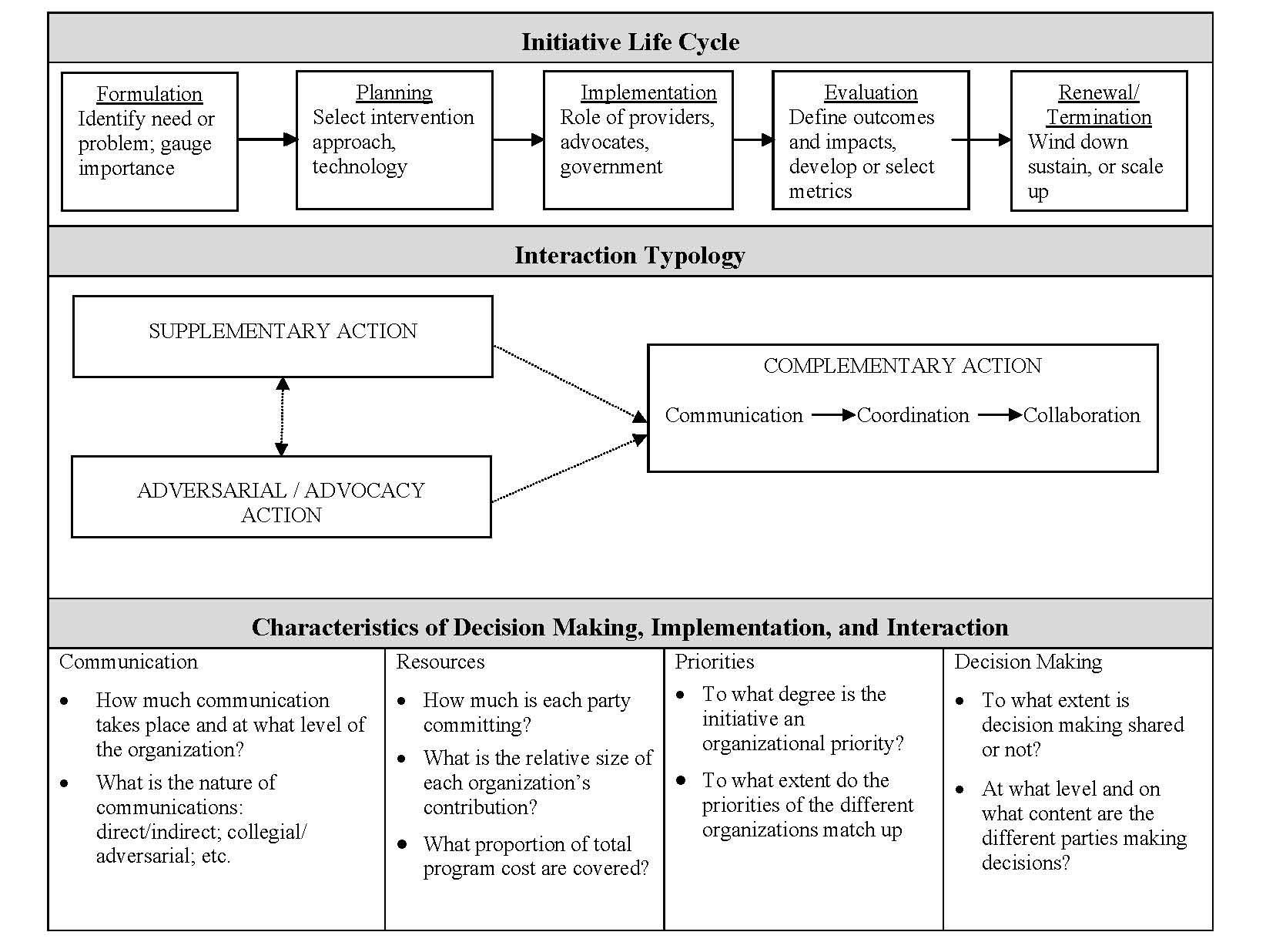
Figure IV.1 presents the conceptual framework for USG-Foundation Decision Making, Implementation, and Interaction around Philanthropic Initiatives.
At top it has an Initiative Life Cycle comprised of: Formulation (Identify need or problem; gauge importance) leads to Planning (Select intervention approach, technology) leads to Implementation (Role of providers, advocates, government) leads to Evaluation (Define outcomes and impacts, develop or select metrics) leads to Renewal/Termination (Wind down sustain, or scale up).
Next is a three part graphic presentation of the interaction typology, with "supplemental action" and "adversarial / advocay action" to the left with a recprical interaction. Both these boxes have arrows leading to "complementary action" which has an internal breakdown of "communication" leading to "coordination" leading to "collaboration."
A third row is a list of components characterized as Characteristics of Decision Making, Implementation, and Interaction.
- Communication
- How much communication takes place and at what level of the organization?
- What is the nature of communications: direct/indirect; collegial/ adversarial; etc.
- Resources
- How much is each party committing?
- What is the relative size of each organization’s contribution?
- What proportion of total program cost are covered?
- Priorities
- To what degree is the initiative an organizational priority?
- To what extent do the priorities of the different organizations match up
- Decision Making
- To what extent is decision making shared or not?
- At what level and on what content are the different parties making decisions?
Related to the question of resources, another dimension of interest is the extent to which the issue or initiative is an organizational priority for the stakeholders involved. Such concerns may influence the organizations levels of involvement, their commitment to the initiative over time, and their willingness to interact with other organizations. Finally, decision-making around an initiative is perhaps the most complicated dimension in conceptualizing USG-foundation interactions. Salient questions include the level of decisions being made by the different parties (for example, determining broad goals versus making brass tacks implementation decisions); the content areas of the parties decisions (for example, drawing on programmatic expertise versus policy know-how); and the degree to which decision-making authority is shared or not.
Below we present examples of several different types of USG-foundation interactions around health and social services endeavors in the U.S. and abroad. We focus on supplementary and complementary activities, as these are more likely than adversarial interactions to provide models for deliberate partnering activities in the future. Each example calls attention to several of the conceptual issues presented in Figure IV.1.
A. SUPPLEMENTARY ACTIVITY
In the philanthropy sector, foundation efforts are generally considered supplementary to the work of government because of relative funding levels. In theory, USG could supplement foundation activities, but this is probably unlikely in practice. This is not to imply temporal order, however: foundations supplementary activities may and often do precede USG intervention in a given arena. Indeed, some foundations pursue an active strategy of involvement in areas they view as neglected or unrecognized by government (Benedict 2003a). These include, for example, large organizations, such as MacArthur and Gates, as well as small groups, such as Ashoka.
The MacArthur Foundation also seeks explicitly to act in areas where it views itself as having a comparative advantage, often resulting in a supplementary relationship to USG efforts. Currently, MacArthur focuses on three very broad issue areas: social justice, environment, and world peace. According to an inside observer, MacArthur would like to position itself as a leader in a new grantmaking and policy domain, so the choice of an area will likely lead the Board to favor those where few other public or private donors are operating (Benedict 2003a). This same dedication to leading new efforts and affecting policy change sometimes also casts the MacArthur Foundation in an adversarial or advocacy role. A prominent example of such interactions vis-a-vis the federal government can be found in MacArthurs conservation and biodiversity initiatives. When the Foundation launched the World Environment and Resources (WER) program in 1987, the scientific community had not yet developed a consensus about the importance of biological diversity, and the issue was just beginning to emerge in public and governmental policy circles. MacArthur invested heavily in this arena and, according to the same inside source, has encouraged government and other funder activity. Of course, since MacArthur acted independently on WER, decision-making for the initiative fell solely to MacArthur.
Similarly, the Bill & Melinda Gates Foundations Global Health Program (GHP) targets diseases and health conditions that cause the greatest illness and death in developing countries, yet receive little attention and resources (Gates web site). The Bill & Melinda Gates Foundation views GHP as filling the large and urgent gaps in public health worldwide. Again, this supplementary role can have advocacy components, which the Foundation views as necessary to accelerate progress against the worlds most acute poverty. Whereas MacArthur tends to use the language of leadershipthat is, explicitly placing the Foundation on the cutting edge of important social issues that may come slowly to the fore in the public consciousnessGates tends to emphasize its initiatives potential for high and quick impact on problems it gauges to be addressed inadequately by other organizations.
Ashoka bills itself as the global association of the worlds leading social entrepreneurs. This relatively small public foundations activities can also be viewed as supplementary to the efforts of USG; however, here the difference is not so much in the programmatic area of investment but in the model of social change. In a very general sense, public development aid often relies on a top-down theory of change, with USG funding typically directed toward the governments of developing countries or relatively large NGOs. (This may be changing, particularly in the domestic sphere, as illustrated by the federal push for increased contracting with small faith-based and community organizations.) Ashokas model of social change, on the other hand, works through individuals more than organizations, and from the bottom-up. Ashokas main activity is identifying, funding, and supporting social entrepreneursindividuals who they believe can make a difference in addressing social problems. Ashoka identifies changemakers with new ideas and provides these entrepreneurs with the necessary support to increase the scale of their interventions. With relatively few resources, the foundation nevertheless is prominent in global philanthropy because of its innovative approach and ability to leverage other resources.
B. COMPLEMENTARY ACTIVITY
The spectrum of complementary interactions between USG and foundations is broad, and there is variability in the order of the respective sectors entry into the field. The dimensions previously discussed for their salience to the shape of USG-foundation interactionscommunication, resources, organizational priorities, and decision-makingalso are more significant to complementary interactions than to supplementary activities.
Among the models of complementary activities, the communication model (what Benedict [2003b] describes as affinity groups) occupies the lower or less intense end of USG-foundation interaction. Here, organizations from both sectors communicate about an issue, but are not involved directly in addressing the problem together. Such interactions typically see an agency or foundation acting in a convening role, bringing stakeholders together to discuss the problem and potential avenues toward solutions. The Clinton Global Initiative is a prominent example of a foundation bringing together stakeholders rather than directly implementing projects. As the foundations website describes it, the Clinton Global Initiative facilitates cross-sector partnerships that, in turn, create and carry out projects of their own choosing. Clinton Global Initiative participants may come from USG and other governments, foundations, for- and nonprofit organizations, universities, or NGOs.
Moving toward more intense USG-foundation interaction, the coordination model (described by Benedict [2003b] as federations) occupies the middle part of the spectrum of complementary activities. An example of such deliberate alignment of resources with separate decision-making structures can be seen in the West African Seed Alliance. A public-private (for-and nonprofit) partnership, the West African Seed Alliances goals are the development of affordable, high-quality seeds for use by small farmers and the development of business networks to support access to such seeds across five West African nations. As part of its Global Development Alliance, USAID has partnered with the Alliance for a Green Revolution in Africa (AGRA web site) on this five-year initiative. AGRA itself is probably more aptly described as a fully collaborative effort (comparable to those detailed below), at least with respect to the founding organizations, which include the Gates and Rockefeller foundations, as well as the five West African governments in the Alliance. With respect to USG involvement with the Bill and Melinda Gates and Rockefeller foundations via AGRA, however, the relationship is probably more accurately understood as a coordination of efforts. While the broader AGRA initiative has received hundreds of millions of dollars from the foundations, the West African Seed Alliances resources will total just $61 million over five years, with USAID committing $6.1 million. USAIDs role is very limited, relative to Gates and Rockefeller, with the agency responsible primarily for technical and policy decisions directly affecting the roll-out and implementation of the Alliances activities on the ground in Africa. The foundations, on the other hand, set the broad AGRA agenda and determine how the West African Seed Alliance fits into it.
In contrast to AGRA, USG agencies are taking the lead in the multibillion dollar Presidents Emergency Plan for AIDS Relief (PEPFAR) initiative. Several of the largest and most influential foundations are also heavily invested in HIV/AIDS initiatives. For example, the Bill & Melinda Gates Foundation has allocated significant funding to the search for an HIV vaccine. PEPFAR, on the other hand, provides funding for increased antiretroviral treatments, as well as prevention efforts. Some of this work is coordinated through the Global Fund to Fight AIDS, Tuberculosis, and Malaria, but USG and foundation strategies still are developed and pursued independently.
The West African Water Initiative is a good example of this next and highest level along the continuum of USG-foundation interaction. The Initiative is a 13-member partnership primarily funded by the Conrad N. Hilton Foundation and USAID. The partnership, founded in 2002, addresses issues of safe and adequate water supply, good sanitation, and improved hygiene in Ghana, Mali, and Niger. The West African Water Initiative views itself as a potential model for future collaborations between the public and private sectors. It is a particularly interesting example because the partnership has engaged in decision-making processes that deliberately reflect the strengths and weaknesses of the collaboration, prompting periodic changes to improve the effectiveness of the partnership. Hilton has committed more than $19 million to the Initiative over 6 years, while USAID investment is about $6 million over four years. Other partner contributions total $18 million.
Initially the West African Water Initiative was a loose partnership that avoided building a new organizational structure to oversee the collaboration. With time, however, the Initiative has added more governance structures to facilitate collective action and ensure that the partnership produces results that are greater than the sum of the individual Partner effort (Doyle and Corliss 2006, p. 2). While the West African Water Initiative has not become a grantmaking body (grants are still distributed separately by the Hilton Foundation and USAID), there is now a greater emphasis on collective action.
While the independence of both public and private actors is preserved in the West African Water Initiative partnership, other public-private collaborations involve the creation of a new entity with decision-making and funding authority. This is true of the Global Alliance for Vaccines and Immunization (GAVI Alliance), a large partnership effort to increase access to immunizations in the developing world. The Bill & Melinda Gates Foundation is a founding partner of the GAVI Alliance, but the Alliance also receives significant funding from USG, as well as the governments of other developed nations. The GAVI Alliance follows the partnership model, where donors pool resources, with the Alliance itself governing the project and allocating funds. This partnership model ensures a unified approach, but individual donors do sacrifice autonomy.
V. IMPLICATIONS FOR POTENTIAL CASE STUDIES
Systematic, in-depth analysis of cases from the public and private philanthropic spheres will improve understanding of the challenges to coordination organizations face and the practices they use to overcome them in health and social services initiatives in the U.S. and around the world. The studys next task is to identify potential case studies and recommend those for selection. Here we suggest issues of focus for the case studies that will influence the selection of specific cases, and the structure of the case studies.
The broad findings and specific examples of USG-foundation interactions presented here, coupled with the conceptual framework discussed previously, suggest that much can be learned from a more detailed examination of different initiatives and various models of interaction. As noted, the study team is developing a database of USG agencies and private foundations engaging in philanthropic initiatives, as well as a database of the initiatives. In considering potential case studies, the research team is examining organizations and initiatives with respect to the various elements presented in Figure IV.1. Organizations and initiatives that exhibit innovative approaches toward any of these elements are of special interest.
Examining specific philanthropic initiatives could be a fruitful way to understand how foundations and USG make decisions about the concrete matters before them. For that reason, it would be useful to select cases that are far enough along in their life cycle to provide information on at least three of the five stages presented in Figure IV.1. Launching an initiative requires organizations to define the scope of the problem and consider their approaches. Both the decision to interact with other institutions and the decision to act independently will be important to consider in our case study analysis. It will be helpful as well to examine the perceived incentives and disincentives to partnering, as well as the roles of different stakeholders (for example, intermediaries) in forming partnerships. Following the life cycle of an initiative can highlight innovative approaches applied at any stage in its development, potentially shedding light on the adaptability of the strategic approach to other organizations and/or other circumstances. Case studies can also address whether organizations are planning for an initiatives conclusion by considering issues of withdrawal strategies and sustainability.
Case studies may also be selected to illustrate and explore the typology of public-private interaction presented above. Examples of both supplementary and complementary efforts by USG and foundations could reveal some of the practical considerations involved in the different types of interaction and may serve to illuminate the circumstances under which a given model might be most appropriate. Since complementary interactions cover a broad spectrum of activities, from communication to collaboration, we will attempt to include case studies with varying levels of interaction.
At every level of interaction and throughout the life cycle of an initiative, it will be helpful to consider the four key dimensions that determine the shape of the relationship: the level of communication between partners, the commitment of resources by each partner, the organizational priority that each partner places on the initiative, and the ways decision-making is distributed. The case studies will seek to elucidate some of the strengths and weaknesses of different partnership models, and perhaps suggest where different models of cooperation may be the most effective by considering organizations and initiatives across the continuum of USG-foundation interactions.
In addition to the issues presented in Figure IV.1, the case studies will be designed to gather information on issues revealed through the literature review as critical for the success of philanthropic endeavors. For instance, case studies can examine the ways in which funding organizations seek to encourage recipient buy-in and local ownership. They can also investigate the use of technology and an organizations consideration of the scale of an intervention and its potential for broad impacts.
This review highlights other aspects of successful interventions that often challenge funding organizations, such as adequate measurement, reliable funding, fragmentation, transparency and accountability, and the need for impact evaluation. Impact evaluation plays a crucial role in understanding what works, yet outcome measurement is limited. The case studies will seek to investigate the limitations that prevent more impact analysis and highlight funding organizations that use an innovative approach to measurement and evaluation. The case studies can also gather information on the ways in which funding patterns influence perceptions and organizational practices. With the growth in the number of philanthropic actors, the potential for aid fragmentation increases. The case studies will explore how USG and foundation actors view such fragmentation, and explore their thinking about more integrated approaches to philanthropy. A final goal of the case studies should be to disentangle the challenges to transparency and accountability in philanthropic decision-making processes.
REFERENCES
Alliance for a Green Revolution in Africa. (AGRA). Home page. Available at [www.agraalliance.org/]. n.d.
Ambrose, N. Global Philanthropy. Available at [http://www.cof.org/files/Documents/ EmergingIssues/EI%20for%20Philanthropy/GlobalPhilanthropy.pdf]. 2005.
Balin, Michael A. Requestioning, Reimagining, and Retooling Philanthropy. Nonprofit and Voluntary Sector Quarterly, vol. 32, no. 4, December 2003.
Benedict, Kennette. Creating, Changing, and Closing Areas of Philanthropic Activity. Discussion paper for the John D. and Catherine T. MacArthur Foundation. Available at [http://www.macfound.org/site/apps/nlnet/content2.aspx?c=lkLXJ8MQKrH&b=2… id={D81EC64B-C255-453A-8ABC-481A4A208480}¬oc=1]. June 24, 2003a.
Benedict, Kennette. Foundation Collaborations. Discussion paper for the John D. and
Catherine T. MacArthur Foundation. Available at [http://www.macfound.org/site/apps/nlnet/ content2.aspx?c=lkLXJ8MQKrH&b=2724129&content id={77C8F163- 768E-4BD0-
A926-5ACD5B3925A2}¬oc=1]. October 27, 2003b.
Bill and Melinda Gates Foundation. Programs & Partnerships: Global Development Programs. [http://www.gatesfoundation.org/global-development/Pages/overview.aspx]. n.d.
Bill and Melinda Gates Foundation. Programs & Partnerships: Global Health Programs. [http://www.gatesfoundation.org/global-health/Pages/overview.aspx]. n.d.
Center for Global Prosperity. The Index of Global Philanthropy 2008. Available at [https://www.hudson.org/files/documents/2008%20Index%20-%20Low%20Res.pdf]. 2008.
Chassy, Aaron M. The Millennium Challenge Corporation: Making It Work. Foreign Service Journal, vol. 82, no. 5, April 2005, pp. 3745.
Collins, Sarah (ed.). What Is a Foundation? In Foundation Fundamentals, 8th edition. New York, NY: Foundation Center, 2008.
Desai, Raj M., and Homi Kharas. The California Consensus: Can Private Aid End Global Poverty? Survival, vol. 50, no. 4, AugustSeptember 2008, pp. 155168.
Doughton, Sandi. Seattle institute aims to help cure world-health data disorder. The Seattle Times, April 9, 2008.
Doyle, Brendan A., and John M. Corliss, Jr. West Africa Water Initiative (WAWI) 20062010 Strategic Plan: The Power of Partnership. Available at [http://www.wawipartnership.info/publications/downloads/EXTERNAL%20WAWI%… %20Plan%20-%202006%20Final.pdf]. January 2006.
Edna McConnell Clark Foundation. Who We Are. Available at [http://www.emcf.org/who/]. n.d.15 Minutes with Susan Berresford. Stanford Social Innovation Review, spring 2003, pp. 15 17.
Fink, Eleanor, and Katrinka Ebbe. The World Bank and Foundations: Good Practices for Partnerships. Washington, DC: The Foundations Unit, Global Partnerships and Programs Group, the World Bank, August 2005.
Fosler, R. S. Working Better Together: How Government, Business, and Nonprofit Organizations Can Achieve Public Purposes Through Cross-Sector Collaboration, Alliances, and Partnerships. Available at [http://www.independentsector.org/PDFs/workingtogether.pdf]. 2002.
Greene, Richard L. A Reliance on Smart PowerReforming the Foreign Assistance Bureaucracy. Testimony before the Subcommittee on Oversight of Government Management, the Federal Workforce, and the District of Columbia, Committee on Homeland Security and Governmental Affairs, U.S. Senate, Washington, DC, July 31, 2008.
Guidice, Phil, and Kevin Buolduc. Assessing Performance at the Robert Wood Johnson Foundation: A Case Study. Available at [http://www.effectivephilanthropy.org/images/pdfs/RWJFcasestudy.pdf]. 2004.
HELP Commission. Beyond Assistance: The HELP Commission Report on Foreign Assistance Reform. Available at [http://www.helpcommission.gov/portals/0/ Beyond%20AssistanceHELPCommissionReport.pdf]. 2007.
Huang, Judy, Phil Buchanan, and Ellie Buteau. In Search of Impact: Practices and Perceptions in Foundations Provision of Program and Operating Grants to Nonprofits. Report of The Center for Effective Philanthropy. Available at [http://www.effectivephilanthropy.org/images/pdfs/CEPInSearchofImpact.pdf]. 2006.
The Hudson Institute. Index of Global Philanthropy 2008. Washington, DC: The Hudson Institute. Available at [https://www.hudson.org/files/documents/2008%20Index%20-%20Low%20Res.pdf]. 2008.
Institute for Health Metrics and Evaluation. Research. Available at [http://www.healthmetricsan devaluation.org/what/research.html]. n.d.
The John D. and Catherine T. MacArthur Foundation. Home page. Available at [http://www.macfound.org ]. n.d.
Kaplan, Ann E. (ed). Giving USA. New York: American Association of Funding Counsel, 2007.
Kaufmann, Katherine, and Robert Searle. The Annie E. Casey Foundation. Answering the Hard Question: What Difference Are We Making? Boston, MA: The Bridgespan Group, Inc., September 2007.
Kharas, Homi. The New Reality of Aid. In Can Philanthropists, the Public, and the Poor Make Poverty History?, edited by Lael Brainard and Derek Chollet. Washington, DC: Brookings Institution Press, 2008.
Kramer, Mark, with Rebecca Graves, Jason Hirschhorn, and Leigh Fiske. From Insight to Action: New Directions in Foundation Evaluation. Available at [http://www.fsgimpact.org/images/upload/From%20Insight%20to%20Action(3).pdf]. April 2007.
Levinger, Noga, Leslie R. Crutchfield, and Diana Wells. Understanding the Impact of Social Entrepreneurs: Ashokas Answer to the Challenge of Measuring Effectiveness. Research on Social Entrepreneurship: Understanding and Contributing to an Important Field, vol. 1, no. 3, 2007, pp. 89103.
Millennium Challenge Corporation. MCC and the Paris Declaration on Aid Effectiveness. Available at [http://www.mcc.gov/documents/mcc-081408-issuebriefmanaging%20for%20 results. pdf]. August 2008a.
Millennium Challenge Corporation. MCC-World Bank Group Collaboration in Mozambique Water & Sanitation Sector. Available at [http://www.mcc.gov/documents/mcc-081408-issuebrief-mozwatercollaboratio…]. August 2008b.
Milstein, Robert L., and Scott F. Wetterhall. Framework for Program Evaluation in Public Health. Available at [http://www.cdc.gov/mmwr/preview/mmwrhtml/rr4811a1.htm]. September 19, 1999.
Ostrower, F. Attitudes and Practices Concerning Effective Philanthropy. Available at [http://www.urban.org/UploadedPDF/310986attitudespracticesES.pdf]. 2004.
Porter, Michael E., and Marc R. Kramer. Philanthropys New Agenda. Harvard Business Review, NovemberDecember 1999, pp. 77121.
Renz, Loren, and Josie Atienza. International Grantmaking Update: A Snapshot of U.S. Foundation Trends. Available at [http://foundationcenter.org/gainknowledge/ research/pdf/intlupdate2006.pdf]. 2006.
Sandfort, Jodi. Using Lessons from Public Affairs to Inform Strategic Philanthropy. Nonprofit and Voluntary Sector Quarterly, vol. 37, no. 3, 2008, pp. 537552.
Secretarys Advisory Committee on Transformational Diplomacy, Department of State. Final Report of the Private-Sector Partnerships Working Group. Available at [http://www.state.gov/documents/organization/99874.pdf]. 2008.
Tarnoff, Curt, and Larry Nowels. Foreign Aid: An Introductory Overview of U.S. Programs and Policy. Available at [http://www.usembassy.it/pdf/other/98-916.pdf]. 2005.
The William and Flora Hewlett Foundation. Making Every Dollar Count: How Expected Return Can Transform Philanthropy. [http://www.hewlett.org/NR/rdonlyres/7FE84D66-A773-47B8-9247-C43F8FDA113…]. April 10, 2008.
U.S. Agency for International Development. Global Development Alliance: Expanding the Impact of Foreign Assistance Through Public-Private Partnerships. Available at [http://www.usaid.gov/ourwork/globalpartnerships/gda/resources/gdabrochu…]. December 2007.
U.S. Agency for International Development. Policy Framework for Bilateral Foreign Aid. Available at [http://www.usaid.gov/policy/policyframeworkjan06.pdf]. January 2006.U.S. Department of State. Advisory Committee on Transformational Diplomacy: Final Report of the Private Sector Partnerships Working Group. Available at [http://www.state.gov/documents/organization/99874.pdf]. 2008.
U.S. Department of State. Foreign Assistance Framework. Available at [http://www.state.gov/documents/organization/88433.pdf]. 2007.
United Nations Foundation. Understanding Public-Private Partnerships. Available at [http://www.globalproblems-globalsolutions-files.org/unfwebsite/PDF/ understandpublicprivatepartner.pdf]. 2003.
William and Flora Hewlett Foundation. Making Every Dollar Count: How Expected Return Can Transform Philanthropy. Available at [http://www.hewlett.org/NR/rdonlyres/7FE84D66-A773-47B8-9247-C43F8FDA113…]. 2008.
W. K. Kellogg Foundation. Blurred Boundaries and Muddled Motives: A World of Shifting
Social Responsibilities. Battle Creek, MI: W. K. Kellogg Foundation, November 2003.
World Health Organization. Mid-Term Strategic Plan 20082013. Available at [http://www.who.int/gb/ebwha/pdffiles/AMTSP-PPB/a-mtsp2en.pdf]. 2008.
APPENDIX B.A: APPROACH TO LITERATURE AND DOCUMENT REVIEW
Sources
- Journals
- Nonprofit and Voluntary Sector Quarterly: premier academic journal in the field
- Stanford Social Innovation Review: top practitioners journal
- Chronicle of Philanthropy: comprehensive periodical
- Harvard Business Review: general source; quality case studies
- Sector- or program-specific journals as appropriate (e.g., American Journal of Public Health, Social Science and Medicine, Journal of Infectious Diseases)
- Academic centers
- Center on Philanthropy, Indiana University
- Center for Social Innovation, Stanford
- Hauser Center for Nonprofit Organizations, Harvard
- The Center for Public & Nonprofit Leadership, Georgetown
- Organizations
- Agencies
- Foundations
- Others:
- Consortiums (e.g., Council on Foundations, Grantmakers for Effective Organizations)
- Intermediaries (e.g., United Nations, World Bank)
- Think tanks (e.g., Hudson Institute, Brookings Institute, Urban Institute, Aspen Institute)
Program/Topic Areas (not exhaustive)
- General: global philanthropy, public-private partnerships, government-nonprofit relationships (international/domestic)
- Programmatic:
- General: health, human services, environment, education, development, relief
- Specific: to emerge as focus is narrowed
- Processes: strategic planning, performance measurement, evaluation
- Innovations: venture philanthropy, social entrepreneurship
- Initiative/organization names: PEPFAR, Ashoka, Rockefeller, etc.
APPENDIX B.B: DOCUMENT REVIEW GUIDE
|
Please note INNOVATIVE approaches in all categories, as appropriate. Include page numbers for reference. |
|
|
Citation |
|
|
Overview |
|
|
Lay of the land: Successes, challenges |
|
|
Comparative advantage (USG/fdns) |
|
|
USG-foundation interactions |
|
|
Strategic planning/Decision-making |
|
|
Metrics (for identifying problem, planning, gauging outcomes/impacts) |
|
|
Potential case study/studies |
|
|
Additional observations |
|
DATA SOURCES SELECTED FOR OVERVIEW OF FOUNDATION AND USG PHILANTHROPIC SPENDING
For domestic and international spending, data were broken into six domains or sectors: (1) development,
SUMMARY OF FOUNDATION PHILANTHROPIC SPENDING, 20022006
(IN MILLIONS 2006 $) 2002 2004 2006 Category Amount % of Total Amount % of Total Amount % of Total International (all countries) 1,685.9 13 2,487.6 21 3,413.8 25 Domestic 11,070.7 87 9,493.8 79 10,382.6 75 Total12,756.6 11,981.4 13,796.4
Across sectors, the largest share of international foundation spending was devoted to health, ranging from 46 percent in 2002 to a high of 63 percent in 2004 (Table B.2). Real spending on health grew by 130 percent from 2002 to 2006 (percentage not shown).
Domestically, however, spending devoted to health represented only a quarter or less of foundation philanthropic spending, with education representing the largest domestic sector (Table B.3). Total real domestic spending fell by six percent from 2002 to 2006 (percentage not shown), and spending fell in all sectors except health. In contrast, spending on all international sectors increased, often substantially; development spending almost doubled between 2002 and 2006, and spending on relief more than quintupled (albeit from a low base).
Foundation international spending in the developing world was heavily concentrated in sub-Saharan Africa in 2006nearly half of all spending was in this region (Table B.4). This represents a very substantial increasein total dollars and share of spendingfrom 2002. In that year, spending in sub-Saharan Africa constituted 29 percent of all spending in the developing world, slightly less than the share of spending directed to Latin America and the Caribbean (30 percent). There was a significant overall increase in international spending in developing countries (46 percent, not shown) from 2002 to 2006.
USG Funding
Data on USG philanthropic spending were obtained from two different sources. For international spending in developing countries, OECD data were used. Specifically, the OECD.Stat data warehouse reports Official Development Assistance (ODA) to all low- and middle-income countries as measured by per capita Gross National Income. ODA is reported by sector and recipient country. Dollar flows include grants, commodities, services, and certain capital transactions. The most comprehensive source of USG domestic philanthropic spending is the FAADS, compiled by the U.S. Census Bureau. FAADS data are also closest in content to foundation spending as reported by the Foundation Center and to this studys operational definition of philanthropic spending.
FIGURE D.2:
DISTRIBUTION OF USG INTERNATIONAL SPENDING BY SECTOR IN 2006
(IN MILLIONS 2006 $)
This bar chart shows 18% on health, 5% on environment, 2% on education, 6% on human services, 48% on development, and 12% on relief.
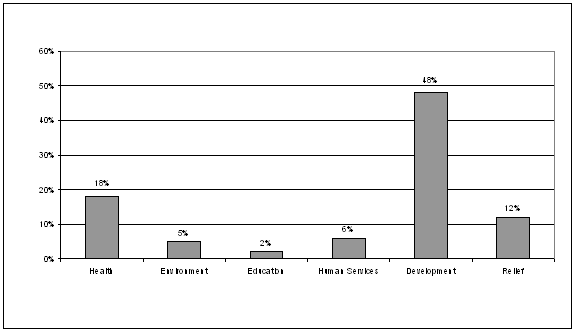
Sub-Saharan Africa and the Middle East receive the bulk of foundation and USG philanthropic funding, respectively.
Foundation international spending is most heavily concentrated in sub-Saharan Africa, with half of this spending focused on that region and less than five percent on the Middle East and North Africa (Figure D.3).
The USGs engagement in the Middle East is reflected by the relatively high allocation of philanthropic spending to the Middle East and North Africa region (33 percent; Figure D.4). At 32 percent, however, USG spending in sub-Saharan Africa is roughly equivalent to spending in the Middle East and North Africa.
FIGURE D.3
DISTRIBUTION OF FOUNDATION INTERNATIONAL SPENDING BY GEOGRAPHIC REGION IN 2006 (IN MILLIONS 2006 $).
This bar chart shows 14% on East Asia and the Pacific, 2% on Eastern Europe and Central Asia, 17% on Latin America and the Caribbean, 4% on the Middle East and North Africa, 13% on South Asia, and 50% on Sub-Saharan Africa.
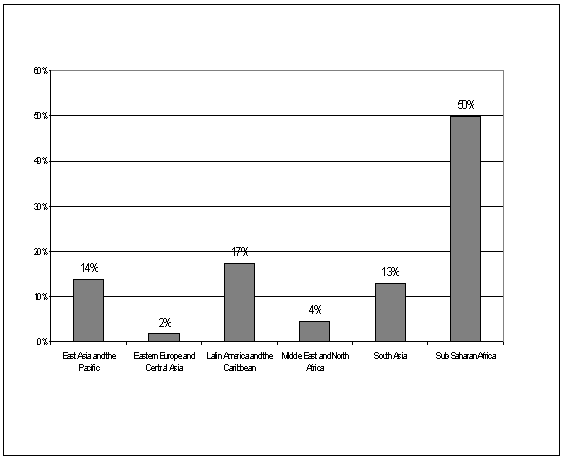
FIGURE D.4:
DISTRIBUTION OF USG INTERNATIONAL SPENDING BY GEOGRAPHIC REGION IN 2006 (IN MILLIONS 2006$)
This bar chart shows 4% on East Asia and the Pacific, 7% on Eastern Europe and Central Asia, 11% on Latin America and the Caribbean, 33% on the Middle East and North Africa, 13% on South Asia, and 32% on Sub-Saharan Africa.
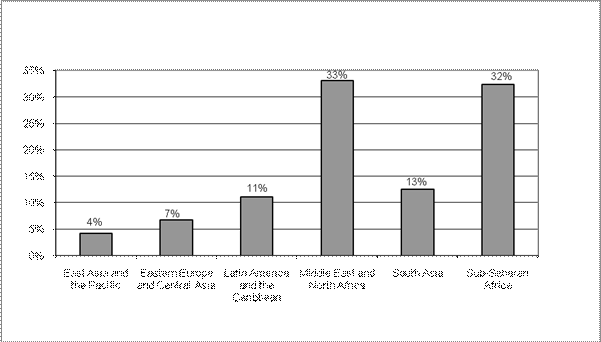
Priorities in domestic philanthropy differ between foundations and USG.
In 2006, foundations focused spending within the United States on education and health (Figure D.5). Together these sectors made up 64 percent of their domestic spending. In contrast, USG domestic philanthropy was heavily concentrated on human services and development (Figure D.6). Combined, these two sectors took up 72 percent of USG spending.
FIGURE D.5:
DISTRIBUTION OF FOUNDATION DOMESTIC SPENDING BY SECTOR IN 2006 (IN MILLIONS 2006 $)
This bar chart shows 25% on health, 6% on environment, 39% on education, 18% on human services, 11% on development, and 1% on relief.
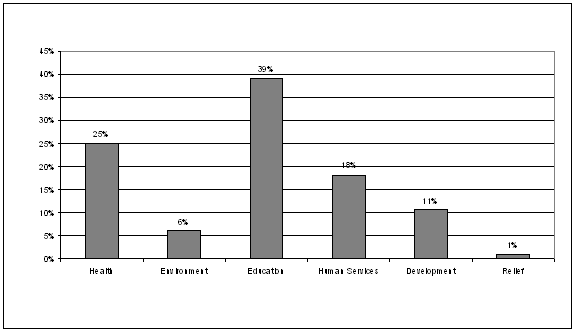
FIGURE D.6:
DISTRIBUTION OF USG DOMESTIC SPENDING BY SECTOR IN FY 2006 (IN MILLIONS 2006 $)
This bar chart shows 6% on health, 3% on environment, 16% on education, 40% on human services, 32% on development, and 3% on relief.
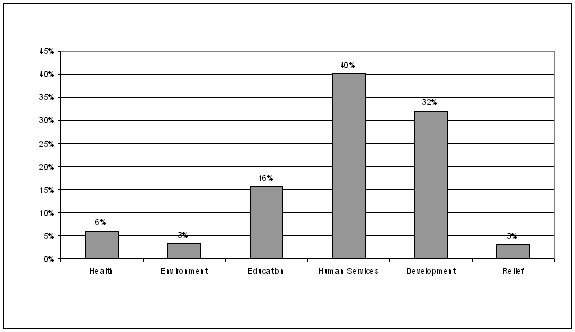
Conclusions
Identifying spending patterns and trends provides insight into foundation and USG decision making by revealing where they choose to spend their limited funds. Internationally, foundations, or at least a few large foundations, have determined that the health sector and sub-Saharan Africa present the greatest opportunities for impact. USG shares these priorities, although, of course, national security considerations and political necessities have also shaped USG spending. Domestically, foundations favor the education sector, particularly spending in higher education. In contrast, almost three-fourths of USG spending occurs in human services and development.
Just as geopolitical events have significantly altered the pattern of USG international spending, overall trends in foundation spending hint at the impact of a few large foundations. Mostly due to the falling stock market and consequent drops in foundation endowments, overall foundation spending decreased from 2002 to 2004 (Table B.1), continuing a drop from 2000. Yet the decline is not evident in the international data because of the very large contribution to international spending by the Bill & Melinda Gates Foundation. Without the Gates Foundation, international giving would have decreased by four percent from 2002 to 2004 (Foundation Center Report on International Giving, 2006). The outsized impact by Gates and a few other large, often new foundations (such as Hewlett and Google) provides new opportunities for foundation-USG interaction.