


U.S. Department of Health and Human Services
Evaluation Design of the Business Case of Health Technology in Long-Term Care: Final Report
Booz Allen Hamilton
July 13, 2006
This project summary was prepared under contract between the U.S. Department of Health and Human Services, Office of the Assistant Secretary for Planning and Evaluation, Office of Disability, Aging and Long-Term Care Policy (DALTCP) and Booz Allen Hamilton. For additional information on this subject, you can visit the ASPE home page at http://aspe.hhs.gov or contact the ASPE Project Officer, Jennie Harvell, at HHS/ASPE/DALTCP, Room 424E, H.H. Humphrey Building, 200 Independence Avenue, S.W., Washington, D.C. 20201, Jennie.Harvell@hhs.gov.
The opinions and views expressed in this report are those of the authors. They do not necessarily reflect the views of the Department of Health and Human Services, the contractor or any other funding organization.
TABLE OF CONTENTS
- 1.0 INTRODUCTION
- 2.0 METHODOLOGY
- 3.0 BACKGROUND
- 3.1 The Post Acute and Long-Term Care Environment
- 3.2 Health Information Technology in Post Acute and Long-Term Care
- 3.3 HIT Costs and PAC/LTC
- 3.4 HIT Benefits and PAC/LTC
- 3.5 To Whom Benefits Accrue Overview
- 4.0 APPROACHES TO DESIGNING THE BUSINESS CASE FOR HIT IN PAC/LTC
- 4.1 Study Considerations
- 4.2 Alternative Approaches to Designing the Business Case Demonstration/Evaluation
- 5.0 RECOMMENDATIONS
- 5.1 Research Questions
- 5.2 Recommended Design
- APPENDICES
- APPENDIX A: Stakeholder Discussion Summary
- APPENDIX B: Illustrative Stakeholder Discussion Guide
- LIST OF EXHIBITS
- EXHIBIT 1: Types of HIT Applications and Functionalities
- EXHIBIT 2: Evaluation Study Steps
- EXHIBIT 3: Research Questions for Designing a Business Case
- EXHIBIT 4: Healthcare Use During the 2-Year Study Period by Elders Gender and Age
- EXHIBIT 5: Transition Patterns for Those with at Least 1 Transition During the 2-Year Study Period by Elders Gender and Age
- EXHIBIT 6: Post Acute Care and Long-Term Care Financing
- EXHIBIT 7: Types of HIT Applications and Functionalities
- EXHIBIT 8: Cost Breakdown -- Cost-Benefit and Survey Literature, Stakeholder Discussions and TEP Input
- EXHIBIT 9: HIT Net Benefit/ROI Studies
- EXHIBIT 10: Illustrative Benefit Metrics
- EXHIBIT 11: Illustrative Cost Metrics
- EXHIBIT 12: Potential Study Designs
- EXHIBIT 13: Evaluation Study Steps
- EXHIBIT A-1: Types of HIT Applications and Functionalities
ABSTRACT
Health information technology (HIT) has the potential to improve the quality of care while enhancing cost efficiency. To reduce the risks faced by providers considering implementation, it is necessary to develop an understanding of the costs and benefits of HIT investment. A deeper understanding of the business case and cost/benefit accrual is also important to policy makers who wish to influence HIT investment decisions. Although a number of studies have focused on the business case for HIT investments, the emphasis has generally been on the acute and ambulatory care settings.
The Office of the Assistant Secretary for Planning and Evaluation (ASPE) in the Department of Health and Human Services (HHS) recently engaged Booz Allen Hamilton (Booz Allen) to help design a study to assess the business case for HIT in post acute care (PAC) and long-term care (LTC) settings. The purpose of this effort is to inform providers, payors, policy makers and others regarding the costs and benefits (financial and non-financial) of HIT in the PAC/LTC environment.
In developing study approaches Booz Allen reviewed the relevant published literature, conducted stakeholder interviews, and received input from a Technical Expert Panel (TEP). Candidate approaches included prospective and retrospective study designs with or without an ASPE funded implementation. These options were presented to the TEP for comments and feedback. The TEP emphasized the need for a cost-effective study that could generate data-driven findings on the business case for HIT in PAC/LTC within a reasonable timeframe (2-3 years).
Based on these findings Booz Allen recommends that ASPE conduct a retrospective study of 10-20 nursing homes (NHs), or home health (HH) agencies, or both. This approach leverages existing HIT applications in PAC/LTC settings and will spare ASPE the considerable costs associated with subsidizing implementations. Employing both quantitative and qualitative methods, this approach places heavy emphasis on the use of administrative and interview data to inform the estimation of costs and benefits. We believe that the proposed study can be completed within 18-36 months.
We believe that our suggested study approach is a cost and time efficient way to address significant gaps in the understanding of HIT costs and benefits in the PAC/LTC settings. Advances in this understanding may have significant impacts on HIT adoption. In addition to the recommended study design to evaluate costs and benefits, Booz Allen also suggests that ASPE consider sponsoring or cosponsoring a separate survey on the prevalence and penetration of HIT applications in the PAC/LTC sector. The findings of such a survey would be complementary to this study and would provide a much needed quantitative baseline assessment of the state of HIT in the PAC/LTC environment.
EXECUTIVE SUMMARY
Health information technology (HIT) is increasingly viewed as a tool that can promote quality and cost-effective care in the U.S.1 Promoting the use of HIT is a major health initiative of the current Administration and HHS. In April 2004, the President established the Office of the National Coordinator for Health Information Technology (ONC) through an Executive Order. The Executive Order and the strategic framework developed by ONC emphasize the need for:
- Evidence on costs, benefits and outcomes associated with HIT implementation; and
- Reducing the risks that providers face in making HIT investments.
This need to establish evidence on the costs and benefits associated with HIT is driven by the limited number of systematic studies that examine these costs and benefits across care settings. The lack of a robust evidence on HIT costs and benefits is especially conspicuous in the post acute care (PAC) and long-term care (LTC) environment. A deeper, evidence-based understanding of costs and benefits is needed and is essential to inform providers contemplating purchase of HIT systems. In addition, such an understanding can provide useful and reliable information to policy makers, payors, employers, and others who seek to influence HIT adoption.
To promote this understanding, the Office of the Assistant Secretary for Planning and Evaluation (ASPE) within the Department of Health and Human Services (HHS) engaged Booz Allen Hamilton (Booz Allen) to design an evaluation to assess the business case for HIT in PAC and LTC settings. The purpose of this project is to develop cost-effective robust study design option(s) that can greatly enhance the existing knowledge base on HIT costs and benefits in the PAC/LTC setting. In designing this evaluation Booz Allen sought to address key research questions which include:
- What types of PAC/LTC providers should be included in the evaluation design?
- What types of alternative HIT functionalities should be included?
- What are the categories of costs and benefits associated with HIT implementation?
- To whom do costs and benefits accrue?
Booz Allen developed alternative study approaches based on reviews of published literature, and stakeholder interviews. The literature review included an examination of the PAC and LTC environment, and cost-benefit studies of HIT in PAC/LTC and other settings. In consultation with a Technical Expert Panel (TEP) these approaches were narrowed to a single recommendation which is presented in this report along with the supporting evidence justifying this approach.
Overview of the PAC/LTC Environment
The PAC/LTC environment is complex representing a heterogeneous group of patients with chronic illnesses and those recovering from acute events. Patients in PAC/LTC settings can be young or old, and usually require an array of medical and nursing therapy services, as well as personal and supportive services for an extended period. PAC/LTC may be provided in a variety of settings including nursing facilities (NFs), assisted living facilities, adult day care, and home and community-based services. While there are alternative types of facilities where PAC/LTC is delivered, care is predominantly provided in nursing home (NH) and home health (HH) settings. Approximately 88% of PAC/LTC care users receive care in one of these two settings.2
Due to the variety and complexity of conditions relevant to patients in PAC/LTC, these patients experience frequent transitions from acute to PAC/LTC settings, as well as transitions between PAC/LTC settings.3, 4 Coleman and Berensons targeted review of patient transfer literature highlights the issue of transfers as a leading challenge in the delivery of healthcare, particularly in the Medicare population.5 These frequent transitions across the continuum of care represent risk points at which important clinical information may not be transmitted or may be transmitted incorrectly, creating gaps in quality and opportunities for error.6 Health information exchange has the potential to reduce errors and improve quality of care.
In addition to the complexities associated with a heterogeneous, high morbidity, frequently transitioning patient mix, the PAC/LTC environment faces significant staffing shortages and retention challenges due to the heavy reliance on nursing staff. HIT may help alleviate this problem through improved workflow efficiencies and improved staff satisfaction.
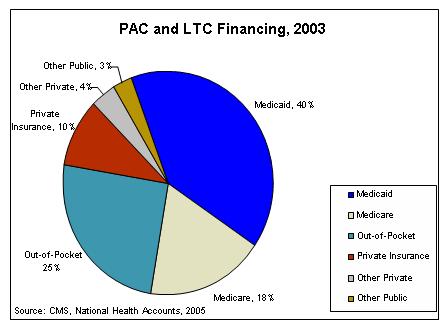
There are two other aspects of the PAC/LTC environment relevant to determining the accrual of HIT costs and benefits: sources of financing (i.e., who pays for the services) and payment methods (how are they reimbursed). These two aspects affect who receives the benefits and therefore how likely they are to invest in HIT. Services provided in PAC and LTC settings are primarily financed by Medicare, Medicaid, and out-of-pocket sources. An analysis of 2004 National Health Accounts Data estimates that 41% of LTC is financed by Medicaid ($65B), 23% by personal out-of-pocket ($37B), 20% by Medicare ($32B), 9% by private insurance ($14B) and the remainder by public or private sources.7, 8
Reimbursement for PAC/LTC services varies depending on who pays for the services. Medicare uses the Prospective Payment System (PPS) to reimburse skilled NFs, HH agencies, inpatient rehabilitation facilities, and LTC hospitals. State Medicaid programs devise their own payment systems for NF and home and community-based service providers. Payment systems vary greatly by state and by type of provider. Many states reimburse NHs through a PPS similar to Medicares. Recent studies of Medicaid programs and financing trends indicate that some states have moved from cost-based systems to PPS as a cost-containment strategy.9 Alternative reimbursement methods can create differing incentives for HIT adoption, and understanding the distribution of benefits is important to policy makers.
HIT in PAC/LTC
Based on TEP guidance, stakeholder input and a review of the literature, we have focused our analysis on HH and NH services. As stated previously, a majority of the PAC/LTC services are provided in these settings. The NH setting has been emphasized because of the acuity of NH patients, the volume and intensity of the services provided, and the frequency of transfers. Emphasis on the HH setting is based on the continued growth in HH utilization, and the desire to facilitate further migration of care from institutional settings to the home.
| EXHIBIT 1. Types of HIT Applications and Functionalities (Based on Stakeholder Descriptions and TEP Input) | ||
| HIT Application | Functionality | PAC/LTC Setting |
| Census Management | Census Management is the foundation for patient demographics and can be a stand-alone module. It provides real-time information on resident transfers, discharges, admissions, pre admissions, payor changes and staff scheduling. | Nursing Home/ Home Health |
| Supportive Documentation | Touch screen kiosk or portable device that allows staff to enter all supportive documentation at the POC . Supportive documentation may have workflow management functionalities. Workflow management allows tracking of patient information as he/she moves through an organization. | Nursing Home/ Home Health |
| Point of Care (POC) | Hand-held or portable tool for staff to enter all documentation and clinical notes at the POC. It can be linked to census management. POC can be implemented with workflow management functionality. | Nursing Home/ Home Health |
| Assessment and Care Planning | Tool used to generate care plan/treatment plan based on patient data input. It can be linked to supportive documentation, POC, and decision-support. | Nursing Home/ Home Health |
| Electronic Prescribing | Hand-held or personal computer devices to review drug and formulary coverage and to transmit prescriptions to a printer or to a local pharmacy. E-prescribing can be implemented with or without decision-support and can be linked to assessment and care planning. | Nursing Home/ Home Health |
| Computerized Physician Order Entry (CPOE) with or without e-prescribing | A computer application that allows a physician's orders for diagnostic and treatment services to be entered electronically by a prescriber or nurse agent. CPOE can be implemented with or without an electronic medication administration record (e-MAR). | Nursing Home/ Home Health |
| Electronic Health Record (EHR) | Real-time patient health information that often includes ability to document care, view and manage results and may include order entry capability, and workflow management along with varying levels of decision-support. | Nursing Home/ Home Health |
| Telehealth/Telemedicine | Computerized devices that connect patients and providers via phone lines and enable the delivery of care remotely (for example, some devices allow the patient to take vital statistics that are transmitted to physician computers). These applications can have HL7 interfaces clinical information systems with decision-support. | Nursing Home/ Home Health |
Our analysis of HIT in PAC/LTC therefore focused on functionalities relevant to the NH and HH settings. Based on TEP input and stakeholder discussions, we have identified a number of HIT applications, tools, and functionalities that are particularly relevant in NH and HH environments. Exhibit 1 provides a brief description of these functionalities.
These applications may be used independently or in combination at varying levels of functionality, based on the unique needs and characteristics of the setting pursuing HIT implementation. There is also functional overlap between some of these tools, applications and functions. While anecdotal reports suggest that some PAC/LTC settings have already implemented POC and medication management tools to improve patient safety and quality of care, there is relatively little quantitative information regarding the actual penetration of these applications in PAC/LTC facilities.
In addition to stand-alone functionalities, the potential for interoperability across HIT systems holds significant promise for benefits and return on investment (ROI). For this reason, public and private groups have been working to develop standards and standard functionalities to facilitate interoperability (e.g., HL7 efforts to develop standards for an EHR Functional Model and public/private efforts to apply HIT standards to the federally required NH Minimum Data Set).
Costs and Benefits of HIT in PAC/LTC
Although there is a paucity of peer-reviewed literature quantifying the costs associated with HIT acquisition and implementation in a PAC/LTC setting, Booz Allen has used the literature on ambulatory and acute inpatient HIT costs to provide insights on the types of costs that may be incurred with an HIT implementation. Based on the HIT literature, stakeholder discussions and TEP input, we have developed a breakdown of cost categories, including:
- Selection costs;
- Acquisition costs (e.g., hardware, software, training); and
- Recurring costs (e.g., maintenance, upgrades, subscription fees).
These costs are likely to vary based on factors such as facility size, levels of functionality and connectivity, length of implementation, and extent of user training.
There are also a limited number of studies that focus on measuring benefits of HIT in a PAC/LTC setting.10, 11, 12 It is widely asserted that HIT can provide significant clinical benefits, in terms of safety, quality improvements, and enhanced efficiency. This is particularly relevant to the PAC/LTC setting since patients are especially susceptible to adverse drug events due to the use of multiple medications, comorbidities associated with multiple chronic conditions, and increased utilization rates of drugs.12, 13, 14 Evidence from studies in these settings suggests that CPOE systems and decision-support can help reduce medical errors. The effects of HIT on workflow and labor efficiency in the ambulatory and inpatient environment appear equivocal and highly dependent on usability and appropriate re-engineering of work processes. The evidence that HIT can reduce redundant testing appears to be more consistent.
Return on Investment (ROI) and Benefits Accrual
Analysis of net benefit or ROI of an HIT implementation in the PAC/LTC setting is limited. We are aware of only a single prospective study, and that analysis was conducted in a single institution over a period of about one year yielding equivocal results.10 Given the limited evidence on HIT costs and benefits in the PAC/LTC environment, we also examined peer-reviewed cost-benefit literature in the ambulatory and inpatient environment. A small number of these studies in the acute and ambulatory settings suggest that positive provider ROI may be achievable. However, positive net benefit in these studies from the providers perspective is dependent on a variety of factors including: quality of the implementation and workflow redesign, the level of functionality and usability, and the nature of the reimbursement environment (capitated vs. fee for service). The measurement of benefits is also highly dependent on the period of assessment. It may require up to three years (or more) for financial benefits to exceed costs and shorter studies may not capture these benefits, leading to the erroneous conclusion that a positive ROI may not be achievable.
Though PAC/LTC provider facilities bear the financial burden of HIT investments, benefits may accrue to others such as payors or patients. Whether or not a particular entity benefits from HIT investment is a function of:
- Who pays for the services;
- How the reimbursement is structured (e.g., capitated vs. fee for service); and
- The types of benefits (e.g., cost savings from generic switching or reduction of redundant tests), which are determined by the functionality of the system adopted.
Understanding the distribution of benefits is important for policy makers who seek to influence adoption of HIT. It is therefore essential that a formal evaluation of HIT costs and benefits include a thorough mapping of benefits to determine which benefits accrue to which stakeholders.
Demonstration and Evaluation Recommendations
After reviewing the literature and conducting stakeholder discussions, Booz Allen developed a range of alternatives to assess the business case for HIT in PAC/LTC settings. The options included several prospective and retrospective study designs, with or without an ASPE funded implementation. Booz Allen presented these options to the TEP for comments. The TEP response emphasized the need for a cost-effective study that could generate data-driven findings on the business case for HIT within a reasonable timeframe (2-3 years).
Based on these recommendations Booz Allen has proposed that ASPE conduct a retrospective study of 10-20 sites, focusing on NHs, HH, or both. While a prospective study would be methodologically more rigorous, the time horizon (probably in excess of five years) would be unacceptably long given the need for evidence-based guidance in the short term. Cost would be another limitation. The retrospective design would leverage existing HIT applications in PAC/LTC settings, saving both time and implementation costs. This approach would include quantitative and qualitative methods, using both administrative and interview data to inform the estimation of costs and benefits. It is realistic to expect that such a study may be completed within 18-36 months.
The purpose of this study will be to:
- Develop an improved understanding of the specific clinical and non-clinical HIT functionalities used in PAC/LTC settings;
- Estimate the costs and benefits associated with these functionalities; and
- Gain an understanding of the distribution of these costs and benefits among relevant stakeholders.
There are significant gaps in the understanding of the business case for HIT. This study will advance the state of knowledge on the costs, benefits and net benefits of an HIT implementation in PAC/LTC. In addition, it will provide an enhanced understanding of the distribution and timing of these benefits. This study could also provide insight into minimum system functionality requirements to determine potential reimbursement incentives should the Centers for Medicare and Medicaid Services (CMS) establish pay-for-performance for HIT adoption in the future.
Study Methodology
Booz Allen proposes a seven-step methodology for conducting this evaluation study. Exhibit 2 displays these seven steps.
| EXHIBIT 2. Evaluation Study Steps |
 |
The evaluator will begin by identifying the specific HIT applications and functionalities used in the PAC/LTC environment. Choice of study functionalities will be influenced by stakeholder discussions and preliminary hypotheses regarding which are most likely to produce a positive ROI for the adopting provider.
After identifying the HIT functionalities of interest, the evaluator will develop a list of associated cost and benefit metrics that can be estimated as part of the study. The metrics developed must be targeted to the specific HIT applications and functionalities studied. These must be crafted so that both the baseline and outcome metrics are measurable in a retrospective analysis. Data availability and access will be a major consideration.
Site selection will occur in two steps. The evaluator will first create an initial universe of potential sites and then, in consultation with ASPE, narrow that universe to a final site list. Decisions at each Step will be based on specific criteria and a specified method of site selection. An important criterion is whether a site possesses an appropriate set of HIT functionalities as defined in Step One. Other considerations include: level of connectivity with other facilities; adopter status (e.g., early adopter, late adopter); organization size and type (e.g., chain of facilities, free standing facility, 50 beds, 200 beds); types of residents; and pre-existing information technology capabilities and experiences including legacy systems and corresponding implementation constraints.
The evaluator will develop a data collection plan that includes use of inperson site interviews and administrative data such as claims data, cost, and quality reports. When developing the data collection plan, the evaluator should be aware of the limitations of data sources and availability when gathering pre and post-implementation data retrospectively, and incorporate mitigation strategies. The data collection plan should include design and development of data collection instruments.
Upon completion of the data collection, the evaluator will conduct both qualitative and quantitative analyses and then produce a report that details the methods and findings. The evaluator will provide a discussion of those findings and make recommendations on relevant policy issues offering suggestions for future studies of HIT in PAC/LTC settings.
Challenges and Risks
We are aware that the proposed study, while cost and time efficient, possesses certain limitations. The retrospective study design limits the ability to measure the baseline, or pre-implementation state, against which to measure the impact of HIT. This may present particular challenges in assessing impact on workflow and labor efficiencies since recall bias and staff turnover, especially if the baseline state was remote in time, may cloud retrospective perceptions of the pre-implementation state. The small sample size may make it difficult to generalize to the broader population of NHs or HH agencies, particularly if there is significant variation in the types of facilities, populations, and HIT functionalities being studied. Inclusion of a comparison group would strengthen the study design and increase confidence that observed trends attributed to HIT implementation were causally related. However, cost constraints may prohibit a comparison group at this stage.
In addition, this study will not assess the adoption rates of different types of technology and functionality across the PAC/LTC sector. Such an assessment would be useful in understanding the broader baseline state of the industry. Booz Allen has recommended that ASPE consider such a survey, perhaps in partnership with another agency or organization.
There is a risk that this study may not demonstrate a benefit from HIT implementation or may even demonstrate a negative ROI. Given the paucity of existing systematic research this could have a disproportionately negative effect on PAC/LTC adoption. This would be particularly unfortunate if failure to demonstrate ROI was based on a study approach that failed to capture what, in reality, was a positive net benefit. As noted above this could relate to an inadequate assessment of the inefficiencies, and the costs related to them, in the baseline state. Failure to demonstrate a positive ROI could also result from examining a post-implementation period that is too short to allow benefits to accumulate. Studies in the ambulatory environment suggest that it may take two to three years to achieve a positive net benefit.
While these challenges and risks were considered, they were balanced with the need to develop an empirically based approach to measuring the benefits of HIT that could yield results in the relatively near future. Careful attention to study design and execution may mitigate these risks. Finally, we view this as a first step in developing a body of robust evidence on HIT costs and benefits driven by data.
Summary and Conclusion
The PAC/LTC environment is complex due to the nature of the population, the multiple care settings, the frequent transitions between care settings, and the convoluted and varied reimbursement mechanisms. While aspects of this care environment, such as frequent transitions and a population on multiple medications, suggest that HIT may produce significant qualitative and financial benefits, there is a paucity of systematic studies to support this hypothesis. Even if financial benefits are realized they may not accrue to the provider organizations making those investments.
Accordingly, ASPE has proposed to study the business case for HIT in the PAC/LTC environment so that these benefits may be quantified and mapped to the appropriate stakeholder. The outcomes of this study will be useful for PAC/LTC providers considering HIT investments, and for policy makers, payors, employers and others who may seek to influence HIT adoption in PAC/LTC settings. Booz Allen was engaged to assist ASPE in conducting the research and analysis necessary to design a cost-efficient approach to this study.
Based on review of the literature, stakeholder discussions and TEP recommendations, Booz Allen has proposed that this demonstration be performed as a retrospective analysis of HIT implementations in 10-20 PAC/LTC settings. This study will include both quantitative and qualitative data and analysis. While a larger sample size and comparison group would add to the rigor and generalizability of the study, resource constraints may preclude those options. Despite the small size of the evaluation, it would represent a significant contribution since there is a paucity of methodologically sound analyses of costs, benefits and net benefits of HIT in the PAC/LTC environment.
In addition to the recommended study design in this report, we suggest that ASPE consider other studies focused on HIT in PAC/LTC environment such as a survey of the prevalence of HIT in PAC/LTC. However, we consider the current study under consideration the most important to conduct first since it will provide much needed evidence and guidance to the broad spectrum of stakeholders in the PAC/LTC environment.
1.0 INTRODUCTION
Health information technology (HIT) is increasingly viewed as a tool that can promote quality and cost-effective care in the U.S.1 Promoting the use of HIT is a major health initiative of the current Administration and the Department of Health and Human Services (HHS). In April 2004, the President established the Office of the National Coordinator for Health Information Technology (ONC) through an Executive Order. ONC provides leadership for the development and nationwide implementation of an interoperable HIT infrastructure to improve the quality and efficiency of healthcare and the ability of consumers to manage their care and safety.15
The primary goals of this initiative are to:
- Improve coordination and collaboration on national HIT solutions; and
- Improve standardization, reliability, availability and efficiency of comprehensive HIT solutions.16
In addition, the strategic framework and the Executive Order emphasize the need for:
- Evidence on costs, benefits and outcomes associated with HIT implementation; and
- Reducing the risks that providers face in making HIT investments.
Understanding the costs and benefits of HIT investment is critical to reducing the risks providers face in making such investments. A deeper understanding of the business case and costs/benefits accrual is also important to policy makers, payors and others who may wish to influence HIT investment decisions. Although a number of studies have focused on the business case for HIT investments, their emphasis has been on the acute and ambulatory care settings and have largely excluded post acute care (PAC) and long-term care (LTC).
To address this knowledge gap, the Office of the Assistant for Planning and Evaluation (ASPE) within HHS recently engaged Booz Allen Hamilton (Booz Allen) to conduct a preliminary study to help design an implementation and evaluation to assess the business case for HIT in PAC and LTC settings. The purpose of this effort is to inform providers, payors, policy makers, employers and others on the costs and benefits (financial and non-financial) of HIT in the PAC/LTC environment.
As the study was originally envisioned, Booz Allen was to provide three alternative demonstration and evaluation approaches -- high, medium and low cost. These scenarios were to address a number of research issues and questions as described in Exhibit 3. These included: definition of the appropriate provider setting or settings in which a demonstration and evaluation should be conducted; identification of the kinds of technology and functionality to be evaluated; determination of the appropriate measures to assess cost and benefits; and an understanding of how and to whom the benefits accrue. These approaches were to be informed by published literature, stakeholder interviews, and input from a Technical Expert Panel (TEP). After considerable analysis and following input from the TEP, which reached strong consensus regarding study methods, ASPE requested that Booz Allen recommend a single preferred approach to explore in further detail. The findings from this preliminary study are summarized in this report and provide the rationale for the recommended evaluation approach.
| EXHIBIT 3. Research Questions for Designing a Business Case | |
| Long-Term Care |
|
| Health Information Technology |
|
| Costs |
|
| Benefits |
|
| Evaluation |
|
2.0 METHODOLOGY
In developing recommendations regarding study design, Booz Allen reviewed the relevant published literature, conducted stakeholder interviews, and sought input from a TEP. As mentioned previously, most of the peer-reviewed literature and studies pertinent to HIT have focused on the ambulatory and acute care settings. There is a paucity of scholarly literature regarding HIT use in the PAC/LTC environment.
Booz Allen conducted a total of 33 structured discussions with 45 PAC/LTC stakeholders and subject matter experts to address gaps in the literature and to inform the proposed study design. Stakeholder discussions were conducted primarily via conference calls. In addition, Booz Allen and ASPE conducted a one day inperson meeting that included representatives from PAC/LTC vendors, a PAC/LTC pharmacy, PAC/LTC providers, and representatives from three associations. These discussions covered a number of topics on the current state of HIT in PAC/LTC settings, including available HIT applications, adoption influences, costs, benefits, benefactors and barriers. In addition, the stakeholders were specifically asked to give input on:
- The types of PAC/LTC and ancillary providers that should be included in a demonstration and evaluation of HIT in PAC/LTC;
- The types of HIT applications that should be included in a demonstration and evaluation of HIT in PAC/LTC; and
- The combination of applications and health information exchange (HIE) perceived to yield the highest return on investment (ROI).
Based on the literature review and stakeholder discussions, Booz Allen developed a range of alternatives to study the business case for HIT in PAC/LTC settings. The options included prospective and retrospective study designs with or without an ASPE funded implementation. These options were presented to a TEP for comments and feedback. The TEP emphasized the need for a cost-effective study that could generate data-driven findings on the business case for HIT in PAC/LTC within a reasonable timeframe (2-3 years).
3.0 BACKGROUND
This section of the report will provide a synthesis of information from the literature review, stakeholder discussions and TEP input on the PAC/LTC environment, HIT applications currently used in PAC/LTC, and costs and benefits of HIT implementation. This will include a discussion of the various PAC/LTC settings, the recipients of PAC/LTC services, reimbursement structures and the associated challenges facing the PAC/LTC industry. Additionally, this section will offer an overview of HIT and detail several functionalities specific to PAC/LTC. Finally, this section will contain an overview of our findings on HIT costs, benefits, and net benefits with a discussion of benefit accrual.
3.1 The Post Acute and Long-Term Care Environment
The PAC/LTC environment is complex, and boundaries among care settings are fluid. PAC/LTC users represent a heterogeneous group of patients including those with chronic illnesses, as well as patients recovering from acute events. Generally, patients in PAC/LTC settings require an array of medical and nursing services related to chronic conditions or acute hospitalizations. In addition, persons in need of PAC/LTC will often require a range of personal and supportive services for extended periods. Given the multiplicity and complexity of user needs, PAC/LTC patients will likely experience care in numerous settings with frequent transitions between settings.3, 4 These frequent transitions across the continuum of care are risk points at which important clinical information may not be transmitted, or may be transmitted incorrectly, creating gaps in quality and opportunities for error.6
The following sections offer more details about the PAC/LTC environment, including descriptions of PAC and LTC settings and the recipients of PAC/LTC services.
3.1.1 Definition of Post Acute and Long-Term Care
The PAC/LTC environment encompasses all healthcare settings and services that cater to the needs of patients over a long period of time,17 including a broad range of supportive, clinical, personal and social services that assist patients and their caregivers in managing health and activities of daily living (ADLs).18 PAC/LTC is available in a variety of settings such as nursing facilities (NFs), housing with supportive services, assisted living facilities, adult day care, and home and community-based services. These services may be reimbursed by payors or may be paid out-of-pocket by patients. The PAC/LTC environment is a challenging one in which to deliver care because of the numerous patterns of transfer and points of information exchange required in these settings.
3.1.2 PAC/LTC Settings
Both PAC and LTC services are provided in institutional and non-institutional settings. Most nursing homes (NHs) are certified by Medicare and Medicaid. Medicare skilled nursing facilities (SNFs) and Medicaid NFs are institutions in which patients live and have 24-hour care available to them. SNFs and NFs provide 24-hour care for residents and are typically staffed by certified nursing assistants (CNAs) and nurses (registered nurses (RNs), licensed practical nurses (LPNs), licensed vocational nurses (LVNs)). Patients treated in SNFs are typically recovering from acute episodes of illness or injury. NFs provide 24-hour care for residents who require skilled nursing, rehabilitative services, or who require health-related services that can only be provided in an institutional setting. Physician medical care in many Medicare and Medicaid certified NFs is generally provided by non-staff physicians who have contracts to provide medical care and attention to NF residents. Assisted living and retirement community facilities are also residential settings, but offer less intensive care than NHs. Residents of non-certified settings may receive unpaid and paid (i.e., by private out-of-pocket payments, Medicare, Medicaid, or other sources) home and community-based services.
Although there continues to be a need for institutional PAC/LTC settings, public opinion studies indicate that assisted living and paid home care is becoming increasingly popular. Several states have taken various measures to increase the use and availability of home health (HH) care services. In some cases, they have designed and implemented programs to make patients aware of other options for care when faced with the possibility of a NH stay. In other cases, state legislatures have included funding for HH care in their states' budgets. Stakeholder cost estimates suggest that treating PAC/LTC patients in home or community healthcare settings could result in significant savings in a state's Medicaid program. These state trends show greater efforts to divert institutionalized patients to home or community-based care settings.19 The costs and benefits of home care and adult day care are reflected in the Medicaid programs recent spending for those types of services. Medicaid currently spends $25 billion on home care; this amount has doubled since 1992 and is likely to continue to grow. This trend has been further stimulated by recent federal policies such as the Presidential New Freedom Initiative, the Olmstead Supreme Court ruling, and Medicaid programs available to states (optional 1915(c) home and community-based services waivers).20
Most patients receiving PAC and LTC are not institutionalized. In 1997, the Centers for Disease Control and Prevention (CDC) reported that 1.47 million elderly residents occupied NHs,21 and Days study from that same year reported an estimated 78% of LTC was provided inhome or in community-based facilities.22 The Kaiser Family Foundation (KFF) analysis of the National Health Interview Survey database reported that of an estimated 9.5 million patients with LTC needs in 2000, only 1.6 million (17%) are in NHs.23 In 2002, a Government Accountability Office (GAO) report estimated that 400,000 patients lived in assisted living facilities.24 Based on its analysis of 2005 Online Survey and Certification Automated Record data, the American Health Care Association (AHCA) found that 1.4 million residents occupied 16,090 NFs and 102,837 resided in 6,466 intermediate care facilities for the mentally retarded (ICF/MRs).25 The February 2006 Centers for Medicare and Medicaid Services (CMS) Home Health Quality Initiatives Report states that an additional 2.4 million elderly and disabled persons receive paid HH care.26
The PAC/LTC environment faces significant staffing and staff retention challenges. NH and HH providers commented that recruiting and retaining nurses has long been a challenge, and the situation may only get worse as the PAC/LTC population increases. A NH provider added that the long and demanding hours are a major concern for many employees, with many of them having to work overtime or take on double shifts to provide their patients with adequate care. It was also noted that in addition to patient care, nurses in NFs are also inundated (and frustrated) by excessive paperwork. Staff retention is also a significant challenge in the HH environment. One HH provider indicated that in 2005, approximately 6,000 nurses were hired across their 200+ facilities, and in the same year, approximately 6,000 nurses were replaced. The same HH provider surveyed its staff, and indicated that the remote nature of HH care is usually a contributing factor to provider dissatisfaction.
3.1.3 Recipients of PAC/LTC Services
As mentioned before, the population requiring PAC/LTC services is heterogeneous. Patients with PAC/LTC needs may be elderly or young. They may suffer from chronic conditions, need rehabilitative care, and/or have mental or physical disabilities. PAC/LTC needs may arise from accident, illness, and physical or mental frailty. In addition to nursing or therapy care, PAC/LTC patients may require human assistance (e.g., hands-on, supervision, or standby help) with ADLs (e.g., bathing, dressing, or eating)27 or with instrumental activities of daily living (IADLs) (e.g., shopping, money management, or transportation).28 As mentioned in stakeholder discussions, although PAC/LTC care is often associated with the elderly population, many PAC/LTC patients are under 65. A recent report by KFF estimated that 3.5 million of the 9.5 million patients receiving NH and paid home and community-based services are under 65 years old.23
Patients need PAC/LTC services for a variety of conditions. Elderly persons receiving PAC/LTC services often present with a variety of physical and cognitive disabilities that may result from medical conditions such as stroke, heart conditions, obesity, depression, or age-related infirmities such as dementia, Alzheimers, or Parkinsons.23 Younger PAC/LTC patients may suffer from serious illness, developmental disabilities, or other musculoskeletal or developmental conditions that inhibit movement and require specialty care.
Transfers Between PAC/LTC Settings
Due to the variety and complexity of conditions requiring PAC/LTC, patients often require care from multiple sources and settings. Coleman and Berensons targeted review of the patient transfer literature highlights the issue of transfers as a leading challenge in the delivery of healthcare, particularly in the Medicare population.5
Kramer et al.s study examining the affects of nurse staffing on hospital transfers estimated that 19% of all patients transferred from hospitals to SNFs return to the hospital within 30 days.29 MedPACs June 2005 report to the Congress, Issues in a Modernized Medicare Program, states that one-third of Medicare beneficiaries used PAC within one day of discharge from an acute care hospital in 2002. In this study, SNFs were the most commonly used PAC/LTC setting (13%), with HH settings close behind (11%).3 Murtaugh and Litke found that during a two year period, 36.4% of transitions were from a short-term general hospital to a PAC or LTC setting. The study defined the PAC or LTC settings as:
- Rehabilitation units in short-term general hospitals;
- NHs, SNFs and skilled nursing units of hospitals;
- Formal home care in the form of paid assistance with ADLs or IADLs; and
- Other formal care settings including inpatient settings such as psychiatric facilities and home-based hospice care.
| EXHIBIT 4. Healthcare Use During the 2-Year Study Period by Elders Gender and Age(Percentage Distribution) | |||||
| At Least 1 Post Acute orLong-Term Care Transition | No Transitions | Total | |||
| Continuous Use ofa Single Study Setting | Acute CareHospital Use Only | No Hospital orStudy Setting Used | |||
| Males | |||||
| Age 70 | 8.4 | 0.5 | 16.9 | 74.1 | 100.0 |
| 7074 | 11.7 | 0.8 | 19.6 | 67.9 | 100.0 |
| 7579 | 14.7 | 0.9 | 19.2 | 65.2 | 100.0 |
| 8084 | 25.7 | 2.5 | 16.7 | 55.1 | 100.0 |
| Age 85+ | 36.1 | 7.3 | 11.8 | 44.8 | 100.0 |
| All | 14.2 | 1.3 | 17.9 | 66.6 | 100.0 |
| Females | |||||
| Age 70 | 8.8 | 0.6 | 12.7 | 77.9 | 100.0 |
| 7074 | 14.7 | 1.5 | 14.6 | 69.2 | 100.0 |
| 7579 | 21.6 | 2.5 | 14.5 | 61.4 | 100.0 |
| 8084 | 31.4 | 5.6 | 10.3 | 52.8 | 100.1 |
| Age 85+ | 45.5 | 14.9 | 6.9 | 32.8 | 100.1 |
| All | 20.3 | 3.5 | 12.6 | 63.6 | 100.1 |
| ALL | 17.9 | 2.6 | 14.7 | 64.8 | 100.0 |
| 1994 National Long Term Care Survey. Rows may not sum to 100.0 because of rounding. Likelihood ratio chi-square tests of the difference in relative patterns of use between all males and all females, and among the 5 age categories within each gender group, were statistically significant at P0.001 level. | |||||
Murtaugh found that 20.8% of all transitions were from a hospital to paid home care. Murtaugh reports that almost 18% of the elderly experienced one or more transitions during the two-year study period (20.3% of the women and 14.2% of the men). The probability of a transition (for elderly women) increased with age. Murtaugh also identified a number of common transition patterns. For patients with only one transition, it was most commonly from no paid care at home to paid care in any of the settings studied. Those with two transitions most frequently experienced two types of transitions:
- From PAC/LTC to home without formal care (though this type of transition declines with age for women, and is constant for men up to age 85, then decreases in frequency); or
- Direct admission to LTC or PAC, followed by home without formal care (approximately 10% of men and 8.4% of women).
The analyses completed by Murtaugh indicates that for those PAC/LTC patients who experienced transitions, 9% had seven or more transitions in a two-year period, usually back and forth from short-term general hospitals to one of the studied care settings. These results are presented in detail in Exhibit 4 and Exhibit 5.4
| EXHIBIT 5. Transition Patterns for Those with at Least 1 Transition During the 2-Year Study Period by Elders Gender and Age(Percentage Distribution) | ||||||||
| 1 Transition | 2 Transitions | 3 or MoreTransitions | All | |||||
| Home toStudy Setting | Other | Hospital StudySetting to Home | Home to StudySetting to Home | Study Setting toHospital to Study Setting | Other | |||
| Males | ||||||||
| Age 70 | 6.3 | 10.7 | 24.3 | 18.6 | 3.4 | 4.5 | 32.3 | 100.0 |
| 70-74 | 9.5 | 9.8 | 21.0 | 9.7 | 3.8 | 3.5 | 42.8 | 100.1 |
| 75-79 | 10.5 | 7.9 | 25.1 | 7.2 | 2.3 | 7.4 | 39.6 | 100.0 |
| 80-84 | 13.0 | 7.3 | 26.3 | 5.9 | 3.7 | 4.7 | 39.3 | 100.0 |
| Age 85+ | 15.1 | 9.3 | 8.2 | 8.5 | 5.5 | 3.6 | 49.9 | 100.0 |
| All Males | 10.6 | 9.0 | 21.7 | 9.9 | 3.6 | 4.7 | 40.5 | 100.0 |
| Females | ||||||||
| Age 70 | 9.8 | 8.5 | 25.5 | 10.2 | 1.3 | 1.8 | 43.0 | 100.0 |
| 70-74 | 11.5 | 5.2 | 22.8 | 11.5 | 2.3 | 3.3 | 43.6 | 100.1 |
| 75-79 | 15.4 | 9.2 | 14.6 | 7.6 | 4.1 | 5.4 | 43.7 | 99.9 |
| 80-84 | 15.8 | 8.9 | 11.9 | 7.7 | 5.3 | 4.5 | 46.0 | 100.1 |
| Age 85+ | 19.7 | 8.5 | 7.6 | 6.3 | 10.1 | 4.3 | 43.4 | 100.0 |
| All Females | 15.1 | 8.1 | 15.2 | 8.4 | 5.1 | 4.1 | 44.0 | 100.0 |
| ALL | 13.7 | 8.4 | 17.2 | 8.9 | 4.6 | 4.3 | 43.0 | 100.1 |
| 1994 National Long Term Care Survey. Home is at home without formal care; Study Setting is any one of the post acute or long-term care settings studied (see methods section); Hospital is short-term general hospital. Rows may not sum to 100.0 because of rounding. Likelihood ratio chi-square tests of the difference in relative patterns of use between all males and all females, and among the 5 age categories within each gender group, were statistically significant at P0.001 level. | ||||||||
Other studies have also highlighted the importance of patient care transfers for PAC and LTC planning and policy recommendations. A study conducted by the Agency for Healthcare Research and Quality (AHRQ) in 1999 estimated that 23% of hospital patients 65 and older were discharged to another institution, and 11.6% required follow-up home care.6, 30
The transfer of patients from setting to setting is a challenge in providing PAC/LTC care. Cortés et al. explains the need for comprehensive and transferable medical records that document all stages of patient care. Despite state regulations, federal rules, and professional standards mandating documentation and transfer of patient information between facilities, many patients are transferred without the basic information required to provide continuous and quality care.31 Inadequate information transfer often leads to disruptions in care, which impairs the ability of the NH or hospital staff to develop appropriate and effective care plans. As noted by stakeholders, the quality of transitions is often compromised due to the inability of providers in both NH and hospital settings to obtain patient healthcare records or histories. Coleman points out that breaks in continuity of care and lack of a specified care plan caused by an inadequate exchange of patient information may exacerbate a patients existing medical condition, prolong the readjustment period in the new setting, and contribute to hospital readmissions or a permanent loss of functionality.6 Stakeholders observed that the lack of information exchange could allow drug interactions and allergies to go unnoticed, potentially leading to adverse drug events (ADEs).
Coverage and Payment for PAC/LTC Services
Coverage and payment for PAC/LTC services can also be complex. Some PAC/LTC costs are covered by private health insurance. Other costs are paid out-of-pocket by PAC/LTC patients. However, the Medicare and Medicaid programs fund the majority of PAC/LTC services in the United States. An analysis of 2004 National Health Accounts Data estimates that 41% of LTC is financed by Medicaid ($65B), 23% by personal-out-of-pocket ($37B), 20% by Medicare ($32B), 9% by private insurance ($14B) and the remainder by public or private sources.7, 8
Since over half of PAC/LTC is financed through Medicare and Medicaid, the projected increase in the number of elderly, disabled elderly, and the number of elderly individuals living alone is likely to place a growing burden of financing PAC/LTC services on the federal and state governments.24 Several changes in the nation's population are anticipated:
- As the Baby Boomer generation retires, the number of people over age 65 is expected to increase from 34.8 million in 2000 to 54.8 million in 2020.24
- By 2020, a reduction in unpaid family support (caused by low birth rates and geographic spread of families) will cause 1.2 million elderly to be living alone without any living children or siblings. This is double the number of unsupported elderly in 1990.24
- By 2040, it is estimated that the number of individuals over age 85 will be approximately 14 million, with a concurrent increase in the number of disabled individuals reaching 12.2 million the same year.24
As a result, national spending on PAC/LTC for the elderly population is projected to increase to $379 billion by 2050 in 2002 dollars.24
| EXHIBIT 6. Post Acute Care and Long-Term Care Financing |
 |
Medicare and Medicaid Overview
Most elderly and disabled are entitled to receive health insurance coverage through the Medicare program. For persons eligible for Medicare services, the Federal Government pays for a variety of services including: hospital, physician, pharmacy, SNF, HH and outpatient rehabilitation therapy services. Coverage for services is subject to a myriad of complex rules that vary across services. Medicare payment methods are similarly complex and varied, and generally require some level of beneficiary copayments.
The Medicaid program is a means-tested program that provides health and LTC services to certain groups of individuals (including the elderly and disabled). Medicaid programs are managed by the states within broad federal guidelines. States must provide certain Medicaid services, including NF services. Funding for Medicaid covered services are shared between the states and the Federal Government. Medicaid coverage and payment methods for covered services are generally established by each state, consistent with federal policies.
As a result, assessing the benefits and costs of HIT implementation in PAC and LTC settings requires an understanding of numerous complex financing, eligibility, coverage and payment rules across two large but very different payor sources as well as understanding the associated financial impact on patients.
3.2 Health Information Technology in Post Acute and Long-Term Care
HIT can be defined as technology used to collect, store, retrieve, and transfer clinical, administrative, and financial health information electronically.32 With respect to administrative activities, HIT refers to the automation of paper and manual functions to enhance efficiency. Administrative HIT applications include claims and remittance systems, eligibility verification, enterprise resource planning, predictive modeling and data mining systems, Smart cards, and websites that support service delivery. Most administrative functions are related to payor reimbursement activities and many of these applications reuse clinical information collected via other applications.
Representative clinical HIT functionalities include clinical data repositories, clinical documentation, computerized physician order entry (CPOE) including electronic prescribing (e-prescribing), decision-support, digital content, electronic health records (EHRs) and personal health records.
3.2.1 HIT in PAC/LTC
Based on the literature review, stakeholder input, and TEP guidance, we have focused on the role of HIT in HH and NH services. The NH setting was recommended because of the acuity of NH patients, the volume and intensity of the services provided, and the frequency of transfers. The HH setting was recommended because of the steep and continued growth in HH utilization and the desire to facilitate the future migration of care from institutional settings to the home environment. Approximately 88% of PAC/LTC users receive care in NH or the HH environment.2
Most clinical HIT applications are designed for ambulatory or acute care settings; however, some functionalities are specifically applicable to PAC/LTC. In Exhibit 7 below, we describe the types of HIT functionalities that are used in PAC/LTC settings, specifically NH and HH environments. These functionalities are based on TEP input and stakeholder discussions conducted by Booz Allen as part of the preliminary ASPE funded study.
Each PAC/LTC setting has unique needs and characteristics. As a result, each setting may use different HIT applications, and may require different levels of functionality for each application.33 While many PAC/LTC settings have already implemented POC and medication management tools to improve patient safety and quality of care, there is relatively little information regarding the actual penetration of these applications in these settings. TEP members have suggested that it would be useful to conduct a survey to assess the current penetration and prevalence of HIT in PAC/LTC settings.
| EXHIBIT 7. Types of HIT Applications and Functionalities(Based on Stakeholder Descriptions and TEP Input) | ||
| HIT Application | Functionality | PAC/LTC Setting |
| Census Management | Census Management is the foundation for patient demographics and can be a stand-alone module. It provides real-time information on resident transfers, discharges, admissions, pre admissions, payor changes and staff scheduling. | Nursing Home/ Home Health |
| Supportive Documentation | Touch screen kiosk or portable device that allows staff to enter all supportive documentation at the POC . Supportive documentation may have workflow management functionalities. Workflow management allows tracking of patient information as he/she moves through an organization. | Nursing Home/ Home Health |
| Point of Care (POC) | Hand-held or portable tool for staff to enter all documentation and clinical notes at the POC. It can be linked to census management. POC can be implemented with workflow management functionality. | Nursing Home/ Home Health |
| Assessment and Care Planning | Tool used to generate care plan/treatment plan based on patient data input. It can be linked to supportive documentation, POC, and decision-support. | Nursing Home/ Home Health |
| Electronic Prescribing | Hand-held or personal computer devices to review drug and formulary coverage and to transmit prescriptions to a printer or to a local pharmacy. E-prescribing can be implemented with or without decision-support and can be linked to assessment and care planning. | Nursing Home/ Home Health |
| Computerized Physician Order Entry (CPOE) with or without e-prescribing | A computer application that allows a physician's orders for diagnostic and treatment services to be entered electronically by a prescriber or nurse agent. CPOE can be implemented with or without an e-MAR. | Nursing Home/ Home Health |
| Electronic Health Record (EHR) | Real-time patient health information that often includes ability to document care, view and manage results and may include order entry capability, and workflow management along with varying levels of decision-support. | Nursing Home/ Home Health |
| Telehealth/ Telemedicine | Computerized devices that connect patients and providers via phone lines and enable the delivery of care remotely (for example, some devices allow the patient to take vital statistics that are transmitted to physician computers). These applications can have HL7 interfaces and clinical information systems with decision-support. | Nursing Home/ Home Health |
3.2.2 HIT Application Standards, Interoperability and the Minimum Function Set
Automated data sharing among providers, or interoperability, promises to bring many of the most significant benefits of HIT. Though currently uncommon, it promises to facilitate true patient centered care so that real-time information will be accessible to all providers as patients move through the system. The need for interoperability has strongly influenced the development of data, messaging, and functional standards for EHRs.34
The Health Level Seven (HL7) group has been working for several years on building consensus for EHR levels of functionality. The EHR-System Functional Model is a component of the Electronic Health Record Functional Model Draft Standard for Trial Use (EHR-FM/S DSTU), and is divided into three sections: direct care, supportive, and information infrastructure functions. There are over 125 individual functions in the EHR-FM/S DSTU, many of which may be used to categorize HIT functions needed in PAC and LTC. The Minimum Function Set (MFS) for LTC was balloted(i) by the HL7 EHR Technical Committee at the end of 2004. The EHR Functional Model Draft Standard -- and the MFS for LTC -- provides the framework for an emerging national reference standard for the selection of appropriate categories and functionalities of HIT for consideration in a future business case evaluation. Currently, the MFS is being updated to reflect a more comprehensive list of functions for PAC/LTC settings.
Examples of Current Research and Pilots
Stakeholder discussions revealed a number of current research efforts to explore and evaluate HIT and HIE in the PAC/LTC environment. These efforts vary in scale and focus, but may provide valuable insight upon completion.
Section 646 Demonstrations under the Medicare Modernization Act, provides broad demonstration authority with the ability to test aspects of HIT, quality improvement, and other delivery system transformations. Representatives from CMS noted that the demonstrations may include, but cannot be limited to PAC/LTC providers. First round proposals were received in January 2006 and are under consideration. Second round applications are due in September 2006.
One vendor indicated involvement with an e-prescribing pilot study examining the National Council for Prescription Drug Programs formulary benefits. This NH based pilot is establishing interoperability between the NH and a pharmacy.
Other existing CMS information technology programs mentioned by the stakeholders included the Physician Group Practice Demonstration, in which physician practices are awarded grant money to invest in information technology. Representatives from CMS also cited grants that have been given to states to implement systems transformation. These systems transformation grants are aimed at broad system changes in six areas including quality and information technology, and a component of these grants involves planning for PAC/LTC transformation.
Another CMS representative described a collaborative program in the State of New Jersey to examine the role of HIT in preventing pressure ulcers. A representative from AHRQ stated that they have awarded contracts to five states (Colorado, Indiana, Rhode Island, Tennessee, and Utah) to expand networks for information sharing among hospitals, acute care facilities, PAC/LTC, labs, providers, and payors. State representatives from two of these states indicated slow progress in recruiting NFs for the HIE demonstrations. One state representative, from Utah, noted that there are two NHs implementing EHRs that will enable them to exchange data electronically with other providers.
HH providers indicated that they were piloting HIT and HIE. One provider is piloting the use of a hand-held POC device throughout 250 HH settings, and the other provider described an HIE pilot between the HH agency and two area hospitals. Several researchers (from the University of Missouri) interviewed indicated that they were currently evaluating HIT in NHs. Some were studying a POC device in several NHs and evaluating clinical outcomes and workflow efficiencies. Another is evaluating the impact of an e-MAR in NHs, and has documented reductions in ADEs.
3.3 HIT Costs and PAC/LTC
We have found no peer-reviewed literature quantifying the costs associated with HIT acquisition and implementation in a PAC/LTC setting. A number of studies have estimated the costs of HIT acquisition and implementation in acute and ambulatory settings;35, 36, 37, 38 however, costs associated with HIT implementation in PAC/LTC settings cannot be directly extrapolated from these studies as there are fundamental differences in characteristics of the settings, such as staffing mix, workflow, patient profiles, documentation, coding and reimbursement processes, and types of service. In addition, with few exceptions, cost estimates of HIT implementation cited in the literature for ambulatory and acute inpatient settings are not based on empirical measurements but on projection models or expert opinion.35, 36, 38
The literature on HIT costs related to the ambulatory and acute inpatient settings can however, provide insights on the types of costs that may be incurred with an HIT implementation. Exhibit 8 presents a breakdown of cost categories derived from the HIT literature, stakeholder discussions and TEP input. These costs include selection costs, acquisition costs and recurring costs.
Literature review and stakeholder interviews indicate that HIT adoption and implementation costs generally depend on a number of factors, such as:
- Size of facility;
- Level of functionality;
- Level of connectivity;
- Length of implementation; and
- Extent of user training.
| EXHIBIT 8. Cost Breakdown -- Cost-Benefit and Survey Literature, Stakeholder Discussions and TEP Input |
| Costs |
| Selection Costs |
Acquisition Costs
|
Annual Costs
|
| Wang 2003,35 Miller 2004,37 AAFP Vendor Survey,39 Gans 200540 |
Costs associated with a HIT implementation are usually incurred by the facility that is acquiring the system. Many providers view hardware costs, software costs, implementation and training costs, and costs associated with lost productivity in the early stages of implementation, as significant barriers to HIT adoption.41
One HH agency that we interviewed reported that the initial installation costs for telehealth systems were estimated to be $103,000, including the hardware, software, and related monitoring peripherals for ten telehealth units. The initial costs could either be paid in full or could be financed through a leasing agreement.42 Actual costs are likely to be higher because the costs associated with training and loss of productivity were not included in these estimates.
In addition to direct costs of acquisition and implementation, there is evidence to suggest that HIT adoption can result in increased labor costs, particularly in the early stages of adoption. In a NH study examining the pre-HIT implementation baseline and the post-HIT implementation outcomes (a pre/post study), Cherry et al.10 found an increase in staffing costs during the study period. Researchers analyzed survey data from 30 individuals including RNs, LPNs, nurse practitioners, physician assistants and physicians. The results revealed a significant increase in overtime costs for nursing and other staff. Cherry hypothesized that this increase in the overtime costs may be a result of:
- Inefficiencies associated with concurrent use of electronic and paper records;
- Time required to learn the new system; or
- Some combination of both.
She has further hypothesized that had the evaluation been continued for a longer period of time that greater efficiencies and savings would have been realized.43
The challenge of concurrently using electronic and paper records has been highlighted further in a study by Cortes et al.44 Evaluating an EHR software package in a teaching NF, the authors found that patient information became more fragmented and staff found it time-consuming to reconcile paper and electronic records. While this study only focuses on implementation in a single facility, it highlighted the potential costs that could result from a suboptimal EHR implementation.
In addition to increases in labor costs, implementing HIT in PAC/LTC settings can create challenges for compliance with CMS reporting requirements. NFs that are reimbursed by CMS must adhere to Minimum Data Set (MDS) reporting guidelines. Kramer et al. observed that many PAC/LTC providers maintain separate health information systems to support federal reporting requirements (e.g., MDS, Outcome and Assessment Information Set (OASIS)), and that differences in the required content for these information systems create barriers to electronic information exchange.45 The implementation of multiple, non-interfacing health information systems can result in additional costs for facilities because they maintain separate MDS reporting systems.
3.4 HIT Benefits and PAC/LTC
This section describes our findings from the literature, stakeholder discussions and TEP input, on the benefits associated with HIT adoption in diverse care settings. Understanding the financial and non-financial consequences of HIT investments is essential to inform health providers, payors, and policy makers about the value of HIT. There are a limited number of studies that focus on measuring benefits of HIT in a PAC/LTC setting.10, 11, 12
3.4.1 Clinical Benefits
It is widely asserted that HIT can provide significant clinical benefits, including improved safety, quality and efficiency. This section provides an overview of the potential clinical benefits of HIT, and where possible, details benefits specific to the PAC/LTC environment.
Safety Benefits
In 1991, Brennan and Leape published The Harvard Medical Practice Study, which was among the first of many studies estimating the number of ADEs and their impact.The Harvard Medical Practice Study examined 30,000 records from 1984 in 51 New York Hospitals and found that:
- 3.7% of all hospitalizations were associated with an ADE;
- 14% of the ADEs were fatal; and
- 58% of the ADEs were preventable.46
These findings, along with data reported in other studies, were extrapolated in the Institute of Medicine report To Err is Human, which estimated that medical errors resulted in 44,000 to 98,000 deaths per year.47 Subsequent studies have estimated the average number of ADE related deaths in the U.S. to be as high as 106,000 annually.48, 49 Johnson et al. have estimated the costs of ADEs and, after accounting for clinical costs and malpractice awards, found that ADE costs rank higher than the total cost of cardiovascular or diabetes care.50
Due to the comorbidities associated with multiple chronic conditions, the use of multiple medications, and the increased drug utilization rates, PAC/LTC patients are particularly susceptible to ADEs.12, 13, 14 Evidence from studies in these settings suggests that CPOE systems can help reduce medical errors. The potential for a CPOE system to reduce medical errors in a NH environment was noted by Gurwitz et al.12 This study found that a majority of errors occurred in the ordering and monitoring stages, leading them to suggest that CPOE or similar systems with appropriate decision-support software can prevent these errors. Rochon et al.11 studied the implementation of a CPOE system with clinical decision-support in a large Canadian academic teaching facility with 300 chronic care beds, a NH, and residential units. The findings suggest that CPOE can reduce the risk of ADEs in LTC.11 The authors cite several factors that promote effective implementation of HIT including: staff training, staff management of system change, inclusion of clinicians in implementation decisions, and accounting for initial increased clinician burden due to online documentation.11 Cherry identified several safety benefits following an electronic medical record (EMR) implementation in a NH, including a reduction in hospitalization rates and decreased mean fall prevalence per month over the course of two years.10
ASPE sponsored four case studies to evaluate the impact of EHRs in health delivery systems to exchange information with PAC and LTC settings.45 Discussions with clinicians from the four sites revealed that EHRs with high levels of functionality helped reduce errors, including medication errors, particularly during patient transitions across care settings.
A post-implementation evaluation of a web-based reporting system in a health systems SNF settings reflected decreases in the time spent preparing paper safety reports. Further, the web-based reporting system generated data that were useful for identifying opportunities and processes to reduce errors.51
Although studies in a variety of clinical settings have demonstrated the impact of CPOE, the ability of a particular CPOE system to reduce ADEs depends on that systems level of functionality. Gandhi analyzed error rates at two ambulatory care clinics where prescriptions were hand-written and two that used basic computerized prescribing and found no significant difference in errors between the two types of sites.52 He speculated that more advanced capabilities, including dose and frequency checking, could have prevented 95% of the ADEs. Nebeker and colleagues examined errors and ADEs in a Veterans Administration hospital with CPOE.53 The authors identified 483 significant adverse events or 52 ADEs per 100 admissions. Of these, 9% resulted in serious harm and 91% were deemed moderate in severity. Despite the presence of a minimal CPOE system, a majority of ADEs resulted from adverse drug reactions (93%). The authors observed that this CPOE system lacked decision-support for drug selection, dosing, and monitoring and attributed the errors and adverse events to this gap in functionality. The authors suggested that healthcare providers purchasing CPOE systems should consider whether the system addresses the most troublesome aspects of the medication administration process.
Fortescue54 assessed pediatric inpatient medication errors at two academic institutions and estimated that:
- 60% of these errors could have been prevented by a basic CPOE;
- 76% could have been prevented by a more advanced CPOE with decision-support; and
- 19% could have been prevented by an electronic medication administration record (E-MAR).
In addition to potential ADE reductions, HIT has the potential to offer the clinical benefit of increased adherence to clinical guidelines. Service delivery in the PAC/LTC environment presents challenges associated with patient frailty, multiple comorbidities, and the participation of multiple caregivers. There are persistent staff shortages and high turnover, and many physicians do not receive significant training in geriatric care.55 When physicians have received formal training, it is often narrowly focused and fails to address the role of medical staff in case management and care coordination. It has been hypothesized that EHRs can help improve quality of care by promoting adherence to evidence-based guidelines through real-time prompts, alerts, and reminders.
Some studies have shown that electronic guidelines can increase physician compliance with treatment guidelines. Safran found that physicians provided with HIV treatment guidelines showed higher levels of compliance than the control group.56 Similarly, Margolis showed increased rates of compliance with pediatric treatment guidelines for otitis media.57 However, he also found that physicians would not use the system after a few weeks because they felt the process to be onerous. Balas conducted a meta-analysis of the literature regarding electronic prompting of physicians.58 He found that prompting can often result in a modest increase in preventive care performance. However, the effect was neither cumulative nor sustained, and results vary depending on the type of prevention. These investigators state that more substantial improvements would be achieved by combining the computer-based reminder systems with clinical education, feedback, and patient involvement.58, 59
Tierney and colleagues observed less favorable outcomes when examining the effect of HIT in promoting adherence to guidelines. These investigators provided primary care physicians and pharmacists with electronic evidence-based cardiac care suggestions over a period of one year. During that time, patients made 3,419 primary care visits to these physicians.60 The study's findings reflected no impact on quality of life, medication compliance, utilization or costs. Other studies that have examined evidence-based treatment suggestions for asthma, hypertension, diabetes, and coronary heart disease found no improvement, or only marginally improved, compliance among physicians.61, 62, 63
Although electronic guidelines can influence provider behavior, existing studies suggest that the level of functionality and usability, and the appropriate construction of reminders influence the effectiveness of electronically mediated guidelines.
Efficiency Benefits
Studies of workflow and other efficiencies associated with HIT implementations in PAC/LTC are scarce. More studies have been performed in the hospital and ambulatory environment. Outcomes are inconsistent and also vary by provider type.
Poissant and colleagues64 recently performed a meta-analysis of the literature and found that in hospitals the use of bedside terminals and central station desktops reduced nurse documentation time by about 25%. However, bedside CPOE terminals increased physician documentation time by about 18%. Physician use of central station desktops for CPOE was significantly more inefficient, increasing documentation time from 98% to 328%.
Formal time-motion studies are limited and are also inconsistent in their findings. For example, Overhage found that an outpatient EHR increased encounter time per patient by 2.12 minutes (from 9.8 to 12).65 In another study, it was shown that the time spent on patient order entry increased from 2.1% to 9% of the workday after the implementation of an inpatient CPOE.66 A time-motion study by Pizziferri and colleagues measured physician perceptions against actual workflow changes.67 The study suggested that the average time for clinical documentation was reduced by 0.5 minutes with EHR usage; however, only 29% of those completing the survey felt that the EHR could improve the documentation times.
In addition to labor efficiencies, HIT may improve cost efficiency by reducing redundant and unnecessary tests. Bates et al. found that a large proportion (28%, N=78,798) of laboratory tests received by patients appeared to be redundant based on the clinical recommendations for each test.68 Tierney et al. published the results of three prospective randomized controlled studies in 1987, 1988, and 1990 respectively, to examine the impact of electronic information on physician test ordering behavior. In each of these studies the authors found that the volume of tests decreased between 9% and 16.8%.69, 70, 71
The effects of HIT on workflow and labor efficiency in the ambulatory and inpatient environment appear equivocal and highly dependent on usability and appropriate re-engineering of work processes. The evidence that HIT can reduce redundant testing appears to be more consistent.
Cherry and Owen conducted one of the few studies focused on the impact of HIT on workflow efficiencies in a NF.10 The study evaluated a web-based EMR and communication system specifically designed for the LTC setting. The system included the following types of functions: MDS, care planning, notes, census, accounts receivable, order management and vital signs. The system also contains additional functions including user-defined assessments, protocol-based event management, automated communication and reminders, lab and pharmacy integration and physician paging. To assess the impact of the system on workflow efficiency, the authors gathered data using structured surveys pre and post-implementation.
The authors found that nurses had more time available to devote to patient care, however the nurses spent more time on transcription of non-automated physician orders. Though it implemented a paperless system, the facility maintained parallel paper records. Cherry feels that the maintenance of the parallel paper record probably had some effect on the results and certainly reduced the gains in efficiency to some extent. The paper record was important because it facilitated the extensive state survey process. Cherry emphasized that HIT systems should meet surveyors needs for accessing data, however she also notes that it may be challenging for surveyors to use an electronic system with which they are unfamiliar.43 The study showed that the facility experienced a lower RN and LVN turnover rate than the national average following the implementation and Cherry has hypothesized that had the evaluation period been longer more favorable results would have been observed.43
Stakeholder interviews corroborated Cherrys findings, describing significant inefficiencies related to obtaining patient records, redundant testing, and prescription ordering. Some stakeholders stated that certain HIT implementations improved workflow efficiency allowing nurses to spend more time on patient care.
3.4.2 Net Benefits and Return on Investment from EHRs
There have been very few net benefit or ROI analyses of an HIT implementation in the PAC/LTC setting. Relatively more studies have been done in the ambulatory and inpatient environment (see Exhibit 9). The studies by Walker and Hillestad projected net benefits on a national scale. The Walker/CITL72 study estimated the net benefits from interoperability while Hillestad73 examined and estimated the net benefits from a nationwide implementation of EHR in inpatient and ambulatory settings. The other studies were more focused on particular inpatient or ambulatory care settings. All these studies showed positive ROI from EHR implementation, although the level of ROI was dependent on a variety of factors including: the level of functionality, the quality of the implementation, the nature of the reimbursement environment, and the duration of time over which benefits were measured.
| EXHIBIT 9. HIT Net Benefit/ROI Studies | ||
| Interoperability ROI | Inpatient/IDN ROI Studies | Ambulatory ROI |
| Walker/CITL, 2005; project large ROI by creating a national interoperable network of EHRs72 | Birkmeyer, 2002; showed positive ROI for CPOE implemented in 200 bed and 1000 bed hospital38 Kian 1995; projected positive ROI at MD Anderson Cancer Center74Schmitt 2002; project strong ROI at Virginia Mason Medical Center75 | Wang, 2003; model predicts strong ROI for advanced ambulatory EHR35Johnston/CITL 2003 model predicts strong ROI for advanced ambulatory CPOE36Miller 2005; retrospective assessment of 14 physician practices shows positive ROI76Khoury 1998; shows positive ROI of older system for large Kaiser practice77 |
| Hillestad 2005; projected positive net benefit of EHR adoption in inpatient and ambulatory settings73 | ||
However, these studies have methodological limitations. Most of these studies are based on projection models rather than empirical measurement of costs, benefits, and net benefits. The exception is the study by Miller, which measured actual costs and benefits in physician practices. Millers retrospective analysis revealed that the 14 practices studied increased their revenue as result of more effective documentation and coding. They also reduced costs associated with transcription, and maintenance of paper charts. The average net benefit in these 14 practices was approximately $33,000 per full-time equivalent (FTE) provider per year. However, the sources of benefit cited here, particularly reduced transcription and medical records costs, are less relevant in the PAC/LTC environment where nurses and CNAs perform most of the documentation, extensive transcription is less common, and medical records maintenance is less onerous.
As noted previously, Cherry and Owen conducted one of the only studies that has explored efficiency impacts and net financial benefits of HIT in a NF.35, 36 The authors collected baseline data prior to project implementation and then collected data throughout the implementation period from December 2003 to August 2004.10 This evaluation failed to show a net financial benefit associated with EHR adoption.10 No significant increases in Medicare or Medicaid payment receipts were identified, and the overall costs of providing services did not change. A net benefit may have been observed if data on costs and benefits had been gathered over a longer time period.43 Studies in the ambulatory and hospital environment cited above have shown that the ROI from EHR adoption depends in part on the time horizon over which the benefits and costs are assessed. For instance, Miller noted that the average physician practice in this study recouped the costs of the EHR 2.5 years after implementation.76
3.5 To Whom Benefits Accrue Overview
Understanding the distribution of benefits is important for policy makers who seek to influence adoption of HIT. Although PAC/LTC provider facilities bear the financial burden of HIT investments, they may not reap all of the benefits from these investments. Whether or not a particular entity benefits from HIT investment is a function of:
- Who pays for the services;
- How the reimbursement is structured; and
- The types of benefits (e.g., workflow efficiencies, cost savings in switching to generic medications) that are dictated by functionality.
There are a number of stakeholders who may benefit from HIT implementation in PAC/LTC environments. These include payors, such as Medicare or Medicaid, the providers of care including physicians, and the patients themselves. The distribution of benefits between payors, such as Medicare and Medicaid is dependent on complex reimbursement methodologies and coverage eligibility.
Benefits accrual is dependent on a number of factors. In cost reimbursed environments, payors may be more likely to accrue benefits associated with efficiencies and reduced ADEs, while in capitated environments, providers may be more likely to benefit. Wang found that in an ambulatory setting, capitated payment structures figured prominently in determining to whom benefits accrued. In heavily capitated environments, benefits were more likely to accrue to providers; whereas in fee for service environments, benefits were more likely to accrue to payors.35 Cherry and Owens pre/post-implementation study over a one-year period attempted to analyze the benefits that accrued to each of the stakeholders as a result of EHR implementation in the PAC/LTC setting.10 This study showed significant improvements in workflow process efficiency and decreased hospitalization rates, which can translate into significant benefits both for the care facility and those financing patient care. However, the study does not translate the potential benefits into specific financial returns and does not assign specific accrual of benefits to any of the relevant stakeholders.
The types of HIT applications and the level of use may also determine the extent to which benefits accrue. HIT applications that can improve care quality and clinical documentation may bring benefits to NFs and other PAC/LTC settings through reduced administrative burden, litigation risk and malpractice premiums. HIT applications such as CPOE have been shown to be effective in reducing the number of ADEs and may assist in clinical guideline adherence.11, 78, 79, 80 Applications that improve patient safety and prevent unnecessary hospitalizations, emergency room visits and physician visits may also save on out-of-pocket costs (e.g., copays and deductibles) that may be incurred with the utilization of these services.
4.0 APPROACHES TO DESIGNING THE BUSINESS CASE FOR HIT IN PAC/LTC
This section provides a discussion of the considerations and approaches that ASPE could contemplate in designing a study to evaluate the business case for HIT adoption in PAC/LTC settings. The alternatives presented in this report were informed by a review of the literature, interviews with stakeholders and input from the TEP and ASPE.
4.1 Study Considerations
In analyzing the alternative approaches to designing the business case to assess the value of HIT, we recognized certain considerations that precede the selection of an approach. These include choice of PAC/LTC study setting(s) and the types of HIT functionalities that could be studied in these settings. In this section we describe these considerations in further detail.
Choosing a study setting for designing a business case in PAC/LTC is challenging as the environment is complex. PAC/LTC users have multiple complex needs, and are likely to experience care in numerous settings including NFs, inpatient rehabilitation facilities, HH agencies, and LTC hospitals, as well as acute, ambulatory, and other ancillary settings. The population requiring these services is heterogeneous, including the young and the old, and those suffering from chronic conditions, or mental or physical disabilities. Those served are often in need of rehabilitative care and require a variety of medical and nursing services. Many patients transfer between settings for specialized treatments or acute care needs. These frequent transitions across the continuum of care are risk points at which important clinical information may be transmitted incorrectly or not transmitted at all, creating gaps in quality and opportunities for error.6 This suggests that focusing on information exchange between sites may be of great importance.6, 30, 31
When asked which would be the preferred site in which to conduct an evaluation, most stakeholders gave the highest priority to the NH environment and HH environment. This was most often justified by the volume of care and expenditures on care provided in these environments. This perspective was corroborated by the literature review; in 2002, there were approximately 3.8 million people in NHs and HH settings compared with 500,000 in other LTC settings.23
KFF analysis of the National Health Interview Survey database reported that of an estimated 9.5 million persons with LTC needs in 2000, 1.6 million or 17% are in NHs.23 In 1997, CDC reported that 1.47 million elderly residents occupied NHs,21 and Days estimates from that same year reported an estimated 78% of LTC was provided inhome or in community-based facilities.22 AHCA reported, using 2005 Online Survey, Certification and Reporting data, that 1.4 million residents occupied 16,090 NFs, and that 102,837 resided in 6,466 ICF/MRs.25 The CMS Home Health Quality Initiatives Report, current as of February 2006, states that an additional 2.4 million elderly and disabled persons receive paid HH care.26 In 2002, GAO reported an estimated 400,000 patients residing in assisted living facilities.24
When asked to choose between studying HIT in NHs and the HH environments, most stakeholders interviewed chose the NH environment citing patients severity of illness, the number of patients with comorbidities, and the frequency of interventions and procedures conducted in NHs. In addition, the concentration of patients in the NH was also cited as a logistical reason for focusing in this environment. Finally, many stakeholders felt that HIT could make a significant impact on NH workflow by streamlining processes which may possibly affect staffing, recruitment, and retention.
A vocal minority of stakeholders expressed strong support for conducting an evaluation in the HH environment. These stakeholders believe that HH is more cost-effective than residential settings, is preferred by patients, and is the wave of the future. This perspective again was reinforced when we examined data related to the use of NHs versus HH. Estimates show an increasing reliance on home-based services for provision of care.21, 22 This trend toward home and community-based care is likely to grow due to several federal policies and state-level initiatives that are emphasizing HH. In many states, the use of HH has resulted in significant cost savings.19
These stakeholders felt that HIT can create efficiencies that would make home care more effective and more efficient. They stressed the importance of demonstrating this through formal analysis. All agreed that assisted living facilities were not a high priority to study since patients are of lower acuity, and account for a smaller volume of PAC/LTC patients. Furthermore, assisted living facilities are not subject to federal licensing, regulatory, and quality requirements and state-level regulation varies greatly.
Based on a review of the literature and stakeholder discussions, we propose that any study designed to assess the business case should focus on either the NH or HH settings, or both. We define these as NH-centric versus HH-centric approaches. While this implies that the locus of the study is NHs or HH settings, it does not preclude the study of HIE. On the contrary, given the number of transfers among settings, it would be valuable to assess the costs and benefits of HIE between NHs, HH agencies, hospitals, pharmacies, physicians, and therapists.
4.1.2 HIT Functionality
It is important to define the HIT functionality to be studied since different capabilities have different costs, benefits and net benefits. The literature review produced limited insights into the kinds of HIT functionality that are commonly used in the PAC/LTC environment and how they correlate with different benefits. The TEP input and stakeholder discussions were more revealing in this regard.
| EXHIBIT 10. Illustrative Benefit Metrics | |
| Benefits | Illustrative Metrics |
| Patient Safety/ Quality of Care |
|
| Labor |
|
| Revenue |
|
| Malpractice Insurance/ Litigation |
|
| Improved Regulatory Compliance |
|
There are a number of types of HIT functionalities that have been adapted to the PAC/LTC environment. Given the breadth of services, the needs and levels of functionality for PAC/LTC providers may vary significantly.81
The PAC/LTC environment is subject to stringent regulatory requirements including the submission of specific data elements that drive reimbursement and quality monitoring. NHs must submit to CMS the MDS for each resident several times per year. Similarly, HH agencies must submit to CMS the OASIS data set for each patient at least upon admission to and discharge from care provided by HH agencies. While electronic reporting of MDS and OASIS exists, many HIT vendors do not integrate clinical applications with MDS reporting.82 Kramer et al. observed PAC/LTC providers maintained separate information systems to support MDS/OASIS requirements and transmission, and other health information systems to support needed clinical information.45 In addition to examining the benefits of clinical applications, it would be useful to study HIT clinical applications with administrative and regulatory compliance functionality to understand the benefits of an integrated system.
| EXHIBIT 11. Illustrative Cost Metrics | |
| Cost Elements | Metrics |
| HIT Needs Assessment |
|
| Hardware/ Software |
|
| Training |
|
| License |
|
| Upgrades/ Maintenance |
|
| Information Technology Support |
|
| Interface |
|
| Deployment |
|
4.1.3 Cost and Benefit Measures
In addition to the PAC/LTC settings and the types of HIT functionality, the future evaluation of the business case would entail an assessment of the costs and benefits associated with the HIT implementation. In this section we describe an illustrative sample of the metrics that may be used in such an evaluation. These sample metrics were derived from a review of the literature and analysis of stakeholder interviews and TEP input (see Exhibit 10 and Exhibit 11).
4.2 Alternative Approaches to Designing the Business Case Demonstration/Evaluation
There is a broad spectrum of possible approaches to designing a business case for the implementation of HIT in PAC/LTC. Based on the literature review and stakeholder discussions we developed several approaches and presented these possibilities to a TEP. These options include both prospective and retrospective designs, with and without comparison groups. Under the prospective approach, ASPE could consider a design in which it funds an implementation and evaluation, or an evaluation only. Under a retrospective approach, ASPE would be evaluating an existing HIT implementation and the approaches can vary in scope, robustness, and cost. In this section we describe these approaches in greater detail. We summarize these approaches in Exhibit 12.
| EXHIBIT 12. Potential Study Designs | |||
| Criteria | Prospective | Retrospective | |
| Implementation & Evaluation | Evaluation | Evaluation | |
| ASPE Control of HIT Functionality Implementation | XXX | XX | X |
| Generalizability of Results (n = number of sites) | Depends on n | Depends on n | Depends on n |
| Costs | $$$$$$ | $$$ | $ - $$ |
| Time Horizon | Long(3-5 years) | Long(3-5 years) | Short to Modest (18-36 months) |
4.2.1 Prospective Approaches
In one prospective approach, ASPE could consider implementing and evaluating an HIT system in a specified number of sites. Although this approach provides greater control over sites selected, functionalities implemented, and the pace and sequence of implementation, the cost may be prohibitive and the time horizon for publishing results excessive. In an alternative prospective study design, ASPE could consider conducting just the evaluation for sites that are about to implement HIT. While ASPE would be spared the very significant implementation costs, there would be greater uncertainty regarding future partners and lack of control over site selection, HIT functionality, and the implementation process.
Prospective designs, especially ones that include a comparison group, have the potential to yield more robust results that can be generalized. However, prospective designs are generally more expensive to implement and may require longer timeframes before outcomes become available.
ASPE Funded Implementation and Evaluation
In this approach ASPE would select the PAC/LTC settings and would select HIT functionalities for funded implementation in those settings. The focus would be on implementation and evaluation in NH or HH. In Section 4.1.1 we provided the rationale for these study settings. ASPE would need to gather additional data on specific types of functionalities implemented by NHs and HH agencies.
ASPE could choose to implement and evaluate one of the following options:
- HIT in a NH setting with or without HIE: NH-centric approach.
- HIT in a HH setting with or without HIE: HH-centric approach.
- HIE by connecting PAC/LTC and other provider settings that have existing HIT applications.
Under the first two options (i and ii) listed above, ASPE could consider funding an incremental implementation of HIT first in a NH or HH agency followed by the creation of a HIE between the NH or HH agency and other providers such as acute care hospitals, pharmacies, physician offices, and laboratories. A demonstration of information exchange could be created by connecting with each type of provider sequentially or could be created by connecting multiple types of providers simultaneously. If created sequentially, HIE in a NH-centric model would involve first connecting the NH to an acute care hospital, followed by either a connection to a physician office or a pharmacy. The sequential implementation of a HH-centric evaluation would involve connecting the HH agency to the physician since there is a higher frequency of communication between these providers. Connections to pharmacy or acute care hospitals could be considered at the next stage.
Most stakeholders felt a connection by the NH to the hospital would be most beneficial due to the large source of patient referrals from hospitals, and due to the frequent back and forth movement between NHs and hospitals. Connection to the pharmacy may have the potential to reduce ADEs and produce other benefits. In creating a sequential connection in a HH-centric approach, stakeholders expressed an interest in multiple points of connection. Some stakeholders felt the first point of connection should be to a hospital since hospitals represent one of the largest sources of HH referrals. Other stakeholders indicated that the first point of connection should be between HH agencies and physicians, given the frequent physician contact with these patients. Simultaneous connections in a NH or HH-centric approach would entail concurrent creation of exchange between a NH or HH and acute care hospitals, pharmacies, physician offices, and laboratories.
While the creation of simultaneous connections from a NH or HH agency to other provider settings can yield significant benefits, the costs associated with such a design may be prohibitive. An alternative approach to studying the benefits of HIE would be for ASPE to fund the creation of an HIE between NH and/or HH and other provider settings. The difference between this option and the ones discussed above is that the other provider settings would have existing HIT implementations. The design of this option was based on data collected from stakeholders and the literature. The importance of HIE and the need to connect to multiple providers was emphasized in interviews with stakeholders. Our literature review corroborates this perspective. It has been estimated that 37% of the 5.6 million Medicare beneficiaries receiving rehabilitative care had an encounter with more than one therapist or clinician in a one-year period.83 The change in care setting and provider creates a challenge in providing continuity of care and therefore quality care.31 Due to inadequate information exchange between care settings, a patients medical condition could be aggravated, possibly leading to hospital admission or other detrimental physical or psychological affects.6 The transfer of patients between provider settings warrants an inclusion of HIE as a design option. The main disadvantage with a pure HIE option is that measurement of costs and benefits will be confined to those associated with information exchange.
There are several advantages to an ASPE funded implementation and evaluation. By funding the implementation, ASPE would retain greater control over the parameters of the implementation. ASPE would be able to choose specific HIT functionalities for inclusion in the study, and moderate the sequence and timing of the implementation. For instance, ASPE could choose an incremental approach to implementation. Such an approach would allow study of dose response and provide insights into the marginal costs and benefits associated with each incremental phase of the implementation. Insights can also be obtained on the distribution of these marginal costs and benefits that will help answer the question: who benefits? In addition to control over the functionalities, sequence, and timing, ASPE would be able to choose the implementation sites. Choice of sites is critical, since it would be ideal to derive evidence on costs and benefits that could be generalized to the larger NH or HH population.
There are disadvantages to this approach as well. The costs associated with an implementation and evaluation may be prohibitive and the time to publish results excessive. In addition, costs will increase if implementation were performed in multiple sites. Restricting the implementation to a single site will not provide the type of results that can be generalized and used to encourage adoption of HIT. The time to complete the study may be long, which may be problematic in a rapidly evolving environment in which there is an urgent need for evidence-based information and guidance.
ASPE Funds Only Evaluation Component
In this approach ASPE would fund only the evaluation of a planned HIT implementation funded by non-ASPE sources. In a prospective study design, it would be optimal for ASPE to be involved in the planning phase so that a baseline pre-implementation assessment could be performed. This would allow for primary data collection of a variety of baseline measures that may be difficult to obtain post-implementation. Examples include measures of workflow efficiency derived from formal time-motion studies. Retrospective evaluations of workflow and time efficiencies may not yield the most accurate data since the evaluator may not have pre-implementation data concerning staff deployment and may require reliance on staff memories.
We explored organizations with whom ASPE could partner to conduct the study, such as CMS 646 demonstrations, CMS STRIVE time-motion study, the Montefiore and the Bronx Regional Health Information Organization, and New York Presbyterian and Visiting Nurse Services.
Cost is the most significant advantage of this approach, as compared to the implementation and evaluation strategy described. An evaluation-only approach will be significantly less expensive than one that includes an implementation. However, there are a number of disadvantages related to control and uncertainty. While ASPE would be spared the very significant implementation costs, there would be greater uncertainty regarding future partners, and there would be less control over site selection, HIT functionality, and the implementation process. As previously expressed, with prospective design the study timeline would be relatively long.
4.2.2 Retrospective Approaches
We also presented retrospective designs in which ASPE could evaluate sites where HIT has already been implemented. Retrospective study designs fall on a continuum, and range from qualitative case studies of a small number of sites, to larger studies with 30, 50, or more sites. Although this approach does not allow robust prospective measurement of the baseline state, it will allow for a more rapid assessment of the costs and benefits of HIT. Variations in sample size have implications for costs, time horizon of study, generalizability of results, and the number and types of HIT applications studied. Larger samples would add cost that would vary by sample and types of functionality to be included in the study. The larger retrospective studies may be conducted with or without comparison groups. Larger sample sizes and a comparison group would generate results that could be generalized and would allow isolation of the marginal costs and marginal benefits associated with varying levels of HIT sophistication. However, these advantages must be weighed against cost and available resources. It may also be difficult to include comparison facilities that have not adopted HIT since there are many differences between NHs that have and have not adopted, and these differences will have a large impact on the costs and benefits to be assessed.
A retrospective study could be executed within a 18-36 month time period, which would facilitate timely access to evidence-based information that can guide providers and policy makers. Below we discuss two options for a retrospective evaluation, each of which has different implications for cost and robustness of study results. While both options are retrospective in nature, the distinctions between them are driven by sample size and structure of data collection and analysis. The first alternative involves a very limited number of NH and HH facilities (between three and five) while the second alternative involves larger samples of 10-50 facilities. In addition, with the small sample size primary data collection will be based on structured discussion guides, while in the larger sample an evaluator could use survey instruments to collect data. Both alternatives could require the collection and analysis of administrative data (e.g., obtained from providers, payors, other sources). Finally with larger sample sizes, one can also exercise the option of having comparison groups. In this section we discuss these options and contrast their strengths and weaknesses, and address issues such as sample size and survey requirements.
Small Sample Size
In a case study approach, a limited number of NHs or HH facilities, (e.g., between three and five) that have implemented HIT would be selected for participation. Well-structured case studies can provide useful insights into the impacts of costs and benefits associated with implementing a new technology. Criteria for site selection would include: type of HIT functionality; years since implementation; size of facility; location; patient-mix; and reimbursement mechanism. Data on costs and benefits associated with the implementation would be gathered from these sites using structured discussion guides. Data collected through the use of structured discussion guides can be used to analyze impact on implementation costs, workflow efficiency, staff satisfaction, and general staff experience with the HIT system. In addition, the case studies can be designed to use administrative data from claims, cost reports, and other sources to examine the impact of HIT on patient safety, costs, and quality indicators such as reductions in ADEs, reductions in hospitalizations, decreases in falls, and others. These changes in quality can be monetized to estimate the financial benefits from the implementation, which along with the cost data, can provide insights into the net benefits.
While case studies will not place an undue resource burden on ASPE, the results obtained cannot be readily generalized to a broader spectrum of HH or NH settings. Data gathered through interviews may be more anecdotal in nature. In addition, accuracy of data may be compromised since individual recall would likely be the primary data source on workflow impacts. It would also not be possible to assess the dose response of alternative levels of HIT functionality since that requires a larger sample of sites for each level of functionality. Since the number of sites will be limited, it may be challenging to include comparison groups which further limit the study outcomes. In the absence of a control group it would not be possible to examine potential links between HIT implementation and changes in healthcare quality and costs.
Large Sample Size
In this retrospective approach we propose a more rigorously defined study with larger samples of NH and HH settings. The study design would involve the selection of 10-50 (or more depending on resources) of NHs and HH settings where various types of HIT have been implemented. Data on various costs and benefits can be collected through structured surveys as well as from administrative data sources (e.g., claims data, cost reports, other data). The data could then be analyzed to measure costs and benefits associated with various HIT implementations.
This approach is similar to the case study approach since it is retrospective; however, it differs in its sample size and possibly in the extent of data collection and analysis. Due to the larger sample size, this study method provides a more robust approach to assessing the costs and benefits of an HIT implementation. With enough facilities for each level of HIT functionality, one could potentially study a dose response to implementing these alternative levels. With larger samples it would also be possible to include a comparison group that would allow the evaluator to assess the link between HIT functionality and improvements in costs and quality.
This retrospective method also has limitations including ability to locate a large sample of facilities with varying degrees of HIT functionality. The larger sample with the potential inclusion of a comparison group makes this study substantially more expensive than the case study approach with the smaller sample size.
4.2.3 Comparison Group
While the retrospective design allows one to evaluate the costs and benefits of an HIT implementation, it does not easily lend itself to establishing the causal link between implementation and benefit accrual. Comparison groups can help shed light on this causal relationship by serving as a control for any confounding variables. In addition, since a retrospective design involves studying sites with existing implementations with varying levels of functionality, comparison groups may allow a more robust examination of dose response.
The ideal method to control for confounding factors is a true experimental evaluation design, where sites would be randomly assigned to either the implementation or control group. Such experimental designs are prospective in nature and costly to implement. In a resource constrained environment, a quasi-experimental approach could be adopted where the evaluator chooses a non-equivalent comparison group. Here, the evaluator can choose existing NH or HH settings that have not implemented HIT for comparison to sites that have implemented HIT.
The sites included in the comparison group have to be chosen very carefully. The goal is to select sites that mimic the implementation sites in observable characteristics as closely as possible. The comparison group should be similar to the sites with HIT in terms of site characteristics such as size, patient-mix, geographic location, staff-mix, ownership, and reimbursement structure. In addition to matching the comparison and implementation groups, one has to determine the number of comparison sites. The number of comparison sites would be dependent upon the type of design chosen and the number of implementation sites. A one-to-one match or a case control design could be considered where each implementation site has a corresponding comparison site that is a match based on all the characteristics discussed above. If this proves to not be feasible, perhaps due to the number of sites included in the evaluation, then the number of comparison sites will depend upon statistical power. Power calculations are based on the desired level of confidence.
5.0 RECOMMENDATIONS
Based on the literature review and stakeholder discussions, Booz Allen developed a range of alternatives to study the business case for HIT in PAC/LTC settings. The options included prospective and retrospective study designs with or without an ASPE funded demonstration (implementation). These options were presented to a TEP for comments and feedback. The TEP provided excellent guidance to Booz Allen and emphasized the need for a cost-effective study that could generate data-driven findings on the business case for HIT in PAC/LTC within a reasonable timeframe (2-3 years). The recommendations presented in this section are based on the literature review, stakeholder discussions, and feedback from the TEP.
We first discuss the research questions addressed by the study, followed by a detailed description of the recommended study design.
5.1 Research Questions
The overall purpose of the evaluation is to provide evidence on the costs, benefits and net benefits associated with HIT implementation. In designing the study option, Booz Allen recommends that ASPE consider specifying in greater detail the types of research questions that need to be addressed to achieve the overall purpose of the study. We recommend that ASPE consider the following questions to help shape the future study:
- What types or categories of HIT applications are available in NH and HH settings? What specific functionalities for example related to POC, medication management, advanced care planning, decision-support, telehealth, and HIE exist in these settings? To what extent are the functionalities used? What levels of staff use the functionalities? At what point are the functionalities used during the care delivery process? Are there other functionalities that are prevalent in NH and HH settings?
- What types of administrative or back-office technology do the NHs and HH agencies have? Do the providers have an integrated clinical and back-office system?
- What are the hypothesized costs and benefits metrics associated with the various HIT functionalities chosen in questions 1 and 2?
- What are the sources of data to measure these costs and benefits?
- Which specific HIT functionalities will be included in the evaluation?
- Which NH and HH sites will be included in the study?
- What were the costs incurred by the facilities in acquiring and implementing the HIT system?
- Pre-implementation selection costs;
- Acquisition costs:
- Hardware,
- Software,
- Software training and installation,
- Workflow redesign, training and paper-electronic chart conversion,
- Loss of productivity,
- Technical/network system support,
- Other implementation costs (e.g., implementation management, testing and retesting systems and interoperability costs);
- Annual costs:
- Software maintenance and support,
- Software upgrades,
- Hardware replacement,
- Internal information systems/external information systems contractors,
- HIT application service provider subscription costs,
- Other ongoing costs (e.g., increased staffing costs);
- Other costs identified by evaluator.
- What were the benefits that resulted from the implementation?
- Patient safety;
- Quality of care;
- Labor/workflow impacts;
- Revenue impacts;
- Costs of care including but not limited to: reductions in hospitalizations, savings on drug costs, and lower costs associated with formulary compliance;
- Malpractice insurance/litigation;
- Staff retention and satisfaction;
- Other benefits (e.g., improved regulatory compliance).
- For each of the costs and benefits identified in questions 7 and 8, which stakeholders received what type of cost/benefit? Who benefited from the implementation of the various functionalities and who paid the costs? What is the size of those costs/benefits?
- NH and HH agency;
- Medicare;
- Medicaid;
- Beneficiary/Patient;
- Other providers -- hospital, physician, pharmacy, laboratory.
- What are the net financial benefits associated with the HIT implementation? What is the ROI to the NH and HH facility?
5.2 Recommended Design
In this section, we present our recommendation to ASPE for a cost-efficient study design that can be executed within a reasonable timeframe while providing a significant contribution to the body of knowledge regarding the business case for HIT in the PAC/LTC environment. As stated previously, our recommendation relies significantly on TEP input in addition to literature review and stakeholder discussions.
Booz Allen recommends that ASPE conduct a rigorous retrospective study of 10-20 sites that focuses on NHs, HH, or both. The TEP unanimously agreed that a retrospective study design was the optimal choice given the urgent need for assessing the business case for HIT in PAC/LTC settings, and the cost and time horizon challenges associated with a prospective design. With moderate funding, the retrospective design will take advantage of the existing HIT applications in PAC/LTC, while allowing for an assessment of the various levels of functionality and special issues related to facilities (e.g., the value of examining transitions and linkages among sites) and HIT capabilities with a relatively modest turn-around time. This mixed-method approach includes a relatively small sample size and places heavy emphasis on the use of administrative and interview data to inform the estimation of these costs and benefits. We believe that our proposed design represents a cost-effective approach that can be conducted within a period of 18-36 months.
The purpose of this study will be to:
- Develop an improved understanding of the specific clinical and non-clinical HIT functionalities used in PAC/LTC settings;
- Estimate the costs and benefits associated with these functionalities; and
- Gain an understanding of the distribution of these costs and benefits among relevant stakeholders.
There are significant gaps in the understanding of the business case for HIT and any advances in this understanding can have significant impacts on HIT adoption. We believe that this study will greatly advance the state of knowledge on the costs, benefits and net benefits of an HIT implementation in PAC/LTC. In addition, it will provide an enhanced understanding of the distribution and timing of these benefits, which will represent one of the most important aspects of this study. Also, this study could provide insight into minimum system functionality requirements to determine reimbursement eligibility if CMS offers reimbursement for HIT adoption in the future.
Due to the potential effect that this study could have on future adoption of HIT in PAC/LTC, the evaluator must carefully consider the ramifications of the study design and findings, and carefully describe any special issues in resulting publications to avoid undue influence. One particular issue with this evaluation is the need to balance sufficient time between HIT installation and evaluation (necessary for truly capturing longer term cost/benefit assessment) against the need to ensure ability to collect data from staff with pre/post-knowledge, especially since staff turnover in LTC is extraordinarily high. Examples of additional special issues that need to be taken into account in reporting the impact of HIT on costs and benefits in specific facilities include: level of connectivity with other facilities; adopter status (e.g., early adopter, late adopter); organization size and type (e.g., chain of facilities, free standing facility, 100 beds, 400 beds); types of residents; and pre-existing information technology capabilities and experiences. The extent to which the facility had to choose a system and software based on pre-existing systems or the needs/rules from affiliated institutions could have a large impact on both costs and benefits compared to a situation in which the facility was able to select the most appropriate system for the specific needs of PAC/LTC.
To clarify, the assessment of the business case for HIT in PAC/LTC will provide some limited information about the presence of HIT applications in studied settings. However, this information will not be sufficient to draw conclusions about the overall prevalence and penetration of HIT throughout PAC/LTC. Due to the heavy time and funding requirements of such an effort, it is beyond the purview of this evaluation to conduct such a survey as part of the assessment of the business case for HIT. However, we recommend, and TEP members concur, that ASPE consider sponsoring a separate survey of the prevalence and penetration of HIT applications in the PAC/LTC setting to create a baseline for future research.
5.2.1 Proposed Methodology
The proposed methodology will result in data-driven evidence on the value of HIT and that can provide useful insights for future evaluations. The methodology includes a series of steps that we believe are necessary to addressing the research questions.
| EXHIBIT 13. Evaluation Study Steps |
 |
Identify HIT Functionalities in Nursing Home and Home Health Settings
In this step, the evaluator will identify the specific types of HIT functionalities that are being used in NH and HH settings. To clarify, this will be a small, informal data collection effort to facilitate study site selection. This should in no way be construed as a full survey of HIT prevalence in PAC/LTC, as such an effort is beyond the scope of an evaluation of the business case for HIT in PAC/LTC. Based on discussions with TEP members, we have identified a sample categorization of HIT functionalities in NH settings and HH:
- POC -- comprises activities of assisted daily living/functional status, and progress notes, electronic charting, physical monitoring/vital statistics capture.
- Medication Management -- comprises Electronic Medication Administration Record, order entry, e-prescribing, medication tracking, support and alerts for drug interaction (especially for individuals taking ten or more medications), and other ADE alerts.
- Advanced Care Planning -- comprises real-time links between POC and care planning systems, management of adverse events such as falls across shifts, includes follow-up interventions, documentation, and assessment, real-time triggers tracking achievement of outcomes, tracking and alerts for individuals taking multiple medications, evaluating adherence to plan of care and linking assessment information with data collected at POC.
- Clinical Decision-Support -- comprises well-known functions such as evidence-based care guidelines as well as sophisticated predictive modeling tools that identify risk profiles real-time.
In addition, telemedicine is a functionality that is becoming increasingly relevant to the HH setting. Penetration rates for all of the applications described above may vary across NHs and HH settings. There may be other functionalities that are not captured by these broad categories such as additional types of HIE that would need to be explored and documented by the evaluator. The evaluator may want to consider studying the ability of applications to interface with individuals other than the patient and the care provider. For example, a family member with medical decision power may need to access the HIT applications in order to act on behalf of a cognitively impaired patient. The evaluator should also examine information technology functions related to back-office operations since the combination of clinical and administrative functions can lead to benefits related to revenue enhancement. The evaluator may want to distinguish between internet-based HIT applications and stand-alone applications, as web-enabled systems may facilitate information exchange.
The categorization is illustrative and the evaluator is encouraged to suggest alternative ways of categorizing HIT functionalities. One approach would be to develop detailed categorizations of HIT functionalities through use of the EHR MFS for LTC while being sensitive to the groupings of these functionalities in the market place. Please note that the MFS is currently being updated. We recommend that the evaluator consider the most current version of the MFS available at the time of the study. We believe it is important to take into account how the market groups HIT functionalities since only actual implementations can be evaluated. The detailed categorization would specify not just application type (e.g., POC application), but what specific functionalities are included (e.g., detail on decision-support or advanced care planning functions) if applicable.
The evaluator is encouraged to consider multiple approaches to examining HIT functionalities. For example, the evaluator could examine only sophisticated HIT applications, understanding that these applications likely have higher costs and resource demands that may impact overall net benefits. Another approach would be to examine the HIT applications with modest costs and large potential pay-offs, as those applications are the most likely to be widely adopted.
Develop List of Potential Cost and Benefit Metrics
After identifying the HIT functionalities of interest, the evaluator would need to develop a list of associated cost and benefit metrics that can be estimated as part of the study. The metrics developed must be targeted to the specific HIT applications and functionalities studied. This could prove difficult, as there is very little evidence on which benefits metrics can be based. This will require a fairly sophisticated level of understanding and an awareness of the possible limitations of available data. In Section 4.1.3, we provide a list of illustrative metrics that can be used to measure costs and benefits. These metrics were based on a review of the literature, TEP input and stakeholder discussions. There may be other metrics that the evaluator could uncover through discussions with facilities and other stakeholders.
Identify Potential Sites for Inclusion in the Study
The purpose of this step is to develop a potential list of sites and the specific functionalities associated with each of the sites for inclusion in the study. The evaluator could seek sites that appear to possess the categories of functionalities developed at the end of Step One. The evaluator could consider integrated NH and HH sites to create economies of scale. In addition to economies of scale considerations, evaluations of HIT implementations in large NH or HH organizations can ensure a large sample size of patients. In addition, these sites may also pursue a phased implementation approach which might be helpful in evaluating a dose response of implementing various HIT functionalities. Another possible approach to site identification would be to study 1-2 large facilities with geographically discrete units or segments. The units or segments would represent individual sites for study purposes. However, with this approach the evaluator would need to the ability to generalize the study findings across the PAC/LTC environment.
The evaluator could identify potential sites through stakeholder interviews or discussions with vendors. The evaluator could use existing criteria in CMS issued report cards for selection of sites. For example, the evaluator could consider organizations that have adopted technology with similar functionality and have achieved top performer status according to the CMS report cards within the top 20%, compared against sites identified as low performers within bottom 20%. This may provide insight regarding the effective use of HIT applications. Alternative sources for site identification include the AHRQ funded studies or pilots that may include PAC and LTC settings (such as the study on Quality Outcomes in Subacute and Home Care Programs, and others) and Program of All-Inclusive Care for the Elderly (PACE) sites. Although the use of PACE sites would allow the evaluator to observe transitions and HIE in one setting, the results may not be generalizable to the overall PAC/LTC environment.
The evaluator could set a certain minimum level of clinical functionality as baseline eligibility criteria. The evaluator could include a range of facilities across additional issues: facilities that are part of chains vs. independent, non-profit vs. for-profit, within a system such as hospital-based or integrated delivery system vs. free-standing, in a community with existing linkages across some medical settings vs. on their own, facilities with pre-existing information technology departments vs. those developing this capability de novo. The evaluator is advised to consider a number of alternatives for site identification to achieve a stratified sample.
In addition to information on potential sites, the evaluator will need to gather other relevant site information that may be helpful at a later stage for selection into the study. These include characteristics such as size, patient-mix and geographic location, reimbursement mechanism, years since HIT implementation, data sources for measuring costs and benefits, and willingness of sites to participate and share data. There may be other relevant site characteristics that may be identified by the evaluator. For example, the evaluator could consider issues such as the number of patients in a site because a large number of patients in a small number of sites could provide a large clustered resident sample.
Select Sites
In this step the evaluator will need to select sites for inclusion in the study. The selection of sites should be based on specific criteria and the evaluator should specify a method for site selection. Sites could be chosen based on type of HIT functionality and by other characteristics discussed in Step Three. In selecting these sites, the evaluator could seek to include ones that have implemented leading edge technologies such as advanced care planning and decision-support or HIE, acknowledging that these applications are more costly but may result in higher benefits. Alternatively, the evaluator could study more moderate cost HIT applications that may be more widely adopted. In addition, the evaluator may want to consider other criteria for site selection such as ability of sites to provide: insights that can be generalized, accurate data on costs and benefits, and advance HIT implementation. We recommend that the evaluator choose 10-20 sites in total, and consider evenly splitting between NH and HH-centric settings (i.e., 5-10 sites per setting). The choice of the number of sites is based on cost considerations balanced by the need to obtain results that can be generalized. Booz Allen recommends that ASPE consider including closer to 20 sites if it wants to evaluate both NH and HH implementations. We believe that this would allow the evaluator to generate more robust study outcomes.
Collect Data
Having selected the sites for inclusion into the study, the evaluator will develop a data collection plan that includes use of inperson site interviews and administrative data such as claims data, cost and other quality reports. When developing the data collection plan, the evaluator should be aware of the limitations of data sources and availability when gathering pre/post-data retrospectively and incorporate mitigation strategies. The evaluator will execute the data collection plan to gather the relevant data. The data collection plan should include design and development of data collection instruments. The inperson site visits will be useful in assessing specific aspects of the HIT implementation that relates to staff experiences (satisfaction, retention) and workflow impacts. A structured discussion guide should be developed and used to ensure maximum comparability across sites and to document emerging themes. In addition, an abstraction instrument should be used by the evaluator to capture data from administrative sources such as Medicare and Medicaid claims, cost reports and any other routine facility-specific reports. These administrative data will be useful in quantifying the benefits related to safety, cost savings/avoidances, and patient outcomes. Similar to the analyses performed by Cherry10 the data could be used to conduct pre and post-implementation comparisons of a variety of cost and quality metrics identified previously. In collecting the administrative data the evaluator will need to address several issues relevant for the analysis including sample size for claims, timeframe for analysis (pre-implementation and post-implementation), and types of data that will be examined. Since the evaluation involves conducting data analysis based on a sample of claims drawn from administrative data, the evaluator will need to estimate the sample size for the claims and the timeframe over which claims data will be drawn. Specifically, the evaluator will need to address the number of patients whose data will be analyzed pre and post-implementation as well as the number of years pre and post-implementation the data will be analyzed. The evaluator is advised to focus time and funding on gathering the most reliable data that is also cost-effective.
Analyze Data
Upon completion of data collection, the evaluator will conduct an analysis of the data. The analysis of the data should include the following:
- Qualitative analysis of the data from site interviews -- the purpose of this analysis would be to measure the impact of HIT on efficiency and staff experiences. For example, using the data on staff experience and workflow impacts, the evaluator will perform a qualitative analysis of issues related to staff satisfaction, retention, challenges experienced and any other relevant observations and discuss these findings in relation to the functionalities adopted.
- Quantitative analysis -- the purpose of the quantitative data will be to assess the benefits and costs associated with HIT in NH and/or HH settings from the perspective of the PAC/LTC provider, other ancillary providers, payors (i.e., Medicare and Medicaid) , and patients. Benefits assessed could relate to the following categories: safety, quality, and cost savings/avoidances. For example, using the administrative data the evaluator will conduct quantitative analyses on quality and cost metrics such as reductions in falls, ADEs, pressure ulcers, urinary tract infections, and cost savings/cost avoidance. For example, the evaluator could assess cost savings to beneficiaries since CMS places the onus of financial responsibility for duplicative testing on patients.
In conducting these analyses the evaluator needs to distinguish between changes induced by HIT versus those caused by improved reporting. For example, it is possible that an evaluation would find an increase in ADE rates after HIT implementation simply because the available information was much more complete and more easily accessed. Although such results could appear to indicate a negative impact from HIT implementation, it is important to determine if a causal relationship exists before reporting these results. In addition, collection and identification of certain metrics such as ADEs can be an expensive and time-consuming process. In assessing these cost and benefits, the evaluator also needs to account for actual use of HIT in a stand-alone NH/HH or an interoperable setting. Studies assessing the costs and benefits of such a system are likely to be confounded by these issues and the results may be difficult to interpret or apply across the broader environment.
Statistical tests of significance can be conducted on many of these metrics for a given facility pre and post-implementation to check for any significant differences, depending on data availability. In addition to the quantitative analysis of the benefits, the evaluator will also assess the costs associated with acquiring and implementing HIT in a NH/HH setting. Ideally, the analysis of the costs and benefits will allow evaluation of the net benefits and ROI of HIT implementation.
A critical component of the analysis will need to include the distribution of benefits. Given the complex nature of the care provided in the PAC/LTC environment and the various reimbursement mechanisms, it would be important to understand how the benefits are distributed and potentially how this distribution maps to the various functionalities. Examining the distribution of benefits is critical to answering the question: Whose business case? If providers are investing in the technology but are not reaping most of the benefits, then appropriate policies may need to be designed to encourage adoption. In reviewing the literature we did not find evidence within the PAC/LTC environment on the distribution of benefits. We believe that gaining an understanding of this issue is critical to the future of HIT adoption.
Develop Report and Recommendations
In the final step, the evaluator will synthesize the findings from the qualitative and quantitative analyses in a report that details the methods and findings associated with the study. The evaluator will provide a discussion of those findings and make recommendations on relevant policy issues and offer suggestions for future studies of HIT in PAC/LTC settings. The evaluator is advised to take care in developing reports and recommendations as the outcomes of this study may have a tremendous impact on future HIT adoption in PAC/LTC.
6.0 SUMMARY AND CONCLUSIONS
The PAC/LTC environment is unique and complex because of the intersecting nature of care delivery settings and reimbursement methods used by the Medicare and Medicaid programs and beneficiary cost-sharing. The promise of HIT in PAC/LTC settings is one that should be examined in earnest to identify costs, benefits and benefits accrual. A thorough understanding of these costs and benefits is not possible given the paucity of literature on HIT specific to the PAC/LTC environment, so Booz Allen supplemented the literature review with stakeholder discussions and TEP input.
A more accurate assessment of costs and benefits of HIT in the PAC/LTC setting can only be made through a rigorous study of a demonstration. A demonstration project for HIT in PAC/LTC should capture the quantitative and qualitative costs and benefits of implementation. This information will be useful for PAC/LTC facilities considering large capital investments, and for policy makers analyzing the current state of HIT proliferation in PAC/LTC settings. Since those who bear the implementation costs may not realize the incentives for HIT implementation, it may be beneficial to consider policy interventions geared toward aligning the incentives.
Based on review of the literature, stakeholder discussions and TEP recommendations, we have proposed that the demonstration should be performed as a small (10-20 sites) retrospective analysis of HIT implementations in the PAC/LTC setting. This analysis would include both quantitative and qualitative data. While a larger sample size and comparison group would add to the rigor and generalizability of the study, resource constraints may preclude those options. Despite the small size of the evaluation, it would represent a significant contribution since there is a paucity of methodologically sound scholarly analyses of costs, benefits and net benefits of HIT in the PAC/LTC environment.
In addition to the recommended study design in this report, we suggest that ASPE consider a variety of future studies focused on HIT in PAC/LTC environment. Potential future studies could include an expanded HIT business case evaluation encompassing additional care settings; a survey of the prevalence of HIT in PAC/LTC; and an examination of HIT impacts on communication and care coordination during transitions such as the shift from HH or NH into end-of-life care.
APPENDIX A: STAKEHOLDER DISCUSSION SUMMARY
Overview
Most of the peer-reviewed literature pertinent to health information technology (HIT) has been focused on the ambulatory and acute care settings. The literature has focused on the ability of these applications to reduce adverse drug events, reduce redundant tests, improve the clinical decision-making process, and stimulate the substitution of expensive drugs with cheaper generic alternatives. Despite the growing interest in HIT, there is a paucity of scholarly literature regarding its use in the post acute care (PAC) and long-term care (LTC) environment. Several discussions were conducted with PAC/LTC stakeholders and subject matter experts to obtain critical knowledge to address this gap and inform the decision-making process in designing a business case for the demonstration and evaluation of HIT in PAC/LTC. This Appendix summarizes discussions with and comments by stakeholders. No attempt was made to validate the accuracy of stakeholder comments and opinions.
Approach to Stakeholder Discussions
A total of 33 stakeholder discussions were conducted with 45 individuals from November 30, 2005 to February 20, 2006. Stakeholder discussions were conducted primarily via conference calls, with the exception of an all day inperson meeting that included representatives from numerous groups. The complete list of stakeholders is located at the end of this Appendix.
A discussion guide was developed and distributed to the stakeholders prior to interviews. A sample discussion guide can be found in Appendix B. The discussion guide was structured to cover topics on the current state of HIT in PAC/LTC settings, including available HIT applications, adoption influences, costs, benefits, benefactors and barriers. The stakeholders were asked to give input on:
- The types of PAC/LTC and ancillary providers that should be included in a demonstration and evaluation of HIT in PAC/LTC;
- The types of HIT applications that should be included in a demonstration and evaluation of HIT in PAC/LTC; and
- The combination of applications and health information exchange (HIE) perceived to yield the highest return on investment.
Overview of the Post Acute and Long-Term Care Environment
In order to develop a common understanding of the PAC and LTC environment for the purposes of developing a business case, stakeholders were asked to define PAC/LTC and to draw upon their experiences to create an understanding of which providers should be included in the demonstration.
Definition of Post Acute and Long Term Care
According to stakeholder discussions, PAC/LTC is primarily, but not exclusively, associated with the care of elderly individuals with multiple comorbid conditions. Representatives from PAC/LTC-related associations noted that the PAC/LTC environment consists of a network of health and supportive services that assist patients and their caregivers in managing health and activities of daily living (ADLs). PAC/LTC is available in a variety of settings such as nursing facilities (NFs), housing with supportive services, assisted living facilities, adult day care, and home and community-based services. Stakeholders indicated that PAC/LTC patients typically receive health-related services in multiple settings, including physician offices, hospitals, and pharmacies.
Types of Providers That Should Be Included in a Demonstration
Since PAC/LTC can apply to a broad spectrum of services and provider sites, stakeholders were asked to provide their thoughts on the following areas:
- Types of PAC and LTC providers that should be included in a demonstration (e.g., NFs and home health);
- Connections between PAC/LTC settings;
- Connections from PAC/LTC settings and other health/medical providers;
- Whether a demonstration and evaluation of HIT in PAC/LTC should focus on connectivity with ancillary providers such as physician offices, hospitals and pharmacies; and
- Justification for which interface would yield the highest benefit.
Nursing Home
Many of the stakeholders indicated that a demonstration and evaluation of HIT in the nursing home setting would have the most impact. The stakeholders provided several reasons to support this setting over others. Several stakeholders, including nursing home providers, integrated health system providers and large association representatives, indicated that nursing home residents are typically more sick, older and have more comorbidities than patients in other PAC/LTC settings. These residents would benefit substantially from the quality enhancements provided by HIT applications such as decision-support and supportive documentation. Furthermore, several stakeholders indicated that due to the highly comorbid patient case-mix in nursing homes, HIT could potentially enhance the management of patients chronic conditions. The potential to reduce medical errors was given as another reason to support HIT acquisition in the nursing home. Stakeholders representing associations, PAC/LTC providers, and several vendors indicated that medical errors are a prevalent problem in nursing homes and that nursing homes could benefit from applications with built-in alerts.
Frequency of procedures was given as another reason to support the selection of nursing homes for the demonstration and evaluation. Stakeholders involved with HIE indicated that patients in nursing homes have more comorbidities than patients in home health settings, and thus require more services. Providers indicated that given the high frequency of procedures nursing home patients undergo, HIT applications that accurately code for the services performed in the nursing home could lead to increased revenues for the nursing home.
Ease of HIT implementation in a nursing home versus other settings was noted by nursing home providers as another reason to support HIT in a nursing home. It was added by an HIE expert that because nursing home patients are concentrated in a facility and home health patients are geographically dispersed, nursing home implementations may be easier to execute and measure.
Staff shortages were also cited by many stakeholders as another reason to focus on HIT in nursing homes. Providers indicated that recruiting and retaining staff is difficult in the nursing home environment, and that staffing efforts could benefit from mechanisms to streamline administrative processes and allow staff to be more involved in direct patient care.
Home Health
Support for HIT in home care settings was expressed by several stakeholders. Several stakeholders representing associations, home health providers and vendors suggested that HIT would be most helpful in the home health setting. Providers noted that providing care in the home setting is much more cost-effective than other PAC and LTC settings and the use of technology to continue care in the home could potentially yield generous healthcare savings to Medicare and Medicaid.
Patient satisfaction was given as another reason to justify HIT in the home care setting. Home health providers noted that patients prefer to receive care in their homes, and an increasing trend towards home care makes the setting a good candidate for HIT. Furthermore, it was noted that there are more PAC/LTC patients treated in the home than in any other PAC/LTC setting, further supporting the need for HIT in the home care environment.
In addition to patient satisfaction, clinician preference was sited by a stakeholders as another reason for HIT in the home health agency. There is an increase in clinician preference to treating patients in their home, due in part to increased family member access.
Other PAC/LTC Settings
Although the PAC and LTC environment includes settings such as assisted living facilities and hospices, stakeholders were hesitant to include these sites as a possible prospect for a demonstration. One stakeholder commented that assisted living facilities are privately funded and are not as regulated by licensing, and quality requirements, making it more difficult to include them. Another stakeholder suggested that the volume of patients in these settings is smaller than that of the nursing home and home healthcare arena, making assisted living facilities and hospices unattractive candidates for a demonstration.
Health Information Exchange
All but one of the stakeholders indicated that a demonstration focusing on HIE across care delivery settings is necessary for realizing the most benefits. PAC/LTC patients are at high risk for information loss due to frequent transfers across care settings. Connectivity across settings could add value in terms of patient care quality and process efficiencies. Nearly all of the stakeholders perceive that HIE has the potential to address the fragmentation of care delivery and the communication between providers. Providers stated that no benefit will be produced by HIT products without an ability to communicate with other providers such as laboratories or pharmacies.
Vendors indicated that internal automation must first be implemented effectively for HIE to be successful. The stakeholders added that demonstrating HIT in a stand-alone facility is an initial step that should precede interoperability demonstrations.
Stakeholders were also asked which other providers and provider sites should be included in the demonstration and evaluation, beyond those providers defined as components of PAC/LTC (e.g., NFs, home health).
Hospital
A few stakeholders noted that the demonstration should focus on connectivity between PAC/LTC and the ancillary providers that supply the most services to the particular PAC/LTC facility selected for the demonstration.
The majority of stakeholders indicated that a nursing home would be best served if it could share information with a hospital. It was further added that given the frequency of transfers between nursing homes and hospitals, there is significant potential to realize benefits in efficiency and care quality for both types of facilities through readily accessible data. One state official commented that a majority of residents admitted to nursing homes are discharged from hospitals. A provider added that 40% of its patient referrals come from hospitals, and the frequency of patient transfers from the nursing home to the hospital is high. Another provider indicated that a nursing home connection to a hospital is most important, as physicians are not heavily involved with the patient. As noted by multiple stakeholders, a connection between hospitals and NFs could improve the quality of patient transfer. All of the stakeholders agreed that the quality of patient care could improve if the hospitals had access to patient data when caring for the patient. The same improvement in care quality could be realized if the nursing home had access to hospital discharge data.
Fewer stakeholders indicated that a connection between a home health agency and a hospital is an ideal interface for a demonstration. Home health providers indicated that one-third of their patient referrals come from hospitals, and noted that 60% of their patients come from hospitals. Associations indicated that this connection would be most useful when a patient is admitted to a hospital after the home health agency has closed for the evening, when patient records are inaccessible. Home health providers conducting HIE pilots with two area hospitals, indicated that the hospital setting was selected as a pilot site for HIE due to the number of referrals received from them.
A few providers stated that PAC/LTC patients are often received from several hospitals, therefore links with a single hospital may not be sufficient. One provider from an integrated health network indicated that a link with a single hospital may create the impression of a preferential relationship and jeopardize referrals from other hospitals which are not connected. One home health provider noted that home health patients who reside near multiple hospitals may be admitted to emergency rooms that do not have an interface with the home health setting.
Physician Office
When discussing home health as a focal point for a demonstration and evaluation, many stakeholders suggested that the physician office would be a more appropriate interface. A few home health providers commented that the day-to-day home health interactions are handled by the primary care physician. One integrated health system provider stated that the primary care physician is very important when patients are entering the community, and HIE has the potential to assist doctors with the management of patients health. Another home health provider indicated that over half of their patient referrals are from physicians, and hence connections with the provider could lead to care improvements.
A small number of stakeholders emphasized the need for a physician office to nursing home interface. One provider in a multi-PAC/LTC setting stated that the responsibility of patient care, from prescription orders and clinical notes, resides with the physician. The provider added that physicians are often offsite, adding to the complexity of providing quality care, and further contributing to the inefficiencies that are widely noted in the nursing home environment.
A number of stakeholders stressed the challenges of connecting a physician office to a PAC and LTC setting. One noted that numerous physician offices provide care for the patients at the nursing home. Stakeholders emphasized that in order for HIE to truly impact the PAC and LTC setting, an interface with each separate physician office needs to be built. This would be costly and physicians may have no incentives to invest in HIE if only a small percentage of their patient base is from PAC/LTC settings.
As noted by a few stakeholders, applications to connect PAC and LTC facilities to nursing home do not currently exist. This may be an obstacle in supporting these settings in a demonstration and evaluation.
Pharmacy
A representative from a quality improvement association stated that the average PAC and LTC patient takes nine or more medications, creating a significant potential for adverse drug events. Associations indicated that the nursing home connection with the pharmacy could potentially reduce the risk for adverse drug events.
Nursing home providers indicated that nursing homes usually incur the costs of prescriptions ordered by the physician that are not on the residents formulary. According to one provider, interfacing with the pharmacy could lead to large costs savings attributed to improved formulary management.
Vendors noted that connecting the home health agency to the pharmacy may not be the most value added interface since home care nurses do not usually administer medications, which removes much of the prescription complexity that is experienced in nursing home.
Many stakeholders indicated that the new Medicare Modernization Act (MMA) may complicate a demonstration which includes a pharmacy interface. The MMA created a prescription drug benefit under Medicare called Part D, which gives Medicare and Medicaid beneficiaries the option of enrolling in a prescription drug plan (PDP). A provider in a multi-PAC/LTC setting stated that prior to this legislation; nursing homes relied on one or two PAC and LTC pharmacies to supply prescriptions to all of their residents. However, with implementation of the MMA in 2006, each resident must obtain their prescriptions from a network pharmacy. It was also added that selecting a single pharmacy interface may not yield significant benefits, if the residents under their PDP are obtaining their prescription from several other network pharmacies. Depending on the residents PDP, a nursing home may have to connect to each residents network pharmacy to fully realize the benefits such as formulary management. Associations noted that this may not be a problem, as it is likely that most PDPs will contract with the large PAC/LTC pharmacies that currently supply prescriptions to the nursing homes.
Post Acute and Long-Term Care Challenges
Quality of Care
According to many of the stakeholders, NFs are struggling to provide high quality patient care. Associations noted that this problem is compounded by staffing shortages, low profit margins, and lack of provider communication within the continuum of care. As noted by a majority of the stakeholders, quality of transitions from nursing homes to hospitals and vice versa are often compromised due to the inability of providers in both settings to obtain a patients healthcare record or history. As noted before, this can be challenging for home health patients that are admitted to a hospital after the agencys operating hours. Under these circumstances, the attending physician is left to care for the individual without access to the patients record.
Several providers indicated that generating care plans for newly admitted patients is challenging, if the patient is admitted to the nursing home without a hospital discharge record.
Several stakeholders added that the lack of communication between physicians and the pharmacy leads to drug errors. One stated that physicians are currently blind to critical information when ordering drugs as they are located in a remote site and therefore do not have access to the patients medical chart. In addition, it was stated that nurses and technicians relaying patient information to the physician may not provide all of the relevant information needed for a physician to make an informed decision. It was also noted that without access to the patients record, drug interactions and allergies may go unnoticed, potentially leading to an adverse drug event.
Some stakeholders noted that many patient hospitalizations are attributed to causes that could have been prevented had staff members been able to detect certain conditions. The delay in administering interventions is often due to missed indicators of potential problems.
Workflow Inefficiencies
Nearly every stakeholder indicated that process inefficiency is a major issue facing both nursing and home health settings. Several stakeholders stated that simply obtaining patient records can be a labor intensive and inefficient process. Nursing home providers stated that to gain access to a residents discharge record from the hospital can take days and several phone calls made by the nursing staff. Home health providers added that nurses usually have to travel into the office prior to visiting their patients to obtain the latest information on their patient, and then once in the home health agency, effort is expended to simply locate the patients health record. A state representative also noted that turn-around time on laboratory results is lengthy, and that much time and resources are used to obtain patient laboratory records.
Redundant and duplicative orders were noted by several stakeholders as a problem with the fragmented healthcare delivery system. It was further added by several stakeholders that residents may undergo several tests in a hospital, and when they are discharged to the nursing home or their home, may have to undergo the same tests and assessments, due to the lack of proper documentation and or discharge notes. Vendors added that at times, NF nurses may be sent to a hospital to validate the assessment of a potential patient before he or she is discharged to the nursing home. Vendors also added that nursing homes may want to confirm hospital assessments, because of possible incentives they have to prematurely discharge a patient.
As mentioned before, physicians treating nursing home facility patients are usually off-site when prescriptions are written, and thus may order a drug that is not on the formulary. A nursing home provider highlighted the prescription drug ordering inefficiencies by describing the following workflow in a NF:
- Prescriptions are called into the nursing home by the physician to a nurse or technician;
- The nursing home then calls the order into the pharmacy;
- While filling the prescription, the pharmacist notices that the drug does not match formulary;
- The pharmacist then informs the nursing home;
- The nursing home notifies the physician;
- The physician then has to redo the order.
Additionally, physicians may want to obtain the patients health record when deciding treatment, or providing a diagnosis. In this case, the physician either has to travel to the facility to view the patients record, or the nurse has to devote the time to locate and fax the health record, leading to an enormous loss of time and resources.
Staff Shortage
Many stakeholders have indicated that the nursing shortage is a significant problem in both nursing home and home health settings. Both nursing home and home health providers commented that recruiting and retaining nurses has long been a challenge, and may only get worse as the PAC and LTC population increases. One home health provider indicated that in 2005, approximately 6,000 nurses were hired across their over 200 facilities, and in the same year, approximately 6,000 nurses were replaced, exposing the difficulties in retaining nurses. This provider surveyed its staff, and indicated that the remote nature of home healthcare is usually a contributing factor to provider dissatisfaction. Another nursing home provider added that the long and demanding hours are a major concern for many employees, with many of them having to work overtime or take on double shifts to provide their patients with adequate care. It was also noted, that in addition to patient care, nurses in NFs are also inundated by huge amounts of paperwork adding to their frustration.
Reimbursement
Many vendors indicated that the use of the Minimum Data Set (MDS) as a reimbursement tool for nursing homes makes them susceptible to severe compensation shortages. Providers noted that the MDS was a useful tool to ensure quality of care delivery, but since becoming the mechanism for setting reimbursement rates in 1998, it led to inadequacies in nursing home payments for certain high-cost patients. Vendors indicated that because of this payment structure, it is important for nursing homes to accurately assess the service requirements of a newly admitted resident to ensure that the patient is placed in the appropriate payment group and avoid a financial loss for the admitted resident. Providers also indicated that the MDS policy has required additional time requirements for registered nurses to maintain the completeness and accuracy of the MDS.
Undercoding
A few stakeholders indicated that profit margins for small, rural, NFs with dually eligible Medicare and Medicaid patients may range from 0-4%. Providers in a multi-PAC/LTC setting added that senior care is one of the worst funded aspects of care, and from a provider perspective, there is a strong need to maximize reimbursements. Providers also added that documentation is crucial to receiving reimbursement in the PAC and LTC setting, and services that are not documented are not reimbursed. As noted by home health providers, this problem is particularly apparent in home healthcare, where nurses travel from place to place and tend to do the documentation either in the car or at the end of the day, which is not an ideal setting by which to properly document medical information. Nursing home providers noted that nurses in the NF also unintentionally omit critical documentation because they wait until the end of their shift to complete documentation.
Litigation
Stakeholders have indicated that with the challenges in nursing staff retention, quality of care, and low profit margins, the PAC and LTC industry may be left vulnerable to malpractice lawsuits. Providers indicated that insufficient patient documentation may contribute to plaintiff awards, and associations added that 70% of cases are in fact settled due to inadequate clinical documentation.
Providers indicated that malpractice premiums for NFs are expensive, and can range from hundreds to thousands of dollars a month. Vendors mentioned that the insurance company reduced malpractice premiums for a facility with electronic prescribing, however the vendors added that there were many restrictions (e.g., the implementation of certain systems) imposed by the insurer.
HIT Research
Section 646 Demonstrations under the MMA, provide broad demonstration authority with the ability to test aspects of HIT, quality improvement, and other delivery system transformations. Representatives from the Centers for Medicare and Medicaid Services (CMS) noted that the demonstrations may include, but cannot be limited to PAC/LTC providers. First round proposals were received in January 2006 and are under consideration. Second round applications are due in September 2006.
Vendors indicated that it is involved with an e-prescribing pilot study examining the National Council for Prescription Drug Programs formulary benefits. Vendors also indicated that the pilot is taking place in a nursing home, where they are establishing interoperability between the nursing home and pharmacy.
Other existing CMS information technology programs mentioned by the stakeholders included Physician Group Practice Demonstration, where physician practices are using grant money to invest in information technology. Representatives from CMS mentioned grants that were also given to states to implement systems transformation. They commented that systems transformation grants are aimed at broad system changes in six areas including quality and information technology, and that a component of these grants involves how the state will plan for PAC/LTC transformation.
Another CMS representative indicated that the State of New Jersey has a collaborative program looking at pressure ulcers. It was stated that this program involves all the healthcare entities to examine pressure ulcers and aims to measure HIT and establish a standard across it. A representative from Agency for Healthcare Research and Quality (AHRQ) stated that they have awarded contracts to five states including Colorado, Indiana, Rhode Island, Tennessee, and Utah to expand networks for information sharing among healthcare providers and payors. NFs are not yet part of the HIE demonstrations in Utah, though two nursing homes are in the process implementing electronic health records that will potentially enable them to exchange data electronically with other providers.
A few home health providers indicated that they were piloting HIT and HIE. One home health provider stated that they were piloting the use of a hand-held point of care device throughout their 250 settings, and another agency noted that they are piloting HIE with two area hospitals. Several researchers indicated that they were currently evaluating HIT in nursing homes. A few researchers from University of Missouri stated that they were studying the use of a point of care device in several nursing homes and evaluating clinical outcomes and workflow efficiencies. A researcher further added that baseline data on workflow and clinical outcomes were collected. Another researcher from the University of Missouri indicated that they were evaluating the impact of an e-MAR in nursing homes, and documented reductions in adverse drug events.
HIT Applications
Providers indicated that an organizational needs assessment should be conducted prior to investing in HIT. The providers further noted that during this process, problem areas within the nursing or home health setting are identified, and technology should be assessed on its ability to address the identified gaps. Another multi-PAC/LTC facility setting provider stated that the goal of HIT should be process improvement within the nursing home or home health setting.
Association and quality improvement association representatives indicated that applications need to be patient centric, and assist individuals with maintaining and managing their own health. In addition, providers from an integrated health network system added that applications allowing providers to manage patients chronic diseases could potentially help in improving care quality.
Stakeholders from continuing care retirement communities and multi-PAC/LTC settings stated that connectivity with other entities is required for decision-support to show any benefits. According to these stakeholders, products developed in a vacuum, unable to communicate with the laboratories, pharmacies, and physicians will produce little benefit. Many stakeholders indicated that applications promoting HIE are most useful, as it was noted would have the greatest potential to reduce medical errors and order redundancies.
Types of Health Information Technology Applications and Functionalities in Post Acute and Long-Term Care
Based on stakeholder input, Exhibit A-1 summarizes the types of HIT applications, functionalities, and the applicable PAC/LTC setting in which these applications are used.
Standards
Many stakeholders are participating in workgroups designed to promote the formulation and use of HIT standards. All of the stakeholders agreed that standards were needed to integrate clinical, financial and administrative data across providers to significantly improve the quality and costs of care. Stakeholders from universities and government representatives indicated that with the exception of e-prescribing, there are no HIT standards available. One researcher noted that the overall business case for HIT depends on the degree to which health data can be efficiently exchanged between different provider settings. One multi-PAC/LTC setting provider noted that without standards, providers wishing to exchange information may be restricted to the applications that are most frequently used.
| EXHIBIT A-1. Types of HIT Applications and Functionalities | ||
| HIT Application | Functionality | PAC/LTC Setting |
| Census Management | Census Management is the foundation for patient demographics and can be a stand-alone module. It provides real-time information on resident transfers, discharges, admissions, pre admissions, payor changes and staff scheduling. | Nursing Home/ Home Health |
| Supportive Documentation | Touch screen kiosk or portable device that allows staff to enter all supportive documentation at the POC . Supportive documentation may have workflow management functionalities. Workflow management allows tracking of patient information as he/she moves through an organization. | Nursing Home/ Home Health |
| Point of Care (POC) | Hand-held or portable tool for staff to enter all documentation and clinical notes at the POC. It can be linked to census management. POC can be implemented with workflow management functionality. | Nursing Home/ Home Health |
| Assessment and Care Planning | Tool used to generate care plan/treatment plan based on patient data input. It can be linked to supportive documentation, POC, and decision-support. | Nursing Home/ Home Health |
| Electronic Prescribing | Hand-held or personal computer devices to review drug and formulary coverage and to transmit prescriptions to a printer or to a local pharmacy. E-prescribing can be implemented with or without decision-support and can be linked to assessment and care planning. | Nursing Home/ Home Health |
| Computerized Physician Order Entry (CPOE) with or without e-prescribing | A computer application that allows a physician's orders for diagnostic and treatment services to be entered electronically by a prescriber or nurse agent. CPOE can be implemented with or without an electronic medication administration record (e-MAR). | Nursing Home/ Home Health |
| Electronic Health Record (EHR) | Real-time patient health information that often includes ability to document care, view and manage results and may include order entry capability, and workflow management along with varying levels of decision-support. | Nursing Home/ Home Health |
| Telehealth/Telemedicine | Computerized devices that connect patients and providers via phone lines and enable the delivery of care remotely (for example, some devices allow the patient to take vital statistics that are transmitted to physician computers). These applications can have HL7 interfaces clinical information systems with decision-support. | Nursing Home/ Home Health |
Benefits
All of the stakeholders indicated that HIT presents several opportunities to improve care in both the nursing and home health setting. It was further noted by several nursing home and home health providers that quality in care improvements are the driving force behind HIT investment, which can be achieved by timely access to patient information and the reduction of medical errors. Cost savings are also of interest among organizations when investing in HIT, which as noted by nursing home providers can be achieved through process efficiencies and reduced risk of litigation. Additionally, it was noted by nursing home providers that NFs are looking to increase profit margins through revenue enhancements.
Quality of Care and Patient Safety
Researchers with grants examining HIT in PAC/LTC observed improvements in patient outcomes since the acquisition and use of HIT. One researcher studied the impact of an electronic record, and noted declines in pressure ulcers, urinary tract infections, and improvements in ADLs. According to the researcher, the system improved patient outcomes by allowing patient data to be collected at the point of care. In addition, the system increased efficiency, allowing nurses to focus their time on direct patient care.
Another researcher evaluated the impact of an e-MAR in nursing homes, and documented reductions in adverse drug events. According to the researcher, the e-MAR system mandates documentation of all ordered tests preceding the administration of the medication, thereby reducing medical errors.
One nursing home provider noticed improvements in patient care after the implementation of a supportive documentation system. Using touch-screen kiosks, the technology allows complete documentation at the point of care and with the data, can generate reports helpful for making informed decisions about care planning.
One home health provider indicated that the point of care device newly implemented at the agency provides real-time access to the patients record and has built-in alerts to notify nurses of potential adverse events. The tool is also able to trend patient outcomes that can be used to track quality problem areas. Another home health agency noted that they have experienced patient care improvements through remote monitoring systems that transmit patient vital signs directly from their homes to the provider, allowing immediate responses to potential problems.
It was noted by some vendors that decision-support tools have the potential to suggest the best evidence-based practice for given conditions. Vendors and state representatives noted that computerized physician order entry (CPOE) can increase patient safety from built-in alerts and reminders that generate immediate warnings about potential adverse reactions with the patients other medications. Similarly, patient safety can be improved when e-prescribing tools alerts providers to medication or dosage inappropriate for a particular patient, as noted by one vendor and state representative. Vendors added that if the physician has more complete drug and dosing information at hand when prescriptions are written, adverse drug events can potentially be reduced.
Cost Savings
Several stakeholders stated that HIT can improve efficiencies in both the nursing home and home health agency. A home health provider noted that the acquisition of a point of care hand-held device has led to enhanced efficiencies through reduced efforts to locate patient records. As previously noted, the hand-held device can also eliminate the need for nurses to travel to the home health agency to obtain the patients record. With the device, the nurse has real-time access to patient data. A nursing home provider indicated that physician access to resident health records could potentially replace face-to-face patient encounters.
Several vendors indicated that an electronic health record has the potential to improve efficiencies by eliminating the numerous phone calls that PAC/LTC facilities and ancillary providers place to obtain patient data. This notion was reiterated by PAC and LTC providers, who have to make several phone calls to hospitals in order to obtain notes on the procedures conducted. Without hospital notes on procedures and orders conducted, the patient may have to incur the same tests once admitted to the nursing home. Vendors and providers indicated that CPOE systems can reduce the problem of redundant orders. Another vendor added that nursing home efficiency can be improved by reducing the time they spend on handling questions from pharmacists about illegible prescriptions, and having to obtain modified prescriptions to meet formulary requirements is reduced.
Improved formulary management is another perceived benefit of HIT. One provider indicated that nursing homes are seeking to manage healthcare costs and drug expenditures through improved formulary adherence that can be achieved through the use of e-prescribing tools combined with online formulary information. Furthermore, it was noted by associations and providers that drug expenditures could be reduced when e-prescribing solutions prompt physicians to select generic medications over higher priced name brands.
Revenue
Nursing home and home health providers, and many vendors indicated that HIT can be used to help maximize reimbursement through enhanced documentation. As one vendor commented, undercoding can easily cost a facility thousands of dollars a year. Many of the providers that have employed supportive documentation and point of care devices have experienced higher reimbursements through more accurate documentation capturing. One vendor added that complete documentation is especially important in an environment where reimbursement for services are decreasing, and cost of care is increasing. One nursing home provider added that more accurate levels of documentation demonstrates a higher level of care, which is important for competition among NFs.
Staff Satisfaction
As previously noted by nursing home and home health providers, the retention of nurses in both the nursing and home health setting is a prevalent problem. These providers have stated that staff satisfaction is key to staff retention, and have noted that HIT has the potential to mitigate dissatisfaction among nurses by providing tools that empower and encourage nurses to be decision-makers. One nursing home provider stated that HIT applications can remove the administrative burden off of nurses, and increase their time for direct patient care. One home health provider stated that retaining nurses in the home care environment is difficult due to the remote nature of the job. The provider went on to mention that their implemented HIT application has alleviated this feeling of isolation by allowing nurses to interact with their supervisor and receive feedback through instant messaging capabilities of their hand held device.
Another provider indicated that supportive documentation has alleviated the administrative aspects of work from their nurses as it streamlines the process of patient documentation. In addition, it was noted that the nurses are empowered to make decisions on care, through alerts that are prompted that warn nurses of patient problems, such as dehydration.
Representatives of quality improvement associations and home health providers stated that reduced overtime can contribute to nursing satisfaction, and they stated that HIT has the potential to not only reduce overtime usage, but through enhanced efficiencies, can enable nurses to get paid more in less time.
Benefit Accrual
When presenting a business case for the demonstration and evaluation of HIT in PAC/LTC, it is not only critical to identify the appropriate benefits of HIT, but also the benefactors that accrue each benefit. The benefactors include at the very least: patients and a heterogeneous group of providers and payors (both public and private).
Quality of Care and Patient Safety
All of the stakeholders noted that patients benefit from the improvements in quality of care and patient safety that arise through the use of HIT. A quality improvement association indicated that enhancements in quality of care that prevents hospitalizations among patients with Medicare coverage, would allow Medicare (which provides hospital coverage) not Medicaid, to accrue the benefit. A HIE expert indicated that if HIT is able to prevent errors that would have resulted in increased costs of care at the NF, then Medicaid would be the beneficiary of that cost savings.
One provider of an integrated health network system noted that in a capitated system providers are likely to accrue all of the financial benefits from HIT. However, in fee-for-service environments, the benefits are more likely to accrue to the payor.
Workflow Efficiencies
Nearly all of the stakeholder indicated that providers are recipients of benefits gained through workflow efficiencies. Several providers in both the nursing home and home health environment added that nursing homes and home health agencies have the potential to realize savings in staff time expended to locate and retrieve patient data that are housed at hospitals and physician offices. According to nursing and home health providers, considerable time and effort can be exhausted on obtaining discharge notes, much of which can be eliminated with HIT. The providers also stated that hospitals and physicians can also be on the receiving end of this benefit, as their staff are usually involved with trying to obtain patients that reside with the PAC and LTC facility.
One nursing home provider indicated that nursing homes, pharmacies, and physicians could all be recipients of efficiencies gained through e-prescribing. One nursing home provider indicated that there is potential for NFs to realize benefits brought about by improved formulary management and increased generic prescription drug substitution. It was stated that nursing homes can also benefit from the elimination of pharmacy and physician follow-up related to prescribing, and may eliminate time spent on calling or faxing prescriptions to pharmacies. A nursing home provider indicated that pharmacies would accrue benefits related to efficiencies, as staff time devoted to confirming, canceling and refilling prescriptions would be reduced. The provider added that physicians are also in the position to benefit from this interface, as they would reduce the time spent on obtaining the patients record from the nursing home to inform them on the patients medication history. It was also stated by a nursing home provider that physicians could eliminate the time spent on calling or faxing prescriptions to the nursing home.
A state official indicated that HIT installed in NFs could potentially provide states with net benefits achieved through administrative efficiencies. The representative indicated that states can benefit from HIT applications that shorten the review cycle and reduce the administrative burden associated with Medicaid eligibility determination. The stakeholder further noted that delays in eligibility determination have cost consequences, despite retroactive recovery that can be made from federal Medicaid. As noted by the representative, claims submitted manually by nursing homes are sent to Medicaid, which are then processed and reviewed. The stakeholder added that claims filed manually are at risk for errors, which are then denied and returned for rework. In addition, the stakeholder indicated that claims received electronically are adjudicated immediately versus several weeks for payment process of manually submitted claims.
Revenue
Nursing home and home health providers indicated that benefits from enhanced documentation and accurate reimbursement are likely to accrue to the PAC/LTC facility. (This increased reimbursement is likely to come largely at the expense of Medicaid and to some extent Medicare for care rendered in a nursing home in the first 100 days PAC).
Staff Satisfaction
PAC and LTC facilities are most likely the benefactors of benefits gained through increase staff satisfaction, as turnover is extremely frequent in these settings. Nursing home and home health agency costs associated with staff training can be reduced by improvements in staff satisfaction.
Some stakeholders suggest that satisfaction of other providers such as physicians and hospital staff can be attained through interfaces built with the PAC/LTC facility, and thus could be considered as possible recipients of this benefit.
Metrics
Evaluating the outcomes of HIT is an integral component of validating HIT investment. As part of their grant work, a few of the stakeholders indicated that they are evaluating patient outcomes to assess the effect of HIT applications. One researcher noted that patient outcomes are evaluated to study the care quality impact of HIT. Outcome measures included the number hospitalizations, pressure ulcers, urinary tract infections, ADL changes and weight loss. In addition to patient outcomes, staff satisfaction is being assessed through administered surveys. Another researcher studying the effects of e-MAR indicated that patient outcome measures such as adverse drug events are evaluated.
To justify the investments made in HIT many providers are also conducting evaluations. One nursing home provider indicated that quality reports are generated and used to look at trends in patient outcomes such as, falls, pressure ulcers, ADLs and weight loss. Another home health agency piloting a point of care device indicated that in addition to clinical indicators, efficiencies and staff retention are evaluated. Clinical indicators include the number of hospitalizations, falls, pain, and mobility. In addition, baseline data on staff retention and access to data were collected to assess the impact of HIT on efficiencies and staff satisfaction.
Costs
Many stakeholders indicated that the initial purchase cost associated with the implementation of these advanced technologies are significant. A number of stakeholders stated that there are two major categories of costs: one-time costs that are initial one-time investments and recurring costs that are incurred throughout the lifecycle of the project. Types of one-time costs include, needs-assessment, hardware/software, and downtime from the HIT deployment. Recurring costs include hardware and software upgrades (every 2-5 years), maintenance, information technology support, training, licenses, certification and leasing. One provider with recently installed HIT, indicated that the highest cost was seen in training and retraining. Given the high staff turnover rate and the large employment of temporary staff, the costs associated with training new staff can add up quickly. Another provider noted that communication costs to keep the staff informed should also be considered, especially in an organization with large staff.
A representative from a quality improvement association indicated that implementing HIT in a nursing home can cost around $25,000-50,000 depending on functionality. One vendor added that the cost of HIT not only varies significantly with functionality but also with connectivity. It was also mentioned by another vendor that the costs of HIT associated with nursing home and home health settings are considerably less than those purchased by acute care settings.
Barriers
As noted by a health researcher, HIT implementation is growing, however, there is little sharing of health information between existing systems. Associations indicated that there is no market pressure to develop HIT systems that can communicate to each other. These stakeholders indicated that providers are reluctant to purchase HIT because of the lack of standardized systems and the high costs of replacing or converting todays non-standard systems. It was also noted that many PAC/LTC facilities are waiting for regulatory guidance, to prevent investment in a system that the government may potentially deem as unusable.
One provider of an integrated health network stated that providers such as hospitals, that tie reimbursement to the volume of services delivered, may not have an incentive to establish connections with PAC/LTC settings, if it will result in fewer services.
Cost is a major barrier to HIT acquisition, as noted by nearly all of the stakeholders. Some state representatives stated that NFs especially the small and rural facilities do not have the capital to invest in HIT. One continuing care and retirement provider added infrastructure limitations are also a barrier. The provider noted that a few of their facilities located in rural areas have several infrastructure challenges such old phone lines, that inhibit the installation of wireless applications.
Adoption Influences
One large quality improvement association indicated that building the business case for the acquisition and implementation of HIT in general is not difficult; it is more difficult to build the case for a specific application.
Several vendors indicated that HIT is market driven, and that all of the players have to participate for HIT to be successful. A large PAC/LTC association further added that mandates are necessary for adoption, and that without policy mandate, adoption will not be widespread. Another association added that policy could assist in the speed of adoption by promoting incentives such as pay-for-performance or providing subsidies to acquire HIT.
Reference Material -- Stakeholder List
- Four providers from three nursing homes:
- Beverly Enterprises;
- Good Samaritan;
- Baycrest.
- Six providers from three home health agencies:
- Home Care, Inc.;
- Gentiva;
- VNS of NY.
- Two continuing care retirement community providers:
- ACTS Retirement-Life Communities, Inc.;(ii)
- Erickson Retirement Communities.
- Two providers in multi-PAC/LTC settings:
- Genesis HealthCare;
- Community Health Services.
- Two integrated health system providers:
- Montefiore;
- Bassett Healthcare.
- One PAC/LTC pharmacy:
- Omnicare.
- Ten PAC/LTC vendors:
- DSSI;
- Vitel Net, Inc.;
- HealthMEDX;
- Accumed;
- Achieve;
- Resource Systems;
- Keane;
- American Health Tech;
- Total Choice;
- QuickCare.
- Four Federal Government representatives from two agencies:
- AHRQ;
- CMS.
- Six state government representatives from two agencies:
- State Medicaid Representatives;
- Rhode Island State Health Department.
- Two HIE experts from one agency:
- Rhode Island State Health Department.
- Four health services researchers from three locations:
- University of Missouri;
- University of Colorado Health Sciences Center;
- Institutes of Clinical Outcomes Research.
- Six associations
- National Association for Home Care;
- American Health Care Association;
- American Health Quality Association;
- Center for Aging Services Technologies;
- American Health Information Management Association;
- National Association for the Support of Long Term Care.
APPENDIX B: ILLUSTRATIVE STAKEHOLDER DISCUSSION GUIDE
Target: Providers, Integrated Delivery Systems, PAC/LTC Physicians, PAC/LTC Pharmacies
| Existing State of HIT | Objective: Identify system components of health information technology (HIT) used in post acute care (PAC)/long-term care (LTC) settings; their perceived and actual benefit; and details of cost, implementation, functionality, etc. |
| Existing Influences | Objective: Research the costs and benefits, provider, consumer and policy variables that impact HIT adoption in PAC/LTC settings. |
General Background
- What is the type and size of your facility (number of providers and number of beds)?
- How many employees did your company have in 2004?
- Describe your role with the facility?
Post Acute and Long-Term Care Definition
- How would you define PAC and LTC?
- How would you define the components associated with the spectrum of PAC and LTC?
- Which PAC/LTC settings would you like to see included in a demonstration and evaluation?
Health Information Technology Background
- HIT, or Health Information Technology, refers to technical solutions or applications that automate processes in the healthcare environment that have traditionally been manual operations. Does your facility currently utilize HIT?
- If no, are you currently considering HIT solutions?
- If yes, what applications are you planning to implement in the next five years?
1.a. No
- Describe the non-automated work flow in selected clinical activities (e.g., admission, nursing and aide documentation, physician orders, information exchange at times of transfer, and discharge, clinical narrative, MDS/OASIS collection, etc.).
- What is your role in the HIT decision-making process?
- What are the factors that are driving the need for HIT in your facility?
- What must happen for your organization to adopt and invest in an electronic health record strategy?
1.b. Yes
Functionality
- What functions or applications have you installed at your facility:
- EMR;
- Clinical data repository;
- Master patient index;
- Scheduling;
- Computerized physician order entry;
- Prescribing;
- Laboratory;
- Radiology;
- Decision-support;
- Query;
- Research.
- Discuss all of the features included in each of the functionality (e.g., Ordering for Medication: new, refills, indications; Laboratory: hematology, chemistry, culture, etc.; Knowledge-Bases: drug references, patient education, formulary, medication cost, test cost; Decision-Support: drug interactions).
- What vendor was selected for each of these components?
- What were the leading reasons towards the selection of this particular vendor?
- How long did it take to select the vendor?
- Did you experience any post-implementation vendor issues?
- What does your HIT do (e.g., document encounters electronically, see clinical alerts when chart is opened, import lab or hospital information by email/fax, etc.)?
EHR-Specific
- What patient data sets are included in the electronic health record?
- What methods are used to enter clinical information into your electronic healthcare record?
- Are your information technology systems integrated with any other systems (e.g., lab, pharmacy, hospital, etc.)?
- Does your facility participate in local/regional arrangements to share electronic patient-specific information?
- What additional applications do you plan to implement in the next five years?
- Discuss the products available user interface such as text, graphics, spoken, data entry via keyboard, tablet pens, touch screen, voice recognition.
- Discuss the mechanism of connectivity such as fax, paper, secure email.
- Discuss the hardware/software/client platform:
- DB: Oracle, MS-SQL, Proprietary;
- Server OS: UNIX, Linux, Windows, Proprietary;
- Client Platform: PC, Pocket PC, Web browser, Palm OS PDA.
- What operating system is your HIT system based on?
Adoption Influences
- Discuss the business process involved with building a business case to support HIT implementation?
- What policy influences impact decisions to support HIT implementation?
- Discuss the most important decision factors considered when implementing HIT.
- Discuss the major barriers to your plans for implementing HIT.
- Discuss the role of the items listed below on HIT adoption:
- Established standards;
- Provider incentives;
- Financial assistance;
- Product certification;
- Vendor guides;
- Staff resistance.
- Discuss consumer concern and reaction following HIT implementation.
- Describe the workflow/processes change due to HIT adoption (non-automated vs. automated).
- How satisfied are you with the HIT implementation?
Costs
- What were the estimated first year costs per provider?
- HIT planning;
- HIT acquisition (hardware, application, third party software);
- HIT training.
- What were the estimated annual costs per provider?
- Vendor support;
- Hardware/software maintenance;
- Hardware/software upgrades or replacement.
- How long did the implementation phase take?
- Was patient load reduced during the HIT implementation/training period? If so, can you quantify the resultant loss of revenue?
Benefits
- What criteria are used to evaluate performance at your facility: cost, quality, etc.?
- Describe the benefits that have resulted from the HIT implementation:
- Describe any improvements in quality of patient care (reductions in pressure ulcers, immobility, errors, etc.);
- Describe any decreases in staff costs;
- Describe any increases in revenue;
- Describe any reductions in fraud.
- Is pay-for-performance a strong influence at your facility?
- How quickly and how much value can providers expect after implementation of HIT system? Within six months, one year?
Current Literature
- What do you consider to be the leading journals, individual researchers, or foundations in the field of study in PAC/LTC and HIT in PAC/LTC settings?
- What specific literature do you consider foundational to the study of HIT in PAC/LTC settings today?
| Future State of HIT | Objective: Identify system components of HIT that may be used in PAC and LTC settings in the future; identify their perceived benefit and details of cost, implementation, functionality, etc. if available. |
| Future Influences | Objective: Research the provider, consumer and policy variables that may impact further HIT adoption in PAC/LTC settings. |
Standards
- What is your organizations role in the development of HIT standards?
- What functions within HIT have standards been completed for?
- What additional standards are still being developed?
- What is the timeline for the completion of HIT standards?
- Are you collaborating with other organizations to develop HIT standards?
- What type of support have you received from other organizations?
- What type of support have you received from the Federal Government?
- What type of feedback have you been receiving from the entities below regarding the development of HIT standards?
- Providers;
- Payors;
- Vendors;
- HIT experts.
- What are the barriers towards implementing standards?
- What needs to be done to remove or reduce these barriers?
- How will the use of standards affect HIT adoption?
Future Adoption Influences
- What are the system components or functionalities of HIT that if available, or affordable, or improved in the future, would be attractive to your facility(ies)?
- What do you think are the largest barriers to HIT proliferation in PAC/LTC facilities, including pharmacies, in the future?
- What policy influences do you think will impact HIT implementation in the near future?
Costs and Benefits
- Should a future demonstration and evaluation of HIT implementation in PAC/LTC consider the costs and benefits that accrue:
- To only the PAC/LTC sector;
- More broadly across a variety of providers and payors?
- Should a future demonstration and evaluation of HIT implementation in PAC/LTC consider the costs and benefits of HIT applications that are applied exclusively in the PAC/LTC setting or should the focus be on HIT applications that permit health information exchange across settings, including PAC/LTC?
- Why and which applications?
ENDNOTES
-
Rand Health. Health Information Technology: Can HIT Lower Costs and Improve Quality? 2005. Available at http://www.rand.org/pubs/research_briefs/RB913b/RAND_RB9136.pdf.
-
The Henry J. Kaiser Family Foundation (KFF). Kaiser Commission on Medicaid and the Uninsured. Medicaid and Long Term Care. May 2004. Available at http://www.kaiserfamilyfoundation.org/medicaid/upload/Medicaid-and-Long-....
-
MedPAC. Report to the Congress: Issues in a Modernized Medicare Program. June 2005. Accessed at http://www.medpac.gov/publications/congressional_reports/June05_ch5.pdf.
-
Murtaugh C, Litke A. Transitions through postacute and long-term care settings; Patterns of use and outcomes for a national cohort of elders. Medical Care 2002; 40(3):277-236.
-
Coleman E, Berenson R. Lost in transition: challenges and opportunities for improving the quality of transitional care. Ann Intern Med 2004; 140:533-536.
-
Coleman E. Falling Through the cracks: Challenges and opportunities for improving transitional care for persons with continuous complex care needs. Journal of the American Geriatric Society 2003; 51:549-555.
-
National Center for Health Statistics, Health, United States. 2004.
-
KFF. Medicaid and Long-Term Care. March 2005. Accessed January 2006 at http://www.kff.org/medicaid/2186-03.cfm.
-
Coleman B, Fox-Grage W, Folkemer D. State Long-Term Care: Recent Developments and Policy Directions. National Conference of State Legislatures. July 2002. Accessed February 2006 at http://aspe.hhs.gov/daltcp/reports/stateltc.htm#preface.
-
Cherry B, Owen D. Evaluation of a Web-based Electronic Medical Record and Communication System for Long-Term Care Facility Management. Final report to the Department of Aging and Disability Services. Austin, TX: Texas Department of Aging and Disability Services. November 22, 2004.
-
Rochon P, Field T, Bates D et al. Computerized physician order entry with clinical decision support in the long-term care setting: Insights from the Baycrest Centre for Geriatric Care. J Am Geriatr Soc 2005; 53:1780-1789.
-
Gurwitz JH, Field TS, Avorn J et al. Incidence and preventability of adverse drug events in nursing homes. Am J Med 2000; 109:87-94.
-
Gurwitz JH, Field TS, Judge J et al. The incidence of adverse drug events in two large academic long-term care facilities. Am J Med 2005; 118:251-258.
-
Field TS, Gurwitz JH, Avorn J et al. Risk factors for adverse drug events among nursing home residents. Arch Intern Med 2001; 161:1629-1634.
-
Office of the National Coordinator for Health Information Technology. Mission. August 2005. Available at http://www.hhs.gov/healthit/mission.html.
-
Office of the National Coordinator for Health Information Technology. Executive Order. November 9, 2005. Available at http://www.hhs.gov/healthit/executivesummary.html.
-
Day T. About Long-Term Care. Long Term Care Link web site. Accessed on June 29, 2005, at http://www.longtermcarelink.net/about_longtermcare.html.
-
Stone R. Long Term Care for the Elderly with Disabilities: Current Policy, Emerging Trends, and Implications for the Twenty-First Century. August 2000.
-
Summer L. Strategies to Keep Consumers Needing Long-Term Care in the Community and Out of Nursing Facilities. Kaiser Family Foundation. October 2005.
-
O'Brien E. Long-Term Care: Understanding Medicaids Role for the Elderly and Disabled. Kaiser Family Foundation. November 2005.
-
U.S. Centers for Disease Control (CDC). National Center for Health Statistics. National Nursing Home Survey. 1997.
-
Day T. About Long-Term Care. Accessed February 2006 at http://www.longtermcarelink.net/about_longtermcare.html.
-
KFF. Recent Growth in Medicaid Home and Community-Based Service Waivers. Kaiser Commission on Medicaid and the Uninsured. April 2004. Accessed January 2006 at http://www.kff.org/medicaid/upload/Recent-Growth-in-Medicaid-Home-and-Community-Based-Service-Waivers-PDF.pdf.
-
U.S. Government Accountability Office (GAO). Testimony before the Special Committee on Aging, U.S. Senate. Statement of David M. Walker, Comptroller General. Long-Term Care: Aging Baby Boom Generation Will Increase Demand and Burden on Federal and State Budgets. March 21, 2002.
-
U.S. Centers for Medicare and Medicaid Services (CMS). Online Survey Certification and Reporting Data. 2005 Reports. Maintained by AHCA at http://www.ahca.org from 2004.
-
CMS. Home Health Quality Initiatives. Page list updated January 17, 2006. Accessed January 2006 at http://www.cms.hhs.gov/HomeHealthQualityInits/.
-
Katz S, Ford A, Moskowitz R, Jackson B, Jaffe M. Studies of illness in the aged. The index of ADL: A standardized measure of biological and psychosocial function. Journal of the American Medical Association 1963; 185:914-919.
-
Lawton M, Brody E. Assessment of older people: Self-maintaining and instrumental activities of daily living. The Gerontologist 1969; 9:179-186.
-
Kramer A, Eilertsen T, Lin M et al. Effects of nurse staffing on hospital transfer quality measures for new admissions. In: Health Care Financing Administration, ed., Appropriateness of Minimum Nurse Staffing Ratios for Nursing Homes. Baltimore, MD: Health Care Financing Administration. pp. 9.1-9.22.
-
Agency for Health Care Quality Research. HCUPnet. Outcomes by Patient and Hospital Characteristics for All Discharges. 1999. Accessed January 2006 at http://hcup.ahrq.gov/HCUPnet.asp.
-
Cortes TA, Wexler S, Fitzpatrick JJ. The transition of elderly patients between hospitals and nursing homes. Improving nurse-to-nurse communication. J Gerontol Nurs June 2004; 30(6):10-15.
-
GAO. HHS is Continuing Efforts to Define a National Strategy. Testimony Before the Subcommittee on Federal Workforce and Agency Organization, Committee on Government Reform, House of Representatives. GAO-06-346T. Available at http://www.gao.gov/new.items/d06346t.pdf.
-
Booz Allen Hamilton. Long-Term Care Health Information Technology Vendor Discussion: January 19, 2006. Washington, DC.
-
U.S. Department of Health and Human Services. Office of the National Coordinator for Health Information Technology. Presidential Initiatives. July 2005. Accessed on March 25, 2006 at http://www.hhs.gov/healthit/chiinitiative.html.
-
Wang SJ, Middleton B, Prosser LA, Bardon CG, Spurr CD, Carchidi PJ, Kittler AF, Goldszer RC, Fairchild DG, Sussman AJ, Kuperman GJ, Bates DW. A cost-benefit analysis of electronic medical records in primary care. Am J Med April 1, 2003; 114(5):397-403.
-
Johnston D et al. The value of computerized provider order entry in ambulatory settings. J Health Inf Manag Winter 2004; 18(1):5-8.
-
Miller R, Sim I. Physicians use of electronic medical records: Barriers and solutions. Health Affairs March-April 2004; 23(2):116-126.
-
Birkmeyer CM, Lee J, Bates DW, Birkmeyer JD. Will electronic order entry reduce health care costs? Effective Clinical Practice 2002; 5:67-74.
-
Kibbe DC, Waldren S. American Academy of Family Physicians and the Center for Health Information Technology. Partners for Patients Electronic Health Market Survey.
-
Gans D, Kralewski J, Hammons T, Dowd B. Medical groups adoption of electronic health records and information systems. Health Affairs September-October 2005; 24(5):1323-1333.
-
Booz Allen Hamilton. Long-term Care Health Information Technology Meeting: January 19, 2006. Washington, DC.
-
Booz Allen Hamilton. Interview with a Home Health Agency. January 2006.
-
Cherry B. Personal Communication. April 25, 2006.
-
Cortés LL, Chou JY. 2004 Centers of Excellence Report: Using Electronic Medical Records in the Nursing Home. Austin, TX: Texas Department of Aging and Disability Services, Center for Policy and Innovation, Medical Quality Assurance. December 2004. Accessed December 14, 2005 at http://www.dads.state.tx.us/news_info/publications/legislative/Rider_35_COE2004.pdf.
-
Kramer A, Bennett R, Fish R, et al. Case Studies of Electronic Health Records in Post-Acute and Long-Term Care. Washington, DC: U.S. Department of Health and Human Services, ASPE Office of Disability, Aging and Long-Term Care Policy. 2004. Accessed November 15, 2005 at http://aspe.hhs.gov/daltcp/reports/ehrpaltc.htm.
-
Brennan TA, Leape LL. Adverse events, negligence in hospitalized patients: Results from the Harvard Medical Practice Study. Perspect Healthc Risk Manage Spring 1991; 11(2):2-8.
-
Institute of Medicine, Committee on Quality of Health Care in America. To Err is Human: Building a Safer Health System. Kohn LT, Corrigan JM, Donaldson MS, eds. Washington, DC: National Academy Press. November 1999. Accessed on October 21, 2005 at http://www.nap.edu/books/0309068371/html.
-
Lazarou J, Pomeranz BH, Corey PN. Incidence of adverse drug reactions in hospitalized patients: A meta-analysis of prospective studies. JAMA 1998; 279:1216-1217.
-
Bates DW. Drugs and adverse drug reactions: How worried should we be? JAMA April 15, 1998; 279(15):1216-1217.
-
Johnson JA, Bootman JL. Drug-related morbidity and mortality: A cost illness model. Archives of Internal Medicine 1995; 155:1494-1956.
-
Carroll-Solomon PA, Denny DS. A real-time medical event reporting and prevention system in long-term care. J Healthc Qual March-April 2005; 27(2):4-11,19.
-
Gandhi TK, Weingart SN, Seger AC, Borus J, Burdick E, Poon EG, Leape LL, Bates DW. Outpatient prescribing errors and the impact of computerized prescribing. J Gen Intern Med September 2005; 20(9):837-841.
-
Nebeker JR, Hoffman JM, Weir CR, Bennett CL, Hurdle JF. High rates of adverse drug events in a highly computerized hospital. Arch Intern Med May 23, 2005; 165(10):1111-1116.
-
Fortescue EB, Kaushal R, Landrigan EP et al. Prioritizing strategies for preventing medication errors and adverse drug events in pediatric inpatients. Pediatrics April 2003; 111(4 pt 1):722-729.
-
Levy C, Epstein A, Landry L, Kramer A. Literature Review and Synthesis of Physician Practices in Nursing Homes. U.S. Department of Health and Human Services. October 17, 2005. Accessed February 2006 at http://aspe.hhs.gov/daltcp/reports/phypraclr.htm#barrier.
-
Safran C, Rind DM, Davis RB et al. Guidelines for management of HIV infection with computer-based patients record. Lancet August 5, 1995; 346(8971):341-346.
-
Margolis CZ, Warshawsky SS, Goldman L, Dagan O, Wirtschafter D, Pliskin JS. Computerized algorithms and pediatricians management of common problems in a community clinic. Acad Med April 1992; 67(4):282-284.
-
Balas EA, Weingarten S, Garb CT et al. Improving preventive care by prompting physicians. Arch Intern Med 2000; 160:301-308.
-
Greco PJ, Eisenberg JM. Changing physicians practices. New England Journal of Medicine 1993; 329:1271-1273.
-
Tierney WM, Overhage JM, Murray MD, Harris LE, Zhou XH, Eckert GJ, Smith FE, Nienaber N, McDonald CJ, Wolinsky RD. Effects of computerized guidelines for managing heart disease in primary care. J Gen Intern Med December 2003; 18(12):967-976.
-
Tierney WM, Overhage JM, Murray MD et al. Can computer-generated evidence-based care suggestions enhance evidence-based management of asthma and chronic obstructive pulmonary disease? A randomized, controlled trial. Health Serv Res April 2005; 40(2):477-497.
-
Murray MD, Harrie LE, Overhage JM et al. Failure of computerized treatment suggestions to improve health outcomes of outpatients with uncomplicated hypertension: Results of a randomized controlled trial. Pharmacotherapy March 2004; 24(3):324-337.
-
Sequist TD, Gandhi TK, Karson AS et al. A randomized trial of electronic clinical reminders to improve quality of care for diabetes and coronary artery disease. J Am Med Inform Assoc July-August 2005; 12(4):431-437. Epub March 31, 2005.
-
Poissant L, Pereira J, Tamblyn R, Kawasumi Y. The impact of electronic health records on time efficiency of physicians and nurses: A systematic review. J Am Med Inform Assoc September-October 2005; 12(5):505-516. Epub May 19, 2005.
-
Overhage JM, Tierney WM, Zhou XHA, McDonald CJ. A randomized trail of corollary orders to prevent errors of omission. J Am Med Inform Assoc 1997; 4:364-375.
-
Shu K, Boyle D, Spurr C et al. Comparison of time spent writing orders on paper with computerized physician order entry. Medinfo 2001; 10(Pt 2):1207-1211.
-
Pizziferri L, Kittler AF, Volk LA et al. Primary care physician time utilization before and after implementation of an electronic health record: A time-motion study. J Biomed Inform June 2005; 38(3):176-188.
-
Bates DW, Kuperman GJ, Rittenberg E et al. A randomized trial of a computer-based intervention to reduce utilization of redundant laboratory tests. Am J Med 1999; 106:144-150.
-
Tierney WM, McDonald CJ, Martin DK, Rogers MP. Computerized display of past test results. Effect on outpatient testing. Ann Intern Med 1987; 107:569-574.
-
Tierney WM, McDonald CJ, Hui SL, Martin DK. Computer predictions of abnormal test results. Effects on outpatient testing. JAMA 1988; 259:1194-1198.
-
Tierney WM, Miller ME, McDonald CJ. The effect on test ordering of informing physicians of the charges for outpatient diagnostic tests. N Engl J Med 1990; 322:1499-1504.
-
Walker J, Pan E, Johnston D, Adler-Milstein J, Bates DW, Middleton B. The value of health care information exchange and interoperability. Health Affairs January-June 2005; Suppl Web Exclusives:W5-10 to W5-18.
-
Hillestad R, Bigelow J, Bower A et al. Can electronic medical record systems transform health care? Potential health benefits, savings, and costs. Health Affairs 2005; 24(5):1103-1117.
-
Kian LA et al. Justifying the cost of a computer-based patient record. Healthcare Financial Management 1995; 49:58-60.
-
Schmitt KF, Wofford DA. Financial analysis projects clear returns from electronic medical records. Healthcare Finance Management 2002; 56:1:52-57.
-
Miller RH, West C, Brown TM, Sim I, Ganchoff C. The value of electronic health records in solo or small group practices. Health Affairs 2005; 24(5):1127-1137.
-
Khoury AT. Support of quality and business goals by an ambulatory automated medical record system in Kaiser Permanente in Ohio. Effective Clinical Practices 1998; 1(2):73-82.
-
Bates DW. Computerized physician order entry and medication errors: Finding a balance. Journal of Biomedical Informatics August 2005; 38(4):259-261.
-
Johnston D, Pan E, Walker J, Bates DW, Middleton B. The value of computerized provider order entry in ambulatory settings. Boston, MA: Center for Information Technology Leadership. 2003.
-
Kaushal R, Shojania KG, Bates DW. Effects of computerized physician order entry and clinical decision support systems on medication safety: A systematic review. Archives of Internal Medicine 2003; 163(12):1409-1416.
-
Booz Allen Hamilton. Long-term Care Health Information Technology Conference: January 19, 2006. Washington, DC.
-
Robeznieks A. ITs not just for hospitals. Long-term-care facilities have distinct needs for information systems. Mod Health October 17, 2005; 35(42):34,36.
-
Portner G, Muse D, Nystrom S. An Analysis of Rehabilitation Services Flow Patterns and Payments by Provider Setting for Medicare Beneficiaries. Washington, DC: Muse and Associates.
NOTES
-
Balloting is a term describing a two year draft review period prior to a standard being accepted by the American National Standards Institute (ANSI). During this test period the MFS is available for industry for review and testing to determine the most significant functions of EHR in the PAC/LTC settings. These functions will then be recommended for inclusion in a final ANSI standard.
-
Also represented as a member of a PAC/LTC association.