


Prepared for:
John Tambornino, Project Officer
Office of the Assistant Secretary for Planning and Evaluation
U.S. Department of Health and Human Services
Prepared by:
David A. Long and Tammy Ouellette
Abt Associates Inc.
Acknowledgements
We have many people to thank for their contributions to this report. First, we are grateful to the members of this study's expert panel — Wendy Ardagna, Timothy Bartik, Beth Buehlmann, Grant Collins, John Colborn, Harry Holzer, Susan Houseman, Katherine McFate, Branka Minic, Jason Turner, and Larry Temple — for sharing their time and insights. Through their judgments, comments and advice, they helped to “write” this report. We particularly thank panel member Harry Holzer, who provided valuable assistance and supplied the data and supporting documentation for the employer surveys he directed in Los Angeles, Chicago, Cleveland, and Milwaukee.
Second, special thanks and credit are due to John Tambornino, of the Office of the Assistant Secretary for Planning and Evaluation (ASPE), U.S. Department of Health and Human Services, for his critical role in formulating and implementing this project. He was active in virtually every aspect of the study. John provided thoughtful and detailed comments on earlier drafts of this report.
This report also benefited from the valuable comments and suggestions we received from Stephen Wandner and Jonathan Simonetta (Employment and Training Administration, U.S. Department of Labor), Michael Dubinsky (Administration for Children and Families, U.S. Department of Health and Human Services), and Timothy Bartik and Susan Houseman (W. E. Upjohn Institute for Employment Research).
At Abt Associates, Catherine Dun Rappaport was a key contributor to all aspects of this study until taking leave. Richard McGahey played an important oversight role in the project and Larry Orr, the project's technical reviewer, provided excellent advice and comments on this report. Neil Bergquist and Jaime Davis helped with the project's literature review and expert panel meeting. Richard LaRock, Fatima Mahmud, and Derrick James assisted with the literature review. K.P. Srinath provided expert help with the design of the employer survey options. Finally, Jan Nicholson edited the document and Denise Young helped prepare it for publication.
The Authors
Chapter 1: Introduction
This is the final report for the study Private Employers and TANF Recipients. It presents findings from our review of the research literature related to employers and recipients of Temporary Assistance for Needy Families (TANF) and summarizes what is and is not known about employer attitudes, policies, and practices. Based on this assessment, and on input from the projects expert panel, we consider a number of options for future research in this area.
1.1 Background
The nations welfare reform efforts of the last decade, emphasizing work first sought to move families from the welfare rolls into employment. With the help of strong economic conditions during the 1990s, great progress was made toward this goal. The welfare caseload dropped by more than 50 percent between 1994 and 2000. Research has concluded that this reduction in welfare caseloads is due to welfare-to-work policies (1) and a robust economy.(2)
More recently, the work first approach has been supplemented in two ways. First, job search and placement assistance has been used to help re-employ TANF recipients who lost their jobs in the weaker economic environment of the last three years. Second, TANF programs have sought better ways to promote job retention and advancement. To date, most job retention efforts have focused largely on identifying and addressing the problems working recipients face in areas such as child care, transportation, and housing. Job advancement strategies for welfare recipients with low wages, limited fringe benefits, and/or difficult work hours or conditions have included education, training, and job placement services.(3)
With these efforts, the success of welfare policy continues to depend in part on the labor market. Given this, it is surprising that little attention has been given to employer attitudes, policies and practices. Policymakers and researchers have devoted considerable attention to the experience of current and former TANF recipients in finding and retaining employment. Thanks to a wide range of research studies, much is known about recipients' employment attitudes, barriers to employment, job search efforts, and employment outcomes under regular and experimental conditions. Research also has documented aspects of the low-wage, low-skill labor markets in which TANF recipients typically look for and hold jobs, including the size and location of these markets, the relative importance of different industries and occupations, and the implications of part-time and temporary work for long-term employment outcomes.
While we know a great deal about the employee (supply) side of the labor market, we know much less about the employer (demand) side. Most research on the influence of employers' hiring and employment practices on individuals transitioning from welfare to work has involved qualitative data covering a small number of employers. This research has examined not only the policies and practices of the employers themselves, but also those of labor market intermediaries (i.e., the public agencies, private companies, and community organizations that connect employers to potential workers). Such practices may be as critical to TANF's success in promoting employment as are the efforts of TANF recipients themselves, but we lack comprehensive knowledge of these practices.
1.2 The Questions Addressed by this Study
The heart of this project is a review of the research literature pertinent to employers and TANF recipients, and of the surveys and other data sources important to carrying out this research. The review is organized around the following questions:
- What types of employers are most likely to hire or to be interested in hiring TANF recipients (e.g., industries, firm size, and locations of these employers)? To what extent do employers target TANF recipients when trying to hire low-skill and entry-level workers?
- What do employers relying on low-skill, entry-level workers do to employ TANF recipients successfully (e.g., types of training, mentoring, employee assistance programs, scheduling and leave policies, child care, promoting work supports, health insurance, transportation assistance, career development)?
- Why do employers hire or make an effort to hire TANF recipients (e.g., labor shortage, satisfaction with past hires, social responsibility, labor and community relations)?
- Why do employers fail to hire or make an effort to hire TANF recipients (e.g., perceptions of recipients, dissatisfaction with past hires, location inaccessible to many recipients, more experienced/skilled workers needed and/or available, difficulty accommodating recipients' care-giving responsibilities)?
- Which segments of the TANF population present the greatest challenges (e.g., recipients with limited skills, criminal records, substance abuse problems)?
- What would enable employers to increase and improve their efforts (e.g., better screening of recipients by intermediary organizations, stronger public/private partnerships, enhanced tax credits, greater technical assistance)?
The study team's search for research-based answers to these questions evaluated three types of studies. The first is employer-focused research, including qualitative and quantitative studies of employer recruiting, screening, hiring, assessment, and other practices. We concentrate on employer practices vis-à-vis TANF recipients, although these practices are often indistinguishable from practices affecting low-wage, low-skill workers more generally.
The second type of research examines the experiences of TANF recipients and other low-wage, low-skill workers. Most of these studies have estimated labor market outcomes and impacts for welfare recipients. Although most of these studies typically have focused on factors that affect labor supply (i.e., the employment of TANF recipients and workers) some also have examined the behavior of employers. These studies typically examine both labor supply and demand in particular markets and, within these markets, the experience of specific groups of employees or employers. While this project focuses on TANF recipients, it also considers the role of TANF recipients in the workplace in the broader context of the labor market.
The third type of research, studies of labor market intermediaries, examines neither employees nor employers, but the organizations that facilitate matches between the two. Intermediaries serve "dual customers" (i.e., employees and employers) typically by providing training and placement help to the former and screening and referrals to the latter. However, given the newness of this concept and the range of organizations that may be called "intermediaries" (e.g., welfare agencies, employment offices, outsourcing suppliers including temporary employment agencies, community colleges, technical schools, labor unions, and a variety of community-based organizations providing services to job seekers, employees, and/or employers) a consensus on intermediary functions and their impact has yet to emerge.
1.3 Expert Panel
An important aspect of this project is the guidance provided by an expert advisory panel, selected by ASPE with input from Abt Associates. This panel includes:
- Wendy Ardagna, Save-A-Lot Ltd.
- Timothy Bartik, W. E. Upjohn Institute for Employment Research
- Beth Buehlmann, Center for Workforce Preparation, U.S. Chamber of Commerce
- Grant Collins, Administration for Children and Families, U.S. Department of Health and Human Services
- John Colborn, The Ford Foundation
- Harry Holzer, Public Policy Institute, Georgetown University
- Susan Houseman, W. E. Upjohn Institute for Employment Research
- Katherine McFate, The Rockefeller Foundation
- Branka Minic, Manpower Inc.
- Jason Turner, Heritage Foundation
- Larry Temple, Texas Workforce Commission
The advisory panel met on May 7, 2003 to discuss most of the materials and topics covered in this report. The thoughts and suggestions of panel members are reflected in each of the chapters in this report.
1.4 Overview of the Report
This report has six chapters and an appendix. Chapter 2 presents the findings of our review of the pertinent research literature. This discussion is organized around each of the research questions listed above. Chapter 3 assesses the existing research and identifies, based on both the literature review and the input of the expert panel, the topics for which additional research evidence is most needed. Chapter 4 discusses the advantages and disadvantages of alternatives for addressing these needs. These alternatives include new data collection and research based on existing data sets. Chapter 5 examines one of these research options, a survey of employers and labor market intermediaries, in detail. The last chapter summarizes our findings and offers recommendations for future projects. Finally, the appendix summarizes each of the research documents examined in the literature review.
(1) "Welfare-to-work" refers to employment and training services and financial incentives designed to promote the movement of welfare recipients into employment, rather than to specific programs such as the U.S. Department of Labor's Welfare to Work program or the Welfare to Work Voucher program administered by the U.S. Department of Housing and Urban Development.
(2) See U.S. Council of Economic Advisors, Explaining the Decline in Welfare Receipt, 1993-1996, Technical Report (Washington, DC: White House, 1996); and J. P. Ziliak, D. N. Figlio, E. E. David, and L. S. Connolly, "Accounting for the Decline in AFDC Caseloads," Journal of Human Resources, vol. 35, no. 3 (2000).
(3) In most states, a substantial proportion of these job search, placement, and advancement services have been provided through the One-Stop Centers operated under the Work Investment Act (WIA). For discussion, see A. Werner et al., Serving TANF and Low-Income Populations through WIA One-Stop Centers (Cambridge, MA: Abt Associates, 2002).
Chapter 2: Review of the Research Literature
This chapter summarizes our findings and important options for future projects. The chapter begins with a description of the scope and characteristics of the literature and then presents findings for each of the study's questions raised by ASPE (presented in italics at the head of each section).
2.1 Overview
As indicated in Exhibit 2.1, the study team reviewed 110 research documents for this project.(4) More than three-quarters of the reviewed items involve qualitative research. Some of the studies classified as qualitative entail reviews of research literature most, but not all of which is qualitative. Virtually all of the quantitative studies involve analyses of survey data. The bibliography for this report lists all documents we have reviewed, and detailed information on most of the documents is provided in the appendix.
Our review of the literature indicates that, while a large and varied research literature addresses the labor supply of welfare recipients, much less addresses the employers who make up the demand side of the labor market. Indeed, our present understanding of employer attitudes and practices in relation to TANF recipients depends heavily on research studies that have focused on supply-side topics, notably employment and public assistance outcomes for TANF recipients.
The available research, however, strongly suggests three things about employers' interest in TANF recipients. First, employer demand for labor from TANF recipients has been high. However, while a broad range of employers is willing to hire welfare recipients, those that actually do are concentrated in the service sector, notably in retail, eating and drinking establishments, business services, and health services. The employers of TANF recipients tend to be larger companies and located in cities. They are likely also to be offering jobs with irregular work hours, low pay, and/or alternative job arrangements, such as those of independent contractors and on-call workers.
Qualitative Studies
Qualitative Studies
Qualitative and Quantitative Studies
Total.......................................................................... ..................................................................110 |
Second, research studies consistently indicate that employers who hire welfare recipients do so primarily to meet their business objectives, not out of a sense of social responsibility. Firms are especially concerned about the frequency and cost of job turnover, which clearly affects their hiring decisions. Employer demand for welfare recipients is strongly influenced by economic conditions. Consequently, employer interest in hiring recipients roughly corresponds to the changes in the business cycle.
Third, employers are often skeptical of welfare recipients' "soft skills." These skills include such things as positive attitude, conscientiousness, teamwork, and the ability to adapt to workplace norms. Many employers also worry that TANF recipients possess significant barriers that limit their ability to work effectively and increase the likelihood of job turnover. Employers are especially unlikely to hire TANF recipients who have criminal records. Other barriers that lead employers not to hire TANF recipients include poor job skills, limited work experience, poor academic preparation, transportation and child care problems, mental illness, domestic violence, and drug and alcohol abuse. Some of these same issues contribute to the absenteeism and interpersonal difficulties to which many TANF recipients are prone as employees.
In addition, the existing research literature describes the practices of employers in recruiting and hiring TANF recipients as employees. It indicates that, while employers who hire current and former welfare recipients use varied recruitment methods, most rely more on word of mouth and advertising than on referrals from employment agencies. Once individuals have been recruited, employers focus on the screening of potential candidates. A variety of specific tests and background checks are used.
Much less information is available on employer practices once recipients are in jobs. Based on the existing evidence for the supports and services provided by employers, it appears that many employers find it difficult to provide the range of services often needed by welfare recipients. Few employers devote substantial resources to training low-skill workers, and most of the training is concentrated in a few skill areas and provided by large companies. In this training, employers place more emphasis on hard skills than on soft skills. While extensive research has addressed wages and fringe benefits, only a small amount of information has been produced on employer practices in determining this compensation. Very little evidence is to be found regarding mentoring, employee assistance (e.g. job coaching, support services, counseling) and management (e.g. supervision, communication, job performance assessment).
Finally, while many studies have identified and described these practices, none has systematically assessed their effectiveness. Moreover, it is difficult to determine what measures should be taken to improve employer practices. Answers to this question are not based on solid research evidence, because specific practices have not been credibly evaluated. Several studies do provide clues about approaches and procedures that might or might not be helpful, and many people have offered their informed opinions.
2.2 Employers and TANF Recipients
2.2.1 Employer Interest in TANF Recipients
What types of employers are most likely to hire or to be interested in hiring TANF recipients?
Many research studies have addressed the first of these two questions using straightforward analyses of survey or administrative records data. As a result, this is one of the questions that can be answered well.
In general, employer interest in hiring and retaining TANF recipients has been high in recent years. Based on evidence from a large survey of employers in four cities, expert panel member Harry Holzer recently concluded that aggregate demand for their labor is more than enough to absorb all TANF recipients who have entered the labor force (Holzer, 2002). While demand is strong, panel member Timothy Bartik concluded that there still is not enough employment for at least one person in all poor households to hold a full-time, year-round job (Bartik, 2001a).
Employer interest in TANF recipients has been concentrated in specific types of companies. The research evidence consistently indicates that the employers who most often hire TANF recipients share several attributes. First, the vast majority of these employers are service providers. The service sectors most likely to employ welfare recipients include retail, eating and drinking establishments, business services, and health services (Lane, Mikelson, Sharkey, and Wissoker, 2001; Lane, Mikelson, Sharkey, and Wissoker, 2002; Mills and Kazis, 1999; and Roberts and Padden, 1998a). Current and former welfare recipients are hired less frequently by manufacturers.(5)
Second, TANF employers tend to be larger companies and located in cities. Company size is positively correlated with firms' propensity to hire welfare recipients (Mills and Kazis, 1999; Roberts and Padden, 1998a). Companies above a threshold of about 100 employees appear to be more receptive to the welfare population; however, the additional effect of firm size above this threshold is less clear. The association between firm size and TANF recipient hiring results from readily discernable factors such as the industries and locations of larger firms, as well as more subtle factors such as the attitudes of small business owners toward soft skills (see discussion below).
In general, suburban firms appear to be more willing than inner-city firms to consider hiring welfare recipients, but less likely to actually hire these individuals. Employers in central cities have filled about three percent of their jobs with welfare recipients, compared to two percent for suburban employers (Holzer, 2002a). Much of this discrepancy between intentions and practices results from the fact that most TANF recipients live in cities and are closer to urban employers. There is also evidence that race and ethnicity play a role in hiring decisions (see Moss and Tilly, 2001).
Third, employers interested in hiring TANF recipients are more likely to be offering jobs with irregular work hours, low pay, and/or alternative job arrangements. The inferior hours, wages, and fringe benefits given to TANF recipients are well documented in the literature (Hotz, Mullen, and Schulz, 2002; Rangarajan, 1997). Very often these are the attributes of entry-level positions requiring few skills, as welfare recipients are one of the groups of potential workers possessing limited skills and willing to accept low-paying jobs with minimal benefits.
Welfare recipients, and individuals with characteristics indicating they are at risk of welfare receipt, are twice as likely as other workers to work in "alternative" job arrangements (Lane et al., 2002).(6) Such alternative arrangements, as defined by the Bureau of Labor Statistics, include independent contractors, on-call workers, temporary help agency workers, and workers provided by contract firms. These arrangements are common in many service sectors in which welfare recipients find employment.
Temporary help agencies are especially important for the TANF population. These organizations employ a large proportion of welfare recipients and their level of contact with recipients is said to be greater than any other employment-related institution outside of public agencies (Autor and Houseman, 2002). Welfare recipients and people at risk of welfare receipt appear to have had worse employment outcomes in temporary jobs than have other workers (Lane et al., 2002). However, the causal connection is unclear, because we do not know how welfare recipients with temporary-help jobs would have fared without those jobs (see Autor and Houseman, 2002).
At the meeting of this project's expert panel, one of the panelists emphasized that it is important to distinguish between different types of employers. While giant corporations and small businesses are both employers, they have very different needs. Even when labor market conditions are favorable for employers that is, when there are many unemployed people looking for work small employers report they have a hard time finding workers with the skills they need. Half of the employers surveyed a year ago by the U.S. Chamber of Commerce expressed concern about their ability to find skilled workers, and the Chamber believes that in the past year this number has risen to about 70 percent.
2.2.2 Employer Targeting of TANF Recipients
To what extent do employers target TANF recipients when trying to hire low-skill and entry-level workers?
This question is harder to answer conclusively. In part this results from the fact that "target" has multiple meanings. It may refer, for example, to an employer's public commitment to hiring TANF recipients, its close involvement with a labor market intermediary that targets TANF recipients, or the fact that its workforce includes a high percentage of TANF recipients. However, none of these measures necessarily indicates that an employer gives hiring preference to TANF recipients over other low-wage or entry-level applicants or is more inclined to retain recipients after they have been hired. Indeed, researchers such as Holzer (2002a) have focused on factors affecting employer willingness to hire welfare recipients.
At the project's expert panel meeting, several panel members expressed skepticism regarding employers' ability to target TANF recipients. "Employers," said one panelist, "just need someone to do the job, regardless of whether or not he is a TANF recipient." However, targeting may be feasible under better economic conditions. As one expert panel member commented, "Hiring TANF recipients is not the flavor of the month," but was more in vogue three years ago, due to a tight labor market. "Welfare-to-work momentum," continued the panel member, "was lost when the economy slowed." This is consistent with research evidence that labor demand for welfare recipients is very sensitive to business cycle conditions (Holzer and Stoll, 2000).
On the other hand, de facto targeting may occur when employers work with labor market intermediaries that focus on TANF recipients. Pavetti and her colleagues (Pavetti, Derr, Anderson, Trippe, and Pashal, 2000) conducted a substantial qualitative study of such intermediaries, defining them as "brokers between the welfare system and employers." When employers establish working relationships with organizations that train and place only welfare recipients, they signal their intention to hire TANF recipients.
2.3 Employer Practices
What do employers relying on low-skill, entry-level workers do to employ TANF recipients successfully?
There is very little information on what employers do to successfully employ TANF recipients. Most workforce development initiatives that facilitate the placement and retention of TANF recipients are led by social service agencies and community-based organizations that partner with employers. Accordingly, most documents that discuss innovative and promising strategies for hiring and retaining TANF recipients discuss the strategies used by these labor market intermediaries or discuss strategies that employers adopt in concert with agencies and organizations acting as intermediaries.
In addition, the research evidence for identifying the most successful employer practices is limited. Using a case study approach, a number of researchers have identified "best" or "promising" employer practices. However, it is important to note that these terms mean different things to different people. This research has examined general employer approaches rather than concentrating on particular practices such as screening tests or job performance assessment.
One of the most frequent types of practices involves employers facilitating TANF recipients' employment and retention by participating in industry-specific recruitment, training, and employment initiatives, and working with social service agencies that devote substantial resources to pre-placement services. These services often include training programs and programs geared to match welfare recipients with jobs that correspond to their individual skills and interests. The leading example of this type of research is The Aspen Institute's Sectoral Employment Development Learning Project (Zandniapour and Conway, 2001; Radamacher, 2002; Radamacher, Bear, and Conway, 2001).
2.3.1 Recruitment and Hiring
Considerably more is known about employer recruitment and hiring than other employer practices. This research suggests that while employers who hire current and former welfare recipients use a variety of recruitment strategies, most rely on word of mouth and newspaper advertisements as opposed to employment agency referrals. Holzer (1996) reports that only about 5-10 percent of hires for low-skill, low-wage jobs involve private employment agencies.
Once individuals have been recruited, employers focus a great deal on screening potential candidates. Roughly 70 percent of jobs that do not require a college education do require prior work experience; nearly three-quarters of these jobs require references. Job interviews are conducted for nearly 90 percent of non-college jobs and tests are used as a screening mechanism for about half of these jobs. In addition, checks on applicants' educational credentials and criminal activity are done about 40 percent of the time (Holzer, 1996). Although few studies have documented this practice, the consequences of "creaming," or working only with the most skilled and least difficult individuals within a specific disadvantaged population, are apparent from the characteristics of the TANF recipients who are hired by employers in comparison to those who are not hired (see discussion in Section 2.5 below).
At the expert panel meeting, Branka Minik explained that Manpower Inc. uses a complex screening tool in order to identify job-specific skills that are useful to employers. The company stands behind a screened employee as a guarantee to the employer that this person fits the job's requirements. She noted that such "pre-screening" is necessary because the subsequent employer screening process is expensive. Manpower cannot send people with inadequate skills to employers if they would fail the screening tests. When Manpower has used this pre-screening process the job retention rate has been consistently high. On the other hand, when the company relied on other organizations to do the pre-screening, the program was much less successful. Manpower does not view this as "creaming," but rather as only involving in its training programs individuals who are ready to be involved.
Most employers hire welfare recipients individually or in small groups. Some employers, however, hire large "classes" of welfare recipients. These workers are less likely to remain employed consistently than those who work for organizations that hire smaller numbers of recipients (Lane and Stevens, 1997), perhaps because the former were not individually screened.
2.3.2 Services and Training
Work supports and services can be important to the employment success of TANF recipients, particularly job retention (Boushey, 2002). However, the research literature offers little information on the supports and services provided by employers to new hires. Some analyses indicate that many human resources (HR) departments find it difficult to provide the range of services typically needed by current and former welfare recipients, as their needs are often much greater than those of typical employees (Mills and Kazis, 1999).
At the expert panel meeting, one employer noted that implementing an integrated work support program can help a company retain employees. At Save-A-Lot, Ltd., new employees sign up for public supports such as the Earned Income Tax Credit (EITC), the State Children's Health Insurance Program (SCHIP), and assistance with child care and transportation, at the same time they enroll in company-funded health insurance and other fringe benefit programs. In this way, workers receive maximum overall income and benefits and also can maintain health insurance and child care coverage even if primary arrangements are disturbed.
Some employers devote substantial resources to training low-wage and low-skill workers, but most do not.(7) Training provided by employers may increase welfare recipients' ultimate job retention and advancement, although there is limited evidence to support this proposition.(8) Research indicates that about 10-15 percent of workers receive some form of on-the-job training. The likelihood that a worker will receive training depends on the type of position and the employers' characteristics. Individuals in permanent, full-time jobs are more likely to receive training than temporary and/or part-time workers (Isbell, Trutko, Barnow, Nightengale, and Pindus, 1996a).
On-the-job training for TANF recipients is concentrated in a few areas (e.g., management and computer skills) and tends to be provided by larger companies. Mid-sized, Midwestern, health care, and publicly-owned companies are more likely to provide training to low-skilled workers than are other companies (Isbell et al., 1996a).
Research on the experience of public agencies that have sought to promote job retention and advancement by welfare recipients offers little guidance to employers on how to provide training. The Post-Employment Services Demonstration (PESD), which operated from 1993 to 1999, sought to promote retention, advancement, and reemployment for employees who lost their jobs. This demonstration provided services and enhanced financial support (such as payments to cover work-related expenses) for employed current and former welfare recipients in Chicago, Illinois; Portland, Oregon; Riverside, California; and San Antonio, Texas. However, the impacts of the services, measured using an experimental research design, were negligible (Rangarajan, 2002).
2.3.3 Performance Assessments
Very little research evidence is available regarding employers' job performance assessment practices. This is surprising, given the presumed importance of such assessments for employees' job retention and advancement. The most pertinent available information comes from survey evidence reported by Holzer (2002a). Holzer and his colleagues found that TANF recipients' job performance generally has been judged to be as good as, or better than, other workers' performance in the same jobs. However, absenteeism and poor "soft skills" were found to be important issues (Holzer and Stoll, 2001; Holzer, 2002a).(9) The most common soft skill deficits concern attitudes toward work and relationships with coworkers. Poor performance and turnover are associated with absenteeism and attitude problems (Holzer, 2002a). However, absenteeism is also correlated with other problems such as lack of child care, transportation, and poor health.
At the expert panel meeting one employer said that often welfare recipients' literacy skills have not been adequate to permit them to participate in company training for promotion, thereby stifling their prospects for advancement. She noted that many recipients have no more than an eighth-grade reading level despite having a high school diploma.
2.4 Employer Reasons for Hiring TANF Recipients
Why do employers hire or make an effort to hire TANF recipients?
A relatively large number of research studies have used survey and focus group data to address this question. These studies consistently indicate that businesses participating in welfare-to-work programs and hiring welfare recipients do so primarily to meet business objectives. Firms are especially concerned about the frequency and cost of job turnover (Roberts and Padden, 1998a).
This conclusion was reaffirmed by members of the project's expert panel. One panel member said that companies have to make a business case for hiring welfare recipients. Another member of the panel agreed with the research findings that companies are concerned about turnover. These two panel members also agreed that, given this reality, it is important for employers to have access to good assessment tools and work supports. Thus, assessment tools (discussed in the previous section) are important to employers at the recruitment and hiring stages to increase retention, while tools such as work supports are important once individuals are employed. When seeking to engage business, it is important for social service agencies and other labor market intermediaries to take this finding into account. These organizations should frame welfare-to-work training and placement programs in business terms and describe ways in which such programs can meet business objectives.
Employer demand for welfare recipients is strongly influenced by economic conditions (Holzer, 2002a; Holzer and Stoll, 2001). Combining data from employer surveys administered in the early 1990s (addressing low-wage, low-skill employees) and late 1990s (focusing on TANF recipients), Holzer and Raphael (2003) found that employers substantially changed their hiring practices and increased their wages as labor markets tightened during the decade. This increased demand applied to all workers except those with severe stigmas, notably ex-offenders. Thus, employer interest in hiring recipients roughly corresponds to the changes in the business cycle.
2.5 Employer Reasons for Not Hiring TANF Recipients
Why do employers fail to hire or make an effort to hire TANF recipients?
Employers hiring entry-level workers are usually more concerned with "soft skills," (such as conscientiousness and the ability to work as a member of a team), than about job-specific skills and training (Regenstein and Meyer, 1998). While many employers are skeptical that welfare recipients have the soft skills necessary to perform assigned tasks, other businesses with actual experience employing welfare recipients are less skeptical (Regenstein and Meyer, 1998); the soft-skills weakness of recipients is largely confined to absenteeism (Holzer and Stoll, 2001; Holzer, 2002). The importance of these views is underscored by the fact that employers are more willing to provide training in "hard" or occupational skills than in soft skills or basic literacy (Giloth, 2000).
In addition, the hard skill requirements on most jobs sought by welfare recipients "are not trivial," especially in terms of reading, math and computer skills (Holzer, 2002a). Many jobs require post-secondary training and, for those that do not, three-quarters of employers require, or strongly prefer, applicants to have high school diplomas or GEDs. Thus, even when GEDs, diplomas, or other credentials are not required, jobs are likely to be given to applicants who have them. This is a problem for long-term welfare recipients, 60 percent of whom have not completed high school or a GED (Holzer, 2002b).
Many employers also believe that TANF recipients routinely possess other significant barriers, such as unreliable transportation and child care, that limit their ability to work effectively. Employers are worried that these barriers increase the probability of poor performance and job turnover. Employers' concern is warranted, because there is extensive evidence that multiple barriers are common among welfare recipients (e.g., Danziger, Corcoran, Danziger, Heflin, Kalil, Levine, Rosen, Seefeldt, Siefert and Tolman. (1999). Nevertheless, the caseload is diverse, and many recipients do not have these barriers.
Employers' concerns are heightened by their lack of confidence in the capacity of publicly provided supports to successfully address these barriers (Roberts and Padden, 1998a). In addition, research has shown that TANF recipients' barriers often include difficult issues such as mental illness, substance abuse, and domestic violence. One expert panel member commented that employers often have encountered undiagnosed mental disabilities in TANF recipients who work. Another panel member noted that poor skills and multiple barriers do not foster a positive perception of the TANF population among employers. However, Holzer's survey data indicates that employers do not automatically have negative opinions about TANF recipients who work.
Hard skill requirements have significant impacts on the race and gender of the person hired for a given position. Over the past decade, however, the focus has shifted to soft skills. This is problematic, because employers' perceptions of soft skills are subjective, and cultural and racial differences may affect employer assessments of such skills.
Finally, many employers have had little or no experience employing welfare recipients, and have no evidence that contradicts their preconceptions regarding poor soft skills and barriers to employment. Employers that do hire welfare recipients tend to have more positive feelings about recipients than those who do not (Regenstein and Meyer, 1998). Employers are gaining more experience with welfare recipients as employees (as indicated by the unprecedented extent of recipient hiring in recent years), suggesting that employer attitudes toward recipients may improve over time.
2.6 TANF Recipients Who Are Difficult to Employ
Which segments of the TANF population present the greatest challenges?
The answer to this question closely resembles the answer to the last question. Most TANF recipients possess some barriers to obtaining and retaining employment. Many of the barriers that make employers reluctant to hire TANF recipients are the same ones that make employing TANF recipients a challenge.
As discussed above, the limited job skills of TANF recipients are caused by both limited work experience and insufficient academic and vocational preparation. These deficits, however, can be addressed through education, training, and work experience. Attitudinal problems and other poor soft skills may be more difficult to remedy.
The importance of transportation and child care problems for welfare recipients' employment, mentioned above, has been well documented in the research literature (Danziger and Seefeldt, 2002; Rangarijan, 1998). Transportation issues result both from inaccessible public transportation in urban areas and lack of a dependable vehicle in suburban and rural areas. Some TANF recipients have no child care, and many more have undependable care arrangements or care that is hard to arrange for irregular work hours.
Many of the barriers that inhibit recipients' ability to work consistently are not easily detected. Welfare recipients who suffer from mental illness or are victims of domestic violence have substantially more trouble obtaining and retaining employment than do other welfare recipients. Drug and alcohol abuse also is a common barrier, although the proportion meeting clinical criteria for drug and alcohol dependence is small (Danziger and Seefeldt, 2002). Welfare program staff report that these barriers are especially difficult to address (AFYA, 1998). However, many welfare recipients find and keep employment despite facing these types of barriers.(10)
Employers are especially unlikely to hire TANF recipients who have criminal records. Over two-thirds of employers will not hire individuals with criminal records (Holzer, 2002b). Expert panel members agreed that criminal convictions represent a significant barrier to the hiring of TANF recipients. This is true even for recipients convicted of minor crimes.
Individuals who face severe barriers or who possess multiple barriers have had difficulty maintaining secure attachments to the labor force (Danziger and Seefeldt, 2002; Danziger et al., 1999). The results from studies assessing the importance of particular barriers to employment are inconsistent. Kirby, Fraker, Pavetti, and Kovak (2003) found that, individually, only three barriers were important determinants of unemployment for a sample of TANF recipients in Illinois who were surveyed for the study: (1) limited recent employment experience; (2) a physical health problem; and (3) a lack of child care. However, consistent with other studies, these researchers found a significant relationship between multiple barriers and unemployment.
Some studies have concluded that a higher proportion of current welfare recipients face severe or multiple barriers than has been the case in the past. Many "job ready" individuals left the TANF rolls during the late 1990s, leaving behind recipients whose barriers kept them from finding and maintaining employment. Other studies, however, have questioned this conclusion (Zedlewski, 1999). Regardless, some recipients who currently remain on welfare possess serious barriers (e.g., mental illness, drug abuse, and domestic violence) that may make it difficult to employ them.
2.7 Sources of Improvement
What would enable employers to increase and improve their efforts?
Since most practices have not been systematically evaluated, it is difficult to provide a concrete answer to this question. However, several studies provide clues about approaches and procedures that might be helpful, and many people have offered their informed opinions on this subject.
Most employers are unfamiliar with the range of government services and supports available for individuals transitioning from welfare to work and for the companies that hire them. This has led some researchers to recommend that the government better publicize these supports.
However, a number of studies indicate that employers are often not interested in financial incentives, such as the Work Opportunity Tax Credit (WOTC) for hiring welfare recipients. There is concern that hiring workers who prove unsuccessful ultimately may prove extremely costly. There also is evidence, from earlier rigorous studies of tax credits, that such incentives may signal to employers that eligible applicants are risky employees. Employers appear to be consistently more interested in supports that will enable them to hire effective workers, as opposed to receiving subsidies for marginally successful workers.
Many researchers have recommended that government agencies and community organizations provide more training, arguing that training would increase the likelihood that individuals transitioning from welfare to work would obtain, retain, and advance in employment. There is evidence that soft skills as well as job skills are important to job retention and advancement by welfare recipients. Researchers have also encouraged efforts to ensure that the training provided resonates with employers' real needs, and that there are jobs available for individuals who complete training programs.
Finally, a number of researchers have concluded that closer relationships are needed between employers, government agencies, and community organizations. Qualitative analyses on such relationships suggest they are most effective when they involve business-intermediary partnerships and when efforts to hire welfare recipients are integrated into companies' human resources processes (Mills and Kazis, 1999).
(4) It is important to note that the research literature includes several groups of publications based on analyses of the same data source. Indeed, in some cases more than one document addresses different aspects of the same analyses-for example, one document providing a summary and policy recommendations geared to decision makers, a second providing more analytical details for researchers, and a third focusing on a particular issue (such as hiring) included in the analysis. Harry Holzer and his collaborators have conducted a number of analyses for each of two surveys of employers. In several other instances (such as some studies on WIA conducted by the U.S. General Accounting Office), more than one analysis and/or presentation has been based on the same set of qualitative case studies. As a result, a number of the documents we reviewed cover the same or similar research as other documents.
(5) In part this limited hiring by manufacturers reflects slower relative growth in the manufacturing sector, resulting in fewer job openings. In addition, many welfare recipients may lack the requisite occupational skills for manufacturing jobs.
(6) This group includes current TANF recipients, individuals who have received welfare within the last year, and individuals who live in households with incomes below 150 percent of the federal poverty level.
(7) Training refers to both those skills required for a specific position plus additional hard and soft skills necessary for employment.
(8) Most of the available research on employer-provided training (which varies in type and intensity) does not focus on welfare recipients. See, for example, L. Lynch, "Private Sector Training and Its Impact on the Earnings of Young Workers," American Economic Review, vol. 82, no. 1 (1992), pp. 299-332.
(9) "Soft skills" are the nontechnical abilities and traits needed to function in a work environment. They include problem-solving and other cognitive skills, oral communication skills, personal qualities (including conscientiousness and work ethic), and interpersonal and teamwork skills
(10) For example, in the Women's Employment Study, conducted in Michigan, half of sample members employed in at least 75 percent of the months in the three years covered by the study had mental health problems; 60 percent had physical limitations; 54 percent experienced domestic violence; and six percent used alcohol or drugs heavily at least part of this time. However, most of these steadily employed women did not have these problems in all three years examined in the study. See Danziger and Seefeldt (2002). As discussed below, more recent findings from Illinois (Kirby et al., 2003) differ from those in Michigan.
Chapter 3: Assessment of the Existing Literature
3.1 Existing Data Sources
3.1.1 General Assessment
Three features of the research literature are especially important from the standpoint of this project. First, few studies have concentrated on the important practices of employers and labor market intermediaries in recruiting, hiring, retaining, and managing TANF recipients. Exhibit 3.1 lists some of these practices, most of which can be performed by the employers themselves or outsourced to intermediaries.
The vast majority of studies that have examined employer practices regarding TANF recipients have done so in the context of a larger set of research concerns. The focus of the research typically has been employment and public assistance outcomes for TANF recipients and the demand for low-wage and entry-level workers, of which TANF recipients are a segment. There are some exceptions, however, and these studies play a prominent role in this assessment.
Second, when studies have considered employer and intermediary practices, this attention has been almost entirely descriptive rather than evaluative. A number of studies have identified and explained employment practices, but only one study has collected consistent and detailed data for a large group of employers and no research has gathered this kind of information on intermediaries. No study has systematically assessed the effectiveness of employer and intermediary practices.
Third, for many important employer topics, the available research literature is exclusively qualitative. Similarly, very little quantitative information has been assembled for most types of labor market intermediaries. This is not surprising, because many intermediaries do not work with large numbers of TANF recipients and/or do not track recipients separately from other clients, making quantitative analysis very difficult.
| Category | In-House Employer Practices | Intermediary Practices |
|---|---|---|
| Recruitment and Hiring | Job Description Outreach Advertising Contact with Referral Sources Applicant Screening Applications/Resumes Drug/Criminal History Screening Aptitude/Skills Testing Use of Screening Criteria Applicant Evaluation Interviewing Reference Checks | Prescreening Training General Training Job-Specific Training Applicant Screening (outsourced by employer) Applicant Evaluation (outsourced by employer) |
| Training | In-House Training Soft Skills-Workplace Soft Skills-Life Skills Training Hard Skills-Classroom Hard Skills-On-the-Job Outside Training College Technical/Vocational School Other | Employer Training (outsourced by employer) In-House Training Soft Skills-Workplace Soft Skills-Life Skills Training Hard Skills-Classroom Hard Skills-On-the-Job Training Referrals |
| Employee Support | Mentoring Employee Assistance Job Coaching Services Counseling Transportation Assistance Assistance with Obtaining Public Supports (e.g., Food Stamps, Medicaid) Work Schedule Flextime Work Options | Mentoring Employee Assistance (outsourced by employer) |
| Employee Management | Communication Compensation Wages Fringe Benefits Job Performance Assessment Formal Assessments Feedback Career Planning Job Advancement Policies | Conflict Management (outsourced by employer) |
If Workforce Investment Act (WIA) One-Stop Centers are considered a type of intermediary, they constitute a noteworthy exception to this characterization. However, even for studies of One-Stop Centers the case study method is the dominant approach and data collection has generally been limited to open-ended interviews and site visits.
Although some studies attempt to relate participation and outcomes to specific program approaches, only one that we have reviewed has done so using quantitative data and statistical analysis (U.S. General Accounting Office, 2002a). Moreover, only a few of the One-Stop studies present quantitative participation and outcome data.(11)
As a result, the available research evidence on employers the demand side of the labor market is quite limited. In sharp contrast, there is a substantial body of research evidence, much of it based on rigorous evaluations, addressing the labor supply of welfare recipients under varying conditions. Studies have carefully compared recipients' labor supply with and without employment mandates, with and without financial incentives, and with alternative packages of employment-related services.
Comparable demand-side studies do not exist. Moreover, few studies have sought to compare outcomes either employee outcomes (e.g., job retention) or employer outcomes (e.g., utilization of government-funded work supports) for different employer or intermediary practices in a systematic fashion. There are several potential barriers to conducting random assignment experiments and reliable statistical studies of alternative employer and intermediary practices; notably, these studies' cost and necessary prerequisite knowledge (discussed in the next chapter). Thus, it may be difficult to conduct more systematic research. That said, the "best practices" and policy recommendations offered by available studies often rest more on assumptions and judgments than on strong evidence.
3.1.2 Holzer's Surveys of Employers
Among existing databases, one stands out in importance for addressing the questions discussed in this report. This is the telephone survey of approximately 3,000 employers, focusing on employer experiences with TANF recipients and directed by expert panel member Harry Holzer in 1998 and 1999. The survey covered employers in four metropolitan areas: Chicago, Cleveland, Los Angeles, and Milwaukee. The sample of business establishments was chosen randomly, with the probability of an employer's selection proportional to the number of its workers. Holzer also conducted the Multi-City Telephone Employer Survey (MCTES) in the early 1990s, which asked employers about their recruitment, hiring and employment of low-skill workers including, but not limited to TANF recipients.
Holzer and his collaborators have conducted a number of analyses of each of these two surveys of employers. As discussed in the next chapter, valuable additional analyses could be done on issues covered by the surveys, but not yet addressed analytically by Holzer or others.
The importance of these surveys stems primarily from two features. First, the content of these surveys is entirely "on target." They were carefully designed to collect objective and detailed information from employers on important aspects of employers' experience with TANF recipients. For example, one series of questions addressed the specific skills sought by employers for particular jobs that have recently been filled. Respondents were asked "Does this position involve filling out forms on a daily basis?" and "Does this position involve keeping a close watch over gauges, dials, or instruments of any kind?" No other data source comes close to providing pertinent quantitative information at this level of detail.
Second, the surveys were administered to a stratified, random sample of employers in four major cities, including Chicago and Los Angeles, two of the largest cities in the U.S. The response rate for the interviews exceeded 60 percent in all four cities. The resulting employer sample is much more representative than comparable data sources (the exception is databases based on employer-reporting systems such as Unemployment Insurance and Bureau of Labor Statistics).
The surveys, however, have several noteworthy limitations. First, they were administered in only four cities, three of which are in the Midwest, and thus may not be nationally representative. As noted in the last chapter, research indicates that employers in urban centers are much more likely to hire TANF recipients than other employers. The absence of nonmetropolitan employers in these surveys may consequently skew their findings from a national perspective.
Second, the surveys were administered near the peak of the economic expansion during the 1990s. Employer demand for unskilled workers was extraordinarily high, which undoubtedly affected the survey responses.
Third, the surveys focused on recruitment and hiring practices, paying much less attention to employer practices following hiring. Indeed, the respondents for the surveys were the individuals identified as responsible for company hiring. As a result, the other practices shown in Exhibit 3.1 were largely ignored.
Fourth, the surveys paid limited attention to labor market intermediaries. Respondents were asked about organizations with which employers worked in recruiting and hiring individuals. However, they were asked little either about the intermediaries' mission or about the specific services they performed. This has implications for the interpretation of the survey findings. For example, an employer's interest in hiring TANF recipients can be expressed in different ways. One is an employer's willingness to hire individual recipients. Another is an employer's tolerance for recipients' relatively poor soft skills and relatively high support service needs. Both of these issues are addressed quite well in Holzer's surveys. However, another way employers show their interest is in working with labor market intermediaries that focus on TANF recipients, including welfare agencies. While expressions of willingness and tolerance on a survey suggest potential interest in welfare recipients as employees, established working relationships with the right intermediaries demonstrate this interest.
3.1.3 Welfare to Work Partnership Surveys of Intermediaries
Two surveys of labor market intermediaries were undertaken at about the same time as Holzer's surveys of employers. The surveys, which were completed by more than three-quarters of the 214 intermediaries identified by the Welfare to Work Partnership in the Atlanta and New Orleans metropolitan areas,(12) identified the services they provided to employers in connection with TANF recipients. The surveys in Atlanta and New Orleans were used to develop guides for use by employers in those cities (Abt Associates, 1999a and 1999b), and have not been used for research purposes.
These surveys are important for two reasons. First, they collected detailed information from intermediaries on (1) the missions of the intermediaries, (2) all types of services they provided to employers, and (3) the types of companies and business sectors they served. Second, the survey sought to interview all pertinent labor market intermediaries identified in two major metropolitan areas. The survey response rate for these interviews was 72 percent in New Orleans and 81 percent in the Atlanta area. This is the only survey of intermediaries that has been administered in this way.
Yet these surveys have clear limitations. Like the Holzer surveys, they were administered in urban settings in this case two metropolitan areas during the late 1990s. Importantly, in large part because the intermediary universe is a fraction of that for employers, the sample of completed interviews is very small only 164. Finally, while intermediaries were asked to identify several employers with which they worked, follow-up interviews were done with only a small sample of these employers.
3.2 Unanswered Questions
The existing research provides solid answers to some of ASPE's questions and less satisfactory answers to others. The questions in the first category are the ones that can be addressed with descriptive information. The available research explains reasonably well which types of employers are most likely to hire TANF recipients, the main reasons employers hire or do not hire welfare recipients, and identifies those segments of the TANF population that present the greatest challenges to employers. While there are answers to these questions, the answers could be sharpened with additional research using a combination of TANF and UI data, WIASRD, and the U.S. Census Bureau's Longitudinal Employer-Household Dynamics (LEHD) data described below.(13)
The questions that cannot be answered reliably are the ones that require comprehensive descriptive or credible evaluation evidence. The available research studies cannot tell us what works because they have not compared, in any systematic way, the performance of different types of employer and intermediary practices. Ultimately, their performance should be compared in terms of multiple outcomes. "Success," from the standpoint of employers, must take account of outcomes such as job retention; from the perspective of TANF recipients, TANF administrators, and intermediary organizations, comparisons should also consider outcomes such as job advancement, improvement in job skills, and measures of progress toward economic self-sufficiency.(14)
Thus, ASPE's second question What do employers relying on low-skill, entry-level workers do to employ TANF recipients successfully? currently can only be answered based on descriptive information, which is far from comprehensive, in terms of industry and geography, and the range of important practices. Some claim to have identified practices for employing TANF recipients "successfully." However, if "successfully" has a comparative meaning for example, if it means with better than average employment outcomes these claims are on shaky ground. The practices have not been systematically compared.
ASPE's last question What would enable employers to increase and improve their efforts? at present must be answered based on limited information. We simply do not know what types of employer or intermediary practices work best or what government actions can be taken to improve employer practices. The research literature is filled with case study evidence that particular practices hold promise. However, in only a few areas, notably temporary employment agencies, does the evidence involve consistent data collected across multiple practitioners.
Fundamentally, what is needed is research evidence that compares inputs and outcomes and the interactions between the two for alternative employer practices used to achieve specific objectives in recruiting, hiring, and employing TANF recipients. Ideally, such evidence should be assembled for different types of practices in recruitment and outreach, screening, hiring, training, performance assessment, employee support, and compensation and advancement. Ideally, too, the information on inputs and outputs should be sufficiently detailed to support analysis of the reasons particular practices are effective or ineffective. For example, if specific types of employer training result in higher job retention and employee earnings, it is important to identify the features of the training such as its curriculum, teaching methods, and setting that lead to these improvements. This would be easier if consistent data were available on inputs, such as types of computerized instruction, and intermediate outcomes, such as skill test scores for individual employees.
While systematic comparisons of this kind are needed for the full range of employer practices, several practices deserve priority attention given the findings of the research summarized in Chapter 2 and other research. For example, given the research evidence on the effectiveness of mentoring in other settings,(15) a comparison of employers with and without mentoring programs would be instructive. The presence or absence of a meaningful soft skills training program could be examined in a similar fashion.
Comparisons could be based on a sample of employers and their TANF recipient employees. For example, assessing the experience of employers using different recruitment strategies would entail identifying the recruitment methods and resources used by the employers, measuring short- and longer-term outcomes for job candidates and employees, and analyzing differences associated with individual practices.
Alternatively, such comparisons could focus on labor market intermediaries. One critical area in which employer practices differ is in the use of intermediaries, and the practices of these labor market organizations vary as well. Recent research attention has focused on community organizations such as the Center for Employment and Training (CET) in San Jose, California, and Project QUEST in San Antonio, Texas (McGahey, 2003), and on temporary help firms such as Manpower, Inc. (Autor and Houseman, 2002). However, other institutions, such as community colleges and WIA One-Stop Centers, also play an intermediary role. If we take this broad view of intermediaries, a substantial fraction of the firms that employ TANF recipients may be said to utilize them.
In some cases intermediaries exert a strong influence on employer practices and secure explicit commitments to hire welfare recipients and other low-wage workers. For example, Project QUEST has sometimes operated as "an extension of the firm's human resources department" (Osterman and Lautsch, 1996). In other cases, good working relationships have been established, but the employers' hiring behavior has not been noticeably altered by the intermediaries.
Much of the research reviewed in the last chapter focused on employer behavior, ignoring the fact that employers use intermediaries. This omission, though less important in many other circumstances, is problematic in the context of TANF recipients. As noted earlier, intermediaries represent one of the main vehicles used by employers to recruit, hire, and support workers from the welfare population.
Exhibit 3.2 depicts a simple comparison of activities and short- and longer-term outcomes for employers using two types of intermediaries and employers relying on their own human resources (HR) procedures without the involvement of intermediaries. The first row of boxes in the figure is the one that involves employers working with intermediaries focusing on welfare recipients. The second row shows employers partnering with intermediaries that serve a broader group of workers, and the third shows employers relying on their own HR offices.
Each column of boxes in the figure involves potential comparisons. Comparing the boxes in the first column that is, the first box in each row raises a number of questions. For example, what are the reasons some employers work with TANF-focused intermediaries while others do not? Which types of intermediaries do employers most often use private firms (such as Manpower, Inc.), public agencies (such as the TANF/WIA One-Stop Centers), or community-based organizations (such as Project Match in Chicago)? For what reasons do employers choose not to work with such organizations?
The boxes in the second column highlight another related set of questions. For example, what services do employers want from intermediaries? How do these services affect employer procedures? What are the services intermediaries arrange for and provide, particularly for TANF recipients? How do recruitment practices differ for employers using TANF-focused intermediaries, other intermediaries, and their own HR departments? How does involvement with an intermediary change employer practices such as screening? How does applicant screening differ across these three sets of circumstances? How do hiring practices differ? How do employee support, performance assessment, and other practices differ?
Exhibit 3.2
Activities and Outcomes with and without Labor Market Intermediaries
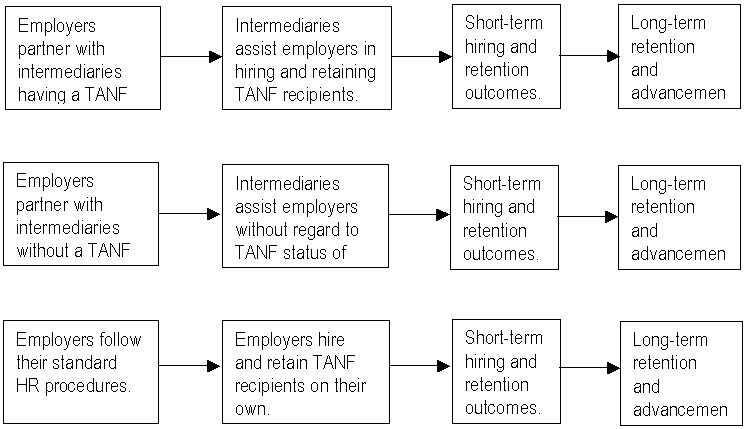
For the third and fourth columns in this figure, how do key short- and long-term employment outcomes in terms of hiring and job retention and advancement differ across these three situations? In particular, are the employment outcomes significantly different? If the outcomes are significantly better for employers using intermediaries than for employers that do not and if there are no differences between the employers and employees other than in the use of intermediaries then intermediaries are producing a net impact on employment. While less than ideal,(16) such comparisons would provide more credible evidence of the intermediaries' effectiveness than currently exists. If the outcomes are indeed different, we would want to know why they are different. What specific activities or practices account for the value added by intermediaries? Gaining answers to such questions would be challenging for researchers, but also critically important for employers and policymakers.
Several studies have assessed the activities and outcomes of individual intermediaries such as Project QUEST (e.g., Rademacher et al., 2001). Clearly, however, the value of such information would be enhanced if it could be compared to the activities and outcomes of other intermediaries and/or employers that handle employment matters without the help of intermediaries. The same can be said for several other potentially important comparisons of employer practices. For example, one crucially important group of employer practices for the TANF population involves the management of workers once they are hired. Practices such as the assessment of employee performance are likely to be critical to job retention and advancement for welfare recipients.
In this important and broad area of employee management, it is clear that employer behavior differs. However, the pertinent research evidence is limited. As discussed earlier in this chapter, more attention has been paid to recruitment, screening and hiring methods, as well as to compensation matters, than to other practices. However, several of the post-hiring practices listed in Exhibit 3.1 such as soft skills training, the use of different formal and informal job performance methods, the use of mentoring and other types of worker support, and the availability of flexible scheduling options for employees may be extremely important. Some of these practices, such as scheduling, only involve employers. Other practices, such as soft skill training, may involve intermediaries, either by referral or through outsourcing arrangements.
(11) Quantitative data on service utilization at One-Stop Centers is maintained in the WIASRD (Workforce Investment Act Standardized Record Data) data system, which is described in Chapter 4. However, as explained in Werner et al. (2002), the vast majority of available studies on the Centers have utilized case study information collected from individual programs rather than aggregate data from WIASRD.
(12) The Welfare to Work Partnership identified 237 potential intermediaries in the two metropolitan areas, 23 of which said they did not work with TANF recipients or did not provide pertinent labor market services. Of the remaining 214 organizations, 164 (77 percent) completed the full survey.
(13) These data sources provide extensive individual-level information on TANF recipients, but limited information on their employers.
(14) According to one definition, full economic self-sufficiency involves independence from poverty as well as from TANF and other forms of public assistance. Researchers have developed different measures of full and partial self-sufficiency. For a discussion of self-sufficiency outcomes based on this definition, see D. A. Long, "From Support to Self-Sufficiency: How Successful Are Programs in Advancing the Financial Independence and Well-Being of Welfare Recipients?" Evaluation and Program Planning, vol. 24 (2001), pp. 389-408.
(15) See, for example, J. P. Tierney and J. B. Grossman, Making a Difference: An Impact Study of Big Brothers/Big Sisters (Philadelphia, PA: Public/Private Ventures, 2000); and C. L. Sipe, Mentoring: A Synthesis of P/PV's Research (Philadelphia, Pa: Public/Private Ventures, 1996).
(16) Unless employers are randomly assigned to relationships with intermediaries, the results of these comparisons would be subject to selection bias. Such an assignment process is probably not feasible. However, in comparing outcomes for employers, an effort could be made to statistically control for differences between employers that use intermediaries and those that do not. Alternatively, job applicants or employees could be randomly assigned to intermediaries that provide recruitment, screening, and other services to employers (see Chapter 4 for further discussion).
Chapter 4: Options for Future Study
Based on the findings of this study, which were presented in the previous two chapters, this chapter explores options for potential successor projects. The research evidence that is most needed by employers and policymakers requires comprehensive knowledge of employer and intermediary attitudes, policies and practices, and explicit comparisons of activities and outcomes across employers and intermediaries. Such comparisons, however, are only meaningful if the data to be analyzed (1) are consistent for different employers and intermediaries; and (2) capture important employer practices in sufficient detail. Most existing data sources do not satisfy these two criteria.
This chapter begins with a discussion of potential analyses of two existing data sources, and then turns to the advantages and disadvantages of embarking on three kinds of new data collection and analysis.
4.1 Analyses of Existing Data Sources
As indicated in the last chapter, the employer surveys directed by Harry Holzer in the late 1990s stand out as some of the most important available data sources. Several noteworthy research documents based on analyses of these survey data were cited in Chapter 2. However, these surveys clearly offer opportunities for additional analysis. The survey questions concentrate on employer willingness to hire welfare recipients, the extent to which they have actually hired recipients, and their experience with the recipients they have hired. Yet Holzer's survey instrument also includes a number of questions about employer practices, notably recruitment, screening, and hiring. In addition, the instrument has several questions about labor market intermediaries, including questions about whether an employer has worked with specific intermediaries in each of the four metropolitan areas.
This is the only existing dataset that could be used to address the unanswered questions highlighted at the outset of this chapter. These survey data, which were collected consistently from a large sample of urban employers, cover several employer practices in meaningful detail. It would be possible, for example, to analyze employment outcomes for individual intermediaries or groups of intermediaries in the four metropolitan areas. It would also be possible to compare outcomes for employees who were hired using different recruitment and screening practices.(17)
The advantages of such analyses are apparent: The data are readily available, the analysis would be relatively inexpensive and, at least for some employer approaches and practices, additional analysis could be very informative. The disadvantages arise principally from the limitations of these survey data: they are limited to four cities, were collected a full five years ago, in a different economic and welfare policy environment than presently exists, and do not address some of the most important issues examined in this report (e.g., the specific ways in which employers utilize labor market intermediaries).
The surveys of labor market intermediaries carried out for the Welfare to Work Partnership in the Atlanta and New Orleans metropolitan areas also could provide the basis for valuable new analyses. Surveys were completed with more than three-quarters of all intermediaries identified as working with TANF recipients in those two areas. Straightforward analyses such as an assessment of the types of services provided to employers by different types of intermediaries would complement other research on intermediaries and the employment of TANF recipients.
The disadvantage of other existing data sources, in terms of addressing the unanswered questions, is that they lack information on employer practices. For example, the WIA program data system WIASRD contains information on publicly supported training, but not on private training supplied by employers. This means it would be possible to assess the effects of alternative training practices for a subset of labor market intermediaries (those with WIA funding), as discussed in the next section. However, the practices of employers could not be examined.
WIASRD can be linked to data on employee wages based on Unemployment Insurance (UI) reporting system used by employers but the quarterly records offer limited insight into employer compensation practices. For example, hourly wage rates and fringe benefits cannot be determined from these data.
While WIASRD would not help with the unanswered questions, it could provide, once linked to TANF data, a more complete and up-to-date answer to ASPE's fifth question Which segments of the TANF population present the greatest challenges? This question could be addressed with data on individual characteristics, deferrals, and exemptions. While analysis of these data would not shed new light on some issues (which are not fully captured in these administrative data), such as the effects of mental illness on employment, it would provide better estimates of the prevalence of a wide range of barriers.
Another important dataset is the one developed by the Census Bureau's LEHD program. A number of studies have already utilized the LEHD data, including two cited in the last chapter. The core of the dataset is UI wage record files, and the LEHD program currently includes states accounting for roughly half of total U.S. employment over an extended period, with that coverage expected to grow in the near future. These quarterly UI data have been integrated with employer records, basic demographic information and, for a limited subsample, survey data from the Current Population Survey (CPS), Survey of Income and Program Participation (SIPP), and decennial census.(18)
There is limited but important information about employer practices in the LEHD dataset. For example, detailed questions about employer-provided training are asked on one wave of the SIPP. This employee-reported information could potentially be combined with other SIPP and non-survey data in the LEHD dataset- such as employer size and industry, job classification and characteristics, and worker characteristics, length of employment, and earnings and fringe benefits - to compare activities and outcomes across different types of employee training. The data might also be useful in providing additional information on the types of employers that hire TANF recipients.
4.2 New Data Collection
4.2.1 New Survey of Employers or Intermediaries
A survey is the most practical way to obtain quantitative data to support systematic comparisons of practices used by employers and intermediaries around the country. At present, Holzer's survey of employers and Abt Associates' survey of intermediaries are the only sources of quantitative data on employer and intermediary practices regarding TANF recipients.
A new survey of employers and labor market intermediaries would be valuable for two important reasons.
- It could cover new ground. Holzer's survey addressed only employers and Abt Associates' survey focused on intermediaries. Neither focused on the intersection of the two that is, on when and how particular employment functions were delegated to intermediaries. These two surveys are the only ones to address labor demand issues specifically for TANF recipients. They cover many, but far from all of the issues discussed in this report. In particular, the attention given to employer practices in managing TANF recipients and other low-wage workers after they were hired was very limited.
- If administered relatively quickly (while labor market conditions are weaker than during the 1990s), a new survey could obtain more representative information on employers and intermediaries. Holzer's survey data, as well as many of the other datasets used in studies reviewed in this report, were collected in the late 1990s, a period with one of the tightest labor markets in history. The survey was also limited in geographic coverage (three Midwestern cities and Los Angeles).
As explained in the next chapter, a new survey could use several alternative sample frames and could concentrate on different substantive issues. A single survey could be administered to a sample of all employers, perhaps stratified in terms of employer size, location, or other factors. Alternatively, the survey could be supplemented by in-depth interviews with a subset of employers, such as those that regularly hire TANF recipients or those that have relationships with a particular set of labor market intermediaries. A survey could also be conducted of administrators from the labor market intermediaries working with employers that are also being interviewed.
The key advantage of a new survey is that it could be designed to collect specific types of information of interest, such as data on labor market intermediary practices or employer practices used in managing TANF workers. The key disadvantages are cost (up to several million dollars) and the length of time required before reporting findings. As discussed in the next chapter, the cost of a survey would depend on factors such as the sample size, the methods used to administer the survey, the response rate, whether or not secondary interviewing is done, and how the survey data are analyzed.
4.2.2 New Systematic Case Studies
Qualitative data on the practices used by employers and intermediaries could be collected in new case studies. Existing case studies typically have addressed small groups of employers or intermediaries. Sometimes the studies have focused on a single organization. Because the studies have used different approaches and applied different criteria, it is difficult to draw wide-ranging conclusions from this qualitative research.
Given the need for systematic comparisons, it is important that such studies collect consistent information on specific practices among varied employers and intermediaries. This would require the use of consistent definitions and field research methods across a representative group of employer and intermediary settings.
The two chief advantages of such case studies, compared to other types of research, are that they could explore issues in much more depth (and receive input from a greater number of employer or intermediary informants), and respond better to issues encountered after the research begins. This greater depth of information comes at a cost a small sample size that cannot be subjected to statistical analysis. The cost of a case study project depends on its features.
4.3 Natural Experiments
At the meeting of the expert panel, Timothy Bartik introduced the idea of analyzing "natural experiments" in localities where assignment of TANF recipients to employment and training providers is essentially random, as is the case in Detroit and New York City. Depending on the amount of variation in service providers and in the practices they use, such studies could be very valuable.
One of the main attractions of natural experiments is that they could be studied quickly and inexpensively. A valuable study, relying primarily on WIASRD and UI data, could be carried out for a few hundred thousand dollars. Natural experiments also provide a way to compare the activities and outcomes and, potentially the impacts of different practices and services in an environment that has not been manipulated by researchers.
For impact estimation, natural experiments face two challenges. One is that assignment of clients rarely is genuinely random. Often assignment is partially random, as is the case when assignment to service providers located within a geographic area or within an education grouping is random. Assignment also can be chiefly random, as when most clients are randomly assigned and a few are assigned nonrandomly. These nonrandom aspects of assignment can be addressed statistically, but the corrective actions taken often raise doubts about the credibility of the resulting impact estimates.
The other challenge is that service providers bundle groups of services, making it difficult to identify the value added by particular services. Researchers typically exert little or no influence on the composition of these service bundles. However, with sufficient variation in services across several sites, the bundles can be unpacked statistically.
Because conditions cannot be controlled by researchers, natural experiments cannot be expected to be as definitive as planned experiments (discussed below) in addressing questions such as those raised earlier in this chapter. Departures from true random assignment and well-defined service packages are to be expected when there is no agreement governing such matters (such an agreement is essential to the success of a controlled experiment). However, at a minimum, natural experiments like these can provide an excellent opportunity for an exploratory study.
4.4 Rigorous Evaluation Studies
Planned random assignment studies involving employers, labor market intermediaries, and/or other institutions would be very valuable. They could provide credible estimates of the net impacts of alternative work development approaches, and perhaps even of particular employer practices, on employment, earnings, TANF receipt, income, training and support provided by employers, as well as other outcomes.
The advantage of designed experiments over natural experiments may not be great with respect to random assignment, assuming that assignment practices in New York, Detroit, and other places are truly random. However, their superiority is clear in regard to controlling the mix of services received by welfare recipients in the study. In principle, planned experiments could control the services received by the randomly assigned groups. This would allow researchers to draw inferences more confidently about what does and does not work.
- In practice, however, such experiments could be difficult to implement. Designing random assignment evaluations of intermediaries would be challenging for many reasons, including the following:
- Many employer-led workforce development initiatives and innovative community-based organization programs involve relatively small numbers of workers. This raises serious sample size concerns.
- Inserting random assignment into intermediary or employer processes often would be difficult, if not impossible. In other cases, it might cause disruptions or raise serious ethical issues.
Many intermediaries do not seem ready for rigorous study. It is critically important that the service be strong enough to generate measurable impacts and that the organization have the capacity to accommodate random assignment and collect necessary data.
In addition, designed experiments are subject to the criticism that they are artificial and thus less robust than natural experiments with respect to real-world conditions. This is especially true if too much control is exerted over the service mix (or other aspects of the discretionary decisions) of program operators.
However, at least three candidates for random assignment study merit consideration. First, financial and other incentives for employers represent one option. By providing specific incentives to some employers and not others, or for some employees and not others, the experiment would be designed to induce different employer practices, which would be expected to generate different outcomes for TANF recipients. However, it might not be feasible to modify an existing tax incentive (such as the WOTC), or to establish a new tax incentive, only for randomly selected employers. In addition, past experience with wage subsidies paid to employers suggests that offering tax incentives to employers for some job candidates and not others can stigmatize those individuals.(19) However, some form of time-limited payments to employers or intermediaries might be used instead of changes in tax rules.
Second, TANF/WIA One-Stop Centers are another candidate for study. They work with large numbers of welfare recipients and employers, random assignment seems feasible, and they are accustomed to collecting data. The available research suggests that One-Stop Centers vary in terms of their employer focus, TANF-WIA coordination, and performance outcomes. Therefore, perhaps, an intensive, employer-focused One-Stop treatment could be delivered at selected centers to TANF recipients randomly assigned to a treatment group. A less intensive, "standard" treatment could be provided to control group members.
Third, community intermediaries such as Project QUEST are potential candidates for rigorous study. Many are sophisticated initiatives serving a large number of TANF recipients. Were intermediaries such as Project QUEST to be evaluated using an experimental research design, either employers or employees could be randomly assigned to treatment and control groups.(20) Several intermediaries have been assessed as part of one or more qualitative studies. The Center for Employment Training (CET) was rigorously evaluated in three different random assignment evaluations, although many of the key outcomes associated with its labor market intermediary role notably its interactions with and impacts on employers were not considered.(21)
Without question, comprehensive surveys and random assignment experiments would be the best way to address the unanswered questions identified earlier in this chapter. However, a well-run experiment would require substantial time (at least four years) and money to implement. With a large sample (2,000 or more in both the treatment and control groups), multiple waves of survey data collection, and intensive field research, the cost of such a study could easily reach $15-20 million.
A random assignment experiment also would require cooperation in terms of random assignment, service provision, and data collection from the intermediaries and other organizations participating in the research. As a result, it may make sense to study natural experiments and/or conduct other research first, and pursue larger-scale planned experiments later, after more has been learned.
4.5 Short-Term and Longer-Term Research Priorities
It is clear that rigorous impact research is needed to measure the relative effectiveness of these practices. However, it is equally clear that several preliminary research steps must be taken before such research can be carried out. First, it is important to document the use of various employer practices in recruiting, hiring, supporting, and managing employees. What are these practices and how often are they used by different types of employers? How often are recruitment, hiring and employment functions outsourced, and how frequently are different types of intermediaries used for this purpose? A new survey is probably the best way to take this important first step, and would be an important end in itself. However, further analysis of the Holzer employer surveys and the Welfare to Work Partnership intermediary surveys also would be beneficial.
Second, it is critical to develop testable hypotheses for alternative practices and intermediaries. A new survey would also help in doing this, particularly if it involves in-depth data collection on particular practices and intermediaries. Other research efforts, notably systematic case studies on innovative practices and specific analyses of existing quantitative datasets, would also be useful toward this end.
(17) In the survey employers were asked a series of questions about the most recent TANF recipient they hired, including "How was this employee recruited?" and "Did you have the applicants take any test?" Later they were asked a series of questions about the job performance of the same individual, including questions about absenteeism, tardiness, and overall performance.
(18) The LEHD dataset is described on the Census Bureau's website at http://lehd.dsd.census.gov.
(19) See G. Burtless, "Are Targeted Wage Subsidies Harmful? Evidence from a Wage Voucher Experiment", Industrial and Labor Relations Review. vol. 39 (1985).
(20) A classic experimental research design would entail randomly assigning job applicants and/or employees from a variety of employers to treatment and control groups; the intermediaries would work only with the treatment group, and employment and other outcomes for these two groups would be compared. An alternative design would involve random assignment of employers. After identifying enterprises with an interest in partnering with the intermediaries, the enterprises could be assigned to treatment or control status and the intermediaries would provide services only to enterprises in the treatment group. The outcomes of new employees of the treatment enterprises would be compared to those of new employees in the control enterprises.
(21) Community Development Financial Institutions (CDFIs) also offer an interesting alternative approach to promoting demand for labor from welfare recipients and other low-income individuals. Among the more than 500 CDFIs in the country overseen by the U.S. Treasury Department, there are a number of community venture funds that make equity investments in local businesses that locate in and employ people from high-poverty neighborhoods.
Chapter 5: A Survey of Employers and Intermediaries
In this chapter we elaborate our discussion of survey data collection activities that would provide a more complete understanding of employer practices in hiring and employing TANF recipients and the role of labor market intermediaries in this process. Although this chapter focuses on one approach to conducting these surveys, we note various options that could be exercised both in developing and implementing the proposed surveys.
We divide our discussion of the survey activities into three tasks: a national survey of employers, follow-up interviews with selected employers, and a survey of the labor market intermediaries with whom employers work. For each task we describe a comprehensive survey option and a basic option that requires less financial support.
5.1 Introduction
Surveys of businesses and other organizations are difficult to develop and implement. The challenges faced when conducting surveys of businesses are very different from those encountered in conducting other types of surveys. In this section we briefly discuss three key challenges that should be considered when developing the surveys of employers and labor market intermediaries: sample design, survey administration, and employer-intermediary linkages.
5.1 Introduction
The first and most obvious challenge in conducting surveys with employers is identifying an appropriate sample frame, or list, from which to draw the sample. Ideally, the sample frame should include all or nearly all members of the population of interest in this case all domestic organizations with employees.(22) A survey could be limited to employers in the private sector or could include public organizations as well. Holzer's survey of employers included both groups.
Assembling a complete list of businesses is challenging. Non-government lists are generally constructed from a range of directories (e.g., phone books) and files (e.g., lists of trade organizations); government lists (such as those maintained by the U.S. Census Bureau and the Bureau of Labor Statistics) are generally derived from tax, unemployment insurance, or other records. Regardless of the source, it is difficult to construct and maintain an up-to-date list of all U.S. employers, and most existing lists suffer from a range of defects such as duplicate records, classification inaccuracies, incompleteness, and extraneous units (Srinath, 1987).
Developing a sample of businesses is further complicated by the difficult task of identifying the right organizational entity to which the survey should be directed. Business organizations include enterprises that consist of one or more companies, companies that consist of one or more establishments, and establishments. Employer surveys, such as Holzer's Multi-City Telephone Employer Survey (MCTES) and later four-city survey, have sampled establishments, recognizing the local nature of many businesses' employment practices. However, determining whether given business organizations are establishments, rather than enterprises or companies, can be difficult. The sample frame must be systematically "profiled" to identify and code multi-unit business organizations so that establishments may be sampled (Srinath, 1987).
5.1.2 Survey Administration Challenges
Researchers typically encounter additional difficulties in their attempts to survey businesses. The difficulties include the following.
Respondent Identification. Identifying the best person(s) to complete a survey within a business organization is challenging. The information obtained from the lists typically used for sampling generally includes the company's address and telephone number and, in some cases, the name of a general contact person in the organization. Unfortunately, the identified contact is rarely the person to whom the survey should be directed that is, the person who knows the most about entry-level worker recruitment and hiring. Moreover, elements of the survey may need to be administered to more than one person within the business organization. For example, it may be most appropriate for a person who handles recruitment to answer one survey module and another person responsible for employment and supervision to respond to a second module.
Gatekeepers and Corporate Survey Policies. In many businesses there are "gatekeepers" who screen mail and telephone requests for survey participation and prohibit access to the survey's intended respondent. In addition, organizations often have "corporate survey policies" that dictate whether and in what ways an employee may respond to a survey. Generally speaking, these policies apply to certain questionnaire methods (such as written questionnaires versus in-person interviews) and require potential respondents to obtain permission to participate in the survey from a central authority (Dillman, 2000). However, some companies have "no survey" policies that prohibit employees from participating in surveys on the company's behalf.
Incentives for Survey Participation. Surveys of business organizations often struggle to obtain meaningful response rates. Employees often are busy and may have few personal incentives to respond to a survey about employer practices (Dillman, 2000).
5.1.3 Linking Employer Practices with Intermediaries
As discussed in previous chapters, many employers utilize labor market intermediaries in their recruitment, hiring, and employment processes. The simplest way to obtain information about the use of intermediaries is to rely entirely on information supplied either by employers in an employer survey or by intermediary organizations in a survey of labor market intermediaries. Holzer's four-city surveys in the late 1990s asked employers about the involvement of intermediaries in their employment activities. Abt Associates' surveys of intermediaries during the same period asked these organizations about the employers with whom they worked. However, neither set of surveys asked detailed questions about the interactions between employers and intermediaries.
A more demanding, but potentially very rewarding, approach would be to ask both employers and intermediaries about their interactions. Specifically, a national survey might ask employers about the intermediaries with which they have worked, and then interview the intermediaries named by employers. By doing this, the survey would provide more thorough information than is now available. This approach also would allow verification of the survey responses of both employers and intermediaries.
5.2 Design of a Core Survey of Employers
5.2.1 Survey Questions
Many of the important decisions required in designing a survey of employers are related to the interview's content. The experience of Holzer and others suggests that a telephone survey of employers should last no longer than 15-20 minutes. As a result, both the topics covered and the specific questions included in the survey would have to be limited. However, there are many high-priority subjects for the survey to address. Exhibit 5.1 presents a list of potential topics for the survey as well as examples of questions that might be asked for each of the topics. The selection of specific questions for the core survey would depend on a number of factors, including whether supplementary interviews were conducted in addition to the core survey (see discussion below).(23)
| Survey Topics | Illustrative Questions |
|---|---|
| Employer Characteristics and Circumstances | |
| Business characteristics | Does this company operate at more than one site? Is this a minority-owned company? What percentage of your customer/clients are African American? Asian? Hispanic? |
| Workforce characteristics | How many employees currently work for the company at this location? How many of your employees are in jobs that do not require any particular skills, education, previous training or experience when they are hired? |
| Business and employment conditions | Has the company's total revenue during the last year increased compared to its revenue in the previous year? Is the number of current employees greater than it was a year ago? Approximately how many entry-level vacancies are you currently trying to fill? |
| Employer Attitudes and Perceptions | |
| Interest in TANF recipients | Are you ready or reluctant to hire welfare recipients as employees? Do you use the services of a public agency, private company, or community organization that focuses on working with welfare recipients? Would you be more likely to hire welfare recipients, especially without a high school diploma or work experience, if an agency provided a 50 percent tax credit against their wages for one year? |
| Perceptions of recipients | In general, how does the job performance of welfare recipients you have hired compare to the performance of your other entry-level employees? |
| Government supports | Do you know that tax credits for hiring welfare recipients are available from the federal government? Have you claimed such credits for employees you have hired? |
| Employer Practices | |
| Recruitment and hiring | Do you use the services of a public agency, private company, or community organization in recruiting and hiring employees? Would you rely on one or more organizations as a partner in finding and hiring good people? Have you participated in a job fair or some other event sponsored by a public agency or a community organization? During the past year, have you used the Internet when trying to fill job vacancies? Do you have job applicants take any kind of tests? Which kinds of tests do you administer? Roughly what percentage of your job applications is from females? African Americans? Asians? Hispanics? |
| Compensation | Do you use the services of a public agency, private company, or community organization in determining the wages or fringe benefits paid to employees? What is the range of starting wages for entry-level positions? Is this figure hourly, weekly, monthly or yearly? Do you offer health insurance to entry-level employees? Is there a waiting period for health insurance eligibility? What percentage of your employees is fully enrolled? Do you offer a retirement plan? |
| Employee support and assistance | Does your company offer employees assistance in finding child care, or with other types of assistance (e.g., housing, counseling, or transportation)? Do you use the services of a public agency, private company, or community organization in providing assistance to employees in obtaining child care, housing, counseling, or transportation? |
| Training | Do you use the services of a public agency, private company, or community organization in training any of your employees? What types of training does the company provide to employees? |
| Employee performance assessment | How do you assess the performance of your employees? Do you use the services of a public agency, private company, or community organization in assessing the performance of your employees? |
Another key decision concerns the frame of reference for the survey questions. Many of the questions in Holzer's surveys asked the respondent about the last employee hired. For example, the four-city survey asked about the type of work the last employee performed, whether the position required a high school diploma, and whether the person was first hired through a temporary employment agency. Alternatively, a survey could ask about multiple individuals hired by the employer over a longer time period. For example, the respondent could be asked about the last five to 10 employees hired by the company or about all employees hired during the last 12 months.
Holzer's approach asking about the employer's most recent hire has two important advantages. First, it minimizes recall error and maximizes respondent understanding by focusing unambiguously on recent experience. Second, it can be posed, using identical language, to all respondents whose companies have hired at least one person. The key disadvantage is that, particularly for larger establishments, the most recent hire may not be representative.
5.2.2 Sample Design
As for the survey's content, important decisions about the survey's sample, data collection method, survey testing and survey implementation would need to be made. In this section we review some of the issues to be considered in developing a survey with employers. Survey sampling issues-identifying the study's target population, finding or assembling a list of target population members, and actually selecting the sample-are examined first. This is followed by a discussion of survey testing and implementation issues.
Target Population. The study's target population should be defined as precisely as possible in terms of the larger population to which the survey's findings would be generalized. This requires the development of inclusion and exclusion criteria that describe the characteristics of the business organizations to be included in the survey's sample.
For a survey of employers, there are a number of possible criteria that might be used. These include the following:
- Number of Employees. Given the survey's focus on employment practices, businesses targeted for the survey would need to have at least one employee. There are a number of ways to define "employee." The definition, for example, might include full-time, part-time, or seasonal laborers, contractors and/or independent consultants. An additional consideration is whether the minimum number of employees should be set at a number greater than one that is, should enterprises operating on a very small scale be excluded from the survey.
- Business Organization. As previously discussed, it is important to distinguish which business units should be targeted by the survey. For example, in the case of multi-unit businesses, does the portrayal of employment practices offered by "headquarters" accurately describe what occurs at lower levels of the organization's hierarchy? Past surveys such as Holzer's MCTES and four-city surveys have targeted the establishment level of multi-unit businesses.
- Industry Sector. The survey's target population may include private for-profit, non-profit, and public-sector (including or excluding military) employers. The MCTES survey included all for-profit, non-profit and public-sector employers, but not military employers. Additionally, depending on the list of business organizations that is used, it is often possible to distinguish between employers within specific industry sectors, such as manufacturing, service, and transportation.
- Geography. The geographical coverage of a national survey has to be specified. Does "national" include Hawaii and Alaska as well as the 48 continental states? Are Puerto Rico and the other U.S. territories included?
Sampling Frame. As discussed above, identifying a sampling frame that provides adequate coverage of business organizations and employers poses a number of challenges. Several factors and tradeoffs should be taken into account in developing the sampling frame. For example:
- To what extent is national coverage essential? Is a frame that is limited to specific states, regions, cities, or industries satisfactory?
- To what extent should the sample frame allow stratification? Should the stratification include number of employees, geographic location, industry sector, or other factors?
- Is one concerned about certain types of systematic coverage errors such as exclusion of certain types of employers? If so, are some types of errors acceptable?
- Particularly given the dynamic nature of the private sector, at what frequency should the database or list be updated?
- How important is it for the sample list to include a contact name in the organization (such as the name of an employee in the organization's human resources unit)?
Exhibit 5.2 contrasts the strengths and weaknesses of four possible sample frames: the Longitudinal Employer-Household Dynamics (LEHD) database; InfoUSA; Dun & Bradstreet; and business or trade organization lists. Applying the above criteria to these lists illustrates some of the choices, or tradeoffs, that would need to be made. For example, the LEHD includes comprehensive Unemployment Insurance data that has been linked to a number of other sources including the Survey of Income and Program Participation, but only covers 20 states. Alternatively, the InfoUSA list provides slightly less comprehensive coverage of employers, but is available nationwide. It also includes fields that identify establishments (versus companies or enterprises) and provides contact names for human resources personnel within the organization.
| Description | Strengths | Weaknesses | |
|---|---|---|---|
| Longitudinal Employer-Household Dynamics (LEHD) |
|
|
|
| InfoUSA |
|
|
|
| Dun & Bradstreet |
|
|
|
| Chamber of Commerce, National Association of Manufacturers, or Other List Maintained by Trade Association or Business Group |
|
|
|
Sample Selection. Once a sampling frame is identified, several choices need to be made about how to actually draw the sample. First, investigators must decide what, if any, subgroups (or strata) within the target population are of particular interest. For example, to what extent is one interested in making distinctions among the following types of employers:
- Employers with different numbers of employees (e.g., small, medium and large businesses);
- Employers from different geographic locations (e.g., regions or urban and rural areas); and
- Employers with different business types (e.g., manufacturing, retail, service, as noted by Standard Industrial, or SIC, codes)?
Additionally, investigators need to decide whether two-way strata are of interest. For example, is there interest in making comparisons among small businesses that are located in rural versus urban areas?
Based on these decisions, an appropriate sample size can be determined. The survey sample size depends on:
- The amount of sampling error that is acceptable;
- The size of the target population;
- How varied the population is with respect to the characteristics of interest (such as the percentage of employers estimated to employ TANF recipients); and
- The smallest subgroup within the overall sample for which separate estimates will be made.
5.2.3 Data Collection Method
Surveys of employers and labor market intermediaries could be either self- or interviewer-administered. Additionally, a number of different data collection modes-mail, telephone, Internet, or in-person-could be used to collect responses. To some extent, the data collection method is affected by the sampling frame and design. For example, it is difficult to conduct a mail survey without up-to-date mailing addresses or a telephone survey without current telephone numbers.
Some survey methods or combinations of methods typically produce better survey response from specific populations than other methods. Mail surveys with businesses generally result in lower response rates than telephone surveys or mixed-method approaches using both a mail and telephone contact. Mail surveys, however, are generally less expensive to administer than those conducted by telephone. Holzer's MTCES and four-city surveys were administered by telephone. In contrast, Abt Associates survey with intermediary organizations utilized a mixed-method approach, with an initial mail contact followed by telephone contact with non-responders.
5.2.4 Resources for Questionnaire Development
Development of the employer and intermediary survey instruments probably would draw heavily on two types of resources. One includes existing instruments, notably Holzer's employer surveys and Abt Associates' survey of labor market intermediaries. The other important resource includes researchers and other individuals with pertinent expertise, including employers themselves. Several members of the expert advisory panel would be valuable advisors in the questionnaire development process.
5.2.5 Survey Testing
Pre-testing a survey instrument is an essential component of good survey design. Pre-testing may involve focus groups that provide additional input regarding the survey's content and format, or pilot tests where the instrument is administered to individuals who resemble or are members of the survey's target population. In the latter case, feedback may be obtained through written comments or debriefing interviews.
5.3 Comprehensive Survey Plan
In this section we outline the elements of a plan for a comprehensive survey of employers.
An overview of the survey's implementation plan is provided as Exhibit 5.3.
Exhibit 5.3
Implementation Plan for Comprehensive and Basic Surveys
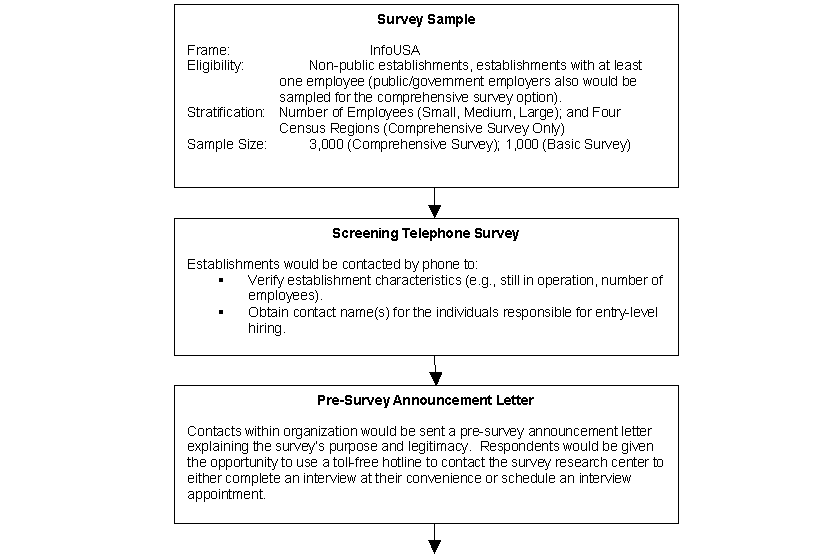
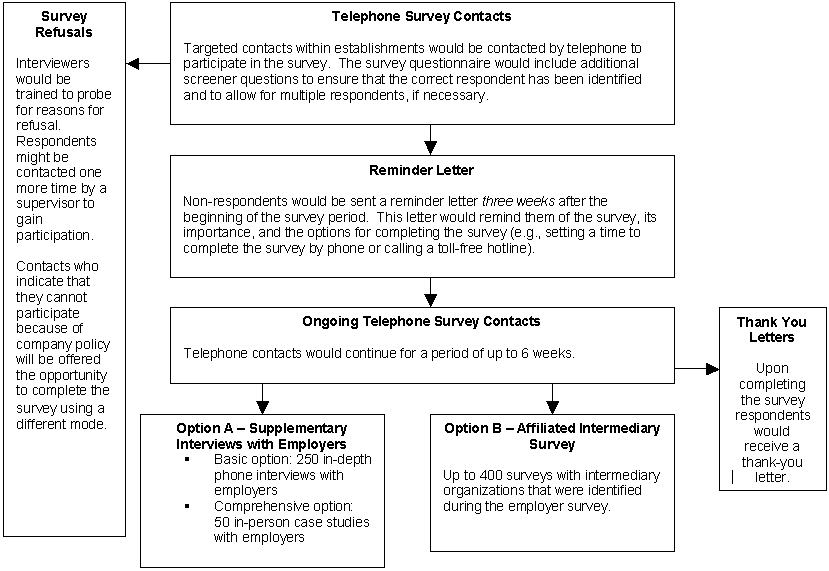
5.3.1 Sample Design
The sample design for the comprehensive survey plan reflects one possible approach to identifying and selecting businesses for participation in the employer survey. The target population includes all business establishments and public agencies that have at least one employee.(24) The business establishments would be identified using the InfoUSA business directory.(25) This directory is recommended based on its national coverage, file characteristics (including flags for establishments and contact information for human resources personnel), easy access, and cost. The InfoUSA sample frame could be augmented with data from the Longitudinal Employer-Household Dynamics (LEHD) data source, which includes additional information on employer and employee characteristics for employers in more than 20 states.
The plan uses a multi-staged sampling strategy in which establishments are initially stratified in terms of three size categories: small (fewer than 20 employees), medium (20-99 employees), and large (100 or more employees). The number of establishments selected in each of these strata would be proportional to the total number of workers employed by all companies in that group. Within each establishment size stratum, four regional strata corresponding to the four U.S. Census regions would be established. Here, the sampling fraction would be proportional to the number of establishments for that region.
Alternatively, employers in selected sectors (e.g., service sectors) could be oversampled. Oversampling particular groups of establishments would result in more reliable specific estimates for such groups. However, it could also result in a larger sample and increased survey costs.
In his MTCES and four-city employer surveys, Holzer used these same establishment-size categories. However, these surveys did not stratify by regions. Instead, separate samples were drawn for specific cities.
Based on these design specifications, a sample of 3,000 survey completions is advisable. Because the number of TANF recipients in the general population is relatively small, a general survey of employers might find a relatively small percentage of employers quite possibly less than 25 percent aware that they have recruited or hired current and/or former TANF recipients. Nonetheless, a sample that includes 3,000 survey completions would permit reliable estimates of the prevalence of various employer practices.(26)
This sample would also permit extensive subgroup analysis. For example, it should be possible to make reliable estimates for business establishments in the service and manufacturing sectors as well as for establishments in the public sector. It should also be possible to make separate estimates for different regions of the country.(27)
5.3.2 Survey Method
The implementation plan for the comprehensive survey of employers is based on a four-step design, which is intended to produce an overall response rate of at least 70 percent. As summarized in Exhibit 5.3, the plan has several important features:
1. Screening Telephone Survey. An initial screening survey would be conducted with sampled establishments to verify important characteristics such as whether they are still in operation, the number of full- and part-time employees, and the name and contact information for the individual responsible for entry-level hiring. A separate screening survey improves the overall efficiency of the full telephone survey by ensuring that the interviewers target the correct person within the organization and that only eligible firms are included in the study. The screening survey would be conducted using computer-assisted telephone interviewing (CATI) and, on average, last no longer than five minutes.
2. Pre-Survey Announcement Letter. Using the contact information gathered during the initial screening survey, a pre-survey announcement letter would be sent to individuals in sampled establishments who are responsible for entry-level hiring decisions. This letter would describe the survey, its sponsors, and when and how the individual would be contacted for a telephone survey interview. Contacts also would be given the option of calling a toll-free hotline to complete a survey at their convenience, schedule an interview appointment, or ask questions about the survey. This letter would be sent approximately two weeks prior to initiating the study's telephone survey component.
3. Telephone Survey Administration. Identified respondents from the sampled establishments would be contacted by telephone to complete a survey on their practices for hiring and employing current and former TANF recipients. The length of the survey's administration would not exceed 20 minutes. CATI would be used to administer the survey and enter data, which greatly improves survey efficiency and overall data quality.
The survey questionnaire would open with a few additional screener questions to ensure that the correct contact person within the establishment has been identified. The survey also would be designed and programmed to allow for multiple respondents for cases where this is appropriate. Initially, no more than 15 attempts would be made to reach the contact person. At this juncture, survey supervisors should review the situation to determine if an alternative contact or method should be used to reach the selected establishment. In addition, approximately three weeks after beginning the telephone survey, reminder letters should be sent to all non-respondents. This letter would remind the contacts about the survey, its importance, and the options available for completing the survey.
Interviewers should be trained to work with respondents in ways that minimize survey refusals. This includes flexible interview scheduling procedures such as the option to complete the survey over the course of more than one call, offering alternative options for completing the survey (e.g., via internet) and addressing respondents' concerns about survey questions, content, and procedures. Some respondents can be expected to refuse the survey. In all cases, individuals who refuse the survey must be treated with respect; however, we recommend one attempt to convert the refusal.(28) Individuals who refuse would receive one conversion refusal contact from a supervisor. At this time, the supervisor would probe to determine whether it is the "establishment" that is refusing or the individual. If it is the individual, another contact within the organization would be sought. In situations where respondents indicate that they cannot participate because of company policy, survey supervisors would probe to find out whether the policy allows for mail surveys and, depending on the overall response rate, this individual might be asked to complete a mail survey at some later date.
5.3.3 Survey Pre-Testing
The core survey instrument would be pre-tested with a limited sample of establishments. To the extent possible, the pre-test would reflect the actual survey circumstances, including administering the survey using CATI. The administration of this pre-test should be carefully monitored and, at the survey's conclusion, the pre-test survey respondents should be asked about their experience taking the survey. It is particularly important to identify questions that are difficult to answer and to obtain reactions to the flow and general tone of the questionnaire.
5.4 Basic Survey Plan
The basic employer survey plan, which is less expensive than the comprehensive option, is designed to provide estimates for business establishments as a whole. The survey would be completed with 1,000 establishments, rather than the 3,000 establishments specified for the comprehensive plan. Recognizing the statistical limitations imposed by this smaller sample, the basic plan would be confined to business establishments. In addition, the basic survey's sample would only be stratified by business size; additional geographic strata would not be used.
The survey would be administered by telephone, with a completion rate of 60-65 percent. This figure, lower than the rate for the comprehensive survey, would result from fewer interview attempts per establishment. In addition, the basic survey would not include a separate survey screener. In other respects, however, the procedural features of the basic plan would closely resemble those of the comprehensive option described above (and summarized in Exhibit 5.3).
The basic plan's sample size would not be large enough to support the subgroup assessment described for the comprehensive option. This would result in a less complex analysis and a shorter report.
5.5 Supplementary Interviews with Employers
The comprehensive and basic telephone surveys described in the preceding two sections would not be long enough to collect detailed information on employer practices. As a result, we recommend an additional round of interviews with employers. These follow-up interviews would be conducted with employers who respond to the core survey and whose responses indicate experience hiring TANF recipients. As noted earlier, it is likely that many employers will have little or no such experience.
Among businesses and public agencies with TANF hiring experience, the follow-up interviewing could be targeted to several alternative employer groups, including those with interesting or innovative practices and those indicating they have partnerships with labor market intermediaries. Further data collection for employers with noteworthy practices would focus on the details of those practices. For interviews with establishments having relationships with intermediaries, the focus would be on the employment activities involved and the extent to which company employment functions have been outsourced to these labor market organizations.
The respondent for the core employer survey would probably be a person familiar with the establishment's recruitment and hiring process. The second interview should probably be conducted with a person who is familiar with post-hiring practices. This may or may not be the same person who responds to the core survey.
5.5.1 Comprehensive Interviews
For the comprehensive version of these interviews, a substantial fraction of the sample would be interviewed in person at the establishment site. This approach, which would entail semi-structured discussions with multiple respondents at each firm or organization, would provide in-depth information comparable to site visits done for case study research. Unlike most case studies, however, objective employer survey results could be used to identify the establishments with practices warranting study. In addition, geographic considerations could be used in the subsample selection process to contain costs (e.g., several establishments from each of several metropolitan areas could be chosen).
These in-depth interviews would permit a rich qualitative assessment of employer practices based on discussions with multiple respondents at each establishment. Based on the interviews, detailed descriptions of the practices would be provided in the project's final report.
The remaining follow-up interviews would be done by telephone, in most cases with a single respondent. Like the in-person interviewing, however, these telephone interviews could involve a substantial number of open-ended questions.
5.5.2 Basic Interviews
Conducting these follow-up interviews entirely by telephone would reduce costs substantially. The interviews would be done in the same manner as for the telephone interviews included in the comprehensive option. Most interviews would involve a single respondent.
5.6 Survey with Intermediaries
Developing a survey for labor market intermediaries would require similar choices to those faced in developing an employer survey. For example, as shown in Exhibit 5.4, there are many important topics and specific questions to cover in such a survey. However, we recommend that the survey sample frame as well as the determination of the appropriate person in the organization to interview be based on responses to the core employer survey. A draft of the intermediary survey would be developed at the same time as the employer surveys to ensure parallel construction. However, the final intermediary survey's content would depend to some extent on data obtained from the employer survey. As a result, the intermediary survey instrument would not be completed until after receiving final data from the employer survey.
The sample of labor market intermediaries to be surveyed by telephone would be determined by the employer survey; that is, only those intermediary organizations that are identified by employers would be included in the intermediary survey. The administration of the intermediary survey would be similar to that of the employer survey. As for the core employer survey, we would conduct an interview of no more than 20 minutes.
| Survey Topics | Illustrative Questions |
|---|---|
| Intermediary Characteristics | |
| Organizational characteristics | Does this organization operate at more than one site?Is this a for-profit, non-profit, or government organization? Is it affiliated with another institution? What are the characteristics of your employee-clients (participants)? What percentage of these clients are African American? Asian? Hispanic? What are the characteristics of your employer-clients (companies)? Are they concentrated in particular industries? |
| Institutional mission | What is this organization's primary mission? How do you measure organizational success? Is employee performance judged using these performance measures? |
| Intermediary Services | |
| Recruitment and hiring | Do you provide assistance to employer-clients in finding and recruiting employees? Do you offer employee screening services to employer-clients? What types of screening do you provide? Do you offer job placement services to employee-clients? |
| Employee support and assistance | Do you use /provide services to employer-clients in providing support services or fringe benefits to their employees? Do you offer post-placement services to employee-clients? Do you provide financial planning education? Job coaching? Child care assistance? Mentoring referrals? Counseling? Transitional health care assistance? |
| Training | Do you use /provide skills training services to employer-clients? Do you provide GED preparation? Literacy training? Computer training? Vocational training? Employer-specific training? Do you offer job training to employee-clients? Do you provide job readiness training? Basic education or GED preparation? Skills training? |
5.6.1 Comprehensive Survey
For the comprehensive survey of intermediaries, many of the interviews would be conducted in person at the organization's offices. As with employers, in-person interviewing at the office of the intermediary organization would provide valuable in-depth information. In addition, it would provide an opportunity to verify and augment the information on intermediaries provided by employers.
Given the nature of these interviews, much of the development of the interview instrument would need to occur after the completion of the employer survey interviewing. Employer responses to the core survey would illuminate many of the practices and issues that are important to address in detail during the intermediary interviewing.
5.6.2 Basic Interviews
As with the secondary interviews with employers, conducting the survey of intermediaries by telephone would reduce costs, but also yield less detailed information. Most, but not all, of the survey's instrument development which would be less detailed than for the in-person interviewing option could be done before the core employer survey is finished.
5.7 Resources and Schedule
5.7.1 Comprehensive Survey Project
We estimate that a comprehensive survey of both employers and intermediaries would cost several million dollars. In addition to the comprehensive version of the core survey of employers, this project would include comprehensive follow-up interviews with employers and a comprehensive survey of intermediary organizations identified by employers in the core survey.
This project would include the following components:
- Design. The core employer and intermediary survey instruments and the guides for the subsequent in-depth interviewing would involve extensive preparation.
- Screener. Approximately 5,500 enterprises from the sample list would be screened by telephone to determine that they are eligible for the survey.
- Core Employer Survey. Eligible enterprises would be interviewed by telephone. The employer sample would be 3,000 and the completion rate would be at least 70 percent.
- Supplementary Interviews with Employers. On-site, in-person interviews would be conducted with 50 employers and telephone interviews would be administered to an additional 250 employers.
- Intermediary Survey. Fifty labor market intermediaries identified by respondents to the core employer survey would be interviewed in person. An additional 250 interviews would be conducted by telephone.
- Analysis. The analysis of the core employer survey data would include a comparison of results in Los Angeles, Chicago, Cleveland, and Milwaukee with the results, from approximately 3-5 years earlier, for Holzer's four-city survey. The analysis of the on-site, in-depth interviewing results would allow detailed descriptions of employer and intermediary practices.
- Report. A thorough report would describe the survey and its implementation and discuss the results of the analysis of survey data in detail, and its relation to the existing literature.
The entire project would take approximately two and one-half years. This includes a 2-month period for survey design, 5-6 months for the OMB clearance process and preparation for telephone interviewing, 5 months for administration of the core employer survey (including the screener), 6-9 months for administering the core intermediary survey and completing the in-depth interviewing with employers and intermediaries, and 5-6 months for the analysis and report preparation.
5.7.2 Other Options
Several alternative formulations of the project are available. One option is to restrict the project to a core survey of employers. The basic survey of employers only could be completed, for several thousand dollars, in less than a year's time. The comprehensive version of this survey, and accompanying analysis, could be completed for slightly over one million dollars. The cost of a survey with a sample size between 1,000 and 3,000 which could permit a moderate amount of subgroup analysis would fall between these two cost estimates.
An alternative approach involves modifying the comprehensive survey project outlined in the last section to include a smaller number of on-site interviews. For example, by reducing this number from 50 to 25 for both the employer and intermediary interviews, the estimated cost of the project would be substantially reduced. This would also result in a modest reduction in the time needed to complete the project.
A third option involves administering a comprehensive core survey to employers and then conducting basic versions of the secondary employer interviews and intermediary survey. This approach retains the larger employer sample, the corresponding subgroup analysis of employer practices, and the additional data collection from intermediaries, but gives up the in-depth on-site interviewing and detailed qualitative assessment of practices that goes with it. The project would require slightly less than two years to complete and cost a few million dollars.
(22) As discussed below, the basic-option survey would be administered only to employers in the private sector. For the comprehensive option, however, public and nonprofit sector employers also would be included.
(23) The primary respondent for the core survey is expected to be someone familiar with the employer's recruitment and hiring process. As discussed in section 5.3, supplementary interviews might target additional respondents more familiar with other employment processes. Thus, if the supplementary interviews were done, the core survey might place a relatively greater emphasis on the recruitment and hiring questions in Exhibit 5.1.
(24) It is believed that establishments are the best primary sampling unit for this study, because many firms give considerable autonomy to their individual establishments, particularly in regard to hiring practices. However, for some firms, some or all employment practices are centrally managed.
(25) The InfoUSA database includes listings for for-profit, government/public sector, and non-profit employers.
(26) With a sample of 3,000 establishments, even if only 10 percent are aware of recruiting or hiring TANF recipients, we would be able to estimate the proportion of establishments who have TANF recruiting or hiring experience within plus or minus 1 percentage point at a 95 percent confidence level.
(27) With a subgroup sample of 500, we could estimate the percentage of establishments with TANF experience within 3 percentage points at the 95 percent confidence level.
(28) At least one "refusal conversion" attempt is an industry-standard practice when conducting telephone surveys.
Chapter 6: Conclusions and Priorities Research
This chapter summarizes the findings of the study and offers recommendations for research that would build on this project.
6.1 Conclusions
Based on the available research, we are able to describe many important aspects of the demand for TANF recipients in the labor market, including some that are particularly significant to ASPE:
- Employer interest in TANF recipients. Employer demand for labor from TANF recipients has been high in recent years. However, the research indicates that this demand has been concentrated in companies with three characteristics: The companies tend to be large, in the service sector, and located in cities. In addition, much of this demand is for employees willing to work irregular hours, at low pay, and on a temporary or short-term contractual basis.
- Employer reasons for hiring TANF recipients. Research studies have consistently shown that the hiring of welfare recipients is a business decision. Employer demand for welfare recipients and other low-skill workers is strongly influenced by economic conditions. Also, because minimizing the frequency and cost of job turnover is a key business objective, employers subject recipients and other job applicants to multiple forms of screening before hiring them.
- Employer reasons for not hiring TANF recipients. Employers are often skeptical that welfare recipients possess the necessary attitudes toward work and soft skills. They also are concerned that barriers, such as lack of transportation and child care, limit recipients' productivity in the workplace.
- Challenges presented by TANF recipients. The same barriers that lead employers not to hire TANF recipients poor job skills, lack of soft skills, limited work experience, poor academic preparation, transportation and child care problems, and relative prevalence of mental illness, domestic violence, and drug and alcohol abuse can cause problems on the job. While their job performance is generally good, TANF recipients are prone to absenteeism and interpersonal difficulties.
The existing research literature does not permit meaningful assessment of the practices used by employers that hire TANF recipients. Knowledge of what employers do to hire and employ TANF recipients is limited to a few areas, notably recruitment and applicant screening. The research evidence suggests that, while employers who hire current and former welfare recipients use various recruitment methods, most rely more on word of mouth and advertising than on referrals from employment agencies. However, the research provides little basis for determining whether these or other methods are effective, whether partnering with labor market intermediaries produces different outcomes, or what could be done to improve recruitment practices.
Once individuals have been recruited, employers focus on screening potential candidates. Again, however, it is difficult to evaluate specific screening methods or tools, or whether employers screen applicants more effectively on their own or with the help of intermediaries. Based on the very limited information available on the supports and services provided by employers, it appears that many employers find it difficult to provide the range of services often needed by TANF recipients. Few employers devote substantial resources to training low-skill workers, and most of the training is concentrated in a few skill areas and provided by large companies.
6.2 Priorities
The findings of the literature review and the advice of the project's expert panel both suggest that rigorous impact research is needed to evaluate the effectiveness of different approaches used by employers and intermediaries. Such research should be carefully designed and implemented to identify the relative effectiveness of several important practices, especially the use of labor market intermediaries.
However, it would be difficult to implement such experiments in the near future, largely because not enough is currently known about the characteristics and prevalence of specific employer practices, the extent to which hiring and employment functions are performed by labor market intermediaries, and which employer or intermediary practices are likely to be most critical to the key employment outcomes for TANF recipients. For these reasons, we recommend that additional research be undertaken in the short run and that, once more is learned about employer and intermediary practices, the feasibility of experiments be assessed.
The optimal way to obtain much of the needed information is to conduct a national survey of employers and the labor market intermediaries with whom they partner. Such a survey would provide comprehensive knowledge of recruitment, hiring, and employment practices for different types of employers and intermediaries. It also would provide a basis for identifying critical points in the hiring and employment process. More generally, such a survey would inform decision making by policymakers, government agencies, employers, and other institutions for years to come.
Other types of research are also attractive. One is additional analysis of data from the telephone survey of employers directed by Harry Holzer in the late 1990s. It would be particularly helpful to analyze the survey's data on labor market intermediaries. Another appealing research option is to analyze data from the Abt Associates survey of intermediaries that was conducted in the same period. Finally, natural experiments might be conducted in localities where TANF work-activity assignments are random or nearly random. Before undertaking such studies, however, research would need to identify potential sites, assess differences between the service providers to which TANF recipients are assigned, and determine the extent to which assignment is truly random. All three of these research options would be relatively inexpensive and potentially very valuable. In addition, they would inform consideration and design of future random assignment experiments, and could be designed with this in mind.
Appendix
The research documents reviewed in this study are described in this Appendix. The top panel in each exhibit indicates, in addition tot he document's name and authors, the date and place of publication. An abstract of the document is provided in the second panel. The next two panels summarize the topics covered in the document, the methods and data used, and the analytical approach.
[The full Appendix is available in PDF format.]
Bibliography
Abt Associates (1999). Welfare to Work: Reaching a New Workforce. A Guide to Welfare to Work Resources for Atlanta. Bethesda, MD: Abt Associates.
Abt Associates (1999). Welfare to Work: Reaching a New Workforce. A Guide to Welfare to Work Resources for New Orleans. Bethesda, MD: Abt Associates.
Abt Associates (1999). Private Interests, Shared Concerns: The Relationship Between Employers and the AECF Jobs Initiative. Cambridge, MA: Abt Associates.
AFYA Inc. (1998). Post-Employment Services: Making Job Retention and Post-Employment Services Work. Welfare Peer Technical Assistance Network Workshop Summary. Washington, DC: Administration for Children and Families, U.S. Department of Health and Human Services.
Ahlstrand, Amanda, and Max Armbruster (2001). Workplace Education Investments and Strategies for Low-Wage Workers: Patterns and Practices in Employer-Provided Education. Washington, DC: Urban Institute Press.
Andersson, Fredrik, Harry Holzer, and Julia Lane (2002). The Interactions of Workers and Firms in the Low-Wage Labor Market. Washington, DC: Office of the Assistant Secretary for Planning and Evaluation, U.S. Department of Health and Human Services
Association of Joint Labor-Management Educational Programs (2002). Success by Design: What Works in Workforce Development. Ottawa, ON: The Conference Board of Canada.
Autor, David, and Susan Houseman (2002). "The Role of Temporary Employment Agencies in Welfare to Work: Part of the Problem or Part of the Solution?" Focus, vol. 22, no. 1 (Special Issue), pp. 63-70.
Bartik, Timothy (2001a). Fighting Poverty with Labor Demand Policies. Kalamazoo, MI: W. E. Upjohn Institute for Employment Research.
Bartik, Timothy (2001b). Jobs for the Poor: Can Labor Demand Policies Help? New York, NY: Russell Sage Foundation.
Bellis, David D., and Susan J. Lawless (2001). Workforce Development Consortia Provide Needed Services. Washington, DC: U.S. General Accounting Office.
Bliss, Stephen (2000). San Francisco Works: Toward an Employer-Led Approach to Welfare Reform and Workforce Development. New York, NY: Manpower Demonstration Research Corporation.
Bloom, Dan, and Charles Michalopoulos (2001). How Welfare and Work Policies Affect Employment and Income: A Synthesis of Research. New York, NY: Manpower Demonstration Research Corporation.
Bosworth, Brian (2002). Working Together on Worker Training. Part of a Series of Reports on Engaging Employers in Workforce Development. Boston, MA: Jobs for the Future.
Boushey, Heather (2002). Staying Employed After Welfare: Work Supports and Job Quality Vital to Employment Tenure and Wage Growth. Economic Policy Institute Briefing Paper. Washington, DC: Economic Policy Institute.
Brown, Amy, Maria L. Buck, and Erik Skinner (1998). Business Partnerships: How to Involve Employers in Welfare Reform. New York, NY: Manpower Demonstration Research Corporation.
Buck, Maria L. (2002). Charting New Territory: Early Implementation of the Workforce Investment Act. Philadelphia, PA: Public/Private Ventures.
Center for Workforce Preparation (2003). Rising to the Challenge: Business Voices on the Public Workforce Development System. Washington, DC: U.S. Chamber of Commerce.
Clark, Peggy, and Steven Dawson (1995). Jobs and the Urban Poor: Privately Initiated Sectoral Strategies. Washington, DC: Aspen Institute.
Clymer, Carol, Brandon Roberts and Julie Strawn (2001). States of Change: Policies and Programs to Promote Low-Wage Workers' Steady Employment and Advancement. Philadelphia, PA: Public/Private Ventures.
Conway, Maureen, and Lily Zandniapour (2002). Industry-Based Employment Programs: Implications for Welfare Reauthorization and Key Survey Findings. Washington, DC: Aspen Institute.
Danziger, Sandra, and Kristin S. Seefeldt (2002). "Barriers to Employment and the "Hard to Serve: Implications for Services, Sanctions, and Time Limits." Focus, vol. 22, no. 1 (Special Issue), pp. 76-81.
Danziger, Sandra, Mary Corcoran, Sheldon Danziger, Colleen Heflin, Ariel Kalil, Judith Levine, Daniel Rosen, Kristin Seefeldt, Kristine Siefert and Richard Tolman. (1999). Barriers to the Employment of Welfare Recipients. Ann Arbor, MI: Poverty Research and Training Center, University of Michigan.
Dickinson, Lisa, Lisa Hick, Marc S. Miller, Jack Mills, and Hilary Pennington (2001). Win-Win Corporate Community Partnerships for Workforce Development. Issue Brief. Boston, MA: Jobs for the Future.
Dillman, Don A. (2000). Mail and Internet Surveys: The Tailored Design Method. New York: John Wiley & Sons.
Eberts, Randall (2002). Design, Implementation and Evaluation of the Work-First Profiling Project. Kalamazoo, MI: W. E. Upjohn Institute for Employment Research.
Elliott, Mark, Anne Roder, Elisabeth King, and Joseph Stillman (2001). Gearing Up: An Interim Report on the Sectoral Employment Initiative. Philadelphia, PA: Public/ Private Ventures.
Elliott, Mark, and Elisabeth King (1999). Labor Market Leverage: Sectoral Employment Field Report. Philadelphia, PA: Public/Private Ventures.
Fischer, David, Julian Alssid, and Neil Kleiman (2002). Rebuilding Job Training from the Ground Up: Workforce System Reform after 9/11. New York, NY: Center for an Urban Future.
Foster-Bey, John, and Lynette Rawlings (2002). Can Targeting Industries Improve Earnings for Welfare Recipients Moving from Welfare-to-Work? Preliminary Findings. Washington, DC: Urban Institute.
Freedman, Stephen, Daniel Friedlander, Gayle Hamilton, JoAnn Rock, Mirisa Mitchell, Jodi Nudelman, Amanda Schweder, and Laura Storto (2000). National Evaluation of Welfare to Work Strategies: Evaluating Alternative Welfare-to-Work Approaches: Two-Year Impacts for Eleven Programs. New York, NY: Manpower Demonstration Research Corporation.
Giloth, Robert (2000). "Learning from the Field: Economic Growth and Workforce Development in the 1990s." Economic Development Quarterly (Summer 2000).
Gladden Tricia, and Christopher Taber (2000). "Wage Progression among Less Skilled Workers." In Finding Jobs: Work and Welfare Reform, edited by Rebecca Blank and David Card. New York, NY: Russell Sage Foundation.
Gordon, Anne, and Susanne James-Burdumy (2002). Impacts of the Virginia Initiative for Employment Not Welfare. Princeton, NJ: Mathematica Policy Research.
Gruber, David (2002). We're Education, You're Semiconductors: Improving Worker Skills Through Employer-Community College Partnerships. Philadelphia, PA: Public/ Private Ventures.
Hangley, Bill, Jr., and Anais Loizilon (2002). The Transitional Work Corporation: Philadelphia @ Work, an Innovative Welfare-to-Work Strategy for Participants with Substantial Job-Readiness Barriers. Philadelphia, PA: Public/ Private Ventures.
Harrison, Benett, Marcus Weiss and Jon Gant (1995). Building Bridges: Community Development Corporations and the World of Employment and Training. New York, NY: Ford Foundation.
Hebert, Scott (2002). AECF Jobs Initiative: Evaluation of the Capacity Building Phase, 1997-2000. Cambridge, MA: Abt Associates.
Holzer, Harry (1996). What Employers Want: Job Prospects for Less Educated Workers. New York, NY: Russell Sage Foundation.
Holzer, Harry (1999). "Will Employers Hire Welfare Recipients? Recent Survey Evidence from Michigan." Journal of Policy Analysis and Management, vol. 18, no. 3.
Holzer, Harry (2002a). "Employers and Welfare Recipients: What Their Interactions Imply for Public Policy." Focus, vol. 22, no. 1 (Special Issue), pp. 71-75.
Holzer, Harry (2002b). "Mismatch in the Low-Wage Labor Market: Job-Hiring Perspective'" In The Low-Wage Labor Market: Challenges and Opportunities for Economic Self Sufficiency, edited by Kelleen Kaye and Demetra Nightingale. Washington, DC: Assistant Secretary for Planning and Evaluation, U.S. Department of Health and Human Services.
Holzer, Harry and Steven Raphael (2003). Employers in the Boom: How Did the Hiring of Unskilled Workers Change during the 1990s? Discussion Paper #1267-03. Madison, WI: Institute for Research on Poverty, University of Wisconsin.
Holzer, Harry, and Michael Stoll (2000). Employer Demand for Welfare Recipients by Race. Washington, DC: Urban Institute.
Holzer, Harry and Michael Stoll (2001a). Meeting the Demand: Hiring Patterns of Welfare Recipients in Four Metropolitan Areas. Washington, DC: Brookings Institution.
Holzer, Harry and Michael Stoll (2001b). Job Performance and Retention Among Welfare Recipients. Washington, DC: Urban Institute.
Hotz, V. Joseph, Charles H. Mullin and John Karl Scholz (2002). "Welfare Reform, Employment, and Advancement." Focus, vol. 22, no. 1 (Special Issue), pp. 51-55.
Isbell, Kellie, John W. Trutko, Burt S. Barnow, Demetra S. Nightengale, and Nancy Pindus (1996a). Involving Employers in Training: Literature Review. Washington, DC: U.S. Department of Labor.
Isbell, Kellie, John W. Trutko, Burt S. Barnow, Demetra S. Nightengale, and Nancy Pindus (1996b). Involving Employers in Training: Case Studies. Washington, DC: U.S. Department of Labor.
Jobs for the Future (1998). Employer Intermediaries: A Briefing Paper. New York, NY: Ford Foundation.
Jobs for the Future (2001). Everybody WINS: Effectively Involving Business in Workforce Development. Boston, MA: Jobs for the Future.
Kaye, Kelleen, and Demetra S. Nightingale (2000). The Low-Wage Labor Market: Challenges and Opportunities for Economic Sufficiency. Washington, DC: Office of the Assistant Secretary for Planning and Evaluation, U.S. Department of Health and Human Services.
Kazis, Richard, and Hilary Kopp (1997). Both Sides Now: New Directions in Promoting Work and Learning for Disadvantaged Youth. Boston, MA: Jobs for the Future.
Kirby, Gretchen, Thomas Fraker, LaDonna Pavetti, and Martha Kovak (2003). Families on TANF in Illinois: Employment Assets and Liabilities. Washington, DC: Mathematica Policy Research.
Kogan, Deborah, and Katherine P. Dickinson (1997). Creating Workforce Development Systems that Work: An Evaluation of the Initial One-Stop Implementation Experience. Washington, DC: U.S. Department of Labor.
Kogan, Deborah, and Kristin Wolff (1999). Framework for Collaboration: Partnering to Improve Welfare to Work Outcomes. Menlo Park, CA: SPR Associates.
Kwas, Peter, and Beth Siegel (1995). Jobs and the Urban Poor: Publicly Initiated Sectoral Strategies. Washington, DC: Aspen Institute.
Lane, Julia, and David Stevens (1997). Welfare-to-Work Policy: Employer Hiring and Retention of Former Welfare Recipients. Annapolis, MD: Maryland Governor's Workforce Investment Board.
Lane, Julia, Kelly S. Mikelson, Patrick T. Sharkey, and Douglas A. Wissoker (2001). Low-Income and Low-Skilled Workers' Involvement in Nonstandard Employment. Washington, DC: Urban Institute.
Lane, Julia, Kelly S. Mikelson, Patrick T. Sharkey, and Douglas A. Wissoker (2002). Pathways to Work for Low-Income Workers: The Effect of Work in the Temporary Help Industry. Washington, DC: Urban Institute.
La Prad, Jeannine, and Sharon Sand (1999). Integration of Welfare and Workforce Development Systems in the Midwest: Analysis of Implementation. Corporation for a Skilled Workforce.
Long, David A., Heather Doyle, and Jean M. Amendolia (1999). The Next Step: Jobs Initiative --Cost-Effectiveness Analysis. Bethesda, MD: Abt Associates.
Lynch, Lisa (2001). Developing Intermediaries and the Training of Low-Wage Workers. New York, NY: National Bureau for Economic Research.
Martinson, Karin (1999). Literature Review on Service Coordination and Integration in the Welfare and Workforce Development Systems. Washington, DC: Urban Institute.
McGahey, Richard (2003). "Workforce Intermediaries: Recent Experience and Implications for Workforce Development." In Workforce Intermediaries in the 21st Century, edited by Robert Giloth. Philadelphia, PA: Temple University Press.
McGahey, Richard, and Catherine Dun Rappaport (2003). Evaluation of Phase III of the Workforce Innovations Networks Demonstration: Interim Report. Bethesda, MD: Abt Associates.
McGahey, Richard, and Kendra Lodewick (2003). Interim Report on the TechReach Project. Bethesda, MD: Abt Associates.
McIntire, James, and Amy L. Robins (1999). Fixing to Change: A Best Practices Assessment of One-Stop Job Centers Working with Welfare Recipients. Seattle, WA: Fiscal Policy Center, University of Washington.
Mills, Jack, and Richard Kazis (1999). Business Participation in Welfare-to-Work: Lessons from the United States. Prepared for the Business Forum on Welfare-to-Work: Lessons from America, January 1999, London, U.K.
Mills, Jack, and Heath Prince (2003). Employer-Led Organizations and Career Ladders: Linking Worker Advancement with the Skill Needs of Employers. Boston, MA: Jobs for the Future.
Moss, Philip, and Chris Tilly (1995). Raised Hurdles for Black Men: Evidence from Interviews with Employers. New York, NY: Russell Sage Foundation.
Moss, Philip, and Chris Tilly (2001). Stories Employers Tell: Race, Skill, and Hiring in America. New York, NY: Russell Sage Foundation.
Nightingale, Demetra, and Russell Jones (1997). The Structural Link between JTPA and State Welfare Programs in 1997. Washington, DC: Urban Institute.
O'Shea, Daniel, and Christopher T. King (2001). The Workforce Investment Act of 1998: Restructuring Workforce Development Initiatives in States and Localities. Albany, NY: Nelson A. Rockefeller Institute of Government.
Osterman, Paul (2001). "Employers in the Low-Wage/Low-Skill Labor Market." In Low Wage Workers in the New Economy, edited by Richard Kazis and Marc Miller. Washington, DC: Urban Institute Press.
Osterman, Paul, and Brenda A. Lautsch (1996). Project QUEST: A Report to the Ford Foundation. Cambridge, MA: M.I.T. Sloan School of Management.
Owen, Greg, and Amy Bush Stevens (2000). "Whose Job is It? Employers' Views on Welfare Reform." Paper presented at the Rural Dimensions of Welfare Reform Conference, Joint Center for Poverty Research, Northwestern University/University of Chicago.
Paulsell, Diane, and Ali Stieglitz (2001). Employment Retention and Advancement: Pennsylvania's Experience with Performance Goals. Princeton, NJ: Mathematica Policy Research.
Pavetti, LaDonna, and Michelle Derr (2001). "Changing the Culture of the Welfare Office: The Role of Intermediaries in Linking TANF recipients with Jobs." Economic Policy Review (September 2001).
Pavetti, LaDonna, Michelle Derr, Jacqulyn Anderson, Carole Trippe, and Sidnee Pashal (2000). The Role of Intermediaries in Linking TANF Recipients with Jobs. Washington, DC: Mathematica Policy Research.
Pavetti, LaDonna, and Debra Strong (2001). Work-Based Strategies for Hard-to-Employ TANF Recipients: A Preliminary Assessment of Program Models and Dimensions. Washington, DC: Mathematica Policy Research.
Pindas, Nancy, and Robin Koralek (2000). Coordination and Integration of Welfare and Workforce Development Systems. Washington, DC: Office of the Assistant Secretary for Planning and Evaluation, U.S. Department of Health and Human Services.
Pope, Nan, and Julie Strawn (2003). Whose Job Is It? Creating Opportunity for Advancement. Washington, DC: Center for Law and Social Policy.
Proscio, Tony, and Mark Elliot (2000). Getting In, Staying On, Moving Up: A Practitioner's Approach to Employment Retention. Philadelphia, PA: Public/ Private Ventures.
Rademacher, Ida (2002). Working with Value: Industry-Specific Approaches to Workforce Development--A Synthesis of Findings. Washington, DC: Aspen Institute.
Rademacher, Ida, Marshall Bear, and Maureen Conway (2001). Project QUEST: A Case Study of a Sectoral Employment Development Approach. Washington, DC: Aspen Institute.
Ragan, Mark, and Richard Nathan (2002). Welfare Reform and the Development of Comprehensive Human Service Systems. Albany, NY: Nelson A. Rockefeller Institute of Government.
Rangarajan, Anu (1998). Keeping Welfare Recipients Employed: A Guide for States Designing Job Retention Services. Princeton, NJ: Mathematic Policy Research.
Rangarajan, Anu (2001). Ten Lessons Learned from the Post-Employment Services Projects.Princeton, NJ: Mathematica Policy Research.
Rangarajan, Anu (2002). The Road to Sustained Employment: Lessons from a U.S. Job Retention Initiative. Princeton, NJ: Mathematica Policy Research.
Regenstein, Marsha, and Jack Meyer (1998). Job Prospects for Welfare Recipients: Employers Speak Out in New Federalism: Issues and Options for States. New Federalism Series A, No. A-25. Washington, DC: Urban Institute.
Relave, Nannette (2002). Improving Collaboration between Welfare and Workforce Development Agencies. WIN Issue Notes, vol. 6, no. 4. Washington, DC: Welfare Information Network.
Riedl, Brian and Robert Rector (2002). Myths and Facts: Why Successful Welfare Reform Must Strengthen Work Requirements. Washington, DC: Heritage Foundation.
Roberts, Brandon and Jeffrey Padden (1998a). Who Hires Welfare Recipients? Mott Foundation.
Roberts, Brandon and Jeffrey Padden (1998b). Ten Strategies for Connecting Welfare Recipients with Employers. Mott Foundation.
Roberts, Brandon and Jeffrey Padden (1998c). Employers' Perspectives on Welfare-to-Work: Focus Group Findings. Mott Foundation.
Salant, P. and Dillman, D. (1994). How to conduct your own survey. New York: John Wiley & Sons, Inc.
Savner, Steve, and Abbey Frank (2002). Comments Regarding WIA Reauthorization and Linkages with the TANF Program. Washington, DC: Center for Law and Social Policy.
Schlefer, Jonathan (2000). Wildcat Service Corporation and the Private Industry Partnership. Boston, MA: Jobs for the Future.
Simon, Martin (1999). A Comprehensive Look At State-Funded, Employer-Focused Job Training Programs. Washington, DC: National Governors Association.
Srinath, K.P. (1987). "Miscellaneous Methodological Problems in Designing Continuous Business Surveys: Some Canadian Experiences." Journal of Official Statistics, vol. 13, no. 3.
Strawn, Julie, and Mark Greenberg (2001). Improving Employment Outcomes under TANF. Washington, DC: Center for Law and Social Policy.
Sweeney, John (2003). High-Road Partnerships Report. Washington, DC: AFL-CIO Working for America Institute.
U.S. Chamber of Commerce (2001). A Chamber Survey: Spotlight on Workforce Development . Washington, DC: U.S. Chamber of Commerce.
U.S. Department of Labor (2001). Welfare to Work Lessons Learned for TANF and WIA Reauthorization. Washington, DC: U.S. Department of Labor.
U.S. General Accounting Office (2002a). Workforce Investment Act: States and Localities Increasingly Coordinate Services for TANF Clients. Washington, DC: U.S. General Accounting Office.
U.S. General Accounting Office (2002b). Workforce Investment Act: Improvements Needed in Performance Measures to Provide a More Accurate Picture of WIA's Effectiveness. Washington, DC: U.S. General Accounting Office.
U.S. General Accounting Office (2002c). Welfare Reform: States' Experience in Providing Employment Assistance to TANF Clients. Washington, DC: U.S. General Accounting Office.
U.S. General Accounting Office (2002d). Welfare Reform: States Are Using TANF Flexibility to Adapt Work Requirements and Time Limits to Meet State and Local Needs. Washington, DC: U.S. General Accounting Office.
U.S. General Accounting Office (2002e). Workforce Investment Act: Coordination of TANF Services Through One-Stops Has Increased Despite Challenges. Washington, DC: U.S. General Accounting Office.
U.S. General Accounting Office (2002f). Workforce Investment Act: Coordination Between TANF Programs and One-Stop Centers Is Increasing, but Challenges Remain. Washington, DC: U.S. General Accounting Office.
Urban Institute (2002). Low-Income and Low-Skilled Workers' Involvement in Nonstandard Employment. Washington, DC: Urban Institute.
Van Horn, Carl, and William A. Tracy (2002). One-Stop Innovations: Leading Change Under the WIA One-Stop System. New Brunswick, NJ: John J. Heldrich Center for Workforce Development, State University of New Jersey--Rutgers.
Wavelet, Melissa, and Jacquie Anderson (2002). "Promoting Self-Sufficiency: What We Know About Sustaining Employment and Increasing Income Among Welfare Recipients and the Working Poor." Focus, vol. 22, no. 1 (Special Issue), pp. 56-61.
Werner, Alan, Lazar Treschan, Kendra Lodewick, Diane Porcari, Anne Hazlett, and Amy Checkoway (2002). Serving TANF and Low-Income Populations through WIA One-Stop Centers: Survey of Past and Ongoing Research. Cambridge, MA: Abt Associates.
Working for America Institute (2002). Helping Low-Wage Workers Succeed Through Innovative Union Partnerships. Washington, DC: AFL-CIO Working for America Institute.
Zandniapour, Lily, and Maureen Conway (2001). Closing the Gap: How Sectoral Workforce Development Programs Benefit the Working Poor. Washington, DC: Aspen Institute.
Zedlewski, S.R. (1999). Working Activity and Obstacles to Work Among TANF Recipients. Washington, DC: Urban Institute.