


Preliminary Evidence from Los Angeles and New York City
Submitted by:
Randy Capps, Leighton Ku and Michael Fix
Chris Furgiuele, Jeff Passel,
Rajeev Ramchand, Scott McNiven, Dan Perez-Lopez
[The Urban Institute]
Eve Fielder, Michael Greenwell and Tonya Hays
[Survey Research Center, University of California at Los Angeles]
Submitted to:
Office of the Assistant Secretary for Planning and Evaluation
U.S. Department of Health and Human Services
Acknowledgements
This report was supported by a cooperative agreement between the Urban Institute and the Office of the Assistant Secretary for Planning and Evaluation (ASPE) of the U.S. Department of Health and Human Services (HHS). A number of other federal agencies also contributed support and guidance to this project, including the Health Care Financing Administration (HCFA) and the Administration for Children and Families (ACF) from HHS, the Food and Nutrition Service (FNS) and the Economic Research Service (ERS) from the Department of Agriculture, and the Immigration and Naturalization Service (INS) from the Department of Justice. The lead federal project officer was David Nielsen of ASPE. Support for the research and writing was also provided by the Ford and Andrew W. Mellon Foundations.
The survey was conducted by the Survey Research Center, which is part of the Institute for Social Science Research at the University of California at Los Angeles (UCLA). The survey was led by Dr. Eve Fielder, with further management by Tonya Hays and Michael Greenwell. Other key UCLA staff included Chris Corey, Mark Herwick, and Daniel Yu. Jay Sumner was UCLA's sampling statistician. A great number of interviewers worked hard to help collect these data.
Several Urban Institute colleagues and former colleagues made important contributions to the design of this project, the implementation, and the analyses in this report, including Maria Enchautegui, Leticia Fernandez, Alyse Freilich, and Wendy Zimmermann. John Coder of Sentier Research helped with data imputations. One of the report's principal authors, Leighton Ku, was on the staff of the Urban Institute when this report was first drafted, but is now affiliated with the Center on Budget and Policy Priorities.
Numerous federal agency staff provided helpful comments on draft versions of this report, including: David Nielsen, Caroline Taplin, and Jennifer Tolbert (ASPE), Girley Wright (ACF), Penelope Pine (HCFA), Karen Hamrick and William Kandel (ERS), Jenny Genser (FNS), and Lisa Roney (INS).
Most important of all, we are grateful to the thousands of respondents in Los Angeles County and New York City who made the survey possible and to the local officials who work with them on a day-to-day basis.
The opinions expressed in this report should be interpreted as those of the authors and should not be interpreted as reflecting the views of the Urban Institute, its trustees, or any of the federal agencies that helped fund this project.
Executive Summary
In 1996, debates about welfare reform and immigration converged and reshaped federal policies about the eligibility of legally admitted immigrants for means-tested public benefits programs, including the Food Stamp Program (FSP), Medicaid, Supplemental Security Income (SSI), and Temporary Assistance for Needy Families (TANF). Before the Personal Responsibility and Work Opportunity Reconciliation Act (PRWORA) was enacted in 1996, legal immigrants were eligible for benefits on terms similar to those of native-born citizens. The new law significantly limited the eligibility of legally-admitted immigrants for means-tested federal benefit programs, particularly immigrants entering the United States after the welfare reform law was passed in August 1996.
In early 2002, as this report was going into publication, these debates were being revisited within the context of TANF's reauthorization. Legislators had introduced versions of a bill to restore Medicaid to all legal immigrant children and pregnant women (the Immigrant Children's Health Improvement Act) in 2001. Several bills to restore food stamp eligibility to immigrants had been proposed. For instance, President Bush's Fiscal Year 2003 Budget (Office of Management and Budget 2002: 68) would restore food stamp eligibility to legal immigrants who had been in the country for five years. Another proposal, reported out of the Senate Committee on Agriculture, Nutrition and Forestry, (1) would restore eligibility to all legal immigrant children and elders, as well as adults who could prove they had worked at least four years in the United States.
This report provides findings from a survey of immigrants in Los Angeles County and New York City that was designed to yield new insights about the status of immigrants in the context of welfare reform. The report summarizes data from a survey of 3,447 immigrant families (i.e., families with at least one foreign-born adult), including detailed data on 7,843 people in those families. The survey was conducted in late 1999 and early 2000 by the Survey Research Center of the University of California at Los Angeles. Data from the survey offer a rich source of information about immigrant families, particularly low-income ones, in the two largest urban areas of the country. The survey describes the living conditions of about 4.8 million people in Los Angeles County and 3.5 million people in New York City who live in immigrant families. Unlike other household surveys with large samples, LANYCIS includes information on immigration status. The survey was conducted in five languages and had a strong response rate of 69 percent.
We augmented this survey in three ways. First, we conducted follow-up, in-person interviews with 100 households in each city. Second, we analyzed data about families of native-born citizens in Los Angeles and New York City, using the annual Current Population Survey (CPS), collected by the U.S. Census Bureau. Third, for comparison data on native citizen families in California and New York State, we analyzed the Urban Institute's National Survey of America's Families (NSAF).
Organization of the Report. The report is set out in two sections. The first gives an overview of the demographic composition of immigrant families, and analyzes trends in immigrants' labor force participation, income, poverty, program use, and health insurance coverage. The second section of the report hones in on immigrants' food insecurity and food stamp use. Appendices follow that describe the survey's methodology, strategies for imputing and editing data, measurement of food insecurity, and analysis of food stamp participation.
Legal Status and Composition of Immigrant Families
- United States citizens make up more than half of the members of the immigrant families included in the survey, which was conducted in late 1999 and early 2000. About one-third are native citizens, and most of them are the U.S.-born children of immigrants. Additionally, roughly a quarter of family members are naturalized citizens. (In this report, we use the term "immigrant" broadly to include all foreign-born people, including legal permanent residents, refugees, naturalized citizens, undocumented aliens and other foreign born persons. Because these groups have differing legal statuses, benefit eligibility, and socioeconomic characteristics, this report also provides more detailed estimates by immigrant category.)
- About one-sixth of the members of immigrant families in Los Angeles County and one in 12 in New York City appear to be undocumented aliens.
- As of early 2000, there were about 123,000 legal permanent residents (LPRs) and refugees who entered the United States since August 1996 in Los Angeles County and about 210,000 in New York City.
- The Los Angeles sample includes adults born in 75 countries, and the New York sample includes adults from 109 countries.
Income, English Proficiency and Employment
- Thirty-one percent of immigrant families in Los Angeles are poor (with incomes below 100 percent of the federal poverty level), and 61 percent have low incomes (below 200 percent of the poverty level). In New York City, 30 percent are poor and 53 percent have low incomes. These poverty rates are more than twice as high as rates for native citizen families in California and New York State.
- Legal immigrants who entered the country since 1996 are poorer than those who arrived earlier, despite new policies requiring their sponsors to demonstrate incomes over 125 percent of the federal poverty level. The share of legal permanent residents (LPRs) entering after August 1996 with incomes below poverty is 30 percent in Los Angeles and 40 percent in New York City, compared to 27 percent and 29 percent in the two cities, respectively, for LPRs entering before August 1996.
- The 1996 welfare reform law imposed the most severe eligibility restrictions for federal benefits such as welfare, food stamps, and Medicaid on legal immigrants entering after the law was enacted; yet, these immigrants are poorer than those entering before enactment.
- Over three quarters of immigrant adults in Los Angeles (about 1.9 million people) and nearly two thirds in New York (1.1 million) are limited English proficient (LEP), using a conventionally accepted definition (not speaking English very well). Using a more conservative, restrictive definition (not speaking English well or at all), 51 percent of immigrant adults in Los Angeles (1.3 million) and 38 percent in New York City (670,000) are LEP. The large share of LEP respondents may be partially attributable to the fact that the survey was conducted in five languages.
- Limited English proficient adults are also poorer than immigrant adults overall: their poverty rate is 33 percent in Los Angeles and 34 percent in New York City, compared to 13 and 14 percent in the two cities, respectively, among immigrant adults speaking only English or speaking English very well.
- Immigrants tend to have lower incomes despite high labor force attachment. Overall, labor force participation rates among immigrant adults in both New York and Los Angeles (nearly 80 percent) are comparable to those among native-born adults. But labor force participation is higher among low-income immigrants (73 percent in both cities) than among their low-income native-born counterparts (64 percent in California and 58 percent in New York State). Since immigrants often take low-wage jobs, however, their incomes are generally lower than those of native citizens in the labor force.
Housing Affordability Problems and Food Insecurity
- Almost one-fifth of low-income immigrant families in Los Angles and over one quarter in New York reported problems paying their rent, mortgage, or utilities during the prior year. High housing costs in both cities contributed to this finding.
- One-third of all immigrant families in Los Angeles and 31 percent in New York are food insecure. Just over 10 percent experience food insecurity with moderate hunger. Food insecurity and hunger rates are higher for noncitizens than naturalized citizens. The U.S. Current Population Survey reports much lower food insecurity rates for families composed of native-born citizens: 12 percent in Los Angeles and 11 percent in New York.
- In Los Angeles the rate of food insecurity is twice as high among limited English proficient families (i.e., those in which no adults speak English very well) as among proficient families (40 versus 21 percent). In New York the rate is one and a half times as high for LEP families (36 percent) as it is for proficient families (24 percent). About half of families where adults speak no English at all are food insecure in Los Angeles, and in New York that figure is 57 percent.
- Thirty-eight percent of immigrant families with children experience food insecurity in both Los Angeles and New York, and about 12 percent experience moderate hunger. In New York half of all single-parent immigrant families with children are food insecure, compared to only about 35 percent of two-parent families. In Los Angeles comparable figures are 45 and 36 percent, respectively, for one and two-parent families.
Use of Food Stamps and Other Public Benefits
- In 1999-2000, relatively small shares of low-income immigrant families (those with incomes below twice the poverty level) reported receiving benefits like food stamps, TANF, or Medicaid. For instance, 13 percent of low-income noncitizen families in Los Angeles and 22 percent in New York City received food stamps, compared with 34 percent of low-income native citizen families in each state.
- Among immigrant families, those with naturalized citizens tended to have higher participation rates for these benefit programs than did families composed of noncitizens, including legal permanent residents. This was especially true in New York City (where, for instance, 24 percent of naturalized families but only 14 percent of LPR families reported receiving food stamps), but in Los Angeles benefits use varied less by citizenship and legal status. Differences in food stamp participation between naturalized citizen and noncitizen families may be narrower in Los Angeles because post-enactment LPRs retain eligibility due to California's replacement program.
- A large fraction of the noncitizen families receiving food stamps before the welfare reform law was implemented reported that they had not received benefits during the years since. About half of the families receiving food stamps in 1996 or 1997 were not receiving benefits at the time of the interview, in 1999 or 2000. Roughly half of those respondents whose families were still receiving benefits at the time of the interview said that their food stamp allotments had been reduced. The reported reasons for reduced or lost benefits were generally unrelated to immigration status.
- Large proportions of immigrant families experiencing food insecurity do not receive food stamps, indicating that there is substantial unmet need for food stamps in both cities. About four-fifths of food insecure families (82 percent in Los Angeles and 78 percent in New York) did not receive benefits during the year before the survey.
- Nonetheless, benefits appear to be targeted to families most in need. Single-parent families with children are more than twice as likely and those with LEP adults three times as likely to receive food stamps than other families, when controlling for poverty and immigration status.
- Receipt of other benefit programs appears to improve access to food stamps. TANF recipients and refugees in New York City have the highest rates of food stamp receipt.
- Most respondents losing food stamps since welfare reform cited employment, income improvements and family composition changes as the reason for benefits loss. Fewer than 10 percent cited policy changes, bureaucratic problems or errors. One reason these results differ from some nationwide studies may be that immigrant families in Los Angeles benefited from California's seamless replacement of lost federal food stamp benefits.
Health Status and Insurance Coverage
- Immigrants and their children tended to report somewhat poorer health status than members of native citizen families. Other research, however, suggests that part of the difference might be caused by cultural differences in reporting and perceptions, rather than due to clinical differences.
- In Los Angeles, 40 percent of noncitizen children and 22 percent of citizen children in immigrant families are uninsured, compared with about 6 percent in native citizen families in California. In New York City, 28 percent of noncitizen children and 8 percent of citizen children in immigrant families are uninsured, compared with 6 percent of children in native citizen families in New York State.
- Noncitizen children with legal permanent resident parents are more likely to be uninsured than citizen children in LPR families (55 versus 22 percent in Los Angeles and 32 versus 15 percent in New York City).
- A key factor in the difference in children's insurance profiles between the two cities is that immigrant children are far more likely to have coverage through New York's State Children's Health Insurance Program (SCHIP) than through California's SCHIP Program, Child Health Plus. Both states extend coverage to legal immigrant children in their programs, but the New York program was established several years earlier and has much larger overall enrollment levels that include immigrant children.
- Forty-two percent of immigrant adults in Los Angeles and 38 percent in New York City lack health insurance coverage. These rates of uninsurance are roughly triple those for native citizens in New York State and California. The primary reason for this gap is that immigrants are less likely to have job-based health insurance coverage. They are, however, as likely as natives to be enrolled in Medicaid.
- About two-thirds of elderly immigrants are covered by Medicare. While Medicare has brought almost universal insurance coverage to most native citizen elders, a significant share of elderly immigrants are not eligible because of residency rules or because they do not have enough years of credited work experience in the United States. Thus, elderly immigrants are more reliant on Medicaid.
Immigrant Perceptions of Program Rules
- Almost 40 percent of survey respondents (and 50 percent of low-income respondents) gave incorrect answers to at least two out of three questions about program eligibility and the impact of benefits receipt on their ability to legalize or naturalize. Yet, respondents with wrong answers to these questions were only slightly less likely to be enrolled in Medicaid, and they were no more or less likely to participate in the Food Stamp Program. Responses to the in-depth survey component suggest immigrants are reluctant to use benefit programs, but will do so when experiencing sufficient need.
Conclusions
These survey data indicate that many immigrants in Los Angeles County and New York City, particularly those who are not citizens, live in families experiencing economic hardship. We examined an array of hardship measures, including poverty, food insecurity, moderate hunger, housing problems, and lack of health insurance. When compared with native citizen families, the immigrant families in the survey have consistently lower incomes and higher hardship levels, despite relatively high employment rates. About 80 percent of the children in these immigrant families are native-born citizens, and they share economic hardship with their immigrant parents and siblings.
These data were collected in 1999 to 2000, roughly three years after welfare reform was enacted and implemented and several months to a year after the federal government issued guidance about the public charge implications of benefits participation. Since these data are cross-sectional and the analyses are primarily descriptive, these findings should not necessarily be interpreted as the effects of welfare reform or other state and federal policy changes. Indeed, immigrants faced many hardships before the laws were enacted. The findings outlined in this report, however, show reduced benefit use and substantial levels of need among immigrant families in program areas directly affected by welfare reforms' immigrant eligibility restrictions. In addition, our findings are consistent with other research indicating declines in public benefits use by immigrant families since 1996.
Endnote
1. "Agriculture, Conservation, and Rural Enhancement Act of 2001," S. 1731, reported out of committee in November 2001. For more information see http://agriculture.senate.gov/Briefs/2001FarmBill/2001farmbill.html.
Part I. A Profile of the Los Angeles and New York Immigrant Population Following Welfare Reform
During the 1990s, federal and state policy officials were engaged in public policy debates about both welfare and public assistance for low-income people and immigration and the role of immigrants in American society. In 1996, these debates intersected, resulting in the passage of two laws that significantly limited the extent to which legally admitted immigrants could participate in means-tested benefit programs, including the Food Stamp Program (FSP), Supplemental Security Income (SSI), Temporary Assistance for Needy Families (TANF), Medicaid, and the State Children's Health Insurance Program (SCHIP).
Before 1996, immigrants who were lawfully admitted to the United States as permanent residents were generally eligible for benefit programs on terms similar to those of citizens. The new laws prohibited many legal immigrants from receiving federal means-tested benefits, even if they were very poor. An underlying philosophy of the new policies was that immigrants, particularly newly arrived ones, should not depend on the government for assistance and should rely instead on their own efforts and on their sponsors, who helped bring them into the country. Yet some worried that the policies might harm an already vulnerable segment of society.
Since the passage of welfare reform in 1996, how have low-income immigrants fared? This report is part of a broader research project that seeks to provide timely information about the economic and health status of immigrants, particularly in the context of the welfare reform policy changes. This report analyzes data from the new Los Angeles-New York City Immigrant Survey (LANYCIS), a study of over 3,400 immigrant families, that is, families with foreign-born adults. It provides a preliminary overview of the status of low-income immigrant families in these two urban areas. Other parts of the project include case study reports about the status of immigrants and the institutions that provide them with health and human services, analyses of existing data sources, and follow-up in-person interviews with a subsample of 200 families (Zimmermann and Fix 1998; Fix and Passel 1999; Ku and Freilich 2001).
We focused on Los Angeles County and New York City the two urban areas with the most immigrants, serving as home to almost 6 million foreign-born persons, roughly one-fifth of the nation's immigrants (who totaled about 30 million in Census 2000).(2) While the experiences of these two cities cannot be generalized to the whole country, these two key immigrant areas in the United States are communities with diverse immigrant populations and political environments.(3) For example, while immigrants in Los Angeles are principally Mexican, Central American, or Asian, the foreign-born population of New York City is quite global and includes Dominicans, other Caribbean immigrants, and Russians, as well as a large number of Mexican and Asian immigrants. Furthermore, the two areas had different policy environments for immigrants. While the political attitudes toward immigrants in California moderated somewhat since the passage of Proposition 187 in 1994, immigration particularly illegal immigration remains a visible and often tense policy issue in Los Angeles, while the issue is less divisive in New York City, the nation's "melting pot." Nonetheless, California has enacted more inclusive social safety net programs for immigrants, particularly support for those arriving after August 22, 1996, than has New York State (Zimmermann and Tumlin 1999).
Policy Background
The two laws that reshaped immigrant eligibility for federal public benefits were the Personal Responsibility and Work Opportunity Reconciliation Act (PRWORA, the federal welfare reform law) and the Illegal Immigration Reform and Immigrant Responsibility Act (IIRIRA), both enacted in 1996. Since they were passed, incremental amendments to the legislation have restored benefits to limited groups of immigrants, particularly those who were already in the United States on or before August 22, 1996, when PRWORA was enacted.(4)
The current immigrant eligibility rules are very complex, and we summarize only the key elements here. For the sake of brevity, we use the term "post-enactment"to refer to immigrants who were legally admitted to the country on or after August 22, 1996, and "pre-enactment" to refer to those who arrived before that date.
- Food Stamp Program. This program provides food coupons (or electronic debit cards for food purchases) to help low-income families buy food in grocery stores. Most legal immigrants cannot receive food stamps, except for pre-enactment children and certain elderly or disabled persons. Legal immigrant adults who are not elderly or disabled must prove they have worked at least 10 years in the United States. A number of immigrant families that were receiving food stamps prior to welfare reform lost these benefits or had them reduced.
- Supplemental Security Income. This program provides cash assistance to low-income elderly or disabled people to help with basic living expenses. Post-enactment immigrants are ineligible. Pre-enactment immigrants can get benefits if they were already participating in SSI or if they were in the United States in August 1996 and subsequently became disabled.
- Temporary Assistance for Needy Families (TANF). This program is the state block grant that, under PRWORA, replaced the Aid to Families with Dependent Children program. States have great flexibility in how to use TANF funds to provide cash assistance and other benefits, such as child care and job training, to low-income families. It is the main federally-funded cash welfare program for these families. Post-enactment legal immigrants are ineligible for federally-funded TANF during their first five years in the country, and states have discretion to decide eligibility for pre-enactment legal immigrants. States may also provide welfare benefits to post-enactment legal immigrants, but only with their own funding. (In California, TANF is known as CalWorks.)
- Medicaid. This program provides health insurance for low-income children, families, disabled persons, and the elderly. Similar to TANF, post-enactment immigrants are ineligible for full Medicaid during first five years in the country, and states have discretion to decide eligibility for pre-enactment immigrants. Any immigrant who meets Medicaid eligibility requirements may get Medicaid coverage for emergency services, regardless of his or her immigration status or date of entry. These rules also apply to the State Children's Health Insurance Program, which was enacted in 1997. States also provide their own funding for public health insurance for immigrants not eligible for Medicaid or CHIP. (In California, Medicaid is called Medi-Cal and the main SCHIP program is called Healthy Families. New York State uses the program name "Medicaid", and the main SCHIP program is called Child Health Plus.)
- Citizenship and other exemptions. Immigrants are eligible for all benefits if they become naturalized citizens. There are also exemptions for immigrants who have served in the U.S. military and their dependents.
- Citizen children. Children who are native-born U.S. citizens are eligible for all of these programs, regardless of the citizenship and immigration status of their parents. Nationally, 78 percent of children of immigrants were U.S.-born citizens in 1999 (Capps 2001).
- Grace period for refugees and asylees. Unlike other legal immigrants, people admitted as refugees or asylees are eligible for federal means-tested benefits during their first several years in the country, regardless of their date of entry. For Medicaid, Food Stamps, and SSI, the refugee grace period is seven years; for TANF, it is five years. Certain groups of immigrants, such as Cuban-Haitian entrants and Amerasians, are categorically considered refugees, so they are also granted the grace periods.
- Undocumented aliens (illegal immigrants). Even before these laws were passed, undocumented aliens were not eligible for any of these programs, except for the receipt of Medicaid for emergency services. These rules remain in effect.
- State supplemental funding option. States may provide benefits to immigrants who are ineligible for federal assistance, provided that they opt to use only state funds, without matching federal assistance (although some of this state funding can count toward a state's "maintenance of effort" as required under rules regarding spending of TANF block grants). Many states have provided state-funded supplemental programs, particularly SCHIP, Medicaid, and food stamps. California provides state-funded supplemental programs that extend eligibility to most legal immigrants for benefits similar to food stamps, TANF, SSI, and Medicaid. The State of New York has more limited supplemental programs which are described in detail later in this report and elsewhere (Zimmermann and Tumlin 1999).
- Affidavit of support. As required by law, the Immigration and Naturalization Service (INS) implemented a new Affidavit of Support in December 1997 that applies to all family and a few employment-based immigrants.(5) Sponsors of immigrants applying on or after December 19, 1997 must sign a legally enforceable affidavit of support before their relatives can qualify to immigrate. Sponsors must have household incomes equal to or greater than 125 percent of the poverty level to qualify.(6) Under the terms of the new affidavits, there are two additional considerations for sponsored immigrants:
- Deeming. Federal and state agencies administering means-tested programs should consider the income of sponsors in determining the immigrants' income eligibility. This could render most immigrants ineligible even after the five-year bar expires.
- Sponsor liability. Federal and state agencies administering benefit programs may also issue claims and sue sponsors to recoup the cost of benefits paid to or on behalf of immigrants they sponsored. Sponsors are liable until the immigrant naturalizes or has worked for 10 years in the United States.
Many of the restrictions on eligibility affect post-enactment immigrants. Therefore, the number of legal immigrants affected will grow as the years pass, as new immigrants continue to enter the United States. Because this survey was conducted in late 1999 and early 2000, it represents a relatively early view of the effects of the new immigrant-eligibility restrictions. In 2001, at the time this report was written, a larger number of immigrants were ineligible for federal benefit programs, and this number will increase further if there are no major changes in program eligibility rules.
While welfare reform legislation restricted federal eligibility rules for immigrants, other policy forces may also have affected immigrants' perceptions and opportunities. During much of the 1990s, there were widely reported public debates about the role of immigrants in the economy and society. In California, for example, the debate was particularly fierce; then-Governor Wilson's concern about illegal immigration was an important part of his policy agenda. In 1994, the state enacted the controversial Proposition 187, which sought to cut off state funding to services for undocumented immigrants, including public education and prenatal and other medical care.(7)
In addition, immigrant communities had fears, sometimes exaggerated, that receiving public benefits might lead to problems with the INS or other government agencies because of "public charge" issues. A longstanding element of U.S. immigration law is that, in determining whether to let an applicant become a legal permanent resident, the State Department and the INS may consider whether that person is likely to become a "public charge" i.e., dependent on the state. Some well-publicized incidents fueled immigrants' longstanding fears of the INS with the result that some eligible legal immigrants avoided benefit programs due to concerns that benefits receipt might endanger their opportunities to adjust legal status, become citizens, or sponsor their relatives to immigrate (Schlosberg and Wiley 1998). At the same time, the implementation of many new welfare-related policies with eligibility for some programs restricted one year and then restored the next confused many immigrants, fostering a belief that immigrant families simply were not eligible for benefits. These factors chilled participation in benefits programs not only among noncitizen immigrants but also among their families, which often include U.S.-born children. Studies have revealed the declining use of benefits by citizen children in immigrant households (Zimmermann and Fix 1998; Brown, Wyn, and Ojeda 1999), and data from the Food and Nutrition Service (2000) indicate that the participation of U.S.-born children of legal immigrants in the federal Food Stamp Program fell 75 percent between 1995 and 1998.
Survey Methods
LANYCIS is a rich source of information about immigrants, particularly low-income immigrants living in urban areas. More detailed information about the survey is contained in Appendix 1 of this report. This section describes some of the defining features of the new survey.
- LANYCIS has a large, statistically representative sample of 3,447 immigrant families (families with one or more foreign-born adult) in the two areas (1,893 in Los Angeles County and 1,554 in New York City). The sample includes detailed data about 7,843 "focal people" who were living in those immigrant families.
- Interviewing was conducted between August 1999 and July 2000, with most of it done between November 1999 and May 2000. The Survey Research Center of the University of California at Los Angeles administered the survey in both cities.
- The survey has a large sample of low-income immigrant families, and it oversamples those who were receiving or had received food stamps, as well as those with incomes below 200 percent of the poverty line. All analyses presented here are weighted to correct for sampling and to align with Census data. The overall response rate (the estimated share of targeted people who answered the survey) was 69 percent, which is high when compared to other random digit dialing (RDD) surveys, suggesting a strong response to the survey.(8)
- The survey collected a broad array of economic, employment, demographic, health, and program participation data about immigrant families.
- Unlike most surveys, LANYCIS collected self-reported information about immigrants' legal status, such as whether a person is a lawful permanent resident, refugee, naturalized citizen, or undocumented alien.
- Data were collected through both telephone and in-person interviews, using computer-assisted technologies.
- Interviews were conducted in five languages, including English, Spanish, Chinese (Mandarin), Russian, and Vietnamese. The majority of interviews were done in Spanish.(9)
Although LANYCIS did not interview native citizen families, in many cases we can compare the survey's immigrant families to native citizen families in California or New York, drawn from the Urban Institute's 1999 National Survey of America's Families (NSAF II) (Wigton and Weil 2000; Capps 2001). This was a survey of 42,000 households drawn to be statistically representative of nonelderly families in 13 states, including New York and California, and the rest of the nation. NSAF II was conducted from February to October 1999. Since LANYCIS and NSAF have comparable time frames and share many questions, we are able to compare LANYCIS data about immigrant families in Los Angeles County and New York City with NSAF II data for the native-born in California and New York State.
NSAF II was designed to represent states, not individual communities. While we would have preferred to compare LANYCIS data with NSAF II data about native citizens from Los Angeles County and New York City only, the NSAF data are not necessarily representative of those two areas. Based on the advice from the researchers who developed NSAF, we used state-level comparison groups in this report. Furthermore, since NSAF II did not sample elderly families, there were no good comparison groups for the elderly immigrants in LANYCIS. We acknowledge that the comparison groups are imperfect, and warn readers against drawing strong causal inferences from these comparisons; they should be viewed as simple, descriptive comparisons.
Both LANYCIS and NSAF II were designed as carefully as possible; nevertheless, there may be errors or omissions because respondents misunderstand the questions, do not know the answers, have imperfect memories, or do not want to reveal secrets. The risks of misreporting might be higher for immigrants than for the general population because of language problems or cultural misunderstanding. Moreover, a small share of the interviews were conducted face-to-face, while the bulk were done over the telephone. With sensitive issues such as legal status documentation discussed, the mode of the interview may have influenced responses. We used a variety of methods to reduce survey problems, such as pretesting the survey; having the survey conducted by a well-known, trusted organization (the University of California at Los Angeles); administering the survey in several languages; using computer-assisted interview techniques; and using multiethnic interviewers. We also conducted in-person, follow-back interviews with a sample (200) of families to both amplify and verify telephone survey responses. But we acknowledge the potential for reporting errors in this survey, as in any other.
Type and Number of Immigrants
In general, the survey can be considered representative of all immigrant households in the two areas, although there are small exceptions discussed in Appendix 1. It focused on immigrant households those that contain people with diverse legal statuses. For readers less familiar with complex immigration terminology and concepts, the box on the following page contains a few somewhat simplified definitions.
In this report, the term "immigrant" means a foreign-born person in the United States, who may be either a naturalized citizen or a noncitizen (either undocumented, temporary or permanent resident).(10) This differs somewhat from the terminology used by the Immigration and Naturalization Service (INS), which uses "immigrant" to mean those who are lawfully admitted to the United States for permanent residence. Our definition encompasses undocumented aliens and people with temporary status, while INS would consider them illegal residents and non-immigrants (since those with temporary visas are not admitted as residents). We use "immigrant" to encompass all families in the LANYCIS sample and to correspond to the broader, non-technical use of the word. We apologize for any confusion, but note that most tables in this report provide more detailed classifications of immigration status, which should make this problem less severe. We also note that some members of immigrant families are native citizens, including U.S.-born spouses of immigrants or their children. While we provide detailed data about citizen children, in most tables we exclude data about native citizen adults in immigrant families because the main focus of interest is adults who are immigrants themselves.
Sometimes, we use the phrase "noncitizen" which means foreign-born people who have not become naturalized citizens. This includes legal permanent residents, refugees, undocumented aliens and other legal immigrants.
Immigration status was self-reported. Because most of the data collection was done over the telephone, it was not possible to ask for or inspect immigration documents. Immigration rules are complex and can be confusing, and thus, respondents may have given erroneous answers. For example, a person might enter the United States because of fear of persecution in his or her home country and describe himself or herself as a refugee, yet not be officially recognized as a refugee by the INS. As described in Appendix 2, we recoded a limited number of responses. For example, a person who said they entered on a tourist visa several years ago and who reported no other immigration documentation was reclassified as an undocumented alien.
Citizenship and Immigration Categories Used in This Report
|
Two other terms should be defined:
- Household refers to people who are living with the focal immigrant in the same dwelling unit, regardless of whether the people are related. A household may consist of a single person.
- Family refers to related people who are living in the same household. We include both marital and nonmarital partners in determining the relationships within a household.(11) A family may include a single person. Thus, a four-person nuclear family, a single childless person, an unmarried couple living together, and a seven-person multigenerational family would all be enumerated as families in the data that follow. In most cases, the household and the family are the same, but in some cases there may be unrelated people in the household who would not be considered as part of the immigrants' family.
Table 1.1 presents the number and types of people living in immigrant families in the two cities: about 4.8 million people in Los Angeles County and 3.5 million people in New York City. These totals account for almost half of the 10.1 million residents of Los Angeles County and more than a quarter of the 11.6 million in New York City.
| Unweighted sample size | Weighted number in county (thousands) | Weighted percent in sample | Number Arriving Post-1996 (thousands) | Share Arriving Post-1996 | |
|---|---|---|---|---|---|
|
TOTAL - ALL AGES |
|||||
|
Grand Total, All Focal People |
4,748 | 4,823 | 100.0% | 389 | 8.1% |
|
Native citizens* |
1,520 | 1,657 | 34.4% | X | X |
|
Naturalized citizens |
943 | 1,099 | 22.8% | 6 | 0.5% |
|
Lawful permanent residents (LPRs) |
1,132 | 1,049 | 21.8% | 108 | 10.3% |
| Refugees/asylees** | 200 | 136 | 2.8% | 15 | 11.4% |
| Other legal immigrants*** | 41 | 67 | 1.4% | 40 | 60.6% |
| Undocumented aliens | 912 | 814 | 16.9% | 219 | 26.9% |
| ADULTS (18-64 years old) | |||||
| Subtotal, Adults | 2,911 | 2,974 | 100.0% | 293 | 9.9% |
|
Native citizens* |
137 | 225 | 7.6% | X | X |
| Naturalized citizens | 772 | 967 | 32.5% | 4 | 0.4% |
|
Lawful permanent residents (LPRs) |
996 | 917 | 30.8% | 72 | 7.9% |
|
Refugees/asylees** |
165 | 117 | 3.9% | 10 | 8.9% |
|
Other legal immigrants*** |
38 | 66 | 2.2% | 39 | 60.0% |
|
Undocumented aliens |
803 | 682 | 22.9% | 167 | 24.5% |
|
ELDERLY (65 or older)**** |
|||||
| Subtotal, Elderly | 236 | 158 | 100.0% | 7 | 4.2% |
| Native citizens* | 10 | 8 | 5.2% | X | X |
| Naturalized citizens | 135 | 102 | 64.7% | 0 | 0.2% |
|
Lawful permanent residents (LPRs) |
64 | 33 | 20.9% | 4 | 12.0% |
|
Refugees/asylees** |
15 | 8 | 4.8% | 1 | 17.6% |
|
Other legal immigrants*** |
3 | 1 | 0.6% | 1 | 100.0% |
|
Undocumented aliens |
9 | 6 | 3.7% | 0 | 1.7% |
|
CHILDREN (0 -17 years) - by own status |
|||||
|
Subtotal, Children |
1,601 | 1,691 | 100.0% | 89 | 5.2% |
|
Native citizens* |
1373 | 1,424 | 84.2% | X | X |
|
Naturalized citizens |
36 | 30 | 1.8% | 1 | 4.0% |
|
Lawful permanent residents (LPRs) |
72 | 99 | 5.9% | 32 | 32.1% |
|
Refugees/asylees** |
20 | 12 | 0.7% | 4 | 31.7% |
|
Other legal immigrants*** |
0 | 0 | 0.0% | 0 | 0.0% |
|
Undocumented aliens |
100 | 126 | 7.5% | 52 | 41.2% |
|
CHILDREN - by parents' status |
|||||
|
Noncitizen children in: |
|||||
| Naturalized families | 0 | 0 | 0.0% | 0 | 0.0% |
|
LPR families |
60 | 70 | 29.2% | 19 | 27.1% |
|
Refugee families |
24 | 25 | 10.5% | 14 | 55.3% |
|
Other alien families |
1 | 1 | 0.4% | 0 | 0.0% |
|
Undocumented families |
108 | 143 | 60.0% | 55 | 38.3% |
|
Citizen children in: |
|||||
|
Naturalized families |
272 | 422 | 41.0% | 1 | 0.3% |
|
LPR families |
517 | 519 | 50.4% | 0 | 0.0% |
|
Refugee families |
84 | 67 | 6.5% | 0 | 0.0% |
|
Other alien families |
3 | 4 | 0.4% | 0 | 0.0% |
|
Undocumented families |
527 | 439 | 42.7% | 0 | 0.0% |
| * Native-born adults are primarily spouses or other family members of foreign-born adults **Includes those originally admitted as refugees or asylees, who are not naturalized *** Includes those with temporary work visas, student visas, PRUCOL, etc. **** Sample does not fully represent native-born elderly people living in immigrant households X' Denotes small sample size. Source: Urban Institute, Los Angeles New York City Immigration Survey (LANYCIS) |
|||||
| Unweighted sample size | Weighted number in county (thousands) | Weighted percent in sample | Number Arriving Post-1996 (thousands) | Share Arriving Post-1996 | |
|---|---|---|---|---|---|
|
TOTAL - ALL AGES |
|||||
| Grand Total, All Focal People | 3,096 | 3,496 | 100.0% | 371 | 10.6% |
|
Native citizens* |
635 | 1,003 | 28.7% | X | X |
|
Naturalized citizens |
1022 | 938 | 26.8% | 4 | 0.5% |
|
Lawful permanent residents (LPRs) |
812 | 1,019 | 29.1% | 178 | 17.5% |
|
Refugees/asylees** |
292 | 140 | 4.0% | 32 | 22.7% |
|
Other legal immigrants*** |
79 | 95 | 2.7% | 52 | 54.4% |
|
Undocumented aliens |
256 | 301 | 8.6% | 105 | 34.9% |
|
ADULTS (18-64 years old) |
|||||
|
Subtotal, Adults |
1,903 | 2,157 | 100.0% | 271 | 12.5% |
|
Native citizens* |
85 | 139 | 6.4% | X | X |
|
Naturalized citizens |
732 | 750 | 34.8% | 2 | 0.3% |
|
Lawful permanent residents (LPRs) |
617 | 814 | 37.7% | 114 | 14.0% |
|
Refugees/asylees** |
173 | 97 | 4.5% | 17 | 17.6% |
|
Other legal immigrants*** |
70 | 82 | 3.8% | 39 | 47.7% |
|
Undocumented aliens |
226 | 275 | 12.8% | 98 | 35.6% |
|
ELDERLY (65 or older)**** |
|||||
| Subtotal, Elderly | 450 | 259 | 100.0% | 13 | 5.0% |
|
Native citizens* |
8 | 6 | 2.1% | X | X |
|
Naturalized citizens |
256 | 163 | 62.8% | 1 | 0.3% |
|
Lawful permanent residents (LPRs) |
102 | 60 | 23.2% | 2 | 2.7% |
|
Refugees/asylees** |
80 | 30 | 11.5% | 11 | 36.6% |
|
Other legal immigrants*** |
0 | 0 | 0.0% | 0 | 0.0% |
|
Undocumented aliens |
4 | 1 | 0.4% | 0 | 0.0% |
|
CHILDREN (0 -17 years) - by own status |
|||||
|
Subtotal, Children |
743 | 1,080 | 100.0% | 87 | 8.1% |
|
Native citizens* |
542 | 858 | 79.5% | X | X |
|
Naturalized citizens |
34 | 26 | 2.4% | 2 | 5.9% |
|
Lawful permanent residents (LPRs) |
93 | 144 | 13.4% | 63 | 43.3% |
|
Refugees/asylees** |
39 | 14 | 1.3% | 4 | 28.3% |
|
Other legal immigrants*** |
9 | 13 | 1.2% | 12 | 0.0% |
|
Undocumented aliens |
26 | 25 | 2.3% | 7 | 28.3% |
|
CHILDREN - by parents' status |
|||||
|
Noncitizen children in: |
|||||
|
Naturalized families |
0 | 0 | 0.0% | 0 | 0.0% |
|
LPR families |
84 | 139 | 70.8% | 60 | 43.4% |
|
Refugee families |
42 | 16 | 8.2% | 4 | 24.5% |
|
Other alien families |
10 | 13 | 6.6% | 12 | 92.3% |
|
Undocumented families |
31 | 28 | 14.3% | 9 | 33.7% |
|
Citizen children in: |
|||||
|
Naturalized families |
215 | 342 | 38.7% | 0 | 0.0% |
|
LPR families |
22 | 31 | 3.6% | 0 | 0.0% |
|
Refugee families |
6 | 6 | 0.7% | 0 | 0.0% |
|
Other alien families |
261 | 404 | 45.7% | 2 | 0.0% |
|
Undocumented families |
72 | 100 | 11.4% | 0 | 0.0% |
|
* Native-born adults are primarily spouses or other family members of foreign-born adults |
|||||
Many immigrant families have members who are not foreign-born. Indeed, in both cities roughly a third of the members are native-born citizens, giving testament to the importance and scope of mixed-status families (Fix and Zimmermann 1999). Similarly, there are substantial numbers of naturalized citizens: 1.1 million in Los Angeles County and about 900,000 in New York City. Importantly for the policy issues discussed in this report, there are roughly 1 million LPRs in each city. New York has more refugees than Los Angeles (300,000 versus 200,000), but Los Angeles has more than three times as many undocumented immigrants as New York: 900,000 compared to 250,000.
Thus, the legal status composition of immigrant families differs between the two cities. The share who are LPRs, refugees, naturalized citizens, or other legal immigrants is larger in New York City than Los Angeles, which has more native citizens and undocumented aliens in these immigrant families.
The children of immigrants are disproportionately native citizens (84 percent in Los Angeles and 80 percent in New York), highlighting the differences in legal status of parents and children in immigrant families.(12) We have described the immigration status of children in terms of both their own status and their parents' immigration status (e.g., citizen children with LPR or undocumented parents).(13) This was done because most children were native citizens, but there are still important policy distinctions that might differentiate these children, depending on whether their parents are naturalized citizens, LPRs, or undocumented.
Table 1.1 also shows the number of people who are post-enactment immigrants.(14) A large number of the recent immigrants are either undocumented or other legal immigrants (e.g., on temporary visas). Much of the focus of federal eligibility changes for immigrants concerns post-enactment LPRs and refugees. However, as mentioned earlier, the number of post-enactment legal immigrants is likely grow steadily over time as new immigrants are admitted.
Use of Public Benefit Programs
The question of whether immigrants use benefits at rates higher than the general population has been a central issue in the debate surrounding immigrants' use of public benefits, a debate which greatly affected the 1996 legislative changes (Borjas and Hilton 1996; Fix, Passel, and Zimmermann 1996). Analyses have shown that, in general, immigrants have higher participation rates in many assistance programs than native families, but that low-income immigrants have lower participation rates than low-income native families (e.g., Fix and Passel 1999; Ku and Matani 2001). Immigrants tend to be poorer than the native-born (partially because of differences in educational attainment, English language skills, and larger family sizes), which leads immigrants, as a whole, to use public benefits more often (Fix and Passel 1994). When compared with low-income native citizens, however, low-income immigrants typically are less likely to use benefits.
It is useful to note that, while the survey asks respondents to report whether they receive benefits like Medicaid or food stamps, respondents cannot normally determine whether the benefits are from federally funded programs or state-funded supplemental programs. California, and to a smaller extent New York, provides state-funded supplemental benefits in addition to the federally-authorized benefits. Since the state-funded supplemental programs have the same names as the regular federal programs, recipients are typically unaware of whether, for example, they are receiving federally funded or state funded food stamps. Thus, the receipt of public benefits described in this report should be not be interpreted as necessarily being federally-funded benefits.(15)
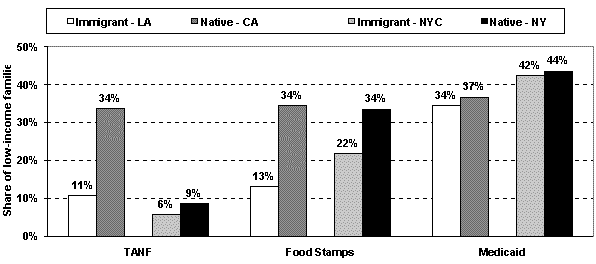
Figure 1.1 and Table 1.2 compare rates of current program participation (at the time of the interview) for low-income families (i.e., those with incomes below twice the poverty level).(16) We compared data about low-income nonelderly families in immigrant households in Los Angeles and New York City with estimates for low-income nonelderly families in native citizen households in California and New York.(17) Since the exhibits measure participation by families, they define participation as current use of a program benefit by any member of the family. In some cases, only one person might be receiving benefits.
Figure 1.1.
Percent of Low-income Immigrant and Native Citizen Families with at Least One Member Using Public Benefit Programs
| Category | Low-income non-elderly families* | Share of low-income non-elderly families* with at least one member receiving | |||
|---|---|---|---|---|---|
| TANF | Food Stamps | SSI | Medicaid | ||
| Los Angeles County | |||||
| All immigrant families | 903,380 | 10.6% | 13.0% | 2.7% | 34.4% |
|
Naturalized citizens |
220,425 | 10.4% | 11.8% | 4.3% | 24.2% |
|
Lawful permanent residents |
391,478 | 8.5% | 10.1% | 2.9% | 28.5% |
|
Refugees or asylees |
66,231 | 8.6% | 11.5% | 3.0% | 30.3% |
|
Other legal immigrants** |
37,930 | x | x | x | x |
|
Undocumented aliens** |
407,261 | 8.2% | 10.9% | 0.3% | 30.5% |
|
Native citizens in immigrant HHs |
480 | 69.9% | 69.9% | 0.0% | 69.9% |
| Native citizen families in California*** | 3,390,676 | 33.7% | 34.4% | 8.8% | 36.7% |
|
New York City |
|||||
|
All immigrant families |
577,015 | 5.6% | 21.8% | 9.8% | 42.3% |
|
Naturalized citizens |
189,694 | 7.8% | 24.4% | 19.1% | 47.3% |
|
Lawful permanent residents |
333,688 | 3.4% | 14.2% | 3.5% | 34.4% |
|
Refugees or asylees |
52,626 | 1.7% | 20.8% | 15.3% | 32.3% |
|
Other legal immigrants** |
27,852 | 0.0% | 0.2% | 0.2% | 0.8% |
|
Undocumented aliens** |
162,848 | 3.2% | 13.0% | 0.4% | 14.0% |
|
Native citizen families in New York State*** |
2,159,440 | 8.6% | 33.5% | 17.1% | 43.5% |
|
* Low-income non-elderly families have incomes below 200 percent of the federal poverty level, and they have no members ages 65 or over. |
|||||
The classification of families by immigration status was based on the status of the respondent and his/her spouse. If the respondent and spouse did not have the same immigration status, we assigned the family status using a hierarchy, with undocumented alien first, then other legal, refugee/asylee, LPR, naturalized citizen, and, finally, native-born citizen.
In general, low-income immigrant families had lower program participation rates than low-income native citizen families. For example, 13 percent of low-income noncitizen families in Los Angeles and 22 percent in New York City received food stamps, compared with 34 percent of low-income native citizen families in each state. Immigrant families also had substantially lower participation in TANF than native families.(18) Differences were smaller for Medicaid: 34 percent of low-income immigrant families in Los Angeles had at least one member enrolled, compared to 37 percent of native citizen families in California. In New York City, the rate of Medicaid use among low-income immigrant families was 42 percent versus 44 percent for native citizen families in the state of New York. These findings are consistent with Urban Institute analyses of CPS data for the late 1990s that show steeper declines in noncitizen participation and greater differences between citizen and noncitizen participation for TANF and food stamps than for Medicaid (Fix and Passel 2002).
These participation rates simply show the percentage of families using benefits as a share of low-income families. They do not attempt to measure the percent of eligible people who are enrolled in the programs. For example, the percentages on SSI appear quite low because the denominator includes all low-income families, not just those with members who are elderly or disabled with incomes below the SSI income threshold.
In New York participation rates were generally higher for naturalized citizens and refugees than for legal permanent residents (LPRs) and other noncitizens. Naturalized citizens and refugees there were more likely to have retained eligibility for federal programs, while many LPRs, particularly recent immigrants, lost eligibility. But this was not the case in Los Angeles, where the State of California extended food stamps to post-enactment LPRs. Prior research (Fix and Passel 1999) found that refugees tend to have higher participation levels than LPRs. When they arrive in the United States, resettlement programs help refugees apply for public benefits that meet their immediate basic needs and help them develop the skills necessary for longer-term self-sufficiency through education, training and job placement programs.
As for naturalized citizens, it seems that their citizenship status helps confer eligibility for benefit programs. In the mid-1990s, following the passage of PRWORA, there was a surge in the number of immigrants who applied to naturalize, from 540,000 in 1994 to 1.4 million in 1997, followed by a decline to 760,000 in 1999 (Immigration and Naturalization Service 2001). While most of the surge in naturalization applications was due to a dramatic rise in the number of eligible legal immigrants, some of these immigrants may have naturalized to ensure that they retained eligibility for public benefits.(19) During the mid-1990s, there also was a large increase in the number of naturalized citizens receiving benefits. For instance, between 1994 and 1998 the number of naturalized citizens participating in the Food Stamp Program nearly doubled from 247,000 to 409,000 (and their share of all participants increased from 0.9 to 2 percent), while the number of LPR participants decreased from 1.45 million to 405,000, or from 5 to 2 percent of all participants (Cody and Castner 1999: 27; Castner and Rosso 2000: 20).
In New York and Los Angeles, the survey data reveal some program participation by families that were classified as other legal or undocumented immigrants. The most likely reason is that some of the members of these families, particularly children, were native citizens or permanent residents who were still eligible for benefits. In some cases, undocumented or other legal immigrants may be partially eligible for benefits, such as emergency Medicaid. Another possible explanation is that people misreported either their immigration or program participation status, a problem in any self-reported survey.(20) Finally, there may have been some degree of program error or abuse, in which families participated in programs for which they were not eligible. However, public benefit programs require relatively thorough verification of proper immigration status before providing benefits. Applicants are generally required to submit relevant immigration documents as proof of status. Moreover, welfare offices are required to verify applicants' immigration statuses using the INS's Systematic Alien Verification of Entitlements (SAVE) online database or a similar method.
Food Stamp Benefits
While most of the public benefit programs continued to serve immigrants who entered the country on or before August 1996, the legislative changes for the Food Stamp Program required that many currently participating households be disqualified. When PRWORA was enacted in August 1996, it made most legal immigrants ineligible for food stamps. New immigrant applicants became ineligible and those already receiving food stamps were disqualified as of August 1997 (Center on Budget and Policy Priorities 1997). In 1998, Congress restored food stamp benefits to legal immigrant children, disabled people, and elders already admitted to the United States as of August 22, 1996. Elders must also have been 65 or older on that date (Carmody and Dean 1998). PRWORA also allowed states, using their own funding, to provide additional food assistance to legal immigrants who became ineligible for the federal FSP. California and New York State both provide benefits similar to food stamps to legal immigrants ineligible under the federal rules. Further detail concerning immigrant eligibility for food stamps is provided at the beginning of Part II of this report.
Because food stamps are provided as a household-level benefit, rather than as an individual benefit (like Medicaid), loss of food stamp eligibility may lead to either a complete loss of benefits or to a benefit reduction. The food stamp benefit is based on the number of people in the household and the household income: a four-person household with the same net income as a two-person household will get a bigger food stamp allotment, but not twice as big. Thus even if an individual immigrant becomes ineligible for food stamps, his or her household might still receive food stamps because other members, usually U.S.-born children, are still eligible. However, the household's food stamp allotment would be somewhat smaller since it is based on fewer eligible people. Despite the fact that FSP eligibility is determined on a household basis, our analyses of food stamp participation here refer to families because LANYCIS focused on one immigrant family within each household surveyed.
Figure 1.2 provides information about the history of food stamp use, loss and reduction among noncitizen families who reported receiving food stamps at some period during 1996 or 1997.(21) Note that the data shown might not correspond to the total number of noncitizens who received benefits in those areas during that time period. This is because some noncitizens became naturalized citizens since then, some immigrants moved out of the area (and thus were not in the interview sample in 1999-2000), and, perhaps most importantly, some respondents had imperfect recall of participation three to four years prior to the interview.
Figure 1.2.
Changes in Food Stamp Participation among Families Reporting Food Stamps Receipt in 1996 or 1997 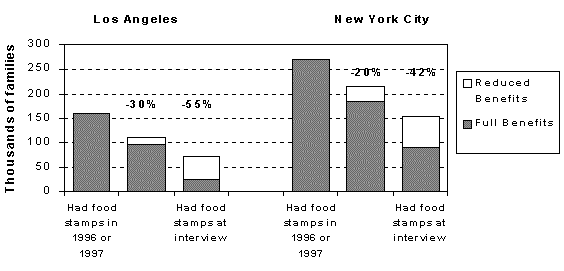
In both Los Angeles and New York City, among those who received benefits in 1996-97, there was a substantial reduction in food stamp use by noncitizen families by 1999-2000. About 30 percent of 1996-97 recipient families in Los Angeles and 20 percent in New York City lost food stamp benefits completely by 1998, while others continued to participate but had reduced benefit levels. By the date of the interview (in 1999 or 2000), 55 percent of those with food stamps in 1996-97 in Los Angeles and 42 percent in New York City had lost all benefits. Among families continuing to receive food stamps, a majority experienced a reduction in allotments.(22)
This does not necessarily mean that these groups of immigrants lost benefits only because of their immigration status; their incomes might have become too high or they may have left the program for other reasons, including confusion or fear of immigration-related consequences. Furthermore, although these groups lost food stamp benefits, other noncitizen families had joined the program since 1996-97. In Los Angeles, 27 percent of those receiving food stamps at the time of the interview had joined since then, while in New York the figure was 25 percent. Presumably, these new entrants are people who were already in the United States in August 1996 but had not participated earlier or who entered the country since that time, especially those entering as refugees (although California serves some post-enactment immigrants who are not refugees).
These longitudinal data should not be confused with caseload trend data collected by the U.S. Department of Agriculture, based on their quality control sample. The USDA data show that the number of legal noncitizen immigrants who were on the Food Stamp Program dropped 83 percent between 1994 and 1998, while the number of U.S.-born children in legal noncitizen families using food stamps fell by 75 percent (Food and Nutrition Service 2000). One distinction is that the Food and Nutrition Service data only report information for those receiving federally funded benefits, while the survey data in this report also include state-funded food stamps received by immigrant families (since the families themselves typically cannot tell the difference).
Immigrants' Understanding about Program Eligibility
As shown in Table 1.1, a modest proportion of all immigrants were post-enactment LPRs(23), the main group of immigrants who lost eligibility for many programs under PRWORA (though many pre-enactment immigrants also lost eligibility for the Food Stamp Program). The drop-off in immigrants' use of benefits since 1996 suggests that many of those who exited the programs were still eligible, including immigrants who entered the country before 1996 and citizen children in immigrant families. The survey data indicate that some of these people may have dropped off or failed to participate because of fears and confusion regarding the new legislation. Many immigrants believe, for instance, that getting benefits might endanger their immigration status or prevent them from getting green cards, reentering the country, or becoming citizens. Further, many families were confused by the complex changes in immigration and welfare law that occurred in 1996 and may have believed that all immigrants were disqualified.
To examine immigrants' perceptions and understanding, we probed respondents' knowledge of program rules. They were asked to assess whether the following statements were true or false or if they did not know the answer:
- If someone who isn't a citizen receives Medicaid [or Medi-Cal] he will probably have to pay it back to become a citizen. [correct answer is false]
- An immigrant who receives a welfare check from the government cannot become a citizen. [correct answer is false]
- Think about the case in which immigrant parents have children who were born in the United States. If these children get Medicaid [or Medi-Cal] then their parents cannot get green cards. [correct answer is false]
As seen in Tables 1.3 and 1.4, in 1999-2000 there was still substantial confusion among immigrants about eligibility for public benefits, and many believed that getting benefits like Medicaid might have adverse consequences. In general, at least half of the respondents knew the correct answer to a single question, but only 30 percent in Los Angles and 37 percent in New York knew all three answers. For each question, wrong answers and "Don't Know" answers were roughly evenly divided. The question that was the least likely to be answered correctly concerned repayment of Medicaid benefits.
|
Topic/question |
Share of respondents (in both cities) answering question | Share with wrong or "don't know" answers | |||||
|---|---|---|---|---|---|---|---|
| Los Angeles | New York City | ||||||
| Correctly | Incorrectly | "Don't know" | All Respondents | Low-income* Noncitizens | All Respondents | Low-income* Noncitizens | |
|
1. "Immigrants might have to pay back Medicaid benefits." (Correct answer is false) |
47.8% | 27.0% | 25.2% | 55.0% | 62.0% | 48.9% | 61.1% |
|
2. "Immigrants who get welfare cannot become citizens." (Correct answer is false) |
61.3% | 18.5% | 20.2% | 41.6% | 51.5% | 35.2% | 47.9% |
|
3. "If citizen children get Medicaid, then immigrant parents can't get green cards." (Correct answer is false) |
63.9% | 16.6% | 19.4% | 34.7% | 39.0% | 37.7% | 44.8% |
|
Composite responses |
Share of respondents | Los Angeles | New York City | ||
|---|---|---|---|---|---|
| Both cities, all respondents | All Respondents | Low-income* Noncitizens | All Respondents | Low-income* Noncitizens | |
|
All answers correct |
33.1% | 30.0% | 21.0% | 36.8% | 24.5% |
|
2 answers correct |
26.9% | 27.9% | 27.9% | 25.7% | 24.6% |
|
1 answer correct |
19.9% | 22.8% | 28.7% | 16.4% | 23.5% |
|
All answers wrong or don't know |
20.1% | 19.2% | 22.3% | 21.1% | 27.4% |
|
* Low-income noncitizens live in families with incomes below 200 percent of the federal poverty level. |
|||||
We considered the possibility that low-income noncitizens might have more accurate responses, since they were more likely to be eligible for benefits. Contrary to this expectation, this group was slightly less likely to answer correctly or know the answer. That is, the people for whom the eligibility distinctions are most important were slightly more confused about the rules or worried about how they might be affected adversely. For instance, over 60 percent of low-income noncitizens in each city believed that they would have to repay Medicaid benefits.
It is important to note that LANYCIS was conducted from late 1999 through mid-2000, after the INS issued a policy guidance in May 1999 that the receipt of food stamps, SCHIP, or Medicaid (except for long-term care) would not be used in the determination of public charge status. Nonetheless, at the time of the survey, a high level of misunderstanding and concern about adverse consequences persisted in immigrant communities. In Los Angeles, the county Department of Social Services, health care providers, and community groups worked together with the Spanish-language news media to conduct outreach to let the public know that getting Medicaid was "safe" for immigrant families. Community education efforts also occurred in New York, albeit fewer of them (Ku and Freilich, forthcoming). The survey data do not mean that the community education efforts were fruitless, however; they may have incrementally improved understanding. Indeed, our case studies suggested that public charge concerns and confusion were greater initially in Los Angeles than New York, but that the additional community outreach in southern California may have helped bring levels of understanding up to those comparable to New York.
There have been a number of anecdotal and case study/focus group reports about immigrants' confusion concerning participation in public benefit programs (Schlosberg and Wiley 1998; Maloy et al. 2000; Feld and Power 2000). To the best of our knowledge, this analysis of LANYCIS is the first to systematically document that such confusion and concerns remained a year after the INS clarified its policies regarding public charge status.
In some ways, it is not surprising that many respondents do not understand program requirements; the rules are complicated and change from time to time. Earlier research has found that, in general low-income people often do not understand eligibility rules and that this can be a serious impediment to participation (Shuptrine and McKenzie 1996; Perry et al. 2000). However, the survey data reveal that, in addition to not understanding certain rules, many immigrants also worry that they might actually be affected adversely be unable to get residency or citizenship, or be forced to repay Medicaid benefits if they participated in programs.
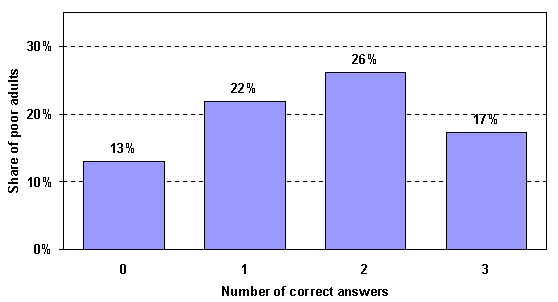
LANYCIS does not provide unambiguous evidence regarding whether immigrants who misunderstand program rules or the consequences of program participation are less likely to receive benefits. On the one hand, there appears to be a correlation between Medicaid use and proper understanding of eligibility and immigration consequences. Figure 1.3 shows that poor immigrant adults who had one or more answers right were more likely to participate in Medicaid than those with no answers correct and the probability of participation was highest for those who answered two out of three questions correctly. One explanation for this finding is that those who participated in Medicaid were inherently likely to understand program rules, since they had managed to enroll.
Figure 1.3.
Relationship of Understanding of Program Rules to Medicaid Participation Rates for Noncitizen Poor Adults
On the other hand, the correlation between understanding of program rules and receipt of food stamps is more tenuous, as shown in Figure 1.4. When compared to the number of correct responses to these questions, there is not much variation in FSP participation during the year prior to the survey. Participation was 14 percent among families with respondents answering no questions correctly, compared to 17 percent among those answering all questions correctly. Responses to in-depth surveys offer some reasons why. In one example, an undocumented respondent feared that food stamp receipt could prevent him and his wife from obtaining legal status. Yet, when they both lost their jobs, their financial crisis was serious enough for them to apply for food stamps for their children. As soon as they got back on their feet, they stopped their food stamp benefits. In another case, a respondent feared that food stamp receipt would influence his wife's citizenship application. Since both adults were employed, they were able to avoid applying for TANF or food stamps. Some respondents did complain about social service agency staff incorrectly telling them that benefits receipt would prevent them from legalizing or naturalizing. Still, it appears that many immigrant families apply for food stamps when they face a serious financial or economic crisis.
Figure 1.4.
Relationship of Understanding of Program Rules to Food Stamp Receipt in the Year Prior to the Survey 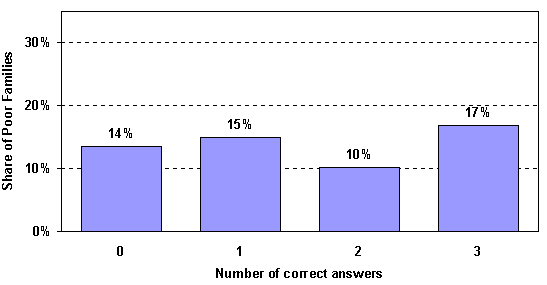
Income and Employment
In both Los Angeles and New York City, there is great diversity among immigrants in terms of national origin, legal status, and socioeconomic status. Nonetheless, on average, immigrant families are poorer than native citizen families and face more financial difficulties, for a variety of reasons, including language barriers and low educational attainment.
Figure 1.5 and Table 1.5 show that immigrant families were substantially poorer than native citizen families in both California and New York, based on annual incomes for 1998: 31 percent of immigrant families in Los Angeles and 30 percent in New York City had incomes below the federal poverty level, compared with 15 percent of native citizen families in California and 14 percent in New York State. Similarly, immigrant families were more likely to have incomes between 101 and 200 percent of the poverty level and less likely to have incomes between 201 and 300 percent or above 300 percent of poverty.(24)
Figure 1.5.
Income Distribution of Immigrant and Native Citizen Families 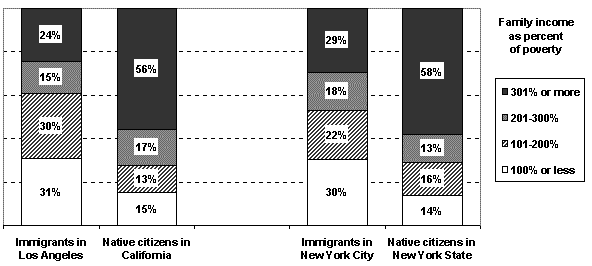
| Share of families in income range | ||||
|---|---|---|---|---|
| 0 - 100% of Poverty Level | 101-200% of Poverty Level | 201 - 300% of Poverty Level | Over 300% of Poverty Level | |
| Immigrant families in Los Angeles | ||||
| All immigrant families | 30.6% | 30.2% | 14.8% | 24.4% |
|
Naturalized citizen families |
19.7% | 18.5% | 19.3% | 42.5% |
|
All noncitizen families |
36.5% | 36.4% | 12.5% | 14.5% |
|
All LPR families |
27.5% | 36.1% | 14.7% | 21.7% |
|
Pre-enactment (Aug. 1996) |
27.3% | 36.2% | 14.5% | 22.0% |
|
Post-enactment (August 1996) |
30.1% | 35.8% | 16.4% | 17.8% |
|
Refugee/asylee families |
37.3% | 45.4% | 12.4% | 4.9% |
|
Other legal immigrant families |
55.7% | 10.3% | 10.5% | 23.5% |
|
Undocumented families |
45.9% | 38.4% | 10.0% | 5.7% |
|
Native citizen families in California* |
15.1% | 12.6% | 16.6% | 55.7% |
|
Immigrant families in New York City |
||||
|
All immigrant families |
30.4% | 22.5% | 17.8% | 29.3% |
|
Naturalized citizen families |
24.3% | 17.0% | 19.4% | 39.3% |
|
All noncitizen families |
34.4% | 26.0% | 15.8% | 23.7% |
|
All LPR families |
31.0% | 25.2% | 20.8% | 23.0% |
|
Pre-enactment (Aug. 1996) |
29.3% | 22.2% | 21.9% | 26.6% |
|
Post-enactment (August 1996) |
39.6% | 40.2% | 15.3% | 4.9% |
|
Refugee/asylee families |
44.8% | 26.4% | 6.4% | 22.4% |
|
Other legal immigrant families |
43.9% | 1.0% | 4.3% | 50.7% |
|
Undocumented families |
36.9% | 35.0% | 9.3% | 18.8% |
|
Native citizen families in New York State* |
13.6% | 15.6% | 12.8% | 58.0% |
|
* Comparison group data at state level from the 1999 National Survey of America's Families (NSAF II). |
||||
Immigration and economic status are linked. Naturalized citizen families were the least likely to be poor and were the closest to native citizen families in income levels. By contrast, refugees, other legal immigrants and undocumented aliens had relatively high rates of poverty. They were all about three times as likely as native citizen families to be poor.
In addition, Figure 1.6 shows that post-enactment legal immigrant families were poorer than pre-enactment immigrant families in New York City (40 versus 29 percent) and just as poor in Los Angeles (30 versus 27 percent).(25) In Los Angeles, post-enactment LPR families were twice as likely to live below the poverty level as native citizen families. In New York, they were three times as likely as natives to be poor.(26)
Figure 1.6.
Income Distribution of Pre- and Post-Enactment Legal Permanent Residents
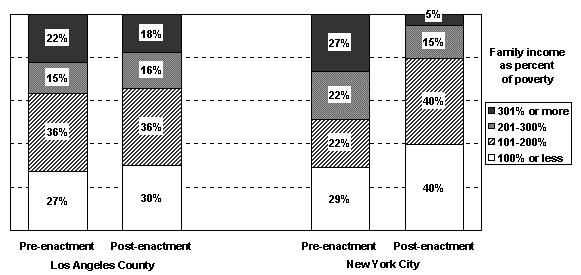
These data are consistent with other research about the process by which immigrants become integrated - both economically and socially - in American society (Fix and Zimmermann 2000; Portes and Rumbaut 2000; Passel and Van Hook 2000; Smith and Edmonston 1997). It takes time for immigrants to become established in their communities, to get better jobs and to improve their English language skills all of which can eventually lead to higher incomes. On average, the longer they stay in America, the more that immigrants' incomes rise. Urban Institute analyses of Census data indicate that LPRs who have been in the U.S. for ten or more years have incomes that are roughly equal to those of native-born citizens (Fix and Zimmermann 2000). Moreover, the research also shows that immigrants generally become integrated over generations, since immigrants' children often have higher incomes than immigrants themselves.
The gap in the economic status of recent and longstanding immigrants is relevant because legal immigrant eligibility for public benefit programs is based on date of admission to the United States: those who entered recently are largely barred from federal TANF, food stamps, SSI, and Medicaid. Ironically, these LPR families are barred from the federal public benefit programs during an early part of their residence in the United States when they are poorer and may be more in need of assistance, and become eligible later, when they are somewhat better off. (Immigrants who have been in the United States for a somewhat longer time period, e.g., five to ten years, still have relatively low incomes, however.)
The higher level of poverty among immigrants entering since 1996, especially in New York, is also relevant because of the changes in the law that sought to limit the admission of low-income immigrants whose sponsors' income did not exceed 125 percent of the poverty level and that made sponsors more responsible for the immigrant's welfare. Despite these policies, it appears that a large number of recent immigrants continue to have low incomes.
Even though immigrants tend to have low incomes, they participate in the labor force at levels comparable to natives. As shown in Table 1.6, seventy-eight percent of all adult immigrants in Los Angeles and 80 percent in New York City were in the labor force, meaning that they were either working or seeking work. Among those in the labor force, almost 10 percent of the immigrants in both areas were unemployed. The labor force participation levels were comparable to native citizen adults in California and New York (80 to 81 percent), but native citizens had somewhat lower unemployment rates (6 to 7 percent). Self-employment rates for immigrants are comparable to those of native citizens in Los Angeles, but a few percentage points higher in New York.
| Labor Force Participation | Share of adults in the labor force | ||||
|---|---|---|---|---|---|
| Unemployed | Working Part Time | Working Full Time | Self- Employed | ||
| Los Angeles County | |||||
| All incomes | |||||
| All adult immigrants | 78.1% | 9.8% | 15.9% | 73.4% | 17.7% |
|
Naturalized citizens |
82.9% | 7.6% | 19.0% | 72.6% | 22.6% |
|
Lawful permanent residents |
75.8% | 10.4% | 12.4% | 77.1% | 18.3% |
|
Refugees or asylees |
81.4% | 11.3% | 12.4% | 76.4% | 15.6% |
|
Other legal immigrants |
x | x | x | x | x |
|
Undocumented aliens |
76.7% | 12.4% | 16.3% | 69.0% | 10.3% |
|
Native citizen adults in California* |
81% | 6.7% | 18.2% | 74.6% | 16.8% |
|
Below 200 percent of poverty |
|||||
| All adult immigrants | 72.8% | 12.8% | 17.9% | 68.8% | 13.0% |
|
Naturalized citizens |
75.9% | 12.0% | 26.0% | 60.1% | 18.7% |
|
Lawful permanent residents |
72.4% | 12.8% | 13.8% | 73.3% | 13.7% |
|
Refugees or asylees |
82.1% | 14.2% | 14.6% | 71.2% | 9.5% |
|
Other legal immigrants |
x | x | x | x | x |
|
Undocumented aliens |
72.5% | 13.0% | 17.6% | 69.2% | 9.7% |
| Native citizen adults in California* | 64.3% | 20.9% | 27.2% | 49.5% | 12.5% |
|
New York City |
|||||
|
All incomes |
|||||
| All adult immigrants | 79.7% | 9.7% | 15.0% | 75.2% | 19.2% |
|
Naturalized citizens |
79.5% | 5.2% | 16.9% | 77.9% | 18.8% |
|
Lawful permanent residents |
80.7% | 16.2% | 14.5% | 69.2% | 19.6% |
|
Refugees or asylees |
75.1% | 6.9% | 8.1% | 85.0% | 11.6% |
|
Other legal immigrants |
x | x | x | x | x |
|
Undocumented aliens |
80.4% | 6.0% | 14.9% | 79.1% | 23.9% |
|
Native citizen adults in New York State* |
80.1% | 6.3% | 14.7% | 78.8% | 15.7% |
|
Below 200 percent of poverty |
|||||
| All adult immigrants | 73.0% | 12.5% | 18.2% | 69.2% | 19.5% |
|
Naturalized citizens |
62.1% | 14.7% | 21.0% | 64.1% | 16.8% |
|
Lawful permanent residents |
78.5% | 13.7% | 19.4% | 66.8% | 20.1% |
|
Refugees or asylees |
63.2% | 13.2% | 12.4% | 74.4% | 22.0% |
|
Other legal immigrants |
x | x | x | x | x |
| Undocumented aliens | 79.7% | 7.8% | 12.8% | 79.4% | 22.0% |
| Native citizen adults in New York State* | 58.2% | 21.3% | 20.9% | 56.7% | 16.6% |
| *Comparison group data from the 1999 National Survey of America's Families (NSAF II). All immigrant data from LANYCIS. Note: "x" denotes small sample size. |
|||||
However, low-income immigrants those with incomes below twice the poverty line have higher levels of labor force participation than low-income native citizens and lower unemployment rates. Among low-income adults in both cities, 73 percent of immigrants are in the labor force, compared with 58 to 64 percent of native citizen adults. And about 13 percent of low-income immigrants in the labor force are unemployed, compared with 21 percent of low-income native citizens.
Immigrants are typically working, but still have low incomes. They often take low-wage, jobs that are less likely to provide benefits like health insurance. As mentioned above, immigrants' income and wage levels rise over time, as they stay in the United States for a longer period. But at any given point in time they tend to fare worse than their native-born counterparts. Thus their need for working-poor support programs such as Medicaid and Food Stamps is generally as high or higher than the need among natives in the workforce.
Food Insecurity and Housing Need
In addition to regular income-based measures of poverty, the survey also asked respondents whether they had problems getting enough food or meeting their housing needs. The food security questions are part of a well-tested battery of food security questions (Andrews et al. 2000; Bickel et al. 2000) that measure whether families at times did not have enough food because of economic problems.
In both New York City and Los Angeles, about half of the immigrant families with incomes below twice the poverty line said they had run out of food either sometimes or often in the last year (Table 1.7 and Figure 1.7). By contrast, about one-third of low-income native citizen families in California and New York State had encountered these problems. About one-quarter of the immigrant families reported that adults had skipped or reduced the size of their meals in the previous 12 months due to economic problems. Native citizen families reported relatively similar levels of this problem (23 percent) in California, but less of it in New York State (18 percent). The relatively higher levels of food insecurity exist among most types of low-income immigrant families, regardless of whether they include naturalized citizens, LPRs, refugees, or undocumented aliens. The second part of this report provides more detailed analysis of food security among the families in LANYCIS, by comparing food security by immigration status, language ability, tenure in the United States, and family composition.
| Share of low-income families* | |||
|---|---|---|---|
| Ran out of food, sometimes or often | Adults cut size of meals or skipped them | Either problem | |
|
Immigrant families in Los Angeles |
|||
| All immigrant families | 50.8% | 24.5% | 53.7% |
|
Naturalized citizen families |
49.7% | 29.6% | 52.6% |
|
All noncitizen families |
51.0% | 23.1% | 54.0% |
|
LPR families |
53.5% | 25.4% | 58.4% |
|
Refugee/asylee families |
53.8% | 18.2% | 57.6% |
|
Other legal immigrant families |
x | x | x |
|
Undocumented families |
49.5% | 23.0% | 50.8% |
|
Native citizen families in California** |
36.5% | 22.9% | 38.9% |
|
Immigrant families in New York City |
|||
| All immigrant families | 48.1% | 24.9% | 51.9% |
|
Naturalized citizen families |
50.0% | 20.4% | 53.2% |
|
All noncitizen families |
47.3% | 26.7% | 51.3% |
|
LPR families |
51.7% | 28.7% | 53.9% |
|
Refugee/asylee families |
39.3% | 25.5% | 40.4% |
|
Other legal immigrant families |
4.6% | 18.9% | 21.5% |
|
Undocumented families |
48.7% | 24.2% | 55.4% |
|
Native citizen families in New York State** |
32.5% | 17.6% | 35.7% |
|
* Low-income families have incomes below 200 percent of the federal poverty level. |
|||
Figure 1.7.
Food Security and Housing Problems for Immigrant and Native Citizen Families with Incomes below 200 Percent of the Poverty Level
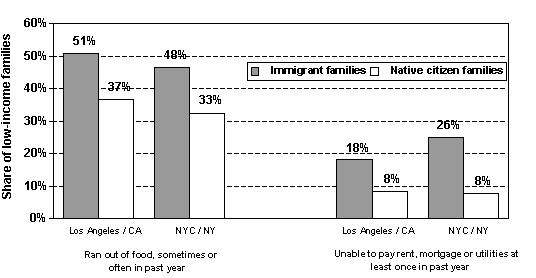
Research based on other surveys has also documented serious food insecurity among immigrants. Using national data from NSAF, Capps (2001) found that in 1999, nationally, 37 percent of the children of immigrants lived in families with one or more food affordability problems, compared with 27 percent for children in native citizen families. Food affordability problems were more common among immigrant families than native families in the eight states included in that NSAF analysis. Another survey of immigrants, conducted at health clinics and other service sites in California, Texas, and Illinois, found relatively high levels of food insecurity among low-income immigrant families with children (Kasper et al. 2000).
We also examined whether families had any problems paying for housing (Table 1.8 and Figure 1.7). In Los Angeles, 18 percent of low-income immigrant families had experienced problems paying their rent, mortgage, or utility bills (electricity, gas, water, or telephone) in the last 12 months, and in New York City 26 percent of such families reported similar problems. The overall prevalence of housing problems was somewhat higher for New York City immigrants than for those in Los Angeles. In contrast, only about 8 percent of low-income native citizen families in California and New York State had dealt with such problems. These findings should be interpreted with caution, however, since average housing costs in Los Angeles and New York City are much higher than in other parts of the states. It seems plausible that, like immigrants, low-income native-born families in Los Angeles and New York City might have more difficulty paying housing and utility bills than their native-born counterparts in other regions of the states.
| Share of low-income families* | |||
|---|---|---|---|
| Unable to pay rent, mortage or utility bills at least once | Had to move in with others because of problems paying rent, etc. | Either problem | |
|
Immigrant families in Los Angeles |
|||
| All immigrant families | 18.2% | 4.9% | 19.3% |
|
Naturalized citizen families |
15.1% | 3.2% | 17.0% |
|
All noncitizen families |
19.0% | 5.4% | 20.0% |
|
LPR families |
18.6% | 4.1% | 19.5% |
|
Refugee/asylee families |
7.7% | 3.5% | 8.0% |
|
Other legal immigrant families |
14.4% | 2.0% | 14.4% |
|
Undocumented families |
21.8% | 7.4% | 22.9% |
|
Native citizen families in California* |
8.3% | 2.0% | 9.4% |
|
Immigrant families in New York City |
|||
|
All immigrant families |
25.9% | 4.5% | 26.2% |
|
Naturalized citizen families |
23.2% | 2.3% | 23.3% |
|
All noncitizen families |
27.0% | 5.4% | 27.4% |
|
LPR families |
30.6% | 6.9% | 31.1% |
|
Refugee/asylee families |
22.8% | 2.0% | 23.7% |
|
Other legal immigrant families |
8.2% | 0.0% | 8.2% |
|
Undocumented families |
24.3% | 4.3% | 24.3% |
|
Native citizen families in New York State* |
7.7% | 2.2% | 8.9% |
|
* Low-income families have incomes below 200 percent of the federal poverty level. |
|||
Some immigrant families that experienced difficulty paying rent or mortgage also moved in with others family, friends, or other group housing. Five percent of all low-income immigrant families in Los Angeles and 4.5 percent in New York had needed to take such a step in the preceding year. This is roughly double the frequency for native citizen families in California and New York State.
Naturalized citizen families were less likely to have housing problems than noncitizen families in Los Angeles, but in New York both groups had comparable problems. LPR and undocumented families were more likely to have housing problems than refugees or other legal immigrant families.
Capps (2001) also found, using NSAF data, that at the national level immigrant families are relatively more likely than native families to experience housing problems. In 1999, children of immigrants were more than twice as likely as children of natives (14 versus 6 percent) to live in families that paid one-half or more of their incomes for housing. Moreover, children of immigrants were four times more likely to live in crowded housing conditions (defined as two or more people per bedroom) than children of natives. However, Capps did not find at the national level a significant difference in the percentage of immigrant versus native families that reported problems meeting their rent, mortgage, or utility bills
Health Status and Insurance Coverage
How healthy are immigrants? LANYCIS has multiple measures of self-reported health status, but the broadest measure is the response to the simple question: "In general, would you say your [or other person's] health is: excellent, very good, good, fair, or poor?" As seen in Table 1.9, immigrants both adults and children generally reported poorer health status than the native-born: 37-39 percent of immigrant adults had excellent or very good health, compared with 51-52 percent of native citizen adults. About 52 percent of immigrant children in Los Angeles and 65 percent in New York City were reported by respondents(27) as being in excellent or very good health, compared with 77 percent for children of native citizens in both California and New York State.
| Los Angeles Co. | New York City | |||
|---|---|---|---|---|
| Excellent or Very Good | Good, Fair or Poor | Excellent or Very Good | Good, Fair or Poor | |
|
ADULTS (18-64 years) |
||||
|
Adult immigrants |
||||
|
All immigrants combined |
36.9% | 62.8% | 38.6% | 61.3% |
|
Naturalized citizens |
43.7% | 53.9% | 44.1% | 55.7% |
|
Lawful permanent residents |
34.4% | 65.0% | 30.3% | 69.7% |
|
Refugees or asylees |
21.0% | 78.7% | 38.7% | 61.2% |
|
Other legal immigrants |
x | x | 81.3% | 18.7% |
|
Undocumented aliens |
31.3% | 68.6% | 35.2% | 64.8% |
|
Native citizen adults in CA or NY State* |
52.1% | 47.9% | 50.6% | 49.4% |
|
ELDERLY (65 years and older) |
||||
|
Elderly immigrants |
||||
|
All immigrants combined |
22.1% | 77.4% | 17.3% | 82.2% |
|
Naturalized citizens |
24.7% | 75.1% | 15.0% | 84.7% |
|
Lawful permanent residents |
19.0% | 80.6% | 30.1% | 68.8% |
|
Refugees or asylees |
x | x | 3.5% | 95.7% |
|
Other legal immigrants |
x | x | x | x |
|
Undocumented aliens |
x | x | x | x |
|
CHILDREN (0 - 17 years) |
||||
|
Children of immigrants by own status |
||||
| All immigrants combined | 51.5% | 48.5% | 64.8% | 34.5% |
|
Naturalized citizens |
x | x | x | x |
|
Lawful permanent residents |
53.9% | 46.1% | 66.3% | 33.7% |
|
Refugees or asylees |
20.8% | 79.2% | 52.0% | 48.0% |
|
Other legal immigrants |
x | x | x | x |
|
Undocumented aliens |
53.3% | 46.7% | x | x |
|
Children of immigrants by parents' status |
||||
| All children in immigrant families | 58.7% | 41.1% | 59.3% | 40.4% |
|
Noncitizen children in immigrant fams |
51.6% | 48.4% | 64.3% | 34.9% |
|
Citizen children in immigrant families |
59.8% | 39.9% | 58.2% | 41.7% |
|
Citizen children in: |
||||
|
Naturalized families |
61.6% | 38.3% | 70.9% | 28.8% |
|
LPR families |
64.9% | 34.7% | 40.4% | 59.6% |
|
Refugee families |
48.3% | 50.5% | x | x |
|
Other legal immigrant families |
x | x | x | x |
|
Undocumented families |
52.5% | 47.4% | 51.9% | 48.1% |
|
Noncitizen children in: |
||||
|
Naturalized families |
x | x | x | x |
|
LPR families |
43.4% | 56.6% | 65.1% | 34.9% |
|
Refugee families |
x | x | x | x |
|
Other legal immigrant families |
x | x | x | x |
|
Undocumented families |
48.5% | 51.5% | x | x |
|
Children of native citizens in CA or NY State* |
77.0% | 23.0% | 76.6% | 23.4% |
|
* Comparison group data from the 1999 NSAF. All immigrant data from LANYCIS |
||||
However, these findings do not necessarily mean that immigrants are in poorer health than native citizens. Some researchers have hypothesized that immigrants respond to this question differently than the native-born because of cultural differences as opposed to objective health differences. Some ethnic groups, particularly Hispanic and Asian groups, may report poorer health status because of a more fatalistic view of life or because they do not want to appear to "brag."(28) According to a recent National Academy of Sciences report, some studies have found immigrant children to be healthier than similar native citizen children; yet, immigrant children tend to become less healthy the longer they live in the United States (Hernandez and Charney 1998). There are no widely accepted measures for comparing the health status of different cultural groups, so the differences noted here should be interpreted with caution.
Among the immigrant groups surveyed, refugees were the most likely to report poorer health status. This is clinically reasonable, since refugees often come from very harsh environments in their countries of origin and are particularly known to have a high prevalence of illnesses such as tuberculosis (Walker and Jaranson 1999). But here, too, inferences should be drawn cautiously; refugees are more likely to be Asian or Eastern European and may have different cultural responses than other nationalities.
Insurance is a critical determinant of whether a person can get access to health care services. The health insurance profiles of immigrants at all income levels are shown in Table 1.10a (Los Angeles) and Table 1.10b (New York City). They reflect insurance status at the time of the survey and are tabulated so that each person has only one type of insurance assigned.(29)
| Uninsured | Medicaid | Job-Based Insurance | Other Private Insurance | Medicare/ SCHIP/ Other Public | |
|---|---|---|---|---|---|
|
ADULTS (18-64 years) |
|||||
|
Adult immigrants |
|||||
|
All immigrants combined |
41.8% | 8.4% | 39.9% | 6.0% | 3.9% |
|
Naturalized citizens |
22.2% | 7.4% | 57.8% | 9.6% | 3.0% |
|
Lawful permanent residents |
42.0% | 10.4% | 39.5% | 5.2% | 2.9% |
|
Refugees or asylees |
39.8% | 15.1% | 40.1% | 3.3% | 1.7% |
|
Other legal immigrants |
x | x | x | x | x |
|
Undocumented aliens |
71.0% | 6.8% | 13.9% | 2.3% | 6.0% |
|
Native citizen adults in California* |
15.0% | 7.5% | 69.9% | 6.8% | 0.8% |
|
ELDERLY (65 years and over) |
|||||
|
Elderly immigrants |
|||||
|
All immigrants combined |
10.2% | 39.2% | 19.5% | 5.3% | 25.8% |
|
Naturalized citizens |
9.6% | 29.4% | 22.2% | 6.8% | 32.0% |
|
Lawful permanent residents |
8.0% | 53.1% | 18.9% | 3.0% | 17.0% |
|
Refugees or asylees |
x | x | x | x | x |
|
Other legal immigrants |
x | x | x | x | x |
|
Undocumented aliens |
x | x | x | x | x |
|
CHILDREN (0 - 17 years) |
|||||
|
Children of immigrants by parents' status |
|||||
|
All children in immigrant families |
24.2% | 35.5% | 28.3% | 5.6% | 6.4% |
|
Citizen children in immigrant families |
21.6% | 35.3% | 30.9% | 5.8% | 6.5% |
|
Noncitizen children in immigrant fams |
39.7% | 37.1% | 13.0% | 4.1% | 6.1% |
|
Citizen children in: |
|||||
|
Naturalized families |
x | x | x | x | x |
|
LPR families |
22.4% | 35.9% | 34.0% | 6.6% | 1.1% |
|
Refugee families |
x | x | x | x | x |
|
Other alien families |
x | x | x | x | x |
|
Undocumented families |
24.6% | 66.0% | 4.9% | 1.6% | 2.9% |
|
Noncitizen children in: |
|||||
|
Naturalized families |
x | x | x | x | x |
|
LPR families |
55.2% | 14.5% | 11.6% | 10.5% | 8.2% |
|
Refugee families |
6.0% | 60.6% | 32.2% | 0.0% | 1.3% |
|
Other alien families |
x | x | x | x | x |
|
Undocumented families |
35.9% | 55.3% | 1.2% | 0.0% | 7.7% |
|
Children of native citizens in California* |
5.6% | 16.6% | 68.2% | 8.6% | 1.0% |
|
* Comparison group data from the 1999 NSAF. All immigrant data from LANYCIS |
|||||
| Uninsured | Medicaid | Job-Based Insurance | Other Private Insurance | Medicare/ SCHIP/ Other Public | |
|---|---|---|---|---|---|
|
ADULTS (18-64 years) |
|||||
|
Adult immigrants |
|||||
|
All immigrants combined |
38.0% | 10.4% | 44.2% | 4.5% | 2.9% |
|
Naturalized citizens |
20.5% | 10.7% | 57.2% | 8.4% | 3.2% |
|
Lawful permanent residents |
40.8% | 13.6% | 42.3% | 1.7% | 1.6% |
|
Refugees or asylees |
40.5% | 17.6% | 40.2% | 0.8% | 0.9% |
|
Other legal immigrants |
21.3% | 0.3% | 58.2% | 7.7% | 12.6% |
|
Undocumented aliens |
79.4% | 1.1% | 13.4% | 2.5% | 3.6% |
|
Native citizen adults in New York State* |
11.4% | 7.8% | 75.8% | 4.1% | 0.9% |
|
ELDERLY (65 years and over) |
|||||
|
Elderly immigrants |
|||||
|
All immigrants combined |
5.5% | 45.8% | 21.9% | 5.2% | 21.6% |
|
Naturalized citizens |
5.5% | 37.4% | 24.8% | 4.5% | 27.8% |
|
Lawful permanent residents |
6.7% | 47.8% | 20.5% | 9.7% | 15.4% |
|
Refugees or asylees |
2.5% | 84.3% | 10.6% | 0.0% | 2.7% |
|
Other legal immigrants |
x | x | x | x | x |
|
Undocumented aliens |
x | x | x | x | x |
|
CHILDREN (0 - 17 years) |
|||||
|
Children of immigrants by parents' status |
|||||
|
All children in immigrant families |
11.8% | 28.3% | 40.9% | 4.9% | 14.1% |
|
Citizen children in immigrant families |
8.3% | 29.3% | 44.0% | 5.2% | 13.2% |
|
Noncitizen children in immigrant fams |
27.8% | 24.0% | 26.4% | 3.3% | 18.5% |
|
Citizen children in: |
|||||
|
Naturalized families |
x | x | x | x | x |
|
LPR families |
14.5% | 35.7% | 38.3% | 6.5% | 5.0% |
|
Refugee families |
x | x | x | x | x |
|
Other alien families |
x | x | x | x | x |
|
Undocumented families |
x | x | x | x | x |
|
Noncitizen children in: |
|||||
|
Naturalized families |
x | x | x | x | x |
|
LPR families |
31.7% | 31.1% | 20.7% | 3.9% | 12.7% |
|
Refugee families |
13.0% | 25.3% | 55.7% | 0.7% | 5.4% |
|
Other alien families |
x | x | x | x | x |
|
Undocumented families |
x | x | x | x | x |
|
Children of native citizens in New York State* |
6.3% | 17.2% | 68.1% | 3.2% | 5.3% |
|
* Comparison group data from the 1999 NSAF. All immigrant data from LANYCIS |
|||||
In both cities, the insurance profiles for immigrant adults were similar: about two-fifths had job-based insurance, two-fifths were uninsured, roughly one-tenth were on Medicaid, and the balance had other private or public insurance. Among the immigrant adults, undocumented aliens were the most likely to be uninsured (71 percent in Los Angeles; 80 percent in New York City) and naturalized citizens were the least likely (22 percent in Los Angeles; 21 percent in New York City). A small percentage of undocumented adults reported having Medicaid. (Although they are ineligible for full Medicaid coverage, they are eligible for emergency benefits.) Consistent with the exemptions under the law, refugees were more likely than LPRs to have Medicaid, but both large shares of both groups were uninsured.
The shares of native citizen adults without health insurance in New York State and California were about one third as high as the uninsured shares among immigrants in the two cities. The native-born were slightly less likely to receive Medicaid but much more likely to have job-based insurance than immigrant adults. Much of the difference in insurance status between immigrants and the native-born may be related to employment, income and other socioeconomic differences of the two groups. On the one hand, immigrants are more frequently employed in lower wage jobs that do not carry benefits such as health insurance. On the other hand, since immigrants are poorer on average than native citizens, they are more likely to receive Medicaid. After controlling for factors like income, education, and health status, however, an earlier study found that noncitizen immigrant adults were significantly less likely to have Medicaid than native citizen adults (Ku and Matani 2001).
A moderate fraction of elderly immigrants were uninsured: 10 percent in Los Angeles and 6 percent in New York City. Although these levels are quite low compared with non-elderly adults, they are substantially higher than the national share of all elders who are uninsured (1 percent, National Center for Health Statistics 1999). Uninsured shares were about the same for elderly noncitizens as for naturalized citizens in both cities. For elderly immigrants in the two cities, the most common source of insurance was Medicaid, which covered 39 percent of the elderly in Los Angeles and 46 percent in New York. About one fifth of the elderly carried job-based insurance (including insurance for retired workers or their dependents) and another one-fifth to one-quarter used Medicare.
Because these tables use an insurance hierarchy, however, they mask total participation in Medicare. When the hierarchy is removed, 75 percent of all elderly immigrants report getting Medicare, regardless of whether they also got another form of coverage (68 percent in Los Angeles and 79 percent in New York, not shown in the tables). By comparison, 96 percent of all seniors in the United States get Medicare (National Center for Health Statistics 1999).
While Medicare is the bulwark of insurance for almost all elderly Americans, many elderly immigrants do not receive it because they (or their spouses) did not work long enough in covered employment in the United States to be eligible. Those with too few years of Medicare-covered employment may purchase coverage, for up to $300 per month for hospital insurance and $50 per month for other medical insurance, but such expenditures may be beyond the reach of many elderly immigrants.(30) In a similar fashion, many elderly do not get Social Security payments because they did not work in the United States long enough. Due to these Medicare eligibility requirements, immigrant elders rely relatively more heavily on Medicaid coverage than do native-born citizens.
These findings are similar to those of Friedland and Pankaj (1997), who have reported that, nationally, 74 percent of elderly immigrants had Medicare in 1993, compared to 97 percent of elderly citizens. They also noted that Medicaid was relatively more important for immigrants, covering 64 percent of them (48 percent on both programs and 16 percent on Medicaid alone), while 12 percent of elderly citizens used Medicaid (11 percent on both programs and 1 percent on Medicaid alone). They found that elderly immigrants who had arrived between the ages of 41 and 64 were twice as likely to be on Medicare as those who entered after age 65. While the almost-universal nature of Medicare coverage has come close to eliminating uninsurance as a problem for elderly citizens, there are noticeable gaps in the Medicare coverage for noncitizens. These authors also noted that the PRWORA-related changes in the eligibility of elderly legal immigrants for Supplemental Security Income will lead to a loss of Medicaid coverage, which could exacerbate the uninsurance among elderly immigrants.
For children, the survey illustrates that there were sizeable differences in the insurance patterns in Los Angeles and New York. Almost one-quarter of the children of immigrants were uninsured in Los Angeles, with 40 percent uninsurance among noncitizen children but only 22 percent among citizen children with immigrant parents.
Shares of children without health insurance were consistently lower in New York City: 12 percent overall, with 28 percent for noncitizen children and 8 percent for citizen children in immigrant families. A key reason for the difference is that more immigrant children were on SCHIP in New York City (14 percent) than in Los Angeles (6 percent). Both New York State and California let legal immigrant children participate in their SCHIP programs, but New York's program has been operating for much longer and has about twice the caseload (Ellis and Smith 2000). Immigrant children were also more likely to have insurance provided through their parents' employers in New York than were those in Los Angeles.
The data show that noncitizen children with LPR parents were more likely to be uninsured (55 percent in Los Angeles and 32 percent in New York City) than citizen children in LPR families (22 percent in Los Angeles and 15 percent in New York City). These rates were much higher than the uninsurance rates of native citizen children in the two states (6 percent in each). Ku and Matani (2001) found that, after controlling for factors like income, education, race/ethnicity, and health status, both noncitizen and citizen children in immigrant families were more likely to be uninsured and less likely to have Medicaid or job-based insurance than children in citizen families.
Conclusions
LANYCIS data indicate that many immigrants, particularly those who are not citizens, now face challenging economic circumstances. Using a broad array of measures (income, food security, housing affordability, and health insurance coverage), members of immigrant families tend to face greater difficulties compared to native citizen families, despite comparable or higher rates of labor force attachment. The data show that immigrants typically fare worse on these measures, even when only low-income families are considered. Naturalized citizens generally fare better than noncitizen immigrants, but still not as well as the native-born. About one-third of the members of immigrant families are native citizens, mostly the U.S.-born children of immigrants. Thus the difficulties faced by immigrant families affect many native as well as foreign-born children.
Since the data in this report were collected in 1999 and 2000, they report the circumstances of immigrants in the post-welfare reform era. The data are, however, primarily descriptive and are not longitudinal; thus our analyses should not be interpreted as measuring causal effects of welfare reform on immigrants. Other reports, however, have presented trend data showing that noncitizens' use of public benefits fell in the period after welfare reform and that citizen children in immigrant families also lost coverage (Zimmermann and Fix 1998; Brown, Wyn, and Ojeda 1999; Fix and Passel 1999; Food and Nutrition Service 2000; Ku and Blaney 2000; Fix and Passel 2002).
The data in this survey do not permit a comparison of the lives of immigrants here and in their home countries. It is reasonable to believe that many families fare better in the United States, although it also likely that at least a few fare worse. But community expectations, differences in standards of living, and the length of time immigrants have resided in the United States make such comparisons difficult. The current body of knowledge indicates that most immigrants come here to improve their lives by gaining better economic opportunities, to flee persecution, or to rejoin members of their families not to obtain public benefits (Reimers 1992; Portes and Rumbaut 1996). For example, a recent survey of undocumented aliens found that less than one percent said they came to the United States for social services or related benefits (Berk et al. 2000).
Nonetheless, our analyses of immigrant families in Los Angeles and New York City reveal disparities between immigrants' apparent needs (e.g., poverty, food and housing insecurity, and insurance coverage) and their use of public benefits. When low-income immigrant and native citizen families are compared, immigrants tend to exhibit higher levels of need but lower use of government assistance in the form of Medicaid, food stamps, and so on. There are many possible reasons for these disparities, including eligibility restrictions imposed by the 1996 legislation, immigrants' fears about possible adverse consequences of using benefits, language barriers, and cultural differences.
A notable finding of the survey is that a large fraction of immigrants, including low-income noncitizens, believe that using public benefits like Medicaid or food stamps might harm them, particularly by endangering their immigration status. Program administrators and community leaders need to consider how they might reassure the immigrant community and decrease their wariness about benefits use.
Another important finding, however, is that immigrants' fears and misperceptions have a limited impact on their program use. The survey shows only a modest relationship between misunderstandings of eligibility rules and participation in Medicaid. There is no evidence that these misunderstandings deter FSP participation. Respondents living in families receiving food stamps were no more or less likely than those in families not receiving food stamps to believe that their children were ineligible for benefits or that welfare receipt would prevent them from becoming citizens. Analysis of in-depth follow-up surveys suggests that immigrants are reluctant to use benefit programs, but will do so when their need is great enough. Thus there is strong evidence that fears and misperceptions persist in immigrant communities, but the relationship between these fears and participation in means-tested benefits programs needs further research.
The survey also reveals that immigrants who arrived after August 1996 are poorer than those who arrived earlier. This finding is consistent with previous research indicating that it takes time for many immigrants to adjust to life in the United States, to develop their job skills, and to get good jobs. Current federal policy has divergent rules about benefits eligibility, depending on when an immigrant enters the country and whether or not he or she is a refugee. For example, refugees, who have extremely high levels of poverty, may obtain benefits like food stamps and Medicaid during their first several years in the United States. On the other hand, legal permanent residents also experience greater poverty during their first few years in the country, but they are generally barred from eligibility under federal rules. While LPRs mostly enter the country under the auspices of sponsors who should theoretically support them, there is a paucity of research about the provision of assistance to immigrants by their sponsors. Given the divergence between new policies regarding sponsorship and the relatively high poverty rates we have observed among the newest arrivals, it seems paradoxical that means-tested benefits are denied during the period when immigrants appear to face the most difficult economic circumstances.
Other research has pointed out some of the coping strategies used by low-income immigrants. For example, since they are highly uninsured, immigrants tend to rely on safety net health care providers, such as public and charity clinics and hospitals. But they may also delay getting medical attention, go without needed care, or turn to underground providers who potentially offer poorer quality care (Feld and Power 2000; Maloy et al. 2000; Ku and Freilich 2001).
The research detailed in this report concentrates on one element of the process of immigrants' adjustment: their need for and use of public benefits. While they may provide support for work and important assistance during times of economic crisis, programs such as food stamps, TANF, SSI, Medicaid, or SCHIP cannot serve as cure-alls. To succeed on a longer-term basis in the United States, low-income immigrants also need more education, better language capabilities, and stronger job skills. But it might be more difficult for immigrants to develop these capacities and to make the necessary human capital investments if they have difficulty meeting basic daily needs for food, housing, or medical care. These survey data, collected just a few years after the implementation of the new welfare policies, cannot provide a long-term assessment of the implications for immigrants, but they do indicate that a few years after welfare reform many immigrants face a range of difficulties and challenges in meeting their basic needs.
Endnotes
2. Los Angeles County encompasses a number of cities, including Los Angeles City, Glendale, Inglewood, Long Beach, Pico Rivera, Pomona, the San Fernando Valley and Santa Monica. The five boroughs of New York City are Manhattan, Bronx, Brooklyn, Queens, and Staten Island.
3. Both Los Angeles and New York City are important entry points for immigrants, who often migrate to other areas of the country. Thus, the immigrants in these areas may have entered more recently than, say, immigrants in the midwest or deep south areas of the United States and might have a different set of experiences. Moreover, the nationalities of immigrants vary across the nation, e.g., the large proportion of Cubans in Florida, which also affects many components of their social and economic status.
4. In 1997, SSI eligibility was restored to immigrants who were already on SSI before August 1996 or who were in the United States on that date and subsequently became disabled. In addition, Amerasians and Cuban-Haitian entrants were to be considered similar to refugees, so that they would also be given a grace period for benefits. In 1998, food stamp eligibility was restored to children, some elderly people, and disabled immigrants who were living in the United States before August 1996. American Indians born in Mexico or Canada and Hmong immigrants were also accorded a grace period.
5. Some immigrants, such as refugees, diversity immigrants and most immigrants admitted under employment preferences, do not have sponsors, so these rules do not apply to those groups.
6. In 2001, the poverty line for a family of three is $14,630. In 1998, it was $13,650.
7. Legal challenges and court decisions kept most provisions of Proposition 187 from being implemented. In 1999, Governor Davis ceased efforts to implement the final provisions.
8. A 1997 review of 46 RDD surveys concluded that "response rates in RDD surveys over 70 percent are the exception and not the rule." The average response rate for the 46 surveys was 62 percent, and only one-sixth of the surveys had response rates above 70 percent (Massey et. al. 1997).
9. If a person who spoke another language was contacted, the interviewers attempted to conduct the survey in one of the languages available (generally English). In a few cases, it was not possible to conduct an interview in any of the languages.
10. We exclude from this definition the small number of native citizens born abroad, who are considered native-born citizens because their parents were citizens when they were born and because they have elected to retain American citizenship.
11. The respondent decides whether to report someone as being his or her nonmarital partner.
12. In this report, "children" means less than 18 years old; offspring who were 18 or older were categorized as adults.
13. When there were two parents with different status, we assigned status using a hierarchy in which being undocumented was the highest priority and being a native citizen was the lowest. That is, if one parent was an LPR and the other was undocumented, we classified the family as "undocumented." We designed the hierarchy in this order to best capture mixed-status families in which at least one parent is ineligible for benefits due to immigration status.
14. Because of the small sample sizes, in the remaining tables we do not include data based on groups or categories for which there are fewer than 50 unweighted observations, as shown in Table 1.1. (In some tables, the unit of analysis is the family, with a different count of unweighted observations.) This is to reduce the risk of drawing inferences from samples that are too small to be statistically reliable.
15. In subsequent reports, we may be able to refine these estimates somewhat by seeing whether recipients were eligible under federal rules.
16. The Urban Institute has defined "low-income" as income below 200 percent of the federal poverty level.
17. Since NSAF II did not collect complete data on elderly households, we exclude households with no adult under the age of 65 from the LANYCIS data in Table 1.2.
18. The survey data for TANF participation may be underestimated in New York in both NSAF II and LANYCIS. Comparisons of administrative and survey data for NSAF show particular shortfalls in TANF participation. The reason is not clear.
19. The primary factor driving the increase in naturalization applications was a record number of legal permanent resident admissions in the early 1990s, due in part to the legalization of 2.7 million undocumented immigrants under the amnesty provisions of the Immigration Reform and Control Act of 1986 (IRCA). Legal immigrants are eligible to naturalize five years after their admission to permanent residence. In fact by 1999, naturalization applications fell to 760,000 because most of the IRCA amnesty population had already naturalized. Thus, restrictions on noncitizen eligibility for public benefits explain only a fraction of the rise in naturalization applications. See generally, Fix and Passel 2002.
20. A related possibility is that we may have incorrectly imputed either immigration status or Medicaid participation. As described in Appendix 2, we imputed some data in these areas and may have erred in a few cases.
21. To ascertain the periods of participation, respondents were asked if anyone in their family received food stamps any time in 1996-97, any time in 1998 or after, and at the time of the interview. Thus, someone who answered 'yes' to the first question, but 'no' to the second two, would be counted as having lost food stamps by 1998. See Appendix 4 for details.
22. A few respondents reported that their food stamp allotments were reduced, but could not say when this happened. To be conservative, we present this as a benefit reduction between 1998 and the interview date, but it seems likely that in some cases it happened earlier.
23. The proportion of the sample who are immigrants arriving after 1996, for all ages, is 8 percent in Los Angeles and 11 percent in New York City.
24. These are measures of total gross income, before taxes and including welfare, SSI, or other cash transfer payments. See Appendix 2 for more discussion about editing income data.
25. Comparable or higher poverty rates among post-enactment immigrants exist despite the new statutory provisions that sought to limit the entry of post-enactment low-income immigrants into the country.
26. A small portion of the difference in income levels of pre- and post-enactment immigrants might be their eligibility for cash assistance programs like TANF or SSI. Since participation rates in these programs are relatively low, however, this is a minor component of the income differential.
27. The respondent was usually a parent but sometimes the spouse or partner of a parent.
28. See Shetterly et al. (1996). An alternative way to assess health status might be to measure the prevalence of diagnosed chronic illnesses or disabilities (Hogan, et al. 1997). But this might be biased in the opposite direction: if immigrants have less access to health services, they are probably less likely to be diagnosed with illnesses, regardless of their actual clinical status.
29. LANYCIS asked about health insurance at the time of the survey, while the CPS asked whether people had insurance at any time during the prior year. When a LANYCIS respondent reported that a family member had more than one type of insurance, the type of insurance was assigned by a hierarchy with Medicaid at the top. For example, people with job-based insurance and Medicaid as well as people with both Medicare and Medicaid were classified as having Medicaid. This hierarchy was designed to best capture the share of the sample receiving Medicaid, one of the benefits affected by the immigrant eligibility restrictions in welfare reform.
Part II. Food Assistance and Food Insecurity
The federal Food Stamp Program (FSP) was designed to improve low-income families' purchasing power in order to prevent hunger and poor nutrition. Congress originally intended the program to "safeguard the health and well-being of the Nation's population by raising levels of nutrition among low-income households."(31) Food stamp benefits "make up the difference between the household's expected contribution to its food costs and an amount judged to be sufficient to buy an adequate low-cost diet" (U.S. Congress 2000). Food stamp eligibility is determined based on income, expenses and family composition (i.e., how many adults and children live in the household and share food costs and consumption). If expenses are greater than income or the difference between income and expenses are insufficient to purchase an adequate low-cost diet, then food stamps make up the difference. The United States Department of Agriculture (USDA) administers the FSP through its Food and Nutrition Service (FNS), and eligibility guidelines are the same across the country. States and some local governments, however, are responsible for eligibility determination and disbursement of food stamp benefits, and they may receive waivers to implement program modifications.
Congress made major modifications to the FSP as part of welfare reform in the Personal Responsibility and Work Opportunity Reconciliation Act of 1996 (PRWORA).(32) For example, able-bodied recipients ages 18 to 50 with no dependents are now required to work to retain benefits. This was the first time Congress attached work requirements to the program.
More significantly for our study, PRWORA also restricted noncitizen eligibility for food stamp benefits. PRWORA made many more legal immigrants ineligible than had been the case before. (Illegal immigrants have never been eligible for federal food stamp benefits.) PRWORA cut benefits for legal immigrants except for refugees during their first five years in the country and other narrow categories of legal immigrants.(33) The law requires legal immigrants to either naturalize or prove that they, their spouse or their parents worked in the country for a combined total of at least 10 years. In 1998 subsequent legislation(34) restored food stamps eligibility for children and disabled adults who entered the country before August 22, 1996, as well as for immigrants who had their 65th birthday before that date. Eligibility was also extended from five to seven years after entry for refugees and asylees. But working-age legal immigrants entering before August 22, 1996 and legal immigrants of all ages entering after enactment remain ineligible, unless they can show 10 years of work history (Fix and Zimmermann 1998).
In the wake of welfare reform, several states introduced programs to replace federal food stamp benefits for noncitizens. California and New York, where our survey was conducted, are among the 18 states that provide state-funded food stamps or similar assistance to at least some legal immigrants who are no longer eligible for federal benefits. The California Food Assistance Program (CFAP), among the most generous of the state-funded programs, provides food assistance similar to food stamps for all "lawful permanent residents," whether they entered the country before or after PRWORA was enacted. For the post-enactment group, CFAP eligibility determination includes the income of the immigrant's sponsor (i.e., that income is "deemed" to be available to the immigrant) during the first three years the immigrant lives in the country, unless the sponsor is deceased, disabled or physically abusive toward the immigrant (California Department of Human Services 2001). New York's Food Assistance Program (FAP) covers a much more limited population: children, elders and the disabled who entered the country before enactment of PRWORA. Because the federal government restored FSP eligibility to children and disabled immigrants, FAP currently covers only pre-enactment elders ages 60 and up not eligible for the federal FSP. (The 1998 federal law restored FSP eligibility to immigrants already 65 years old and residing in the United States on August 22, 1996.) New York's FAP requires participants to apply for citizenship within 30 days after they become eligible to do so, and is optional for counties and local governments to join the program. New York City participates in FAP, and in summer 2001 represented about 1,200 out of the 1,300 total statewide caseload.(35) California's program extends eligibility to a much broader group of noncitizens than does New York's, and so a larger proportion of legal immigrants in Los Angeles should be eligible for public food assistance.
While the federal Food Stamp Program and state-funded food assistance programs are funded differently, they are often administered so that recipients are unaware of the source of funding. States usually "buy" federal food stamp coupons or electronic benefits, which they distribute to immigrants under the same program name and in the same fashion that they are provided to native-born citizens. Thus immigrants getting state-funded food stamps probably do not realize that they are not participating in the federal program.(36)
Measuring the Need for Food Assistance
In order to measure the need for food assistance, USDA recently developed a "food security scale" to measure the extent of hunger, and the U.S. Census Bureau incorporated it into their annual April Current Population Survey (CPS). LANYCIS uses the six-question short scale recommended by USDA and included in the CPS (Appendix 3). Based on this scale, we categorize families as "food secure," "food insecure", and "food insecure with moderate hunger"(37) and use these terms throughout this part of the report. USDA provides the following definitions of these terms:
A food secure household has assured access, at all times, to enough food for an active, healthy life. A household is food insecure if, at some time during the previous year, it was uncertain of having, or unable to acquire, adequate food sufficient to meet basic needs at all times due to inadequate household resources for food. Hunger is a more severe manifestation of food insecurity. Households are food insecure with hunger to the extent that one or more household members were hungry due to inadequate resources at least some time during the year (United States Department of Agriculture 2001).
In this study we equate food insecurity with a need for food stamps and other forms of food assistance. Food insecurity also offers a barometer of the hardship experienced by immigrant families in the nation's two largest cities.
In this part of the report we focus on food security among four types of nuclear families: (1) adults ages 18 to 64 ("working-age adults") and children, (2) elders age 65 and over with children (and possibly grandchildren), (3) working-age adults without children, and (4) elders without children. Many immigrants live in extended families or multiple-family households, often with brothers, sisters, aunts, uncles, nieces, nephews and cousins together in a single group. In the survey these extended and multiple family groups are divided into nuclear families. As a rule, only one nuclear family is sampled in each household. Only those nuclear families where at least one adult is a foreign-born, naturalized citizen or a noncitizen immigrant are included in our analyses in this report. We exclude families where all adults are temporary nonimmigrants (for example, students and tourists).
The sample is weighted to CPS population totals in order to make LANYCIS representative of all immigrant families in both cities.(38) LANYCIS does not, however, include families with only native-born adults. In order to make comparisons in benefits use and food security between immigrant and native families, we use the March 1999 and April 1999 CPS. Our weighting scheme makes LANYCIS comparable to CPS in terms of family composition and poverty level.(39)
LANYCIS asked respondents about the citizenship, documentation, entry status and current legal status of family members. A combination of answers to these questions and imputations allowed us to classify individuals and families into the four following statuses:
- Naturalized citizens, who entered with any status, but had become citizens by the time of the survey.
- Legal immigrants (or "legal permanent residents"), who had resident alien cards at the time of the survey, but did not enter as refugees or obtain asylum.
- Refugees, who entered as refugees (or were granted asylum) and were either still refugees or legal permanent residents at the time of the survey.
- Undocumented immigrants, who had no documents at the time of the survey, or their documents were expired or invalid.
Our classification of families is based on a hierarchy of these four categories (Appendix 2).(40)
LANCYIS also includes questions about country of birth, English language proficiency, and date of entry into the United States. The survey captured immigrants born in 75 countries in Los Angeles and 109 countries in New York. It was conducted in five different languages.(41) English proficiency is determined by a series of questions similar to those in the decennial U.S. Census of Population and Housing.(42) Family language proficiency is based on the English ability of the most proficient adult in the family. The date of entry is the date when the adult who entered the United States "most recently came to stay." "Tenure in the United States" is the amount of time between this date and the date of the survey, in years.
Poverty Rates among Immigrant Families
The population represented by LANYCIS includes about 1.9 million families in Los Angeles County (with 4.8 million people). Thirty percent of these families are poor, and 61 percent have low incomes (below 200 percent of the federal poverty level). In New York City, the survey represents 1.5 million immigrant families (3.5 million people), of which 30 percent are poor and 54 percent have low incomes. In Los Angeles a larger share of immigrant families are undocumented (26 percent) than in New York (15 percent). New York has slightly higher shares of legal immigrant and naturalized immigrant families. Refugee families compose 5 and 7 percent of immigrant families in Los Angeles and New York, respectively.(43)
Poverty rates are highest for undocumented families in Los Angeles (46 percent) and refugees in New York (49 percent). In both cities, less than a third of either undocumented or refugee families have incomes twice the federal poverty level or higher. Legal immigrant families are better off in both cities, yet less than half have incomes twice the poverty level. Naturalized families have the highest incomes: only 20 percent in Los Angeles and 24 percent in New York have incomes below the poverty level (Table 2.1).
Citizenship and Legal Status | Population (thousands) | Share of all families | Percent of Federal Poverty Level | ||
|---|---|---|---|---|---|
| 200 and Below | 100 and Below | Above 200 | |||
Los Angeles County | |||||
All Immigrant Families | 1,846 | 100% | 61% | 30% | 39% |
| Naturalized | 648 | 35% | 39% | 20% | 61% |
Legal Immigrant | 630 | 34% | 65% | 28% | 35% |
Legal Immigrant Only | 406 | 22% | 78% | 36% | 22% |
Legal Immigrant and Refugee | 18 | 1% | x | x | x |
Undocumented and Naturalized | 206 | 11% | 36% | 11% | 64% |
Refugee | 85 | 5% | 73% | 36% | 27% |
Refugee Only | 66 | 4% | 76% | 37% | 24% |
Undocumented and Naturalized | 19 | 1% | x | x | x |
Undocumented | 483 | 26% | 84% | 46% | 16% |
Undocumented and Naturalized | 35 | 2% | x | x | x |
Undocumented and Legal Immigrant | 57 | 3% | 94% | 33% | 6% |
Undocumented and Refugee | 19 | 1% | x | x | x |
Undocumented Only | 372 | 20% | 86% | 50% | 14% |
New York City | |||||
All Immigrant Families | 1,539 | 100% | 54% | 30% | 46% |
Naturalized | 597 | 39% | 41% | 24% | 59% |
Legal Immigrant | 605 | 39% | 56% | 30% | 44% |
Legal Immigrant Only | 433 | 28% | 65% | 36% | 35% |
Legal Immigrant and Refugee | 10 | 1% | x | x | x |
Undocumented and Naturalized | 161 | 10% | 30% | 15% | 70% |
Refugee | 110 | 7% | 68% | 49% | 32% |
Refugee Only | 96 | 6% | 69% | 50% | 31% |
Undocumented and Naturalized | 14 | 1% | x | x | x |
Undocumented | 227 | 15% | 72% | 37% | 28% |
Undocumented Only | 187 | 12% | 81% | 41% | 19% |
Undocumented and Legal Immigrant | 10 | 1% | x | x | x |
Undocumented and Refugee | 3 | 0% | x | x | x |
Undocumented and Naturalized | 27 | 2% | x | x | x |
Sample Size: 3363 | |||||
| Notes: x denotes a sample size of under 50. Source: Urban Institute, LANYCIS | |||||
Poverty rates also vary by country of birth, English proficiency, and tenure in the United States. In Los Angeles the poverty rate is highest for Armenian adults (49 percent), followed by Mexicans and Central Americans. Mexico is the most common country of birth for adult immigrants (38 percent), followed by El Salvador (8 percent). In New York, Mexican immigrants are the poorest group (60 percent below the poverty level) but represent only 4 percent of the total. Seventeen percent of adult immigrants were born in the Dominican Republic, and no other country represents more than 6 percent of the total (Table 2.2).
Top Ten Countries of Birth | Population (thousands) | Share of All Immigrants | Percent of Federal Poverty Level | ||
|---|---|---|---|---|---|
| 200 and Below | 100 and Below | Above 200 | |||
Los Angeles County | 2,645 | 100% | 60% | 28% | 40% |
Mexico | 1,004 | 38% | 81% | 39% | 19% |
El Salvador | 220 | 8% | 73% | 32% | 27% |
Vietnam | 169 | 6% | 57% | 20% | 43% |
Guatemala | 145 | 5% | 75% | 28% | 25% |
Philippines | 132 | 5% | 33% | 3% | 67% |
China | 119 | 4% | 39% | 21% | 61% |
Korea | 75 | 3% | x | x | x |
Taiwan | 60 | 2% | x | x | x |
Iran | 51 | 2% | x | x | x |
Armenia | 40 | 2% | 69% | 49% | 31% |
Other countries | 630 | 24% | 36% | 18% | 64% |
| New York City | 2,058 | 100% | 50% | 28% | 50% |
Dominican Republic | 340 | 17% | 59% | 37% | 41% |
Russia | 129 | 6% | 48% | 29% | 52% |
Ecuador | 118 | 6% | 46% | 21% | 54% |
China | 113 | 6% | 46% | 32% | 54% |
Jamaica | 107 | 5% | 51% | 23% | 49% |
Mexico | 88 | 4% | 92% | 60% | 8% |
Ukraine | 80 | 4% | 69% | 53% | 31% |
Colombia | 69 | 3% | 54% | 17% | 46% |
Trinidad | 67 | 3% | x | x | x |
Guyana | 53 | 3% | x | x | x |
Other countries | 894 | 43% | 40% | 23% | 60% |
Sample Size: 5001 | |||||
Note: x denotes a sample size of under 50. | |||||
In Los Angeles County, 77 percent of immigrant adults are limited English proficient (LEP), as are 64 percent of immigrant adults in New York City, using a standard definition (not speaking English very well). Using a more conservative restrictive definition (not speaking English well or at all), 51 percent of immigrant adults in Los Angeles and 38 percent in New York are LEP. In both Los Angeles and New York, a third of LEP adults are poor, more than twice the rate for proficient adults. In Los Angeles, 48 percent of immigrant adults who cannot speak English at all are poor (Table 2.3).
English Proficiency* | Population (thousands) | Share of All Immigrants | Percent of Federal Poverty Level | ||
|---|---|---|---|---|---|
| 200 and Below | 100 and Below | Above 200 | |||
| Los Angeles County | 2,476 | 100% | 60% | 28% | 40% |
| English Proficient | 575 | 23% | 33% | 13% | 67% |
English at Home | 120 | 5% | 12% | 5% | 88% |
Very Well | 455 | 18% | 38% | 15% | 62% |
Limited English Proficient | 1,901 | 77% | 69% | 33% | 31% |
Well | 644 | 26% | 52% | 23% | 48% |
Not Well | 869 | 35% | 71% | 33% | 29% |
Not At All | 387 | 16% | 92% | 48% | 8% |
| New York City | 1,787 | 100% | 50% | 27% | 50% |
| English Proficient | 645 | 36% | 34% | 14% | 66% |
English at Home | 222 | 12% | 41% | 14% | 59% |
Very Well | 423 | 24% | 30% | 14% | 70% |
| Limited English Proficient | 1,142 | 64% | 59% | 34% | 41% |
Well | 466 | 26% | 41% | 25% | 59% |
Not Well | 512 | 29% | 70% | 39% | 30% |
Not At All | 164 | 9% | 75% | 40% | 25% |
Sample Size: 4309 | |||||
*Respondents were first asked if they primarily speak a language other than English at home. Those who primarily speak another language (the vast majority of samples in both cities) were then asked whether they speak English "very well", "well", "not well" or "not at all." We categorize people speaking only English or English very well as proficient, and those speaking English well, not well or not at all as limited English proficient (LEP). | |||||
Poverty rates are relatively high for those adults who entered the United States after welfare reform was enacted in August 1996 (39 percent in Los Angeles and 46 percent in New York). Poverty is also high among those entering during the five years prior to welfare reform (1992 through 1996), but lower for those arriving before 1992. Immigrants arriving before 1982 have the lowest poverty rates (Table 2.4).
Year of Arrival* | Population (thousands) | Share of All Immigrants | Percent of Federal Poverty Level | ||
|---|---|---|---|---|---|
| 200 and Below | 100 and Below | Above 200 | |||
Los Angeles County | |||||
| All Adult Immigrants | 2,486 | 100% | 60% | 27% | 40% |
After August 1996 | 223 | 9% | 77% | 39% | 23% |
1992 to August 1996 | 352 | 14% | 70% | 44% | 30% |
1987 to 1991 | 506 | 20% | 72% | 32% | 28% |
1982 to 1986 | 356 | 14% | 54% | 22% | 46% |
Before 1982 | 1,049 | 42% | 48% | 19% | 52% |
New York City | |||||
| All Adult Immigrants | 1,959 | 100% | 51% | 28% | 49% |
After August 1996 | 239 | 12% | 78% | 46% | 22% |
1992 to August 1996 | 409 | 21% | 67% | 39% | 33% |
1987 to 1991 | 395 | 20% | 56% | 25% | 44% |
1982 to 1986 | 249 | 13% | 43% | 26% | 57% |
Before 1982 | 667 | 34% | 33% | 17% | 67% |
Sample Size: 4743 | |||||
| * Year of Arrival is the latest date the adult last came to stay in the United States. Source: Urban Institute, LANYCIS | |||||
Consistent with a vast body of poverty research, family composition has a great impact on poverty, with highest rates among single-parent families with children, and lower rates among two-parent families and families with no children. One third of all immigrant families with children in Los Angeles are poor, and two-thirds have incomes under 200 percent of the poverty level. In New York, 31 percent of immigrant families with children are poor, and 55 percent have low incomes. But among single-parent families with children, the poverty rate is 46 percent in Los Angeles and 54 percent in New York. Four-fifths of all single-parent immigrant families with children have low incomes in both cities. By contrast less than 30 percent of two-parent families and families without children are poor in both cities (Table 2.5).
Family Composition* | Population (thousands) | Share of all families | Percent of Federal Poverty Level | ||
|---|---|---|---|---|---|
| 200 and Below | 100 and Below | Above 200 | |||
Los Angeles County | |||||
All Immigrant Families | 1,846 | 100% | 61% | 30% | 39% |
| Families without Elders | 1,713 | 93% | 62% | 30% | 38% |
Working-age adult(s) without Children | 858 | 46% | 56% | 28% | 44% |
One Adult with Children | 139 | 8% | 81% | 46% | 19% |
Two or More Adults with Children | 716 | 39% | 64% | 30% | 36% |
| Families with Elders | 133 | 7% | 55% | 25% | 45% |
Elders without Adults | 58 | 3% | 60% | 29% | 40% |
Elders with Adults | 75 | 4% | 50% | 22% | 50% |
| All families with Children | 869 | 47% | 67% | 33% | 33% |
| New York City | |||||
All Immigrant Families | 1,539 | 100% | 54% | 30% | 46% |
| Families without Elders | 1,333 | 87% | 53% | 29% | 47% |
Working-age adult(s) without Children | 786 | 51% | 53% | 28% | 47% |
One Adult with Children | 119 | 8% | 80% | 54% | 20% |
Two or More Adults with Children | 428 | 28% | 46% | 23% | 54% |
| Families with Elders | 205 | 13% | 57% | 37% | 43% |
Elders without Adults | 121 | 8% | 66% | 47% | 34% |
Elders with Adults | 85 | 5% | 44% | 24% | 56% |
| All families with Children | 570 | 37% | 55% | 31% | 45% |
Sample Size: 3363 | |||||
* Children are under age 18. Working-age adults are ages 18 to 64, and elders are over age 64. | |||||
Food Insecurity and Moderate Hunger
LANYCIS suggests that about one-third of all immigrant families in Los Angeles and 31 percent in New York are food insecure. Just over 10 percent in both cities experience food insecurity with moderate hunger. Food insecurity and hunger rates are higher for noncitizens than naturalized citizens, but do not vary much among undocumented, legal immigrant or refugee families. Food insecurity rates for noncitizens in New York City and Los Angeles during 1998-99 are 10 to 15 percentage points higher and moderate hunger rates about three times higher in LANYCIS than in the April 1999 CPS. Discrepancies in these figures may be explained by differences in sample sizes and sampling strategies between the two surveys.(44)
The April 1999 CPS shows higher food insecurity but similar levels of hunger for noncitizens when compared to native families. In the CPS food insecurity is 9 percent higher for noncitizen families than for naturalized families and 13 percent higher than for native-born families in Los Angeles. Food insecurity is 4 percent higher for noncitizen families in New York. But moderate hunger rates are nearly the same regardless of citizenship in both cities (Table 2.6).
|
Citizenship and Legal Status** |
Population (thousands) | Food Security* | |||
|---|---|---|---|---|---|
| Food Secure | Food Insecure | ||||
| Total Insecure | Without Hunger | Moderate Hunger | |||
|
Los Angeles County |
|||||
|
LANYCIS Immigrant Families |
1,846 | 66% | 34% | 22% | 12% |
| Naturalized | 648 | 74% | 26% | 19% | 7% |
| Noncitizen | 1,199 | 61% | 39% | 24% | 14% |
|
Legal |
630 | 63% | 37% | 24% | 13% |
|
Refugee |
85 | 57% | 43% | 34% | 9% |
|
Undocumented |
483 | 59% | 41% | 24% | 18% |
|
CPS Native Families |
3,094 | 88% | 12% | 9% | 3% |
|
CPS Immigrant Families |
2,221 | 78% | 22% | 18% | 4% |
| Naturalized citizen | 737 | 84% | 16% | 12% | 3% |
| Noncitizen | 1,483 | 75% | 25% | 21% | 4% |
|
New York City |
|||||
|
LANYCIS Immigrant Families |
1,539 | 69% | 31% | 20% | 11% |
| Naturalized citizen | 597 | 77% | 23% | 16% | 7% |
| Noncitizen | 942 | 63% | 37% | 23% | 14% |
|
Legal |
605 | 62% | 38% | 21% | 17% |
|
Refugee |
110 | 69% | 31% | 22% | 9% |
|
Undocumented |
227 | 64% | 36% | 28% | 7% |
|
CPS Native Citizen Families |
2,539 | 89% | 11% | 7% | 3% |
|
CPS Immigrant Families |
1,865 | 86% | 14% | 11% | 2% |
| Naturalized citizen | 708 | 89% | 11% | 9% | 2% |
| Noncitizen | 1,157 | 85% | 15% | 12% | 3% |
|
LANYCIS Sample Size: 3363 |
|||||
|
CPS Sample Size: 1707 |
|||||
| * Food Security is based on a six item scale developed by the United States Department of Agriculture (Appendix 3). ** An undocumented family includes at least one undocumented adult. In a legal immigrant family there is at least one legal immigrant adult but no undocumented adults. Refugee families are those with at least one refugee but no undocumented or legal immigrant adults. Finally, naturalized families include only naturalized adults. The legal status and citizenship of children are not considered in this classification. See Appendix 2 for details. NOTE: CPS figures in this table are for New York City and Los Angeles. |
|||||
LANYCIS shows that patterns of food insecurity do not vary by tenure in the United States in any meaningful way. Families with adults entering before 1982 are not substantially more or less likely to be food insecure than families with adults entering after 1996. Nor is there a discernible pattern associating period of entry with moderate hunger.
By contrast, English proficiency appears closely correlated with food security. In Los Angeles the rate of food insecurity is twice as high among LEP families (40 percent) as among proficient families (21 percent). In New York the rate is one and a half times as high for LEP (36 percent) as for proficient families (24 percent). About half of families where adults speak no English at all are food insecure in Los Angeles, and in New York that figure is 57 percent. Moreover, moderate hunger is also much higher where English proficiency is lower. Over one-fifth of families in the no English category experience moderate hunger in both cities, compared to only 6 percent of families where at least one adult speaks English very well (Table 2.7).
|
English Proficiency** |
Population (thousands) | Food Security* | |||
|---|---|---|---|---|---|
| Food Secure | Food Insecure | ||||
| Total Insecure | Without Hunger | Moderate Hunger | |||
|
Los Angeles County |
|||||
|
All Immigrant Families |
1,832 | 66% | 34% | 22% | 12% |
| English Proficient | 559 | 79% | 21% | 15% | 6% |
|
English at Home |
151 | 78% | 22% | 17% | 6% |
|
Very Well |
408 | 80% | 20% | 15% | 6% |
| Limited English Proficient | 1,273 | 60% | 40% | 25% | 15% |
|
Well |
507 | 69% | 31% | 21% | 9% |
|
Not Well |
570 | 55% | 45% | 27% | 18% |
|
Not At All |
197 | 51% | 49% | 28% | 21% |
|
New York City |
|||||
|
All Immigrant Families |
1,538 | 69% | 31% | 20% | 11% |
| English Proficient | 601 | 76% | 24% | 15% | 9% |
|
English at Home |
204 | 71% | 29% | 15% | 14% |
|
Very Well |
397 | 79% | 21% | 15% | 6% |
| Limited English Proficient | 937 | 64% | 36% | 23% | 13% |
|
Well |
393 | 78% | 22% | 16% | 7% |
|
Not Well |
418 | 57% | 43% | 27% | 16% |
|
Not At All |
126 | 43% | 57% | 34% | 23% |
|
Sample Size: 3282 |
|||||
| *Food Security is based on a six item scale developed by the United States Department of Agriculture (Appendix 3). ** Respondents were first asked if they primarily speak a language other than English at home. Those who primarily speak another language (the vast majority of samples in both cities) were then asked whether they speak English "very well", "well", "not well" or "not at all." We categorize people speaking only English or English very well as proficient, and those speaking English well, not well or not at all as limited English proficient (LEP). Source: Urban Institute, LANYCIS |
|||||
Family composition also shows a strong association with food security. Thirty-eight percent of immigrant families with children experience food insecurity in both cities, and 12-13 percent experience moderate hunger. Half of all single-parent immigrant families with children in New York City and 45 percent in Los Angles are food insecure, compared to only about 35 percent of two-parent families. Food insecurity rates are lower for families with elders than for those without in both cities (Table 2.8).
|
Family Composition** |
Population (thousands) |
Share of all families | Food Security* | |||
|---|---|---|---|---|---|---|
| Food Secure | Food Insecure | |||||
| Total Insecure | Without Hunger | Moderate Hunger | ||||
|
Los Angeles County |
||||||
|
All Immigrant Families |
1,846 | 100% | 66% | 34% | 22% | 12% |
| Families without Elders | 1,713 | 93% | 64% | 36% | 23% | 13% |
|
Working-age adult(s) without Children |
858 | 46% | 67% | 33% | 20% | 13% |
|
One Adult with Children |
139 | 8% | 55% | 45% | 26% | 19% |
|
Two or More Adults with Children |
716 | 39% | 64% | 36% | 25% | 11% |
| Families with Elders | 133 | 7% | 80% | 20% | 16% | 4% |
|
Elders without Adults |
58 | 3% | 89% | 11% | 6% | 5% |
|
Elders with Adults |
75 | 4% | 73% | 27% | 24% | 3% |
|
All families with Children |
869 | 47% | 62% | 38% | 25% | 12% |
|
New York City |
||||||
|
All Immigrant Families |
1,539 | 100% | 69% | 31% | 20% | 11% |
|
Families without Elders |
1,333 | 87% | 68% | 32% | 20% | 12% |
|
Working-age adult(s) without Children |
786 | 51% | 72% | 28% | 17% | 10% |
|
One Adult with Children |
119 | 8% | 50% | 50% | 29% | 21% |
|
Two or More Adults with Children |
428 | 28% | 65% | 35% | 24% | 12% |
|
Families with Elders |
205 | 13% | 73% | 27% | 18% | 9% |
|
Elders without Adults |
121 | 8% | 70% | 30% | 22% | 9% |
|
Elders with Adults |
85 | 5% | 79% | 21% | 13% | 9% |
|
All families with Children |
570 | 37% | 62% | 38% | 25% | 13% |
|
Sample Size: 3363 |
||||||
| *Food Security is based on a six item scale developed by the United States Department of Agriculture (Appendix 3). ** Children are under age 18. Working-age adults are ages 18 to 64, and elders are over age 64. Source: Urban Institute, LANYCIS |
||||||
Family composition and English proficiency explain variation in food security the most, when all these factors are considered together. The odds of food insecurity and moderate hunger are twice as high for LEP families as for proficient families, when controlling for citizenship, legal status, family composition and tenure in the United States. Food insecurity odds are twice as high for families with three children and three times as high for those with four or more children, when compared to families with no children. Odds are also higher for families with one or zero working-age adults when compared to those with two or more working-age adults. Families with more children and fewer working-age adults are also more likely to experience moderate hunger. The odds of food insecurity and moderate hunger do not vary significantly among families with different citizenship and legal status (Table 2.9).(45)
|
Variable |
Odds of Food Insecurity* | Odds of Moderate Hunger* | ||
|---|---|---|---|---|
| Odds Ratio | P-Value | Odds Ratio | P-Value | |
|
In New York (vs. Los Angeles) |
||||
|
Citizenship and Legal Status (vs. Naturalized)** |
||||
|
In Los Angeles |
||||
|
Naturalized (reference group) |
1.000 | 1.000 | ||
|
Legal |
1.262 | 0.268 | 1.379 | 0.252 |
|
Refugee |
1.335 | 0.435 | 0.665 | 0.312 |
|
Undocumented |
1.029 | 0.884 | 1.335 | 0.286 |
|
In New York City |
||||
|
Naturalized |
0.682 | 0.144 | 0.849 | 0.654 |
|
Legal |
1.330 | 0.828 | 2.141 | 0.207 |
|
Refugee |
1.012 | 0.077 | 1.168 | 0.398 |
|
Undocumented |
1.261 | 0.174 | 0.731 | 0.189 |
|
Limited English Proficient (LEP)*** |
1.968 | 0.000 | 2.119 | 0.004 |
|
Tenure (at least 10 years in U.S.) |
1.058 | 0.696 | 1.366 | 0.113 |
|
Family Composition |
||||
|
One or Zero Adults Ages 18 to 64 (vs. 2 or more) |
1.375 | 0.039 | 1.934 | 0.002 |
|
Number of Children under 18 (vs. no children) |
||||
|
One Child |
1.187 | 0.396 | 0.925 | 0.802 |
|
Two Children |
1.390 | 0.083 | 0.804 | 0.423 |
|
Three Children |
1.937 | 0.004 | 2.223 | 0.008 |
|
Four or More Children |
3.270 | 0.000 | 2.477 | 0.010 |
|
Number of Elders Ages 65 and over (vs. no elders) |
||||
|
One Elder |
0.872 | 0.556 | 0.625 | 0.071 |
|
Two Elders |
0.679 | 0.253 | 1.009 | 0.987 |
|
N |
3363 | 3363 | ||
| Log likelihood | -2029 | -1131 | ||
| Wald Chi-Square (16 df) | 61.78 | 89.42 | ||
| *Food Security is based on a six item scale developed by the United States Department of Agriculture (Appendix 3). ** An undocumented family includes at least one undocumented adult. In a legal immigrant family there is at least one legal immigrant adult but no undocumented adults. Refugee families are those with at least one refugee but no undocumented or legal immigrant adults. Finally, naturalized families include only naturalized adults. The legal status and citizenship of children are not considered in this classification. *** Respondents were first asked if they primarily speak a language other than English at home. Those who primarily speak another language (the vast majority of samples in both cities) were then asked whether they speak English "very well", "well", "not well" or "not at all." We categorize people speaking only English or English very well as proficient, and those speaking English well, not well or not at all as limited English proficient (LEP). Source: Urban Institute, LANYCIS |
||||
National Trends in Food Stamp Receipt
Food security has become a greater concern nationally due to declines in food stamp caseloads since welfare reform. According to a recent study by USDA, participation in the federal FSP dropped from 72 to 55 percent among poor individuals nationally from 1995 to 1999. The study, based on FSP quality control data, concludes that 35 percent of the drop in participation was due to rising income and assets, which could be attributable to economic growth. Over half (56 percent) of the decline was due to lower participation among eligible families (USDA 2001: 15-17). The potential exists for these trends to increase food insecurity among low-income families.
In addition, 8 percent of the decline nationally was due to welfare reform changes, most notably in immigrant eligibility. The number of non-citizens receiving food stamps fell from nearly 1.9 million in 1994 to less than 750,000 in 1999, a drop of 60 percent and nearly double the drop for all participants. The drop among noncitizens accounted for 20 percent of the decrease in number of eligible people nationally (USDA 2001: 1-2, 16-17, 30).
While the reduction in noncitizen FSP participation is generally consistent with the goals of welfare reform, the drop in citizen children participation appears to be an unintended consequence of eligibility changes. For example, among eligible U.S. citizen children with noncitizen parents, participation dropped from 35 to 17 percent from 1994 to 1999 (USDA 2001: 34). USDA concludes:
Citizen children living with non-citizen adults did not lose eligibility under welfare reform, though many of the adults did. While about 80 percent of these eligible children participated in the program in 1994, only 46 percent participated in 1999. Although confusion about eligibility may not be the only factor affecting this group, it is likely to have played a role. The fall in participation among these eligible children explains up to 9 percent of the post-1994 decline in the total number of food stamp participants (USDA 2001: 37).
These declines in food stamp participation among immigrant families may have social consequences in terms of increased food insecurity. Using 1995-1999 Current Population Survey (CPS) data from both the March and April samples, Borjas (2001) establishes a link between food stamp receipt and food insecurity among immigrant families. He compares families living in states that extended food stamp eligibility to legal immigrants to families in states that did not, and reaches the following two main conclusions:
First, the immigrants most likely to be adversely affected by the welfare reform legislation the non-refugee, non-citizen population living in states that did not extend post-PRWORA assistance to immigrants did, in fact, experience a significant relative decline in the likelihood of welfare receipt. At the same time, this population also experienced a significant relative increase in food insecurity. By combining data from the two samples, the evidence suggests that eligibility restrictions that cut back the fraction of welfare recipients by 10 percentage points likely increase the fraction of households experiencing food insecurity by 5 percentage points (Borjas 2001: 37).
The findings from the Borjas study are supported by LANYCIS data showing low levels of food stamp participation among both low-income and food insecure immigrant families.
Food Stamp Receipt among Low-income Families
Our analysis begins with a comparison of citizen and noncitizen receipt of food stamps, using the March 1999 CPS. When only New York and Los Angles are considered, the CPS does not show substantially lower food stamp participation among low-income families with noncitizen adults than among families with only naturalized or native-born citizen adults (Table 2.10). The likely explanation for this finding is the relative generosity of the states of California and New York in extending food assistance to many legal immigrants denied eligibility for the federal FSP by PRWORA. In fact, both states fall into the "generous" category developed by Zimmermann and Tumlin (1999) and used by Borjas (2001) in his analysis of the link between food stamp receipt and food insecurity.
Citizenship and Legal Status | Population (thousands) | Food Stamp receipt during the previous year | |
|---|---|---|---|
| Recipients (thousands) | Share of population | ||
Los Angeles County | |||
Native Families | 1,086 | 87 | 8% |
Immigrant Families | 1,363 | 138 | 10% |
Naturalized | 322 | 21 | 6% |
Noncitizen | 1,042 | 118 | 11% |
New York City | |||
Native Families | 1,232 | 360 | 29% |
Immigrant Families | 1,019 | 249 | 24% |
Naturalized | 344 | 85 | 25% |
Noncitizen | 675 | 164 | 24% |
Sample Size: 1438 | |||
| Notes: Low-income families are those with incomes below 200 percent of the poverty level during the year before the survey. The Current Population Survey defines families slightly differently than LANYCIS. To create this table, we used a definition of the nuclear family which is comparable to but not exactly the same as the definition of the family in LANYCIS. | |||
The March 1999 CPS also shows that food stamp participation is higher among low-income families in New York than in Los Angeles, but the difference in rates is higher among citizen than noncitizen families. FSP participation during the year before the survey (1998-99) is twice as high among low-income noncitizen families in New York than in Los Angeles (24 versus 11 percent) and four times as high among naturalized families (25 versus 6 percent). The CPS shows participation of 29 percent among low-income native families in New York, almost four times the rate for native families in Los Angeles (8 percent) (Table 2.10).
These CPS figures, however, include families with both elderly and non-elderly members, and those receiving a number of other benefit programs, including Temporary Assistance for Needy Families (TANF) and Supplemental Security Income (SSI). SSI is a federally-funded and administered cash benefit program for disabled and elderly adults. In the State of California, SSI recipients get food stamps along with SSI benefits as part of the same disbursement (in other words, food stamps are "cashed out" in the SSI program). As a result, many SSI recipients may not be aware they are receiving benefits from food stamps as well. This has the effect of lowering reported FSP participation in Los Angeles, thereby creating a bias in the estimate.
In LANYCIS, only 5 percent of low-income immigrant families with elderly members report receiving food stamps during the previous year(46) in Los Angeles, compared to 68 percent of low-income immigrant families with elders in New York. By comparison, reported food stamp receipt rates for families with no elders are 14 percent in Los Angeles and 20 percent in New York, a much smaller difference (Table 2.11). Twenty-nine percent of low-income immigrant families receiving SSI report food stamps receipt in Los Angeles, compared to 82 percent in New York. Differences in food stamps receipt are much smaller among families receiving TANF or no other benefits (Table 2.12). In order to account for these differences in reporting receipt of food stamps, families with elders are excluded from most of the figures discussed in the remainder of this report.
Family Composition* | Population (thousands) | Food Stamp receipt during the previous year | |
|---|---|---|---|
| Recipients (thousands) | Share of population | ||
Los Angeles County | |||
Families without Elders | 1,039 | 142 | 14% |
Working-age adult(s) without Children | 476 | 18 | 4% |
One Adult with Children | 111 | 44 | 40% |
Two or More Adults with Children | 452 | 80 | 18% |
Families with Elders | 72 | 4 | 5% |
Elders without Adults | 34 | 0 | 1% |
Elders with Adults | 38 | 4 | 9% |
New York City | |||
Families without Elders | 695 | 137 | 20% |
Working-age adult(s) without Children | 409 | 33 | 8% |
One Adult with Children | 93 | 52 | 55% |
Two or More Adults with Children | 193 | 52 | 27% |
Families with Elders | 109 | 74 | 68% |
Elders without Adults | 71 | 50 | 70% |
Elders with Adults | 37 | 24 | 64% |
Sample Size: 2361 | |||
* Children are under age 18. Working-age adults are ages 18 to 64, and elders are over age 64. | |||
Current Program Receipt | Population (thousands) | Food Stamp receipt during the previous year | |
|---|---|---|---|
| Recipients (thousands) | Share of population | ||
Los Angeles County | |||
Temporary Assistance for Needy Families (TANF) | 94 | 78 | 83% |
Supplemental Security Income (SSI) | 42 | 12 | 29% |
General Assistance (GA) | 28 | 22 | 79% |
No Programs | 986 | 53 | 5% |
New York City | |||
Temporary Assistance for Needy Families (TANF) | 32 | 32 | 99% |
Supplemental Security Income (SSI) | 105 | 85 | 82% |
General Assistance (GA) | x | x | x |
No Programs | 667 | 95 | 14% |
Sample Size: 2361 | |||
| Notes: Low-income families are those with incomes below 200 percent of the poverty level during the year before the survey. "x "denotes a small sample size. Source: Urban Institute, LANYCIS | |||
Low-income non-elderly families with undocumented adults have the lowest participation rates (13 percent in Los Angeles and 15 percent in New York). Among low-income families where all adults are undocumented, only 2 percent in Los Angeles and less than one percent in New York report receiving benefits within the year prior to the survey. Participation rates are relatively high, however (23 percent in Los Angeles and 51 percent in New York) for mixed-status families in which only one adult is undocumented (Table 2.13). In Los Angeles 40 percent of low-income families not receiving food stamps at any time since 1996 include undocumented adults. The comparable figure is 26 percent in New York.
Citizenship and Legal Status* | Population (thousands) | Food Stamp receipt during the previous year | |
|---|---|---|---|
| Recipients (thousands) | Share of population | ||
Los Angeles County | |||
Immigrant Families | 1,039 | 142 | 14% |
Naturalized | 205 | 29 | 14% |
Noncitizen | 834 | 113 | 14% |
Legal | 380 | 53 | 14% |
Refugee | 56 | 9 | 17% |
Undocumented | 398 | 51 | 13% |
Mixed status | 203 | 47 | 23% |
All undocumented | 195 | 4 | 2% |
New York City | |||
Immigrant Families | 695 | 137 | 20% |
Naturalized | 172 | 45 | 26% |
Noncitizen | 523 | 92 | 18% |
Legal | 321 | 57 | 18% |
Refugee | 43 | 12 | 27% |
Undocumented | 159 | 23 | 15% |
Mixed status | 46 | 23 | 51% |
All undocumented | 114 | 0 | 0% |
Sample Size: 2000 | |||
| * An undocumented family includes at least one undocumented adult. In a legal immigrant family there is at least one legal immigrant adult but no undocumented adults. Refugee families are those with at least one refugee but no undocumented or legal immigrant adults. Finally, naturalized families include only naturalized adults. The legal status and citizenship of children are not considered in this classification. Notes: Low-income families are those with incomes below 200 percent of the poverty level during the year before the survey. Non-elderly families are those with no members ages 65 or over. "x "denotes a small sample size. Source: Urban Institute, LANYCIS | |||
FSP participation is also relatively high for low-income refugee families, though more so in New York (27 percent) than in Los Angeles (17 percent). Naturalized families have a higher participation rate than noncitizens overall in New York, but the same rate in Los Angeles (Table 2.13).
In both cities, rates of food stamp receipt increase as English proficiency falls, but there are few differences in receipt by tenure in the United States. Low-income families with adults entering after August 1996 in Los Angeles and after 1992 in New York are slightly less likely to receive food stamps, but otherwise there is little variation by tenure (Table 2.14). Low-income LEP families, however, are much more likely to receive food stamps than proficient families (15 versus 6 percent in Los Angeles, and 22 versus 12 percent in New York (Table 2.15). These findings suggest that food stamps are being provided to needier families those with LEP adults in keeping with their higher food insecurity rates.
Year of Arrival* | Population (thousands) | Food Stamp receipt during the previous year | |
|---|---|---|---|
| Recipients (thousands) | Share of population | ||
Los Angeles County | |||
All Immigrant Families | 1,039 | 142 | 14% |
After August 1996 | 138 | 8 | 5% |
1992 to August 1996 | 193 | 23 | 12% |
1987 to 1991 | 262 | 35 | 13% |
1982 to 1986 | 133 | 25 | 19% |
Before 1982 | 284 | 47 | 17% |
New York City | |||
All Immigrant Families | 695 | 137 | 20% |
After August 1996 | 151 | 26 | 17% |
1992 to August 1996 | 187 | 28 | 15% |
1987 to 1991 | 153 | 32 | 21% |
1982 to 1986 | 79 | 22 | 28% |
Before 1982 | 121 | 28 | 23% |
Sample Size: 2000 | |||
| * Year of Arrival is the latest date any adult immigrant in the family last came to stay in the United States. Notes: Low-income families are those with incomes below 200 percent of the poverty level during the year before the survey. Non-elderly families are those with no members ages 65 or over. "x "denotes a small sample size. Source: Urban Institute, LANYCIS | |||
English Proficiency* | Population (thousands) | Food Stamp receipt during the previous year | |
|---|---|---|---|
| Recipients (thousands) | Share of population | ||
Los Angeles County | |||
All Immigrant Families | 1,039 | 142 | 14% |
English Proficient | 180 | 10 | 6% |
English Only | x | x | x |
Very Well | 154 | 10 | 6% |
Limited English Proficient | 850 | 131 | 15% |
Well | 265 | 38 | 14% |
Not Well | 412 | 67 | 16% |
Not At All | 173 | 26 | 15% |
New York City | |||
All Immigrant Families | 695 | 137 | 20% |
English Proficient | 179 | 22 | 12% |
English Only | 68 | 17 | 25% |
Very Well | 111 | 5 | 5% |
Limited English Proficient | 515 | 114 | 22% |
Well | 167 | 30 | 18% |
Not Well | 276 | 55 | 20% |
Not At All | 72 | 30 | 41% |
Sample Size: 2000 | |||
* Respondents were first asked if they primarily speak a language other than English at home. Those who primarily speak another language (the vast majority of samples in both cities) were then asked whether they speak English "very well", "well", "not well" or "not at all." We categorize people speaking only English or English very well as proficient, and those speaking English well, not well or not at all as limited English proficient (LEP). | |||
Food Stamp Receipt among Food Insecure Families
The most important measure of FSP coverage is food stamp receipt among food insecure immigrant families. Although the 1999 CPS showed comparable FSP participation among low-income citizen and noncitizen families in New York and Los Angeles, the vast majority of food insecure immigrant families in LANCYSIS did not receive food stamps. Only 18 percent of food insecure non-elderly families in Los Angeles and 22 percent in New York received benefits during the year before the survey. Coverage was only a few percentage points higher for families experiencing moderate hunger (Table 2.16).
|
Food Security* |
Population (thousands) | Food Stamp receipt during the previous year | |
|---|---|---|---|
| Recipients (thousands) | Share of population | ||
|
Los Angeles County |
|||
|
All Immigrant Families |
1,678 | 148 | 9% |
|
Food Secure |
1,090 | 45 | 4% |
|
Total Food Insecure |
589 | 104 | 18% |
|
Without Hunger |
388 | 57 | 15% |
|
Moderate Hunger |
201 | 47 | 23% |
|
New York City |
|||
|
All Immigrant Families |
1,303 | 158 | 12% |
|
Food Secure |
898 | 68 | 8% |
|
Total Food Insecure |
405 | 90 | 22% |
|
Without Hunger |
259 | 54 | 21% |
|
Moderate Hunger |
146 | 36 | 25% |
|
Sample Size: 2782 |
|||
|
* Food Security is based on a six-item scale developed by the United States Department of Agriculture (Appendix 3). |
|||
Status seems to matter more for food stamps receipt among food insecure families in New York than in Los Angeles. In New York, naturalized families receive food stamps at a higher rate (28 percent) than legal or undocumented families (22 and 12 percent, respectively). But in Los Angeles, food insecure naturalized families receive benefits at a slightly lower rate (14 percent) than both legal and undocumented families (19 percent) (Table 2.17).(47)
|
Citizenship and Legal Status* |
Population (thousands) | Food Stamp receipt during the previous year | |
|---|---|---|---|
| Recipients (thousands) | Share of population | ||
|
Los Angeles County |
|||
|
All Immigrant Families |
589 | 104 | 18% |
|
Undocumented |
184 | 35 | 19% |
|
Legal |
215 | 41 | 19% |
|
Refugee |
x | x | x |
|
Naturalized |
156 | 22 | 14% |
|
New York City |
|||
|
All Immigrant Families |
405 | 90 | 22% |
|
Undocumented |
78 | 9 | 12% |
|
Legal |
207 | 46 | 22% |
|
Refugee |
x | x | x |
|
Naturalized |
100 | 28 | 28% |
| Sample Size: 1157 | |||
|
* An undocumented family includes at least one undocumented adult. In a legal immigrant family there is at least one legal immigrant adult but no undocumented adults. Refugee families are those with at least one refugee but no undocumented or legal immigrant adults. Finally, naturalized families include only naturalized adults. The legal status and citizenship of children are not considered in this classification. |
|||
There is little pattern of variation in food stamp receipt by tenure in the United States, but LEP families are considerably more likely to receive benefits than proficient families in both cities. The difference in food stamps receipt between LEP and English proficient families is more striking in Los Angeles than in New York (Table 2.18).
|
English Proficiency* |
Population (thousands) | Food Stamp receipt during the previous year | |
|---|---|---|---|
| Recipients (thousands) | Share of population | ||
|
Los Angeles County |
|||
|
All Immigrant Families |
589 | 104 | 18% |
|
English Proficient |
112 | 7 | 6% |
|
English Only |
x | x | x |
|
Very Well |
80 | 7 | 8% |
|
Limited English Proficient |
467 | 96 | 21% |
|
Well |
146 | 29 | 20% |
|
Not Well |
233 | 48 | 21% |
|
Not At All |
88 | 19 | 22% |
|
New York City |
|||
|
All Immigrant Families |
405 | 90 | 22% |
|
English Proficient |
130 | 23 | 17% |
|
English Only |
x | x | x |
|
Very Well |
76 | 6 | 7% |
|
Limited English Proficient |
275 | 67 | 24% |
|
Well |
71 | 10 | 14% |
|
Not Well |
151 | 36 | 24% |
|
Not At All |
x | x | x |
|
Sample Size: 1157 |
|||
| * Respondents were first asked if they primarily speak a language other than English at home. Those who primarily speak another language (the vast majority of samples in both cities) were then asked whether they speak English "very well", "well", "not well" or "not at all." We categorize people speaking only English or English very well as proficient, and those speaking English well, not well or not at all as limited English proficient (LEP). Notes: Food insecure families are those experiencing food insecurity with or without moderate during the year before the survey (Appendix 3). Non-elderly families are those with no members ages 65 or over. "x "denotes a small sample size. Source: Urban Institute, LANYCIS |
|||
There is a 4 percentage-point difference in food stamps receipt among families without elders (22 versus 18 percent) between New York and Los Angeles. Food insecure families with children but no elders, whether single- or two-parent, are almost as likely to receive benefits in Los Angeles as in New York (Table 2.19).
|
Family Composition* |
Population (thousands) | Food Stamp receipt during the previous year | |
|---|---|---|---|
| Recipients (thousands) | Share of population | ||
|
Los Angeles County |
|||
|
Families without Elders |
589 | 104 | 18% |
|
Adult(s) without Children |
272 | 13 | 5% |
|
One Adult with Children |
63 | 34 | 54% |
|
Two or More Adults with Children |
254 | 57 | 23% |
|
New York City |
|||
|
Families without Elders |
405 | 90 | 22% |
|
Adult(s) without Children |
202 | 24 | 12% |
|
One Adult with Children |
57 | 30 | 53% |
|
Two or More Adults with Children |
146 | 36 | 25% |
|
Sample Size: 1288 |
|||
|
* Children are under age 18. Working-age adults are ages 18 to 64, and elders are over age 64. |
|||
English proficiency and family composition are the most important predictors of food stamp receipt, food insecurity and hunger, indicating that food stamps are reaching those families most in need. The odds of food stamp receipt are three times as high for LEP families as for proficient families when controlling for poverty, and almost five times as high when controlling for food insecurity or hunger. Odds are several times higher for each additional child or elder in the family and more than twice as high for families with one or zero working-age adults as for families with two or more working-age adults (Table 2.20).
|
Variable |
Controlling for Poverty Level* | Controlling for Food Insecurity** | Controlling for Moderate Hunger** | |||
|---|---|---|---|---|---|---|
| Odds Ratio | P-Value | Odds Ratio | P-Value | Odds Ratio | P-Value | |
|
In New York (vs. Los Angeles) |
||||||
|
Citizenship and Legal Status (vs. Naturalized)*** |
||||||
|
In Los Angeles |
||||||
|
Naturalized (reference group) |
1.000 | 1.000 | 1.000 | |||
|
Legal |
1.151 | 0.614 | 1.182 | 0.529 | 1.267 | 0.369 |
|
Refugee |
1.880 | 0.139 | 1.881 | 0.133 | 2.030 | 0.069 |
|
Undocumented |
0.793 | 0.382 | 0.934 | 0.788 | 0.939 | 0.808 |
|
In New York City |
||||||
|
Naturalized |
4.757 | 0.000 | 4.978 | 0.000 | 4.646 | 0.000 |
|
Legal |
2.336 | 0.205 | 2.510 | 0.089 | 2.462 | 0.097 |
|
Refugee |
18.104 | 0.160 | 22.393 | 0.079 | 21.104 | 0.212 |
|
Undocumented |
2.138 | 0.046 | 2.238 | 0.032 | 2.658 | 0.023 |
|
Limited English Proficient (LEP) **** |
3.083 | 0.000 | 4.647 | 0.000 | 4.986 | 0.000 |
|
Tenure (at least 10 years in U.S.) |
1.151 | 0.422 | 1.128 | 0.478 | 1.082 | 0.634 |
|
Family Composition |
||||||
|
One or Zero Adults Ages 18 to 64 (vs. 2 or more) |
2.414 | 0.000 | 2.544 | 0.000 | 2.587 | 0.000 |
|
Number of Children under 18 (vs. no children) |
||||||
|
One Child |
3.723 | 0.000 | 3.926 | 0.000 | 3.882 | 0.000 |
|
Two Children |
7.995 | 0.000 | 8.395 | 0.000 | 8.934 | 0.000 |
|
Three Children |
16.438 | 0.000 | 19.849 | 0.000 | 20.350 | 0.000 |
|
Four or More Children |
18.470 | 0.000 | 22.187 | 0.000 | 24.533 | 0.000 |
|
Number of Elders Ages 65 and over (vs. no elders) |
||||||
|
One Elder |
6.835 | 0.000 | 7.942 | 0.000 | 7.725 | 0.000 |
|
Two Elders |
6.743 | 0.000 | 9.338 | 0.000 | 8.586 | 0.000 |
|
N |
3363 | 3363 | 3363 | |||
|
Log likelihood |
-841.8 | -870.7 | -887.6 | |||
|
Wald Chi-Square |
396.5 | 356.5 | 318.7 | |||
|
Degrees of freedom |
24 | 17 | 17 | |||
| * Poverty level is controlled with a series of dummy variables for 0.25, 0.5, 0.75, 1, 1.25, 1.5, 1.75, and 2 times the federal poverty level ** Food Security is based on a six item scale developed by the United States Department of Agriculture (Appendix 3). *** An undocumented family includes at least one undocumented adult. In a legal immigrant family there is at least one legal immigrant adult but no undocumented adults. Refugee families are those with at least one refugee but no undocumented or legal immigrant adults. Finally, naturalized families include only naturalized adults. The legal status and citizenship of children are not considered in this classification. **** Respondents were first asked if they primarily speak a language other than English at home. Those who primarily speak another language (the vast majority of samples in both cities) were then asked whether they speak English "very well", "well", "not well" or "not at all." We categorize people speaking only English or English very well as proficient, and those speaking English well, not well or not at all as limited English proficient (LEP). Source: Urban Institute, LANYCIS |
||||||
In New York City, refugee and naturalized families are more likely to receive food stamps than are other immigrant groups. In Los Angeles, refugees are most likely to receive food stamps, although the odds are only significantly higher in the moderate hunger model. All families are at least twice as likely to receive food stamps in New York than in Los Angeles, but the odds are much higher for naturalized families (almost five times) and for refugees (about 20 times).(48) Part of the explanation here is the inclusion of food stamp benefits along with SSI checks in Los Angeles, because many elderly refugees and naturalized citizens in New York receive both SSI and food stamps. Yet these models control for the presence of elders in the family, and so part of the explanation is also likely lower FSP participation in Los Angeles than in New York.
Reasons for Food Stamp Termination
Respondents cite changes in income and family composition as the most common reasons for losing food stamps since welfare reform was implemented. Among the group losing benefits between 1996 and the year before the survey, 34 percent of respondents in Los Angeles and 63 percent in New York said the primary reason was a change in employment or income. Changes in family composition were the reason for 17 percent of respondents in Los Angeles and 2 percent in New York. Another 6 percent in New York and 12 percent in Los Angeles said they chose to stop receiving benefits. Policy changes, program cuts, bureaucratic problems, and errors were cited only 7 percent of the time in both cities. Twelve percent of respondents in Los Angeles and 3 percent in New York did not know why benefits were cut.(49) Patterns among the group losing benefits or having them reduced during the year before the survey are similar. Thus, improvement in economic circumstances as measured by jobs and income is a much greater factor in benefits loss than are program eligibility cuts or bureaucratic problems, at least in the overall LANYCIS sample.
These findings seem at odds with the conclusions of the USDA study cited earlier in this report (USDA 2001), and that study has a very different methodology. The USDA study relies on decomposition analysis of trends in food stamp participation using national data. The study shows that when two points in time are considered, most of the difference in food stamp participation among immigrant families is not due to changes in income or family composition, but to other factors. A majority of the drop in immigrant FSP participation is attributable, at least in theory, to immigrant eligibility rules in PRWORA and other factors which may have chilled immigrant participation. Yet, these data provide no direct evidence as to why certain families stopped receiving food stamps.(50) The direct evidence in LANYCIS suggests that income, job and family composition changes account for most terminations, to the extent that survey respondents understood why their families lost benefits. An alternative explanation is that welfare reform policy changes and other factors had less of an impact on noncitizen food stamp participation in New York City and Los Angeles than in the rest of the country. In particular, immigrant families in Los Angeles may have benefited from California's seamless replacement of lost federal food stamp benefits.
Notwithstanding the evidence from the larger sample, in-person follow-up interviews with 100 respondents in each city reveal a variety of cases in which benefits were cut due to miscommunication and other problems between recipients and the social service agency. Respondents who had benefits denied, terminated or who experienced delays in recertification cited the following reasons: lack of translation, difficulty verifying rent, address changes, missed appointments, arguments with caseworkers over verification, and accusations of fraudulent immigration documents. Food stamp eligibility determination requires careful verification of family composition, income and expenses. The extensive communication and paperwork required between recipients and their caseworkers can be challenging, especially for LEP applicants. Language access during eligibility determination and re-determination procedures appears to be extremely important, considering that about 70 percent of food insecure immigrant families in New York and 80 percent in Los Angeles are LEP.
Conclusions
The greatest need for food stamps, as measured by food insecurity, is among LEP families and those with more children. Single-parent families also have higher poverty and food insecurity rates. All of these types of families are significantly more likely to receive food stamps, suggesting benefits are properly targeted. Yet the low rate of food stamp participation overall among food insecure immigrant families suggests there is substantial unmet need in both cities.
Unmet need appears to be highest among food insecure and low-income families not participating in TANF, SSI, general assistance or any other public benefit programs. Food stamp receipt rates are very high for TANF, suggesting that the link to welfare benefits provides much greater access to food stamps. These findings also suggest outreach to low-income immigrant communities in both cities could yield higher FSP participation among working families not participating in welfare programs.
Refugees have relatively high levels of food stamp participation in New York City. Access to benefits there is enhanced by the strong presence of private refugee resettlement and service agencies.
LEP families are more likely to participate in FSP than their English proficient counterparts, even when controlling for poverty and food insecurity. Responses to the in-depth survey provide anecdotal evidence that miscommunication between caseworkers and recipients can lead to benefit denials and delays in recertification. Nonetheless, responses to the larger survey suggest that a greater share of needy LEP compared to proficient immigrants are able to gain access to benefits. It may be that food stamp offices in both Los Angeles and New York have sufficient bilingual staff and interpretation resources to assist clients during application and recertification processes. LANYCIS does not, however, directly address language access issues. Further research into the delivery of health and human services in both cities would be necessary to address language access more fully.(51)
The reasons why most families in the survey lost benefits since 1996 include jobs, income and family composition. Thus in our sample, declines in food stamp participation have more to do with improvements in immigrants' economic well-being than with welfare reform or other policy changes. It is important to keep in mind, however, that our sample was taken in Los Angeles and New York, two large cities with relatively generous benefits and large numbers of immigrants when compared to other localities. Therefore, when compared to immigrants living in other jurisdictions, immigrants in these cities may have been less likely to lose eligibility for benefits due to policy changes.
LANYCIS was conducted in two cities with relatively generous eligibility rules for noncitizens, due to supplemental food assistance programs funded by the states of California and New York. Both cities also have relatively strong social service delivery infrastructures, including organizations targeting services to refugees and other immigrant populations. Thus our findings here may be conservative in comparison to conditions confronting immigrant families elsewhere in the country.
30. The Medicare premiums cited are for 2001.
31. Food Stamps Act of 1977, as amended. SEC. 2. (7 U.S.C. 2011). Available at http://www.fns.usda.gov/fsp/LEGISLATION/fsa77.pdf.
32. Personal Responsibility and Work Opportunity Reconciliation Act, P.L. 104-193 (1996).
33. Other groups exempted from the bar on eligibility include asylees, Amerasians and Cuban/Haitians (for five years), as well as active-duty military, veterans, and their dependents.
34. Agriculture, Research, Extension, and Education Reform Act, P.L. 105-185 (1998).
35. S4863, passed by the New York State Assembly and signed into law during July 2001, made this program permanent. A copy of the bill is available at http://assembly.state.ny.us/leg.
36. An additional issue is that in California, food stamp benefits for SSI recipients are "cashed out," so that the value of food stamp benefits is added to the SSI check, rather than being issued as a separate food benefit. Many aged and disabled people, including immigrants, are getting food stamp benefits, but may be unaware of it since it simply increases the value of their SSI check.
37. We use the term "moderate hunger" instead of hunger because the 6-question short scale we use only includes questions addressing conditions associated with moderate hunger, not the conditions of more severe hunger addressed in the longer 18-item scale (Appendix 3).
38. The initial set of weights accounted for the stratified sampling design. The goal of the sampling design was to attain roughly equal sample sizes (number of responding households) in both cities, such that about half the unweighted sample households received food stamps in 1996 or 1997, about one-quarter had income below 200 percent of poverty but did not get food stamps in 1996-97, and one-quarter had incomes over 200 percent of poverty.
39. Post-stratification weights brought the number of families up to totals in a pooled sample of the March 1997-99 CPS. LANYCIS family totals were adjusted to match the pooled CPS for four factors: (1) family composition, (2) poverty level, (3) country of origin and (4) schooling of the family respondent.
40. An undocumented family includes at least one undocumented adult. In a legal immigrant family there is at least one legal immigrant adult but no undocumented adults. Refugee families are those with at least one refugee but no undocumented or legal immigrant adults. Finally, naturalized families include only naturalized adults. The legal status and citizenship of children are not considered in this classification.
41. English, Spanish, Russian, Vietnamese and Mandarin Chinese.
42. Respondents were first asked if they primarily speak a language other than English at home. Those who primarily speak another language (the vast majority of samples in both cities) were then asked whether they speak English "very well", "well", "not well" or "not at all." We categorize people speaking only English or English very well as proficient, and those speaking English well, not well or not at all as limited English proficient (LEP).
43. Families with members who are only either native-born citizens or temporary nonimmigrants such as tourists, students or temporary workers (of which there are a very small number in LANYCIS) are excluded from the analyses in Part II of this report.
44. LANYCIS is larger and focuses more closely on food stamp recipients and former recipients. Excluding families with only temporary nonimmigrant members, LANYCIS has a sample size of 3,363 immigrant families, compared to 1,707 immigrant families in the April 1999 CPS. LANYCIS also has a higher share of low-income families within its sample. The April CPS is not designed to be truly representative of the population below the state level. LANYCIS was conducted using both a food stamp recipient list and random-digit dialing samples and thus may have been more likely to reach food insecure families in the food stamp list sample. LANYCIS population totals, however, were adjusted to match March 1999 CPS population totals using weights that account for poverty, educational attainment, country of origin, and family composition.
45. The odds-ratios and probability values displayed in Table 2.9 were generated in STATA using a logistic procedure. Dummy variables for citizenship and legal status were included with and without interactions with city (New York versus Los Angeles). Tenure in the U.S. was introduced into the model as a continuous variable and as dummies for 5, 7, 10 and 20 years. None of these variations made status or tenure significant in these models.
46. Appendix 4 provides details concerning calculation of food stamps receipt during the previous year in the LANYCIS data.
47. Sample sizes for food insecure refugee families without elderly members are too small to calculate food stamp receipt rates.
48. These models were also generated by STATA using logistic regression. The coefficients and odds ratios for refugees in New York are not statistically significant, due to the small number of refugees in the sample. Yet the very high odds ratios suggest substantive significance.
49. Nonresponse to this question was high at 14 percent in Los Angeles and 15 percent in New York.
50. In fact, since data are for total numbers of families participating in FSP at two points in time, they may show a decrease in new applications as well as a large number of terminations.
51. The Urban Institute is currently conducting a study of whether language or other barriers may impede immigrant access to food stamps and other federal means-tested benefits, as well as best practices to overcome any barriers. The U.S. Department of Health and Human Services, Office of the Assistant Secretary for Planning and Evaluation, is providing support for this project.
Appendices
Appendix 1: How the Survey Was Conducted
The Los Angeles-New York City Immigrant Survey (LANYCIS) is a large survey that was designed to be representative of members of immigrant (that is, foreign-born) households in Los Angeles County and New York City. It was conducted from August 1999 to July 2000, with the bulk of interviews done between November 1999 and May 2000. This appendix provides brief documentation of the survey methodology. The survey was designed by staff of the Urban Institute and conducted by staff of the Survey Research Center, which is part of the Institute of Social Science Research at the University of California at Los Angeles. The survey was conducted in five languages: English, Spanish, Russian, Vietnamese and Mandarin Chinese.
Universe
The households that were eligible for the survey were those in Los Angeles County or New York City in which there was a foreign-born adult (someone 18 or older). We call these "immigrant households." and the groups of related individuals within them are "immigrant families." All respondents were adult members of the household, who also reported about other members of their households. Typically, the respondent was a foreign-born woman, such as the mother or wife in a family, but a substantial share of respondents were men.
Within each household, we sampled families and "focal people." All families with immigrant adults were eligible for sampling within the household. (Thus, if there were two families in a household and one was native citizen, that family would not be eligible. Similarly, unrelated people who were native-born were not eligible.) In most cases, there was just one family per household, however.
Within each immigrant family, we selected "focal people" about whom more detailed questions were asked. The focal people were:
- the adult respondent (male or female, but more often female);
- the respondent's spouse (legally married or nonmarital partner);
- one child of respondent or spouse who was 0 to 5 years old;
- one child of respondent or spouse who was 6 to 17 years old; and
- any elderly foreign-born person in the household (usually a parent of the adult or an elderly spouse).
In addition, we sampled a second respondent (R2) who was another foreign-born adult in the household who did not have children.
In general, LANYCIS is representative of all individuals in immigrant households living in Los Angeles County or New York city, with limited exceptions. For example, it does not cover native citizens who are living in immigrant households but are not part of their families (e.g., native citizen roommates or boarders). Nor does it cover families in which the parents are native citizens but the children are immigrants (e.g., families that have adopted a child from outside the United States).
Sampling
LANYCIS had a complex, stratified sample. Because of the interest in food stamp recipients and low-income families, we oversampled households that met those criteria. In general, our goal was to obtain roughly equal sample sizes in both cities. In each city, it was hoped that about half the unweighted sample of households had received food stamps in 1996 or 1997, about one-quarter had incomes below 200 percent of the poverty level but did not get food stamps in 1996 or 1997, and one-quarter had incomes over 200 percent of the poverty level.
The survey used an amalgam of three sampling approaches.
1. The main sampling approach was a random digit dial (RDD) telephone survey of residences in Los Angeles County and New York City.
2. The second method used a list sample of addresses of food stamp recipient households, based on administrative data of 1997 participants provided by the local welfare agencies. Where possible, the appropriate households were telephoned. When there was no telephone number (or where the listed phone number did not work), interviewers were sent to the listed address for an in-person interview (or to get a phone number for a telephone interview). In this component of the sample, we did not require that the household interviewed be the same one listed on the administrative list, but any eligible household at that address. That is, the administrative lists can be viewed as a list of addresses with a high probability of being immigrant food stamp households.
3. There was originally a small area sample for in-person interviews of households without telephones. This yielded very few respondent households, however, so we terminated this approach early. To help represent non-telephone households, we used a Keeter adjustment that adjusts weights on the assumption that people with periodic phone service interruptions are similar to non-telephone households (Keeter 1995; Brick et al. 1999).
All interviews were conducted by computer-assisted methods, using either computer-assisted telephone interviews (CATI) fielded from UCLA's telephone facility or using computer-assisted personal interviews (CAPI) by professional interviewers based in Los Angeles or New York City using laptop computers. Most interviews were conducted by telephone, but some were done with in-person interviews, particularly those drawn from the food stamp administrative lists.
All households were informed of the purpose of the interview and of their right to refuse to participate or to not answer any question and they were promised confidentiality, following procedures approved by the Urban Institute's Institutional Review Board. A limited number of respondents, particularly those contacted in person, were offered incentive payments of $10 to participate in the study.
Sample Size and Response Rates
The unweighted sample sizes for the survey were: (52)
| Category | Los Angeles | New York City | Total |
|---|---|---|---|
| Number of households | 1,893 | 1,554 | 3,347 |
| Number of focal people: | |||
| Total focal | 4,750 | 3,096 | 7,846 |
| Respondents | 1,893 | 1,554 | 3,447 |
| Spouses | 1,066 | 654 | 1,720 |
| Children 0-5 | 634 | 275 | 909 |
| Children 6-17 | 968 | 469 | 1,437 |
| Elderly* | 84 | 98 | 182 |
| Second respondents | 105 | 46 | 151 |
| Total number of people, including non-focal | 7,031 | 4,201 | 11,232 |
* There are also some people 65 or older who are classified as respondents or spouses. | |||
Although the total sample size of people was substantially larger in Los Angeles, the number of households in each city was relatively close. Immigrant households in Los Angeles tend to have more members than those in New York, so the total unweighted sample size differed. As noted below, sample weights were used to scale the relative differences in the two cities.
The overall response rate for LANYCIS was 69 percent, although the rate was lower in New York City than Los Angeles.(53) Although there are few comparable surveys, we felt that the response rate was reasonable, given the expected difficulties of contacting and interviewing immigrants (particularly low-income immigrants) in urban areas. The response rate is based on responses of the primary respondent; the rate for the second respondent (R2) was substantially lower (34 percent). After a lengthy interview with one person in a household, it was hard to secure an interview with another household member. The table below summarizes various components of the survey and their respective response rates for the primary respondent.
| Response rates for primary respondent | Los Angeles Co. | New York City | Both Cities |
|---|---|---|---|
| RDD | 70% | 65% | |
| In-person, from food stamp list | 83% | 73% | |
| Telephone, from food stamp list | 77% | 63% | |
| Area | 97% | 45% | |
| Overall | 72% | 65% | 69% |
Weights
To compensate for stratification in the sample design and for non-response, weights were developed for LANYCIS. There are alternative sets of weights, depending on whether the unit of analysis is the household, family, or focal person. The weights were designed to account for the sampling approach used for each responding household and the probability of selection of that household. To ensure that the data correspond--at least in basic parameters--with Census data, we added post-stratification adjustments to the weights based on Current Population Survey data for Los Angeles County and New York City, averaging three years of the March 1997, 1998, and 1999 samples. The LANYCIS weights were designed to bring population totals for each city into correspondence with Census data when considering the following factors: poverty level and composition of families (i.e., those with and without and elders), and gender, age, schooling and country of origin for family members.
Appendix 2: Editing and Imputation
In any survey, a certain amount of data are missing, underreported, or misreported, which can be at least partially corrected through data editing and imputation. To help adjust for these problems, survey researchers typically edit (or clean) their data and also impute some data to compensate for missing data. In LANYCIS, we focused on editing and imputation in three areas: income, health insurance, and immigration status.
One common problem in surveys is that respondents know that someone in the household has a certain type of income or health insurance, but might not know how much income or what type of insurance. Sometimes they are just unsure whether there is any type of income or insurance at all. For LANYCIS, John Coder of Sentier Research imputed income and insurance status of individuals using "hot deck" imputation methods, which are also used in surveys like the Current Population Survey (CPS) and National Survey of America's Families (NSAF). These essentially impute values for missing responses using responses sampled from similar types of people. Imputation may lead to erroneous (or questionable) values assigned for individual cases, but it should generally improve the distribution of cases for the overall sample.
We inquired about 1998 annual income by source (e.g., earnings, self-employment income, pensions, child support, interest or dividends, rent, social security income, welfare income, etc.) and by household member. After imputations, we computed each person's total income and created measures of family and household income. These were then compared with federal poverty guidelines (the Department of Health and Human Services guidelines used for program eligibility) to create income poverty ratios.
For insurance status of each focal person, LANYCIS asked whether insurance was employer-sponsored, other private (nongroup), Medicare, Medicaid, other state, or other insurance. As in NSAF, for people with no source of insurance we asked a follow-up question to confirm that the person was uninsured (Rajan, Zuckerman, and Brennan 2000). Anyone who reported receiving TANF or SSI was assigned Medicaid coverage. People could have multiple types of insurance coverage. We also created hierarchical measures of insurance coverage for each individual, in which each person was assigned one type of coverage: Medicaid is ranked at the top of the hierarchy, followed by job-based insurance, other private coverage and then other public coverage (usually either Medicare of State Children's Health Insurance Program).
Immigration status was sometimes imputed using logical editing processes. For instance, we generally used the status of the respondent and spouse to impute the status of their children. In the event that parents had discordant immigration statuses, we assigned the status of the parent who entered the United States at the same time or from the same country as the child. As is standard in surveys of this type, we did not directly ask whether people were undocumented but instead assigned undocumented status to people who do not otherwise report a legal basis for being in the United States. We edited some responses to modify impossible (or very unlikely) status codes, and a number of people were assigned undocumented alien status. In many cases, we used information from the in-depth qualitative interviews to further verify status.
The survey asked respondents and their spouses:
- Were you admitted as a refugee?
- Were you admitted as a legal permanent resident (LPR)? If yes, what document allows you to remain in the United States permanently?
- Were you admitted on a temporary basis? If yes, what document allows you to remain in the United States temporarily? (Possible responses: tourist visa, student visa, temporary work permit, or other temporary document.)
- Are you now a U.S. citizen?
- Were you naturalized?
- Were you born a U.S. citizen?
- Are you now an LPR? If yes, what document allows you to remain in the United States permanently?
- Have you been granted asylum?
- Did you apply for U.S. citizenship? If yes, is the application pending, are you waiting to be sworn in, or were you denied citizenship?
- When did you come to live in the United States? If more than once, when was the last time?
We define immigrants as foreign-born persons permanently residing in the United States. Foreign-born persons not permanently residing in the U.S. (i.e., non-resident aliens) include students, tourists, and temporary workers. Non-resident aliens are excluded from most analyses in this report, unless their spouses or unmarried partners are immigrants permanently residing in the country. Thus, the study includes primarily adults with four types of immigration status: undocumented, legal immigrant (LPR), refugee and naturalized.
Undocumented immigrants are persons who entered the United States without inspection, overstayed temporary visas, or otherwise violated U.S. immigration laws but remain in the country. In some cases, respondents answered that they do not have documents allowing them to remain in the country legally. In other cases, they answered that they have some type of temporary non-resident document (tourist visa, student visa, temporary work permit, or other document). We used a series of steps to impute undocumented status to some temporary document holders (rather than treat them as non-resident aliens), given that their documents were likely invalid or expired, and they were continuing to reside in the country:
1. All tourist visa holders who last entered the United States more than two years before the survey, assuming that their tourist visas had expired by the survey date.
2. All students not enrolled in school or working 20 hours or more per week, since student visa holders are not allowed to work more than 20 hours.
3. All temporary work permit and other visa holders who last entered the United States more than five years before the survey.
4. All temporary work permit holders not working in occupations for which work permits are valid.
Assignment of legal immigrant status was based on respondents' statements that they possess resident alien or "Green Cards." At the time of the survey, some legal immigrants had already applied for citizenship. But if they had not yet been interviewed and sworn in, we considered them legal immigrants.
Legal immigrants admitted to the United States as refugees are grouped with those who were still refugees at the time of the survey. Immigrants who have been granted asylum are included in the refugee group. Asylum applicants who have not yet been granted that status, however, are included in the undocumented group.
Naturalized citizens are foreign-born persons who have been sworn in as U.S. citizens, regardless of their entry status. Refugees who naturalize are included in this group, since their eligibility for benefits is more generous as U.S. citizens than as refugees.
Family immigration status is based on the combined statuses of respondent and spouse or unmarried partner. To begin with, all immigrant families included in the analyses have at least one immigrant family member. We categorize family immigration status in a hierarchy of increasing public benefit eligibility, with undocumented status at the top, as follows:
1. Any family where either the respondent or spouse/unmarried partner is undocumented is considered undocumented.
2. Any family without an undocumented respondent or spouse, but where either the respondent or spouse is a legal immigrant, is a legal immigrant family.
3. Any family with neither an undocumented nor a legal immigrant respondent or spouse, but where either the respondent or spouse is a refugee is a refugee family.
4. Any family where the respondent and spouse are both naturalized, or where a single respondent is naturalized, is considered naturalized.
Families where both the respondent and spouse (or a single respondent) is a temporary non-resident alien or a U.S.-born citizen, are excluded from the analyses in Part II. This exclusion led us to drop 85 of 3,448 families from the data. For analyses involving all families, the sample size is 3,363. Sample sizes are smaller for subsets of the data (e.g., non-elderly, low-income and/or food-insecure families), or when some variables have missing values.
Appendix 3: Measurement of Food Insecurity
In this paper we use the U.S. Department of Agriculture's "Standard 6-Item Indicator Set for Classifying Households by Food-Security-Status Level." USDA and its contractors analyzed answers to 59 different food hardship questions included in the April food security supplement to the monthly CPS. USDA used the Rasch measurement model to validate a scale, ranging from "food secure" to "severe hunger," based on answers to 18 of these questions. USDA has released food hardship figures for 1995 through 1999, using this 18-item scale and CPS data. USDA also validated a 6-question scale for use in other surveys; this scale is shorter in order to reduce respondent burden. The 6-item scale does not included questions concerning more severe levels of hunger, and so it allows three possible determinations: "food security", "food insecurity without hunger", and "food insecurity with moderate hunger" (Bickel et al. 2001). The six questions are:
1. "The food that we bought just didn't last, and we didn't have money to get more." (Positive if this was often or sometimes true, negative is this was never true.)
2. "We couldn't afford to eat balanced meals." (Positive if this was often or sometimes true, negative if this was never true.)
3. In the last 12 months did you or other adults in your family ever cut the size of your meals or skip meals because there wasn't enough money or food? (Yes or no.)
4. (Ask only if yes on question 3.) How often did this happen--almost every month, some months, but not every month, or in only 1 or 2 months? (Positive if almost every month or some months, negative if in only 1 or 2 months.)
5. In the last 12 months, did you ever eat less than you felt you should because there wasn't enough money to buy food? (Yes or no.)
6. In the last 12 months were you ever hungry but didn't eat because you couldn't afford enough food? (Yes or no.)
Families providing zero or one positive response are considered "food secure." Those providing two, three, or four positive responses are "food insecure without hunger." And those with five or six positive responses are "food insecure with moderate hunger."
Following USDA guidelines, we imputed responses for missing values for the six food security questions, although item non-response was rare. If any question was not answered, and there was an affirmative answer on a question higher on the scale, but no negative answer lower on the scale, then an affirmative answer was imputed for that question. Otherwise, a negative answer was imputed. Fifty cases had no responses to all six food security questions, and they were coded as "food secure."
Appendix 4: Food Stamp Receipt, Loss and Reduction
The LANYCIS survey allows in-depth examination of food stamps use, loss and reduction among immigrant families. The survey over-samples food stamps recipients, using lists of recipients provided by public social service agencies in Los Angeles and New York. Sample weights have been adjusted to account for this sampling strategy. Two screener questions determine whether or not a family received food stamps at different points in time:
- Since January 1998, did you (or any other members of your family living with you) get food stamps? (Yes, No, Don't Know, or Refused)
- What about in 1996 or 1997? Did you (or did any other members of your family living with you) get food stamps at any time in the two year period from January 1996 through December 1997? (Yes, No, Don't Know, or Refused)
The second screener question is only asked in cases with a negative response to the first. Then a series of more detailed food stamps questions are asked of all families answering affirmative to either of these questions.
First, the respondent is asked if the family is currently receiving food stamps. If the answer is affirmative, he or she is asked about the amount of the monthly benefit, and whether it has been reduced.
If the family does not currently receive food stamps, the respondent is asked when and why benefits were terminated, the average monthly amount of the benefit before termination, and whether or not benefits were reduced prior to termination. If the benefit amount had been reduced, the respondent is asked when, why, and by how much the benefit was reduced.
If the family received food stamps since 1998 but not in 1996 or 1997, the respondent is asked a similar set of questions, excluding questions about benefits reductions.
If the family received food stamps in 1996 or 1997 but not since 1998, the respondent is asked when and why they stopped receiving food stamps, as well as how much they were receiving before benefits were terminated. Then he or she is asked if the benefit had been reduced prior to termination. If the benefit amount had been reduced, the respondent is asked when, why, and by how much the benefit was reduced.
Using data from the screener and follow-up questions described above we categorize food stamps use as follows:
1. Families Receiving Food Stamps Last Year (kept, not reduced): families who kept food stamps until the time of the survey, and did not have their benefit amount reduced
2. Families Receiving Food Stamps Last Year (left or reduced): families who had their food stamps benefits terminated or reduced during the 12-month span before the survey.
3. Families Receiving Food Stamps Last Year: All families receiving benefits during the 12-month span before the survey. Sum of categories 1 and 2.
4. Families Using Food Stamps Since 1996: All families receiving benefits since 1996/97 (answered "yes" to second food stamps screener question listed above).
5. No food stamps use: Families who did not receive food stamps at any time since 1996/97.
6. Food stamps use, termination date unknown (excluded as missing cases): Families that received food stamps, but later had benefits terminated. Information about when benefits were terminated is missing.
Construction of the variables for food stamps receipt within the last year involved some imputations to determine the date when benefits were reduced or terminated. Possible scenarios for determining reduction and termination dates include: (1) responses for both calendar year and month; (2) responses for calendar year and season; (3) response for calendar year but nonresponse for month and season; and (4) nonresponse for year. In the first scenario, no imputation is required. In the second, we impute month from season: winter to January, spring to April, summer to July, and fall to October. In the third scenario, if the year of termination or reduction is the same as the interview year, then we impute that the family lost food stamps within the last year. If the year of termination or reduction is the year before the survey, then we cannot determine whether or not benefits were lost or reduced less than 12 months before the interview. If the year the family lost benefits is more than one year before the interview, then that family left food stamps before last year.
52. There are small discrepancies between these data and the unweighted sample sizes shown in Table 1.1. For example, Table 1.1 classifies all people 65 or older as elderly, while the appendix table shows people on the basis of their original sample designation, and many of the respondents or spouses were elderly. In addition, the total sample sizes in the appendix are slightly higher because a couple of people had missing values on immigration status variables.
53. There are alternative methods to compute response rates, particularly for telephone surveys. The estimates cited here correspond to the RR6 method, as defined by the American Association for Public Opinion Research (1998). An alternative, stricter definition is RR3, which estimates a 51-percent response rate. The difference in rates involves varying assumptions about the eligibility of people who could not be contacted (e.g., where the telephone was never answered).
References
American Association for Public Opinion Research (1998). Standard Definitions: Final Dispositions of Case Codes and Outcome Rates for RDD Telephone Surveys and In-Person Household Surveys. Ann Arbor, MI.
Andrews, M., Nord, M., Bickel, G., and Carlson, S. (2000). "Household Food Security in the United States, 1999." Food Assistance and Nutrition Research Report No. 8 (FANRR-8). Washington, D.C.: U.S. Department of Agriculture, Economic Research Service. Fall. Available at http://www.ers.usda.gov/publications/fanrr8/.
Berk, M., Schur, C., Chavez, L., and Frankel, M. (2000). "Health Care Use among Undocumented Latino Immigrants," Health Affairs, July/August: 50-64.
Bickel, G., Nord, M., Price, C., Hamilton, W., and Cook, J. (2000). "Guide to Measuring Household Food Security, Revised 200." Washington, D.C.: U.S. Department of Agriculture, Food and Nutrition Service. Available at http://www.fns.usda.gov/fsec/FILES/Guide%20to%20Measuring%20Household%2… Food%200Security(3-23-00).pdf.
Borjas, G. (2001). "Food Insecurity and Public Assistance." Joint Center for Poverty Research Working Paper 243. Chicago: Northwestern University and University of Chicago. November 11. Available at www.jcpr.org/wpfiles/borjas_foodinsecurity.pdf.
Borjas, G., and Hilton, L. (1996). "Immigration and the Welfare State: Immigrant Participation in Means-Tested Entitlement Programs," Quarterly Journal of Economics, May: 575-604.
Brick, M., Flores-Cervantes, I., Wang, K., and Hankins, T. (1999). "Evaluation of the Use of Data on Interruptions in Telephone Service," Rockville, MD: Westat.
Brown, E.R., Wyn, R., and Ojeda, V. (1999). "Access to Health Insurance and Health Care for Children in Immigrant Families." UCLA Center for Health Policy Research, June. Available at http://www.healthpolicy.ucla.edu.
California Department of Human Services (2001). "Food Stamp Program." Available at http://www.dss.cahwnet.gov/cdssweb/FoodStamps_194.htm.
Capps, R. (2001). "Hardship among Children of Immigrants: Findings from the 1999 National Survey of America's Families." Assessing the New Federalism Policy Brief (B-29). Washington, D.C.: The Urban Institute, February. Available at http://newfederalism.urban.org/pdf/anf_b29.pdf.
Carmody, K., and Dean, S. (1998). "New Federal Food Stamp Restoration for Legal Immigrants: Implications and Implementation Issues," Washington, D.C.: Center on Budget and Policy Priorities, July. Available at http://www.cbpp.org/71098fs.htm.
Center on Budget and Policy Priorities (1997). "The Implementation of the New Restrictions on Legal Immigrants' Eligibility for Food Stamps." Washington, D.C., April.
Cody, S., and Castner, L. (1999). "Characteristics of Food Stamp Households Fiscal Year 1997." Contract No.: 53-3198-6-017, submitted to U.S. Department of Agriculture, Food and Nutrition Service. Washington, D.C.: Mathematica Policy Research, Inc., February. Available at http://www.fns.usda.gov/oane/MENU/Published/FSP/Participation.htm.
Castner, L., and Rosso, R. (2000). "Characteristics of Food Stamp Households Fiscal Year 1998." Contract No.: 53-3198-6-017, submitted to U.S. Department of Agriculture, Food and Nutrition Service. Washington, D.C.: Mathematica Policy Research, Inc. February. Available at http://www.fns.usda.gov/oane/MENU/Published/FSP/Participation.htm.
Ellis, E., and Smith, V. (2000). "Medicaid Enrollment in 50 States: June 1997 to December 1999." Washington, D.C.: Kaiser Commission on Medicaid and the Uninsured, October.
Feld, P., and Power, B. (2000). "Immigrant's Access to Health Care After Welfare Reform: Findings from Focus Groups in Four Cities." Washington, D.C.: Kaiser Commission on Medicaid and the Uninsured, November. Available at http://www.kff.org/content/2000/1608/Immigrantsaccess.pdf.
Fix, M., and Passel, J. (2002). "The Scope and Impact of Welfare Reform's Immigrant Provisions." Assessing the New Federalism Discussion Paper (02-03). Washington, D.C.: The Urban Institute.
Fix, M., and Passel, J. (1999). "Trends in Noncitizens' and Citizens' Use of Public Benefits Following Welfare Reform: 1994-97." Washington, D.C.: The Urban Institute, March. Available at http://www.urban.org/immig/trends.html.
Fix, M., and Passel, J. (1994). Immigration and Immigrants: Setting the Record Straight. Washington, D.C.: The Urban Institute.
Fix, M., Passel, J., and Zimmermann, W. (1996). "The Use of SSI and Other Welfare Benefits by Immigrants," Testimony before the House Ways and Means Committee, May 23. Available at http://www.urban.org/testimon/fix.htm.
Fix, M. and Zimmermann, W. (2000). "The Integration of Immigrant Families," presented at Strengthening Immigrant Families and American Communities, Miami, June 8.
Fix, M., and Zimmermann, W. (1999). "All Under One Roof: Mixed-Status Families in an Era of Reform." Washington, DC: The Urban Institute, June. Available at http://www.urban.org/immig//all_under.html.
Fix, M., and Zimmermann, W. (1998). "The Legacies of Welfare Reform's Immigrant Restrictions," Interpreter Releases, November 16.
Food and Nutrition Service (2000). "National Food Stamp Conversation 2000." Washington, D.C.: U.S. Department. of Agriculture. Available at http://www.fns.usda.gov/fsp/NatConverse/fdstconv.pdf.
Friedland, R., and Pankaj, V. (1997). "Welfare Reform and Elderly Legal Immigrants," National Academy on Aging, Washington, DC: Henry J. Kaiser Family Foundation.
Hernandez, D., and Charney, E., eds. (1998). From Generation to Generation: The Health and Well-Being of Children in Immigrant Families. Washington, DC: National Academy Press.
Hogan, D., Msall, M., Rogers, M., and Avery, R. (1997). "Improved Disability Population Estimates of Functional Limitation among American Children, Aged 5-17," Maternal and Child Health Journal 1(4): 203-16.
Immigration and Naturalization Service (2001). 1999 Statistical Yearbook of the Immigration and Naturalization Service. Washington, D.C.: U.S. Government Printing Office.
Kasper, J., Gupta, S., Tran, P., Cook, J., and Meyers, A. (2000). "Hunger among Legal Immigrants in California, Texas and Illinois," American Journal of Public Health 90(1): 1629-33.
Keeter, S. (1995). "Estimating Telephone Noncoverage Bias from a Phone Survey," Public Opinion Quarterly 59: 196-217.
Ku, L., and Blaney, S. (2000). "Health Coverage for Legal Immigrant Children." Washington, D.C.: Center on Budget and Policy Priorities, October. Available at http://www.cbpp.org/10-4-00health.pdf.
Ku, L., and Freilich, A. (2001). "Caring for Immigrants: Health Care Safety Nets in Los Angeles, New York City, Miami and Houston." Washington, D.C.: Kaiser Commission on Medicaid and the Uninsured, February. Available at http://www.kff.org/content/2001/2241/2227.pdf.
Ku, L., and Matani, S. (2001). "Left Out: Immigrants' Access to Health Care and Insurance," Health Affairs 20(1): 247-56. (A more detailed version of this paper was released as Ku, L. and Matani, S. (2000). "Immigrants' Access to Health Care and Insurance on the Cusp of Welfare Reform." Assessing the New Federalism Discussion Paper (00-03), Washington, D.C.: The Urban Institute, June.)
Maloy, K., Darnell, J., Nolan, L., Kenney, K., and Cyprien, K. (2000). "Effect of the 1996 Welfare and Immigration Reform Laws on Immigrants' Ability and Willingness to Access Medicaid and Health Care Services: Findings from Four Metropolitan Sites." Washington, D.C.: George Washington University, Center for Health Services Research and Policy, May.
Massey, J.T., O'Connor, D., and Krotki, K. (1997). "Response Rates in Random Digit Dialing (RDD) Telephone Surveys," American Statistical Association Proceedings of the Section on Survey Research Methods 707-712.
National Center for Health Statistics (1999). Health: United States, 1999. PHS 99-1232. Hyattsville, MD: U.S. Department of Health and Human Services.
Nord, M., and Jemison, K. (1999). "Effects of Cultural Differences on the Measurement of Food Insecurity and Hunger," presented at Rural Sociological Society Annual Meeting, Chicago, August 4-7.
Office of Management and Budget (2002). Budget of the U. S. Government, Fiscal Year 2003. Washington, D.C.: U.S. Government Printing Office. Available at http://www.whitehouse.gov/omb/budget/fy2003/pdf/budget.pdf
Ohls, J., Radbill, L., and Schirm, A. (2001). "Household Food Security in the United States, 1995-1997: Technical Issues and Statistical Report Final Report of the Project to Analyze 1996 and 1997 Food Security Data." Washington, D.C.: U.S. Department of Agriculture, Food and Nutrition Service. Available at http://www.fns.usda.gov/oane/MENU/Published/FoodSecurity/FoodSecurityTech.pdf.
Passel, J. and Van Hook, J. (2000). "Adult Children of Immigrants: Integration of the Second Generation," presented at Population Association of America Annual Meetings, Los Angeles, March 24.
Perry, M., Kannel, S., Valdez, R., and Chang, C. (2000). "Medicaid and Children: Overcoming Barriers to Enrollment: Findings from a National Survey." Washington, DC: Kaiser Commission on Medicaid and the Uninsured, January. Available at http://www.kff.org/content/2000/2174/MedicaidandChildren.pdf.
Portes, A., and Rumbaut, R. (2000). Legacies: The Story of the New Second Generation. Berkeley, CA: University of California Press.
Portes, A., and Rumbaut, R. (1996). Immigrant America: A Portrait (2nd ed.). Berkeley, CA: University of California Press.
Rajan, S., Zuckerman, S., and Brennan, N. (2000). "Confirming Insurance Coverage in a Telephone Survey: Evidence from the National Survey of America's Families," Inquiry 37(3): 317-27.
Reimers, D. (1992). Still the Golden Door: The Third World Comes to America. New York: Columbia University.
Schlosberg, C., and Wiley, D. (1998). "The Impact of INS Public Charge Determinations on Immigrant Access to Health Care." National Health Law Program and National Immigration Law Center, May. Available at http://www.healthlaw.org/pubs/19980522publiccharge.html.
Shetterly, S., Baxter, J., Mason, L. and Hamman, R. (1996). "Self-rated Health among Hispanic vs. non-Hispanic White Adults: the San Luis Valley Health and Aging Study," American Journal of Public Health 86(12): 1798-801.
Shuptrine, S., and McKenzie, G. (1996). "Information Outreach to Reduce Welfare Dependency." Columbia, SC: Southern Institute on Children and Families.
Smith, J. and Edmonston, B. (1997). The New Americans: Economic, Demographic and Fiscal Effects of Immigration. Washington, DC: National Academy Press.
United States Congress (2000). "Green Book 2000." House Ways and Means Committee Prints Section 15. Washington, D.C.: U.S. Government Printing Office. Available at http://www.access.gpo.gov/congress/wm001.html.
United States Department of Agriculture (2001). "The Decline in Food Stamp Participation: A Report to Congress." Nutrition Assistance Research Report Series, The Office of Analysis, Nutrition and Evaluation, Food Stamp Program Report No. FSP-01-WEL. July. Available at http://www.fns.usda.gov/oane/menu/published/fsp/files/participation/par….
Walker, P., and Jaranson, J. (1999). "Refugee and Immigrant Health Care," Medical Clinics of North America 83(4): 1103-20.
Wigton, A., and Weil, A. (2000). "Forward to Snapshots of America's Families II: A View of the Nation and 13 States from the National Survey of America's Families." Assessing the New Federalism, Washington, DC: The Urban Institute, October. Available at http://newfederalism.urban.org/nsaf/foreward99.html.
Zimmermann, W., and Fix, M. (1998). "Declining Immigrant Applications for Medi-Cal and Welfare Benefits in Los Angeles County." Washington, DC: Urban Institute, July. Available at http://www.urban.org/immig/lacounty.html.
Zimmermann, W. and Tumlin, K. (1999). "Patchwork Policies: State Assistance for Immigrants Under Welfare Reform." Assessing the New Federalism Occasional Paper(No. 24), Washington, DC: Urban Institute, May. Available at http://newfederalism.urban.org/html/occa24.html.