


Submitted to:
Children’s Bureau/ACYF
Administration for Children and Families
and
Office of the Assistant Secretary for Planning and Evaluation
U.S. Department of Health and Human Services
Submitted by:
Walter R. McDonald & Associates, Inc.
Acknowledgements
This report is a component of the National Study of Child Protective Services and Systems Reform Efforts, which was conducted by Walter R. McDonald & Associates, Inc. (WRMA), with the assistance of the American Humane Association, KRA Corporation, and Westat, Inc., under contract number HHS-100-00-0017.
The authors of the report were Patrick Curtis, John Fluke, Sabrina Johnson, Deborah Bass Rubenstein, Larry Woods, and Ying-Ying Yuan of WRMA; Carol Bruce, George Gabel, and Frances Gragg of Westat, Inc.; and Patrick Boxall and Robyn West of KRA Corporation. Madonna Aveni and Laurie Maguire of WRMA edited the report.
The authors are deeply appreciative to the staff of the eight agencies that were visited, who gave of their time, insight, and expertise in a most gracious and helpful manner.
The courtesy of attribution is requested. The recommended citation follows:
U.S. Department of Health and Human Services. Administration for Children and Families/Children’s Bureau and Office of the Assistant Secretary for Planning and Evaluation. [HHS/ACF and OASPE] National Study of Child Protective Services Systems and Reform Efforts: Site Visits Report. (Washington, DC: U.S. Government Printing Office, 2003).
"Chapter 1. Introduction
During 2000, the Office of the Assistant Secretary for Planning and Evaluation in cooperation with the Children’s Bureau of the Administration on Children, Youth and Families, both of the U.S. Department of Health and Human Services (HHS), initiated a study of State and county child protective services (CPS) systems and reform efforts. The intent of the study was to describe the current status of the CPS system nationally, including the policies, practices, and procedures which States and communities have developed and implemented to improve CPS systems. The first component of the study was a review of reforms and new directions discussed in the literature.1 The second component was an analysis of CPS policy in all 50 States and the District of Columbia that focused on organizational and administrative structures and the main CPS functions.2 The third component was a written survey of 300 randomly selected counties that examined the functions and operational practices that agencies were conducting in response to child maltreatment reports.3
The fourth component consisted of site visits to eight local CPS agencies. The purpose of the site visits was to discuss in greater detail the types of reforms that had been implemented in the local agencies. This report presents the findings from the site visits. This chapter summarizes the practice innovations and reform efforts that had been undertaken in the sites. Subsequent chapters present the report of each site visit, in alphabetical order by county name. The reports cover the history or context of the reform, the objectives of the reform, specific CPS policy, practice, and procedural components, the impact of the changes, and plans for the future.
The site visit reports are not representative of all changes being undertaken throughout the country. They are descriptive illustrations of how change has been undertaken with regards to CPS by local agencies. While the site visits were not evaluative, the changes that are discussed have for the most part been found to be beneficial by the local agency staff and the community. Problems and barriers to change are also reported. In some locations the changes and reforms were more systemic than in others, but in all sites, many types of change have been undertaken with the intent of improving the management and provision of CPS.
Site Selection and Site Visit Methods
Sites were identified for visits based on their response to the Local Agency Survey (LAS) in which they indicated whether they had implemented significant changes within the prior months. Of those who responded, 81 percent said they had implemented one or more changes. The number of changes ranged from 1 to 15 per site. Sites were assigned a “change weight score” by computing the product of the total number of changes and the number of functional areas with a change. This score represented both the number of changes in an agency and the breadth of the changes. The sites with the largest change scores were considered eligible for visits. Since a further selection criterion was that only one site would be visited in each State, the site with the highest score from a State was selected, and the others were dropped from the list. Of the 11 sites selected by this method, 3 could not participate due to scheduling or other types of conflicts.
Eight site visits were made to localities ranging from suburban to rural communities. Three of the sites were in county-administered child welfare systems; five of the sites were in State-administered child welfare systems. The sites were:
- Brooks County, Georgia;
- Butler County, Pennsylvania;
- Catawba County, North Carolina;
- Fairfax County, Virginia;
- La Crosse County, Wisconsin;
- Ventura County, California;
- Union County, Florida; and
- Utah County, Utah.
The objective of the site visits was to gain a deeper understanding of the changes in CPS practice being undertaken. Activities included interviewing key stakeholders in the CPS system and obtaining documentation of the reform efforts underway. Sites were asked specifically to discuss the changes that had been indicated in their LAS response and to identify any other changes that were related to conducting CPS. Interviews were held with individuals and focus groups. The scope of the interviews was focused on CPS rather than on the broader sphere of child welfare responsibilities. Examples of change in the following areas are summarized in this chapter.
- Organization and administration of CPS;
- Investigation and assessment functions;
- Improvements in working with families;
- Community collaborations;
- Attention to domestic violence;
- Addressing substance abuse; and
- Accountability.
Organizational and Administrative Changes
Several of the site visits provided detailed information on specific changes related to philosophy of service, organizational and functional structuring of work, training, and staffing. Some of these changes have affected the operations of the entire agency, while others have had more limited impact.
Many agencies reported having undertaken broad-based changes regarding their philosophy of service. For example, Fairfax County, Virginia, Utah County, Utah, and Ventura County, California, implemented changes to the overall philosophy of their programs to emphasize the provision of family-focused and family-friendly approaches to services.
Specific changes to the screening function were noted for Ventura County, California, which had contracted with a private agency to conduct screening. In La Crosse County, Wisconsin, paraprofessional screeners received primary referral information; casework supervisors reviewed the information and made the decision to investigate or not. Staff in Butler County, Pennsylvania, also addressed screening by implementing a specialized screening unit in order to help improve the consistency of screening decisions rather than having this function performed by the staff who also conducted investigations.
Additional specialization of functions was reported by Butler County, Pennsylvania, and Union County, Florida. In Butler County, Pennsylvania, a single, dedicated investigator handled all sexual abuse cases, which was thought to be critical because of the special expertise needed for these types of cases. The dedicated investigator also became part of a joint police and CPS investigative team. Similarly, the Union County, Florida, agency recently separated its generic CPS units into investigative and ongoing services units.
Other types of specialized staffing changes included those undertaken by Catawba County Department of Social Services, North Carolina, Ventura County, California, and Fairfax County, Virginia. Catawba County created a half-time position for a family group conferencing coordinator; Ventura County reformulated its use of public health nurses who were part of the investigation units to re-emphasize their roles as nurses rather than acting as CPS investigators. Fairfax County planned to create a child custody intervention team to reduce the amount of time spent on allegations that were part of child custody cases.
In some sites, there was a different direction of change. Fairfax County, Virginia, integrated investigation and ongoing support functions. Staff members served on a team to improve continuity between intake and ongoing services. Further, these combined services units were moved into satellite offices in order to better meet community and family needs. Similarly, La Crosse County, Wisconsin, decided to make all CPS workers generic workers who would share responsibility for intake, investigation, and case management. Many agencies commented on the need for new training for workers as change has been implemented.
Investigation and Assessment Functions
The response to an allegation of abuse and neglect has always been the responsibility of CPS. Two major directions of change were noted during the site visits, as well as a number of additional changes. These involved the role of law enforcement in investigations and the creation of an alternate response to investigation.
Joint CPS and Law Enforcement Investigations
Law enforcement — whether police departments, sheriff offices, or the District Attorney’s office — has long had a role in collecting evidence to prosecute perpetrators and, in some jurisdictions, in reaching decisions about removal of children from the home. As the evidentiary requirements have grown, CPS practice has found the need to clarify roles and reduce duplication of responsibilities that the roles of the social services agencies and the law enforcement agencies can be complementary rather than competitive. Some jurisdictions have moved to joint CPS and law enforcement investigations to allow social workers to spend less time on investigation and more time on establishing a relationship with the nonoffending caretaker and the rest of the family.
In Brooks County, Georgia, the District Attorney’s office, three law enforcement agencies, CPS, and numerous other agencies worked together to revise the interagency child abuse protocol, which clarified the role of CPS workers and law enforcement and established a multidisciplinary team for case review. Some of the results, according to those interviewed, included better decisionmaking by caseworkers about how to proceed on a case as well as reduced revictimization of children. Butler County, Pennsylvania, also established protocols for joint police and CPS investigations, to clarify roles and responsibilities. Catawba County, North Carolina, colocated law enforcement and CPS staff in an effort to ensure ongoing cooperation in cases of child sexual abuse and extreme physical abuse.
Upon an allegation of serious physical abuse, sexual abuse, or a child fatality in Union County, Florida, law enforcement personnel from the sheriff’s office accompanied caseworkers from the Department of Children and Families (DCF) to investigate. If law enforcement and DCF were not conducting joint investigations, information was shared. For example, if the county sheriff determined that a child was not in “serious” danger, the DCF investigator would conduct the investigation and submit a report to the sheriff’s office. The sheriff’s office would rely on the DCF worker’s judgment. DCF workers stated that joint investigations ensured the protection of endangered children and the safety of the worker.
Alternative Response
The diversification of responses to an allegation of maltreatment is a trend that is gaining attention throughout the country. In one site, this practice was a recent innovation. Fairfax County, Virginia, recently implemented a Differential Response System (DRS). With this system, if a child was not found to be in immediate danger, a family assessment would be used to identify family needs and provide immediate services built on family strengths.
Under the DRS, reports alleging child abuse or neglect were assessed to determine whether they deservedan investigation or a family assessment response. Family assessment responses differed from investigations in that they did not require a determination of maltreatment or the same level of due process procedures, and were not recorded on the State Central Registry.
Additional Changes
Several sites reported that they had implemented the use of safety or risk assessment tools to assist workers in assessing immediate danger to the child. La Crosse County, Wisconsin, specifically described the implementation of new safety and risk assessment procedures.
The use of multidisciplinary teams — often an outgrowth of joint police and CPS investigations — was also observed. Brooks County, Georgia, used such teams during investigations.
Changes in Working with Families
The family-centered philosophy, which follows a referral for services, has resulted in practice that seeks to empower families and help them recognize and build on their strengths. It also includes meeting extended family members and making families partners in permanency planning. Several sites had implemented some form of family conferencing or family group decisionmaking.
Catawba County, North Carolina, used two family group conferencing models to facilitate planning and decisions about a range of family needs to address child safety. In Fairfax County, Virginia, family assessments were used to engage families in cooperative efforts to find solutions to the problems for which they were reported. In Ventura County, California, the family decisionmaking process brought families, friends, and service providers together to make decisions to ensure the safety and well-being of the children. Utah County, Utah, worked to engage families and build on their strengths through many family-oriented practices.
Community Collaborations
Community partnerships to serve families when a child has been or is at risk of being abused or neglected have resulted from a range of cooperative service arrangements. Many efforts are underway to include a wide range of service providers in meeting the needs of children and families.
One-half of the sites had established some type of community partnership to serve children and families. In Butler County, Pennsylvania, the Community Service Review Team included approximately 25 people who reviewed difficult cases on a monthly basis and helped to provide a continuum of services. La Crosse County, Wisconsin, developed a Family and Children’s Collaborative, which was exploring the development of a group to deal with case management and coordination among all service providers.
Two sites discussed improved relationships with the courts as a result of the involvement of a Guardian Ad Litem (GAL) for each child. Butler County, Pennsylvania, hired GALs as staff to advocate for the best interests of the child before meeting the child in court. In Union County, Florida, the court appointed a volunteer GAL when the dependency case came to court. While not part of the agency, the GAL had contact with the child once each month and would attend all agency staffing meetings, court events, and mediation sessions.
Union County, Florida, has been significantly affected by statewide initiatives to privatize services. Many service providers have become involved. Examples include the Nurturing Program, which provided parenting education and intensive home visits. This program was for low-risk families. In addition, private programs in Union County, Florida, provided targeted mental health services and behavioral health care, including substance abuse programs and psychological assessments.
In Ventura County, California, extensive collaborations were also underway. The organization with which the Human Services Agency contracted for screening services also provided other services to children and families, such as child abuse intervention and prevention, family life education, family support, and court appointed special advocates. The agency was also implementing a support group program to provide direct feedback regarding agency programs and operations from a group of current and former clients.
The Fairfax County, Virginia, agency made extensive efforts to involve community residents in solving problems of children and families. After relocating throughout the county, multi-agency teams discussed community outreach and began to develop connections with other agencies, community groups, and residents.
Attention to Domestic Violence
One-half of the sites worked with domestic violence programs, reflecting widespread interest in improving the coordination of CPS in domestic violence situations. In Brooks County, Georgia, workers from DFCS would accompany police on domestic violence investigations since Georgia has defined witnessing violence as a form of child abuse. By increasing the coordination with the local victims assistance program in serving children, it was reported that more CPS staff time would be available to work on other cases.
In Catawba County, North Carolina, if domestic violence appeared to be a factor, the CPS worker would develop safety plans for both the victim and the child. This included referring them to “First Step,” which provided shelter and treatment. If, however, the risk to the child was high and the parent could not or would not cooperate, or if the situation was not improved after
6 months of services, the Department would file a petition requesting custody of the child.
The Department of Children and Families in Union County, Florida, had an interagency agreement with a local domestic violence program, through which there was a mutual commitment to share information and clients, as necessary, to protect children and the nonoffending parent.
La Crosse County, Wisconsin, initiated a process to improve cooperation between CPS and domestic violence programs. A workgroup developed a document recommending the creation of training for domestic violence staff on the CPS system; development of a memorandum of understanding between the two agencies; and revisions to CPS investigation standards.
Addressing Substance Abuse
The impact of substance abusing parents upon children has been documented.(4) Because of this concern, some sites discussed changes that they were undertaking, particularly in working with Drug Courtsand substance abuse treatment agencies.
In Ventura County, California, the Drug Court provided mothers and infants identified with positive toxicology prenatally or at birth with an average of 6 months inpatient treatment and supervision to help them maintain their families without the need for placement. The residential settings were facilities that supported both the mother and her infant. This process has been monitored intensively by the court, and the child would be placed if the mother was unable to complete the program successfully. In addition, an interagency case management council met weekly to assure that children and families received services to prevent removal or to speed reunification.
Union County, Florida, also used a Drug Dependency Court program when a dependency petition had been filed, in part, because the caregiver was a substance abuser. The initial, intensive stage of the program took 90–120 days and required participation of a minimum of
4 times per day, 4 times per week in treatment groups and drug testing. In addition to the substance abuse treatment, parents could attend parenting classes, anger management, and other services. The court maintained vigilant supervision of the caregiver’s progress towards sobriety. Thus if the caregiver was not compliant or did not make progress, it was likely that parental rights would be terminated more quickly.
Accountability
In concert with the trend towards improving family relations with the CPS agency and extending CPS into the community, there was some evidence of increased attention to accountability. The increased attention to performance by local, State, and Federal agencies contributed to this trend.
Florida has instituted numerous reporting and practice requirements through legislation, which was designed to increase accountability. In addition, the Department of Children and Families tested a computerized case record system, which included case-level information for all reports of maltreatment. In Union County, Florida, caseworkers and supervisors could review the status of any case in the system. The system also allowed documentation of actions taken by other service providers who would be held accountable if they did not provide needed services in a timely manner.
California implemented its Statewide Automated Child Welfare Information System within the past 3 years. The Ventura County, California, agency, through its collaborative with the county’s Information Technology (IT) department, prepared monthly management performance reports and responded to the needs of management for other data. These reports have become a part of the monitoring process the County uses to monitor specific performance goals, such as reducing the numbers of reports that are screened out.
Summary of Reform Trends
Site visits to local jurisdictions that were reforming their CPS systems identified several trends. Table 1–1, Summary of Site Reforms, provides a graphic summary of the main areas of change.
Understanding the impact of such changes on outcomes will require further evaluation. Many of the innovations are too young to be evaluated; others have not been evaluated for various reasons. In instances where changes are in different directions, it would be useful to have more systemic analysis of the impact of such reforms. For example, the relative merits of specialized versus generic staff providing CPS functions have been debated among CPS practitioners and managers since the inception of CPS, but have not been seriously evaluated.
| County | Organizational and Administrative | Joint CPS and Law Enforcement Investigations | Alternative Response and Other Approaches | Changes in Working with Families | Community Collaborations | Attention to Domestic Violence | Addressing Substance Abuse |
|---|---|---|---|---|---|---|---|
| Brooks, GA | ü | ü | ü | ||||
| Butler, PA | ü | ü | ü | ü | |||
| Catawba, NC | ü | ü | ü | ü | |||
| Fairfax, VA | ü | ü | ü | ü | |||
| La Crosse, WI | ü | ü | ü | ü | |||
| Ventura, CA | ü | ü | ü | ü | |||
| Union, FL | ü | ü | ü | ü | ü | ||
| Utah, UT | ü | ü |
It is possible, however, to identify some impacts on the child welfare organization. Ventura County, California, for example, reduced turnover of line staff from 20 percent to 4 percent over a 2-year period. Those interviewed attributed this to better pay, ongoing training, support for workers in providing input to management, alternative work schedules, opportunities for advancement, and other factors.
Training and cross-training, when collaborations are involved, were reported to help sustain reform efforts because training helped staff to understand their roles and responsibilities, as well as the goals of the reform efforts. Better pay was also cited as an assist in sustaining change — although it is not clear that it is sufficient without additional training. Ongoing support for workers was also reported to boost staff morale and commitment.
States and localities are motivated by several issues to reform CPS. States and localities are also being held more accountable for the interests of the community and to achieve desired outcomes for children. The Adoption and Safe Families Act requires States to move children through the system more rapidly to achieve permanency. At the same time, in some agencies caseloads are rising and many practitioners report that the number of cases with severely dysfunctional families continues to remain exceedingly high.
Endnotes
1 Available on the Internet at http://aspe.hhs.gov/hsp/protective01/index.htm.
2 The Review of State CPS Policy is under review. It will be available on the Internet at: http://aspe.hhs.gov/hsp/cps-status03.
3 The Findings on Local CPS Practices report is under review. It will be available on the Internet at: http://aspe.hhs.gov/hsp/cps-status03.
4 U. S. Department of Health and Human Services. (April 1999). Blending Perspectives and Building Common Ground: A Report to Congress on Substance Abuse and Child Protection. Washington, D.C.: Author.
Chapter 2. Brooks County, Georgia
CPS reform efforts in Brooks County, Georgia, have resulted in the development of a revised written protocol for multiagency cooperation for child abuse and neglect cases and the establishment of a multidisciplinary team for case review. These innovations have also increased cooperation among those agencies with a role in CPS.
Overview of Child Protective Services (CPS)
The Georgia Department of Family and Children Services (DFCS) is a State-supervised, county-administered system. Brooks County DFCS has jurisdiction of a single, rural county. The District Attorney's Office for Brooks County covers six adjacent counties and is supported by nine assistant District Attorneys. There are four municipalities within the county, but the Sheriff's Office, the Georgia Bureau of Investigation, and the Quitman Police Department handle all child abuse and neglect allegations. As a relatively small and rural county (population 16,450) there is a culture and history of working together, according to staff who were interviewed.
Organization of the CPS Agency
An executive director heads the Brooks County DFCS. There are two units under the director — Economic Security and Social Services. Economic Security handles Food Stamps, TANF, and Welfare to Work. Social Services is responsible for CPS and Placement, as well as Adult Protective Services. During 2001, the executive director split the responsibilities for CPS and Placement and added a second supervisor to Social Services. CPS and Placement were each assigned five caseworkers. Unfortunately, as of July 2002, CPS lost an allocation for one caseworker; the result has been an increase in CPS workload that is above State guidelines. One caseworker is assigned to intake, one assigned to investigation (with the support from one of the ongoing workers), and two workers are assigned to ongoing cases.
Reform Efforts
Revising the interagency protocol for the Brooks County child protection system was initiated locally. The revisions updated the 1986 protocol by adding a Victim Assistance Program (VAP), which handles victim support and domestic violence in the Brooks County Sheriff's Office. A magistrate judge handles issuance of warrants, bonds setting, and probable cause hearings. The revisions also addressed such issues as confidentiality and information sharing, and outlined a number of new procedures. One major change that resulted from the revisions to the protocol was the establishment of a multidisciplinary team (MDT) for case reviews. The revisions are discussed in further detail below.
Background of Reform Efforts
Agencies in the community recognized the need to update the protocol due to changes in staff and the addition of in-home services and assessment since the protocol had been written during 1986. While discussions about updating the protocol were initiated by the director of the VAP prior to 2001, two occurrences during 2001 brought the issue to the forefront. First, a new CPS supervisor was hired during January 2001. The new CPS supervisor made updating the protocol a priority, helping to get the process underway. Second, problems with interactions among agencies were underscored in two local cases in which the involved schools failed to follow the appropriate policy and, therefore, the District Attorney was not able to file charges.
Agencies and other relevant parties that participated in the protocol revisions included the District Attorney's office, three law enforcement agencies — Quitman Police Department, Brooks County Sheriff's Office, and the Georgia Bureau of Investigation — the public school system, one private school, Behavioral Mental Health Services (the county mental health department), the pediatrician who handles most of the exams for child abuse and neglect, the VAP, the coroner, the Juvenile Court judge, the Brooks County magistrate, the Brooks County Health Department, and the Department of Juvenile Justice. Additionally, Family Services Connections served as an advisory group to the protocol committee, attended all meetings, and cosigned the protocol. The Family Services Connection is a collaborative of agencies — Extension Service, public health, and faith-based groups — and community representatives that receive State funds to address child abuse prevention education. DFCS staff reported that the involvement of Family Services Connections in the protocol revisions increased the visibility of the effort within the community.
Implementation of the Reform
During the revision process, agencies met once or twice a month for 6 months. The director of the VAP chaired the meetings. Agency representatives reviewed the protocol section that pertained to their agency. The meetings also fostered information exchanges. For example, the Georgia Bureau of Investigation provided a history of the existing procedures and explained the role of the agency.
The revised protocol includes the following topics:
- Purpose;
- Meetings;
- Committee meetings;
- Chairperson;
- Training;
- Reports;
- Confidentiality and sharing of information;
- Multidisciplinary Team Review (MDT);
- Role of the Department of Family and Children Services (including topics of interagency interviews, videotaping, role of the public school system);
- Role of law enforcement in handling referrals of child abuse and neglect (including joint investigation criteria and procedures);
- Role of the Juvenile Court;
- Role of the Magistrate Court;
- Role of the District Attorney's office;
- Role of the Brooks County Community Services Board;
- Role of the Department of Juvenile Justice;
- Child Fatality Review;
- Victim Assistance Program;
- Domestic violence; and
- Child abuse prevention.
The process of revising the child abuse protocol served as cross-agency training for both new and experienced staff. As each agency revised its section of the protocol, the revisions were discussed so that all participating agencies understood the procedures within and across agencies.The protocol was completed during March 2002 and was circulated to all participants. The following agencies signed the protocol:
- District Attorney's Office;
- Brooks County Department of Family and Children Services;
- Brooks County Schools;
- Quitman Policy Department;
- Brooks County Magistrate;
- Brooks County Juvenile Court;
- Brooks County Health Department;
- Physician;
- Brooks County Sheriff's Office;
- Brooks County Behavioral Health;
- Westbrook School;
- Brooks County Coroner;
- Brooks County Sheriff's Office Victim Assistance Program
- Brooks County Family Connection;
- Department of Juvenile Justice; and
- Georgia Bureau of Investigation — Region 9.
The document has since been used to help train both new and experienced staff.
Objectives
The primary objectives of the protocol updating process were to:
- Address such issues as confidentiality and information sharing policy;
- Incorporate State policy and current local practice (family-centered practice, interactions among law enforcement agencies, CPS, and VAP);
- Expand the protocol to include current offices and agencies;
- Broaden involvement of agencies with a role in the child protection system; and
- Identify issues among agencies to address child abuse and neglect.
Practice Components
The MDT review is one of the major changes written into the protocol. The protocol calls for "all agencies involved in the investigation, prosecution, treatment, and prevention of child abuse" to participate.1 The MDT review meetings are held at least quarterly and are chaired by the Sheriff's Office Victim Advocate — the director of the VAP. The office is responsible for identifying review cases in conjunction with the District Attorney.
The first MDT meeting occurred September 14, 2002, and participants included the CPS supervisor and caseworkers, sheriff's office investigators, Quitman Police Department investigators, GBI investigator, mental health workers, and service providers. Forty-four cases, many of which were older cases chosen to help address pending issues about current cases, were reviewed.
The expectation of the MDT is to meet monthly and to review cases closer to the point when they enter the system. The first MDT meeting had results similar to the protocol revision process. Some of the caseworkers, service providers, and investigators, who had not participated in the revision process, found it helpful to understand the role that different people and agencies played. Consequently, the first MDT meeting was also a training session.
Another key change is how CPS conducts an investigation that necessitatess school system involvement. Previously, the schools insisted that CPS get parental permission prior to interviewing an alleged child victim. During the protocol revision the school system recognized that CPS can interview an alleged child victim without parental permission. However, the school administrator shall participate in the interview and DFCS will notify the parents that the child has been interviewed.
A third change is initiating cross-agency contact earlier. CPS contact the police or the VAP earlier in the investigation of a CPS case in order to conduct joint interviewing. CPS staff also reported receiving calls from the police and VAP sooner. (The earlier involvement of CPS by police was also the result of efforts that began approximately 2 years ago to videotape interviews with victims. DFCS staff generally conducted these interviews while the police and, at times, the District Attorney or Assistant District Attorney were linked to the interviews via radios.)
Results
Protocol development resulted in a number of changes in Brooks County and in Georgia.
Improvements in Working with the Schools
CPS staff reported overall improvements when working with schools and sharing information. The schools designated their social workers as contacts for DFCS, which facilitates the investigations. The new protocol specifically addresses information sharing as currently defined in State policy. CPS staff caseworkers also work with the schools in a State-mandated curriculum for school-age children. The program, Red Flag/Green Flag, discusses child abuse. The caseworkers attend the session during which "good touches/bad touches" are described, so that they can answer questions for the children and can talk to children who have indicated "bad touches." The presence of the caseworkers in the schools during this time also increased the familiarity of the teachers and the social workers with CPS staff, which has facilitated communication during investigations.
Improved Relationships
Several respondents commented on the improved relationship among agencies as a result of this protocol revision process. Many of the participants in the protocol committee were new, and agencies were learning together. Several respondents commented that the process enabled all of the participants to remind themselves of their goal — helping families — and to refocus their efforts on helping victims rather than on how to get things done. Another result of the process was increased court filings and court attendance by CPS workers.
The protocol committee was also responsible for coordinating activities for Child Abuse Prevention Month during April. Because of the efforts associated with the protocol, the April 2002 Child Abuse Prevention Month was very successful. All the groups that had been active in the revision process were equally active during April. Activities included poster contests for the schools and a community barbecue cohosted by VAP and law enforcement.
Increased Collaboration with Domestic Violence
The director of the VAP reported that eight counties have modeled their program on the one developed in Brooks County. Though located in the Sheriff's Office, the VAP works with the Quitman Police Department as closely, as well as with DFCS and the District Attorney. VAP has a dual role in working with DFCS — to support victims and nonoffending parents and to coordinate contact with domestic violence shelters and advocates in those cases involving domestic violence. DFCS reported that since the introduction of the VAP much of its work with domestic violence shelters has moved to that program. Police officers identify all children in the home when there is a domestic violence call. If the director or a volunteer did not accompany the officer on the call, a copy of the police report is forwarded to VAP regardless of police jurisdiction within the county. These in turn are forwarded to DFCS. DFCS reported that referrals have increased as a result of this program.
As of 2001, domestic violence staff became mandated reporters for child abuse. At the same time, the State of Georgia determined that witnessing violence is a form of child abuse and the police may charge the families with cruelty to children. However, the State DFCS did not implement a policy on how to help such children.2 The county stated that additional guidance from the State would be helpful.
Increased Contracting of Services
Georgia initiated First Placement/Best Placement during 1999, which enables private contractors to conduct assessments for youth in foster care. The provider has 30 days after the DFCS custody hearing to assess the family and work with the caseworker to develop a plan for wraparound services for the family. The providers have the authority to assign any services to the family that can move the case into permanency planning — from parenting classes to interpreter services. Many of the service providers who conduct the assessments also provide services, so there is continuity of service provision. In addition to interviewing children, parents, and foster parents, the service providers arrange for dental, medical, and hearing exams to determine the health of the child. Family trees also are developed to identify relatives who may be able to provide care. Children older than 3 years and 11 months also receive a psychological evaluation by the contractors. The providers then follow through with the caseworkers, presenting their findings and recommendations.
At approximately the same time that First Placement was initiated, Georgia began recommending that CPS provide more in-home services to improve family safety. These services, though more costly, would provide direct service in the child's environment. The DFCS staff support in-home services, but were concerned that budget cuts would limit the availability of the services. There were only two providers for in-home services. Given the rural nature of Brooks County, many of the providers were located at a distance from the area and were simply not available for quick-turnaround issues. DFCS was working with the Social Work Department of Valdosta State University to develop a larger pool of local service providers.
Caseworkers reported that some of the benefits of increased private contracting are improved timeliness of services and assessments. Private contractors also provide another perspective on the family. Workers felt that families are more open with private contractors than with DFCS staff, even though DFCS has a positive reputation in the community. Consequently, the use of private contractors increases the amount of information available about families.
Improved Child Fatality Reviews
During 2002, there were two child deaths in Georgia. While the deaths did not occur in Brooks County, all counties were required to undertake case reviews in response to the deaths. CPS staff screened all active cases (n=74) and made home visits. Investigation and ongoing staff, as well as the supervisor were involved in these reviews. While such intensive visitation was difficult, there was a positive side to reviewing all cases simultaneously. First, by reviewing all cases by all workers, the supervisor was able to examine trends, such as the number of contacts and collateral contacts used and interactions with other agencies. This enabled the supervisor to identify and, in some cases, to provide training for weak areas. Second, the supervisor could review other trends and problem areas within the community. Third, the supervisor was able to identify five additional families who needed in-home services.
The child fatalities also resulted in a change in policy — keeping cases open until there is a resolution. Previously, a case was closed if the family moved out of the county. Given the movement of families across county lines, regional meetings have been established. Brooks County is participating in regional meetings with 17 other counties to discuss tracking and monitoring cases across county lines.
Future Directions
The section describes various factors that have helped to sustain the county's reform efforts and includes a discussion of the county's future plans for continuing its work in this area.
Conditions that Sustain Reform
During 2001, Georgia increased the pay scales for CPS staff, thereby providing additional funds for staff with advanced degrees. Because of the increased pay scale, DFCS was able to hire two staff with M.S.W. degrees and hire an experienced person with a B.A. in Social Work. Each of these individuals had been working with service providers in the community, was familiar with DFCS, and knew the population that they would be working with. Hiring more experienced staff enabled the agency to take on full caseloads faster and work through cases more quickly than less experienced new hires.
As a result of the MDT meetings, the District Attorney is expected to assign one Assistant District Attorney to handle all children's cases in Brooks County and another county. Each law enforcement agency is required to have one officer with advanced training in child abuse to perform the investigation for the most serious cases. Both the Sheriff's office and the Quitman Police Department each have only two investigators, with one investigator usually taking the lead on child abuse and neglect.
Training
The CPS supervisor identified two areas where additional training is needed — on-the-job training and the development and use of collateral contacts. Even though more experienced staff are being hired, they still need on-the-job training to help them understand policies and regulations and how to develop a case. The second area identified is the development and usage of nonfamily member contacts. During 1997, the State required differential collateral contacts based on the risk of maltreatment level — a high-risk level requires three contacts, moderate risk requires two, and low risk requires one contact. Workers may use another caseworker as a collateral contact.
Future Plans
The revised protocol and case review processes provide an opportunity to examine agency interactions, review CPS, and identify and prioritize areas where additional change is needed.
The need for additional contact between caseworkers and victims has been identified. Currently, the State requires that the workers see parents twice a month and the child once a month. CPS staff felt this was insufficient. Increasing contacts with the child will give the caseworkers greater understanding of the child's needs and increase workers' ability to determine the progress the child is making. The State has only recently begun focusing on family-centered practice for CPS workers, though this has been a focus for placement workers in Brooks County for more than one year. No evaluation of the changes to the protocol has been made or is planned at this point. Some review or examination of the changes is needed to ensure that they are having the intended effect.
Another area of change is improved information sharing between CPS and mental health agencies. The State requires information sharing to protect the child, but in practice CPS staff have found it difficult to share information with mental health agencies. CPS is working at the regional level to address this issue.
DFCS is also hoping to work more closely with the Department of Juvenile Justice. DFCS staff believe that the two agencies need to work together on cases in both agencies. Joint training is currently under negotiation for the two agencies.
A State initiative is under consideration in which the United Way will set up a statewide telephone hotline. While United Way does not have an office in Brooks County, the United Way in another county could handle multiple counties.
Summary
In general, the process for revising the protocol was described as easy. Participants found the time to do the work and regularly attended meetings. High-level staff participated in the process, and all took the opportunity to learn and understand the roles played by each agency. Interaction with the school system has been one of the greatest areas of improvement. The affects of the new MDT will still need to be determined, but the results of the first meeting were considered positive and a learning experience.
Endnotes
1 Brooks County Interagency Protocol. (March 2002). p. 3.
2 The CPS supervisor reported that a policy was written, but was not signed during 2001.
Chapter 3. Butler County, Pennsylvania
A new Executive Director of the Butler County Child and Youth Agency, in Butler County, Pennsylvania, recognized the need for programmatic and staffing changes within the organization. Agency morale was low and service delivery was not what it should have been. The executive director instituted a number of organizational and practice changes within the agency that impacted the CPS functions of the organization.
Overview of Child Protective Services (CPS)
CPS in Pennsylvania is focused only on serious cases of child neglect. Less serious cases are handled by the income assistance agency under the general protective services (GPS).
Under the reform of CPS, the director created a separate intake function to address problems of calls being assigned inappropriately. The position was placed under the Special Services Unit, rather than under CPS, to give the Intake staff a degree of autonomy when referring cases. Calls are referred to the supervisor of the Special Services Unit who assigns the cases for investigation. Workers viewed the creation of a dedicated intake worker as a positive change for the agency. Supervisors and workers feel there is an increased consistency with intakes — which allows investigators time to focus and follow through with investigations — and results in a positive service to the community.
Organization of the CPS Agency
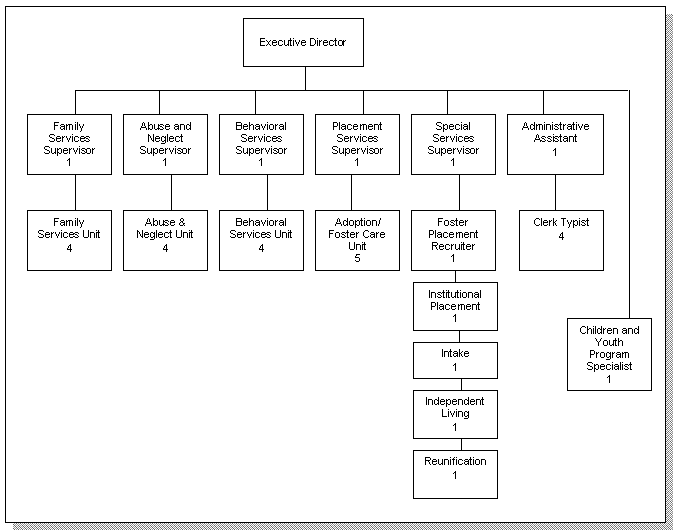
Pennsylvania's CPS is State-supervised, county-administered. The Butler County Children and Youth Agency is divided into six organizational units. The Abuse and Neglect Unit is responsible for investigation of all child abuse and neglect cases; the Family Services Unit is responsible for on-going in-home services; the Behavioral Services Unit is responsible for cases dealing with teens; the Placement Services Unit handles cases involving children in placement, including Foster Care and Adoption; the Special Services Unit includes a foster placement recruiter, an institutional placement worker, a call screener, an independent living worker, and a reunification worker. The Administration Unit is responsible for all clerical functions.
Exhibit 3.1, Butler County, Child Protective Services Division, Organizational Structure, depicts graphically the six organizational units.
Exhibit 3.1
Butler County, Child Protective Services Division,Organizational Structure
Reform Efforts
Butler County made a number of practice and staffing changes to the child protective services system that are designed to improve responsiveness to child and family service needs. The county also established a Community Service Review Team to develop and modify procedures and protocols. This team meets on a regular basis to identify needed changes.
Background of Reform Efforts
A key problem that reform efforts were designed to address was calls inappropriately assigned to investigators. Consequently, referrals for investigation and services were inconsistent. To address this problem, dedicated staff were assigned to this function. A Community Service Review Team was also established to review open cases for appropriateness of the decisions made.
Objectives
The key objectives of the reform efforts were to:
- Improve responsiveness through staff specialization. For example, all sexual abuse is handled by a dedicated sexual abuse investigator and all intakes are handled by an dedicated intake worker;
- Expedite and improve services, procedures, and protocols. A Community Service Review Team Was comprised of the District Attorney, police, service providers, and physicians was developed. The team designed the initial procedures and protocols; and
- Better meet the best interests of the child. Two part-time attorneys were hired to serve as Guardians Ad Litem.
Practice Components
More than one change was necessary to meet key objectives of the reform effort. Significant components of the reform are described below.
Separate Screening Function
A separate screening function was created to focus solely on intake. It is organizationally located in a separate Special Services Unit.
Dedicated Sexual Abuse Investigator
Due to the unique aspects of sexual abuse, a sexual abuse investigator position was created. All sexual abuse cases are assigned and handled by the specialized CPS worker. The worker has received specialized training, such as forensic interviewing techniques, to better handle these cases.
Community Service Review Team
A Community Service Review Team was created under the existing Multi-Disciplinary and Child Death Review Teams with the purpose to work with ongoing cases. The Community Service Review Team reviews and makes changes to procedures and protocols, which are used by the joint police and CPS multidisciplinary team.
Joint Police and CPS Investigations
The procedures and protocols establishing and governing joint police and CPS investigations were developed in response to Section 6365 (c) of the Child Protective Services Law (CPSL). The county agency and the District Attorney are required to develop a protocol for convening investigative teams in cases of alleged child abuse as described in section 6340 (a)(9) and (10) of the legislation (relating to release of information in confidential reports.) The county protocol must include standards and procedures to be used in receiving and referring reports, coordinating investigations of reported cases of child abuse, and sharing the information obtained as a result of any interview. The protocol must also incorporate other standards and procedures to avoid duplication of fact-finding efforts and interviews to minimize the trauma to the child.
The District Attorney is responsible for convening an investigative team. The investigative team must include those individuals and agencies responsible for investigating the abuse or providing services to the child and must at least include a health care provider, county caseworker and law enforcement officer. The protocol developed for the multidisciplinary teams is designed to:
- Meet the child's need for safety and protection by reducing trauma;
- Ensure that all needs of the child abuse victim are met through comprehensive coordinated services by reducing duplication of services;
- Ensure that all disciplines are focused on the client's well being, while meeting and maintaining respect for the needs of each individual agency's philosophies and mandates;
- Expedite the investigation and prosecution process and increase successful prosecution of offenders by conducting joint interviews and improving the evidence collection process;
- Provide a system of case tracking, which assures the provision of needed services to the child victim and nonoffending family members and accountability of convicted and alleged perpetrators;
- Establish a process providing for the continuity of core team members over time;
- Share team member expertise with fellow team members, community leaders, mandated reporters, and the community;
- Ensure regular continuing education opportunities for core team members;
- Provide for ongoing assessment of community needs with a commitment to expansion of services as needed; and
- Regularly evaluate the team's performance and implement ways to improve performance.
Hiring Guardians Ad Litem
The county hired two attorneys part time, as Guardians Ad Litem, to work as advocates for the best interest of the child.
Results
Supervisors and workers believe that the reform efforts resulted in significant changes. The reported changes follow.
Separate Screening Function
Supervisors and workers reported that there is more consistency in the intake function, which is positive for the community. In addition, the dedicated intake worker enables the investigator to focus on the investigation rather than determining whether or not the case should be investigated. Staff members also felt that the dedicated intake worker is better able to understand what investigations are underway and tie calls together for a consistent response. Supervisors and workers felt that the dedicated intake worker also reduced inappropriate investigations.
Dedicated Sexual Abuse Investigator
Staff members stated that specialization has been critical because of the intricacies of sexual abuse cases. The District Attorney reported that specialization in the area of abuse has been a great benefit in court. Investigators often came under heavy scrutiny on the stand, and having a dedicated sexual abuse investigator made it easier to defend the investigative techniques and strategies. This investigator also works as a member of the joint police and CPS investigative team.
Community Service Review Team
The Community Service Review Team is comprised of approximately 25 people and includes service providers, school personnel, physicians, Guardians Ad Litem, and others. Staff members have support from the Guardians Ad Litem, who can offer legal advice on procedural issues or historical precedence to assist the staff when they need to make difficult decisions. The team meets monthly and supervisors decide which cases should be presented for discussion. Usually the cases presented are the most problematic. This team complements other teams, such as the Multidisciplinary Team, which reviews abuse investigations, and the Child Death Review Team, which is convened when a child dies from possible abuse or neglect.
Joint Police and CPS Investigations
Workers indicated that new protocols make it clear that CPS will take the lead in conducting investigations with the child and that the police will take the lead in investigating the perpetrator. The specialized sexual abuse investigator also mentioned that the relationships have grown to the point that they have no trouble switching roles on occasion, when the circumstances dictate.
Hiring Guardians Ad Litem
In the past, attorneys would be appointed on a case-by-case basis to act as Guardians Ad Litem and would often not see the child until it was time to be in court. The county felt that the children were not being adequately served and hired two part-time attorneys. The Guardians Ad Litem act in the best interest of the child, not necessarily pursuing what the child wants. With the changes, the Guardians Ad Litem meet the children for whom they are advocating and better understand the circumstances of their situation. Both workers and Guardians Ad Litem felt that the new situation is working well and is beneficial to the children being served by the agency. The new relationship means that the agency worker and Guardians Ad Litem meet on a regular basis to discuss their cases and, although they do not always agree on what should be recommended in court, they are developing a trusting relationship.
Future Directions
The county plans to continue to implement and maintain the reforms that have been initiated.
Conditions that Sustain Reform
The following section briefly describes factors that have played an important role in the agency's ability to sustain its reform efforts.
Development of Partnerships
The addition of the Community Services Review Team, development of the protocols and procedures for joint police and CPS investigations, and the hiring of permanent Guardians Ad Litem have furthered the development of partnerships among service providers, law enforcement, and the legal community. Dedicated staff for intake and sexual abuse investigations has also helped to forge stronger bonds with the community and the families who are being served. The intent is to continue to build on these partnerships.
Increased Staff Morale
Prior to the implementation of the changes outlined in this report, staff morale and retention was a significant problem. With turnover high and morale low, service delivery suffered. Since reform efforts have provided staff with more support, staff morale has improved and staff turnover has declined substantially. Staff reported that they enjoy their work and are staying on the job. This has resulted in a greater continuity of personnel, which translates into better continuity of care for the clients of the agency.
Training
Training for CPS investigators has been on-going, with specialized training for sexual abuse investigation. Joint training with local and State police has been instituted. As a result of recent change, the Child Welfare Educational Leadership program pays for staff to go back to school for a M.S.W. degree and pays for the agency to hire a temporary worker so that the agency will not be adversely affected by the workers' absence.
Future Plans
The agency intends to continue with the efforts that are already underway, particularly in the area of staff specialization. Whenever possible and appropriate, staff will be provided opportunities to acquire specialized skill sets to better serve the unique needs of their clients. The agency is also trying to provide dedicated staff to the review of practice standards. This will help the agency in its efforts to be proactive.
Pennsylvania has a unique funding structure for child welfare services. Funding is blended with Juvenile Justice services to cover both agencies. Although both agencies prepared their budgets for the coming year, circumstances within Juvenile Justice could create problems within Child Welfare. If, for example, in a small county there was a dramatic increase in delinquency (this could mean two or three secure care placements, when only one was budgeted) the funds must come from the existing funding, i.e. the child welfare system would have funds diverted to juvenile justice. The agency will continue to work toward making the funding mechanism more workable.
Summary
Butler County Children and Youth Agency had high turnover rates, low morale, and poor service delivery during the recent past. Practice, staffing, and procedural reforms have significantly improved morale and agency functioning. In addition, partnerships have been established with the local and State police, District Attorney's office, Guardians Ad Litem, and service providers.
Chapter 4. Catawba County, North Carolina
Catawba County, North Carolina, developed several innovations to improve child protection, including minimum community standards for child safety, an automated client information system, and the colocation of social workers and law enforcement for investigation of child sexual abuse and extreme physical abuse. This report focuses on innovations in two areas — domestic violence policy and practice as well as the use of family conferencing. The agency’s domestic violence protocols were newly implemented. While family conferencing was not a new initiative, it was included because it was unique within most child welfare settings.
Overview of Child Protective Services (CPS)
North Carolina law provides for protective services for children ages birth to 18 years who are allegedly maltreated by a parent or caregiver. The law requires that any person who suspects that a child has been abused or neglected report the case to the local department of social services in the county where the child resides or was located. Reports are taken orally, in writing, or in person. The reporter has immunity from criminal or legal liability if the report is made in good faith. The reporter is encouraged to provide his or her name; however, anonymous calls are accepted.
The Catawba County Child Protection Unit, located at the main social services building in Hickory, NC, is available by telephone 24-hours a day, 7 days a week. A reporter does not have to prove that abuse and neglect has taken place, but has to have reasonable grounds for suspicion. The reporter does not require permission from caregivers to make a report, nor is it required that the caregivers be informed that a report was made.
A social worker and supervisor determine whether the allegations contained in the report meet the legal definition of abuse, neglect, or dependency. The agency has jurisdiction only when the alleged maltreatment falls within legal definitions and was committed or allowed by a parent or caregiver. If the allegations and alleged perpetrator meet these criteria, an investigation is initiated. If a report is not accepted for investigation, the reporter has a right to challenge that decision through an agency review process.
As part of an initiative to reinvent the government, the Board of County Commissioners directed some agencies in the county, including Catawba County Social Services (DSS), to become outcome driven rather than financially driven. This gives the agency greater control over its budget, given it meets the developed outcomes. Between 115 and 120 outcomes have been developed, more than one-half of which are directly related to child welfare. If the agency meets 90 percent of its outcomes, it will be eligible to continue with the initiative.
Organization of the CPS Agency
The North Carolina Division of Social Services (DSS) is a State-supervised, county-administered system. Catawba County Department of Social Services is the child welfare office for the county. At the time of the interview, DSS had a total workforce of 300 employees — 155 in the child welfare division and 20 responsible for CPS investigations.
A social worker initiates investigations within 24 hours of the report of abuse. Investigations that involve allegations of neglect and pose no immediate risk to the child are initiated within 72 hours; however, 72 percent of these cases were initiated within 24 hours of the report.
During the investigation, the social worker completes a number of investigative tasks:
- All children within the household are seen within 24 or 72 hours, depending upon the type of maltreatment alleged;
- Parents and caregivers are seen on the same day as the children;
- The alleged perpetrator is interviewed;
- All other persons who reside in the household are interviewed;
- A home visit takes place to determine if the environment poses any safety threat to the child;
- A safety response is developed, in writing, with the family to assure immediate protection of the child;
- Collateral contacts are made with any and all persons who may have information about the family (i.e. physicians, social workers, psychologists, teachers, guidance counselors, law enforcement personnel, neighbors, and extended family members);
- Law enforcement is contacted to initiate a criminal investigation in cases where severe physical abuse or sexual abuse has occurred;
- A risk assessment is completed to assess the likelihood of future risk of maltreatment;
- Family dynamics and patterns of interaction are assessed;
- The social worker determines the need for ongoing intervention services aimed at maintaining a safe permanent home or arranges temporary plans for the child’s care with a relative or other substitute care, such as a foster home, when no appropriate relative is located; and
- The reporter is notified of the agency finding regarding whether the agency filed a petition for court intervention.
During the screening process, the intake worker consults with a supervisor who decides whether or not to refer the case for investigation. One option is to send the case to outreach services. The case would not be opened as a CPS case, but would remain inside the agency for services. These ongoing, in-home treatment cases also remain within the agency. The target date for completion of an investigation is 30 days from the receipt of the report.
Reform Efforts
DSS reported that the reforms discussed below have the potential for significantly improving the safety of children and the lives of children and families involved with the department.
Background of Reform Efforts
The following section describes the considerations made regarding domestic violence and family conferencing protocols.
Domestic Violence Policy and Practice
Domestic violence is a serious, familial problem that has had a significant impact on the functioning of families, especially the safety of children. DSS reported that domestic violence was involved in approximately 30 percent of cases referred for investigation. Recognizing the frequency of this problem in the community, DSS decided to implement a consistent approach to identifying domestic violence as a contributing factor to child maltreatment and incorporated strategies to correct family problems related to, or resulting from, domestic violence. This policy was based on the primary function of DSS — to assure the safety of children either by reducing the risk of harm or by identifying and implementing alternative solutions. The department intervenes in the life of a family only following the determination of harm to a child.
DSS incorporated a domestic violence protocol into the CPS process that was developed by Mecklenburg County, North Carolina. The Catawba County Response to Domestic Violence Task Force, an external workgroup, including such community organizations as First Step (a domestic violence agency), local government and businesses, and law enforcement, was established. An internal work group at DSS — comprised of investigators, clinical specialists, foster care workers, and supervisors — ensures that department policies and practices are consistent with the task force recommendations.
The internal workgroup developed a protocol that requires:
- An action meeting taking place early in the case that includes law enforcement and staff from First Step;
- The victim and perpetrator being treated as two separate cases; and
- Petitions being filed on any perpetrator who does not make progress within 6 months.
It was the view of DSS that domestic violence victims must be protected and provided with services while perpetrators are held responsible.
Family Conferencing
Family group conferencing was developed from a Maori tradition in New Zealand. The process was adapted by police in Australia, and then introduced to the United States where police agencies, juvenile courts, and probation departments were among the first to use the process. The process has since been adopted by child welfare agencies.
Family conferencing in Catawba County began as part of the Families for Kids (FFK) project, funded by the W. K. Kellogg Foundation (WKKF), during 1996 when it was used with families to facilitate decisionmaking with the adoption process.
Objectives
The objective of the domestic violence reform is to ensure the safety of children in families where domestic violence has occurred. The objectives of the family conferencing reforms are to empower families and to assure that children remain safe in their own homes and avoid out-of-home care.
Practice Components
The following section describes how the domestic violence protocols and family conferencing were put into practice.
Domestic Violence Policy and Practice
At the time of the initial CPS report, or at any point during the life of a case, if there is a possibility of domestic violence, the social worker assesses whether there is a risk to child safety. During the investigation phase, or when domestic violence appears to be a factor, the social worker is required to develop safety plans specific to the victim of domestic violence and the child for their use during any future incidents. Social workers record and document the factors that contributed to the risk of harm to the child. Adult caretakers and children are referred to First Step, a local domestic violence agency and women’s shelter, for assessment and recommended treatment in all cases where domestic violence is identified as a safety risk to the child.
If the risk of harm to the child is high and the parent is unable or unwilling to assure the child’s safety by correcting the risk factors or arranging for an alternative safe living arrangement, the department will file a petition requesting court-ordered intervention, which may include custody. In addition, a petition may be filed if the risk of harm to the child is at least moderate after 6 months of services to attempt to correct the risk factors. The petition clearly delineates efforts the victim of domestic violence makes to protect the children and any lack of effort or the cooperation by the perpetrator.
In cases of domestic violence where no child abuse or neglect has occurred the case is referred to First Step. Typically, First Step asks the family’s permission to report the outcome of their services to DSS. Policies and practices to treat domestic violence include such interventions and services as shelters; case management; referrals for jobs, housing, alcohol treatment, and clinical services; assistance by law enforcement; and referrals for legal services. During the referral process, the case is kept open by DSS. Workers provide case management services and confer with First Step.
The approach used with offenders is the nationally recognized Duluth model which consists of 31 psycho-educational group sessions.1 Participation in the program is either voluntary, through DSS referral, or court-ordered. The program attempts to keep the family together, if possible. If, after 6 months, there is still a risk of child maltreatment, the case is referred to court for review.
DSS also uses an intermediate step for domestic violence cases — Action Meetings. These are essentially family group conferences with professional staff. The conveners are cautious regarding the role of the offender during these meetings.
Potential barriers to implementation were identified. Some workers reported that addressing domestic violence is not a legitimate role for CPS. Some workers believed that removal of the child from the home is the only safe solution in the short term. Others were reluctant to involve the offender in the assessment and in the ongoing treatment of the family. In addition, some workers pointed out that families often require pro bono legal services that are difficult to find in Catawba County, especially when the cases involve child custody disputes.
Family Conferencing
Catawba County uses the term family conferencing, or family group conferencing, to describe their adaptation of this process. Staff members use two models — Community Action Teams or Action Meetings and Family Group Decisionmaking. These models are based upon family-centered practices that recognize the strengths of the family and encourage their involvement in developing creative solutions to problems.
The meetings are voluntary, facilitated by a neutral third party, and the referring social worker is open to family options. The Action Team Meeting can be held at any time, but it usually is held after CPS substantiation of child abuse or neglect. It is not part of the investigation. In general, the technique is used at pivotal points in a case, such as the identification of the need for substance abuse treatment or possible placement into out-of-home care. The intervention is used for approximately 25 percent of substantiated cases and for almost one-half of ongoing treatment cases.
The Family Group Decisionmaking model was implemented through North Carolina State University’s Social Work program and was directed by Dr. Joan Pennell. The criteria for this model require:
- A clear purpose;
- More family members than professionals attending the conference;
- Thorough preparation of family and other attendees for the meeting;
- Private time for the family to discuss and create a plan to address clearly defined issues; and
- An emphasis on respecting family rituals and traditions.
The purpose of Community Action meetings is primarily to divert children from DSS custody. Family Group Decisionmaking is used to promote case planning and decisionmaking with the participation of family members. An important distinction between the two is that during Family Group Decisionmaking, CPS or other professional staff leave the meeting and the family makes decisions without professional support, presence, or oversight. Considerations for allowing families to meet alone include the size of the family and amount of available support. The professionals guide, but do not direct, the process. The facilitator of the meeting is not part of the case, i.e., not the ongoing worker or supervisor. However, there is always an individual present to represent and interpret department policy and who approves any decisions that cost money. The presence of a supervisor at the meeting lends authority to the proceedings.
There is no specialized family conferencing unit. Treatment workers were trained to use the intervention. DSS found that although family conferencing was labor intensive, the benefits outweighed the costs of recidivism and out-of-home care.
Results
The following section describes the available documentation on the results of the reform efforts. Some outcome data, as well as statistics derived from two consumer satisfaction surveys, are available.
Domestic Violence Policy and Practice
The agency was in the process of developing outcomes for the domestic violence protocol that will eventually become part of a system for tracking agency performance. It is the agency’s hope that this will be accomplished sometime during 2003. Some workers stated that the protocols strengthened relationships between CPS and treatment workers due to the collaborative development of the protocols.
Family Conferencing
The half-time position of the family group conferencing coordinator was created to manage family conferencing. Beginning during 2002, cases that used family conferencing were tracked for resubstantiation of substance abuse, new CPS reports, and entry of children into DSS foster care. Eighteen families and 25 children were followed for 9 months. Of this group, 92 percent of the children remained out of DSS foster homes and 33 percent of the cases were closed since the time of the original family conference.
A satisfaction survey was administered at the conclusion of the Action Meetings and Family Group Decisionmaking. Questions were asked regarding satisfaction with the meeting process, family involvement in the process, and the decisionmaking. More than ninety percent of families (92%) and service providers (95%) were satisfied with the Community Action meetings. A similar proportion of families (92%) and slightly fewer service providers (86%) were satisfied with Family Group Decisionmaking. The overall satisfaction percentages were:
| Overall satisfaction percentages | ||
|---|---|---|
| Community Action meetings: | Family | 92.3% satisfied |
| Service Providers | 94.5% satisfied | |
| Family Group Decisionmaking: | Family | 92.1% satisfied |
| Service Providers | 86.3% satisfied | |
Future Directions
The following section briefly describes conditions in the agency culture that will serve to sustain its ongoing reform efforts.
Conditions that Sustain Reform
Throughout the history of reform at DSS, the agency received unequivocal administrative support at the agency and county levels.
Domestic Violence Policy and Practice
CPS worker attitudes about domestic violence and its role in child safety have been barriers that must be overcome to support reform. The county has been making progress in the development of protocols and support for worker training.
Family Conferencing
To support family conferencing, all treatment workers receive 4 hours of training. Prior to conducting an Action Meeting or Family Group Decisionmaking session, they shadow an experienced worker, write a synopsis of their experiences, and review the notes with the family group conference coordinator.
Future Plans
Training on the domestic violence protocol will continue.
Domestic Violence Policy and Practice
Training will be developed and implemented countywide. The following protocols will be the subject of any ongoing training.
The initial assessment protocol includes instructions to gather information about possible domestic violence:
- Ask if there are concerns about emotional or physical domestic violence and interview partners separately to gather this information;
- If there are concerns about violence, ask reporting partner to describe them;
- Look and listen for behavioral indicators of domestic violence, including emotional abuse;
- Identify other community service providers involved with the family;
- Identify the support system available to the family;
- Utilize a screening instrument to assess the lethality of the violence;
- Refer both parties to First Step for assessment (women’s assessment is free; men’s assessment is $25); and
- Complete a safety plan with the recipient for herself and one for the children, using the examples from First Step.
The CasePlanning and Case Management protocol include the followup directive.
- Two service plans will be initiated, one for the recipient of the violence and one for the initiator of the violence. Template drafts will be available; observe standard for wording.
- Service planning will include a safety plan for the mother and a safety plan for the children.
- Develop a “code” by which the mother can contact the social worker and indicate a situation dangerous to her or the children.
- Unless the perpetrator is engaged in — and making significant progress in — domestic violence treatment, family conferences will not regularly be used in these cases. A treatment team meeting with the mother and any service providers will be utilized instead. If the perpetrator is progressing in treatment, and the safety level has increased, a family conference may be held. This determination should be made in consultation with the social work supervisor and First Step service provider.
- Any petition for cooperation will clearly state efforts the mother is making to protect herself and the children, rather than the lack of cooperation by the violent party.
- Assure that both parties follow treatment recommendations from First Step assessments. A referral for anger management services is not sufficient unless recommended by First Step assessment.
- Agency safety assessment, risk assessments and reassessments, and strengths and needs assessments will be completed quarterly or whenever there is a significant change in case status.
- If risk remains moderate after 6 months of services, the case will be staffed for possible petition for cooperation.
Family Conferencing
The State of North Carolina has been attempting to implement family group conferencing as a statewide model of best practices in child welfare. The Catawba County family group conferencing coordinator was hired by the North Carolina Division of Social Services to work 1 day per week on this effort.
Summary
The North Carolina Division of Social Services is a State-supervised, county-administered child welfare system. Catawba County Department of Social Services (DSS) is the child welfare office for the county government. The Department implemented several innovative practices, including the outcomes project, the development of minimum community standards for child safety, an automated client information system, and the colocation of social workers and law enforcement for the investigation of child sexual abuse and extreme physical abuse. In order to focus this report, it was limited to describing the county’s domestic violence policy and practice and the use of family conferencing. The domestic violence policy and practice changes have strengthened relationships between CPS and treatment workers and are expected to increase child safety. Family conferencing has contributed to preventing the removal of children to out-of-home care and increased the likelihood that problems are resolved and the cases closed.
Endnote
1 National Training Project. (2002). Creating a public response to personal violence. Duluth, MN: Author.
Chapter 5. Fairfax County, Virginia
This report focuses on two separate, yet related, reform efforts that were in progress in Fairfax County’s CPS program during the 12 months preceding the site visit. The reforms include a locally initiated effort to make the Children, Youth and Family Division’s (CYFD) programs more community-based, strength-based, and prevention-oriented, and the implementation of a State-mandated differential response system (DRS).
Overview of Child Protective Services (CPS)
Virginia is a State-supervised, county-administered system. The Children, Youth, and Family Division in the Fairfax County Department of Family Services is responsible for CPS throughout the county, including Falls Church and Fairfax City.
Organization of the CPS Agency
The CYFD is divided into four operational units, including CPS, the Family and Child Program, Foster Care and Adoption Program, and Child Abuse and Neglect Prevention Services.
The CPS unit screens child abuse and neglect reports, conducts investigations of child abuse and neglect, and provides support services to families in which maltreatment has occurred and there is risk for reabuse. The CPS hotline receives reports of suspected abuse and neglect, requests for guidance, and referrals to counseling, resources, and support services. In addition, staff is available after regular business hours for emergency services.
The Family and Child Program provides intensive and comprehensive assessment and case management services to families. These services are designed to prevent child abuse and neglect, keep families together, improve family functioning, and develop networks of support to sustain families within their communities. Housing assistance is also offered.
The Foster Care Services Program includes placement and supervision of abused and neglected children and youth, and those at risk — from infancy to age 21 — who are temporarily separated from their parents and placed in the legal custody of the department. Independent living life-skills services are available to foster care teens. Adoption services include placement services for children with special needs; adoption counseling for birth parents; and postadoption support services for families with special needs, including older children, sibling groups, and children with emotional or behavioral difficulties.
The Child Abuse and Neglect Prevention Services unit supports families who are at risk of child abuse or neglect. Prevention services are offered through multiple programs, each working in partnership with other public and private organizations and community members to strengthen parental capacities. Programs include Healthy Families, the Nurturing Parent Education program, and mentoring programs for parents and children. In addition, an array of health, educational, and peer support services are provided at three neighborhood-based family resource centers.
Reform Efforts
A description of the CPS reform efforts that were in progress in Fairfax County at the time of the site visit follows.
Background of Reform Efforts
The locally initiated reform of the Fairfax County CPS program began during the mid-1990s. However, the implementation of changes in the structure and operation of the program has been incremental and was still underway when the c ounty introduced the State-mandated DRS.
One of the original driving forces behind the CYFD’ s reform efforts was the recognition that the agency was one component of a community of people and service providers able to identify and assist families to keep their children safe. Moreover, the agency realized that it needed to reorganize if it were to effectively interact with these community-based resources. Prior to the reform effort, CPS and other family services were administered from a central office. This configuration led to a number of negative consequences, including difficulty in responding to the needs of a growing and increasingly diverse population. The centralized location discouraged interaction with related human service agencies. This had practical consequences on the ability of CPS and other CYFD service workers to conduct their work, because of the time and cost involved in traveling to meet with families.
The CYFD’ s reform effort was also driven by a desire to refocus the agency according to a social work practice model rather than the existing model that beca me increasingly legalistic. Within the confines of State policy, there was a desire to plan and deliver services based on the strengths and competencies of each family. This required workers to be less confrontational and more engaging during interactions with families. Ultimately, the CYFD expected a new strengths-based and collaborative approach to be more effective in preventing child abuse or neglect.
The State-mandated DRS, which was implemented in Fairfax County during May 2002, was built on many of the same principles that guided the agency’ s other reforms since the mid-1990s. R eports result in an investigation response when there are immediate child safety concerns or when the complaint consists of serious complaints defined by law, such as sexual abuse. Investigations conclude with a final determination as to whether the report is “founded” or “unfounded.” Founded reports are entered into the State’s Central Registry.
The DRS allows for a flexible response by the CYFD to allegations of child abuse based on the severity of the report, immediacy of child safety concerns, and family needs. CYFD conducts a family assessment response in lieu of an investigation when a report does not indicate immediate child safety concerns or fulfill any of the categories mandating an investigation under State law. The family assessment response shifts CPS intervention from an incident focus to a service delivery focus. Agency personnel collaborate with the family to identify family strengths, stressors, and other risk and safety factors likely to prevent or precipitate child abuse or neglect, and to develop an in dividualized family service plan. The family assessment does not require the agency to make a “finding” regarding abuse or neglect and no information is placed on the Central Registry.
Virginia’s DRS model owes its existence, in part, to the efforts of Fairfax County personnel. During the mid-1990s, when the CYFD was developing its own reform agenda, Fairfax County personnel participated directly in the development of the DRS. For example, Fairfax County personnel traveled with State officials to examine differential response models in Florida and Missouri and they lobbied for adoption of the DRS model in Virginia. A lthough Fairfax was not selected as a pilot for the DRS, the county has been committed to the program’s underlying concepts for several years.
Implementation of the Reform
Fairfax County’ s reforms we re multifaceted, involving a broad-based reorganization of the CYFD as well as revisions to many of the CYFD's programs.
The reorganization of the CYFD occurred in a number of incremental steps. The first step, implemented during the mid-1990s, involved the integration of investigation and ongoing support functions. Individual staff continued to support one function; however, personnel were organized into combined teams with supervisory staff overseeing both functions. This shift was designed to facilitate the interaction between the preliminary assessment of valid complaints and ongoing family support. The teams were also divided into regional units that served particular areas of the county. This prepared the way for the future relocation of the investigation and ongoing family support units to satellite offices.
The reorganization also supports a number of functional groups that continue to operate countywide. These countywide units include a hotline, which handles intake and screening; an after-hours unit, which responds to reports after regular operating hours; and, most recently, a publications and outreach function that disseminates educational information to mandated reporters, community-based organizations with a stake in CPS, and the general public.
Since the original reorganization, three out of four regional units have been physically relocated to satellite, community-based facilities. In addition to bringing the CPS program into closer contact with the families and communities that it serve s , the relocation involved colocation with other human service agencies. The regionalization of CPS, therefore, facilitates communication with other personnel directly involved with delivering services to families. The CYFD opened its first regional office in Reston during 1996 to serve the n orth c ounty a rea. Since then, it has opened regional offices to serve the Falls Church a rea and, most recently, the s outh c ounty a rea. The regional unit that serves the Fairfax a rea , which encompasses the central office, may be relocated in the future to underscore the importance of focusing its operations on the community.
The CYFD’s most recent relocation occurred during June 2002, when the countywide S ex Abuse unit moved to a Children’s Center operated by the nonprofit organization, Childhelp USA. This move places the unit in a child- friendly environment and, like the regional units, provides for colocation with a broad range of agencies. In this instance, however, the facility not only houses other human services agencies, such as the Mental Health Department and Health Department, but also houses representatives from the law enforcement agencies who are involved with the investigation of sexual abuse, including the Commonwealth Attorney’s Office and Fairfax County Police. The colocation is expected to facilitate greater cooperation between these agencies and increase the opportunities to provide targeted services.
Objectives
The primary objective of the reforms implemented in Fairfax County wa s to more effectively prevent child abuse or neglect by implementing a service approach that works with families to build on their strengths and competencies.
Practice Components
The CYFD’s reform effort and implementation of the DRS resulted in a number of changes regarding how the CPS program interacts with communities and families.
With the relocation of regional units, family services personnel participate in regional, multi-agency teams aimed at building and capitalizing on connections with the community. Staff committees at each regional office provide a forum to discuss community outreach and to empower staff to develop connections with other agencies and community groups. The results include better ongoing relations with community stakeholders (e.g. schools ) , as well as initiatives that respond to specific community-based issues.
In one s outh c ounty neighborhood, for example, the regional CPS team determined that a particular apartment complex had been the source of an unusually high number of reports of unsupervised children. CPS personnel arranged with the complex manager to hold a community meeting to address the issue. A local restaurant contributed food and beverages to attract residents to the meeting. CPS personnel provided residents with information about the guidelines for appropriate supervision, outlined relevant community resources, and fielded residents’ questions.
Fairfax County changed the way it interacted with families prior to the implementation of the DRS. In cases involving allegations of insufficient supervision, for example, the agency is able to exert additional flexibility since these cases are determined by local guidelines, not State policy. Specifically, the CYFD implemented an alternative outcome for inappropriate supervision cases, which do not present a serious level of maltreatment. This alternative designation focuses on education and supportive services, including a prioritized day care. It also permits CPS personnel to work with families to ensure that they mak e the necessary changes to prevent inappropriate supervision from recurring.
The CYFD recently applied this prevention-oriented model to a revisi on of the way the hotline handles calls that do not present a valid case. Previously, such families were referred to the Family Support Services unit to access services on a voluntary basis. Under the new Intensive Family Services model, CYFD personnel proactively contact and followup with such families. This approach was intended to ensure that families in need receive appropriate services before they present a valid case of child abuse or neglect. This approach wa s designed to prevent future cases requiring intervention by CPS.
The implementation of the DRS is compatible with these earlier initiatives, but it clearly is the most significant shift in the practice of CPS in Fairfax County. Under the DRS, valid reports of child abuse and neglect are assessed to determine whether they require an investigation or family assessment response. All serious allegations of abuse and neglect are investigated according to the previously used procedures. The result of an investigation is a formal finding and substantiated cases are reported to the Central Registry. The majority of cases receive a family assessment, which differs from the investigation track in some important ways:
- The CYFD does not make a finding as to whether or not the alleged child abuse or neglect incident occurred. CPS personnel are responsible for identifying the underlying causes of the incident in question, rather than determining if a particular event did or did not occur;
- CPS personnel do not participate in the same due process procedures, such as informing families about the possible outcomes of an investigation and informing families of their rights to appeal any determination; and
- The CYFD does not report to the Central Registry families who received an assessment.
These changes have allowed CPS personnel to more easily engage families in a collaborative effort to identify and pursue solutions to address the underlying causes of maltreatment and prevent future incidents of child abuse and neglect. However, if there is a concern that a serious child abuse and neglect incident occurred, a case can be reclassified as an investigation during the course of a family assessment. It is not necessary to change the case’s status to an investigation to petition the court for services. Further, if the judge determines a finding of abuse or neglect in order for parents to cooperate with CPS, then this court finding is not entered into the Central Registry.
Staffing
Another facet of the CYFD’s implementation of a community-based approach to CPS was an effort to recruit a more diverse staff that more closely resembles the population being served. Fairfax County’s population has become much more diverse over the last 20 years in terms of race, ethnicity, and native language. The CYFD’s recruitment efforts, in particular for staff in the regional units, emphasizes building a workforce that looks like, and could effectively communicate with, the community being served.
Results
According to the CYFD personnel interviewed for this report, it was difficult to quantify the impact of the agency’s earlier and ongoing reform efforts, and it was too soon to gauge the impact of the DRS. However, they discerned a number of trends or observations that suggested that the reforms have had a positive impact.
First, there has been a positive trend in terms of the CYFD’s CPS-related activities. During recent years, the number of calls to the hotline and the number of people who benefited from the CYFD’s outreach efforts increased; however, the number of substantiated cases of child abuse or neglect has decreased. In other words, the level of consciousness about child abuse or neglect within the Fairfax County population was rising while the incidence of abuse was falling.
Second, the ease with which the CYFD implemented the DRS was an institutional accomplishment. While there continued to be a number of personnel who were reluctant to accept the family assessment as a valid alternative to an investigative approach, acceptance was widespread. Moreover, there was universal acceptance of the DRS among the supervisors responsible for implementing the new system.
Finally, there was a general sense among agency personnel who were interviewed for this report that the CYFD was doing a better job. Intuitively, the interviewees believed that the current CPS program was better equipped to serve Fairfax County’s population and to prevent child abuse or neglect.
Future Directions
The following section briefly describes conditions within CYFD that have, or will, play a significant role in the department’s ability to sustain its reform efforts. This section also describes a number of additional changes to the agency’s organization and practice that may be undertaken.
Conditions that Sustain Reform
While the overall outcome of the CYFD’s reform efforts are positive, implementation of the reforms present a number of challenges that must be resolved if the reforms are to be sustained effectively.
One challenge is to determine the appropriate degree of regionalization. Fairfax County places all of its assessment and ongoing case management personnel (except for those in the specialized sex offender unit) in four regional units. It is not yet known if this number of units is sufficient to achieve the desired connection to the communities. In a jurisdiction the size of Fairfax County, a larger number of regional units would ensure that CPS is community-based. On the other hand, the regionalization of staff has made it more difficult to balance staffing resources with the demand for services. The workload at the regional offices varies significantly; there have been times when a regional office has called in resources from other offices to handle a heavy workload and other times when an office shifted personnel resources elsewhere. If there is constant reshuffling of personnel in this manner, the benefits of community-based service may be compromised.
Another challenge from the perspective of the CPS program is the difficulty in applying the reforms successfully in other CYFD Programs. The Family and Child Program reoriented its services and focus to address the needs of a high-risk population whose situations do not rise to the level that requires a CPS response. Personnel in the Family and Child Program are accustomed to providing services to this population; therefore, the recent implementation of an Intensive Family Services model — which was designed to engage families more proactively — represents a major shift in the way that services are delivered.
There have been challenges in the Foster Care and Adoption unit’s ability to apply a community-based model to the placement of children who must be removed from their homes. Due to the lack of community-based foster care resources, children frequently are placed outside of their own communities, making it difficult, if not impossible, for them to benefit from extended family, friends, and other community supports. It is anticipated that the successful implementation of a community-based model for foster care will contribute to a higher rate of return to families.
There also have been challenges in the interactions with the other agencies expected to colocate with the CPS sex offender unit at the new Children’s Center. At the time of this site visit, some of the agencies expected to have a presence at the Center have not agreed to the details for a Memorandum of Understanding. There also was a concern that the additional resources available at the privately-operated Children’s Center, including private funding, better facilities, and access to media, could have the potential of causing friction with other CPS units. However, the personnel interviewed for this report indicated that these problems resulted largely from the novelty of locating at a facility operated by a private agency, and they expressed confidence that the positive vision for the center will be realized.
Finally, the interviewees voiced concern about a potential adverse impact from the implementation of the DRS on the CYFD’s budget, although there was some disagreement about this issue. There was concern that the new model will increase the demand for family support services and the time spent assessing and supporting each case and, therefore, increase costs. Conversely, the budgetary impact of the DRS could be minimal as Fairfax County has attempted to pursue a similar practice model for several years. Moreover, there is an expectation that CPS personnel will require much less time under the DRS to communicate with families about “findings” and to prepare for and attend appeals, possibly resulting in a net decrease in costs.
Future Plans
As described above, Fairfax County’s CPS program has a long track record of implementing reforms. A number of additional changes to the agency’s organization and practices are likely, including the changes listed below.
- Reduction of out-of-community foster care placement. As noted above, the lack of community-based foster care resources has prevented the CYFD from implementing a truly community-based approach to CPS. To address this issue, the agency plans an aggressive campaign to recruit community resources for placement, and increase the availability of community-based respite care.
- Diversification of CPS personnel. The CYFD will continue efforts to diversify the CPS workforce to ensure that it reflects the ever-changing diversity of the Fairfax County population.
- Implementation of new outreach efforts. With the roll out of the DRS, the CYFD plans a new campaign to educate the community about CPS and the dual track response model. This message will also be underscored in the agency’s Blue Ribbon campaign which disseminates educational documents stressing that the prevention of child abuse or neglect needs to be a year-round priority.
Summary
The Fairfax County CPS program has undergone a number of significant reforms over recent years. Some of these reforms date to the mid-1990s when the CYFD decided to make its operations more community-based, strength-based, and prevention-oriented.
However, the implementation of these reforms has been incremental and was still underway during the last 12 months when the county introduced the State-mandated DRS.
The reorganization of the CPS program was the original focus of the reform effort and included the creation of regional units that were better equipped to serve a diverse and growing population. This initiative was complemented by subsequent changes in the ways in which the CYFD interacted with families and the community, such as an alternative response for cases involving insufficient supervision. In making these changes, the CYFD did everything feasible within the confines of extant State policy to increase the local program’s flexibility and to make it more prevention-oriented.
As a result, although the implementation of the DRS during 2002 is the single most important reform in CFYD’s practice model in recent years, it is in many respects the culmination of earlier reform efforts that already changed the culture of the Fairfax County CPS program.
Chapter 6. La Crosse County, Wisconsin
The reforms instituted in La Crosse County, Wisconsin, were not the result of a single initiative. Rather, they resulted from a convergence of several State and local efforts. The reform efforts addressed two main areas of change — easier access to the agency and more efficient identification of the services needs of children and families. Several ongoing State initiatives, some of which started before the reform period, were strengthened to support these changes. These include caseworker training, the use of the State's risk assessment model, and collaborative efforts to provide services to children and families.
Overview of Child Protective Services (CPS)
During 2001, the La Crosse Human Services Department (LCHSD) consolidated all children's services into the Family and Children's Services unit. While this was initially a fiscally-driven decision to consolidate services and maximize reimbursement by title IV-E and Medicaid funding, it enhanced access to services by needy children and families in the community. This reorganization has led to the current structure of shared investigation and case management roles within the unit, but with each worker having a defined role for each case.
Organization of the CPS Agency
Wisconsin is a county-administered, State-supervised system. The LCHSD is responsible for CPS in La Crosse County. The LCHSD has five sections — Operations, Long-Term Support, Economic Support, Clinical Services, and Family and Children's Services. The Family and Children's Services unit has primary responsibility for providing CPS, juvenile services, and services for children with disabilities.
The three CPS units each include one supervisor, intake staff, investigators, and case management workers. The supervisors rotate responsibility for intake each day and supervise investigative and case management workers. Supervisors attempt to keep the cases within the same unit from investigation to case management; however, this is not always possible.
One of the three CPS supervisors also manages the Integrated Services Unit. The Integrated Services Unit serves emotionally disturbed children at risk of being removed from their homes with a goal of assisting parents in maintaining the child at home. These cases may be under court order as a result of an abuse or neglect referral or may be voluntary. During 2001, 25 families were enrolled in the program; during 2002, children from 23 of these families were still living at home.
Exhibit 6.1, Child Abuse and Neglect (CAN) Referral, illustrates the movement of a case though the CPS System. Child neglect presented 45 percent of all calls during 2000 and 2001, or more than 400 reports each year.
Exhibit 6.1
Child Abuse and Neglect [CAN] Referral
![Exhibit 6.1 Child Abuse and Neglect [CAN] Referral.](/sites/default/files/private/images-reports/national-study-child-protective-services-systems-and-reform-efforts-site-visits-report/fig6.gif)
Reform Efforts
Over the last few years, La Crosse County has seen an increase in referrals. By the end of August 2002, there were 1,500 cases, which was the typical annual total. Caseloads increased from 10-12 to 17-19 new cases per month. Workers reported an increase in the proportion of families with multiple problems — mental problems, alcohol or drug problems for adults and children, and physical handicaps.
Both CPS and the court representative identified an increase in referrals to the agency, but a decline in court referrals. Supervisors and caseworkers alluded to the increased paperwork and rigid timeframes as reasons for staff to avoid a placement. Avoidance of placement would be a positive outcome if alternative interventions were identified for families; however, it would not be a positive outcome if the safety of the children was compromised.
In order to balance workers' caseloads so that no one worker was responsible for too many difficult cases, a case-weighting matrix was developed. The county expects that the new Statewide Automated Child Welfare Information System (SACWIS) will include a case-weighting capability to achieve the same objective.
CPS Organizational Changes
Prior to the reform changes, the Family and Children's Services units were defined by function — intake, investigation, and case management. The new director made the units generic, where workers share responsibility for intake, investigation, and case management. After some confusion, roles were specified for each worker. Delinquency is maintained as a separate unit.
Use of Paraprofessional Staff for Intake
When fielding calls for assistance to seniors, the agency found that social service paraprofessionals could handle the phones and referrals, relieving the social workers who previously covered the phone intake. Since the end of 2000, social service paraprofessionals have been responsible for speaking with callers and recording screening information on an "access sheet," which is forwarded to the unit supervisor. The access sheet uses the Wisconsin Risk Assessment Model. The intake worker receives information from the paraprofessionals who have used the risk assessment protocol. The supervisor then determines if the case is screened out or not. If the case is not screened in, a decision is made as to the appropriate response time.
Practice Changes Initiated by the State
Several State initiatives, in which the county participated, contributed to the reform efforts. The activities included the implementation of risk assessment, core training, and domestic violence best practices. (Those initiatives are described as part of the reform because of their importance as indicated by the staff.)
- Implementation of Risk-Assessment Training:The county was part of a pilot for risk assessment that used the Wisconsin Model. Staff were trained during 2001.
- Core Training: The core training gives staff a common language and philosophy. Prior to the early 1990s, training was a county responsibility and, as a result, varied among counties. In fact, training often varied from unit to unit within the department. At that time, the State began a training pilot with the northeast counties, using title IV-E funds. By 1997, the State had created partnerships with the remaining counties. The River Falls Campus of the University of Wisconsin partnership began during 1998 and involved 25 counties. Training was localized within the region and addressed the specific needs of the region.
- Domestic Violence Collaboration: A major effort was made to overcome the tension and distrust based on the different cultures of CPS and domestic violence programs. This tension was described as conflicts between concerns for the child versus concerns for the battered spouse. A collaboration workgroup with representatives from CPS, the community, and domestic violence agencies met with State DHFS leadership. Four principles served as guidelines for the workgroup. Paramount was the recognition that safety is the overriding principle for all members of the family. In addition, children are regarded as entitled to protection and the community is responsible for intervening. It was also agreed that child safety could be improved by helping the mother to become safe.
It was agreed that the first objective of CPS must be to protect the safety of the child and the battered parent. Safety for the mother includes ensuring the confidentiality of information collected by CPS and refusing the batterer access to her location. During January 2002, the workgroup issued a document entitled, Mutual Respect and Common Understanding. The workgroup recommended training for domestic violence staff in the CPS system, development of a memorandum of understanding between local domestic violence and CPS agencies, and revisions to the CPS investigation standards.
The Domestic Abuse Reduction Team (DART) was established in the county. The team includes representatives from CPS, the police, and domestic violence. After three reports of domestic violence, the DART will visit the family and automatically arrest the batterer. A DART case is opened, and random home visits will be conducted. As a result of the reform, all DART cases with a child present are reviewed by a CPS supervisor.
Results
Results from the La Crosse County reform efforts, as identified by the interviewed staff, are described in the paragraphs that follow.
Better-Trained Staff
Core training and risk assessment training resulted in a better equipped CPS staff who use the same terminology and concepts. The training has also fostered a strengths-based family focus.
Improved Case Review
Directors and supervisors have observed a better review of cases by caseworkers and their colleagues. The change was attributed to the reorganization of the unit as well as training. The reorganization has allowed most cases to stay within a single unit from intake through case management.
Reduced Use of Expensive Placements
The directors and supervisors attributed the reduction of placements to the reorganization of Family and Children's Services and the CPS unit. Prior to 1999, the Alternate Care Resource Unit was created to reduce the use of high-cost institutional placements and to keep the children in the community. The unit has been successful in reducing the number of out-of-State placements and has resulted in the county being under budget for the first time in more than
20 years. In addition, the Integrated Services Unit, through voluntary and court-ordered services, has developed expertise in giving wraparound services to families of special needs children.
Decisionmaking by Workers
The directors and supervisors reported that the core training and the use of the risk assessment model have resulted in better decisionmaking. These activities have improved opportunities for interaction among supervisors. The family focus has changed the adversarial role for workers, resulting in improved relationships with foster parents. Foster parents have become vital team members who help birth parents prepare for reunification.
Mediation of Complex Cases
The court administrator identified the Unified Family Court as the most significant court improvement during the past year. Through the Unified Family Court, if a family is identified as having multiple issues — CPS, custody, criminal, or domestic violence — one judge leads and mediates all issues concurrently. Three of the five judges originally participated in the project. Within the prior 6 months of this interview, all judges had joined.
Faster Case Transfer
The State initiative to respond to the Adoption and Safe Family Act (ASFA) has helped to create more efficient and faster decisions for children and families. The changes have been primarily for case management workers. Once assigned, the workers have 10 days to make the first contact and 60 days to complete a plan.
Intake has been affected by the change in the transfer policy for cases. Ongoing cases are assigned before the disposition of the investigation. While the timeline for the case management worker does not begin until the disposition, advance assignment enables the intake and case management worker to collaborate on service planning.
Future Directions
Conditions that have supported or sustained the reform efforts in La Crosse County are described in this section. Future plans of the County with regard to reform are also presented.
Conditions that Sustain Reform
The department has been participating in several collaborative activities for the purpose of sustaining reform efforts.
Family and Children's Collaborative
The Family and Children's Collaborative has set many ambitious goals for collaboration between State, county, and community agencies. The collaborative has been exploring the development of a cabinet to consider case management issues and maintain a common vision among stakeholders. Objectives include activities to deal with such community concerns as short-term planning for truancy and curfew problems.
CPS Citizens' Review Panel
The Citizens' Review Panel began meeting to review CPS issues. The judges took leadership of this process. The panel includes representatives from CPS, law enforcement, the District Attorney, County Counsel, schools, and hospitals. On October 1, 2002, the panel began reviewing sample cases and fatalities to understand the CPS process.
Training
The county attributes implementation of a core curriculum for the training of all new workers and retraining of all current workers as a support for the new reform efforts. All line staff, including supervisors, must have a bachelor's degree. The director and supervisors considered the core training as the major change during the past 2 years. A 6-month curriculum has enabled workers to use common terminology. This has resulted in more case reviews, heightened accountability, and better decisionmaking.
Future Plans
The department director described four areas for future activities. They include a managed care initiative, alternative response, the implementation of SACWIS, and "raising the bar."
Managed Care Initiative
The county anticipates that a managed care contract will be in place in the future to provide services to high-risk children. All children at risk of placement in a residential treatment facility will be included. In addition, a risk pool will be created with 10 other counties. The chosen vendor will provide services in the community with a capped amount of money for each child and an incentive to keep the children in their own homes.
Alternative Response
The county is exploring alternative responses for cases with a lower risk of abuse or neglect. Assessment and case management will be contracted out to a community-based agency. The county is exploring a model for use by the end of 2003.
Implementation of SACWIS
The county is scheduled to implement WI SACWIS, the statewide child welfare data system, during 2003.
Raising the Bar
Presently, the volume of new cases continues to increase. Concerned about State cutbacks and the impact of increased volume of referrals, the county has been looking for ways to raise the bar. This would mean changing the threshold of who receives county services to only those at greatest risk or those for whom actual harm has been documented. The county has begun to screen out subgroups of cases, for example, referrals of physical abuse with no marks present. Similarly, calls regarding sexual touching between two children age 6 or younger and mutually consenting sex between older teens (age 17), are also being screened out. These changes are of concern for some of the workers and supervisors.
Summary
The reform initiative in La Crosse County, Wisconsin, was an attempt by the department to improve access to the system, to match services and client needs, and to ensure that maximum Federal reimbursement was maintained. The reform was actually a compilation of smaller activities over a long period of time. These activities included the use of paraprofessional staff for intake, a combined CPS unit, and domestic violence screening. Now, in the context of an increase in the volume of referrals, the department is exploring ways to raise the threshold for accepting children and families who must be served. The department is attempting to balance shrinking resources during a time of increasing service needs.
Chapter 7. Union County, Florida
Public agencies and private provider organizations in Union County, Florida, collaborated with each other and a community advisory board as part of a State-initiated reform effort. Other reform efforts included separating the investigation and protective services functions within the Florida Department of Children and Families and providing workers with additional training.
Overview of Child Protective Services (CPS)
In Florida, CPS is a State-supervised system, administered through district offices. The District 3 office, located in Gainesville, is responsible for the provision of services in 11 counties, including Union County.
The District 3 Department of Children and Families (DCF) office separately administers the investigative and protective services units. The CPS investigator gathers the facts of the alleged maltreatment so that a determination of maltreatment or risk may be made and services may be recommended. The family safety counselor provides ongoing monitoring and support to the family, both during and following the investigation. The counselors do not directly provide services to the family, but serve as case managers to ensure that the family receives the support that is necessary to comply with DCF and court-ordered requirements. The family safety counselor also provides feedback regarding the parents’ level of cooperation with DCF, any court-ordered requirements, consistent participation with required services, and appropriate parenting behaviors.
Organization of the CPS Agency
According to Florida law, all reports that allege child maltreatment must be investigated, and each new report requires a new investigation, typically within 24 hours. Any additional reports regarding the same child are added to the initial report and changes the response time from
24 hours to immediate. This change in response time is made when allegations indicate that the child is in immediate danger; the family might flee with the child; the abuse or neglect took place in a care giving institution (unless the institution was subsequently closed); the abuse or neglect was committed by a DCF employee; or there were other special conditions or warranting facts.
The Union County Sheriff’s Office is charged with monitoring all referrals that allege child maltreatment. If the sheriff’s office determines that the case is not serious, the DCF child protective investigator conducts the investigation and submits a report back to the sheriff. The sheriff’s office relies on the judgment of the investigator to determine whether the support of the sheriff’s office is needed as a backup to a call. The sheriff’s office typically accompanies the investigator on any case that involves a child fatality, sexual abuse, or serious physical abuse. All referrals are reviewed, and the review is documented by the sheriff’s office, regardless of whether the office participated in the investigation or not.
Services offered by DCF include protective investigation, protective supervision, foster care, and adoptive home supervision. The protective investigation that results from a report is closed when the case is determined to be either founded or unfounded. Once a case is determined to be founded, the child enters protective supervision and the family is either referred for non-DCF services through collaborative partners, for DCF services, or for no services in some cases. Many children in Florida with an open DCF case remain with their families. Some are placed in foster care where they receive additional services and either return to their families, remain in foster care, or enter adoptive home supervision. See Exhibit 7.1, Entry and Service Pattern Flow Charts for a graphic depiction of these services.
Exhibit 7.1
Entry and Service Pattern Flow Charts
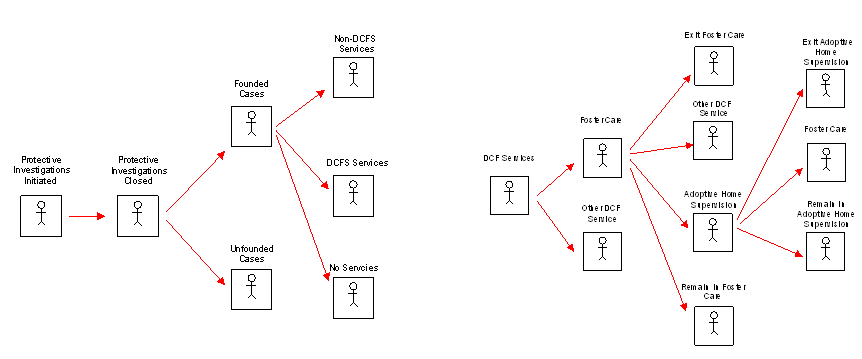
Reform Efforts
The following sections provide an overview of the key reforms of the District 3 DCF operations that evolved from a collaborative model. These reform efforts include the separation of investigation and protective services functions, an online training system, a community advisory board (called the Alliance); and collaborative partnerships with a number of community agencies.
Background of Reform Efforts
Interviews with DCF administration and key representatives of their collaborative partners indicated that the reform efforts were driven by efforts to manage scarce resources to best serve 11 rural counties. In addition, the State government wanted to encourage privatization and increase accountability for DCF operations.
One of the background issues has been the privatization of DCF functions. Opinions of the benefits and costs of this reform, as well as the viability of such a change, varied widely in discussions that were held during the site visit.
- There was a common perception that privatization would result in cost savings. In fact, DCF administration suggested that privatization would likely result in higher costs.
- There was a consensus among the District 3 DCF and collaborative representatives that a cookie-cutter approach was not beneficial to the communities and was a waste of needed resources. Rather, comprehensive needs assessments were thought to be required for every child and family who entered into the system.
- It was anticipated that the private sector would be a more effective advocate for obtaining the resources. However, the funding of private service contracts has been unstable and has resulted in inconsistent service provision. This factor has been most apparent in rural communities.
- Most stakeholders agreed that direct service provision was the most appropriate function for private providers. Many stakeholders also believed that case monitoring and case management could be appropriately provided by private contractors. There was disagreement, however, regarding the ability of the private sector to properly conduct investigations. Some stakeholders believed that law enforcement was best suited for conducting investigations, as these agencies had existing mechanisms for such activities. The use of law enforcement would enable DCF staff to function in supportive roles as social workers, as opposed to acting as legal enforcers. Under this model, the local DCF would function as contract managers and monitors. Retaining this mechanism for local contract management was considered vital, as an attempt to manage local operations at the State level could be fraught with logistical difficulties.
A second force that encouraged many of these reform initiatives was the desire of the State government to increase accountability within DCF operations for providing the appropriate protections to maltreated children and children at risk of maltreatment.
Other than the push for privatization, the Kayla legislation was the single most often mentioned reform effort. The Kayla McKean Child Protection Act was enacted during May 1999 and was named for Kayla McKean, a 6-year-old girl who was beaten to death by her father following several referrals to DCF. The purpose of the legislation was to strengthen child safety standards and require State agencies to coordinate their efforts to prevent child abuse. The statewide impact of the law was an increase in the number of calls to the hotline every year. In fact, District 3 experienced a 62 percent increase in referrals since the legislation was passed. Specific requirements of the legislation included those listed below.
- DCF must investigate all allegations referred by judges, teachers, or other school officials. It also defines judges as mandated reporters.
- DCF must assign one caseworker to investigate all referrals that involve a particular child. The department also must maintain a master file that contains information on all reports for a particular child, and this file must be made available to all DCF staff, judges, and community professionals who contribute to an investigation, to ensure proper communication and coordination among all involved parties.
- DCF must contact local law enforcement agencies with regard to all maltreatment referrals and work cooperatively with them to conduct investigations.
- Every investigation must include a face-to-face contact with the alleged victim, other siblings, parents, and other adults in the household.
- Any adult in the household who fails to report substantiated maltreatment that had taken place in the household will be charged with a third-degree felony.
- A local and State Death Review Committee must be established and operated under the Department of Health.
- An external entity must be charged with monitoring the existing State-operated abuse hotline for efficiency and effectiveness.
All of the stakeholders unequivocally agreed that the task of protecting children from harm is important and that the safety of children is assured when all parties within a community work together. Each stakeholder brought a unique perspective shaped by his particular area of expertise. DCF has the responsibility of balancing all concerns and arriving at a determination to ensure the safety of a referred child. In the perspective of some, the accountability-based reforms had the effect of diluting DCF’s authority, while continuing to place the risk of a failure to provide adequate protection with DCF.
Objectives
Discussions with DCF administration, case managers, caseworkers, and a wide array of collaborative partners revealed that many program features were designed to facilitate strong collaborative networks among the local DCF office, the State DCF office, and the many local agencies and private programs that served children and families in District 3.
Practice Components
The following reform initiatives individually and collectively worked to enhance both agency partners and family empowerment in their relationships with DCF.
Separation of Investigative and Protective Services Functions
The goal of separating investigative and protective functions is to increase specialization of skills and facilitate the development of specialized relationships with the family. The intention of this initiative was to facilitate the objectivity required to effectively investigate a maltreatment allegation while also providing the support that families often require. One of the challenges of this structure has been communication between units. Home Safe Net, a computerized documentation system, was developed to help facilitate effective communication between the CPS units.
Home Safe Net
The system is a repository of case-level information for all reports of maltreatment under the jurisdiction of District 3 DCF that were referred by the State hotline for investigative or protective services provision. The first phase of the system has been operational throughout District 3. Once the system becomes fully operational, a case record will be opened by the State hotline, including details about the referral and will assign a priority status for carrying out the Child Safety Assessment. The record will be picked up by the District DCF and the agency will respond accordingly. All information regarding the case will be logged into the system on an ongoing basis by the assigned caseworker. Information about any child, caregiver, perpetrator, or other involved individual will be available through a search by name or address.
District 3 was the first in the State to pilot Home Safe Net. The data system was originally developed to meet the needs of AFCARS and included data from three legacy systems. The new system provided a central location to meet all of the information needs at the Federal, State, and local levels. The State’s goal is to provide a means by which children who were served by DCF and other service providers can be tracked across the State. The goal of the local DCF is to facilitate the accountability of the agency and caseworkers to families who enter the system to receive services.
Online Training
An online training system was developed to supplement the traditional classroom training that was offered to caseworkers by DCF. This system was designed by the State DCF and has been in use for approximately 18 months. Updates to the program are instantly integrated into the system, and trainers are notified of these updates by email.
The development of the online training system occurred in conjunction with a growing need for certification of CPS caseworkers. The goal of providing online training for certain components is to reserve classroom time for those components that are best taught with face-to-face interaction.
Community-Based Advisory Board
District 3 DCF consults on a regular basis with a community board, the North Central Florida Community Alliance, for community input about issues that impact the agency’s efforts to promote the welfare of children in the district. The board was mandated by the State legislature; representatives were nominated by the county commissioner’s office, the school board, and the local sheriff’s office. The board had 25 community representatives at the time of the site visit.
The primary purpose of the Alliance is to provide community input, in an advisory role. The objectives of the Alliance are to improve outcomes for children in foster care and to ensure that the agency meets standards as defined by the Adoption and Safe Families Act (ASFA). DCF’s objective for the Alliance is to develop targeted projects to support the agency in serving youth in the community.
Collaborative Partnerships
The move toward privatization, as well as the Kayla legislation, resulted in a number of collaborations among DCF and community agencies and social service programs. The following sections describe several of these partnerships that have evolved in recent years.
Law Enforcement
The purpose of the mandated law enforcement referral review is to ensure that local law enforcement agencies are made aware of serious maltreatment cases that require an immediate response to protect the child. For the most part, law enforcement officials report that this partnership works well. Occasionally, there have been differences of opinion between DCF and law enforcement regarding recommendations to the court; however, the agencies typically work in a close and cooperative partnership. The sheriff’s office generally considers maltreatment cases to be the purview of DCF, unless there is a clear indication of criminal activity.
Dependency Drug Court
The Dependency Drug Court is a program offered by the 8th Judicial Circuit. This circuit covers approximately one-half of District 3, including Union County. The Dependency Drug Court is a specialty court used when a dependency petition is filed and the caregiver has experienced substance abuse. Participation in the Dependency Drug Court is a means by which a parent, after successfully completing the program, can demonstrate readiness for the return of his or her child. This option requires less time than traditional service options. In addition to substance abuse treatment, parents who participate in Dependency Drug Court attend parenting classes, anger management classes, and other services as appropriate to their particular issues. The phases of the program are listed below.
- The first, intensive phase of the program, which lasts approximately 90–120 days, requires participation for a minimum of 4 times per day, 4 times per week. This phase requires that the parent participate in treatment groups and drug testing. The parent remains in Phase I until he or she is able to maintain sobriety. During this phase, treatment staff, DCF, and court representatives meet weekly to evaluate the participant’s progress. Participants are provided with case management to aid the participant in finding employment, affordable housing, and other services as needed.
- There are three additional phases, with each phase consisting of less frequent requirements for participation in treatment over a longer duration. In the final phase, Phase IV, the children are returned to the home and the parent graduates from the program. Upon graduation, former participants can take part in a peer mentoring program to support new program entrants. Participants enter the program in cohorts and generally move through the program in groups. This format encourages the formation of strong cohesion among group members who provide support for one another and hold one another accountable for their choices.
The program was modeled after the Adult Drug Court, which was created for felons. The Alcohol, Drug Abuse, and Mental Health program office within DCF provided funding to create the Dependency Drug Court. The same funds were used to create a Juvenile Drug Court. The court is funded by both Federal and State monies, primarily from an ASFA grant. The goals of the program are to support the parent in learning to live clean and sober and to help the individual to become a better parent. The program maintains the integrity of the court as a judicial body, while providing the support and encouragement for parents to make the changes necessary to resume their parenting responsibilities.
Guardian Ad Litem
The Guardian Ad Litem serves as an advocate for the best interests of a child in court dependency petitions. A small number of paid administrative staff and volunteer advocates staff the office. When DCF brings a dependency case to court, the court appoints a Guardian Ad Litem (GAL). The GAL attends all court events and mediation sessions and has contact with the child at least once per month. The GAL ensures that the child’s interests are represented in the court system for all dependency cases; networks with all parties to the dependency petition and supporting agencies to gather pertinent information; and makes recommendations to the court to serve the child’s best interests.
Child Protection Team
The Child Protection Team (CPT) is a medically-based, multidisciplinary group of professionals operating through the University of Florida’s Department of Pediatrics. The CPT reviews all maltreatment allegations and provides medical evaluations for allegations of physical and sexual abuse, consultation to recommend services, court testimony, and psychological evaluations. All allegations that go to the State hotline are screened by the CPT. Cases that are screened out by the CPT can be referred back to the CPT by DCF for evaluation, if appropriate. The primary goal of the CPT is to provide a medical assessment of allegations of child abuse and a formalized multidisciplinary risk assessment for maltreatment referrals.
Nurturing Program
The Nurturing Program operates in an area that encompasses 16 counties and includes all of the counties in District 3. The program focuses on parenting education and offers intensive home visits. An important criterion for a family’s entry into the program is low risk for maltreatment. Most referrals are received from the investigative unit of CPS; Healthy Start often refers cases that require additional prevention services to the Nurturing Program. The average duration of service delivery is 8–18 months. A caseworker typically carries 10–12 families simultaneously and the program serves 400–600 families annually. In addition to home visiting, the Nurturing Program provides group counseling in drug treatment centers, maternal health facilities, teen pregnancy centers, and teen parenting programs in high schools.
Family Builders
Family Builders is a private program that provides targeted mental health services to DCF, other public agencies, and private individuals. The program provides counseling, emergency financial assistance, therapeutic activities, and case management.
The role of Family Builders in DCF cases follows two general trajectories. The first is to facilitate preservation for families whose child is at risk of removal from the home. The second is to facilitate reunification for families after the child has been removed from the home for more than 30 days. Family Builder’s goals are three fold — to preserve the family unit when possible, to optimize family functioning for families of at-risk children, and to facilitate successful reunification following removal by DCF.
Meridian Behavioral Health Care
Meridian is a private program that provides complete behavioral health care to individuals and families through a variety of funding sources, including DCF. In addition to child and family counseling, it provides substance abuse programs and psychological assessments. It also provides comprehensive needs assessments that incorporate mental health and substance abuse assessments, home visits, and in-school observation. Previously, Meridian provided these services directly; however, services are currently contracted out to private therapists. The goal of Meridian is to provide a single source for obtaining a wide variety of mental and behavioral health services.
Peaceful Paths
Peaceful Paths is a local program that provides shelter, counseling, and service referral to victims of domestic violence. Peaceful Paths provides an emergency shelter, a transitional housing unit, victim advocacy, counseling and support groups, adult and child domestic violence assessments, and education and outreach services. Through an interagency agreement, Peaceful Paths and DCF have outlined a mutual commitment to protect the children and the nonoffending parent in cases where they shared clients. This agreement enables communication between the agencies to ensure that the children and family are served and ensures confidentiality protections required by the respective agencies. While domestic violence shelters are considered mandatory reporters with regards to child maltreatment, confidentiality agreements restrict the shelter’s ability to share information regarding the nonoffending parent. The interagency agreement enables Peaceful Paths to provide information to DCF regarding the nonoffending parent’s progress in the program, including information about group counseling attendance, topics covered in counseling, child care arrangements, employment, and participation in other services.
The template for the interagency agreement arose through legislative mandate. However, the final agreement required one year of negotiation between the program and DCF to establish a basis for the partnership. The final agreement clarifies the referral process between the agencies and defines the proper channels of communication. Ultimately, both agencies have sought to support one another in facilitating the well-being of the children and families that enter their agencies seeking services.
Results
Many positive results occurred as the above reforms were implemented. The following are some highlights of this successful work.
- The separation of the investigative and protective services functions has helped to build bridges between the agency and the family by isolating the protective functions, which were often perceived as facilitative, from the investigative functions, which were often perceived as adversarial. It has also allowed for the investigative unit to remain more objective and true to its focus and mission. The separation of the investigative and protective functions facilitates more effective service to children in need of protection.
- Supervisors have benefited from the data system as they are able to verify the status of cases opened for agency response. The workers benefit from the standardized format and central location for maintaining case-level information. At the State level of DCF, the system provides a means for tracking families who moved out of the area to avoid participating in DCF services or to evade the removal of a child from the home. It also provides a means for tracking problem service providers.
- The Alliance provides a means for the community to influence governmental agencies’ services to children and families in need. Participation in the Alliance has the added advantage of educating the community about DCF’s role in protecting children and serving families. This awareness facilitates a strong sense of collaboration and has resulted in the community board members serving as allies of the agency to effectively carry out its mission. The families and children served by DCF also benefit from the participation of the Alliance. The Alliance maintains a strong interest in the welfare of children in foster care.
- Collaborative partnerships with other programs and agencies have also resulted in positive reforms for the CPS system in Union County. The increased involvement of law enforcement in CPS investigations has helped to ensure the safety of DCF workers. It has also provided checks and balances to ensure that seriously endangered children receive proper protection.
- Both the Dependency Drug Court and the GAL programs benefit the judicial court and DCF by acting as a resource for monitoring the children and families at risk. DCF benefits from the nonadversarial nature of the relationship between program participants and agency representatives. The program provides an effective blend of authority and structure with support and encouragement. Families benefit from the program by addressing their problems with substance abuse, as well as issues associated with low self-esteem, employability, and parenting.
DCF has received many benefits from the programs that are involved in the reform efforts. These programs include the Child Protection Team, Nurturing Program, Family Builders, Meridian, and Peaceful Paths. Benefits include professional or medical opinions, CPS worker support, monitoring of children and families who are at risk, and service provision efficiency.
Future Directions
While much has been accomplished since the push for privatization began, and the legal mandates of the Kayla McKean Child Protection Act were instituted, site visit participants agreed that many more improvements could be made in the future of the agency.
Conditions that Sustain Reform
Each practice change has conditions that are important to maintain a positive reform trajectory. The following practice changes were reported by DCF staff and partners.
Separation of Investigative and Protective Services Functions
Both the investigative and the protective services units would benefit from funding for additional caseworkers. The caseload is approximately three times what the CPS supervisor consider optimal to ensure that every referral receives attention and service. The agency would also function more effectively with greater availability of services, particularly in the rural areas of the district. Specific service needs include domestic violence prevention, violence intervention, substance abuse treatment, intensive crisis counseling, private therapists, parenting training, quality child care, foster care placements (particularly therapeutic foster care), and independent living.
Home Safe Net
District 3 DCF staff discovered that a thorough understanding of the computer system was acquired only through ongoing use. Rather than providing a single training session, workers should be provided the opportunity to practice, with ongoing support of the system liaison. It was further recommended that refresher training be provided to the users when newer versions of the system are introduced. Finally, system users need a means for providing feedback to improve the system interface so that it corresponds to the logical flow of case work.
Online Training
DCF training staff recommended that the administration continue its support of the online training system in order to use training resources as efficiently as possible.
Community-Based Advisory Board
DCF administrators suggested that the first requirement to support the Alliance is a reasonable budget to fund their activities. A second recommendation is to provide the Alliance with oversight authority for the privatization efforts. One possibility would be to grant the Alliance the authority to review the performance of privatized agencies in conducting traditional DCF functions. It is important to recognize that the process of involving the community in caring for its members can be more beneficial to the community than the product of that involvement.
The following conditions in DCF collaborative partnerships were identified as areas for improvement.
Law Enforcement
Law enforcement officials believe that children and families in Union County would best be served with increased funding for recreational programs for pre-adolescent children and parenting programs.
Dependency Drug Court
The judicial court representative suggested that communication between agency partners must remain consistent to ensure the success of the program. In addition, while the funding for this program is recurring, it is spent quickly.
Guardian Ad Litem
The child advocates in the Guardian Ad Litem (GAL) program are unpaid volunteers. There has been a move toward hiring paid staff as advocates to supplement the existing volunteer staff. The GAL representative expressed some concern that a move toward paid staff advocates may be detrimental to the functioning of the GAL program. Sufficient advocates are not always available to handle all dependency cases. GAL does a thorough job of representing those children that are most in need. If the program moves toward using paid staff advocates, those advocates may likely carry heavier caseloads. This would result in more children being represented, but not necessarily receiving the in-depth advocacy that clients have previously received.
Child Protection Team
The CPT representative suggested that the program could more effectively carry out its mission with increased resources for training and education of the CPT members, CPT support staff, and cross-training with DCF child protection investigative staff. The program would also benefit by hiring team members to provide screening in specialized areas of expertise.
Nurturing Program
The Nurturing Program representative indicated that this program could improve greatly if sufficient funds were available to hire additional workers. This enhancement would eliminate the need for a waiting list for potential clients. To adequately serve the children in District 3, DCF would need to fund the program at twice the number that it currently does. Another recommendation was to resurrect the reunification program to help smooth the transition from residential placement to the child’s family. In addition, a pilot program to work with both parents while the child is in foster care was suggested.
Family Builders
Family Builders would also be better equipped to achieve their mission with adequate funding. Funding for their State and local contracts has been cut every year, forcing them to provide more services with fewer resources. The program has not received an increase in funding for the past
4 years. Additional funds would also help to attract and retain qualified mental health professionals. Family Builder’s inability to do this was linked to their inability to offer potential candidates competitive salary or benefits.
Meridian Behavioral Health Care
The Meridian representative indicated that the program would benefit from funds to provide good residential and day treatment for substance abuse. Increased funds could also be used to help clients locate suitable housing and provide contingency funds through Family Builders to help stabilize families in financial crisis.
Ultimately, Meridian would be best equipped to carry out their mission with flexible funding streams. Most programs operate as fee-for-service, whereas cost reimbursement facilitates greater flexibility in the provision of a wide array of services. Under this paradigm, Meridian staff would provide case management.
Peaceful Paths
The Peaceful Paths program director recommended sending agency advocates with the CPIs on first response calls to ensure that cases involving domestic violence receive the necessary assessments and supports as early as possible in the investigation process. Additional funding would be used to provide transportation and on-site childcare for clients.
Future Plans
The Department of Families and Children in District 3 has implemented a number of reform initiatives and innovative practices in response to legislative mandates. The mandates arose from State administrative and legislative offices’ interest in the privatization of DCF operations and increased accountability within the DCF system. These program features include the separation of investigative and protective services functions, the development of a computerized case record system, the development of an online training system for caseworkers, ongoing consultation with a community advisory board, and strong collaborative partnerships with a variety of community-based agencies and private service providers.
Privatization remains the greatest unknown in the future of DCF operations. Most of the stakeholders believe that it is inevitable and discussions were focused on how the transition could be implemented to ensure that children and families continue to receive quality care. Flexible funding, with sufficient mechanisms for inflationary increases, is critical to the success of any privatization effort.
Summary
While challenges existed for all of these reform initiatives, benefits were also apparent for DCF, community agencies, and children and families. The consistent factor that posed limitations for every aspect of these initiatives was insufficient or unstable funding. Rural areas like Union County were hardest hit by funding limitations. The collaborative components of the DCF District 3 operations were striking, but these collaborations existed in the rural areas out of necessity. In these areas, funded services were sparse and children and families tended to best be served when all of the stakeholders in and around the community gathered their forces and worked together to ensure that their needs are accurately identified, understood, and addressed.
Chapter 8. Utah County, Utah
The State of Utah developed a CPS practice model, which was designed to improve services and empower families. This model requires new practice skills as well as intensive and ongoing training of workers to empower families to resolve their problems that involve them with CPS. Utah County, Utah, was visited to discuss this model.
Overview of Child Protective Services (CPS)
The Western Region of the Division of Children and Family Services (DCFS) provides adult and child protective services for residents of the two most populous cities in Utah County--Provo and Orem. Services include screening and intake, assessment and investigation, in-home and out-of-home services, services for families affected by domestic violence, and foster care support. (See Exhibit 8.1, Utah Department of Children and Family Services Organizational Structure.)
Prior to the introduction of the current Utah Practice Model, families had little input in decisionmaking during their involvement with the DCFS system. DCFS workers were expected to focus on "policing" and "looking for evidence" when working with families. In addition, DCFS workers were given minimal training and were expected to become familiar with their positions through on-the-job training. The emphasis was on processing cases in order to conform to timelines rather than on quality interactions between worker and client, which could result in more permanent changes. There was also a wide variation in the quality of DCFS staff work, from outstanding to less than adequate. Families tended to view DCFS as something to be feared, due to the agency's ability to remove children from homes and its perceived low priority on supporting the family's ability to keep their children safe and healthy.
Organization of the CPS Agency
Because of Utah's geographical diversity, DCFS has five regions for service delivery and administration. Geographic diversity is considered during budget allocation to ensure that each child and family has equal access to needed and appropriate services. The Western Region office also acts as the regional DCFS headquarters for five counties in western Utah, including Utah County where it is located. Each county houses between one and three local DCFS offices that provide adult and child protective services to residents. Three DCFS offices are located within Utah County, with two smaller offices in the north and south, in addition to the five regional offices.
Reform Efforts
During the spring of 2000, the State of Utah DCFS began implementation of the Utah Practice Model. This initiative included a philosophical change from a law-based, compliance model to a social work, strengths-based model.
Background of Reform Efforts
The impetus behind the development of the Utah Practice Model was a class action lawsuit brought against the State during 1993 that alleged Federal constitutional and statutory violations in the operation of Utah's child welfare system. During 1994, a settlement agreement was reached that gave Utah 4 years to cure the violations, at which time the agreement would terminate.
During May 1999, Utah filed its Performance Milestone Plan in response to the settlement agreement. All DCFS regions, local communities, allied agency partners, and advisors from across the State were given an opportunity to submit recommendations through a series of community forums. The principles that were developed as a result of these meetings included the following:
- Protection: Children have the right to be safe from abuse, neglect, and unnecessary or needless dependency. Swift intervention is necessary when this right is violated;
- Development: Children and families need consistent nurturing in a healthy environment to achieve their developmental potential;
- Permanency: All children need and are entitled to enduring relationships that provide a sense of family, stability, and belonging;
- Cultural Responsiveness: Children and families have the right to be understood within the context of their own family rules, traditions, history and culture;
- Family Foundation: Children can be assured a better chance for healthy personal growth and development in a safe, permanent home with enduring relationships that provide them with a sense of family, stability and belonging;
- Partnerships: The entire community shares the responsibility to create an environment that helps families raise children to their fullest potential;
- Organizational Competence: Committed, qualified, trained and skilled staff, supported by an effectively structured organization, help ensure positive outcomes for children and families; and
- Professional Competence: Children and families need a relationship with an accepting, concerned, empathic worker who can confront difficult issues and effectively assist individuals during their process toward positive change.
This collaborative process for developing a new model of practice also resulted in the identification of necessary practice skills. These included the following abilities:
- To engage: Effectively establish a trusting relationship with children, parents, and others for the purpose of jointly accomplishing needed work;
- To team: Assemble a team around children and families, with a focus on the family's formal and informal supports, to assess and plan;
- To assess: Determine, with the family, the strengths and needs that must be addressed to resolve the issues that brought the family to the attention of CPS;
- To plan: With the child and family, use assessment information to create an individualized plan that addresses the family's strengths and needs and provides support for making changes, while evaluating the consequences of lack of improvement; and
- To intervene: Pursue actions that will decrease risk, provide safety for the child, promote permanence, and establish well-being.
Objectives
The overall objective of the reform effort is to enable DCFS staff members to ensure the safety and permanence of children and families through improved skills and greater family participation. It is believed that families will trust the DCFS system if they are able to provide input on the decisions that affect their lives, be supported with treatment plans, and be shown how to create ties with their communities that could help prevent further crises and DCFS intervention.
The Utah Practice Model seeks to improve services to clients through achievement of the following objectives:
- Strengthen DCFS staff members in their ability to provide reliable and effective services to children and families;
- Improve direct professional practice of front-line staff members and supervisors in DCFS through the design and implementation of a practice model that provides a consistent philosophy, reliable direction on day-to-day professional practice, and training for specific skills with proven effectiveness in child welfare;
- Create clear performance expectations; and
- Provide the allocation and management of resources required to develop and sustain the practice model.
Practice Components
The major components of the model are:
- Develop practice skills through training, observation, and testing of staff on engaging children and parents in the goals of providing safety, protection, and permanence for children;
- Use comprehensive family assessments of children and families to achieve decisive action earlier in DCFS involvement;
- Provide individualized service planning, matched to child and family needs, to overcome the underlying causes of the incidents or circumstances leading to the referral for services;
- Utilize family team conferences to support the child and family;
- Supply trained mentors to each new employee;
- Offer foster parent training to align key partners with the practice model;
- Build community resource development skills to advocate for children and families and to increase resources available to help resolve instances of child neglect, abuse, and dependency; and
- Improve information gathered through DCFS data and case reviews to modify the practice model as needed.
Results
Changes occurred in the areas of resource allocation, training, and practice.
Resource Allocation
Agency administrators stated that immediately following the lawsuit there was a significant increase in the State's budget for DCFS. Between 1993 and 2000 the Utah Legislature doubled the allocation from approximately $60 million to $120 million. Since then the budget has leveled off and decreased slightly.
Training
Implementation of the Utah Practice Model consisted primarily of providing intensive training to all DCFS staff. The initial training for DCFS workers began during spring 2000 and was completed during January 2002, and consisted of classroom training in each of five skills or "modules." The training consisted of interactive role playing exercises to foster greater understanding of what clients face when they enter the DCFS system.
The importance of training new staff members and updating experienced staff is reflected in the building of a new regional training center, which is staffed with full-time trainers. Ongoing training is mandatory and requires workers' commitment of 4 consecutive days, as well as maintaining their caseloads and taking on new cases while in training.
Changes in Practice
Slight changes have been made to practices and procedures to reflect the new model. For example, intake workers ask "solution-focused questions" of their referents. For example, they may request that the reporter describe the strengths of the family whom they are reporting. Investigation and assessment workers engage a family and focus on strengths while conducting their search for evidence that may result in a substantiated or unsubstantiated allegation of abuse. The requirements that are used to assist other workers on the case include: Functional assessments; written accounts detailing a family's story, including why they are involved with DCFS; and a description of the family's strengths. Case transitioning requires coordination between the two respective workers as a means of assuring continuity of service.
Evaluation
Evaluation is an important aspect of the Utah Practice Model. An important evaluation activity is the Quality Case Review, which is a yearly review of approximately 24 randomly selected cases within a region. This review is a joint effort between DCFS and a court-appointed monitor. Each region receives a score in two areas--child and family status and system performance. The scores provide regions with feedback for improving their practice and skills. Earning high scores on the Quality Case Review is an important step for regions exiting from court-ordered monitoring.
Additional evaluation activities that monitor system performance and facilitate quality improvement are listed below.
- Reviews of the achievement of action steps identified in the Milestone Plan: This is a bi-monthly report that is compiled by DCFS and is submitted to the court monitor. The report indicates progress on specific action steps and interventions that address barriers to satisfactory performance in protecting children from abuse and neglect, providing children with permanent homes, and supporting child well-being.
- Review of outcome indicator trends: This series of outcome indicators provides general information about system performance. The indicators are jointly selected by DCFS and the monitor and are used to inform them of changes or the lack thereof. Each division provides quarterly trend indicator reports to the monitor, which DCFS and the monitor regularly review to identify possible performance improvements or concerns.
Results for workers and families
Both workers and families appear to have benefited greatly as a result of the Utah Practice Model. Reciprocal relationships have been developed as workers share their power with families and families have been empowered to participate in solving their own problems. Agency workers and administrators stated that the Utah Practice Model benefits families in the following ways:
- Families are involved in the decisions that affect their lives;
- Families are more likely to trust DCFS workers and see them as allies;
- Families are better informed and more aware of what is happening because they understand the DCFS process;
- Families are more open to DCFS intervention; and
- Families respond more positively to intervention, if it happens.
Workers benefit from the Utah Practice Model in the following ways:
- Workers are able to do social work rather than policing;
- The model broadens the perspective of workers and help them to better understand the families;
- Workers are more realistic with what they expect from their clients;
- Workers are not solely responsible for the success or failure of a family;
- Workers are more committed because they feel they make an impact in the lives of their clients; and
- Workers' jobs are more pleasant and less stressful.
Future Directions
DCFS workers and administrators identified other changes that are important for the continued positive impact of the Utah Practice Model.
Conditions that Sustain Reform
Conditions identified as important to sustaining reforms are discussed below.
Staff
The most commonly identified condition that must be met for reform to be supported and sustained is a decrease in the resistance of some staff, at all levels, to the changes required by the Utah Practice Model. This resistance is characterized primarily as pockets of established workers who are reluctant to change and prefer to continue with the status quo, or agency partners who prefer to continue using the more legalistic and punitive model. For example, some lawyers are concerned that their clients, in trusting their caseworker, may disclose information that could be a disadvantage in court.
The ongoing hiring and retention of trained and experienced staff must also continue during the implementation of the Utah Practice Model. The agency is finding it difficult to hire highly-trained workers who could fully understand and integrate the skills required for the Utah Practice Model. Many of the agency staff are recent graduates with a Bachelor of Social Work degree who do not have the training one would receive at the Master of Social Work level, which would be helpful to understand and utilize the skills to implement the model. Furthermore, the agency also experiences a high turnover rate because staff have little incentive to stay with the agency when other employment options offer higher pay, better benefits, and more opportunities. This is especially true for the workers who have a master's degree.
The agency is committed to overcoming these problems and maintaining experienced, trained staff. Creating an agency culture around the Model's principles and practices is considered essential to perpetuating the philosophy and to maintaining consistent and reliable working practices.
Training
The integration of training with other responsibilities also has been identified as a condition that is required for the continued implementation of the Utah Practice Model. Practice Model training is required for all DCFS workers. Workers select a block of 4 consecutive days when they are able to attend a training session. While training, workers are required to maintain their caseloads as well as to continue taking on new cases. However, maintaining contact with one's clients and the office through cell phones and pagers during a training session causes disruption to other trainees as well as the individuals who are attending to their clients. The agency has not yet determined how to provide the additional coverage needed while workers are in training.
Conflict of Interest
A conflict of interest has emerged for investigation and assessment workers who must implement the new practice principles and skills while they are responsible for investigation. Workers experience a conflict when they are seeking to establish a trusting relationship with a family while they are gathering information necessary to make a determination. This is another issue that must be addressed in order for the implementation of the model to come to fruition.
Future Plans
Agency administrators stated that they felt they are making progress with the implementation of the Utah Practice Model, although it is going slower than expected. The practice model principles and practices are not reflected in every case handled by the agency, but for some instances the cases are reviewed with the appropriate staff member(s) to discuss how the practice model could be properly implemented. Agency administrators also stated that most of these instances occur with inexperienced staff. This internal monitoring will continue in the future.
Mentoring
Since the Practice Model has been in place for nearly 1 year, the agency also plans to work toward developing mentoring relationships between supervisors and their staff. Supervisors at the agency would receive ongoing training and would be expected to train and monitor staff members. The goal of the mentoring would be to provide a continuous learning environment to support the ongoing understanding and implementation of the practice model principles and practices. This mentoring plan is also part of the statewide implementation of the model.
Summary
The Western Region DCFS recently implemented the Utah Practice Model. This statewide initiative is a philosophical shift--from a legalistic, compliance model to a social work, strengths-based model--in how DCFS provides services to its clients. The goal of this effort is to empower families when making decisions that affect their lives.
The model is implemented primarily through intensive training for all staff members in the five practice areas. All workers receive training that enables them to effectively and realistically engage clients. Ongoing training and mentoring will be a permanent characteristic of the Utah Practice Model.
Agency administrators and staff are excited and committed to the practice model, and realize that they are still in the process of fully implementing its principles and practices. All agency staff agree that the practice model is good for families and staff because families feel more comfortable working with the agency and staff members are better able to assist families in accomplishing changes.
Chapter 9. Ventura County, California
Within the past 3 years, Ventura County, California, has initiated reform efforts designed to move children through the CPS process more quickly while still providing quality services to children and families. Reforms included contracting out CPS hotline services, emphasizing early intervention and prevention services, and supporting staff in their roles as social workers rather than law enforcement investigators.
Overview of Child Protective Services (CPS)
California is a State-supervised, county-administered child welfare system. The Ventura County Human Services Agency (HSA) is responsible for CPS in Ventura County. The mission of HSA is to provide "equal access to appropriate services, treatment, and support to improve the quality of life in Ventura County by achieving equitable outcomes and promoting self-sufficiency, family unity, and community empowerment." In Ventura County, CPS is administered by the Children and Family Services Department (CFS) of HSA, whose primary focus is on family preservation and child safety. Its mission is to "identify children at risk of abuse or neglect, intervene on their behalf and ensure that they have safe and permanent homes."
Exhibit 9.1, Services Continuum, graphically depicts the child protection decisionmaking process of CFS. As the flow chart illustrates, families came to the attention of CFS through Emergency Response (ER) referrals. This service was contracted out to a community-based organization called Interface Children, Family Services (Interface), which provides CPS hotline services, emergency response screening, and potential referrals to prevention services. Based on screening and risk assessment results by CFS social work staff, families are either referred to additional services that do not require court intervention or are scheduled for a court hearing. Juvenile court hearings are held in Superior Court to determine whether the child should remain with the parents under CFS supervision or be placed in foster care. The hearing may take place in Dependency Drug Court if it involves drug or alcohol exposed infants. Dependency Drug Court proceedings are held in the same courtroom and under the same judge as the other CFS dependency proceedings. Working with the same judge who is familiar with and has presided over both types of CFS proceedings is a benefit to the families. If it is decided to maintain the child with the family with agency support, a further determination is made as to whether family group decisionmaking should be considered. If the Dependency Drug Court agrees that an effort should be made to keep the child with the family, it assumes responsibility for ongoing jurisdiction and regular reviews. Whenever a child is involved with the system, concurrent planning occurs to prevent removal of the child from the family or reunify the family if the child was removed; and to arrange an alternative, permanent living situation for the child should the family be unable to provide care and assure the safety of the child.
Exhibit 9.1
Services Continuum
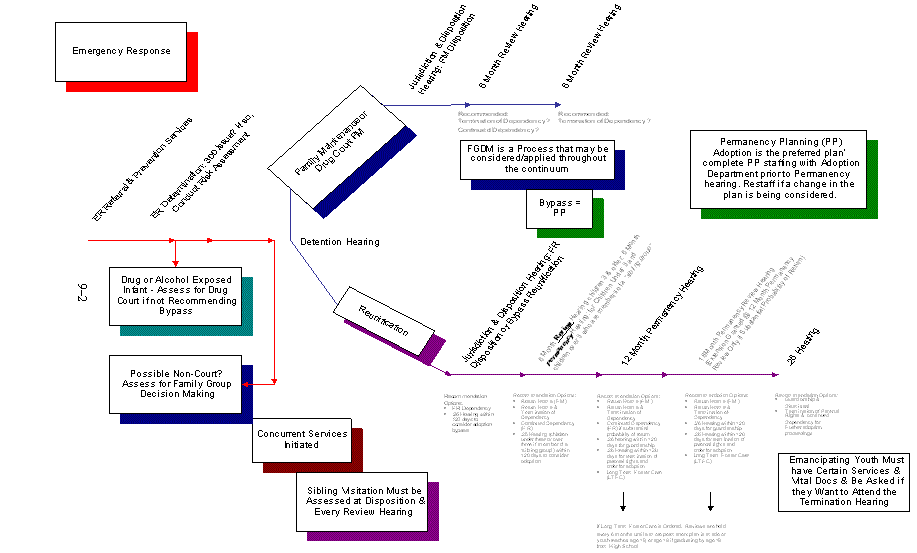
Organization of the CPS Agency
CFS is administered by a director, deputy director, and a team of four program managers, one at each site. A supervisor is in charge of licensing and adoptions. This group meets on a weekly basis to share information and make decisions regarding the daily operation and programmatic activities of the department.
Ventura County CFS is divided into four regions, each with more than one unit of social workers — Oxnard, Ventura, Casa Pacifica, and East County. Each of the regional offices maintains a CPS unit and is overseen by one of the four program managers. A supervisor oversees the adoption and licensing unit of CPS from the Ventura office. Exhibit 9.2, Organizational Chart, graphically depicts the organizational structure of CFS. The Dependency Drug Court and the Staff Development and Training supervisor have also been operated out of the Ventura office.
Exhibit 9.2
Organizational Chart
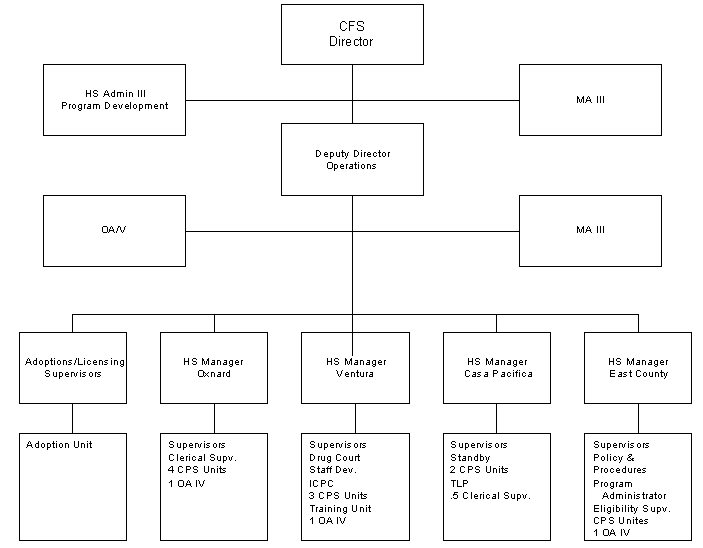
Reform Efforts
Implementation of many CPS intervention and prevention programs in Ventura County stemmed from the commitment of the director and line staff to provide quality services to the children and families they serve. According to the program managers, the HSA director and State Children and Family Services director were extremely successful at identifying the necessary funds for new and ongoing programs, while line staff shared an equal commitment to providing best practices to the children and families they serve.
Background of Reform Efforts
The initiatives described below were implemented within a relatively narrow window of time (2-6 months). This level of change within such a short timeframe created the potential for strain on both management and line staff. Management reported that the stresses associated with these changes were mitigated through strategies that included the appointment of a deputy director; the institution of a management team; and the use of structured, routine communication, and meeting protocols. The attitude of all management staff interviewed regarding the reforms and how the implementation was handled seemed quite positive.
In addition, California recently implemented its Statewide Automated Child Welfare Information System (SACWIS), called CWS/CMS. The implementation of CWS/CMS required adaptation to the County's needs and training of CPS workers on its proper use. Management reported that the transition was completed and the system's utilization was relatively stable. This allows for the preparation of monthly performance reports and the engagement of County Information Technology staff in providing other types of staff and client information for management purposes.
Objectives
The objectives of child protection reform in Ventura County are to fulfill the CFS mission by:
- Promoting prevention and early intervention services;
- Supporting line staff in their roles as social workers, as opposed to law enforcement agents; and
- Shifting practice to be more "family-centered" by focusing on keeping children safe in their homes and communities and by giving families a larger role in the decisionmaking process.
Practice Components
Ventura County CFS implemented the following efforts in order to fulfill the above reform objectives.
The Dependency Drug Court
Established during 2000 through a collaborative effort among CFS, the Superior Court, and the County Alcohol and Drug Programs and Public Health Services, the Dependency Drug Court assists women in Ventura County with newborns affected by alcohol and drug abuse. The goal of the Dependency Drug Court is to strengthen a family's ability to care for their children by providing them with early intervention services. In addition to the CFS staff, the Drug Court Team includes a public health nurse, the judge, a treatment home staff person, a behavioral health staff person, and a Cal Works social worker. The Dependency Drug Court provides intensive inpatient treatment and supervision for mothers and their infants while they remain under the jurisdiction of the court system. The benefit of the program is swifter reunification of mothers with their infants, including placement of the babies with them in the treatment home. Mothers who successfully complete the Dependency Drug Court program are able to bypass CPS involvement and achieve reunification with their families while utilizing supportive services.
Interface Children Family Services Contract
Interface is designed as a comprehensive, integrated services agency that provides affordable prevention, intervention, and treatment services on a contractual basis to health and human services agencies in Ventura County. One of the services that Interface provides is the operation of the CPS 24-hour emergency hotline. Interface workers monitor the hotline and provide assistance and referrals to callers seeking CPS services or reporting child abuse or neglect. This makes it possible for screening to be completed with the oversight of a CPS program manager at a lower cost.
Additional CPS services that are provided by Interface include:
- Taking Care of Little Me, which is an interactive school-based personal safety and sexual abuse prevention program for children ages 3-9;
- Child Abuse Intervention and Prevention Services (CAIPS), which is a program developed to assist families in staying together while keeping children safe and free from abuse or neglect;
- Family Life Education, which provides parenting classes, offered in English and Spanish, designed to assist families during conflict and crisis;
- Family Support Workers, who are paraprofessionals trained to provide in-home education and support services to families at risk of, or experiencing, the trauma of abuse and neglect; and
- Court Appointed Special Advocates (CASA), who are court-appointed volunteers who mentor children involved with the legal system.
Family Decision Making (FDM)
This model is based on the belief that removing children from their homes may at times be as harmful to children as the maltreatment they experienced. A corollary principle underlying FDM is that families can be strengthened and empowered to make the best decision for the safety and protection of children by linking with community and government agency support systems while maintaining the child in the family network. In Ventura County, the development of FDM stemmed from the collaborative efforts of CPS front-line staff and the management team. At the prompting of line staff, FDM was developed as a voluntary process to bring CPS families together with their friends and service providers to make and fulfill decisions about the care and safety of their children.
Interagency Case Management Council (ICMC)
ICMC is a collaborative effort involving CPS and various county agencies that gather weekly to share information and resources and to develop a consensus plan. The goal is to develop alternative plans designed to prevent the removal of children and return children to their families as quickly as possible while also reducing risk factors.
Public Health Nurse Partnership
During the past year, the role of public health nurses was revised in Ventura County CFS. Originally, the county funded them to be onsite in the four CPS regional offices, but did not provide guidance about their roles and functions. Consequently, the nurses functioned as social workers. The new role of the public health nurses is to assist CPS line staff with any medical concerns, interpretation of medical terms, and followup services with children and families.
Multi-Disciplinary Interview Center (MDIC)
Also known as Safe Harbor, MDIC is a coalition of public and private agencies dedicated to serving women and children who have been victims of sexual and physical abuse. MDIC eases the interview processes for victims by providing a nonintimidating, victim friendly environment for forensic medical exams and interviews that meet the requirements of law enforcement, the courts, and CPS. MDIC also provides crisis intervention and referral services to victims to minimize trauma while maximizing criminal prosecution. MDIC is funded through grants, donations, and contracts from participating agencies.
Parent Leadership Task Force
The Parent Leadership Task Force was initiated during September 2002 to improve communication and reduce barriers between parents and CPS staff. Through the Parent Leadership Task Force, parents are able to voice their concerns in a confidential manner as well as share their stories of CPS involvement. Staff and parents are also able to collaborate on issues to allow for the most inclusive resolution possible.
Best Practice Council
The Best Practice Council is composed of CPS supervisors who work together in a proactive manner to develop best practice standards for the field of social work in Ventura County. Members of the council meet once a month to discuss risk assessment, effective services, community input, and measurable outcomes. In addition, members of the council work together to review systemic problems as well as make recommendations for change.
Opportunity For Improvement (OFI)
As an aspect of CFS's Quality Improvement Program, OFI addresses the identification and solution of internal organizational issues. The OFI process, introduced during 1999 by a consulting firm at the request of the previous deputy director, is staffed by members of the line staff and provides a formal mechanism for staff to develop and implement policy. Through OFI, new policies and changes to CPS practice have been identified, including the need for additional child car seats during ER investigations, the introduction of Family Decision Making, and increased avenues for improved communication between management and workers.
Results
The Ventura County CFS deputy director and program managers agreed that reform efforts resulted in families and staff better partnering in the decisionmaking process, as well as opening doors to a broader array of linkages to community-based services. However, many of the above efforts were still relatively new and their effectiveness was still being assessed. Some of the client outcomes-related accomplishments have included:
- Only 5 percent of the children involved in 7,000 CPS referrals went into out-of-home placement; and
- Using data from their business object reports to track key performance indicators derived from CWS/CMS, the management team identified and targeted specific regions and units for management improvements. This tracking resulted in an increased screen-in rate, from 58 percent to 78 percent.
Since the implementation of CPS reform in Ventura County, the agency had been successful in retaining its line staff. The turnover rate of line staff has decreased to 4 percent, compared with 20 percent 2 years ago. Ventura County has accomplished a shift in organizational culture and employee satisfaction. For instance, relationships among management, line staff, and collaborative agencies have improved. Many workers indicated that they were able to express their opinions and communicate their ideas to management with the confidence that they would be heard. One example of a channel of communication was the CFS director's lunch program which was held on a weekly basis and called the "Socrates Café." The purpose of the lunch program was for interested staff to have time with the director to informally discuss issues and concerns they might have.
Line staff reported that staff supervision improved, information was more consistent, and performance accountability was measured better when data acquired from CWS/CMS was used. Workers indicated that, due to this innovation, they felt more empowered to perform the social work they were hired and trained to do.
As part of a Continuous Quality Review during the past year, management staff revised and clarified the role of the public health nurses at the CPS sites to be consistent with their professional training and functions. This change allows public health nurses to assist social workers with medical issues, help decipher and interpret medical information, and work with doctors during the CPS investigation processes. This change has resulted in the identification of previously overlooked medical problems, a decrease in the high turnover rate of nurses, and recognition of the need for additional nurses in the program.
There has also been a change associated with the Interagency Case Management Council. The ICMC was one of the pioneering efforts to coordinate the range of community services available in the county on behalf of maltreated children and their families. During recent years, however, its focus had shifted toward the identification of families and children for CPS services. The CFS director and deputy director took specific steps to reorient the council to its fundamental role of service coordination.
Future Directions
This section describes factors that have contributed to the success of the reforms and outlines the future plans for the county with regards to continued reform efforts.
Conditions that Sustain Reform
Conditions identified as those that help to sustain the reforms were as follows:
Better Pay
According to the director, program managers, and line staff of Children and Family Services, employee retention will continue with the ongoing provision of better wages compared to other CPS agencies within California.
Training And Job Opportunities
The director, program managers, and workers also felt that ongoing training and support — through flexible work schedules, opportunities for advancement, monthly performance reviews, and job coaching as needed — will complement reform efforts.
Employee training currently includes a comprehensive program for both new and existing staff. New employees receive a 3-day introduction to the county, followed by 2 weeks of training with a specially selected caseload, and 6 months of intensive on-the-job CPS training. New employees continue to receive modified caseloads and have access to alternate work schedules, in addition to reviews by supervisors and mentoring by more experienced coworkers. All county employees are encouraged to further their education and knowledge base by enrolling in various staff development, leadership, and computer classes, such as those offered by Interface. Program managers have also been able to utilize data acquired from the CWS/CMS system to monitor worker performance and to provide assistance and additional training to staff with skills that might need to be enhanced or updated. Once hired, all social workers attend the California Academy of Social Work courses in addition to mandated core courses in leadership and customer service.
Future Plans
The future of CPS in Ventura County lies in the following activities:
- Continuous improvement of the speed with which families are moved through the CPS process;
- Provision of increasingly family-friendly services and environments which support families in keeping children in their homes and communities rather than providing a family management system;
- Development of additional resources and better linkages to public, private, and community-based services; and
- Becoming accredited with the Council on Accreditation (COA).
Summary
As noted above, reform efforts implemented by Ventura County CFS are too new for their effectiveness and systemic impact to have been adequately assessed. However, CFS staff, administration, and partners believe that they are improving services for children and families reported to CPS. The sentiments expressed by management and workers are that, while the current situation is not perfect, the organizational infrastructure and leadership that are needed to manage change are in place. The recent changes were reported to be accompanied by a universal commitment by both program managers and line workers for the ongoing responsiveness of CPS practices.
Appendix A. Agency Contacts
Brooks County, Georgia
The following participants were interviewed as part of the information gathering process for this report.
| Interviewed participants | |
|---|---|
| Rhonda Wheeler* | Social Services Supervisor (CPS) |
| Linda Peterson | Director, Brooks County DFCS |
| LaShayla Dyer, MSW | Investigation, Social Services Specialist |
| Ayanna Sampson, MSW | Investigation/Ongoing, Social Services Specialist |
| Freddie Harrell | Intake Specialist |
| Marsha Williams | Investigation/Ongoing |
| Joann Saunders | Sergeant Criminal Investigation, Quitman Police Department |
| Peggy Kimble | Director, Victim Assistance Program, Brooks County Sheriff's Office |
| Farrell Godwin | Brooks County Sheriff's Offices |
| Holly Hubbard | Direct Service Contractor, Family Support Services |
*Primary contact
Family Support Services6555 Sugarloaf Pkwy, Suite 307-203
Duluth, GA 30097
(678) 957-0991
Butler County, Pennsylvania
The following participants were interviewed as part of the information gathering process for this report.
| Interviwed participants | |
|---|---|
| Ed Skrocki* | Executive Director |
| Betsy Brown | Special Services Supervisor |
| Katie Davis | Intake Supervisor |
| Melissa DeMatters | Intake Worker/CPS Investigations |
| Karianne O'Sarnese | Family Services/Ongoing |
| Laurie J Kubli | Family Services/Ongoing |
| David L. Montgomery | Guardian Ad Litem |
| William T Fullerton | Butler County District Attorney |
* Primary contact
Butler County Department of Child and Youth Services124 West Diamond Street
P.O. Box 1208
Butler, PA 16003
(724) 284-5156
Catawba County, North Carolina
The following participants were interviewed as part of the information gathering process for this report.
| Interviewed Participants | |
|---|---|
| Beth Brandes* | Assistant Director |
| Bobby Boyd | Director |
| Cyndy Benson | Program Manager |
| Pam Brooks | Supervisor |
| Willie June Noggle | Supervisor |
| Beth Wooten | Supervisor |
| Caroline Benfield | Supervisor |
| Rob Brown | Supervisor |
| Beth Clore | Supervisor |
| Dawn Wilson | Family Guidance First Step Program |
| Vickie Hill | CPS Case Manager |
| Billy Poindexter | Family Group Coordinator |
| Katie Swanson | CPS Treatment Worker |
| J.T. Autrey | Juvenile Court Counseling |
| Cookie Ikerd | Recovery Advocate |
* Primary contact
Catawba County Department of Social Services3030 11th Avenue Drive SE
Hickory, NC 28602
(828) 695-5600
Fairfax County, Virginia
The following participants were interviewed as part of the information gathering process for this report.
| Interviewed Participants | |
|---|---|
| Katherine Froyd* | Director, Children, Youth and Family Division |
| Susan Alexander | Program Manager, Child Protective Services |
| Jim Gogan | Hotline Supervisor, Child Protective Services |
* Primary contact
Children, Youth, and Family DivisionFairfax County Department of Family Services
12011 Government Center Parkway, Suite 500
Fairfax, VA 22035
(703) 324-7322
La Crosse County, Wisconsin
The following participants were interviewed as part of the information gathering process for this report.
| Interviewed Participants | |
|---|---|
| Jerry Huber* | Director, La Crosse Human Services |
| Mary Ellen Prinsen | Manager, Family and Children's Section |
| Harry Hobbs | Assistant Area Administrator, Wisconsin DHFS |
| Mary Schleifer | Supervisor, Family and Children's Services |
| Jeannie Chase | Supervisor, Family and Children's Services |
| Nancy Pohlman | Supervisor, Family and Children's Services |
| Keith Keller | Supervisor, Family and Children's Services |
| Dawn Miller | Ongoing Worker |
| Janet Holter | Investigation Worker |
| Lynn Halderson | Intake Worker |
| Nicole Milliren | Ongoing Worker |
| Liza Bernhagen | Investigation Worker |
| Shelly Sieger | Ongoing Worker |
| Jennifer Borup | Training Coordinator, University of Wisconsin |
| Steve Steadman | La Crosse County Court Administrator |
*Primary contact
La Crosse County Human Services Department300 North 4th Street
La Crosse, WI 54602
(608) 785-6050
Union County, Florida
The following participants were interviewed as part of the information gathering process for this report.
| Interviewed Participants | |
|---|---|
| Becky Dobbin* | District Planning Coordinator |
| Jim Smith | Human Services Manager |
| Thelma Clayton | Operations Program Administrator |
| Chris Houston | Operations Program Administrator |
| Tim Trometer | Child Protection Investigations Supervisor |
| Janice Joiner | Child Protection Investigator |
| Shirley Wilkerson | Family Safety Counselor |
| Julie Denson | Family Safety Counselor |
| Peg McMahon | Operations Review Specialist, Florida DCF |
| Louise Godfrey | Training Coordinator |
| Garry Seay | Deputy Sheriff, Union County |
| Donna Connors | Sr. Deputy Court Administrator, 8th Judicial Circuit |
| Tamara Dinkins | Guardian Ad Litem Administrator, 8th Judicial Circuit |
| Linda Galloway | Child Protection Team Administrator, University of Florida, Department of Pediatrics |
| Annie McPhearson | Program Director University of Florida, Nurturing Program |
| Johnny Evans | Mental Health Specialist, Family Builders |
| Tamela Pye | Mental Health Specialist, Family Builders |
| Maggie Labarta | Administrator, Meridian Behavioral Health Care |
| Theresa Harrison | Program Director, Peaceful Paths |
*Primary Contact
Florida Department of Children and Families District 3 Office1250 Andrews Circle
Starke, FL 32091
(904) 964-1515
Utah County, Utah
The following participants were interviewed as part of the information gathering process for this report.
| Interviewed Participants | |
|---|---|
| Paul Curtis* | Region Director |
| Bert Peterson* | Milestone Coordinator |
| Tess Blackmeyer | Assessment/Investigation (Supervisor) |
| Kerri Ketterer | Assessment/Investigation (Supervisor) |
| Paul Smith | Assessment/Investigation Staff |
| Sandy Hofer | Assessment/Investigation Staff |
| Becky Kendrick | Assessment/Investigation Staff |
| Nicole Martinez | Intake Staff |
| Eden Krehbiel | Intake Staff |
| Barbara Blair | Intake Staff |
| Marjorie Taylor | Intake Staff |
| Elaina Downing | In-Home Lead |
| Carolyn Spencer | In-Home Lead |
| Amber Price | CPS/In-Home Lead |
| Corie Bona | Domestic Violence/Leadworker |
| Patti VanWagoner | DCFS Deputy Director |
| Charlotte Gibbons | CPS Specialist |
| Reba Nissen | In-Home Specialist |
* Primary Contacts
Western Region Division of Child and Family Services150 East Center St., 5th Floor
Provo, UT 84606
(801) 374-7005
Ventura County, California
The following participants were interviewed as part of the information gathering process for this report.
| Interviewed Participants | |
|---|---|
| Ted Myers* | Director of CFS |
| Linda Henderson | Deputy Director CFS |
| Ginny Camarillo | Assistant Director of HAS |
| Richard Shaw | Program Administrator |
| Karleen Corkrum | HSA Manager--Ventura |
| Kathy Young | HSA Manager--Oxnard |
| Dennis Trenten | HSA Manager--Casa Pacifica |
| Lucrecia Juarez | HSA Manager--East County |
| Daryl Woodward | CWS/CMS ITS |
| Tanya Spradlin-White | Staff Development |
| Lou Dixon | ER Worker |
| Janice Cash | ER Worker |
| Cheryl Binkley | CPS Ongoing Worker |
| Alyssa Antelman | Dependency Drug Court |
| Kathy D'Inca | Family Decision Making |
| Linda Finnerty | Safe Harbor |
| Terri Miller | Interface |
| Kate Nicolle | Parent Leadership |
* Primary Contact
County of Ventura, Human Services Agency505 Poli Street
Ventura, CA 93001
(805) 652-7827