


Office of the Assistant Secretary for Planning and Evaluation
U.S. Department of Health and Human Services
Contract No. HHS-100-01-0011
Produced by
Laura Lippman, Project Director
Acknowledgements
We would like to especially acknowledge the Expert Panel for their thoughtful review and valuable comments throughout this project. The Expert Panel guided the selection of both the indicators and paper topics. Members of the Expert Panel included:
- Patrick Fagan, William H. G. Fitzgerald Research Fellow in Family and Cultural Issues, The Heritage Foundation
- Ron Haskins, Senior Fellow: Economic Studies , The Brookings Institution
- Donald Hernandez, Professor, Department of Sociology, State University of New York, Albany
- Sandra Hofferth, Professor, Department of Family Studies, University of Maryland
- Velma McBride Murry, Professor, Associate Professor of Child and Family Development, Co-Director of the Center of Family Research in the Institute for Behavioral Research, University of Georgia
- David Murphey, Senior Policy Analyst, Vermont Agency of Human Services
- Steven Nock, Professor, Department of Sociology, Director of the Marriage Matters project, University of Virginia
- Shepherd Smith, President and Founder, Institute for Youth Development
- Gary Stangler, Executive Director, Jim Casey Youth Opportunities Initiative
- James Youniss, Professor, Department of Psychology, Catholic University of America
- Nicholas Zill, Vice President, Westat, Inc.
Project Director
Laura Lippman, Child Trends
Chartbook Manager
Stephanie Cochran, Child Trends
Indicator analysts and writers included: Sharon Bzostek, Julie Dombrowski, Kerry Franzetta, Sarah Garrett, Lina Guzman, Susan Jekielek, Akemi Kinukawa, Erik Michelsen, Suzanne Ryan, and Sharon Vandivere, Child Trends. Lina Guzman provided technical review. Harriet Scarupa edited the chartbook. We would like to thank Brett Brown and Kristin Moore, Child Trends, and Christine Ross, Mathematica Policy Research, Inc. for their valuable review and comments.
We would also like to thank the following members of the Department of Health and Human Services, Office of the Assistant Secretary for Planning and Evaluation, Office of Human Services Policy: Don Winstead, Deputy Assistant Secretary for Human Service Policy, Barbara Broman, Deputy to the Deputy Assistant Secretary, Julia Isaacs, Director, Division of Data and Technical Analysis, Martha Moorehouse, Director, Division of Children and Youth Policy, Sonia Chessen, Senior Policy Analyst, Anne Fletcher, Project Officer, Social Science Analyst, Kelleen Kaye, Project Officer, Senior Program Analyst.
Introduction
This chartbook has been prepared for the Office of the Assistant Secretary for Planning and Evaluation at the U.S. Department of Health and Human Services and with the assistance of a panel of experts. Its purpose is to present examples of indicators of the social context of families that can be developed from currently available data, as well as to help identify critical gaps where such data are meager or do not yet exist. The chartbook does not seek to provide a comprehensive or exhaustive list of all available indicators, nor do these examples imply a judgment as to which are the most critical indicators to describe the family, instead, it is part of an exploratory effort to characterize families in their social context. This exploratory effort includes (1) synthesizing research on the multiple dimensions of the social context of families (see the Conceptual Framework in this volume); (2) identifying data sources and indicators to describe and monitor these dimensions (as summarized in this chartbook); and (3) identifying critical gaps in knowledge and data, as well as future directions for measuring and monitoring these dimensions (see discussion at end of this introduction, including references to the four papers prepared under this project).
The indicators in this chartbook expand the traditional set of indicators used to describe families, characterizing both the situation within families and how families relate to the community at large. A representative set of key indicators from the various social contexts of families are provided in this chartbook to illustrate the range of indicators as well as the value of the information that a broader effort might provide.
This chartbook differs in several ways from America’s Children and other recurring indicator volumes. This project is an exploratory effort, and an important goal was to uncover data gaps. Thus, consideration of indicators was not limited strictly to measures from nationally representative data sets, or data that were recent or recurring, but rather included other measures of interest for which the data may be less than perfect. In addition, the list of measures presented in this chartbook does not represent a committee consensus as to the best measures; rather it is an illustrative list of the types of indicators that would be important for the domains listed below.
The indicators were selected through a process that involved multiple steps, including a thorough review of research and data sources, development of a conceptual framework to guide the selection of indicators, and input from a panel of experts. Selection criteria were then applied, resulting in 110 potential indicators, of which 25 are presented in this chartbook. The list focused primarily on measures that were readily available, due the relatively small scale of this project. The steps in the process and the criteria applied are detailed below.
A review of the literature was conducted on the social context of families, including reviews of research in the domains of family structure, labor market participation, family functioning, volunteerism and civic/neighborhood involvement, youth development, religiosity, and social connections. A review of data sources was also conducted which identified sources in each of these areas, the periodicity of data collections, the availability of data for population groups of children, and family background characteristics. From these reviews of research and data, a conceptual framework document was developed which outlined and described the most salient research pertaining to developing indicators of the social context of families. The development of the conceptual framework and a preliminary list of potential indicators was the first step in exploring what would ideally be included in the final chartbook.
The second step was to select and assemble a panel of experts to provide additional expertise and a variety of viewpoints to help inform the decision of which indicators would be presented. The primary objective of this review was to gather a broad range of perspectives, rather than to reach complete consensus. The expert panel reviewed the conceptual framework and the recommended list of indicators (see Acknowledgements), as well as recommended additional topics of potential measurement. Based on the panel’s suggestions, additional potential indicators and data sources were identified and located. Subsequently, 25 indicators were selected based on the following criteria:
- Adequate coverage of each domain of the conceptual framework and maintaining a balance across the domains;
- Strength of the research on the indicator’s relationship to child and family well-being;
- Representation of both parent and child perspectives;
- Preference for family-based rather than individual-based indicators;
- Inclusion of both attitudes and behaviors;
- Variability in the indicator;
- Data quality and currency, with preferences for data collections using nationally representative samples, periodic versus one time collections, recent data, and for data sets allowing analysis by parental status;
- Policy interest or relevance;
- Importance to the expert panel; and
- Whether the indicator would make a unique contribution to portraying how families connect to each other and to the world around them.
The final list of indicators were organized into six broad areas:
Family Structure. Indicators in this area include a traditional measure of living arrangements, as well as more complex measures capturing an array of familial relationships:
- Children’s living arrangements, Family structure change, Families with grandparents who live nearby, Births to unmarried teens
Family Functioning. Specific measures examine amount of family time together and quality of relationships:
- Parental warmth and affection, Positive parent-adolescent relationships, Parental awareness of adolescents friends and activities, Time spent with parents, Contact with nonresident parents
Family, Work, and Child Care. This broad area includes traditional measures of employment status and hours of work for both parents, as well as measures pertaining to the impact of job stress:
- Parental employment by family structure, Work-family stress, Family income, Patterns of child care
School Involvement and Civic Engagement. These measures include parental and student engagement with child's school, and family and student civic engagement:
- Parental involvement in school, Volunteering as a family, Student participation in community service, Parental voting, Youth connection to school peers, School supportiveness
Religiosity. Indicators of religiosity include a measure of participation in religious services, as well as a measure of participation in a broader group of religious activities as a family.
- Parental religious service attendance, Adolescent participation in religious activities with their families
Social Connections. These measures describe the extent to which families have a sense of community in their neighborhoods and among friends:
- Neighborhood community, Community of friends, Concern for safety, Residential mobility
Each indicator includes a figure that highlights the data for the total population as well as for one subgroup. Subgroups were chosen based upon the availability of subgroup data, the salience of the subgroup to the indicator, and upon a review of the data so that interesting differences across population groups were highlighted. A data table accompanies each indicator, typically presenting several subgroups. The indicator text describes patterns in the data, and all differences mentioned are statistically significant, except where noted.
The data that have been chosen for each indicator were carefully selected for quality and currency. However, it is not possible to present each indicator systematically for the same years, or for the same subgroups, since the availability of the data varies by data set. This indicator volume is intended only to represent examples of indicators that are possible given currently available data, rather than a complete and comparable set of indicators.
Data Sources
As noted above, the data presented in this chartbook come from many different sources. These include both well-known data sets such as the Current Population Survey (CPS) and the Panel Study of Income Dynamics (PSID) as well as lesser-known sources such as Social Capital Community Benchmark Survey. The data sources used for each indicator are listed below and described in more detail in Appendix A:
- Current Population Survey
- Giving and Volunteering in the United States
- National Household Education Survey Programs
- National Longitudinal Study of Adolescent Health
- National Longitudinal Survey of Youth-1997
- National Study of the Changing Workforce
- National Survey of America's Families
- National Survey of Families and Households
- Panel Study of Income Dynamics
- National Vital Statistics System
- Social Capital Community Benchmark Survey
In addition, there are many other data sets that have the potential to inform our view of the social context of families that are not represented here due to the limited scale of the project. These include, among others:
- National Survey of Family Growth
- Survey of Income and Program Participation
- National Health Interview Survey
- American Community Survey
- Early Childhood Longitudinal Survey-Kindergarten and Birth cohorts
- Fragile Families Survey
- Monitoring the Future
- General Social Survey
- National Compensation Survey
- The Civic and Political Health of the Nation
- National Family Violence Survey
- National Crime Victimization Survey
Data Gaps
While the indicators in this chartbook make important strides in describing the social context of families, gaps remain in our ability to measure and report on the domains listed above. In some cases currently available data are insufficient to measure an important concept. In other cases data may be available but additional conceptual work is needed to define an appropriate measure. In addition, for some important constructs such as family structure, measures are widely available but defined inconsistently across data sets. There are also gaps that reach across all of the areas of investigation, such as our ability to present data on trends over a consistent time period, across a consistent set of population groups and across cultures, or by stage of family development. The following section identifies gaps within each domain by comparing the critical measurement areas discussed in the conceptual framework or suggested by the expert panel with available data and measures. Additional gaps became apparent while working with the data for this chartbook.
Examples of Gaps Within the Domain of Family Structure
- A basic indicator to accurately portray the complexity of family composition in America today is lacking. There is no current source of data available that adequately combines information on whether the parents are married or cohabitating, whether they are biological, step, or adoptive parents of the children in their household, and whether other relatives are living with the family in the same household. The National Health Interview Survey is developing such a cross-sectional measure. Furthermore, additional measures are needed to reflect the complexity of not only measuring trends over time, but also tracking families longitudinally. Some currently available data sets have some of these pieces, for some years, but no one data set can yet present this complete portrait on a regular basis over time.
- It is not currently possible to define family structure consistently across data sets that address the social context of families. This makes it impossible to accurately compare family types across indicators.
- Many indicators in this report rely on data for which it is difficult, and in some cases impossible, to analyze with families or parents as the unit of analysis. Surveys often use the household head as the respondent and reference person for household relationships, but this procedure does not always accurately identify whether other members of the household are parents of children in the household. Therefore, special analyses were needed requiring different assumptions across data sets in order to create estimates for parents. In some data sets, such as the Social Capital Community Benchmark Survey, it was not possible to portray parents at all, but only adults.
- We lack both data and measures to fully reflect the process of couple formation and related changes in patterns of courtship and dating, attitudes toward marriage and cohabitation, sexual relationships prior to marriage, and barriers to marriage. (See the paper written for this project by Steven Nock, The New Chronology of Union Formation: Strategies for Measuring Changing Pathways for a strategy to develop such measures). Similarly, the indicators in this volume do not address the growing proportion of families that are stepfamilies resulting from remarriages.
- Family structure transitions are known to be stressful on families, yet the measure available in the Panel Survey of Income Dynamics which is included in this chartbook, combines divorce and remarriage along with births and adoptions over a two-year period in a family's life. A more finely-tuned measure of transitions is needed that would separate entrances and departures from unions, such as marriage and divorce, and the entrances of new family members (including births/adoptions and immigration) as well as departures from the family (including deaths, and those leaving home) over a longer period of time in the life of a family.
- Data that capture marriage and divorce events at the subnational level are currently not readily available. Counting Couples, a forum sponsored by the Federal Inter-Agency Forum on Child and Family Statistics has identified several targets of opportunity for improving these data, but significant changes are several years off.
Examples of Gaps Within the Domain of Family Functioning
- Marital quality is key to healthy family functioning, yet measures of marital quality are just now being developed and have not yet been fielded in national surveys.
- Available measures of family conflict, including punishment, child abuse and domestic violence lack rigor and currency. Better measures need to be developed and fielded in such a way that biases are minimized in order to adequately monitor this critical area of family functioning
- There is anecdotal evidence that parental stress is increasing, and that mothers are particularly stressed. New ways of incorporating biological measures of stress within surveys are being explored, and could be extremely useful for the study of stress among parents in various social contexts in the future.
- Research demonstrates that children who are exposed to parental risk behaviors such as smoking, drug and alcohol abuse are at higher risk of developing these habits themselves. Creating indicators of parental risk behaviors in the home for children from existing data can be done, but it requires complex and time-consuming analyses.
- An index of turbulence in residence, school, and family structure would be an important contribution to this study, yet it is not possible to create from one existing data source.
- Family routines, rituals, and time together are key components of family functioning (see the paper written for this project by Lina Guzman and Susan Jekeliek, Family Time) but there are few such measures fielded in national surveys. Furthermore, measures are needed at the family level rather than at the individual level in order to capture interactions between family members.
- Although the chartbook contains indicators on parenting characteristics that have been related to positive outcomes for children, such as warmth and awareness, cultural variation in effective parenting is not captured in currently available measures.
- While a general measure of parent-child communication quality is available, measures of specific types of communication are needed.
- Parents provide gate keeping, resource management, and networking functions for their family, yet these functions are not captured in available national surveys.
Examples of Gaps Within the Domain of Family, Work and Child Care
- While an attitudinal measure of work-family stress is included in this volume, consistent trend data on the number of hours spent at work and the corresponding effect on the number of hours spent with family, for both mothers and fathers, are not available. In addition, commuting times to work are increasing for adults, but this information is not available by parental status, which limits the ability to analyze the extent to which commuting infringes upon family time.
- More measures are needed of the various ways in which parents arrange their work and child care schedules, and the extent to which the diverse arrangements made by parents reflect parental preferences or economic necessity. For example, while there are data showing the widespread use of care by relatives, there are not good data on the extent to which use of this care is influenced by availability of relatives outside the household, cultural values, personal preferences, high costs of formal care, lack of access to subsidies, or other factors. Similar questions can be asked about the use of multiple arrangements, after-school care, work during non-traditional hours, part-time work, etc.
- More generally, indicators of parental satisfaction with child care arrangements have been developed for small scale studies, and have been incorporated in the National Household Education Survey of 2001, but they fail to correct for parental biases toward their current child care provider, so that a true national assessment of parental satisfaction with child care remains elusive.
- There are non-economic costs associated with nonparental child care that may impact family strengths, such as time family members spend together, for which indicators need to be developed.
Examples of Gaps Within the Domain of School Involvement and Civic Engagement
- Detailed data on youth civic engagement are not available after 1999, the last time that the Youth Supplement was administered of the National Household Education Survey. Data collection in this area is needed in the future in order to monitor trends over time. New studies on civic engagement that incorporate promising and broader measures of civic engagement, such as The Civic and Political Health of the Nation: A Generational Portrait, can only be analyzed at the individual level, and parents and youth are not identifiable separately, nor can families be analyzed as a unit.
- More specific data are needed on families volunteering together, including the number and ages of family members involved, and whether the volunteering is initiated by the family or by an organization to which they belong, such as a school, church or community service organization. The stages in a family life cycle during which families are likely to volunteer is also important to know. For these reasons, data need to be collected on volunteering with families as the unit of analysis.
- Family structure variables differ between the November Current Population Survey, the data source used for the voting behavior indicator, and the March Current Population Survey, which is typically used to portray family structure. Thus, it is not possible to portray voting behavior with the same family structure definitions across months of the same survey.
Examples of Gaps Within the Domain of Religiosity
- There is no current source of trend data on youth participation in religious-oriented youth groups. Monitoring the Future used to ask the question, but stopped including the question after 1996.
- Data and measures are needed on the prevalence of couples that do not share religious affiliation, and the affiliation of their children. Indicators are needed on how family religiosity changes over the life cycle of the family, but data are rarely collected this way.
- Current measures of religiosity are largely limited to attendance at religious services, affiliation, and importance of religion. A much more diverse set of measures is needed to accurately portray current family religious practices (see the paper written for this project, The Measurement of Family Religiosity and Spirituality, by Laura Lippman, Erik Michelsen, and Eugene Roehlkepartain).
Examples of Gaps Within the Domain of Social Connections
- For three of the four key indicators within the domain of social connections, including neighborhood community, community of friends, and concern for safety, data are only available for individuals. Data are not available for parents, youth, or families.
- Although a measure of residential mobility in the last year is included in the chartbook, data sources do not allow analyses of mobility over a longer time period.
- An indicator of residential segregation by socioeconomic status needs to be developed.
- Better measures of social networks and community resources need to be fielded in national surveys, including those that are valid for various cultural and immigrant groups.
Across all of the areas of study, it is possible to develop some indicators of trends, either from published data or by conducting new analyses. Included in this chartbook is a table that identifies the availability of trend data for each indicator. For the majority of the indicators, some trend measures could be developed through further analyses, though trends could not be monitored over a consistent time period across indicators. For a few indicators, trend data are not currently available at all.
Just as important, but even less available than trend data, is detail for each indicator by the family life cycle stage, as pictured in Chart B of the Conceptual Framework. In order to understand how and when families interact with their environments and how these interactions affect children in families, the age of children in the family needs to be known. It is also important to track changes over the life course of a family by developing longitudinal measures of key constructs that are already measured in cross-sectional surveys.
A number of important issues and potential avenues for further development are discussed in a series of papers written by noted researchers in the field of family indicators. These papers are available in a separate volume and include:
- The Measurement of Family Religiosity and Spirituality, by Laura Lippman, Erik Michelson, and Eugene Roehlkepartain
- Family Time, by Lina Guzman and Susan Jekielek
- Longitudinal Indicators of the Social Context of Families: Beyond the Snapshot, by Kristin Anderson Moore and Sharon Vandivere
- The New Chronology of Union Formation: Strategies for Measuring Changing Pathways, by Steven Nock
Availability of Trend Data
| Indicators | Availability of Trend Measures | |||
|---|---|---|---|---|
| Trend in ASPE Chartbook | Trends Published | Trends Can Be Calculated Using Existing Data | Trend Data Not Available | |
| Family Structure | ||||
| Family Structure | X | |||
| Family Structure change | X | |||
| Families with grandparents who live nearby | X | |||
| Births to unmarried teens | X | X | ||
| Family Functioning | ||||
| Parental warmth and affection with younger children | X | |||
| Positive parent-adolescent relationships | X | |||
| Parental awareness of adolescents' friends and activities | X | |||
| Time spent with parents | X | |||
| Contact with non-resident parents | X | X | ||
| Family, Work, and Child Care | ||||
| Parental employment by family structure | X | |||
| Work-family stress | X | |||
| Family income | X | |||
| Patterns of child care | X | |||
| School Involvement and Civic Engagement | ||||
| Parental involvement in school | X | X | X | |
| Volunteering as a family | X | |||
| Student participation in community service | X | X | ||
| Parental voting | X | |||
| Youth connection to school peers | X | |||
| School supportiveness | X | |||
| Religiosity | ||||
| Parental religious service attendance | X | |||
| Adolescent participation in religious activities with their families | X | |||
| Social Connections | ||||
| Neighborhood community | X | |||
| Community of friends | X | |||
| Concern for safety | X | |||
| Residential mobility | X | |||
Conceptual Framework
I. Introduction
Indicators of the social context of families can be developed from a framework based upon current research and theory on families and their interaction with their social environment. First, we present the theory underlying the conceptual framework, and second, the stages in the life cycle of the family that should be considered in indicator development. Third, each element in the social ecology of families is identified, and critical considerations for developing indicators are reviewed.
II. Theory
This framework is based on an ecological model of human development, in which individual development occurs within concentric circles of environmental influence, which include the family, the school, peer, neighborhood, community and nation (Bronfenbrenner, 1979). “The ecological model environment is conceived as a set of nested structures, each inside the other like a set of Russian dolls” (Bronfenbrenner, 1979, p.3). These structures within the ecological model are systems in themselves, yet are not independent of each other, so that, for example, the family circle overlaps with the school, neighborhood, and peer circles (Coatsworth, 2002). Further removed from the individual in the model is the parent job context; parent support networks including child care and families of peers; and neighborhood, community and religious organizations and opportunities. Still further removed in the ecosystem are the social, cultural, political, and economic contexts of the larger society. (See Chart A).
More recently, this ecological model has evolved to recognize that the process of interaction between the individual and the environment is central to human development, and that this process will vary with characteristics of the person, their environmental contexts, and the time periods, both within an individual’s life course and historical times, in which the processes take place (Bronfenbrenner, 1998).
It is useful to apply this concept of an individual’s life course to families. “The life course is conceived as an age-graded sequence of socially defined roles and events that are enacted and even recast over time. It consists of multiple, interlocking trajectories, such as work and family, with their transitions or changes in states” (Elder, 1998, p.983). A family cycle has been conceived of as stages of parenthood, including marriage, birth of the first child, the preschool period, children’s entry into school and transitions through each level of school, and the transitions to the empty nest (Elder, 1978). This concept of a single, smooth family cycle describes a decreasing proportion of families, however, as more children are raised outside of marriage because of increases in nonmarital births, cohabitation, and divorce, and changes in the order of the stages as experienced by parents (a birth before a marriage, for example). Therefore, in this framework, married couple families as well as other family types are considered. In addition, recent research on the life course takes into consideration cohort as well as period effects on individual family members and their roles within the family.
In conceptualizing measures of the social context of families, this framework utilizes lessons emerging from the study of family strengths. There is an emerging consensus in the family strengths literature that:
- Measures of family strengths need to address different developmental periods of family life;
- Multiple measures are necessary to provide a complete picture of the status of a family or groups of households;
- Both the quality of family relationships and the nature of family behaviors are important in the consideration of family strengths;
- The nature of family strengths is influenced by the social and economic context of the social environment; and
- The role of culture affects family processes and relationships in ways that remain poorly understood (Moore, Chalk, Scarpa, & Vandivere, 2002, p.i)
III. Stages in the Family Life Cycle
Indicators of the social context of families will need to be developed with consideration of the life cycle stages of the family, determined by the presence and ages of the children in the family. The stages that we recommend include a) conception and the prenatal period and, b) families with preschool-aged children (ages 0-5), c) families with elementary school-aged children (ages 6-11), d) families with children in middle and high school (ages 12-17), and e) families with young adults (ages 18-24) (see Chart B). Obviously, many families have children who fit in several age categories, but it is useful to consider special situations and contexts that families typically experience when they have any children at each of these stages.
We have chosen to focus on children as the determinant of life cycle states, because families with children are the focus of the project. Nevertheless, it is also important to note how the age of the parents typically interacts with these life cycle stages, and how that also influences the needs of families.
Each of these stages can be sub-divided into two stages. These stages (0-2, 3-5, 6-8, 9-11, 12-14, 15-17, and 18-24) reflect more finely detailed developmental stages, and may represent useful categories when considering varied aspects of family context, such as parental employment patterns, monitoring, and parent-child communication.
Data are not currently collected consistently for many potential indicators according to these developmental stages, or by the more finely detailed age breaks, which will become apparent once the data for recommended indicators are made available. Nevertheless, conceptually, these categories can guide thinking and planning.
IV. Elements in the Ecological Model of the Social Context of Families
This framework begins by addressing the various types of family structure and transitions between structures, and then considers critical aspects of how families function as a unit. The interaction of family members with the world of work, including child care considerations, and the involvement of parents in school will be addressed. Important aspects of how families, in general, and youth, in particular, engage with their neighborhoods and communities, and their religion, are considered. Finally, the importance of social connections for families is summarized.
A. Family Structure
Family Formation. A nuclear family is formed with a first birth to a couple. Indicators of this first step in the process of family formation need to take into consideration current trends in marital status at birth, as well as the intendedness of the pregnancy. Both have important implications for the stability of the union as well as the quality of parenting (Brown & Eisenberg, 1995). Children born to unmarried mothers are more likely to be of low birthweight, which can lead to developmental delays, and to have access to more limited social, economic, and emotional resources (McLanahan, 1995). In a study of “fragile families”, or newly unwed parents, McLanahan et al (2001) found that half of unmarried mothers are living with the fathers of their children, and that the parents are committed to each other and to their child. However, they face many barriers to marriage, including unemployment or incarceration of fathers, and poor relationship skills.
Family Types. Existing indicators of family structure typically include an indicator on the proportion of children living with two parents (Federal Interagency Forum on Child and Family Statistics, 2002). However, research indicates that living with both biological parents gives children an advantage over other types of two-parent families, including one biological and one step-parent, and one biological parent with a cohabiting partner. Children living in the latter types of two-parent families appear to have outcomes that are more similar to children living in single-parent families (Moore, Jekielek, & Emig, 2002). In developing indicators for families, however, consideration must be given to the well-being of all family members, and remarriage and cohabitation can have important benefits for a single parent, including economic benefits, sharing of household chores and parenting responsibilities, and emotional support and companionship.
Cohabitation is an increasingly common experience for children — it has been estimated that at least two-fifths of all children will spend some time in a cohabiting family before age 16 — and this likelihood is higher among certain groups of children, particularly among black children (Bumpass & Lu, 2000). Children living in cohabiting families tend to be worse off economically compared to children living with married parents, and they are at higher risk of experiencing future instability in their living arrangements (Manning & Lichter, 1996; Graefe & Lichter, 1999).
Youth who have spent time in single-parent families are more likely to perform worse in school, to drop out of high school, and to have a birth while a teen, and are less likely to enroll in college or to be working as young adults, even after adjusting for other family background characteristics (McLanahan & Sandefur, 1994). Parental involvement and supervision in high school is lower among single parents than in other family types, and community resources available to single-parent families are weaker. Loss of income and higher residential mobility are two of the negative effects of family disruption that help explain differences among youth outcomes in single versus two-parent families (McLanahan & Sandefur, 1994).
Transitions in Family Structure. Children involved in divorce are also more likely to experience problems with behavior, social competence, and psychological adjustment (Amato, 2000). Divorce has major negative consequences for adults as well as children in a family, including economic hardship, lower levels of psychological well-being, and difficulty with parenting; but there can also be positive consequences, including higher levels of autonomy, personal growth, and happiness (Amato, 2000).
Transitions and instability in family structure, per se, can lead to negative outcomes for young adult well-being. For example, instability in family structure was found to be more predictive of premarital births among young adults than specific experiences of family disruption (Wu & Martinson, 1993).
Parental incarceration is also associated with psychosocial and health problems in the family (Kemper & Rivara, 1993). Maternal imprisonment, in particular, can result in major changes in family structure, such as children being put into kinship care arrangements with grandparents or other relatives, or placed into foster care (Young & Smith, 2000; Johnson & Waldfogel, 2002).
Therefore, monitoring the incidence of family structure transitions (other than births and adoptions) is important. Grandparents and other extended family members can provide critical support during times of family transitions or crises, such as marital disruption, parental unemployment, and imprisonment (Cherlin & Furstenberg, 1986; Hill, 1999), and often provide child care while parents work. According to some studies, in families where no biological father is present, the presence of extended family members in the home tends to offset the absence of the father. Children from families with a grandmother, aunt, or other family member in the house tend to thrive as well as those from two-parent families (DeLeire & Kalil, 2002; Wilson & Tolson,1990). Therefore, the presence of extended family members, and the nature and extent of their involvement in the structure and function of a family are important to measure in portraying the social context of families.
B. Family Functioning
Research studies consistently find that family factors influence children's development (e.g., National Research Council, & Institute of Medicine, 2000; Collins, Maccoby, Steinberg, & Hetherington, 2000; Miller, 1998; Kirby, 1999). Considerable research indicates that parents are very important to children's development and that the types of influences that parents have are broad and occur throughout childhood (Borkowsky, Ramey & Bristol-Powers, 2000). Here we highlight some of the crucial elements of family functioning that affect children's development.
The relationship of the child with their parent(s) is a crucial predictor of children's development (Hair et al., 2002). This holds not only for the relationship of the child with their residential parents, but with their biological parents outside of the home (if any). Among young children, this is often referred to as “attachment,” while “connectedness” or “parent-child relationship” is often noted among school-age children. It is important to note that this relationship continues to be important throughout childhood and into the transition to adulthood, as well as throughout the life course (Peterson, Madden-Derdich, & Leonard, 2000). Parental warmth is a related aspect of family functioning, which has been found to be associated with more positive development for children (Demo & Cox, 2000).
The quality of the marital or partner relationship between the child's parents or parent and step-parent or partner has also been regularly found to affect children's development and contributes to the quality of parenting (Hetherington & Kelly, 2002; Amato, 2000; Simons & Johnson, 1996). In addition, marital satisfaction is a critical component of life satisfaction for adults as well (Bradbury, Fincham & Beach, 2000). This indicates that in addition to measuring family structure and whether or not the child resides with both biological parents, it is important to assess the quality of the relationship that exists between the residential parents. It is also important to assess the frequency of contact and the relationship between the child and an absent parent.
The issue of family or domestic violence represents a more extreme topic but it is an important extension of the construct of the quality of family relationships and interactions. Research consistently finds an association between exposure to family violence and poorer developmental outcomes for children and adults, though the magnitude of the effect on children of observing violence is described as small (Johnson & Ferraro, 2000). At the low end, marital and family disagreements and conflict resolution can be issues, while, at the high end, physical abuse and injury are concerns.
Family routines represent another important element of family functioning (Maccoby & Mnookin, 1992), for a variety of reasons. Families with regular patterns and habits may be more likely to provide for children's needs and also to create a sense of stability and trust. From the opposite perspective, turbulence has been found to undermine children's development (Moore, Vandivere & Redd, forthcoming). Turbulence in schools (Pribesh & Downey, 1999), child care (Howes & Hamilton, 1993), family structure (Cherlin, 1999), and residence have each been found to be associated with poorer outcomes for children.
Monitoring and supervision of children's friends and activities represent another aspect of family functioning that is important for children's development. However, in cross-sectional studies, high levels of monitoring are often found associated with problem behaviors, presumably because children with behavior problems are monitored more closely. Catsambis & Beveridge (2001) found that parental monitoring was particularly beneficial to students in disadvantaged neighborhoods. Of course, appropriate monitoring varies substantially by age, and measures need to address this. Likewise, gatekeeping, resource management, and networking are important functions that parents perform for their children that influence child outcomes (Furstenberg et al., 1999).
Parenting style is a categorization of parental approaches, which examines responsiveness and demandingness together (Darling & Steinberg, 1993). Authoritative parents are "high in both demandingness and responsiveness," while authoritarian parents are "high in demandingness but low in responsiveness;" indulgent parents are "high in responsiveness but low in demandingness;" and neglecting parents are "low in both responsiveness and demandingness" (Darling & Steinberg, 1993, p. 491).
Communication in the family represents another critical element of family functioning (Miller et al., 1998). This communication may occur between the parents, between parents and children, or among all family members. Positive constructive communication is regularly recommended for families; but it is important to note that both the quality and quantity of communication are important. A particular case of parent-child communication is communication about school. When parents communicate with their children about school and about their expectations for their children, children tend to perform better in school and have higher educational expectations themselves (Fan & Chen, 1999; Trusty, 1999).
C. Family, Work, and Child Care
Measures of the interaction of families with the world of work need to extend beyond traditional measures of employment to the status of family-friendly workplace policies and the availability of quality child care for parents during their working hours.
Secure parental employment is critical for a family economic stability. Not only does it provide steady income, but also a secure job is more likely to offer health, retirement and other benefits for the employee and his or her family members. In addition, secure parental employment can contribute to healthy family functioning and psychological well-being, and protect against the stress associated with unemployment, underemployment, and poverty (Mayer, 1997; Smith et al, 1997).
Parental employment status is related to the economic status of children in mother-headed single-parent families. The economic security of children can be affected by gaps in non-resident fathers and custodial mothers income and employment (Bianchi, Subaiya, & Kahn, J.,1999). Furthermore, a high rate of joblessness among black males has been found to be related to their lower likelihood of being present or involved with their families (Wilson & Tolson, 1990). One measure of secure employment is whether at least one parent is employed full-time, full year (Federal Interagency Forum on Child and Family Statistics, 2002).
The quality, not just the stability, of a parental job is important to measure. When working parents earn below minimum wage and have jobs without benefits, they are often not fully able to provide for the needs of their families, and are unable to lift their family above the poverty threshold. This is particularly problematic for single mothers who enter low-complexity jobs, where there is evidence of a lower quality home environment as well (Menahan & Parcel, 1995)
Juggling family and work responsibilities, parents want control over their work schedules. Their needs include having to coordinate child care coverage with another parent or child care provider, to timing arrival at home with the return of children from school, to attending teacher conferences and children doctor appointments. The degree to which parents feel that they can arrange their schedules to meet their family needs is an important aspect of family well-being. While there are many informal arrangements that data systems are not yet able to capture, the availability of flextime schedules to workers is an important piece that is measurable. The age of children in the family is an important feature to consider in this indicator, though flexibility can be crucial for parents with older as well as younger children.
Shift work is quite different than flexible scheduling and has been found to be related to marital instability among couples with children, particularly if the non-standard working hours occur during the week rather than the weekend (Presser, 2000). Factors that are related to marital instability include the type of schedule worked, the gender of the parent working nonstandard hours, and the duration of the marriage.
Family and medical leave as well as paid maternity/paternity leave are workplace policies that allow families to care for newborns and seriously ill family members while maintaining their jobs (Joesch, 1997). It would be important to monitor the availability and use of these policies for all working parents, as well as for working poor parents.
While monitoring the use and availability of these family-friendly policies indicates how parents are using them to juggle their responsibilities, a measure of work-family stress would be important to include in order to capture the degree to which current workplace policies are not going far enough to address parents needs. Measures of the degree to which parents feel overworked, or feel that the demands of their jobs are interfering with their family lives have appeared in various sources, including the National Study of the Changing Workforce, the Iowa Youth and Families Project, and Roper polls. Studies have found that being overworked leads to more work-life conflict, less successful relationships with family members and friends, increased self-neglect, lost sleep, increased health problems, and higher levels of stress (Galinsky, Kim, & Bond, 2001).
New research on the interplay between the social contexts of working parents everyday lives at work, at home, and in public, and their stress levels as measured by cortisol levels in each setting, points to a potential direction for developing new measures of parental stress in each setting (Adam, 2002).
Access to good quality child care is a critical component of balancing work and family responsibilities. A few studies have found a negative relationship between extensive early maternal employment during a child’s first year of life and children’s cognitive outcomes (Brooks Gunn, Han, & Waldfogel, 2002), suggesting that tracking full-time and overtime maternal employment during a child’s first year may be important, though a single measure of work hours may not be the best indicator, if the association is driven by child care quality, stress, conflict, or inflexible work hours. Good quality child care can mediate negative effects of maternal employment, so it is critical to measure the availability of child care, and the trust and confidence that parents have in their provider. Also, family work patterns, more than individual work patterns, may be more relevant to the quality of care and nurturing that children receive. The age of children is an important consideration for these measures. For older children, the availability of before- and after-school programs is a more salient concern.
D. School Involvement and Civic Engagement
Families connect to their communities in many ways. Parental involvement in their children school is one of the key ways in which parents interact with a community-based institution, as well as their children peers and their parents. Parental involvement can be measured as participation in general school meetings, attending conferences with teachers, attending school events, and volunteering or fundraising for the school. Studies find that students of parents who are involved in their school are more likely to have positive educational outcomes, including higher grades, and avoid grade repetition, suspension, expulsion, and dropping out (Nord & West, 2001). Most parents attend some meetings or events at their children school, and rates of involvement are highest in primary school but decline at higher grade levels. Only a minority of parents, however, takes time to volunteer in their children’s school (U.S. Department of Education, 2001).
Civic engagement can take many forms and can have a positive influence on children development as well as on the community (Zaff & Michelsen, 2002). One way that families connect to their communities is to work together with others in their community to solve problems where they live. Interestingly, some research suggests that high levels of family-community involvement exist in many of the most disadvantaged neighborhoods (Rankin & Quane, 2000), suggesting that these families have taken it upon themselves to rectify the disorder and deterioration in their neighborhoods, and are making concerted efforts to seek out safe and supervised activities for their children. Another form is to raise funds for charity, or to do volunteer work for organizations on a regular basis, or to be an active member of an organization that works on community service projects (Keeter et al, 2002). A less active form of engagement is simply to make donations to charitable or educational organizations.
Participation in electoral politics is key to our democratic process, and, for families, elections can influence the development of child and family policies and programs. Measures of engagement in the electoral process include voting in elections, volunteering for a candidate or a political organization, persuading others on electoral issues, displaying support through signs, buttons, etc., or contributing money to a party on political candidate (Keeter et al, 2002). The percentage of eligible parents who are registered to vote is a measure of intent to participate in elections.
In addition to the above more formal expressions of civic and political engagement, families can express their political voice in informal ways such as writing letters or contacting officials or the media, signing petitions, protesting or canvassing neighborhoods, or boycotting products because of conditions under which the product is made or by which the company operates (Keeter et al, 2002).
As with many other family characteristics, parents provide a role model of civic involvement and compassion for others when they volunteer (Vandivere et al., 2000). Parental civic engagement is positively associated with the civic engagement of their high school-aged children (U.S. Department of Education, 1996). In general, research that thoroughly controls for the range of confounding influences is lacking, and it appears that self-selection may account for a portion on the associations that have been found. Nevertheless, multivariate and a few experimental studies support the notion that parental involvement in school (Redd, Brooks, & McGarvey, 2002) and civic engagement (Zaff & Michelsen, 2002) are positive influences on children development.
E. Religiosity
Family engagement with religion can be conceptualized as a special case of connection to community, when characterized by family participation in religious services or membership in a religious organization. However, the observance of a religious or spiritual practice transcends any one community, and ties family members to a sense of higher purpose, meaning, and values. This sense of connection to something larger than oneself or one’s community has been found to benefit individual efficacy and positive development among adults as well as youth (Bridges & Moore, 2002; Damon, 2002), and is no doubt related to positive family functioning as well.
Research shows that parental religiosity is related to positive outcomes among children, including cognitive and social competence, higher levels of adolescent social responsibility, and avoidance of early sexual activity, delinquency, and depression (Benson & Scales, 2003; Moore, Chalk, Scarpa, & Vandivere, 2002). Adolescent religiosity can positively influence their sense of autonomy and their involvement with community service (ibid).
Most commonly, religiosity is measured by the frequency of attendance at religious services, both for individuals and for families. But many religious observances and spiritual practices take place in the home, and these are not captured by such measures, yet they are particularly germane to the study of family context. For example, Jewish families observe the Sabbath and religious holidays such as Passover in the home, and Hindus and Buddhists often have shrines at which they pray in the home. Muslims answer the call to prayer several times a day, regardless of their location. For families, it would also be important to measure the frequency with which they pray together informally, for example, saying grace before dinner in a Christian home, or saying the blessings after meals in a Jewish home. It is also important to capture other forms of spirituality besides prayer, such as meditation, yoga, or chanting, which families can do together, or parents can model for their children.
Attitudes toward religion and its salience and importance (Benson & Scales, 2003) are important to capture as well, and measures currently exist on whether adults and young adults consider themselves to be religious persons (Moore et al., 2002).
F. Youth Development
While many measures of youth development are embedded in the discussions above, it is worth mentioning some important independent ways in which youth connect to their social environment.
Youth connectedness to school has been well-researched in the National Longitudinal Survey of Adolescent Health (Add Health). The degree to which youth feel connected to peers in their school turns out to be highly predictive of their success in school and protective against risky behaviors (McNeely et al., 2002). Similarly, when youth can identify two or more close friends, it is an important indicator of their social adjustment.
Youth who are consistently engaged in extracurricular activities (school-based or community-based) are more likely to enroll in college, to volunteer, and to vote when eligible (Zaff, Moore, Papillo, & Williams, 2001). In addition, youth who engage in volunteer activities have higher levels of knowledge of civics, leadership skills, and tolerance towards others (U.S. Department of Education, 1999). Youth need the opportunity to belong and to build skills for adulthood, both in school and in their communities, and this can be measured both by their involvement in extracurricular school activities as well as in civic and religious youth group activities (National Research Council, 2002).
As youth move toward independence, the safety of their environment becomes increasingly important. A measure of whether youth feel unsafe in school or on the way to and from school can capture this aspect of their environment. Furthermore, a supportive school environment, and a classroom that fosters open discussions where students feel comfortable participating, can actually foster positive development and civic engagement independent of family background (Torney-Purta et al, 2002; National Research Council, 2002). Measures of whether school rules and treatment are seen as fair by youth can also tap into their perceptions of the school environment.
G. Social Connections
Families have social capital, or access to resources and beneficial relationships through their personal or organizational networks (Coleman, 1988; Putnam, 1995). These networks prove critical for meeting a variety of individual’s personal and social needs. Recent research examining the amount of social capital, interpersonal resources and connections present in American communities suggests that there have been significant declines over the past several decades in the degree to which Americans socialize with their neighbors and trust other people, along with a loosening of bonds within the family (Putnam, 2001).
The degree to which family members trust others in their neighborhoods, their sense of community, and their concern for their safety are important factors in community involvement. In addition, participating in formal and informal social networks in a neighborhood provide families with more social connections, which, in turn, can support good parenting (Sampson, 1992). Families can feel socially isolated in communities where such networks are nonexistent, which, in turn, can negatively affect parenting (Furstenberg et al., 1993; Pinderhughes et al., 2001).
The interpersonal networks shared by family members, and the degree to which individuals are socially connected to the community can play a role in coping with hardships and in providing opportunities to succeed. For instance, neglectful parents tend to have fewer connections to others than their non-neglecting counterparts, and as such, fewer potential sources of support (Coohey, 1996). Formal social service interventions can provide parents with support they may be missing from natural social networks (DePanfilis, 1996), so ensuring access to those services is essential.
Research has found that the composition of interpersonal networks is related to family well-being. A network comprised of friends rather than family members has been found more likely to be associated with a parent’s perceptions of support from the network. Furthermore, the composition of the network proved more important than the size of the network (Tracy, 1990). This finding suggests that kin-dominated networks tend to be more obligatory than voluntary when contrasted with friend-dominated networks. However, cross-cultural research suggests that the presence of kin living nearby can help share some of the childcare responsibilities, for example, that parents might otherwise bear by themselves (Chen et al, 2000). Individuals who have networks in which a large proportion of the members are critical of them report less social support, while reciprocal helping relationships are positively related to perceptions of support. Single parents seem to perceive less support and generally have more conflicted networks (Tracy, 1990). Having a diverse social network has even been found to be related to higher resistance to upper respiratory infections such as the common cold (Cohen et al., 1997).
As social attachment to others affects individual well-being, so does physical access to community resources. Research suggests that, for urban residents, access to public transportation is a significant factor in determining participation in the labor market (Sanchez, 1999). Technological and transportation advances in society have served to expand the scope of individuals' social networks beyond the neighborhood, as people's workplaces, houses of worship, and other social groupings take place in contexts that are more spatially dispersed (Rankin & Quane, 2000). Therefore, for those without their own transportation, ready access to public transit from home to work is a critical factor in their employment options, as well as in their access to social networks beyond their neighborhood. Also, the presence of community centers and safe recreational areas in a neighborhood can support families in positive ways (Pinderhughes et al., 2001). In addition, anecdotal reports indicate that internet connections such as email and instant messaging can be important to disabled adolescents who are home-bound.
Often compounding low-income families access to networks is the finding that residents of poor neighborhoods tend to have fewer friends who are stably employed or college-educated, and more who are on public assistance (Rankin & Quane, 2000). There are thus less resources for parents to draw upon, fewer role models for children, and even negative neighborhood effects on parental warmth have been found, after controlling for family socioeconomic status (Pinderhughes et al., 2001). A related phenomenon involves the disruption of social organization in communities deeply afflicted by poverty. Many high-poverty neighborhoods have experienced the flight of community institutions, such as businesses, churches, social clubs, and community associations. These institutional resources can have substantial benefits for families, particularly those that have few resources of their own (Wilson, 1996).
H. Summary
In sum, indicators of the social context of families have a wealth of theory and research upon which to draw within each domain of family interaction. An indicator chartbook based upon this research for each of these domains follows as a starting point for consideration. All of the indicators presented have a source of data from which indicators could be developed. However, this project has also focused on the development of indicators for which there are no current measures or data sources. Working papers have been written to explore important gaps in measurement and data availability that limit our ability to portray a complete picture of the social context of families. They are:
- The Measurement of Family Religiosity and Spirituality, by Laura Lippman, Erik Michelsen, and Eugene Roehlkepartain
- Family Time, by Lina Guzman and Susan Jekielek
- Longitudinal Indicators of the Social Context of Families: Beyond the Snapshot, by Kristin Anderson Moore and Sharon Vandivere
- The New Chronology of Union Formation: Strategies for Measuring Changing Pathways, by Steven Nock
Chart A: Social Ecological Model of Development
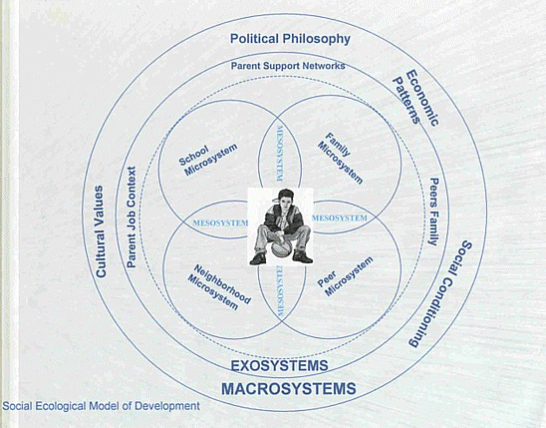
Source: Coatsworth, J.D. (2002)
| Prenatal (Family Formation) |
Pre-School (Child 0-5) |
Elementary (Child 6-11) |
Secondary School (Child 12-17) |
Young Adults (18-24) |
|
|---|---|---|---|---|---|
| Contextual Domains | |||||
| Family Structure | |||||
| Family Functioning | |||||
| Family, Work, and Childcare | |||||
| School Involvement and Civic Engagement | |||||
| Religiosity | |||||
| Youth Development | |||||
| Social Connections |
References
Adam, E.K. (2002). Cortisol activity in the everyday lives of working parents. In B. Schneider and L. Waite (Eds.), Families Working: Time Apart, Time Together.
Amato, P. (2000). The consequences of divorce for adults and children. Journal of Marriage and the Family, 62, (4), 1269-88.
Benson, P., Scales, P., Sesma, A, & Roehlkepartain, E. (2003). Adolescent spirituality. Paper presented at the Child Trends Indicators of Positive Development Conference, March 12, 2003.
Bianchi, S., Subaiya, L., & Kahn, J. (1999). The gender gap in the economic well-being of nonresident fathers and custodial mothers. Demography, 36, 195-204.
Borkowski, J. G., Ramey, S. L., & Bristol-Powers, M. (2002). Parenting and the child's world: Influence on academic, intellectual, and socioemotional development. Mahwah, NJ: Erlbaum.
Bradbury, T.N., Fincham, F.D., & Beach, S.R.H. (2000). Research on the nature and determinants of marital satisfaction: A decade in review. Journal of Marriage and the Family, 62(4), 964-980.
Bridges, L., & Moore, K. (2002). Religion and spirituality in childhood and adolescence. Washington, DC: Child Trends.
Brooks Gunn, J., Han, W., & Waldfogel, J. (2002) Maternal employment and child cognitive outcomes in the first three years of life: The NICHD Study of Early Child Care. Child Development 73(4).
Bronfenbrenner, U., & Morris, P. (1998). The ecology of developmental processes. In Damon, W., and Lerner, R. (Eds.) Handbook of child psychology, fifth edition, volume 1: Theoretical models of human development. New York: John Wiley and Sons, Inc.
Bronfenbrenner, U. (1979). The ecology of human development: Experiments by nature and design. Cambridge, MA: Harvard University Press.
Brown, S., & Eisenberg, L. (Eds.). (1995). The best intentions: Unintended pregnancy and the well-being of children and families. Washington, DC: National Academy Press.
Bumpass, L., & Lu, Hsien-Hen. (2000). Trends in cohabitation and implications for children’s family contexts in the United States. Population Studies, 54, 29-41.
Catsambis, S., & Beveridge, A. (2001). Does neighborhood matter? Family, neighborhood, and school influences on eight-grade mathematics achievement. Sociological Focus, 34, 435-457.
Cherlin, A.J. (1999). Going to extremes: Family structure, children's well-being, and social science. Demography, 36, 421-28.
Cherlin, A., & Furstenberg, F. (1986). The new American grandparent: A place in the family, a life apart. New York: Basic Books.
Chen, F., Short, S., & Entwistle, B. (2000). The impact of grandparental proximity on maternal childcare in China. Population Research and Policy Review, 19, 571-590.
Coatsworth, J.D. (2002). Promoting Resilience in Children of Poverty Through Effective Preventive Interventions. Presentation to the Annual Meetings of the National Council on Family Relations, Pennsylvania State University, State College, PA.
Cohen, S., Doyle, W., Skoner, D., Rabin, B., & Gwaltney Jr, G. (1997). Social ties and susceptibility to the common cold. Journal of the American Medical Association, 277, 1940 944.
Coleman, J. (1988). Social capital in the creation of human capital. American Journal of Sociology, 94, S95-S120.
Collins, W. A., Maccoby, E. E., Steinberg, L., & Hetherington, E. M. (2000). Contemporary research on parenting: The case for nature and nurture. American Psychologist, 5, 218-232.
Coohey, C. (1996). Child maltreatment: Testing the social isolation hypothesis. Child Abuse and Neglect, 20, 241-254.
Damon, W. (2002). Character development. Presentation to the Positive Psychology Summit. Washington, DC.
Darling, N., & Steinberg, L. (1993). Parenting style as context: An integrative model. Psychological Bulletin, 113, 487-496.
DeLeire, T., & Kalil, A. (2002). Good things come in threes: Single-parent multigenerational family structure and adolescent adjustment. Demography, 39(2), 393-412.
DePanfilis, D. (1996). Social isolation and neglectful families: A review of social support assessment and intervention models. Child Maltreatment, 1, 37-52.
Demo, D.H., & Cox, M.J. (2000). Families with young children: A review of research in the 1990s. Journal of Marriage and the Family, 62, 876-895.
Elder, G.H. (1998). The life course and human development. In Damon, W., and Lerner, R. (Eds.) Handbook of child psychology, fifth edition, volume 1: Theoretical models of human development. New York: John Wiley and Sons, Inc.
Elder,G.H. (1978). Family history and the life course. In T.K. Haraven (Ed.), Transitions (pp. 17-64). New York: Academic Press.
Fan, X., & Chen, M. (1999). Parental involvement and students academic achievement: a meta-analysis. Paper presented at the American Educational Research Association Annual Meeting, Montreal, Canada. Later published in Educational Psychology Review, 13 (1).
Federal Interagency Forum on Child and Family Statistics. America’s children: Key national indicators of well-being, 2002. Federal Interagency Forum on Child and Family Statistics, Washington, DC: U.S. Government Printing Office.
Furstenberg, F., Jr., Cook, T., Eccles, J., Elder, G., & Sameroff, A. (1999). Managing to make it: Urban families and adolescent success. Chicago: The University of Chicago Press.
Furstenberg, F., Belzer, A., Davis, C., Levine, J.A., Morrow, K., & Washington, M. (1993). How families manage risk and opportunity in dangerous neighborhoods. In W.J. Wilson (Ed.), Sociology and the public agenda (pp 231-238). Newbury Park, CA: Sage.
Galinsky, E.; Kim, S., & Bond, J. (2001). Feeling Overworked: When Work Becomes Too Much. New York, NY: Families and Work Institute.
Graefe, D. R., & Lichter, D. T. (1999). Life course transitions of American children: Parental cohabitation, marriage and single motherhood. Demography, 36(2), 205-217.
Hair, E. C., Moore, K. A., Garrett, S., Kinukawa, A., Lippman, L., & Michelsen, E. (2002). Psychometric Analysis of the parent-adolescent relationship scale in the national longitudinal survey of youth - 1997 (Paper prepared for the Positive Outcomes Conference March 2003). Washington, DC: Child Trends.
Halle, T. (2002). Charting parenthood: A statistical portrait of fathers and mothers in America. Washington, DC: Child Trends.
Harris, J. R. (1998). The nurture assumption: Why children turn out the way they do. New York, NY: The Free Press.
Hetherington, E.M., & Kelly, J. (2002). For better or for worse: Divorce reconsidered. New York, NY: W. W. Norton & Company.
Hill, Robert B. (1999). The strengths of African American Families: Twenty-five Years Later. Lanham, MD: University Press of America.
Hoffman, L., & Youngblade, L.M. (1999). Mothers at work: Effects on children’s well-being. Cambridge, England: Cambridge University Press
Howes, C., & Hamilton, C. (1993). The changing experience of child care: Changes in teachers and in teacher-child relationships and children's social competence with peers. Early Childhood Research Quarterly, 8, 15-32.
Joesch, J. (1997). Paid leave and the timing of women's employment before and after birth. Journal of Marriage and the Family, 59, 1008-1021.
Johnson, E., & Waldfogel, J. (2002). Parental incarceration: Recent trends and implications for child welfare. Social Service Review, 76, 460-479.
Johnson, M.P., & Ferraro, K.J. (2000). Research on domestic violence in the 1990s: Making distinctions. Journal of Marriage and the Family, 62(4), 948-963.
Keeter, S., Zukin, C., Andolina, M., & Jenkina, K. (2002). The civic and political health of the nation: a generational portrait. College Park, MD: CIRCLE, The Center for Information and Research on Civic Learning and Engagement.
Kemper, K., & Rivara, F. (1993). Parents in jail. Pediatrics, 92, 261-264.
Kirby, D. (1999). Looking for reasons why: The antecedents of adolescent sexual risk-taking, pregnancy, and childbearing. Washington, DC: National Campaign to Prevent Teen Pregnancy.
Maccoby, E. E., & Mnookin, R. H. (1992). Dividing the child: Social and legal dilemmas of custody. Cambridge, MA: Harvard University Press.
Manning, W. D., & Lichter, D. T. (1996). Parental cohabitation and children's economic well-being. Journal of Marriage and the Family, 58, 998-1010.
Mayer, S.E. (1997). Income, employment and the support of children. In Hauser,R.M., Brown, B.V., and Prosser, W.(Eds.), Indicators of children’s well-being. New York, NY: Russell Sage Press.
McLanahan, S. (1995) The consequences of nonmarital childbearing for women, children, and society. In Report to Congress on out-of wedlock childbearing. Hyattsville, MD: National Center for Health Statistics.
McLanahan, S., Garfinkel I., and Mincey, R.B. (2001). Fragile families, welfare reform, and marriage. Welfare Reform and Beyond Policy Brief, #10. Washington, DC: The Brookings Institute.
McLanahan, S., & Sandefur, G., (1994). Growing up with a single parent: What hurts, what helps. Cambridge: Harvard University Press.
McNeely, C.A., Nonnemaker, J.M., & Blum, R.W. (2002). Promoting student connectedness to school: Evidence from the National Longitudinal Study of Adolescent Health. Journal of School Health, 72(4).
Menaghan, E., & Parcel, T. (1995). Social sources of change in children’s home environments: The effects of parental occupational experiences and family conditions. Journal of Marriage and Family, 57 (1).
Miller, B.C. (1998). Families matter, a research synthesis of family influences on adolescent pregnancy. Washington, DC: National Campaign to Prevent Teen Pregnancy.
Miller, B.C., Norton, M.C., Fan, I., & Christopherson, C.R. (1998). Pubertal development, parental communication, and sexual values in relation to adolescent sexual behaviors. Journal of Early Adolescence, 18, 27-52.
Moore, K.A.; Jekielek, S., & Emig, C. (2002). Marriage from a Child’s Perspective: How Does Family Structure Affect Children, and What Can We Do About It? Research Brief. Washington, DC: Child Trends, Inc.
Moore, K.A., Chalk, R., Scarpa, J., & Vandivere, S. (2002). Preliminary research on family strengths: A Kids Count working paper. Baltimore, MD: Annie E. Casey Foundation.
Moore, K. A., Vandivere, S., & Redd, Z. (forthcoming). Cumulative measures of stress, risk, turbulence and community connectedness: Item choice, reliability and validity. Washington, DC: Child Trends.
National Research Council and Institute of Medicine. (2002). Community programs to promote youth development. Eccles, J., & Gootman, J.A. (Eds.). Washington, DC: National Academy Press.
National Research Council, & Institute of Medicine. (2000). From neurons to neighborhoods: The science of early childhood development. J. P. Shonkoff & D. A. Phillips (Eds.). Washington, DC: National Academy Press.
Nord, C., & West, J., (2001). Fathers and mothers involvement in their children’s schools by family type and resident status. Washington, DC: National Center for Education Statistics, U.S. Department of Education.
Peterson, G.W., Madden-Derdich, D., & Leonard, S. (2000). Parent-child relations across the life course. In S. J. Price, P. C. McKenry & M. J. Murphy (Eds.), Families across time (pp. 187-203). Los Angeles, CA: Roxbury Publishing Company.
Pinderhughes, E.E., Nix, R., Foster, E.M., Jones, D., Bierman, K.L., Coie, J.D., Dodge, K.A., Greenberg, M., Lochman, J.E., & McMahon, R.J. (2001). Parenting in context: Impact of neighborhood poverty, residential stability, public services, social networks, and danger on parental behaviors. Journal of Marriage and the Family, 63(4).
Presser, H. (2000). Nonstandard work schedules and marital instability. Journal of Marriage and the Family, 62, pp. 93-110.
Pribesh, S., & Downey, D. (1999). Why are residential and school moves associated with poor school performance? Demography, 36, 521-34.
Putnam, R. (2001). Bowling alone: The collapse and revival of American community. New York, NY: Simon & Schuster.
Putnam, R. (1995). Bowling alone: America’s declining social capital. Journal of Democracy, 6, 65-78.
Rankin, B., & Quane, J. (2000). Neighborhood poverty and the social isolation of inner-city African American families. Social Forces, 79, 139-164.
Redd, Z., Brooks, J., & McGarvey, A. (2002, August). Educating America's youth: What makes a difference. Research Brief. Washington, DC: Child Trends.
Sampson, R.J. (1992). Family management and child development: Insights from social disorganization theory. In J. McCord (Ed.), Facts, frameworks and forecasts: Advances in criminological theory, Vol. 3, pp. 63-93. New Brunswick, NJ: Transaction Books.
Sanchez, T. (1999). The connection between public transit and employment in the case of Portland and Atlanta. Journal of the American Planning Association, 65, 284-296.
Simon, R.L. & Johnson, C. (1996). The impact of marital and social network support on quality of parenting (1996). In G.R. Pierce, B.R. Sarason, & I.G. Sarason, (Eds.) Handbook of social support and the family. New York: Plenum Press.
Smith, J.R., Brooks Gunn, J., & Jackson, A.P. (1997). Parental employment and children. In Hauser, R.M., Brown, B.V., and Prosser, W. (Eds.), Indicators of children’s well-being. New York: Russell Sage Press.
Torney-Purta, J., & Klandl Richardson, W. (2002). Trust in government and civic engagement among adolescents in Australia, England, Greece, Norway and the United States. Paper prepared for delivery at the 2002 Annual Meeting of the American Political Science Association, Boston, August 29-September 1, 2002.
Tracy, E. (1990). Identifying social support resources of at-risk families. Social Work, 252-258.
Trusty, J. (1999). Effects of eighth-grader parental involvement on late adolescents educational expectations. Journal of Research and Development in Education, 32.
U.S. Department of Education, National Center for Education Statistics. (2001). The Condition of Education, 2001. Washington, DC: U.S. Department of Education.
U.S. Department of Education, National Center for Education Statistics. (1999). NAEP 1998 Civics Report Card. Washington, DC: U.S. Department of Education.
Vandivere, S., Moore, K.A., & Zaslow, M. (2000). Children’s family environment: Findings from the National Survey of America’s Families. Snapshots of America’s Families II. Washington, DC: The Urban Institute.
Wilson, W. J. (1996). When work disappears: The world of the new urban poor. New York: Knopf.
Wilson, M. N., & Tolson, T. F.J. (1990). Familial support in the black community. Journal of Clinical Child Psychology, 19(4), 347-355.
Wu, L., & Martinson, B.C. (1993). Family structure and the risk of premarital birth. American Sociological Review, 58(2), 210-232.
Young, D., & Smith, C. (2000). When moms are incarcerated: The needs of children, mothers, and caregivers. Families in Society, 81, 130-141.
Zaff, J., & Michelsen, E. (2002). Background for community-level work on positive citizenship in adolescence: Reviewing the literature on contributing factors – executive summary and report. Washington, DC: Child Trends.
Zaff, J, Moore, K., Papillo, A., & Williams, S. (2001). The longitudinal effects of extracurricular activities on academic achievement and civic involvement. Paper presented at the biennial conference of the Society for Research in Child Development, Minneapolis, MN.
Family Structure
Family structure
The percentage of children under age 18 living with two married parents declined between 1980 and 2002, from 77 percent to 69 percent. Despite this long-term decrease, however, the percentage of children living with two married parents has been relatively stable since 1995.
Between 1980 and 2002, the percentage of children living in mother-only families increased from 18 percent to 23 percent. During the same time period, the percentage of children living in father-only families increased from 2 percent to 5 percent. Over the past two decades, the percentage of children living without either parent remained stable at about 4 percent.
Black and Hispanic children are much less likely than are non-Hispanic white children to live with two married parents. In 2002, 38 percent of black children and 65 percent of Hispanic children lived with two married parents, compared with 77 percent of non-Hispanic white children under age 18. While the percentage of black children living with two married parents increased between 1995 and 2002, from 33 percent to 38 percent, that percentage among Hispanics and non-Hispanic whites was relatively stable.
Percentage of children under age 18 by presence of married parents in the household: selected years 1980 -2002
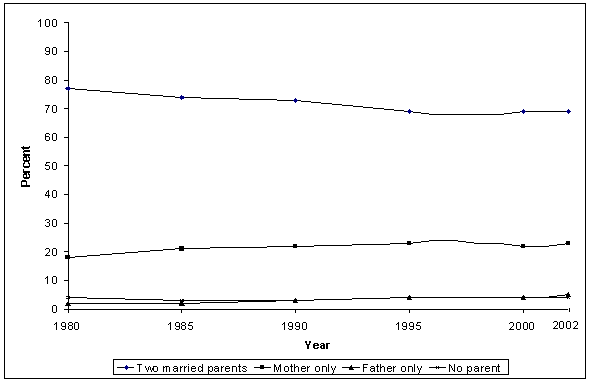
Note: The category "two married parents" includes children who live with a biological, step, or adoptive parent who is married with his or her spouse present. If a second parent is present and not married to the first parent, then the child is identified as living with a single parent.
Source: U.S. Census Bureau, March Current Population Survey and Federal Interagency Forum on Child and Family Statistics. (2003). America's children: Key national indicators of well-being, 2003. Washington, DC: Author.
| 1980 | 1985 | 1990 | 1995 | 1996 | 1997 | 1998 | 1999 | 2000 | 2001(a) | 2002(a) | |
|---|---|---|---|---|---|---|---|---|---|---|---|
| Total | |||||||||||
| Two married parents(b) | 77 | 74 | 73 | 69 | 68 | 68 | 68 | 68 | 69 | 69 | 69 |
| Mother only(c) | 18 | 21 | 22 | 23 | 24 | 24 | 23 | 23 | 22 | 22 | 23 |
| Father only(c) | 2 | 2 | 3 | 4 | 4 | 4 | 4 | 4 | 4 | 4 | 5 |
| No parent | 4 | 3 | 3 | 4 | 4 | 4 | 4 | 4 | 4 | 4 | 4 |
| White, non-Hispanic | |||||||||||
| Two married parents(b) | - | - | 81 | 78 | 77 | 77 | 76 | 77 | 77 | 78 | 77 |
| Mother only(c) | - | - | 15 | 16 | 16 | 17 | 16 | 16 | 16 | 16 | 16 |
| Father only(c) | - | - | 3 | 3 | 4 | 4 | 5 | 4 | 4 | 4 | 4 |
| No parent | - | - | 2 | 3 | 3 | 3 | 3 | 3 | 3 | 2 | 3 |
| Black, non-Hispanic | |||||||||||
| Two married parents(b) | 42 | 39 | 38 | 33 | 33 | 35 | 36 | 35 | 38 | 38 | 38 |
| Mother only(c) | 44 | 51 | 51 | 52 | 53 | 52 | 51 | 52 | 49 | 48 | 48 |
| Father only(c) | 2 | 3 | 4 | 4 | 4 | 5 | 4 | 4 | 4 | 5 | 5 |
| No parent | 12 | 7 | 8 | 11 | 9 | 8 | 9 | 10 | 9 | 10 | 8 |
| Hispanic(d) | |||||||||||
| Two married parents(b) | 75 | 68 | 67 | 63 | 62 | 64 | 64 | 63 | 65 | 65 | 65 |
| Mother only(c) | 20 | 27 | 27 | 28 | 29 | 27 | 27 | 27 | 25 | 25 | 25 |
| Father only(c) | 2 | 2 | 3 | 4 | 4 | 4 | 4 | 5 | 4 | 5 | 5 |
| No parent | 3 | 3 | 3 | 4 | 5 | 5 | 5 | 5 | 5 | 6 | 5 |
| - = not available a. Beginning with March 2001, data are from the expanded Current Population Survey sample and use population controls based on Census 2000. b. Excludes families where parents are not living as a married couple. c. Because of data limitations, includes some families where both parents are present in the household but living as unmarried partners. d. Persons of Hispanic origin may be of any race. Note: Family structure refers to the presence of biological, adoptive, and stepparents in the child's household. Thus, a child with a biological mother and stepfather living in the household is said to have two married parents. Two married parents family: In the Current Population Survey, children live in a two-parent family if they are living with a parent who is married with his or her spouse present. This is not an indicator of the biological relationship between the child and the parents. The parent who is identified could be a biological, step, or adoptive parent. If a second parent is present and not married to the first parent, then the child is identified as living with a single parent. Single parent family: A "single" parent is defined as a parent who is not currently living with a spouse. Single parents may be married and not living with their spouse, they may be divorced, widowed, or never married. As with the identification of two-parents described above, if a second parent is present and not married to the first, then the child is identified as living with a single parent. Source: U.S. Census Bureau, March Current Population Survey and Federal Interagency Forum on Child and Family Statistics. (2003). America's children: Key national indicators of well-being, 2003. Washington, DC: Author |
|||||||||||
Family structure change
Among families with children between the ages of 2 and 17, twenty-two percent experienced a change in the composition of their family between 1999 and 2001. Family structure change refers to any entrance or exit of related and non-related adults and children from the family, including the birth of a child. It also includes changes in marital status from cohabiting to married. Analyses exclude children under the age of 2 because the reported family structure change may have occurred before they were born. Poor families have a much higher likelihood of experiencing family structure change than do non-poor families. More than two-fifths (43 percent) of families with incomes below the poverty level in 1999 experienced a change in family composition in the following two years, compared with only one-fifth (19 percent) of families with incomes at or above the poverty level. This poverty differential is reflected in differences by race and Hispanic origin as well. Black, non-Hispanic families, who had the highest poverty rates in 1999, were more likely than white, non-Hispanics to have experienced family structure change (28 percent compared with 20 percent).
Percentage of families with one or more children ages 2 to 17
that experienced a change in family structure
during the past two years, by 1999 poverty status: 2001
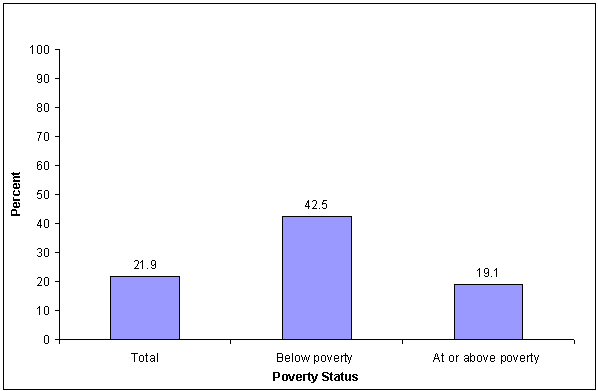
Source: Child Trends' analyses of the Panel Study of Income Dynamics, 2001.
| Percent | |
|---|---|
| Total | 21.9 |
| Race and Hispanic Origin(b) | |
| White, non-Hispanic | 20.5 |
| Black, non-Hispanic | 27.9 |
| Hispanic | 19.9 |
| Asian or Other(c) | 28.0 |
| Poverty Status(d) | |
| Below poverty level | 42.5 |
| At or above poverty level | 19.1 |
| Age of Youngest Child | |
| 2-5 years | 23.9 |
| 6-11 years | 19.3 |
| 12-17 years | 22.9 |
| a. Family structure change refers to any entrance or exit of related and non-related adults and children from the family, including the birth of a child. It also includes changes in marital status from cohabiting to married. b. Persons of Hispanic origin may be of any race. Refers to the race and Hispanic origin of the household head. c. "Other" category includes American Indians, Aleuts, Eskimos, people who mentioned a color other than black or white, and those who did not nominate themselves into any of the other categories. d. Poverty status is based on 1999 total family income relative to the official federal poverty threshold for the family's size Note: Analyses are limited to families that have children between the ages of 2 and 17 living in the household. Analyses exclude children under the age of 2 because the reported family structure change may have occurred before they were born. Source: Child Trends' analyses of the Panel Study of Income Dynamics, 2001. |
|
Families with grandparents who live nearby
Fifty-six percent of families with resident children ages 24 and under lived within 50 miles of a grandparent in 1992-1993.
Families with younger children are more likely than families with older children to live near a grandparent. While 63 percent of families with children ages 0 to 5 lived near a grandparent in 1992-1993, 57 percent of families with children ages 6 to 11, fifty-two percent of those with children ages 12 to 17, and 37 percent of families with children ages 18 to 24 lived near a grandparent.
Geographic proximity to grandparents also varied by race and Hispanic origin, as well as family structure. Black, non-Hispanic families were more likely than white, non-Hispanic and Hispanic families to live near a grandparent (62 percent compared with 55 percent and 51 percent, respectively) in 1992-1993.
In general, one-parent families were more likely than two-parent families to live within close proximity of a grandparent. Sixty-two percent of one-parent families and 55 percent of two-parent families lived near a grandparent.
Percentage of families with resident children age 24 and under that had grandparents
who live nearby, by age of child: 1992-1993
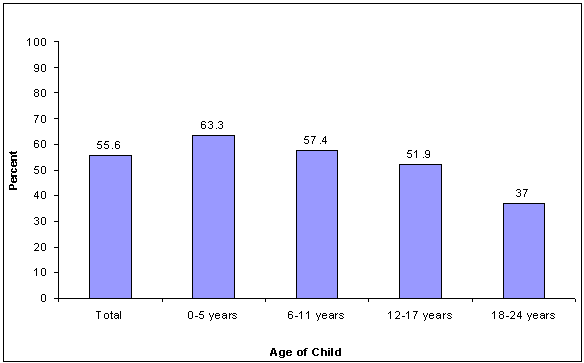
Note: Data are presented for children up to age 24 since a large proportion remain living at home and benefit from proximity to a grandparent.
Source: Child Trends' analyses of the National Survey of Families and Households, 1992-93.
| Percent | |
|---|---|
| Total | 55.6 |
| Race and Hispanic Origin(b) | |
| White, non-Hispanic | 55.3 |
| Black, non-Hispanic | 62.0 |
| Hispanic | 50.8 |
| Other(c) | 49.0 |
| Family Structure(d) | |
| Two parents | 54.6 |
| One parent | 61.7 |
| Age of Child(e) | |
| 0-5 years | 63.3 |
| 6-11 years | 57.4 |
| 12-17 years | 51.9 |
| 18-24 years | 37.0 |
| a. Living nearby is defined as living within 50 miles. b. Persons of Hispanic origin may be of any race. Refers to the race and Hispanic origin of the parent. c. Most in this category are Asian or American Indian. d. Includes families where cohabiting partners are regarded as parents. e. Child refers to the randomly selected child (among all children age 24 and under) of the respondent. Source: Child Trends' analyses of the National Survey of Families and Households, 1992-1993. |
|
Births to unmarried teens
Birth rates among unmarried teens rose from 27.6 in 1980 to 45.8 in 1994, and have since declined to 35.4 in 2002. Among unmarried females ages 15 to 17 the birth rate increased from 20.6 in 1980 to 31.7 in 1994, and then declined to back to 1980 levels to 20.8 by 2002. Among unmarried young women ages 18 and 19, the birth rate increased from 39.0 in 1980 to 69.7 in 1994, and then declined to 58.6 by 2002. Hispanic and black unmarried teens have had consistently higher birth rates than non-Hispanic whites, although the rates for all races have declined in recent years, particularly among blacks. Nevertheless, the unmarried teen birth rate for Hispanics ages 15-17 was 43.3 in 2002 and for blacks it was 39.9, compared with 11.5 for white, non-Hispanic teens of that age group. Among unmarried teens ages 18 to 19, the birth rate was 105.3 for Hispanic women, 104.1 for black women, and 38.8 for white, non-Hispanic women in 2002.
Births per 1,000 unmarried teens within age groups: 1960-2001
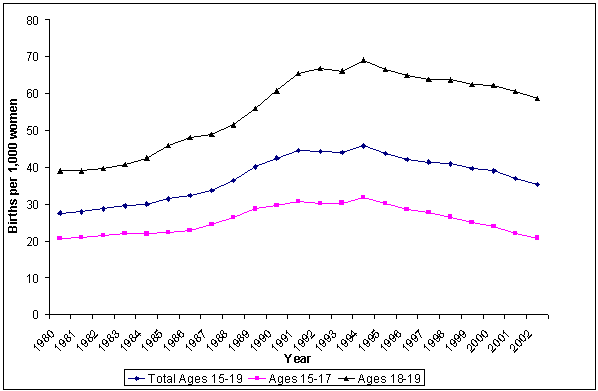
Source: National Center for Health Statistics. (2000). Nonmarital childbearing in the United States, 1940-1999. National Vital Statistics Reports, 48(16); and National Center for Health Statistics. (2003). Births: Final data for 2001. National Vital Statistics Reports, 51(2).
| Total Ages 15-19 | Ages 15-17 | Ages 18-19 | |||||||||
|---|---|---|---|---|---|---|---|---|---|---|---|
| All races | All races | Black | White | White,non-Hispanic(c) | Hispanic(c,d) | All races | Black | White | White,non-Hispanic(c) | Hispanic(c,d) | |
| 1980 | 27.6 | 20.6 | 68.8 | 12.0 | - | - | 39.0 | 118.2 | 24.1 | - | - |
| 1981 | 27.9 | 20.9 | 65.9 | 12.6 | - | - | 39.0 | 114.2 | 24.6 | - | - |
| 1982 | 28.7 | 21.5 | 66.3 | 13.1 | - | - | 39.6 | 112.7 | 25.3 | - | - |
| 1983 | 29.5 | 22.0 | 66.8 | 13.6 | - | - | 40.7 | 111.9 | 26.4 | - | - |
| 1984 | 30.0 | 21.9 | 66.5 | 13.7 | - | - | 42.5 | 113.6 | 27.9 | - | - |
| 1985 | 31.4 | 22.4 | 66.8 | 14.5 | - | - | 45.9 | 117.9 | 31.2 | - | - |
| 1986 | 32.3 | 22.8 | 67.0 | 14.9 | - | - | 48.0 | 121.1 | 33.5 | - | - |
| 1987 | 33.8 | 24.5 | 69.9 | 16.2 | - | - | 48.9 | 123.0 | 34.5 | - | - |
| 1988 | 36.4 | 26.4 | 73.5 | 17.6 | - | - | 51.5 | 130.5 | 36.8 | - | - |
| 1989 | 40.1 | 28.7 | 78.9 | 19.3 | - | - | 56.0 | 140.9 | 40.2 | - | - |
| 1990 | 42.5 | 29.6 | 78.8 | 20.4 | 16.2 | 45.9 | 60.7 | 143.7 | 44.9 | 37.0 | 98.9 |
| 1991 | 44.6 | 30.8 | 79.9 | 21.7 | - | 49.5 | 65.4 | 147.6 | 49.4 | - | 107.4 |
| 1992 | 44.2 | 30.2 | 77.3 | 21.5 | - | 49.2 | 66.7 | 146.2 | 51.1 | - | 106.6 |
| 1993 | 44.0 | 30.3 | 76.0 | 21.9 | - | 49.5 | 66.1 | 139.7 | 51.9 | - | 109.1 |
| 1994 | 45.8 | 31.7 | 74.0 | 23.9 | 18.0 | 55.5 | 69.7 | 139.2 | 55.7 | 44.9 | 116.0 |
| 1995 | 43.8 | 30.1 | 67.5 | 23.3 | 17.6 | 52.5 | 66.5 | 128.7 | 54.6 | 44.4 | 109.6 |
| 1996 | 42.2 | 28.5 | 62.8 | 22.3 | 16.9 | 49.6 | 64.9 | 126.8 | 53.4 | 43.8 | 102.7 |
| 1997 | 41.4 | 27.7 | 59.2 | 22.0 | 16.2 | 50.5 | 63.9 | 124.5 | 52.8 | 43.1 | 100.9 |
| 1998 | 40.9 | 26.5 | 55.2 | 21.5 | 15.6 | 49.7 | 63.7 | 121.0 | 53.0 | 42.9 | 101.4 |
| 1999 | 39.7 | 25.0 | 50.1 | 20.7 | 14.6 | 48.6 | 62.4 | 115.3 | 52.8 | 42.5 | 100.1 |
| 2000 | 39.0 | 23.9 | 48.3 | 19.7 | 13.6 | 47.0 | 62.2 | 115.0 | 53.1 | 42.1 | 102.2 |
| 2001 | 37.0 | 22.0 | 43.8 | 18.1 | 12.1 | 44.2 | 60.6 | 110.2 | 52.1 | 40.3 | 104.3 |
| 2002 | 35.4 | 20.8 | 39.9 | 17.5 | 11.5 | 43.0 | 58.6 | 104.1 | 51.0 | 38.8 | 105.3 |
| - Not available a. Data for States in which marital status was not reported have been inferred and included with data from the remaining States. b. Data for 1980 through 1984 are based on 100 percent of births in selected States and on a 50-percent sample of births in all other States. c. Rates for 1990 based on data for 48 States and the District of Columbia that reported Hispanic origin on the birth certificate. d. Includes all persons of Hispanic origin of any race. Source: National Center for Health Statistics. (2003). Births: Final data for 2002. National Vital Statistics Reports, 52(10). |
|||||||||||
Family Functioning
Parental warmth and affection with younger children
The majority of parents with children under the age of 13 demonstrate some expression of warmth and affection to their child daily, such as hugging or showing them physical affection, telling them that they love them, and telling them that they appreciate something that they did. Mothers are more likely than fathers to report showing their children warmth and affection. For example, in 1997, eighty-five percent of mothers told their child that they love him/her, compared with 62 percent of fathers. These displays of warmth by both mothers and fathers decreased as children got older for all three behaviors.
Percentage of parents of children under age 13 who expressed various forms of warmth and affection to their child every day in the past month, by parent gender: 1997
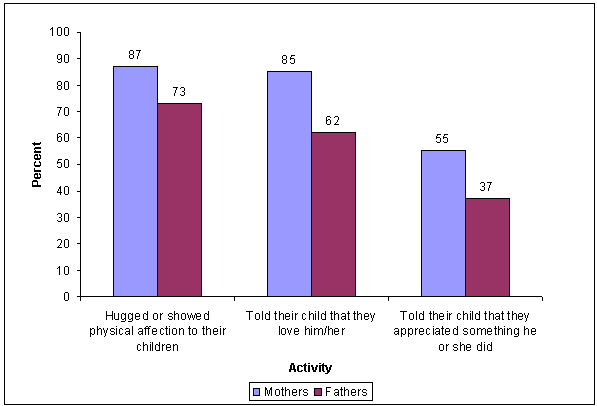
Source: Estimates supplied by Sandra Hofferth, University of Maryland, based on data from the 1997 Panel Study of Income Dynamics - Child Development Supplement. As reported in Child Trends. (2002). Charting parenthood: A statistical portrait of fathers and mothers in America. Washington, DC: Author.
| Hugged or showed physical affection to their child | Told their child that they love him/her | Told their child that they appreciated something he or she did | ||||
|---|---|---|---|---|---|---|
| Mothers | Fathers | Mothers | Fathers | Mothers | Fathers | |
| Total | 87 | 73 | 85 | 62 | 55 | 37 |
| Race and Hispanic Origin (a) | ||||||
| White, non-Hispanic | 93 | 76 | 91 | 65 | 56 | 36 |
| Black, non-Hispanic | 75 | 56 | 76 | 45 | 56 | 40 |
| Hispanic | 81 | 73 | 77 | 63 | 52 | 41 |
| Other | 78 | 61 | 76 | 40 | 53 | 32 |
| Poverty Status | ||||||
| Poor (0 to 99% poverty) | 78 | 67 | 80 | 63 | 55 | 44 |
| Extreme poverty (at 50% or less) | 78 | 58 | 80 | 60 | 49 | 47 |
| Nonpoor | 90 | 74 | 87 | 61 | 55 | 36 |
| 100% to 199% of poverty | 88 | 74 | 85 | 60 | 58 | 43 |
| 200% to 299% of poverty | 86 | 73 | 86 | 58 | 53 | 32 |
| 300% or more of poverty | 93 | 74 | 88 | 64 | 55 | 34 |
| Age of Child | ||||||
| 0-2 years | 98 | 90 | 95 | 80 | 73 | 56 |
| 3-5 years | 93 | 84 | 91 | 69 | 66 | 44 |
| 6-9 years | 87 | 70 | 85 | 55 | 48 | 31 |
| 10-12 years | 74 | 50 | 72 | 45 | 39 | 17 |
| a. Persons of Hispanic origin may be of any race. Source: Estimates provided by Sandra Hofferth, University of Maryland, based on data from the 1997 Panel Study of Income Dynamics - Child Development Supplement. As reported in Child Trends. (2002). Charting parenthood: A statistical portrait of fathers and mothers in America. Washington, DC: Author. |
||||||
Positive parent-adolescent relationships
Overall, in 1999, the majority of adolescents reported positive relationships with their resident parents (more than 60 percent). Positive relationships between adolescents and their parents, both mothers and fathers, were more common when both resident parents were the biological parents of the child than when there was a single biological parent or one biological and one nonbiological parent. Note that for single parents, relationships are measured among a different group of children for the mother than for the father. For these families, differences in outcomes between mothers and fathers could be due to characteristics of the parents, or characteristics of the children that live with them. Also note that for biological/other parent families, a greater share of biological parents are mothers and a greater share of other parents are fathers.
Percentage of adolescents with a positive relationship with their resident parent,
by family structure: 1999
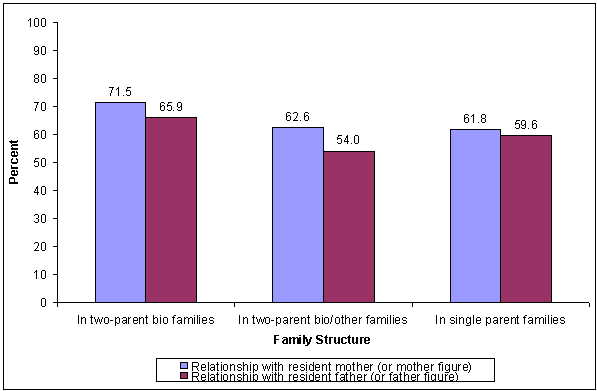
Note: For this indicator, a positive parent-adolescent relationship is based on a youth-reported scale of parental behaviors toward the youth (e.g., praising, helping, criticizing, or blaming the youth; canceling plans with the youth). Adolescents are reporting on parents and parent figures who live with the adolescent.
Source: Child Trends' analyses of the National Longitudinal Survey of Youth - 1997, Rounds 1 and 3.
| Mother | Father | |
|---|---|---|
| Total | 67.6 | 63.5 |
| Race and Hispanic Origin(b) | ||
| White, non-Hispanic | 69.3 | 65.0 |
| Black, non-Hispanic | 68.0 | 55.6 |
| Hispanic | 61.9 | 60.8 |
| Other | 56.3 | 63.5 |
| Family Structure | ||
| Two biological parents | 71.5 | 65.9 |
| Two parents (biological and other)(c) | 62.6 | 54.0 |
| One biological parent | 61.8 | 59.6 |
| Parent's Highest Level of Education(d) | ||
| Less than high school degree | 61.7 | 60.2 |
| High school degree | 65.8 | 58.6 |
| Some college | 67.3 | 64.5 |
| College graduate | 71.6 | 67.3 |
| a. A positive relationship is measured as a score of 15 or greater on a parental supportiveness scale of 20. This score corresponds roughly to a response of "usually" on questions about parents praising and helping the adolescent, and "almost never" to questions about parents criticizing, blaming, or canceling plans with the adolescent. b. Persons of Hispanic origin may be of any race. c. This includes families with one biological parent and one nonbiological parent figure in the household. This resident nonbiological parent figure can be a step-parent, adoptive parent, foster parent, spouse or romantic partner of the biological parent, or a relative or other adult who is "like a parent" to the respondent. A greater share of biological parents are mothers and a greater share of other parents are fathers. d. In two-parent households, "parental education" refers to the highest level of education attained between the two resident parents/parent figures. Note: Analyses are based on a universe of adolescents aged 12-14, who lived with a mother or mother figure, or father or father figure in 1999. For single parents, relationships are measured among a different group of children for the mother than for the father. For these families, differences in outcomes between mothers and fathers could be due to characteristics of the parents, or characteristics of the children that live with them. Source: Child Trends' analyses of the National Longitudinal Survey of Youth - 1997, Rounds 1 and 3. |
||
Parental awareness of adolescents' friends and activities
Mothers are more likely than fathers to be aware of their adolescents' close friends, as well as their activities, regardless of family structure. Data for 2000 indicate that mothers were slightly more likely to be aware of their adolescent's friends and activities when they resided with the biological father of the child (57 percent) than when they were the sole biological parent, or part of a biological parent/nonbiological parent couple (51 percent each). Fathers in either two-parent or one-parent biological families had higher levels of awareness (31 percent) than did fathers who were part of a one biological and one nonbiological parent couple (20 percent). Note that for single parents, awareness is measured among a different group of children for the mother than for the father. For these families, differences in outcomes between mothers and fathers could be due to characteristics of the parents, or characteristics of the children that live with them. Also note that for biological/other parent families, a greater share of biological parents are mothers and a greater share of other parents are fathers.
Percentage of adolescents who report that their parents are aware of
their friends and activities, by family structure: 2000
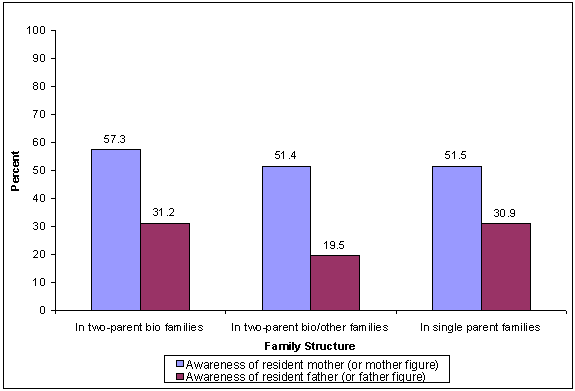
Note: For this indicator, parental awareness is measured by the adolescent's report of the degree to which their parents know "some" or "most" things about their close friends, close friends' parents, company when not at home, and teachers and school activities. Adolescents are reporting on parents and parent figures who live with the adolescent.
Source: Child Trends' analyses of the National Longitudinal Survey of Youth - 1997, Rounds 1 and 4.
| Mother | Father | |
|---|---|---|
| Total | 55.0 | 29.2 |
| Race and Hispanic Origin(b) | ||
| White, non-Hispanic | 56.0 | 29.4 |
| Black, non-Hispanic | 55.6 | 27.0 |
| Hispanic | 53.2 | 32.4 |
| Other | 42.9 | 23.7 |
| Family Structure | ||
| Two biological parents | 57.3 | 31.2 |
| Two parents (biological and other)(c) | 51.4 | 19.5 |
| One biological parent | 51.5 | 30.9 |
| Parental Education(d) | ||
| Less than high school degree | 51.5 | 29.2 |
| High school degree | 55.0 | 28.9 |
| Some college | 55.6 | 29.4 |
| College graduate | 55.5 | 29.3 |
| a. Awareness is measured as a score of 10 or greater on a parental awareness and monitoring scale of 0-16. This score corresponds roughly to a youth report of the parent knowing "some" to "most" things about the youth's (a) close friends, (b) close friends' parents, (c) company when not at home, and (d) teachers and school activities. b. Persons of Hispanic origin may be of any race. c. This includes families with one biological parent and one nonbiological parent figure in the household. This resident nonbiological parent figure can be a step-parent, adoptive parent, foster parent, spouse or romantic partner of the biological parent, or a relative or other adult who is "like a parent" to the respondent. A greater share of biological parents are mothers and a greater share of other parents are fathers. d. In two-parent households, "parental education" refers to the highest level of education attained between the two residential parents/parent figures. Note: Analyses are based on a universe of adolescents, aged 12-14, who lived with a mother or mother figure, or father or father figure in 2000. For single parents, awareness is measured among a different group of children for the mother than for the father. For these families, differences in outcomes between mothers and fathers could be due to characteristics of the parents, or characteristics of the children that live with them. Source: Child Trends' analyses of the National Longitudinal Survey of Youth - 1997, Rounds 1 and 4. |
||
Time spent with parents
In two-parent families, children under age 13 spent an average of 1 hour and 46 minutes engaged in activities with their fathers and 2 hours and 21 minutes doing so with their mothers on a daily basis in 1997. This was substantially more time than children in single-parent families spent with their fathers (25 minutes) and mothers (1 hour and 16 minutes). Note that children in both family types spent more time with their mothers than with their fathers. Also, the amount of time that children spent with either parent generally decreased with age. Nonresidential parents are not presented in this indicator.
Average amount of time children under age 13 are engaged in some activity
with parents per day, by family structure: 1997
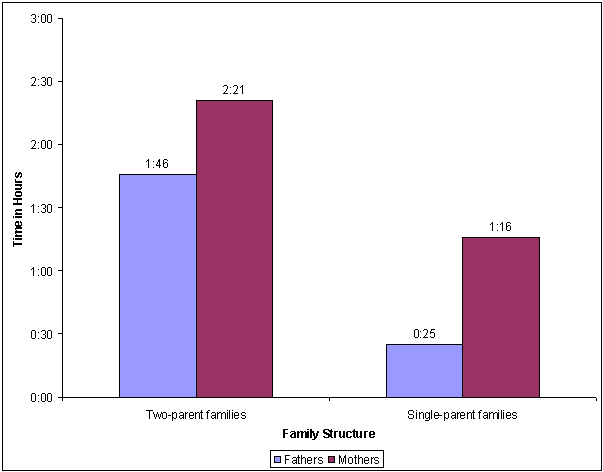
Source: Estimates supplied by J. Sandberg, Institute for Social Research, University of Michigan, based on data from the 1997 Panel Study of Income Dynamics - Child Development Supplement. As reported in Child Trends. (2002). Charting parenthood: A statistical portrait of fathers and mothers in America. Washington, DC: Author.
| Two-parent families | Single-parent families | |||
|---|---|---|---|---|
| Fathers | Mothers | Fathers | Mothers | |
| Total | 1:46 | 2:21 | 0:25 | 1:16 |
| Race and Hispanic Origin(a) | ||||
| White, non-Hispanic | 1:48 | 2:21 | 0:31 | 1:13 |
| Black, non-Hispanic | 1:11 | 1:55 | 0:17 | 1:12 |
| Hispanic | 1:46 | 2:32 | 0:32 | 2:09 |
| Other | 2:06 | 2:33 | 0:24 | 1:06 |
| Age of Child | ||||
| 0-2 years | 2:07 | 3:14 | 0:45 | 2:16 |
| 3-5 years | 1:53 | 2:29 | 0:24 | 1:34 |
| 6-9 years | 1:36 | 2:04 | 0:18 | 0:57 |
| 10-12 years | 1:30 | 1:45 | 0:20 | 0:44 |
| a. Persons of Hispanic origin may be of any race. Source: Estimates supplied by J. Sandberg, Institute for Social Research, University of Michigan, based on data from the 1997 Panel Study of Income Dynamics - Child Development Supplement. As reported in Child Trends. (2002). Charting parenthood: A statistical portrait of fathers and mothers in America. Washington, DC: Author. |
||||
Contact with nonresident parents
Overall, 60 percent of children from non-intact families had some contact with their nonresident fathers and 78 percent had contact with their nonresident mothers in 1997. Children living with a parent with higher levels of education were more likely to have had contact with their nonresident parent. Seventy-four percent of children whose resident mother had a college degree had contact with their nonresident father in the previous year, compared with 44 percent of children whose mothers had less than a high school degree. Likewise, 88 percent of children whose resident father had graduated college had contact with their nonresident mother, compared with 69 percent of those living with fathers who had not graduated from high school.
Percentage of children with any contact with nonresident parent in the previous year, by educational attainment of resident parent: 1997
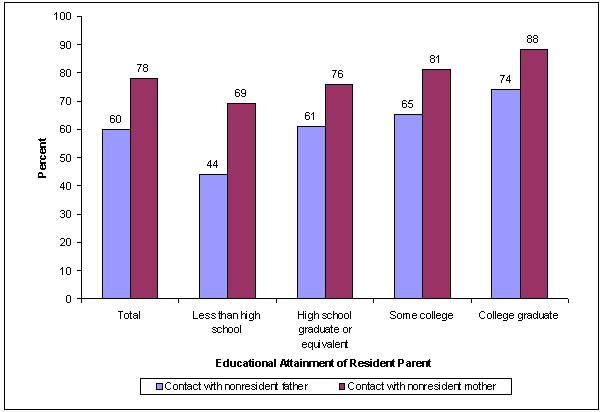
Source: Estimates calculated by Child Trends based on analyses of the 1998 April Supplement of the Current Population Survey. As reported in Child Trends. (2002). Charting parenthood: A statistical portrait of fathers and mothers in America. Washington, DC: Author.
| Contact with nonresident father | Contact with nonresident mother | |
|---|---|---|
| Total | 60 | 78 |
| Race and Hispanic Origin (d) | ||
| White, non-Hispanic | 68 | 81 |
| Black, non-Hispanic | 51 | 70 |
| Hispanic | 48 | 63 |
| Asian/Pacific Islander | 53 | * |
| American Indian/Alaskan Native | 50 | * |
| Poverty Status | ||
| Poor (0 to 99% poverty) | 50 | 72 |
| Extreme poverty (at 50% or less) | 47 | 69 |
| Nonpoor | ||
| 100% to 199% of poverty | 58 | 70 |
| 200% to 299% of poverty | 66 | 77 |
| 300% or more of poverty | 71 | 84 |
| Resident Parent's Highest Level of Education | ||
| Less than high school | 44 | 69 |
| High school graduate or equivalent | 61 | 76 |
| Some college(e) | 65 | 81 |
| College graduate | 74 | 88 |
| *. This information is not reported due to an insufficient number of cases. a. "Contact" indicates that the child spent time with his/her nonresident father/mother on at least one day of the previous year. b. All demographic characteristics (excluding income and poverty status) are as of March of the following year. c. Estimates are calculated only for households with a child (under age 21) who lives with one biological parent and whose other parent is absent. d. Persons of Hispanic origin may be of any race. e. Some college includes vocational or technical school after high school, as well as college attendance. Source: Child Trends' analysis of the 1998 April Supplement of the Current Population Survey. As reported in Child Trends. (2002). Charting Parenthood: A Statistical Portrait of Fathers and Mothers in America. Washington, DC: Author |
||
Family, Work, and Child Care
Parental employment by family structure
The majority of families with children have at least one parent who is employed. In 2002, forty-four percent of families with children had two employed parents either full- or part-time; 25 percent had one employed and one nonemployed parent; and 3 percent had two nonemployed parents. Twenty-one percent of families with children had one employed single parent and 7 percent had one nonemployed single parent.
The distribution of full-time parental employment activity varies by age of youngest child in the household. Among families with a child under age 6, twenty-eight percent had one full-time working parent and one nonworking parent, but only 21 percent had two full-time working parents in 2002. The opposite was true for families with older children in 2002: only 17 percent had one full-time working parent and one nonworking parent, whereas 29 percent of these families had two full-time working parents.
Distribution of families with children under age 18, by family structure and parental employment: 2002
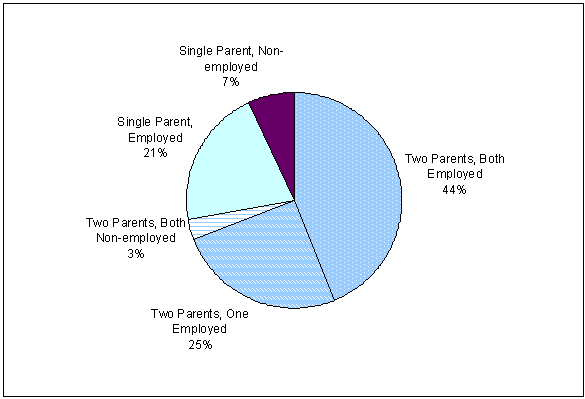
Source: Child Trends' analyses of March 2002 Current Population Survey data.
| Total | Youngest child under 6 | Youngest child ages 6-17 | |
|---|---|---|---|
| Total(a) | 100.0 | 100.0 | 100.0 |
| Two Parents in Household | 72.2 | 74.9 | 70.2 |
| Two employed parents | 43.8 | 39.4 | 47.2 |
| Both full-time | 25.5 | 21.1 | 28.8 |
| One full-time, one part-time | 16.4 | 16.4 | 16.4 |
| Both part-time | 2.0 | 1.9 | 2.0 |
| One employed parent, one nonemployed parent | 25.4 | 32.0 | 20.4 |
| Full-time | 21.8 | 27.7 | 17.4 |
| Part-time | 3.6 | 4.3 | 3.1 |
| No employed parent | 3.0 | 3.6 | 2.6 |
| One Parent in Household | 27.8 | 25.1 | 29.8 |
| One employed parent | 20.8 | 17.4 | 23.3 |
| Full-time | 15.8 | 12.6 | 18.2 |
| Part-time | 5.0 | 4.8 | 5.1 |
| No employed parent | 7.0 | 7.6 | 6.5 |
| a. Percentages may not add to 100 due to rounding. Note: Estimates of two-parent households include only married couples, and exclude families with unmarried partners. Parents in the armed forces are not considered in the labor force. Among those who were working but not at their jobs the previous week, part-time versus full-time employment was determined using the number of hours that the person usually works each week at his/her main job. Source: Child Trends' analyses of March 2002 Current Population Survey data. |
|||
Work-family stress
In 1997, approximately a third of mothers and fathers reported that they did not have enough time for their family because of their jobs. Mothers who worked full-time were more likely than mothers who worked part-time to report that their jobs interfered with their family life. Thirty-seven percent of mothers employed full-time and 14 percent of mothers employed part-time in 1997 reported that they "often" or "very often" did not have enough time for their families because of their jobs.
Percentage of working mothers
who report that they do not have enough time for their families because of their jobs,
by employment status: 1997
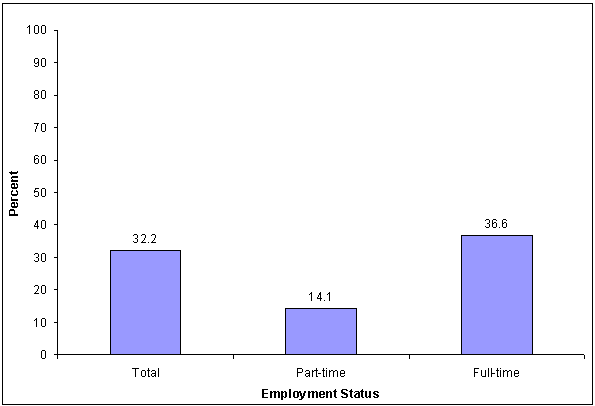
Source: Child Trends' analyses of the National Study of the Changing Workforce, 1997.
| Mothers | Fathers | |
|---|---|---|
| Total | 32.2 | 33.1 |
| Employment Status | ||
| Part-time | 14.1 | 47.1 |
| Full-time | 36.6 | 32.9 |
| Marital Status | ||
| Married | 33.1 | 32.0 |
| Non-married | 30.6 | 40.1 |
| a. Parents include respondents with residential children under the age of 18. b. Job interference with family life corresponds to parents' reports of not having enough time "often" or "very often" for their family because of their jobs. Source: Child Trends' analyses of the National Study of the Changing Workforce, 1997. |
||
Family income
In 2001, the median total money income for households with a related child under 18 years old was $52,177. Households headed by a married couple with a related child under 18 had a median income of $65,319, while unmarried couple households had a median income of $ 39,886. Households headed by a male with no spouse had a median income of $36,922, and households headed by a female with no spouse had a median income of $25,167.
Median total money income in households with a related child under 18 years old,
by family structure: 2001
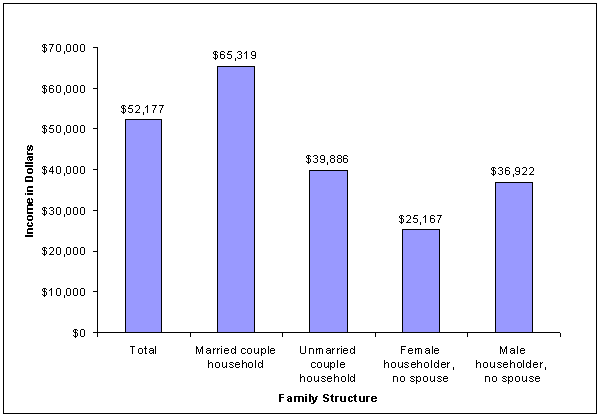
Note: Unmarried couples may also be included in the categories of female householder no spouse present, and male householder, no spouse present, if children of the householder are present.
Source: U.S. Census Bureau, Current Population Survey, March 2002. (http://ferret.bls.census.gov/macro/032002/hhinc/new04_000.htm)
| Dollars | |
|---|---|
| Total | $52,177 |
| Race and Hispanic Origin(a) | |
| White, non-Hispanic | $61,707 |
| Black | $32,315 |
| Hispanic | $35,000 |
| Family Structure | |
| Married couple household | $65,319 |
| Unmarried couple household | $39,886 |
| Female householder, no spouse | $25,167 |
| Male householder, no spouse | $36,922 |
| a. Persons of Hispanic origin may be of any race. Note: Unmarried couples may also be included in the categories of female householder no spouse present, and male householder, no spouse present, if children of the householder are present. Source: U.S. Census Bureau, Current Population Survey, March 2002. (http://ferret.bls.census.gov/macro/032002/hhinc/new04_000.htm) |
|
Patterns of child care
In 2001, thirty-nine percent of children from birth through age 6 were cared for solely by a parent, while 61 percent participated in some sort of nonparental care. Children under 3 years of age were more likely to be in parental care only than children ages 3 to 6 years (48 percent compared to 26 percent). The type of care arrangement chosen also is related to the child's age. While similar percentages of 0-2 year olds and 3-6 year olds were cared for in a home by a relative (23 and 22 percent, respectively) or a nonrelative (18 and 14 percent, respectively), much higher percentages of 3-6 than 0-2 year olds participated in center-based programs (56 percent compared with 17 percent).
Percentage of children from birth through age 6, not yet in kindergarten,
by type of care arrangement and age group: 2001
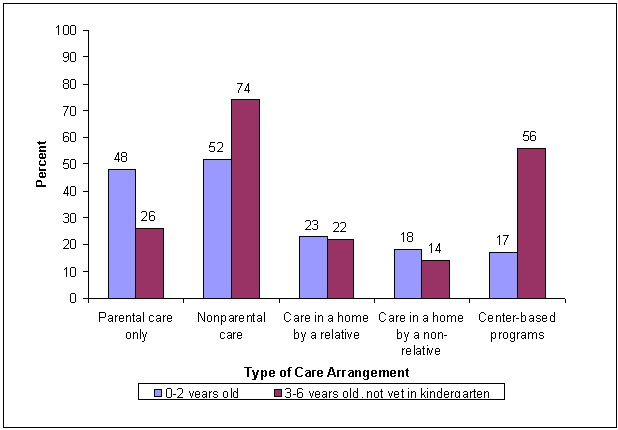
Note: Some children participate in more than one type of arrangement, so the sum of all arrangement types exceeds the total percentage in nonparental care.
Source: U.S. Department of Education, National Center for Education Statistics, Early Childhood Program Participation Survey of the National Household Education Surveys Program, 2001. As reported in Federal Interagency Forum on Child and Family Statistics. (2003). America's children: Key national indicators of well-being, 2003. Washington, DC: Author.
| Parental care only | Total in nonparental care(a) | Care in a home(b) | Center-based program(c) | ||
|---|---|---|---|---|---|
| By a relative | By a nonrelative | ||||
| Total | 39 | 61 | 23 | 16 | 34 |
| Age/Grade in School | |||||
| 0-2 | 48 | 52 | 23 | 18 | 17 |
| 3-6, not yet in kindergarten | 26 | 74 | 22 | 14 | 56 |
| Poverty Status | |||||
| Below poverty | 46 | 54 | 26 | 10 | 27 |
| At or above poverty | 37 | 63 | 22 | 18 | 35 |
| Mother's Highest Level of Education (d) | |||||
| Less than high school | 56 | 44 | 21 | 9 | 21 |
| High school graduate or equivalent | 43 | 58 | 26 | 14 | 28 |
| Some college(e) | 37 | 64 | 25 | 16 | 36 |
| College graduate | 32 | 69 | 17 | 23 | 42 |
| a. Some children participate in more than one type of nonparental care arrangement. Thus, detailed percentages do not sum to the total percentage of children in nonparental care. b. Relative and nonrelative care can take place in either the child's own home or another home. c. Center-based programs include day care centers, prekindergartens, nursery schools, Head Start programs, and other early childhood education programs. d. Those few children without a mother in the home are excluded from estimates of mother's highest level of education. e. Some college includes vocational or technical school after high school, as well as college attendance. Source: U.S. Department of Education, National Center for Education Statistics, Early Childhood Program Participation Survey of the National Household Education Surveys Program, 2001. As reported in Federal Interagency Forum on Child and Family Statistics. (2003). America's children: Key national indicators of well-being, 2003. Washington, DC: Author. |
|||||
School Involvement and Civic Engagement
Parental involvement in school
In 1999, ninety-two percent of students had parents who were involved in at least one of four types of activities in their children's school: attending general meetings, attending scheduled meetings with a teacher, attending a school event, or acting as a volunteer or serving on a committee. The majority of students had parents who attended meetings or events in all three school levels, but only a minority of students in all levels had parents who volunteered or served on a committee. Parents were most likely to attend meetings and events or to volunteer in their child's school when their children were in kindergarten through 5th grade (96 percent), and participation rates were somewhat lower among parents of children in middle school (92 percent) and in high school (83 percent).
Percentage of students in grades K through 12
whose parents reported involvement in their child's school,
by activity type and school level: 1999
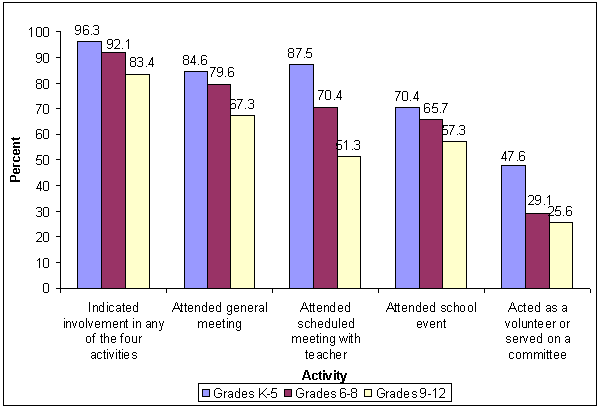
Source: U.S. Department of Education, National Center for Education Statistics, Parent and Family Involvement in Education/Civic Involvement Survey (PFI/CI:1996) and Parent Survey (Parent:1999) of the National Household Education Surveys Program, 1996 & 1999 and the Child Trends Databank. (2003). (www.childtrendsdatabank.org/indicators/39parentalinvolvementinschools.c…)
| Attended general meeting | Attended scheduled meeting with teacher | Attended school event | Acted as a volunteer or served on a committee | Indicated involvement in any of the four activities | ||||||
|---|---|---|---|---|---|---|---|---|---|---|
| 1996 | 1999 | 1996 | 1999 | 1996 | 1999 | 1996 | 1999 | 1996 | 1999 | |
| Total | 76.9 | 78.3 | 71.8 | 72.8 | 66.7 | 65.4 | 38.7 | 36.8 | 91.7 | 91.5 |
| Student's Grade | ||||||||||
| K-5 | 83.2 | 84.6 | 86.1 | 87.5 | 71.7 | 70.4 | 48.9 | 47.6 | 96.2 | 96.3 |
| 6-8 | 77.9 | 79.6 | 69.5 | 70.4 | 65.7 | 65.7 | 30.4 | 29.1 | 91.5 | 92.1 |
| 9-12 | 65.4 | 67.3 | 49.7 | 51.3 | 59.1 | 57.3 | 28.4 | 25.6 | 84.2 | 83.4 |
| Race and Hispanic Origin(b) | ||||||||||
| White, non-Hispanic | 79.0 | 80.5 | 72.6 | 73.6 | 71.6 | 71.6 | 44.1 | 42.7 | 93.5 | 93.8 |
| Black, non-Hispanic | 71.6 | 74.6 | 68.8 | 71.1 | 56.4 | 53.8 | 26.9 | 26.2 | 86.4 | 87.0 |
| Other | 73.2 | 76.6 | 71.6 | 73.1 | 64.2 | 62.3 | 35.4 | 30.6 | 89.9 | 90.3 |
| Parents' Highest Level of Education | ||||||||||
| Less than high school | 57.5 | 57.3 | 62.7 | 59.9 | 42.2 | 37.7 | 16.9 | 13.0 | 79.1 | 75.9 |
| High school graduate or equivalent | 71.5 | 72.7 | 69.2 | 69.7 | 60.2 | 58.7 | 30.1 | 26.0 | 89.3 | 88.4 |
| Some college(c) | 77.9 | 79.1 | 72.5 | 73.7 | 69.2 | 66.9 | 39.2 | 37.4 | 92.9 | 93.1 |
| College graduate | 87.4 | 87.3 | 77.4 | 80.3 | 76.4 | 75.6 | 52.3 | 49.8 | 96.8 | 97.1 |
| Graduate or professional school | 88.5 | 88.9 | 76.3 | 76.0 | 81.9 | 78.9 | 56.7 | 54.3 | 97.2 | 96.8 |
| a. Parental involvement in school is defined as parent participation during the school year in any of the above activities at least once. b. Persons of Hispanic origin may be of any race. c. Some college includes a vocational or technical school after high school, as well as college attendance. Note: Ungraded students or children who are homeschooled are not included in this analysis; these students accounted for 1.6 percent of the students in grades K-12. Percentages may not sum to 100 because parents can be included in more than one type of involvement. Source: U.S. Department of Education, National Center for Education Statistics, Parent and Family Involvement in Education/Civic Involvement Survey (PFI/CI:1996) and Parent Survey (Parent:1999) of the National Household Education Surveys Program, 1996 & 1999 and the Child Trends Databank. (2003). (www.childtrendsdatabank.org/indicators/39parentalinvolvementinschools.cfm) |
||||||||||
Volunteering as a family
Overall, 37 percent of adults volunteered with family members in 2001. Approximately 39 percent of whites volunteered with family members, while 34 percent of blacks and 29 percent of Hispanics did so. Volunteering is defined here as actually working in some way to help others, and not just belonging to a service organization. Volunteerism can be performed in an organized group, or individually for children, neighbors, friends, or even strangers.
Percentage of adults who volunteered with family members in the past year,
by race and Hispanic origin: 2001
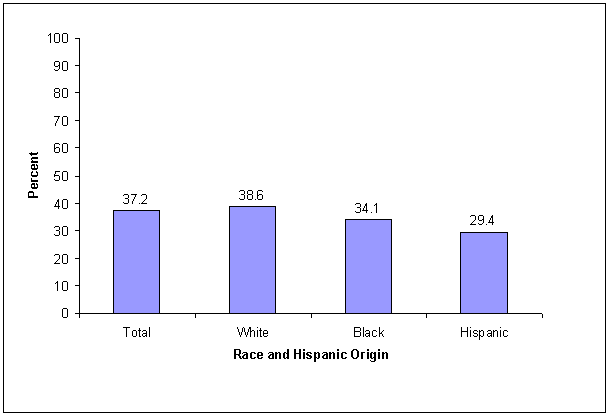
Note: Estimates for whites and blacks includes Hispanics.
Source: Estimates supplied by C. Toppe, Independent Sector, based on data from the 2001 Giving and Volunteering in the United States Survey.
| Percent | |
|---|---|
| Total | 37.2 |
| Race and Hispanic Origin(a) | |
| White | 38.6 |
| Black | 34.1 |
| Hispanic | 29.4 |
| a. Persons of Hispanic origin may be of any race. Estimates for blacks and whites include Hispanics. Source: Estimates supplied by C. Toppe, Independent Sector, based on data from the 2001 Giving and Volunteering in the United States Survey. |
|
Student participation in community service
In 1999, fifty-two percent of students in grades 6-12 participated in community service. Those who spoke English in the home were more likely (54 percent) than those who spoke another language in the home (34 percent) to participate in community service. Participation increased slightly between 1996 and 1999 in general, and was substantially higher among students with college-educated parents in both years.
Percentage of students in grades 6-12 participating in community service,
by language spoken in the home: 1996 & 1999
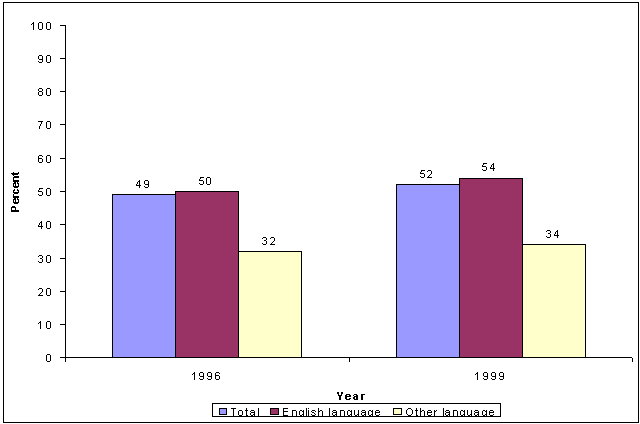
Source: U.S. Department of Education, National Center for Education Statistics, Youth Civic Involvement Survey of the National Household Education Surveys (NHES) Program, 1996, and the Youth Survey of the NHES Program, 1999. As reported in National Center for Education Statistics. (1999). Youth service-learning and community service among 6(th)-12(th) grade students in the United States: 1996 and 1999. Washington, DC: U.S. Department of Education.
| 1996 | 1999 | |
|---|---|---|
| Total | 49 | 52 |
| Student's Grade | ||
| 6-8 | 47 | 48 |
| 9-10 | 45 | 50 |
| 11-12 | 56 | 61 |
| Language Spoken Most at Home by Student | ||
| English | 50 | 54 |
| Other | 32 | 34 |
| Parents' Highest Level of Education | ||
| Less than high school | 34 | 37 |
| High school graduate or equivalent | 42 | 45 |
| Some college(a) | 48 | 50 |
| College graduate | 58 | 62 |
| Graduate or professional school | 64 | 65 |
| a. Some college includes those who attended a vocational or technical training school after high school, as well as college attendance. Source: U.S. Department of Education, National Center for Education Statistics, Youth Civic Involvement Survey of the National Household Education Surveys (NHES) Program, 1996 and the Youth Survey of the NHES Program, 1999. As reported in National Center for Education Statistics. (1999). Youth service-learning and community service among 6th-12th grade students in the United States: 1996 and 1999. Washington, DC: U.S. Department of Education. |
||
Parental voting
Among eligible voters, 60 percent of parents with their own children in the household voted in the last presidential election in 2000.
Voting is much more common among parents with higher levels of education than it is among parents with less education. Eighty percent of parents with at least a college degree reported voting in the 2000 election, compared with 64 percent of those with some college education, 49 percent of those with high school diplomas, and 28 percent of parents with less than a high school degree.
Voting behavior among parents also varies by age, with older parents more likely than younger parents to report voting in the last election. In 2000, seventy percent of parents ages 50 and over reported voting in the November election, compared with 65 percent of those ages 31-49, forty-six percent of those ages 26-30, and 33 percent of parents ages 18-25.
Married parents are more likely to vote than unmarried parents (64 percent and 45 percent, respectively).
Percentage of parents(a) with children under 18 in the household who voted in the last election,
by educational attainment: 2000
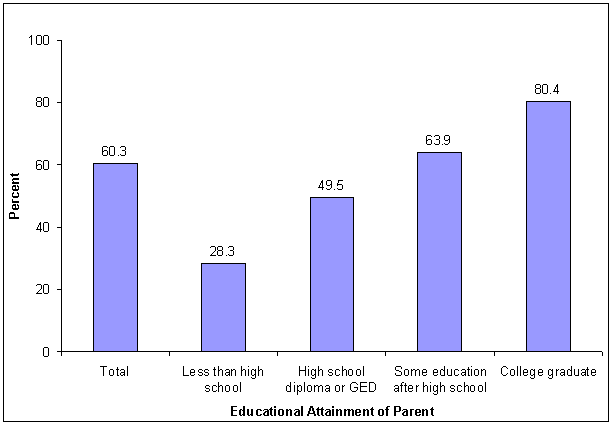
a. Parents include householders and spouses with own children under 18 in the household; therefore, this indicator includes data on all parents in the family.
Note: Analysis includes only eligible voters (those who were at least 18 years of age and citizens).
Source: Child Trends' analyses of November 2000 Current Population Survey data
| Percent | |
|---|---|
| All Parents | 60.3 |
| Highest Level of Education | |
| Less than high school | 28.3 |
| High school diploma or GED | 49.5 |
| Some education after high school | 63.9 |
| College graduate | 80.4 |
| Age of Parent | |
| 18-25 years | 33.2 |
| 26-30 years | 45.9 |
| 31-49 years | 64.8 |
| 50 years and over | 69.9 |
| Immigrant Status | |
| Native-born | 61.3 |
| Foreign-born | 46.2 |
| Martial Status | |
| Married (spouse present) | 64.0 |
| Unmarried (or married with spouse absent) | 44.9 |
| a. Parents include householders and spouses with own children under 18 living in the household. Note: Analysis includes only eligible voters (those who were at least 18 years of age and citizens). Source: Child Trends' analyses of November 2000 Current Population Survey data. |
|
Youth connection to school peers
Overall, 56 percent of youth felt connected to peers in their school in the 1995-96 school year. Approximately 60 percent of students attending middle or mixed(a) schools reported feeling connected to peers in their school, and 54 percent of high school students reported feelings of connection. This difference in reported rates of connection to peers by school level is not statistically significant.
Percentage of youth who feel connected to peers in their school,
by level of school: 1995-1996
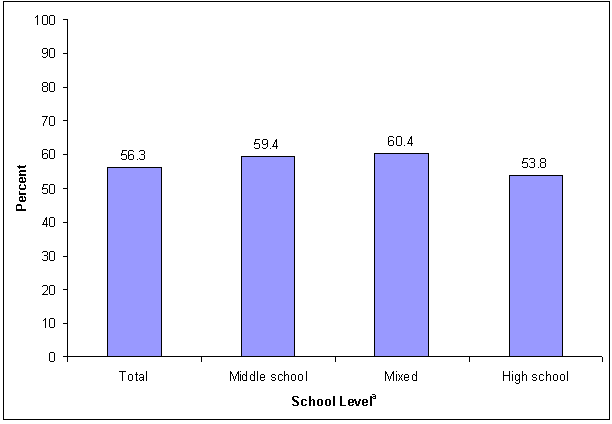
a. A mixed school contains both middle and high school grade levels.
Source: Child Trends' analyses of the National Longitudinal Study of Adolescent Health Wave 1, 1995-1996.
| Percent | |
|---|---|
| Total | 56.3 |
| Gender | |
| Male | 57.7 |
| Female | 54.8 |
| Immigrant Status(c) | |
| Native-born | 56.5 |
| Foreign-born | 53.6 |
| School Level(d) | |
| Middle school | 59.4 |
| Mixed | 60.4 |
| High school | 53.8 |
| a. Youth in grades 7-12. b. Perceptions of connectedness to peers are based on a three-item scale that includes measures of whether students feel close to people at school, feel part of their school, and feel happy at their school. c. Native-born includes U.S. citizens born in foreign countries. d. A middle school ends at or before the 9th grade. A high school begins at or after the 9th grade. A mixed school contains both middle and high school grade levels. Source: Child Trends' analyses of the National Longitudinal Study of Adolescent Health Wave 1, 1995-1996. |
|
School supportiveness
In the 1995-96 school year, 47 percent of youth in grades 7-12 perceived their school to be supportive. Foreign-born youth were more likely than native-born youth to feel that their school environment was supportive. Fifty-nine percent of foreign-born teens viewed their school as supportive, compared with 47 percent of native-born teens. Racial and ethnic differences in students' perceptions of their school environments reflect this same pattern. Specifically, Hispanic teens, who are more likely to be foreign-born, reported slightly higher levels of school supportiveness (52 percent) than non-Hispanic whites (48 percent), non-Hispanic blacks (45 percent), Native Americans (38 percent), or teens of other races (39 percent).
Percentage of youth who perceive their school to be supportive,
by immigrant status: 1995-1996
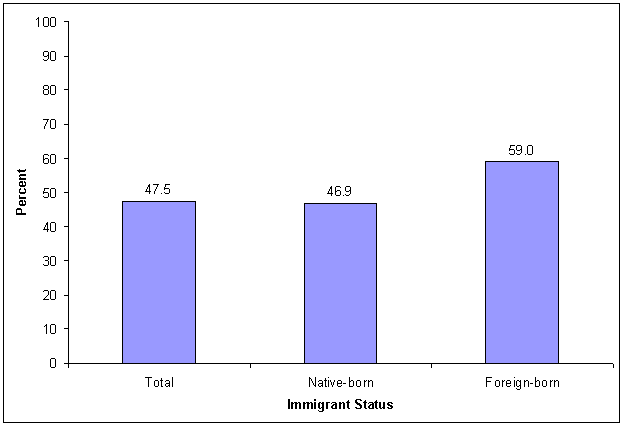
Source: Child Trends' analyses of the National Longitudinal Study of Adolescent Health Wave 1, 1995-1996.
| Percent | |
|---|---|
| Total | 47.5 |
| Race and Hispanic Origin(c) | |
| White, non-Hispanic | 48.0 |
| Black, non-Hispanic | 44.6 |
| Hispanic | 51.8 |
| Asian | 49.2 |
| Native American | 37.8 |
| Other, non-Hispanic | 39.4 |
| Immigrant Status(d) | |
| Native-born | 46.9 |
| Foreign-born | 59.0 |
| Type of School(e) | |
| Middle school | 51.5 |
| Mixed | 51.8 |
| High school | 43.8 |
| a. Youth in grades 7-12. b. Perceptions of school supportiveness are based on a three-item scale including whether students have trouble getting along with teachers (reverse coded), feel like teachers treat students fairly, and feel that teachers care about them. c. Persons of Hispanic origin may be of any race d. Native-born includes U.S. citizens born in foreign countries e. A middle school ends at or before the 9th grade. A high school begins at or after the 9th grade. A mixed school contains both middle and high school grade levels. Source: Child Trends' analyses of the National Longitudinal Study of Adolescent Health Wave 1, 1995-1996 |
|
Religiosity
Parental religious service attendance
Slightly more than one-third of parents (36 percent) attended religious services at least once a week in 2002. This percentage represents a small decline from 1997, when 38 percent of parents attended religious services at least weekly.
Parental religious attendance differs according to the parent's educational attainment. In 2002, fewer than one-third of parents who had not completed high school (28 percent) reported attending religious services weekly, compared with 44 percent of those who had graduated from college. Poor families were less likely than nonpoor families to have a parent attending religious services weekly in 2002 (28 percent compared with 38 percent).
Married parents were more likely to attend services weekly than parents who were not married (40 percent compared with 26 percent).
Percentage of parents attending religious services weekly or more often,
by parental educational attainment: 2002
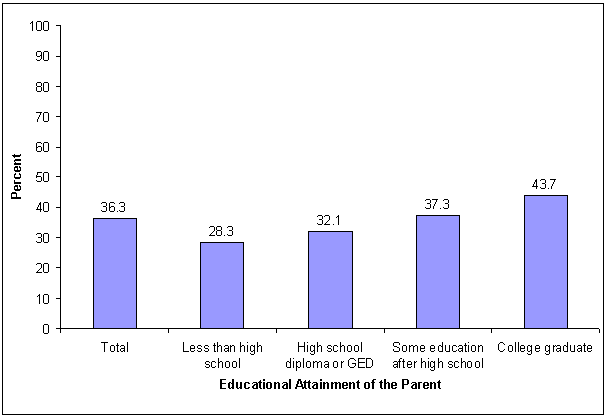
Note: Parents include primary caregivers between the ages of 18 and 64 for children under age 18; therefore, this indicator includes data on one adult per household. In more than 95 percent of cases, this adult is a biological, adoptive, or stepparent, and in 80 percent of cases this adult is the mother.
Source: Child Trends' analyses of the National Survey of America's Families, 2002.
| 1997 | 1999 | 2002 | |
|---|---|---|---|
| Total | 37.7 | 37.5 | 36.3 |
| Age of Child(b) | |||
| 0-5 years | 34.2 | 33.9 | 32.8 |
| 6-11 years | 39.5 | 38.6 | 37.6 |
| 12-17 years | 39.6 | 39.9 | 38.7 |
| Marital Status(c) | |||
| Married | 41.1 | 41.3 | 40.0 |
| Not married | 27.8 | 26.5 | 26.4 |
| Family Structure(d) | |||
| Two parents | 40.5 | 40.6 | 39.3 |
| One parent | 30.1 | 28.7 | 27.7 |
| Other | 46.9 | 42.3 | 45.2 |
| Highest Level of Education(c) | |||
| Less than high school | 30.2 | 31.1 | 28.3 |
| High school diploma or GED | 35.0 | 32.7 | 32.1 |
| Some education after high school | 39.1 | 39.1 | 37.3 |
| College graduate | 43.6 | 44.9 | 43.7 |
| Poverty Status | |||
| Below poverty | 32.5 | 30.1 | 28.3 |
| At or above poverty | 38.9 | 38.9 | 37.7 |
| Race and Hispanic Origin(c) | |||
| White, non-Hispanic | 35.6 | 35.7 | 35.2 |
| Black, non-Hispanic | 45.7 | 45.8 | 44.7 |
| Hispanic | 40.0 | 38.6 | 34.4 |
| Other | 37.1 | 33.3 | 33.1 |
| a. Parents include primary caregivers between the ages of 18 and 64 for children under age 18; therefore, this indicator includes data on one adult per household. In more than 95 percent of cases, this adult is a biological, adoptive, or step-parent, and in 80 percent of cases this adult is the mother. b. The age grouping is based on the age of one randomly selected child in each family. c. Of the parent whose religious attendance is reported d. Two-parent families include two biological/adoptive parents or stepfamilies. One-parent families include one biological or adoptive parent. Source: Child Trends' analyses of the National Survey of America's Families, 1997, 1999, and 2002. |
|||
Adolescent participation in religious activities with their families
Overall, in 2000, half of all adolescents participated in religious activities with their families (e.g., going to a worship service, praying, reading scripture). The frequency varies by the adolescent's race and Hispanic origin. Non-Hispanic black adolescents were considerably more likely to participate in religious activities with their families--weekly or more often (73 percent)--than were their peers of non-Hispanic white (45 percent), Hispanic (55 percent), or other racial or ethnic origin (48 percent). Hispanics were more likely to participate than non-Hispanic whites.
Percentage of adolescents participating in religious activities with their families weekly or more often,
by race and Hispanic origin: 2000
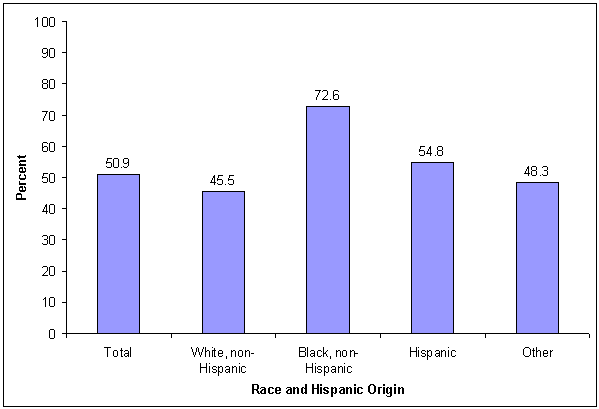
Source: Child Trends' analyses of the National Longitudinal Survey of Youth - 1997, Rounds 1 and 4.
| Percent | |
|---|---|
| Total | 50.9 |
| Race and Hispanic Origin(b) | |
| White, non-Hispanic | 45.5 |
| Black, non-Hispanic | 72.6 |
| Hispanic | 54.8 |
| Other | 48.3 |
| Family Structure | |
| Two biological parents | 56.1 |
| Two parents (biological parent and other)(c) | 37.7 |
| One biological parent | 45.4 |
| Parent's Highest Level of Education(d) | |
| Less than high school degree | 53.8 |
| High school degree | 46.0 |
| Some college education | 49.8 |
| College graduate | 55.8 |
| a. These activities are included in the wording of the survey item. b. Persons of Hispanic origin may be of any race. c. This includes families with one biological parent and one nonbiological parent figure in the household. This resident nonbiological parent figure can be a step-parent, adoptive parent, foster parent, spouse or romantic partner of the biological parent, or a relative or other adult who is "like a parent" to the respondent. A greater share of biological parents are mothers and a greater share of other parents are fathers. d. In two-parent households, "parental education" refers to the highest level of education attained between the two residential parents/parent figures. Note: Analyses are based on a universe of adolescents, 12-14, who lived with a parent or guardian in 2000. Source: Child Trends' analyses of the National Longitudinal Survey of Youth - 1997, Rounds 1 and 4. |
|
Social Connections
Neighborhood community
Eighty percent of adults reported in 2000 that they have people in their neighborhood who give them a sense of community. White non-Hispanics and Hispanics, (82 percent and 77 percent respectively) were more likely than black non-Hispanics (71 percent) to report having people in their neighborhood who gave them a sense of community.
Percentage of adults with people in their neighborhood who give them a sense of community,
by race and Hispanic origin: 2000
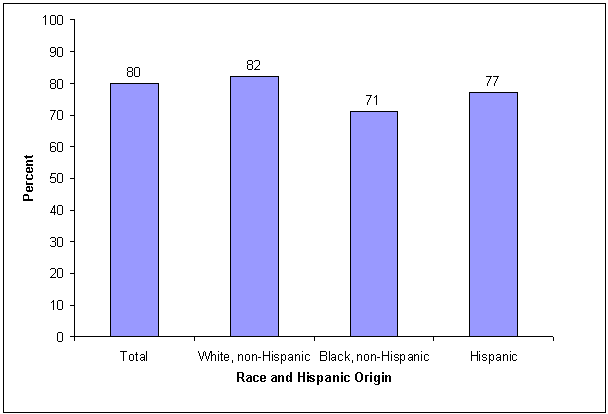
Source: The Social Capital Community Benchmark Survey 2000, National Survey data (http://www.cfsv.org/communitysurvey/docs/marginals.pdf).
| Percent | |
|---|---|
| Total | 80 |
| Race and Hispanic Origin(a) | |
| White, non-Hispanic | 82 |
| Black, non-Hispanic | 71 |
| Hispanic | 77 |
| Age | |
| 18-34 years | 75 |
| 35-49 years | 83 |
| 50-64 years | 82 |
| 65 years and over | 83 |
| Highest Level of Education | |
| High school or less | 79 |
| Some college | 80 |
| College degree or more | 81 |
| a. Persons of Hispanic origin may be of any race. Source: Social Capital Community Benchmark Survey, 2000, National Survey data. http://www.cfsv.org/communitysurvey/docs/marginals.pdf |
|
Community of friends
Eighty-nine percent of adults reported in the year 2000 that they have old or new friends who provide them with a sense of community, regardless of their geographic proximity. While the vast majority of white and black non-Hispanics as well as Hispanics reported that they had a community of friends, white non-Hispanics were more likely than Hispanics to report having such a community, (91 percent compared with 83 percent), while black non-Hispanics fell in between at 86 percent.
Percentage of adults with old or new friends who give them a sense of community,
by race and Hispanic origin: 2000
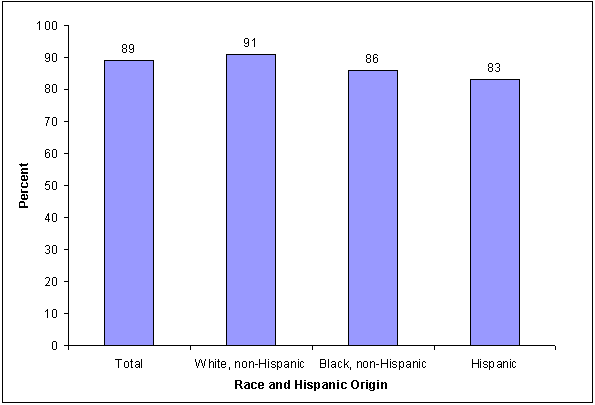
Source: The Social Capital Community Benchmark Survey 2000, National Survey data (http://www.cfsv.org/communitysurvey/docs/marginals.pdf).
| Percent | |
|---|---|
| Total | 89 |
| Race and Hispanic Origin(a) | |
| White, non-Hispanic | 91 |
| Black, non-Hispanic | 86 |
| Hispanic | 83 |
| Age | |
| 18-34 years | 90 |
| 35-49 years | 90 |
| 50-64 years | 91 |
| 65 years and over | 83 |
| Highest Level of Education | |
| High school or less | 88 |
| Some college | 90 |
| College degree or more | 90 |
| a. Persons of Hispanic origin may be of any race. Source: Social Capital Community Benchmark Survey, 2000, National Survey data. http://www.cfsv.org/communitysurvey/docs/marginals.pdf |
|
Concern for safety
In 2000, twenty-seven percent of adults listed concern for their safety as either a somewhat or very important obstacle that made it difficult to be involved in their community. This concern was greater among those with less education. Thirty-two percent of those with a high school degree or less reported concern for their safety as an obstacle, compared with 18 percent of those with a college degree or more.
Percentage of adults who list concern for their safety as an obstacle
that makes it difficult to be involved in their community,
by level of education: 2000
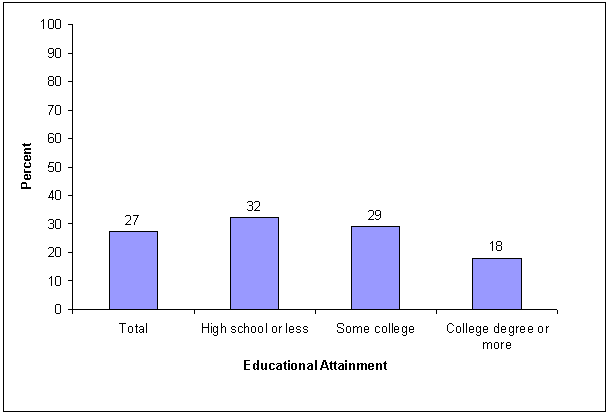
Source: The Social Capital Community Benchmark Survey 2000, National Survey data (http://www.cfsv.org/communitysurvey/docs/marginals.pdf).
| Percent | |
|---|---|
| Total | 27 |
| Race and Hispanic Origin(a) | |
| White, non-Hispanic | 26 |
| Black, non-Hispanic | 37 |
| Hispanic | 28 |
| Age | |
| 18-34 years | 31 |
| 35-49 years | 25 |
| 50-64 years | 24 |
| 65 years and over | 29 |
| Highest Level of Education | |
| High school or less | 32 |
| Some college | 29 |
| College degree or more | 18 |
| a. Persons of Hispanic origin may be of any race. Source: Social Capital Community Benchmark Survey, 2000, National Survey data. http://www.cfsv.org/communitysurvey/docs/marginals.pdf |
|
Residential mobility
In 2002, sixteen percent of families with children reported that they changed residence in the past year. Residential mobility varies by poverty status and family structure. Twice as many families with incomes below the poverty line moved, compared with families with incomes at or above the poverty line (29 percent and 14 percent, respectively). In addition, twice as many single-parent families moved compared with two-parent families (26 percent and 13 percent, respectively).
Percentage of families with children under age 18 that moved in the past year,
by poverty status: 2002
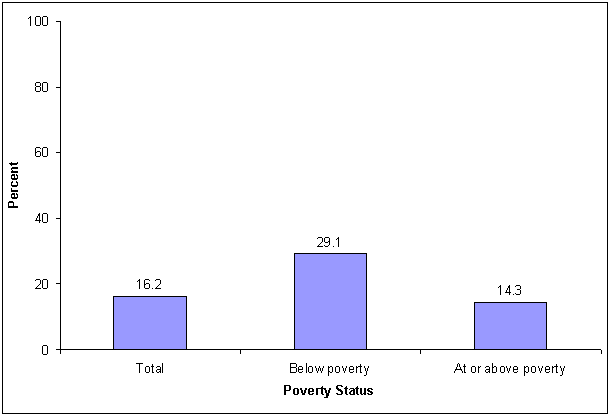
Source: Child Trends' analyses of March 2002 Current Population Survey data.
| Percent | |
|---|---|
| Total | 16.2 |
| Family Structure | |
| Two parents(b) | 12.6 |
| One parent | 25.5 |
| Poverty Status | |
| Below poverty | 29.1 |
| At or above poverty | 14.3 |
| Age of Youngest Child | |
| Under 6 years | 21.9 |
| 6-17 years | 11.8 |
| a. A family was considered to have moved in the past year if its family reference person reported changing residences in the past year. b. Estimates of two-parent families include only married couples, and exclude families with unmarried partners. Families with unmarried partners are included as one-parent families. Note: This analysis excludes related and unrelated subfamilies. For this reason, it is possible that residental mobility among families in households is slightly underestimated. Source: Child Trends' analysis of March 2002 Current Population Survey data. |
|
Appendix A: Data Sources
Current Population Survey (CPS)
| Current Population Survey (CPS) | |
|---|---|
| Name: | Current Population Survey |
| Funder(s): | The core survey is funded by the Bureau of Labor Statistics. The supplements are also funded by a variety of sponsors including the Department of Health and Human Services, the Department of Education, and the National Institute of Child Health and Human Development. |
| General Description: | The CPS is primarily designed to supply estimates of employment, unemployment and other characteristics of the general labor force, the population as a whole, and various subgroups of the population. In addition to collection of labor force data, the core funding of the CPS provides for collection of annual data on work experience, income, and migration (the annual March income and demographic supplement), and school enrollment of the population (the October supplement). Other supplements conducted include the voting and registration supplement (November of Congressional and presidential election years), the child support and alimony supplement (April), the fertility and birth expectations supplement (June), and the supplement on the immunization status of the population (most recently collected in September 1995). |
| Design (cross-sectional vs. longitudinal; periodicity; mode of administration): | Cross-sectional. The CPS has been conducted monthly since 1942. The fieldwork is conducted during the calendar week that includes the 19th of the month. In January 1994 a redesigned questionnaire was introduced. This was the most substantial change to the survey since its inception. This new survey includes longer and more detailed questions allowing for more accurate and detailed estimates. The CPS questionnaire is a completely computerized document that is administered by Census Bureau field representatives across the country through both personal and telephone interviews. Households are in the survey for four consecutive months, out for eight, and then return for another four months before leaving the sample permanently. |
| Population: | The CPS is representative of the civilian, non-institutionalized population of the U.S. |
| Sample Selection and Description: | Data are collected for all household members. Employment and earnings information is collected for persons ages 15 and over, but tabulated for all persons 16 and over. One member of each household contacted is the respondent, and this individual must be a knowledgeable household member 15 years or older. The CPS is administered using a scientifically selected sample of some 50,000 occupied households nationwide. The CPS design over-sampled for Hispanics only. (For more detail see Design and Methodology: http://www.census.gov/prod/2002pubs/tp63rv.pdf) |
| Website: | http://www.bls.census.gov/cps/cpsmain.htm |
| Age of Respondent: | Respondents are 15 years and older. This primary respondent provides information for each household member. No upper age limit is used, and full-time students are treated the same as non-students. For this report, the age of the adult population is 18 years and older. |
| Age of Child: | 0 to 17 years old |
| Indicators: | Family structure Contact with nonresident parents Parental employment by family structure Family income Parental voting Residential mobility |
Giving and Volunteering in the United States
| Giving and Volunteering in the United States | |
|---|---|
| Name: | Giving and Volunteering in the United States |
| Funder(s): | The Independent Sector |
| General Description: | The Giving and Volunteering in the United States survey collects information on the giving and volunteering habits of Americans. The survey asks about individual volunteering habits in the 12 months prior to the survey and about household giving during the year 2000. |
| Design (cross-sectional vs. longitudinal; periodicity; mode of administration): | Cross-sectional. The Giving and Volunteering in the United States survey is a random digit dial (RDD) telephone survey administered between May and July. The survey was conducted biennially from 1988 through 1998. In order to move the survey away from traditional elections years, the survey was administered in 1999 and will continue to be collected biennially. |
| Population: | This survey is representative of all noninstitutionalized adults 21 years of age or older in the U.S. |
| Sample Selection and Description: | The sample included 4,216 adults 21 years of age or older. The survey over-sampled for of Hispanics, blacks, and affluent Americans with household incomes of $100,000 or higher. Subsampling of males was also implemented in order to increase their probability of selection to boost the ratio of males versus females in the final sample. Questions about contributions were asked at the household level, whereas questions about volunteer activities were asked at the individual level. Attitudinal or opinion questions were also asked at the individual level. |
| Website: | http://www.independentsector.org/programs/research/gv01main.html |
| Age of Respondent: | 21 years and older |
| Age of Child: | Not applicable |
| Indicators: | Volunteering as a family |
National Household Education Survey Program (NHES)
| National Household Education Survey Program (NHES) | |
|---|---|
| Name: | National Household Education Survey Program |
| Funder(s): | National Center for Education Statistics (NCES), U.S. Department of Education |
| General Description: | The National Household Education Survey Program provides information on education-related issues, such as the care arrangements and educational experiences of young children, children's educational activities and the role of the family in the children's learning, and parental involvement in their children's schooling. The NHES is designed to provide comparative data across survey years, repeating topical surveys on a rotating basis. New topics are added as particular issues gain importance. |
| Design (cross-sectional vs. longitudinal; periodicity; mode of administration): | Cross-sectional. The NHES was conducted in 1991, 1993, 1995, 1996, 1999, 2001, and 2003. This random digit-dialed, computer-assisted telephone interview includes all 50 states and the District of Columbia. There are plans to continue the survey periodically in the future. |
| Population: | The NHES is a representative sample of the non-institutionalized civilian population of the U.S. |
| Sample Selection and Description: | In each survey, between 54,000 and 64,000 households are screened to identify eligible respondents for one of the topics. One or more household members may be selected to complete more extensive interviews on specific topics. In general, two topical surveys are conducted in each administration and 5,000 to 25,000 interviews are completed for each survey. The NHES design over-samples minorities for reliable estimates for these groups. Approximately 8,000 youth in grades 6 through 12 were interviewed for the Youth Civic Involvement Survey in 1996 and another 8,000 for the Youth Survey in 1999. The sample sizes for the parent interview varied by year: in 1996, more than 20,000 parents of children age 3 up through 12th grade responded and in 1999, more than 24,000 parents of children from newborns up through 12th grade responded. In 2001, almost 7,000 parents were interviewed for the Early Childhood Program Participation Survey. |
| Website: | http://nces.ed.gov/nhes |
| Unit of Analysis: | Adults, parents, or youth depending on the survey administered. |
| Age of Respondent: | Depending on the survey administered, respondents are either adults 18 to 65 years old, parents of any age, or youth in grades 6 through 12. |
| Age of Child: | For the parent interviews, in 1996, questions were asked about children 3 years old up through 12th grade; in 1999, questions were asked about newborn children up through 12th grade, and, in 2001, questions were asked about children 0-6, not yet in kindergarten and children enrolled in kindergarten through 8th grade (in this report child care is reported only for children 0-6, not yet in kindergarten). The 1996 and 1999 youth surveys asked youth in grades 6-12 about themselves. |
| Indicators: | Patterns of child care Parental involvement in school Student participation in community service |
National Longitudinal Study of Adolescent Health (Add Health)
| National Longitudinal Study of Adolescent Health (Add Health) | |
|---|---|
| Name: | National Longitudinal Study of Adolescent Health |
| Funder(s): | National Institute of Child Health and Human Development (NICHD) and 17 other federal agencies |
| General Description: | Add Health focuses on the causes of health-related behaviors of adolescents, collecting data from surveys of students, parents, and school administrators. |
| Design (cross-sectional vs. longitudinal; periodicity; mode of administration): | Longitudinal. Four surveys were conducted during Wave I (1994 through 1995): in-school, in-home, school administrator, and parent surveys. Wave II (1996) consisted of in-home and school administrator surveys. Wave III (August 2001 through April 2002) consisted of an in-home survey. Already existing databases provided information about neighborhoods and communities. Questionnaires were administered directly to students using Computer-Assisted Personal Interview (CAPI) and Computer-Assisted Self-Interview (CASI) systems. |
| Population: | Add Health is representative of students in the U.S. in grades 7 through 12 in 1997. |
| Sample Selection and Description: | The Wave I In-School Survey collected information from 90,188 students in 80 pairs of schools (each pair consisted of one high school and one of its feeder middle schools, or a single school if it included grades 7 to 12). Approximately 200 adolescents from each school pair were selected for in-home interviews at Wave I; however, in 16 schools, in-home interviews were conducted with all students in order to collect information about adolescent social networks. The sample size for the Wave I In-home Survey was 20,745. The Wave II In-Home Survey sample consisted of 14,738 adolescents who participated in the Wave I survey. The Wave III In-Home Survey sample consisted of 15,197 young adults who participated in the Wave I survey. The study over-sampled African Americans with college-educated parents, Chinese, Cuban, Puerto Rican, and physically-disabled adolescents as well as genetic samples of pairs of siblings who resided in the same household (twins, full and half-siblings, and unrelated teens in the same household). |
| Website: | http://www.cpc.unc.edu/projects/addhealth/ |
| Age of Respondent: | Wave I (1995) was made up of subjects in grades 7-12. Wave II (1996) was made up of these subjects one year later (grades 8-12), but did not include those who were 12th graders at Wave I. In Wave III, the respondents were 18 to 26 years old. |
| Age of Child: | See "Age of Respondent" |
| Indicators: | Youth connection to School peersSchool supportiveness |
National Longitudinal Survey of Youth - 1997 (NLSY97)
| National Longitudinal Survey of Youth - 1997 (NLSY97) | |
|---|---|
| Name: | National Longitudinal Survey of Youth - 1997 |
| Funder(s): | U. S. Bureau of Labor Statistics. Partial funding support is provided by the Office of Juvenile Justice and Delinquency Prevention of the Department of Justice, the National School to Work Office of the Departments of Education and Labor, and the National Institute of Child Health and Human Development of the Department of Health and Human Services. |
| General Description: | The NLSY97 is designed to examine the transition from school to work and into adulthood. It collects extensive information about youths' labor market behavior and educational experiences over time. |
| Design (cross-sectional vs. longitudinal; periodicity; mode of administration): | Longitudinal. The NLSY97 is a nationally representative survey designed to collect information on the transition from school to work and into adulthood. Extensive information is collected about youths' labor market behavior and educational experiences over time. The survey also collects information on many other topics, for example: youths' relationships with parents, contact with absent parents, marital and fertility histories, dating, sexual activity, onset of puberty, employment or job skills training, participation in government assistance programs, life-course expectations, time use, criminal behavior, and alcohol and drug use. Youths complete personal interviews on an annual basis. Areas of the survey that are potentially sensitive, such as sexual activity and criminal behavior, comprise the self-administered portion of the interview. |
| Population: | The NLSY97 is representative of individuals in the U.S. who were 12 to 16 years old as of December 31, 1996. |
| Sample Selection and Description: | During Round 1 of the survey, which took place in 1997, both the eligible youth and one of that youth's parents completed hour-long personal interviews. In addition, during the screening process, an extensive two-part questionnaire was administered that listed and gathered demographic information on members of the youth's household and on his or her immediate family members living elsewhere. The Round 1 sample consisted of approximately 9,000 youths who were 12 to 16 years old as of December 31, 1996. Subsequently, the sample size has decreased due to attrition to 8,386 in Round 2, to 8,209 in Round 3, to 8,081 in Round 4. The NLSY97 design over-sampled for black and Hispanic respondents. |
| Website: | http://www.bls.gov/nls/nlsy97.htm |
| Age of Respondent: | Round 1: 12 to 16 year old adolescents and one parent of the adolescent Round 2: 13 to 17 year old adolescents Round 3: 14 to 18 year old adolescents and young adults Round 4: 15 to 19 year old adolescents and young adults Round 5: 16 to 20 year old adolescents and young adults |
| Age of Child: | See "Age of Respondent" |
| Indicators: | Positive parent-adolescent relationships Parental awareness of adolescents' friends and activities Adolescent participation in religious activities with their families |
National Study of the Changing Workforce (NSCW)
| National Study of the Changing Workforce (NSCW) | |
|---|---|
| Name: | National Study of the Changing Workforce |
| Funder(s): | Families and Work Institute, New York |
| General Description: | The NSCW collects information on how work, family, and personal life fit together. The survey is based upon the Quality of Employment Survey (QES) conducted by the Department of Labor from 1969 through 1977. The NSCW addresses the issues in the QES with a strong business perspective and broader social and economic perspectives. |
| Design (cross-sectional vs. longitudinal; periodicity; mode of administration): | Cross-sectional. The NSCW is a nationally representative survey of the nation's labor force conducted every five years. The first survey was conducted in 1992 with subsequent surveys in 1997 and 2002 (not yet released). The NSCW is a random-digit dial survey of households with telephones. Interviews are conducted using computer-assisted telephone interviewing (CATI) technology. |
| Population: | The NSCW is representative of employed workers in the U.S. |
| Sample Selection and Description: | Sample eligibility was limited to people who 1) worked at a paid job or operated an income-producing business, 2) were 18 years or older, 3) were in the civilian labor force, 4) resided in the contiguous 48 states, and 5) lived in a noninstitutional residence with a telephone. One householder was randomly selected to be interviewed in houses where more than one person was eligible. The 1992 sample consisted of 3,718 respondents and the 1997 sample consisted of 3,551 respondents. |
| Website: | http://www.familiesandwork.org/nationalstudy.html |
| Age of Respondent: | 18 years and older |
| Age of Child: | Under 18 years of age |
| Indicators: | Work-family stress |
National Survey of America's Families (NSAF)
| National Survey of America's Families (NSAF) | |
|---|---|
| Name: | National Survey of America's Families |
| Funder(s): | Annie E. Casey Foundation, W.K. Kellogg Foundation, Henry J. Kaiser Family Foundation, Ford Foundation, John D. and Catherine T. MacArthur Foundation, Charles Stewart Mott Foundation, David and Lucile Packard Foundation, the Commonwealth Fund, Robert Wood Johnson Foundation, the Weingart Foundation, the McKnight Foundation, the Fund for New Jersey, The Stuart Foundation, the Bulova Foundation, The Rockefeller Foundation, the Joyce Foundation, and the Lynde and Harry Bradley Foundation. |
| General Description: | The NSAF is a nationally representative survey that collects information on child, adult and family well-being in America, with a focus on low-income families. The survey asks questions related to economic security, health and health care, child well-being, family environment, as well as other topics. |
| Design (cross-sectional vs. longitudinal; periodicity; mode of administration): | Cross-sectional. The NSAF is a random-digit dial survey conducted via computer-assisted telephone interviewing (CATI). Three rounds of the survey have been collected - 1997, 1999, and 2002. |
| Population: | The NSAF is representative of the noninstitutionalized, civilian population under age 65 in the U.S. and in 13 states: Alabama, California, Colorado, Florida, Massachusetts, Michigan, Minnesota, Mississippi, New Jersey, New York, Texas, Washington, and Wisconsin. |
| Sample Selection and Description: | The sample of random-digit dialed households with telephones was supplemented with a second (area probability) sample of households without telephones. In each year, interviews were obtained from more than 40,000 households, providing information on more than 109,000 persons under age 65. The surveys over-sample families with incomes below 200 percent of the federal poverty level. |
| Website: | http://www.urban.org/Content/Research/NewFederalism/NSAF/Overview/NSAFOverview.htm |
| Age of Respondent: | Adults under 65 years of age |
| Age of Child: | Under 18 years of age |
| Indicators: | Parental religious service attendance |
National Survey of Families and Households (NSFH)
| National Survey of Families and Households (NSFH) | |
|---|---|
| Name: | National Survey of Families and Households |
| Funder(s): | Wave I: National Institute of Child Health and Human Development (NICHD), Center for Population ResearchWave II and Wave III: National Institute of Child Health and Human Development (NICHD) & National Institute on Aging |
| General Description: | The NSFH was developed to gain more information on the causes and consequences of the changes in American family and household structure. |
| Design (cross-sectional vs. longitudinal; periodicity; mode of administration): | Longitudinal. Wave I data collection took place from 1987 to 1988. In Wave I, information about the primary respondent for each family was collected using a combination of personal interviews and self-administered questionnaires. A shorter self-administered questionnaire was also given to the primary respondent's spouse/partner. In addition, basic socio-demographic information was collected for all household members, including the primary respondents' children at both Waves I and II. The Wave II, Five-Year Follow-Up was conducted from 1992 to 1994. In Wave II, personal interviews were conducted with the original respondent and his or her partner. In Wave III, data were collected from original respondents with children who are young adults (ages 18 to 33). Release of Wave III data is expected early in 2004. |
| Population: | The NSFH is representative of noninstitutionalized adults ages 19 and older in the U.S. who could be interviewed in either English or Spanish. Persons under the age of 19 were ineligible to be interviewed unless they were currently married or no one in the household was over age 19. |
| Sample Selection and Description: | Wave I consisted of a nationally representative sample of 13,007 primary respondents, representing 9,637 households. The survey over-sampled minorities, single-parent families, parents with step-children, cohabiting persons and recently married persons. The sample size for Wave II was 10,008. |
| Website: | http://www.ssc.wisc.edu/nsfh/home.htm |
| Age of Respondent: | Primary respondent was 19 years old or older, cohabiter/spouse age was not limited. |
| Age of Child: | 0 to 24 years old |
| Indicators: | Families with grandparents who live nearby |
Panel Study of Income Dynamics (PSID)
| Panel Study of Income Dynamics (PSID) | |
|---|---|
| Name: | Panel Study of Income Dynamics - Core Survey and Child Development Supplement (CDS) |
| Funder(s): | Original funding agency: Office of Economic Opportunity of the U.S. Department of Commerce. Current major funding source: National Science Foundation. Additional funders: the National Institute on Aging, the National Institute of Child Health and Human Development, the Office of the Assistant Secretary for Planning and Evaluation of the U.S. Department of Health and Human Services, the Economic Research Service of the U.S. Department of Agriculture, the U.S. Department of Housing and Urban Development, and the U.S. Department of Labor. |
| General Description: | The PSID emphasizes the dynamic aspects of economic and demographic behavior. The core survey collects data on income sources and amounts, employment, family composition changes, and residential location. The Child Development Supplement provides comprehensive data on children and their families with which to study the dynamic process of early human capital formation. The data collection for the Child Development Supplement includes the following: (1) age-graded assessments of the cognitive, behavioral, and health status of 3,563 children (including about 329 immigrant children), obtained from various adults involved with the child, and the child; (2) parental and caregiver time inputs to children as well as how children and adolescents spend their time; (3) teacher-reported time use in elementary and preschool programs; and (4) measures of other resources, for example, the learning environment in the home, school resources, and decennial-census-based measurement of neighborhood resources. |
| Design (cross-sectional vs. longitudinal; periodicity; mode of administration): | Longitudinal. The data were collected annually from 1968 to 1997, and biennially starting in 1999. The Child Development Supplement (administered in 1997 and 2002-2003) provides data on parents and their 0- to 12-year-old children. |
| Population: | The PSID reports on a representative sample of individuals (men, women, and children) in the U.S. and the family units in which they reside. |
| Sample Selection and Description: | The original sample was based on a probability sample of about 4,800 households, a combination of a cross-section of about 3,000 families selected from the Survey Research Center's master sampling frame and a subsample of about 2,000 families from the Census Bureau's Survey of Economic Opportunity. Because family members, such as children, who form their own households continue in the sample, the sample size has grown from 4,800 families in 1968 to 7,406 families in 2001. If a family has a child age 12 or younger, the entire PSID Household Unit was eligible for the Child Development Supplement. The Supplement had a sample of 2,394 child households and about 3,600 children. |
| Website: | http://psidonline.isr.umich.edu/ |
| Age of Respondent: | 18 to 65 years old |
| Age of Child: | 2 to 17 years old for Family structure change 0 to 13 years old for Parental warmth and affection 0 to 13 years old for Time spent with parents |
| Indicators: | Family structure change Parental warmth and affection with younger children Time spent with parents |
National Vital Statistics System
| National Vital Statistics System | |
|---|---|
| Name: | National Vital Statistics System |
| Funder(s): | National Center for Health Statistics, Division of Vital Statistics, Centers for Disease Control of the U.S. Department of Health and Human Services |
| General Description: | Vital Statistics is a major collection of data at the federal, state, and sub-state levels of births and deaths from the 50 states and the District of Columbia. |
| Design (cross-sectional vs. longitudinal; periodicity; mode of administration): | Data collection is continuous. Data are collected via birth, death, and fetal death records. All certificates are collected from the 50 states and the District of Columbia and reported to the Division of Vital Statistics. Monthly and annual reports of provisional data and annual and special subject reports based on final data are issued. All states have been included in the birth registration area since 1933. |
| Population: | vAll certificates are collected from the 50 states, the District of Columbia, and the territories, and reported to the Division of Vital Statistics. |
| Sample Selection and Description: | Not applicable. Data are collected from actual records. |
| Website: | http://www.cdc.gov/nchs/nvss.htm |
| Age of Respondent: | Records are collected for all persons who have had a child. Data for mothers age 15 to 19 years old are included in this report. |
| Age of Child: | Births to 15-19-year-old females |
| Indicators: | Births to unmarried teens |
Social Capital Community Benchmark Survey (SCCB)
| Social Capital Community Benchmark Survey (SCCB) | |
|---|---|
| Name: | Social Capital Community Benchmark Survey |
| Funder(s): | Saguaro Seminar at the John F. Kennedy School of Government at Harvard University and three-dozen community foundations in Phoenix, Atlanta, Baton Rouge, Birmingham, Boston, Boulder, Los Angeles, Charlotte, Syracuse, Chicago, Cincinnati, Cleveland, Delaware, Denver, East Tennessee, Fremont (MI), Grand Rapids, Greensboro, Houston, Indiana, Kanawha Valley (WV), Kalamazoo, Maine (Lewiston-Auburn), Montana, New Hampshire, Peninsula Silicon Valley (CA), Rochester, St. Paul, San Diego, San Francisco, Southeastern Michigan (Detroit), Winston-Salem, York (PA), Bismarck, central Oregon, Minneapolis, North Minneapolis, South Dakota, Seattle, and Yakima. |
| General Description: | The SCCB is the first step in a campaign by over three dozen community foundations to rebuild levels of connectedness in their communities. This collaboration builds on the work of Professor Robert D. Putnam (author of Bowling alone: Collapse and revival of the American community), and the strategies for civic revitalization outlined in a report by the Saguaro Seminar, Better Together. The survey collects information on the relative strengths and areas for improvement in communities' civic behavior. |
| Design (cross-sectional vs. longitudinal; periodicity; mode of administration): | Cross-sectional. Random-digit dialed telephone interviews were conducted by Taylor Nelson Sofres Intersearch Corporation between July and November of 2000. This one-time survey is expected to serve as a baseline with which to compare future progress. The survey was developed by the Saguaro Seminar at the John F. Kennedy School of Government with the involvement of a Scientific Advisory Group consisting of experts on social capital measurement. |
| Population: | The SCCB is representative of adults, 18 years and older. |
| Sample Selection and Description: | The national sample consists of 3,000 respondents. The survey includes a two-times over-sample of Hispanics and African-Americans. In addition, representative samples in 40 communities nationwide (across 29 states) covering an additional 26,200 respondents were interviewed. In the national sample, confidence intervals are plus or minus 2.1 percentage points for the total population, and plus or minus 5 percentage points for Hispanics and African-Americans. |
| Website: | http://www.cfsv.org/communitysurvey/ |
| Age of Respondent: | 18 years and older |
| Age of Child: | Not applicable |
| Indicators: | Neighborhood community Community of friends Concern for safety |