


INTRODUCTION
This is the second edition of an annual report from HHS on trends in the well-being of our nation's children and youth. The report presents the most recent and reliable estimates on more than 80 indicators of well-being. It is intended to provide the policy community, the media, and all interested citizens with an accessible overview of data describing the condition of children in the United States.
The indicators have been organized into five broad areas:
- population, family, and neighborhood;
- economic security;
- health conditions and health care;
- social development, behavioral health, and teen fertility; and
- education and achievement.
For each indicator, the report provides one or more graphics to highlight key trends and important population sub-group differences, and tables that provide more detailed information for the interested user. These are accompanied by text which briefly describes the importance of each indicator and highlights the most salient features of the data.
INDICATORS INCLUDED IN THE REPORT
This report presents a broad and carefully chosen collection of national estimates of child and youth well-being. It reports indicators that have been collected more than once over the last few years so that trends may be presented. Where possible, trends are presented from the 1970s through the 1990s. In a few cases, data for earlier years are also presented, as are projections into the 21st century.
Decisions regarding which indicators were to be included in the report have been guided by a combination of scientific and practical considerations. In preparation for the first edition of this report, a list of indicators were culled from over 20 papers presented at a major national conference on indicators of child well-being. At this conference, nationally recognized experts representing a broad spectrum of disciplines and research interests related to child well-being recommended key indicators that should be tracked on a regular basis by the federal statistical system.
The final list of indicators was modified based on a number of practical considerations including data availability (the data needed to be available for a nationally representative sample and available on a regular basis), timeliness (the most recent estimates had to be available for 1990 or later), and quality and consistency (the data had to be both reliable and consistently measured over time).
Other important indicators have been added for this second edition based on recommendations from the staff of statistical agencies who are participating in the Federal Interagency Forum on Child and Family Statistics, described below. Additional measures will be added to new editions of the report over time as new data become available.
A COMPREHENSIVE VIEW OF CHILDREN AND YOUTH
This report is intended to help readers develop a sense of how children and youth are faring overall. As an example, we offer below a selection of findings from the report that relate to the experience of teenagers.
- The teen birth rate for 15-19 year old young women has been dropping since 1991, with the largest decreases among black teens.
- Use of cigarettes, alcohol, marijuana and cocaine by high school students has increased during the 1990s, following periods of decreasing use during the previous decade.
- 17-year-old students have made modest gains in mathematics and science proficiency since the early 1980s.
- The mortality rate for black youth ages 15-19, following a sustained period of decline, increased dramatically during the late 1980s, and has remained at a very high level since 1991. During that same time period, mortality rates among white youth ages 15-19 declined.
- Receipt of early prenatal care by teen mothers has increased steadily during the 1990s.
THE NEED FOR BETTER DATA ON CHILDREN AND YOUTH
As this report demonstrates, the data available for tracking the well-being of children and youth at the national level are fairly extensive. Even so, there remain major gaps in the federal statistical system that must be filled if we are to have a complete picture of the quality of our children's lives.
We have few measures of social development and health-related behaviors for very young and pre-teenage children which are measured on a regular basis. For example, we currently lack good indicators of school readiness for young children. Measures of mental health for any age child are rare, though one such measure was recently added to the National Health Interview Survey. Positive measures of social development and related behaviors are also sparse, with the result that the current set of indicators may present a gloomier picture of our children's overall well-being than is in fact the case. New indicators which reflect the positive developments we desire for our children and youth clearly need to be developed and incorporated into the federal statistical system.
We have very few indicators available that reflect important social processes affecting child well-being that go on inside the family and within the neighborhood. Measures of parent-child interactions, critical to the social and intellectual development of children, are only now beginning to work their way into regularly repeated national surveys. Indicators related to fathering are virtually nonexistent and in need of development. We currently lack an annual measure of whether both biological parents of a child are in the household. Reliable indicators of child homelessness also need to be developed.
Other important areas in need of measurement development or improvements in the quality, consistency, and frequency of available data include child abuse and neglect, youth violent crime, day care quality, learning disabilities, and measures of children in institutionalized care.
Finally, data which can be used to track the well-being of children at the state and local levels are much less plentiful than at the national level. As state and local governments take on increasing levels of responsibility for the design and implementation of government programs of all sorts affecting children, youth, and their families, the need for such information is increasing. The federal statistical system is positioned to play a significant role in increasing the availability of such data for use at the state and local level.
FEDERAL INTERAGENCY FORUM ON CHILD AND FAMILY STATISTICS
The Federal Interagency Forum on Child and Family Statistics, an interagency group of leaders of federal agencies and departments responsible for collecting or analyzing data on children and youth, has adopted a mandate to improve the federal statistical system regarding data on children, youth, and their families. Member agencies have played a crucial role in the production of this report, providing data and carefully reviewing relevant text. This forum will continue to develop strategies for improving the federal statistical system in ways that preserve existing data in these areas while filling in the data gaps described above. As data from these efforts become available they will be incorporated into new editions of this annual report. The forum, in response to the President's Executive Order No. 13045, also publishes an annual report on key indicators of child and youth well-being, entitled America's Children: Key National Indicators of Well-Being.
USING THE DOCUMENT
In the presentation of data for this report, percents and rates were, as a rule, rounded to the nearest whole number. Estimates based on the Decennial Census, the National Vital Statistics System, and surveys with very large sample sizes were often presented to one decimal place since differences of less than one percentage point are often or always statistically significant from these sources.
Practical considerations did not allow for the use of tests of statistical significance for all cross-time and between-group differences discussed in the text, though they were used in many cases. When such tests were not available, small differences were either not reported in the text, or were reported cautiously. Often in such cases estimates were simply reported without any claims as to which were in fact higher or lower.
Finally, the user should note that, in all tables and figures, unless otherwise clearly specified, race-specific estimates (e.g., white, black, Native American, Asian) include Hispanics of those races even when a separate estimate is given for Hispanics. In cases where Hispanics have been separated out, "non-Hispanic" will follow the race designation as in "white, non-Hispanic." By contrast, in the textual descriptions of the data, races are in most cases referred to simply as white, black, Native American, or Asian, whether or not they include Hispanics. When Hispanics have been excluded, this is noted in a footnote.
ACKNOWLEDGMENTS
Members of the Federal Interagency Forum on Child and Family Statistics have given substantial support for this report through the provision of data and the careful review of relevant sections of the report. These include the National Center for Education Statistics, the Centers for Disease Control and Prevention (National Center for Health Statistics), the Bureau of the Census, the Bureau of Labor Statistics, the Department of Housing and Urban Development, the Administration for Children and Families, the Food and Nutrition Service of the Department of Agriculture, the Office of Management and Budget, the National Institute of Child Health and Human Development, and the Office of the Assistant Secretary for Planning and Evaluation at HHS.
Special thanks go to Wendell Primus, former Deputy Assistant Secretary for Human Services Policy, HHS/ASPE. It was his vision that brought the 1996 volume, and this volume, into reality. Thanks also to Matthew Stagner, HHS/ASPE, for leading the development of both the 1996 and 1997 volumes. Many others in HHS/ASPE have contributed to the development, review, and production of this report. Thanks go to Ann Rosewater, Ann Segal, Barbara Broman, Elisa Koff, Amy Nevel, Gary Hyzer, Gil Crouse, Reuben Snipper, and Bruce Gray. Chris Treston and David Peabody deserve special thanks for their creativity and dedication in completing the graphic design of this document.
Several non-Federal individuals and groups also supplied data or analyses for this report including the Survey Research Center and Institute for Social Research of the University of Michigan; the Educational Testing Service; Greg Duncan of Northwestern University; Paul Jargowski of the University of Texas at Dallas; and William Frey of the University of Michigan.
This report was produced under contract by Child Trends, Inc., of Washington, D.C. Brett Brown served as project director. Other members of the project staff included Christopher Botsko, Carla Butler, Anne Driscoll, Carol Emig, Jane Fueyo, Tawanda Greer, Charles Halla, Michelle Harper, Fanette Jones, Chisina Kapungu, Gretchen Kirby, Jennifer Manlove, Suzanne Miller, Kristin Moore, Cheryl Oakes, Angela Romano, and Richard Wertheimer.
SECTION 1 POPULATION, FAMILY, AND NEIGHBORHOOD (PF)
CHILD POPULATION CHARACTERISTICS
PF 1.1 Number of children
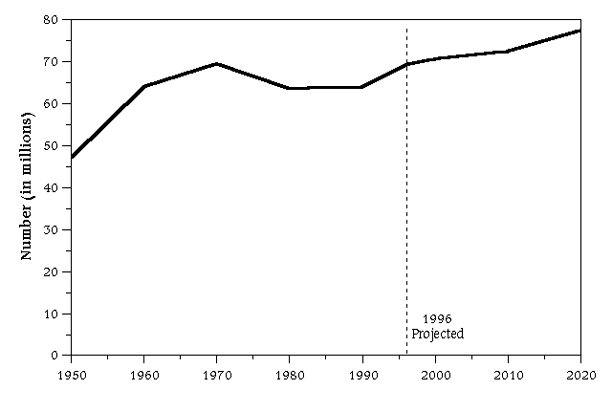
Though the total population of the United States has grown steadily over the last four decades, the trend in the number of children has been less steady, and the number of children has even shrunk during some periods.
Figure PF 1.1 presents trends in the total number of children under age 18 from 1950 through 1996, with projections through the year 2020. From 1950 to 1960, roughly the period of the baby boom, the number of children increased by 36 percent from 47.3 to 64.5 million. The number rose at a more modest rate in the ensuing decade to 69.8 million in 1970. The number actually declined to 63.7 million by 1980, and held steady over the next decade. Between 1990 and 1996, the number of children rose by more than five million to 69.4 million. The U.S. Census Bureau projects that the number of children will continue to rise over the next several decades, reaching 77.6 million by the year 2020.
Differences by Race and Ethnicity. Between 1996 and the year 2020, the number of children is projected to grow for all race and ethnic groups presented in the table (see Table PF 1.1). Increases will be proportionally greatest for Hispanic children, whose numbers are projected to grow from 10.0 to 17.2 million by the year 2020, an increase of more than 70 percent. Should these projections prove accurate, Hispanics could become the largest minority child population as early as 2010.
Figure PF 1.1
|
Source: U.S. Bureau of the Census, Current Population Reports, Series P-25, No. 311, Estimates of the Population of the United States by Single Years of Age, Color, and Sex, 1900 to 1959, pages 22-23, 42-43. Series P-25 No. 519, Estimates of the Population of the United States, By Age, Sex, and Race: April 1, 1960 to July 1, 1973, Table 2. Series P-25, No. 917, Preliminary Estimates of the Population of the United States by Age, Sex, and Race: 1970 to 1981, Table 2. Estimates of the Population of the United States by Age, Sex, Race, and Hispanic Origin: 1990 to 1995, Updated Tables, Appendix A. Series P-25, No. 1130, Projections of the Population of the United States by Age, Sex, Race, and Hispanic Origin: 1995 to 2050, Table 2.
Table PF 1.1
|
|||||||||||
|
|
|
|
|
|
|
|
|
|
|
|
|
|
|
|
|
|
|
|
|
|
Projected
|
|||
|
|
|
|
|
|
|
|
|
|
|||
|
|
|
1950
|
1960
|
1970
|
1980
|
1990
|
1996a
|
2000
|
2010
|
2020
|
|
|
|
|
||||||||||
| All Children |
47.3
|
64.5
|
69.8
|
63.7
|
64.2
|
69.4
|
70.8
|
72.5
|
77.6
|
||
| Age | |||||||||||
|
|
0-5 |
19.1
|
24.3
|
20.9
|
19.6
|
22.5
|
23.5
|
22.9
|
23.9
|
26.4
|
|
|
|
6-11 |
15.3
|
21.8
|
24.6
|
20.8
|
21.6
|
23.2
|
24.3
|
23.6
|
25.8
|
|
|
|
12-14 |
12.9
|
18.4
|
24.3
|
23.3
|
20.1
|
22.7
|
23.6
|
25
|
25.4
|
|
|
|
|
|
|
|
|
|
|
|
|
|
|
| Race/Ethnicity | |||||||||||
|
|
White |
41.3
|
55.7
|
59.3
|
52.5
|
51.3
|
54.9
|
55.4
|
55.2
|
57.9
|
|
|
|
Non-whiteb |
6
|
8.8
|
10.5
|
|
|
|
|
|
|
|
|
|
Black |
|
8.1
|
9.5
|
9.5
|
9.9
|
10.8
|
11.3
|
12.2
|
13.4
|
|
|
|
Hispanicc |
|
|
|
5.6
|
7.9
|
10
|
11
|
13.7
|
17.2
|
|
|
|
Asian |
|
|
|
1.1
|
2.2
|
2.9
|
3.3
|
4.3
|
5.4
|
|
|
|
American Indian |
|
|
|
0.5
|
0.7
|
0.8
|
0.8
|
0.9
|
1
|
|
| Note: a1996 estimate is for July 1. b"Non-white" refers to all races other than white, and includes black, Native American, Asian, and any other race except white. cPeople of Hispanic origin can be of any race. Source: U.S. Bureau of the Census, Current Population Reports, Series P-25, No. 311, Estimates of the Population of the United States by Single Years of Age, Color, and Sex, 1900 to 1959, pages 22-23, 42-43. Series P-25, No. 519, Estimates of the Population of the United States, By Age, Sex, and Race: April 1, 1960 to July 1, 1973, Table 2. Series P-25, No. 917, Preliminary Estimates of the Population of the United States by Age, Sex, and Race: 1970 to 1981, Table 2. Estimates of the Population of the United States by Age, Sex, Race, and Hispanic Origin: 1990 to 1995, Updated Tables, Appendix A. Series P-25, No. 1130, Projections of the Population of the United States by Age, Sex, Race, and Hispanic Origin: 1995 to 2050, Table 2. |
|||||||||||
PF 1.2 Children as a percentage of the population
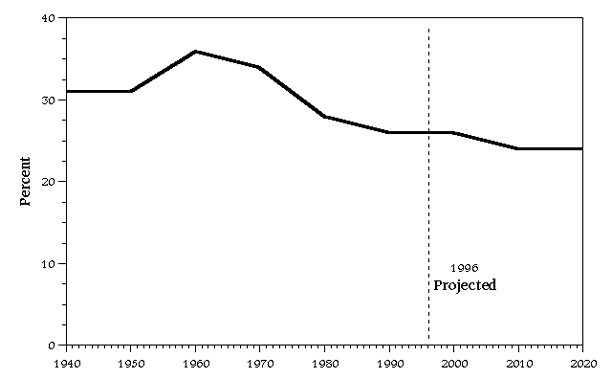
The proportion of the total population who are children can have important consequences for the entire population, including children. On the one hand, because children are for the most part dependent and in need of investment to become productive citizens, they may present special short-term fiscal challenges to society when they constitute a relatively higher proportion of the overall population. On the other hand, as they grow up to become productive adults they will provide support for those entering retirement and for the next generation of children.
Figure PF 1.2 illustrates trends in the proportion of the population under age 18 from 1940 through 1996, with projections through the year 2020. In 1940 and 1950, children constituted 31 percent of the overall population. During the next decade, children as a proportion of the population rose rapidly to 36 percent. The rise in birthrates that produced this increase in the proportion of children in the population during the 1950s is commonly known as the baby boom. Since that peak in 1960, the percentage has been declining to its current level of 26 percent. Projections by the Bureau of the Census predict that this proportion will drop further to 24 percent by the year 2010, and will remain at approximately that level through 2020.
Figure PF 1.2
|
Source: U.S. Bureau of the Census, 1990 Census of Population and Housing, Summary Population and Housing Characteristics (CPH-1-1) Table 1. U.S. Bureau of Census, 1970 Census Volume, Characteristics of the Population, U.S. Summary, Table 52. 1980 Census Volume, General Population Characteristics, U.S. Summary, Table 41. Current Population Reports, Series P-25, No. 311, Estimates of the Population of the Unites States by Single Years of Age, Color, and Sex, 1900 to 1959. Series P-25, No. 917, Preliminary Estimates of the Population of the United States by Age, Sex, and Race: 1970 to 1981, Table 2. PPL-41 Estimates of the Population of the United States by Age, Sex, Race, and Hispanic Origin: 1990 to 1995, Updated Tables, Appendix A. Series P-25, No. 1130, Projections of the Population of the United States by Age, Sex, Race, and Hispanic Origin: 1995 to 2050, Table 2.
Table PF 1.2
|
||||||||||
|
|
|
|
|
|
|
|
|
|
||
|
|
Projected
|
|||||||||
|
|
1940
|
1950
|
1960
|
1970
|
1980
|
1990
|
1996
|
2000
|
2010
|
2020
|
|
|
||||||||||
| All Children | ||||||||||
| Ages 0-17 |
31
|
31
|
36
|
34
|
28
|
26
|
26
|
26
|
24
|
24
|
|
Source: U.S. Bureau of the Census, 1990 Census of Population and Housing, Summary Population and Housing Characteristics (CPH-1-1) Table 1. U.S. Bureau of Census, 1970 Census Volume, Characteristics of the Population, U.S. Summary, Table 52. 1980 Census Volume, General Population Characteristics, U.S. Summary, Table 41. Current Population Reports, Series P-25, No. 311, Estimates of the Population of the Unites States by Single Years of Age, Color, and Sex, 1900 to 1959. Series P-25, No. 917, Preliminary Estimates of the Population of the United States by Age, Sex, and Race: 1970 to 1981, Table 2. PPL-41 Estimates of the Population of the United States by Age, Sex, Race, and Hispanic Origin: 1990 to 1995, Updated Tables, Appendix A. Series P-25, No. 1130, Projections of the Population of the United States by Age, Sex, Race, and Hispanic Origin: 1995 to 2050, Table 2. |
||||||||||
PF 1.3 Proportion of families containing children
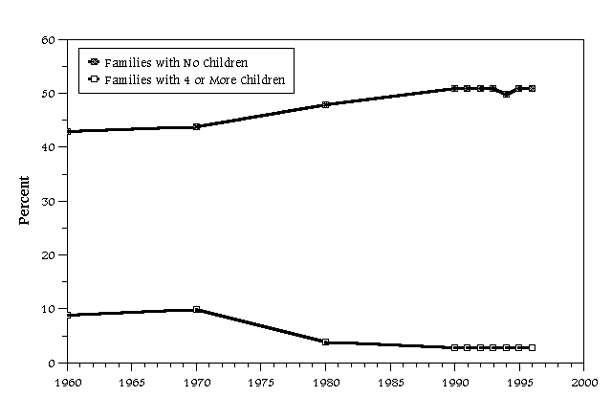
Since 1960, Americans have been moving toward having families with fewer children. Indeed, a growing percentage of families have no minor children of their own in their household. Between 1960 and 1996, the percentage of families with four or more own children under age 18 in the household decreased from nine percent to three percent (see Figure PF 1.3). During the same period, the proportion of families with no minor children grew from 43 percent to 51 percent.
Differences by Race and Ethnicity. These general trends are also evident when white, black, and Hispanic families are considered separately, though the levels are substantially different for each group (see Table PF 1.3). For example, between 1970 and 1996 the percentage of black families with four or more children dropped from 19 percent to five percent. The percentage for whites during that period went from nine percent to three percent. For Hispanic families, the percentage dropped from ten percent to seven percent between 1980 (the first year for which Hispanic estimates are available) and 1996.
Black and Hispanic families were considerably less likely than white families to be without any minor children, with proportions of 43 percent, 36 percent, and 52 percent, respectively in 1996. They were also both more likely than white families to have four or more children, though these differences were smaller than in previous decades.
Figure PF 1.3
|
Source: Estimates for 1960 - 1996 from Household and Family Characteristics, Current Population Reports, Series P-20 for various years.
Table PF 1.3
|
||||||||||||
|
|
|
|
|
|
|
|
|
|
|
|
||
|
|
|
1960
|
1970
|
1980
|
1990
|
1991
|
1992
|
1993
|
1994
|
1995
|
1996
|
|
|
|
|
|||||||||||
| All Families | ||||||||||||
|
|
Without own children |
43
|
44
|
48
|
51
|
51
|
51
|
51
|
50
|
51
|
51
|
|
|
|
One child |
19
|
18
|
21
|
21
|
20
|
20
|
20
|
20
|
20
|
20
|
|
|
|
2 children |
18
|
17
|
19
|
19
|
19
|
18
|
19
|
19
|
19
|
19
|
|
|
|
3 children |
11
|
11
|
8
|
7
|
7
|
7
|
7
|
8
|
7
|
7
|
|
|
|
4 or more children |
9
|
10
|
4
|
3
|
3
|
3
|
3
|
3
|
3
|
3
|
|
|
|
|
|||||||||||
| White Families | ||||||||||||
|
|
Without own children |
43
|
45
|
49
|
51
|
53
|
53
|
53
|
52
|
52
|
52
|
|
|
|
One child |
19
|
18
|
21
|
21
|
19
|
20
|
19
|
19
|
20
|
19
|
|
|
|
2 children |
18
|
18
|
19
|
19
|
18
|
18
|
19
|
19
|
19
|
19
|
|
|
|
3 children |
11
|
11
|
8
|
7
|
7
|
7
|
7
|
7
|
7
|
7
|
|
|
|
4 or more children |
9
|
9
|
4
|
3
|
3
|
3
|
2
|
2
|
2
|
3
|
|
|
|
|
|||||||||||
| Black Families | ||||||||||||
|
|
Without own children |
|
39
|
38
|
41
|
41
|
42
|
42
|
40
|
42
|
43
|
|
|
|
One child |
|
18
|
23
|
25
|
25
|
24
|
25
|
25
|
24
|
24
|
|
|
|
2 children |
|
15
|
20
|
19
|
19
|
19
|
18
|
20
|
20
|
18
|
|
|
|
3 children |
|
10
|
10
|
9
|
9
|
10
|
10
|
9
|
9
|
9
|
|
|
|
4 or more children |
|
19
|
8
|
6
|
6
|
5
|
5
|
5
|
5
|
5
|
|
|
|
|
|||||||||||
| Hispanic Families | ||||||||||||
|
|
Without own children |
|
|
31
|
37
|
36
|
36
|
37
|
36
|
36
|
36
|
|
|
|
One child |
|
|
23
|
23
|
22
|
22
|
23
|
22
|
23
|
23
|
|
|
|
2 children |
|
|
23
|
21
|
23
|
22
|
22
|
23
|
23
|
23
|
|
|
|
3 children |
|
|
13
|
12
|
12
|
13
|
12
|
13
|
12
|
12
|
|
|
|
4 or more children |
|
|
10
|
7
|
7
|
7
|
7
|
6
|
7
|
7
|
|
|
Source: Estimates for 1960 - 1996 from "Household and Family Characteristics," Current Population Reports, Series |
||||||||||||
PF 1.4 Race/Ethnicity composition
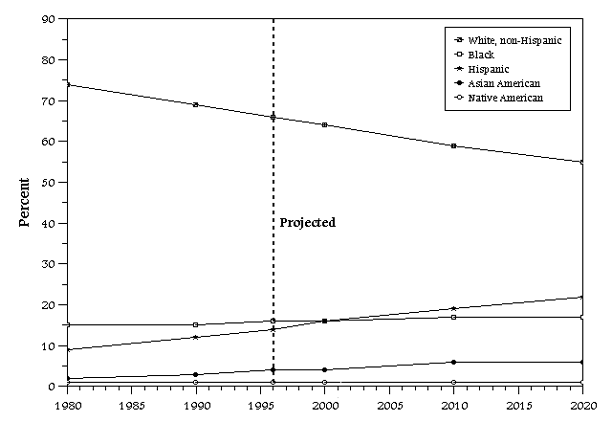
The United States has become increasingly racially and culturally diverse over the last three decades, and is projected to become even more so in the decades to come. Table PF 1.4 presents the racial and ethnic composition of Americas children from 1960 to 1996, and includes projections of likely changes in that composition through the year 2020 as estimated by the Bureau of the Census. As Figure PF 1.4 illustrates, as recently as 1980, nearly three-quarters (74 percent) of all children in this country were non-Hispanic whites. This proportion diminished to 66 percent in 1996, and is expected to continue a steady downward trend until, by the year 2020, non-Hispanic whites will constitute just over one half (55 percent) of all U.S. children. The historical trend for all whites is similar though less dramatic, since Hispanics comprise an increasingly large proportion of the white population (see Table PF 1.4).
As of 1996, blacks constituted the largest minority population group at 16 percent of the total child population. (see Table PF 1.4). They were followed by Hispanics at 14 percent, Asian Americans at 4 percent, and Native Americans at 1 percent. By the year 2010, Hispanics are projected to be 19 percent of the child population, supplanting blacks as the largest minority group in the child population. By the year 2020, more than one in five American children are expected to be Hispanic, nearly double the proportion in 1990. The Asian American population is also expected to continue its rapid growth, increasing from 4 percent in 1996 to 6 percent by the year 2020.
Figure PF 1.4
|
Note: Population estimates for July 1.
Sources: U.S. Bureau of the Census, Current Population Reports, Series P-25, No. 519 Estimates of the Population of the United States by Age, Sex, and Race: April, 1960 to July 1, 1973. U.S. Bureau of the Census, Current Population Reports, Series P-25, No. 1095, U.S. Population Estimates, by Age, Sex, Race, and Hispanic Origin: 1980-1991. U.S. Bureau of the Census, Population Division, release, PPL-41, United States Population Estimates by Age, Sex, Race, and Hispanic Origin 1990 to 1995 and updated tables, Appendix A. U.S. Bureau of the Census, Current Population Reports, Series P-25, No. 1130, Projections of the Population of the United States by Age, Sex, Race, and Hispanic Origin: 1995 to 2050.
Table PF 1.4
|
||||||||
|
|
|
|
|
|
|
|
||
|
|
|
|
|
|
|
|
|
|
|
|
Projected
|
|||||||
|
|
1960
|
1970
|
1980
|
1990
|
1996
|
2000
|
2010
|
2020
|
|
|
||||||||
|
|
||||||||
| White |
86
|
85
|
82
|
80
|
79
|
78
|
76
|
75
|
| White, non-Hispanic |
--
|
--
|
74
|
69
|
66
|
64
|
59
|
55
|
| Black |
13
|
14
|
15
|
15
|
16
|
16
|
17
|
17
|
| Hispanic |
--
|
--
|
9
|
12
|
14
|
16
|
19
|
22
|
| Asian American |
--
|
--
|
2
|
3
|
4
|
4
|
6
|
6
|
| Native American |
--
|
--
|
1
|
1
|
1
|
1
|
1
|
1
|
| Note: All population estimates for July 1.
Sources: U.S. Bureau of the Census, Current Population Reports, Series P-25, No. 519 "Estimates of the Population of the United States by Age, Sex, and Race: April, 1960 to July 1, 1973. U.S. Bureau of the Census, Current Population Reports, Series P-25 No. 1095, "U.S. Population Estimates, by Age, Sex, Race, and Hispanic Origin: 1980-1991." U.S. Bureau of the Census, Population Division, release, PPL-41, "United States Population Estimates by Age, Sex, Race, and Hispanic Origin 1990 to 1995" and updated tables, Appendix A. U.S. Bureau of the Census, Current Population Reports, Series P-25, No. 1130, "Projections of the Population of the United States by Age, Sex, Race, and Hispanic Origin: 1995 to 2050. |
||||||||
PF 1.5 Immigrant children
The United States is a nation of immigrants. Rates of immigration have varied substantially over periods of our history, as have the countries and cultures from which these immigrants originate. Recently the U.S. has been experiencing a period of high immigration. Immigrant children are of particular interest, since they may have special needs that must be addressed through the education system.
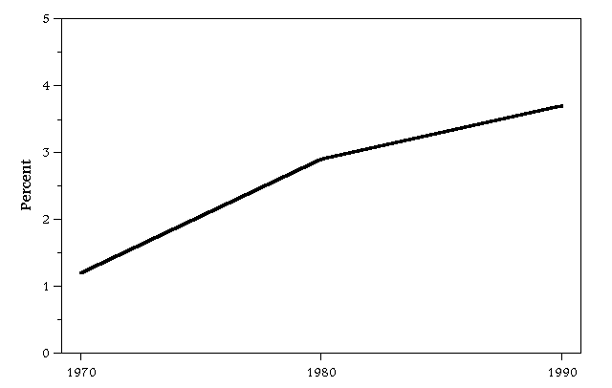
The percentage of Americas children and youth who are foreign born has been increasing steadily over the last several decades, from 1.2 percent in 1970 to 3.7 percent in 1990 (see Figure PF 1.5.A).
Differences by Age. Older children are more likely than younger children to be foreign born. In 1990, 6.5 percent of youth ages 15 to 19 were foreign born, compared to only 1.4 percent of children under age five (see Table PF 1.5).
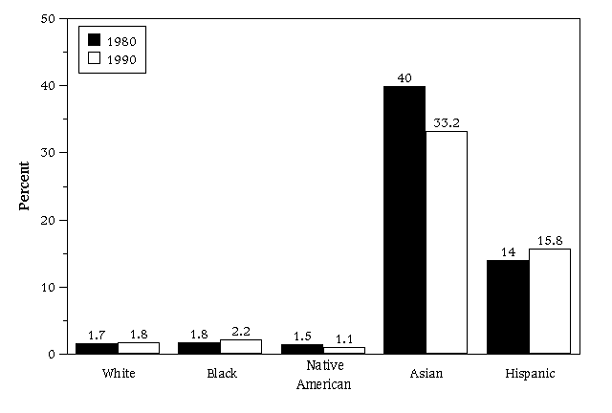
Differences by Race and Ethnicity. The percentage of children who are foreign-born varies substantially by racial and ethnic background (see Figure PF 1.5.B). In 1980, less than two percent of whites, blacks and Native Americans were foreign born, compared to 40.0 percent of Asians and 14.0 percent of Hispanics. By 1990, the percentage of foreign-born Asian children had declined from 40.0 to 33.2 percent, while the percentage of foreign-born Hispanic children increased to almost 16 percent.
Figure PF 1.5.A
|
Notes: aIncludes both immigrants and illegal aliens.
Source: U.S. Bureau of the Census, The Foreign-Born Population in the U.S., 1990, CP-3-1, and 1990 STF-3A census files. U.S. Bureau of the Census, Detailed Characteristics of the Population, 1980, Chapter D, U.S. Summary. U.S. Bureau of the Census, National Origin and Language, PC(2-1A), 1970.
Figure PF 1.5.B
|
Notes: aIncludes both immigrants and illegal aliens.
Source: U.S. Bureau of the Census, The Foreign-Born Population in the U.S., 1990, CP-3-1, and 1990 STF-3A census files. U.S. Bureau of the Census, Detailed Characteristics of the Population, 1980, Chapter D, U.S. Summary. U.S. Bureau of the Census, National Origin and Language, PC(2-1A), 1970.
| Table PF 1.5 Percentage of U.S. Children Ages 19 and Under Who Were Foreign-Born by Age and Race/Ethnicity: 1970-1990 |
||||||
|
|
|
|
|
|||
|
|
|
1970
|
1980
|
1990
|
||
|
|
|
|
||||
| All Children |
1.2
|
2.9
|
3.7
|
|||
|
|
|
|
|
|
||
| Under 5 years |
|
0.6
|
1.4
|
1.4
|
||
| 5 to 9 years |
|
1.1
|
2.6
|
2.7
|
||
| 10-14 years |
|
1.4
|
3.2
|
4.3
|
||
| 15-19 years |
|
1.8
|
4.1
|
6.5
|
||
|
|
|
|
|
|
||
| Race/Ethnicity | ||||||
|
|
White |
1.2
|
1.7
|
1.8
|
||
|
|
Black |
0.5
|
1.8
|
2.2
|
||
|
|
American Indian, Eskimo, and Aleut |
|
1.5
|
1.1
|
||
|
|
Asian and Pacific Islander |
|
40
|
33.2
|
||
|
|
Hispanic |
|
14
|
15.8
|
||
|
Notes: aIncludes both immigrants and illegal aliens. Source: U.S. Bureau of the Census, The Foreign-Born Population in the U.S., 1990, CP-3-1, and 1990 STF-3A census files. U.S. Bureau of the Census, Detailed Characteristics of the Population, 1980, Chapter D, U.S. Summary. U.S. Bureau of the Census, National Origin and Language, PC(2-1A), 1970. |
||||||
PF 1.6 Children as a percentage of the dependent population
Children and senior citizens frequently depend on assistance from family members, friends, and government agencies. Both the young and old are less likely than other age groups to fully support themselves through participation in the labor market. Varying proportions of both the child population and the elderly population therefore receive income transfers, health care, and other services through public programs. This indicator looks at children (under age 18) as a percentage of the dependent population (children under age 18 + adults ages 65 and older).
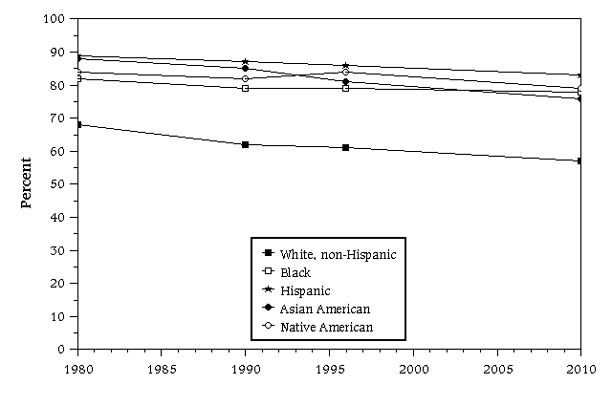
Senior Citizen Population Grows in Relation to Child Population. The number of children in the U.S. declined after 1970, while the number of senior citizens increased (see Table PF 1.1 earlier in this volume). Children under 18 went from being 79 percent of the dependent population in 1960 to 67 percent , where it has stayed since 1990 (see Table PF1.6). Despite the fact that the child population is growing again, this slow downward trend is expected to continue, and the growth of the elderly population will continue to outpace growth in the child population.
Differences by Race and Ethnicity. The trend toward a larger senior population relative to the child population is occurring among all racial and ethnic groups. Table PF 1.6 shows that between 1980 and 1990, children declined as a percentage of the dependent population across all racial and ethnic groups. Population projections for 2010 suggest that there will be even more seniors relative to children in each group at that time.
Yet there are also considerable differences across groups in the number of children relative to senior citizens. There are far fewer white children relative to white senior citizens than there are minority children relative to minority seniors. White children are currently estimated to make up about 61 percent of the white dependent population. African-Americans are closest to whites with children making up 79 percent of the combined child and elderly population total. Among Hispanics, children outnumber seniors by the greatest margin, with children estimated to be 86 percent of the dependent population.
Figure PF 1.6
|
Source: U.S. Bureau of the Census, Current Population Reports, P25-1095. U.S. Bureau of the Census, Population Division, release PPL-41, United States Population Estimates by Age, Sex, Race, and Hispanic Origin 1990 to 1995" and updated tables. Day, Jennifer Cheeseman, Population Projections of the United States by Age, Race, and Hispanic Origin: 1995 to 2050. U.S. Bureau of the Census, Current Population Reports, P25-1130, U.S. Government Printing Office, Washington, D.C. 1996.
Table PF 1.6
|
||||||||||||||||||||||||||||||||||||||||
|
|
||||||||||||||||||||||||||||||||||||||||
|
1960
|
1970
|
1980
|
1990
|
Estimate
1996
|
Projecteda
2010
|
|||||||||||||||||||||||||||||||||||
|
|
|
|
|
|
|
|
|
|||||||||||||||||||||||||||||||||
|
|
|
|||||||||||||||||||||||||||||||||||||||
| Total |
|
79
|
78
|
71
|
67
|
67
|
65
|
|||||||||||||||||||||||||||||||||
|
|
|
|
|
|
|
|
|
|
|
|
|
|
|
|
|
|
|
|
||||||||||||||||||||||
|
|
White, non Hispanic |
|
|
68
|
62
|
61
|
57
|
|||||||||||||||||||||||||||||||||
|
|
Black |
|
|
82
|
79
|
79
|
78
|
|||||||||||||||||||||||||||||||||
|
|
Hispanic |
|
|
89
|
87
|
86
|
83
|
|||||||||||||||||||||||||||||||||
|
|
Asian American |
|
|
88
|
85
|
81
|
76
|
|||||||||||||||||||||||||||||||||
|
|
Native Americanb |
|
|
84
|
82
|
84
|
79
|
|||||||||||||||||||||||||||||||||
|
|
|
|
|
|
|
|
|
|
|
|
|
|
|
|
|
|
|
|
||||||||||||||||||||||
|
Notes: aProjection is based on the Census Bureaus middle series. Source: U.S. Bureau of the Census, Current Population Reports, P25-1095. U.S. Bureau of the Census, Population Division, release PPL-41, "United States Population Estimates by Age, Sex, Race, and Hispanic Origin 1990 to 1995" and updated tables. Day, Jennifer Cheeseman, Population Projections of the United States by Age, Race, and Hispanic Origin: 1995 to 2050. U.S. Bureau of the Census, Current Population Reports, P25-1130, U.S. Government Printing Office, Washington, D.C. 1996. |
||||||||||||||||||||||||||||||||||||||||
FAMILY STRUCTURE
PF 2.1 Family structure: number of parents in household
Family structure is correlated with many factors that contribute to child well-being such as material wealth. It is also associated with many child outcomes. For example, children from disrupted or never-married families are somewhat more likely to use alcohol and drugs, to become teen parents, and to achieve lower earnings than are children from intact families, and they are less likely to attain a high school diploma. These associations are evident even after controlling for family socioeconomic status, race, and other background factors.1 Nevertheless, the great majority of children brought up in single-parent families do well. In particular, differences in well-being between children from divorced and intact families tend, on average, to be moderate to small.2
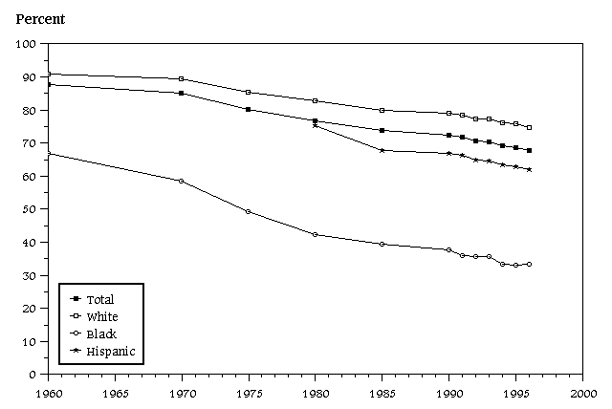
Between 1960 and 1996, the proportion of children in two-parent families (about three-quarters of whom were families with both biological parents present)3 decreased from 88 percent to 68 percent (see Figure PF 2.1)
Differences by Race and Ethnicity. The decrease in the proportion of children living in two-parent families is evident for both black and white children, though the descent is significantly steeper for black children. Between 1960 and 1996, the proportion of black children living in two-parent families fell by 34 percentage points, from 67 percent to 33 percent. By contrast, the drop for white children was only 16 percentage points, from 91 percent to 75 percent. For Hispanic children, the trend is also towards a smaller proportion of children in two-parent families, decreasing from 75 percent to 62 percent between 1980 (the first year for which Hispanic estimates are available) and 1996.
Table PF 2.1.B presents 1980 and 1990 census data for Asian and Native American families in addition to data on white, black, and Hispanic families. The percent of children living in two-parent families dropped for all five groups during that period. In 1990, Asian children were the most likely to live in a two-parent household at 84 percent followed closely by whites at 82 percent, then Hispanics (71 percent), Native Americans (64 percent) and blacks (47 percent).
Figure PF 2.1
|
Source: 1960 data U.S. Bureau of the Census, 1960 Census of Population, PC (2) - 4B, Persons by Family Characteristics, Tables 1 and 19. 1970 Hispanic data U.S. Bureau of the Census, 1970 Census of the Population, PC (2) - 1 C, Persons of Spanish Origin, Table 4. Data from 1970 - 1995 U.S. Bureau of the Census, Current Population Reports, Series P20-491, Marital Status and Living Arrangements: March 1995, and earlier reports. 1996 data U.S. Bureau of Census Unpublished tables.
Table PF 2.1.A
|
|||||||||||||
|
1960
|
1970a
|
1975
|
1980a
|
1985
|
1990
|
1991
|
1992
|
1993
|
1994
|
1995
|
1996
|
||
|
|
|
|
|
|
|
|
|
|
|
|
|
||
| Totals: | |||||||||||||
|
|
Two Parents |
88
|
85
|
80
|
77
|
74
|
73
|
72
|
71
|
71
|
69
|
69
|
68
|
|
|
Mother Only |
8
|
11
|
16
|
18
|
21
|
22
|
22
|
23
|
23
|
23
|
23
|
24
|
|
|
Father Only |
1
|
1
|
2
|
2
|
3
|
3
|
3
|
3
|
3
|
3
|
4
|
4
|
|
|
No Parent |
3
|
3
|
3
|
4
|
3
|
3
|
3
|
3
|
3
|
4
|
4
|
4
|
|
|
|
||||||||||||
| White | |||||||||||||
|
|
Two Parents |
91
|
90
|
85
|
83
|
80
|
79
|
78
|
77
|
77
|
76
|
76
|
75
|
|
|
Mother Only |
6
|
8
|
11
|
14
|
16
|
16
|
17
|
18
|
17
|
18
|
18
|
18
|
|
|
Father Only |
1
|
1
|
2
|
2
|
2
|
3
|
3
|
3
|
3
|
3
|
3
|
4
|
|
|
No Parent |
2
|
2
|
2
|
2
|
2
|
2
|
2
|
2
|
2
|
3
|
3
|
3
|
|
|
|
|
|
|
|
|
|
|
|
|
|
|
|
| Black | |||||||||||||
|
|
Two Parents |
67
|
58
|
49
|
42
|
40
|
38
|
36
|
36
|
36
|
33
|
33
|
33
|
|
|
Mother Only |
20
|
30
|
41
|
44
|
51
|
51
|
54
|
54
|
54
|
53
|
52
|
53
|
|
|
Father Only |
2
|
2
|
2
|
2
|
3
|
4
|
4
|
3
|
3
|
4
|
4
|
4
|
|
|
No Parent |
11
|
10
|
8
|
12
|
7
|
8
|
6
|
7
|
7
|
10
|
11
|
9
|
|
|
|
||||||||||||
| Hispanicb | |||||||||||||
|
|
Two Parents |
--
|
--
|
--
|
75
|
68
|
67
|
66
|
65
|
65
|
63
|
63
|
62
|
|
|
Mother Only |
--
|
--
|
--
|
20
|
27
|
27
|
27
|
28
|
28
|
28
|
28
|
29
|
|
|
Father Only |
--
|
--
|
--
|
2
|
2
|
3
|
3
|
4
|
4
|
4
|
4
|
4
|
|
|
No Parent |
--
|
--
|
--
|
3
|
3
|
3
|
4
|
3
|
4
|
5
|
4
|
5
|
|
|
|
||||||||||||
|
|
|||||||||||||
| Note: aRevised estimate based on population from the decennial census for that year. bHispanics may be of any race. Source: 1960 data U.S. Bureau of the Census, 1960 Census of Population, PC (2) - 4B, "Persons by Family Characteristics," Tables 1 and 19. 1970 Hispanic data U.S. Bureau of the Census, 1970 Census of the Population, PC (2) - 1 C, "Persons of Spanish Origin," Table 4. Data from 1970 - 1995 U.S. Bureau of the Census, Current Population Reports, Series P20-491, "Marital Status and Living Arrangements: March 1995," and earlier reports. 1996 data U.S. Bureau of Census unpublished tables. |
|||||||||||||
Table PF 2.1.B
|
|||||
|
|
|
|
|
|
|
|
|
|
|
1980
|
1990
|
|
|
|
|
|
|
|
|
|
|
Total |
|
|
|
|
|
|
|
Married couple |
81.5
|
77.1
|
|
|
|
|
Female head |
16.1
|
17.7
|
|
|
|
|
Male head |
2.4
|
4.1
|
|
|
|
|
|
|
|
|
|
|
White |
|
|
|
|
|
|
|
Married couple |
85.7
|
82.2
|
|
|
|
|
Female head |
12.1
|
14
|
|
|
|
|
Male head |
2.2
|
3.7
|
|
|
|
|
|
|
|
|
|
|
Black |
|
|
|
|
|
|
|
Married couple |
54.3
|
46.9
|
|
|
|
|
Female head |
41.7
|
47.6
|
|
|
|
|
Male head |
4
|
5.5
|
|
|
|
|
|
|
|
|
|
|
Hispanic |
|
|
|
|
|
|
|
Married couple |
76.6
|
71.4
|
|
|
|
|
Female head |
20.4
|
22.1
|
|
|
|
|
Male head |
3.1
|
6.5
|
|
|
|
|
|
|
|
|
|
|
Asian American |
|
|
|
|
|
|
|
Married couple |
88.5
|
84.3
|
|
|
|
|
Female head |
9.4
|
9.8
|
|
|
|
|
Male head |
2.1
|
2.9
|
|
|
|
|
|
|
|
|
|
|
Native American |
|
|
|
|
|
|
|
Married couple |
71.5
|
63.6
|
|
|
|
|
Female head |
24.2
|
28.7
|
|
|
|
|
Male head |
4.3
|
7.8
|
|
|
Source: "The Challenge of Change: What the 1990 Census Tells Us About Children," prepared by the Population Reference Bureau for the Center for the Study of Social Policy, Table 14, with data from the Bureau of the Census, 1980 Census of Population, "General Social and Economic Characteristics," PC80-1-C1, United States Summary, tables 100,121, and 131; and Census of Population and Housing 1990, Summary Tape File 3, tables P-19, P-20, and P-21. |
|||||
1 Amato, P.R. 1993. Childrens Adjustment to Divorce: Theories, Hypotheses, and Empirical Support. Journal of Marriage and the Family. 55: 23-58.
2 Zill, N., Morrison, D., and Coiro, M. 1993. Long-term Effects of Parental Divorce on Parent-Child Relationships, Adjustment and Achievement in Early Adulthood. Journal of Family Psychology. 7(1): 91-103.
PF 2.2 Percentage of all births to unmarried mothers
Children who are born to single mothers regardless of the age of the mother are considerably more likely than children born to two parents to grow up poor, to spend large portions of their childhood without two parents, and to become single parents themselves.4
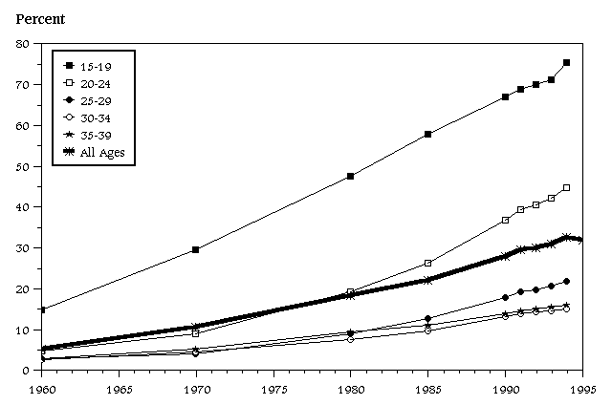
Between 1960 and 1994, there was a considerable increase in the percentage of all births to unmarried mothers from 5.3 percent in 1960 to 32.6 percent in 1994 (see Figure PF 2.2). However, preliminary data for 1995, displayed in Table PF 2.2, indicate a small decline in the percentage of all births to unmarried mothers, to 32.0 percent.
Differences by Age of the Mother. Nonmarital childbearing increased among mothers of all ages between 1960 and 1994 (see Table PF 2.2). For mothers ages 15 to 19, nonmarital births increased from 14.8 percent in 1960 to 75.5 in 1994. For mothers ages 20 to 24, nonmarital births increased from 4.8 percent in 1960 to 44.9 percent in 1994. For mothers in all age groups over age 24, nonmarital births increased from three percent or less in 1960 to between 15 and 22 percent in 1994. Age data are not yet available for 1995, so it is unclear whether the overall decline in the percentage of nonmarital births noted for that year occurred for mothers of all ages or only among certain age groups.
Contrary to popular opinion, nonmarital childbearing does not occur primarily among teenagers. In 1994, about 31 percent of nonmarital births were to teenagers (young women under age 20), 35 percent were to women ages 20 to 24, and about 35 percent were to women ages 25 and older.5
Differences by Race and Ethnicity. The percentage of all births to unmarried mothers increased steadily for whites, blacks, and Hispanics between 1980 and 1994.6 Preliminary data indicate a slight decline for all three groups in 1995. In 1994, Asian and white women had the lowest percentage of nonmarital births at 24.1 and 25.5 percent, respectively. Hispanics were next at 43.1 percent, followed by American Indian and black women at 57.0 percent and 70.5 percent. This ordering is the same for all age groups, though the size of the difference can vary substantially by the age of the mother. For young women ages 15 to 19, for example, whites and Hispanics have very similar percentages of births to unmarried mothers 67.6 and 69.7 percent, respectively while the percentage among young black women ages 15 to 19 is much higher at 95.3 percent. By ages 25-29, however, percentages for Hispanic women move midway between white and black rates, with whites at 16.5 percent, Hispanics at 33.2 percent, and blacks at 57.3 percent (see Table PF 2.2).
Figure PF 2.2
|
Source: 1960 - 1992 data: Ventura, S.J., 1995. Births to Unmarried Mothers: United States, 1980-92. Vital and Health Statistics Series 21, No. 53, U.S. Department of Health and Human Services, Public Health Service, June 1995. 1992 Hispanic data from unpublished tables; Stephanie Ventura: National Center for Health Statistics. 1993 data: Ventura, S.J., Martin, J.A., Taffel, S.M., et. al. Advance Report of Final Natality Statistics, 1993. Monthly Vital Statistics Report; Vol. 44, No. 3, Supp. 1, Hyattsville, Maryland: National Center for Health Statistics, 1995. 1994 data: Ventura, S.J., Martin, J.A., Matthew, T.J., Clarke, S.C. Advance Report of Final Natality Statistics, 1994. Monthly Vital Statistics Report; Vol. 44, No. 11, Supp., Hyattsville, Maryland: National Center for Health Statistics, 1996. 1995 data: Rosenberg, H.M., Ventura, S.J., Maurer, J.D., et. al. Births and Deaths: United States, 1995. Monthly Vital Statistics Report; Vol. 45, No. 3, Supp. 2, Hyattsville, Maryland: National Center for Health Statistics, 1996.
Table PF 2.2
|
||||||||||||||
|
1960
|
1970
|
1980
|
1985
|
1990
|
1991
|
1992
|
1993
|
1994
|
1995
|
|||||
| All Races | ||||||||||||||
| All Ages |
5.3
|
10.7
|
18.4
|
22
|
28
|
29.5
|
30.1
|
31
|
32.6
|
32
|
||||
| Ages 15-19 |
14.8
|
29.5
|
47.6
|
58
|
67.1
|
68.8
|
70
|
71.3
|
75.5
|
|
||||
| Ages 20-24 |
4.8
|
8.9
|
19.4
|
26.3
|
36.9
|
39.4
|
40.7
|
42.2
|
44.9
|
|
||||
| Ages 25-29 |
2.9
|
4.1
|
9.0
|
12.7
|
18
|
19.2
|
19.8
|
20.7
|
21.8
|
|
||||
| Ages 30-34 |
2.8
|
4.5
|
7.5
|
9.7
|
13.3
|
14.0
|
14.3
|
14.7
|
15.1
|
|
||||
| Ages 35-39 |
3.0
|
5.2
|
9.4
|
11.2
|
13.9
|
14.6
|
15.2
|
15.6
|
16.1
|
|
||||
| White | ||||||||||||||
| All Ages |
2.3
|
5.7
|
11.2
|
14.7
|
20.4
|
21.8
|
22.6
|
23.6
|
25.5
|
25.3
|
||||
| Ages 15-19 |
7.2
|
17.1
|
33.1
|
44.8
|
56.4
|
58.8
|
60.4
|
62.3
|
67.6
|
|
||||
| Ages 20-24 |
2.2
|
5.2
|
11.7
|
17.7
|
27.8
|
30.2
|
31.7
|
33.4
|
36.3
|
|
||||
| Ages 25-29 |
1.1
|
2.1
|
5.2
|
8.1
|
12.6
|
13.7
|
14.3
|
15.2
|
16.5
|
|
||||
| Ages 30-34 |
1.0
|
2.1
|
4.6
|
6.3
|
9.3
|
9.8
|
10.2
|
10.6
|
11.1
|
|
||||
| Ages 35-39 |
1.3
|
2.7
|
6.4
|
8.1
|
10.3
|
10.9
|
11.4
|
11.7
|
12.3
|
|
||||
| Black | ||||||||||||||
|
All Ages
|
37.6
|
56.1
|
61.2
|
66.5
|
67.9
|
68.1
|
68.7
|
70.5
|
69.5
|
|||||
| Ages 15-19 |
62.7
|
85.7
|
90.2
|
92
|
92.3
|
92.6
|
92.9
|
95.3
|
|
|||||
| Ages 20-24 |
31.3
|
57
|
65.4
|
72.6
|
74.7
|
75.2
|
76.7
|
79.0
|
|
|||||
| Ages 25-29 |
20.3
|
36.8
|
45.2
|
53.3
|
54.7
|
55
|
55.8
|
57.3
|
|
|||||
| Ages 30-34 |
19.6
|
29.6
|
37
|
45.2
|
46.5
|
46.7
|
46.9
|
47.4
|
|
|||||
| Ages 35-39 |
18.6
|
28.4
|
35.1
|
42.0
|
43.8
|
44.7
|
44.8
|
45.8
|
|
|||||
| Hispanic | ||||||||||||||
| All Ages |
|
|
23.6
|
29.5
|
36.7
|
38.5
|
39.1
|
40
|
43.1
|
40.8
|
||||
| Ages 15-19 |
|
|
41.9
|
51.3
|
53.7
|
61.2
|
61.9
|
62.8
|
69.7
|
|
||||
| Ages 20-24 |
|
|
23.8
|
30.9
|
35.1
|
41.5
|
42.3
|
43.4
|
47.0
|
|
||||
| Ages 25-29 |
|
|
15.9
|
22.2
|
25.7
|
30.3
|
30.8
|
31.7
|
33.2
|
|
||||
| Ages 30-34 |
|
|
15.2
|
19.6
|
23.0
|
26.6
|
27.2
|
27.5
|
28.6
|
|
||||
| Ages 35-39 |
|
|
16.2
|
20.8
|
23.2
|
27.6
|
28.5
|
29.0
|
30.3
|
|
||||
| Asian | ||||||||||||||
| All Ages |
|
|
|
|
|
|
|
|
16.2
|
|
||||
| Ages 15-19 |
|
|
|
|
|
|
|
|
62.7
|
|
||||
| Ages 20-24 |
|
|
|
|
|
|
|
|
30.0
|
|
||||
| Ages 25-29 |
|
|
|
|
|
|
|
|
11.3
|
|
||||
| Ages 30-34 |
|
|
|
|
|
|
|
|
8.0
|
|
||||
| Ages 35-39 |
|
|
|
|
|
|
|
|
8.8
|
|
||||
| American Indian | ||||||||||||||
| All Ages |
|
|
|
|
|
|
|
|
57.0
|
|
||||
| Ages 15-19 |
|
|
|
|
|
|
|
|
82.9
|
|
||||
| Ages 20-24 |
|
|
|
|
|
|
|
|
60.6
|
|
||||
| Ages 25-29 |
|
|
|
|
|
|
|
|
45.5
|
|
||||
| Ages 30-34 |
|
|
|
|
|
|
|
|
40.6
|
|
||||
| Ages 35-39 |
|
|
|
|
|
|
|
|
38.5
|
|
||||
|
Notes: aBirths from 1980 onwards by race of mother. Tabulations prior to 1980 are by race of child, which assigns the child to the race of the nonwhite parent, if any, or to the race of the father, if both are nonwhite. Source: 1960 - 1992 data: Ventura, S.J., 1995. Births to Unmarried Mothers: United States, 1980-92. Vital and Health Statistics Series 21, No. 53, U.S. Department of Health and Human Services, Public Health Service, June 1995. 1992 Hispanic data from unpublished tables; Stephanie Ventura: National Center for Health Statistics. 1993 data: Ventura, S.J., Martin, J.A., Taffel, S.M., et. al. Advance Report of Final Natality Statistics, 1993. Monthly Vital Statistics Report; Vol. 44, No. 3, Supp. 1, Hyattsville, Maryland: National Center for Health Statistics, 1995. 1994 data: Ventura, S.J., Martin, J.A., Matthew, T.J., Clarke, S.C. Advance Report of Final Natality Statistics, 1994. Monthly Vital Statistics Report; Vol. 44, No. 11, Supp., Hyattsville, Maryland: National Center for Health Statistics, 1996. 1994 data for Asians and American Indians from unpublished tables; Stephanie Ventura: National Center for Health Statistics. 1995 data: Rosenberg, H.M., Ventura, S.J., Maurer, J.D., et. al. Births and Deaths: United States, 1995. Monthly Vital Statistics Report; Vol. 45, No. 3, Supp. 2, Hyattsville, Maryland: National Center for Health Statistics, 1996. Hispanic data for 1980: Ventura, S.J., Births of Hispanic parentage, 1980. Monthly Vital Statistics Report, volume 32, no. 6, Supp., Hyattsville, MD: Public Health Service. 1983. Hispanic data for 1985: Ventura, S.J. Births of Hispanic parentage, 1985. Monthly Vital Statistics Report; vol. 36, no. 11 Supp., Hyattsville, MD: Public Health Service. Hispanic data for 1990 and 1991: National Center for Health Statistics, Vital Statistics of the United States Vol. I Natality (table 1-46). Issues for 1990-91. |
||||||||||||||
4 See Ventura, S.J., 1995. Births to Unmarried Mothers: United States, 1980-1992. NCHS Series 21, No. 53. U.S. Department of Health and Human Services; and McLanahan, S., and Sandefur, G. 1994. Growing up with a single parent: What hurts, what helps. Cambridge, Mass.: Harvard University Press.
5 Ventura, S.J., Martin, J.A., Matthew, T.J., Clarke, S.C. Advance Report of Final Natality Statistics, 1994. Monthly Vital Statistics Report; Vol. 44, No. 11, Supp., Hyattsville, Maryland: National Center for Health Statistics, 1996.
6 Data are available for whites from 1960, and for blacks from 1970, indicating that the percent of births which were nonmarital had also been increasing prior to 1980 for those races. Data for Hispanics are only available starting in 1980.
PF 2.3 Foster care
A child is placed in foster care when a court determines that his or her family cannot provide a minimally safe environment. This determination often follows an investigation by a state or county child protective services worker. Placement most commonly occurs either because a member of a household has physically or sexually abused a child or because a childs caretaker(s) has severely neglected the child. In some cases, children with severe emotional disturbances may also be put into foster care.
Since both federal and state laws discourage removal of children from their families unless necessary to ensure a childs safety, placement in foster care is an extreme step taken only when a child is in immediate danger or when attempts to help the family provide a safe environment have failed. Thus, the frequency of placements in foster care is an indicator of family dysfunction that is so severe that a child cannot remain safely with his or her family.
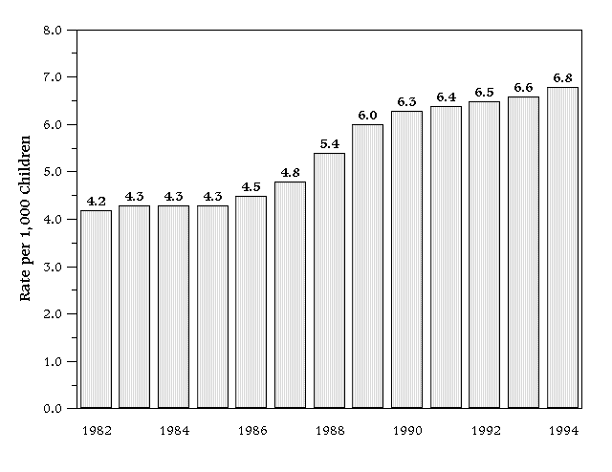
The number of children in foster care rose sharply from 262 thousand in 1982 to 462 thousand in 1994. As shown in Figure PF 2.3, the rate of children living in foster care (i.e., the number of children in foster care per one thousand children under age 18) also rose dramatically during the same time period, from 4.2 foster children per one thousand children under age 18 in 1982 to 6.8 in 1994 an increase of over 60 percent. Between 1990 and 1994, the rate of children in foster care continued to increase, but at a slower pace.
Figure PF 2.3
|
Note: Estimate of total is the number of children in foster care on the last day of the fiscal year. 1994 is the last year in which data on foster care was collected through the Voluntary Cooperative Information System (VCIS). The Administration on Children and Families (ACF) has implemented the Adoption and Foster are Analysis and Reporting System (AFCARS) as a replacement for VCIS. While VCIS was a voluntary reporting system, states are required to participate in AFCARS and must use uniform definitions. Most importantly, AFCARS collects case-level foster care data. Thus, the new system may bring about a significant change in estimates of children in foster care. However, the first release of data from AFCARS show no significant change in estimates of children in foster care.
Source: Tatara, Tashio. U.S. Child Substitute Care Flow Data for FY 1993 and Trends in the State Child Substitute Care Populations, VCIS Research Notes, No. 11, August 1995. U.S. Bureau of the Census, Statistical Abstract of the United States, 1995 (Washington, DC: U.S. Government Printing Office, 1995).
Table PF 2.3
|
||||||||||||||
|
1982
|
1983
|
1984
|
1985
|
1986
|
1987
|
1988
|
1989
|
1990
|
1991
|
1992
|
1993
|
1994
|
||
|
|
|
|
|
|
|
|
|
|
|
|
|
|
||
| Total Number | ||||||||||||||
| (in thousands) |
262
|
269
|
270
|
270
|
280
|
300
|
340
|
383
|
400
|
414
|
427
|
445
|
462
|
|
| Rate | ||||||||||||||
| (per thousand) |
4.2
|
4.3
|
4.3
|
4.3
|
4.5
|
4.8
|
5.4
|
6
|
6.3
|
6.4
|
6.5
|
6.6
|
6.8
|
|
| Note: Estimate of total is the number of children in foster care on the last day of the fiscal year. 1994 is the last year in which data on foster care was collected through the Voluntary Cooperative Information System (VCIS). The Administration on Children and Families (ACF) has implemented the Adoption and Foster are Analysis and Reporting System (AFCARS) as a replacement for VCIS. While VCIS was a voluntary reporting system, states are required to participate in AFCARS and must use uniform definitions. Most importantly, AFCARS collects case-level foster care data. Thus, the new system may bring about a significant change in estimates of children in foster care. However, the first release of data from AFCARS show no significant change in estimates of children in foster care.
Source: Tatara, Tashio. "U.S. Child Substitute Care Flow Data for FY 1993 and Trends in the State Child Substitute Care Populations," VCIS Research Notes, No. 11, August 1995. U.S. Bureau of the Census, Statistical Abstract of the United States, 1995 (Washington, DC: U.S. Government Printing Office, 1995). |
||||||||||||||
7 For purposes of this report "foster care" is defined as a living arrangement where a child resides outside his/her own home, under the case management and planning responsibility of a state child welfare agency. These living arrangements include relative and non-relative foster homes, group homes, child care facilities, emergency shelter care, supervised independent living, and non-finalized adoptive homes.
NEIGHBORHOODS
PF 3.1 Residential stability
Recent research has demonstrated a strong relationship between residential stability and child well-being, with frequent moves associated with such negative outcomes as dropping out of high school, delinquency, depression, and nonmarital teen births. Some researchers theorize that these negative associations may result from a lack of rootedness in a local community and its institutions on the part of frequent movers.8
The United States has long been a highly mobile society. In 1960, 21 percent of children under the age of 18 had moved to a new residence during the previous year. The general trend since that time has been toward somewhat lower rates of mobility, to a low of 17 percent in 1994 (see Table PF 3.1.A).
Differences by Age. Young children were the most mobile of any child age group (see Table PF 3.1.B). In 1994, 22 percent of children under the age of five had changed residences in the previous year, compared to
17 percent among children ages 5-9, 13 percent for ages 10-14, and 15 percent for youth ages 15-17.
Differences by Race and Ethnicity. For all children under age 18 in 1994, 16 percent of white children moved during the previous year compared to 20 percent of black children and 21 percent of Hispanic children. For each group, the youngest children were the most likely to move, and children ages 10-14 were the least likely to move.
Table PF 3.1.A
|
||||||||
|
1960
|
1970
|
1981
|
1990
|
1991
|
1992
|
1993
|
1994
|
|
|
|
|
|
|
|
|
|
|
|
| Totala |
21
|
19
|
18
|
18
|
17
|
18
|
17
|
17
|
|
Note: aTotal children refers to all children between the ages of 1 and 17. Source: U.S. Bureau of the Census, March Current Population Reports, Series P-20, Geographical Mobility, various years. |
||||||||
Table PF 3.1.B
|
|||||||||
|
1990
|
1991
|
1992
|
1993
|
1994
|
|||||
|
|
|
|
|
|
|||||
| All Children | |||||||||
| Totala |
18
|
17
|
18
|
17
|
17
|
||||
| 1-4 Years |
24
|
23
|
22
|
23
|
22
|
||||
| 5-9 Years |
19
|
18
|
18
|
17
|
17
|
||||
| 10-14 Years |
15
|
14
|
15
|
14
|
13
|
||||
| 15-17 Years |
15
|
15
|
14
|
14
|
15
|
||||
| White | |||||||||
| Totala |
18
|
17
|
17
|
16
|
16
|
||||
| 1-4 Years |
23
|
22
|
21
|
22
|
21
|
||||
| 5-9 Years |
18
|
17
|
17
|
16
|
16
|
||||
| 10-14 Years |
14
|
13
|
15
|
13
|
12
|
||||
| 15-17 Years |
14
|
14
|
14
|
14
|
13
|
||||
| BLACK | |||||||||
| Totala |
21
|
21
|
21
|
20
|
20
|
||||
| 1-4 Years |
26
|
26
|
27
|
26
|
25
|
||||
| 5-9 Years |
22
|
22
|
22
|
20
|
22
|
||||
| 10-14 Years |
19
|
17
|
18
|
17
|
16
|
||||
| 15-17 Years |
18
|
16
|
16
|
14
|
18
|
||||
| Hispinic | |||||||||
| Totala |
25
|
21
|
24
|
23
|
21
|
||||
| 1-4 Years |
32
|
27
|
27
|
28
|
26
|
||||
| 5-9 Years |
28
|
20
|
25
|
24
|
20
|
||||
| 10-14 Years |
18
|
19
|
21
|
19
|
15
|
||||
| 15-17 Years |
21
|
19
|
19
|
20
|
21
|
||||
|
Note: aTotal children refers to all children between the ages of one and 17. Source: U.S. Bureau of the Census, March Current Population Reports, Series P-20, Geographical Mobility, various years. |
|||||||||
8 Coleman, J. 1988. "Social Capital and the Creation of Human Capital." American Journal of Sociology. 94: s95-s120.
PF 3.2 Children in poor/very poor neighborhoods
Recent research has demonstrated a significant relationship between neighborhood quality and the well-being of the children and youth who live in them. Even after controlling for relevant personal and family background characteristics, residence in low income neighborhoods has been shown to have negative effects on early childhood development and to be associated with higher rates of high school drop out and teen parenthood.9
Overall, one in 20 American children lived in very poor neighborhoods in 1990, defined as census tracts in which 40 percent or more of the residents live in poor families. More than one in five children lived in neighborhoods in which 20 percent or more of the residents live in poor families (see Table PF 3.2).
Differences by Race and Ethnicity. Black children were the most likely to live in very poor neighborhoods, followed by Hispanic children, and at a much lower rate white children. Almost 19 percent of black children live in very poor neighborhoods, compared to 11.3 percent of Hispanic children and 1.2 percent of white children (see Figure PF 3.2).
Differences by Family Structure. Children in single-parent families were much more likely to live in a very poor neighborhood than were children in two-parent families (12.5 percent versus 2.7 percent) (see Figure PF 3.2).
Differences by Family Income. More than one in six poor children (17.5 percent) lived in very poor neighborhoods compared to 2.3 percent of nonpoor children.
Figure PF 3.2
|
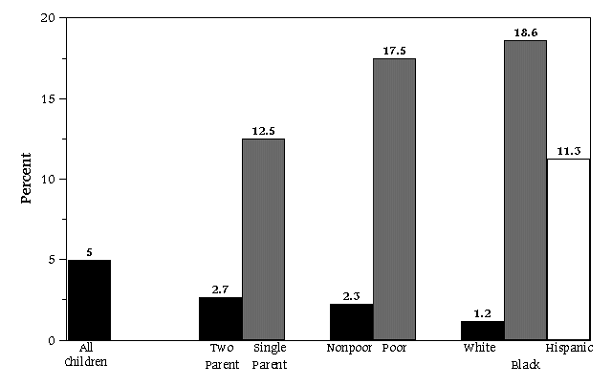
Note: Neighborhoods are defined as census tracts and block-numbering areas. Both metropolitan and nonmetropolitan areas are included. The poverty rate is the percent of all persons in the neighborhood living in families below the poverty line in 1990.
Source: Tabulations by Paul A. Jargowski from 1990 Census Summary Tape File 3A (CD-ROM version)
Table PF 3.2
|
|||||
|
Neighborhood Poverty Level
|
|||||
|
|
|||||
|
20+ % Poor
|
40+ % Poor
|
||||
|
|
|
||||
| Total |
22.9
|
5
|
|||
| Age of Child | |||||
|
|
0-4 |
23.5
|
5.3
|
||
|
|
5-17 |
22.7
|
4.9
|
||
| Family Structure | |||||
| Two Parent |
17.3
|
2.7
|
|||
| Single Parent |
41.2
|
12.5
|
|||
| Race/Ethnicity | |||||
| White non-Hispanic and other |
12.2
|
1.2
|
|||
| Black |
56.4
|
18.6
|
|||
| Hispanic |
46.6
|
11.3
|
|||
| Family Poverty | |||||
| In poverty |
54.6
|
17.5
|
|||
| Not in poverty |
16.0
|
2.3
|
|||
| Note: Neighborhoods are defined as census tracts and block-numbering areas. Both metropolitan and nonmetropolitan areas are included. The poverty rate is the percent of all persons in the neighborhood living in families below the poverty line in 1990.
Source: Tabulations by Paul A. Jargowski from 1990 Census Summary Tape File 3A (CD-ROM version). |
|||||
9 Brooks-Gunn, J., Duncan, G., Klebanov, P., and Sealand, N. 1994. "Do Neighborhoods Influence Child and Adolescent Behavior?" American Journal of Sociology, 99(2), 353-395. See also Crane, J., 1991. "The Epidemic Theory of Ghettos and Neighborhood Effects on Dropping Out of High School and Teenage Childbearing." American Journal of Sociology, 96(5), 1126-1159.
SECTION 2 ECONOMIC SECURITY (ES)
POVERTY AND INCOME
ES 1.1 Mean family income
Mean (average) income of families with children is a good starting point for assessing the economic well-being of children since it measures an average familys ability to purchase food, shelter, clothing, child care, and other basic goods and services required to raise children. When mean family income is rising, the likelihood is that children in an average family are enjoying a rising standard of living.
However, mean family income fails to capture important economic resources that may also be available to a family, such as employer-paid health benefits, Medicaid, or food stamps. Moreover, it says nothing about changes in the distribution of income across families. For a more complete picture of childrens economic well-being, it is necessary to look at several measures of economic well-being, including those in the following sections.
Accelerating Growth in Family Income Since 1992. Between 1975 and 1992, mean income of families with children (in constant 1995 dollars)1 grew by a very modest average annual percentage rate of 0.4 percent from $42,916 to $45,747, as shown in Figure ES 1.1.A. Between 1992 and 1995, the average annual growth rate accelerated to 3.1 percent.
Growth in Family Income by Family Type. In the past, this rise was not experienced equally across all family types. Between 1975 and 1992, female-headed families enjoyed only a modest 0.3 average annual percentage increase from $18,410 to $20,354, while married-couple families with children showed an average annual increase in average incomes of 0.9 percent, from $47,572 to $55,115.2 However, this difference in growth rates reversed after 1992. Family income increased at an average annual rate of 3.4 percent for married-couple families and 3.9 percent for female-headed families.
Differences in Family Income by Family Type. There has long been a substantial gap in family income between female-headed and married-couple families, and that gap has been growing since 1975 (see Figure ES 1.1.A). In 1995, children in married-couple families enjoyed a substantial income advantage over children in female-headed families, with mean family incomes over 2.8 times as large ($60,854 versus $21,905).
As Table ES 1.1 shows, this disparity is similar within white, black, and Hispanic families with ratios ranging from 2.4 for Hispanics ($38,145 versus $15,945) to 3.0 for black families ($53,078 versus $17,645).
Differences in Mean Family Income by Race and Ethnicity. Mean family incomes are substantially higher for white families with children than for black and Hispanic families with children. Table ES 1.1 shows that, in 1995, whites enjoyed family incomes that were about 65 percent higher than black families, and 71 percent higher than Hispanic families. Among married-couple families, the white-black disparity is considerably smaller, with whites enjoying incomes that are only 16 percent higher. The disparity between whites and Hispanics remains almost as large for married-couple families, however, with white families having average incomes 61 percent higher than their Hispanic counterparts.
Since 1990, the income gap between black and white married couples with children has narrowed, while the incomes of Hispanic married couples with children have lagged behind both white and black married couples with children (see Figure ES 1.1.B). Consequently, black married-couple families earn significantly more than Hispanic married-couple families, with mean family incomes of $53,078 and $38,145, respectively, in 1995.
Among female-headed families, white families with children have an average income of $23,943 in 1995, which is 36 percent higher than that for similar black families ($17,645) and 50 percent higher than that for Hispanic families ($15,945).
Figure ES 1.1.A
|
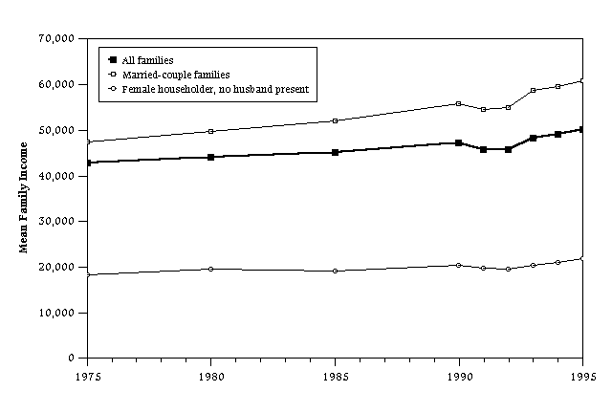
| Sources: unpublished tables supplied by U.S. Census Bureau. |
Figure ES 1.1.B
|
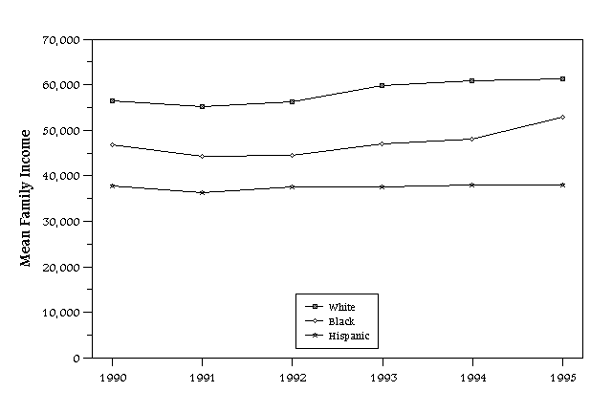
| Sources: unpublished tables supplied by U.S. Census Bureau. |
Table ES 1.1
|
|||||||||||
|
1975
|
1980
|
1985b
|
1990
|
1991
|
1992c
|
1993
|
1994
|
1995
|
|||
| All families |
$42,916
|
$44,015
|
$45,191
|
$47,184
|
$45,697
|
$45,747
|
$48,355
|
$49,223
|
$50,161
|
||
|
|
White |
--
|
--
|
--
|
$50,029
|
$48,763
|
$49,319
|
$51,977
|
$52,796
|
$53,189
|
|
|
|
Black |
--
|
--
|
--
|
$29,942
|
$28,051
|
$27,950
|
$28,541
|
$30,584
|
$32,268
|
|
|
|
Hispanic |
--
|
--
|
--
|
$32,073
|
$30,759
|
$31,385
|
$31,011
|
$31,758
|
$31,039
|
|
| Married-couple families |
$47,572
|
$49,846
|
$52,090
|
$55,956
|
$54,534
|
$55,115
|
$58,795
|
$59,582
|
$60,854
|
||
|
|
White |
--
|
--
|
--
|
$56,582
|
$55,439
|
$56,428
|
$59,927
|
$60,977
|
$61,496
|
|
|
|
Black |
--
|
--
|
--
|
$46,963
|
$44,373
|
$44,625
|
$47,207
|
$48,216
|
$53,078
|
|
|
|
Hispanic |
--
|
--
|
--
|
$37,906
|
$36,541
|
$37,740
|
$37,712
|
$38,059
|
$38,145
|
|
| Female Householder, no | |||||||||||
| husband present |
$18,410
|
$19,555
|
$19,240
|
$20,492
|
$19,858
|
$19,519
|
$20,354
|
$21,093
|
$21,905
|
||
|
|
White |
--
|
--
|
--
|
$22,421
|
$22,086
|
$21,714
|
$22,608
|
$22,699
|
$23,943
|
|
|
|
Black |
--
|
--
|
--
|
$16,939
|
$15,709
|
$15,997
|
$16,026
|
$18,220
|
$17,645
|
|
|
|
Hispanic |
--
|
--
|
--
|
$16,668
|
$17,143
|
$16,776
|
$16,457
|
$17,421
|
$15,945
|
|
| Notes: aIncome statistics converted to constant 1995 dollars using the CPI-U-X1 (all items) price index. CPI-U-X1 is a rental equivalence approach to homeowners' costs for the consumer price index prior to 1983, the first year for which the official index (CPI-U) incorpprates such a measure. bRecording of amounts for earnings from longest job increased to $299,999. cImplementation of 1990 census population controls. Source: Unpublished tables supplied by U. S. Census Bureau. |
|||||||||||
1 In constructing income figures in constant 1995 dollars, we have followed the practice of the Bureau of the Census and used the CPI-U-X1 consumer price index. This index differs from the standard CPI-U index in its treatment of the costs of owner-occupied housing for years prior to 1986.
2 If the CPI-U consumer price index had been used, the average annual growth rate for married-couple families would have been even lower, and the real income of female-headed families would have actually fallen.
ES 1.2 Income distribution
Figures ES 1.2.A and ES 1.2.B present trends in the income of the poorest and richest families with children. The poorest families are those whose income falls in the bottom 20 percent (or bottom quintile) of all families; the richest families are those whose income falls in the top 20 percent of all families. The measure shown is the income to poverty ratio, the ratio of annual family income to the poverty line. For example, families whose pretax income was half of the poverty line would have a value of 0.50 for this measure. Each figure shows results separately by type of family.
Between 1967 and 1973 the income to poverty ratio of the poorest families increased from 0.74 to 0.88 (see Figure ES 1.2.A). By 1994, the ratio had dropped to 0.66.
Differences in the Income-to-Poverty Ratio by Family Type. The poorest single-mother families fared much worse than the poorest married-couple families (see Figure ES 1.2.A). After an increase from 0.21 to 0.33 between 1967 and 1973, the ratio for the poorest single-mother families dropped and was at 0.25 in 1994. The poorest married-couple families crossed over the poverty line between 1967 and 1973 (from 0.89 to 1.16, see Figure ES 1.2.A). However, since 1979, their ratio has declined, reaching 1.06 by 1994.
Difference in the Income-to-Poverty Ratio by Income Quintile. While the poorest families with children were getting poorer, the richest families with children were getting richer (see Figure ES 1.2.B). Between 1967 and 1994, the income to poverty ratio of the richest families increased from 4.77 to 7.14.
For the richest married-couple families, the picture was even brighter (see Figure ES 1.2.B). The income to poverty ratio increased from 4.88 to 7.68 between 1967 and 1994. The richest single-parent families headed by women were also well above the poverty line throughout the entire period. Their income to poverty ratio increased from 2.78 to 4.14 between 1967 and 1989 before declining to 4.02 in 1994.
Data for all five income quintiles show that the poorest families (the bottom quintile) were the only families to lose ground between 1967 and 1994 (see Table ES 1.2). For all time periods and all income groups, families headed by single mothers had considerably less income than those headed by married couples.
Figure ES 1.2.A
|

| Note: Poverty thresholds are based on the 1989 distribution of family sizes, with no adjustment for the age of the head of household or the number of children. Quintiles are based on the number of persons.
Source: Congressional Budget Office tabulations of data from the March Current Population Survey, 1968, 1974, 1980, 1990, 1991, 1992, 1993 and 1995. |
| Figure ES 1.2.B Income to Poverty Ratio for Families with Children, Top Income Quintile, by Family Type, 1967, 1973, 1979, 1989, 1992 and 1994 |

| Note: Poverty thresholds are based on the 1989 distribution of family sizes, with no adjustment for the age of the head of household or the number of children. Quintiles are based on the number of persons.
Source: Congressional Budget Office tabulations of data from the March Current Population Survey, 1968, 1974, 1980, 1990, 1991, 1992, 1993, and 1995. |
Table ES 1.2
|
|||||||
| Family type and Quintile |
1967
|
1973
|
1979
|
1989
|
1992
|
1994
|
|
|---|---|---|---|---|---|---|---|
| All families with children | |||||||
| Lowest Quintile |
0.74
|
0.88
|
0.84
|
0.74
|
0.65
|
0.66
|
|
| Second Quintile |
1.54
|
1.88
|
1.95
|
1.87
|
1.72
|
1.73
|
|
| Middle Quintile |
2.13
|
2.65
|
2.84
|
2.93
|
2.77
|
2.79
|
|
| Fourth Quintile |
2.84
|
3.54
|
3.85
|
4.14
|
4.00
|
4.09
|
|
| Highest Quintile |
4.77
|
5.73
|
6.15
|
7.20
|
6.86
|
7.14
|
|
| Total |
2.40
|
2.94
|
3.13
|
3.38
|
3.20
|
3.28
|
|
| Married couples with children | |||||||
| Lowest Quintile |
.89
|
1.16
|
1.18
|
1.14
|
1.07
|
1.06
|
|
| Second Quintile |
1.66
|
2.12
|
2.29
|
2.34
|
2.25
|
2.26
|
|
| Middle Quintile |
2.23
|
2.84
|
3.12
|
3.34
|
3.26
|
3.31
|
|
| Fourth Quintile |
2.93
|
3.71
|
4.11
|
4.52
|
4.43
|
4.58
|
|
| Highest Quintile |
4.88
|
5.94
|
6.41
|
7.67
|
7.36
|
7.68
|
|
| Total |
2.52
|
3.15
|
3.42
|
3.80
|
3.67
|
3.78
|
|
| Single mothers with children | |||||||
| Lowest Quintile |
0.21
|
0.33
|
0.32
|
0.25
|
0.23
|
0.25
|
|
| Second Quintile |
0.59
|
0.71
|
0.75
|
0.64
|
0.58
|
0.62
|
|
| Middle Quintile |
0.91
|
1.03
|
1.22
|
1.14
|
1.06
|
1.11
|
|
| Fourth Quintile |
1.45
|
1.67
|
2.01
|
2.03
|
1.89
|
1.94
|
|
| Highest Quintile |
2.78
|
3.29
|
3.65
|
4.14
|
3.81
|
4.02
|
|
| Total |
1.19
|
1.41
|
1.59
|
1.64
|
1.51
|
1.59
|
|
| Note: Poverty thresholds are based on the 1989 distribution of family sizes, with no adjustment for the age of the head of household or the number of children. Quintiles are based on the number of persons.
Source: Congressional Budget Office tabulations of data from the March Current Population Survey, 1968, 1974, 1980, 1990, and 1993. |
|||||||
ES 1.3 Children in poverty
Being raised in economically deprived circumstances can have far reaching negative consequences for children. Growing up at or near the poverty line ($15,569 for a family of four in 1995) means not only that a child has a much lower level of consumption than other children, but also that he or she is more likely than a nonpoor child to experience difficulties in school,3 to become a teen parent,4 and, as an adult, to earn less and experience greater unemployment.5 The effects of being raised in a family with income significantly below the poverty line are correspondingly more damaging.
Children At, Below, and Slightly Above the Poverty Level. Figures ES 1.3.A and 1.3.B illustrate trends in the proportions of children living in various degrees of poverty and near-poverty. Specifically:
- Children in families with incomes below 50 percent of the poverty line. Between 1975 and 1993, the proportion of children living in extreme poverty, that is, at or below 50 percent of the poverty line6 doubled from 5 percent in 1975 to 10 percent by 1993. By 1995, this percentage dropped back to 8 percent, still 60 percent higher than in 1975 (see Figure ES 1.3.A).
- Children in families with incomes at or below the poverty line. Less dramatic but still striking, the proportion of children at or below 100 percent of the poverty line increased by 29 percent from 17 percent in 1975 to 22 percent by 1993 before dropping to 20 percent by 1995. The percentage of children in poverty has remained at or above 20 percent since 1990 (see Figure ES 1.3.A).
- Children above but near the poverty line. In contrast, as shown in the lower line of figure ES1.3.B, the proportion of children at or below 150 percent of the poverty line increased only slightly from 30 percent to 32 percent between 1975 and 1995, and, as shown in the upper line of that figure, the proportion of children at or below 200 percent of the poverty line in 1995 was 43 percent the same as in 1975.
Differences by Race and Ethnicity. There are no substantial differences by race or Hispanic origin in the trends described above, even though the incidence of poverty is consistently highest for blacks and lowest for whites (see Table ES 1.3.A). The increase in the percentage of children raised in extreme poverty occurred for all three groups, while the percentage of children at or below 200 percent of the poverty line has hardly changed at all.
Table ES 1.3.B and Figure ES 1.3.C present a more detailed (but less current) look at poverty by race and Hispanic origin using data from the decennial census.7 They show that the incidence of poverty is lowest by far for white children and highest for black and Native American children. While the incidence of poverty grew noticeably between 1979 and 1989 for all groups, the differences between the groups remained stable:
- The poverty rate for white children was 12.1 percent in 1989.
- The poverty rate for Asian children was 16.7 percent in 1989, nearly a third higher than for white children.
- The poverty rate for Hispanic children was 31.8 percent in 1989, a rate 2.6 times as high as for white children.
- The poverty rate for Native American children was 38.3 percent in 1989, slightly more than three times the poverty rate for white children.
- The poverty rate for black children was 39.5 percent in 1989, slightly more than three times the white child poverty rate.
Child Poverty by Family Type. The chances of a child experiencing poverty are strongly influenced by the type of family in which he or she lives. Throughout the period from 1970 through 1995, about 50 percent of the children living in female-headed families were poor (see Table ES 1.3.C). In contrast, during the 1990s,8 only about 10 percent of children living in married-couple families were poor (see Figure ES 1.3.D).
Figure ES 1.3.A
|
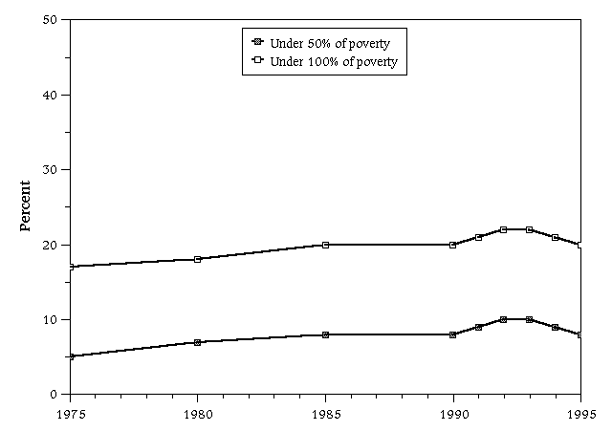
| Source: Rates for 1975, 1980, and 1985 were calculated by Child Trends, Inc. based on data from the U.S. Bureau of the Census, Series P-60, No. 106, Table 7; No. 133, Table 7; No. 158, Table 4. Rates for 1990 through 1993 are from the U.S. Bureau of the Census, Series P-60, No. 175, No. 185, No. 188, and revised data for 1992 provided by the U.S. Bureau of the Census, Poverty Branch. Data for 1994 and 1995 from unpublished tables supplied by the U.S. Bureau of the Census. |
Figure ES 1.3.B
|
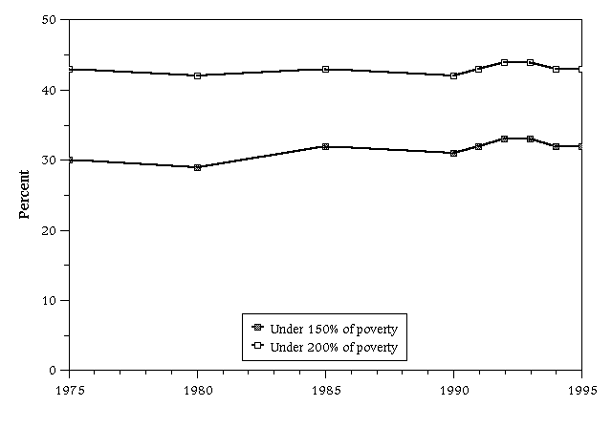
| Source: Rates for 1975, 1980, and 1985 were calculated by Child Trends, Inc. based on data from the U.S. Bureau of the Census, Series P-60, No. 106, Table 7; No. 133, Table 7; No. 158, Table 4. Rates for 1990 through 1993 are from the U.S. Bureau of the Census, Series P-60, No. 175, No. 185, No. 188, and revised data for 1992 provided by the U.S. Bureau of the Census, Poverty Branch. Data for 1994 and 1995 from unpublished tables supplied by the U.S. Bureau of the Census. |
Figure ES 1.3.C
|
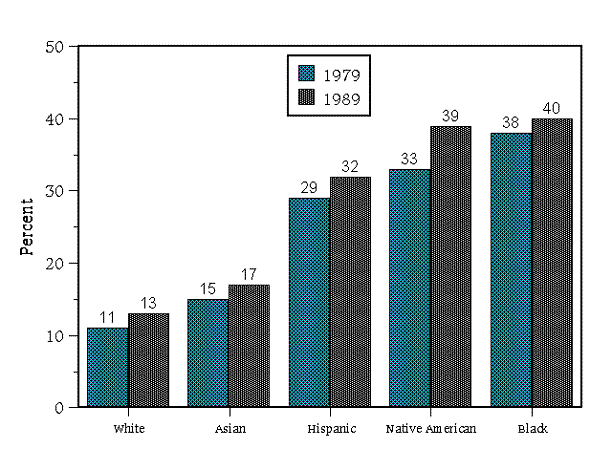
| Note: The poverty level is based on money income and does not include noncash benefits, such as food stamps. Poverty thresholds reflect family size and composition and are adjusted each year using the annual average Consumer Price Index (CPI) level. The average poverty threshold for a family of four was $15,569 in 1995. Related children include biological children, stepchildren, and adopted children of the householder (or reference person) by blood, marriage, or adoption.
Source: U.S. Bureau of the Census, Series P-60, No. 106, Table 11; No. 133, Table 11; No. 158, Table 7; No.175, Table 6; No. 181, Table 5; No. 188, Table 8, data 1994, 1995, and revised data for 1992 provided by the U.S. Bureau of the Census, Poverty Branch. |
Figure ES 1.3.D
|
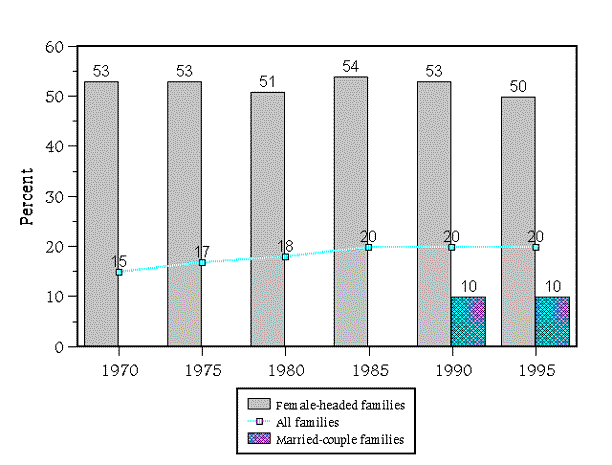
| Source: U.S. Bureau of the Census, Series P-60, No. 81, Table 4; No. 86, Table 1; P-60, No. 106, Table 11; No. 133, Table 11; No. 158, Table 7; No. 175, Table 6; No. 181, Table 5; No. 188, Table 8, data for 1994, 1995, and revised data for 1992 provided by the U.S. Bureau of the Census, Poverty Branch. |
Table ES 1.3.A
|
|||||||||||
|
1975
|
1980
|
1985
|
1990
|
1991
|
1992
|
1993
|
1994
|
1995
|
|||
| Under 50% of Poverty | |||||||||||
| Related Children | |||||||||||
| Under 18 |
5
|
7
|
8
|
8
|
9
|
10
|
10
|
9
|
8
|
||
| White |
4
|
5
|
6
|
6
|
6
|
6
|
6
|
6
|
6
|
||
| Black |
14
|
17
|
22
|
22
|
25
|
27
|
26
|
23
|
20
|
||
| Hispanic |
--
|
--
|
--
|
14
|
14
|
15
|
14
|
17
|
16
|
||
| Under 100% of Poverty | |||||||||||
| Related Children | |||||||||||
| Under 18 |
17
|
18
|
20
|
20
|
21
|
22
|
22
|
21
|
20
|
||
| White |
13
|
13
|
16
|
15
|
16
|
17
|
17
|
16
|
16
|
||
| Black |
41
|
42
|
43
|
44
|
46
|
46
|
46
|
43
|
42
|
||
| Hispanic |
33
|
33
|
40
|
38
|
40
|
39
|
40
|
41
|
39
|
||
| Under 150% of Poverty | |||||||||||
| Related Children | |||||||||||
| Under 18 |
30
|
29
|
32
|
31
|
32
|
33
|
33
|
32
|
32
|
||
| White |
24
|
24
|
26
|
25
|
26
|
27
|
27
|
27
|
26
|
||
| Black |
60
|
57
|
59
|
57
|
60
|
60
|
61
|
58
|
56
|
||
| Hispanic |
--
|
--
|
--
|
55
|
58
|
58
|
60
|
58
|
59
|
||
| Under 200% of Poverty | |||||||||||
| Related Children | |||||||||||
| Under 18 |
43
|
42
|
43
|
42
|
43
|
44
|
44
|
43
|
43
|
||
| White |
38
|
37
|
38
|
37
|
38
|
38
|
38
|
38
|
37
|
||
| Black |
73
|
70
|
71
|
68
|
70
|
71
|
72
|
68
|
68
|
||
| Hispanic |
--
|
--
|
--
|
69
|
72
|
70
|
72
|
72
|
73
|
||
| Note: The poverty level is based on money income and does not include noncash benefits, such as foods stamps. Poverty thresholds reflect family size and composition and are adjusted each year using the annual average Consumer Price Index (CPI) level. The average poverty threshold for a family of four was $15,569 in 1995. The levels shown here are derived from the ratio of the family's income to the family's poverty threshold. Related children include biological children, stepchildren, and adopted children of the householder and all other children in the household related to the householder (or reference person) by blood, marriage, or adoption.
Source: Rates for 1975, 1980, and 1985 were calculated by Child Trends, Inc. based on data from the U.S. Bureau of the Census, Series P-60, No. 106, Table 7; No. 133, Table 7; No. 158, Table 4. Rates for 1990 through 1994 are from the U.S. Bureau of the Census, Series P-60, No. 175, No. 188, 189, and revised data for 1992 provided by the U.S. Bureau of the Census, Poverty and Health Branch. Data for 1995 are from unpublished tables supplied by the Census Bureau. |
|||||||||||
Table ES 1.3.B
|
|||||
|
1979
|
1989
|
||||
| All Children Under Age 18 |
16.0
|
17.9
|
|||
| White |
11.0
|
12.1
|
|||
| Black |
37.8
|
39.5
|
|||
| Hispanic |
29.1
|
31.8
|
|||
| Asian |
14.9
|
16.7
|
|||
| Native American |
32.5
|
38.3
|
|||
| Note: The poverty level is based on money income and does not include noncash benefits, such as foods stamps. Poverty thresholds reflect family size and composition and are adjusted each year using the annual average Consumer Price Index (CPI) level. | |||||
| Source: U.S. Bureau of the Census, 1980 Census of the Population, "Detailed Population Characteristics," PC-80-1-D1-A, United States Summary, Table 304. U.S. Bureau of the Census, 1990 Census of the Population, "Social and Economic Characteristics," CP-2-1, United States Summary, Table 49. | |||||
Table ES 1.3.C
|
||||||||||||||
|
1960
|
1965
|
1970
|
1975
|
1980
|
1985
|
1990
|
1991
|
1992
|
1993
|
1994
|
1995
|
|||
| All Types of Families w/ | ||||||||||||||
| Related Children under 18 |
27
|
21
|
15
|
17
|
18
|
20
|
20
|
21
|
22
|
22
|
21
|
20
|
||
| White |
20
|
14
|
11
|
13
|
13
|
16
|
15
|
16
|
17
|
17
|
16
|
16
|
||
| Black |
--
|
--
|
42
|
41
|
42
|
43
|
44
|
46
|
46
|
46
|
43
|
42
|
||
| Hispanic |
--
|
--
|
--
|
--
|
33
|
40
|
38
|
40
|
39
|
40
|
41
|
39
|
||
| Related Children under 6 |
--
|
--
|
17
|
18
|
20
|
23
|
23
|
24
|
26
|
26
|
25
|
24
|
||
| White |
--
|
--
|
12
|
14
|
16
|
18
|
18
|
19
|
20
|
20
|
19
|
18
|
||
| Black |
--
|
--
|
42
|
41
|
46
|
47
|
51
|
51
|
53
|
52
|
49
|
49
|
||
| Hispanic |
--
|
--
|
--
|
--
|
34
|
41
|
40
|
44
|
43
|
43
|
44
|
42
|
||
| Related Children 6 to 17 |
--
|
--
|
14
|
16
|
17
|
19
|
18
|
20
|
19
|
20
|
20
|
18
|
||
| White |
--
|
--
|
10
|
12
|
12
|
14
|
14
|
15
|
15
|
15
|
15
|
14
|
||
| Black |
--
|
--
|
41
|
42
|
40
|
41
|
41
|
43
|
43
|
43
|
40
|
38
|
||
| Hispanic |
--
|
--
|
--
|
--
|
32
|
39
|
36
|
37
|
37
|
38
|
39
|
37
|
||
| Married Couple Families w/ | ||||||||||||||
| Related Children under 18 |
--
|
--
|
--
|
--
|
--
|
--
|
10
|
11
|
11
|
12
|
11
|
10
|
||
| White |
--
|
--
|
--
|
--
|
--
|
--
|
9
|
10
|
10
|
11
|
10
|
9
|
||
| Black |
--
|
--
|
--
|
--
|
--
|
--
|
18
|
15
|
18
|
18
|
15
|
13
|
||
| Hispanic |
--
|
--
|
--
|
--
|
--
|
--
|
27
|
29
|
29
|
30
|
30
|
28
|
||
| Related Children under 6 |
--
|
--
|
--
|
--
|
--
|
--
|
12
|
12
|
13
|
13
|
12
|
11
|
||
| White |
--
|
--
|
--
|
--
|
--
|
--
|
11
|
11
|
12
|
13
|
11
|
11
|
||
| Black |
--
|
--
|
--
|
--
|
--
|
--
|
20
|
17
|
22
|
20
|
15
|
14
|
||
| Hispanic |
--
|
--
|
--
|
--
|
--
|
--
|
28
|
33
|
32
|
33
|
33
|
31
|
||
| Related Children 6 to 17 |
--
|
--
|
--
|
--
|
--
|
--
|
10
|
10
|
10
|
11
|
10
|
9
|
||
| White |
--
|
--
|
--
|
--
|
--
|
--
|
8
|
9
|
9
|
10
|
9
|
9
|
||
| Black |
--
|
--
|
--
|
--
|
--
|
--
|
17
|
14
|
16
|
17
|
14
|
12
|
||
| Hispanic |
--
|
--
|
--
|
--
|
--
|
--
|
25
|
26
|
26
|
28
|
28
|
27
|
||
| Female Headed Families w/ | ||||||||||||||
| Related Children under 18 |
68
|
61
|
53
|
53
|
51
|
54
|
53
|
56
|
55
|
54
|
53
|
50
|
||
| White |
60
|
53
|
43
|
44
|
42
|
45
|
46
|
47
|
46
|
46
|
46
|
43
|
||
| Black |
--
|
--
|
68
|
66
|
65
|
67
|
65
|
68
|
67
|
66
|
63
|
62
|
||
| Hispanic |
--
|
--
|
--
|
--
|
65
|
72
|
68
|
69
|
66
|
66
|
68
|
66
|
||
| Related Children under 6 |
--
|
--
|
64
|
62
|
65
|
66
|
66
|
66
|
66
|
64
|
64
|
62
|
||
| White |
--
|
--
|
59
|
59
|
60
|
59
|
60
|
60
|
61
|
58
|
59
|
55
|
||
| Black |
--
|
--
|
71
|
67
|
72
|
75
|
73
|
74
|
73
|
72
|
70
|
71
|
||
| Hispanic |
--
|
--
|
--
|
--
|
70
|
78
|
77
|
74
|
72
|
72
|
74
|
72
|
||
| Related Children 6 to 17 |
--
|
--
|
49
|
49
|
46
|
48
|
47
|
50
|
49
|
49
|
47
|
45
|
||
| White |
--
|
--
|
38
|
40
|
36
|
40
|
39
|
41
|
39
|
40
|
40
|
37
|
||
| Black |
--
|
--
|
66
|
66
|
62
|
63
|
60
|
65
|
64
|
62
|
59
|
57
|
||
| Hispanic |
--
|
--
|
--
|
--
|
62
|
70
|
64
|
65
|
62
|
63
|
65
|
62
|
||
| Note: The poverty level is based on money income and does not include noncash benefits, such as foods stamps. Poverty thresholds reflect family size and composition and are adjusted each year using the annual average Consumer Price Index (CPI) level. The
Source: U.S. Bureau of the Census, Series P-60 No. 81, Table 4 No. 86, Table 1; P-60, No. 106, Table 11; No. 133, Table 11; No. 158, Table 7; No. 175, Table 6; No. 181, Table 5; No. 188, Table 8, data for 1994, 1995, and revised data for 1992 provided by |
||||||||||||||
3 Parker, S., Greer, S., and Zuckerman, B. 1988. "Double Jeopardy: The Impact of Povery on Early Childhood Development." Pediatric Clinics of North America, 35: 1-10. Hill, M.S., and Duncanc, G.D. 1987. "Parental Family Income and the Socioeconomic Attainment of Children." Social Science Research, 16: 39-37
4 An, C., Haveman, R., and Wolfe, B. 1993. "Teen Out-of-Wedlock Births and Welfare Receipt: The Role of Childhood Events and Economic Circumstances," Review of Economics and Statistics.
5 Duncan, G., and Brooks-Gunn, J. 1996. "Income Effects Across the Life Span: Integration and Interpretation," in Consequences of Growing Up Poor (G. Duncan and J. Brooks-Gunn, eds.). New York: Russell Sage Press.
6 $7,784 for a family of four in 1995.
7 These poverty estimates are based on Decennial Census data rather than the Current Population Survey data presented in other tables. Estimates from the two sources differ because the Current Population has a much smaller sample than the Decennial Census.
8 The only period for which these statistics are published.
ES 1.4 Lifetime childhood poverty
The majority of children never experience poverty while growing up, and, among those who do, most are in poverty for only a small portion of their childhood. Many children, however, and particularly many black children, spend a large proportion of their formative years living in poverty, with correspondingly negative consequences for their development and well-being.9
Changes in Childhood Poverty Over Time. Although 64 percent of all children who turned age 18 between 1985 and 1987 were never poor, 10 percent were poor for six or more years through age 17 (see Figure ES 1.4.A and Table ES 1.4). Six percent were poor for eleven or more years, and 1 percent were poor for all 17 years. Children turning age 18 three years later show a similar pattern, though they were somewhat more likely to have been poor for a greater number of years, with 14 percent poor for six or more years, and 8 percent poor for eleven or more years.
Differences by Race. The risk of experiencing long-term poverty in childhood varies substantially by race (see Figure ES 1.4.B and Table ES 1.4). Of the nonblack children who turned age 18 between 1988 and 1990, 73 percent never experienced poverty while growing up, only 8 percent were poor for six or more years, and only 4 percent were poor for at least eleven years. By contrast, nearly one half (47 percent) of all black children in that cohort were poor for six or more years, 28 percent for eleven or more years, and 6 percent for all seventeen years of their childhoods.
Figure ES 1.4.A
|
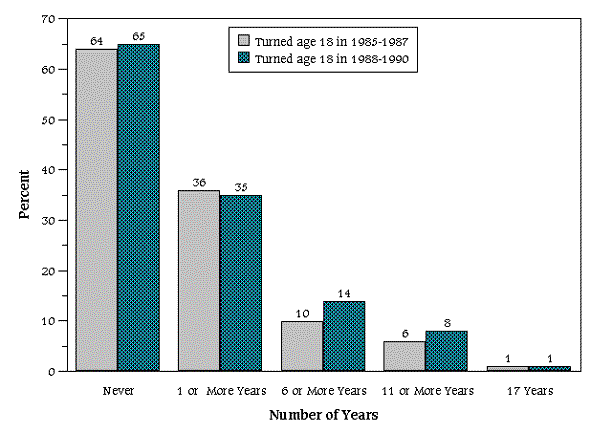
| Source: Estimates supplied by Greg J. Duncan, Northwestern University, based on data from the Panel Study of Income Dynamics (PSID). |
Figure ES 1.4.B
|
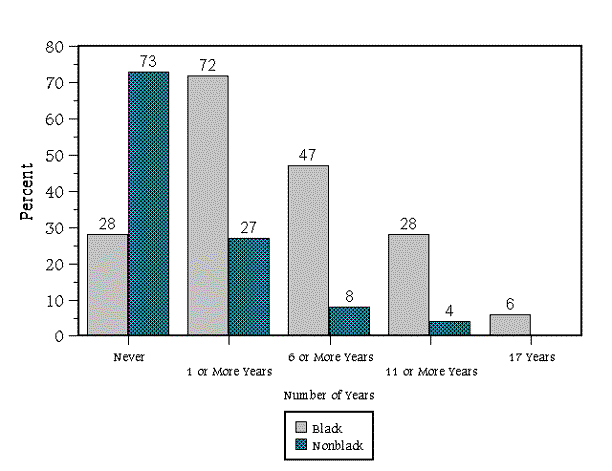
| Source: Estimates supplied by Greg J. Duncan, Northwestern University, based on data from the Panel Study of Income Dynamics (PSID). |
Table ES 1.4
|
|||||||
|
-------------------- Number of Years in Poverty ------------------
|
|||||||
|
Never
|
One or More Years
|
6 or More Years
|
11 or More Years
|
17 Years
|
|||
| Turned Age 18 in 1985-1987
(1967-69 Birth Cohort) |
|||||||
| All children |
64
|
36
|
10
|
6
|
1
|
||
| Black |
24
|
75
|
37
|
23
|
4
|
||
| Nonblack |
71
|
29
|
5
|
3
|
*
|
||
| Turned Age 18 in 1988-1990
(1970-72 birth cohort) |
|||||||
| All Children |
65
|
35
|
14
|
8
|
1
|
||
| Black |
28
|
72
|
47
|
28
|
6
|
||
| Nonblack |
73
|
27
|
8
|
4
|
*
|
||
| Note: * = less than one percent. | |||||||
| Source: Estimates supplied by Greg J. Duncan, Northwestern University, based on data from the Panel Study of Income Dynamics (PSID). | |||||||
9 Duncan, G. 1995. "Longitudinal Indicators of Children's Poverty and Dependence." Institute for Research on Poverty Special Report Series, SR#60b.
FINANCIAL SUPPORT
ES 2.1 Effect of government transfer programs
Although the federal system of cash and near-cash transfers (including federal income and payroll taxes)10 plays a substantial role in reducing the poverty rate of children, its collective effect has varied significantly over time. In 1979, federal cash and near-cash transfers produced a 37 percent reduction in poverty among persons in families with related children under age 18 (see Figure ES 2.1). However, by 1983, the same transfer programs produced only a 19.1 percent reduction in poverty. By 1989 the percentage poverty reduction recovered to 23.9 percent, rose again to 26.5 percent in 1993, and to 32.6 percent in 1994.
In the absence of any federal transfers and taxes, 21.4 percent of all persons living in families with children would have been poor in 1994 (see Table ES 2.1). Social insurance programs other than Social Security reduced the poverty rate to 20.6 percent. The Social Security system reduced the poverty rate further to 19.2 percent. After inclusion of means-tested cash transfers, the poverty rate fell to 17.8 percent. Food and housing benefits cut the poverty rate to 15.3 percent. Finally, the federal tax system reduced the poverty rate of all persons living in families with children to 14.4 percent.
All of the federal cash and near cash transfers considered in Table ES 2.1 except federal taxes reduced poverty among persons in families with related children under age 18 in all years. Until recently, the net impact of the federal tax system was to increase the poverty rate. By 1993, however, the impact of the tax system on the number of such persons in poverty became neutral, and in 1994, the federal tax system reduced the number of persons in poverty. This is because of the recent expansion of the Earned Income Tax Credit (EITC), which provides refundable tax credits to low-income families with children and at least one working parent whose earnings are low. Because the credit is refundable, many families eligible for the EITC receive a payment from the Treasury instead of paying federal income tax.
Figure ES 2.1
|
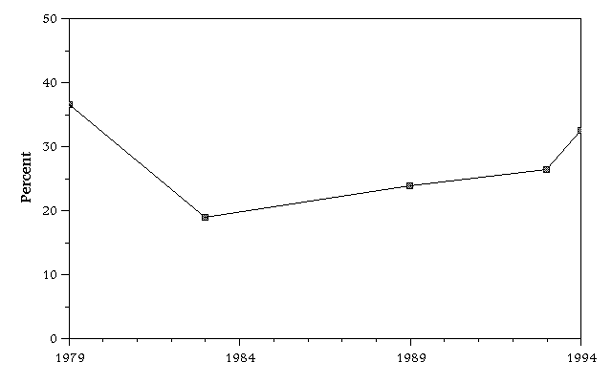
| Source: Congressional Budget Office computations using the CBO tax model, with data from the March Current Population Survey, 1980, 1984, 1990, 1994, and 1995. Table prepared by staff from the Department of Health and Human Services, Assistant Secretary for Planning and Evaluation. |
Table ES 2.1
|
||||||
|
1979
|
1983
|
1989
|
1993
|
1994
|
||
| Total population (in thousands) |
133,435
|
132,123
|
135,430
|
144,551
|
145,814
|
|
| Poverty rate (in percent): | ||||||
| Cash income before transfers |
16.6
|
21.9
|
18.6
|
22.3
|
21.4
|
|
| Plus social Insurance (other than Social Security) |
15.8
|
20.4
|
18
|
21.4
|
20.6
|
|
| Plus Social Security |
14.3
|
19.1
|
16.8
|
20.0
|
19.2
|
|
| Plus means-tested cash transfers |
12.9
|
18.4
|
15.8
|
18.7
|
17.8
|
|
| Plus food and housing benefits |
10.2
|
16.5
|
13.6
|
16.4
|
15.3
|
|
| Less Federal taxes |
10.5
|
17.7
|
14.1
|
16.4
|
14.4
|
|
| Total percentage reduction in poverty rate |
36.6
|
19.1
|
23.9
|
26.5
|
32.6
|
|
| Source: Congressional Budget Office computations using the CBO tax model, with data from the March Current Population Survey, 1980, 1984, 1990, 1994, and 1995. Table prepared by staff from the Department of Health and Human Services, Assistant Secretary for Planning and Evaluation. | ||||||
10 Federal cash and near-cash transfers include social security, unemployment compensation, workers' compensation, all means-tested cash transfers, food and housing benefits, and federal income and payroll taxes.
ES 2.2 Means-tested assistance: AFDC and Food Stamps
Many poor children have depended on Aid to Families with Dependent Children (AFDC) and the Food Stamp program for basic material needs. AFDC was a federal and state cash assistance program targeted to needy children, and to certain others in the household of such a child.12 As a result of major welfare reform enacted in August 1996, the AFDC program has now been replaced by the Temporary Assistance to Needy Families program (TANF). TANF provides a block grant to states to design and administer their own welfare and work programs.
The food stamp program provides low-income households with vouchers that can be exchanged for food. The new law includes significant new restrictions on food stamp eligibility.
Children's Receipt of AFDC and Other Welfare Benefits. Twelve percent of all children lived in families receiving AFDC or general assistance in 1979, according to survey data (see Figure ES 2.2). The rate decreased slightly to 11 percent in 1989, but by 1993 had increased to 14 percent. However, by 1995, the recipiency rate dropped back to 12 percent.
More than 7 million children lived in families receiving welfare in 1979 and 1989 (see Table ES 2.2.A). By 1994, 9.5 million children were living in families receiving welfare. In 1995, the number of children on welfare dropped sharply to 8.7 million.
Administrative data show a similar rise in the number of children receiving AFDC between 1985 and 1994 (see Table ES 2.2.C). After peaking at 9.5 million in 1994, the number dropped to 9.2 million in 1995.
Children's Receipt of Food Stamps. Food stamp receipt shows a similar pattern. In both 1979 and 1989, 15 percent of all children lived in households receiving food stamps, according to survey data (see Figure ES 2.2). The proportion increased to 20 percent by 1993. In that year 14.2 million children lived in households receiving food stamps, up from 9.7 million in 1989 (see Table ES 2.2.B). However, the recipiency rate dropped to 18 percent by 1995.
Administrative data for Food Stamps also show a rise in the number of children receiving food stamps during the late 1980s and early 1990s, followed by a recent decline (see Table ES 2.2.C). According to these data, the number of children receiving Food Stamps grew from 9.9 million in 1985 to 14.4 million in 1994. By 1995, the number declined to 13.9 million, or 20.3 percent of the child population.
Figure ES 2.2
|
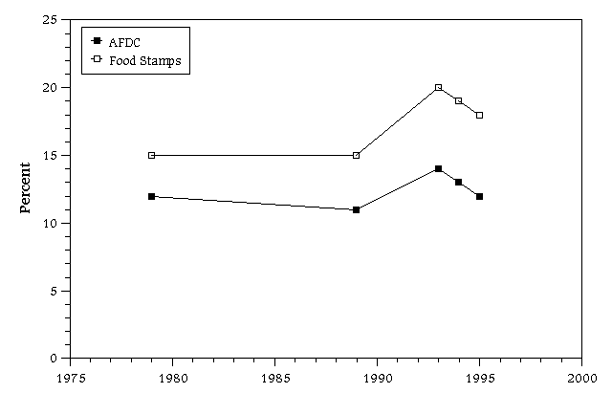
| Source: Estimates for 19791994 calculated by Child Trends, Inc., based on analysis of the March 1980, 1990, 1994, and 1995 Current Population Surveys. Estimates for 1995 provided by the U.S. Census Bureau. |
Table ES 2.2.A
|
|||||
|
1979
|
1989
|
1993
|
1994
|
1995
|
|
| Number (in thousands) |
7,228
|
7,116
|
9,440
|
9,463
|
8,656
|
| Percent |
12
|
11
|
14
|
13
|
12
|
| Source: Estimates for 1979 - 1994 calculated by Child Trends, Inc. Based on analysis of the March 1980, 1990, 1994, and 1995 Current Population Surveys. Estimates for 1995 provided by U.S. Census Bureau. | |||||
Table ES 2.2.B
|
|||||
|
1979
|
1989
|
1993
|
1994
|
1995
|
|
| Number (in thousands) |
9,336
|
9,696
|
14,193
|
13,667
|
13,115
|
| Percent |
15
|
15
|
20
|
19
|
18
|
| Source: Estimates for 1979 - 1994 calculated by Child Trends, Inc., based on analysis of the March 1980, 1990, 1994, and 1995 Current Population Surveys. Estimates for 1995 provided by U.S. Census Bureau. | |||||
Table ES 2.2.C
|
||||||||
|
1985
|
1990
|
1991
|
1992
|
1993
|
1994
|
1995
|
||
|
(est)
|
||||||||
| AFDC | ||||||||
| Number (in thousands) |
7,041
|
7,620
|
8,375
|
9,087
|
9,402
|
9,464
|
9,152
|
|
| Percent |
11.2
|
11.9
|
12.9
|
13.5
|
13.6
|
13.9
|
13.4
|
|
| Food Stamps | ||||||||
| Number (in thousands) |
9,906
|
10,127
|
11,952
|
13,349
|
14,196
|
14,391
|
13,883
|
|
| Percent |
15.8
|
15.8
|
18.4
|
20.2
|
21.2
|
21.2
|
20.3
|
|
| Sources: AFDC information drawn from unpublished data, Administration for Children and Families, U.S. Department of Health and Human Services. 1995 estimate calculated by the Office of the Assistant Secretary for Planning and Evaluation. Food Stamps information drawn from calculations by the Office of the Assistant Secretary for Planning and Evaluation, U.S. Department of Health Services, based on unpublished data from the U.S. Department of Agriculture, Food and Consumer Service. | ||||||||
11 Includes "General Assistance".
12 Needy children include those "who have been deprived of parental support or care because their father or mother is absent from the home continuously, is incapacitated, is deceased or is unemployed." In Overview of Entitlement Programs: 1994 Green Book, Committee on Ways and Means, U.S. House of Representatives.
ES 2.3 Lifetime welfare dependence
Chronic welfare receipt is a major concern of policy makers of all political persuasions for several reasons. First, chronic welfare receipt imposes large costs on taxpayers. Second, there is some evidence suggesting that long-term welfare receipt may have a more negative impact on adult recipients and their children than short-term receipt that helps a family weather a crisis.14
Living in a family receiving welfare at some point during childhood is a common experience, affecting 40 percent of all children, 33 percent of non-black children, and 81 percent of black children who turned age 18 in 1991-93 (see Figure ES 2.3.A). Long-term welfare receipt is considerably less common: 10 percent of all children lived in families receiving welfare for 11 or more years of their childhood.
Differences by Race. For black children, however, long-term welfare receipt is considerably more common than for non-black children. Thirty-eight (38) percent of all black children born in the years 1973-1975 spent 11 or more years of their childhood living in families receiving at least some welfare. This contrasts with the experience of non-black children, of whom only 6 percent spent 11 or more years of their childhood in families receiving welfare.
Changes Over Time. Table ES 2.3.A presents data for three cohorts of children turning age 18 in 1985-87, 1988-90, and 1991-93. The data show two contrasting trends in the lifetime experience of welfare receipt among children:
- On the one hand, there appears to be a small increase in the proportion of children whose families never received welfare, from 57 percent to 61 percent across the three age cohorts. This trend is also evident for black children, where the proportion whose families never received welfare increased from 12 percent to 19 percent.
- On the other hand, there is also a small increase in the percentage of children who lived in families receiving welfare for at least 11 years, from eight percent in the cohort turning age 18 in 1985-87 to 10 percent for the cohort turning age 18 in 1991-93.
These two trends indicate some polarization of the life experience of children. A slightly greater proportion is growing up in families who are chronically dependent on welfare, even while an increasing proportion of children live in families that manage to avoid welfare altogether.
Welfare Benefits As a Portion of Total Family Income. Of the 10 percent of children in families that received welfare for at least 11 years, fewer than half lived in families in which welfare benefits were at least half of total family income for at least 11 years. Similarly, although 38 percent of black children lived in families receiving welfare for at least 11 years, only 14 percent lived in families in which welfare benefits were at least half of total family income for at least 11 years (see Table ES 2.3.A, right panel). Thus, welfare is a supplement to family income rather than the primary source of income in more than half of the families receiving welfare over the long run.
AFDC Receipt. As shown in Figure ES 2.3.B, when only AFDC benefits are taken into account, the pattern is very similar to the pattern for all welfare benefits. While living in a family receiving AFDC benefits for at least one year is fairly common (19 percent of non-black children and 67 percent of black children), chronic receipt is not. Only 4 percent of non-black children lived in families receiving AFDC benefits for at least 11 years, and only 20 percent of black children lived in such families. Moreover, as shown in Table ES 2.3.B, there is no evidence of increased polarization of children with respect to AFDC receipt.
Figure ES 2.3.A
|
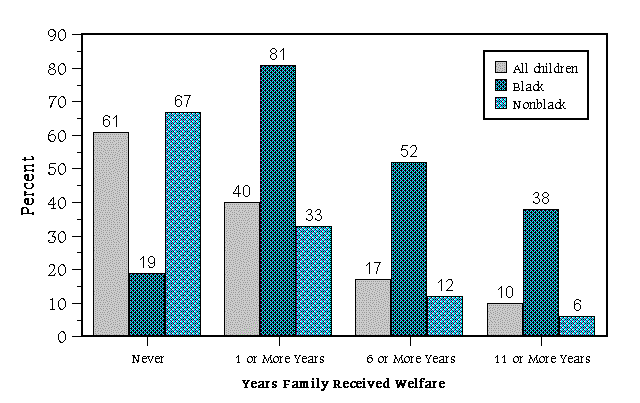
| Note: Welfare includes AFDC, Food Stamps, and SSI or "other welfare, which includes local General Assistance."
Source: Estimates supplied by Greg J. Duncan, Northwestern University, based on data from the Panel Study of Income Dynamics (PSID). |
Figure ES 2.3.B
|
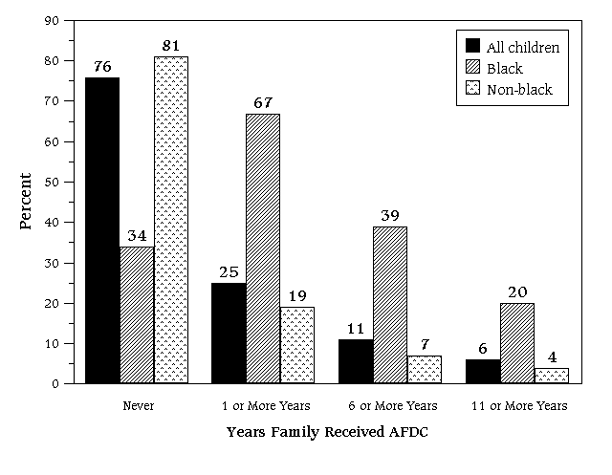
| Source: Estimates supplied by Greg J. Duncan, Northwestern University, based on data from the Panel Study of Income Dynamics (PSID). |
Table ES 2.3.A
|
|||||||||||
|
NUMBER OF YEARS FAMILY
RECEIVED ANY WELFARE
BENEFIT
|
NUMBER OF YEARS IN WHICH
WELFARE BENEFITS WERE
AT LEAST HALF OF TOTAL
FAMILY INCOME
|
||||||||||
|
______________________________
|
_______________________________
|
||||||||||
|
One or
|
Six or
|
11 or
|
One or
|
Six or
|
11 or
|
||||||
|
More
|
More
|
More
|
More
|
More
|
More
|
||||||
|
Never
|
Years
|
Years
|
Years
|
Never
|
Years
|
Years
|
Years
|
||||
|
______
|
______
|
______
|
______
|
______
|
______
|
______
|
______
|
||||
| Turned age 18 in 1985-1987 | |||||||||||
| (1967-69 birth cohort) | |||||||||||
| All children |
57
|
43
|
16
|
8
|
-
|
-
|
-
|
-
|
|||
| Black |
12
|
88
|
66
|
35
|
-
|
-
|
-
|
-
|
|||
| Non-black |
64
|
36
|
8
|
3
|
-
|
-
|
-
|
-
|
|||
| Turned age 18 in 1988-1990 | |||||||||||
| (1970-72 birth cohort) | |||||||||||
| All children |
58
|
43
|
21
|
12
|
-
|
-
|
-
|
-
|
|||
| Black |
19
|
81
|
67
|
40
|
-
|
-
|
-
|
-
|
|||
| Non-black |
65
|
35
|
13
|
7
|
-
|
-
|
-
|
-
|
|||
| Turned age 18 in 1991-1993 | |||||||||||
| (1973-75 birth cohort) | |||||||||||
| All children |
61
|
40
|
17
|
10
|
83
|
17
|
9
|
4
|
|||
| Black |
19
|
81
|
52
|
38
|
50
|
50
|
30
|
14
|
|||
| Non-black |
67
|
33
|
12
|
6
|
88
|
12
|
5
|
2
|
|||
| Note: Welfare includes AFDC, Food Stamps and SSI or "other welfare, which includes local General Assistance." | |||||||||||
| Source: Estimates supplied by Greg J. Duncan, Northwestern University, based on data from the Panel Study of Income Dynamics (PSID). | |||||||||||
Table ES 2.3.B
|
||||||||||
|
|
|
|
|
|
|
|
|
|
|
|
|
Number of years family
received any AFDC
benefit
|
Number of years in which
AFDC benefits were
at least half of
total family income
|
|||||||||
|
|
|
|
|
|||||||
|
|
|
One or
|
Six or
|
11 or
|
One or
|
Six or
|
11 or
|
|||
|
|
|
More
|
More
|
More
|
More
|
More
|
More
|
|||
|
|
|
Never
|
Years
|
Years
|
Years
|
Never
|
Years
|
Years
|
Years
|
|
|
|
|
|
|
|
|
|
|
|
|
|
|
|
|
|
|
|
|
|
|
|
|
|
| Turned age 18 in 1985-1987 (1967-69 birth cohort) |
||||||||||
|
|
All children |
77
|
23
|
10
|
5
|
87
|
13
|
3
|
1
|
|
|
|
Black |
29
|
71
|
45
|
19
|
44
|
56
|
15
|
6
|
|
|
|
Non-black |
85
|
15
|
4
|
2
|
94
|
7
|
2
|
1
|
|
| Turned age 18 in 1988 -1990 (1970-72 birth cohort) |
||||||||||
|
|
All children |
71
|
28
|
15
|
7
|
84
|
17
|
7
|
3
|
|
|
|
Black |
28
|
73
|
45
|
23
|
49
|
51
|
16
|
9
|
|
|
|
Non-black |
80
|
20
|
9
|
4
|
91
|
10
|
5
|
2
|
|
|
|
|
|
|
|
|
|
|
|
|
|
| Turned age 18 in 1991 -1993 (1973-75 birth cohort) |
||||||||||
|
|
All children |
76
|
25
|
11
|
6
|
85
|
15
|
6
|
2
|
|
|
|
Black |
34
|
67
|
39
|
20
|
54
|
47
|
23
|
10
|
|
|
|
Non-black |
81
|
19
|
7
|
4
|
89
|
11
|
4
|
1
|
|
| Source: Estimates supplied by Greg J. Duncan, Northwestern University based on data from the Panel Study of Income Dynamics (PSID). | ||||||||||
13 For this indicator, "welfare" has been defined to include Aid to Families with Dependent Children, Food Stamps, Supplemental Security Income, and "other welfare," which includes local General Assistance.
14 Duncan, G., and Brooks-Gunn, J. 1996. "Income Effects Across the Life Span: Integration and Interpretation," in Consequences of Growing Up Poor (G. Duncan and J. Brooks-Gunn, eds.).
ES 2.4 Sources of family income
Although most families with children receive most of their income from their own earnings and other private sources, federal transfer programs providing both cash and in-kind benefits are an important supplement for many families and the most important source of income for some. Thus, many children's standard of living is significantly affected by these programs. Most families with children pay taxes to the federal government to help pay for these programs.
Federal Cash Benefits. Many families receive some of their income in the form of government transfers, although the overwhelming majority of families (95 percent in 1993), had other, private sources of income as well (see Figure ES 2.4.A).
- The most common federal cash benefit was the earned Income Tax Credit (EITC)15, which the federal government paid to 29 percent of families with children.
- The federal government paid cash social insurance benefits (including Social Security, Workers' Compensation, and Unemployment Insurance benefits) to 20 percent of families with children.
- Cash benefits from the AFDC program were paid to 16 percent of families with children.
- Supplemental Security Income (SSI) benefits were provided to only 4 percent of families with children.
- A small percentage of families with children received cash benefits from other means-tested cash programs.
Single-parent families with children are less likely than married-couple families with children to have pre-transfer income (see Table ES 2.4.A). While 98 percent of married-couple families with children had pre-transfer income, only 85 percent of single-parent families had income before transfers. It is not surprising, therefore, that single-parent families with children were more likely than married-couple families with children to receive means-tested cash benefits. For example, while only 6 percent of married-couple families received AFDC benefits, 40 percent of single-parent families received these benefits.
Federal In-Kind Benefits. Many families also receive in-kind benefits from the federal government (see Figure ES 2.4.A).
- The federal government provided food stamps to 20 percent of families with children.
- Housing benefits were provided to 6 percent of families with children.
Single-parent families with children were much more likely than married-couple families to receive in-kind benefits (see Table ES 2.4.A). For example, while only 9 percent of married-couple families received food stamps, 45 percent of single-parent families did so. Similarly, only one percent of married-couple families received housing benefits, but 17 percent of single-parent families did so.
Federal Taxes. Most families with children pay both social security (FICA) taxes16 and federal income taxes (see Figure ES 2.4.B). In 1993, 91 percent of all families with children paid social security taxes, while 76 percent paid federal income taxes. Married-couple families were more likely than single-parent families to pay federal taxes. While 97 percent of married-couple families paid social security taxes, only 76 percent of single-parent families did so. Similarly, while 88 percent of married-couple families paid federal income taxes, only 48 percent of single-parent families did so.
Figure ES 2.4.A
|
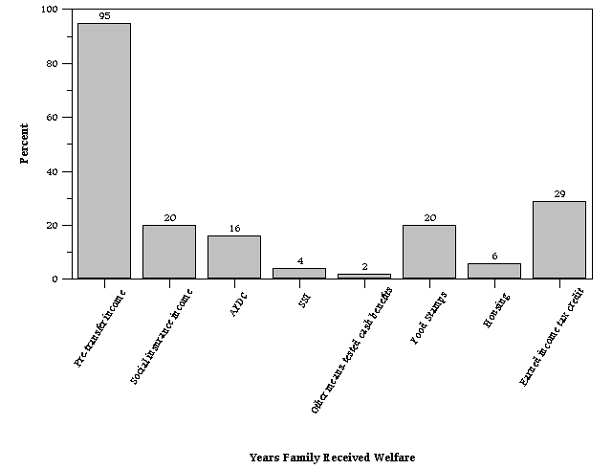
| Source: 1994 Current Population Survey, as processed by the Urban Institute's TRIM model. |
| Figure ES 2.4.B Percentage of All Families with Children Who Pay Federal Taxes, by Type of Tax and Family Type, 1993 |
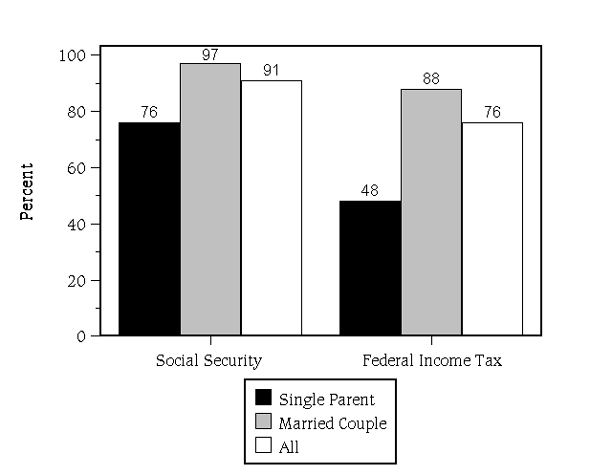
| Source: 1994 Current Population Survey, as processed by the Urban Institute's TRIM model. |
Table ES 2.4.A
|
|||||
|
Single-Parent
|
Married-Couple
|
All
|
|||
|
______
|
______
|
______
|
|||
| Pre-transfer income |
85
|
98
|
95
|
||
| Cash Benefits | |||||
| Social insurance income |
21
|
20
|
20
|
||
| AFDC |
40
|
6
|
16
|
||
| SSI |
6
|
2
|
4
|
||
| Other means-tested cash benefits |
3
|
1
|
2
|
||
| In-Kind Benefits | |||||
| Food Stamps |
45
|
9
|
20
|
||
| Housing |
17
|
1
|
6
|
||
| Earned income tax credit |
51
|
19
|
29
|
||
| Source: 1994 Current Population Survey, as processed by the Urban Institute's Transfer Income Model (TRIM), which simulates for a representative sample of the U.S. population eligibility for and payment of cash and in-kind benefits based upon the characteristics of the persons, families, and households contained in the sample. TRIM also simulates the payment of federal income and payroll taxes for this same representative sample. The results of TRIM simulations may differ from the results produced by other data sets or models because, for most programs, TRIM uses data corrected for under- and non-reporting. In the case of the Earned Income Tax Credit (EITC), for example, TRIM estimates differ from those of the U.S. Treasury because TRIM assumes that nearly everyone who is eligible for the EITC actually receives it. In reality, some ineligible families receive it and some eligible families do not. The errors do not exactly offset one another. | |||||
Table ES 2.4.B
|
||||
|
|
|
|
|
|
|
|
|
Single-Parent
|
Married-Couple
|
All
|
|
|
|
|
|
|
| Social Security (FICA) |
76
|
97
|
91
|
|
|
|
|
|||
| Federal Income Tax |
48
|
88
|
76
|
|
| Source: 1994 Current Population Survey, as processed by the Urban Institute's Transfer Income Model (TRIM), which simulates for a representative sample of the U.S. population eligibility for and payment of cash and in-kind benefits based upon the characteristics of the persons, families, and households contained in the sample. TRIM also simulates the payment of federal income and payroll taxes for this same representative sample. The results of TRIM simulations may differ from the results produced by other data sets or models because, for most programs, TRIM uses data corrected for under- and non-reporting. In the case of the Earned Income Tax Credit (EITC), for example, TRIM estimates differ from those of the U.S. Treasury because TRIM assumes that nearly everyone who is eligible for the EITC actually receives it. In reality, some ineligible families receive it and some eligible families do not. The errors do not exactly offset one another. | ||||
15 This benefit is paid to families with children, at least one working parent, and relatively low family income. If the credit is larger than a family's federal income tax liability, the difference is refunded to the family. The 29 percent figure refers only to families that received a refund and not to families whose EITC only partially offset their federal income tax liability.
16 FICA taxes cover the Old Age, Survivors, and Disability Insurance (Social Security) program plus Medicare.
ES 2.5 Child support nonpayment
The issue of child support has gained in importance in recent years. As rates of divorce and non-marital birth have risen, an increasing proportion of children and their custodial parents must depend on this source of income for financial support, and suffer correspondingly when it is not forthcoming. In addition, when noncustodial parents do not support their children financially, it is often left to the government to step in and provide support in the form of AFDC, food stamps, and other forms of assistance.
In many cases, and particularly where nonmarital births are concerned, families who should be receiving child support from the noncustodial parent lack a court order establishing how much is owed. Among those who do have court orders, about half (49 percent) do not receive all of the money they are owed in a given year.17
Table ES 2.5 shows the proportion of families who had court orders for child support but received no support at all for selected years between 1978 and 1991. Estimates are presented for all eligible families, and separately for population subgroups defined by marital status (married, divorced, separated, and never married) and race/ethnicity (white, black, and Hispanic). During that time period, the proportion of all eligible families who received no support whatsoever ranged between 21 and 28 percent. Rates of nonpayment decreased somewhat from 1978 to 1985, from 28 to 21 percent, then rose to about 25 percent by the end of the decade. This general historical pattern is consistent regardless of marital status, race, or ethnicity.
Differences by Marital Status. Women who are separated or never married were substantially less likely to have court orders for child support than those who were divorced, or who had remarried.18 Once a court order is established, however, the rates of nonpayment appear to be fairly similar across all marital status groups. In 1991, for example, rates of nonpayment ranged from about 24 percent for divorced women to 28 percent for never married women.19
Differences by Race and Ethnicity. In most years, eligible white families experienced lower rates of nonpayment than either black or Hispanic families. For example, in 1991, the most recent year for which estimates are available, the percentage of eligible families receiving no payment was 23 percent for whites, 31 percent for blacks, and 35 percent for Hispanics.
Methods of Payment. Some custodial parents receive their child support payments directly from the non-custodial parent or that parent's place of employment. Other parents use the Child Support Enforcement program, authorized under Title IV-D of the Social Security Act, to establish and enforce child support orders. Families receiving AFDC and Medicaid benefits are required to cooperate with their state's child support enforcement agency. Other families may request these services. Since fiscal year 1992, collections made by child support enforcement agencies have increased by nearly 40 percent, from $8 billion in fiscal year 1992 to $11 billion in fiscal year 1995.20 For the same period, paternity establishments increased more than 40 percent and child support orders increased 16 percent.
Table ES 2.5
|
||||||||||
|
1978
|
1981
|
1983
|
1985
|
1987
|
1989
|
1991a
|
||||
|
______
|
______
|
______
|
______
|
______
|
______
|
______
|
||||
| Total | ........................ |
28
|
23
|
24
|
21
|
24
|
25
|
25
|
||
| Marital Status | ||||||||||
| Married | ........... |
32
|
25
|
28
|
24
|
27
|
28
|
25
|
||
| Divorced | .............. |
27
|
23
|
24
|
21
|
22
|
23
|
24
|
||
| Separated | .............. |
27
|
16
|
13
|
12
|
26
|
20
|
26
|
||
| Never Married | .............. |
19
|
27
|
24
|
20
|
17
|
27
|
28
|
||
| Race/Ethnicity | ||||||||||
| White | .............. |
27
|
23
|
23
|
21
|
23
|
24
|
23
|
||
| Black | .............. |
37
|
23
|
31
|
22
|
27
|
30
|
31
|
||
| Hispanic | .............. |
35
|
29
|
38
|
26
|
25
|
30
|
35
|
||
| Note: aEstimates for 1991 were produced using somewhat different assumptions then in previous years, and should not be contrasted with earlier estimates. | ||||||||||
| Eligible Families are those with court orders for child support. | ||||||||||
| Source: 1978-1987 data from Child Support and Alimony, Series P23, Nos. 112, 140, 141, 154, and Current Population Reports Series P60, No. 173. Data for 1991 from Current Population Reports Series P60, No.187. | ||||||||||
17 Child Support for Custodial Mothers and Fathers. Current Population Reports Series P60, No. 187.
18 Ibid.
19 In some years rates of nonpayment appear to be substantially smaller for women who were separated or never married than for those who are divorced or remarried, but estimates for the former groups are based on small samples sizes which are subject to greater error. Disparities in sample size may account for the apparent cross-group differences in those years. ( See, for example, years 1983, 1985, and 1987)
20 Preliminary data from the Office of Child Support Enforcement, U.S. Department of Health and Human Services.
PARENTAL AND YOUTH EMPLOYMENT
ES 3.1 Parental labor force participation
Over the last three decades the proportion of single-parent families has increased, as has the proportion of mothers who work regardless of marital status.21 These factors have reduced the percentage of children who have a parent at home full time. Figure ES 3.1 presents data on the percentage of children who have all resident parents participating in the labor force22 at some level for the years 1985, 1990, and 1994 through 1996.
Parents in the Labor Force by Family Type. Between 1985 and 1996, the percentage of children who have all resident parents in the labor force increased from 59 percent to 66 percent (see Figure ES 3.1). Since 1990, the percentage of children who have all resident parents participating in the labor force has been similar for both married-couple families and single-mother families. In 1996, the rate was 64 percent for married-couple families and 66 percent for single-mother families. The rate for children in single-father families has remained much higher, at 88 percent.
Parents in the Labor Force by Age of Child. Children under age 6 have been less likely than older children to have all resident parents in the labor force (see Table ES 3.1). In 1996, 58 percent of younger children had all resident parents in the labor force, compared with 70 percent for older children.
Parents in the Labor Force by Race and Ethnicity. Between 1985 and 1990, white children, black children, and Hispanic children all became more likely to have all their resident parents in the labor force (see Table ES 3.1). However, between 1990 and 1996, the rates stayed virtually the same for blacks and Hispanics, and increased modestly for whites. By 1996, 66 percent of white children, 64 percent of black children, and 50 percent of Hispanic children lived in families in which all resident parents were working.
Figure ES 3.1
|
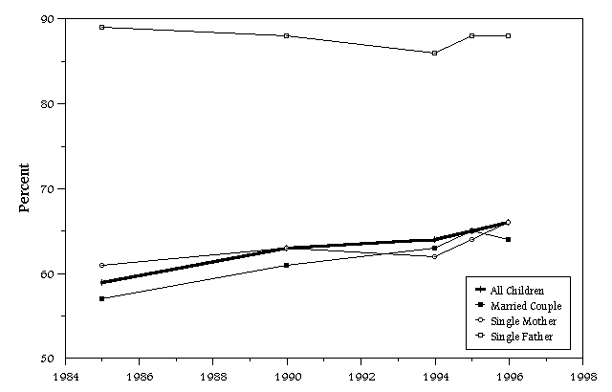
| Sources: 1985, 1990, 1994, and 1995 statistics calculated by Child Trends, Inc., based on the March 1985, 1990, 1994, and 1995 Current Population Surveys. 1996 statistics calculated by the U.S. Bureau of the Census based on the 1996 Current Population Survey. |
Table ES 3.1
|
||||||||||
|
1985
|
1990
|
1994
|
1995
|
1996
|
||||||
|
______
|
______
|
______
|
______
|
______
|
||||||
| All children | ......... |
59
|
63
|
64
|
65
|
66
|
||||
| < age 6 | ......... |
51
|
55
|
56
|
59
|
58
|
||||
| age 6-17 | ......... |
63
|
67
|
68
|
69
|
70
|
||||
| Family type | ||||||||||
| Married-couple | ......... |
57
|
61
|
63
|
65
|
64
|
||||
| < age 6 | ......... |
51
|
54
|
57
|
59
|
58
|
||||
| age 6-17 | ......... |
61
|
65
|
67
|
68
|
67
|
||||
| Single-mother | ......... |
61
|
63
|
62
|
64
|
66
|
||||
| < age 6 | ......... |
49
|
51
|
52
|
54
|
56
|
||||
| age 6-17 | ......... |
67
|
70
|
68
|
69
|
72
|
||||
| Single-father | ......... |
89
|
88
|
86
|
88
|
88
|
||||
| < age 6 | ......... |
90
|
90
|
85
|
86
|
86
|
||||
| age 6-17 | ......... |
89
|
88
|
86
|
88
|
89
|
||||
| Race/ethnicity group | ||||||||||
| White | ......... |
59
|
63
|
64
|
66
|
66
|
||||
| < age 6 | ......... |
51
|
55
|
57
|
59
|
58
|
||||
| age 6-17 | ......... |
63
|
67
|
68
|
70
|
70
|
||||
| Black | ......... |
60
|
63
|
62
|
64
|
64
|
||||
| < age 6 | ......... |
54
|
55
|
56
|
57
|
58
|
||||
| age 6-17 | ......... |
63
|
67
|
66
|
67
|
68
|
||||
| Hispanic | ......... |
45
|
50
|
49
|
50
|
50
|
||||
| < age 6 | ......... |
40
|
44
|
41
|
44
|
43
|
||||
| age 6-17 | ......... |
48
|
54
|
54
|
54
|
55
|
||||
| Sources: 1985, 1990, 1994 and 1995 statistics calculated by Child Trends, Inc., based on the March 1985, 1990, 1994, and 1995 Current Population Surveys. 1996 statistics calculated by the U.S. Bureau of the Census based on the 1996 Current Population Survey. | ||||||||||
21 Bianchi, S. M. 1995. "Changing Economic Roles of Women and Men" in State of the Union: American in the 1990s: Volume I. Reynolds Farley (ed.). New York: Russell Sage Foundation, 1995.
22 Participating in the labor force means either working or looking for work.
ES 3.2 Maternal employment
Over the last several decades, the increasing proportion of mothers moving into employment has had substantial consequences for the everyday lives of families with children. Maternal employment adds to the financial resources available to families, and is often the only source of income for families headed by single mothers although if child care services are purchased and unsubsidized, they may offset a substantial percentage of low-wage mothers' earnings.
Maternal employment rates for all mothers with children under age 18 increased steadily from 53 percent to 63 percent between 1980 and 1990 (see Figure ES 3.2.A). From 1990 to 1995, rates increased at a slower pace from 63 percent to 66 percent. This pattern of increasing maternal employment was evident for all mothers, regardless of the age of their children.
Differences by Age of Child. The percentage of mothers who are employed increases with the age of the youngest child for all time periods presented in Table ES 3.2.A. In 1995, 54 percent of mothers with children under age 3 were employed, compared to 62 percent and 73 percent for mothers with youngest children ages 3-5 and 6-17, respectively.
Differences by Race and Ethnicity. In 1995, 67 percent of white mothers, 62 percent of black mothers, and 49 percent of Hispanic mothers were employed (see Table ES 3.2.A). Black mothers were the most likely to be employed full-time (50 percent). Although all three groups substantially increased their rates of employment between 1980 and 1990, only white mothers continued to increase their rate of employment substantially between 1990 and 1995.
Differences by Marital Status. Throughout the period between 1988 and 1995, divorced mothers had higher rates of employment than never-married or currently married mothers. Employment increased from 62 percent to 67 percent for married mothers, from 40 to 48 percent for never-married mothers, and from 75 to 77 percent for divorced mothers.
Full-Time Versus Part-Time Employment. As shown in Figure ES 3.2.B, among all employed mothers, 70 percent were working full time in 1995. Employed mothers with older children were more likely to work full time than those with young children, with rates ranging from 65 percent for mothers with children under age 3, to 73 percent for mothers with a youngest child between the ages of 6 and 17. Divorced mothers were more likely to work full time (83 percent) than never-married mothers (72 percent) and married mothers (68 percent). Black mothers who were employed were more likely to work full time (82 percent) than white mothers (68 percent).
| Figure ES 3.2.A Percentage of Mothers Who Are Employed, by Age of Youngest Child: 1980-1995 |
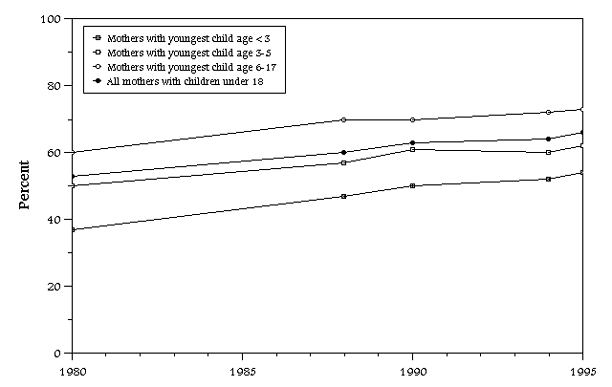
| Note: Percentages for 1980 are not presented separately by marital status and full-time vs. part-time due to incompatibilities with definitions used in later years. Sums may not add to totals due to rounding. Source: Unpublished tables, Bureau of Labor Statistics, based on analyses of March Current Population Surveys for 1980, 1988, 1990, 1994, and 1995 |
Figure ES 3.2.B
|
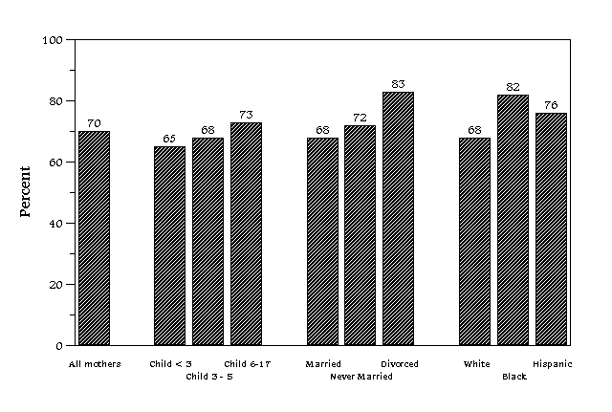
| Source: Unpublished tables, Bureau of Labor Statistics, based on analysis of March Current Population Survey for 1995. |
Table ES 3.2.A
|
||||||
|
1980
|
1988
|
1990
|
1994
|
1995
|
||
|
______
|
______
|
______
|
______
|
______
|
||
| Total Employed |
53
|
60
|
63
|
64
|
66
|
|
|
Working Full Time
|
--
|
44
|
46
|
45
|
46
|
|
|
Working Part Time
|
--
|
16
|
17
|
19
|
19
|
|
| Age of Youngest Child | ||||||
| < Age 3 Employed |
37
|
47
|
50
|
52
|
54
|
|
| Working Full Time |
--
|
32
|
34
|
34
|
35
|
|
| Working Part Time |
--
|
15
|
16
|
18
|
19
|
|
| Ages 3-5 Employed |
50
|
57
|
61
|
60
|
62
|
|
| Working Full Time |
--
|
40
|
43
|
41
|
42
|
|
| Working Part Time |
--
|
17
|
18
|
19
|
20
|
|
| Ages 6-17 Employed |
60
|
70
|
70
|
72
|
73
|
|
| Working Full Time |
--
|
53
|
53
|
53
|
53
|
|
| Working Part Time |
--
|
17
|
17
|
19
|
19
|
|
| Marital Status | ||||||
| Married, Spouse Present Employed |
--
|
62
|
63
|
66
|
67
|
|
| Working Full Time |
--
|
43
|
44
|
45
|
45
|
|
| Working Part Time |
--
|
19
|
19
|
21
|
22
|
|
| Never Married Employed
|
--
|
40
|
45
|
46
|
48
|
|
| Working Full Time |
--
|
32
|
36
|
34
|
35
|
|
| Working Part Time |
--
|
8
|
9
|
12
|
13
|
|
| Divorced Employed |
--
|
75
|
75
|
74
|
77
|
|
| Working Full Time |
--
|
66
|
66
|
63
|
64
|
|
| Working Part Time |
--
|
9
|
9
|
11
|
13
|
|
| Race/Ethnicity | ||||||
| White Employed |
52
|
62
|
63
|
65
|
67
|
|
| Working Full Time |
--
|
44
|
44
|
45
|
46
|
|
| Working Part Time |
--
|
18
|
19
|
20
|
21
|
|
| Black Employed |
54
|
56
|
61
|
58
|
62
|
|
| Working Full Time |
--
|
48
|
53
|
47
|
50
|
|
| Working Part Time |
--
|
8
|
8
|
11
|
11
|
|
| Hispanic Employed |
42
|
49
|
50
|
48
|
49
|
|
| Working Full Time |
--
|
38
|
39
|
36
|
37
|
|
| Working Part Time |
--
|
11
|
11
|
12
|
12
|
|
| Note: aPercentages for 1980 are not presented separately by marital status and full-time vs. part-time due to incompatibilities with definitions used in later years. Sums may not add to totals due to rounding. | ||||||
| Source: Unpublished tables, Bureau of Labor Statistics, based on analyses of March Current Population Surveys for 1980, 1988, 1990, 1994, and 1995. | ||||||
Table ES 3.2.B
|
||||||
|
Full time (thousands)
|
Part time (thousands)
|
Total
(thousands) |
Percentage
Full time |
|||
|
________
|
________
|
________
|
________
|
|||
| All mothers |
16,349
|
6,846
|
23,195
|
70
|
||
| Age of youngest child | ||||||
| < age 3 |
3,385
|
1,787
|
5,172
|
65
|
||
| 3-5 |
2,982
|
1,433
|
4,415
|
68
|
||
| 6-17 |
9,982
|
3,626
|
13,608
|
73
|
||
| Marital status | ||||||
| Married |
11,642
|
5,553
|
17,195
|
68
|
||
| Never married |
1,267
|
487
|
1,754
|
72
|
||
| Divorced |
2,340
|
477
|
2,817
|
83
|
||
| Race/ethnicity group | ||||||
| White |
13,010
|
6,040
|
19,050
|
68
|
||
| Black |
2,552
|
567
|
3,119
|
82
|
||
| Hispanic |
1,621
|
506
|
2,127
|
76
|
||
| Source: Unpublished Tables, Bureau of Labor Statistics, based on analysis of March Current Population Survey for 1995. | ||||||
ES 3.3 Parental labor force detachment
Attachment to the labor force is, for the vast majority of families, a necessary prerequisite for financial and social stability. Children who have no parents in the labor force are at considerably higher risk of poverty, which can have long-term negative consequences for their well-being.23,24
Figure ES 3.3 presents trends in the proportion of children living in families where there were no resident parents attached to the labor force. Data are presented for 1985, 1990, and 1994 through 1996, by family type, age of child, and race/ethnicity. During that period, approximately one in 10 children lived in families in which all resident parents were detached from the labor force. The percentages fluctuated within a narrow range throughout the period.
Labor Force Detachment by Family Type and Age of Child. The rate of parental labor force detachment for children in married couple families was very low, fluctuating between 2 and 3 percent between 1985 and 1996. However, detachment rates for children in families headed by single mothers were more than ten times higher throughout the period. In 1985, 39 percent of children living in single-mother families had a nonworking mother (see Figure ES 3.3). This percentage dropped to 34 percent by 1996. For children under age 6 in single-mother families, the reduction was somewhat larger, from 51 percent in 1985 to 44 percent in 1996 (see Table ES 3.3).
In families headed by single mothers, mothers of children under age six were more likely to be detached from the labor force than mothers of older children. The gap between the two age groups has narrowed over time, however, decreasing from 26 percentage points in 1985 (59 percent versus 33 percent) to 16 percentage points in 1996 (44 percent versus 28 percent). Children living in families headed by single fathers experienced parental labor force detachment rates between 11 and 14 percent during this time period. This is substantially less than rates experienced by children in families headed by single mothers (12 percent versus 34 percent in 1996), but substantially higher than those in married-couple families (2 percent).
Labor Force Detachment by Race and Ethnicity. White children were much less likely than black or Hispanic children to have no resident parents in the labor force in 1996, with rates of 7 percent, 25 percent, and 17 percent, respectively.
Figure ES 3.3
|
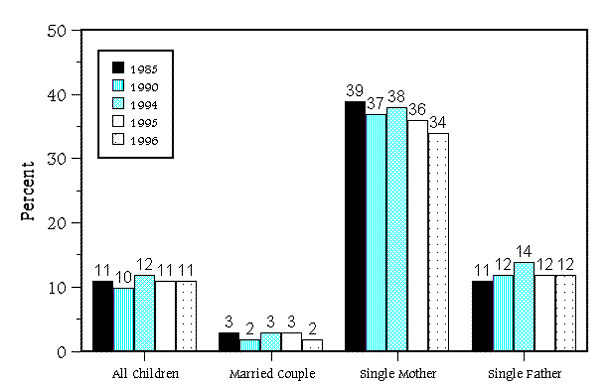
| Sources: 1985, 1990, 1994, and 1995 statistics calculated by Child Trends, Inc., based on analyses of the March 1985, 1990, 1994, and 1995 Current Population Surveys. 1996 statistics calculated by the U.S. Bureau of the Census based on the 1996 Current Population Survey. |
Table ES 3.3
|
||||||||
|
1985
|
1990
|
1994
|
1995
|
1996
|
||||
|
______
|
______
|
______
|
______
|
______
|
||||
| All children |
11
|
10
|
12
|
11
|
11
|
|||
| < age 6 |
12
|
13
|
14
|
14
|
13
|
|||
| age 6-17 |
10
|
9
|
11
|
10
|
9
|
|||
| Family type | ||||||||
| Married-couple |
3
|
2
|
3
|
3
|
2
|
|||
| < age 6 |
2
|
2
|
2
|
2
|
2
|
|||
| age 6-17 |
3
|
3
|
3
|
3
|
3
|
|||
| Single-mother |
39
|
37
|
38
|
36
|
34
|
|||
| < age 6 |
51
|
49
|
48
|
46
|
44
|
|||
| age 6-17 |
33
|
30
|
32
|
31
|
28
|
|||
| Single-father |
11
|
12
|
14
|
12
|
12
|
|||
| < age 6 |
10
|
10
|
15
|
14
|
14
|
|||
| age 6-17 |
11
|
12
|
14
|
12
|
11
|
|||
| Race/ethnicity group | ||||||||
| White |
8
|
7
|
9
|
8
|
7
|
|||
| < age 6 |
8
|
9
|
11
|
10
|
9
|
|||
| age 6-17 |
7
|
6
|
8
|
7
|
7
|
|||
| Black |
27
|
26
|
27
|
27
|
25
|
|||
| < age 6 |
33
|
34
|
33
|
33
|
32
|
|||
| age 6-17 |
24
|
21
|
24
|
23
|
21
|
|||
| Hispanic |
19
|
17
|
19
|
19
|
17
|
|||
| < age 6 |
20
|
19
|
22
|
21
|
20
|
|||
| age 6-17 |
19
|
16
|
18
|
17
|
15
|
|||
| Sources: 1985, 1990, 1994 and 1995 statistics calculated by Child Trends, Inc., based on analyses of the March 1985, 1990, 1994, and 1995 Current Population Surveys. 1996 statistics calculated by the U.S. Bureau of the Census based on the 1996 Current Population Survey. | ||||||||
23 Blau, F., and Grossberg, A. 1992. "Maternal Labor Supply and Children's Cognitive Development, "Review of Economics and Statistics.
24 Duncan, G., and Brooks-Gunn, J. 1996. "Income Effects Across the Life Span: Integration and Interpretation," in Consequences of Growing Up Poor (G. Duncan and J. Brooks-Gunn, eds.).
ES 3.4 Secure parental labor force attachment
Parents' full-time employment over the course of an entire year indicates a secure attachment to the labor force and produces a degree of financial security for their children. As shown in Table ES 3.4, the percentage of children in families with at least one securely attached parent increased from 69 percent to 74 percent over the parental attachment to the labor force by racial and ethnic groups, poverty status, age of children, and family structure.
Differences by Race and Ethnicity. The parents of children in white families consistently have the highest rates of secure attachment to the labor force. Throughout the entire 1984-1995 period, more than 70 percent of white children had at least one parent with a secure labor force attachment. In 1995, the rate for white children was 78 percent (see Figure ES 3.4). In contrast only about half of black children and about 60 percent of Hispanic children lived in families with at least one parent who was securely attached to the labor force. In 1995 the rate for black children was 53 percent, and the rate for Hispanic children was 61 percent.
Differences by Poverty Status. Secure parental labor force attachment is associated with escaping poverty (see Figure ES 3.4). In 1995, only 25 percent of poor families with children had at least one parent with a secure labor force attachment while 86 percent of nonpoor families had at least one securely attached parent. The percentage of poor families with at least one parent securely attached to the labor force has increased over the period from 20 percent in 1984 to 25 percent in 1995.
Differences by Age of Children. Secure parental labor force attachment is more common among families with older children. In 1995, 78 percent of families with children ages 12 through 17 had at least one parent who was securely attached to the labor force, compared to 69 percent of families with children younger than age six (see Figure ES 3.4).
Differences by Family Structure. Married-couple families are far more likely than other family types to have at least one parent securely attached to the labor force. In 1995, 87 percent of married-couple families had at least one securely attached parent. In contract, only 38 percent of the single-mother families and 67 percent of the single-father families had a securely attached parent (see Figure ES 3.4).
Figure ES 3.4
|
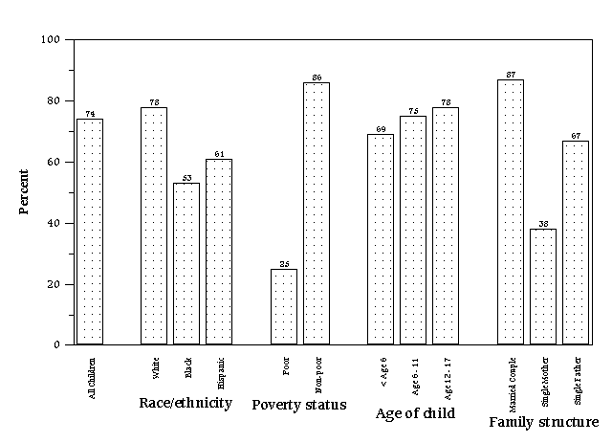
| Source: 1995 statistics calculated by the U.S. Bureau of the Census based on the 1985 and 1996 Current Population Surveys. |
Table ES 3.4
|
||||||
|
1984
|
1989
|
1993
|
1994
|
1995
|
||
|
______
|
______
|
______
|
_______
|
_______
|
||
| Total |
69
|
73
|
71
|
73
|
74
|
|
| Race/Ethnicity | ||||||
| White |
73
|
78
|
76
|
77
|
78
|
|
| Black |
48
|
51
|
49
|
52
|
53
|
|
| Hispanic |
58
|
62
|
57
|
59
|
61
|
|
| Poverty Status | ||||||
| Poor |
20
|
22
|
21
|
24
|
25
|
|
| Nonpoor |
83
|
85
|
85
|
86
|
86
|
|
| Child's Age | ||||||
| < age 6 |
65
|
69
|
67
|
68
|
69
|
|
| 11-Jun |
70
|
74
|
72
|
73
|
75
|
|
| 17-Dec |
73
|
78
|
75
|
76
|
78
|
|
| Family Structure | ||||||
| Married-couple |
80
|
85
|
85
|
86
|
87
|
|
| Single-mother |
32
|
34
|
33
|
35
|
38
|
|
| Single-father |
61
|
64
|
61
|
60
|
67
|
|
| Source: 1984 - 1994 statistics calculated by Child Trends, Inc., based on analyses of the March 1985, 1994 and 1995 Current Population Surveys. 1995 statistics calculated by U.S. Bureau of the Census based on analyses of the March 1996 Current Population Survey. | ||||||
ES 3.5 Child care
The child care needs of American families have been increasing over the past several decades as mothers have moved into the labor force in ever greater numbers. Child care that is reliable and of high quality is especially important for infants and preschoolers because they are dependent on caregivers for their basic needs and safety. Yet the quality of care varies substantially in the United States.25 Research has clearly demonstrated that child care quality can have substantial impacts on the development of a young child's personality, cognitive skills, social skills, and well-being.
Child Care Centers and Preschools. As shown in Table ES.3.5.A, working mothers with preschool children have increasingly chosen care provided in day care centers and preschools. In 1965, only 8 percent of mothers working full time chose day care centers and preschools for child care. By 1993, 34 percent did so. Similarly, for children whose mothers worked part time, use of child care centers and preschools increased from 3 percent in 1965 to 23 percent in 1993.
Child Care in a Non-Relative's Home. For children of full-time working mothers, care in a non-relative's home peaked at 27 percent in the mid-1980s, then declined to 18 percent by 1993. Similarly, for children whose mothers worked part time, care in a non-relative's home peaked at 19 percent in 1982 and has since declined to 14 percent.
Care by Fathers and Other Relatives. The fraction of children of full-time working mothers cared for by fathers or other relatives in the child's home was 28 percent in 1993 exactly the same as in 1965. The fraction of children of part-time working mothers cared for by fathers or other relatives in the child's home was 38 percent in 1993 about the same as in 1977 and slightly higher than in 1965.
Child Care Arrangements by Various Child and Family Characteristics. Table ES.3.5.B presents 1993 estimates of the distribution of child care types used by all working mothers (regardless of hours worked) by child's race/ethnicity, age, mother's marital status and educational attainment, poverty status, monthly income, and AFDC program participation status. The information in this table indicates the following:
- Prior to age 3, the most common arrangement for child care is in another home by either a relative or non-relative. Forty percent for children under age one and 37 percent of children ages 1-2 whose mothers are employed are in this kind of care arrangement.
- For children ages 3-4 whose mothers are employed, the most common arrangement for care is child care centers and preschools. Thirty-nine percent of children are in this care arrangement. Twenty-four percent are cared for by a relative or non-relative in another home. Hispanic families, however, are much less likely than white and black non-Hispanics to use day care centers and preschools.
- Children with mothers of higher socioeconomic status are the most likely to be receiving care from a day care center or preschool. For example, 20 percent of poor children under age 5 receive care from such sources, compared to 31 percent of non-poor children. Only 20 percent of children whose mothers have less than a high school diploma receive care from a day care center or preschool, compared to 36 percent of children whose mothers have a college degree. In contrast, 52 percent of children of poor mothers are cared for by relatives compared with only 40 percent of children of non-poor mothers, and 54 percent of children of mothers without a high school diploma are cared for by relatives compared with only 31 percent of children of mothers with a college degree.
- Children whose families participate in the Aid to Families with Dependent Children (AFDC) program appear somewhat less likely than other children to attend day care centers or preschools (26 percent for participants versus 30 percent for nonparticipants). They are also less likely to be cared for by their fathers (5 percent for participants versus 16 percent for nonparticipants). However, 40 percent of children in AFDC families are cared for by other relatives compared with only 24 percent for children whose families do not participate in AFDC.
Table ES 3.5.A
|
|||||||
|
1965a,b
|
1977b
|
1982b
|
1984-85
|
1988
|
1991
|
1993
|
|
| Mother Employed Full - Time | |||||||
| Day care center or preschool |
8
|
15
|
20
|
30
|
31
|
28
|
34
|
| Non-relative care in provider's home |
20
|
27
|
25
|
27
|
27
|
21
|
18
|
| Grandparent/other relative in relative's home |
18
|
21
|
21
|
16
|
14
|
14
|
17
|
| Father in child's home |
10
|
11
|
11
|
10
|
8
|
15
|
11
|
| Other care in child's home |
37
|
18
|
16
|
13
|
13
|
15
|
15
|
| Other care outside child's homec |
7
|
8
|
7
|
4
|
7
|
7
|
5
|
| Mother Employed Part - Time | |||||||
| Day care center or preschool |
3
|
9
|
8
|
17
|
17
|
15
|
23
|
| Non-relative care in provider's home |
8
|
16
|
19
|
14
|
17
|
13
|
14
|
| Grandparent/other relative in relative's home |
9
|
13
|
16
|
16
|
11
|
11
|
13
|
| Father in child's home |
23
|
23
|
21
|
22
|
27
|
29
|
25
|
| Other care in child's home |
24
|
20
|
20
|
18
|
14
|
17
|
15
|
| Other care outside child's homec |
33
|
19
|
26
|
13
|
14
|
15
|
10
|
| Notes: aData for 1965 are for children under 6 years old. bData for 1982 and earlier are based on survey questions that asked about care arrangements for youngest child in the family. Percentages for 1982 and earlier have been recalculated after removal of cases in "don't know" category. cIncludes children who are cared for by their mother at work, or in kindergarten or school-based activities. |
|||||||
| Source: U. S. Bureau of the Census, Current Population Reports, Series P-70, No. 9, P-70, No. 30, and P-70, No. 36, Who's Minding the Kids? Child Care Arrangements: Winter 1984-1985, 1988 and 1991, 1987, Table 3; 1992, Table 1; and 1994, Table 1; Series P-23, No. 117, Trends in Child Care Arrangements of Working Mothers, Table A; and Series P-70, No. 53, Who's Minding Our Preschoolers?, Table 1: U.S. Government Printing Office, Washington, D.C. | |||||||
Table ES 3.5.B
|
||||||||||||
|
Day care centera
|
Father in child's home
|
Other Relative in child's home
|
Non- relative in child's home
|
Relative in another home
|
Non- relative in another home
|
Mother cares for childb
|
Other care Arrange- mentsc
|
|||||
|
______
|
_______
|
_______
|
_______
|
______
|
_______
|
_______
|
_______
|
|||||
| All preschoolers |
30
|
16
|
10
|
5
|
15
|
17
|
6
|
1
|
||||
| Race/ethnicity | ||||||||||||
| White, not Hispanic |
31
|
17
|
7
|
5
|
14
|
18
|
7
|
1
|
||||
| Black, not Hispanic |
33
|
9
|
18
|
1
|
21
|
14
|
3
|
2
|
||||
| Hispanicd |
21
|
15
|
16
|
7
|
23
|
13
|
3
|
2
|
||||
| Other |
24
|
18
|
18
|
7
|
13
|
13
|
5
|
2
|
||||
| Age of child | ||||||||||||
| Less than 1 year |
19
|
17
|
10
|
6
|
18
|
22
|
7
|
0
|
||||
| 1-2 years |
24
|
17
|
11
|
5
|
18
|
19
|
5
|
0
|
||||
| 3-4 years |
39
|
14
|
9
|
4
|
12
|
12
|
7
|
2
|
||||
| Marital status | ||||||||||||
| Married, husband present |
30
|
19
|
7
|
5
|
14
|
16
|
7
|
1
|
||||
| All other marital statusese |
29
|
3
|
20
|
5
|
20
|
17
|
3
|
1
|
||||
| Educational attainment | ||||||||||||
| Less than high school |
20
|
17
|
20
|
5
|
17
|
15
|
6
|
1
|
||||
| High school, 4 years |
27
|
17
|
11
|
3
|
20
|
16
|
6
|
1
|
||||
| College, 1-3 years |
32
|
16
|
8
|
4
|
15
|
16
|
8
|
1
|
||||
| College, 4 or more years |
36
|
14
|
7
|
8
|
10
|
19
|
5
|
1
|
||||
| Poverty levelf | ||||||||||||
| At or below poverty |
20
|
16
|
14
|
7
|
22
|
12
|
8
|
1
|
||||
| Above poverty |
31
|
16
|
9
|
5
|
15
|
17
|
6
|
1
|
||||
| Monthly family incomef | ||||||||||||
| Less than $1,200 |
20
|
16
|
11
|
6
|
23
|
15
|
8
|
1
|
||||
| $1,200 to $2,999 |
26
|
20
|
9
|
3
|
19
|
15
|
8
|
1
|
||||
| $3,000 to $4,499 |
29
|
18
|
10
|
4
|
14
|
19
|
5
|
1
|
||||
| $4,500 and over |
39
|
10
|
10
|
7
|
11
|
17
|
4
|
1
|
||||
| Program Participation | ||||||||||||
| AFDC recipient |
26
|
5
|
18
|
6
|
22
|
16
|
8
|
0
|
||||
| AFDC nonrecipient |
30
|
16
|
9
|
5
|
15
|
17
|
6
|
1
|
||||
| aIncludes day care centers, nursery schools, and pre-schools. | dPersons of Hispanic origin may be of any race. | |||||||||||
| bIncludes mothers working at home or away from home. | eIncludes widowed, separated, divorced, and never married. | |||||||||||
| cIncludes preschoolers in kindergarten and school-based activities. | fOmits preschoolers whose families did not report income. | |||||||||||
| Source: U.S. Bureau of the Census, Current Population Reports, Series P-70, No. 53, Who's Minding Our Preschoolers? Table 2. | ||||||||||||
25 Whitebook, M., Phillips, D., and Howes, C. 1989. National Child Care Staffing Study. Oakland, CA: Child Care Employees Project; and Hayes, C.D., Palmer, J.L., and Zaslow, M.J. (Eds.). 1990. Who Cares for America's Children? Child Care Policy for the 1990s. Washington, D.C.: National Academy Press.
ES 3.6 Detached Youth
"Detached youth" refers to young people ages 16-19 who are neither in school nor working. This detachment, particularly if it lasts for several years, increases the risk that a young person, over time, will have lower earnings and a less stable employment history than his or her peers who stayed in school and/or secured jobs.26
Since 1975, the percentage of detached youth has fluctuated between 9 and 12 percent (see Table ES 3.6). In 1994, 10 percent of all youth ages 16-19 were detached.
Table ES 3.6
|
||||||||
|
1975
|
1980
|
1985
|
1990
|
1991
|
1992
|
1993
|
1994
|
|
|
_______
|
_______
|
_______
|
_______
|
_______
|
_______
|
_______
|
_______
|
|
| Percent |
12
|
11
|
11
|
10
|
10
|
10
|
9
|
10
|
| Note: aThe figures represent a yearly average based on responses for the nine months youth typically are in school (September through May). Youth are asked about their activities for the week prior to the survey. | ||||||||
| Source: Special tabulations of Current Population Survey microdata prepared by the Bureau of Labor Statistics. | ||||||||
26 Brett Brown. 1996. "Who are America's Disconnected Youth?," report prepared for the American Enterprise Institute.
HOUSING
ES 4.1 Inadequate housing
Housing is a major expense for most families. A home's physical condition, its safety, the level of crowding in a household, and the quality of the surrounding neighborhood can all affect children's well-being.27
Table ES 4.1 presents recent trends in the physical quality of housing for children, reporting the percentage of families with children under age 18 living in housing units with moderate to severe physical problems as defined by the U.S. Department of Housing and Urban Development.28 Data are presented for every other year from 1985 through 1993. Across this time period, the percentage of children's households with moderate to severe physical problems fluctuated slightly from 9 percent in 1985 to 7 percent in 1993.29
Differences by Type of Family. Data are also presented separately for three types of households containing children: married couples, other types of households containing two or more adults (which could include, for example, cohabiting couples, adult siblings, mother and grandmother, or adult house mates), and households with one or no adult. The data consistently indicate that married-couple families with children are the least likely to experience housing with physical problems as defined here, followed by households with one or no adult, and households with two or more adults who are not married. In 1993, for example, 6 percent of married-couple households with children, 10 percent of households with one or no adult, and 11 percent of households with two or more unmarried adults lived in housing with moderate to severe physical problems (see Figure ES 4.1).
Figure ES 4.1
|
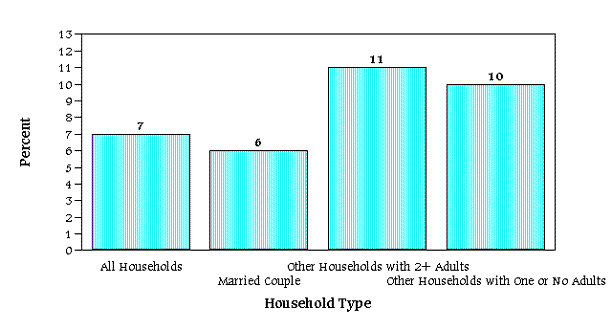
| Note: Physical problems include problems with plumbing, heating, electricity, upkeep, and/or hallways. For detailed definitions of "moderate" and "severe" physical problems, see American Housing Survey for the United States, 1993, page A-13. Source: Current Housing Reports: American Housing Survey for the United States for 1993. |
Table ES 4.1
|
||||||
|
1985
|
1987
|
1989
|
1991
|
1993
|
||
|
-------
|
------
|
------
|
------
|
------
|
||
| All Households with Children under Age 18 |
9
|
8
|
9
|
9
|
7
|
|
| Married couples |
7
|
6
|
7
|
7
|
6
|
|
| Other households with two or more adults |
15
|
15
|
13
|
14
|
11
|
|
| Households with one or no adults |
12
|
13
|
13
|
13
|
10
|
|
| Note: Physical problems include problems with plumbing, heating, electricity, upkeep, and/or hallways. For detailed definitions of "moderate" and "severe" physical problems, see American Housing Survey for the United States, 1993, page A-13. | ||||||
| Source: Current Housing Reports: American Housing Survey for the United States for 1985, 1987, 1989, 1991, and 1993. | ||||||
27 U.S. Department of Health and Human Services and U.S. Department of Education. 1995. The JOBS Evaluation: How Well are They Faring? AFDC Families with Preschool-aged Children in Atlanta at the Outset of the JOBS Evaluation. Washington, D.C.: U.S. Department of Health and Human Services, Office of the Assistant Secretary for Planning and Evaluation. See also Blackman, T., Evason, E., Melaugh, M. And Woods, R. 1989. Housing and Health: a Case Study of Two Areas in West Belfast. Journal of Social Policy, 18(1): 1-26.
28 Physical problems can include problems with plumbing, heating, electricity, upkeep, and/or hallways.
29 It is not clear whether or not this downward trend is statistically significant. The level of fluctuation in this estimate from year to year would indicate that the contrast may be the result of random error.
SECTION 3 HEALTH CONDITIONS AND HEALTH CARE (HC)
MORTALITY
HC 1.1.a Infant mortality
Infancy is commonly divided into the neonatal period, the first 27 days of life, and the postneonatal period, 28 days to less than one year. About two-thirds of infant deaths occur during the neonatal period (although advances in neonatology in recent decades have greatly improved the chances that infants will survive this period). The three leading causes of death to infants (one year and younger) are congenital anomalies, disorders relating to a short gestation period and low birth weight, and sudden infant death syndrome (SIDS).1 In 1995, SIDS dropped from the second to the third leading cause of infant mortality. The SIDS decline accounted for nearly one-third of the total drop in infant mortality in 1995.2
The U.S. infant mortality rate has decreased rapidly over the past three decades. Between 1960 and 19953 the rate fell from 26.0 to 7.5 infant deaths per thousand live births (see Figure HC 1.1.A.1). There was a steep decline in the rate of neonatal deaths (from 18.7 to 4.8 infant deaths per thousand live births) and a smaller, more gradual decline in the rate of postneonatal deaths (from 7.3 to 2.7 infant deaths per thousand live births).
International Comparisons. Despite declines in recent decades, the U.S. infant mortality rate ranks among the highest of industrialized nations. For example, in 1992, the rate of infant deaths per thousand live births was 4.5 in Japan, 6.6 in the United Kingdom, 6.8 in France, and 6.2 in Germany, compared to 8.5 deaths per thousand live births in the United States in that year.4 The Russian Federation, in contrast, has an infant mortality rate of 18.4 deaths per thousand live births.
Differences by Race and Ethnicity. While infant mortality rates have declined for all races and ethnic groups in the United States, there is nevertheless considerable variation by race and ethnicity (see Figure HC 1.1.A.2). Specifically:3
- For white infants, the infant mortality rate has declined by 72 percent between 1960 and 1995 from 22.9 to 6.3 deaths per thousand live births (see Table HC 1.1.A.1).
- For black infants, the infant mortality rate has declined by 66 percent between 1960 and 1995 from 44.3 to 14.9 deaths per thousand live births (see Table HC 1.1.A.1).
- For Hispanic infants, the infant mortality rate has declined by 24 percent between 1985 and 1994 from 8.6 to 6.5 deaths per thousand live births (see Table HC 1.1.A.1).
For Asian infants, the infant mortality rate has declined by 20 percent from an average of 8.3 deaths per thousand live births during the period 1983-1985 to an average of 6.6 deaths per thousand live births during the period 1989-19915 (see Table HC 1.1.A.2).
- For Native American infants, the infant mortality rate declined by nine percent from an average of 13.9 deaths per thousand live births during the period 1983-1985 to an average of 12.6 deaths per thousand live births during the period 1989-1991 (see Table HC 1.1.A.2).
Figure HC 1.1.A.1
|
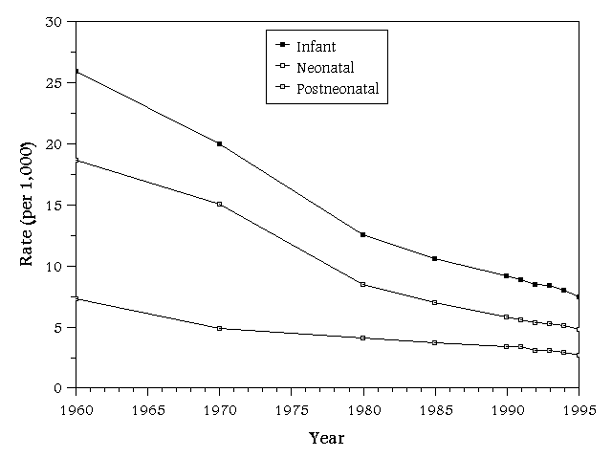
Notes: Includes births and deaths of persons who were not residents of the 50 states and the District of Columbia. Data by race for 1960 are by race of child; all other years are by race of mother. Data for 1995 are preliminary.
Source: National Center for Health Statistics. Health, United States, 1995. Hyattsville, Maryland: Public Health Service. 1996. Table 23 for totals and race breaks. Data for 1994 and 1995 data from: Births and Deaths: United States, 1995. Monthly Vital Statistics Report; Vol. 45, No. 3, Supplement 2. Hyattsville, Maryland: Public Health Service, 1996.
Figure HC 1.1.A.2
|
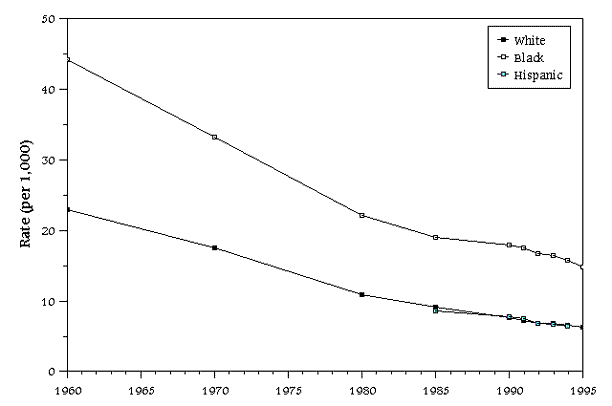
Note: aHispanic rates not available prior to 1985. Infant mortality by Hispanic-origin reported by 17 States and the District of Columbia in 1985; 45 States, New York State (excluding New York City), and the District of Columbia in 1990; 47 States, New York State (excluding New York City), and the District of Columbia in 1991; 48 states and the District of Columbia in 1992; and 49 States and the District of Columbia in 1993 and 1994. bIncludes births and deaths of persons who were not residents of the 50 states and the District of Columbia. cData by race for 1960 are by race of child; all other years are by race of mother. dData for 1995 are preliminary.
Source: National Center for Health Statistics. Health, United States, 1995. Hyattsville, Maryland: Public Health Service. 1996 (table 23 for totals and race breaks). 1970 data from: National Center for Health Statistics. Vital Statistics of the United States, 1992. Vol. II, Mortality, Part A. Washington: Public Health Service. 1996 (table 2-2). Hispanic data for 1985 from: National Center for Health Statistics: Vital Statistics of the United States, 1985, Vol. II, Mortality, Part A. Washington: Public Health Service. 1988 (table 2-19). 1990 Hispanic data from: Monthly Vital Statistics Report. Vol. 41, No. 7 (Supplement), January, 1993 (table 26). 1991 Hispanic data from: Monthly Vital Statistics Report, Vol. 42, No. 2 (Supplement), August, 1993 (table 25). 1992 Hispanic data from: Monthly Vital Statistics Report, Vol. 43, No. 6 (Supplement), March, 1995 (table 28). 1993 Hispanic data from: Monthly Vital Statistics Report, Vol. 44, No. 7(s), February, 1996 (table 32). 1994 Hispanic data from: Singh, G.K., Kochanek, K.D., and MacDorman, M.F. Advance Report of Final Mortality Statistics, 1994. Monthly Vital Statistics Report, Vol. 45, No. 3. Hyattsville, Maryland: Public Health Service, 1996 (table 25). Data for 1994 and 1995 from: Rosenberg, H.M., Ventura, S.J., Maurer, J.D., Heuser, R.L. and Freedman, M.A. Births and Deaths: United States, 1995. Monthly Vital Statistics Report; Vol. 45, No. 3, Supplement 2. Hyattsville, Maryland: Public Health Service, 1996 (table 13).
Table HC 1.1.A.1
|
||||||||||||
|
|
|
|
|
|
|
|
|
|
|
|
|
|
|
1960a,b
|
1970
|
1980
|
1985
|
1990
|
1991
|
1992
|
1993
|
1994
|
1995c
|
|||
|
|
|
|
|
|
|
|
|
|
|
|
|
|
| Infant (under one year) | ||||||||||||
| Death Rate |
26
|
20
|
12.6
|
10.6
|
9.2
|
8.9
|
8.5
|
8.4
|
8
|
7.5
|
||
|
|
White |
22.9
|
17.6
|
10.9
|
9.2
|
7.6
|
7.3
|
6.9
|
6.8
|
6.6
|
6.3
|
|
|
|
Black |
44.3
|
33.3
|
22.2
|
19
|
18
|
17.6
|
16.8
|
16.5
|
15.8
|
14.9
|
|
|
|
Hispanicd |
|
|
|
8.6
|
7.8
|
7.5
|
6.8
|
6.7
|
6.5
|
|
|
|
|
|
|
|
|
|
|
|
|
|
|
|
|
| Neonatal (under 28 days) | ||||||||||||
| Death Rate |
18.7
|
15.1
|
8.5
|
7
|
5.8
|
5.6
|
5.4
|
5.3
|
5.1
|
4.8
|
||
|
|
White |
17.2
|
13.7
|
7.4
|
6
|
4.8
|
4.5
|
4.3
|
4.3
|
4.2
|
4
|
|
|
|
Black |
27.8
|
23.2
|
14.6
|
12.6
|
11.6
|
11.2
|
10.8
|
10.7
|
10.2
|
9.6
|
|
|
|
Hispanicd |
|
|
|
5.4
|
5
|
4.6
|
4.3
|
4.1
|
4.1
|
|
|
|
|
|
|
|
|
|
|
|
|
|
|
|
|
| Postneonatal (28 days to under one year) | ||||||||||||
| Death Rate |
7.3
|
4.9
|
4.1
|
3.7
|
3.4
|
3.4
|
3.1
|
3.1
|
2.9
|
2.7
|
||
|
|
White |
5.7
|
4
|
3.5
|
3.2
|
2.8
|
2.8
|
2.6
|
2.5
|
2.4
|
2.2
|
|
|
|
Black |
16.5
|
10.1
|
7.6
|
6.4
|
6.4
|
6.3
|
6
|
5.8
|
5.6
|
5.3
|
|
|
|
Hispanicd |
|
|
|
3.2
|
2.8
|
2.8
|
2.5
|
2.6
|
2.5
|
|
|
| Notes: aIncludes births and deaths of persons who were not residents of the 50 states and the District of Columbia. bData by race for 1960 are by race of child; all other years are by race of mother. cData for 1995 are preliminary. dInfant mortality by Hispanic-origin reported by 17 States and the District of Columbia in 1985; 45 States, New York State (excluding New York City), and the District of Columbia in 1990; 47 States, New York State (excluding New York City), and the District of Columbia in 1991; 48 States and the District of Columbia in 1992; and 49 States and the District of Columbia in 1993 and 1994. Source: National Center for Health Statistics. Health, United States, 1995. Hyattsville, Maryland: Public Health Service. 1996 (table 23 for totals and race breaks). 1970 data from: National Center for Health Statistics. Vital Statistics of the United States, 1992. Vol. II, Mortality, Part A. Washington: Public Health Service. 1996 (table 2-2). Hispanic data for 1985 from: National Center for Health Statistics: Vital Statistics of the United States, 1985, Vol. II, Mortality, Part A. Washington: Public Health Service. 1988 (table 2-19). 1990 Hispanic data from: Monthly Vital Statistics Report. Vol. 41, No. 7 (Supplement), January, 1993 (table 26). 1991 Hispanic data from: Monthly Vital Statistics Report, Vol. 42, No. 2 (Supplement), August, 1993 (table 25). 1992 Hispanic data from: Monthly Vital Statistics Report, Vol. 43, No. 6 (Supplement), March, 1995 (table 28). 1993 Hispanic data from: Monthly Vital Statistics Report, Vol. 44, No. 7(s), February, 1996 (table 32). 1994 Hispanic data from: Singh, G.K., Kochanek, K.D., and MacDorman, M.F. "Advance Report of Final Mortality Statistics, 1994." Monthly Vital Statistics Report, Vol. 45, No. 3. Hyattsville, Maryland: Public Health Service, 1996 (table 25). Data for 1994 and 1995 from: Rosenberg, H.M., Ventura, S.J., Maurer, J.D., Heuser, R.L. and Freedman, M.A. " Births and Deaths: United States, 1995." Monthly Vital Statistics Report; Vol. 45, No. 3, Supplement 2. Hyattsville, Maryland: Public Health Service, 1996 (table 13). |
||||||||||||
Table HC 1.1.A.2
|
|||||||
|
1983-1985
|
1986-1988
|
1989-1991
|
|||||
|
|
|
|
|||||
| Infant (under 1 year) | |||||||
| Infant Death Rate (All Races) |
10.6
|
9.8
|
9
|
||||
| Asiana |
8.3
|
7.3
|
6.6
|
||||
| Native Americanb |
13.9
|
13.2
|
12.6
|
||||
|
|
|||||||
| Neonatal (under 28 days) | |||||||
| Neonatal Death Rate (All Races) |
6.9
|
6.3
|
5.7
|
||||
| Asiana |
5.2
|
4.5
|
3.9
|
||||
| Native Americanb |
6.7
|
5.9
|
5.9
|
||||
| Postneonatal (28 days to one year) | |||||||
| Postneonatal Death Rate (All Races) |
3.7
|
3.5
|
3.3
|
||||
|
|
Asiana |
3.1
|
2.8
|
2.6
|
|||
| Native Americanb |
7.2
|
7.3
|
6.7
|
||||
| aIncludes Pacific Islanders. bIncludes Alaskan Natives. Source: Centers for Disease Control and Prevention, National Center for Health Statistics. Data computed by the Division of Health and Utilization Analysis from data compiled by the Division of Vital Statistics for the National Linked Files of Live Births and Infant Deaths. |
|||||||
1 Rosenberg, H.M., Ventura, S.J., Maurer, J.D., Heuser, R.L., and M.A. Freedman. "Births and Deaths:United States, 1995." Monthly Vital Statistics Report. Vol. 45, No. 3 (Supplement 2). Hyattsville, Md.: National Center for Health Statistics. 1996.
2 Press release from the U.S. Department of Health and Human Services. "Reduction in SIDS Deaths Helps Bring Low Infant Mortality." October 9, 1996.
3 1995 data are preliminary.
4 National Center for Health Statistics. "Health, United States, 1995." Hyattsville, Maryland: Public Health Service. 1996.
5 Infant mortality data for Asians and Native Americans are presented from the national linked birth and infant death files in Table HC 1.1.A.1. Rather than relying solely on the often inaccurate reporting of race on death certificates of infants, the linked files use race from birth certificates and, therefore, provide more accurate data for these populations. The National Linked Birth and Infant Death Files data are available from 1983-1991. The linked files will be produced on a regular basis again beginning with 1995 data.
HC 1.1.b Child and youth mortality
Injuries are a common cause of death for children of all ages.6 Among children ages one to four, injuries accounted for 44 percent of all deaths in 1993. Following injury, the leading causes of death in this age group were congenital anomalies, malignant neoplasm, diseases of the heart, and HIV or AIDS.7 Injuries accounted for 52 percent of deaths to children ages five through 14 in 1993, and 80 percent of all deaths to adolescents ages 15 through 19.8
Overall, child mortality rates have decreased substantially over the past several decades9 (see Table HC 1.1.B.1). In 1994, the latest year for which data were available, mortality rates per 100 thousand were 42.9 for one- through four-year-olds, 19.9 for five- through nine-year-olds, 25.2 for 10- through 14-year-olds, and 86.8 for 15- through 19-year-olds.
Differences by Age. The most dramatic declines in mortality occurred among children under age 15 with decreases of approximately 60 percent among children ages one to four and five to nine, and a 43 percent decrease among children ages 10 through 14 since 1960 (see Figure HC 1.1.B.1). Most of the decline in the mortality rate for these groups occurred between 1960 and 1990; mortality rates since then have been fairly constant. In contrast, mortality rates for youth ages 15 through 19 have decreased by only six percent since 1960. Moreover, unlike the fairly steady declines among the younger age groups, the adolescent mortality rate has had a variable pattern over the last thirty years (see Figure HC 1.1.B.1).
Differences by Race and Ethnicity. Multiyear data from the National Center for Health Statistics is used to examine the differences in the mortality rate of children and youth for several racial and ethnic groups across two time periods 1989-1991 and 1992-1993 (see Table HC 1.1.B.2). For both children and youth ages one to 14 and ages 15 to 24, blacks have the highest mortality rate, followed by Native Americans, Hispanics and whites. Asian children and youth consistently have the lowest mortality rate. The disparity in mortality rates by race and ethnic group is greater among youth ages 15 to 24 than among children ages one to 14 (see Table HC 1.1.B.2).
The mortality rate for children ages one to 14 decreased for all racial and ethnic groups except Native Americans between the periods 1989-1991 and 1992-1993. In contrast, the mortality rate for youth ages 15 to 24 declined only for whites and Native Americans, and increased for blacks, Hispanics and Asians across these two time periods.
Differences by Race for Younger Children. Data for earlier decades are available only for black and white children (see Table HC 1.1.B.1). These data show substantial differences between white and black children since at least 1970 for children ages one through four, five through nine, and 10 through 14. By 1994, the mortality rate for black children ages 10 through 14 was nearly 65 percent higher than the rate for white children in that age group, 81 percent higher for children ages five though nine, and twice as high for children ages one through four.
Differences by Race For Adolescents. The blackwhite disparity among adolescents ages 15 through 19 was substantial in 1970, but had declined by 1980 to the point where black youth registered lower mortality rates than white youth (see Figure HC 1.1.B.2). This reversal was short lived, however. Black mortality rates surged from a low of 85.2 per 100 thousand in 1985 to 145.0 per 100 thousand by 1994, while white mortality rates remained fairly stable. Much of this recent increase in black teen mortality reflects a substantial increase in black teen male homicide rates, which are reviewed in Section HC 1.2.B of this report.
Differences by Gender. Male child death rates are higher than female rates for all age groups, but the differences are far more pronounced for the older age groups, for whom violent and injury-related deaths disproportionately affect males10 (see Table HC 1.1.B.1).
Figure HC 1.1.B.1
|
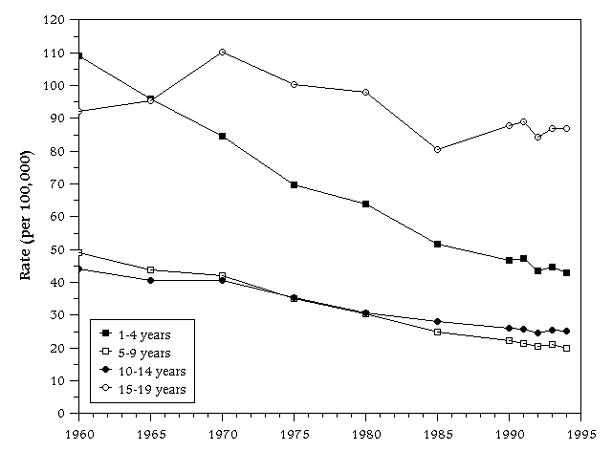
Source: National Center for Health Statistics (NCHS), unpublished data provided by the Statistical Resources Branch and Gardner, P. and Hudson, B.L. Advance Report of Final Mortality Statistics, 1993. National Center for Health Statistics. 1996.
Figure HC 1.1.B.2
|
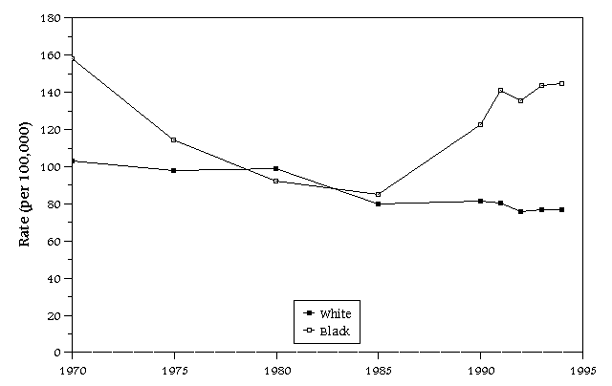
Source: National Center for Health Statistics (NCHS), unpublished data provided by the Statistical Resources Branch and Gardner, P. and Hudson, B.L. Advance Report of Final Mortality Statistics, 1993. National Center for Health Statistics. 1996.
Table HC 1.1.B.1
|
||||||||||||||
| 1960 | 1965 | 1970 | 1975 | 1980 | 1985 | 1990 | 1991 | 1992 | 1993 | 1994 | ||||
| 1-4 years | ||||||||||||||
| All Children |
109.1
|
95.9
|
84.5
|
69.9
|
63.9
|
51.8
|
46.8
|
47.4
|
43.6
|
44.8
|
42.9
|
|||
| Gender | ||||||||||||||
| Male |
119.5
|
104.3
|
93.2
|
76.7
|
72.6
|
58.5
|
52.4
|
52.0
|
48.0
|
49.5
|
47.3
|
|||
| Female |
98.4
|
87.1
|
75.4
|
62.7
|
54.7
|
44.8
|
41.0
|
42.7
|
39.0
|
39.9
|
38.2
|
|||
| Race | ||||||||||||||
| White |
95.2
|
83.2
|
75.1
|
63.3
|
57.9
|
46.6
|
41.1
|
41.7
|
38.1
|
38.3
|
36.5
|
|||
| Black |
__
|
__
|
140.0
|
106.2
|
97.6
|
80.7
|
76.8
|
79.7
|
73.2
|
79.1
|
77.2
|
|||
| 5-9 years | ||||||||||||||
| All children |
49.0
|
43.9
|
42.1
|
35.2
|
30.4
|
25.0
|
22.2
|
21.5
|
20.4
|
21.1
|
19.9
|
|||
| Gender | ||||||||||||||
| Male |
56.3
|
50.8
|
49.7
|
41.4
|
35.0
|
28.5
|
25.6
|
24.5
|
23.7
|
23.2
|
22.6
|
|||
| Female |
41.5
|
36.8
|
34.2
|
28.6
|
25.6
|
21.4
|
18.5
|
18.4
|
16.8
|
19.0
|
17.0
|
|||
| Race | ||||||||||||||
| White |
46.2
|
40.8
|
39.9
|
33.0
|
28.4
|
22.9
|
20.3
|
19.8
|
18.3
|
19.0
|
17.6
|
|||
| Black |
__
|
__
|
56.4
|
47.4
|
41.7
|
36.2
|
32.3
|
32.0
|
32.1
|
32.9
|
31.8
|
|||
| 10-14 years | ||||||||||||||
| All Children |
44.0
|
40.5
|
40.6
|
35.3
|
30.8
|
28.0
|
26.0
|
25.8
|
24.6
|
25.6
|
25.2
|
|||
| Gender | ||||||||||||||
| Male |
55.0
|
50.9
|
51.3
|
44.9
|
38.3
|
35.0
|
31.6
|
32.9
|
30.7
|
31.7
|
31.2
|
|||
| Female |
32.6
|
29.7
|
29.5
|
25.3
|
22.9
|
20.6
|
20.2
|
18.2
|
18.2
|
19.2
|
18.8
|
|||
| Race | ||||||||||||||
| White |
41.4
|
38.6
|
38.4
|
33.7
|
29.8
|
27.0
|
24.3
|
24.2
|
22.8
|
23.7
|
23.0
|
|||
| Black |
__
|
__
|
54.6
|
44.3
|
36.6
|
34.8
|
36.6
|
36.4
|
35.3
|
37.2
|
37.9
|
|||
| 15-19 years | ||||||||||||||
| All Children |
92.2
|
95.3
|
110.3
|
100.2
|
97.9
|
80.5
|
87.9
|
89.0
|
84.3
|
86.9
|
86.8
|
|||
| Gender | ||||||||||||||
| Male |
130.1
|
136.0
|
157.8
|
145.4
|
141.4
|
113.4
|
127.2
|
128.6
|
122.4
|
126.0
|
126.6
|
|||
| Female |
54.0
|
53.9
|
61.7
|
53.8
|
53.1
|
46.2
|
46.4
|
47.2
|
44.0
|
45.6
|
44.8
|
|||
| Race | ||||||||||||||
| White |
87.9
|
90.9
|
103.1
|
98.0
|
99.1
|
80.2
|
81.4
|
80.5
|
75.6
|
77.0
|
76.8
|
|||
| Black |
__
|
__
|
158.0
|
114.4
|
92.3
|
85.2
|
127.7
|
141.2
|
135.5
|
143.6
|
145.0
|
|||
| Source: National Center for Health Statistics (NCHS), unpublished data provided by the Statistical Resources Branch and Gardner, P. and Hudson, B.L. "Advance Report of Final Mortality Statistics, 1993." National Center for Health Statistics. 1996. | ||||||||||||||
Table HC 1.1.B.2
|
||||||||||
|
Combined Years 1989-1991
|
Combined Years 1992-1993
|
|||||||||
|
Total
|
Male
|
Female
|
Total
|
Male
|
Female
|
|||||
|
|
|
|
|
|
|
|||||
| ONE TO 14 Years | ||||||||||
| All Races |
31.4
|
36.2
|
26.3
|
29.3
|
33.7
|
24.6
|
||||
| White |
28.4
|
32.8
|
23.8
|
26.1
|
30.3
|
21.7
|
||||
| Black |
48.3
|
56.1
|
40.3
|
47.1
|
53.4
|
40.7
|
||||
| Asianb |
22.7
|
25.3
|
20.0
|
20.3
|
23.1
|
17.4
|
||||
| Native Americanc |
37.3
|
45.1
|
29.2
|
38.9
|
47.0
|
30.6
|
||||
| Hispanic Origin |
30.2
|
34.7
|
25.5
|
28.4
|
32.4
|
24.2
|
||||
| 15 TO 24 YEARS | ||||||||||
| All Races |
99.1
|
146.1
|
50.0
|
97.0
|
144.0
|
47.9
|
||||
| White |
89.3
|
129.5
|
47.0
|
84.2
|
122.3
|
44.1
|
||||
| Black |
161.9
|
254.9
|
69.8
|
174.8
|
279.5
|
70.6
|
||||
| Asianb |
50.1
|
70.8
|
28.1
|
56.1
|
80.1
|
31.1
|
||||
| Native Americanc |
142.0
|
208.3
|
71.1
|
129.4
|
184.2
|
71.4
|
||||
| Hispanic Origin |
103.3
|
156.5
|
40.9
|
107.5
|
167.3
|
40.2
|
||||
| Note: aPersons of Hispanic origin may be of any race. The four race groups listed in the table include persons of Hispanic and non-Hispanic origin. Death rates reported for white, black, and Hispanic persons are based on highly consistent information. However, persons identified as American Indian or Asian in the data from the Census Bureau (denominator of death rates) are sometimes misreported as white on the death certificate (numerator), resulting in underestimate of about 22-30 percent for death rates of American Indians and 12 percent for death rates of Asians (National Centers for Health Statistics, Health United States 1993, Table 33; Sorlie, P.D., Rogot E., and Johnson, N.J. "Validity of demographic characteristics on the death certificate," Epidemiology 3(2): 181-184, 1992). bAsian and Pacific Islander. cNative American or Alaskan Native. Source: 1989-1991 data from: Centers for Disease Control and Prevention, National Center for Health Statistics (1994), Health United States 1993, Table 32; NCHS: Data computed by the Division of Analysis from data compiled by the Division of Vital Statistics and from national population for race groups from national population estimates for race groups. 1992-1993 data computed by Infant and Child Health Studies Branch, National Center for Health Statistics from Mortality Data compiled by Division of Vital Statistics. |
||||||||||
6 Injury-related mortality includes death from motor vehicle crashes, fires and burns, drowning, suffocation, and accidents caused by firearms and other explosive materials, among others.
7 Gardner, P., and Hudson, B.L. (1996) "Advance Report of Final Mortality Statistics, 1993." Monthly Vital Statistics Report. Vol. 44, No.7 (S). Hyattsville, Maryland: National Center for Health Statistics; and, National Center for Health Statistics (1996). 1993 Detail Mortality File. Unpublished data. Cited in: Health Resources & Services Administration. Child Health USA 95. DHHS Pub. No. HRSA-M-DSEA-96-5. Public Health Service, Washington, 1996.
8 Discussion and data regarding motor vehicle crashes, the largest category of injury-related death for 15-19 year olds, follows in the next section [HC 1.2].
9 Health Resources & Services Administration. Child Health USA 95. DHHS Pub. No. HRSA-M-DSEA-96-5. Public Health Service, Washington, 1996.
10 Section HC 1.2 further highlights the differences in mortality rates between males and females ages 15-19 for violent and injury-related deaths.
HC 1.2.a Youth motor vehicle deaths
Motor vehicle deaths are among the leading causes of injury-related mortality11 for 15- to 19-year-olds, accounting for approximately 40 percent of all teenage injury deaths in 1993.12 However, as a fraction of all violent deaths to teens, motor vehicle crashes have declined. In 1994, motor vehicle deaths claimed 29.3 lives per 100 thousand teens ages 15 through 19, compared to 43.6 per 100 thousand teens in 1970 (see Figure HC 1.2.A). Slight increases in the rate of motor vehicle crash deaths among youths were seen in 1993 and 1994.
Differences by Gender and Race. The decrease in the rate of youth motor vehicle deaths between 1970 and 1994 has been greatest among males, falling from 67.1 to 41.7 deaths per 100 thousand among white males, and from 43.4 to 29.0 deaths per 100 thousand among black males (see Table HC 1.2.A). Among females ages 15 through 19, rates declined less dramatically over this period, from 24.4 to 21.3 per 100 thousand for whites, and from 11.1 to 10.4 per 100 thousand for blacks.
Differences by Age. Among youth ages 10 through 14, motor vehicle death rates are quite low in comparison to older youth, and have dropped from 9.6 to 6.0 per 100 thousand between 1970 and 1994. This decline was evident for both white and black males and females, with most of the decline occurring before 1990.
Figure HC 1.2.A
|
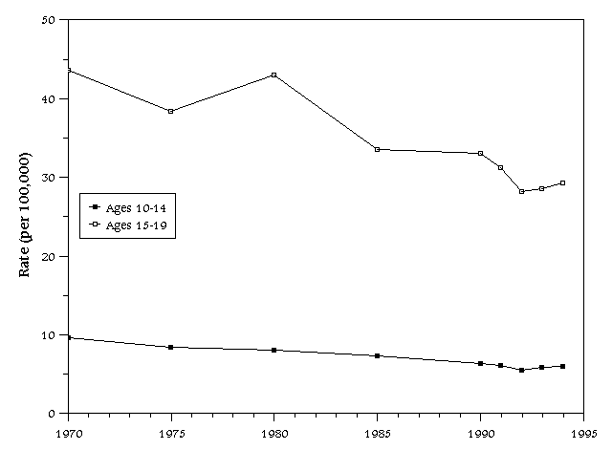
Source: National Center for Health Statistics, unpublished work tables prepared by the Mortality Statistics Branch, Division of Vital Statistics, 1995, and 1996.
Table HC 1.2.A
|
||||||||||
| Population | ||||||||||
| Groups |
1970
|
1975
|
1980
|
1985
|
1990
|
1991
|
1992
|
1993
|
1994
|
|
|
|
|
|
|
|
|
|
|
|
|
|
| All youth | ||||||||||
| Ages 10-14 |
9.6
|
8.4
|
8.1
|
7.4
|
6.4
|
6.1
|
5.5
|
5.9
|
6.0
|
|
| Ages 15-19 |
43.6
|
38.4
|
43.0
|
33.5
|
33.1
|
31.2
|
28.2
|
28.6
|
29.3
|
|
| White males | ||||||||||
| Ages 10-14 |
12.6
|
10.9
|
10.9
|
9.8
|
7.7
|
7.8
|
7.0
|
7.1
|
7.5
|
|
| Ages 15-19 |
67.1
|
61.7
|
69.1
|
51.3
|
49.3
|
44.5
|
39.6
|
41.6
|
41.7
|
|
| White females | ||||||||||
| Ages 10-14 |
6.6
|
5.8
|
5.7
|
5.6
|
5.3
|
4.4
|
4.1
|
4.4
|
4.8
|
|
| Ages 15-19 |
24.4
|
20.6
|
25.6
|
22.6
|
22.2
|
23.0
|
21.0
|
20.2
|
21.3
|
|
| Black males | ||||||||||
| Ages 10-14 |
11.9
|
9.6
|
7.9
|
8.9
|
7.9
|
8.8
|
7.8
|
8.3
|
7.6
|
|
| Ages 15-19 |
43.4
|
24.6
|
24.4
|
22.1
|
28.7
|
29.5
|
26.2
|
26.7
|
29.0
|
|
| Black females | ||||||||||
| Ages 10-14 |
6.4
|
4.2
|
4.0
|
3.0
|
3.8
|
3.3
|
3.6
|
4.8
|
4.8
|
|
| Ages 15-19 |
11.1
|
7.1
|
6.7
|
7.5
|
9.7
|
9.0
|
9.1
|
8.2
|
10.4
|
|
| Source: National Center for Health Statistics, unpublished work tables prepared by the Mortality Statistics Branch, Division of Vital Statistics, 1995 and 1996. | ||||||||||
11 Injury-related mortality is the leading cause of death for 15-19 year old teenagers, accounting for 80% of all deaths. Injury-related mortality includes death from motor vehicle crashes, fires and burns, drowning, suffocation, and accidents caused by firearms and other explosive materials, among others.
12 National Center for Health Statistics (1996). 1993 Detail Mortality File. Unpublished data.
HC 1.2.b Youth homicides
The rate of death from homicide for teens ages 15 through 19 more than doubled between 1970 and 1994, increasing from 8.1 per 100 thousand in 1970 to 20.3 per 100 thousand in 1994 (see Table HC 1.2.B.1). Virtually all of this increase has taken place since 1985 (see Figure HC 1.2.B.1).
Male Youth Homicide Rates by Race. As large as the overall increase has been, this trend has been most alarming for males ages 15 to 19. The rate of death from homicide for this age group of black males has increased dramatically from 46.7 per 100 thousand in 1985 to 135.8 per 100 thousand in 1994, a rate nearly nine times that for white males of the same age (see Figure HC 1.2.B.2). The homicide rate for black males aged 15 to 19 actually declined nearly 30 percent from 1970 to 1985, but rose again after 1985. Even with slight declines in the homicide rate in 1992 and 1994, the rate for young black males has nearly tripled since 1985. While the homicide rate for white males of the same age group (15 through 19) is substantially less than that of black males, this rate has also doubled since 1985 (from 7.2 to 15.4 per 100 thousand), and has tripled since 1970.
Female Youth Homicide Rates by Race. Homicide rates for females ages 15 through 19 of both races are considerably lower than among males in this age group. For example, the rate for black females was 15.1 per 100 thousand in 1994, approximately one-ninth the rate for black males. The gender disparity in homicide rates is also large for whites, although it is not as great as that between black males and females. In 1994, the homicide rate for white females ages 15 through 19 was 3.4 deaths per 100 thousand, nearly a quarter of that for white males. As is the case for males, the youth homicide rate for black females is higher than the rate for white females four and one half times higher in 1994.
Homicide Rates for Younger Youth. The homicide rate for youth ages 10 through 14 was 2.2 per 100 thousand in 1994 substantially lower than the rate for older youth. Nevertheless, this rate has nearly doubled between 1970 and 1994. For whites, there is little difference in the homicide rates of males and females in this younger age group. For blacks, however, there is a disparity between males and females, although it is not as pronounced as the difference for older black males and females. In 1994, the homicide rate of 9.1 for young black males was virtually twice that of females in the same age group, with a rate of 4.6 per 100 thousand.
Homicides Involving Firearms. In examining the rate of homicides due to firearms in proportion to total homicides, it is evident that firearms have been involved in the majority of youth homicides since 1980 (see Figure HC 1.2.B.3). Deaths to youth ages 15 through 19 involving firearms accounted for 66 percent of the total deaths due to homicide in 1980 (7.0 firearm deaths per 100 thousand out of a total of 10.6 deaths per 100 thousand due to homicide). The percentage of firearm-related homicides increased to 87 percent by 1994. Homicides due to firearms are more likely among black youth than among white youth, and most particularly among black males ages 15 through 19 (see Table HC 1.2.B.2). In 1994, 93 percent of homicides among older male black youth (ages 15 through 19) involved a firearm, compared to 84 percent among white male youth. Homicides among female youth involve a firearm less often, although firearms are still the means of the majority of female homicides.
Figure HC 1.2.B.1
|
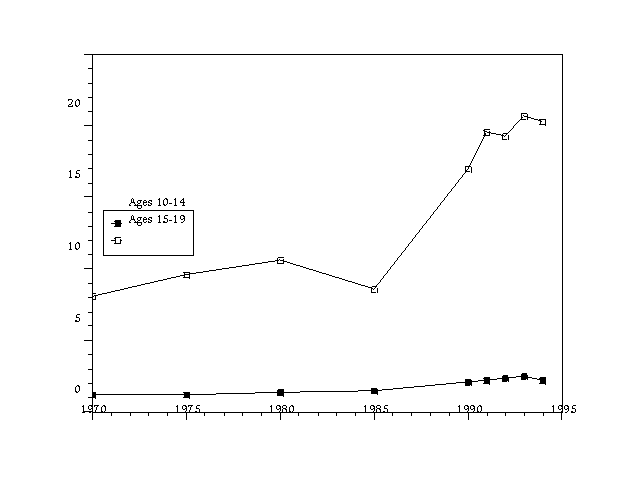
Source: National Center for Health Statistics, unpublished work tables prepared by the Mortality Statistics Branch, Division of Vital Statistics, 1995 and 1996.
Figure HC 1.2.B.2
|
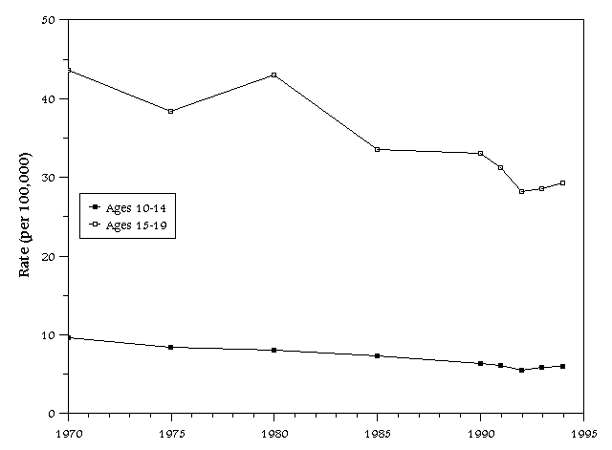
Source: National Center for Health Statistics, unpublished work tables prepared by the Mortality Statistics Branch, Division of Vital Statistics, 1995 and 1996.
Figure HC 1.2.B.3
|
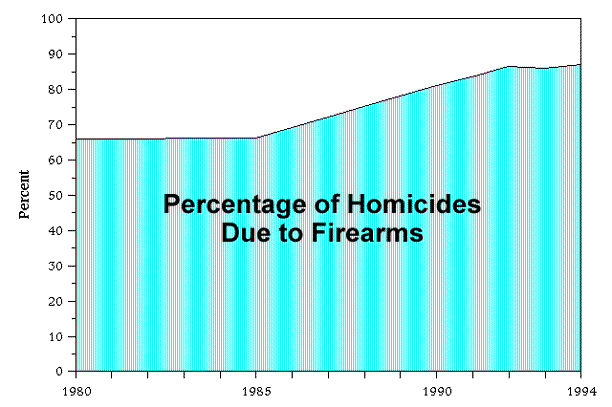
Note: aIncludes assault by handguns and all other and unspecified firearms.
Source: National Center for Health Statistics, unpublished work tables prepared by the Mortality Statistics Branch, Division of Vital Statistics, 1996.
Table HC 1.2.B.1
|
|||||||||||
|
1970
|
1975
|
1980
|
1985
|
1990
|
1991
|
1992
|
1993
|
1994
|
|||
|
|
|
|
|
|
|
|
|
|
|||
| All Youth | |||||||||||
| Ages 10-14 |
1.2
|
1.2
|
1.4
|
1.5
|
2.1
|
2.2
|
2.4
|
2.5
|
2.2
|
||
| Ages 15-19 |
8.1
|
9.6
|
10.6
|
8.6
|
17
|
19.6
|
19.3
|
20.7
|
20.3
|
||
| White males | |||||||||||
| Ages 10-14 |
0.6
|
1
|
1.1
|
1.4
|
1.7
|
1.8
|
2
|
1.9
|
1.8
|
||
| Ages 15-19 |
5.2
|
8.1
|
10.9
|
7.2
|
12.5
|
14.4
|
15.2
|
15.2
|
15.4
|
||
| White females | |||||||||||
| Ages 10-14 |
0.6
|
0.8
|
1.1
|
0.9
|
0.9
|
0.9
|
1
|
1.2
|
0.9
|
||
| Ages 15-19 |
2.1
|
3.2
|
3.9
|
2.7
|
3.6
|
3.6
|
3.6
|
3.6
|
3.4
|
||
| Black males | |||||||||||
| Ages 10-14 |
6.8
|
4.1
|
3.9
|
4.2
|
8.1
|
9.1
|
9.6
|
10.5
|
9.1
|
||
| Ages 15-19 |
65.2
|
51.4
|
48.8
|
46.7
|
115.7
|
134.6
|
128.5
|
140.7
|
135.8
|
||
| Black females | |||||||||||
| Ages 10-14 |
2.3
|
2.3
|
2.4
|
1.7
|
4.8
|
3.8
|
5.1
|
5.2
|
4.6
|
||
| Ages 15-19 |
10.6
|
15.3
|
11
|
10.4
|
15.6
|
15.6
|
14.2
|
18.4
|
15.1
|
||
| Note: aHomicide includes death by legal intervention
Source: National Center for Health Statistics, unpublished work tables prepared by the Mortality Statistics Branch, Division of Vital Statistics, 1995 and 1996. |
|||||||||||
Table HC 1.2.B.2
|
|||||||||
|
1980
|
1985
|
1990
|
1991
|
1992
|
1993
|
1994
|
|||
|
|
|
|
|
|
|
|
|||
| All Youth | |||||||||
| Ages 10-14 |
0.8
|
0.8
|
1.5
|
1.6
|
1.9
|
1.9
|
1.7
|
||
| Ages 15-19 |
7
|
5.7
|
13.8
|
16.4
|
16.7
|
17.8
|
17.7
|
||
| White Males | |||||||||
| Ages 10-14 |
0.7
|
0.8
|
1.1
|
1.2
|
1.5
|
1.3
|
1.3
|
||
| Ages 15-19 |
7.2
|
4.9
|
9.4
|
11.6
|
12.9
|
12.5
|
13
|
||
| White Females | |||||||||
| Ages 10-14 |
0.4
|
0.4
|
0.4
|
0.4
|
0.6
|
0.6
|
0.4
|
||
| Ages 15-19 |
1.7
|
1.1
|
1.7
|
1.9
|
2.1
|
2
|
2.2
|
||
| Black Males | |||||||||
| Ages 10-14 |
3.2
|
2.8
|
6.1
|
7.6
|
7.7
|
9.2
|
7.1
|
||
| Ages 15-19 |
38.4
|
36.7
|
104.4
|
122.5
|
118.7
|
130.1
|
126.6
|
||
| Black Females | |||||||||
| Ages 10-14 |
1
|
*
|
2.9
|
2.5
|
3.2
|
3.3
|
3
|
||
| Ages 15-19 |
6.3
|
4.7
|
9.6
|
10.3
|
9.8
|
13.4
|
9.9
|
||
| Note: Calculations by Child Trends, Inc., to combine rates of assault by handguns and rates of assault by all other and unspecified firearms may affect overall rates due to previous rounding. aIncludes assault by handguns and all other and unspecified firearms. * = Not calculated because of unreliability due to infrequency of the event. Source: National Center for Health Statistics. Unpublished work tables prepared by the Morality Statistics Branch, Division of Vital Statistics, 1996. |
|||||||||
HC 1.2.c Youth suicides
Suicide, like homicide, has come to play a proportionately larger role in teen deaths over the past several decades. Between 1970 and 1990, the suicide death rate for youth ages 15 through 19 nearly doubled, from 5.9 to 11.1 per 100 thousand (see Figure HC 1.2.C). Since 1990, the overall suicide death rate has stabilized at approximately 11 deaths per 100 thousand youth ages 15 through 19.
Differences by Gender. Male teens are more likely than females to commit suicide (see Table HC 1.2.C). The suicide rate for white males ages 15 through 19 was 18.7 per 100 thousand in 1994, more than five times the rate of 3.5 per 100 thousand for white females. The suicide rate for black males ages 15 through 19 is 16.6 deaths per 100 thousand, compared to 2.4 per 100 thousand for black females in this age group.
Differences by Race. White male youth ages 15 through 19 have long had a higher suicide rate than their black male peers (see Table HC 1.2.C). In 1970, white males ages 15 through 19 were twice as likely as black males to die from suicide (9.4 versus 4.7 per 100 thousand). However, the gap between white and black male suicide rates has narrowed in recent years, with suicide rates of 18.7 and 16.6 per 100 thousand in 1994 for white and black males, respectively. Among females ages 15 through 19, white females and black females were equally likely to commit suicide in 1970 with rates of 2.9 per 100 thousand. By 1975, white female suicide rates were twice that of their black peers ages 15 through 19. This trend held in all subsequent years in which data could be calculated for black females until 1994, when the suicide rate for ages 15 through 19 was 2.4 per 100 thousand among black females and 3.5 per 100 thousand among white females.
Suicide Rates for Younger Youth. While considerably lower, suicide rates for youth ages 10 through 14 have followed trends similar to those among older youth, with males having higher rates of suicide than females, and whites having higher suicide rates than blacks (see Table HC 1.2.C). In this age group, suicide is infrequent for both sexes and races, making gender or racial differences small as well.
Figure HC 1.2.C
|
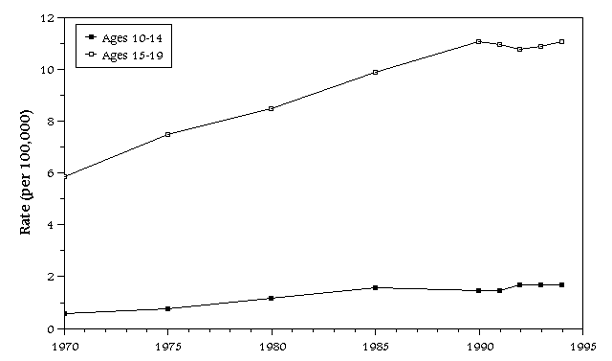
Source: National Center for Health Statistics, unpublished work tables prepared by the Mortality Statistics Branch, Division of Vital Statistics, 1995 and 1996.
Table HC 1.2.C
|
|||||||||||
|
1970
|
1975
|
1980
|
1985
|
1990
|
1991
|
1992
|
1993
|
1994
|
|||
|
|
|
|
|
|
|
|
|
|
|||
| All Youth | |||||||||||
| Ages 10-14 |
0.6
|
0.8
|
1.2
|
1.6
|
1.5
|
1.5
|
1.7
|
1.7
|
1.7
|
||
| Ages 15-19 |
5.9
|
7.5
|
8.5
|
9.9
|
11.1
|
11
|
10.8
|
10.9
|
11.1
|
||
| White males | |||||||||||
|
|
Ages 10-14 |
1.1
|
1.4
|
1.4
|
2.5
|
2.3
|
2.4
|
2.6
|
2.4
|
2.5
|
|
|
|
Ages 15-19 |
9.4
|
12.9
|
15
|
17.1
|
19.3
|
19.1
|
18.4
|
18.5
|
18.7
|
|
| White females | |||||||||||
|
|
Ages 10-14 |
0.3
|
0.4
|
0.3
|
0.9
|
0.9
|
0.8
|
1.1
|
1
|
1
|
|
|
|
Ages 15-19 |
2.9
|
3.1
|
3.3
|
4.1
|
4
|
4.2
|
3.7
|
4.2
|
3.5
|
|
| Black males | |||||||||||
|
|
Ages 10-14 |
0.3
|
0.2
|
0.5
|
*
|
1.6
|
2
|
2
|
2.3
|
2.1
|
|
|
|
Ages 15-19 |
4.7
|
6.1
|
5.6
|
8.2
|
11.5
|
12.2
|
14.8
|
14.4
|
16.6
|
|
| Black females | |||||||||||
|
|
Ages 10-14 |
0.4
|
0.3
|
0.1
|
*
|
*
|
*
|
*
|
*
|
*
|
|
|
|
Ages 15-19 |
2.9
|
1.5
|
1.6
|
1.5
|
1.9
|
*
|
1.9
|
*
|
2.4
|
|
| * = Not calculated because of unreliability due to infrequency of the event.
Source: National Center for Health Statistics, unpublished work tables prepared by the Mortality Statistics Branch, Division of Vital Statistics, 1995 and 1996. |
|||||||||||
HEALTH CONDITIONS
HC 2.1 Healthy births
A healthy birth is defined here as a birth with the following characteristics: a five-minute Apgar13 score of nine or more out of ten, weight at birth of at least 2,500 grams (5.5 pounds), a gestational age of at least 37 weeks, and maternal receipt of prenatal care within the first trimester.
Increasing Percentages of Healthy Births. Table HC 2.1 reports the percentage of all births qualifying as healthy births for 1985, 1991 and 1994, by race and ethnic group, and by the mothers marital status and educational background. The table shows an increase in the percentage of all healthy births between 1985 and 1994, as well as increases for each population subgroup presented. The percent of all births qualifying as healthy increased from 59.1 percent to 65.9 percent during that period of time.
Continued Disparities Across Population Subgroups. While healthy births are increasing for all the subgroups presented in Table HC 2.1, there are also persistent disparities across subgroups. For example:
- In 1994, 49.7 percent of births to black women were defined as healthy, compared to 55.4 percent of births to Hispanic women and 69.8 percent of births to white women.
- In 1994, 73 percent of births to married women were healthy, compared to 50.6 percent of births to single women.
- In 1994, 70.1 percent of births to mothers with at least a high school education were healthy, compared to 48.8 percent of births to mothers with less than a high school education (see Figure HC 2.1).
Figure HC 1.2
|
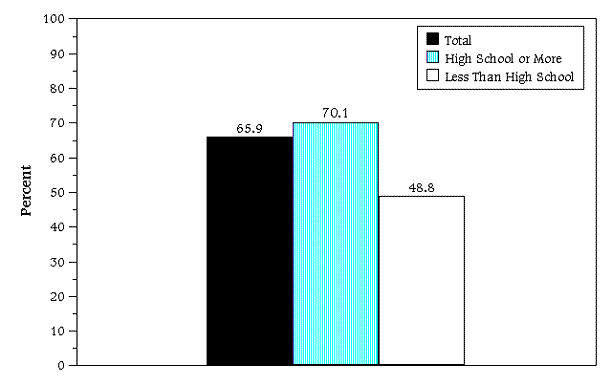
Note: aHealthy birth is defined as follows: 5-minute Apgar score of 9+, birth weight 2,500+ grams, gestational age of 37+ weeks, prenatal care in the first trimester. Source: Special tabulation for 1994 birth data by Sally C. Clarke, National Center for Health Statistics.
Table HC 2.1
|
||||||
|
1985
|
1991
|
1994
|
||||
|
|
|
|
||||
| Total |
59.1
|
61.1
|
65.9
|
|||
| Race/Ethnicity | ||||||
| White |
62.7
|
65
|
69.8
|
|||
| Black |
41.5
|
43.3
|
49.7
|
|||
| Hispanic |
48.6
|
49.8
|
55.4
|
|||
| Mothers Marital Status | ||||||
| Married |
65
|
68.6
|
73
|
|
||
| Singleb |
37.9
|
43.1
|
50.6
|
|
||
| Mothers Education | ||||||
| High school or more |
64
|
67.1
|
70.1
|
|
||
| Less than high school |
40
|
43.3
|
48.8
|
|
||
| Notes: aHealthy birth is defined as follows: 5 - minute Apgar score of 9+, birth weight 2,500+ grams, gestational age of 37+ weeks, prenatal care in the first trimester. bSingle status includes mothers who have never been married, or are divorced or widowed. Source: 1985 and 1991 data from: Morrison, D.R. (1994). "Healthy Birth Index". Final Report. Submitted to the Annie E. Casey Foundation, Kids Count Indicator Development Project, Child Trends, Inc., Washington, DC, 1994. Special tabulation for 1994 birth data by Sally C. Clarke, National Center for Health Statics. |
||||||
13 The Apgar score is a numerical expression of the physical condition of an infant shortly after delivery. The infant is rated, 0, 1, or 2 on color, heart rate, reflex irritability, muscle tone and breathing. The maximum score is 10, and a score of 4 or less indicates examination and treatment are warranted. As defined in: Apgar, V., Holiday, D.A., James, L.S., Weisbrot, I.N., and C. Berrien. (1953). "Evaluation of the Newborn Infant-2nd Report." Current Research in Anesthesia and Analgesia, Vol. 32: 260-267.
HC 2.2.a Low birth weight
Low birth weight infants (babies born weighing less than 2,500 grams or 5.5 pounds) face an increased risk of physical and developmental complications and death.14 These babies account for nearly two-thirds of all neonatal deaths (deaths under 28 days of age).15
The percentage of all infants born at low birth weight declined between 1970 and 1985, from 7.9 percent to 6.8 percent (see Table HC 2.2.A). By 1995, however, that percentage had increased to 7.3 percent of all infants.16 This pattern is evident for both white and black births and across almost all age groups of mothers.
Differences by Race and Ethnicity. Low birth weight rates are consistently higher for blacks than for whites and Hispanics. In 1970, 6.9 percent of white infants and 13.9 percent of black infants born in the U.S. were low birth weight. This gap continued into the 1990s; by 1995, 13.0 percent of black infants and 6.2 percent of white infants were born at low birth weight. The rates for Hispanics have remained at or slightly below 6.3 percent between 1980 (the first year for which Hispanic data are available) and 1995.
Differences by Age of Mother. For mothers in all age groups, there was a decline in the percentage of low weight births between 1970 and 1985. Since 1985, however, that percentage increased slightly across nearly all age groups. The following trends, illustrated in Table HC 2.2.A, are particularly noteworthy:
- Mothers under age 15 consistently have the highest rates of low weight births (see Figure HC 2.2.A). While the percentage of low weight births to mothers under age 15 improved between 1970 and 1994, the trend has not been one of consistent improvement. Instead, the percentage of low weight births to these very young mothers decreased considerably between 1970 and 1985 from 16.6 percent to 12.9 percent but then increased to 13.3 percent in 1990 and to 13.7 percent in 1994.
- For mothers in all other age groups, rates of low weight births have stayed within 1.5 percentage points of their 1970 rate.
- Mothers between the ages of 25 and 29 consistently have the lowest rates of low weight births.
Figure HC 2.2.A
|
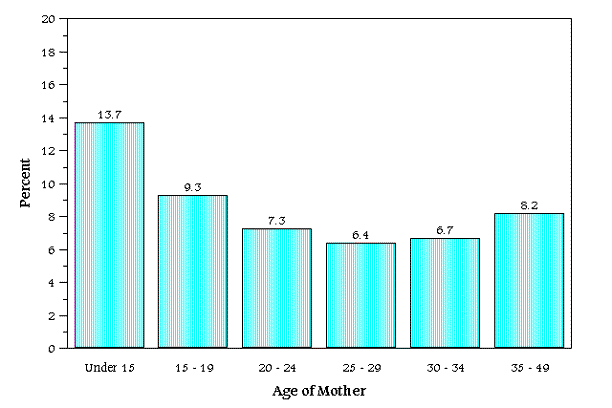
Notes: aBefore 1979, low birth weight defined as: Infants weighing < 2,500 grams. 1979 and beyond, low birth weight defined as: Infants weighing < 2,500 grams.
Source: Ventura, S.J., Martin, J.A., Mathews, T.J. and Clarke S.C. Advance Report of Final Natality Statistics, 1994. Monthly Vital Statistics Report, Vol. 44, No. 11, Supplement. Hyattsville, Maryland: National Center for Health Statistics. 1996 (tables 24 and 44).
Table HC 2.2.A
|
|||||||||||||
|
1970
|
1975
|
1980
|
1985
|
1990
|
1992
|
1993
|
1994
|
1995d
|
|||||
|
|
|
|
|
|
|
|
|
|
|||||
| Total |
7.9
|
7.4
|
6.8
|
6.8
|
7
|
7.1
|
7.2
|
7.3
|
7.3
|
||||
| Race/Ethnicityb,c | |||||||||||||
| Black |
13.9
|
13.2
|
12.7
|
12.7
|
13.3
|
13.3
|
13.3
|
13.2
|
13
|
||||
| White |
6.9
|
6.3
|
5.7
|
5.7
|
5.7
|
5.8
|
6
|
6.1
|
6.2
|
||||
| Hispanic |
--
|
--
|
6.1
|
6.2
|
6.1
|
6.1
|
6.2
|
6.3
|
6.3
|
||||
| Age of Mother | |||||||||||||
| Under 15 |
16.6
|
14.1
|
14.6
|
12.9
|
13.3
|
13.2
|
13.5
|
13.7
|
--
|
||||
| 15-19 |
10.5
|
10
|
9.4
|
9.3
|
9.3
|
9.3
|
9.2
|
9.3
|
--
|
||||
| 20-24 |
7.4
|
7.1
|
6.9
|
6.9
|
7.1
|
7.1
|
7.2
|
7.3
|
--
|
||||
| 25-29 |
6.9
|
6.1
|
5.8
|
5.9
|
6.2
|
6.2
|
6.4
|
6.4
|
--
|
||||
| 30-34 |
7.5
|
6.8
|
5.9
|
6.1
|
6.4
|
6.5
|
6.7
|
6.7
|
--
|
||||
| 35-49 |
8.8
|
8.4
|
7.2
|
7.1
|
7.4
|
7.8
|
8.1
|
8.2
|
--
|
||||
| Notes: aBefore 1979, low birth weight defined as: Infants weighing < 2,500 grams (< 5.5 pounds). 1979 and beyond, low birth weight defined as: Infants weighing < 2,500 grams (<5.5 pounds). bPercentages are based on the race and ethnicity of the mother. cPercentage low birth weight by ethnicity are not available before 1980. Birth figures for Hispanic infants in 1980 are based on data from 22 States which report Hispanic origin on the birth certificate; 23 States and the District of Columbia in 1985; 48 States and the District of Columbia in 1990; 49 States and the District of Columbia in 1992; and 50 States and the District of Columbia in 1993. dData for 1995 are preliminary. Sources: National Center for Health Statistics. Health, United States, 1995. Hyattsville, Maryland: Public Health Service. 1996. Table 11 for totals and race/ethnicity breaks for 1970-1993. 1970 data from: National Center for Health Statistics, Health, United States, 1982, Table 24; 1975 data from: Vital Statistics of the U.S., 1975, Table 1-37; 1980 data from: Monthly Vital Statistics Report, Vol. 31 No. 8 , Supplement. 1982; 1985 data from: National Center for Health Statistics: Vital Statistics of the United States, 1985, Vol. I, Natality. DHHS Pub. No. (PHS) 81-1113. Public Health Service; Washington. 1988. Table 1-81. 1990 data from: Monthly Vital Statistics Report, Vol. 41, No. 9(s), February, 1993, Tables 13 and 26; 1992 data from: Ventura, S.J., Martin, J.A., Taffel, S.M., Mathews, T.J. and Clarke S.C. Advance Report of Final Natality Statistics, 1992. Monthly Vital Statistics Report, Vol. 43, No. 5, Supplement. Hyattsville, Maryland: National Center for Health Statistics. 1994 (tables 24 and 44); 1993 data from: Ventura, S.J., Martin, J.A., Taffel, S.M., Mathews, T.J. and Clarke S.C. Advance Report of Final Natality Statistics, 1993. Monthly Vital Statistics Report, Vol. 44, No. 3, Supplement. Hyattsville, Maryland: National Center for Health Statistics. 1995 (tables 24 and 44); 1994 data from: Ventura, S.J., Martin, J.A., Mathews, T.J. and Clarke S.C. Advance Report of Final Natality Statistics, 1994. Monthly Vital Statistics Report, Vol. 44, No. 11, Supplement. Hyattsville, Maryland: National Center for Health Statistics. 1996 (tables 24 and 44). 1995 preliminary data from: Rosenberg, H.M., Ventura, S.J., Maurer, J.D., Heuser, R.L., Freedman, M.A. Births and Deaths: United States, 1995. Monthly Vital Statistics Report, Vol 45, No. 3, Supplement 2. Hyattsville, Maryland: National Center for Health Statistics. 1996. |
|||||||||||||
14 Disorders relating to short gestation and unspecified low birth weight were the second leading cause of death to infants in 1995 as reported in Rosenberg, H.M., Ventura, S.J., Maurer, J.D., Heuser, R.L., and M.A. Freedman. "Births and Deaths: United States, 1995." Monthly Vital Statistics Report. Vol. 45, No. 3 (Supplement 2). Hyattsville, Maryland: National Center for Health Statistics. 1996.
15 Ventura, S.J., Martin, J.A., Mathews, T.J., Clarke, S.C. "Advance Report of Final Natality Statistics, 1994." Monthly Vital Statistics Report, Vol. 44, No. 11 (S). Hyattsville, Maryland: National Center for Health Statistics, 1996.
16 Data for 1995 are preliminary.
HC 2.2.b Very low birth weight
Very low birth weight infants (babies born weighing less than 1,500 grams, or 3.3 pounds) are at particularly high risk of severe physical and developmental complications and death. Advances in medical technology in recent years have made it possible for increasing numbers of very low weight infants to survive.
The percentage of infants born at very low birth weight has remained constant for the last 24 years (see Table HC 2.2.B). Between 1970 and 1989 (not shown), 1.2 percent of all infants were classified as very low birth weight.17 The proportion then increased slightly to 1.3 percent, where it has remained from 1990 to 1994.
Differences by Race and Ethnicity. The percentage of babies born at very low birth weight varies by race and ethnicity (see Table HC 2.2.B). For whites, the percentage of very low weight births has remained at or about 1.0 percent from 1970 through 1994. For blacks, the percentage of very low birth weight babies increased from 2.4 percent in 1970 to 3.0 percent by 1992, where it has remained through 1994. In contrast, the percentage of low birth weight babies (as distinct from "very low") decreased for both blacks and whites from 1970 to the mid-1980s, then increased (see Table HC 2.2.A in the previous discussion). The percentage of very low weight births among Hispanics was 1.0 percent for the years shown between 1980 and 1992, and 1.1 percent in 1993 and 1994.
Differences by Age of Mother. Age of mother appears to be an important factor in the likelihood of very low birth weight, particularly at the youngest ages. The percentage of very low weight infants born to mothers under age 15 has increased since 1975, reaching its highest proportion in 1993 at 3.6 percent, and then decreasing slightly to 3.4 percent by 1994. The percentage of very low weight births among mothers age 15 to 19 is lower than the proportion of such births to their younger counterparts but remains slightly higher than the proportion observed for women age 20 and older.
Table HC 2.2.B
|
||||||||||||
|
1970
|
1975
|
1980
|
1985
|
1990
|
1992
|
1993
|
1994
|
|||||
|
|
|
|
|
|
|
|
|
|||||
| Total |
1.2
|
1.2
|
1.2
|
1.2
|
1.3
|
1.3
|
1.3
|
1.3
|
||||
| Race/Ethnicityb,c | ||||||||||||
| White |
1
|
0.9
|
0.9
|
0.9
|
1
|
1
|
1
|
1
|
||||
| Black |
2.4
|
2.4
|
2.5
|
2.7
|
2.9
|
3
|
3
|
3
|
||||
| Hispanic |
|
|
1
|
1
|
1
|
1
|
1.1
|
1.1
|
||||
| Age of Mother | ||||||||||||
| Under 15 |
|
3.1
|
3.4
|
3.1
|
3.2
|
3.1
|
3.6
|
3.4
|
||||
| 15-19 |
|
1.8
|
1.7
|
1.8
|
1.8
|
1.8
|
1.8
|
1.7
|
||||
| 20-24 |
|
1.1
|
1.1
|
1.2
|
1.3
|
1.3
|
1.3
|
1.3
|
||||
| 25-29 |
|
0.9
|
1
|
1
|
1.1
|
1.1
|
1.1
|
1.2
|
||||
| 30-34 |
|
1
|
1
|
1.1
|
1.2
|
1.2
|
1.2
|
1.2
|
||||
| 35-49 |
|
1.2
|
1.2
|
1.3
|
1.4
|
1.5
|
1.5
|
1.6
|
||||
| Notes: aBefore 1979, very low birth weight defined as: < 1,500 grams, 1979 and beyond, very low birth weight defined as: Infants Weighing < 1,500 grams. bPercentages are based on the race and ethnicity of the mother. cPercentage very low birth weight by ethnicity are not available before 1980. Birth figures for Hispanic infants in 1980 are based on data from 22 States which reported Hispanic origin of the mother on the birth certificate; 23 States and the District of Columbia in 1985; 48 States and the District of Columbia in 1990; 49 States and the District of Columbia in 1992; and 50 States and the District of Columbia in 1993 and 1994. Sources: National Center for Health Statistics. Health, United States, 1995. Hyattsville, Maryland: Public Health Service. 1996. Table 11 for totals and race/ethnicity breaks for 1970-1993. 1975 data from: Vital Statistics of the U.S., 1975, Table 1-37; 1980 data from: Monthly Vital Statistics Report, Vol. 31 No. 8, Supplement. Hyattsville, Maryland: National Center for Health Statistics. 1982 (table 13); 1985 data from: Monthly Vital Statistics Report, Vol. 36 No.4, Supplement. Hyattsville, Maryland: National Center for Health Statistics. 198 (table 17); 1990 data from: Monthly Vital Statistics Report, Vol. 41, No. 9, Supplement. Hyattsville, Maryland: National Center for Health Statistics. 1993 (table 13); 1992 data from: Ventura, S.J., Martin, J.A., Taffel, S.M., Mathews, T.J. and Clarke S.C. "Advance Report of Final Natality Statistics, 1992." Monthly Vital Statistics Report, Vol. 43, No. 5, Supplement. Hyattsville, Maryland: National Center for Health Statistics. 1994 (tables 24 and 44); 1993 data from: Ventura, S.J., Martin, J.A., Taffel, S.M., Mathews, T.J. and Clarke S.C. "Advance Report of Final Natality Statistics, 1993." Monthly Vital Statistics Report, Vol. 44, No. 3, Supplement. Hyattsville, Maryland: National Center for Health Statistics. 1995 (tables 24 and 44); 1994 data from: Ventura, S.J., Martin, J.A., Mathews, T.J. and Clarke S.C. "Advance Report of Final Natality Statistics, 1994." Monthly Vital Statistics Report, Vol. 44, No. 11, Supplement. Hyattsville, Maryland: National Center for Health Statistics. 1996 (tables 24 and 44). |
||||||||||||
17 Data for individual years indicate that the rate remained at 1.2 percent through 1989 (not shown).
HC 2.3 General health conditions
Most children in the United States are reported by their parents to be in very good or excellent health. The percentage of all children under age 18 reported to be in very good or excellent health has remained at about 80 percent since 1984. These reports vary little by gender; there are modest differences by age of child for some population subgroups (see Table HC 2.3).
Differences by Race. Parents reports of their childrens health vary by race. Between 1984 and 1994, black parents were less likely than white parents to report that their children were in very good or excellent health. In 1994, 72 percent of black children under age five were reported in very good or excellent health, compared to 83 percent of white children. Sixty-eight percent of black children ages five to 17 were reported in very good or excellent health, compared to 81 percent of white children in this age group (see Table HC 2.3).
Differences by Family Income. Parents reports of their childrens health also vary by family income, with higher-income families more likely to report that their children are in very good or excellent health. For example, in 1994, 67 percent of children under age five in families with annual incomes under $10 thousand were reported to be in very good or excellent health, compared to 90 percent of children in families with incomes of $35 thousand or more. A similar pattern exists for children ages five to 17 (see Figure HC 2.3).
Figure HC 2.3
|
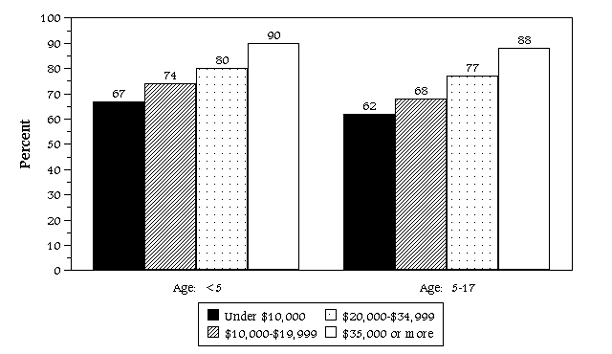
Source: National Center for Health Statistics. Current Estimates from the National Health Interview Survey: United States, 1994. Vital and Health Statistics, Series 10, No. 193 (table 70).
Table HC 2.3
|
||||||||||||||||||
|
Age: <5
|
Age: 5-17
|
|||||||||||||||||
|
1984
|
1987
|
1990
|
1992
|
1993
|
1994
|
1984
|
1987
|
1990
|
1992
|
1993
|
1994
|
|||||||
|
|
|
|
|
|
|
|
|
|
|
|
|
|||||||
| Total |
79
|
81
|
81
|
80
|
80
|
81
|
77
|
80
|
80
|
80
|
79
|
79
|
||||||
| Race | ||||||||||||||||||
| Black |
67
|
71
|
72
|
70
|
71
|
72
|
65
|
66
|
68
|
68
|
70
|
68
|
||||||
| White |
81
|
84
|
83
|
82
|
82
|
83
|
80
|
83
|
83
|
82
|
81
|
81
|
||||||
| Gender | ||||||||||||||||||
| Male |
78
|
|
80
|
79
|
80
|
81
|
78
|
|
81
|
80
|
79
|
79
|
||||||
| Female |
79
|
|
82
|
81
|
80
|
81
|
77
|
|
80
|
79
|
78
|
78
|
||||||
| Family Incomea | ||||||||||||||||||
| Under $10,000 |
67
|
62
|
||||||||||||||||
| $10,000-$19,999 |
74
|
68
|
||||||||||||||||
| $20,000-$34,999 |
80
|
77
|
||||||||||||||||
| $35,000 or more |
90
|
88
|
||||||||||||||||
| Notes: aFamily income is not adjusted in the National Health Interview Survey for comparison over time, therefore family income is shown only for the most recent year.
Source: National Center for Health Statistics. "Current Estimates from the National Health Interview Survey: United States," 1984, 1987, 1990, 1992, 1993, 1994; Vital and Health Statistics, Series 10, Nos. 156, 166, 181, 189, 190, and 193, Table 70 in each. |
||||||||||||||||||
HC 2.4 Chronic health conditions
Chronic health problems can cause children to miss school and often require medical assistance and follow-up. Chronic conditions can also create stress for children and their parents, cause parents to lose time from work, and increase a familys medical expenses.
Over the period from 1984 to 1994, respiratory conditions have been the most prevalent chronic health problems experienced by children under age 17, followed by skin conditions, and impairments (see Figure HC 2.4). In general, there are few pronounced patterns of improvement or deterioration among those conditions shown (see Table HC 2.4). Two exceptions, however, are asthma and chronic sinusitis. The prevalence of these two chronic conditions increased incrementally from 1984 to 1993, but declined slightly in 1994. In 1984, asthma affected 43 children per thousand, compared with 69 children per thousand in 1994; chronic sinusitis affected 47 children per thousand in 1984, and 65 children per thousand by 1994.
Figure HC 2.4
|
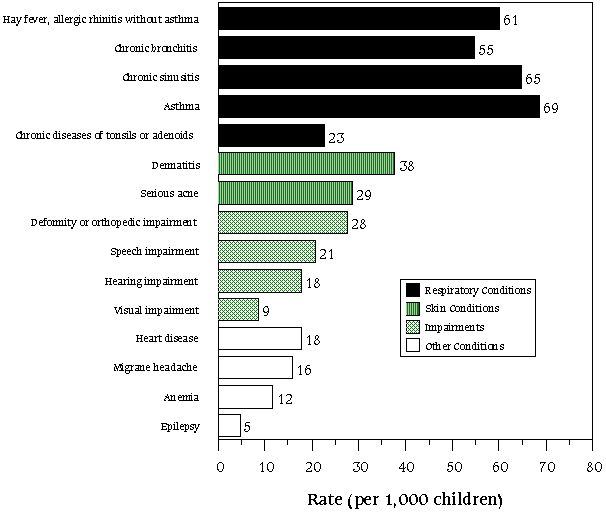
Source: National Center for Health Statistics, Current Estimates from the National Health Interview Survey: United States 1994, Vital and Health Statistics, Series 10, No. 193, Table 70.
Table HC 2.4
|
||||||||||
|
number per 1,000
|
||||||||||
| Type of Conditions |
1984
|
1987
|
1990
|
1992
|
1993
|
1994
|
||||
|
|
|
|
|
|
|
|||||
| Respiratory Conditions | ||||||||||
| Hay fever, allergic rhinitis without Asthma |
61
|
64
|
57
|
71
|
57
|
61
|
||||
| Chronic bronchitis |
50
|
62
|
53
|
54
|
59
|
55
|
||||
| Chronic sinusitis |
47
|
58
|
57
|
69
|
80
|
65
|
||||
| Asthma |
43
|
53
|
58
|
63
|
72
|
69
|
||||
| Chronic diseases of tonsils or adenoids |
34
|
30
|
23
|
28
|
26
|
23
|
||||
| Skin Conditions | ||||||||||
| Dermatitis |
39
|
32
|
31
|
41
|
36
|
38
|
||||
| Serious acne |
26
|
26
|
26
|
25
|
28
|
29
|
||||
| Impairments | ||||||||||
| Deformity or orthopedic impairment |
35
|
36
|
29
|
33
|
29
|
28
|
||||
| Speech impairment |
16
|
19
|
14
|
21
|
20
|
21
|
||||
| Hearing impairment |
24
|
16
|
21
|
15
|
17
|
18
|
||||
| Visual impairment |
9
|
10
|
9
|
10
|
7
|
9
|
||||
| Other Conditions | ||||||||||
| Heart disease |
23
|
22
|
19
|
19
|
20
|
18
|
||||
| Migraine headache |
11
|
8
|
14
|
13
|
13
|
16
|
||||
| Anemia |
11
|
8
|
10
|
11
|
9
|
12
|
||||
| Epilepsy |
7
|
4
|
4
|
3
|
5
|
5
|
||||
| Notes: aChronic conditions as defined in the National Health Interview Survey are conditions that either a) were first noticed three months or more before the reference date of the interview; or b) belong to a group of conditions (including heart diseases, diabetes, and others) that are considered chronic regardless of when they began. The prevalence estimates are based on reports by parents or other adult respondents in response to checklists administered in household interviews.
Source: National Center for Health Statistics, "Current Estimates from the National Health Interview Survey: United States," 1984, 1987, 1990, 1992, 1993, 1994; Vital and Health Statistics, Series 10, Nos. 150, 156, 166, 181, 189, 190, and 1993, Tables 57 and 62. |
||||||||||
HC 2.5 Overweight children and adolescents
Persons who are overweight in adolescence are at greater risk of being overweight as adults, and adults who are overweight are at higher risk of numerous health problems including hypertension, coronary heart disease, gallbladder disease, noninsulin dependent diabetes, and some cancers.18 Because being overweight in childhood and adolescence increases the risk of being overweight in adulthood, the trends in overweight prevalence among children and youth have become an important public health concern.
Differences by Age. Overweight prevalence was similar among children ages six to 11 years old and adolescents 12 to 17 years old (see Table HC 2.5). For both age groups and sexes, overweight prevalence has increased from 15 percent in the earliest time period to approximately 22 percent in 1988-1991.
Differences by Gender. During the time period 1988-1991, there was little difference in the overweight prevalence of male and female children and adolescents 22 percent of male children and 23 percent of female children were overweight, and 22 percent of male adolescents and 21 percent of female adolescents were overweight.
Differences by Race Among Male Children and Adolescents. In the earliest time periods (1963-1965 and 1971-1974), the percentage of black male children who were overweight was at least six percentage points lower than that of white male children. This was reversed in the most recent period (1988-1991), with black male children recording an overweight prevalence rate that is five percentage points higher than that of their white peers. Blackwhite differences were less among the older age group, but the same pattern is evident (see Figure HC 2.5).
Differences by Race for Female Children and Adolescents. With the exception of the earliest time period, the percentage of black females who were overweight was higher than that of white females for both children and adolescents. By the most recent time period 31 percent of black female children and 30 percent of black female adolescents were overweight compared with 22 percent of white female children and 20 percent of white female adolescents (see Figure HC 2.5).
Figure HC 2.5
|
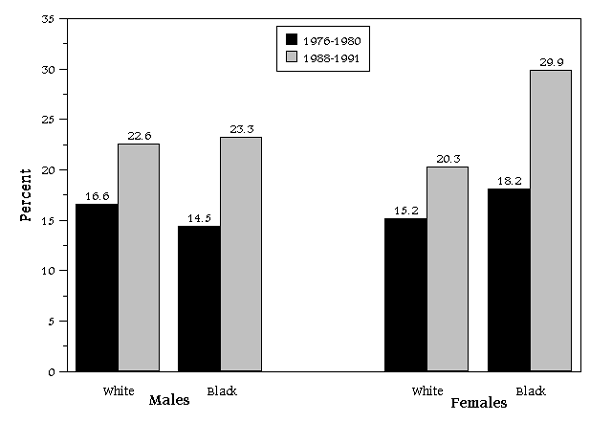
Note: aPrevalence of overweight is determined by those children and adolescents who were at or above the 85th percentile of body mass index (BMI) from the National Health and Nutrition Examination Surveys II and III. Determinations of overweight with BMI were sex- and age-specific.
Source: Troiano, Richard P. and Katherine M. Flegal, Robert J. Kuczmarski, Stephen M. Campbell, Clifford L. Johnson, 1995. Overweight Prevalence and Trends for Children and Adolescents: The National Health and Nutrition Examination Surveys, 1963-1991. Archives of Pediatrics and Adolescent Medicine. Vol. 149 (October). Estimates were calculated from National Health and Nutrition Examination Survey (NHANES); 1976 to 1980 for NHANES II, and 1988 to 1991 for NHANES III.
Table HC 2.5
|
|||||||||
|
1963-1965
|
1966-1970
|
1971-1974
|
1976-1980
|
1988-1991
|
|||||
|
|
|
|
|
|
|||||
| Ages 6 through 11 | |||||||||
| Maleb |
15.2
|
|
18.2
|
19.9
|
22.3
|
||||
| White |
16
|
|
19.5
|
20.8
|
22.3
|
||||
| Black |
10.3
|
|
12.3
|
15.1
|
27.2
|
||||
| Femaleb |
15.2
|
|
13.9
|
15.8
|
22.7
|
||||
| White |
15.7
|
|
13.4
|
15.4
|
22
|
||||
| Black |
12.1
|
|
16.8
|
18.4
|
30.7
|
||||
| Ages 12 through 17 | |||||||||
| Maleb |
|
15.1
|
14.9
|
16.3
|
21.7
|
||||
| White |
|
15.8
|
15.3
|
16.6
|
22.6
|
||||
| Black |
|
10.4
|
12.3
|
14.5
|
23.3
|
||||
| Femaleb |
|
15.2
|
19.7
|
15.5
|
21.2
|
||||
| White |
|
15
|
19.7
|
15.2
|
20.3
|
||||
| Black |
|
16.5
|
20.8
|
18.2
|
29.9
|
||||
| Notes: aPrevalance of overweight is determined by those children and adolescents who were at or above the 85th percentile of body mass index (BMI) from the National Health Examination Surveys II and III. Determinations of overweight with BMI were sex- and age-specific. bTotals for male and female children and adolescents include data for race groups not shown separately. Source: Troiano, Richard P. and Katherine M. Flegal, Robert J. Kuczmarski, Stephen M. Campbell, Clifford L. Johnson, 1995. "Overweight Prevalence and Trends for Children and Adolescents: The National Health and Nutrition Examination Surveys, 1963-1991." Archives of Pediatrics and Adolescent Medicine. Vol. 149 (October). Estimates were calculated from National Health Examination Survey; 1963-1965 for ages 6 through 11, and 1966 to 1970 for ages 12 through 17 years and from the National Health and Nutrition Examination Survey (NHANES); 1971 to 1974 for NHANES I, 1976 to 1980 for NHANES II, and 1988 to 1991 for NHANES III. |
|||||||||
18 Troiano, Richard P. and Katherine M. Flegal, Robert J. Kuczmarski, Stephen M. Campbell, Clifford L. Johnson, 1995. "Overweight Prevalence and Trends for Children and Adolescents: The National Health and Nutrition Examination Surveys, 1963-1991." Archives of Pediatrics and Adolescent Medicine. Vol. 149 (October).
HC 2.6 Abuse and neglect
Abuse and neglect cause physical and/or emotional harm to children. They can produce short-term psychological consequences that range from poor peer relations to violent behavior, as well as untold long-term psychological and economic consequences when children reach adulthood.19 They can result in serious injury or, in extreme cases, death.
The National Research Council distinguishes four categories of child maltreatment: (1) physical abuse, (2) sexual abuse, (3) emotional maltreatment, and (4) neglect.20 The first three are commonly grouped together under the term "abuse," although there are currently no universally accepted definitions of any of these terms. (For example, the point at which corporal punishment becomes physical abuse is not agreed upon by child welfare professionals or lay people).
According to data from the most comprehensive annual data collection efforts undertaken to date, there were about 875 thousand substantiated cases21 of child abuse and neglect in 1994a rate of 12.9 cases per thousand children under age 18 (see Figure HC 2.6). This is a substantial increase over the roughly 720 thousand cases substantiated in 1990, when the rate was only 11.4 cases per thousand.22 Although maltreatment was about evenly split between abuse and neglect, abuse accounted for a somewhat smaller share of the total in 1994 than in 1990.
The number of substantiated cases shown in Figure HC 2.6 may substantially understate the actual number of cases of maltreatment. In order for a case to be substantiated, it must first be reported to child welfare authorities, and child protective services workers must undertake an investigation which finds sufficient evidence of abuse or neglect to proceed further with the case.
Another data source, the third National Incidence Study of Child Abuse and Neglect, yields a much higher estimate of the total number of cases of child maltreatment possibly as high as 2.8 million cases in 1993. This study includes (1) all cases reported to child protective services (regardless of whether they were investigated and substantiated)23 and (2) cases known to community professionals but not necessarily reported to child protective services.
Differences by Race. Black children account for a disproportionate share of substantiated maltreatment cases relative to their share of the child population (see Table HC 2.6).
- Black children, who constituted only 16 percent of all children under age 18, accounted for 26 percent of the abuse and neglect cases in 1994.
- White children, who constituted 79 percent of all children under age 18, accounted for only 56 percent of abused and neglected children in 1994.
- Hispanic children, who constituted about 14 percent of all children under age 18, accounted for only nine percent of the abuse and neglect cases.
Differences by Age. No age group accounts for an obviously disproportionate share of abuse and neglect cases. In 1994, (see Table HC 2.6) infants under age one accounted for about seven percent of substantiated cases; children ages one to five accounted for about 33 percent of substantiated cases; children ages six to 12 accounted for 38 percent of substantiated cases; and children ages 13 to 17 accounted for about 20 percent of substantiated cases.
Figure HC 2.6
|
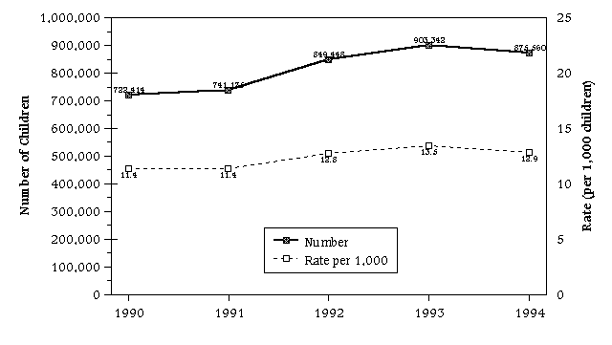
Note: Statistics for 1990-1992 have been revised, to obtain consistent representation of the same number of jurisdictions over the entire 1990-1994 period. Statistics are for the 50 states plus the District of Columbia.
Sources: 1994, National Center on Child Abuse and Neglect, Child Maltreatment, 1994: Reports from the States to the National Center on Child Abuse and Neglect (Washington, D.C.: U.S. Government Printing Office, 1996). 1993, National Center on Child Abuse and Neglect, Child Maltreatment, 1993: Reports from the States to the National Center on Child Abuse and Neglect (Washington, D.C.: U.S. Government Printing Office, 1995). 1992, National Center on Child Abuse and Neglect, Child Maltreatment, 1992: Reports from the States to the National Center on Child Abuse and Neglect (Washington, D.C.: U.S. Government Printing Office, 1994). 1990- 91, National Center on Child Abuse and Neglect, 1991 Summary Data Component. (Washington, DC: U.S. Government Printing Office, 1993). U.S. Bureau of the Census, Statistical Abstract of the United States, 1994 (Washington, D.C.: U.S. Government Printing Office, 1995). U.S. Bureau of the Census, Statistical Abstract of the United States, 1995 (Washington, D.C.: U.S. Government Printing Office, 1996).
Table HC 2.6
|
||||||||
|
1990
|
1991
|
1992
|
1993
|
1994
|
||||
|
|
|
|
|
|
||||
| Total | ||||||||
|
Number
|
722,414
|
741,175
|
849,448
|
903,342
|
875,560
|
|||
| Rate per thousand |
11.4
|
11.4
|
12.8
|
13.5
|
12.9
|
|||
| Type of Maltreatment (% of Total Cases) | ||||||||
| Abuse |
51
|
50
|
45
|
46
|
44
|
|||
| Neglect |
49
|
50
|
55
|
54
|
56
|
|||
| Race/Ethnicity (% of Total Cases) | ||||||||
| White |
55
|
56
|
55
|
54
|
56
|
|||
| Black |
25
|
27
|
26
|
25
|
26
|
|||
| Hispanic |
9
|
10
|
10
|
9
|
9
|
|||
| Other |
4
|
4
|
4
|
4
|
4
|
|||
| Unknown |
7
|
5
|
6
|
9
|
4
|
|||
| Sex (% of Total Cases) | ||||||||
| Male |
47
|
46
|
46
|
47
|
47
|
|||
| Female |
53
|
54
|
54
|
53
|
53
|
|||
| Age (% of Total Cases) | ||||||||
| Under 1 |
8
|
8
|
7
|
7
|
7
|
|||
| 1 to 5 |
31
|
32
|
32
|
33
|
33
|
|||
| 6 to 12 |
37
|
38
|
37
|
38
|
38
|
|||
| 13 to 17 |
20
|
20
|
19
|
20
|
20
|
|||
| 18+/unknown |
5
|
2
|
5
|
2
|
2
|
|||
| Note: Statistics for 1990-1992 have been revised, to obtain consistent representation of the same number of jurisdictions over the entire 1990-1994 period. Statistics are for the 50 states plus the District of Columbia.
Sources: 1994, National Center on Child Abuse and Neglect, "Child Maltreatment, 1994: Reports from the States to the National Center on Child Abuse and Neglect" (Washington, D.C.: U.S. Government Printing Office, 1996). 1993, National Center on Child Abuse and Neglect, "Child Maltreatment, 1993: Reports from the States to the National Center on Child Abuse and Neglect" (Washington, D.C.: U.S. Government Printing Office, 1995). 1992, National Center on Child Abuse and Neglect, Child Maltreatment, 1992: Reports from the States to the National Center on Child Abuse and Neglect (Washington, D.C.: U.S. Government Printing Office, 1994). 1990- 91, National Center on Child Abuse and Neglect, "1991 Summary Data Component." (Washington, DC: U.S. Government Printing Office, 1993). U.S. Bureau of the Census, "Statistical Abstract of the United States, 1994" (Washington, D.C.: U.S. Government Printing Office, 1995). U.S. Bureau of the Census, "Statistical Abstract of the United States, 1995" (Washington, D.C.: U.S. Government Printing Office, 1996). |
||||||||
19 Many studies have demonstrated a correlation between child abuse and neglect and serious adult problems including violence, incarceration, and mental illness. However, these studies have not been able to separate the effects of child abuse and neglect from other factors that are correlated with it including poverty, education, parenting skills, etc.
20 National Research Council, Panel on Child Abuse and Neglect, Understanding Child Abuse and Neglect. Washington, DC: National Academy Press, 1993.
21 In most states, each reported incident is counted even if multiple incidents are reported for the same child.
22 The apparent drop between 1993 and 1994 should be viewed with caution since there are important inconsistencies in data collection methodology from year to year.
23 According to the National Incidence Study, in 1993, only 28 percent of maltreatment cases identified by the Study were investigated--a significant decrease from the 44 percent investigated in 1986. The cause of this drop is not clear.
HC 2.7 Suicidal teens
Suicide is a major cause of death among American youth (see Section HC 1.2.C). Attempted suicide has been related to mental health problems including depression and adjustment or stress reactions, as well as to substance abuse.24
In 1995, 24 percent of youth in grades nine through 12 report having seriously considered suicide during the previous 12 months (see Table HC 2.7.A). During the same time period, nine percent, or one in eleven, report having actually attempted suicide during the previous year (see Table HC 2.7.B). These rates are considerably higher than the proportion of youth who actually commit suicide (see Section HC 1.2.C).
Rates for contemplation of suicide range from 29 percent in 1991 to 24 percent in 1993 and 1995 (see Table HC 2.7.A). The percentage of youth who report actually attempting suicide has remained around nine percent in recent years (see Table HC 2.7.B).
Differences by Race/Ethnicity.25 Black youths report somewhat lower rates of considering suicide in comparison with their white and Hispanic peers (20 percent for black youth versus 25 percent for both whites and Hispanics in 1995). Rates of reported attempted suicide are similar across the three groups, ranging from eight to ten percent.
Differences by Gender. In 1995, female youth were more likely than male youth to report having thought seriously about suicide (30 percent versus 18 percent) and having attempted suicide (12 percent versus six percent) during the previous year (see Figure HC 2.7). However, the rate of actual suicides, particularly among teens ages 15 to 19, are considerably higher for males than for females, as discussed in section HC 1.2.C.
Figure HC 2.7
|
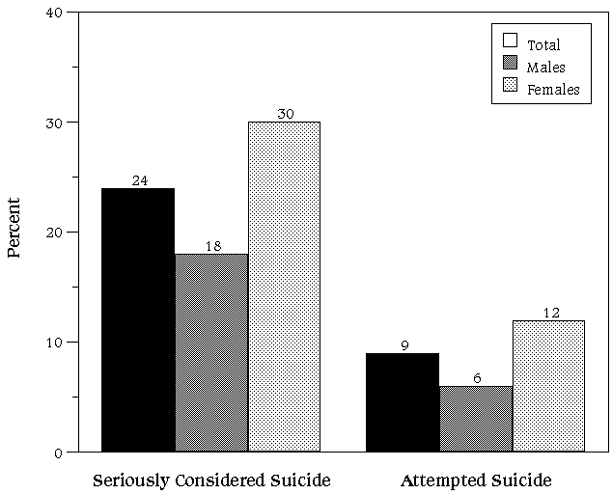
Source: Youth Risk Behavior Surveillance - United States 1995. In: CDC Surveillance Summaries, MMWR 1996; Vol. 45 (No. 55-4): 1-85.
Table HC 2.7.A
|
||||||||
|
1990
|
1991
|
1993
|
1995
|
|||||
|
|
|
|
|
|||||
| Total |
27
|
29
|
24
|
24
|
||||
| Male |
21
|
21
|
19
|
18
|
||||
| Female |
34
|
37
|
30
|
30
|
||||
| Grade | ||||||||
|
|
9 |
30
|
29
|
24
|
26
|
|||
| 10 |
26
|
30
|
25
|
25
|
||||
| 11 |
29
|
32
|
25
|
26
|
||||
| 12 |
33
|
26
|
23
|
20
|
||||
| Race/Ethnic Group | ||||||||
| White non-Hispanic |
28
|
30
|
24
|
25
|
||||
| Black non-Hispanic |
20
|
22
|
20
|
20
|
||||
| Hispanic |
30
|
27
|
26
|
25
|
||||
| Source: Data for 1990 from "1990-1991 Youth Risk Behavior Surveillance System," Morbidity and Mortality Weekly Report reprints, Centers for Disease Control and Prevention. Data for 1991 from Public Health Reports, Vol. 108, Supplement 1, U.S. Public Health Service. Data for 1993 from "Youth Risk Behavior Surveillance- United States 1993," Vol. 44, No. SS-1, U.S. Department of Health and Human Services, Public Health Service, Centers for Disease Control and Prevention. Data for 1995 from Kann, L., Warren, C.W., Harris, W.A., Collins, J.L., Williams, B.I., Ross, J.G., and Kolbe, L.J. "Youth Risk Behavior Surveillance -- United States, 1995." In: CDC Surveillance Summaries, September 27, 1996. Morbidity and Mortality Weekly Report 1996; 45 (No. 55-4): 1-85. All data from Youth Risk Behavior Surveys 1990-1995. | ||||||||
Table HC 2.7.B
|
|||||||
|
1990
|
1991
|
1993
|
1995
|
||||
|
|
|
|
|
||||
| Total |
8
|
7
|
9
|
9
|
|||
| Male |
6
|
4
|
5
|
6
|
|||
| Female |
10
|
11
|
13
|
12
|
|||
| Grade | |||||||
| 9 |
9
|
9
|
10
|
11
|
|||
| 10 |
9
|
8
|
9
|
10
|
|||
| 11 |
8
|
6
|
8
|
9
|
|||
| 12 |
7
|
6
|
7
|
6
|
|||
| Race/Ethnic Group | |||||||
| White non-Hispanic |
8
|
7
|
8
|
8
|
|||
| Black non-Hispanic |
7
|
7
|
8
|
10
|
|||
| Hispanic |
12
|
8
|
14
|
13
|
|||
| Source: Data for 1990 from "1990-1991 Youth Risk Behavior Surveillance System," Morbidity and Mortality Weekly Report reprints, Centers for Disease Control and Prevention. Data for 1991 from Public Health Reports, Vol. 108, Supplement 1, U.S. Public Health Service. Data for 1993 from "Youth Risk Behavior Surveillance- United States 1993," Vol. 44, No. SS-1, U.S. Department of Health and Human Services, Public Health Service, Centers for Disease Control and Prevention. Data for 1995 from Kann, L., Warren, C.W., Harris, W.A., Collins, J.L., Williams, B.I., Ross, J.G., and Kolbe, L.J. "Youth Risk Behavior Surveillance -- United States, 1995." In: CDC Surveillance Summaries, September 27, 1996. Morbidity and Mortality Weekly Report, 1996; 45 (No. 55-4): 1-85. All data from Youth Risk Behavior Surveys 1990-1995. | |||||||
24 Alcohol, Drug Abuse, and Mental Health Administration. Report of the Secretarys Task Force on Youth Suicide. Publication No. (ADM)899-1621. Washington, D.C.: U.S. Department of Health and Human Services, 1989. Cited in Healthy People 2000: National Health Promotion and Disease Prevention Objectives, Conference Edition. U.S. Department of Health and Human Services, 1990.
25 Estimates for whites and blacks exclude Hispanics of those races.
HC 2.8 Activity limitations
Activity limitations refer to long term reductions in activities resulting from a chronic disease or impairment.26 Two types of activity limitations are examined here: limitations in major activities and limitations in any activity. A person is classified as having an activity limitation if he or she reports (a) an inability to perform the major activity for a person in his or her age group, (b) being able to perform the major activity but being limited in the kind or amount of this activity, or (c) not being limited in the major activity but being limited in the kind or amount of other activities. For children under age 5, the major activity consists of ordinary play. For hildren ages five to 17, the major activity is attending school. Children are classified as being limited in a major activity if they are unable to engage in the major activity or are limited in the kind or amount of this activity.
Between 1990 and 1994 the percentage of children under age 18 with chronic conditions that limit any of their activity has risen from 4.9 percent to 6.7 percent (see Table HC 2.8.A). This trend is true for both males and females and whites and blacks, although the percentages are higher for males and for blacks. The percentage of children with limitations in major activities follows a similar upward trend since 1990 (see Table HC 2.8.B).
Differences by Gender. Males have consistently accounted for a greater percentage of youth with an activity limitation due to a chronic condition. In 1994, 7.9 percent of males compared to 5.6 percent of females had activity limitations that were caused by a chronic condition (see Figure HC 2.8.A). Looking only at limitations in major activities in 1994, 6.0 percent of males had such limitations compared to 3.8 percent of females (see Figure HC 2.8.B).
Differences by Race. Black youth are more likely than white youth to have activity limitations due to chronic conditions (see Table HC 2.8.A). In 1994, 8.8 percent of black youth had activity limitations compared to 6.4 percent of white youth. A similar gap existed for major activity limitations with 6.7 percent of black youth being limited in major activities and 4.7 percent of white youth.
Figure HC 2.8.A
|
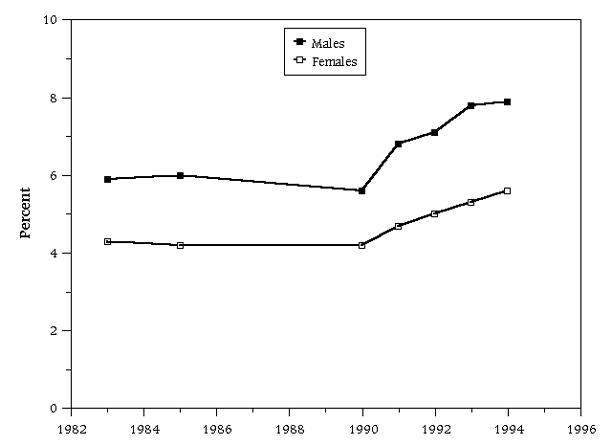
Source: National Center for Health Statistics, Current Estimates from the National Health Interview Survey: United States 1983, 1985, 1990, 1991, 1992, 1993, 1994.
Figure HC 2.8.B
|
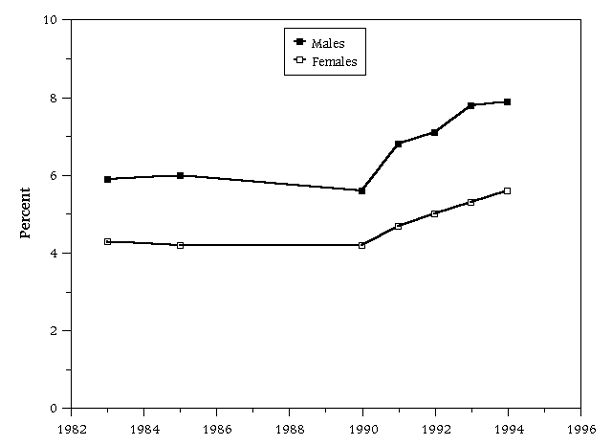
Source: National Center for Health Statistics, Current Estimates from the National Health Interview Survey: United States 1983, 1985, 1990, 1991, 1992, 1993, 1994.
Table HC 2.8.A
|
|||||||||||
|
1983
|
1985
|
1990
|
1991
|
1992
|
1993
|
1994
|
|||||
| Total |
5.1
|
5.1
|
4.9
|
5.8
|
6.1
|
6.6
|
6.7
|
||||
| Gender | |||||||||||
| Males |
5.9
|
6
|
5.6
|
6.8
|
7.1
|
7.8
|
7.9
|
||||
| Females |
4.3
|
4.2
|
4.2
|
4.7
|
5
|
5.3
|
5.6
|
||||
| Race/Ethnicity | |||||||||||
| White |
5
|
5.1
|
4.8
|
5.7
|
5.9
|
6.5
|
6.4
|
||||
| Black |
5.7
|
5.8
|
5.5
|
6.8
|
7.5
|
7.7
|
8.8
|
||||
| Notes: aAn activity limitation is defined as follows: Persons are classified in terms of the major activity usually associated with their particular age group. The major activities for the age groups are a) ordinary play for children under 5 years of age, b) attending school for those 5-17 years of age. A person is classified as having an activity limitation if he or she is: a) unable to perform the major activity, b) able to perform the major activity but limited in the kind or amount of this activity, c) not limited in the major activity but limited in the kind or amount of other activities. bA condition is considered chronic if a) the respondent indicates it was first noticed more than 3 months before the reference date of the interview or b) it is a type of condition that ordinarily has a duration of more than 3 months. Source: National Center for Health Statistics, "Current Estimates from the National Health Interview Survey: United States" 1983, 1985, 1990, 1991, 1992, 1993, 1994. |
|||||||||||
Table HC 2.8.B
|
|||||||||||
|
1983
|
1985
|
1990
|
1991
|
1992
|
1993
|
1994
|
|||||
|
|
|
|
|
|
|
|
|||||
| Total |
3.5
|
3.7
|
3.6
|
4.2
|
4.4
|
4.6
|
4.9
|
||||
| Gender | |||||||||||
|
|
Males |
4.2
|
4.4
|
4.2
|
5
|
5.2
|
5.6
|
6
|
|||
|
|
Females |
2.8
|
2.9
|
3
|
3.3
|
3.7
|
3.5
|
3.8
|
|||
| Race/Ethnicity | |||||||||||
| White |
3.4
|
3.5
|
3.5
|
4.1
|
4.3
|
4.5
|
4.7
|
||||
| Black |
4.5
|
4.6
|
4.2
|
5.2
|
6
|
5.7
|
6.7
|
||||
| Notes: aAn activity limitation is defined as follows: Persons are classified in terms of the major activity usually associated with their particular age group. The major activities for the age groups are a) ordinary play for children under 5 years of age, b) attending school for those 5-17 years of age. A person is classified as having an activity limitation if he or she is: a) unable to perform the major activity, b) able to perform the major activity but limited in the kind or amount of this activity, c) not limited in the major activity but limited in the kind or amount of other activities. bA condition is considered chronic if a) the respondent indicates it was first noticed more than 3 months before the reference date of the interview or b) it is a type of condition that ordinarily has a duration of more than 3 months. Source: National Center for Health Statistics, "Current Estimates from the National Health Interview Survey: United States" 1983, 1985, 1990, 1991, 1992, 1993, 1994. |
|||||||||||
26 A disease or impairment is classified as chronic if it has been apparent for at least three months or is a new condition that will ordinarily last for more than three months.
HC 2.9 Lead exposure
Exposure to lead has long been recognized as a serious health hazard, particularly for infants, toddlers, and preschool-age children, whose developing nervous systems are sensitive to lead. Research during the past two decades has shown that adverse health effects can occur from blood lead levels (BLLs) that had previously been considered safe. Based on this research the Centers for Disease Control and Prevention now consider BLLs at least as low as ten micrograms per deciliter of blood as hazardous for children ages one to five.27
Dramatic Decreases in Blood Lead Levels. The percentage of very young children who have been exposed to potentially dangerous levels of lead declined dramatically in the 1980s (see Table HC 2.9). Data gathered between 1976 and 1980 revealed that 88.2 percent of children between the ages of one and five had blood lead levels which have been shown to have adverse health effects. Subsequent data gathered between 1988 and 1991 found that only 8.9 percent of children had hazardous levels of lead in their blood. This dramatic decrease has been attributed primarily to the removal of lead from gasoline and from soldered food and soft drink cans. Other contributing factors have been the ban on leaded paint for residential use in 1978, the ban on lead in solder for household plumbing, and the ongoing screening of children for lead exposure. Deteriorating lead-based paint and lead-contaminated dust in older homes are the primary source of lead exposure for children in the United States today.28
Differences by Race/Ethnicity,29 Family Income, and Place of Residence. The decline in blood lead levels occurred among both non-Hispanic black and non-Hispanic white children.30 However, non-Hispanic black children, poor and near-poor children, and children living in the central areas of large cities still faced considerably higher risks of being exposed to high levels of lead (see Figure HC 2.9 and Table HC 2.9). For many children, these higher risks were probably related to residence in older homes which contained deteriorated lead-based paint.
Figure HC 2.9
|
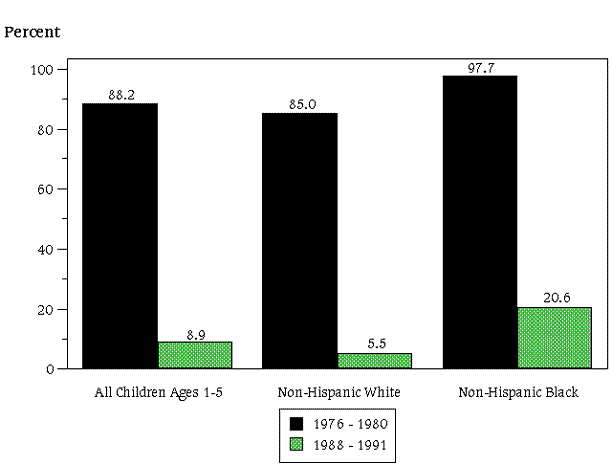
Source: Pirkle, James L., Brody, Debra J., Gunter, Elaine W., Kramer, Rachel A., Paschal, Daniel C., Flegal, Katherine M., and Matte, Thomas D. (1994) The Decline in Blood Lead Levels in the United States: The National Health and Nutrition Examination Surveys (NHANES) in Journal of the American Medical Association Volume 272, pp. 284-291. Brody, Debra J., Pirkle, James L., Kramer, Rachel A., Flegal, Katherine M., Matte, Thomas D., Gunter, Elaine W., and Paschal, Daniel C. (1994). Blood Lead Levels in the U.S. Population: Phase 1 of the Third National Health and Nutrition Examination Survey (NHANES III, 1988 to 1991) in Journal of the American Medical Association Volume 272, pp. 277-283.
Table HC 2.9
|
||||
|
1976-1980
|
1988-1991
|
|||
|
|
|
|||
| ALL CHILDREN AGES 1-5 |
88.2
|
8.9
|
||
| Ages 1-2 |
88.3
|
11.5
|
||
| Ages 3-5 |
88.1
|
7.3
|
||
| Race/Ethnicity | ||||
| White, non-Hispanic |
85
|
5.5
|
||
| Black, non-Hispanic |
97.7
|
20.6
|
||
| Income | ||||
| 0 to 129% of Poverty |
|
16.3
|
||
| 130% to 299% of Poverty |
|
5.4
|
||
| 300% of Poverty or Greater |
|
4
|
||
| Urban Status | ||||
| Central City Greater Than 1 Million |
|
21
|
||
| Central City Less Than 1 Million |
|
16.4
|
||
| NonCentral City |
|
5.8
|
||
| Source: Pirkle, James L., Brody, Debra J., Gunter, Elaine W., Kramer, Rachel A., Paschal, Daniel C., Flegal, Katherine M., and Matte, Thomas D. (1994) "The Decline in Blood Lead Levels in the United States: The National Health and Nutrition Examination Surveys (NHANES)" in Journal of the American Medical Association Volume 272, pp. 284-291. Brody, Debra J., Pirkle, James L., Kramer, Rachel A., Flegal, Katherine M., Matte, Thomas D., Gunter, Elaine W., and Paschal, Daniel C. (1994). "Blood Lead Levels in the U.S. Population: Phase 1 of the Third National Health and Nutrition Examination Survey (NHANES III, 1988 to 1991)" in Journal of the American Medical Association Volume 272, pp. 277-283. | ||||
27 Centers for Disease Control. Preventing Lead Poisoning in Young Children: A Statement by the Centers for Disease Control. Atlanta, GA: U.S. Department of Health and Human Services, Public Health Service: 1991.
28 Centers for Disease Control. " Blood Lead Levels -- United States, 1988-1991. Morbidity and Mortality Weekly Report August 5, 1994, Vol. 43, No. 30; and, Pirkle, James L., Brody, Debra J., Gunter, Elaine W., Kramer, Rachel A., Paschal, Daniel C., Flegal, Katherine M., and Matte, Thomas D. (1994) "The Decline in Blood Lead Levels in the United States: The National Health and Nutrition Examination Surveys (NHANES)" in Journal of the American Medical Association Volume 272, pp. 284-291.
29 Estimates for whites and blacks exclude Hispanics of those races.
30 Data for Mexican-American children for 1982-1984 and 1988-1991 show a similar trend. While 61.5 percent of 4-5 year old Mexican-American children had hazardous levels of lead in their blood in 1982-1984 the total was 4.9 percent by 1988-91. Pirkle, James L., Brody, Debra J., Gunter, Elaine W., Kramer, Rachel A., Paschal, Daniel C., Flegal, Katherine M., and Matte, Thomas D. (1994) "The Decline in Blood Lead Levels in the United States: The National Health and Nutrition Examination Surveys (NHANES)" in Journal of the American Medical Association Volume 272, pp. 284-291.
HC 2.10 Violent victimization of teens
Violent crimes include simple and aggravated assaults, rape, and robbery (stealing by force or threat of violence). In order to keep track of the incidence of these and other crimes, the United States has been administering the National Crime Victimization Survey on an annual basis since 1972.
Among youth ages 12 to 17, rates of victimization for violent crimes rose from 79 to 99 per thousand between 1980 and 1990 (see Figure HC 2.10) Rates continued to increase to a high of 123 per thousand in 1993 before declining to 118 per thousand in 1994.
Differences by Gender. Boys are considerably more likely than girls to be victims of violent crimes. In 1994, 141 per thousand boys ages 12 to 17 were victims of violent crimes compared to 95 per thousand girls.
Figure HC 2.10
|
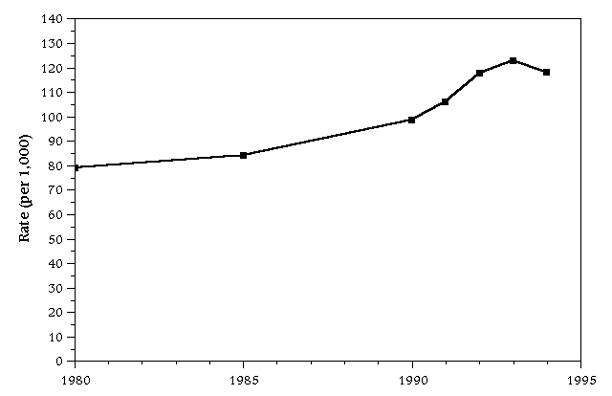
Notes: Because of changes made in the victimization survey, data prior to 1992 are adjusted to make them comparable with data collected under the redesigned methodology. Victimization rates were calculated using population estimates from the Bureau of the Census Current Population Reports. Such population estimates normally differ somewhat from population estimates derived from survey data. The rates may therefore differ marginally from rates based upon survey derived population estimates. Source: Unpublished tables, Bureau of Justice Statistics, National Crime Victimization Survey, 1980-1994.
Table HC 2.10
|
|||||||||
|
1980
|
1985
|
1990
|
1991
|
1992
|
1993
|
1994
|
|||
|
|
|
|
|
|
|
|
|||
| Age | |||||||||
| 12-17 |
79.0
|
84.3
|
98.6
|
106.2
|
117.9
|
123.1
|
118.4
|
||
| 12-14 |
70.4
|
81.4
|
102.1
|
97.6
|
119.3
|
121.0
|
118.2
|
||
| 15-17 |
86.6
|
87.1
|
95.1
|
115.0
|
116.4
|
125.2
|
118.6
|
||
| Race/Ethnicity | |||||||||
| White |
77.7
|
87.7
|
95.4
|
105.1
|
121.4
|
125.7
|
118.4
|
||
| Black |
91.1
|
69.3
|
122.1
|
127.6
|
111.8
|
132.9
|
135.8
|
||
| Other |
49.7
|
71.7
|
76.1
|
54.2
|
79.2
|
49.4
|
64.7
|
||
| Sex | |||||||||
| Male |
106.4
|
113.0
|
131.0
|
148.9
|
146.2
|
149.3
|
140.5
|
||
| Female |
50.4
|
54.3
|
64.4
|
61.2
|
88.1
|
95.5
|
95.1
|
||
| Notes: Because of changes made in the victimization survey, data prior to 1992 are adjusted to make them comparable with data collected under the redesigned methodology. Victimization rates were calculated using population estimates from the Bureau of the Census Current Population Reports. Such population estimates normally differ somewhat from population estimates derived from survey data. The rates may therefore differ marginally from rates based upon survey-derived population estimates.
Source: Unpublished tables, Bureau of Justice Statistics, National Crime Victimization Survey, 1980-1994. |
|||||||||
HC 2.11 Dental caries
"Dental caries" is a technical term referring to either treated or untreated tooth decay in one or more teeth. Proper preventive care reduces the incidence of dental caries. The presence of dental caries may indicate a lack of access to preventive care or a lack of information about preventive techniques.31
Racial and Ethnic Differences in Dental Caries. Mexican American children ages two through four had the highest prevalence of dental caries in their primary teeth (see Figure HC 2.11). Almost one-third of Mexican American children had dental caries compared to 22 percent of black children and 13 percent of white children. Mexican American children also had the highest prevalence of dental caries in permanent teeth, but the gap among children ages five through 17 was much smaller than it was for younger children. Black children had the lowest percentage of dental caries with 39 percent, compared to 45 percent for white children and 49 percent for Mexican American children.
Figure HC 2.11
|
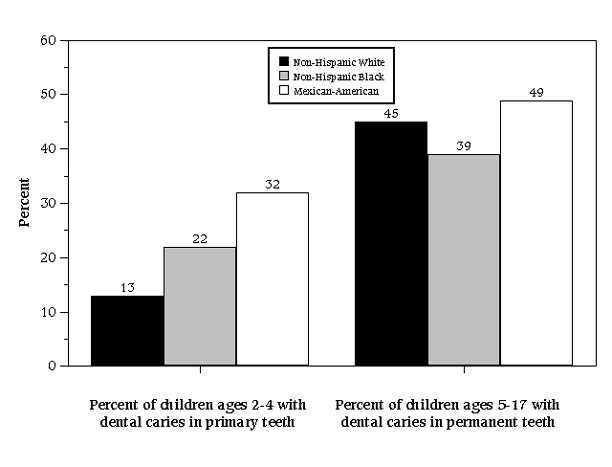
Source: Kaste, L.M., Selwitz, R.H., Oldakowski, R.J., Brunelle, J.A., Winn, D.M., & Brown, L.J. (1996) Coronal Caries in the Primary and Permanent Dentition of Children and Adolescents 1-17 Years of Age: United States, 1988-1991. Journal of Dental Research, 75, 631-641. Rockville, MD: National Institutes of Health. National Institute of Dental Research, Division of Epidemiology and Oral Disease Prevention.
Table HC 2.11
|
|||
|
Non-Hispanic White
|
Non-Hispanic Black
|
Mexican-American
|
|
|
|
|
|
|
| Percent of children ages 2-4 w/dental | |||
| caries in primary teeth |
13
|
22
|
32
|
| Percent of children ages 5-17 | |||
| w/dental caries in permanent teeth |
45
|
39
|
49
|
| Source: Kaste, L.M., Selwitz, R.H., Oldakowski, R.J., Brunelle, J.A., Winn, D.M., & Brown, L.J. (1996) "Coronal Caries in the Primary and Permanent Dentition of Children and Adolescents 1-17 Years of Age: United States, 1988-1991." Journal of Dental Research, 75, 631-641. Rockville, MD: National Institutes of Health. National Institute of Dental Research, Division of Epidemiology and Oral Disease Prevention. | |||
31 Kaste, L.M., R.H. Selwitz, R.J. Oldakowski, J.A. Brunelle, D.M. Winn and L.J. Brown (1996). "Coronal Caries in the Primary and Permanent Dentition of Children and Adolescents 1-17 Years of Age: United States 1988-1991." Journal of Dental Research 75: 631-641. Rockville, MD: National Institutes of Health. National Institute of Dental Research, Division of Epidemiology and Oral Disease Prevention.
HEALTH CARE
HC 3.1 Health insurance coverage
Children who are covered by health insurance are considerably more likely to have a regular source of health care.32 Regular care increases the continuity of care, which is important to the maintenance of good health.
Since 1987, the percentage of children who are not covered by health insurance has stayed stable at 13 to 14 percent (see Table HC 3.1.A). Rates of coverage vary little by age of child, though older children are slightly less likely to be covered.
Differences by Race and Ethnicity. Hispanic children are far less likely to be covered than either white or black children. In 1995, 27 percent of Hispanic children were not covered by health insurance, compared to 13 percent of whites and 15 percent of black children (see Figure HC 3.1.A).
Children Covered by Medicaid. The proportion of children who are covered by Medicaid has grown substantially over time, increasing from 15 percent in 1987 to a high of 24 percent in 1993, before declining slightly to 23 percent in 1994 and 1995 (see Figure HC 3.1.B). Young children are considerably more likely to be covered by Medicaid. In 1995, 30 percent of children under age six were covered, compared to 17 percent of children ages 12 through 17. Finally, a very large proportion of black and Hispanic children rely on Medicaid for their medical coverage. In 1995, 45 percent of black and 37 percent of Hispanic children were covered by Medicaid, compared to 18 percent of white children.
Figure HC 3.1.A
|
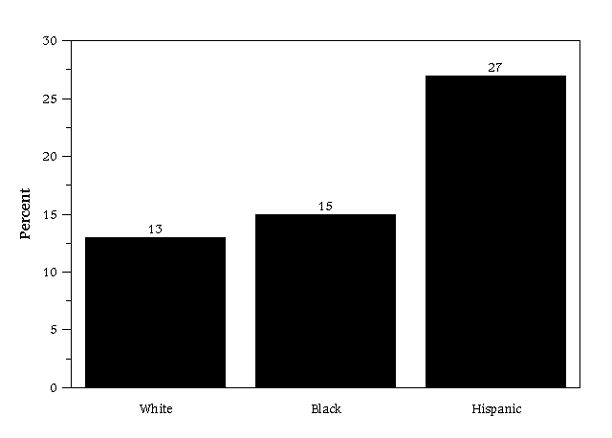
Source: Unpublished Tables, based on Analyses from the March Current Population Surveys. Housing and Household Economic Statistics Division, U.S. Bureau of the Census.
Figure HC 3.1.B
|
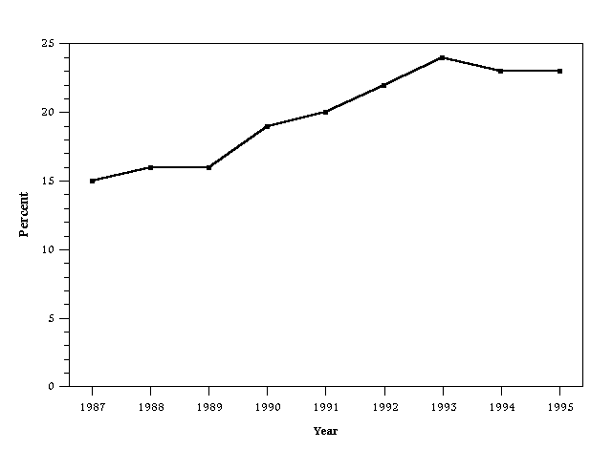
Source: Unpublished Tables, based on Analyses from the March Current Population Surveys. Housing and Household Economic Statistics Division, U.S. Bureau of the Census.
Table HC 3.1.A
|
|||||||||||
|
1987
|
1988
|
1989
|
1990
|
1991
|
1992
|
1993
|
1994
|
1995
|
|||
|
|
|
|
|
|
|
|
|
|
|||
| All Children |
13
|
13
|
13
|
13
|
13
|
13
|
14
|
14
|
14
|
||
| Age 0-5 |
12
|
13
|
13
|
11
|
11
|
11
|
12
|
14
|
13
|
||
| Age 6-11 |
13
|
13
|
13
|
13
|
12
|
12
|
13
|
13
|
13
|
||
| Age 12-17 |
14
|
14
|
14
|
15
|
15
|
15
|
17
|
15
|
14
|
||
| Race/Ethnicity | |||||||||||
| White |
12
|
12
|
12
|
13
|
12
|
12
|
13
|
13
|
13
|
||
| Black |
17
|
16
|
16
|
15
|
15
|
14
|
16
|
17
|
15
|
||
| Hispanic |
28
|
29
|
30
|
28
|
27
|
25
|
26
|
28
|
27
|
||
| Source: Unpublished Tables, based on Analyses from the March Current Population Surveys. Housing and Household Economic Statistics Division, U.S. Bureau of the Census. | |||||||||||
Table HC 3.1.B
|
|||||||||||||||||||||||
|
1987
|
1988
|
1989
|
1990
|
1991
|
1992
|
1993
|
1994
|
1995
|
|||||||||||||||
|
|
|
|
|
|
|
|
|
|
|||||||||||||||
| All Children |
15
|
16
|
16
|
19
|
20
|
22
|
24
|
23
|
23
|
||||||||||||||
| Age 0-5 |
18
|
19
|
20
|
24
|
27
|
30
|
32
|
30
|
30
|
||||||||||||||
| Age 6-11 |
15
|
15
|
15
|
17
|
19
|
20
|
22
|
22
|
23
|
||||||||||||||
| Age 12-17 |
12
|
12
|
11
|
14
|
15
|
15
|
17
|
16
|
17
|
||||||||||||||
| Race/Ethnicity | |||||||||||||||||||||||
| White |
11
|
11
|
11
|
14
|
16
|
17
|
19
|
18
|
18
|
||||||||||||||
| Black |
38
|
38
|
37
|
42
|
44
|
46
|
47
|
44
|
45
|
||||||||||||||
| Hispanic |
26
|
25
|
25
|
30
|
34
|
37
|
39
|
37
|
37
|
||||||||||||||
| Source: Unpublished Tables, based on Analyses from the March Current Population Surveys. Housing and Household Economic Statistics Division, U.S. Bureau of the Census. | |||||||||||||||||||||||
32 National Center for Health Statistics, "Health of Our Nations Children" 1988. Vital Statistics Health Series, No. 191.
HC 3.2.a Early prenatal care
Early prenatal care (i.e., care in the first trimester of a pregnancy) allows women and their health care providers to identify and, when possible, treat or correct health problems and health-compromising behaviors that can be particularly damaging during the initial stages of fetal development. Increasing the number of women who receive prenatal care, and who do so early in their pregnancies, can improve birth outcomes and lower health care costs by reducing the likelihood of complications during pregnancy and childbirth.33
The percentage of mothers receiving prenatal care in the first trimester has increased from 68.0 percent in 1970 to 81.2 percent in 1995 (see Table HC 3.2.A). Following a decade of essentially no change, the proportion of women receiving early prenatal care has improved incrementally throughout the 1990s.
Differences by Race and Ethnicity. The percentage of women receiving prenatal care during the first three months of pregnancy has increased over the past two decades for white, black, and Hispanic women.34 While the gains have been greatest for black and Hispanic women, white women are still the most likely to receive prenatal care in their first trimester (see Figure HC 3.2.A).
- The percentage of black women receiving prenatal care in the first trimester increased from 44.2 percent in 1970 to 62.4 percent in 1980. Rates declined slightly to 60.6 percent in 1990, but continued to increase in subsequent years, reaching 70.3 percent by 1995.
- The percentage of Hispanic women who receive early prenatal care has increased steadily, from 60.2 percent in 1980 to 70.4 percent by 1995.
- The percentage of white women receiving early prenatal care increased from 72.3 percent to 79.2 percent between 1970 and 1980, was stable through the 1980s, then increased during the 1990s to 83.5 percent by 1995.
Differences by Age of Mother. Older women are more likely to receive early prenatal care than are younger women. Although there have been improvements in the receipt of early prenatal care by teenagers, this age group is consistently the least likely to receive prenatal care in the first trimester of pregnancy.
- Receipt of early prenatal care among women under age 15 improved considerably between 1975 and 1994, increasing from 30.9 percent to 45.7 percent.
- The percentage of women age 35 and over who received early prenatal care also improved during this time period, increasing from 68.4 percent in 1975 to 86.2 percent by 1994.
- More than 80 percent of mothers age 25 and older received early prenatal care throughout the 1990s.
Figure HC 3.2.A
|
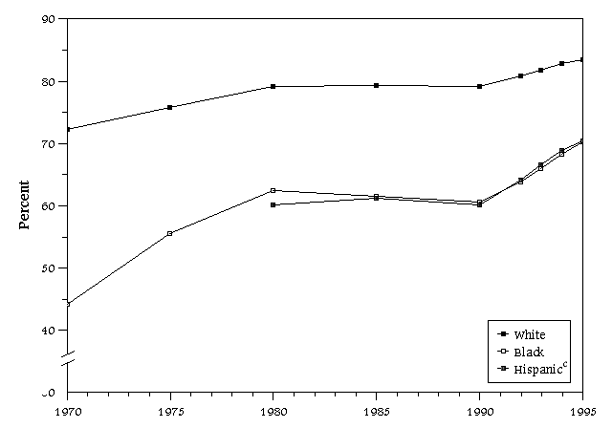
Notes: aThe data refer to those women who had live births.
bPercentages are based on the race and ethnicity of the mother.
cFigures for Hispanic women in 1980 are based on data from 22 States which report Hispanic origin on the birth certificate; 23 States and the District of Columbia in 1985; 48 States and the District of Columbia in 1990; 49 States and the District of Columbia in 1992; and 50 States and the District of Columbia since 1993.
dData for 1995 are preliminary.
Source: National Center for Health Statistics. Health, United States, 1995. Hyattsville, Maryland: Public Health Service. 1996. (table 7 for totals and race/ethnicity breaks for 1970-1993); 1975 data from: Monthly Vital Statistics Report. Vol. 25, No. 10, Supplement. 1976 (table 17); 1980 data from: Monthly Vital Statistics Report. Vol. 31, No. 8, Supplement. 1982 (table 20); 1985 data from: Monthly Vital Statistics Report. Vol. 36, No. 4, Supplement. 1987 (table 25); 1990 data from: Monthly Vital Statistics Report. Vol. 41, No. 9, Supplement. 1993 (tables 26 and 30); 1992 data from: Ventura, S.J., Martin, J.A., Taffel, S.M., Mathews, T.J. and Clarke S.C. Advance Report of Final Natality Statistics, 1992. Monthly Vital Statistics Report, Vol. 43, No. 5, Supplement. Hyattsville, Maryland: National Center for Health Statistics. 1994 (tables 24 and 33); 1993 data from: Ventura, S.J., Martin, J.A., Taffel, S.M., Mathews, T.J. and Clarke S.C. Advance Report of Final Natality Statistics, 1993. Monthly Vital Statistics Report, Vol. 44, No. 3, Supplement. Hyattsville, Maryland: National Center for Health Statistics. 1995 (tables 24 and 33); 1994 data from: Ventura, S.J., Martin, J.A., Mathews, T.J. and Clarke S.C. Advance Report of Final Natality Statistics, 1994. Monthly Vital Statistics Report, Vol. 44, No. 11, Supplement. Hyattsville, Maryland: National Center for Health Statistics. 1996 (tables 24 and 33). 1995 preliminary data from: Rosenberg, H.M., Ventura, S.J., Maurer, J.D., Heuser, R.L., Freedman, M.A. Births and Deaths: United States, 1995. Monthly Vital Statistics Report, Vol 45, No. 3, Supplement 2. Hyattsville, Maryland: National Center for Health Statistics. 1996 (table A).
Table HC 3.2.A
|
|||||||||||
|
1970
|
1975
|
1980
|
1985
|
1990
|
1992
|
1993
|
1994
|
1995d
|
|||
|
|
|
|
|
|
|
|
|
|
|||
| Total |
68.0
|
72.4
|
76.3
|
76.2
|
75.8
|
77.7
|
78.9
|
80.2
|
81.2
|
||
| Race/Ethnicityb,c | |||||||||||
| White |
72.3
|
75.8
|
79.2
|
79.3
|
79.2
|
80.8
|
81.8
|
82.8
|
83.5
|
||
| Black |
44.2
|
55.5
|
62.4
|
61.5
|
60.6
|
63.9
|
66.0
|
68.3
|
70.3
|
||
| Hispanic |
|
|
60.2
|
61.2
|
60.2
|
64.2
|
66.6
|
68.9
|
70.4
|
||
| Age of Mother | |||||||||||
| Under 15 |
|
30.9
|
34.5
|
36.0
|
37.9
|
42.9
|
44.8
|
45.7
|
|
||
| 15-19 |
|
53.3
|
56.3
|
53.9
|
55.1
|
59.5
|
61.9
|
64.3
|
|
||
| 20-24 |
|
73.4
|
74.9
|
71.7
|
68.9
|
71.2
|
72.8
|
74.6
|
|
||
| 25-29 |
|
81.5
|
84.0
|
83.1
|
81.7
|
82.9
|
83.6
|
84.5
|
|
||
| 30-34 |
|
78.9
|
84.4
|
85.5
|
85.3
|
86.4
|
86.9
|
87.7
|
|
||
| 35 and older |
|
68.4
|
76.1
|
81.3
|
83.4
|
84.6
|
85.3
|
86.2
|
|
||
| Note: aThe data refer to those women who had live births. bPercentages are based on the race and ethnicity of the mother. cFigures for Hispanic women in 1980 are based on data from 22 States which report Hispanic origin on the birth certificate; 23 States and the District of Columbia in 1985; 48 States and the District of Columbia in 1990; 49 States and the District of Columbia in 1992; and 50 States and the District of Columbia since 1993. dData for 1995 are preliminary. Sources: National Center for Health Statistics. Health, United States, 1995. Hyattsville, Maryland: Public Health Service. 1996. (table 7 for totals and race/ethnicity breaks for 1970-1993); 1975 data from: Monthly Vital Statistics Report. Vol. 25, No. 10, Supplement. 1976 (table 17); 1980 data from: Monthly Vital Statistics Report. Vol. 31, No. 8, Supplement. 1982 (table 20); 1985 data from: Monthly Vital Statistics Report. Vol. 36, No. 4, Supplement. 1987 (table 25); 1990 data from: Monthly Vital Statistics Report. Vol. 41, No. 9, Supplement. 1993 (tables 26 and 30); 1992 data from: Ventura, S.J., Martin, J.A., Taffel, S.M., Mathews, T.J. and Clarke S.C. "Advance Report of Final Natality Statistics, 1992." Monthly Vital Statistics Report, Vol. 43, No. 5, Supplement. Hyattsville, Maryland: National Center for Health Statistics. 1994 (tables 24 and 33); 1993 data from: Ventura, S.J., Martin, J.A., Taffel, S.M., Mathews, T.J. and Clarke S.C. "Advance Report of Final Natality Statistics, 1993." Monthly Vital Statistics Report, Vol. 44, No. 3, Supplement. Hyattsville, Maryland: National Center for Health Statistics. 1995 (tables 24 and 33); 1994 data from: Ventura, S.J., Martin, J.A., Mathews, T.J. and Clarke S.C. "Advance Report of Final Natality Statistics, 1994." Monthly Vital Statistics Report, Vol. 44, No. 11, Supplement. Hyattsville, Maryland: National Center for Health Statistics. 1996 (tables 24 and 33). 1995 preliminary data from: Rosenberg, H.M., Ventura, S.J., Maurer, J.D., Heuser, R.L., Freedman, M.A. "Births and Deaths: United States, 1995." Monthly Vital Statistics Report, Vol 45, No. 3, Supplement 2. Hyattsville, Maryland: National Center for Health Statistics. 1996 |
|||||||||||
33 U.S. Public Health Service. "Caring for Our Future: The Content of Prenatal Care." Washington, D.C.: U.S. Department of Health and Human Services. 1989.as increased from 68.0 percent in 1970 to 81.2 percent in 1995 (see Table HC 3.2.A). Following a decade of essentially no change, the proportion of women receiving early prenatal care has improved incrementally throughout the 1990s.
34 This data includes only those women who gave birth, not all women who were pregnant.
HC 3.2.b Late or no prenatal care
Receiving prenatal care late in a pregnancy, or receiving no prenatal care at all can lead to negative health outcomes for mother and child. Women who receive care late in their pregnancy or who do not receive care at all are at increased risk of bearing infants who are low birth weight, who are stillborn, or who die within the first year of life.35 Between 1970 and 1994, the percentage of women receiving late or no prenatal care declined from 7.9 percent to 4.4 percent (see Figure HC 3.2.B).
Differences by Race and Ethnicity. The percentage of mothers who receive late or no prenatal care has declined substantially for mothers in all race and ethnic groups (see Table HC 3.2.B):
- Black mothers have seen the most dramatic improvement, with the percentage receiving late or no prenatal care dropping by half between 1970 and 1994. In 1994, 8.2 percent of black mothers received late or no prenatal care.
- The percentage of Hispanic women receiving late or no prenatal care has decreased every year since 1990, and at 7.6 percent in 1994 was lower than the rate for black women.
- White women have consistently been least likely to receive late or no prenatal care. In 1994, 3.6 percent of white women received late or no prenatal care.
Differences by Age. In general, as the age of the mother increases, the likelihood of receiving late or no prenatal care decreases. The percentage of mothers age 15 and younger who received late or no prenatal care is nearly double that of mothers ages 15 through 19, and three to five times greater than mothers 20 years and older. Although their rates remain much higher than any other age group, the percentage of mothers age 15 and under who received late or no prenatal care has improved dramatically since 1975, decreasing to 15.9 percent by 1994. Percentages among mothers age 15 through 19 have also improved over this time period, decreasing to 8.0 percent in 1994. Less than four percent of women in each age group over 25 received late or no prenatal care during pregnancy, especially women age 30 through 34 whose rate of late or no prenatal care reached a new low of 2.7 percent in 1994.
Figure HC 3.2.B
|
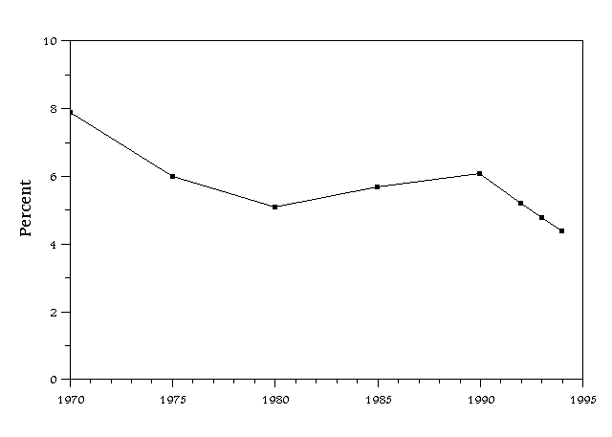
Notes: aLate prenatal care is defined as 7th month or later. bThe data refer to those women who had live births. Source: 1970 and 1975 data from: Unpublished tabulations, National Center for Health Statistics. 1980 - 1993 data from: National Center for Health Statistics. Health United States, 1995. Hyattsville, Maryland: Public Health Service, 1996 (table 7). 1994 data from: Ventura, S.J., Martin, J.A., Mathews, T.J. and Clarke, S.C. Advance Report of Final Natality Statistics, 1994. Monthly Vital Statistics Report, Vol. 44, No. 11, Supplement. Hyattsville, Maryland: National Center for Health Statistics. 1996 (tables 24 and 33).
Table HC 3.2.B
|
||||||||||
|
1970
|
1975
|
1980
|
1985
|
1990
|
1992
|
1993
|
1994
|
|||
|
|
|
|
|
|
|
|
|
|||
| Total |
7.9
|
6
|
5.1
|
5.7
|
6.1
|
5.2
|
4.8
|
4.4
|
||
|
|
||||||||||
| Race/Ethnicityc,d | ||||||||||
| White |
6.3
|
5
|
4.3
|
4.8
|
4.9
|
4.2
|
3.9
|
3.6
|
||
| Black |
16.6
|
10.5
|
8.9
|
10.2
|
11.3
|
9.9
|
9
|
8.2
|
||
| Hispanic |
|
|
12
|
12.4
|
12
|
9.5
|
8.8
|
7.6
|
||
| Age | ||||||||||
| < 15 |
|
21.1
|
20
|
20.5
|
20.3
|
17.2
|
16.6
|
15.9
|
||
| 15-19 |
|
10.8
|
10.3
|
12
|
11.9
|
9.7
|
8.9
|
8
|
||
| 20-24 |
|
5.8
|
5.4
|
6.9
|
8
|
6.7
|
6.2
|
5.6
|
||
| 25-29 |
|
3.6
|
3.1
|
3.8
|
4.4
|
3.9
|
3.7
|
3.4
|
||
| 30-34 |
|
4.3
|
3
|
3.1
|
3.4
|
3
|
2.9
|
2.7
|
||
| 35 and older |
|
7.5
|
5.4
|
4.5
|
4.1
|
3.6
|
3.4
|
3.1
|
||
|
|
||||||||||
| Notes: aLate prenatal care is defined as 7th month or later. bThe data refer to those women who had live births. cPercentages are based on the race and ethnicity of the mother. dFigures for Hispanic women in 1980 are based on data from 22 States which report Hispanic origin on the birth certificate; 23 States and the District of Columbia in 1985; 48 States and the District of Columbia in 1990; 49 States and the District of Columbia in 1992; and 50 States and the District of Columbia since 1993. Sources: 1970 and 1975 data from: Unpublished tabulations, National Center for Health Statistics. Health, United States, 1995. Hyattsville, Maryland: Public Health Service. 1996. (table 7 for totals and race/ethnicity breaks for 1980-1993); 1980 data from: Monthly Vital Statistics Report. Vol. 31, No. 8, Supplement. 1982 (table 20); 1985 data from: Monthly Vital Statistics Report. Vol. 36, No. 4, Supplement. 1987 (table 25); 1990 data from: Monthly Vital Statistics Report. Vol. 41, No. 9, Supplement. 1993 |
||||||||||
35 U.S. Public Health Service. "Caring for Our Future: The Content of Prenatal Care." Washington, D.C.: U.S. Department of Health and Human Services. 1989.ve late or no prenatal care has declined substantially for mothers in all race and ethnic groups (see Table HC 3.2.B):
HC 3.2.c Inadequate prenatal care
Receiving early and consistent prenatal care increases the likelihood of a healthy birth outcome. Adequate prenatal care is determined by both the early receipt of prenatal care (within the first trimester) and the receipt of an appropriate number of prenatal care visits for each stage of a pregnancy. Women whose prenatal care fails to meet these standards are at a greater risk for pregnancy complications and negative birth outcomes. After fluctuating for the latter half of the 1980s, the percentage of mothers receiving inadequate prenatal care has decreased since 1990.
Differences by Race. While the percentages of both black and white women receiving inadequate prenatal care have declined since 1990, the percentage of black women receiving inadequate care has consistently been more than twice as high as the percentage of white women receiving inadequate care. This gap has existed since at least 1984 (see Table HC 3.2.C). For example, in 1994, 12.0 percent of black women received inadequate prenatal care, compared to 4.9 percent of white women.
Table HC 3.2.C
|
|||||||||||||
|
1984
|
1986
|
1988
|
1990
|
1991
|
1992
|
1993
|
1994
|
||||||
|
|
|
|
|
|
|
|
|
||||||
| Racec | |||||||||||||
| White |
6.2
|
6.3
|
6.1
|
6.8
|
6.4
|
5.7
|
5.3
|
4.9
|
|||||
| Black |
15.1
|
15.3
|
15.5
|
16.4
|
15.5
|
14.5
|
13.1
|
12
|
|||||
| Notes: aThe Kessner Index provides a measure for the adequacy of prenatal care by assessing the timeliness and frequency with which prenatal care is received according to the gestational age of the baby. Using the Kessner Index standards, prenatal care is determined to be adequate, intermediate or inadequate. Adequate prenatal care must begin within the first trimester of pregnancy and follow a prescribed number of minimum prenatal visits by gestational period. Inadequate care encompasses all women who started care after the sixth month of pregnancy (3rd trimester) and all women who had a low frequency of prenatal visits that followed the pattern described in the following chart: |
|||||||||||||
|
Gestation (Weeks)
|
Number of Prenatal Visits
|
||||||||||||
|
|
|
||||||||||||
|
17 - 21
|
and
|
0 | |||||||||||
|
22 - 29
|
and
|
1 or less | |||||||||||
|
30 - 31
|
and
|
2 or less | |||||||||||
|
32 - 33
|
and
|
3 or less | |||||||||||
|
34 or More
|
and
|
4 or less | |||||||||||
| bBased on 49 states for 1984-1988 and all 50 states of the United States, 1989-1994. Births with period of gestation, number of prenatal visits or month pregnancy care began not stated were excluded from tabulation. cIn 1990, 1991, 1992, 1993 and 1994 race is of mother; for 1984, 1986 and 1988, race is of child. Source: Division of Vital Statistics, National Center for Health Statistics. Unpublished tabulations. |
|||||||||||||
HC 3.3 Immunization
Childhood vaccinations can prevent diseases that killed or permanently impaired many children in past decades. The Centers for Disease Control and Prevention recommend that 80 percent of all routine childhood vaccinations be administered within the first two years of life. Vaccination coverage is particularly important before children enter preschool to prevent the spread of disease.
There were substantial increases in the proportion of children vaccinated between 1991 and 1994 for each of the recommended vaccines presented in Table HC 3.3.A. These improvements are observed for all children, but particularly for low-income children, minority children, and children living in urban and rural areas (see Table HC 3.3.A). Between 1991 and 1994 there was also a substantial improvement in the proportion of children receiving the combined series of DTP, OPV and MMR (4:3:1)36 vaccination (see Figure HC 3.3.A).
Even with the increases of recent years, more than one million children remain unvaccinated for serious preventable diseases.37 In particular, there are differences in immunization rates by income, race, and place of residence.
Differences by Income. Children in households at or above poverty are more likely to have received each of the vaccinations specified in each year from 1991 to 1994 than are children in households below poverty. However, the gap between vaccination levels of poor and non-poor children decreased from 1991 to 1994. For instance, the percentage of poor children vaccinated for polio was 38.7 percent in 1991, compared to 59.5 percent of children at or above the poverty line, nearly a 21 percentage point gap. By 1994, that gap had closed to less than one percentage point, with respective percentages at 79.4 and 79.9.
Differences by Race. White infants ages 19 to 35 months have higher percentages of vaccination receipt than do black children or children of other races. The disparity in vaccination levels between white and black infants has narrowed from 1991 to 1994, as the vaccination levels of black children have greatly improved.
Differences by Place of Residence. For many, but not all diseases, suburban children are more likely than either rural or urban children to have been vaccinated.
Provider-Adjusted Estimates. Unlike data for previous years, which were based only on parent reports, 1994-1995 immunization estimates are based on information from parents and health care providers. These newer estimates are more accurate and reflect higher rates of immunization than those based on parent reports alone. Data for 1994-1995 cannot be compared to estimates for 1991-1994, however, since an undetermined portion of the observed increase is due to this change in methodology.
The most recent provider-adjusted estimates (July 1994June 1995) indicate that 75 percent of children ages 19 to 35 months received their 4:3:1 combined series vaccinations. Fifty-one percent of all children in that age group had received their Hepatitis B vaccination (see Table HC 3.3.B).
Figure HC 3.3.A
|
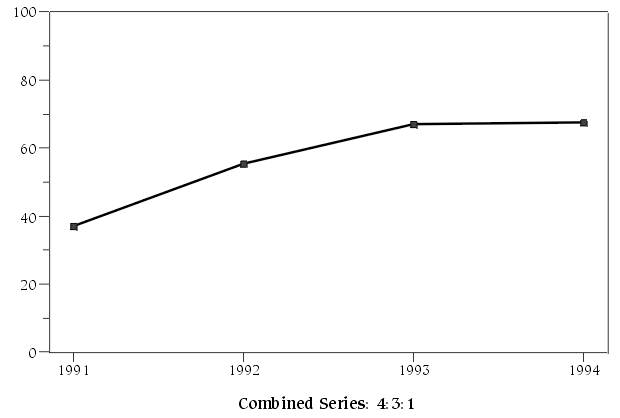
Note: aFour doses DTP, three doses poliovirus, one dose measles-mumps-rubella vaccine. bData are based on household interviews of a sample of the non-civilian, non- institutionalized population. Refusals and unknowns were excluded.
Source: Centers for Disease Control and Prevention. Data computed by the National Immunization Program, Center for Prevention Services from data compiled by the Division of Health Interview Statistics, National Center for Health Statistics.
Figure HC 3.3.B
|
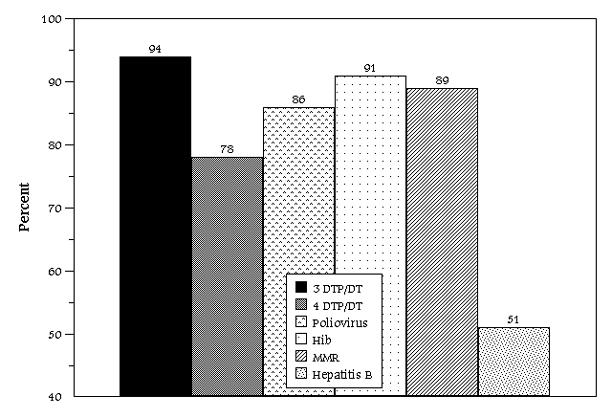
Note: a3 DTP/DT is 3 or more doses of diphtheria and tetanus toxoids and pertussis vaccine/diphtheria and tetanus toxoids.
b4 DTP/DT is 4 or more doses of DTP/DT.
cPoliovirus is 3 or more doses of poliovirus vaccine.
dHib is 3 or more doses of Haemophilus influenzas type b vaccine.
eMMR is 1 or more doses of measles-mumps-rubella vaccine.
fHepatitis B is 3 or more doses of Hepatitis B vaccine.
Source: Morbidity and Mortality Weekly Reports. National, State and Urban Area Vaccination Coverage Levels Among Children Aged 19-35 Months - United States, July 1994 - June 1995, June 21, 1996, Vol. 45, No. 24, Table 1.
Table HC 3.3.A
|
|||||||||
|
Race
|
Poverty Statusb
|
Location of Residencec
|
|||||||
|
Below
Poverty
|
At/Above
Poverty
|
||||||||
|
Total
|
White
|
Black
|
Otherd
|
Urban
|
Suburban
|
Rural
|
|||
| >3 Doses DTP* | |||||||||
|
1991
|
68.8
|
73.4
|
50.6
|
58
|
53
|
75.7
|
64.8
|
72.3
|
67.6
|
|
1992
|
83.1
|
84.8
|
74.7
|
79.3
|
79.7
|
84.6
|
82.5
|
84.4
|
80.7
|
|
1993
|
88.2
|
89.4
|
82.6
|
84.5
|
80.6
|
90.8
|
85.8
|
89.8
|
88.5
|
|
1994
|
89.5
|
90.6
|
84.4
|
87.9
|
88.8
|
90.3
|
87.7
|
90.4
|
90
|
| >4 Doses DTP*` | |||||||||
|
1991
|
43.3
|
47.3
|
27.9
|
33.1
|
29.9
|
48.6
|
36.4
|
46.4
|
47.5
|
|
1992
|
59
|
59.5
|
55
|
62.4
|
54.4
|
61
|
59.7
|
60
|
55.4
|
|
1993
|
72.1
|
73
|
69.2
|
64.7
|
65.3
|
74.6
|
68.5
|
75.6
|
70.6
|
|
1994
|
70.1
|
70.8
|
64.4
|
77.3
|
67.7
|
71.2
|
67.2
|
72.1
|
69.9
|
| >3 Doses Poliovirus | |||||||||
|
1991
|
53.2
|
57.3
|
35.6
|
49.8
|
38.7
|
59.5
|
49.9
|
55.8
|
52.5
|
|
1992
|
72.4
|
74.1
|
62.7
|
75.5
|
66.6
|
74.7
|
74.1
|
72.6
|
69
|
|
1993
|
78.9
|
79.8
|
73.4
|
80.8
|
73.3
|
81
|
75.3
|
79.7
|
82.5
|
|
1994
|
79.2
|
80.3
|
73.2
|
81.7
|
79.4
|
79.9
|
76.4
|
80.9
|
79.5
|
| >3 Doses Hib** | |||||||||
|
1991
|
1.7
|
1.9
|
1.4
|
0
|
0
|
2.2
|
0.9
|
2.5
|
1.2
|
|
1992
|
28.2
|
29.1
|
25.5
|
23
|
23
|
29.8
|
27.5
|
31.8
|
20.8
|
|
1993
|
55
|
56.9
|
44.8
|
56.9
|
43.9
|
59.6
|
47.8
|
60.5
|
55.2
|
|
1994
|
75
|
76.6
|
67.2
|
72.3
|
72.1
|
76.6
|
70.6
|
76.7
|
77.6
|
| Measles | |||||||||
|
1991
|
82
|
82.9
|
77.4
|
83.8
|
73.4
|
86.6
|
78.4
|
85
|
81.1
|
|
1992
|
82.5
|
83.6
|
77.9
|
79.9
|
80.2
|
84.3
|
84.5
|
83.3
|
77.2
|
|
1993
|
84.1
|
86
|
76.9
|
72.5
|
78.4
|
86.9
|
84.2
|
86.2
|
79.8
|
|
1994
|
90.3
|
91.7
|
86
|
81.1
|
88.3
|
91.8
|
87.9
|
91.7
|
91
|
| >3 Doses Hepatitis B | |||||||||
|
1991
|
|
|
|
|
|
|
|
|
|
|
1992
|
|
|
|
|
|
|
|
|
|
|
1993
|
16.3
|
16.3
|
16
|
16.7
|
11.3
|
18.2
|
17.4
|
19
|
9.3
|
|
1994
|
34.4
|
33.7
|
36.2
|
39.7
|
31.6
|
35.2
|
33.8
|
37.8
|
27.1
|
| Combined Series: 4:3:1 | |||||||||
|
1991
|
37
|
41.4
|
20.8
|
27.5
|
23.8
|
42.2
|
31.7
|
38.6
|
41.9
|
|
1992
|
55.3
|
55.9
|
50.9
|
57.5
|
51.4
|
56.7
|
57.7
|
55.4
|
50.5
|
|
1993
|
67.1
|
68.4
|
61.8
|
58.4
|
58.7
|
70.5
|
62.1
|
71.4
|
66
|
|
1994
|
67.5
|
68.4
|
61.2
|
72.4
|
64.9
|
68.8
|
63.5
|
69.7
|
68.3
|
| Combined Series: 3:3:1§ | |||||||||
|
1991
|
50
|
54.5
|
31.4
|
44.2
|
34.3
|
56.6
|
46.6
|
52.8
|
49.4
|
|
1992
|
68.7
|
70
|
60.2
|
71.9
|
65
|
70.2
|
72.4
|
68.2
|
63.2
|
|
1993
|
74.5
|
75.7
|
69.2
|
68
|
66.8
|
77.7
|
71.5
|
76.3
|
75.3
|
|
1994
|
77.3
|
78.7
|
70.5
|
76.3
|
76.6
|
78.4
|
72.9
|
79.5
|
78.9
|
| *Diphtheria, tetanus toxoids, and pertussis vaccine. **Hemophilus influenzas type b vaccine. Any vaccination containing measles vaccine. Four doses DTP, three doses poliovirus, one dose measles-mumps-rubella vaccine. §Three doses DTP, three doses poliovirus, one dose measles-mumps-rubella vaccine. aData are based on household interviews of a sample of the non-civilian, non institutionalized population. Refusals and unknowns were excluded. Exclusions included unknown vaccine type. bPoverty status is based on family income and family size using Bureau of the Census poverty thresholds. cRural areas were those not in a metropolitan statistical area (MSA); suburban areas were those in an MSA but outside the central city; and urban areas were the central city of the MSA. dLimitations in sample size precluded collection of data about ethnicity and analysis of data for races other than black and white. Source: Centers for Disease Control and Prevention. Data computed by the National Immunization Program, Center for Prevention Services from data compiled by the Division of Health Interview Statistics, National Center for Health Statistics. |
|||||||||
Table HC 3.3.B
|
||||||
| Vaccine | Dose |
July 1994 - June 1995
|
||||
| DPT/DT* | ||||||
| >3 Doses |
94
|
|||||
| >4 Doses |
78
|
|||||
| Poliovirus | ||||||
|
|
>3Doses |
86
|
||||
| Hib¶ | ||||||
| >3 Doses |
91
|
|||||
| MMR§ | ||||||
| >1 Dose |
89
|
|||||
| Hepatitis B | ||||||
| >3 Doses |
51
|
|||||
| 19-24 Months |
64
|
|||||
| 25-30 Months |
51
|
|||||
| 31-35 Months |
34
|
|||||
| Combined Series | ||||||
| 4 DTP/3 Polio/1 MMR |
75
|
|||||
| 4 DTP/3 Polio/1 MMR/3 Hib |
73
|
|||||
| *Diphtheria and tetanus toxoids and pertussis vaccine/Diphtheria and tetanus toxoids. ¶Hemophilus influenzas type b vaccine. §Measles-mumps-rubella vaccine. Four doses DTP/DT, three doses poliovirus vaccine, and one dose MMR. Four doses DTP/DT, three doses poliovirus vaccine, one dose MMR, three doses Hib. aData are based on household interviews of a sample of the non-civilian, non-institutionalized population. Refusals and unknowns were excluded. Note: In 1994-1995, data from the household interviews is supplemented with information from medical providers and cannot be compared to 1991-1993 data. Source: Morbidity and Mortality Weekly Reports. "National, State and Urban Area Vaccination Coverage Levels Among Children Aged 19-35 Months," June 21, 1996, Vol. 45, No. 24, Table 1. (Data from the National Immunization Survey.) |
||||||
36 Four doses diphtheria, tetanus toxoids and pertussis vaccine (DTP); three doses poliovirus vaccine (OPV); and one dose measles-mumps-rubella vaccine (MMR).
37 Centers for Disease Control and Prevention. "Vaccination Coverage Levels Among Children Aged 19-35 Months -- United States, April-December 1994." Morbidity and Mortality Weekly Report. Vol. 44, No. 33, August 25, 1995
SECTION 4 SOCIAL DEVELOPMENT, BEHAVIORAL HEALTH, AND TEEN FERTILITY (SD)
SOCIAL DEVELOPMENT
SD 1.1 Life goals
The personal and social life goals of high school students reflect their priorities for the future and provide insights into the positive and negative influences in their lives as they make the transition to adulthood. The percentages of high school seniors who rated selected personal and social life goals as extremely important for 1976 through 1995 are presented in Table SD 1.1. Personal goals include being successful at work, having a good marriage and family life, and having lots of money. Social goals include making a contribution to society, working to correct social and economic inequalities, and being a leader in the community.
From 1976 through 1995, high school seniors have been fairly consistent in the relative importance they assign to various life goals. Specifically:
- Having a Good Marriage and Family Life and Being Successful in My Line of Work have been cited most often by high school seniors as being extremely important. By 1995, four out of five high school seniors felt it extremely important to have a good marriage and family life (see Figure SD 1.1.A).
- Having Lots of Money and Making a Contribution to Society were the next most likely goals to be considered extremely important by high school seniors. The percentage of seniors who find these goals important is considerably lower, hovering between 20 and 30 percent in recent years (see Figures SD 1.1.A. and SD 1.1.B).
- Working to Correct Social and Economic Inequalities and Being a Leader in the Community are important goals for only small percentages of high school seniors 10 percent and 12 percent, respectively, in 1995 (see Figure SD 1.1.B).
Differences by Race. In 1995, black students were more likely than whites to view as extremely important issues such as being successful at work (72 percent versus 59 percent), having lots of money (41 percent versus 21 percent), and correcting social and economic inequalities (18 percent versus 8 percent). The two groups appeared equally likely to attach extreme importance to having a good marriage and family life, a rate that has hovered around 75 percent for both races over time.
Differences by Gender. Across the six goals, rates vary little between male students and female students with two exceptions. In 1995, females were more likely to indicate that having a good marriage and family life was extremely important (83 percent versus 73 percent), and were less likely to report that having lots of money was an extremely important goal (19 percent versus 30 percent).
Figure SD 1.1.A
|
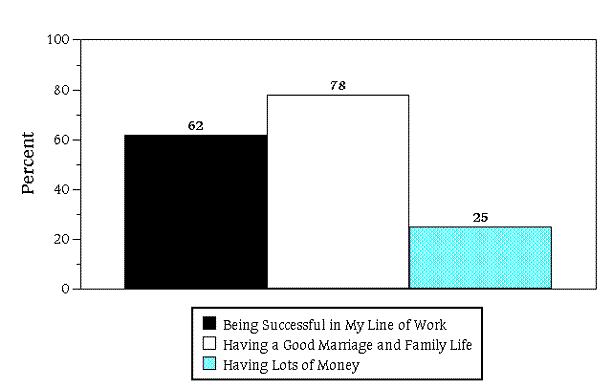
Source: Bachman, J.G., Johnston, L.D., and OMalley, P.M. Monitoring the Future: Questionnaire responses from the Nations High School Seniors, 1995. Questionnaire form 1 numbers, A007A, A007B, A007C. Data based on one of six questionnaire forms with a resulting sample size one-sixth of the total sample size for each year.
Figure SD 1.1.B
|
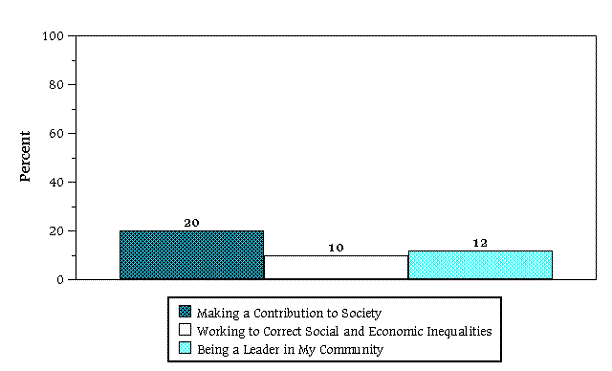
Source: Bachman, J.G., Johnston, L.D., and OMalley, P.M. Monitoring the Future: Questionnaire responses from the Nations High School Seniors, 1995. Questionnaire form 1 numbers, A007G, A007H, A007L. Data based on one of six questionnaire forms with a resulting sample size one-sixth of the total sample size for each year.
Table SD 1.1
|
|||||||||||||
|
1976
|
1981
|
1986
|
1991
|
1992
|
1993
|
1994
|
1995
|
||||||
|
|
|
|
|
|
|
|
|
||||||
| Personal Goals | |||||||||||||
| Being Successful in My Line of Work | |||||||||||||
| Total |
53
|
57
|
61
|
62
|
66
|
65
|
63
|
62
|
|||||
| Gender | |||||||||||||
| Male |
53
|
58
|
62
|
60
|
63
|
63
|
61
|
62
|
|||||
| Female |
52
|
57
|
60
|
64
|
69
|
67
|
66
|
62
|
|||||
| Race | |||||||||||||
| White |
50
|
55
|
58
|
59
|
65
|
62
|
60
|
59
|
|||||
| Black |
67
|
71
|
73
|
75
|
80
|
74
|
79
|
72
|
|||||
| Having a Good Marriage and Family Life | |||||||||||||
| Total |
73
|
76
|
75
|
76
|
78
|
79
|
76
|
78
|
|||||
| Gender | |||||||||||||
| Male |
66
|
71
|
69
|
71
|
72
|
74
|
70
|
73
|
|||||
| Female |
80
|
82
|
82
|
83
|
84
|
85
|
81
|
83
|
|||||
| Race | |||||||||||||
| White |
72
|
77
|
76
|
76
|
79
|
79
|
76
|
78
|
|||||
| Black |
75
|
73
|
76
|
78
|
75
|
76
|
72
|
76
|
|||||
| Having Lots of Money | |||||||||||||
| Total |
15
|
18
|
27
|
28
|
29
|
26
|
26
|
25
|
|||||
| Gender | |||||||||||||
| Male |
20
|
24
|
34
|
37
|
35
|
32
|
32
|
30
|
|||||
| Female |
11
|
13
|
18
|
19
|
22
|
18
|
19
|
19
|
|||||
| Race | |||||||||||||
| White |
12
|
15
|
24
|
25
|
24
|
20
|
22
|
21
|
|||||
| Black |
33
|
32
|
38
|
39
|
46
|
45
|
47
|
41
|
|||||
Table SD 1.1 Continued
|
|||||||||||||
|
1976
|
1981
|
1986
|
1991
|
1992
|
1993
|
1994
|
1995
|
||||||
|
|
|
|
|
|
|
|
|
||||||
| Social Goals | |||||||||||||
| Making a Contribution to Society | |||||||||||||
| Total |
18
|
18
|
17
|
21
|
22
|
24
|
24
|
20
|
|||||
| Gender | |||||||||||||
| Male |
16
|
19
|
18
|
20
|
22
|
25
|
23
|
19
|
|||||
| Female |
20
|
17
|
16
|
22
|
23
|
25
|
25
|
21
|
|||||
| Race | |||||||||||||
| White |
18
|
18
|
16
|
20
|
22
|
24
|
23
|
19
|
|||||
| Black |
23
|
21
|
20
|
27
|
27
|
25
|
29
|
25
|
|||||
| Working to Correct Social and Economic Inequalities | |||||||||||||
| Total |
10
|
10
|
9
|
12
|
15
|
15
|
14
|
10
|
|||||
| Gender | |||||||||||||
| Male |
8
|
9
|
7
|
11
|
14
|
14
|
12
|
9
|
|||||
| Female |
13
|
10
|
11
|
13
|
17
|
16
|
16
|
10
|
|||||
| Race | |||||||||||||
| White |
8
|
7
|
7
|
10
|
13
|
12
|
11
|
8
|
|||||
| Black |
20
|
21
|
19
|
21
|
26
|
21
|
25
|
18
|
|||||
| Being a Leader in My Community | |||||||||||||
| Total |
7
|
8
|
9
|
11
|
13
|
13
|
14
|
12
|
|||||
| Gender | |||||||||||||
| Male |
8
|
8
|
11
|
12
|
14
|
17
|
14
|
14
|
|||||
| Female |
6
|
7
|
6
|
10
|
11
|
10
|
13
|
10
|
|||||
| Race | |||||||||||||
| White |
6
|
7
|
8
|
9
|
11
|
12
|
12
|
10
|
|||||
| Black |
14
|
14
|
12
|
17
|
21
|
19
|
21
|
22
|
|||||
| Source: Bachman, J. G., Johnston, L. D. & O Malley, P. M. "Monitoring the Future: Questionnaire Responses from the Nations High School Seniors" 1976, 1981, 1986, 1991, 1992, 1993, 1994, 1995 Questionnaire Form 1 numbers. A007A, A007B, A007C, A007G, A007H, A007L. Data based on one of six questionnaire forms with a resulting sample size one-sixth of the total sample size for each year. | |||||||||||||
SD 1.2 Peer approval
As children grow older, peer relationships come to play an increasingly important role in determining their own behaviors and attitudes.1 For example, teenagers reporting that a large proportion of their friends are (or would like to be) sexually active are more likely to become sexually active themselves.2
Two measures of potential peer influence are offered here: the percentage of youth reporting that getting good grades has great or very great importance to their peers, and the percentage reporting that peers would disapprove of intentionally angering a teacher in school. Between 1980 and 1995, the percentage of 12th graders reporting that their peers value good grades stayed fairly constant, varying between 44 percent and 49 percent (see Table SD 1.2.A). During that same time period, the percentage reporting peer disapproval of angering a teacher in school decreased from 41 percent in 1980 to 33 percent in 1990, and remained at that level before rising slightly to 36 percent in 1995 (see Table SD 1.2.B).
Differences by Age. Eighth grade students were more likely than either 10th or 12th graders to report that their peers consider good grades to be of great or very great importance in 1995 (55 percent versus 44 and 46 percent, respectively). On the other hand, 12th grade students were more likely than 8th or 10th graders to report peer disapproval of intentionally angering a teacher in school (36 percent versus 22 and 24 percent, respectively).
Differences by Gender. Female students in each grade were more likely than males to report that their peers value good grades, and that they would disapprove of intentionally angering teachers. For example, among 12th grade youth in 1995, 50 percent of females and only 41 percent of males reported that peers hold good grades to be of great or very great importance (see Table SD 1.2.A). In that same year, 41 percent of 12th grade females and 32 percent of males reported peer disapproval of intentionally angering a teacher in school (see Table SD 1.2.B).
Differences by Race. For all years for which data are presented, black students in all grades were considerably more likely than their white counterparts to report strong peer support for good grades (see Figure SD 1.2.A). For example, in 1995, 40 percent of white and 67 percent of black 12th graders reported that their peers believed that good grades were of great or very great importance.
Figure SD 1.2.A
|
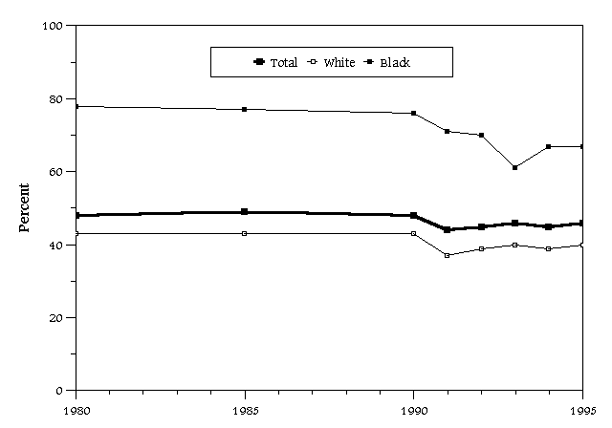
Source: Bachman, J. G., Johnston, L. D., O Malley, P. M. Monitoring the Future: Questionnaire Responses from the Nations High School Seniors 1980, Questionnaire Form 5 number E06D. Bachman, J. G., Johnston, L. D. & O Malley, P. M. Monitoring the Future: Questionnaire Responses from the Nations High School Seniors 1985, 1990-1995, Questionnaire Form 3 number E06D.
Figure SD 1.2.B
|
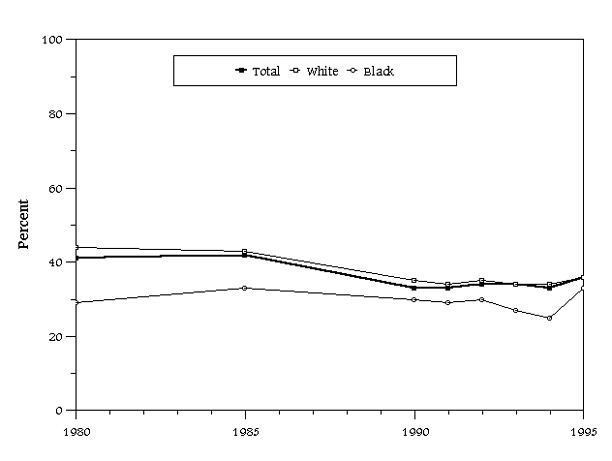
Source: Bachman, J. G., Johnston, L. D., O Malley, P. M. Monitoring the Future: Questionnaire Responses from the Nations High School Seniors 1980, 1985 1990, 1991-1995 Questionnaire Form 1 number D007.
Table SD 1.2.A
|
|||||||||||||
|
|
1980
|
1985
|
1990
|
1991
|
1992
|
1993
|
1994
|
1995
|
|||||
|
|
|
|
|
|
|
|
|
|
|||||
| 8th Grade | |||||||||||||
| Total |
--
|
--
|
--
|
51
|
52
|
54
|
54
|
55
|
|||||
| Gender | |||||||||||||
| Male |
|
--
|
--
|
--
|
50
|
50
|
54
|
52
|
52
|
||||
| Female |
|
--
|
--
|
--
|
53
|
53
|
54
|
55
|
56
|
||||
| Race | |||||||||||||
| White |
|
--
|
--
|
--
|
47
|
47
|
49
|
49
|
48
|
||||
| Black |
|
--
|
--
|
--
|
72
|
72
|
70
|
70
|
72
|
||||
| 10th Grade | |||||||||||||
| Total |
--
|
--
|
--
|
44
|
43
|
39
|
42
|
44
|
|||||
| Gender | |||||||||||||
|
|
Male |
--
|
--
|
--
|
42
|
42
|
36
|
39
|
43
|
||||
|
|
Female |
--
|
--
|
--
|
46
|
44
|
42
|
45
|
45
|
||||
|
|
Race | ||||||||||||
| White |
--
|
--
|
--
|
38
|
38
|
35
|
38
|
39
|
|||||
| Black |
--
|
--
|
--
|
67
|
66
|
59
|
64
|
67
|
|||||
| 12th Grade | |||||||||||||
| Total |
48
|
49
|
48
|
44
|
45
|
46
|
45
|
46
|
|||||
| Gender | |||||||||||||
| Male |
48
|
50
|
46
|
41
|
42
|
43
|
44
|
41
|
|||||
| Female |
48
|
48
|
51
|
47
|
48
|
48
|
46
|
50
|
|||||
| Race | |||||||||||||
| White |
43
|
43
|
43
|
37
|
39
|
40
|
39
|
40
|
|||||
| Black |
78
|
77
|
76
|
71
|
70
|
61
|
67
|
67
|
|||||
| Source: Bachman, J. G., Johnston, L. D., O Malley, P. M. "Monitoring the Future: Questionnaire Responses from the Nations High School Seniors" 1980, Questionnaire Form 5 number E06D. Bachman, J. G., Johnston, L. D. & O Malley, P. M. "Monitoring the Future: Questionnaire Responses from the Nations High School Seniors" 1985, 1990-1995, Questionnaire Form 3 number E06D. Data for 8th and 10th grades are from unpublished questionnaire responses, Form 1. Data for 8th and 10th grade students based on one of two questionnaire forms with a resulting sample size one-half of the total sample size for each grade in each year. Data for 12th grade students based on one of six questionnaire forms with a resulting sample size one-sixth of the total sample size for each year. | |||||||||||||
Table SD 1.2.B
|
|||||||||||||
|
1980
|
1985
|
1990
|
1991
|
1992
|
1993
|
1994
|
1995
|
||||||
|
|
|
|
|
|
|
|
|
||||||
| 8th Grade | |||||||||||||
| Total |
--
|
--
|
--
|
26
|
24
|
24
|
21
|
22
|
|||||
| Gender | |||||||||||||
| Male |
--
|
--
|
--
|
22
|
20
|
20
|
18
|
19
|
|||||
| Female |
--
|
--
|
--
|
30
|
27
|
26
|
23
|
24
|
|||||
| Race | |||||||||||||
| White |
--
|
--
|
--
|
26
|
24
|
24
|
22
|
22
|
|||||
| Black |
--
|
--
|
--
|
23
|
24
|
23
|
22
|
22
|
|||||
| 10th Grade | |||||||||||||
| Total |
--
|
--
|
--
|
26
|
24
|
24
|
26
|
24
|
|||||
| Gender | |||||||||||||
| Male |
--
|
--
|
--
|
21
|
19
|
19
|
22
|
21
|
|||||
| Female |
--
|
--
|
--
|
31
|
28
|
28
|
30
|
28
|
|||||
| Race | |||||||||||||
| White |
--
|
--
|
--
|
27
|
25
|
25
|
26
|
25
|
|||||
| Black |
--
|
--
|
--
|
22
|
21
|
20
|
23
|
19
|
|||||
| 12th Grade | |||||||||||||
| Total |
41
|
42
|
33
|
33
|
34
|
34
|
33
|
36
|
|||||
| Gender | |||||||||||||
| Male |
37
|
35
|
29
|
31
|
28
|
30
|
25
|
32
|
|||||
| Female |
46
|
48
|
38
|
37
|
39
|
37
|
40
|
41
|
|||||
| Race | |||||||||||||
| White |
44
|
43
|
35
|
34
|
35
|
34
|
34
|
36
|
|||||
| Black |
29
|
33
|
30
|
29
|
30
|
27
|
25
|
33
|
|||||
| Source: Bachman, J. G., Johnston, L. D., O Malley, P. M. "Monitoring the Future: Questionnaire Responses from the Nations High School Seniors" 1980, 1985 1990, 1991-1995 Questionnaire Form 1 number D007. Data for 8th and 10th grades are from unpublished questionnaire responses, Form 1. Data for 8th and 10th grade students based on one of two questionnaire forms with a resulting sample size one-half of the total sample size for each grade in each year. Data for 12th grade students based on one of six questionnaire forms with a resulting sample size one-sixth of the total sample size for each year. | |||||||||||||
1 Hayes, C.D. Risking the Future, p. 105; S.F. Newcomer, M. Gilbert, and J.R. Udry, "Perceived and Actual Same-Sex Behavior as Determinants of Adolescent Sexual Behavior," paper presented at the Annual Meeting of the American Psychological Association, Montreal, Canada 1980. Cited in Beyond Rhetoric: A New American Agenda for Children and Families, Final Report of the National Commission on Children, page 351. Washington, D.C.: U.S. GPO.
2 Hayes, C.D. Risking the Future, p. 105; G. Cvetkovitch and B. Grote, "Psychological Development and the Social Problem of Teenage Illegitimacy," in Adolescent Pregnancy and Childbearing: Findings from Research, C. Chilman, ed. (Washington, DC: U.S. Department of Health and Human Services, 1980). Cited in Beyond Rhetoric: A New American Agenda for Children and Families, Final Report of the National Commission on Children, page 351. Washington, D.C.: U.S. GPO.
SD 1.3 Religious attendance and religiosity
Research relating religion to childrens day-to-day conduct suggests that teens who are religious are more likely to avoid high-risk behaviors.3
The percentage of 12th grade students who report weekly religious attendance has declined from 41 percent in 1976 to 32 percent in 1992, where it has remained constant through 1995 (see Figure SD 1.3). During that same time period, the percentage who report that religion plays a very important role in their lives stayed fairly constant, between 26 percent and 31 percent.
Differences by Age. Data for students in the 8th and 10th grades, available since 1991, indicate that younger teens are more likely to report weekly religious attendance, but are not more likely to report that religion plays a very important role in their lives (see Tables SD 1.3.A and SD 1.3.B). In 1995, 42 percent of 8th graders reported weekly religious attendance versus 37 percent of 10th grade and 32 percent of 12th grade students. During that same year, the percentage reporting that religion played an important role in their lives was about 30 percent for all three grades.
Differences by Gender. Females in all grades are somewhat more likely than males to report weekly religious attendance and that religion plays a very important role in their lives, though in the past two years this difference has not exceeded five percentage points.
Differences by Race. In recent years, black students have been more likely than white students to report weekly religious attendance. The attendance gap grows somewhat larger in the upper grades, to 8 percentage points among 12th graders in 1995 (40 percent for black students versus 32 percent for white students). The difference between black and white students is even more pronounced in their views on the importance of religion in their lives. Black students across grades have consistently been about twice as likely as their white counterparts to report that religion plays a very important role in their lives. For example, in 1995, 52 percent of black 12th graders reported that religion played such a role, compared to 26 percent of white 12th grade students.
Figure SD 1.3
|
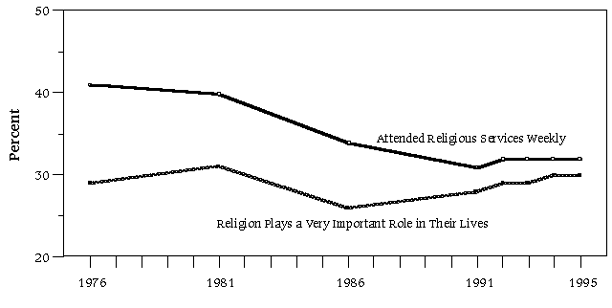
Source: Johnston, L.D., Bachman, J.G. , OMalley, P.M. Monitoring the Future: Questionnaire responses from the nations high school seniors. 1976, 1981, 1986, 1991, 1992, 1993, 1994, 1995. Ann Arbor, Michigan: Institute for Social Research, The University of Michigan. 12th grade 1976, 1981, and 1986 based on questionnaire forms 1-5; and, 12th grade 1991-1995 based on questionnaire forms 1-6.
Table SD 1.3.A
|
|||||||||||||
|
1976
|
1981
|
1986
|
1991
|
1992
|
1993
|
1994
|
1995
|
||||||
|
|
|
|
|
|
|
|
|
||||||
| 8th Grade | |||||||||||||
| Total |
--
|
--
|
--
|
46
|
43
|
42
|
42
|
42
|
|||||
| Gender | |||||||||||||
| Male |
--
|
--
|
--
|
44
|
41
|
39
|
40
|
40
|
|||||
| Female |
--
|
--
|
--
|
49
|
46
|
45
|
45
|
45
|
|||||
| Race | |||||||||||||
| White |
--
|
--
|
--
|
48
|
44
|
44
|
44
|
43
|
|||||
| Black |
--
|
--
|
--
|
47
|
46
|
42
|
42
|
46
|
|||||
| 10th Grade | |||||||||||||
| Total |
--
|
--
|
--
|
38
|
39
|
40
|
37
|
37
|
|||||
| Gender | |||||||||||||
| Male |
--
|
--
|
--
|
35
|
37
|
37
|
35
|
35
|
|||||
| Female |
--
|
--
|
--
|
42
|
41
|
43
|
39
|
40
|
|||||
| Race | |||||||||||||
| White |
--
|
--
|
--
|
39
|
39
|
41
|
37
|
37
|
|||||
| Black |
--
|
--
|
--
|
44
|
45
|
44
|
41
|
44
|
|||||
| 12th Grade | |||||||||||||
| Total |
41
|
40
|
34
|
31
|
32
|
32
|
32
|
32
|
|||||
| Gender | |||||||||||||
| Male |
36
|
36
|
31
|
28
|
31
|
29
|
30
|
30
|
|||||
| Female |
46
|
44
|
38
|
34
|
34
|
34
|
35
|
35
|
|||||
| Race | |||||||||||||
| White |
42
|
41
|
35
|
31
|
32
|
31
|
32
|
32
|
|||||
| Black |
37
|
40
|
36
|
38
|
35
|
35
|
39
|
40
|
|||||
| Source: Johnston, L.D., Bachman, J.G., OMalley, P. M. "Monitoring the Future: Questionnaire Responses from the Nations High School Seniors." 1976, 1981, 1986, 1991, 1992, 1993, 1994, 1995. Ann Arbor, Michigan: Institute for Social Research, The University of Michigan. Data for 8th and 10th grade 1991-1995, from unpublished questionnaire responses, forms 1 and 2; 12th grade 1976, 1981, and 1986 based on questionnaire forms 1-5; and, 12th grade 1991-1995 based on questionnaire forms 1-6. | |||||||||||||
Table SD 1.3.B
|
||||||||||||||
|
1976
|
1981
|
1986
|
1991
|
1992
|
1993
|
1994
|
1995
|
|||||||
|
|
|
|
|
|
|
|
|
|||||||
| 8th Grade | ||||||||||||||
| Total |
--
|
--
|
--
|
29
|
27
|
30
|
30
|
30
|
||||||
| Gender | ||||||||||||||
| Male |
--
|
--
|
--
|
27
|
26
|
27
|
29
|
28
|
||||||
| Female |
--
|
--
|
--
|
31
|
28
|
32
|
32
|
32
|
||||||
| Race | ||||||||||||||
| White |
--
|
--
|
--
|
26
|
23
|
26
|
26
|
26
|
||||||
| Black |
--
|
--
|
--
|
46
|
46
|
42
|
47
|
45
|
||||||
| 10th Grade | ||||||||||||||
| Total |
--
|
--
|
--
|
29
|
28
|
29
|
28
|
29
|
||||||
| Gender | ||||||||||||||
| Male |
--
|
--
|
--
|
26
|
26
|
26
|
24
|
26
|
||||||
| Female |
--
|
--
|
--
|
31
|
29
|
31
|
32
|
31
|
||||||
| Race | ||||||||||||||
| White |
--
|
--
|
--
|
24
|
24
|
26
|
24
|
25
|
||||||
| Black |
--
|
--
|
--
|
52
|
50
|
50
|
48
|
49
|
||||||
| 12th Grade | ||||||||||||||
| Total |
29
|
31
|
26
|
28
|
29
|
29
|
30
|
30
|
||||||
| Gender | ||||||||||||||
| Male |
24
|
25
|
23
|
24
|
26
|
26
|
27
|
27
|
||||||
| Female |
34
|
36
|
30
|
31
|
33
|
33
|
32
|
33
|
||||||
| Race | ||||||||||||||
| White |
26
|
27
|
23
|
24
|
25
|
24
|
26
|
26
|
||||||
| Black |
51
|
51
|
51
|
50
|
51
|
51
|
49
|
52
|
||||||
| Source: Johnston, L.D., Bachman, J.G. , OMalley, P.M. "Monitoring the Future: Questionnaire Responses from the Nations High School Seniors." 1976, 1981, 1986, 1991, 1992, 1993, 1994, 1995. Ann Arbor, Michigan: Institute for Social Research, The University of Michigan. Data for 8th and 10th grade 1991-1995, from unpublished questionnaire responses, forms 1 and 2; 12th grade 1976, 1981, and 1986 based on questionnaire forms 1-5; and, 12th grade 1991-1995 based on questionnaire forms 1-6. | ||||||||||||||
3 National Commission on Children. 1991. Beyond Rhetoric: A New American Agenda for Children and Families. Final Report of the National Commission on Children, page 352. Washington, D.C.: U.S. GPO.
SD 1.4 Voting behavior of young adults
Voting is a seminal act of citizenship in a democracy. Measures of the voting behavior of young adults may be seen as indicators of the level of youth commitment to becoming actively involved in the democratic process.
Rates of voter registration and actual voting among 18- to 20-year-olds during presidential election years declined between 1972 and 1976, and have stayed rather flat through 1992 (see Table SD 1.4.A). In 1972, 58 percent of young adults ages 18-20 registered to vote, and 48 percent actually voted. By 1992, 48 percent had registered to vote, and 39 percent had voted (see Figure SD 1.4.A).
Differences by Gender. Rates of voter registration and voting are modestly higher among women both over time and within racial and ethnic groups. For example, in 1992, 50 percent of females and 47 percent of males ages 18-20 registered to vote.
Differences by Race and Ethnicity. Hispanic young adults are by far the least likely to register and to vote. In 1992, only 23 percent were registered, and 16 percent voted. Comparable numbers for blacks are 43 percent registered and 32 percent who voted. Whites were the most likely to register (51 percent) and to vote (41 percent) (see Figure SD 1.4.A). Since 1972, the percentage of Hispanic young adults who voted in presidential election years has declined by almost one half, from 30 percent to 16 percent.
Differences by Electoral Cycle. The percentage of young adults who voted in nonpresidential election years during these years was substantially lower than the percentage who voted during presidential election years (see Table SD 1.4.B). Rates of registration and voting have been remarkably stable during such years, across nonpresidential election years, with overall rates varying by only a few percentage points across years.
Figure SD 1.4.A
|
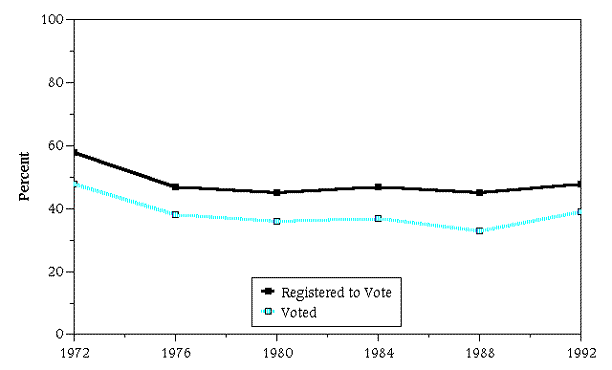
Source: U.S. Bureau of the Census, Current Population Reports, Series P-20, No. 253, No. 293, No. 322, No. 344, No. 370, No. 405, No. 414, No. 453, No. 466, and PPL24-RV, Voting and Registration in the Election of November 1972-1994, U.S. Government Printing Office, Washington, DC.
Figure SD 1.4.B
|
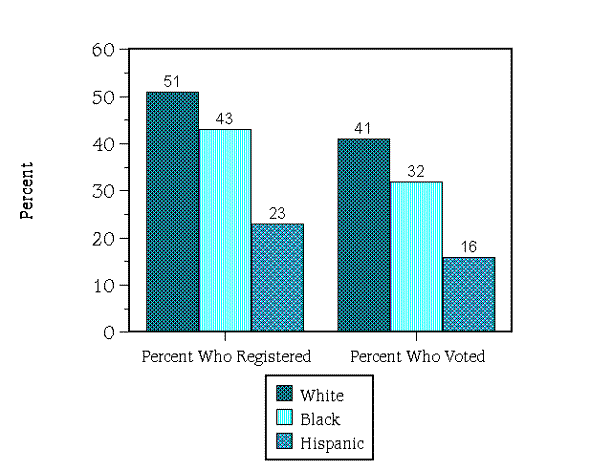
Source: U.S. Bureau of the Census, Current Population Reports, Series P-20, No. 253, No. 293, No. 322, No. 344, No. 370, No. 405, No. 414, No. 453, No. 466, and PPL24-RV, Voting and Registration in the Election of November 1972-1994, U.S. Government Printing Office, Washington, DC.
Table SD 1.4.A
|
|||||||||
|
1972
|
1976
|
1980
|
1984
|
1988
|
1992
|
||||
|
|
|
|
|
|
|
||||
| Percentage Who Registered All Races |
|||||||||
| Both sexes |
58
|
47
|
45
|
47
|
45
|
48
|
|||
| Males |
58
|
46
|
44
|
45
|
42
|
47
|
|||
| Females |
58
|
48
|
46
|
49
|
48
|
50
|
|||
| White | |||||||||
| Both sexes |
60
|
50
|
47
|
48
|
46
|
51
|
|||
| Males |
61
|
48
|
45
|
46
|
43
|
49
|
|||
| Females |
60
|
51
|
48
|
50
|
48
|
53
|
|||
| Black | |||||||||
| Both sexes |
43
|
34
|
35
|
47
|
43
|
43
|
|||
| Males |
37
|
33
|
36
|
43
|
39
|
41
|
|||
| Females |
49
|
35
|
35
|
51
|
46
|
44
|
|||
| Hispanic | |||||||||
| Both sexes |
38
|
29
|
20
|
25
|
25
|
23
|
|||
| Males |
39
|
31
|
20
|
22
|
22
|
20
|
|||
| Females |
37
|
27
|
20
|
28
|
27
|
27
|
|||
| Percentage Who Voted All Races |
|||||||||
| Both sexes |
48
|
38
|
36
|
37
|
33
|
39
|
|||
| Males |
48
|
36
|
35
|
34
|
31
|
37
|
|||
| Females |
49
|
40
|
37
|
39
|
35
|
41
|
|||
| White | |||||||||
| Both sexes |
51
|
41
|
38
|
38
|
35
|
41
|
|||
| Males |
51
|
39
|
36
|
35
|
32
|
39
|
|||
| Females |
51
|
42
|
39
|
40
|
37
|
43
|
|||
| Black | |||||||||
| Both sexes |
31
|
23
|
25
|
36
|
28
|
32
|
|||
| Males |
26
|
22
|
26
|
30
|
26
|
29
|
|||
| Females |
35
|
24
|
25
|
41
|
30
|
34
|
|||
| Hispanic | |||||||||
| Both sexes |
30
|
22
|
13
|
18
|
16
|
16
|
|||
| Males |
27
|
23
|
12
|
14
|
15
|
13
|
|||
| Females |
32
|
21
|
15
|
21
|
16
|
19
|
|||
| Source: U.S. Bureau of the Census, Current Population Reports, Series P-20, No. 253, No. 293, No. 322, No. 344, No. 370, No. 405, No. 414, No. 453, No. 466, and PPL24 RV, "Voting and Registration in the Election of November 1972-1994," U.S. Government Printing Office, Washington, DC. |
|||||||||
Table SD 1.4.B
|
||||||||
|
1974
|
1978
|
1982
|
1986
|
1990
|
1994
|
|||
|
|
|
|
|
|
|
|||
| Percentage Who Registered All Races |
||||||||
| Both sexes |
36
|
35
|
35
|
35
|
35
|
37
|
||
| Males |
36
|
34
|
35
|
34
|
34
|
36
|
||
| Females |
36
|
36
|
35
|
36
|
36
|
38
|
||
| White | ||||||||
| Both sexes |
38
|
36
|
36
|
35
|
37
|
40
|
||
| Males |
38
|
36
|
37
|
34
|
36
|
39
|
||
| Females |
38
|
37
|
35
|
37
|
38
|
41
|
||
| Black | ||||||||
| Both sexes |
28
|
28
|
31
|
39
|
30
|
32
|
||
| Males |
26
|
25
|
25
|
40
|
31
|
31
|
||
| Females |
29
|
30
|
36
|
39
|
30
|
34
|
||
| Hispanic | ||||||||
| Both sexes |
20
|
19
|
20
|
20
|
17
|
20
|
||
| Males |
18
|
23
|
20
|
19
|
16
|
18
|
||
| Females |
22
|
16
|
21
|
21
|
19
|
24
|
||
| Percentage Who Voted All Races |
||||||||
| Both sexes |
21
|
20
|
20
|
19
|
18
|
17
|
||
| Males |
21
|
20
|
20
|
18
|
18
|
16
|
||
| Females |
20
|
20
|
19
|
19
|
19
|
18
|
||
| White | ||||||||
| Both sexes |
22
|
21
|
20
|
18
|
19
|
18
|
||
| Males |
23
|
21
|
22
|
18
|
19
|
17
|
||
| Females |
21
|
21
|
19
|
19
|
20
|
19
|
||
| Black | ||||||||
| Both sexes |
14
|
15
|
18
|
21
|
15
|
13
|
||
| Males |
13
|
15
|
13
|
21
|
15
|
13
|
||
| Females |
14
|
15
|
21
|
20
|
15
|
13
|
||
| Hispanic | ||||||||
| Both sexes |
12
|
11
|
12
|
10
|
10
|
11
|
||
| Males |
12
|
14
|
12
|
9
|
8
|
6
|
||
| Females |
13
|
8
|
13
|
12
|
12
|
16
|
||
| Source: U.S. Bureau of the Census, Current Population Reports, Series P-20, No. 253, No. 293, No. 322, No. 344, No. 370, No. 405, No. 414, No. 440, No. 453, No. 466, "Voting and Registration in the Election of November 1972-1994," U.S. Government Printing Office, Washington, DC. | ||||||||
SD 1.5 TV viewing habits
Excessive television watching is negatively related to childrens and youths academic attainment. For example, children and adolescents in grades 4, 8, and 11 who watch five or more hours of television per day have on average substantially lower test scores than other children.4 Yet, as depicted in Figure SD 1.5, substantial percentages of students report watching large amounts of television on a daily basis.
Differences by Age. The percentage of children who report watching excessive amounts of television declines with age, as indicated in Figure SD 1.5. Among 9-year-olds, almost one-fifth (19 percent) reported watching six or more hours of television each day in 1994. Among 13-year-old students, 13 percent watched six or more hours of television. Among 17-year-olds, only 8 percent watched this amount of television each day. For all three age groups, the percentage of students spending six or more hours a day watching television increased between 1982 and 1986, and then declined through 1994.
Differences by Gender. In general, larger proportions of boys than girls are watching television for long periods of time. This gender difference is particularly notable among younger students (see Table SD 1.5.A). In 1994, 23 percent of 9-year-old boys watched television for six or more hours per day, compared to 16 percent of girls in that age group.
Differences by Race and Ethnicity.5 For each age group and for each time point of assessment, larger proportions of black students watch television for six or more hours per day than do either white or Hispanic students. For example, among 9-year-old students, 40 percent of black students, compared to only 14 percent of white students, and 22 percent of Hispanic students reported watching television six or more hours per day during 1994 (see Table SD 1.5.A).
Differences by Type of School. In general, smaller percentages of children and adolescents who attend private school spend six or more hours per day watching television, than do students who attend public school, although the differences are usually not very large (see Tables SD 1.5.A, SD 1.5.B, and SD 1.5.C).
Differences by Parents Educational Level. Childrens television viewing habits also vary by parents educational level. In general, as parents educational levels increase, the percentages of children watching excessive amounts of television declines. In 1994, 23 percent of 13-year-olds whose parents had less than a high school education were watching six or more hours of television per day, compared to 17 percent of students with parents who graduated from high school, and 9 percent of students whose parents graduated from college (see Table SD 1.5.B). A similar pattern is evident for 17-year-olds (see Table SD 1.5.C).
Figure SD 1.5
|
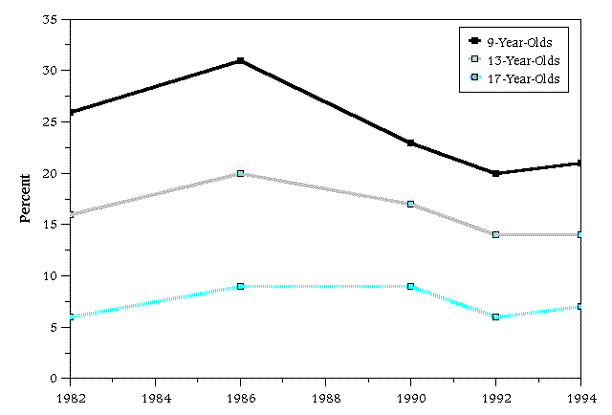
Source: National Assessment of Educational Progress (NAEP), 1994 Trend Assessment and unpublished Trend Almanacs, 1978-1990.
Table SD 1.5.A
|
|||||||||
|
1982
|
1986
|
1990
|
1992
|
1994
|
|||||
|
|
|
|
|
|
|||||
| Total |
26
|
31
|
23
|
19
|
19
|
||||
| Gender | |||||||||
| Male |
30
|
34
|
27
|
22
|
23
|
||||
| Female |
23
|
27
|
20
|
17
|
16
|
||||
| Race/Ethnicity | |||||||||
| White, non-Hispanic |
23
|
26
|
18
|
14
|
14
|
||||
| Black, non-Hispanic |
43
|
53
|
47
|
41
|
40
|
||||
| Hispanic |
28
|
33
|
26
|
25
|
22
|
||||
| Type of School | |||||||||
| Public |
27
|
32
|
24
|
21
|
19
|
||||
| Private |
21
|
24
|
18
|
5
|
11
|
||||
| Note: Parents education is not reported at age 9 because approximately one third of these students did not know their parents education level.
Source: National Assessment of Educational Progress (NAEP), 1994 Trend Assessment; and unpublished Trend Almanacs, 1978-1990. |
|||||||||
Table SD 1.5.B
|
|||||||||
|
1982
|
1986
|
1990
|
1992
|
1994
|
|||||
|
|
|
|
|
|
|||||
| Total |
16
|
20
|
17
|
13
|
13
|
||||
| Gender | |||||||||
| Male |
18
|
21
|
18
|
14
|
15
|
||||
| Female |
15
|
19
|
15
|
11
|
12
|
||||
| Race/Ethnicity | |||||||||
| White, non-Hispanic |
13
|
17
|
12
|
8
|
8
|
||||
| Black, non-Hispanic |
32
|
40
|
35
|
31
|
35
|
||||
| Hispanic |
19
|
21
|
18
|
19
|
19
|
||||
| Type of School | |||||||||
| Public |
17
|
20
|
17
|
14
|
14
|
||||
| Private |
13
|
(*)
|
11
|
6
|
4
|
||||
| Parents Highest Level of | |||||||||
| Education | |||||||||
| Less than high school |
23
|
32
|
24
|
21
|
23
|
||||
| Graduate high school |
18
|
22
|
19
|
16
|
17
|
||||
| More than high school |
13
|
18
|
12
|
9
|
13
|
||||
| Graduated college |
12
|
15
|
13
|
9
|
9
|
||||
| *Too few observations for a reliable estimate.
Source: National Assessment of Educational Progress (NAEP), 1994 Trend Assessment; and unpublished Trend Almanacs, 1978-1990. |
|||||||||
Table SD 1.5.C
|
||||||||||
|
1978
|
1982
|
1986
|
1990
|
1992
|
1994
|
|||||
|
|
|
|
|
|
|
|||||
| Total |
5
|
6
|
9
|
9
|
7
|
8
|
||||
| Gender | ||||||||||
| Male |
5
|
7
|
10
|
9
|
7
|
10
|
||||
| Female |
5
|
6
|
8
|
8
|
7
|
7
|
||||
| Race/Ethnicity | ||||||||||
| White, non-Hispanic |
4
|
5
|
6
|
6
|
4
|
5
|
||||
| Black, non-Hispanic |
13
|
14
|
22
|
23
|
21
|
24
|
||||
| Hispanic |
7
|
6
|
12
|
8
|
6
|
9
|
||||
| Type of School | ||||||||||
| Public |
5
|
7
|
9
|
9
|
7
|
8
|
||||
| Private |
4
|
3
|
(*)
|
(*)
|
3
|
3
|
||||
| Parents Highest Level of Education |
||||||||||
| Less than high school |
8
|
10
|
17
|
11
|
10
|
14
|
||||
| Graduate high school |
5
|
8
|
10
|
11
|
10
|
12
|
||||
| More than high school |
4
|
4
|
9
|
8
|
5
|
8
|
||||
| Graduated college |
3
|
4
|
4
|
5
|
5
|
5
|
||||
| *Too few observations for a reliable estimate.
Source: National Assessment of Educational Progress (NAEP), 1994 Trend Assessment; and unpublished Trend Almanacs, 1978-1990. |
||||||||||
4 U.S. Department of Education, National Center for Education Statistics (1993). Youth Indicators 1993: Trends in the well-being of American youth. Washington, DC: U.S. Government Printing Office.
5 Estimates for whites and blacks exclude Hispanics of those races.
SD 1.6 Youth violent crime arrest rates
Violent crimes, as defined by the FBI, include murder, forcible rape, robbery, and aggravated assault. The rate of youth arrests for violent crimes quadrupled between 1965 and 1994, from 58 to 231 per 100,000 persons under age 18. The increase has been fairly constant over time, except for a short-lived reduction in youth violent crime arrest rates between 1980 and 1985 (see Figure SD 1.6).
Differences by Race. Rates have increased for both white and nonwhite youth during this period, though nonwhite rates have been consistently and substantially higher. In 1994 rates of arrest for violent crimes for whites were 138 per 100,000 compared to 584 per 100,000 for nonwhites.
Differences by Age and Gender. Arrest rates for violent crimes have consistently been much higher among males than among females over time and across all ages (see Table SD 1.6). However, rates for both males and females increased substantially between 1965 and 1994, exhibiting a brief decline only during the early 1980s. For example, among females age 18, rates increased from 37 to 249 per 100,000 between 1965 and 1994. For 18 year old males, the rates increased from 638 to 2,042 per 100,000 during that same time period, or to about two arrests per one hundred 18 year old males.
Violent crime arrest rates climb quickly and steadily with age for young men, from 153 per 100,000 for 10-12 year olds to 2,042 per 100,000 among 18 year olds in 1994. By contrast, the rates for young women do not increase uniformly or rapidly with age, peaking at age 16 at 275 arrests per 100,000, then declining to below 250 per 100,000 for ages 17 and 18.
Figure SD 1.6
|
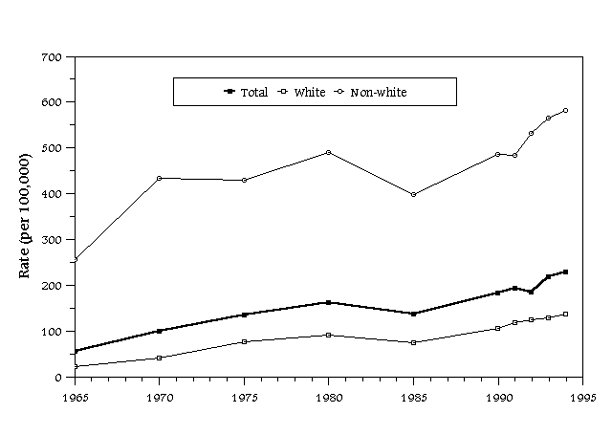
Note: Violent crimes include murder, forcible rape, robbery, and aggravated assault. Rates refer to the number of arrest made per 100,000 inhabitants belonging to the prescribed age group. Source: Uniform Crime Reporting Program, Federal Bureau of Investigation. 1993. Age-Specific Arrest Rates and Race-Specific Arrest Rates for Selected Offenses, 1965-1992. U.S. Department of Justice. Special analysis of 1993 and 1994 data by Program Support Section, Criminal Justice Information Services Division, Federal Bureau of Investigation.
Table SD 1.6
|
|||||||||||||
|
1965
|
1970
|
1975
|
1980
|
1985
|
1990
|
1991
|
1992
|
1993
|
1994
|
||||
|
|
|
|
|
|
|
|
|
|
|
||||
| Total |
58
|
101
|
136
|
163
|
139
|
184
|
195
|
188
|
220
|
231
|
|||
| Race/Ethnicity | |||||||||||||
| White |
24
|
42
|
79
|
92
|
77
|
108
|
121
|
126
|
130
|
138
|
|||
| Non-white |
259
|
436
|
431
|
492
|
400
|
488
|
486
|
534
|
568
|
584
|
|||
| Age | |||||||||||||
| 12-Oct |
--
|
--
|
--
|
47
|
56
|
71
|
77
|
81
|
86
|
92
|
|||
| 13-14 |
139
|
207
|
250
|
262
|
252
|
369
|
397
|
420
|
461
|
493
|
|||
| 15 |
245
|
364
|
483
|
505
|
446
|
670
|
720
|
725
|
829
|
858
|
|||
| 16 |
304
|
459
|
616
|
638
|
568
|
879
|
925
|
940
|
1031
|
1058
|
|||
| 17 |
305
|
519
|
663
|
739
|
662
|
986
|
1041
|
1001
|
1115
|
1119
|
|||
| 18 |
338
|
571
|
713
|
746
|
661
|
1023
|
1108
|
1092
|
1149
|
1167
|
|||
| Gender | |||||||||||||
| Male | |||||||||||||
| 12-Oct |
--
|
--
|
--
|
82
|
99
|
119
|
130
|
137
|
144
|
153
|
|||
| 13-14 |
242
|
351
|
420
|
446
|
424
|
602
|
652
|
681
|
740
|
788
|
|||
| 15 |
442
|
644
|
832
|
877
|
769
|
1137
|
1222
|
1210
|
1379
|
2414
|
|||
| 16 |
564
|
838
|
1102
|
1130
|
999
|
1525
|
1604
|
1621
|
1764
|
1798
|
|||
| 17 |
572
|
957
|
1201
|
1322
|
1180
|
1745
|
1841
|
1757
|
1944
|
1939
|
|||
| 18 |
638
|
1065
|
1299
|
1350
|
1194
|
1840
|
1996
|
1944
|
2038
|
2042
|
|||
| Female | |||||||||||||
| 12-Oct |
--
|
--
|
--
|
10
|
12
|
19
|
20
|
23
|
25
|
27
|
|||
| 13-14 |
32
|
57
|
72
|
70
|
71
|
123
|
130
|
145
|
167
|
183
|
|||
| 15 |
40
|
73
|
119
|
117
|
108
|
177
|
192
|
214
|
249
|
272
|
|||
| 16 |
36
|
67
|
114
|
125
|
118
|
193
|
204
|
217
|
253
|
275
|
|||
| 17 |
30
|
66
|
105
|
130
|
118
|
179
|
188
|
195
|
233
|
247
|
|||
| 18 |
37
|
72
|
113
|
125
|
114
|
164
|
176
|
197
|
214
|
249
|
|||
| Note: Violent Crime is the sum of murder, forcible rape, robbery, and aggravated assault. Rates refer to the number of arrests made per 100,000 inhabitants belonging to the prescribed age group.
Source: Uniform Crime Reporting Program, Federal Bureau of Investigation: 1993. |
|||||||||||||
6 Arrests for violent crimes were chosen in preference to other arrest measures as an indicator both because of the particular hazards that violent crime represent to our society, and because arrests for violent crimes are less likely to be affected over time by changes in police practice and policy than other types of crime.
SD 1.7 Low-risk teens
Statistics often show rates of individual problem behaviors among adolescents, such as drug or alcohol use, school drop out, or early sexual activity. Yet youth engaged in one problem behavior are often engaged in others as well; their risk of immediate and long-term harm increases as the number of risky behaviors increases.7
Most parents and other members of society believe that the ideal is for youth to avoid all risky behaviors. The cumulative risk index is designed to identify the degree to which adolescents avoid a set of key problem behaviors simultaneously. This measure is created from youth-report data for five behaviors, where a youth is defined as having no risks if he or she is:
- in school or has graduated from high school,
- has never had sexual intercourse,
- has never used illegal drugs,
- has not had 5 or more alcoholic beverages in a row in the past month, and
- has not stayed out all night without permission in the past year.
Data limitations did not allow for the inclusion of all risk behaviors (e.g. engaging in acts of violence), but all included behaviors represent areas of substantial concern.
The proportion of youth who report avoiding all of these risk behaviors decreases with age (see Figure SD 1.7). Table SD 1.7 presents additional data on the percentage who report only one risk, and two or more risk behaviors. Even at age 15, less than half of youth (45 percent) have avoided all risk behaviors, and 30 percent have experienced two or more risks. By age 17, an age at which most youth are still in high school, the proportion with no risks has dwindled to less than one-quarter, and the majority have now experienced two or more risk behaviors. By age 18, only 16 percent report having engaged in no risk behaviors, while 62 percent report two or more such behaviors.
Figure SD 1.7
|
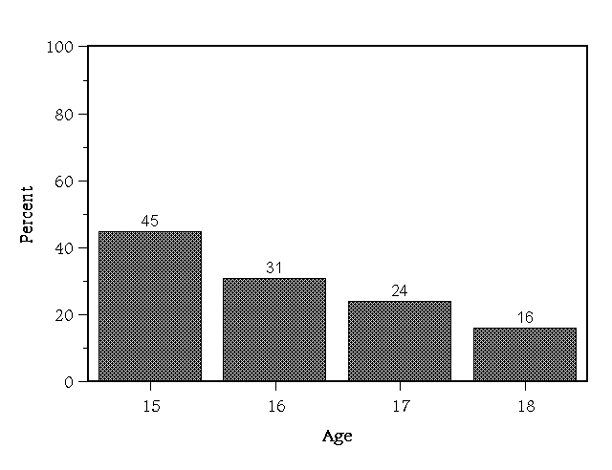
Note: A status of having no risks requires all of the following: being in school or graduated from high school; never having had sexual intercourse; never having used illegal drugs (includes marijuana); not having had 5 alcoholic beverages in a row in the past month; and not having stayed out all night without permission in the past year. Source: 1992 National Health Interview Survey Youth Risk Behavior Supplement, tabulations by Child Trends, Inc.
Table SD 1.7
|
||||||
| Age |
15
|
16
|
17
|
18
|
||
|
__________________________________________________________
|
||||||
| Cumulative Risk Measure | ||||||
| No Risks |
45
|
31
|
24
|
16
|
||
| Only One Risk |
25
|
24
|
26
|
22
|
||
| Two or More Risks |
30
|
45
|
50
|
62
|
||
| Note: aA status of having no risks requires all of the following: being in school or graduated from high school; never having had sexual intercourse; never having used illegal drugs (includes marijuana); not having had 5 alcoholic beverages in a row in the past month; and not having stayed out all night without permission in the past year.
Source: 1992 National Health Interview Survey Youth Risk Behavior Supplement, tabulations by Child Trends, Inc. |
||||||
7 Moore, K.A. and Glei, D.A. (1994) "Taking the Plunge: An examination of positive youth development." Journal of Adolescent Research, 10 (11), 15-40.
BEHAVIORAL HEALTH: PHYSICAL HEALTH AND SAFETY
SD 2.1 Physical Fighting by Youth
Physical violence is a major cause of injury and homicide among adolescents.8 In 1995, almost half of all male students and nearly one third of female students in grades 9-12 reported having been involved in a physical fight during the previous year. For males, there is a slight decrease in the percentage that reported involvement in a fight in 1993 from 51 percent to 46 percent (see Figure SD 2.1).
Differences by Age. In both 1993 and 1995, the percentage of students who report being involved in fights decreased with age (see Table SD 2.1). In 1995, 47 percent of 9th grade students and 31 percent of 12th grade students reported being involved in a fight. It is unclear, however, whether this reduction reflects the effects of increasing maturity, a change in the propensity to report having been in a fight, or a tendency for violence-prone youth to drop out of school, leaving a less violent pool of students in the higher grades.
Differences by Race.9 White students appear somewhat less likely than black or Hispanic students to report having engaged in physical fights. In 1995, 36 percent of white students reported involvement in a physical fight within the last year, compared with 42 percent of black students and 48 percent of Hispanic students.
Figure SD 2.1
|
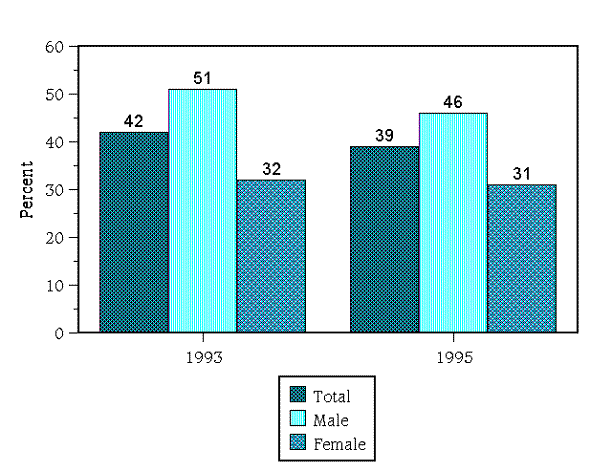
Source: Data for 1993 from: Youth Risk, Behavior Surveillance - United States 1993. Morbidity and Mortality Weekly Report, Vol. 44, No. SS-1, 1995. Data for 1995 from: Youth Risk Behavior Surveillance - United States, 1995. Morbidity and Mortality Weekly Report, Vol. 45, No. SS-4, 1996.
Table SD 2.1
|
|||||||||
|
1993
|
1995
|
||||||||
|
|
|
||||||||
|
Total
|
Male
|
Female
|
Total
|
Male
|
Female
|
||||
|
|
|
|
|
|
|
||||
| Total |
42
|
51
|
32
|
39
|
46
|
31
|
|||
| Grade | |||||||||
| 9 |
50
|
59
|
41
|
47
|
55
|
37
|
|||
| 10 |
42
|
52
|
32
|
40
|
46
|
34
|
|||
| 11 |
41
|
52
|
28
|
37
|
46
|
28
|
|||
| 12 |
35
|
43
|
27
|
31
|
38
|
24
|
|||
| Race/Ethnicity Group | |||||||||
| White, Non-Hispanic |
40
|
50
|
30
|
36
|
44
|
27
|
|||
| Black , Non-Hispanic |
50
|
58
|
42
|
42
|
49
|
35
|
|||
| Hispanic |
43
|
52
|
34
|
48
|
56
|
40
|
|||
| Source: Data for 1993 from: "Youth Risk, Behavior Surveillance - United States 1993." Morbidity and Mortality Weekly Report, Vol. 44, No. SS-1, 1995. Data for 1995 from: "Youth Risk Behavior Surveillance - United States, 1995." Morbidity and Mortality Weekly Report, Vol. 45, No. SS-4, 1996. | |||||||||
8 University of California at Los Angeles, CDC. "The Epidemiology of Homicide in Los Angeles, 1970-79." Atlanta: U.S. Department of Health and Human Services, Public Health Service, CDC, 1985. Cited in Chronic Disease and Health Promotion, Reprints from the Morbidity and Mortality Weekly Report: 1990-1991 Youth Risk Behavior Surveillance System. Atlanta: U.S. Department of Health and Human Services, Public Health Service, CDC, 1992. P. 37.
9 Estimates for whites and blacks exclude Hispanics of those races.
SD 2.2 Weapons carrying among high school youth
Weapon carrying is associated with the most serious injuries resulting from violence. Carrying a weapon significantly increases the risk that a violent argument will result in death, disability, or other serious injury.10
Since 1991, the percentage of students who report carrying weapons has declined. For example, in 1995, 20 percent of students in grades 9-12 reported carrying a weapon, compared to 22 percent in 1993 and 26 percent in 1991. The definition of weapon includes knives, razors, clubs, and handguns and other firearms.
Differences by Age. In general, students in the earlier grades are more likely than students in the upper grades to carry a weapon. In 1995, 23 percent of 9th graders reported carried a weapon in the last 30 days compared to 16 percent of 12th graders.
Differences by Gender. High school males are much more likely than females to carry a weapon. This is true across all grades and for all racial and ethnic groups (see Figure SD 2.2.A). For example, in 1995, 31 percent of males in grades 9-12 reported carrying a weapon, compared to 8 percent of all females in grades 9-12.
Differences by Race and Ethnicity.11In 1995, 19 percent of white, 22 percent of black, and 25 percent of Hispanic teens reported carrying a weapon. For white and black students, these represent reductions from 1991 rates of 25 and 33 percent, respectively.
Youth Who Report Carrying a Gun. In both 1993 and 1995, 8 percent of high school students reported carrying a gun at some time in the last 30 days. In 1995, 11 percent of black and Hispanic students and 6 percent of white students reported carrying a gun (see Figure SD 2.2.B).
Figure SD 2.2.A
|
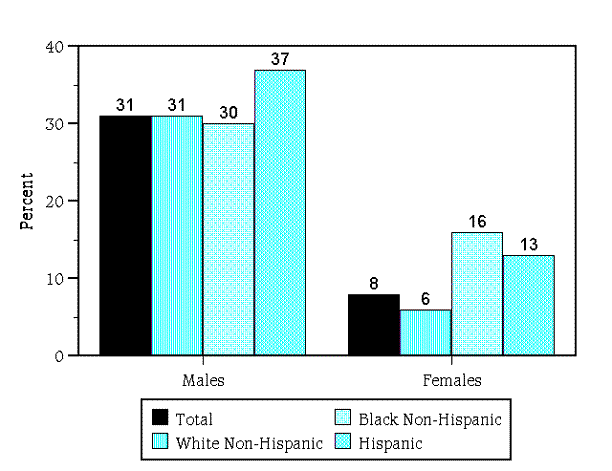
Note: Weapons included knives, razors, clubs, and firearms (including handguns).
Sources: Data for 1993 from Youth Risk Behavior Surveillance - United States 1993. Vol 44. No. SS-1 U.S. Department of Health and Human Services, Public Health Service, Centers for Disease Control and Prevention. Data for 1995 from Kann, L. Warren, C.W., Harris, W.A., Collins, J.L., Williams, B.I., Ross, J.G., Kolbe, L.J. Youth Risk Behavior Surveillance -- United States, 1995. In: CDC Surveillance Summaries, September 27, 1996. MMWR 1996; 45 (No. SS-4): 1-185
Figure SD 2.2.B
|
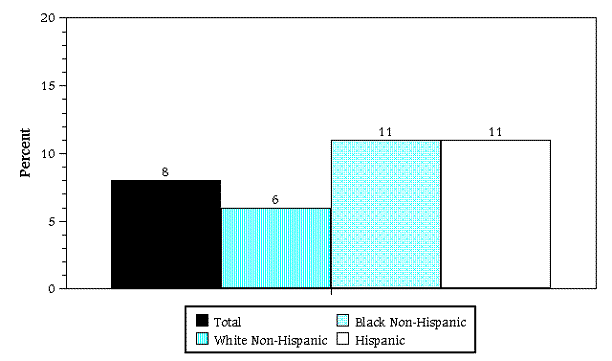
Note: Percentages reflect those who carried a gun during the 30 days preceding the survey.
Source: Data for 1993 from Youth Risk Behavior Surveillance - United States, 1993, Volume 44. No. SS-1. U.S. Department of Health and Human Services, Public Health Service, Centers for Disease Control and Prevention. Data for 1995 from Kann, L. Warren, C.W., Harris, W.A., Collins, J.L., Williams, B.I., Ross, J.G., Kolbe, L.J. Youth Risk Behavior Surveillance -- United States, 1995. In: CDC Surveillance Summaries, September 27, 1996. MMWR 1996; 45 (No. SS-4): 1-185
Table SD 2.2.A
|
|||||||||||||||||||||||||
|
1991
|
1993
|
1995
|
|||||||||||||||||||||||
|
|
|
|
|||||||||||||||||||||||
|
Total
|
Male
|
Female
|
Total
|
Male
|
Female
|
Total
|
Male
|
Female
|
|||||||||||||||||
|
|
|
|
|
|
|
|
|
|
|||||||||||||||||
| Total |
26
|
41
|
11
|
22
|
34
|
9
|
20
|
31
|
8
|
||||||||||||||||
| Grade | |||||||||||||||||||||||||
| 9 |
28
|
44
|
10
|
26
|
39
|
11
|
23
|
34
|
9
|
||||||||||||||||
| 10 |
27
|
42
|
11
|
21
|
33
|
10
|
21
|
32
|
9
|
||||||||||||||||
| 11 |
29
|
44
|
13
|
22
|
33
|
9
|
20
|
32
|
8
|
||||||||||||||||
| 12 |
21
|
43
|
10
|
20
|
33
|
7
|
16
|
26
|
6
|
||||||||||||||||
| Race/Ethnicity | |||||||||||||||||||||||||
| White, non-Hispanic |
25
|
41
|
8
|
21
|
33
|
7
|
19
|
31
|
6
|
||||||||||||||||
| Black, non-Hispanic |
33
|
43
|
24
|
29
|
38
|
19
|
22
|
30
|
16
|
||||||||||||||||
| Hispanic |
26
|
40
|
13
|
24
|
37
|
12
|
25
|
37
|
13
|
||||||||||||||||
| Note: aWeapons included knives, razors, clubs, and firearms (including handguns).
Sources: Data for 1991 from Public Health Reports, Vol. 108, Supplement 1, U.S. Public Health Service, and data supplied by Center for Disease Control and Prevention staff. Data for 1993 from "Youth Risk Behavior Surveillance - United States 1993," Vol. 4 (No. SS-4): 1-185. |
|||||||||||||||||||||||||
| Table SD 2.2.B Percentage of Teens in Grades 912 Who Report Having Carried a Gun Within the Last 30 Days: 1993 and 1995 |
|||||||||
|
1993
|
1995
|
||||||||
|
|
|
||||||||
|
Total
|
Male
|
Female
|
Total
|
Male
|
Female
|
||||
|
|
|
|
|
|
|
||||
| Total |
8
|
14
|
2
|
8
|
12
|
3
|
|||
| Grade | |||||||||
| 9 |
9
|
16
|
2
|
9
|
14
|
3
|
|||
| 10 |
9
|
15
|
2
|
8
|
13
|
3
|
|||
| 11 |
7
|
13
|
1
|
7
|
12
|
1
|
|||
| 12 |
7
|
12
|
1
|
6
|
11
|
2
|
|||
| Race/Ethnicity | |||||||||
| White non-Hispanic |
7
|
12
|
1
|
6
|
10
|
2
|
|||
| Black non-Hispanic |
12
|
21
|
4
|
11
|
19
|
4
|
|||
| Hispanic |
10
|
17
|
3
|
11
|
17
|
5
|
|||
| Note: Percentages reflect those who carried a gun more often than other weapons.
Source: Data for 1993 from "Youth Risk Behavior Surveillance - United States 1993," Volume 44, No. SS-1, U.S. Public Health Service, Centers for Disease Control and Prevention. Data for 1995 from Kann, L. Warren, C.W., Harris, W.A., Collins, J.L., Williams, B.I., Ross, J.G., Kolbe, L.J. "Youth Risk Behavior Surveillance -- United States, 1995." In: CDC Surveillance Summaries, September 27, 1996. MMWR 1996; 45 (No. SS-4): 1-185. |
|||||||||
10 "Measuring the Health Behavior of Adolescents: The Youth Risk Behavior Surveillance System and Recent Reports Public Health Reports on High-Risk Adolescents." Public Health Reports. Vol. 108, Supplement 1. Rockville, Maryland: Public Health Service. 1993.
11 Estimates for whites and blacks exclude Hispanics of those races.
SD 2.3 Seat belt use
In 1993, motor vehicle deaths were the leading cause of injury-related deaths for youth ages 15-19, accounting for approximately 40 percent of all teenage injury deaths. Motor vehicle deaths are also the leading cause of death for younger children.12 Consistent use of seat belts and car safety seats dramatically lessens the risk of injury or death in a motor vehicle accident. Yet the National Highway Traffic Safety Administration estimates that in 1993, 55 percent of all children under age five who were killed while occupants of a motor vehicle were not protected by seat belts or child safety seats.13
Overall, regular seat belt or car safety seat use among children increased between 1985 and 1990. This increase has been particularly dramatic among children ages 5 and older (see Table SD 2.3.A). For example, among children ages 5-9, reported rates of regular seat belt use increased from 49 percent to 76 percent.
Differences by Age. In both 1985 and 1990, younger children were more likely than older children to routinely wear a seat belt or be in a child safety seat. In 1990, 87 percent of 1-4 year old children were reported to have used seat belts (or a child safety seat) all or most of the time, compared to 68 percent of 15-17 year olds (see Figure SD 2.3). However, as mentioned above, the greatest increases in seat belt usage occurred among children ages 5-17. In fact, the older the age group, the greater the increase in the percentage who regularly wore their seat belts.
Differences by Race. Among children ages 0-4, the percentage of white and black children who are regularly in car safety seats (or, for some of the older or larger preschoolers, wearing seat belts) has increased. Between 1985 and 1990, the percentage of white children in this age group who were in car safety seats or seat belts rose from 84 percent to 88 percent. Among black children in this age group, the percentage increased from 67 to 79 percent. The percentage of Hispanic children ages 0-4 who regularly used a seat belt or car safety seat was fairly steady at 73 and 71 percent in 1985 and 1990, respectively. For children ages 5-17, however, percentages for all three races rose considerably between 1985 and 1990 (see Table SD 2.3.A).
The 1985 and 1990 data described above and presented in Table SD 2.3.A. are based on parent and self reports; data for 1994, presented in Table SD 2.3.B, are based on observations and thus cannot be directly compared to the earlier data. However, the observational results suggest that the percentages of infants (under age 1) and toddlers (ages 1-4) who are in car safety seats or are wearing seat belts is much lower than the percentages suggested from the self reports in 1985 and 1990.
Figure SD 2.3
|
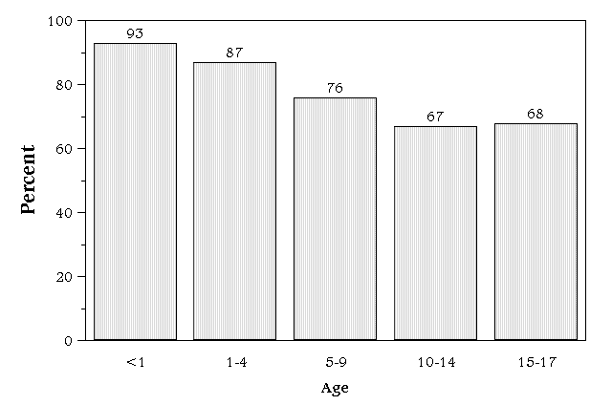
Source: National Health Interview Survey data as published in Vital and Health Statistics, Series 10: No. 163. Health Promotion and Disease Prevention United States, 1995.
Table SD 2.3.A
|
|||||||
|
1985
|
1990
|
||||||
|
|
|
||||||
| Children by Age: | |||||||
| < 1 year |
92
|
93
|
|||||
| Ages 1-4 |
82
|
87
|
|||||
| Ages 5-9 |
49
|
76
|
|||||
| Ages 10-14 |
33
|
67
|
|||||
| Ages 15-17 |
31
|
68
|
|||||
| Race/Ethnicity by Age: | |||||||
| White | |||||||
| Ages 0-4 |
84
|
88
|
|||||
| Ages 5-17 |
40
|
73
|
|||||
| Black | |||||||
| Ages 0-4 |
67
|
79
|
|||||
| Ages 5-17 |
32
|
59
|
|||||
| Hispanic | |||||||
| Ages 0-4 |
73
|
71
|
|||||
| Ages 5-17 |
36
|
62
|
|||||
| Source: National Health Interview Survey data as published in Vital and Health Statistics, Series 10: No. 185. "Health Promotion and Disease Prevention United States, 1990"; and Series 10: No. 163. "Health Promotion and Disease Prevention United States, 1995." | |||||||
Table SD 2.3.B
|
||
| Infant (< 1 year)b: | 88 | |
| Toddler (1-4 years)c: | 61 | |
| Youth (5-15 years): | 58 | |
| Young adult (16-24 years): | 53 | |
| aAge group is based on the best judgement of the observers in the National Occupant Protection Use Survey (NOPUS) Controlled Intersection Study. bUse of restraints for infants refers to child safety seats. cUse of restraints for toddlers refers to safety belts or child safety seats. Source: Research Note. "National Occupant Protection Use Survey: Controlled Intersection Study." National Highway Traffic Safety Administration, U.S. Department of Transportation, May 1, 1995. |
||
12 National Center for Health Statistics (1996). 1993 Detail Mortality File. Unpublished data.
13 National Highway Traffic Safety Administration. 1994. Traffic Safety Facts 1993. DOT HS 808 169. Washington, D.C.: U.S. Department of Transportation.
SD 2.4 Regular physical exercise
Sixty (60) percent of Americans do not exercise regularly, according to a 1996 report by the Surgeon General, despite the many health benefits associated with physical activity.14 People of all ages, both male and female, benefit from regular physical activity. Significant health benefits can be obtained by including a moderate amount of physical activity (e.g., 30 minutes of brisk walking or raking leaves, 15 minutes of running, or 45 minutes of playing volleyball) on most, if not all, days of the week.
The percentage of 12th grade students who report actively participating in sports or exercise "almost every day" has remained fairly stable since 1976, varying between 44 and 48 percent. Rates have also been stable for 8th and 10th grade students since 1991, the first year in which data were collected (see Table SD 2.4.A).
Differences by Age. The percentages of students who report that they actively participate in sports or exercise "almost every day" decreased with age. In 1995, for example, 56 percent of 8th graders, 53 percent of 10th graders, and 45 percent of 12th graders reported daily or almost daily exercise (see Figure SD 2.4). A similar pattern emerged in a survey that asked teens whether they had exercised vigorously three or more times in the past week (see Table SD 2.4.B).
Differences by Gender. Males consistently report exercising or participating in sports more often than females. In 1995, for each age group, male rates were 17 to 19 percentage points higher than female rates, a trend that exists for nearly every year that data are available (see Table SD 2.4.A).
Differences by Race. Black and white students in the 8th and 10th grade are about equally likely to exercise regularly (see Table SD 2.4.A). Among 12th grade students, blacks appeared to be less likely than whites to exercise regularly during the 1990s, though this difference almost disappeared in 1995. Other survey data, reported in Table SD 2.4.B, show larger differences by race and ethnic group. Specifically, in 1995 67 percent of non-Hispanic white teens reported exercising at least three times a week, compared to 53 percent of non-Hispanic black teens and 57 percent of Hispanic teens (see Table SD 2.4.B).
Figure SD 2.4
|
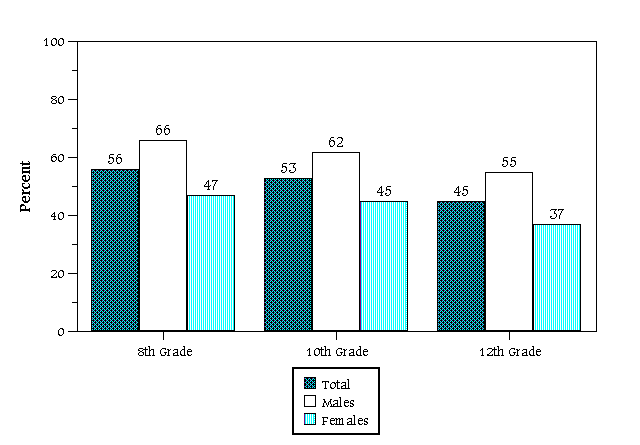
Source: Bachman, J.G., Johnston, L.D. and OMalley, P.M. The Monitoring the Future Study, University of Michigan, 8th and 10th grade 1991-1995 Questionaire Forms 1 and 2, and 12th grade 1976-1995 Questionnaire Form 2.
Table SD 2.4.A
|
|||||||||||
|
1976
|
1981
|
1986
|
1991
|
1992
|
1993
|
1994
|
1995
|
||||
| 8th Grade | |||||||||||
| Total |
--
|
--
|
--
|
57
|
55
|
55
|
53
|
56
|
|||
| Gender | |||||||||||
| Male |
--
|
--
|
--
|
65
|
65
|
65
|
63
|
66
|
|||
| Female |
--
|
--
|
--
|
49
|
45
|
46
|
44
|
47
|
|||
| Race/Ethnicity | |||||||||||
| White |
--
|
--
|
--
|
58
|
56
|
58
|
56
|
59
|
|||
| Black |
--
|
--
|
--
|
61
|
57
|
54
|
52
|
55
|
|||
| 10th Grade | |||||||||||
| Total |
--
|
--
|
--
|
54
|
54
|
53
|
53
|
53
|
|||
| Gender | |||||||||||
| Male |
--
|
--
|
--
|
63
|
64
|
62
|
62
|
62
|
|||
| Female |
--
|
--
|
--
|
45
|
45
|
45
|
44
|
45
|
|||
| Race/Ethnicity | |||||||||||
| White |
--
|
--
|
--
|
55
|
55
|
54
|
54
|
55
|
|||
| Black |
--
|
--
|
--
|
54
|
52
|
56
|
50
|
52
|
|||
| 12th Grade | |||||||||||
| Total |
44
|
48
|
44
|
46
|
46
|
44
|
45
|
45
|
|||
| Gender | |||||||||||
| Male |
52
|
56
|
54
|
55
|
59
|
55
|
56
|
55
|
|||
| Female |
36
|
39
|
36
|
36
|
33
|
33
|
36
|
37
|
|||
| Race/Ethnicity | |||||||||||
| White |
43
|
47
|
46
|
48
|
48
|
46
|
49
|
46
|
|||
| Black |
49
|
53
|
43
|
43
|
41
|
39
|
39
|
48
|
|||
| Source: Bachman, J.G., Johnston, L.D. and OMalley, P.M. "The Monitoring the Future Study," University of Michigan, 8th and 10th grade 1991-1995 Questionnaire Forms 1 and 2, and 12th grade 1976-1995 Questionnaire Form 2. Data for the 12th grade based on one of six questionnaire forms with a resulting sample size one-sixth of the total sample size for each year. | |||||||||||
Table SD 2.4.B
|
|||||||||||||
|
1993
|
1995
|
||||||||||||
|
|
|
||||||||||||
|
Total
|
Male
|
Female
|
Total
|
Male
|
Female
|
||||||||
|
|
|
|
|
|
|
||||||||
| Total |
66
|
75
|
56
|
64
|
74
|
52
|
|||||||
| Grade | |||||||||||||
| 9 |
75
|
81
|
68
|
72
|
80
|
62
|
|||||||
| 10 |
70
|
77
|
61
|
69
|
79
|
59
|
|||||||
| 11 |
63
|
71
|
53
|
60
|
72
|
47
|
|||||||
| 12 |
58
|
70
|
45
|
55
|
67
|
42
|
|||||||
| Race/Ethnicity | |||||||||||||
| White, non-Hispanic |
68
|
76
|
59
|
67
|
76
|
57
|
|||||||
| Black, non-Hispanic |
60
|
71
|
49
|
53
|
68
|
41
|
|||||||
| Hispanic |
59
|
69
|
50
|
57
|
70
|
45
|
|||||||
| Note: Vigorous physical exercise is defined as activities that caused sweating and hard breathing for at least 20 minutes.
Source: Kann L., Warren, C.W., Harris, W.A., Collins, J.L., Williams, B.I., Ross, J.G., and Kolbe, L.J. "Youth Risk Behavior Surveillance -- United States, 1993." Vol. 44, No. SS-1 and "Youth Risk Behavior Surveillance -- United States, 1995." Vol. 45, No. SS-4. |
|||||||||||||
14 U.S. Department of Health and Human Services. Physical Activity and Health: A Report of the Surgeon General. Atlanta, GA: U.S. Department of Health and Human Services, Centers for Disease Control and Prevention, National Center for Chronic Disease Prevention and Health Promotion, 1996.
BEHAVIORAL HEALTH: SMOKING, ALCOHOL, AND SUBSTANCE ABUSE
SD 3.1 Cigarette smoking
Cigarette smoking is the single most preventable cause of death in the United States. The Centers for Disease Control estimates that one in five deaths are caused by tobacco use.15 Youthful smoking can have severe, lifelong consequences because a large proportion of those who initiate smoking in adolescence will continue to smoke as adults.16 In addition, youths who smoke are also more likely to use illicit drugs and to drink more heavily than their peers who do not smoke.17
Data from two in-school national surveys, the Youth Risk Behavior Surveillance and The Monitoring the Future Survey, indicate that smoking among youth has increased in recent years.
- Daily smoking among 12th grade students had decreased sharply in the late 1970s, but has begun to increase again in recent years, as reflected by the Monitoring the Future Study. Between 1992 and 1996, the percentage of 12th graders who reported smoking daily increased from 17.2 percent to 22.2 percent (see Figure SD 3.1).
- Data for 8th and 10th grade students, available from 1991 through 1996, also show recent increases in the percentage of students who reported smoking daily, from 7.2 percent to 10.4 percent among 8th grade students and from 12.6 percent to 18.3 percent among 10th grade students (see Table SD 3.1.A).
- Increases in the prevalence of current smoking among youths are also reflected in the results from the Youth Risk Behavior Survey. Current smoking means smoking on one or more of the previous 30 days (see Table SD 3.1.B).
Differences by Age. In general, as age and/or grade increases, so does the prevalence of smoking. In 1996, the percentage of students who report daily smoking was 10.4 percent among 8th graders, 18.3 percent among 10th graders, and 22.2 percent among 12th grade students (see Figure SD 3.1).
Differences by Race.18 White students consistently have the highest rates of smoking, while black students consistently have the lowest (see Table SD 3.1.B). The prevalence of current19 smoking among white students is about twice that of black students. White students are twice as likely as Hispanic students and four times as likely as black students to be frequent20 smokers.
Differences by Gender. There is little to no difference in the prevalence of smoking between males and females, with the exception of black youth. Among black youth in grades 9-12, black males were significantly more likely than black females in 1995 to report current smoking. This disparity became apparent only in 1995, when current and frequent smoking rates for black males increased over the previous year, while the comparable rates among black females had declined the only group for whom a decline is seen (see Table SD 3.1.B).
Prevalence of smoking by frequency. Two to three times the percentage of students report current smoking (smoking on one or more of the previous 30 days) than report frequent (smoking on 20 or more of the previous 30 days) or daily smoking (see Table SD 3.1.B). This is apparent across all grades and for all the race and ethnic groups shown.
Figure SD 3.1
|
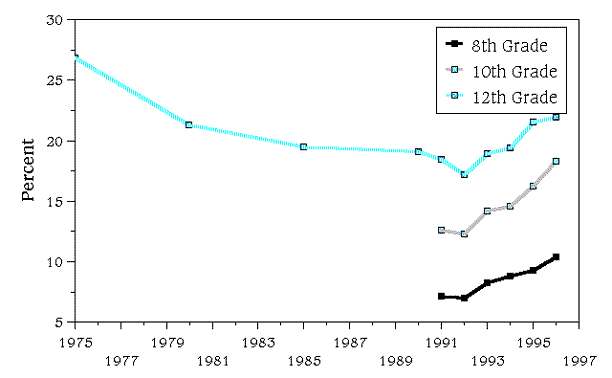
Source: Johnston, L.D., OMalley, P.M. and Bachman, J.G. National Survey Results on Drug Use from the Monitoring the Future Study, 1975-1995. Rockville, Maryland: National Institute of Health. National Institute on Drug Abuse, NIH Pub. No. 97-4139, 1997. Institute for Social Research, University of Michigan. 1996 data from: The Monitoring the Future Study, The University of Michigan. Cigarette smoking continues to rise among American teenagers in 1996. Press release of December 19, 1996.
Table SD 3.1.A
|
||||||||||||
|
1975
|
1980
|
1985
|
1990
|
1991
|
1992
|
1993
|
1994
|
1995
|
1996
|
|||
|
|
|
|
|
|
|
|
|
|
|
|||
| 8th Grade | ||||||||||||
| Total |
|
|
|
|
7.2
|
7
|
8.3
|
8.8
|
9.3
|
10.4
|
||
| Male |
|
|
|
|
8.1
|
6.9
|
8.8
|
9.5
|
9.2
|
|
||
| Female |
|
|
|
|
6.2
|
7.2
|
7.8
|
8
|
9.2
|
|
||
| 10th Grade | ||||||||||||
| Total |
|
|
|
|
12.6
|
12.3
|
14.2
|
14.6
|
16.3
|
18.3
|
||
| Male |
|
|
|
|
12.4
|
12.1
|
13.8
|
15.2
|
16.3
|
|
||
| Female |
|
|
|
|
12.5
|
12.4
|
14.3
|
13.7
|
16.1
|
|
||
| 12th Grade | ||||||||||||
| Total |
26.9
|
21.3
|
19.5
|
19.1
|
18.5
|
17.2
|
19
|
19.4
|
21.6
|
22.2
|
||
| Male |
26.9
|
18.5
|
17.8
|
18.6
|
18.8
|
17.2
|
19.4
|
20.4
|
21.7
|
|
||
| Female |
26.4
|
23.5
|
20.6
|
19.3
|
17.9
|
16.7
|
18.2
|
18.1
|
20.8
|
|
||
| Source: Johnston, L.D., O'Malley, P.M., Bachman, J.G. "National Survey Results on Drug Use from the Monitoring the Future Study, 1975-1995." Rockville, Maryland: National Institutes of Health. National Institute on Drug Abuse, NIH Pub. No. 97-4139, 1997. Institute for Social Research, the University of Michigan. Tables D-31 and D-32. 1996 data from: The Monitoring the Future Study, The University of Michigan. "Cigarette smoking continues to rise among American teenagers in 1996." Press release of December 19, 1996. | ||||||||||||
Table 3.1.B
|
|||||||
|
Current Smokinga
|
Frequent Smokingb
|
||||||
|
|
|
||||||
|
1991
|
1993
|
1995
|
1991
|
1993
|
1995
|
||
|
|
|
|
|
|
|
||
| Total |
28
|
31
|
35
|
13
|
14
|
16
|
|
| Male |
28
|
30
|
35
|
13
|
14
|
16
|
|
| Female |
27
|
31
|
34
|
12
|
14
|
16
|
|
| White non-Hispanic |
31
|
34
|
38
|
15
|
16
|
20
|
|
| Male |
30
|
32
|
37
|
15
|
16
|
18
|
|
| Female |
32
|
35
|
40
|
16
|
16
|
21
|
|
| Black non-Hispanic |
13
|
15
|
19
|
3
|
5
|
5
|
|
| Male |
14
|
16
|
28
|
5
|
5
|
9
|
|
| Female |
11
|
14
|
12
|
2
|
4
|
1
|
|
| Hispanic |
25
|
29
|
34
|
7
|
8
|
10
|
|
| Male |
28
|
30
|
35
|
8
|
9
|
11
|
|
| Female |
23
|
27
|
33
|
6
|
7
|
9
|
|
| Grade | |||||||
| 9th |
23
|
28
|
31
|
8
|
9
|
10
|
|
| 10th |
25
|
28
|
33
|
11
|
13
|
13
|
|
| 11th |
32
|
31
|
36
|
16
|
15
|
19
|
|
| 12th |
31
|
35
|
38
|
16
|
18
|
21
|
|
| Note: aCurrent smoking is smoking on one or more of the previous 30 days. bFrequent smoking is smoking on 20 or more of the previous 30 days. Sources: Data for 1991 from U.S. Department of Health and Human Services, Preventing Tobacco Use Among Young People, A Report of the Surgeon General. U.S. Public Health Service, 1994. Data from 1993 from "Youth Risk Behavior |
|||||||
15 Centers for Disease Control. Cigarette Smoking-Attributable Mortality and Years of Potential Life LostUnited States, 1990. Morbidity and Mortality Weekly Report 1993; 42:645-9.
16 The Monitoring the Future Study, The University of Michigan. "Cigarette Smoking among American teens rises again in 1995." Press Release of December 15, 1995.
17 Substance Abuse and Mental Health Services Administration. "Preliminary Estimates From the 1995 National Household Survey on Drug Abuse. Rockville, Maryland: Public Health Service, 1996." 1995 results indicate that youths age 12-17 who smoked were about 8 times as likely to use illicit drugs and 11 times as likely to drink heavily as nonsmoking youths.
18 Estimates for whites and blacks exclude Hispanics of those races.
19 Current smoking is smoking on one or more of the previous 30 days.
20 Frequent smoking is smoking on 20 or more of the previous 30 days.
SD 3.2 Smokeless tobacco use
The use of smokeless tobacco snuff and chewing tobacco is associated with a substantially higher risk
of developing oral cancer.21 In 1995, eleven percent of students in grades 9-12 participating in a national in-school survey reported using smokeless tobacco in the last 30 days. The prevalence of smokeless tobacco use has remained fairly constant in recent years (see Table SD 3.2).
Differences by Gender. Unlike cigarette smoking, male students are significantly more likely to use smokeless tobacco than are female students, with 20 percent of males and only 2 percent of females reporting smokeless tobacco use in 1995.
Differences by Race.22 The use of smokeless tobacco is most prevalent among white, non-Hispanic male youth, with one-quarter reporting having used smokeless tobacco one or more times in the 30 days preceding the survey in 1995, compared to 6 percent of Hispanic male youth and 4 percent of black male youth (see Figure SD 3.2).
Figure SD 3.2
|
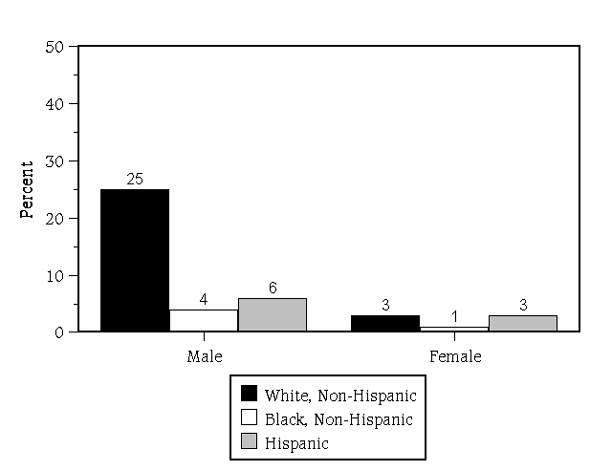
Source: Youth Risk Behavior Surveillance - United States, 1995. Morbidity and Mortality Weekly Report, Vol. 45, No. SS-4, 1996
Table SD 3.2
|
|||||||||||||||||
|
1991
|
1993
|
1995
|
|||||||||||||||
|
|
|
|
|||||||||||||||
|
Total
|
Male
|
Female
|
Total
|
Male
|
Female
|
Total
|
Male
|
Female
|
|||||||||
|
|
|
|
|
|
|
|
|
|
|||||||||
| Total |
11
|
19
|
1
|
12
|
20
|
2
|
11
|
20
|
2
|
||||||||
| Race/Ethnicity | |||||||||||||||||
| White, Non-Hispanic |
13
|
24
|
1
|
15
|
26
|
2
|
15
|
25
|
3
|
||||||||
| Black, Non-Hispanic |
2
|
4
|
1
|
3
|
5
|
1
|
2
|
4
|
1
|
||||||||
| Hispanic |
6
|
11
|
1
|
5
|
8
|
2
|
4
|
6
|
3
|
||||||||
| Source: Data for 1991 from U.S. Department of Health and Human Services, Preventing Tobacco Use Among Young People, A Report of the Surgeon General. U.S. Public Health Service, 1994. Data for 1993 from "Youth Risk Behavior Surveillance-United States 1993," Morbidity and Mortality Weekly Report, Vol. 44, No. SS-1, 1995. Data for 1995 from "Youth Risk Behavior Surveillance -- United States, 1995." Morbidity and Mortality Weekly Report, Vol. 45, No. SS-4, 1996. | |||||||||||||||||
21 Public Health Service. 1986. The Health Consequences of Using Smokeless Tobacco. A Report to the Surgeon General. DHHS Pub. No. (NIH) 86-2874. U.S. Department of Health and Human Services.
22 Estimates for whites and blacks exclude Hispanics of those races.
SD 3.3 Binge drinking
Alcohol use among adolescents is linked to a host of problems including motor vehicle crashes and deaths, difficulties in school and the workplace, fighting, and breaking the law.23 In addition, binge drinking by youth having five or more drinks in a row at some point in the previous two weeks is associated with higher levels of illicit drug use.24
Among 12th grade students, rates of binge drinking fell from a high of 41.2 percent in 1980 to 27.5 percent in 1993. Between 1993 and 1996, rates have edged up modestly to 30.2 percent.25
Differences by Age. Binge drinking increases as students move into the upper grade levels (see Figure SD 3.3). In 1996, 15.6 percent of 8th grade students reported binge drinking, while nearly twice this percentage reported binge drinking in 12th grade. The larger increase in binge drinking appears to occur between the 8th and 10th grade, rather than in the period between the upper grade levels (see Table SD 3.3.A).
Differences by Gender. Male students report higher rates of binge drinking than do female students at all grade levels. The disparity in binge drinking rates between males and females is greater in the upper grades, with nearly 37 percent of males and 23 percent of females in the 12th grade reporting binge drinking in 1995.
Differences by Race. Hispanic youth in the 8th grade are more likely than their white and black peers to engage in binge drinking. By the 12th grade, however, white students report a higher prevalence of binge drinking than do either Hispanic or black students. Black students consistently report the lowest prevalence of binge drinking; for all grades and across both time periods, less than 15 percent of black students report binge drinking (see Table SD 3.3.B).
Figure SD 3.3
|
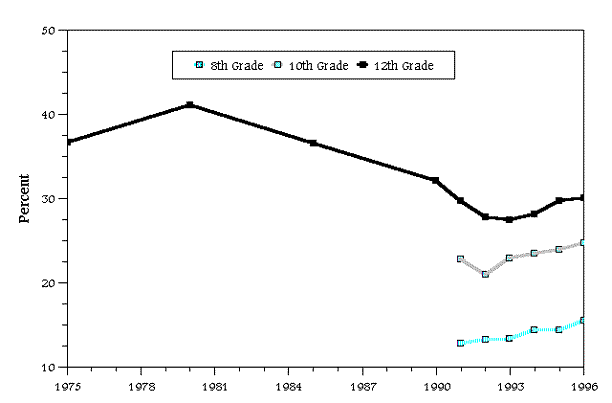
Source: Johnston, L.D., O Malley, P.M., Bachman, J.G., National Survey Results on Drug Use from The Monitoring the Future Study, 1975-1995. Rockville, Maryland: National Institutes of Health, National Institute on Drug Abuse, NIH Publication No. 97-4139, 1997. Institute for Social Research, University of Michigan. Tables D-27 and D-28. 1996 data from: The Monitoring the Future Study, The University of Michigan. The rise in drug use among American teens continues in 1996. Press release of December 19, 1996.
Table SD 3.3A
|
|||||||||||
|
1975
|
1980
|
1985
|
1990
|
1991
|
1992
|
1993
|
1994
|
1995
|
1996
|
||
|
|
|
|
|
|
|
|
|
|
|
||
| 8th Grade | |||||||||||
| Total |
|
|
|
|
12.9
|
13.4
|
13.5
|
14.5
|
14.5
|
15.6
|
|
| Male |
|
|
|
|
14.3
|
13.9
|
14.8
|
16
|
15.1
|
|
|
| Female |
|
|
|
|
11.4
|
12.8
|
12.3
|
13
|
13.9
|
|
|
| 10th Grade | |||||||||||
| Total |
|
|
|
|
22.9
|
21.1
|
23
|
23.6
|
24
|
24.8
|
|
| Male |
|
|
|
|
26.4
|
23.7
|
26.5
|
28.5
|
26.3
|
|
|
| Female |
|
|
|
|
19.5
|
18.6
|
19.3
|
18.7
|
21.5
|
|
|
| 12th Grade | |||||||||||
| Total |
36.8
|
41.2
|
36.7
|
32.2
|
29.8
|
27.9
|
27.5
|
28.2
|
29.8
|
30.2
|
|
| Male |
49
|
52.1
|
45.3
|
39.1
|
37.8
|
35.6
|
34.6
|
37
|
36.9
|
|
|
| Female |
26.4
|
30.5
|
28.2
|
24.4
|
21.2
|
20.3
|
20.7
|
20.2
|
23
|
|
|
| Source: Johnston, L.D., O Malley, P.M., Bachman, J.G., "National Survey Results on Drug Use from The Monitoring the Future Study, 1975-1995." Rockville, Maryland: National Institutes of Health, National Institute on Drug Abuse, NIH Publication No. 97-4139, 1997. Institute for Social Research, University of Michigan. Tables D-27 and D-28. 1996 data from: The Monitoring the Future Study, The University of Michigan. "The rise in drug use among American teens continues in 1996." Press release of December 19, 1996. | |||||||||||
Table SD 3.3.B
|
||||||||
|
1992-1993a
|
1994-1995a
|
|||||||
|
|
|
|||||||
|
8th Grade
|
10th Grade
|
12th Grade
|
8th Grade
|
10th Grade
|
12th Grade
|
|||
|
|
|
|
|
|
|
|||
| White |
12.6
|
23
|
31.3
|
White |
13.9
|
25.4
|
32.3
|
|
| Black |
10.7
|
14.8
|
12.6
|
Black |
10.8
|
13.3
|
14.9
|
|
| Hispanic |
21.4
|
23.8
|
27.2
|
Hispanic |
22
|
26.8
|
26.6
|
|
| Note: aTo derive percentages for each racial subgroup, data for two years have been combined to increase subgroups sample sizes and thus provide more stable estimates.
Source: Johnston, L.D., O Malley, P.M., Bachman, J.G., "National Survey Results on Drug Use from The Monitoring the Future Study, 1975-1995." Rockville, Maryland: National Institutes of Health, National Institute on Drug Abuse, NIH Publication No. 97-4139, 1997. Institute for Social Research, University of Michigan. Tables D-27 and D-28. |
||||||||
23 National Institute on Drug Abuse. National Trends in Drug Use and Related Factors Among American High School Students and Young Adults, 1976-1986. DHHS Pub. No. (ADM)87-1535. Washington, D.C.: U.S. Department of Health and Human Services, 1987.
24 Substance Abuse and Mental Health Services Administration. Preliminary Estimates From the 1995 National Household Survey on Drug Abuse. Rockville, Maryland: Public Health Service, 1996. 1995 results indicate that among binge drinkers, 18 percent were illicit drug users. In this survey, binge drinking is defined as five or more drinks on the same occasion at least once in the past month.
25 These percentages underestimate the rate of binge drinking among all youth, because school age youth who are not in school are somewhat more likely to binge drink than those in school. (Based on unpublished analyses of the National Health Interview Survey 1992 by Child Trends, Inc. and by unpublished prevalence rates of past month alcohol use among youths ages 12-17 by school status, enrolled or not-enrolled, from the 1994-95 National Household Surveys on Drug Abuse).
SD 3.4 Exposure to drunk driving
Motor vehicle crashes are a major cause of death in the U.S. for teenagers (13-19 year olds). Among young Americans of driving age, the issue of alcohol-impaired driving has particular significance. In all states, the purchase of alcohol by persons under age 21 is illegal; however, in 1994, 29 percent of the 2,610 traffic fatalities involving persons 15-17 years old were alcohol-related. For traffic deaths involving persons 18-20 years old, the percentage of alcohol involvement was 44 percent.26
In 1995, 42 percent of teens in grades 9-12 reported that within the last month prior to the survey, they had either driven after drinking alcohol or had ridden with a driver who had been drinking alcohol the same percentage as in 1991, and slightly higher than the 38 percent who reported doing so in 1993 (see Table SD 3.4).
Differences by Age. Rates of exposure to drunk driving differed little by age. In 1995, 46 percent of 12th grade students reported taking this risk, compared with 39 percent of 9th grade students (see Figure SD 3.4).
Differences by Gender. In 1995, 43 percent of males and 40 percent of females reported driving after drinking alcohol or riding with someone who had been drinking.
Differences by Race and Ethnicity. In 1995, 52 percent of Hispanic, 41 percent of white, and 39 percent of black teens reported having been exposed to drunk driving within the last month.
Figure SD 3.4
|
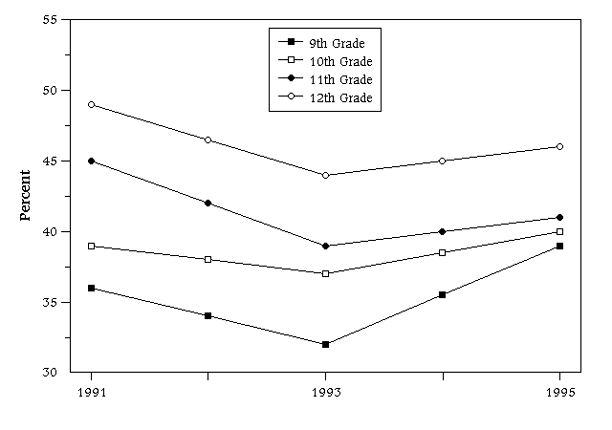
Source: Youth Risk Behavior Surveillance -- United States, 1991, 1993 and 1995. Unpublished tabulations by L. Kann, Centers for Disease Control and Prevention, Department of Health and Human Services.
Table SD 3.4
|
|||||
|
1991
|
1993
|
1995
|
|||
|
|
|
|
|||
| Total |
42
|
38
|
42
|
||
| Gender | |||||
| Male |
44
|
40
|
43
|
||
| Female |
41
|
36
|
40
|
||
| Grade | |||||
| 9th |
36
|
32
|
39
|
||
| 10th |
39
|
37
|
40
|
||
| 11th |
45
|
39
|
41
|
||
| 12th |
49
|
44
|
46
|
||
| Race/Ethnicity | |||||
| White |
43
|
37
|
41
|
||
| Black |
38
|
41
|
39
|
||
| Hispanic |
49
|
45
|
52
|
||
| Source: Youth Risk Behavior Surveillance United States, 1991, 1993, and 1995. Unpublished tabulations by L. Kann, Centers for Disease Control and Prevention, Department of Health and Human Services. | |||||
26 "Update: Alcohol-Related Traffic Crashes and Fatalities Among Youth and Young Adults United States, 1982-1994." Morbidity and Mortality Weekly Report 44:869-874.
SD 3.5 Illicit drug use
Drug use by youth has serious and often long-term individual, social, and economic consequences. Drug use contributes to crime, decreases economic productivity and requires a disproportionate share of health care services for those affected. Use of drugs is a preventable behavior that, when established in youth, can extend into adulthood. The health effects on individuals are striking for those drugs specified in this section.
- The use of cocaine has been linked with numerous health problems ranging from eating disorders to disability and even death from heart attack and stroke.27
- Marijuana use holds both health and cognitive risks, particularly for damage to pulmonary functions as a result of chronic use28
- Hallucinogens can affect brain chemistry and result in problems both in learning new information and retaining knowledge.29
- Chronic use of some inhalants may result in injury to the liver and kidneys as well as cause neurological damage, although it is not yet determined whether such damage is long-term.30
Marijuana Use.31 From a high of 33.7 percent in 1980, large and steady declines in the percentage of 12th graders reporting marijuana use were evident until 1992. Since 1992, however, marijuana use among 12th grade students has increased from 11.9 percent to 21.9 percent by 1996 (see Figure SD 3.5.A). There have also been increases in marijuana use among 8th and 10th graders in recent years. The rise in marijuana use is also evident among 8th grade students whose use has increased from 3.2 percent in 1991 to 11.3 percent in 1996. Marijuana use by 10th graders rose from 8.7 percent in 1991 to 20.4 percent by 1996.
Marijuana has consistently been used by higher percentages of 10th and 12th graders than any of the other drugs specified here. As of 1994, marijuana use among 8th grade students had surpassed prevalence rates of other drugs shown (see Table SD 3.5.A). This increase in the use of marijuana corresponds with a decline in its perceived harmfulness by students across all grade levels from 1991 to 1996.32
Use of other specified drugs. Increases have also been shown in the use of cocaine and hallucinogens since 1991 across all grade levels. In recent years, cocaine use has been least prevalent in all grade levels, with a high of 2.0 percent of 12th grade students reporting use within a 30-day period in 1996 (see Figure SD 3.5.B). Hallucinogens have low prevalence rates among 8th graders (1.9 percent), although use increases with grade, eventually surpassing the use of inhalants for the upper grade levels. The use of inhalants is highest among 8th grade students and has increased since 1991, with 5.8 percent reporting use in the past 30 days in 1996.
Differences by Age. As seen with cigarette and alcohol use (See Sections SD 3.1 and SD 3.3), use of both marijuana and hallucinogens increases with grade level. This increase is relatively small for hallucinogen use, but is substantial for marijuana use. In 1996, 11.3 percent of 8th grade students reported using marijuana in the last 30 days. Nearly double that percentage of 12th graders (21.9 percent) reported using marijuana within the last 30 days. In contrast, inhalant use is more prevalent in the 8th grade than in either the 10th or 12th grade level. The rate of inhalant use among 8th graders was 5.8 percent compared with 3.3 percent for 10th graders and 2.5 percent for high school seniors in 1996. The prevalence of cocaine use is somewhat lower among 8th graders, but is relatively similar across grade levels, never exceeding 2 percent in 1996.
Differences by Gender. Males are somewhat more likely than female high school students to report using inhalants, hallucinogens, and cocaine. The largest gender difference is seen in marijuana use and is most apparent in the upper grade levels. Among 8th grade students, 9.8 percent of males and 8.2 percent of females reported marijuana use within the preceding 30 days of the survey in 1995. In the 10th grade, males reported marijuana use 4 percentage points higher than that of females. This gender gap increases to 7 percentage points among high school seniors.
Differences by Race. For each category of drug use shown, black students consistently have the lowest rates of use across all grades (see Table SD 3.5.B).
Figure SD 3.5.A
|
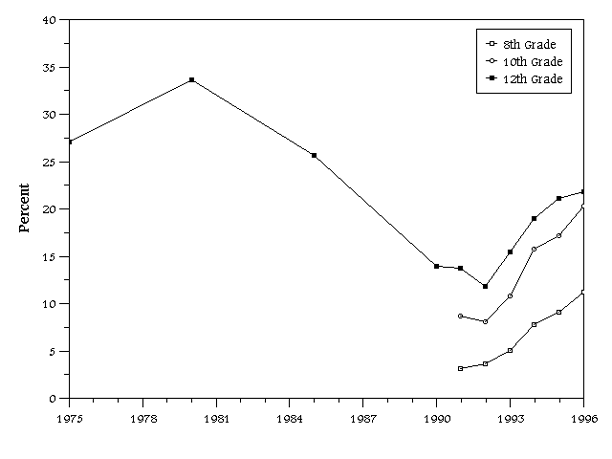
Source: Johnston, L.D., OMalley, P.M., Bachman, J.G., National Survey Results on Drug Use from the Monitoring the Future Study, 1975-1995. Rockville, Maryland: National Institutes of Health. National Institute on Drug Abuse. NIH Pub. No. 97-4139, 1997. Institute for Social Research, University of Michigan. 1996 data from: The Monitoring the Future Study, The University of Michigan. The rise in drug use among American teens continues in 1996. Press release of December 19, 1996.
Figure SD 3.5.B
|
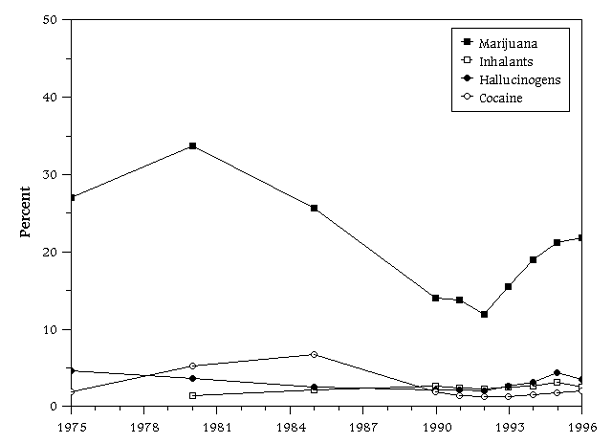
Source: Johnston, L.D., OMalley, P.M., Bachman, J.G., National Survey Results on Drug Use from the Monitoring the Future Study, 1975-1995. Rockville, Maryland: National Institutes of Health. National Institute on Drug Abuse. NIH Pub. No. 97-4139, 1997. Institute for Social Research, University of Michigan. 1996 data from: The Monitoring the Future Study, The University of Michigan. The rise in drug use among American teens continues in 1996. Press release of December 19, 1996.
Table SD 3.5.A
|
||||||||||||||
|
1975
|
1980
|
1985
|
1990
|
1991
|
1992
|
1993
|
1994
|
1995
|
1996
|
|||||
|
|
|
|
|
|
|
|
|
|
|
|||||
| Marijuana/Hashish | ||||||||||||||
| 8th |
|
|
|
|
3.2
|
3.7
|
5.1
|
7.8
|
9.1
|
11.3
|
||||
| Male |
|
|
|
|
3.8
|
3.8
|
6.1
|
9.5
|
9.8
|
|
||||
| Female |
|
|
|
|
2.6
|
3.5
|
4.1
|
6
|
8.2
|
|
||||
| 10th |
|
|
|
|
8.7
|
8.1
|
10.9
|
15.8
|
17.2
|
20.4
|
||||
| Male |
|
|
|
|
10.1
|
9
|
13.1
|
18.6
|
19.1
|
|
||||
| Female |
|
|
|
|
7.3
|
7.1
|
8.6
|
12.8
|
15
|
|
||||
| 12th |
27.1
|
33.7
|
25.7
|
14
|
13.8
|
11.9
|
15.5
|
19
|
21.2
|
21.9
|
||||
| Male |
32.3
|
37.8
|
28.7
|
16.1
|
16.1
|
13.4
|
18.2
|
23
|
24.6
|
|
||||
| Female |
22.5
|
29.1
|
22.4
|
11.5
|
11.2
|
10.2
|
12.5
|
15.1
|
17.2
|
|
||||
| Inhalantsa | ||||||||||||||
| 8th |
|
|
|
|
4.4
|
4.7
|
5.4
|
5.6
|
6.1
|
5.8
|
||||
| Male |
|
|
|
|
4
|
4.4
|
4.9
|
5.4
|
5.6
|
|
||||
| Female |
|
|
|
|
4.7
|
4.9
|
6
|
5.8
|
6.6
|
|
||||
| 10th |
|
|
|
|
2.7
|
2.7
|
3.3
|
3.6
|
3.5
|
3.3
|
||||
| Male |
|
|
|
|
2.9
|
2.9
|
3.7
|
3.9
|
3.8
|
|
||||
| Female |
|
|
|
|
2.6
|
2.6
|
2.9
|
3.3
|
3.2
|
|
||||
| 12th |
|
1.4
|
2.2
|
2.7
|
2.4
|
2.3
|
2.5
|
2.7
|
3.2
|
2.5
|
||||
| Male |
|
1.8
|
2.8
|
3.5
|
3.3
|
3
|
3.2
|
3.6
|
3.9
|
|
||||
| Female |
|
1
|
1.7
|
2
|
1.6
|
1.6
|
1.7
|
1.9
|
2.5
|
|
||||
| Hallucinogensb | ||||||||||||||
| 8th |
|
|
|
|
0.8
|
1.1
|
1.2
|
1.3
|
1.7
|
1.9
|
||||
| Male |
|
|
|
|
0.9
|
1.1
|
1.3
|
1.5
|
1.8
|
|
||||
| Female |
|
|
|
|
0.7
|
1
|
1.1
|
1
|
1.5
|
|
||||
| 10th |
|
|
|
|
1.6
|
1.8
|
1.9
|
2.4
|
3.3
|
2.8
|
||||
| Male |
|
|
|
|
1.8
|
2.1
|
2.5
|
3
|
3.9
|
|
||||
| Female |
|
|
|
|
1.4
|
1.4
|
1.3
|
1.7
|
2.7
|
|
||||
| 12th |
4.7
|
3.7
|
2.5
|
2.2
|
2.2
|
2.1
|
2.7
|
3.1
|
4.4
|
3.5
|
||||
| Male |
6
|
4.8
|
3.4
|
3.2
|
3.1
|
2.9
|
3.6
|
4.3
|
5.8
|
|
||||
| Female |
3.6
|
2.5
|
1.4
|
1
|
1.1
|
1.4
|
1.7
|
1.7
|
2.7
|
|
||||
| Cocaine | ||||||||||||||
| 8th |
|
|
|
|
0.5
|
0.7
|
0.7
|
1
|
1.2
|
1.3
|
||||
| Male |
|
|
|
|
0.7
|
0.6
|
0.9
|
1.2
|
1.1
|
|
||||
| Female |
|
|
|
|
0.4
|
0.8
|
0.6
|
0.9
|
1.2
|
|
||||
| 10th |
|
|
|
|
0.7
|
0.7
|
0.9
|
1.2
|
1.7
|
1.7
|
||||
| Male |
|
|
|
|
0.7
|
0.8
|
1.2
|
1.4
|
1.8
|
|
||||
| Female |
|
|
|
|
0.6
|
0.6
|
0.5
|
0.9
|
1.5
|
|
||||
| 12th |
1.9
|
5.2
|
6.7
|
1.9
|
1.4
|
1.3
|
1.3
|
1.5
|
1.8
|
2
|
||||
| Male |
2.5
|
6
|
7.7
|
2.3
|
1.7
|
1.5
|
1.7
|
1.9
|
2.2
|
|
||||
| Female |
1.2
|
4.3
|
5.6
|
1.3
|
0.9
|
0.9
|
0.9
|
1.1
|
1.3
|
|
||||
| aAll data are unadjusted for underreporting of nitrites. bAll data are unadjusted for underreporting of PCP. Source: Johnston, L.D., OMalley, P.M., Bachman, J.G., "National Survey Results on Drug Use from The Monitoring the Future Study, 1975-1995." Rockville, Maryland: National Institutes of Health. National Institute on Drug Abuse. NIH Pub. No. 97-4139, 1997. Institute for Social Research, University of Michigan. Tables 2-3-12, 3-3-12, 5-3-12, 9-3-12, and 8. 1996 data from: The Monitoring the Future Study, The University of Michigan. "The rise in drug use among American teens continues in 1996." Press release of December 19, 1996. |
||||||||||||||
Table SD 3.5.B
|
|||||||
|
1992-1993a
|
1994-1995a
|
||||||
|
|
|
||||||
|
8th Grade
|
10th Grade
|
12th Grade
|
8th Grade
|
10th Grade
|
12th Grade
|
||
|
|
|
|
|
|
|
||
| Marijuana/Hashish | |||||||
| White |
4.1
|
9.8
|
14.9
|
7.8
|
16.8
|
20.8
|
|
| Black |
2.9
|
4.9
|
8.1
|
6.6
|
13.8
|
16.8
|
|
| Hispanic |
8.3
|
12.4
|
12.5
|
12.9
|
17.7
|
17.9
|
|
| Inhalants | |||||||
| White |
5.4
|
3.2
|
2.6
|
6.6
|
3.9
|
3.3
|
|
| Black |
2.7
|
2
|
1.4
|
2.5
|
1.3
|
1.4
|
|
| Hispanic |
5.6
|
3
|
2.1
|
6.5
|
3.4
|
2.3
|
|
| Hallucinogens | |||||||
| White |
1.1
|
2.1
|
2.9
|
1.6
|
3.1
|
4.1
|
|
| Black |
0.4
|
0.3
|
0.5
|
0.4
|
0.8
|
0.7
|
|
| Hispanic |
1.9
|
1.8
|
1.7
|
1.9
|
2.7
|
3.4
|
|
| Cocaine | |||||||
| White |
0.5
|
0.8
|
1.2
|
0.9
|
1.4
|
1.6
|
|
| Black |
0.4
|
0.2
|
0.4
|
0.4
|
0.6
|
0.5
|
|
| Hispanic |
1.8
|
1.2
|
2.4
|
2.5
|
2.4
|
2.3
|
|
| Note: aData have been combined for two years to increase subgroup sample sizes, and provide more stable estimates.
Source: Johnston, L.D., OMalley, P.M., Bachman, J.G. "National Survey Results on Drug Use from the Monitoring the Future Study, 1975-1995." Rockville, Maryland: National Institutes of Health. National Institute on Drug Abuse, NIH Pub. No. 97-4139, 1997. Institute for Social Research, the University of Michigan. Table 10. |
|||||||
27 Blanken, A.J. 1993. "Measuring Use of Alcohol and Other Drugs Among Adolescents." In Public Health Reports, Journal of the U.S. Public Health Service, Volume 108, Supplement 1, 1993.
28 Blanken, A.J. 1993. "Measuring Use of Alcohol and Other Drugs Among Adolescents." In Public Health Reports, Journal of the U.S. Public Health Service, Volume 108, Supplement 1, 1993.
29 "Measuring the Health Behavior of Adolescents: The Youth Risk Behavior Surveillance System and Recent Reports on High-Risk Adolescents." Public Health Reports. Vol. 108, Supplement 1. Rockville, Maryland: Public Health Service. 1993.
30 Ibid.
31 These percentages likely underestimate the rate of drug use among all youth, because school age youth who are not in school are somewhat more likely to use drugs than those in school. (Based on unpublished prevalence rates of past month marijuana use, past year cocaine use and past year inhalant use among youths ages 12-17 by school status, enrolled or not-enrolled, from the 1994-95 National Household Surveys on Drug Abuse.)
32 The data on perceived harmfulness of specified drugs is not shown here but can also be obtained from The Monitoring the Future Study. The percentage of students who think that smoking marijuana occasionally or regularly is harmful, physically or in other ways, has dropped by at least 13 percentage points from 1991 to 1996 across all grade levels according to The Monitoring the Future Study. In 1996, 25.9 percent of 12th grade students perceived smoking marijuana occasionally to be harmful and 59.9 percent perceived smoking marijuana regularly to be harmful.
SD 3.6 Peer attitudes towards alcohol, marijuana, cocaine, and smoking
Drug use is correlated with attitudes and beliefs about drugs, both in terms of perceived health risks and the level of peer disapproval.33 As children reach adolescence, peer influences on personal behavior can take on increasing importance in determining the use of drugs, alcohol and cigarettes.
The majority of high school seniors have long reported peer disapproval of drug and alcohol use and cigarette smoking as reflected in their responses to questions of the level of disapproval they would receive from their peers for: 1) taking one to two drinks nearly every day; 2) smoking marijuana even occasionally (as opposed to trying it once); 3) taking cocaine even occasionally (as opposed to trying it once); and, 4) smoking one or more packs of cigarettes per day (see Table SD 3.6).
Peer disapproval of drinking and smoking marijuana among 12th graders increased from 1981 to 1992 to highs of 78 percent and 79 percent, respectively. Disapproval of both these actions began to decline in 1993. By 1995, the percentage of 12th grade students who reported peer disapproval of drinking was 73 percent, and of smoking marijuana was 65 percent (see Figure SD 3.6). Peer disapproval of smoking cigarettes has also declined since 1992, although disapproval levels had been relatively stable prior to that time. In 1995, 69 percent of 12th graders reported peer disapproval of smoking cigarettes, down from a high of 76 percent in 1992. Peer disapproval of cocaine use increased from 87 percent in 1986 to 95 percent in 1991 and has remained at this level. Cocaine use commands the highest level of peer disapproval for every year shown.
Differences by Gender. Male high school seniors have consistently reported lower levels of peer disapproval of drinking than have their female peers. In 1995, 65 percent of males reported peer disapproval of drinking, compared to 80 percent of females. Disapproval rates for cigarette use were similar for males and females until 1993, when male disapproval began to decrease. Male students also report somewhat lower peer disapproval of smoking marijuana.
Differences by Race. For 1995, rates of disapproval for drug use were generally similar for blacks and whites, with the exception of cigarette smoking. Among blacks, 81 percent reported peer disapproval of smoking compared to 67 percent among white students.
| Figure SD 3.6 Percentage of High School Seniors Who Reported that Peers Would Not Approve of Their Using Alcohol, Marijuana, Cocaine, or Cigarettes: 1995 |
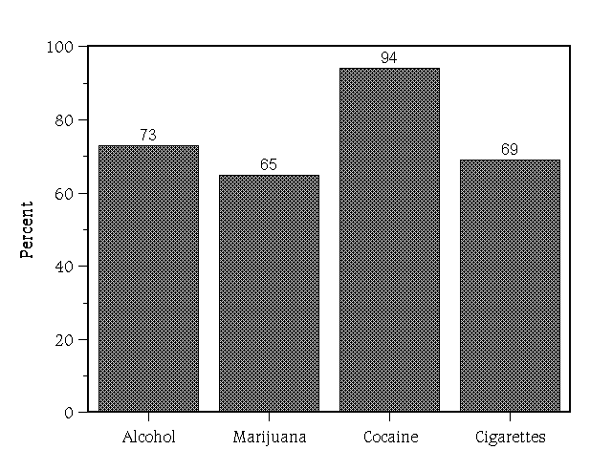
Source: Johnston, L.D., Bachman, J.G. , OMalley, P.M. The Monitoring the Future: Questionnaire responses from the Nations High School Seniors. 1981, 1986, 1991, 1992, 1993, 1994, 1995. (Form 4.) Ann Arbor, Michigan: Institute for Social Research, The University of Michigan.
Table SD 3.6
|
||||||||||
|
1981
|
1986
|
1991
|
1992
|
1993
|
1994
|
1995
|
||||
|
|
|
|
|
|
|
|
||||
| Disapprove of taking one to two drinks nearly every day | ||||||||||
| Total |
70
|
76
|
77
|
78
|
77
|
76
|
73
|
|||
| Gender | ||||||||||
| Male |
61
|
68
|
68
|
69
|
68
|
67
|
65
|
|||
| Female |
79
|
84
|
85
|
85
|
85
|
83
|
80
|
|||
| Race | ||||||||||
| White |
69
|
75
|
77
|
77
|
76
|
76
|
72
|
|||
| Black |
73
|
82
|
80
|
81
|
80
|
78
|
74
|
|||
| Disapprove of smoking marijuana even occasionally | ||||||||||
| Total |
56
|
64
|
76
|
79
|
74
|
69
|
65
|
|||
| Gender | ||||||||||
| Male |
54
|
60
|
73
|
78
|
72
|
63
|
62
|
|||
| Female |
58
|
68
|
78
|
80
|
75
|
74
|
69
|
|||
| Race | ||||||||||
| White |
55
|
63
|
75
|
78
|
73
|
68
|
64
|
|||
| Black |
62
|
72
|
86
|
84
|
76
|
70
|
69
|
|||
| Disapprove of taking cocaine even occasionallya | ||||||||||
| Total |
--
|
87
|
95
|
94
|
94
|
94
|
94
|
|||
| Gender | ||||||||||
| Male |
--
|
84
|
93
|
93
|
92
|
91
|
92
|
|||
| Female |
--
|
90
|
96
|
96
|
96
|
96
|
95
|
|||
| Race | ||||||||||
| White |
--
|
88
|
96
|
96
|
95
|
94
|
95
|
|||
| Black |
--
|
89
|
97
|
91
|
89
|
94
|
92
|
|||
| Disapprove of smoking one or more packs of cigarettes per day | ||||||||||
| Total |
74
|
76
|
74
|
76
|
72
|
72
|
69
|
|||
| Gender | ||||||||||
| Male |
74
|
75
|
72
|
76
|
68
|
67
|
65
|
|||
| Female |
74
|
77
|
77
|
75
|
75
|
77
|
74
|
|||
| Race | ||||||||||
| White |
74
|
75
|
72
|
77
|
71
|
69
|
67
|
|||
| Black |
75
|
81
|
88
|
75
|
80
|
83
|
81
|
|||
| aThe question regarding cocaine use was not included prior to 1986.
Source: Johnston, L.D., Bachman, J.G., OMalley, P.M. "The Monitoring the Future: Questionnaire Responses from the Nations High School Seniors." 1981, 1986, 1991, 1992, 1993, 1994, 1995. (Form 4) Ann Arbor, Michigan: Institute for Social Research, The University of Michigan. Data based on one of six questionnaire forms with a resulting sample size one-sixth of the total sample size for each year. |
||||||||||
33 Substance Abuse and Mental Health Services Administration. "Preliminary Estimates from the 1995 National Household Survey on Drug Abuse." Rockville, Maryland: Public Health Service, 1996.
SD 3.7 Abuse of alcohol or other controlled substances
The use of alcohol and other illicit drugs by teens has been related to numerous social problems such as delinquency, fighting, and early sexual activity,34 and to a variety of short- and long-term health problems.35 For many reasons, then, it is important that youth stay free of all such substances.
In 1995, 15 percent of 12 to 17 year olds reported either binge drinking or any use of an illicit drug during the previous month (see Table SD 3.7).
Differences by Gender. Rates of reported use in 1995 appear to be modestly higher among males at 17 percent, compared to 13 percent among female youth.
Differences by Race and Ethnicity. Rates of reported use differed little among whites, blacks, and Hispanics, ranging from 12 percent to 16 percent in 1995.
Figure SD 3.7
|
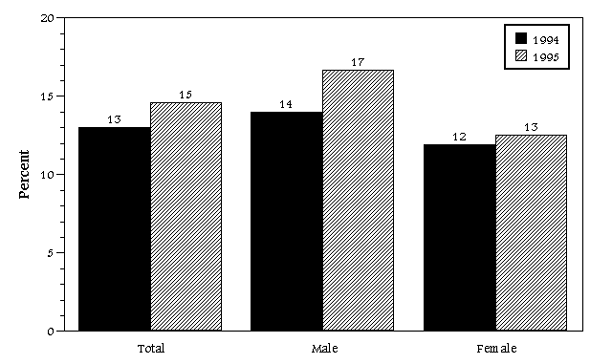
Note: aIllicit drugs include marijuana, cocaine (including crack), heroin, hallucinogens (including PCP), inhalants, and nonmedical use of psychotherapeutics.
bFive or more drinks on the same occasion on one or more days in the past 30 days.
Source: Office of Applied Studies, SAMHSA. National Household Survey on Drug Abuse.
Table SD 3.7
|
|||||
|
1994
|
1995
|
||||
|
|
|
||||
| Total |
13
|
15
|
|||
| Sex | |||||
| Male |
14
|
17
|
|||
| Female |
12
|
13
|
|||
| Race/Ethnicity | |||||
| White |
15
|
16
|
|||
| Black |
10
|
12
|
|||
| Hispanic |
10
|
13
|
|||
| Note: aIllicit drugs include marijuana, cocaine (including crack), heroin, hallucinogens (including PCP), inhalants, and nonmedical use of psychotherapeutics. bFive or more drinks on the same occasion on one or more days in the past 30 days. Source: Office of Applied Studies, SAMHSA. National Household Survey on Drug Abuse. |
|||||
34 National Institute of Drug Abuse. National Trends in Drug Use and Related Factors Among American High School Students and Young Adults, 1976-1986. DHHS Pub. No. (ADM)87-1535. Washington, D.C.: U.S. Department of Health and Human Services, 1987.
35 Measuring the Health Behavior of Adolescents: The Youth Risk Behavior Surveillance System and Recent Reports on High Risk Adolescents. Public Health Reports. Volume 108, Supplement 1. Rockville, MD: Public Health Service. 1993.
BEHAVIORAL HEALTH: SEXUAL ACTIVITY AND FERTILITY
SD 4.1 Sexually experienced teens
Sexual experience, and particularly age at first intercourse, represent critical indicators of the risk of pregnancy and sexually transmitted diseases. Youth who begin having sex at younger ages are exposed to these risks over a longer period of time. Because sexual intercourse during the teen years, especially first intercourse, is often unplanned,36 it is also often unprotected by contraception.37 In addition, research has shown that youth who have early sexual experience are more likely at later ages to have more sexual partners and more frequent intercourse.38
Trends over the past several decades show that increasing proportions of teens are sexually experienced defined as ever having had sexual intercourse (see Table SD 4.1.A).
Trends Among Sexually Experienced Female Teens. Among female adolescents of all ages, the percentage who were sexually experienced has increased over time (see Table SD 4.1.A). For example, the percentage of 18-year-old females who were sexually experienced increased from 27 percent for the 1958-1960 cohort, to 35 percent for the 1970-1972 cohort, and to 52 percent for the 1985-1987 cohort. Cohorts are defined as those females who turned 20 in the specific time period presented.
Trends Among Sexually Experienced Male Teens. The percentage of male teens who were sexually experienced has also increased for male adolescents over age 14. For example, the percentage of 18-year-old males who were sexually experienced increased from 55 percent for the 1970-1972 cohort to 64 percent for the 1985-1987 cohort (see Table SD 4.1.A).
Differences by Age. Age is the most important correlate of teen sexual experience. By age 13, just under 1 in 10 males and only 1 in 50 females were sexually experienced, but by age 20, about 3 in 4 females and 4 in 5 males were sexually experienced (see Figure SD 4.1). By the late teen years, most teens are sexually experienced; however it is important to note that not all teens are sexually experienced. Among the 1985-1987 cohort of youth, nearly half of adolescent females and more than one-third of adolescent males had not had intercourse by age 18 (see Table SD 4.1.A). The pattern of more teenagers having had sex as age increases is reflected in the data for 1995 as well. Data from the Youth Risk Behavior Survey, a survey of students rather than all adolescents, show that, in the 9th grade, 37 percent of students report having had sexual intercourse. This percentage rises with each grade and reaches 66 percent by the 12th grade39 (see Table SD 4.1.B).
Differences by Gender. Until very recently, more teen males than females reported having had intercourse by a given age. Data from the 1985-1987 cohort suggest that the proportion of teen males at each year of age who report having sex was roughly equal to the number of sexually experienced teen females who are one year older (see Table SD 4.1.A). Caution should be exercised in interpreting these differences, however, since the data for males and females come from different surveys. Data for students from the Youth Risk Behavior Survey indicate that in 1995, gender differences were minimal or nonexistent, except for ninth grade (see Table SD 4.1.B).
Differences by Race.40 Black students are more likely than white and Hispanic students to have had their first sexual experience while still in high school (see Table SD 4.1.B). Specifically, in 1995:
- 49 percent of both male and female white students reported having had sexual intercourse;
- 62 percent of Hispanic male students and 53 percent of Hispanic female students reported having had sexual intercourse;
- 81 percent of black male students and 73 percent of black female students reported having had sexual intercourse.
Figure SD 4.1
|
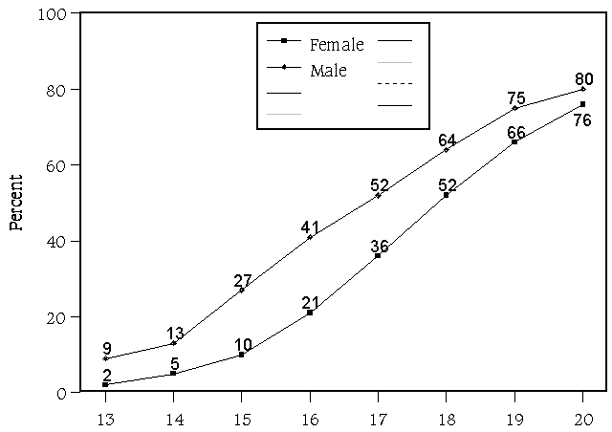
Source: Alan Guttmacher Institute. (1994). Sex and Americas Teenagers, New York, NY: Alan Guttmacher Institute. Based on data from the 1988 National Survey of Family Growth and the 1991 Survey of Men. Caution should be used in making direct comparisons of data from different surveys.
Table SD 4.1.A
|
|||||
|
FEMALES Who Turned Age 20 in:b
|
|||||
|
Ages
|
1958-1960
|
1970-1972
|
1985-1987
|
||
|
13
|
1
|
0
|
2
|
||
|
14
|
2
|
1
|
5
|
||
|
15
|
3
|
4
|
10
|
||
|
16
|
8
|
9
|
21
|
||
|
17
|
16
|
20
|
36
|
||
|
18
|
27
|
35
|
52
|
||
|
19
|
46
|
53
|
66
|
||
|
20
|
61
|
68
|
76
|
||
|
Males Who Turned Age 20 in:b
|
|||||
|
Ages
|
1958-1960
|
1970-1972
|
1985-1987
|
||
|
13
|
--
|
11
|
9
|
||
|
14
|
--
|
15
|
13
|
||
|
15
|
--
|
20
|
27
|
||
|
16
|
--
|
30
|
41
|
||
|
17
|
--
|
41
|
52
|
||
|
18
|
--
|
55
|
64
|
||
|
19
|
--
|
67
|
75
|
||
|
20
|
--
|
74
|
80
|
||
| Note: aCohorts are defined as those individuals who turned twenty-years-old within the specified time period. bData are based on females aged 30-32 and 42-44 in the 1982 National Survey of Family Growth (NSFG) and aged 21-23 and 36-38 in the 1988 NSFG and males aged 21-23 and 36-38 in the 1991 Survey of Men. Source: Alan Guttmacher Institute, 1994. Sex and Americas Teenagers, New York, NY. Alan Guttmacher Institute. |
|||||
| Table SD 4.1.B Sexually Experienced Teens: Percentage of High School Students, Grades 9-12, Who Reported Ever Having Sexual Intercourse, by Sex, Race/Ethnicity, and Grade, 1995 |
|||||
|
Total
|
Male
|
Female
|
|||
|
|
|
|
|||
| Total |
53
|
54
|
52
|
||
| Grade | |||||
| 9th |
37
|
41
|
32
|
||
| 10th |
48
|
50
|
46
|
||
| 11th |
59
|
57
|
60
|
||
| 12th |
66
|
67
|
66
|
||
| Race/Ethnic Group | |||||
| White, Non-Hispanic |
49
|
49
|
49
|
||
| Black, Non-Hispanic |
73
|
81
|
67
|
||
| Hispanic |
58
|
62
|
53
|
||
| Source: Kann, L., Warren, C.W., Harris, W.A., Collins, J.L., Williams, B.I., Ross, J.G., Kolbe, L.J. Youth Risk Behavior Surveillance United States, 1995. Morbidity and Mortality Weekly Report, Vol. 45, No. SS-4, 1996. | |||||
36 Lowenstein, G. and Furstenberg, F.F. 1991. "Is teenage sexual behavior rational?" Journal of Applied Social Psychology 21(12): 957-986.
37 Forrest, J. D., and Singh, S. 1990. "The sexual and reproductive behavior of American women, 1982-1988." Family Planning Perspectives 22 (5): 206-214.
38 Koyle, P., Jensen, L., Olsen, J., and Cundick, B. 1989. "Comparison of sexual behaviors among adolescents having an early, middle, and late first intercourse experience." Youth and Society 20(4): 461-475.
39 Direct comparison with other years is not possible as grade in school does not accurately reflect age and data from the Youth Risk Behavior Survey only includes teens in school.
40 Estimates for whites and blacks exclude Hispanics of those races.
SD 4.2 Sexually active teens
Having become sexually experienced does not necessarily mean a teenager will be sexually active from that point on. They may still abstain from intercourse out of concern for the risk of pregnancy or sexually transmitted diseases, a preference for abstinence, or they may experience periods in which they do not have a sexual partner. Nevertheless, research indicates that once a person has had sex, they are likely to continue to be sexually active; among young adults aged 18-22 who had ever had intercourse, over 70 percent had a second experience of intercourse within six months of first intercourse.41
The percentage of teens in grades 9-12 who are sexually active defined as having had sexual intercourse in the previous three months has remained steady at 38 percent from 1991 to 1995 (see Table SD 4.2).
Differences by Gender. There is little difference between the percentages of male and female students who are sexually active. In 1995, 40 percent of males and 36 percent of females reported being sexually active.
Differences by Race.42 In 1995, black students were, at 54 percent, more likely than either non-Hispanic white (35 percent) or Hispanic (39 percent) students to be sexually active (see Figure SD 4.2).
Differences by Grade. The percentage of sexually active teens rises as grade increases. Twelfth grade students are nearly twice as likely to be sexually active than are 9th grade students.
Figure SD 4.2
|
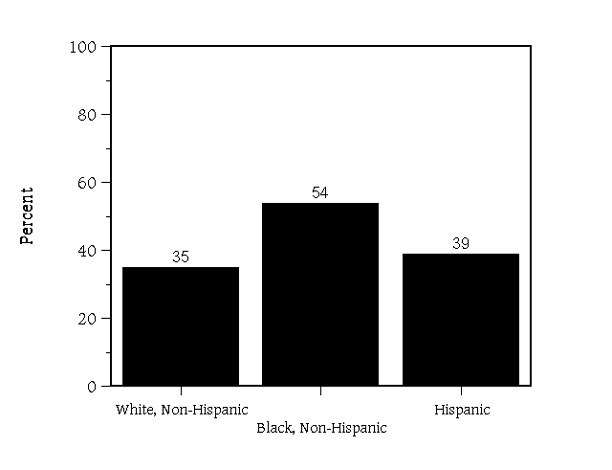
Sources: Youth Risk Behavior Surveillance - United States, 1995. Morbidity and Mortality Weekly Report. Vol. 45, No SS-4, 1996: and unpublished tabulations from L. Kann, Centers for Disease Control and Prevention, U.S. Department of Health and Human Services.
Table SD 4.2
|
||||||
|
1991
|
1993
|
1995
|
||||
|
|
|
|
||||
| Total |
38
|
38
|
38
|
|||
| Sex | ||||||
| Male |
38
|
38
|
40
|
|||
| Female |
37
|
38
|
36
|
|||
| Race | ||||||
| White, Non-Hispanic |
34
|
34
|
35
|
|||
| Black, Non-Hispanic |
59
|
59
|
54
|
|||
| Hispanic |
37
|
39
|
39
|
|||
| Grade | ||||||
| 9th |
22
|
25
|
24
|
|||
| 10th |
33
|
30
|
34
|
|||
| 11th |
43
|
40
|
42
|
|||
| 12th |
51
|
53
|
50
|
|||
| Age | ||||||
| 15 years |
24
|
25
|
28
|
|||
| 16 years |
38
|
35
|
37
|
|||
| 15 or 16 years |
31
|
31
|
32
|
|||
| Sources: "1990-1991 Youth Risk Behavior Surveillance System." Chronic Disease and Health Promotion Reprints from the Morbidity and Mortality Weekly Report, Public Health Service, Centers for Disease Control and Prevention. "Youth Risk Behavior Surveillance - United States, 1993." Morbidity and Mortality Weekly Report. Vol. 44, No. SS-1, 1995. "Youth Risk Behavior Surveillance - United States, 1995." Morbidity and Mortality Weekly Report. Vol. 45, No SS-4, 1996: and unpublished tabulations from L. Kann, Centers for Disease Control and Prevention, U.S. Department of Health and Human Services. | ||||||
41 Moore, K.A. and Peterson, J.L. August 1989. "The Consequences of Teenage Pregnancy." Final report to NICHD and ASPE/HHS, Grant number HD 21537.
42 Estimates for whites and blacks exclude Hispanics of those races.
SD 4.3 Contraceptive use by teens
Sexual intercourse without contraception puts a teen at risk of unintended pregnancy and of contracting sexually transmitted diseases such as HIV/AIDS. The vast majority of teens do not want to become pregnant. Data from a national survey show that among teens who had first intercourse at age 17 or younger, fewer than one in one hundred wanted a pregnancy to occur at that time. This was true for both males and females, and for both blacks and whites.43
Condoms and birth control pills are the most common forms of contraception used by sexually active teenagers.44 In 1995, over half (54 percent) of sexually experienced students in grades 9-12 reported use of a condom during their last sexual intercourse, while only 17 percent reported use of the birth control pill (see Tables SD 4.3.A and SD 4.3.B).
Condom use among sexually experienced students increased between 1990 to 1995 from 45 percent to 54 percent (see Table SD 4.3.A). Use of birth control pills has remained relatively steady from 1993 to 1995, with some subgroup differences that are discussed below (see Table SD 4.3.B).
Differences by Gender. Female students are less likely than male students to report having used a condom during their last intercourse (49 percent of females vs. 61 percent of males in 1995).
Differences by Grade. Use of condoms decreases as grade in school increases, while use of the pill increases with grade. In 1995, 63 percent of students in the 9th grade reported use of a condom compared with 50 percent of 12th grade students. In contrast, only 11 percent of 9th graders reported use of the pill, while a quarter of 12th graders reported its use (see Figure SD 4.3).
Differences by Race.45 Black students report the highest use of condoms, while white students report the highest use of the pill. In 1995, white students were more likely to have used the pill during their last sexual intercourse (21 percent) than were either black students (10 percent) or Hispanic students (11 percent).
It is important to note that the data presented here include only those teens who are in school. Teens out of school are likely to have lower rates of contraceptive use as their access to education regarding the risks associated with unprotected sex, as well as guidance on how to obtain protection, is more limited.
Figure SD 4.3
|
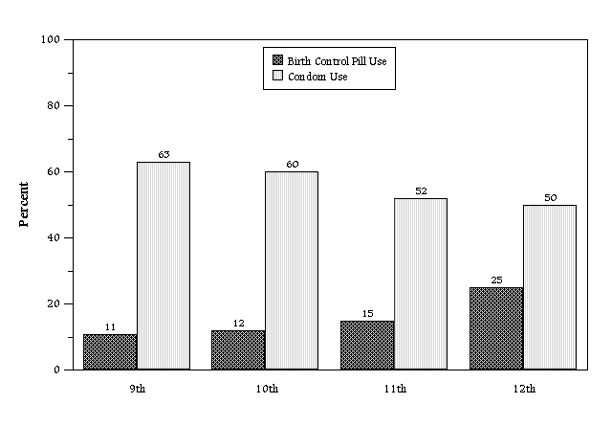
Source: Youth Risk Behavior Surveillance- United States, 1993. Morbidity and Mortality Weekly Report. Vol. 44, No. SS-1, 1995. Youth Risk Behavior Surveillance - United States, 1995. Morbidity and Mortality Weekly Report. Vol. 45, No. SS-4, 1996: and unpublished tabulations from L. Kann, Centers for Disease Control and Prevention, U.S. Department of Health and Human Services.
Table SD 4.3.A
|
||||||||||||||
|
1990
|
1993
|
1995
|
||||||||||||
|
|
|
|
||||||||||||
|
Total
|
Male
|
Female
|
Total
|
Male
|
Female
|
Total
|
Male
|
Female
|
||||||
|
|
|
|
|
|
|
|
|
|
||||||
| Total |
45
|
49
|
40
|
53
|
59
|
46
|
54
|
61
|
49
|
|||||
| Grade | ||||||||||||||
| 9th |
51
|
54
|
46
|
62
|
63
|
59
|
63
|
66
|
59
|
|||||
| 10th |
48
|
53
|
43
|
55
|
63
|
46
|
60
|
68
|
52
|
|||||
| 11th |
44
|
51
|
37
|
55
|
65
|
46
|
52
|
57
|
49
|
|||||
| 12th |
42
|
45
|
38
|
47
|
52
|
41
|
50
|
57
|
43
|
|||||
| Race/Ethnicity | ||||||||||||||
| White, non-Hispanic |
46
|
50
|
42
|
52
|
59
|
46
|
53
|
58
|
48
|
|||||
| Black, non-Hispanic |
47
|
55
|
37
|
57
|
64
|
48
|
66
|
72
|
61
|
|||||
| Hispanic |
38
|
47
|
28
|
46
|
55
|
37
|
44
|
56
|
33
|
|||||
| Source: "1990-1991 Youth Risk Behavior Surveillance System." Chronic Disease and Health Promotion Reprints from the Morbidity and Mortality Weekly Report Public Health Service, Centers for Disease Control and Prevention. "Youth Risk Behavior Surveillance-United States, 1993." Morbidity and Mortality Weekly Report. Vol. 44, No. SS-1, 1995. "Youth Risk Behavior Surveillance- United States, 1995." Morbidity and Mortality Weekly Report. Vol. 45, No. SS-4, 1996: and unpublished tabulations from L. Kann. | ||||||||||||||
Table SD 4.3.B
|
|||||||||
|
1993
|
1995
|
||||||||
|
|
|
||||||||
|
Total
|
Male
|
Female
|
Total
|
Male
|
Female
|
||||
|
|
|
|
|
|
|
||||
| Total |
18
|
15
|
22
|
17
|
14
|
20
|
|||
| Grade | |||||||||
| 9th |
9
|
8
|
11
|
11
|
10
|
13
|
|||
| 10th |
14
|
10
|
17
|
12
|
9
|
16
|
|||
| 11th |
17
|
12
|
22
|
15
|
13
|
17
|
|||
| 12th |
26
|
23
|
29
|
25
|
21
|
29
|
|||
| Race/Ethnicity | |||||||||
| White, non-Hispanic |
20
|
17
|
24
|
21
|
17
|
25
|
|||
| Black, non-Hispanic |
15
|
11
|
21
|
10
|
8
|
12
|
|||
| Hispanic |
12
|
10
|
15
|
11
|
14
|
9
|
|||
| Sources: "Youth Risk Behavior Surveillance- United States, 1993." Morbidity and Mortality Weekly Report. Vol. 44, No. SS-1, 1995. Youth Risk Behavior Surveillance - United States, 1995." Morbidity and Mortality Weekly Report. Vol. 45, No. SS-4, 1996: and unpublished tabulations from L. Kann, Centers for Disease Control and Prevention, U.S. Department of Health and Human Services. | |||||||||
43 Moore, K.A. and Peterson, J.L. August, 1989. "The Consequences of Teenage Pregnancy." Final Report to NICHD and ASPE/DHHS, Grant No. HD 21537.
44 Peterson, L.S. "Contraceptive Use in the United States: 1982-90." Advance Data, No. 260, February 14, 1995. Division of Vital Statistics, National Center for Health Statistics, Centers for Disease Control and Prevention. Data from the National Survey of Family Growth.
45 Estimates for whites and blacks exclude Hispanics of those races.
SD 4.4 Number of sex partners
The greater the number of sexual partners a person has, the greater the risk of contracting sexually transmitted diseases including HIV/AIDS. While trend data on the sexual behavior of teens are limited, one study indicates that the proportion of sexually active females living in metropolitan areas who have had six or more sexual partners doubled from 1971 to 1988.46
Differences by Gender. Male youth generally report a higher number of sexual partners than do female youth. In 1992, 31 percent of sexually active males and 18 percent of sexually active females ages 15-19 reported having six or more sexual partners. The number of sexual partners among sexually active females is concentrated at the lower end of the scale, with either one, two, or three partners reported (see Table SD 4.4.A). Among high school students surveyed in 1995, 21 percent of males reported having had four or more sexual partners compared to 14 percent of female students (see Table SD 4.4.B).
Differences by Race.47 Black youth are more likely to have had four or more sexual partners than their white or Hispanic peers: 36 percent versus 14 and 18 percent, respectively (see Table SD 4.4.B).
Differences by Age at First Intercourse. Age at first intercourse has a strong association with the number of sexual partners a person has over a lifetime (see Table SD 4.4.C). Among teens who were age 20 in 1992, 74 percent of males who had sexual intercourse at age 14 or younger had six or more partners during their lifetime, compared to 48 percent of those who initiated sex at ages 15 or 16, and 10 percent of those who did not have intercourse until age 17 or older. A similar pattern exists for females (see Figure SD 4.4).
Figure SD 4.4
|
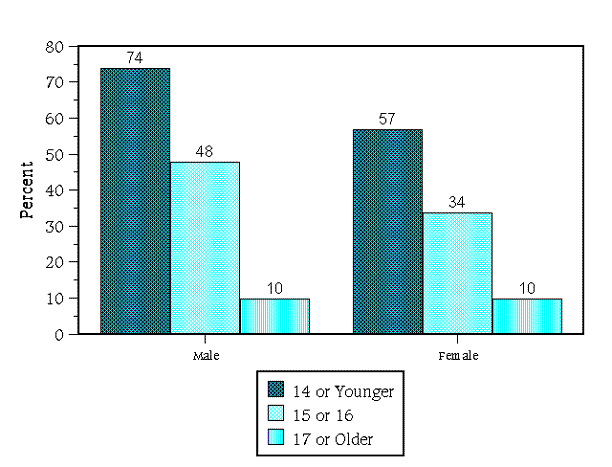
Source: 1992 National Health Interview Survey - Youth Risk Behavior Supplement. Tabulations by Child Trends, Inc.
Table SD 4.4.A
|
|||||||
|
One Partner
|
2-3 Partners
|
4-5 Partners
|
>6 Partners
|
||||
|
|
|
|
|
||||
| Males |
27
|
28
|
15
|
31
|
|||
| White, Non-Hispanic |
31
|
29
|
15
|
26
|
|||
| Black, Non-Hispanic |
12
|
26
|
17
|
45
|
|||
| Hispanic |
24
|
31
|
12
|
33
|
|||
| Below poverty |
22
|
23
|
15
|
40
|
|||
| At or above poverty |
28
|
30
|
15
|
27
|
|||
| Females |
36
|
32
|
15
|
18
|
|||
| White, Non-Hispanic |
36
|
30
|
16
|
18
|
|||
| Black, Non-Hispanic |
31
|
37
|
14
|
19
|
|||
| Hispanic |
43
|
34
|
13
|
10
|
|||
| Below poverty |
34
|
33
|
15
|
18
|
|||
| At or above poverty |
37
|
30
|
15
|
18
|
|||
| Note: Percents may not sum to 100 due to rounding.
Source: 1992 National Health Interview Survey - Youth Risk Behavior Supplement, Tabulations by Child Trends, Inc. |
|||||||
Table SD 4.4.B
|
|||||||||
|
1993
|
1995
|
||||||||
|
Total
|
Male
|
Female
|
Total
|
Male
|
Female
|
||||
|
|
|
|
|
|
|
||||
| Total |
19
|
22
|
15
|
18
|
21
|
14
|
|||
| Grade | |||||||||
| 9th |
11
|
15
|
6
|
13
|
18
|
7
|
|||
| 10th |
16
|
19
|
13
|
16
|
20
|
11
|
|||
| 11th |
20
|
23
|
16
|
19
|
21
|
17
|
|||
| 12th |
27
|
31
|
23
|
23
|
25
|
21
|
|||
| Race/Ethnicity | |||||||||
| White, non-Hispanic |
14
|
15
|
13
|
14
|
15
|
13
|
|||
| Black, non-Hispanic |
43
|
59
|
27
|
36
|
52
|
22
|
|||
| Hispanic |
19
|
26
|
11
|
18
|
24
|
12
|
|||
| Source: "Youth Risk Behavior Surveillance- United States, 1993." Morbidity and Mortality Weekly Report. Vol. 44, No. SS-1, 1995. Youth Risk Behavior Surveillance - United States, 1995." Morbidity and Mortality Weekly Report. Vol. 45, No. SS-4, 1996: and unpublished tabulations from L. Kann. | |||||||||
Table SD 4.4.C
|
|||||||||
|
Age at First Intercourse
|
|||||||||
|
14 or Younger
|
15 or 16
|
17 or Older
|
|||||||
| Males | |||||||||
| One Partner |
2
|
9
|
42
|
||||||
| 2-3 Partners |
10
|
27
|
30
|
||||||
| 4-5 Partners |
15
|
16
|
19
|
||||||
| 6 or More Partners |
74
|
48
|
10
|
||||||
| Females | |||||||||
| One Partner |
2
|
10
|
45
|
||||||
| 2-3 Partners |
26
|
28
|
33
|
||||||
| 4-5 Partners |
16
|
28
|
13
|
||||||
| 6 or More Partners |
57
|
34
|
10
|
||||||
| Note: Percents may not sum to 100 due to rounding.
Source: 1992 National Health Interview Survey - Youth Risk Behavior Supplement, Tabulations by Child Trends, Inc. |
|||||||||
46 Kost, K. and Forrest, J.D. 1992. "American womens sexual behavior and exposure to risk of sexually transmitted disease." Family Planning Perspectives 24 (6): 244-254. Based on data from the National Surveys of Young Women (1971, 1976, and 1979) and the 1988 National Survey of Family Growth.
47 Estimates for whites and blacks exclude Hispanics of those races.
SD 4.5 Teen pregnancy
The overwhelming majority of U.S. teens do not want to become parents as teens.48 Among all pregnancies to teens under age 20 at pregnancy outcome, 86 percent were unintended at conception.49
From 1973 to 1990 the percentage of females aged 15-19 who became pregnant generally increased, rising from 9.6 percent in 1973 to 11.5 percent in 1990. This percentage had declined to 11.1 percent by 1992, the latest year for which estimates are available (see Table SD 4.5.A). In addition, among females ages 15 to 19, state data indicate that from 1991 through 1992, pregnancy rates decreased significantly in 30 of the 41 reporting states and the District of Columbia.50
Differences by Age. Pregnancy is more prevalent among older teens. In 1992, 7.2 percent of teens ages 15-17 became pregnant, compared to 16.8 percent among teens aged 18-19.
Differences by Race.51 White teens ages 15-19 are less likely to become pregnant than are black teens and Hispanic teens. Among teens ages 15-17, Hispanics are more than two times more likely, and blacks are three times more likely, to become pregnant than are whites. Black and Hispanic teens ages 18-19 are at least twice as likely to become pregnant as their white peers (see Table SD 4.5.B).
Sexually Experienced Teens. When the percentage of teens becoming pregnant is examined within the context only of those sexually experienced females aged 15-19, rather than all female teens aged 15-19, the percentage becoming pregnant has declined slightly, but steadily, from 25.4 percent in 1973 to 20.9 percent in 1991 (see Figure SD 4.5).
Figure SD 4.5
|
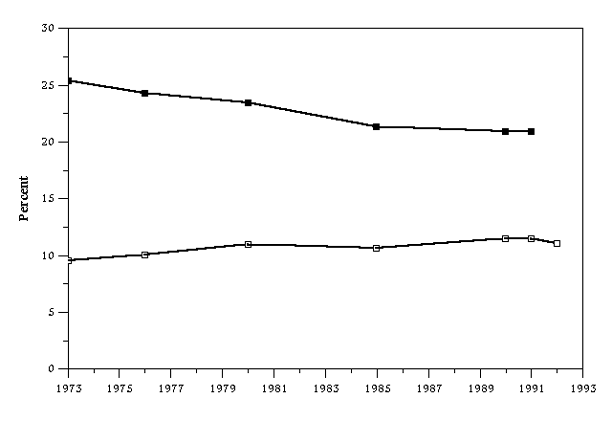
Note: Pregnancies are calculated by summing the number of live births, the number of abortions, and the estimated number of spontaneous fetal losses. Spontaneous fetal losses are based on data from the National Survey of Family Growth conducted by the National Center for Health Statistics.
Source: All data for 1973, and sexually experienced female data for 1976, are from Henshaw, S.K. (1994) U.S. Teenage Pregnancy Statistics, New NY: Alan Guttmacher Institute: and Alan Guttmacher Institute, 1994. All other data from Ventura, S.J., Taffel S.M., Mosher, W.D., Wilson, J.B., and Henshaw, S.K. (1995). Trends in Pregnancies and Pregnancy Rates: Estimates for the United States. 1980-92, Monthly Vital Statistics Report, Volume 43, No. 11(S), May 25, 1995.
Table SD 4.5.A
|
|||||||||
|
1973
|
1975
|
1980
|
1985
|
1990
|
1991
|
1992
|
|||
| All Females Aged 14 or Less* |
1.4
|
1.5
|
1.6
|
1.6
|
1.7
|
1.7
|
1.7
|
||
| All Females Aged 15-17 |
6.7
|
6.9
|
7.3
|
7.1
|
7.6
|
7.5
|
7.2
|
||
| All Females Aged 18-19 |
14.1
|
14.9
|
16.2
|
15.8
|
16.6
|
17.1
|
16.8
|
||
| All Females Aged 15-19 |
9.6
|
10.1
|
11
|
10.7
|
11.5
|
11.5
|
11.1
|
||
| All Sexually Experienced Females Aged 15-19 |
25.4
|
24.3
|
23.5
|
21.4
|
20.9
|
20.9
|
n/a
|
||
| Note: *Denominator is females aged 14. Pregnancies are calculated by summing the number of live births, the number of abortions, and the estimated number of spontaneous fetal losses. Spontaneous fetal losses are based on data from the National Survey of Family Growth conducted by the National Center for Health Statistics. Source: All data for 1973, and sexually experienced female data for 1976, are from Henshaw, S.K. (1994) U.S. Teenage Pregnancy Statistics, New NY: Alan Guttmacher Institute; and Alan Guttmacher Institute, 1994. All other data from Ventura, S.J., Taffel S.M., Mosher, W.D., Wilson, J.B., and Henshaw, S.K. (1995). "Trends in Pregnancies and Pregnancy Rates: Estimates for the United States, 1980-92," Monthly Vital Statistics Report, Volume 43, No. 11(S), May 25, 1995 and unpublished data from Ventura, Mosher, and Henshaw, National Center for Health Statistics. |
|||||||||
Table SD 4.5.B
|
|||||
|
1990
|
1991
|
||||
|
|
|
||||
| All Females Aged 15-17 |
7.6
|
7.5
|
|||
| White, Non-Hispanic |
5.4
|
5.1
|
|||
| Black, Non-Hispanic |
15.8
|
15.8
|
|||
| Hispanic |
11.7
|
12.4
|
|||
| All Females Aged 18-19 |
16.6
|
17.1
|
|||
| White, Non-Hispanic |
13
|
13.1
|
|||
| Black, Non-Hispanic |
29.3
|
29.8
|
|||
| Hispanic |
24.4
|
26.1
|
|||
| All Females Aged 15-19 |
11.5
|
11.5
|
|||
| White, Non-Hispanic |
8.8
|
8.5
|
|||
| Black, Non-Hispanic |
21.7
|
21.7
|
|||
| Hispanic |
17
|
18
|
|||
| Source: Ventura, S.J., Taffel, S.M., Mosher, W.D., Wilson, J.B., and Henshaw, S. "Trends in Pregnancies and Pregnancy Rates: Estimates for the United States, 1980-92" Monthly Vital Statistics Report. Vol. 43, No. 11 (S), May 25, 1995. | |||||
48 Alan Guttmacher Institute, 1994. "Sex and Americas Teenagers." New York, NY: Alan Guttmacher Institute.
49 Unintended pregnancies tabulated by Alan Guttmacher Institute based on National Survey of Family Growth in "Facts at a Glance," Washington, D.C.: Child Trends, Inc., 1995.
50 State-specific Pregnancy and Birth Rates Among TeenagersUnited States, 1991, 1992," Morbidity and Mortality
Weekly Report, Sept. 22, 1995.
51 Estimates for whites and blacks exclude Hispanics of those races.
SD 4.6 Abortion among teens
The proportion of teen females aged 15-19 who obtained an abortion during the previous year increased from 2.3 to 4.4 percent between 1973 and 1985, presumably influenced both by the legalization of abortion and increasing levels of sexual activity and pregnancy (see Table SD 4.6.A). By 1991, the proportion obtaining abortions had dropped to 3.8 percent. Similar patterns occurred among both younger teens (ages 15-17) and older teens (ages 18-19).
There has not been a steady trend in the propensity of pregnant teens to give birth versus obtaining an abortion over the past twenty years (see Figure SD 4.6). In 1972, the proportion of pregnancies (excluding miscarriages) to females aged 15-19 which ended in birth was 76 percent. During the rest of the 1970s this proportion declined as abortion increased. Throughout most of the 1980s, however, the proportion of teen pregnancies ending in birth remained fairly stable at around 55 percent. By 1992, there was an increase to 63 percent in the proportion of teen pregnancies ending in birth, indicating a trend towards fewer abortions among pregnant teens.
Differences by Age. Older teens aged 18-19 are more likely to have had an abortion than are younger teens aged 15-17. In 1992, 2.3 percent of younger teens and 5.4 percent of older teens obtained an abortion.
Differences by Race.52 Black teens are more likely to have had an abortion than are their white and Hispanic peers. Among black females ages 15-19, 8.1 percent obtained an abortion in 1991, compared to 2.8 percent
of non-Hispanic white and 4.0 percent of Hispanic females (see Table SD 4.6.B).
Sexually Experienced Teens. The percent of teens who are sexually experienced has increased during the past several decades and, therefore, it is reasonable to consider abortion in light of this trend. When abortion rates are calculated among females aged 15-19 who have ever had intercourse, the data indicate that the proportion obtaining abortions increased from 5.9 percent in 1973 to 9.1 percent in 1980, then declined to
6.8 percent in 1991. Although a larger proportion of teen females were sexually experienced in 1990 than in 1980, a smaller proportion of these sexually experienced teens obtained abortions.
Figure SD 4.6
|
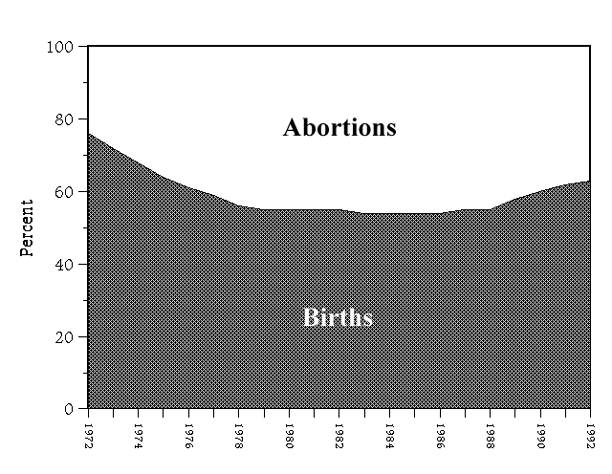
Note: Pregnancies do not include miscarriage.
Source: Alan Guttmacher Institute. (1991) Sex and Americas Teenagers, New York, NY: Alan Guttmacher Institute, Figure 33. Based on birth data from the National Center for Health Statistics and abortion data from the Alan Guttmacher Institute; Ventura, S.J., Taffel, S.M., Mosher, W.D., Wilson, J.B., and Henshaw, S., Trends in Pregnancies and Pregnancy Rates: Estimates for the United States, 1980-92. Monthly Vital Statistics Report, Vol. 43, No. 11(S), May 25, 1995; and, unpublished data from S. Ventura, National Center for Health Statistics.
Table SD 4.6.A
|
|||||||||||||||||||
|
1973
|
1975
|
1980
|
1985
|
1990
|
1991
|
1992
|
|||||||||||||
|
|
|
|
|
|
|
|
|||||||||||||
| All Females Aged 14 or Lessa |
0.6
|
0.7
|
0.8
|
0.9
|
0.8
|
0.7
|
0.8
|
||||||||||||
| All Females Aged 15 - 17 |
1.9
|
2.4
|
3
|
3.1
|
2.7
|
2.4
|
2.3
|
||||||||||||
| All Females Aged 18 - 19 |
2.9
|
4.2
|
6.1
|
6.2
|
5.8
|
5.6
|
5.4
|
||||||||||||
| All Females Aged 15 - 19 |
2.3
|
3.1
|
4.3
|
4.4
|
4
|
3.8
|
3.6
|
||||||||||||
| Sexually Experienced | |||||||||||||||||||
| Females Aged 15-19 |
5.9
|
7.5
|
9.1
|
8.5
|
7.3
|
6.8
|
n/a
|
||||||||||||
| Note: aDenominator is females aged 14. Data for sexually experienced teens for 1985 were interpolated from 1980 and 1988 data. Data for sexually experienced teens are not available for 1992. |
|||||||||||||||||||
| Sources: Data for 1973 and 1975 are from Henshaw, S.K. (1994). U.S. "Teenage Pregnancy Statistics." New York, NY: Alan Guttmacher Institute; Alan Guttmacher Institute 1994. "Sex and Americas Teenagers." New York, NY: Alan Guttmacher Institute, 1994; Based on data from abortion providers and sexual experience data from the National Survey of Family Growth. Data for 1980 - 1991 based on calculations from Ventura, S.J., Taffel, S.M., Mosher, W.D., Wilson, J.B., and Henshaw, S.K. (1995). Ventura, S.J., Taffel, S.M., Mosher, W.D., Wilson, J.B., and Henshaw, S. "Trends in Pregnancies and Pregnancy Rates: Estimates for the United States, 1980-92," Monthly Vital Statistics Report, Volume 43, No. 11(S), May 25, 1995 and unpublished tabulations from Ventura, Mosher and Henshaw. | |||||||||||||||||||
Table SD 4.6.B
|
|||||
|
1990
|
1991
|
||||
|
|
|
||||
| All Females Aged 15-17 |
2.7
|
2.4
|
|||
| White, Non-Hispanic |
2.1
|
1.8
|
|||
| Black, Non-Hispanic |
5.8
|
5.5
|
|||
| Hispanic |
2.4
|
2.5
|
|||
| All Females Aged 18-19 |
5.8
|
5.6
|
|||
| White, Non-Hispanic |
4.7
|
4.3
|
|||
| Black, Non-Hispanic |
11.7
|
11.6
|
|||
| Hispanic |
6
|
6.3
|
|||
| All Females Aged 15-19 |
4
|
3.8
|
|||
| White, Non-Hispanic |
3.2
|
2.8
|
|||
| Black, Non-Hispanic |
8.4
|
8.1
|
|||
| Hispanic |
3.9
|
4
|
|||
| Source: Ventura, S.J., Taffel, S.M., Mosher, W.D., Wilson, J.B., and Henshaw, S. "Trends in Pregnancies and Pregnancy Rates: Estimates for the United States, 1980-92." Monthly Vital Statistics Report. Vol. 43, No. 11 (S), May 25, 1995. | |||||
52 Estimates for whites and blacks exclude Hispanics of those races.
SD 4.7 Teen births
Research indicates that having a teen birth can have negative consequences on both mothers and their children over and above the effects of her disadvantaged background. Giving birth at an early age can limit a young womans options regarding education and employment opportunities, increases the likelihood that she will need public assistance, and can have negative effects on the development of her children.53
Between 1960 and 1985, birth rates for teens ages 15-19 dropped steadily from 89.1 to 51.0 per 1,000 teen women. This trend reversed between 1985 and 1991, and the teen birth rate increased to 62.1 per 1,000 teen women. Since 1991, the teen birth rate has again turned downward, declining to 56.9 births per 1,000 teen women by 1995 (see Figure SD 4.7).
Differences by Race/Ethnicity.54 The trends described in the previous paragraph are evident for white and black women ages 15-19. In contrast, the birth rate for Hispanic teens increased from 82.2 per 1,000 teen women in 1980 (the first year in which data were available) to 106.7 per 1,000 teen women in 1991 and has remained fairly stable since then. Preliminary data for 1995 suggest a teen birth rate of 106.2 births per 1,000 Hispanic women ages 15-19 (see Table SD 4.7).
The birth rate for black teens has remained nearly twice that of white teens since 1960. In 1995, the birth rate for white teens was 50.3 per 1,000 teen women and for black teens it was 95.5 per 1,000 teen women. Black teens had the highest birth rate until 1994, when the rate for Hispanic teens surpassed that of blacks and remained at the higher level in 1995. Black teens experienced a sharp drop between 1994 and 1995, from 104.5 to 95.5 per 1,000 women ages 15-19 (see Table SD 4.7). From 1991 to 1995, the rate for black teens dropped by 17 percent.
Differences by Age.55 Teen birth rates increase with age. In 1994, the birth rate for all teens ages 15-17 was 37.6 per 1,000 teen women and 91.5 per 1,000 teen women ages 18-19. Rates for teen females ages 10-14 (not shown) are considerably lower at 1.4 per 1,000.56 For black and Hispanic teens, the birth rate among 18-19 year olds is twice that of the 15-17 year old teen females. The birth rate of white teen females ages 18-19 is nearly three times that of younger teens ages 15-17.
Fathers of Children Born to Teen Mothers. The most recent data available (from 1988, not shown), indicates that the majority of fathers of children born to teen mothers were not teenagers themselves. For mothers age 17, more than half (55 percent) of the fathers were age 20 or older.57
Figure SD 4.7
|
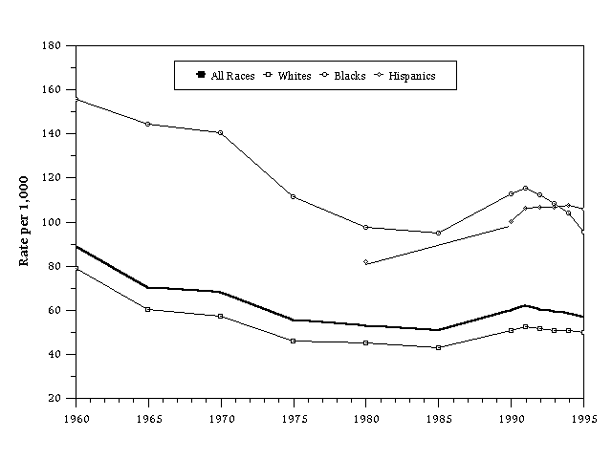
Notes: a Births by race of mother 1980-1995. Tabulations prior to 1980 were by race of child, which assigns the child to the race of the nonwhite parent, if any, or to the race of the father, if both are nonwhite.
b Data for 1995 are preliminary. cIncludes persons of Hispanic origin.
d Persons of Hispanic origin may be of any race.
e Data for Hispanics have been available only since 1980, with 22 states reporting in 1980, representing 90 percent of the Hispanic population. Hispanic birth data was reported by 23 states and DC in 1985; 48 states and DC in 1990; 49 states and DC in 1991 and 1992; and 50 states and the District of Columbia in 1993, 1994 and 1995. Rates in 1985 were not calculated for Hispanics because estimates for populations were not available.
Source: Ventura, S.J., Martin, J.A. Mathews, T.J., Clarke, S.C., Advance Report of Final Natality Statistics, 1994. Monthly Vital Statistics Report, Vol. 44, No. 11, Supplement. Hyattsville, Maryland: National Center for Health Statistics, 1996. Also previous issues of this annual report. Ventura, S.J., Births of Hispanic Parentage, 1980. Monthly Vital Statistics Report, Vol. 32, No. 6. Supplement, Hyattsville, Maryland: National Center for Health Statistics, 1983. 1995 preliminary data from: Rosenberg, H.M., Ventura, S.J., Maurer, J.D., Heuser, R.L., and Freedman, M.A. Births and Deaths: United States, 1995. Monthly Vital Statistics Report, Vol. 32, No. 6, Supplement 2. Hyattsville, Maryland: National Center for Health Statistics, 1996.
Table SD 4.7
|
||||||||||||||
|
1960
|
1965
|
1970
|
1975
|
1980a
|
1985a
|
1990a
|
1991a
|
1992a
|
1993a
|
1994a
|
1995a,b
|
|||
|
|
|
|
|
|
|
|
|
|
|
|
|
|||
| All Races | ||||||||||||||
| Age 15-17 |
43.9
|
36.6
|
38.8
|
36.1
|
32.5
|
31
|
37.5
|
38.7
|
37.8
|
37.8
|
37.6
|
--
|
||
| Age 18-19 |
166.7
|
124.5
|
114.7
|
85
|
82.1
|
79.6
|
88.6
|
94.4
|
94.5
|
92.1
|
91.5
|
--
|
||
| Age 15-19 |
89.1
|
70.5
|
68.3
|
55.6
|
53
|
51
|
59.9
|
62.1
|
60.7
|
59.6
|
58.9
|
56.9
|
||
| Whitec | ||||||||||||||
| Age 15-17 |
35.5
|
27.8
|
29.2
|
28
|
25.5
|
24.4
|
29.5
|
30.7
|
30.1
|
30.3
|
30.7
|
--
|
||
| Age 18-19 |
154.6
|
111.9
|
101.5
|
74
|
73.2
|
70.4
|
78
|
83.5
|
83.8
|
82.1
|
82.1
|
--
|
||
| Age 15-19 |
79.4
|
60.6
|
57.4
|
46.4
|
45.4
|
43.3
|
50.8
|
52.8
|
51.8
|
51.1
|
51.1
|
50.3
|
||
| Blackc | ||||||||||||||
| Age 15-17 |
--
|
99.3
|
101.4
|
85.6
|
72.5
|
69.3
|
82.3
|
84.1
|
81.3
|
79.8
|
76.3
|
--
|
||
| Age 18-19 |
--
|
227.6
|
204.9
|
152.4
|
135.1
|
132.4
|
152.9
|
158.6
|
157.9
|
151.9
|
148.3
|
--
|
||
| Age 15-19 |
156.1
|
144.6
|
140.7
|
111.8
|
97.8
|
95.4
|
112.8
|
115.5
|
112.4
|
108.6
|
104.5
|
95.5
|
||
| Hispanicd,e | ||||||||||||||
| Age 15-17 |
--
|
--
|
--
|
--
|
52.1
|
--
|
65.9
|
70.6
|
71.4
|
71.7
|
74
|
--
|
||
| Age 18-19 |
--
|
--
|
--
|
--
|
126.9
|
--
|
147.7
|
158.5
|
159.7
|
159.1
|
158
|
--
|
||
| Age 15-19 |
--
|
--
|
--
|
--
|
82.2
|
--
|
100.3
|
106.7
|
107.1
|
106.8
|
107.7
|
106.2
|
||
| Notes: aBirths by race of mother. Tabulations prior to 1980 were by race of child, which assigns the child to the race of the nonwhite parent, if any, or to the race of the father, if both are nonwhite. bData for 1995 are preliminary. cIncludes persons of Hispanic origin. dPersons of Hispanic origin may be of any race. eData for Hispanics have been available only since 1980, with 22 states reporting in 1980, representing 90% of the Hispanic population. Hispanic birth data was reported by 48 states and DC in 1990; 49 states and DC in 1991 and 1992; and 50 states and the District of Columbia in 1993, 1994 and 1995. Rates in 1985 were not calculated for Hispanics because estimates for populations were not available. Sources: National Center for Health Statistics. Vital Statistics of the United States, 1992, Vol. I, Natality. Washington: Public Health Service. 1995 (table 1-9). Ventura, S.J., Martin, J.A. Mathews, T.J., Clarke, S.C., "Advance Report of Final Natality Statistics, 1994." Monthly Vital Statistics Report, Vol. 44, No. 11, Supplement. Hyattsville, Maryland: National Center for Health Statistics, 1996. Also previous issues of this annual report. Ventura, S.J., "Births of Hispanic Parentage, 1980." Monthly Vital Statistics Report, Vol. 32, No. 6, Supplement. Hyattsville, Maryland: National Center for Health Statistics. 1983. 1995 preliminary data from Rosenberg, H.M., Ventura, S.J., Maurer, J.D., Heuser, R.L., and Freedman, M.A. "Births and Deaths: United States, 1995." Monthly Vital Statistics Report, Vol. 45, No. 3, Supplement 2. Hyattsville, Maryland: National Center for Health Statistics, 1996. |
||||||||||||||
53 Moore, K.A. 1993. "Teenage Childbearing: A Pragmatic Perspective." Child Trends, Inc. Washington, D.C. and Maynard, R.A. (ed). 1996. "Kids Having Kids: A Robin Hood Foundation Special Report on the Costs of Adolescent Childbearing. " The Robin Hood Foundation. New York, NY.
54 Estimates for white and black teens include those of Hispanic origin. Teens of Hispanic origin may be of any race.
55 For 1995, data are not available for ages 15-17 and ages 18-19.
56 Ventura, S.J., Martin, J.A., Mathews, T.J. and S.C. Clarke. "Advance Report of Final Natality Statistics, 1994." Monthly
Vital Statistics Report, Vol. 44, No. 11, Supplement. Hyattsville, Maryland: National Center for Health Statistics. 1996.
57 1988 National Maternal and Infant Health Survey tabulations by the Alan Guttmacher Institute. Calculations by Child Trends, Inc.
SD 4.8 Teen non-marital births
Nonmarital childbearing has consequences for the child, the parent, and society. Raising a child is a challenging task, even for two parents. A large body of research suggests that the absence of a father is associated with negative outcomes for children when they grow up.58 For example, studies have linked growing up with a single parent to lower educational attainment for the child.59 About 30 percent of nonmarital births are to teenagers. Bearing children outside of marriage is a particularly troubling development for this age group because these young women often have little education and lack the ability to support their families economically, especially as a single parent.
Nonmarital childbearing has increased among teens of all ages and across all racial and ethnic groups since 1960 (see Figure SD 4.8). Among all teens aged 15-19, 15 percent of births were nonmarital in 1960, compared to 75 percent in 1994 (see Table SD 4.8). The percentage of births to teens that occurred outside of marriage has risen fairly steadily and in 1994 reached 75 percent. However, the rather sharp increase between 1993 and 1994 (from 71 to 75 percent) is largely if not completely the result of improvements in the identification of nonmarital births in two states, Texas and Michigan.60
Differences by Race.61 Nonmarital childbearing is higher among black teens than among white and Hispanic teens. In 1994, 95 percent of births to black females aged 15-19 were nonmarital, compared to 68 percent for whites and 70 percent for Hispanics.
Differences by Age. Younger teens who give birth are more likely to be unmarried when they deliver than are older teens in each year and across race/ethnic groups. In 1994, 84 percent of births to 15-17 year olds were to unmarried mothers, compared with 70 percent among 18-19 year olds.
Figure SD 4.8
|
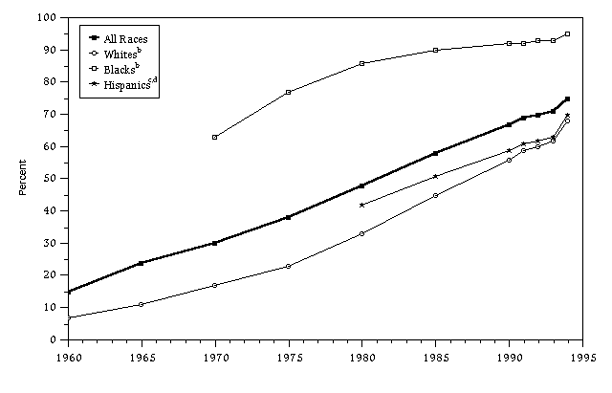
Notes: aBirths by race of mother 1980-1994. Tabulations prior to 1980 were by race of child, which assigns the child to the race of the nonwhite parent, if any, or to the race of the father, if both are nonwhite.
bIncludes persons of Hispanic origin.
cPersons of Hispanic origin may be of any race.
dData for Hispanics have been available only since 1980, with 22 states reporting in 1980, representing 90% of the Hispanic population. Hispanic birth data was reported by 23 states and DC in 1985; 48 states and DC in 1990; 49 states and DC in 1991 and 1992; and all states in 1993 and 1994.
eIncreases between 1993 and 1994 were due primarily to improvements in the identification of non-marital births in Texas and Michigan.
Sources: Ventura S.J. Births to Unmarried Mothers: United States, 1992. National Center for Health Statistics. Vital and Health Statistics, Series 21, No. 53. 1993; Ventura S.J., Martin, J.A. Mathews, T.J. Clarke, S.C. Advance Report of Final Natality Statistics, 1994. Monthly Vital Statistics Report, Vol. 44, No. 11, Supplement. Hyattsville, Maryland: National Center for Health Statistics. 1996. Also previous issues of this annual report.
Table SD 4.8
|
|||||||||||||
|
1960
|
1965
|
1970
|
1975
|
1980a
|
1985a
|
1990a
|
1991a
|
1992a
|
1993a
|
1994a,e
|
|||
|
|
|
|
|
|
|
|
|
|
|
|
|||
| All Races | |||||||||||||
| Ages 15-17 |
24
|
33
|
43
|
51
|
62
|
71
|
78
|
79
|
79
|
80
|
84
|
||
| Ages 18-19 |
11
|
15
|
22
|
30
|
40
|
51
|
61
|
63
|
65
|
66
|
70
|
||
| Ages 15-19 |
15
|
21
|
30
|
38
|
48
|
58
|
67
|
69
|
70
|
71
|
75
|
||
| Whiteb | |||||||||||||
| Ages 15-17 |
12
|
17
|
25
|
33
|
45
|
58
|
68
|
70
|
71
|
72
|
78
|
||
| Ages 18-19 |
5
|
9
|
14
|
17
|
27
|
38
|
51
|
53
|
55
|
57
|
62
|
||
| Ages 15-19 |
7
|
11
|
17
|
23
|
33
|
45
|
56
|
59
|
60
|
62
|
68
|
||
| Blackb | |||||||||||||
| Ages 15-17 |
--
|
--
|
76
|
87
|
93
|
96
|
96
|
96
|
96
|
96
|
98
|
||
| Ages 18-19 |
--
|
--
|
52
|
68
|
80
|
86
|
89
|
90
|
90
|
91
|
93
|
||
| Ages 15-19 |
--
|
--
|
63
|
77
|
86
|
90
|
92
|
92
|
93
|
93
|
95
|
||
| Hispanicc,d | |||||||||||||
| Ages 15-17 |
--
|
--
|
--
|
--
|
51
|
61
|
68
|
69
|
69
|
69
|
77
|
||
| Ages 18-19 |
--
|
--
|
--
|
--
|
36
|
46
|
54
|
56
|
57
|
58
|
65
|
||
| Ages 15-19 |
--
|
--
|
--
|
--
|
42
|
51
|
59
|
61
|
62
|
63
|
70
|
||
| Notes: aBirths by race of mother. Tabulations prior to 1980 were by race of child, which assigns the child to the race of the nonwhite parent, if any, or to the race of the father, if both are nonwhite. bIncludes persons of Hispanic origin. cPersons of Hispanic origin may be of any race. dData for Hispanics have been available only since 1980, with 22 states reporting in 1980, representing 90% of the Hispanic population. Hispanic birth data was reported by 23 states and DC in 1985; 48 states and DC in 1990; 49 states and DC in 1991 and 1992; and all states in 1993 and 1994. eIncreases between 1993 and 1994 were due primarily to improvements in the identification of non-marital births in Texas and Michigan. Sources: Ventura S.J. "Births to Unmarried Mothers: United States, 1980-1992." National Center for Health Statistics. Vital and Health Statistics, Series 21, No. 53. 1993; Ventura S.J., Martin, J.A. Mathews, T.J. Clarke, S.C. "Advance Report of Final Natality Statistics, 1994." Monthly Vital Statistics Report, Vol. 44, No. 11, Supplement. Hyattsville, Maryland: National Center for Health Statistics. 1996. Also previous issues of this annual report. |
|||||||||||||
58 McLanahan, S., and Sandefur, G. 1994. Growing up with a single parent: What hurts, what helps. Cambridge, MA: Harvard University Press; Haveman, R. and Wolfe, B. 1994. Succeeding generations: On the effects of investments in children. New York, NY: Russell Sage Foundation.
59 Knox, V. and Bane, M.J. 1994. "Child support and schooling": In I. Garfinkel, S. McLanahan, and P.Robins (Eds). Child Support and Child-Well-Being. Washington, DC: The Urban Institute.
60 Ventura, S.J., Martin, J.A., Mathews, T.J. and S.C. Clarke. "Advance Report of Final Natality Statistics, 1994."
Monthly Vital Statistics Report, Vol. 44, No. 11, Supplement. Hyattsville, Maryland: National Center for Health
Statistics. 1996.
61 Estimates for white and black teens include those of Hispanic origin. Teens of Hispanic origin may be of any race.
SD 4.9 Second and higher order births to teens
Bearing a child during adolescence is associated with poor outcomes for young women and their children.62 Giving birth to a second child while still a teen further increases these risks.63 For teen mothers on AFDC, a subsequent birth during adolescence reduces the likelihood of getting off welfare.64 Yet recent analyses of nationally representative data indicate that in the two years following the first birth, teen mothers have a second birth at about the same rate as older mothers.65
In 1995, nearly one in every five births to teen mothers was a birth of second order or higher. The proportion of teen births that were second or higher order increased from 22 percent in 1980 to peak at 25 percent in 1991, and has since declined to a preliminary estimate of 21 percent in 1995. This pattern is evident across racial and ethnic groups and regardless of marital status (see Table SD 4.9).
Differences by Race. Births to black and Hispanic teens are more likely to be subsequent births than births to white teens. Preliminary estimates for 1995 indicate 26 percent of births to black teens, 23 percent of births to Hispanic teens, and 19 percent of births to white teens were second or higher order births.
Differences by Marital Status. A higher proportion of births among married teens are second or higher order than births to unmarried teens. In 1994, 26 percent of births to married teens were second or higher order, compared to 20 percent among unmarried teens.
Table SD 4.9
|
||||||
|
1980
|
1985
|
1991
|
1994
|
1995a
|
||
| All Births |
22
|
23
|
25
|
22
|
21
|
|
| Race/Ethnicity | ||||||
| White |
19
|
20
|
21
|
19
|
19
|
|
| Black |
27
|
28
|
32
|
28
|
26
|
|
| Hispanic |
20
|
25
|
26
|
23
|
23
|
|
| Other |
22
|
25
|
25
|
23
|
22
|
|
| Marital Status | ||||||
| Married |
24
|
26
|
28
|
26
|
--
|
|
| Single |
19
|
20
|
23
|
20
|
--
|
|
| Note: aEstimates for 1995 are preliminary.
Source: Ventura, S.J., Martin, J.A., Mathews, T.J., Clarke, S.C. "Advance Report of Final Natality Statistics, 1994." Monthly Vital Statistics Report, Vol. 44, No. 11, Supplement. Hyattsville, Maryland: National Center for Health Statistics. 1996; also previous issues of this annual report. Division of Vital Statistics, National Center for Health Statistics. Unpublished tabulations. Preliminary 1995 data from "Births and Deaths: United States, 1995." Monthly Vital Statistics Report. Vol. 45, No. 3, Supplement 2. Hyattsville, Maryland: National Center for Health Statistics. 1996. Calculations by Child Trends, Inc. |
||||||
62 Moore, K.A., Myers, D.E., Morrison, D.R., Nord, C.W., Brown, B.B. and Edmonston, B. 1993. "Age at first childbirth and later poverty." Journal of Research on Adolescence 3(4):393-422 and Maynard, R.A. (ed). 1996. "Kids Having Kids: A Robin Hood Foundation Special Report on the Costs of Adolescent Childbearing." The Robin Hood Foundation. New York, NY.
63 Kalmuss, D. And Namerow, P.B. 1992. "The mediators of educational attainment among early childbearers." Unpublished manuscript. Columbia University, Center for Population and Family Health.
64 Moore, K.A. and Hofferth, S. 1978. "The consequences of age at first childbirth: Female headed-families and welfare recipiency". Working paper 1146-05. Washington, DC: The Urban Institute.
65 Moore, K.A., Morrison, D.R., Nord, C.W., and C. Blumenthal. 1993. "The consequences of early childbearing in the 1980s." Unpublished tables. Washington, DC: Child Trends, Inc.
SD 4.10 Sexually transmitted diseases among adolescents
Sexually transmitted diseases (STDs) have potentially severe consequences. Women can develop pelvic inflammatory disease which in turn may lead to adverse reproductive consequences such as infertility, ectopic pregnancy, or the birth of children with physical and mental developmental disabilities. The increase in sexual activity among teenagers described in Section SD 4.1 has exposed a growing number of young people to the risk of sexually transmitted diseases. Despite this increased risk, the reported rate of incidence has declined among adolescents for both gonorrhea and syphilis.66
Decline in Gonorrhea Rates. Since 1975, the reported gonorrhea rate for all youth has declined (see Table SD 4.10.A). Among youth ages 15-19, rates decreased by almost half, from 1275.1 cases of gonorrhea per 100,000 youth in 1975, to 664.6 cases per 100,000 youth in 1995. Gonorrhea rates also decreased among youth ages 10-14, but the decline started later and has not been as dramatic as among older youth. The rate for this age group peaked at 68.9 cases per 100,000 youth in 1990; by 1995, the reported rate had declined to 42 cases per 100,000 youth age 10-14.
Differences in Gonorrhea Rates by Gender. For youth ages 15-19 and ages 10-14, females have had consistently higher reported rates of gonorrhea than males (see Figure SD 4.10.A). In 1994 rates for females ages 15-19 were 839.7 per 100,000, versus 498.4 per 100,000 males of the same age.
Differences in Gonorrhea Rates by Race and Ethnicity. Blacks have consistently had the highest reported rates of gonorrhea, more than 10 times the rate of any other race or ethnic group. However, rates for blacks are falling, in contrast to gonorrhea rates among Hispanics, which have risen since 1990, the first year for which data by race and ethnicity are available (see Table S.D. 4.10.A).
Decline in Syphilis Rates. Table SD 4.10.B shows that reported rates for primary and secondary syphilis have decreased for youth, ages 10-14 and 15-19, since their peak in 1990. While the rate for both groups has decreased, the rate for teens ages 15-19 is substantially higher than the rate for youth ages 10-14. For example, the reported rate for syphilis in 1995 for teens ages 15-19 was 10.0 cases per 100,000 youth compared to 0.6 cases per 100,000 for youth 10-14.
Higher Syphilis Rates Among Females. Females from both age groups have reported more cases of syphilis than their male counterparts (see Figure 4.10.B). For example, teenage females ages 15-19 had a rate of 13.6 cases per 100,000, about double the male rate of 6.6 cases per 100,000.
Differences in Syphilis Rates by Race and Ethnicity. Blacks ages 15-19 had rates of syphilis more than 10 times higher than all other racial and ethnic groups throughout the period 1990-1995. Rates have been falling for all groups except Native Americans, whose reported syphilis rates have fluctuated between 1990 and 1995 (see Table SD 4.10.B).
Figure SD 4.10.A
|
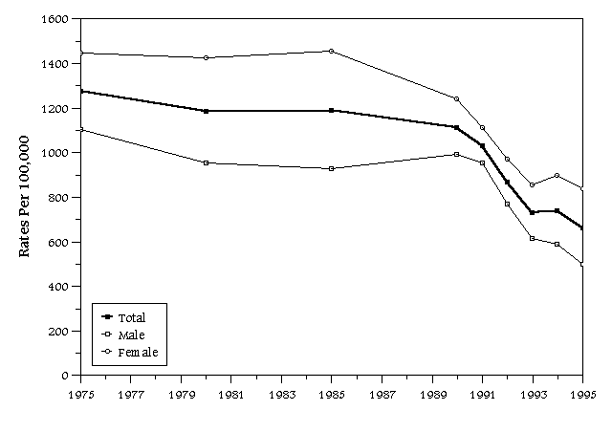
Note: aAlthough most areas generally adhere to the case definitions for STD found in Case Definitions for Public Health Surveillance (MMWR 1990; 39: 1-43) there are significant differences between individual areas in case definitions as well as in the policies and systems for collecting surveillance data. In many areas reporting from publicly supported institutions (e.g., STD clinics) was more complete than from other sources (e.g., private practitioners).
bFor 1994 Georgia only reported gonorrhea cases to CDC for part of the year. Therefore, Georgia cases and population were excluded from gonorrhea figures and tables. In past years, Georgia has been among the states reporting the highest gonorrhea rates.
Source: Division of STD Prevention. Sexually Transmitted Disease Surveillance, 1980. U.S. Department of Health and Human Services, Public Health Service. Atlanta: Centers for Disease Control and Prevention. Plus additional yearly updates of this report.
Figure SD 4.10.B
|
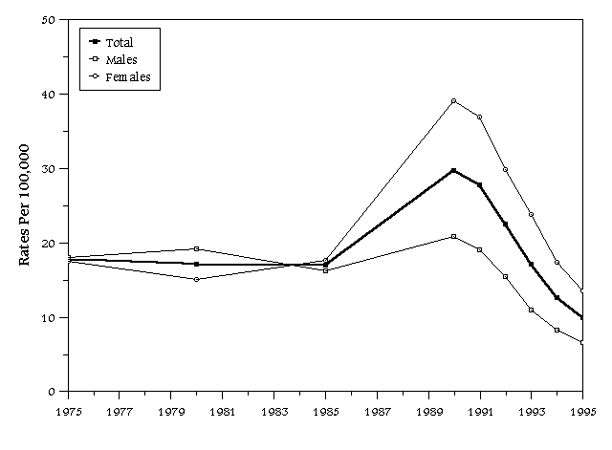
Note: a Although most areas generally adhere to the case definitions for STD found in Case Definitions for Public Health Surveillance (MMWR 1990; 39: 1-43) there are significant differences between individual areas in case definitions as well as in the policies and systems for collecting surveillance data. In many areas reporting from publicly supported institutions (e.g., STD clinics) was more complete than from other sources (e.g., private practitioners).
b Cases and population denominators for Baltimore, MD have been excluded for 1993 because age was not reported for most cases.
Source. Division of STD Prevention. Sexually Transmitted Disease Surveillance, 1980. U.S. Department of Health and Human Services, Public Health Service. Atlanta: Centers for Disease Control and Prevention. And yearly updates of this report.
Table 4.10.A
|
|||||||||||
|
1975
|
1980
|
1985
|
1990
|
1991
|
1992
|
1993
|
1994b
|
1995
|
|||
|
|
|
|
|
|
|
|
|
|
|||
| AGES 10-14 | |||||||||||
| Total |
46.7
|
48.7
|
47.7
|
68.9
|
64.6
|
57.8
|
48.8
|
48.6
|
42
|
||
| Gender | |||||||||||
| Male |
20.9
|
23.6
|
23.8
|
32.1
|
32.4
|
26.2
|
20.6
|
16
|
12.6
|
||
| Female |
73.6
|
74.8
|
72.9
|
107.5
|
98.3
|
91
|
78.5
|
82.8
|
72.8
|
||
| Racec | |||||||||||
| White |
|
|
|
14.3
|
12.9
|
12.1
|
9.3
|
10.6
|
9
|
||
| Black |
|
|
|
386.8
|
364.7
|
322.4
|
282
|
275.8
|
238.6
|
||
| Hispanic |
|
|
|
15.3
|
16.5
|
17.7
|
21.5
|
20.5
|
21.3
|
||
| Asian |
|
|
|
4.5
|
9.9
|
6.2
|
4.5
|
5.8
|
5.3
|
||
| American Indian |
|
|
|
22.7
|
28.9
|
19.6
|
31.8
|
25.1
|
16.4
|
||
| AGES 15-19 | |||||||||||
| Total |
1,275.10
|
1,187.30
|
1189.9
|
1,114.40
|
1,031.40
|
869.6
|
733.3
|
739.2
|
664.6
|
||
| Gender | |||||||||||
| Male |
1,103.90
|
953.4
|
930.5
|
993.7
|
954.6
|
771
|
615.7
|
589.7
|
498.4
|
||
| Female |
1,446.40
|
1,424.60
|
1,455.10
|
1,241.60
|
1,112.20
|
973.6
|
857.4
|
896.8
|
839.7
|
||
| Racec | |||||||||||
| White |
|
|
|
230.3
|
196.7
|
165.9
|
137.2
|
151.2
|
142.7
|
||
| Black |
|
|
|
6,316.20
|
5,963.90
|
4,973.10
|
4,333.40
|
4,327.60
|
3,843.20
|
||
| Hispanic |
|
|
|
268.7
|
273.1
|
279.3
|
279.5
|
256.7
|
286.4
|
||
| Asian |
|
|
|
70
|
91.5
|
77.4
|
75.8
|
79.1
|
72.8
|
||
| American Indian |
|
|
|
414.6
|
366
|
317.5
|
311.3
|
305.1
|
248.7
|
||
| Note: aAlthough most areas generally adhere to the case definitions for STD found in Case Definitions for Public Health Surveillance (MMWR 1990; 39: 1-43) there are significant differences between individual areas in case definitions as well as in the policies and systems for collecting surveillance data. In many areas reporting from publicly supported institutions (e.g., STD clinics) was more complete than from other sources (e.g., private practitioners). bFor 1994 Georgia only reported gonorrhea cases to CDC for part of the year. Therefore, Georgia cases and population were excluded from gonorrhea figures and tables. In past years, Georgia has been among the states reporting the highest gonorrhea rates. cFor the following years, the states/areas listed did not report race/ethnicity for most cases: 1992 (New York City and New York State); 1993 (New York City, New York State, and Georgia); 1994 (New York City, New York State, and Georgia); and 1995 (Georgia, New Jersey, New York City and New York State). Source: Division of STD Prevention. Sexually Transmitted Disease Surveillance, 1980 et seq. U.S. Department of Health and Human Services, Public Health Service. Atlanta: Centers for Disease Control and Prevention. |
|||||||||||
Table 4.10.B
|
|||||||||||
|
1975
|
1980
|
1985
|
1990
|
1991b
|
1992
|
1993c
|
1994
|
1995
|
|||
|
|
|
|
|
|
|
|
|
|
|||
| AGES 10-14 | |||||||||||
| Total |
1.1
|
0.9
|
0.9
|
1.8
|
1.4
|
1.3
|
1
|
0.6
|
0.6
|
||
| Gender | |||||||||||
| Male |
0.7
|
0.5
|
0.5
|
0.5
|
0.4
|
0.3
|
0.3
|
0.1
|
0.1
|
||
| Female |
1.5
|
1.3
|
1.4
|
3.2
|
2.5
|
2.3
|
1.7
|
1.2
|
1
|
||
| Racec | |||||||||||
| White |
|
|
|
0.1
|
0.1
|
0.1
|
0.1
|
0.1
|
0
|
||
| Black |
|
|
|
10.6
|
8.6
|
8.2
|
6
|
3.8
|
3.5
|
||
| Hispanic |
|
|
|
1.1
|
0.4
|
0.4
|
0.1
|
0.1
|
0.1
|
||
| Asian |
|
|
|
0.2
|
0.3
|
0
|
0.2
|
0
|
0
|
||
| American Indian |
|
|
|
0.5
|
0
|
0
|
0
|
0
|
0
|
||
| AGES 15-19 | |||||||||||
| Total |
17.8
|
17.2
|
17
|
29.8
|
27.8
|
22.5
|
17.2
|
12.7
|
10
|
||
| Gender | |||||||||||
| Male |
18
|
19.2
|
16.3
|
20.9
|
19.1
|
15.5
|
11
|
8.3
|
6.6
|
||
| Female |
17.5
|
15.1
|
17.7
|
39.2
|
37
|
29.9
|
23.9
|
17.4
|
13.6
|
||
| Racec | |||||||||||
| White |
|
|
|
2.9
|
2.6
|
2
|
1.6
|
1.4
|
1.1
|
||
| Black |
|
|
|
174.6
|
164.8
|
136.6
|
105.7
|
77.6
|
60.8
|
||
| Hispanic |
|
|
|
15.2
|
12.5
|
8.5
|
6.1
|
3
|
2.5
|
||
| Asian |
|
|
|
1.7
|
1.9
|
1.4
|
1
|
0.8
|
0.4
|
||
| American Indian |
|
|
|
2.8
|
7
|
2.7
|
0.5
|
2.1
|
3.5
|
||
| Note: a Although most areas generally adhere to the case definitions for STD found in Case Definitions for Public Health Surveillance (MMWR 1990; 39: 1-43) there are significant differences between individual areas in case definitions as well as in the policies and systems for collecting surveillance data. In many areas reporting from publicly supported institutions (e.g., STD clinics) was more complete than from other sources (e.g., private practitioners). b Cases and population denominators for Kentucky have been excluded for 1991 because race/ethnicity was not reported for most cases. c Cases and population denominators for Baltimore, Maryland have been excluded for 1993 because age was not reported for most cases. Source: Division of STD Prevention. Sexually Transmitted Disease Surveillance, 1980 et seq. U.S. Department of Health and Human Services, Public Health Service. Atlanta: Centers for Disease Control and Prevention. |
|||||||||||
66 There has been a considerable increase in reported rates of chlamydia but this trend reflects "increased screening, recognition of asymptomatic infection (mainly in women), and improved reporting capacity rather than true trends in disease incidence" (p. 5 in Division of STD Prevention, Sexually Transmitted Disease Surveillance, 1994. U.S. Department of Health and Human Services, Public Health Service. Atlanta: Centers for Disease Control and Prevention, September 1995).
SECTION 5 EDUCATION AND ACHIEVEMENT (EA)
ENROLLMENT/ATTENDANCE
EA 1.1 Early childhood program enrollment
Enrollment in an early childhood program is one indicator of readiness to learn that may be especially relevant for children from disadvantaged backgrounds for elementary school. One of the National Education Goals for the year 2000, adopted by Congress, is that "all children will have access to high-quality and developmentally appropriate preschool programs that help prepare children for school.1 Table EA 1.1 presents the percentage of 3- to 5-year-olds enrolled in center-based programs.2 Center-based programs include day care centers, Head Start programs, preschools, prekindergartens, and other early childhood programs.
In 1996, over half (55 percent) of all 3- to 5-year old children were enrolled in a center-based program. This reflects a modest increase from 53 percent in 1991 and 1993 (see Table EA 1.1).
Differences by Race and Ethnicity. 3There are notable differences in early childhood program enrollment rates among racial and ethnic groups. For example, in 1996, only 39 percent of Hispanic children were enrolled in an early childhood program compared with 57 percent of whites and 65 percent of blacks. Throughout the 1990s, black 3- to 5-year olds have had the highest enrollments in early childhood programs, followed closely by whites, with much lower enrollments among Hispanics (see Figure EA 1.1.A).
Differences by Family Type. In 1996, center-based enrollments were lower among children in two parent families (54 percent) than among children with either one or no parents (58 percent) (see Figure EA 1.1.B).
Differences by Socioeconomic Status. There are substantial differences in center-based enrollments by socioeconomic status, including poverty status and maternal education (see Figure EA 1.1.B).
- In 1996, enrollments were much higher among families that were above the poverty threshold (60 percent) than those who were at or below the poverty threshold (43 percent).
- Enrollments also differ by maternal education, with the highest enrollment (73 percent) among children whose mothers were college graduates and the lowest (37 percent) among children whose mothers lacked a high school diploma.
These differences by socioeconomic status were apparent for all years reported (see Table EA 1.1).
Differences by Mothers Employment Status. There are also differences in enrollments by maternal employment status (see Figure EA 1.1.B). For example, in 1996, children whose mothers were working either full time (35 hours or more per week) or part time (less than 35 hours per week) had substantially higher enrollments than children whose mothers were not in the labor force. These differences have been apparent since 1991.
Figure EA 1.1.A
|
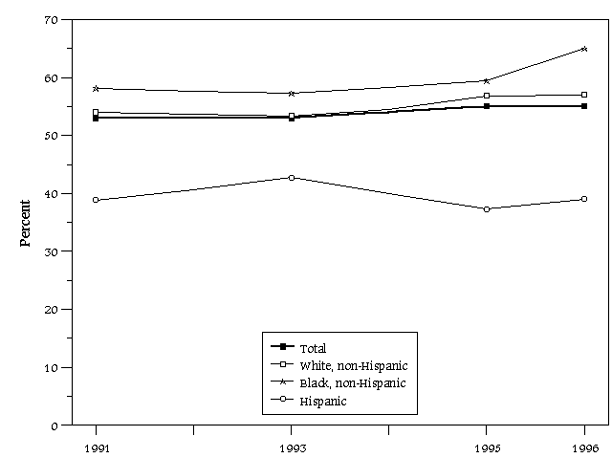
Source: U.S. Department of Education, National Center for Education Statistics, 1991, 1993, 1995, and 1996 National Household Education Survey.
Figure EA 1.1.B
|
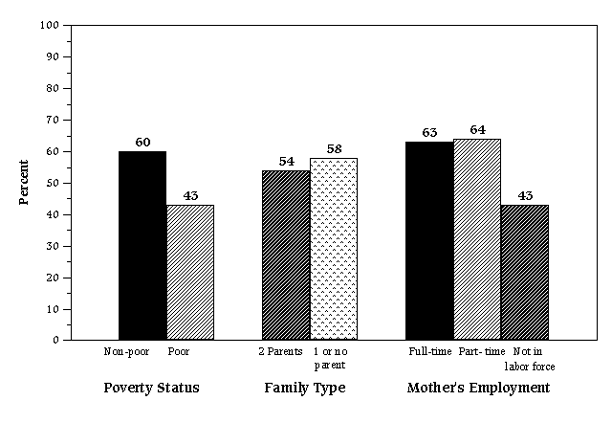
Source: U.S. Department of Education, National Center for Education Statistics, 1996 National Household Education Survey.
Table EA 1.1
|
||||||||||||
|
|
|
1991
|
1993
|
1995
|
1996
|
|||||||
|
|
|
|
|
|
|
|||||||
| Total |
53
|
53
|
55
|
55
|
||||||||
|
|
Gender | |||||||||||
|
|
|
Male |
53
|
53
|
55
|
55
|
||||||
|
|
|
Female |
53
|
53
|
55
|
55
|
||||||
|
|
Race/Ethnicity | |||||||||||
|
|
|
White, non-Hispanic |
54
|
54
|
57
|
57
|
||||||
|
|
|
Black, non-Hispanic |
58
|
57
|
60
|
65
|
||||||
|
|
|
Hispanic |
39
|
43
|
37
|
39
|
||||||
|
|
Poverty Statusc | |||||||||||
|
|
|
Non-poor |
56
|
57
|
60
|
60
|
||||||
|
|
|
Poor |
44
|
43
|
44
|
43
|
||||||
|
|
|
|
|
|
|
|
||||||
|
|
Family Type | |||||||||||
|
|
|
Two parents |
54
|
52
|
55
|
54
|
||||||
|
|
|
One or no parent |
50
|
54
|
56
|
58
|
||||||
|
|
|
|
|
|
|
|
||||||
|
|
Mothers Educationd | |||||||||||
|
|
|
Less than high school |
32
|
33
|
35
|
37
|
||||||
|
|
|
High school/GED |
46
|
43
|
48
|
49
|
||||||
|
|
|
Vocational/technical or some college |
60
|
60
|
57
|
58
|
||||||
|
|
|
College graduate |
72
|
73
|
75
|
73
|
||||||
|
|
Mothers Employment Statusd | |||||||||||
|
|
|
35 hours or more per week |
59
|
61
|
60
|
63
|
||||||
|
|
|
Less than 35 hours per week |
58
|
57
|
62
|
64
|
||||||
| Not in labor force |
45
|
44
|
47
|
43
|
||||||||
| Notes: aEstimates are based on children who have yet to enter kindergarten. bCenter-based programs include day care centers, Head Start programs, preschools, prekindergartens, and other early childhood programs.
cChildren were classified as non-poor (living above the poverty threshold) or poor (living below the poverty threshold), based on family size and income. See Wright, D., Hausken, E.G., and West, J. (1994). Family-Child Engagement in Literacy Activities: Changes in Participation Between 1991 and 1993. Washington, D.C: U.S. Department of Education. National Center for Education Statistics. dChildren without mothers in the home are not included in estimates dealing with mothers education or mothers employment status. A mother is defined as a biological mother, adoptive mother, stepmother, foster mother, or female guardian (e.g., grandmother) who resides in the home with the child. Source: U.S. Department of Education, National Center for Education Statistics, 1991, 1993, 1995, and 1996, National Household Education Survey. |
||||||||||||
1National Education Goals Panel (1994). The National Education Goals Report: Building a Nation of Learners 1994. Washington, DC: U.S. Government Printing Office.
2 Estimates are based on children who have yet to enter kindergarten.
3 Estimates for whites and blacks exclude Hispanics of those races.
EA 1.2 Grade retention
Childrens early primary school experiences are associated with their adjustment to school and their later school success. Grade retention (repeating a grade) at an early age may indicate that a child has started school without adequate preparation and may continue to experience school problems in subsequent years. It may also measure the degree to which schools are able to respond to children from a variety of backgrounds.4
Table EA 1.2 presents data on the percentage of second grade students who were retained in kindergarten and/or first grade, as reported by their parents. Estimates are presented for 1991, 1993, and 1995. These data indicate that 11 percent of second grade children in 1991 had repeated kindergarten and/or first grade and 8 percent in 1993 and 1995 had repeated either or both of these grades.
Differences by Gender. Males were more likely than females to have repeated kindergarten and/or first grade. For example, in 1995, 11 percent of male second graders had repeated a grade, in comparison with only 5 percent of females (see Table EA 1.2).
Differences by Race and Ethnicity.5In 1995, black and Hispanic second graders were more likely than their white peers to have repeated kindergarten and/or first grade (see Table EA 1.2). Twelve percent of black children and 10 percent of Hispanic children had repeated a grade, compared with 7 percent of white children. Rates declined for each race and ethnic group between 1991 and 1995, but especially among Hispanic children, for whom rates dropped by almost half, from 18 percent to 10 percent.
Figure EA 1.2
|
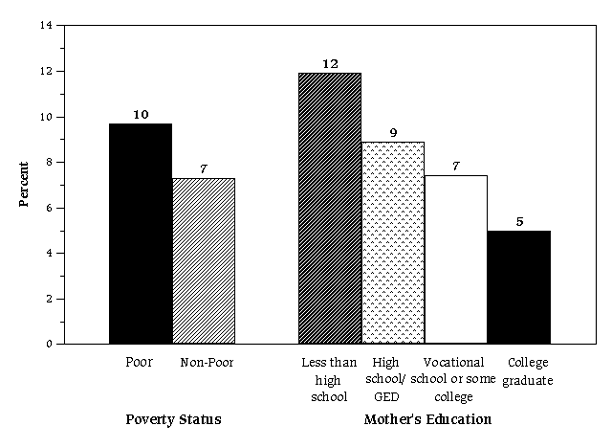
Source: U.S. Department of Education, National Center for Education Statistics, National Household Education Survey of 1995.
Differences by Socioeconomic Status. Grade repetition differs by family socioeconomic status, measured by poverty status and maternal education levels (see Figure EA 1.2). In 1995, 10 percent of children in poor families (at or below the poverty threshold) had repeated a grade, in comparison with 7 percent of second graders living in nonpoor families (above the poverty threshold). Grade repetition varies by maternal education, with the highest percentage of grade repetition in 1995 among children whose mothers did not complete high school (12 percent) and the lowest percentage among children whose mothers were college graduates (5 percent). Rates of grade repetition among children whose mothers did not complete high school declined substantially between 1991 and 1995, from 21 percent to 12 percent.
Table EA 1.2
|
|||||
|
|
|
|
1991
|
1993
|
1995
|
|
|
|
|
|
|
|
| Total |
11
|
8
|
8
|
||
|
|
Gender | ||||
|
|
|
Male |
13
|
10
|
11
|
|
|
|
Female |
9
|
7
|
5
|
|
|
Race/Ethnicity | ||||
|
|
|
White non-Hispanic |
9
|
7
|
7
|
|
|
|
Black non-Hispanic |
15
|
12
|
12
|
|
|
|
Hispanic |
18
|
11
|
10
|
|
|
Poverty Statusa | ||||
|
|
|
Non-poor |
9
|
8
|
7
|
|
|
|
Poor |
18
|
10
|
10
|
|
|
Family Type | ||||
|
|
|
Two parents |
10
|
7
|
8
|
|
|
|
One or no parent |
14
|
11
|
9
|
|
|
Mothers Educationb | ||||
|
|
|
Less than high school |
21
|
15
|
12
|
|
|
|
High school/GED |
12
|
9
|
9
|
|
|
|
Vocational/technical or some college |
9
|
6
|
7
|
|
|
|
College graduate |
4
|
5
|
5
|
|
|
Mothers Employment Statusb | ||||
|
|
|
35 hours or more per week |
12
|
8
|
9
|
|
|
|
Less than 35 hours per week |
8
|
8
|
6
|
|
|
|
Not in labor force |
11
|
9
|
8
|
| Note: aChildren were classified as non-poor (living above the poverty threshold) or poor (living below the poverty threshold), based on family size and income. See Wright, D., Hausken, E.G., and West, J. (1994). Family-Child Engagement in Literacy Activities: Changes in Participation Between 1991 and 1993. Washington, D.C. U.S. Department of Education, National Center for Education Statistics.
bChildren without mothers in the home are not included in estimates dealing with mothers education or mothers employment status. A mother is defined as a biological mother, adoptive mother, stepmother, foster mother, or female guardian (e.g., grandmother) who resides in the home with the child Source: U.S. Department of Education, National Center for Education Statistics, 1991, 1993, and 1995 National Household Education Survey. |
|||||
4 Alexander, K.L., Entwisle, D.R. Dauber, S.L. (1994). On the Success of Failure: a Reassessment of the Effects of Retention in the Primary Grades. New York: Cambridge University Press.
5 Estimates for whites and blacks exclude Hispanics of those races.
EA 1.3 School absenteeism
Student absenteeism is associated with poorer achievement in school, among other outcomes. For example, absenteeism is one of five personal and family background factors that accounted for 91 percent of the variation in states mathematics scores.6
Differences Across Grade Levels. The percentage of eighth grade students who were absent from school three or more days in the preceding month has remained relatively constant at around 22 percent between 1990 and 1994 (see Table EA 1.3). During the same time period, a slightly larger percentage of twelfth grade students were absent from school for that length of time, with percentages ranging between 26 and 31 percent.
Figure EA 1.3
|
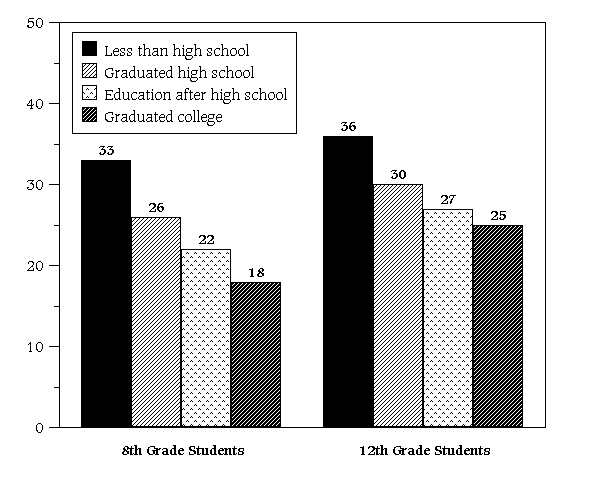
Note: The data for this table come from the 1994 National Reading Assessment. Source: U.S. Department of Education, National Center for Education Statistics, National Assessment of Educational Progress (NAEP), 1994.
Differences by Race and Ethnicity.7 There are notable differences in school absenteeism among racial and ethnic groups. Among eighth graders in 1994, Native American students, at 39 percent, were by far the most likely to have been absent 3 or more days in the preceding month. White and Asian students had the lowest absentee rates at 20 and 21 percent, respectively, followed by black and Hispanic students at 27 and 28 percent, respectively. The patterns are similar for 12th grade students, though the differences range from lows of 2628 percent for white and Asian students to a high of 53 percent for Native Americans.
Differences by Parents Educational Levels. Absentee rates among students also differ by parents educational levels (see Figure EA 1.3) Absences from school were highest for students whose parents have less than a high school education. In 1994, for example, 33 percent of eighth graders whose parents lacked a high school diploma were absent from school 3 or more days, compared to 18 percent of their peers who had at least one parent with a college degree.
Differences by Type of School. Students who attended private or Catholic schools also experienced fewer school absences than did students from public schools across all grades and years (see Table EA 1.3).
Table EA 1.3
|
||||||||||
|
|
|
|
8th Grade
|
12th Grade
|
||||||
|
|
|
|
1990
|
1992
|
1994
|
1990
|
1992
|
1994
|
||
|
|
|
|
|
|
|
|
|
|
||
| Total |
23
|
22
|
22
|
31
|
26
|
28
|
||||
|
|
Gender | |||||||||
|
|
|
Male |
21
|
21
|
22
|
29
|
24
|
27
|
||
|
|
|
Female |
24
|
24
|
22
|
32
|
27
|
28
|
||
|
|
Race/Ethnicity | |||||||||
|
|
|
White, non-Hispanic |
22
|
21
|
20
|
31
|
24
|
26
|
||
|
|
|
Black, non-Hispanic |
23
|
22
|
27
|
30
|
29
|
32
|
||
|
|
|
Hispanic |
27
|
31
|
28
|
34
|
32
|
32
|
||
|
|
|
Asian/Pacific American |
9
|
12
|
21
|
32
|
19
|
28
|
||
|
|
|
American Indian/Alaskan Native |
37
|
38
|
39
|
28
|
31
|
53
|
||
|
|
Parents Education Level | |||||||||
|
|
|
Less than high school |
38
|
31
|
33
|
41
|
30
|
36
|
||
|
|
|
Graduated high school |
27
|
23
|
26
|
34
|
28
|
30
|
||
|
|
|
Education after high school |
22
|
21
|
22
|
31
|
26
|
27
|
||
|
|
|
Graduated college |
15
|
19
|
18
|
27
|
23
|
25
|
||
|
|
Type of School | |||||||||
|
|
|
Public |
23
|
23
|
23
|
31
|
27
|
28
|
||
|
|
|
Catholic or other private |
13
|
14
|
15
|
24
|
17
|
21
|
||
| Note: The sample for this table is based on the 1990 and 1992 National Math Assessments, and 1994 National Reading Assessment.
Source: U.S. Department of Education, National Center for Education Statistics, National Assessment of Educational Progress (NAEP), 1990, 1992, and 1994. |
||||||||||
6 National Education Goals Panel. (1994). The National Education Goals Report: Building a Nation of Learners. Washington, DC: U.S. Government Printing Office.
7 Estimates for whites and blacks exclude Hispanics of those races.
EA 1.4 Teen dropout
High school dropouts have lower earnings, experience more unemployment, and are more likely to end up on welfare and in prison than their peers who complete high school or college.8 Women who drop out of high school are more likely to become pregnant and give birth at a young age, and are more likely to become single parents.9
Table EA 1.4 shows the event dropout rate for students in grades 10 through 12, ages 15 to 24. Event dropout rates measure the proportion of students enrolled in grades 10 through 12 in the last year, who were not enrolled and who had not completed high school in the year the data are reported. From 1980 to 1990, dropout rates fell from 6 percent to 4 percent. The event dropout rate in 1994 was 5 percent. While this rate appears higher than rates in previous years, the observed difference may be due to changes in Census methodology.
Differences by Race and Ethnicity.10 In 1994, event dropout rates were 10 percent for Hispanics, 7 percent for blacks, and 4 percent for whites (see Figure EA 1.4). Dropout rates for blacks and whites were lower in 1994 than they were in 1975.
Figure EA 1.4
|
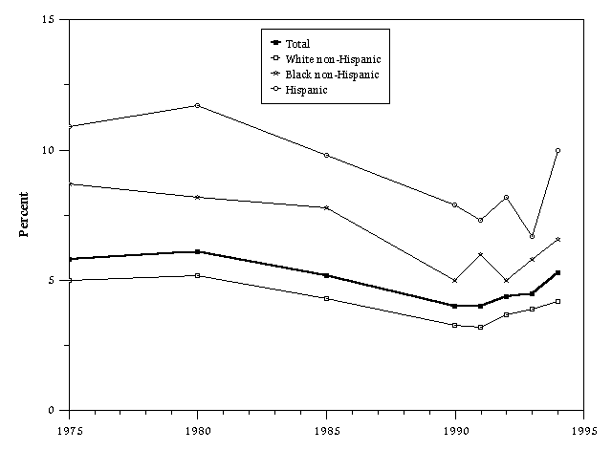
Note: The event dropout rate is the proportion of students enrolled in grades 10 through 12 in the previous year who were not enrolled and not graduated in the present year. Source: U.S. Department of Commerce, Bureau of the Census, Current Population Survey, unpublished tabulations; and U.S. Department of Education, National Center for Education Statistics, Dropout Rates in the United States:1994.
Table EA 1.4
|
||||||||||||
|
|
|
|
1975
|
1980
|
1985
|
1990b
|
1991b
|
1992b,c
|
1993b,c
|
1994b,c,d
|
||
|
|
|
|
|
|
|
|
|
|
|
|
||
| Total |
6
|
6
|
5
|
4
|
4
|
4
|
5
|
5
|
||||
|
|
White, non-Hispanic | |||||||||||
|
|
|
Total |
5
|
5
|
4
|
3
|
3
|
4
|
4
|
4
|
||
|
|
|
Male |
5
|
6
|
5
|
4
|
3
|
4
|
4
|
4
|
||
|
|
|
Female |
5
|
5
|
4
|
3
|
4
|
4
|
4
|
4
|
||
|
|
Black, non-Hispanic | |||||||||||
|
|
|
Total |
9
|
8
|
8
|
5
|
6
|
5
|
6
|
7
|
||
|
|
|
Male |
8
|
8
|
8
|
4
|
5
|
3
|
6
|
7
|
||
|
|
|
Female |
9
|
9
|
7
|
6
|
7
|
7
|
5
|
6
|
||
|
|
Hispanic | |||||||||||
|
|
|
Total |
11
|
12
|
10
|
8
|
7
|
8
|
7
|
10
|
||
|
|
|
Male |
10
|
18
|
9
|
9
|
10
|
8
|
5
|
9
|
||
|
|
|
Female |
12
|
7
|
10
|
7
|
5
|
9
|
8
|
11
|
||
| Notes: aThe event dropout rate is the proportion of students enrolled in grades 10 through 12 in the previous year who were not enrolled and not graduated in the present year. bNumbers for these years reflect new editing procedures instituted by the Bureau of the Census for cases with missing data on school enrollment items. cNumbers for these years reflect new wording of the educational attainment item in the Current Population Survey (CPS). dNumbers in this year may reflect changes in CPS due to newly instituted computer assisted interviewing and/or due to the change in the population controls used this year to the 1990 Census-based estimates, with adjustments for undercount. Source: U.S. Department of Commerce, Bureau of the Census, Current Population Survey, unpublished tabulations; and U.S. Department of Education, National Center for Education Statistics, Dropout Rates in the United States: 1993, 1994. |
||||||||||||
8 See McMillen, Marilyn and Phillip Kaufman. 1996. Dropout rates in the United States: 1994. U.S. Department of Education, National Center for Education Statistics.
9 McMillen et. al. 1996; Manlove, Jennifer. 1996. "Breaking the cycle of disadvantage: Ties between educational attainments, dropping out and teenage motherhood." under review.
10 Estimates for whites and blacks exclude Hispanics of those races.
EA 1.5 High school completion
High school graduates earn substantially more than persons who leave high school without graduating.11 Table EA 1.5.A presents the high school completion rates for 18- to 24-year-olds who were not still enrolled in a high school program i.e., the percentage in this age group who have received a high school diploma or its equivalent, such as passing the General Educational Development (GED) exam. In 1995, the high school completion rate was 85 percent. As can be seen in Table EA 1.5.B, most students receive a high school diploma rather than an equivalent credential (78 percent versus 7 percent). Between 1972 and 1995, the completion rate has varied between 83 percent and 86 percent (see Table EA 1.5.A).
Differences by Race and Ethnicity.12 As Figure EA 1.5 shows, completion rates vary dramatically by race/ethnicity. Hispanics have had much lower high school completion rates than either blacks or whites since the early 1970s. The high school completion rate for Hispanics in 1995 was only 63 percent, compared to 85 percent for blacks and 90 percent for whites. This suggests that many Hispanic youth and young adults will be less prepared than other 18- to 24-year-olds to enter or progress in the labor force. While completion rates for Hispanics have remained fairly constant since the early 1970s, completion rates for blacks have risen dramatically, from 72 percent in 1972 to 85 percent in 1995. Completion rates have also increased among whites, but to a lesser extent, so that the gap between black and white completion rates has narrowed over time (see Figure EA 1.5)
Figure EA 1.5
|
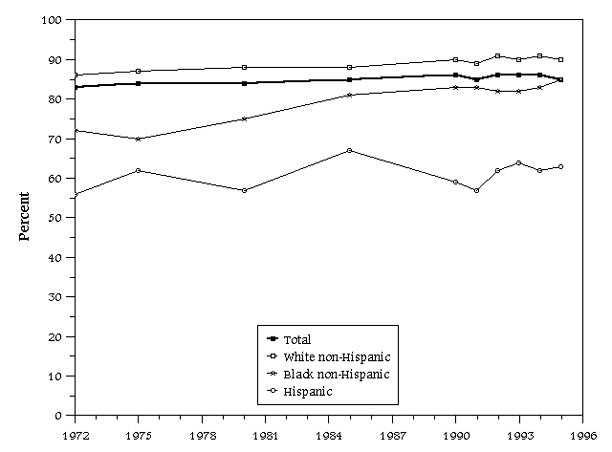
Note: aNot currently enrolled in high school or below.
Source: U.S. Department of Commerce, Bureau of the Census, Current Population Survey, October (various years); McMillen, M., and Kaufman, P. 1996. Dropout rates in the United States: 1994. U.S. Department of Education, National Center for Education Statistics.
Table EA 1.5.A
|
|||||||||||||
|
|
|
|
1972
|
1975
|
1980
|
1985
|
1990b
|
1991b
|
1992b,c
|
1993b,c
|
1994b,c,d
|
1995b,c,d
|
|
|
|
|
|
|
|
|
|
|
|
|
|
|
|
|
| Total |
83
|
84
|
84
|
85
|
86
|
85
|
86
|
86
|
86
|
85
|
|||
|
|
Race/Ethnicity | ||||||||||||
|
|
|
White, non-Hispanic |
86
|
87
|
88
|
88
|
90
|
89
|
91
|
90
|
91
|
90
|
|
|
|
|
Black, non-Hispanic |
72
|
70
|
75
|
81
|
83
|
83
|
82
|
82
|
83
|
85
|
|
|
|
|
Hispanic |
56
|
62
|
57
|
67
|
59
|
57
|
62
|
64
|
62
|
63
|
|
| Notes: aNot currently enrolled in high school or below. bNumbers for these years reflect new editing procedures instituted by the Bureau of the Census for cases with missing data on school enrollment items. cNumbers for these years reflect new wording of the educational attainment item in the Current Population Survey (CPS). dNumbers in this year may reflect changes in CPS due to newly instituted computer assisted interviewing and/or due to the change in the population controls used this year to the 1990 Census-based estimates, with adjustments for undercount. Source: U.S. Department of Commerce, Bureau of the Census, Current Population Survey, October (various years); McMillen, M. and Kaufman, P. 1996. Dropout rates in the United States: 1994. U.S. Department of Education, National Center for Education Statistics. |
|||||||||||||
Table EA 1.5.B
|
||||||||
| Completion method |
1990
|
1991
|
1992b
|
1993b
|
1994b,c
|
1995b,c
|
||
|
|
|
|
|
|
|
|||
| Total | ||||||||
|
|
Completed |
86
|
85
|
86
|
86
|
86
|
85
|
|
|
|
|
Diploma |
81
|
81
|
82
|
81
|
79
|
78
|
|
|
|
Equivalentd |
5
|
4
|
5
|
5
|
6
|
7
|
| White, non-Hispanic | ||||||||
|
|
Completed |
90
|
89
|
91
|
90
|
91
|
90
|
|
|
|
|
Diploma |
85
|
85
|
86
|
85
|
85
|
83
|
|
|
|
Equivalentd |
5
|
4
|
5
|
5
|
6
|
7
|
| Black, non-Hispanic | ||||||||
|
|
Completed |
83
|
83
|
82
|
82
|
83
|
85
|
|
|
|
|
Diploma |
78
|
77
|
77
|
76
|
76
|
76
|
|
|
|
Equivalentd |
5
|
5
|
5
|
6
|
8
|
9
|
| Hispanic | ||||||||
|
|
Completed |
59
|
57
|
62
|
64
|
62
|
63
|
|
|
|
|
Diploma |
57
|
54
|
58
|
59
|
57
|
58
|
|
|
|
Equivalentd |
3
|
2
|
4
|
6
|
5
|
5
|
| Note: aNot currently enrolled in high school or below. bNumbers for these years reflect new wording of the educational attainment item in the CPS. cNumbers for these years may reflect changes in CPS due to newly instituted computer assisted interviewing and/or due to the change in the population controls used. dDiploma equivalents include such things as passing the General Educational Development (GED) exam. Source: U.S. Department of Commerce, Bureau of the Census, Current Population Survey, October (various years); McMillen, M., and Kaufman, P. 1996. Dropout rates in the United States: 1994. U.S. Department of Education, National Center for Education Statistics. |
||||||||
11 Current Population Survey, March 1996, Table PinC-06a.
12 Estimates for whites and blacks exclude Hispanics of those races.
EA 1.6 College attendance and attainment
College attendance and receipt of a bachelors degree increase employment opportunities and income potential. One of the National Education Goals for the year 2000, adopted by Congress, is for adult literacy and lifelong learning, with an objective of increasing the proportion of qualified students, especially minorities, who enter college, who complete at least two years, and who complete their degree programs.13
Table EA 1.6 presents the percentage of 25- to 29-year-old high school graduates who had completed at least some college, and the percentage who had received a bachelors degree:14
- In 1995, 62 percent of high school graduates in this age group had completed some college, and 28 percent had received at least a Bachelors degree.
- College attendance rates for this group have increased dramatically since the early 1970s. The percentage of high school graduates completing at least some college rose from 44 percent in 1971 to 62 percent in 1995 (see Figure EA 1.6.A)
- College completion, defined here as receipt of a bachelors degree, increased more modestly, from 22 percent of 25- to 29-year-old high school graduates in 1971 to 28 percent of this group in 1995 (see Figure EA 1.6.B)
Differences by Race and Ethnicity.15 College attendance or graduation differs by racial and ethnic group. For example, in 1995, whites were far more likely (31 percent) than blacks (18 percent) or Hispanics (16 percent) to have received a Bachelors degree or higher. Whites were also more likely to have attended college (65 percent) than blacks (52 percent) or Hispanics (50 percent). Whites have had far higher rates of attendance and completion than blacks or Hispanics since the early 1970s, and the gap between whites and the other two racial/ethnic groups in college attendance and completion has not decreased over time (see Figures EA 1.6.A and EA 1.6.B).
Figure EA 1.6.A
|
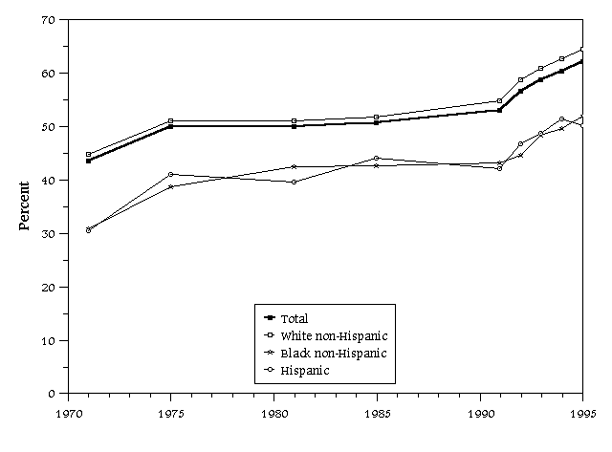
Note: a12 years of school completed for 1971-1991, and high school diploma or equivalency certificate for 1992-1995. Beginning in 1992, the Current Population Survey (CPS) changed the questions used to obtain the educational attainment of respondents.
bThis was measured as 1 or more years of college, 1971 - 1991, and as some college or more, 1993-1995.
Source: U.S. Department of Education. National Center for Education Statistics. The Condition of Education 1996, NCES 96-304. Washington, D.C.: U.S. Government Printing Office, 1996 (based on March Current Population Surveys).
Figure EA 1.6.B
|
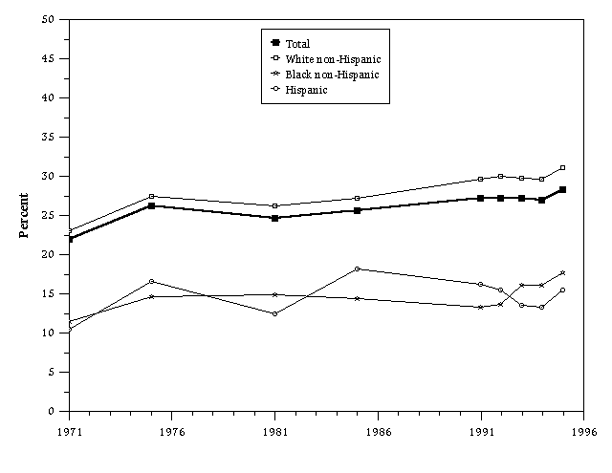
Note: a12 years of school completed for 1971-1991, and high school diploma or equivalency certificate for 1992-1995. Beginning in 1992, the Current Population Survey (CPS) changed the questions used to obtain the educational attainment of respondents.
bThis was measured as 4 or more years of college, 1971 - 1991, and as Bachelors degree or higher, 1993-1995.
Source: U.S. Department of Education. National Center for Education Statistics. The Condition of Education 1996, NCES 96-304. Washington, D.C.: U.S. Government Printing Office, 1996 (based on March Current Population Surveys).
Table EA 1.6
|
|||||||||||
|
|
|
1971
|
1975
|
1981
|
1985
|
1991
|
1992
|
1993
|
1994
|
1995
|
|
|
|
|
|
|
|
|
|
|
|
|
|
|
| Some College or Moreb | |||||||||||
| Total |
44
|
50
|
50
|
51
|
53
|
57
|
59
|
61
|
62
|
||
| Race/Ethnicity | |||||||||||
|
|
White, non-Hispanic |
45
|
51
|
51
|
52
|
55
|
59
|
61
|
63
|
65
|
|
|
|
Black, non-Hispanic |
31
|
39
|
43
|
43
|
43
|
45
|
48
|
50
|
52
|
|
|
|
Hispanic |
31
|
41
|
40
|
44
|
42
|
47
|
49
|
52
|
50
|
|
| Bachelors Degree or Higherc | |||||||||||
| Total |
22
|
26
|
25
|
26
|
27
|
27
|
27
|
27
|
28
|
||
| Race/Ethnicity | |||||||||||
|
|
White, non-Hispanic |
23
|
28
|
26
|
27
|
30
|
30
|
30
|
30
|
31
|
|
|
|
Black, non-Hispanic |
12
|
15
|
15
|
14
|
13
|
14
|
16
|
16
|
18
|
|
|
|
Hispanic |
11
|
17
|
13
|
18
|
16
|
16
|
14
|
13
|
16
|
|
| Note: aHigh School completion or high school graduate is defined as 12 years of school completed for 1971 - 1991, and high school diploma or equivalency certificate for 1992 - 1995. Beginning in 1992, the Current Population Survey (CPS) changed the questions used to obtain educational attainment of respondents. bThis was measured as "1 or more years of college," 1971 - 1991, and as "some college or more," 1993-1995. cThis was measured as "4 or more years of college," 1971 - 1991, and as "Bachelors degree or higher," 1993-1995. Source: U.S. Department of Education. National Center for Education Statistics. The Condition of Education 1996, NCES 96-304. Washington, D.C.: U.S. Government Printing Office, 1996 (based on March Current Population Surveys). |
|||||||||||
13 National Education Goals Panel. (1995). The National Education Goals Report: Building a Nation of Learners 1995. Washington, DC: U.S. Government Printing Office.
14 Note that the measure of college attendance changed from "1 or more years of college" in 19711991 to "some college or more" in 19921995. Similarly, the measure of college completion changed from "4 or more years of college" in 19711991 to "Bachelors degree or higher" in 19921995.
15 Estimates for whites and blacks exclude Hispanics of those races.
ACHIEVEMENT/PROFICIENCY
EA 2.1 Reading proficiency
Literacy proficiency and reading achievement are vital to educational reform efforts in the United States.16 One of the National Education Goals for the year 2000, adopted by Congress, is for adult literacy and lifelong learning, with objectives of having all students demonstrate competency in English and having all adults be literate.17 Levels of reading achievement will help measure the extent to which these goals are being met.
In order to monitor progress in the reading achievement of U.S. students, the National Assessment of Educational Progress (NAEP) has conducted national assessments of the reading performance of 9-, 13-, and 17-year-olds. There are five levels of reading proficiency reported by NAEP, ranging from Level 150 (completing simple, discrete reading tasks) to Level 350 (learning from specialized reading materials).18 The following tables (Tables EA 2.1.A, EA 2.1.B, and EA 2.1.C) report the average reading proficiency scores of students in the three age groups between 1971 and 1994.
Trends in Reading Proficiency Levels. Among 9-year-olds, average reading proficiency scores improved between 1971 and 1980, declined between 1980 and 1984, and remained steady until 1994 so that the average score in 1994 (211.0) was similar to the score in 1975 (210.0) (see Table EA 2.1.A). Among 13-year-olds, average reading proficiency scores varied from year to year, and were similar in 1994 (257.9) and 1971 (255.2) (see Table EA 2.1.B). Among 17-year-olds, average scores increased between 1971 and 1990, after which they stabilized. In 1994, the average score for 17-year-olds was 288.1 (see Table EA 2.1.C).
Differences by Gender. Females have scored consistently higher than males over time and for all ages. For example, among 13-year-olds in 1994, females had an average score of 265.7, compared with an average score of 250.6 for males (see Table EA 2.1.B).
Differences by Race and Ethnicity.19 There are large and consistent differences in reading proficiency by race and ethnicity among all age groups. For example, among 17-year-olds in 1994, whites had higher average reading proficiency scores (295.7) than either blacks or Hispanics (266.2 and 263.2, respectively) (see Table EA 2.1.C). However, black and Hispanic 17-year-olds had especially high gains in achievement relative to whites in the 1980s. Thus, the gaps in reading proficiency scores between whites and both blacks and Hispanics have narrowed since the mid-1970s among 17-year-olds (see Figure EA 2.1).
Differences by Parents Education. Average reading proficiency levels vary dramatically by parents education level.20 For example, among 13-year-olds and 17-year-olds in 1994, the lowest average reading proficiency scores were among teens whose parents did not have a high school education, while the highest scores were among teens who had a parent with posthigh school education. In fact, the average reading proficiency score among 13-year-old children of parents with posthigh school education levels (268.5) was similar to the average score among 17-year-old children of parents without a high school degree (267.9) (see Tables EA 2.1.B and EA 2.1.C).
Differences by School Type. Average reading proficiency scores have been consistently higher among students attending non-public schools than among students attending public schools. This is true for every age group and every year reported.
Figure EA 2.1
|
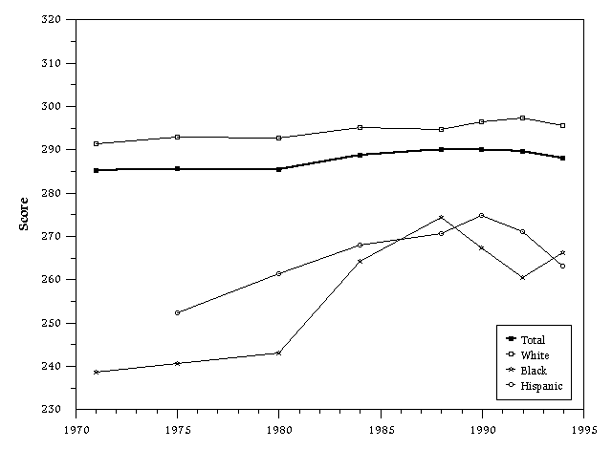
Note: The reading proficiency scale ranges from 0 to 500.
Level 150: Simple, discrete reading tasks
Level 200: Partial skills and understanding
Level 250: Interrelates ideas and makes generalizations
Level 300: Understands complicated information
Level 350: Learns from specialized reading materials
Source: U. S. Department of Education, National Center for Education Statistics, National Assessment of Educational Progress (NAEP), 1994 Trends in Academic Progress.
Table EA 2.1.A
|
|||||||||||||
|
|
|
|
1971
|
1975
|
1980
|
1984
|
1988
|
1990
|
1992
|
1994
|
|||
|
|
|
|
|
|
|
|
|
|
|
|
|||
| Total |
207.6
|
210
|
215
|
210.9
|
211.8
|
209.2
|
210.5
|
211
|
|||||
|
|
Gender | ||||||||||||
|
|
|
Male |
201.2
|
204.3
|
210
|
207.5
|
207.5
|
204
|
205.9
|
207.3
|
|||
|
|
|
Female |
213.9
|
215.8
|
220.1
|
214.2
|
216.3
|
214.5
|
215.4
|
214.7
|
|||
|
|
Race/Ethnicity | ||||||||||||
|
|
|
White, non-Hispanic |
214
|
216.6
|
221.3
|
218.2
|
217.7
|
217
|
217.9
|
218
|
|||
|
|
|
Black, non-Hispanic |
170.1
|
181.2
|
189.3
|
185.7
|
188.5
|
181.8
|
184.5
|
185.4
|
|||
|
|
|
Hispanic |
|
182.7
|
190.2
|
187.2
|
193.7
|
189.4
|
191.7
|
185.9
|
|||
|
|
Type of School | ||||||||||||
|
|
|
Public |
|
|
213.5
|
209.4
|
210.2
|
207.5
|
208.6
|
209.4
|
|||
|
|
|
Non-Public |
|
|
227
|
222.8
|
223.4
|
228.3
|
224.7
|
225
|
|||
| Note: The reading proficiency scale has a range from 0 to 500: | |||||||||||||
|
|
Level 150: Simple, discrete reading tasks |
|
Level 300: Understands complicated information |
|
|||||||||
|
|
Level 200: Partial skills and understanding |
|
Level 350: Learns from specialized reading materials |
|
|||||||||
|
|
Level 250: Interrelates ideas and makes generalizations |
|
|
||||||||||
| Source: U. S. Department of Education, National Center for Education Statistics, National Assessment of Educational Progress (NAEP), 1994 Trends in Academic Progress. |
|||||||||||||
Table EA 2.1.B
|
|||||||||||||||
|
|
|
|
1971
|
1975
|
1980
|
1984
|
1988
|
1990
|
1992
|
1994
|
|||||
|
|
|
|
|
|
|
|
|
|
|
|
|||||
| Total |
255.2
|
255.9
|
258.5
|
257.1
|
257.5
|
256.8
|
259.8
|
257.9
|
|||||||
|
|
Gender | ||||||||||||||
|
|
|
Male |
249.6
|
249.6
|
254.3
|
252.6
|
251.8
|
250.5
|
254.1
|
250.6
|
|||||
|
|
|
Female |
260.8
|
262.3
|
262.6
|
261.7
|
263
|
263.1
|
265.3
|
265.7
|
|||||
|
|
Race/Ethnicity | ||||||||||||||
|
|
|
White, non-Hispanic |
260.9
|
262.1
|
264.4
|
262.6
|
261.3
|
262.3
|
266.4
|
265.1
|
|||||
|
|
|
Black, non Hispanic |
222.4
|
225.7
|
232.8
|
236.3
|
242.9
|
241.5
|
237.6
|
234.3
|
|||||
|
|
|
Hispanic |
|
232.5
|
237.2
|
239.6
|
240.1
|
237.8
|
239.2
|
235.1
|
|||||
|
|
Parents Education | ||||||||||||||
|
|
|
Less than high school |
238.4
|
238.7
|
238.5
|
240
|
246.5
|
240.8
|
239.2
|
236.7
|
|||||
|
|
|
Graduated high school |
255.5
|
254.6
|
253.5
|
253.4
|
252.7
|
251.4
|
252.1
|
251.4
|
|||||
|
|
|
Post high school |
270.2
|
269.8
|
270.9
|
267.6
|
265.3
|
266.9
|
269.9
|
268.5
|
|||||
|
|
Type of School | ||||||||||||||
|
|
|
Public |
|
|
256.9
|
255.2
|
256.1
|
255
|
257.2
|
255.6
|
|||||
|
|
|
Non-Public |
|
|
270.6
|
271.2
|
268.3
|
269.7
|
276.3
|
275.8
|
|||||
| Note: The reading proficiency scale has a range from 0 to 500: | |||||||||||||||
|
|
Level 150: Simple, discrete reading tasks |
|
Level 300: Understands complicated information |
|
|||||||||||
|
|
Level 200: Partial skills and understanding |
|
Level 350: Learns from specialized reading materials |
|
|||||||||||
|
|
Level 250: Interrelates ideas and makes generalizations |
|
|
||||||||||||
| Source: U. S. Department of Education, National Center for Education Statistics, National Assessment of Educational Progress (NAEP), 1994 Trends in Academic Progress. |
|||||||||||||||
Table EA 2.1.C
|
||||||||||||||||||
|
|
|
|
1971
|
1975
|
1980
|
1984
|
1988
|
1990
|
1992
|
1994
|
||||||||
|
|
|
|
|
|
|
|
|
|
|
|
||||||||
| Total |
285.2
|
285.6
|
285.5
|
288.8
|
290.1
|
290.2
|
289.7
|
288.1
|
||||||||||
|
|
Gender | |||||||||||||||||
|
|
|
Male |
278.9
|
279.7
|
281.8
|
283.8
|
286
|
284
|
284.2
|
281.7
|
||||||||
|
|
|
Female |
291.3
|
291.2
|
289.2
|
293.9
|
293.8
|
296.5
|
295.7
|
294.7
|
||||||||
|
|
Race/Ethnicity | |||||||||||||||||
|
|
|
White, non-Hispanic |
291.4
|
293
|
292.8
|
295.2
|
294.7
|
296.6
|
297.4
|
295.7
|
||||||||
|
|
|
Black, non Hispanic |
238.7
|
240.6
|
243.1
|
264.3
|
274.4
|
267.3
|
260.6
|
266.2
|
||||||||
|
|
|
Hispanic |
|
252.4
|
261.4
|
268.1
|
270.8
|
274.8
|
271.2
|
263.2
|
||||||||
|
|
Parents Education | |||||||||||||||||
|
|
|
Less than high school |
261.3
|
262.5
|
262.1
|
269.4
|
267.4
|
269.7
|
270.8
|
267.9
|
||||||||
|
|
|
Graduated high school |
283
|
281.4
|
277.5
|
281.2
|
282
|
282.9
|
280.5
|
276.1
|
||||||||
|
|
|
Post high school |
302.2
|
300.6
|
298.9
|
301.2
|
299.5
|
299.9
|
298.6
|
298.5
|
||||||||
|
|
Type of School | |||||||||||||||||
|
|
|
Public |
|
|
284.4
|
287.2
|
288.7
|
288.6
|
287.8
|
286
|
||||||||
|
|
|
Non-Public |
|
|
298.4
|
303
|
299.6
|
311
|
309.6
|
306.1
|
||||||||
| Note: The reading proficiency scale has a range from 0 to 500: | ||||||||||||||||||
| Level 150: Simple, discrete reading tasks |
|
Level 300: Understands complicated information | ||||||||||||||||
| Level 200: Partial skills and understanding |
|
Level 350: Learns from specialized reading materials |
||||||||||||||||
| Level 250: Interrelates ideas and makes generalizations |
|
|||||||||||||||||
| Source: U. S. Department of Education, National Center for Education Statistics, National Assessment of Educational Progress (NAEP), 1994 Trends in Academic Progress. |
||||||||||||||||||
16 National Center for Education Statistics. (1994). NAEP 1992 Trends in Academic Progress. No. 23-TR01.
17 National Education Goals Panel. (1995). The National Education Goals Report: Building a Nation of Learners 1995. Washington, DC: U.S. Government Printing Office.
18 NAEP has regularly been conducting assessments of U.S. students in public and private schools in order to monitor trends in academic achievement in core curriculum areas since the 1970s. NAEP uses proficiency scales that range from 0 to 500. To give meaning to the results, students performance is characterized at five levels along the proficiency scales (150, 200, 250, 300, 350).
19 Estimates for whites and blacks exclude Hispanics of those races.
20 Parents education is not reported at age 9 because approximately a third of these students did not know their parents education level.
EA 2.2 Mathematics proficiency
One of the National Education Goals for the year 2000, adopted by Congress, is to improve the relative standing of U.S. students in mathematics achievement.21 In a 1995 comparison of American eighth graders to 40 other countries, the Third International Math and Science Study showed that U.S. students had significantly lower overall mathematics proficiency scores than students in 20 countries, had similar scores to students in 13 countries, and had higher scores than students in 7 countries.22 Levels of mathematics achievement, both in the U.S. and internationally, will help measure the extent to which these goals are being met.
In order to monitor progress in the mathematics achievement of U.S. students, the National Assessment of Educational Progress (NAEP) has conducted national assessments of the mathematics performance of 9-, 13-, and 17-year-olds. There are five levels of mathematics proficiency reported by NAEP, ranging from Level 150 (understanding simple arithmetic facts) to Level 350 (multistep problem solving and algebra).23 The following tables (Tables EA 2.2.A, EA 2.2.B, and EA 2.2.C) report the average mathematics proficiency scores of students in the three age groups between 1973 and 1994.
Trends in Mathematics Proficiency Levels. Among 9-year-olds, average mathematics proficiency scores remained the same between 1973 and 1982, and then increased substantially to 231.1 in 1994 (see Table EA 2.2.A). Among 13-year-olds, mathematics proficiency scores increased between 1978 (264.1) and 1994 (274.3) (see Table EA 2.2.B). Among 17-year-olds, average proficiency scores declined between 1973 and 1982, after which they increased to a level similar to 1973 in 1994 (see Table EA 2.2.C).
Differences by Gender. Average mathematics proficiency scores among males and females were virtually identical among 9-year-old students in 1994. In 1994, mathematics proficiency scores were higher for males among 13-year-olds (by an average of 3.3 points) and 17 year olds (by an average of 4.4 points).
Differences by Race and Ethnicity.24 There are consistently large differences in mathematics proficiency by race and ethnicity. For example, among 17-year-olds in 1994, blacks and Hispanics had lower proficiency scores (285.5 and 290.8) than whites (312.3) (see Table EA 2.2.C). However, black and Hispanic 17-year-olds had substantial gains in achievement between 1973 and 1994 (see Figure EA 2.2).
Differences by Parents Education. There are large variations in average mathematics proficiency levels by parental education for 13- and 17-year-olds (see Tables EA 2.2.B and EA 2.2.C).25 For example, in 1994, 13-year-olds whose parents did not have a high school education had the lowest average proficiency scores (254.5), while those whose parents had graduated from college had the highest scores (284.9) (see Table EA 2.2.B).
Differences by School Type. Average mathematics proficiency scores among students in public schools have been consistently lower than average scores among students in non-public schools. This is true for every age group and every year reported.
Figure EA 2.2
|
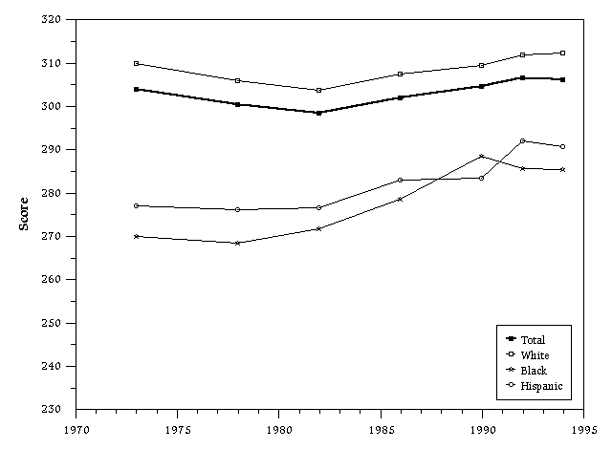
Note: The mathematics proficiency scale ranges from 0 to 500.
Level 150: Simple arithmetic facts
Level 200: Beginning skills and understandings
Level 250: Numerical operations and beginning problem solving
Level 300: Moderately complex procedures and reasoning
Level 350: Multi-step problem solving and algebra
Source: U. S. Department of Education, National Center for Education Statistics, National Assessment of Educational Progress (NAEP), 1994 Trends in Academic Progress.
Table EA 2.2.A
|
||||||||||||||
|
|
|
|
1973
|
1978
|
1982
|
1986
|
1990
|
1992
|
1994
|
|||||
|
|
|
|
|
|
|
|
|
|
|
|||||
| Total |
219
|
218.6
|
219
|
221.7
|
229.6
|
229.6
|
231.1
|
|||||||
|
|
Gender | |||||||||||||
|
|
|
Male |
218
|
217.4
|
217.1
|
221.7
|
229.1
|
230.8
|
232.2
|
|||||
|
|
|
Female |
220
|
219.9
|
220.8
|
221.7
|
230.2
|
228.4
|
230
|
|||||
|
|
Race/Ethnicity | |||||||||||||
|
|
|
White, non-Hispanic |
225
|
224.1
|
224
|
226.9
|
235.2
|
235.1
|
236.8
|
|||||
|
|
|
Black, non-Hispanic |
190
|
192.4
|
194.9
|
201.6
|
208.4
|
208
|
212.1
|
|||||
|
|
|
Hispanic |
202
|
202.9
|
204
|
205.4
|
213.8
|
211.9
|
209.9
|
|||||
|
|
Type of School | |||||||||||||
|
|
|
Public |
|
217.2
|
217
|
220.1
|
228.6
|
227.7
|
229.3
|
|||||
|
|
|
Non-Public |
|
230.5
|
231.8
|
230
|
238.1
|
241.5
|
244.5
|
|||||
| Note: The mathematics proficiency scale ranges from 0 to 500: | ||||||||||||||
| Level 150: Simple arithmetic facts |
|
Level 300: Moderately complex procedures and reasoning | ||||||||||||
| Level 200: Beginning skills and understandings |
|
|
Level 350: Multi-step problem solving and algebra |
|
||||||||||
| Level 250: Numerical operations and beginning problem solving |
|
|
|
|||||||||||
| Source: U. S. Department of Education, National Center for Education Statistics, National Assessment of Educational Progress (NAEP), 1994 Trends in Academic Progress. |
||||||||||||||
Table EA 2.2.B
|
||||||||||||||
|
1973
|
1978
|
1982
|
1986
|
1990
|
1992
|
1994
|
||||||||
|
|
|
|
|
|
|
|
||||||||
| Total |
266
|
264.1
|
268.6
|
269
|
270.4
|
273.1
|
274.3
|
|||||||
|
|
Gender | |||||||||||||
|
|
|
Male |
265
|
263.6
|
269.2
|
270
|
271.2
|
274.1
|
276
|
|||||
|
|
|
Female |
267
|
264.7
|
268
|
267.9
|
269.6
|
272
|
272.7
|
|||||
|
|
Race/Ethnicity | |||||||||||||
|
|
|
White, non-Hispanic |
274
|
271.6
|
274.4
|
273.6
|
276.3
|
278.9
|
280.8
|
|||||
|
|
|
Black, non Hispanic |
228
|
229.6
|
240.4
|
249.2
|
249.1
|
250.2
|
251.5
|
|||||
|
|
|
Hispanic |
239
|
238
|
252.4
|
254.3
|
254.6
|
259.3
|
256
|
|||||
|
|
Parents Education | |||||||||||||
|
|
|
Less than high school |
|
244.7
|
251
|
252.3
|
253.4
|
255.5
|
254.5
|
|||||
|
|
|
Graduated high school |
|
263.1
|
262.9
|
262.7
|
262.6
|
263.2
|
265.7
|
|||||
|
|
|
Some education after HS |
|
273.1
|
275.1
|
273.7
|
277.1
|
277.6
|
277.3
|
|||||
|
|
|
Graduated college |
|
283.8
|
282.3
|
279.9
|
280.4
|
282.8
|
284.9
|
|||||
|
|
Type of School | |||||||||||||
|
|
|
Public |
|
262.6
|
267.1
|
268.7
|
269.3
|
271.7
|
273
|
|||||
|
|
|
Non-Public |
|
279.2
|
281.1
|
275.7
|
279.9
|
283.3
|
284.6
|
|||||
| Note: The mathematics proficiency scale ranges from 0 to 500: | ||||||||||||||
|
|
Level 150: Simple arithmetic facts |
|
Level 300: Moderately complex procedures and reasoning |
|
||||||||||
|
|
Level 200: Beginning skills and understandings |
|
|
Level 350: Multi-step problem solving and algebra |
|
|||||||||
|
|
Level 250: Numerical operations and beginning problem solving | |||||||||||||
| Source: U. S. Department of Education, National Center for Education Statistics, National Assessment of Educational Progress (NAEP), 1994 Trends in Academic Progress. |
||||||||||||||
Table EA 2.2.C
|
||||||||||||||
|
1973
|
1978
|
1982
|
1986
|
1990
|
1992
|
1994
|
||||||||
|
|
|
|
|
|
|
|
||||||||
| Total |
304
|
300.4
|
298.5
|
302
|
304.6
|
306.7
|
306.2
|
|||||||
|
|
Gender | |||||||||||||
|
|
|
Male |
309
|
303.8
|
301.5
|
304.7
|
306.3
|
308.9
|
308.5
|
|||||
|
|
|
Female |
301
|
297.1
|
295.6
|
299.4
|
302.9
|
304.5
|
304.1
|
|||||
|
|
Race/Ethnicity | |||||||||||||
|
|
|
White, non-Hispanic |
310
|
305.9
|
303.7
|
307.5
|
309.5
|
311.9
|
312.3
|
|||||
|
|
|
Black, non Hispanic |
270
|
268.4
|
271.8
|
278.6
|
288.5
|
285.8
|
285.5
|
|||||
|
|
|
Hispanic |
277
|
276.3
|
276.7
|
283.1
|
283.5
|
292.2
|
290.8
|
|||||
|
|
Parents Education | |||||||||||||
|
|
|
Less than high school |
|
279.6
|
279.3
|
279.3
|
285.4
|
285.5
|
283.7
|
|||||
|
|
|
Graduated high school |
|
293.9
|
293.4
|
293.1
|
293.7
|
297.6
|
295.3
|
|||||
|
|
|
Some education after HS |
|
305.3
|
303.9
|
305.2
|
307.7
|
307.5
|
305
|
|||||
|
|
|
Graduated college |
|
316.8
|
312.4
|
313.9
|
316.2
|
315.9
|
317.6
|
|||||
|
|
Type of School | |||||||||||||
|
|
|
Public |
|
299.6
|
297.3
|
301.2
|
303.5
|
305.3
|
304.4
|
|||||
|
|
|
Non-Public |
|
314.3
|
311.4
|
320.1
|
317.7
|
320.4
|
319.4
|
|||||
| Note: The mathematics proficiency scale ranges from 0 to 500: | ||||||||||||||
|
|
Level 150: Simple arithmetic facts |
|
Level 300: Moderately complex procedures and reasoning |
|
||||||||||
|
|
Level 200: Beginning skills and understandings |
|
|
Level 350: Multi-step problem solving and algebra |
|
|||||||||
|
|
Level 250: Numerical operations and beginning problem solving |
|
|
|
||||||||||
| Source: U. S. Department of Education, National Center for Education Statistics, National Assessment of Educational Progress (NAEP), 1994 Trends in Academic Progress. | ||||||||||||||
21 National Center for Education Statistics. (1994). NAEP 1992 Trends in Academic Progress. No. 23-TR01.
22 U.S. Department of Education. National Center for Education Statistics, Pursuing Excellence, No. 97-198. Washington, DC: U.S. Government Printing Office.
23 NAEP has regularly been conducting assessments of U.S. students in public and private schools in order to monitor trends in academic achievement in core curriculum areas since the 1970s. NAEP uses proficiency scales that range from 0 to 500. To give meaning to the results, students performance is characterized at five levels along the proficiency scales (150, 200, 250, 300, 350).
24 Estimates for whites and blacks exculde Hispanics of those races.
25 Parents education is not reported at age 9 because approximately a third of these students did not know their parents education level.
EA 2.3 Science proficiency
One the National Education Goals for the year 2000, adopted by Congress, is to improve the relative standing of U.S. students in science achievement.26 In a 1995 comparison of American eighth graders to 40 other countries, the Third International Math and Science Study showed that U.S. students had significantly lower overall science proficiency scores than students in 9 countries, had similar scores to students in 16 countries, and had higher scores than students in 15 countries.27 Levels of science achievement, both in the U.S. and internationally, will help measure the extent to which these goals are being met.
In order to present time trends in science proficiency levels, the National Assessment of Educational Progress (NAEP) reports five different proficiency levels, ranging from Level 150 (knows everyday science facts) to Level 350 (integrates specialized scientific information).28 The following tables (Tables EA 2.3.A, EA 2.3.B, and EA 2.3.C) report the average science proficiency scores of students in three age groups (9-, 13-, and 17-year-olds).
Trends in Science Proficiency Levels. Average science proficiency scores have increased among all age groups since 1977. Among 9-year-olds, average science proficiency scores increased between 1977 (219.9) and 1994 (231.0) (see Table EA 2.3.A). Among 13-year-olds, average scores increased between 1977 (247.4) and 1994 (256.8) (see Table EA 2.3.B). Among 17-year-olds, average science proficiency scores declined between 1977 (289.5) and 1982 (283.3), after which they increased to 294.0 in 1994. Thus, gains in science proficiency levels among 17-year-olds were not as great as gains for the other two age groups.
Differences by Gender. In 1994, females scored slightly lower than males on average science proficiency scores among 13-year-olds and 17-year-olds.
Differences by Race and Ethnicity.29 There are large differences in science proficiency scores by race and ethnicity among all age groups. For example, among 17-year-olds in 1994, whites had higher average science proficiency scores (306.0) than blacks (256.8) or Hispanics (261.4) (see Table EA 2.3.C). However, black 17-year-olds had especially high gains in achievement since 1977 (see Figure 2.3). Black 9-year-olds and 13-year-olds also showed high gains in science achievement over time.
Differences by Parents Education. Average science proficiency levels vary dramatically by parents education level.30 For example, among 13-year-olds and 17-year-olds in 1994, the lowest average science proficiency scores were among teens whose parents did not have a high school education, while the highest scores were among teens who had a parent who had graduated from college. In fact, in 1994 the average science proficiency score among 13-year-old children of parents with a college education (268.8) was substantially higher than the average score among 17-year-old children of parents without a high school degree (255.8) (see Tables EA 2.3.B and EA 2.3.C).
Differences by School Type. Average science proficiency scores have been consistently higher among students attending non-public schools than among students attending public schools. This is true for every age group and every year reported.
Figure EA 2.3
|
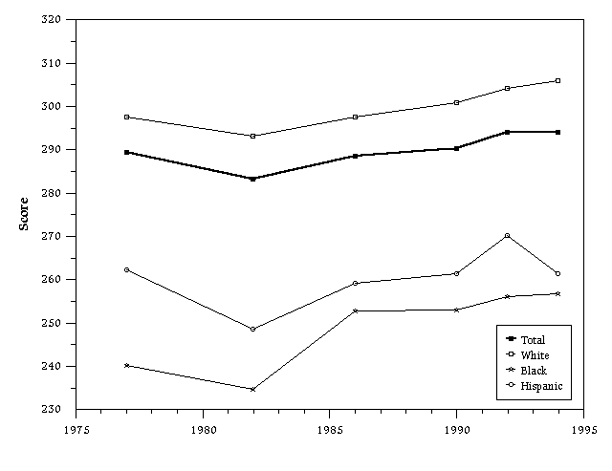
Note: The science proficiency scale ranges from 0 to 500.
Level 150: Knows everyday science facts
Level 200: Understands simple scientific principles
Level 250: Applies general scientific information
Level 300: Analyzes scientific procedures and data
Level 350: Integrates specialized scientific information
Source: U. S. Department of Education, National Center for Education Statistics, National Assessment of Educational Progress (NAEP), 1994 Trends in Academic Progress.
Table EA 2.3.A
|
|||||||||||
|
|
|
|
1977
|
1982
|
1986
|
1990
|
1992
|
1994
|
|||
|
|
|
|
|
|
|
|
|
|
|||
| Total |
219.9
|
220.8
|
224.3
|
228.7
|
230.6
|
231
|
|||||
|
|
Gender | ||||||||||
|
|
|
Male |
221.1
|
221
|
227.3
|
230.3
|
234.7
|
232.2
|
|||
|
|
|
Female |
217.6
|
220.7
|
221.3
|
227.1
|
226.7
|
230
|
|||
|
|
Race/Ethnicity | ||||||||||
|
|
|
White, non-Hispanic |
229.6
|
229
|
231.9
|
237.5
|
239.1
|
240.3
|
|||
|
|
|
Black, non-Hispanic |
174.8
|
187
|
196.2
|
196.4
|
200.3
|
201.4
|
|||
|
|
|
Hispanic |
191.9
|
189
|
199.4
|
206.2
|
204.7
|
201
|
|||
|
|
Type of School | ||||||||||
|
|
|
Public |
218
|
219.7
|
226.6
|
227.7
|
229.1
|
229.5
|
|||
|
|
|
Non-Public |
234.6
|
231.5
|
233
|
236.8
|
240.2
|
242.2
|
|||
| Note: The science proficiency scale ranges from 0 to 500: | |||||||||||
|
|
Level 150: Knows everyday science facts |
|
Level 300: Analyzes scientific procedures and data |
|
|||||||
|
|
Level 200: Understands simple scientific principles |
|
Level 350: Integrates specialized scientific information |
|
|||||||
|
|
Level 250: Applies general scientific information |
|
|
||||||||
| Source: U. S. Department of Education, National Center for Education Statistics, National Assessment of Educational Progress (NAEP), 1994 Trends in Academic Progress. | |||||||||||
Table EA 2.3.B
|
|||||||||||||
|
|
|
|
1977
|
1982
|
1986
|
1990
|
1992
|
1994
|
|||||
|
|
|
|
|
|
|
|
|
|
|||||
| Total |
247.4
|
250.1
|
251.4
|
255.2
|
258
|
256.8
|
|||||||
|
|
Gender | ||||||||||||
|
|
|
Male |
251.1
|
255.6
|
256.1
|
258.5
|
260.1
|
259.4
|
|||||
|
|
|
Female |
243.7
|
245
|
246.9
|
251.8
|
256
|
254.3
|
|||||
|
|
Race/Ethnicity | ||||||||||||
|
|
|
White, non-Hispanic |
256.1
|
257.3
|
259.2
|
264.1
|
267.1
|
266.5
|
|||||
|
|
|
Black, non Hispanic |
208.1
|
217.1
|
221.6
|
225.7
|
224.2
|
223.9
|
|||||
|
|
|
Hispanic |
213.4
|
225.5
|
226.1
|
231.6
|
237.5
|
232.1
|
|||||
|
|
Parents Education | ||||||||||||
|
|
|
Less than high school |
223.5
|
225.3
|
229.4
|
232.9
|
233.8
|
234.3
|
|||||
|
|
|
Graduated high school |
245.3
|
243.1
|
244.8
|
247.3
|
246.4
|
247.1
|
|||||
|
|
|
Some education after HS |
260.3
|
258.8
|
257.8
|
262.8
|
265.9
|
260.4
|
|||||
|
|
|
Graduated college |
266.4
|
263.5
|
264.4
|
267.5
|
269.2
|
268.8
|
|||||
|
|
Type of School | ||||||||||||
|
|
|
Public |
245.2
|
248.5
|
250.9
|
253.6
|
257.2
|
255.4
|
|||||
|
|
|
Non-Public |
267.7
|
263.7
|
263.1
|
269
|
264.5
|
267.6
|
|||||
|
|
|
|
|
|
|
|
|
|
|||||
| Note: The science proficiency scale ranges from 0 to 500: | |||||||||||||
|
|
Level 150: Knows everyday science facts |
|
Level 300: Analyzes scientific procedures and data |
|
|||||||||
|
|
Level 200: Understands simple scientific principles |
|
Level 350: Integrates specialized scientific information |
|
|||||||||
|
|
Level 250: Applies general scientific information |
|
|
||||||||||
| Source: U. S. Department of Education, National Center for Education Statistics, National Assessment of Educational Progress (NAEP), 1994 Trends in Academic Progress. | |||||||||||||
Table EA 2.3.C
|
|||||||||||||
|
1977
|
1982
|
1986
|
1990
|
1992
|
1994
|
||||||||
|
|
|
|
|
|
|
||||||||
| Total |
289.5
|
283.3
|
288.5
|
290.4
|
294.1
|
294
|
|||||||
|
|
Gender | ||||||||||||
|
|
|
Male |
297
|
291.9
|
294.9
|
295.6
|
299.1
|
299.5
|
|||||
|
|
|
Female |
282.2
|
275.2
|
282.3
|
285.4
|
289
|
288.9
|
|||||
|
|
Race/Ethnicity | ||||||||||||
|
|
|
White, non-Hispanic |
297.7
|
293.1
|
297.5
|
300.9
|
304.2
|
306
|
|||||
|
|
|
Black, non Hispanic |
240.2
|
234.7
|
252.8
|
253
|
256.2
|
256.8
|
|||||
|
|
|
Hispanic |
262.3
|
248.7
|
259.3
|
261.5
|
270.2
|
261.4
|
|||||
|
|
Parents Education | ||||||||||||
|
|
|
Less than high school |
265.3
|
258.5
|
257.5
|
261.4
|
262
|
255.8
|
|||||
|
|
|
Graduated high school |
284.4
|
275.2
|
277
|
276.3
|
280.2
|
279.2
|
|||||
|
|
|
Some education after HS |
295.6
|
290.1
|
295.1
|
296.5
|
295.9
|
294.8
|
|||||
|
|
|
Graduated college |
309.3
|
300.2
|
303.8
|
305.5
|
308.3
|
310.6
|
|||||
|
|
Type of School | ||||||||||||
|
|
|
Public |
288.2
|
282.3
|
287.1
|
289
|
292.2
|
291.7
|
|||||
|
|
|
Non-Public |
308.4
|
292
|
321.3
|
307.8
|
311.7
|
310.4
|
|||||
|
|
|
|
|
|
|
|
|
|
|||||
| Note: The science proficiency scale ranges from 0 to 500: | |||||||||||||
|
|
Level 150: Knows everyday science facts |
|
Level 300: Analyzes scientific procedures and data |
|
|||||||||
|
|
Level 200: Understands simple scientific principles |
|
Level 350: Integrates specialized scientific information |
|
|||||||||
|
|
Level 250: Applies general scientific information |
|
|
||||||||||
| Source: U. S. Department of Education, National Center for Education Statistics, National Assessment of Educational Progress (NAEP), 1994 Trends in Academic Progress. | |||||||||||||
26 National Center for Education Statistics. (1994). NAEP 1992 Trends in Academic Progress. No. 23-TR01.
27 U.S. Department of Education. National Center for Education Statistics, Pursuing Excellence, No. 97-198. Washington, DC: U.S. Government Printing Office.
28 NAEP has regularly been conducting assessments of U.S. students in public and private schools in order to monitor trends in academic achievement in core curriculum areas since the 1970s. NAEP uses proficiency scales that range from 0 to 500. To give meaning to the results, students performance is characterized at five levels along the proficiency scales (150, 200, 250, 300, 350).
29 Estimates for whites and blacks exclude Hispanics of those races.
30 Parents education is not reported at age 9 because approximately a third of these students did not know their parents education level.
RELATED BEHAVIORS AND CHARACTERISTICS
EA 3.1.a Family-child engagement in literacy activities
Numerous studies have documented the importance of parental involvement in literacy activities with their children. One of the National Education Goals stresses the importance of familychild engagement in literacy activities, especially among children who are "at risk" of school failure, in order for all U.S. children to be able to start school ready to learn.
Table EA 3.1.A presents three types of literacy activities that parents may engage in with their children. In 1996, a majority of 3- to 5-year-old children (57 percent) were read to by a parent or other family member every day, showing a slight increase from 1993 (53 percent). More than a third of children (37 percent) visited a library at least once in the past month. About 55 percent of children were regularly told stories (3 or more times a week), a substantial increase from 1991 (39 percent).
Differences by Race and Ethnicity.31 There are substantial differences in all literacy activities by race and ethnicity. For example, in 1996, white children were more likely to be read to every day (64 percent) than black children (44 percent) or Hispanic children (39 percent). These differences have been fairly stable over time. There were also differences in library visits by race and ethnicity. Black and Hispanic children were also less likely to be told a story frequently (47 percent) than were white children (59 percent) (see Table EA 3.1.A).
Differences by Family Type. Children in two-parent families were more likely to participate in all three types of literacy activities than children who lived with one or no parent.
Differences by Socioeconomic Status. Children in families living above the poverty threshold are much more likely to be engaged in literacy activities on a regular basis than children who live in poverty. For example, in 1996, 61 percent of children in nonpoor families (above the poverty threshold) were read to every day by a parent or other family member, compared to 46 percent of children in poor families (at or below the poverty level) (see Figure EA 3.1.A). There are also substantial differences in literacy activities by mothers education level. For example, about one-fifth (19 percent) of children whose mothers did not have a high school diploma visited a library once or more in the past month, compared to more than half (56 percent) of children whose mothers were college graduates (see Table EA 3.1.A).
Differences by Mothers Employment Status. Children whose mothers were employed 35 hours or more per week were slightly less likely to engage in any of the three literacy activities than children whose mothers were either working part-time or not working.
Figure EA 3.1.A
|
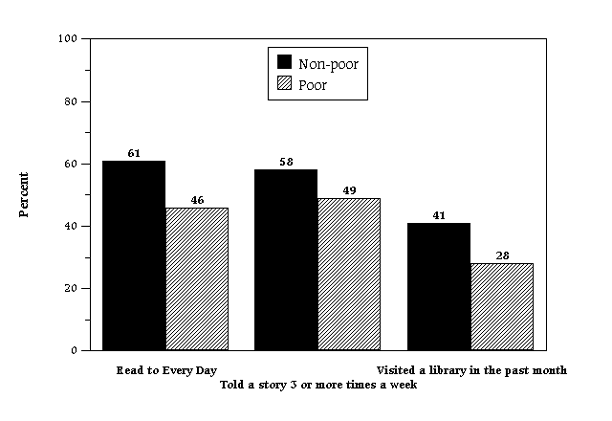
Source: U.S. Department of Education, National Center for Education Statistics, 1996 National Household Education Survey.
Table EA 3.1.A
|
||||||||||||||||
|
Read to Every Day
|
Told a story
3 or more
times a week
|
Visited a library
at least once
in the past month
|
||||||||||||||
|
|
|
|
||||||||||||||
|
1991
|
1993
|
1995
|
1996
|
1991
|
1993
|
1995
|
1996
|
1991
|
1993
|
1995
|
1996
|
|||||
|
|
|
|
|
|
|
|
|
|
|
|
|
|||||
| Total |
|
53
|
58
|
57
|
39
|
43
|
50
|
55
|
35
|
38
|
39
|
37
|
||||
|
|
Gender | |||||||||||||||
|
|
|
Male |
|
51
|
57
|
56
|
37
|
43
|
49
|
55
|
34
|
38
|
37
|
37
|
||
|
|
|
Female |
|
54
|
59
|
57
|
41
|
43
|
51
|
56
|
36
|
38
|
41
|
36
|
||
|
|
Race/Ethnicity | |||||||||||||||
|
|
|
White, non-Hispanic |
|
59
|
65
|
64
|
40
|
44
|
53
|
59
|
39
|
42
|
43
|
41
|
||
|
|
|
Black, non-Hispanic |
|
39
|
43
|
44
|
34
|
39
|
42
|
47
|
25
|
29
|
32
|
31
|
||
|
|
|
Hispanic |
|
37
|
38
|
39
|
38
|
38
|
42
|
47
|
23
|
26
|
27
|
27
|
||
|
|
Poverty Statusb | |||||||||||||||
|
|
|
Non-poor |
|
56
|
62
|
61
|
39
|
44
|
53
|
58
|
38
|
42
|
43
|
41
|
||
|
|
|
Poor |
|
44
|
48
|
46
|
38
|
40
|
44
|
49
|
26
|
29
|
30
|
28
|
||
|
|
Family Type | |||||||||||||||
|
|
|
Two parents |
|
55
|
61
|
61
|
39
|
44
|
52
|
59
|
38
|
41
|
43
|
40
|
||
|
|
|
One or no parent |
|
46
|
49
|
46
|
37
|
41
|
46
|
47
|
23
|
30
|
30
|
29
|
||
|
|
Mothers Educationc | |||||||||||||||
|
|
|
Less than high school |
|
37
|
40
|
37
|
34
|
37
|
39
|
47
|
16
|
22
|
20
|
19
|
||
|
|
|
High school/GED |
|
48
|
48
|
49
|
38
|
41
|
48
|
54
|
29
|
31
|
33
|
31
|
||
|
|
|
Vocational/ technical or some college |
||||||||||||||
|
|
|
|
57
|
64
|
62
|
41
|
45
|
53
|
55
|
40
|
44
|
42
|
41
|
|||
|
|
|
College graduate |
|
71
|
76
|
77
|
42
|
49
|
55
|
64
|
55
|
56
|
57
|
56
|
||
|
|
Mothers Employment Statusc | |||||||||||||||
|
|
|
35 hours or more per week |
|
52
|
55
|
54
|
37
|
43
|
49
|
53
|
30
|
34
|
35
|
32
|
||
|
|
|
Less than 35 hours per week |
|
56
|
63
|
59
|
40
|
45
|
53
|
56
|
41
|
47
|
46
|
39
|
||
|
|
|
Not in labor force |
|
55
|
60
|
59
|
42
|
43
|
50
|
56
|
38
|
37
|
42
|
40
|
||
| Notes: aEstimates are based on children who have yet to enter kindergarten. bChildren were classified as non-poor (living above the poverty threshold) or poor (living below the poverty threshold), based on family size and income. See Wright, D., Hausken, E.G., and West, J. (1994). Family-Child Engagement in Literacy Activities: Changes in Participation Between 1991 and 1993. Washington, D.C.: U.S. Department of Education, National Center for Education Statistics. cChildren without mothers in the home are not included in estimates dealing with mothers education or mothers employment status. A mother is defined as a biological mother, adoptive mother, stepmother, foster mother, or female guardian (e.g., grandmother) who resides in the home with the child. Source: U.S. Department of Education, National Center for Education Statistics, 1991, 1993, 1995, and 1996 National Household Education Survey. |
||||||||||||||||
31 Estimates for whites and blacks exclude Hispanics of those races.
EA 3.1.b Reading habits of children and youth
Independent reading is one necessary aspect of literacy development. The National Assessment of Educational Progress (NAEP) has documented the association between students who read for fun in their free time and reading achievement. Students in grades 4, 8, and 12 who read more frequently for fun had consistently higher average reading proficiency scores than those students who read less often.32
Differences by Age. In 1994, nearly half of fourth graders (45 percent) reported reading for fun on a daily basis, compared to less than a quarter of eighth and twelfth graders (22 percent and 24 percent, respectively) (see Table EA 3.1.B).
Differences by Gender. In both fourth and eighth grades, larger proportions of girls than boys reported frequent reading in their spare time. For example, more than half (53 percent) of fourth grade girls read for fun on a daily basis, compared to only 36 percent of fourth grade boys in 1994. Among twelfth graders, however, similar proportions of boys (22 percent) and girls (26 percent) reported reading on a daily basis (see Figure EA 3.1.B).
Differences by Race and Ethnicity.33 In 1994, the percentage of fourth graders who reported reading for fun on a daily basis was similar for all racial/ethnic groups. By twelfth grade, rates of daily reading had declined substantially for every racial or ethnic group. In the twelfth grade, white students were the most likely to report reading for fun (see Table EA 3.1.B).
Figure EA 3.1.B
|
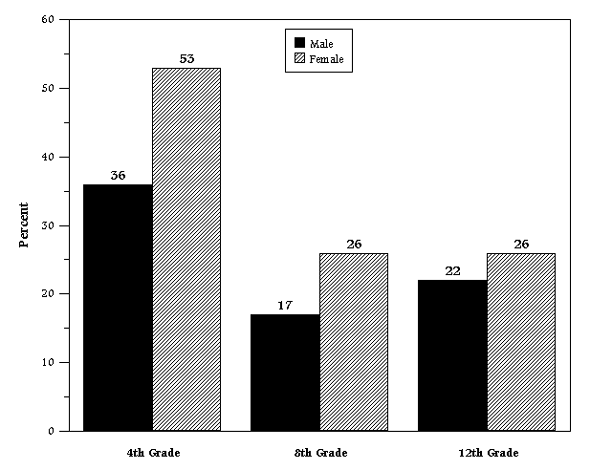
Source: U. S. Department of Education, National Center for Education Statistics, National Assessment of Educational Progress (NAEP), 1994 Reading Assessment, unpublished data.
Differences by Parent's Educational Levels. Students whose parents had some posthigh school education were more likely to read for fun than students whose parents had not graduated from high school or had no education beyond high school. For example, in 1994, 29 percent of twelfth graders whose parents had graduated from college and 22 percent whose parents had some education after high school read for fun on a daily basis. In contrast, 19 percent of twelfth graders whose parents had graduated from high school (but had no education beyond that) and 18 percent whose parents had not finished high school reported reading for fun on a daily basis. These patterns are similar among eighth graders (see Table EA 3.1.B).
Differences by Type of School. Larger percentages of eighth and twelfth graders who attended non-Catholic private schools read for fun on a daily basis than did their counterparts in public schools (see Table EA 3.1.B).
Table EA 3.1.B
|
||||||||||
|
|
|
|
|
|
|
|
|
|
||
|
|
|
|
4th Grade
|
8th Grade
|
12th Grade
|
|||||
|
|
|
|
||||||||
|
|
|
|
1992
|
1994
|
1992
|
1994
|
1992
|
1994
|
||
|
|
|
|
|
|
|
|
|
|
||
|
|
|
|
|
|
|
|
|
|
||
| Total |
44
|
45
|
22
|
22
|
23
|
24
|
||||
|
|
Gender | |||||||||
|
|
|
Male |
36
|
36
|
17
|
17
|
23
|
22
|
||
|
|
|
Female |
51
|
53
|
27
|
26
|
22
|
26
|
||
|
|
Race/Ethnicity | |||||||||
|
|
|
White, non-Hispanic |
44
|
45
|
24
|
24
|
25
|
26
|
||
|
|
|
Black, non-Hispanic |
40
|
40
|
15
|
14
|
17
|
16
|
||
|
|
|
Hispanic |
44
|
43
|
17
|
16
|
18
|
18
|
||
|
|
|
Asian/Pacific Islander |
50
|
48
|
26
|
25
|
22
|
20
|
||
|
|
|
American Indian |
45
|
45
|
31
|
31
|
25
|
25
|
||
|
|
Parents Educationa | |||||||||
|
|
|
Did not finish high school |
|
|
18
|
13
|
14
|
18
|
||
|
|
|
Graduated high school |
|
|
18
|
16
|
18
|
19
|
||
|
|
|
Some education after high school |
|
|
23
|
24
|
22
|
22
|
||
|
|
|
Graduated college |
|
|
26
|
26
|
28
|
29
|
||
|
|
Type of School | |||||||||
|
|
|
Public schools |
43
|
45
|
21
|
21
|
22
|
24
|
||
|
|
|
Catholic schools |
41
|
46
|
25
|
24
|
23
|
25
|
||
|
|
|
Other Private schools |
55
|
40
|
35
|
33
|
31
|
28
|
||
|
|
|
|
|
|
|
|
|
|
||
| Note: aPercentage reading for fun is not reported by parents education for 4th graders because over a third did not know their parents level of education. Parents education represents the highest level of education reported by the student.
Source: U. S. Department of Education, National Center for Education Statistics, National Assessment of Educational Progress (NAEP), 1994 Reading Assessment, unpublished data. |
||||||||||
32 National Center for Education Statistics (1993). NAEP 1992: Reading Report Card for the Nation and the States. Report No. 23-ST06. Washington, DC: U.S. Government Printing Office.
33 Estimates for whites and blacks exclude Hispanics of those races.
EA 3.2 Parental involvement in child's school
Many educators consider parental involvement in school activities to have a beneficial effect on childrens school performance. They associate higher levels of parental involvement with greater monitoring of school and classroom activities, a closer coordination of teacher and parent efforts, greater teacher attention to the child, and earlier identification of problems that might inhibit learning.34
Differences by Childrens Grade Level. Figure EA 3.2 presents national estimates for 1996 on the degree of parental school participation among parents of children in grades 35, 68, and 912. Possible activities include: 1) attending general school meetings (e.g., a PTA meeting or back-to-school night); 2) going to a regularly scheduled parentteacher conference; 3) attending a school or class event such as a play or sports event; and 4) volunteering at the school or serving on a school committee.35 As the figure indicates, the level of parental involvement in school activities decreases substantially as children get older. For example:
- Thirty-nine percent of children in grades 35 had parents who were classified as highly involved in their childrens schools, meaning that they had been involved in three or more types of activities described above during the school year.
- Children in grades 68 and 912 had parents with substantially lower involvement levels, with 24 and 22 percent, respectively, classified as highly involved.
- Nearly one half of children in grades 912 had parents who were classified as having a low level of involvement, defined as having participated in one or no school activities.
Differences by Gender. Among some age groups, girls were more likely than boys to have parents with high or moderate levels of involvement. For example, among children in grades 68, girls were more likely than boys to have parents with high levels of involvement, and in grades 912, girls were more likely to have parents with moderate involvement levels. Alternatively, boys were more likely to have parents with low involvement levels in grades 68 and 912 (see Table EA 3.2).
Differences by Race and Ethnicity.36 White children had parents who were more likely than parents of black or Hispanic children to be highly involved in their schools at each grade level (see Table EA 3.2).
Differences by Family Type. Children in two-parent families were more likely to have parents who were highly involved than children in families with one or no parent. For example, among students in grades 35, 43 percent of children with two parents had parents who were highly involved in their schools, compared to 29 percent of children with one or no parent (see Table EA 3.2).
Differences by Socioeconomic Status. Children with non-poor parents (above the poverty threshold) were much more likely to have highly involved parents than children with poor parents (at or below the poverty threshold), for all grade levels. Children whose mothers had higher levels of education had more highly involved parents than children whose mothers had lower education levels, at all grades (see Table EA 3.2).
Differences by Mother's Employment Status. Among children in grades 35 and 912, those whose mothers worked part time (less than 35 hours per week) had more involved parents than children whose mothers either worked full time (35 hours or more per week) or were not in the labor force. For instance, of children in grades 35, 56 percent of children whose mothers worked part time were classified as highly involved, compared to 33 percent of children whose mothers worked full time, and 36 percent of children whose mothers were not in the labor force (see Table EA 3.2).
Figure EA 3.2
|
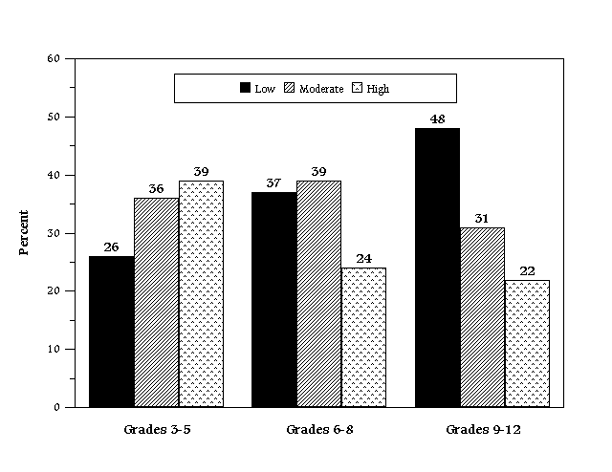
Note:
Low involvement = involvement in 0 or 1 activities
Moderate involvement = involvement in 2 activities
High involvement = involvement in 3 or more activities
Possible activities include 1) attending general school meetings; 2) going to a regularly scheduled parent-teacher conference; 3) attending school or class event; and 4) volunteering in the school or serving on a school committee.
Source: U.S. Department of Education, National Center for Education Statistics, 1996 National Household Education Survey (NHES:96).
Table EA 3.2
|
|||||||||||||
|
|
|
|
|
|
|
|
|
|
|
|
|
||
|
Low Involvement
|
Moderate Involvement
|
High Involvement
|
|||||||||||
|
|
|
|
Grades
|
Grades
|
Grades
|
Grades
|
Grades
|
Grades
|
Grades
|
Grades
|
Grades
|
||
|
|
|
|
3 to 5
|
6 to 8
|
9 to 12
|
3 to 5
|
6 to 8
|
9 to 12
|
3 to 5
|
6 to 8
|
9 to 12
|
||
|
|
|
|
|
|
|
|
|
|
|
|
|
||
| TOTAL |
26
|
37
|
48
|
36
|
39
|
31
|
39
|
24
|
22
|
||||
|
|
Gender | ||||||||||||
|
|
|
Male |
27
|
40
|
50
|
35
|
38
|
29
|
38
|
22
|
22
|
||
|
|
|
Female |
24
|
34
|
46
|
36
|
39
|
33
|
40
|
27
|
22
|
||
|
|
Race/Ethnicity | ||||||||||||
|
|
|
White non-Hispanic |
21
|
31
|
43
|
36
|
41
|
32
|
44
|
28
|
25
|
||
|
|
|
Black non-Hispanic |
37
|
52
|
60
|
36
|
31
|
27
|
27
|
17
|
14
|
||
|
|
|
Hispanic |
36
|
49
|
61
|
36
|
36
|
26
|
29
|
16
|
14
|
||
|
|
Poverty Statusb | ||||||||||||
|
|
|
Non-poor |
21
|
31
|
44
|
35
|
41
|
31
|
44
|
28
|
25
|
||
|
|
|
Poor |
39
|
55
|
64
|
37
|
31
|
27
|
24
|
14
|
10
|
||
|
|
Family Type | ||||||||||||
|
|
|
Two parents |
22
|
32
|
43
|
35
|
40
|
32
|
43
|
28
|
25
|
||
|
|
|
One or no parent |
35
|
47
|
59
|
36
|
36
|
27
|
29
|
17
|
13
|
||
|
|
Mother's Educationc | ||||||||||||
|
|
|
Less than HS |
52
|
64
|
74
|
32
|
29
|
21
|
16
|
7
|
6
|
||
|
|
|
High School/GED |
29
|
43
|
54
|
38
|
37
|
28
|
34
|
20
|
17
|
||
|
|
|
Vocational/technical |
|
|
|
|
|
|
|
|
|
||
|
|
|
or some college |
21
|
30
|
43
|
36
|
42
|
34
|
43
|
28
|
23
|
||
|
|
|
College graduate |
11
|
19
|
27
|
33
|
42
|
36
|
56
|
39
|
37
|
||
|
|
Mother's Employment Status | ||||||||||||
|
|
|
³ 35 hours per week |
28
|
37
|
46
|
39
|
40
|
24
|
33
|
31
|
23
|
||
|
|
|
< 35 hours per week |
16
|
30
|
42
|
28
|
37
|
34
|
56
|
31
|
27
|
||
|
|
|
Not in labor force |
29
|
42
|
54
|
35
|
37
|
21
|
36
|
30
|
16
|
||
| Note: | aLow involvement = involvement in 0 or 1 activities Moderate involvement = involvement in 2 activities High involvement = involvement in 3 or more activities |
||||||||||||
|
|
|||||||||||||
|
|
|||||||||||||
| Possible activities include 1) attending general school meetings; 2) going to a regularly scheduled parent-teacher conference; 3) attending school or class event; and 4) volunteering in the school or serving on a school committee.
bChildren were classified as non-poor (living above the poverty threshold) or poor (living at-or-below the poverty threshold), based on family size and income. For more information about this classification, see Wright, D., Hausken, E.G., and West, J. (1994). Family-Child Engagement in Literacy Activities: Changes in Participation Between 1991 and 1993. Washington, D.C.: U.S. Department of Education, National Center for Education Statistics. cChildren without mothers in the home are not included in estimates of mothers education or mothers employment status. A mother is defined as a biological mother, adoptive mother, stepmother, foster mother, or female guardian (e.g., grandmother) who resides in the home with the child. Source: U.S. Department of Education, National Center for Education Statistics, 1996 National Household Education Survey (NHES: 96). |
|||||||||||||
34 Zill, N., and Nord, C.W. (1994). Running in Place: How American Families are Faring in a Changing Economy and Individualistic Society. Child Trends, Inc.
35 The level of involvement depends on the number of different activities reported by the parents, ranging from 0 or 1 (low involvement) to 2 (moderate involvement) to 3 or more activities (high involvement). Note that the number of times that the parent has been involved in each activity was not measured.
36 Estimates for whites and blacks exclude Hispanics of those races.
EA 3.3 Difficulty speaking English
Children who have difficulty speaking English may find that this difficulty limits their educational progress and their future employment prospects. They may also need special instruction in school to improve their English. Difficulty speaking English is most common among immigrant children and the U.S.born children of immigrants. In the last three decades, the great majority of immigrants to the U.S. have come from Asia, Latin America, and the Caribbean.
In 1995, of the 6.7 million children ages 517 in the U.S. who lived in homes in which a language other than English was spoken, 2.4 million (37 percent) had difficulty speaking English. This represents a slight increase from the 33 percent who had difficulty speaking English in 1979 (see Table EA 3.3).
Differences by Race and Hispanic Origin.37 Thirty-three percent of non-Hispanic black children from homes where a language other than English was spoken had difficulty speaking English in 1995, an increase from 26 percent in 1979 (see Figure EA 3.3). Among Hispanic children from such homes, 42 percent had difficulty speaking English, up slightly from 38 percent in 1979. Nineteen percent of non-Hispanic white children from homes where a language other than English was spoken had difficulty speaking English in 1995. The proportion was similarly low in 1992 and in 1979, but was substantially higher (33 percent) in 1989.
Figure EA 3.3
|
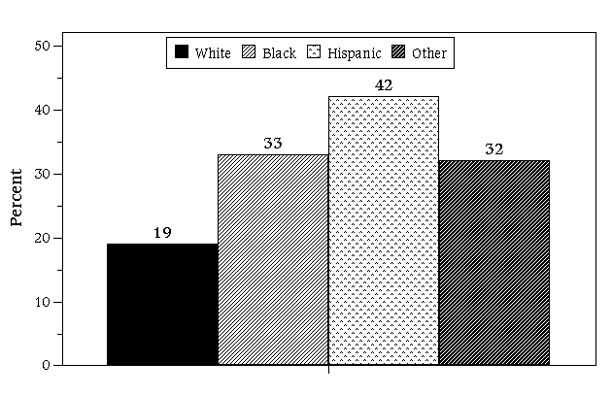
Source: Unpublished tables based on analyses of the November Current Population Survey for selected years. National Center for Education Statistics.
Table EA 3.3
|
|||||||
|
1979
|
1989
|
1992
|
1995
|
Number in 1995
(in thousands)
|
|||
|
|
|
|
|
|
|||
| Total |
33
|
38
|
35
|
37
|
2,442
|
||
|
|
Race/Ethnicity | ||||||
|
|
|
White, non-Hispanic |
17
|
33
|
20
|
19
|
219
|
|
|
|
Black, non-Hispanic |
26
|
32
|
33
|
33
|
73
|
|
|
|
Hispanic |
38
|
39
|
39
|
42
|
1,934
|
|
|
|
Other |
45
|
39
|
36
|
32
|
214
|
| Source: Unpublished tables based on analyses of the November Current Population Survey for selected years. National Center for Education Statistics. | |||||||
37 Estimates for whites and blacks exclude Hispanics of those races.